Previous Chapter: AUTHORS
Suggested Citation: "COLOR PLATES." National Research Council. 1991. Sustainable Agriculture Research and Education in the Field: A Proceedings. Washington, DC: The National Academies Press. doi: 10.17226/1854.

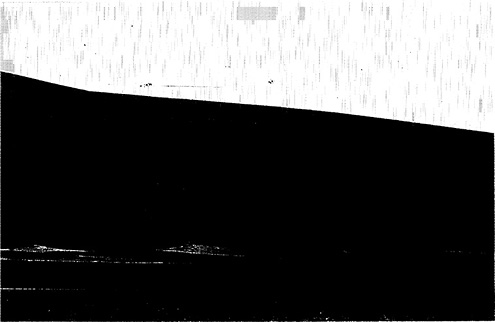
Soil erosion is agriculture's leading problem in the Pacific Northwest of the United States. (See Chapter 7.) Credit: Robert I. Papendick.
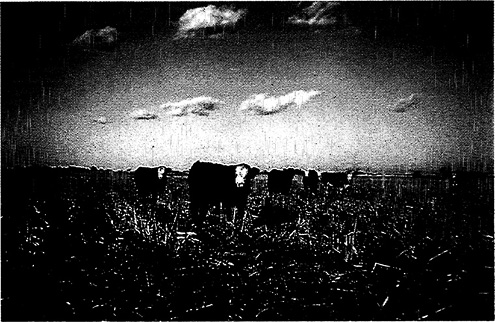
Cattle graze on crop residue, which represents one aspect of a low-input beef production system. (See Chapter 16.) Credit: Terry Klopfenstein.
Suggested Citation: "COLOR PLATES." National Research Council. 1991. Sustainable Agriculture Research and Education in the Field: A Proceedings. Washington, DC: The National Academies Press. doi: 10.17226/1854.

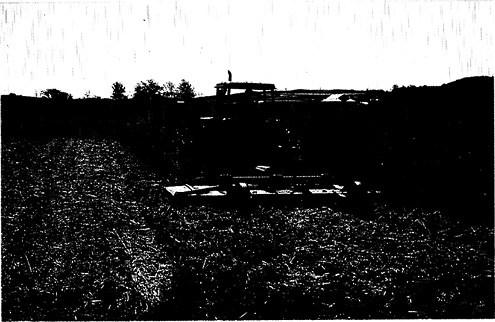
The mowing of winter cover crops appears to have the potential to reduce herbicide and insecticide use and to increase yields and profits. (See Chapter 11.) Credit: John M. Luna.
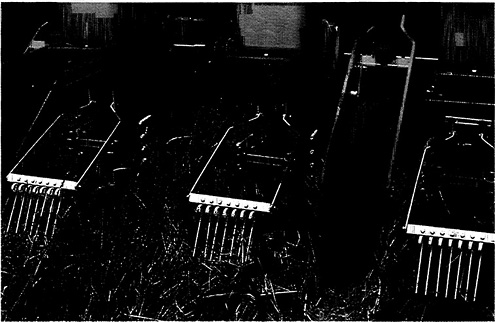
A viable conservation tillage approach for corn production in the Southeast may be the planting of corn into ridges after a winter cover crop has been mowed. (See Chapter 11.) Credit: John M. Luna.
Suggested Citation: "COLOR PLATES." National Research Council. 1991. Sustainable Agriculture Research and Education in the Field: A Proceedings. Washington, DC: The National Academies Press. doi: 10.17226/1854.

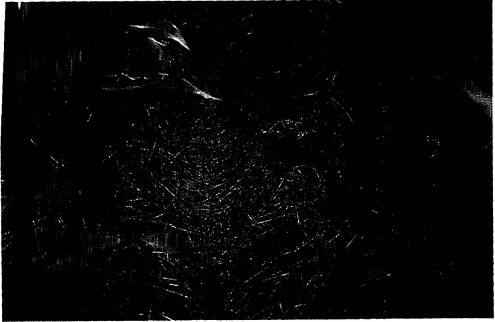
Surface mulch from a rye cover crop helps suppress weeds and conserve soil moisture in a low-input, ridge-till corn production system. (See Chapter 11.) Credit: John M. Luna.
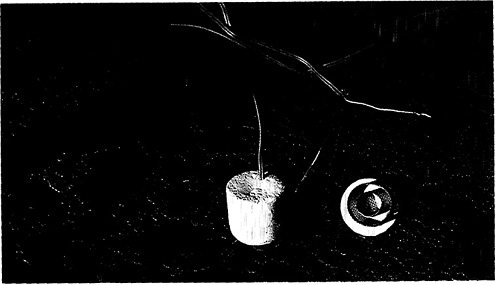
Soil moisture changes in root zones can be monitored with buried electrical sensors known as gypsum blocks. The gypsum block on the right shows the two concentric electrodes to which two insulated wires will be attached before its construction is completed. The finished block (left), which is 1.25 inches in diameter, will be buried in a crop-root zone with its two insulated wires drawn to the surface for testing with an impedance meter. (See Chapter 8.) Credit: Gail Richardson.

Suggested Citation: "COLOR PLATES." National Research Council. 1991. Sustainable Agriculture Research and Education in the Field: A Proceedings. Washington, DC: The National Academies Press. doi: 10.17226/1854.

The corn root on the left is from a plant grown using a low-input system that included manure. The root on the right is from a plant grown using a conventional cash grain system. (See Chapter 18.) The variation in root morphology may be explained by crop rotation, use of manure versus chemical fertilizer, differences in soil structure, and exposure to herbicide (in the conventional system). Spring moldboard plowing was used for tillage in both systems. Credit: Rhonda R. Janke and Steven E. Peters.
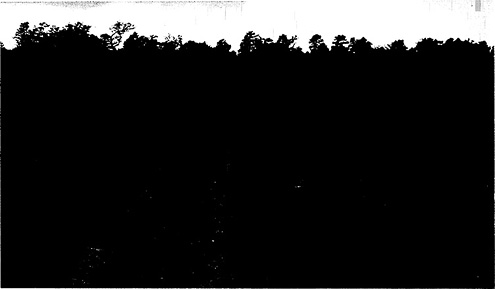
On the right, crabgrass has taken over a check plot, which required spraying with paraquat to prevent the weed from growing into the rows of blueberries. Crabgrass growth was completely suppressed on the left row, where pearl millet was grown as a living mulch cover crop. (See Chapter 12.) Credit: Kim Patten.
Suggested Citation: "COLOR PLATES." National Research Council. 1991. Sustainable Agriculture Research and Education in the Field: A Proceedings. Washington, DC: The National Academies Press. doi: 10.17226/1854.

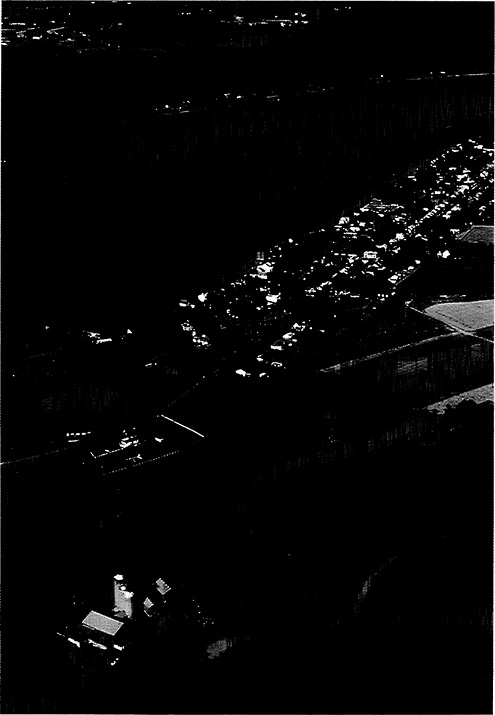
An aerial view of Pennsylvania countryside illustrates the relationship of farms and communities to water resources. The Susquehanna River is pictured. (See Chapter 19.) Credit: Steven Williams.

Suggested Citation: "COLOR PLATES." National Research Council. 1991. Sustainable Agriculture Research and Education in the Field: A Proceedings. Washington, DC: The National Academies Press. doi: 10.17226/1854.

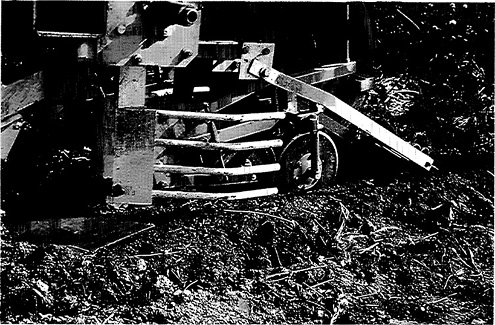
Reduced tillage alternatives to the moldboard plow (top) include chisel plow tillage whereby some residue is left on the surface after tillage (bottom), ridge tillage in which no primary tillage occurs but ridge tops are cleared of residue at the time of planting (top right), and no tillage in which all residue (here, hairy vetch) remains on the soil surface when crops are planted (bottom right). (See Chapter 18.) Credit: Rhonda R. Janke and Steven E. Peters.
Suggested Citation: "COLOR PLATES." National Research Council. 1991. Sustainable Agriculture Research and Education in the Field: A Proceedings. Washington, DC: The National Academies Press. doi: 10.17226/1854.

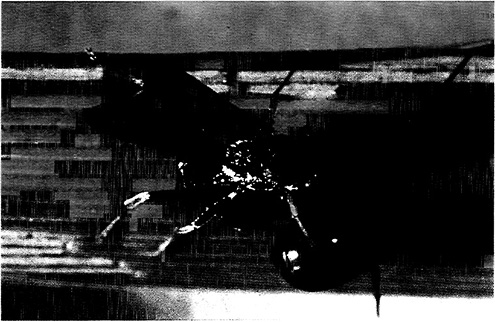
The parasitic wasp, Lemaphagus curtus, lays eggs in a larvae of the cereal leaf beetle, Oulema melanopus, which was introduced into the United States from Europe in the 1970s. (See Chapter 20.) Credit: Raymond I. Carruthers.
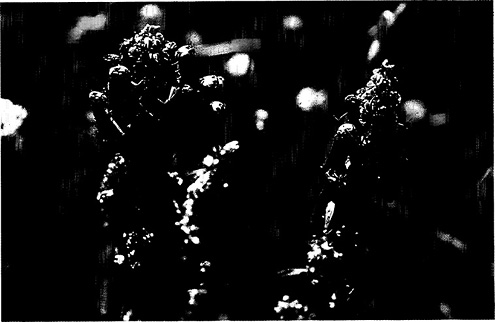
The cluster of dead grasshoppers pictured above were infected with Entomophaga grylli. (See Chapter 20.) Credit: Raymond I. Carruthers.

Suggested Citation: "COLOR PLATES." National Research Council. 1991. Sustainable Agriculture Research and Education in the Field: A Proceedings. Washington, DC: The National Academies Press. doi: 10.17226/1854.
Page 438
Suggested Citation: "COLOR PLATES." National Research Council. 1991. Sustainable Agriculture Research and Education in the Field: A Proceedings. Washington, DC: The National Academies Press. doi: 10.17226/1854.
Page 439
Suggested Citation: "COLOR PLATES." National Research Council. 1991. Sustainable Agriculture Research and Education in the Field: A Proceedings. Washington, DC: The National Academies Press. doi: 10.17226/1854.
Page 440
Suggested Citation: "COLOR PLATES." National Research Council. 1991. Sustainable Agriculture Research and Education in the Field: A Proceedings. Washington, DC: The National Academies Press. doi: 10.17226/1854.
Page 441
Suggested Citation: "COLOR PLATES." National Research Council. 1991. Sustainable Agriculture Research and Education in the Field: A Proceedings. Washington, DC: The National Academies Press. doi: 10.17226/1854.
Page 442
Suggested Citation: "COLOR PLATES." National Research Council. 1991. Sustainable Agriculture Research and Education in the Field: A Proceedings. Washington, DC: The National Academies Press. doi: 10.17226/1854.
Page 443
Suggested Citation: "COLOR PLATES." National Research Council. 1991. Sustainable Agriculture Research and Education in the Field: A Proceedings. Washington, DC: The National Academies Press. doi: 10.17226/1854.
Page 444
Suggested Citation: "COLOR PLATES." National Research Council. 1991. Sustainable Agriculture Research and Education in the Field: A Proceedings. Washington, DC: The National Academies Press. doi: 10.17226/1854.
Page 445
Subscribe to Emails from the National Academies
Stay up to date on activities, publications, and events by subscribing to email updates.