Committee on Human Rights: Annual Report 2022 (2023)
Chapter: Global Crackdown on Academic Freedom

Global Crackdown on Academic Freedom
Academic freedom continues to be under assault around the world with potentially devastating consequences for scholars, students, and societal development more broadly. Below are selected examples of countries where the CHR is working to raise awareness of attacks on higher education communities and to advocate in support of colleagues targeted in connection with their scholarly work and related peaceful expressive activities.
Iran
The CHR has long worked to gain the release of colleagues imprisoned while in Iran carrying out their professional work. Such cases have included social scientists conducting field research on the societal roles of Iranian women and health professionals taking part in professional, collaborative activities in their areas of expertise. Other Iranian colleagues have been jailed for lengthy periods of time for their efforts to make higher education available for students prevented from attending universities in the country on account of their religious faith.
Since fall 2022, the country’s higher education community has been severely impacted by the escalating government repression of widespread demonstrations across the country. The IHRN Executive Committee joined scientific and human rights bodies around the world in raising concern about the government’s excessive use of force against peacefully protesting students, faculty, and others seeking an end to discrimination against women and other reforms, which has resulted in hundreds of deaths, injuries, and mass detention. The IHRN’s statement highlighted the climate of fear at Iran’s universities as a result of the arrests and the security forces’ violent suppression of protests on and around university campuses and called on the government to end the unnecessary use of force in response to the protests, the release of all who have been arbitrarily detained, and an end to further attacks on educational institutions.
Afghanistan
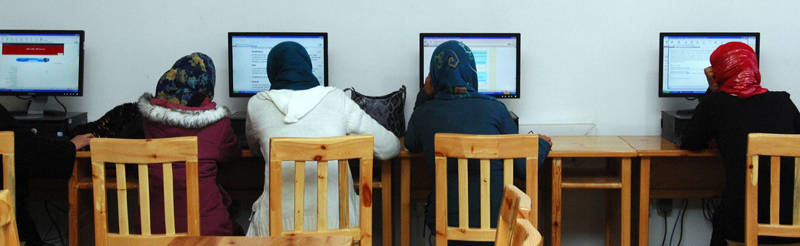
Since the Taliban’s takeover of the country, the rights of women and girls have been severely eroded. The imposition of a complete government ban on women’s participation in higher education in late 2022 prompted the IHRN Executive Committee to publicly condemn the decision as a gross violation of fundamental international human rights standards. Highlighting the critical role that women play in Afghan society, the IHRN underscored the potentially devastating impact on the country’s development if the ban is not reversed. In statements deploring the ban on women’s education, the presidents of the NAS, NAE, and NAM, as well as other science bodies, cite evidence that education for women and girls results in improved social and economic outcomes for both them and their countries. The CHR continues to be in contact with at-risk Afghan colleagues and to connect them with academic opportunities as well as other needed services. Among several positive developments, a young female scientist was able to travel to a third country, secure housing, and begin a fully funded Ph.D. program.
Nicaragua
The CHR has continued its advocacy in support of research and higher education communities in Nicaragua that have been under sustained government assault since the 2018 popular demonstrations in the country. In the past year alone, the government has canceled the legal status of the Academy of Sciences of Nicaragua, closed several universities, withheld funding from others, and strengthened governmental control over university curricula and academic programs. In response to the escalating restrictions on human rights and civil society in the country—including the government’s forced closure of numerous civil organizations—the IHRN’s Executive Committee issued a statement in mid-2022 condemning ongoing assaults on academic freedom and calling on the government to restore arbitrarily dissolved organizations and allow international human rights monitoring bodies into the country to document and report on the rights situation. The CHR has been working to help a number of Nicaraguan colleagues targeted for their activities in support of academic freedom, human rights, and democracy.
In a Victory for Academic Freedom, Egyptian Graduate Student in the Social Sciences Released from Prison
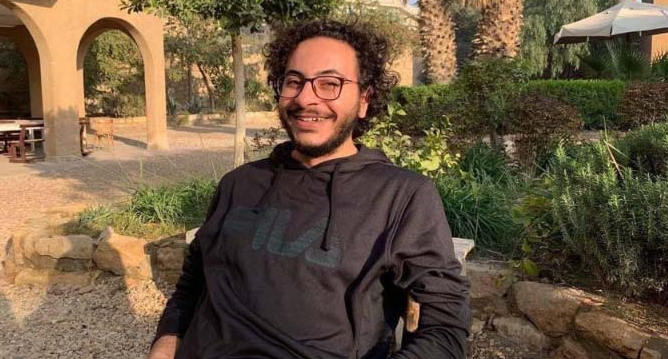
Egyptian graduate student in the social sciences Ahmed Samir Santawy was one of a small number of prisoners who received a presidential pardon from Egyptian President Abdel Fattah El-Sisi on July 29, 2022. The following day, he was released from prison. His release came just weeks after Mr. Santawy received a three-year prison sentence—in a retrial—in apparent connection with his academic research.
Mr. Santawy has been a graduate student of sociology and social anthropology at Central European University, now in Vienna, Austria, since fall 2019, where his academic work has focused on women’s rights, including the history of women’s reproductive rights in Egypt. On February 1, 2021, he was arrested by officers of the National Security Agency shortly after his return to Egypt to visit family. Mr. Santawy was subjected to enforced disappearance for several days before being brought before the Supreme State Security Prosecution. According to numerous human rights and scholarly organizations, Mr. Santawy appears to have been targeted for arrest in connection with his research on women’s rights, a topic about which he had been questioned repeatedly by Egyptian security services before and after his February 2021 arrest. On February 6, he was charged with publishing false information, reportedly in connection with online criticism of the government, which he denies writing. In late June 2021, Mr. Santawy was convicted and sentenced to four years in prison in proceedings that failed to meet international fair trial standards.
Following widespread international pressure from the scholarly and human rights communities, among others, Mr. Santawy’s conviction and prison sentence were annulled in February 2022, and he was ordered to have a retrial. After numerous unexplained postponements, he was retried in June and was convicted on July 4 on the same charges. Reliable reports indicate that, as was the case in his first trial, no credible evidence was presented to support the charges brought against him.
Mr. Santawy was imprisoned throughout his ordeal under harsh conditions of confinement, where he endured prolonged solitary confinement and physical abuse. His imprisonment came amidst an ongoing crackdown on academic freedom in Egypt.
“Ahmed was jailed for merely exercising his freedom of opinion and expression as a researcher and as a citizen.
-SHALINI RANDERIA, President and Rector of Central European University, in a statement welcoming Santawy’s release