Committee on Human Rights: Annual Report 2022 (2023)
Chapter: Responding to Challenges of Forced Displacement
Responding to Challenges of Forced Displacement
As of mid-2022, more than 100 million people had fled their homes due to war and persecution, as well as the effects of climate change and other disasters. Through an array of projects, the CHR aims to help displaced colleagues access needed resources and to assist the scientific, engineering, and medical communities in harnessing their expertise to confront some of the challenges associated with displacement, to include psychological trauma and failing infrastructure.
Assisting Displaced Colleagues
Colleagues experiencing forced displacement often face unique challenges—from obtaining recognition of their academic credentials to identifying work opportunities in their fields. Over the past year, the CHR has worked to help dozens of colleagues identify opportunities for work and education in safe third countries. In 2022, several colleagues were offered admission to or began fellowships and/or higher education programs in Europe, the United States, and Asia. The CHR has also connected colleagues with organizations offering other needed support, such as emergency funding and mental health care.
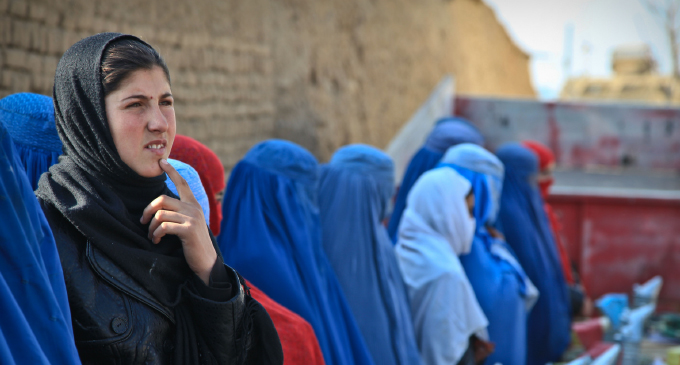
Addressing Challenges related to Forced Displacement through STEM Education
Despite displacement being one of the great global challenges of our time, the fields of engineering, basic, and applied sciences are often absent in discussions about education on forced displacement. As a result, students in science and engineering programs are frequently unaware of the complex challenges surrounding displacement and are ill-positioned to help address these challenges in their studies and future careers. In collaboration with the Center on Forced Displacement at Boston University, the CHR is preparing for a March 2023 workshop that will gather experts in human rights, forced displacement, and STEM pedagogy to explore opportunities in higher education for teaching STEM students about forced displacement and to develop a sketch for a course or set of modules intended to equip students in science and engineering programs to address challenges associated with forced displacement, with an emphasis on human-rights based approaches.


