Future Directions for Southern Ocean and Antarctic Nearshore and Coastal Research (2024)
Chapter: 5 The Impact of Environmental Change on Antarctic and Southern Ocean Biota and their Ecosystem Services
5
The Impact of Environmental Change on Antarctic and Southern Ocean Biota and their Ecosystem Services
Human-driven climate change is among the greatest pressures on our living planet, its oceans, and its natural resources. While remote, Earth’s polar regions are not detached from the impacts of evolving natural and anthropogenic stressors (IPCC, 2022). For centuries, nearshore Antarctic and Southern Ocean ecosystems and biota have supported a range of ecosystem services, including the direct use of the region for fishing and tourism, as well as indirect services in regulating global climate. Over the last several decades, however, it has become clear that Antarctica’s ecosystems have a finite capacity for meeting these varied needs. Despite its remoteness, the effects of global climate change are having an observable influence on the structure and function of Antarctica’s ecosystems. Sustained investments in nearshore Antarctic and Southern Ocean research will improve understanding of the impact of environmental change on Antarctic marine and coastal ecosystems and their ecosystem services; catalyze innovation of novel sensors, sampling approaches, and analyses; support effective, evidence-based resource management, mitigation strategies, and policy-relevant science; and promote robust workforce development with the skills needed to support the global blue economy.1
For the last 8 years, Earth’s global average surface temperature has been the warmest on record (NASA, n.d.a), a situation that is dramatically changing the physical characteristics of the ocean and altering its ecosystems in unprecedented ways. Globally, extreme events such as marine heat waves and storms have increased in duration, intensity, and frequency (IPCC, 2019, 2021; Oliver et al., 2018) with devastating effects on marine life, including marine mammals, seabirds, and important fish stocks (Mills et al., 2013). These extreme events are also occurring with increasing regularity in Antarctica, with maximum temperature records being set at five Antarctic stations and all stations experiencing increased frequency of these temperature extremes (Turner et al., 2021). Increased warming in Antarctica is already having profound effects on the Antarctic ice sheets, as described in Chapter 3, and its ice loss is only accelerating. Recent studies suggest ice shelf collapse will have significant implications for marine communities in the Southern Ocean (e.g., Fuentes et al. 2016; Sahade et al. 2015).
Ocean warming and sea level rise due to climate change are not the only human-induced pressures impacting the Southern Ocean and nearshore Antarctic ecosystems. Increased atmospheric carbon dioxide (CO2) concentrations have resulted in reduced ocean pH and changes to acid–base regulation. Additionally, in much of the Southern Ocean, primary production is limited by the availability of iron and other nutrients. These nutrient fluxes are evolving with a changing climate; nutrients released by ice melt and other sources have the potential to enhance
___________________
1 The blue economy is the sustainable use of ocean resources that benefits economic growth and ocean ecosystem health.
productivity with concomitant impacts on higher trophic levels (Arrigo et al., 2015). Concurrent changes in ocean circulation, warming seawater, and shifts in biological productivity have resulted in a general reduction in oxygen concentrations, as well as the shoaling and increase in the size of oxygen minimum zones. More visible than these large-scale global anthropogenic pressures are the influence of humans in Antarctica. The full impact of human pressures on the climate-sensitive and economically important Southern Ocean biota is largely unknown (Murphy et al., 2021), but the COVID-19-related “anthropause” provided intriguing data that are still under investigation (Flynn et al., 2023; Pallin et al. 2022).
Polar biota, including marine mammals, seabirds, fish, insects, and benthic fauna, among others, have evolved unique traits and strategies for surviving in their extreme environment. Studying these extremophiles may (1) yield advances in biotechnology, pharmacology, and medicine, and (2) inform astrobiological studies and serve as a testbed for the technology needed for space exploration, given that Antarctic environments can be used as analogs for icy extraterrestrial worlds (Arrigo, 2022). However, climate change is rapidly changing the Southern Ocean environments, creating challenges for species across the food web. For example, the rapid loss of sea ice exposes previously ice-covered regions to solar radiation, changing the timing and nature of regional ecosystem cycles. While scientists do not know how these unique Antarctic organisms will adapt to the rapid change, the trend of poleward species migration is pronounced in the Antarctic, with whole-ocean ecosystems shifting poleward at a rate six times greater than terrestrial species (Lenoir et al., 2020). Sustained scientific studies at all levels of marine ecology are necessary to inform responsible evidence-based management and mitigation that will be essential for maintaining sustainable resources into the future.
As Antarctic and Southern Ocean systems shift and tourism and human pressures increase, it will become more challenging to predict impacts to biodiversity and ecology. The uncertainty stems from patchy spatial and temporal observations due to difficulties accessing these remote regions, the high degree of intra- and interseasonal variability in the Antarctic, and the inherent challenges of measuring the abundance and distribution of critical marine species (Cooley et al., 2022; IPCC, 2022). Although high-quality, high-resolution data products for many key ocean measurements (e.g., sea surface temperature, sea ice concentration) are available, the scientific community lacks comparably robust data products for Antarctic biota. Biological data are collected by a heterogeneous community of researchers operating with disparate aims, a situation that delays the aggregation of data into a uniform system. These efforts are further hampered by the multitude of approaches used to study the same key phenomena (e.g., diversity, abundance) in organisms that range in size from microscopic phytoplankton to the largest whales. Robust field data collection is critical to model development, fitting, and validation. A sustained investment in regional to global ecological observations over extended spatial and temporal scales will improve understanding of ecosystem processes as well as impacts on these ecosystems due to global change.
There are also economic incentives to better understand key marine processes in the Southern Ocean. Earth’s living oceans add more than $1 trillion to the global economy, a number expected to double in the next decade (NOAA, 2021). However, the ocean is an exhaustible resource. Evidence-based conservation can help sustainably manage ecosystems, including fisheries, so that they can withstand environmental disturbances. With renewed resources for studying the coast and deep Southern Ocean, it will be possible to explore and invest in the future of the most unobserved part of the planet, which is a unique, living laboratory for studying ecosystem structure, adaptation, and conservation.
This chapter outlines the highest-priority scientific questions regarding the impact of environmental change on Antarctic and Southern Ocean biota and their ecosystem services. The chapter also identifies the observations and capabilities necessary to advance the three science priorities identified: (1) What are the feedbacks between changing ecosystems and biogeochemistry that drive the carbon cycle? (2) How have biota adapted and evolved, and what is their resilience to change? (3) How can the study of global connections and ecosystem services inform evidence-based conservation and management?
WHAT ARE THE FEEDBACKS BETWEEN CHANGING ECOSYSTEMS AND BIOGEOCHEMISTRY THAT DRIVE THE CARBON CYCLE?
Marine organisms mediate the fluxes of key elements (e.g., carbon, nitrogen, phosphorus, sulfur, iron) through their physiological processes and thus significantly impact marine biogeochemistry and global elemental cycles. Because of its vast size and connectivity to other oceans, understanding variability in Southern Ocean biogeochemistry is critical to understanding the changing Earth system. Earth system models, such as those in the Coupled Model Intercomparison Project (CMIP6) (Kwiatkowski et al., 2020), depend on the physiological rates of marine organisms and their effects on the magnitude and direction of biogeochemical fluxes; this is still poorly understood for the Southern Ocean and nearshore Antarctic waters. Resolving how marine organisms respond to environmental change is one of the biggest factors currently limiting the CMIP6 models (Strzepek et al., 2022).
The uptake of atmospheric CO2 by the Southern Ocean plays a major role in driving variability in the global ocean carbon sink (Chapter 4; Gruber et al., 2019a,b). CO2 exchange between the atmosphere and the surface ocean is driven by the solubility of CO2 in seawater and the vertical gradient of dissolved inorganic carbon (DIC), driven by the biological carbon pump (Kwon et al., 2009), which is one of the key mechanisms by which marine biota impact atmospheric processes. In fact, some geochemical proxies for productivity have suggested that the Southern Ocean’s biological carbon pump might be partially responsible for the last ice age and millennial-scale CO2 oscillations (Jaccard et al., 2013; Martínez-García et al., 2014). At the base of the Southern Ocean food web, phytoplankton take up CO2 during photosynthesis and are grazed upon by zooplankton, which are in turn preyed on by higher trophic levels (Figure 5-1). Through the process of excretion by animals and through solubilization and disaggregation of fecal pellets and aggregates, carbon enters the dissolved and particulate organic carbon (DOC and POC, respectively) pools, which fuel bacteria production. Carbon is then respired by all organisms as DIC. The proportion of organic carbon that is not recycled back to DIC in the euphotic zone2 is exported to depth, supporting mesopelagic and benthic communities, where the same processes described above will occur, ultimately recycling the organic carbon back to DIC. The degree of carbon sequestration is determined by the depth at which the exported organic carbon is respired to DIC, with greater depth resulting in longer sequestration times. Three export pathways transport organic carbon to the deep ocean: gravitational, migrant, and mixing (Siegel et al., 2023). Through gravity, DOC and POC sinks below the euphotic zone where it may be remineralized by bacteria to DIC (Cavan et al. 2019a,b; Steinberg and Landry, 2017). Further, when organisms die, their bodies quickly sink to the seafloor, transporting carbon to the deep sea, where it joins the sequestered carbon pool. This can be a significant amount in the case of whales (e.g., Bolstad et al., 2023; Pearson et al., 2022; Smith and Baco, 2003). The diel vertical migration3 of zooplankton and other animals, and their subsequent respiration at depth, transports organic carbon in living form and releases it as DIC below the euphotic zone (Cavan et al., 2019a; Steinberg and Landry, 2017). Finally, suspended POC and DOC can be transported to depth through vertical mixing and advection (Boyd et al., 2019; Stukel and Ducklow, 2017).
Studying the specific role of key Antarctic marine organisms in biogeochemical cycles is critical to understanding the Southern Ocean biological carbon pump (e.g., Cavan et al., 2019a). Shifts in community composition, either through climate change or other anthropogenic stressors (e.g., fishing), will result in changes in the dominant functional types4 and subsequent biogeochemical transformations at each level of the food web (Henley et al., 2020). For example, the extremely abundant Antarctic krill are vital to the annual export of carbon to the deep sea (i.e., the sequestered carbon pool), equivalent to approximately 35 percent of the total carbon flux for this region, through the production of large, fast-sinking fecal pellets (Belcher et al., 2019; Cavan et al., 2019a). Model estimates of carbon flux from krill fecal pellets produced in the marginal ice zone during the summer reached 0.039 gigatons of carbon, equivalent to a mean of 35 percent of the satellite-derived estimation of total carbon flux for this region (Belcher et al., 2019). How the carbon storage capacity of the Southern Ocean will change if the Antarctic krill population continues to decline is currently unknown. Decreasing ice cover can also cause
___________________
2Euphotic zone is the layer of water in the ocean that receives sufficient light for photosynthesis (Britannica Editors, 2023, para. 1).
3Diel vertical migration is the movement of organisms between the uppermost layer (at night) and the bottom of the daylight zone (during the day).
4 A functional type (or functional group) is a group of organisms that share similar characteristics and perform similar tasks.

NOTES: Biological processes in the carbon pump begin with phytoplankton blooms, which take up carbon during photosynthesis. This carbon can be remineralized in the surface waters through the microbial carbon pump, or it can remain in the living carbon pool, moving through the food web. Alternatively, inorganic carbon taken up by phytoplankton can be sequestered in benthic habitats or the deep ocean for long time periods through a suite of biological mechanisms, including, for example, senescence, sinking fecal pellets, and diel vertical migration.
SOURCE: Henley et al., 2020.
oligotrophic benthic communities to transition to larger biomass communities, resulting in a net increase in global carbon storage (Peck et al., 2010). In addition, both Antarctic krill and higher trophic-level predators they support contribute to iron delivery in the surface waters, promoting phytoplankton blooms, which take up additional CO2 (Cavan et al., 2019a; Lavery et al., 2014; Pearson et al., 2023; Ratnarajah et al., 2014; Roman et al., 2014). Further work is needed on the role of other key marine organisms in carbon export, particularly those that are becoming more abundant as the region warms.
In addition to its role in carbon export, the biological pump of the Southern Ocean governs the concentrations of nutrients and their stoichiometry that are exported northwards to lower latitudes, effectively controlling global ocean productivity; this is largely determined by the community composition of phytoplankton (Nissen et al., 2021). Therefore, changes in phytoplankton communities and net primary production will likely have significant implications for the nutrient and carbon budget of not only the Southern Ocean, but also the lower latitudes in the Southern Hemisphere (Nissen et al., 2021). Further work is needed to resolve the role of different phytoplankton functional types in biogeochemical cycles and their potential past and future changes.
Future research on how Southern Ocean biota impact biogeochemical cycling is essential because the Southern Ocean can act as a carbon sink or a carbon source. The magnitude of the impact of the biological carbon pump on Earth’s past climate can be studied with further geochemical proxy work on sediment cores (Jaccard et al., 2013; Martínez-García et al., 2014). Uncertainty in the carbon budget of the Southern Ocean stems from observational bias weighted toward summer, which is typically when the Southern Ocean acts as a carbon sink. Continuous, year-round observations are essential for improving model predictions of future carbon cycling; these observations will require an icebreaker and autonomous platforms that can access the Antarctic continental shelves year-round (Sutton et al., 2021). Capabilities needed on the vessel and at field stations include elemental analyzers; experimental facilities to accommodate controlled experiments on nutrient uptake, release, and recycling; and the ability to sample across a range of environments. This requires access to the open ocean, nearshore, and seafloor across all seasons, particularly the winter.
Biogeochemical Flux from the Continent
The cycling and recycling of nutrients like iron, nitrogen, phosphorus, and silicon fuels primary productivity (Henley et al., 2020), which drives the food web and determines the fate of carbon taken up by phytoplankton. Phytoplankton growth is often limited by bioavailable iron in the Southern Ocean (Boyd et al., 2012; Brzezinski et al., 2002; Death et al., 2014; Gerringa et al., 2012; Martin et al., 1990), as are the rates by which cyanobacteria can reduce dinitrogen gas to ammonia (Gruber and Sarmiento, 1997; Shiozaki et al., 2020; White et al., 2022). Nitrification, the biological oxidation of ammonia to nitrite and nitrate, is also an important process in the Southern Ocean, particularly in the winter (Mdutyana et al., 2020), when it provides nitrate for phytoplankton production in the spring. However, few studies have been conducted on nutrient cycling nitrogen fixation and phosphorus cycling in the Southern Ocean (Liang et al., 2022; Luo et al., 2012).
Currently, significant nutrient fluxes come from Antarctic aeolian dust, continental shelf sediments, icebergs, and sea ice (Death et al., 2014). Modeling using the strongest climate forcing suggests that ice-free areas, mostly on the Antarctic Peninsula, will increase by as much as 17,000 km2 by the end of this century (Lee et al., 2017), which indicates that there will be an increase in subglacial melt, as well as an increase in subaerial stream flow from the continent into the coastal ocean. Subaerial flow currently entering the Ross Sea region suggests that streams are a potential source of iron and phosphorus, relative to nitrogen and silicon (Olund et al., 2018), and estimates suggest that bioavailable iron provided by ice melt already translates to an estimated uptake of 0.14 petagrams carbon per year in the Southern Ocean (Laufkötter et al., 2018).
Antarctic groundwater systems provide another potential source of nutrients. Subglacial aquatic environments exist beneath the entirety of the Antarctic ice sheet (Livingstone et al., 2022; Siegert et al., 2013), but less is known about deeper groundwaters and their potential influence on the Antarctic hydrologic system. Earlier studies speculated on the presence of groundwater systems in the dry valley region of East Antarctica (Cartwright and Harris, 1981), a finding later confirmed by airborne electromagnetic methods (Foley et al., 2019; Mikucki et al., 2015). Deeper penetrating electromagnetic surveys recently revealed extensive saturated sediments to a depth of at least 1 km below the Whillans Ice Stream in West Antarctica (Gustafson et al., 2022). This deep aquifer exchanges with the shallow basal meltwaters of the ice sheet above. Direct evidence for submarine groundwater discharge was measured using seepage meters at Lützow-Holm Bay, with rates ranging from 10−8 to 10−6 m/s, which were higher than expected (Uemura et al., 2011). Across the continent, however, the distribution, volume, and residence time of groundwater remains largely unknown (Siegert et al., 2018), as do the mechanisms by which these reservoirs of water contribute to continental ice flow dynamics, the composition of discharge, and its impact to coastal ecosystems.
The contribution of subglacial melt, subaerial flow, and groundwater to coastal ocean carbon and nutrient cycling remains uncertain, and geochemical budgets have assumed groundwater flux from Antarctica does not exist (Tréguer, 2014), despite evidence of it being significant (Christoffersen et al., 2014). Hydrologic exchanges of groundwater and subglacial melt with porous till and sediments can enrich waters with carbon and silica (e.g., Vick-Majors et al., 2020). In addition to rock–water interactions, subglacial aquatic environments and deeper sub-permafrost groundwater host microbial communities, which can also enhance rock weathering, ultimately leading to further water enrichment (Christner et al., 2014; Lanoil et al., 2009; Michaud et al., 2017; Mikucki et al., 2015;
Purcell et al., 2014). Additionally, microbial metabolic processes can liberate nutrients like iron, phosphorous, and silica from bedrock and generate biogenic gases such as CO2 and methane (Tranter et al., 2005); the release of these nutrients transforms the groundwater composition. Collectively, these potentially large groundwater fluxes may be a significant, yet unquantified, solute delivery mechanism to the nearshore environment (Foley et al., 2019; Null et al., 2019; Henkel et al., 2018).
Better measurements of the distribution, volume, and composition of subglacial, groundwater, and subaerial flow would be enabled by deploying seepage meters, remotely operated vehicles (ROVs), and autonomous underwater vehicles (AUVs) with sensing capabilities for groundwater signatures (Breier et al., 2005) along the coastal margins. Deploying these instruments in strategic locations will likely require boreholes through thicker ice. Drilling operations supported by helicopters or light fixed-wing aircraft would also enable this work. Direct measurements at grounding zones and seeps, mooring and monitoring “stations” (i.e., osmotic sampler or other innovations in the deep sea [Robidart et al., 2013]), and boreholes through the ice shelf for direct collection would also improve understanding of the current and future importance of groundwater and subaerial discharge for Southern Ocean biogeochemical cycles.
Biomass and Biogeochemistry of the Mesopelagic Community
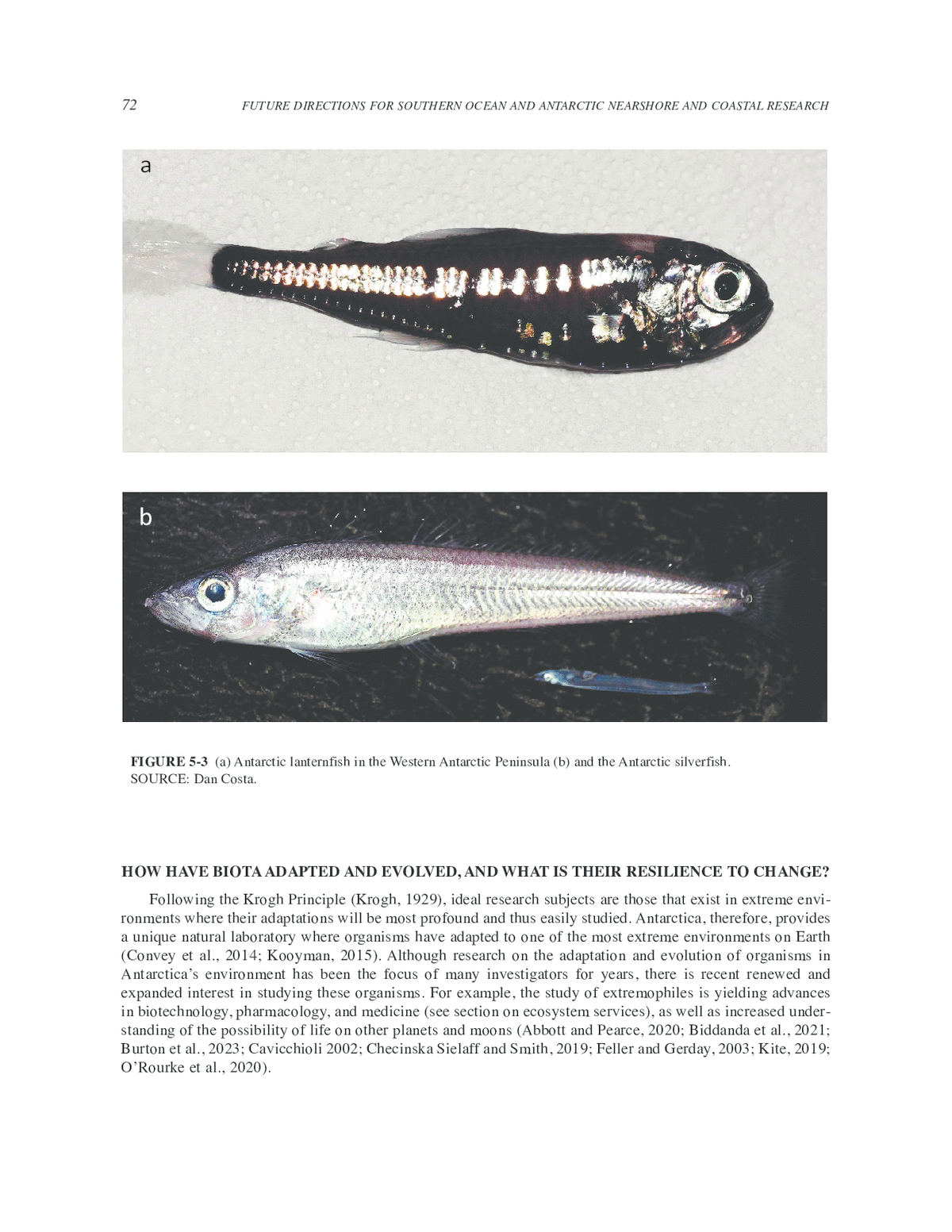
The mesopelagic zone (200–1000 m depth) is one of the largest marine habitats on Earth, making up 31 percent of the global ocean’s volume (Reygondeau et al., 2018). Given the average depth of the Antarctic continental shelf (roughly 500 m) and the profusion of deep bathymetric features on the shelf (i.e., canyons and troughs), the mesopelagic zone covers a substantial portion of the Southern Ocean, as well as the coastal and nearshore Antarctic waters (Figure 5-2), and shares important connectivity with the benthic zone of the continental shelf, which provides habitat for many commercially important fish species (Brasier et al., 2017). Despite its size, this area remains poorly understood. This region of the water column comprises a diverse community of organisms, including fish, squid, decapods, and zooplankton (Klevjer et al., 2016). These communities are dominated by lanternfish, which are small fish typically less than 20 cm in length (Gjøsaeter and Kawaguchi, 1980), and at higher latitudes, the Antarctic silverfish becomes the major fish prey species (Figure 5-3; Burns et al., 1998; Corso et al., 2022; Goetz et al., 2017; Hong et al., 2021; Jafari et al., 2021; La Mesa et al., 2004). In the Southern Ocean, many of these mesopelagic fish, such as the lanternfish and silverfish, are key prey items for higher trophic levels, including squid (Rodhouse et al., 1992), king penguins (Duhamel, 1998), Antarctic fur seals (Klemmedson et al., 2020; Lea et al., 2002), elephant seals (Cherel et al., 2008), and commercially important fish species (e.g., Antarctic toothfish) (Stevens et al., 2014).
Vertically migrating mesopelagic organisms affect the ocean’s biochemistry and contribute to carbon flux to the seafloor (Robinson et al., 2010). However, it is logistically challenging to quantify the physiological processes of mesopelagic organisms, so estimates of carbon fluxes and other elements through the mesopelagic community are not robust. Technological advances in fields such as molecular analyses (including metagenomics, transcriptomics, proteomics, and metabolomics) will improve understanding of the physiology of mesopelagic organisms and allow quantification of carbon cycling in the mesopelagic community (Strzepek et al., 2022). Mesopelagic biomass estimates can also be improved via increased acoustic observations with regularly calibrated echosounders set to run on default irrespective of the scientific goal, much like the cruise default is to run the Acoustic Doppler Current Profiler.5 Expanded collection of downward-facing marine imagery has also been demonstrated as an effective and noninvasive method for characterizing the benthic environment at these depths (Jansen et al., 2023). Additionally, while shipborne echosounders are limited in the depths they can target, deep gliders outfitted with echosounders can be used to further improve estimates of mesopelagic biomass. Midwater collections with large trawl nets, such as the Isaacs-Kidd midwater trawl and the rectangular midwater trawl (and others), are also necessary for ground-truthing acoustic scattering layers. These deep trawls require substantial cable, large winches, and suitable deck space to operate (the trawls themselves are large), and they are time intensive (e.g., 3 or more hours to trawl to 1000 m, compared with about 30 minutes to trawl in the upper 200 m). Cruises making use of these collection methods would benefit from icebreakers with longer endurance.
___________________
5Acoustic Doppler Current Profiler is used to measure how fast water is moving across an entire water column (WHOI, 2023).

NOTES: The mesopelagic zone (200–1000 m depth) is a substantial volume of the Southern Ocean, as well as the coastal and nearshore Antarctic waters, given the relatively deep nature of the Antarctic continental shelf.
SOURCE: Convey and Peck, 2019.

SOURCE: Dan Costa.
HOW HAVE BIOTA ADAPTED AND EVOLVED, AND WHAT IS THEIR RESILIENCE TO CHANGE?
Following the Krogh Principle (Krogh, 1929), ideal research subjects are those that exist in extreme environments where their adaptations will be most profound and thus easily studied. Antarctica, therefore, provides a unique natural laboratory where organisms have adapted to one of the most extreme environments on Earth (Convey et al., 2014; Kooyman, 2015). Although research on the adaptation and evolution of organisms in Antarctica’s environment has been the focus of many investigators for years, there is recent renewed and expanded interest in studying these organisms. For example, the study of extremophiles is yielding advances in biotechnology, pharmacology, and medicine (see section on ecosystem services), as well as increased understanding of the possibility of life on other planets and moons (Abbott and Pearce, 2020; Biddanda et al., 2021; Burton et al., 2023; Cavicchioli 2002; Checinska Sielaff and Smith, 2019; Feller and Gerday, 2003; Kite, 2019; O’Rourke et al., 2020).
Biota living in Antarctic waters, in sea ice, and in and under ice shelves have specific biochemical and physiological adaptations that allow them to survive and thrive in extreme conditions, including subfreezing temperatures, freeze–thaw exposure, salinity extremes (including hypersaline brine), strong seasonal temperature variations, complete darkness in the winter or 24 hours of sunlight in the austral summer, high ultraviolet radiation increased by reflection from ice, and highly episodic food availability. Perhaps the most well-studied example is the Notothenioidei suborder of fish that dominate the Southern Ocean and whose adaptations to cold include, for example, the innovation of antifreeze glycoproteins, lack of classic cellular heat shock responses, and loss of functional hemoglobins (Bista et al., 2023; Chen et al., 1997; di Prisco et al., 2002; Hofmann et al., 2000). Similarly, organisms in terrestrial coastal habitats survive in even more extreme conditions than marine organisms (Convey et al., 2014). For example, microarthropods are highly adapted to Antarctica’s cold, dry environment, with some mites and Collembola (springtails) capable of supercooling below –30°C. Others are capable of cryoprotective dehydration that extends their supercooling capacity reducing the risk of freezing. Some of the best-studied Antarctic insects—the midges—can tolerate freezing throughout the year and can withstand the loss of 50–70 percent of their body water (Teets and Denlinger, 2014). Additionally, the Antarctic midge has the most compact insect genome, which has been interpreted as an adaptation to an extreme environment (Kelley et al., 2014). Detailed meta-omics analyses of key marine species are needed to enable further discovery.
Since much of the Antarctic coastal margins remain locked beneath thick ice, little is known about the biota that inhabit these locales. The discovery of ecosystems beneath ice shelves, including grounding zones, hydrothermal vents, and cold seeps,6 has resulted from either focused drilling projects through the ice sheet (Tulaczyk et al., 2014) or fortuitous voyages near recently collapsed ice shelves (Domack et al., 2005). New habitats and rare, and perhaps transient, ecosystems have been observed in these sub–ice shelf environments (Ingels et al., 2021). Given the thickness of ice shelves in these locales, these unique habitats are often characterized as chemosynthetic, or driven by dark carbon fixation rather than photosynthesis, and may also be biodiversity hotspots that yield new species (Chown et al., 2015). For example, both microbial (Achberger, 2016) and macroscopic life (Sugiyama et al., 2014) have been observed at grounding zones (Schmidt et al., 2023). Identifying direct discharge inputs (Vick-Majors et al., 2020) can help target new unique, if transient, ecosystems.
The collapse of the Larsen B ice shelf in 2002 led to the discovery of the first cold seeps in the Antarctic. Features indicative of chemosynthetic cold seep communities—including microbial mats, aggregates of bivalve communities, and mounds and gas ebullition—were observed in 2005 (Domack et al., 2005). However, by 2007 the previously observed seep community appeared buried in ice-rafted sediment and/or phytoplankton detritus (Niemann et al., 2009). This rapid, dramatic shift from a chemosynthetic cold seep community to that of a more typical polar ocean benthic system indicates how quickly ecosystem changes associated with ice shelf collapse can occur. Thus, the ability to observe and study these environments requires a sense of urgency. This is especially true for cold seeps, since vast reservoirs of methane, a potent greenhouse gas, are predicted to be associated with these communities (Wadham et al., 2012). From a physical and biological perspective, understanding the controls on this release is essential to accurately predict future greenhouse gas emissions. For example, methane-oxidizing microbial communities could regulate methane flux from seep environments by converting methane to CO2. However, recent direct observation of microbial mat evolution associated with the formation of a methane seep near Ross Island found that extensive methane-oxidizing communities were not established quickly (i.e., within 5 years) and were therefore unable to control the release of methane from the seep (Thurber et al., 2020). Studying these transient ecosystems requires flexibility, including responding to rapid events such as changing ice conditions, rerouting toward recent collapses, and allowing for the design of reconfigurable shipboard design.
In general, the prioritization of exploratory and opportunistic science will better enable the identification of unique systems that can expand understanding of evolutionary and ecological processes in Antarctica (Gutt et al., 2021). This includes voyages to collapsed ice shelves and coastal regions of retreating ice sheets, which requires improved icebreaking capability. It also requires drilling, remote sensing, remote monitoring (e.g., camera systems, moorings, novel seafloor and borehole monitoring systems), helicopter and uncrewed aerial system
___________________
6Cold seeps are locations where seawater-temperature chemicals such as “hydrogen sulfide, methane, and other hydrocarbon-rich fluids and/or gasses escape from cracks or fissures in the ocean floor” (NOAA, n.d.b, para. 2).
(UAS)–supported reconnaissance, and AUV or ROV surveys at grounding zones. Robust cataloging of Antarctic biodiversity through molecular analyses (e.g., metagenomics, transcriptomics, proteomics, metabolomics) will require low-temperature storage and laboratory spaces for aseptic work (e.g., biological safety cabinets, controlled airflow spaces) on vessels.
Resilience to Global Climate Change
Understanding alternative stable states for the Southern Ocean in which current key prey species disappear is important because recent models suggest that such an outcome is likely, perhaps as soon as 2100 (Testa et al., 2022). Warming-induced changes in the Southern Ocean have already had significant ramifications throughout the marine pelagic ecosystem (Rogers et al., 2020). At the base of the food web, phytoplankton communities have undergone a major shift along the western Antarctic Peninsula over the last 20–30 years. Once dominated by diatoms, the system is now dominated by cryptophytes (Moline et al., 2004; Schofield et al., 2017). One of the key links between primary producers and top predators in the Southern Ocean is krill. Antarctic krill are among the most abundant animals on Earth (Atkinson et al., 2009) and support vast populations of apex predators (Laws, 1977; Murphy et al., 2013; Nicol et al., 2008; Reid, 1995; Trathan and Hill, 2016) and a rapidly growing fishery (Kawaguchi and Nicol, 2007; Nicol et al., 2012). Crystal krill, in contrast, are found in the Antarctic coastal zone and across the continental shelf (Saenz et al., 2020; Smith et al., 2014), but further research is necessary, as little is known about their life history and habitat requirements. In the last 90 years, the krill population has declined in response to warming in the southwest Atlantic sector, and their population center has contracted southward (Atkinson et al., 2019). Although alternate trophic networks in which krill is not the primary component of the food web may exist, it is not known what species or in what abundance these non-krill-based food webs may support (Murphy et al., 2012). Another important primary prey of upper-level predators that will be affected by climate change are notothenioid fish (e.g., Antarctic silverfish) (Burns et al., 1998; Corso et al., 2022; Goetz et al., 2017; Hong et al., 2021; Jafari et al., 2021; La Mesa et al., 2004). Antarctic silverfish are highly reliant on sea ice, as they lay their eggs within the platelet ice or pores of sea ice, which also serves as a nursery (Corso et al., 2022; La Mesa and Eastman, 2012; Vacchi et al., 2004, 2012). Additionally, critical benthic components of the coastal food webs (e.g., filter-feeding sponges, bryozoans, tunicates, corals, tube-building polychaetes) are potentially facing extinction because of the changing climate (Brasier et al., 2021; Griffiths et al., 2017; Reid and Croxall, 2001). The effects of climate change on these critical prey species are expected to propagate through Antarctic food webs.
Findings from rapidly changing environments can be viewed as harbingers of climate change effects over the next few decades. In Potter Cove on King George Island (also known as Isla 25 de Mayo), increased sedimentation rates following glacial retreat resulted in benthic community restructuring (Figure 5-4), shifting from a community dominated by ascidians to a mixed community including sea pens, sponges, bivalves, sea anemones, and ophiuroids (Sahade et al., 2015). This restructuring is likely due to the smothering and burying of existing communities, as suspension feeders can be impacted by the clogging of their filter-feeding structures due to high sedimentation rates (Pasotti et al., 2015). The same region has also seen mass stranding of Antarctic krill and salps following increased sedimentation rates caused by the retreat of the Fourcade Glacier (Fuentes et al., 2016). However, there are also some ecological benefits of glacial retreat, particularly pioneering species that can quickly colonize changing environments (Brasier et al., 2021; Gutt et al., 2021). For example, in the nearshore coastal zone, reductions in sea ice will likely change the hard-bottom rocky communities from predominantly marine invertebrates to macroalgae (Brasier et al., 2021). Additionally, entire restructurings of benthic communities have been observed where iceberg scour has resulted in an increase in pioneer species, such as echinoid, polychaete, isopod, and gastropod species, which are replaced by slower-growing species, such as habitat-forming sponges. It can take a decade for the benthos to return to pre-disturbance community composition (Gutt et al., 2013; Zwerschke et al., 2021). Glacial retreat also results in the delivery of dissolved iron, with positive implications for primary productivity (Arrigo et al., 2015). In Marian Cove, another inlet on King George Island, researchers found dense blooms of a benthic diatom that had become the prime food source for benthic herbivores and filter feeders (Ha et al., 2019). Fjords along the western Antarctic Peninsula are hotspots of pelagic and benthic biological productivity (e.g., Espinasse et al., 2012; Nowacek et al., 2011; Pabis et al., 2011), provide critical refuge

SOURCE: Brasier et al., 2021.
for all life stages of Antarctic krill during the winter months (Cleary et al., 2016; Espinasse et al., 2012), and are important winter feeding grounds for marine mammals (Costa et al., 2010; Nowacek et al., 2011; Hückstädt et al., 2020). Thus, similar changes in these western Antarctic Peninsula fjords could lead to cascading impacts at all trophic levels.
Changes at the base of the food web will also impact marine mammals and seabirds (Figure 5-5). Populations of baleen whales (blue, fin, humpback, minke, and southern right) have been recovering from harvesting to near extinction in the late 18th and early 19th centuries (Baines et al., 2021; Branch et al., 2004, 2007; Leaper and Miller, 2011). Humpback whales have likely returned to near pre-exploitation levels or reached carrying capacity in the South Sandwich Islands and the western Antarctic Peninsula (Baines et al., 2022; Pallin et al., 2023), while others, such as blue and fin whales, are recovering more slowly (Tulloch et al., 2018). Nevertheless, these positive changes are tempered by concerns that climate change will harm these species (Ainley et al., 2006; Friedlaender et al., 2011, 2015, 2021; Tulloch et al., 2019). Antarctic penguin populations have also changed markedly over the last 40 years (Ducklow et al., 2013; Lynch et al., 2012; Trivelpiece et al., 2011). While tourism, fishing, and the increase of whale populations have all been proposed as potential explanations, there is strong evidence that climate change is also directly impacting penguins, with clear “winners” and “losers” (Trathan et al., 2015). There are particular concerns for the emperor penguin; the recent record low in Antarctic summer sea ice extent led to complete breeding failure of several emperor penguin colonies in the Bellingshausen Sea (Fretwell et al., 2023). The increased frequency in occurrence of rain events due to warming can waterlog penguin eggs and lead to hypothermia in downy chicks (Fraser et al., 2013; McClintock et al., 2008). On the other hand, warmer air temperatures can speed the rate of snowmelt at penguin colonies and allow for earlier colonization of breeding sites (Black et al., 2018; Cimino et al., 2019); retreating glaciers may also open new bare rock areas for nesting penguins (Foley et al., 2018; Herman et al., 2020). There are also “winners” and “losers” among the Antarctic seal populations. An increase in ice-free waters and contraction of the “true polar environment” southward will likely benefit elephant and fur seals. In contrast, more polar-adapted and ice-dependent seal populations will likely decline. Among all seals, crabeater seals will probably see the most significant impact from climate change (Hückstädt et al., 2012a, 2020), likely experiencing a reduced breeding habitat and decrease in their primary prey,

NOTES: Antarctic fur and elephant seals breed on land while all other seals breed on ice. The emperor penguin is the only penguin that breeds on sea ice.
SOURCE: Photos (a)–(j), (l)–(n), (q) by Dan Costa; photo (k) by Christian Rohleder; photos (o) and (p) by Logan Palin.
Antarctic krill. Predicting the trajectory for Weddell and leopard seals is less certain. No data currently exist on population trends for leopard, Ross, and crabeater seals, because of behaviors that make them challenging to survey (Southwell et al., 2008).
An improved understanding of Southern Ocean and nearshore Antarctic food webs and trophic interactions is needed to predict the resilience of ecosystem structure to global climate change. These relationships can be evaluated in deep time through the use of marine microfossils as a proxy for biodiversity (Yasuhara et al., 2017), which requires seafloor and submarine sampling capabilities. Better measurements of benthic and pelagic biomass, productivity, community structure, and food webs in rapidly changing systems are also needed for predicting broader ecosystem fluctuations and understanding food webs based on copepods, other zooplankton, or benthic communities (Johnston et al., 2022). These measurements require access to regions that have been poorly studied due to their previous inaccessibility. This includes the nearshore, which would require both an independent, small coastal vessel that can navigate shallow rocky coastline areas and easy access to land using soft-sided or rigid inflatable boats that can be launched and loaded with personnel and equipment in rough sea conditions. It also includes ecosystems beneath and within multiyear sea ice and beneath ice shelves, which would require an icebreaker with Polar Class 3 rating and autonomous vehicles. Finally, access to mesopelagic and bathypelagic zones would require high-resolution seafloor imaging, autonomous vehicles, and deep-trawling capabilities from an icebreaker.
Further research into the physical and biological habitat requirements of upper-trophic-level predators is essential, as are measurements of population trends of key species for which there is limited knowledge (e.g., leopard, Ross, and crabeater seals). These measurements would be improved with high-resolution imagery of the sea ice–covered ocean. Remote sensing systems (satellite and UAS) already allow for surveys of several terrestrial species with minimal disturbance. However, further development is required to make these methods effective for species that inhabit the pack ice. Ship- and aerial-based methods for surveying cetaceans and pack ice seals are logistically challenging and expensive (Southwell et al., 2008), but acoustical surveys are proving to be an effective way of assessing the presence of species such as blue whales and some seals that are otherwise hard to survey (Aulich et al., 2022; Shabangu and Rogers, 2021). Electronic tags can also follow movement patterns and identify habitat requirements of Antarctic birds and mammals (Hindell et al., 2021). Additionally, indices of population status can be achieved from tissue biopsies that provide hormonal measures of reproductive status as well as stress levels (Pallin et al., 2022, 2023). Stable isotope analysis of tissue samples from living organisms, as well as from modern, historical, and subfossil remains, provide information on diet and food web structure and changes recently and over deep time (Brault et al., 2019; Emslie et al., 2003, 2013; Hu et al., 2013; Huang et al., 2014; Hückstädt et al., 2012a, 2012b, 2017; Polito et al., 2002, 2015). Combining tracking studies with stable isotopes over longer time and space scales would provide information on how habitat utilization, diet, and movement patterns are changing (Hückstädt et al., 2012a,b).
Understanding the magnitude and direction of climate change impacts on Southern Ocean ecosystems requires that they be studied over long periods of time, typically multiple decades. In the traditional funding model, grants are supported for approximately 3 years, sometimes with two field seasons but often with only one. While those studies are valuable and often provide mechanistic understanding of the impacts of climate change on organisms, they cannot be used to quantify trends and trajectories in ecosystems. The National Science Foundation (NSF)–funded Palmer Long-Term Ecological Research (LTER)7 study at the western Antarctic Peninsula is an excellent example of research that can be conducted using datasets spanning multiple decades (e.g., Ducklow et al., 2012, 2022). The value of maintaining the Palmer LTER project cannot be overstated, as it is critical for understanding changes occurring at the Antarctic Peninsula, one of the fastest-warming regions on the planet. In addition, little is
___________________
7LTER is a project that was established in 1980 and funded by NSF to study and document an array of ecological processes over extended spatial and temporal scales in an effort to improve the understanding of ecosystems as well as impacts on these ecosystems due to global changes. The LTER Network consists of 28 sites representing different ecosystems and spans the United States, Puerto Rico, and Antarctica. The Palmer LTER located on Anvers Island was established in 1990 and focuses on the pelagic marine ecosystem along the western Antarctic Peninsula. The McMurdo Dry Valleys LTER, located on the western coast of McMurdo Sound, was selected as an LTER study site in 1992 to assess the aquatic and terrestrial ecosystems experiencing extreme conditions in the cold desert region of Antarctica, and has been operating during each field season since 1993.
known about how benthic ecosystems at the Antarctic Peninsula are changing in response to warming over time, and expanding the Palmer LTER to include benthic diversity, biomass, and productivity would fill a major gap in our current knowledge (Brasier et al., 2021). In addition, the establishment of long-term studies in other high-priority regions would also provide deeper understanding of how the Southern Ocean is responding to climate change. For instance, the Ross Sea is a unique and productive ecosystem, and sections of it are now part of a marine protected area, recognized by the Commission for the Conservation of Antarctic Marine Living Resources (CCAMLR, 2020). Long-term studies of the Ross Sea ecosystem would allow researchers to disentangle the effects of climate change and fishing pressure, a task that is challenging, if not impossible, to do otherwise. However, while LTERs provide important location-specific, long-term data, responses to climate change can be spatially heterogeneous. Thus, LTER data need to be coupled with distributed observations over larger spatial scales.
Resilience to Ocean Acidification
Increased CO2 in the atmosphere has resulted in ocean acidification that is more pronounced at high latitudes, where buffering capacity is already naturally low (Fabry et al., 2009; Sabine et al., 2004). Ocean acidification is detrimental to organisms that form calcium carbonate exoskeletons, but even those that do not form such exoskeletons are still negatively affected through the substantial energetic costs required for internal acid–base regulation (Doney et al., 2009; Orr et al., 2005). While the direct effect of ocean acidification on marine mammals and seabirds is likely to be minimal, the effect on their prey may be significant.
Studies on the effects of ocean acidification on Antarctic pelagic and benthic communities have yielded results varying from negative to neutral to positive (Dell’Acqua et al., 2019; Ericson et al., 2018, 2019; Kawaguchi et al., 2011; McClintock et al., 2009; Saba et al., 2012; Schram et al., 2016; Yang et al., 2018). A recent meta-analysis8 of ocean acidification studies conducted on Antarctic organisms found that predicted ocean acidification is likely to negatively impact many marine organisms in the Southern Ocean with implications for their contributions to ecosystem services (Hancock et al., 2020); however, this study also highlighted the limited scope of ocean acidification–related studies conducted in the Antarctic. It emphasized the need to increase spatial coverage and focus on community- and ecosystem-level responses, as well as the potential for organisms to acclimate and adapt to ocean acidification. Uncertainties in the available data might be reduced with more individual-, community-, and ecosystem-level responses to combined stressors—particularly ocean acidification, increased temperature, and decreased dissolved oxygen. Studies on Southern Ocean benthic calcifiers are also limited, and consideration of the species-specific responses to skeletal mineralogy and physiological processes would reduce uncertainties (Brasier et al., 2021; Figuerola et al., 2021). These measurements require improved seawater aquarium facilities at Palmer and McMurdo stations and state-of-the-art instruments to control and monitor CO2, dissolved oxygen, and temperature for experiments.
Resilience to Pathogens, Parasites, and Disease
The vulnerability of Antarctic species to a host of pathogens and parasites may be exacerbated by the stressors of climate change or introduced through novel anthropogenic pathways. Recent examples include the discovery of a tumor-causing parasite among notothenioid fish on the western Antarctic Peninsula (Desvignes et al., 2022); an outbreak of sea star wasting syndrome in McMurdo Sound, which could fundamentally alter benthic community structure (Moran et al., 2023); and the appearance of avian flu, which could significantly impact seabirds and even seals (Barriga et al., 2016; Dewar et al., 2022; NSF, 2022). All of these developments may have been triggered or compounded by anthropogenic stressors. Limited disease surveillance in Antarctica makes it difficult to establish a baseline for the prevalence of disease-causing viruses or microorganisms, especially in the absence of manifest illness that might be observed opportunistically. However, disease outbreaks can cause rapid population decline, with downstream impacts on associated trophic interactions; as such, they represent relatively rare but potentially serious events. Because the spread of diseases can eclipse the speed with which new research programs can be
___________________
8Meta-analysis is a statistical approach to synthesizing the results of separate but related studies (Thacker and Stroup, 2016).
established, and because climate change and other stressors may make outbreaks even more likely, a greater understanding of host–pathogen interactions, the prevalence and diversity of viruses and other disease-causing agents in the Antarctic environment, and their interaction with forecasted climate change is a priority.
HOW CAN THE STUDY OF GLOBAL CONNECTIONS AND ECOSYSTEM SERVICES INFORM EVIDENCE-BASED CONSERVATION AND MANAGEMENT?
Despite the general perspective that the Southern Ocean convergence9 presents a barrier for organisms that might expand from more temperate latitudes into Antarctic waters, several recent discoveries have highlighted the importance of the Southern Ocean in the global hydrosphere (Murphy et al., 2021). Three fundamental processes control the biological and ecological connectivity of the Southern Ocean with other oceanic ecosystems: (1) physical processes, (2) biological migrations, and (3) human activities.
The Southern Ocean serves as a key connection with the Atlantic, Indian, and Pacific Ocean basins (Marshall and Speer, 2012). As described in Chapter 4, this physical oceanographic connection enables global biogeochemical cycles by transporting water masses, organisms, dissolved oxygen, nutrients, and carbon from one ecosystem to another (Mann and Lazier, 2005). Small organisms such as zooplankton and phytoplankton can utilize these physical connection processes to move spatially (Hays, 2017). There is, additionally, evidence indicating the importance of oceanographic fronts to marine mammals and seabirds in the Southern Ocean (Bost et al., 2009).
Larger animals can generally overcome physical processes at most scales with their own ability to move from one ecosystem to another (Figure 5-6; Costa et al., 2012). Migratory connectivity can be categorized as weak or strong (Webster et al., 2002). With weak connectivity, individual animals from a breeding site migrate to many different foraging sites; with strong connectivity, most individuals from a breeding site go to one foraging site. Loss of a foraging site would have a greater impact on a breeding population with strong connectivity than one with weak connectivity and could cause the strongly connected population to decline. Therefore, it is important to study the critical environmental conditions affecting the biological migratory connectivity of the Southern Ocean to other oceanic ecosystems. Some species’ territories are already expanding in response to changing climate conditions. Two adult spider crabs were collected in the Antarctic Peninsula in 1986 (Tavares and De Melo, 2004), and anomuran and brachyuran larvae were collected off King George Island in 2002 (Thatje and Fuentes, 2003). Recent modeling has also shown that no climatic barrier would preclude bathyal king crabs from invading the Antarctic shelf (Aronson et al., 2015). Climate change also has a well-documented impact on upper-trophic-level predators such as penguins. Gentoo penguins are a historically sub-Antarctic species that has expanded its range southward along the western Antarctic Peninsula as winter sea ice declines in extent and persistence (Clucas et al., 2014; Herman et al., 2020). King penguins, historically restricted to the sub-Antarctic islands such as South Georgia, have now started breeding on Elephant Island, nearly 1,300 km to the south (Borowicz et al., 2020). However, to date, no chicks have survived the Antarctic winter to fledge as young adults. The rapid southward expansion of these species has been directly tied to a changing climate and it likely represents dozens of range shifts and new introductions south of the Antarctic convergence.
In addition to physical processes and biological migration, human activities can also affect biological connectivity. Vessel traffic presents a direct risk for the introduction of nonnative species into the Antarctic (Hughes et al., 2020), and humans have also facilitated the movement of nonnative species, such as the grass Poa annua, into Antarctic waters (Lee and Chown, 2007; McCarthy et al., 2019). Monitoring in certain areas has already detected the introduction to the Antarctic of marine nonnative species (e.g., nonindigenous algae, encrusting bryozoans, live mytilid mussels, and polychaete worms) due to human activities, although the current establishment of these and other nonnative species in the Antarctic is uncertain (Brasier et al., 2021). Hughes et al. (2020) identified 13 nonnative species at high risk for introduction to Antarctic waters that are likely to threaten biodiversity and ecosystems on the Antarctic Peninsula. Understanding the biological and ecological connectivity of the Southern Ocean will require regular surveillance in the temperate archipelagos of the Antarctic Peninsula
___________________
9 The Antarctic Convergence is “a major boundary zone of the world’s oceans that separates the waters surrounding Antarctica into Antarctic and sub-antarctic regions” (Britannica Editors, 2013, para. 1).

NOTES: In the image on the left, Arctic tern is shown in red; short-tailed shearwaters in white; and black-browed albatross, wandering albatross, white-chinned petrel, and giant petrel in yellow. Orange arrows show the general north–south seasonal migration of seabirds. In the image on the right, humpback whale is shown in white and southern right whale is shown in yellow.
SOURCE: Murphy et al., 2021.
to track the arrival and ultimate fate of species migrating from areas further north. While satellite imagery has been successful in detecting previously unknown seabird colonies (e.g., Lynch and LaRue, 2014; Schwaller et al., 2018; Strycker et al., 2020) and can be used to track the changing area of clump- or mat-forming vegetation (e.g., moss; see review by Colesie et al., 2023), it cannot be used to detect crevice-nesting or cryptic species, marine species, or any of the smaller terrestrial organisms (e.g., insects) that might expand into the Antarctic. Because surveys of these organisms rely on close inspection and direct sampling by researchers in the field, this work will require extensive use of smaller boats, which are more agile in shallow and reef-riddled waters and more cost-effective for getting small shore or diving survey teams in position.
Monitoring of the migration and connectivity of marine mammals is assisted by a number of state-of-the-art technologies, including electronic tags (Carneiro et al., 2020; Cyr and Nebel, 2013; Hays et al., 2019; Hindell et al., 2020; Palacios et al., 2022; Wilmers et al., 2015) and passive acoustic listening (Australian Marine Mammal Centre, 2022; Gedamke and Miller, 2006; Warren et al., 2021). Electronic tags allow tracking of individuals, but the monitoring is limited to tagged animals. Passive acoustic listening, on the other hand, is not constrained by animal tagging, but it is limited to tracking individuals and species that are making sounds. Also, because acoustic waves can propagate for long distances in the water, the coverage area of a passive acoustic monitoring system can be extensive. Therefore, it would be useful to develop an integrated monitoring method utilizing both electronic tags and passive acoustics. It is worth noting that recent development of distributed acoustic sensing (SAGE, 2023), which enables continuous and real-time acoustic measurements along a fiber optic cable, is also applicable for passive acoustic monitoring of marine mammals (Bouffaut et al., 2022).
Ecosystem Services
There is an increasing interest in the ecosystem services provided by Antarctica (Cavanagh et al., 2021; Grant et al., 2013; Pertierra et al., 2021), some of which relate to geological or chemical processes involving the Antarctic continent itself and the surrounding Southern Ocean (Chapter 4). This section focuses on those ecosystem services
provided by Antarctic biota, including tourism, fisheries, and opportunities for future climate change–mitigation strategies. As noted above, the Antarctic provides a key habitat for several species that inhabit regions outside of the Antarctic during periods of the year; thus, the protection of these species in the Southern Ocean provides ecosystem services to regions beyond. Additionally, the availability of biota (particularly Antarctic krill) to mediate the Southern Ocean carbon flux could be considered an ecosystem service. Because both of these have already been discussed in the sections above, they are not discussed in this section.
Tourism
One of Antarctica’s most visible ecosystem services is its use as an ecotourism destination. The Antarctic Peninsula, the region most accessible to Antarctic cruise vessels, has seen rapid and almost continuous growth over the last 30 years (Bender et al., 2016), now drawing more than 100,000 visitors each year.10 While Antarctica’s appeal includes many abiotic features (e.g., icebergs, wilderness), penguins, seals, and whales are among the dominant attractions. And although the habituation of animals is a valid and ongoing concern, most of the research suggests that tourism has little impact on the survival and reproduction of Antarctic wildlife (Dunn et al., 2019; Lynch et al., 2009, 2019). Still, tourism may influence how much time animals spend at highly visited sites and their decisions about where to breed or forage (Flynn et al., 2023). Moreover, whale strikes by passenger vessels are a concern; whether the recent establishment of speed limits in certain areas along the western Antarctic Peninsula will reduce this risk remains to be seen. Improved methods for estimating whale densities and population trends using remote sensing systems or by identifying their migratory corridors and prime foraging locations using electronic tags would allow operators to tailor speed limits to areas of high whale density during the austral summer. The impact of tourism on benthic communities is poorly understood, but likely includes damage to sessile species from the landing of anchors (Brasier et al., 2021). Although there are ongoing concerns about the impact of Antarctic tourism on the environment and Antarctic wildlife, it is worth noting that the tour industry directly contributes to Antarctic science through logistical support of researchers (e.g., Durban and Pitman, 2012; McMahon et al., 2019; Naveen and Lynch, 2011; Polito et al., 2011), as well as various citizen science campaigns that provide important observations (e.g., tracking the movement of whales through photographs [e.g., Marcondes et al., 2021]).
In addition to the impact of human disturbance, the growth of Antarctic tourism raises other issues that will need scientific study, including the risk that passengers will inadvertently carry seeds or other propagules to the Antarctic and that passengers may carry viruses to the continent that could harm wildlife. As COVID-19 becomes endemic in the human population, its spread to Antarctica’s wildlife becomes a concern (Barbosa et al., 2021). In addition, the avian flu epidemic that started in 2022 represents an additional risk for zoonotic transmission (Dewar et al., 2022). A systematic program for screening Antarctic wildlife for viruses or microbial diseases does not exist at this time. However, the rising risk of global pandemics coupled with the increasing number of Antarctic tourists suggests that such a surveillance program is necessary to conserve wildlife. This type of program would require access to coastal sites using a vessel capable of safely working with avian flu and other viruses. Because of the inherent risks associated with this kind of research, it cannot be completed on tourism vessels, including those with the International Association of Antarctica Tour Operators, and must be conducted on research cruises with biohazard-capable vessels.
Fisheries
The Southern Ocean is home to several major fisheries, of which Antarctic krill and Antarctic toothfish are the most valuable (Figure 5-7). In the Southern Ocean alone, acoustic-derived estimates of mesopelagic fish biomass are on the order of 274 million tons (Dornan et al., 2022), supporting suggestions that the mesopelagic zone might represent an untapped blue resource (St. John et al., 2016). However, there is still significant uncertainty in current biomass estimates globally (Proud et al., 2019), and the mesopelagic zone remains largely unexplored (Webb et al., 2010). As food security issues continue to grow, humans will exert ever-increasing pressure on the ocean’s resources.
___________________
10 Presentation to the committee by Lisa Kelley, International Association of Antarctica Tour Operators, March 2023.

SOURCE: Murphy et al., 2021.
Southern Ocean fisheries are managed by the CCAMLR, but there are uncertainties about whether current regulatory mechanisms are sufficient to avoid negative impacts on the harvested populations, as well as the top predators that feed on them (St. John et al., 2016). Additionally, fishing can damage slow-growing benthic communities (e.g., sponges, bryozoans, corals) because of scouring and structural damage during the deployment of trawls and longlines. Deploying cameras to document these damages may be a key tool for managing these effects (Welsford et al., 2014). One of the challenges in determining whether current fishing practices are impacting wildlife is that fishing pressures are occurring alongside climate change, and the spatial and temporal coincidence of these two potential stressors makes it difficult to disentangle their effects (Trivelpiece et al., 2011). However, recent work has shown that the krill fishery is already negatively impacting top predators in the South Shetland Islands (Watters et al., 2020). Understanding the relative influence of climate change and fishing remains a major science priority, particularly at the Antarctic Peninsula, where krill fishing is most pronounced and where climate change is occurring rapidly. Key measurements needed to support this understanding include a spatially detailed understanding of catches, electronic tags on predators, and improved measurements of krill and fish densities. While the first requires only a willingness for companies to share data publicly, an expanded plan to track foraging predators would benefit from improved device design and battery performance.
Biomedical and Pharmaceutical Applications
Antarctic biota are uniquely adapted to the extreme conditions of polar life, and yet their potential value for human use is only partially understood. Bioactive or natural products are compounds produced by living organisms to facilitate interaction with each other and their environment. These low-molecular-weight molecules, of unique and diverse chemical structures (Croteau et al., 2000), are used to attract, deter, or kill other organisms or to confer a competitive advantage (Kreysa and Grabley, 2007; Vining, 1990). In the marine environment, bioactive compounds perform a variety of ecological functions, including maintaining and controlling community functioning and population dynamics (Amsler et al., 2014; von Salm et al., 2018). These compounds include antimicrobials, chemoattractants, and molecules that generate a range of chemical defenses. They can also confer protection against
abiotic stressors; for example, pigments can protect against high ultraviolet intensity and extreme temperatures (Gutzeit and Ludwig-Müller, 2014). Some bioactive compounds are important in regulating life cycle processes, such as inducing larval settlement of benthic invertebrates (i.e., Harder et al., 2018).
In addition to their ecological impact, many natural products exhibit a wide range of medically relevant activities, such as antibiotic or anticancer properties. The discovery and study of Antarctic natural products may lead to the development of novel pharmaceuticals (Liu et al., 2013; O’Brien and Wright, 2011). One example that highlights the importance of this type of research is icefish, the only vertebrate without functional hemoglobin genes or red blood cells. Genome sequencing of icefish has provided significant advances in understanding this evolutionary adaptation (e.g., Kim et al., 2019), which resembles several major medical conditions in humans, including anemia, osteopenia, and metabolic disease (Daane and Detrich, 2022). Other examples of the importance of Southern Ocean biota to medicine are recent genomics studies providing insights into how Weddell seals avoid decompression sickness and oxidative damage (Hindle et al., 2019; Noh et al., 2022), and the use of krill as a source of omega-3 fatty acid health supplements (Ramprasath et al., 2013).
Evolutionary aspects of southern biota may also be able to support advancements in technology. Research on cold-adapted (psychrophilic) microbes has grown rapidly, largely because of their potential use in biotechnology. Some of these microbes are currently being used in industry to produce various enzymes, as well as for their ice-binding proteins11 and polyunsaturated fatty acids (Clarke et al., 1984; Evans and DeVries, 2017; Marx et al., 2007; Nichols et al., 2002). One type of ice-binding protein, called antifreeze proteins, inhibits freezing at very low concentrations compared with other antifreeze compounds such as glycols and salts, allowing for smaller amounts of material to produce the same result and less material being dispersed into the environment. Additionally, as this material is a protein, it will degrade naturally. These proteins have been identified in bacteria, fungi, algae, diatoms, plants, insects, and fish (Bar Dolev et al., 2016). Since their discovery, these proteins have been used in a number of applications, including use as additives to prevent frost damage to foods or crops. Future applications may include preventing icing on roads and aircraft, minimizing the need for salts and other chemical treatments (Baskaran et al., 2021).
Bioactive compounds are often unique to an organism or a specific taxonomic group. Thus, given the biodiversity of the Antarctic marine and coastal system, particularly in intermittent and rare hotspots, the potential for novel discoveries is high. While the diversity, chemical structure, and function of products produced by Antarctic microorganisms, marine plankton, and benthic and deep-sea fauna remain largely unknown, advanced molecular techniques such as metabolomics, metagenomics, transcriptomics, and proteomics are rapidly transforming understanding of Antarctic chemical ecology (Amsler et al., 2014; Kelley et al., 2014; McClintock and Baker, 1997; von Salm et al., 2018). Genomic sequencing can reveal previously undetected secondary metabolites through the annotation of cryptic gene clusters12 that code for the biosynthesis of bioactive compounds (Murray et al., 2020, 2021; Zhang et al., 2019). Secondary metabolite production is often activated by interactions between organisms; thus, changes to the Antarctic system and the subsequent introduction of new species may trigger the expression of new, formerly cryptic metabolites (Avila et al., 2018; Heiser et al., 2020; Zhang et al., 2019).
Vessel capabilities to enable genomic analysis should include low-temperature storage and clean laboratory space for aseptic work (e.g., biological safety cabinets, controlled airflow spaces). Continuing molecular analyses (including metagenomics, transcriptomics, proteomics, and metabolomics) of these extremophiles will advance knowledge of specific adaptations and enable their use in technology.
Future Climate Change–Mitigation Strategies
Ocean carbon dioxide removal is a burgeoning topic in international policy spheres, with significant financial resources being funneled toward research on its methodology and its implications for ocean ecosystems (Cooley et al., 2022). Several capture-and-storage methods have been proposed, some of which may be relevant to the
___________________
11Ice-binding proteins are a diverse class of proteins with distinct evolutionary origins that help organisms survive in the presence of ice at low temperatures.
12Cryptic gene clusters are those that code proteins that are typically silenced under laboratory functions.
Southern Ocean. These include (1) ecosystem recovery, (2) phytoplankton fertilization, and (3) ocean alkalinity enhancement. In the Southern Ocean, the recovery of whales is considered a relatively low-risk intervention, though the total carbon sequestration potential is modest (less than 0.3 gigatons of carbon per year) (Pearson et al., 2023). Phytoplankton fertilization includes the addition of iron, phosphorous, nitrogen, or other nutrients to regions where they are depleted to enhance primary production and the biological pump. Iron fertilization was initially tested during the 1999 Southern Ocean Iron Release Experiment (Boyd and Law, 2001), with additional experiments planned (e.g., Korean Iron Fertilization Experiment in the Southern Ocean; see Yoon et al., 2018). However, iron fertilization of the Southern Ocean impacts the abundance and composition of marine biota; some concerning side effects include a shift in the phytoplankton community toward toxic species and a decline in dissolved oxygen concentration in subsurface waters (Yoon et al., 2018). Other phytoplankton fertilization experiments may have similar implications. Understanding the potential drawbacks and the net greenhouse gas reduction achieved through phytoplankton fertilization remains a key research priority. A newer approach under consideration is that of ocean alkalinity enhancement (OAE), whereby seawater chemistry is directly altered by the addition of minerals or other materials or by inducing electrochemical/thermal reactions that dissolve CO2 (Cooley et al., 2023). This approach has already been tested in the Bering Sea (Wang et al., 2023a). However, the implications of OAE on marine ecosystems have been largely unexplored and further research is necessary to determine if this is a viable approach (Bach et al., 2019). Whether assessing the effects of phytoplankton fertilization or OAE, novel sensors on autonomous platforms will be required to provide year-round, in situ measurements of trace elements and ocean–atmosphere exchange. Given preexisting international collaborations enabled by the Antarctic Treaty, the Southern Ocean represents a prime opportunity for large collaborative projects to identify the opportunities for and unintended consequences of future climate change–mitigation strategies.
CONCLUSIONS
The Southern Ocean and nearshore Antarctic ecosystem is uniquely adapted to extreme environments and rich in important ecosystem functions that regulate the exchange of energy, nutrients, and carbon throughout the food chain. Biogeochemical cycles allow Earth’s biota to regulate their chemical environment and adapt to climate change. However, considerable uncertainty remains about the role of different functional groups, from microbes to megafauna, in mediating the cycles of key elements (e.g., carbon, iron, silica, nitrogen, phosphorus) in the Southern Ocean and the feedbacks of these elements into the Antarctic ecosystem.
Conclusion 5-1: Southern Ocean and nearshore Antarctic biogeochemical processes play a key role in the global climate system through the biological carbon pump. However, these processes are poorly understood and require sustained and widespread biogeochemical and paleobiogeochemical measurements to better constrain models that address the role and impact of the Southern Ocean on global systems.
Although previous investments have defined questions for future research, there is much to be learned about how Southern Ocean biota will respond to continued and accelerating climate change or how their response may alter biogeochemical cycles and food webs. Sustained research will be essential for improving models of the global carbon cycle and the impacts of continued warming on the planet.
Conclusion 5-2: Antarctica is a unique laboratory in which the biological responses to millennia of climate variability are archived. Understanding the resilience of Antarctic biodiversity and ecosystem function requires innovative technologies—from advanced molecular analyses to continent-scale, remotely sensed observations—to document Antarctica’s biological heritage and reveal untapped resources. Because the full potential of this living and historical archive remains unknown, efforts to conserve it are essential.
Many Southern Ocean and nearshore Antarctic biota and ecosystems directly or indirectly benefit humans. These benefits include fisheries, biomedical and technological applications of bioactive products, tourism, oppor-
tunities for climate change–mitigation strategies, and the biological carbon pump. These ecosystem services can be protected using evidence-based conservation and management practices.
Conclusion 5-3: Sustaining Antarctic and Southern Ocean resources for a healthy ocean economy requires foundational and ongoing observations and modeling of marine resources, nutrient and biogeochemical cycling, climate, and biodiversity.
Finally, it is important to note that Antarctica, being relatively free from many of the anthropogenic influences that dominate ecosystems elsewhere, is an important natural laboratory for biology and ecology for which few substitutions are available. This understanding aligns with the Environmental Protocol, which designates Antarctica as “a natural reserve, devoted to peace and science.” For this reason, and the other key science questions that have been articulated in this report, there exists considerable value in fully cataloging Antarctic biodiversity across all scales of biological organization, from genes to ecosystems, and understanding how these components interact with one another. In this way, the study of Antarctic biota has value far beyond simply increased knowledge about the Antarctic.
TABLE 5-1 Science Traceability Matrix
| Science priority | Observations | Needed capabilities |
|---|---|---|
| What are the feedbacks between changing ecosystems and biogeochemistry that drive the carbon cycle? | Measurements of physiological rates and the roles of different functional groups in elemental cycling | Icebreaker capable of operating nearshore during the Antarctic winter |
| Vessel- or field station–based elemental analyzers and experimental facilities | ||
| Geochemical proxies for the impact of the biological carbon pump on past climate | Drilling and coring | |
| Properties of subglacial melt, subaerial flow, and groundwater | Icebreaker access to coastal margins to deploy seepage meters and autonomous underwater vehicles (AUVs) | |
| Boreholes for direct measurements and instrument deployment, may require air support | ||
| Multiomic measurements of mesopelagic organisms | Low-temperature storage and clean laboratory space for aseptic work on an icebreaker | |
| Quantification of mesopelagic biomass | Increased acoustic observations with regularly calibrated echosounders | |
| Expanded collection of downward-facing marine imagery | ||
| Deep gliders outfitted with scientific echosounders | ||
| Midwater collections with large trawl nets (e.g., Isaacs-Kidd midwater trawl, rectangular midwater trawl) |
| Science priority | Observations | Needed capabilities |
|---|---|---|
| How have biota adapted and evolved, and what is their resilience to change? | Cataloging Antarctic biodiversity using molecular analyses | Low-temperature storage and lab spaces for aseptic work on an icebreaker |
| Study of habitats through exploratory science | Icebreaker-enabled voyages to recently collapsed ice shelves and coastal regions | |
| Drilling through ice sheet and borehole observatories, enabled by air support | ||
| AUV surveys | ||
| Helicopter- and uncrewed aerial systems (UAS)–supported reconnaissance | ||
| Remote sensing and monitoring | ||
| Study of benthic and pelagic biomass, productivity, community structure, and food webs, especially in systems that are changing rapidly | An icebreaker with longer duration capabilities, high-resolution seafloor imaging, and deep-trawling capabilities. | |
| Autonomous vehicles that can be launched from the icebreaker | ||
| Soft-sided or rigid inflatable boats that can be launched and loaded with personnel and equipment in rough sea conditions | ||
| A small coastal vessel equipped with environmental sensing instruments (e.g., scientific echosounders) for shallow-water work and access to shore in ice-free areas | ||
| Marine microfossils as a proxy for biodiversity | Seafloor and submarine sampling capabilities | |
| Population trends of key species for which there is limited knowledge (e.g., blue whales, and leopard, Ross, and crabeater seals) | UAS imagery with improved battery technology, and expanded tasking of satellite imagery with more than 0.4 m spatial resolution | |
| Acoustical surveys | ||
| Sustained and consistent observations | ||
| Electronic tags to monitor movements and behavior | ||
| Small coastal vessel equipped with environmental sensing instruments (e.g., bioacoustics sonar, conductivity temperature and depth) for shallow-water work and access to shore in ice-free areas | ||
| Location-specific, long-term data collection | Long-term ecological research (LTER) areas | |
| Individual-, community-, and ecosystem-level responses to combined stressors | Improved seawater aquarium facilities at Palmer and McMurdo stations | |
| State-of-the-art instruments to control and monitor carbon dioxide, dissolved oxygen, and temperature for experiments | ||
| Host–pathogen interactions, the prevalence and diversity of disease-causing agents | A vessel capable of safely working with disease-causing agents |
| Science priority | Observations | Needed capabilities |
|---|---|---|
| How can the study of global connections and ecosystem services inform evidence-based conservation and management? | Track the arrival and ultimate fate of species migrating from areas further north | Satellite imagery for seabird colonies and vegetation |
| Passive acoustic listening, including distributed acoustics sensing along fiber optic cables, acoustic drifters and moorings | ||
| Small coastal vessel for shallow-water work and access to shore in ice-free areas or for the deployment of diving survey teams to document crevice-nesting or cryptic species, marine species, or smaller terrestrial organisms (e.g., insects) | ||
| Electronic tags | ||
| Systematic program for screening Antarctic wildlife for viruses | Access to coastal sites using a vessel capable of safely working with avian flu and other viruses | |
| Impact of fishing on harvested populations, predators, and benthic communities | Requirements for krill fishing companies to share data publicly | |
| Deployment of cameras on trawl nets | ||
| Improved device design and battery performance on electronic tags | ||
| Remote sensing systems | ||
| Passive acoustic monitoring | ||
| Small coastal vessel for surveying predators, deploying tags, or collecting biopsy samples | ||
| Cataloging Antarctic biodiversity using molecular analyses | Low-temperature storage and aseptic laboratory space on an icebreaker | |
| Long-term measurements of the impact of potential climate change–mitigation strategies | Novel sensors on autonomous platforms |
This page intentionally left blank.