Minimizing Utility Issues During Construction: A Guide (2024)
Chapter: 3 Strategies to Minimize Utility Issues During Construction

CHAPTER 3
Strategies to Minimize Utility Issues During Construction
A substantial number of utility issues during construction trace their origin to events or decisions that take place during preliminary design or final design. Therefore, a holistic approach to addressing utility issues during the construction phase requires the implementation of strategies both prior to letting and during construction.
Strategies Prior to Letting
Conduct Utility Investigations Systematically
The ASCE 38-22 standard guideline outlines typical activities for conducting utility investigations and describes four quality level attributes for individual utility features: quality level D (QLD), quality level C (QLC), quality level B (QLB), and quality level A (QLA). ASCE 38-22 includes examples showing utility facilities and their quality levels on utility investigation deliverables. However, it is worth noting that ASCE 38 is not a standard guideline for utility data attribution or feature symbology.
The ASCE 75-22 standard guideline describes essential elements for recording and exchanging data about the location and other attributes of underground and aboveground utility infrastructure. The guideline focuses on newly installed, repaired, or otherwise exposed or accessible utility infrastructure. The guideline establishes minimum, optional, and conditional elements of spatial and nonspatial attribute data associated with utility infrastructure. The standard guideline also provides recommendations for effective practices to facilitate data exchange among project stakeholders. Typical situations for application of the standard guideline in the context of construction and utility inspections include the following:
- New construction or repair of existing utility infrastructure.
- Adjustment or relocation of existing utility infrastructure.
- Any construction activity that exposes utility infrastructure.
- Trenchless utility installation or rehabilitation of existing utility infrastructure.
A recommended practice is to conduct utility investigations as early as possible during project delivery, with each quality level contributing to a reduction in the level of uncertainty about utility facility locations, depending on project needs. General guidelines are as follows:
- Preliminary design (prior or up to 30 percent design): Conduct preliminary utility investigation based on existing records (QLD), conduct utility investigation using geophysical techniques (QLB), and conduct utility investigation based on aboveground utility facilities (QLC). In general, it is advisable to first gather QLD data for the entire project and then to schedule the collection of QLB and QLC data. Because of the cost of QLB data, it is best to use geophysical techniques wherever there is a need for reliability in the horizontal location of utility
- Detailed design (30–60 percent design): Conduct utility investigation using test holes (QLA). Because of the cost of test holes, it is best to strategize test hole locations using criteria such as outcomes of earlier utility investigation activities and the identification of locations where knowing the elevation of an underground utility facility is essential (e.g., gas or high-pressure pipeline crossings, structure foundations, and culvert inlets and outlets).
facilities. Often, this requirement makes it necessary to use QLB for the entire project, but in other cases, it is possible to limit the collection of QLB to strategic areas.
The primary goal of project risk management is to reduce the level of risk as the project evolves. Managing risk is not a one-time activity. As Figure 2 shows, reducing risk involves using five risk management steps at critical stages or milestones throughout the project delivery process. A related recommended practice is to use the five risk management steps at critical stages as part of the utility impact analysis process to assess what kind of utility investigations are needed at each stage.
One of the goals of conducting utility investigations is to find and document abandoned lines. According to 49 Code of Federal Regulations 192, an abandoned facility is a facility that is permanently removed from service. State utility accommodation policies typically define an abandoned facility as a facility that is no longer operational, and the owner does not intend to use it in the future. Although ownership remains in place, a frequent problem is that utility owners remove abandoned facilities from their inventories. QLD utility investigations often miss abandoned facilities. One of the benefits of using QLB is that it becomes possible to find existing utility facilities (including abandoned facilities) that were not captured by using only existing records. If a project only relies on QLD investigations and perhaps a few test holes during the design phase, the risk of finding abandoned facilities during construction is high.
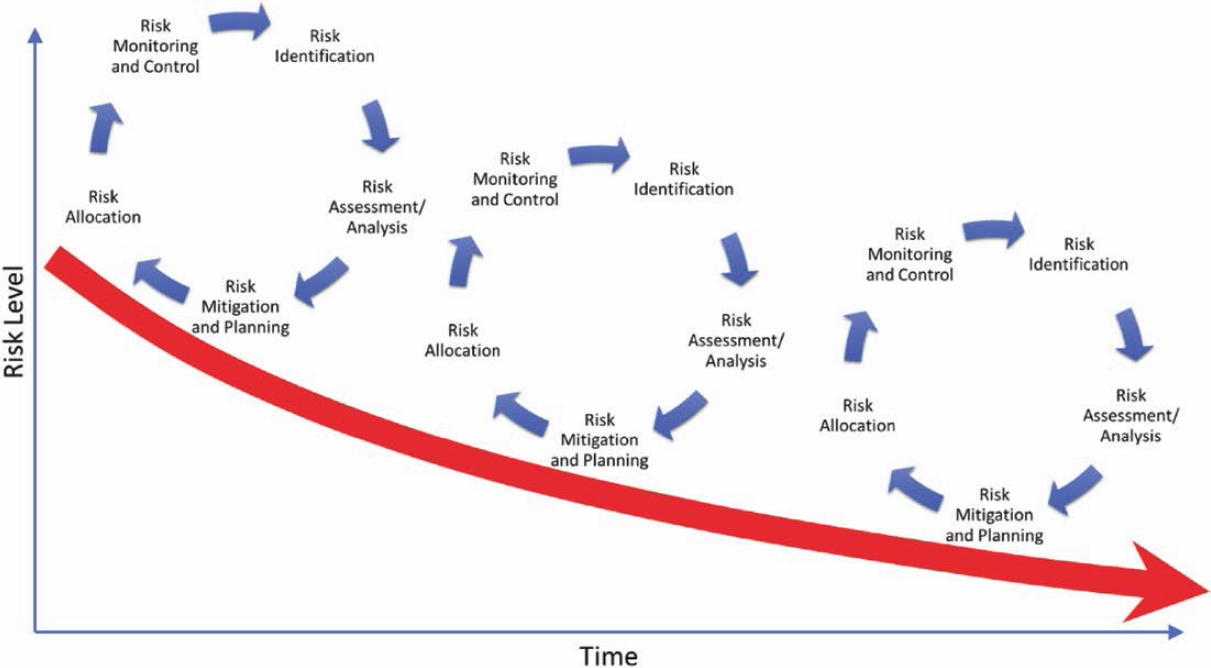
Figure 2. Project-level risk management process.
Utility investigations should include all existing aerial and underground infrastructure that might have an impact on the highway project, not just facilities that are normally considered utilities. Specifically, utility investigation scopes should include existing infrastructure the DOT owns (e.g., stormwater lines and intelligent transportation system [ITS] electric and communication infrastructure). Utility investigations often exclude this infrastructure, but the result is inefficiencies that the DOT must correct later.
Apply a Utility Conflict Management Approach to Identify and Resolve Utility Conflicts
Utility conflict management (UCM) is a comprehensive multistage process that involves the systematic identification and resolution of utility conflicts. As a reference, Figure 3 shows a generic depiction of the project delivery process, assuming a design-bid-build project delivery method. Figure 3 shows six concurrence points that correspond to important UCM stages, along with a summary of UCM activities by stage.
In practice, the number and placement of the UCM activities could vary from project to project. However, the stage structure and UCM activities described above provide a framework for implementation.
A recommended practice for UCM is to depict the location of utility conflicts on a utility layout and use a utility conflict list (also called a utility conflict matrix) to document each conflict, the process to analyze resolution alternatives, and the alternative that was finally selected. Specific recommendations to apply UCM effectively are as follows:
- Involve all stakeholders in the UCM process. UCM is a team effort that involves all stakeholders, not just the utility coordinator. The level of involvement depends on the role of each actor.
- Document each conflict using the utility layout, utility conflict list, and companion documentation (e.g., project files, pictures, specifications, schedules, right-of-way acquisition plans, and drainage design files).
- Identify and analyze conflicts in preparation for the completion of milestone deliverables. This UCM approach is proactive, turning the utility layout and utility conflict list into living documents, as opposed to first preparing milestone deliverables (e.g., at 30 percent design, 60 percent design, 90 percent design, or 100 percent design) and then conducting the utility conflict analysis.
- Use content from the UCM process to prepare the utility statement that is necessary to prepare the construction bid package, showing utility work completed prior to construction, utilities not in conflict with the project, and utility work that must be completed during construction.
A recommended practice is to schedule reviews of the utility conflict layout and list by subject matter experts in areas such as geometric design, structures, retaining walls, soundwalls, right-of-way acquisition, environmental impacts and remediation, drainage, construction management, traffic operations, lighting, and ITS. To avoid the risk of delays, a recommended practice is to schedule these reviews while keeping in mind when different activities normally take place. For example, requesting a review by traffic signal specialists around 60 percent design would be advisable because signal design is often one of the last activities during design (60–90 percent design), and pole foundations can be 1.2–1.8 m (4–6 ft) deep. Similarly, it is common to finish the drainage design around 60 percent design, but preliminary drainage design happens much earlier. It is at that time when it would be strategic for the hydraulic engineer to conduct a utility conflict review. In practice, the hydraulic engineer should remain involved in the UCM process until the hydraulic design is completely finalized.
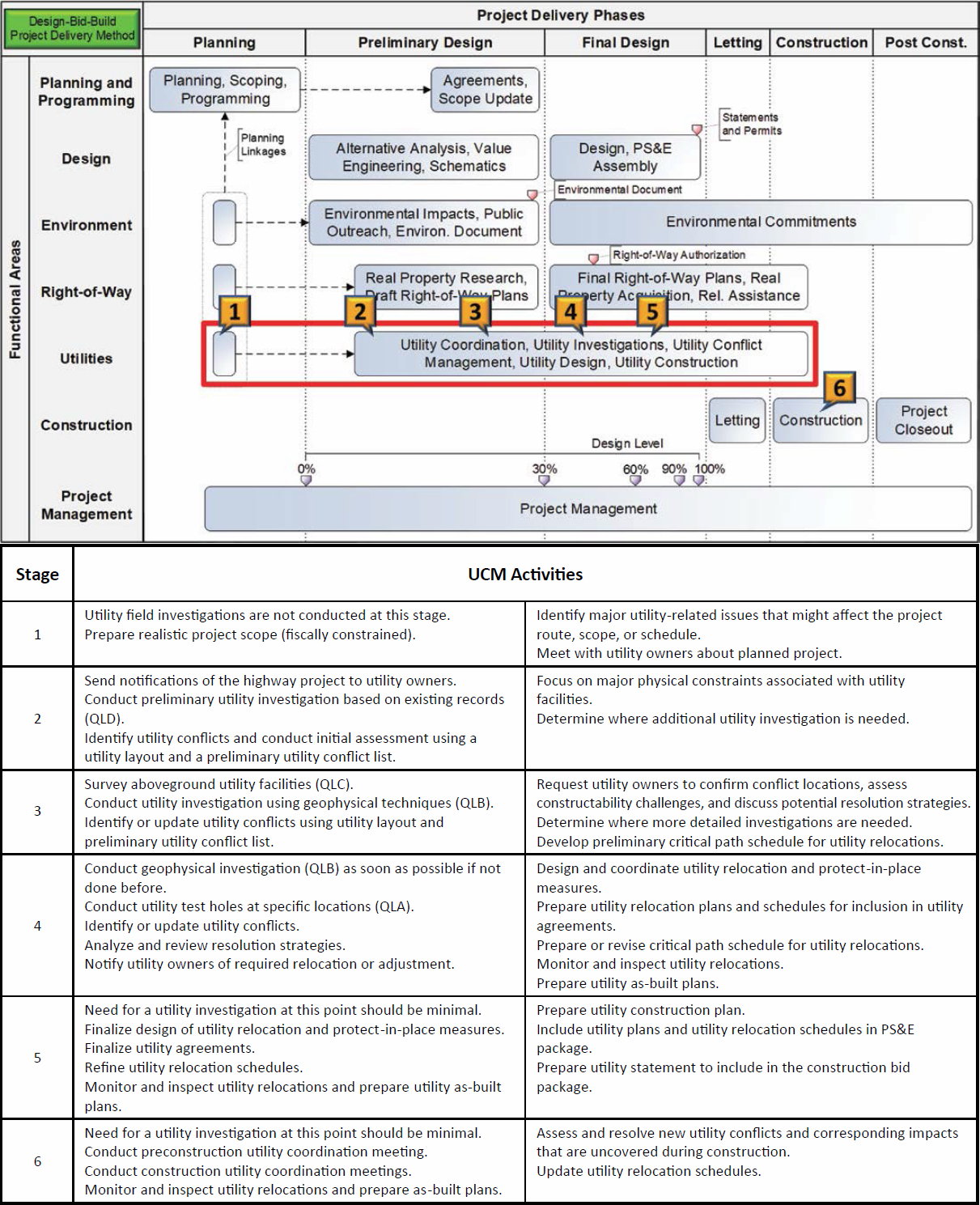
Figure 3. Utility conflict management stages and activities (assuming a design-bid-build project delivery method).
Conduct Constructability Reviews Whenever Utility Facilities Are Involved
It is common to conduct constructability reviews in situations where highway design features affect existing utility facilities (provided a proper utility investigation reveals the location and impact associated with these facilities). Constructability reviews of utility relocations are much less common. Having a construction engineer review utility conflicts and utility relocation plans helps identify issues that utility relocations might face in the field as well as issues the highway contractor might find during construction. Effective constructability reviews often involve utility owners.
A real-world example is the case of a bridge project that included the use of a large crane to install the bridge beams. The constructability review concluded that the weight of the crane and the drill shaft construction might affect an existing 20-cm (8-in.) gas line crossing. To mitigate the impact, the contractor had to load and transport the crane around the gas line crossing. It was also necessary to evaluate the construction of the drill shafts to minimize the risk of vibration on the gas line.
A common situation that requires a constructability review is when a proposed storm sewer is located below existing utility crossings. The constructability review helps identify protect-in-place measures for the affected utility facilities. Another situation where a constructability review is critical is when there is a risk of an electric shock. For example, when cranes are installing guardrail, signals, or lighting structures, a constructability review helps to decide whether to de-energize an electric line or what kind of protection might be necessary.
A constructability review can assist with the selection of strategies for managing existing utility facilities that contain hazardous materials. It is often necessary to remove these facilities, but sometimes the best decision is to isolate and protect the affected area. A constructability review can also help determine how to manage abandoned utility facilities. Utility owners are normally responsible for removing utility facilities that are permanently out of service. However, removing these facilities requires mobilization of crews and equipment as well as excavation and other disruptions within the right-of-way. In the context of highway construction, it might be in the best interest of the project to assign the task of removing abandoned facilities to the highway contractor.
In many cases, a utility facility might not appear to be in conflict with the final highway design, but a constructability review helps to uncover the conflict and decide on the most appropriate course of action. A common occurrence is roadway subbase preparation or rough grading taking place near an underground utility line crossing. The constructability review might show, for instance, whether to protect the utility line in place or to have a utility owner representative on site while construction is taking place. Another common occurrence is traffic phasing and temporary detours. A constructability review might reveal that a utility facility is in conflict with a traffic phase or a temporary detour even though the utility facility is not in conflict with the final highway plans.
Include Utility Relocations in Assessment of Critical Path for the Project
Often, utility relocation schedules only consist of a highly aggregated list of tasks and durations, missing important information to put utility relocation activities in proper context with respect to the highway construction project. Effective utility relocation schedules are those that are organized into manageable, logical phases, and include activities, durations, and milestones. Commonly used project management software should be used to prepare Gantt chart schedules that include these elements and enable the identification of schedule dependencies and critical paths. Ensuring that utility relocation schedules are as accurate as possible is important because, ultimately, if a utility owner does not clear its utilities on time in an area where the highway contractor needs to work, the DOT can be liable for delay costs.
Utility relocation schedules should also include related right-of-way acquisition schedules, particularly when a utility relocation involves existing easements or depends on the acquisition of right-of-way parcels. Combining these schedules for each utility owner enables utility and right-of-way stakeholders to understand the requirements and constraints by each discipline. For utility relocations, examples of essential elements to include in the relocation schedules are fabrication times, acquisition of replacement easements, duration times for fiber splicing (which can be months or years), and service disruption moratoriums. Including these elements in the utility relocation schedules becomes even more important if the utilities are not cleared by the time the construction project goes to letting.
Including the time and sequence of right-of-way parcel acquisitions is also important. Right-of-way acquisitions happening too close to the letting date increases the risk for right-of-way acquisitions and utility relocations to be part of the critical path, often making it necessary to complete these activities during the highway construction phase.
Prepare Robust Utility Relocation Documentation
Supporting documents required to prepare utility agreements are the utility relocation plans, the utility relocation schedule, and the utility relocation cost estimate. Consolidated plans and schedules for all utility relocations are also required for inclusion in the construction bid package.
The checklist in Table 3 includes both required elements and enhancement elements for inclusion in utility agreements and the construction bid package. Required elements are those that must be included in a required document or deliverable. Enhancement elements increase the completeness and quality of documents or deliverables that already include the required elements. The research team recommends including the checklist in Table 3 in the list of deliverables for designers and consultants, with a clear indication of which elements must be included in the final deliverables.
Develop a Utility Construction Plan and Include It in the Highway Contract
A utility construction plan (UCP) assembles elements from the utility relocation plans and utility relocation schedules into one document to create a narrative that explains how the highway construction can be affected and specific steps to manage those impacts. UCPs focus primarily on utility relocations that are not included in the highway contract under the assumption that the construction bid package already includes all the necessary information for in-contract utility relocations.
Utility coordinators should begin developing UCPs well in advance of the letting date when it is clear which utility relocations will not be cleared prior to letting. Specific recommendations for preparing UCPs are as follows:
- Each project is different. A rule of thumb is to begin developing the UCP at least 6 months prior to the letting date.
- Prepare utility relocation schedules (see recommendation above), making sure that schedules are organized into manageable, logical phases and include activities, durations, and milestones. Commonly used project management software should be used to prepare Gantt chart schedules that include these elements and enable the identification of schedule dependencies and critical paths. Make sure that utility relocation schedules are as accurate as possible because, ultimately, if a utility owner does not clear its utilities on time in an area where the highway contractor needs to work, the DOT can be liable for delay costs.
Table 3. Required elements and elements that enhance the quality of utility information.
| Document/Deliverable | Information Category | Information Requirement | Information Element |
|---|---|---|---|
| Utility relocation plans | Location | Required | Location of existing (in use and out of service) utility facilities. Location of proposed utility facilities. Stations and offsets to highway control baseline or coordinates based on the highway project datum. Utility conflicts, including those with project features and construction phases. Measures to protect in place. Elevations of utility facilities at critical points. Distinction of utility relocation work on private and public right-of-way. Existing and proposed highway right-of-way. Relevant existing and proposed highway facilities. |
| Utility relocation plans | Location | Enhancement | Existing and proposed utility right-of-way. Control of access lines and corresponding highway station locations. 3D models of relevant existing and proposed utility facilities. 3D models of relevant existing and proposed highway facilities. Test hole locations with corresponding table. |
| Utility relocation plans | Attributes | Required | Examples include (depending on the specific installation): Size. Material. Capacity. Wall thickness. Number and size of cables and conduits. Protective devices. |
| Utility relocation plans | Depiction and visualization | Required | Dimensions of utility structures, particularly when elements are not to scale. Symbology and legend used to depict existing utility facilities, proposed utility facilities, and utility conflicts. Dimensions of relevant existing and proposed highway facilities. |
| Utility relocation plans | Other elements | Required | Quantities. Notes. Additional instructions that facilitate understanding of the relocation work. |
| Utility relocation plans | Other elements | Enhancement | Excavation and fill zones. Overhead spacing requirements. Work phase details, including coordination and conflict management with highway work phases. Traffic control and safety drawing. Environmental mitigation plans, including storm water pollution prevention plan. |
| Utility relocation schedule | All | Required | Organized into manageable, logical phases. Activities, durations, and milestones. Gantt chart schedule. Advance notice(s) to the utility owner. Required work by others (interim and finish). Access restrictions for highway contractor. Coordination with other utility owners and stakeholders. |
| Utility relocation schedule | All | Enhancement | Special provisions. Assumed duration for work by other stakeholders. |
| Utility relocation cost estimate | Cost factor method | Required | Direct labor. Labor surcharges. Materials and supplies. Overhead and indirect construction charges. Transportation. Equipment. Credits. |
| Document/Deliverable | Information Category | Information Requirement | Information Element |
|---|---|---|---|
| Utility relocation cost estimate | Unit cost method | Required | Quantities. Unit costs. Construction specifications that include activity scopes and descriptions, list of payable items, units and methods of measurement, and list of subsidiary items. |
| Utility relocation cost estimate | Lump sum payment option | Required | Detailed relocation plans. Detailed work schedule. Detailed cost estimate. |
| Construction bid package | Utility relocation plans | Required |
Show utility facilities that:
Show excavation zones, fill zones, and overhead spacing requirements. Include access availability requirements for highway contractor. |
| Construction bid package | Utility relocation schedule | Required |
Utility construction plan consisting of:
|
| Construction bid package | Utility conflict list | Required | Known utility conflicts and their resolution. Outstanding utility relocations, if applicable. Utility owner contact information, including regional/local manager and field engineer/manager. |
| Construction bid package | Special provisions | Required |
Scope of utility relocations and effect on the highway project. Requirements for notification to appropriate agencies, including One Call. Requirements for utility coordination and corresponding documentation that include:
|
- Identify which utility relocations are anticipated to finish prior to letting, between letting and a prespecified deadline, and after the prespecified deadline. The prespecified deadline depends on the project and how quickly the highway contractor will start construction. A rule of thumb is 3 months after the letting date, although many contracts allow contractors to start within 30 to 45 days.
- Update utility relocation schedules and revise the utility relocation completion schedule often. This activity, which starts during design, should continue during construction until all utility relocations are complete. The schedule must be monitored and enforced to avoid unnecessary delays and claims.
- Include in the UCP all utility relocations that will not be in the highway contract and that will not be completed prior to the prespecified deadline. Part of the analysis involves deciding
- Include in the UCPs information such as advance notice(s) to the utility owner, required work by others (interim and finish), access restrictions for highway contractor, coordination with other utility owners and stakeholders, and assumed duration for work by other stakeholders. This information helps identify areas where it is necessary to restrict highway construction because of active utility relocation activities.
- Include the UCP in the construction bid package, making sure to add a disclaimer that the information is provided to assist prospective bidders in planning their work, but that the selected contractor is not liable for activities and schedules that only utility owners can control. Alternatively, the DOT might decide not to include the UCP in the bid package. A downside to this strategy is that UCPs might not be shared with prospective bidders at all, rendering UCPs useless. Even if the DOT then shares the UCP with the contractor, the contractor might discount its benefits (and therefore ignore the utility relocation schedules included in the UCP) because the UCP was not a contract document.
- Use a contract-level special provision to outline an escalation process for utility clearance dates, which includes required coordination with utility owners and how to manage situations that might trigger delay change orders or claims.
which utility relocations to include in the highway contract as a strategy to manage risks during construction. Municipality-owned utility infrastructure, such as water and sanitary sewer, as well as communication duct banks and related civil infrastructure are often suitable candidates for inclusion in the highway contract.
Use Right-of-Way Clearing Contracts for Utility Relocations
A standard item in highway construction specifications deals with the removal and disposition of all obstructions to prepare the right-of-way for construction. It is common to include in the item a provision for protecting features on the right-of-way and pruning trees and shrubs as directed. Item measurement and pay are usually by the area cleared, length cleared (regardless of right-of-way width), or tree removed.
When utility relocations take place before letting, a question that often surfaces is who should pay for clearing the area of the right-of-way that is necessary for the relocations. A common complaint from utility owners is that the DOT should be financially liable because right-of-way clearing is included in the highway contract anyway. If utility owners pay for clearing the right-of-way, the risk of overcharging increases. This effect multiplies if multiple utility relocations are taking place, each one requiring right-of-way clearing. Other risks include having to complete separate environmental reviews if the environmental clearance for the highway project does not include partial right-of-way clearing activities.
Right-of-way clearing contracts outside the highway contract are useful for clearing the right-of-way in preparation for utility relocations, particularly in heavily vegetated areas. In a typical situation, only one right-of-way clearing contract is necessary to prepare the area for all utility relocations, therefore reducing the risk of overpaying for multiple right-of-way clearing activities. Another benefit is to increase the chances each utility owner will relocate correctly and on schedule. In addition, it may be possible to use right-of-way clearing contracts to remove abandoned lines when the owner cannot be located or is out of business.
Strategies During Construction
Stake Right-of-Way and Maintain Markers for Utility Relocations
When a utility owner places facilities on a project without knowing with certainty where the right-of-way line is, the risk exists that utility crews will guess at the right-of-way line and place
the utility facility in the wrong location or, worse, on private property. Having to relocate utility facilities a second time to correct the error can affect the sequence of highway construction. Staking the right-of-way before utility relocations start helps to prevent this issue from occurring. Requiring the utility owner to hire a surveyor to find or set the right-of-way is an obvious solution. However, the DOT runs the risk the survey might cost more than what the utility owner had anticipated because the surveyor is not familiar with the project or takes longer to research the necessary project data and boundary evidence.
Staking the right-of-way is particularly critical on roadways where the DOT did not acquire right-of-way for the project. Many monuments have been knocked out over the years as a result of roadside maintenance operations, fence construction, and utility installations close to the right-of-way line. However, staking the right-of-way on proposed right-of-way is also beneficial, particularly if the new corners have not been set or contractors knocked them out while placing new fences. In addition, utility crews often do not have metal locators to find property corners, or it is not obvious where to search for the corners, and utility owners often do not have professional surveyors on staff.
Staking proposed roadway structures or other proposed utility installations is also critical to avoid the risk of secondary utility relocations, particularly when planning the installation of utility relocations that are too close to those features. Having a survey crew stake the proposed structures, poles, or lines enables utility owners to verify that they are locating their facilities correctly and far enough away to avoid a new conflict.
Develop a Common Repository of Utility Data and Other Project-Related Data
One of the most time-consuming tasks during construction is keeping all stakeholders on the same project datum and checking for field locations not matching utility plans or project files. Using an incorrect datum, scale factor, or benchmarks is a common issue that requires multiple meetings to resolve the differences and then having to revise the plans. An effective strategy to address these issues is to set up a cloud-based shared drive to store up-to-date information that all stakeholders can access. Having a common set of benchmarks and associated metadata and making this information available ensure that all stakeholders use the same datum for all field measurements, including utility relocations and productions of utility as-builts. The shared drive can also store a list of all contacts, including utility owners, contractor personnel, inspectors, and emergency numbers, as well as copies of project files and as-built utility plans as they become available.
In the absence of common benchmarks and metadata, utility owners may be convinced they are using correct data and are relocating correctly but are actually causing new conflicts. The result is confusion and delays when the contractor finds these problems. A similar problem occurs when utility crews do not use the approved locations but instead decide on the fly where to place the relocated facility. Utility crews often do not have survey support and might not appreciate the importance of placing facilities at the approved locations.
Schedule Utility Preconstruction Meeting or Include Utility Owners in Highway Preconstruction Meetings
Preconstruction meetings are standard highway construction events. These meetings set the stage for the establishment of communication protocols and other procedures among stakeholders, including contractor, subcontractors, DOT construction manager, design consultants, surveyor, inspectors, and others. It is not common to include utility owners or representatives
in these meetings. One of the reasons is that the meeting agenda may already be full and adding utility topics would significantly extend the meeting time. Another reason is that the number of utility owners that need to be invited could easily exceed the meeting capacity. Nevertheless, for small projects or projects that do not have complex utility relocation issues, including utility owners in the highway preconstruction meeting is certainly advisable. For large highway construction projects, or in situations that involve complex utility issues to address during construction, it is best to schedule a separate utility preconstruction meeting.
Utility-related topics to discuss during the utility preconstruction meeting include the following:
- Points of contact and communication protocols.
- Confirmation of utility relocation plans and schedules.
- Utility outage restrictions (often driven by time periods when utility service cannot be interrupted) that might affect construction activities, as well as requirements and protocols for reestablishing utility service to customers.
- Concerns about the contractor working near utility facilities and protective measures that will be required.
- External impacts to utility relocation schedules (e.g., limited crew availability or crews that need to be diverted due to outside forces).
- Traffic control in construction zones.
- Access issues for utility stakeholders and adjacent landowners.
Schedule Recurrent Utility Coordination Meetings During Construction
Utility owners that are relocating facilities during highway construction should have frequent meetings with the highway contractor and other DOT representatives (e.g., construction manager, inspector, and surveyor). A recommended practice is to set up recurrent meetings at the job site office (e.g., weekly). As needed, meetings could also take place at specific locations on the project to assess field conditions. Examples of items to discuss include relocation status and schedules, coordination and cooperation needs, traffic control, environmental compliance, Build America, Buy America Act requirements, and when materials will be on site for inspection.
These meetings offer the contractor the opportunity to notify utility owners when utility personnel will be needed on site to avoid damage to a utility facility or to mitigate a safety concern (e.g., by discussing where staking is needed or where it is necessary to locate existing or proposed utility facilities). Advance staking of proposed utility infrastructure by the utility owner may be required by the highway contractor when exact locations of both utility and highway structures are critical. Coordination between the contractor and utility owners is particularly critical near areas such as high-pressure gas lines or electric transmission lines.
Use Plastic Pipe to Mark Underground Lines
One of the challenges when installing new underground utility facilities or when exposing existing lines is that once the excavation is backfilled, it is difficult to remember where the facility was located. Even when accurate X-Y-Z data are collected, construction crews do not necessarily have ready access to the data. Placing a 5-cm (2-in.) plastic pipe vertically on top of the line when the trench or test hole is still open and allowing the pipe to protrude slightly above the ground level enable all stakeholders to easily locate the underground facility. The contractor, utility owner representatives, or a surveyor can also use a tape to verify the depth of the line relative to any work that may be happening on the surface. This low-cost technique is particularly effective in situations where it is not clear whether all stakeholders are using the same datum.
Use Utility Layout to Show Abandoned Utility Facilities
If a contractor finds a utility facility that was not included in the utility plans or listed in the utility conflict matrix, it is impossible to know without more information whether the line is active, inactive, out of service (temporarily or permanently), or abandoned. To minimize its liability, the contractor stops working in the area until a positive confirmation arrives about the status of the line. A strategy to manage abandoned utility facilities during construction is to prepare plan sheets that show all abandoned lines that are found within the project limits, along with information about the owner and the agreed-upon disposition of the line (e.g., removal or cut and fill with grout). Keeping the inventory of abandoned lines up to date also helps reduce the risk of delay claims.
Conduct Utility Relocation Inspections Systematically
Requirements for the inspection of utility construction vary with the complexity and location of the utility work and the associated impacts on the transportation facility. For smaller installations, it may be sufficient to spot check for general conditions of the relocation, traffic control, and safety. In other cases, the complexity of the utility work may require continuous and close observations of (a) construction methods, including excavation, installation, backfilling, and restoration, and (b) alignment and dimensions (i.e., X-Y-Z coordinates) of the utility facilities within the right-of-way.
In addition to verifying actual locations, an important focus of the inspection job is to verify the utility facilities as installed are not in conflict with adjacent facilities and structures. Even if a facility is installed properly according to the plans, checking for conflicts in the field helps to uncover hidden situations the contractor or other utility owners might have missed otherwise, but that need to be addressed, sometimes as soon as possible, to avoid the risk of project delays.
Utility inspection procedures should be like those used for roadway inspection with respect to record keeping, diaries, pictures, videos, and other supporting data. An obvious difference is that utility inspections are also used to gather data for utility agreement reimbursement purposes. A critical implementation issue is which stakeholder(s) should conduct utility inspections. Regardless of whether utility relocations are reimbursable or not reimbursable and whether utility relocations are included in the highway contract or handled by utility owners directly, both DOT and utility owners should have an interest in the utility inspection tasks and their outcome. A common belief at DOTs is that utility relocations should be the sole responsibility of utility owners, but utility owners also often believe that DOTs cause utility relocations with their projects and therefore should be fully responsible for them. A more effective approach is to discuss the issue of utility inspections openly during utility coordination meetings and outline clear responsibilities and expected outcomes by each party. Often, the only practical approach is to absorb the cost of conducting utility inspections within the project budget, either by using internal inspectors or by using construction engineering and inspection contractors.
The next chapter includes specific guidance for conducting utility inspections and collecting data suitable for producing as-builts.


