A Vision for the Manufacturing USA Program in 2030 and 2035 (2026)
Chapter: 2 International Program Comparison and Benchmarking
2
International Program Comparison and Benchmarking
International manufacturing institutes serve as a global benchmark for the Manufacturing USA institutes. Foreign models informed the launch of the Manufacturing USA institutes which borrowed elements from Germany’s well-known Fraunhofer manufacturing institutes when the U.S. program was being designed. China has since studied the Manufacturing USA institutes when designing its own system. The committee considered a number of the approaches of leading manufacturing nations to identify lessons for the ways Manufacturing USA institutes might evolve in the future.
The committee found that there are significant differences between leading-edge foreign models and the approach taken by Manufacturing USA. These distinctions include program offerings that are standard in foreign institutes but are not always standard in the United States, such as state-of-the-art facilities for scale-up and testing, sizeable engineering staffs with in-depth technical expertise, in-house business development functions, and technology development and implementation efforts for small and medium-sized manufacturers (SMMs).
However, perhaps the more significant difference of successful foreign models from Manufacturing USA is not in the details of institute design but in the broader context of these countries’ emphasis on industrial strategy, with manufacturing as a national priority. Institutes play a key role toward achieving this national strategic goal and are integrated into the strategy. The financial system is aligned as well, with the government directing it to target manufacturing. These countries use patient-capital financing tools not available in the United States, which underlie these countries’ industrial policy programs. They also fund their institute-like programs at much larger scale than the United States.
An overall finding is that other nations have long-term, permanent manufacturing institute programs that are not term limited. These nations recognize that the advanced manufacturing challenge is enduring and cannot be addressed as a short-term issue.
INTERNATIONAL MODELS
The committee benchmarked seven successful government-affiliated international advanced manufacturing programs analogous to the goals of the Manufacturing USA program, with a focus on topics most relevant to the study. Although the programs are comparable in their overall objectives, each has unique approaches and program offerings including industrial strategy, dedicated scale-up financing, infrastructure, staffing, and much more. The following capsule descriptions briefly summarize the programs, and additional sources are referenced offering a fuller description of each program including its history.
Belgium: Interuniversitair Micro-Electronica Centrum VZW
Interuniversitair Micro-Electronica Centrum VZW (IMEC) is a globally leading R&D center for microchip technology. Infrastructure is key to IMEC’s strategy, including “cleanrooms” that can be used for development, prototyping, and manufacturing. The underlying intuition—and need—for IMEC is that the complexity and costs of microelectronics research are beyond the capabilities of any single company or university. IMEC’s semiconductor fabrication plant can be used for any maturity level of production short of true commercialization. Many U.S. companies and key suppliers to the U.S. semiconductor industry use IMEC as a critical R&D manufacturing resource, as these capabilities are not available in the United States.
IMEC has a distinctive R&D partnership model, with corporate partners sending staffers to IMEC who join teams undertaking the research. The intellectual property (IP) of resulting research is co-owned with IMEC. Currently IMEC has a research staff of 6,000 of which 1,000 are in-resident researchers from corporations and 1,200 are doctoral students. Seventy percent of IMEC’s funding comes from corporations and 30 percent from government. Even though IMEC could be financially self-sustaining, government funding is deemed necessary for longer-term (5- to 10-year) advancements rather than short-term industry needs, according to IMEC executives.1
United Kingdom: High Value Manufacturing Catapult
The UK High Value Manufacturing (HVM) Catapult was designed to bridge the same gap seen in the United Kingdom as in the United States between early-stage publicly funded basic research and later commercialization. However, unlike the Manufacturing USA institutes, it has a large in-house engineering and scientific staff of more than 3,500 employees. The Catapult centers also house the UK equivalent of the National Institute of Standards and Technology’s Hollings Manufacturing Extension Partnership (MEP) and have multiple formal programs for collaborating with academics including engineering doctoral students.
The Catapult centers, which are independent not-for-profit businesses, follow the Fraunhofer “thirds” funding model of one-third core funding from government, one-third from business contract R&D projects, and one-third from collaborative R&D projects from
___________________
1 IMEC, n.d., “About IMEC,” https://www.imec-int.com/en/about-us. Accessed January 15, 2026.
a range of sources including other funding agencies. The funding is based on a strategy and delivery plan, with Catapult centers reporting quarterly against their key performance indicators. The HMV Catapult’s capabilities have attracted the interest of global manufacturers. For instance, Boeing is a co-founder of the University of Sheffield’s Advanced Manufacturing Research Centre (AMRC), which is part of the HVM Catapult, and Airbus’s “Wing of Tomorrow Program” is being developed in partnership with the Catapult centers.2
Germany: Fraunhofer
Germany’s Fraunhofer-Gesellschaft, along with Taiwan’s Industrial Technology Research Institute, is often seen as the world’s leading applied research organization. Its 32,000 staff, consisting primarily of scientists and engineers, operate with an annual research budget of approximately 3.6 billion euros. Fraunhofer follows the “thirds” funding model with one-third of their budget coming from contract research from industry, one-third from the German federal and state governments, and one-third from other publicly available research funding.3
Each Fraunhofer is typically paired with a university and is also tightly linked to industry. The university tie-in provides fluidity in research staff. Funding from industry for contract research helps maintain commercial relevance. There are around 75 Fraunhofers, meaning that there is one for almost every significant industrial sector, and there are further international institutes including Fraunhofer USA. SMMs are a focus area. Recent Fraunhofer initiatives include ATHENE, Europe’s largest cybersecurity research center.
Fraunhofer and Germany’s excellence in engineering has underpinned the success of Germany’s economic model, but now this model faces severe geopolitical challenges. Germany was heavily reliant upon Russia for energy, which it has not been able to cheaply replace. It also offshored much of its car industry to China, chasing that market, but China is now an EV exporter to Germany. These grave challenges show that institutes need to be understood in a broader context including a country’s geopolitical strategy.4
Japan: METI
The Ministry of Economy, Trade and Industry’s (METI’s) mission is to develop Japan’s economy and industry by promoting economic vitality in private companies and smoothly advancing external economic relationships, and to secure stable and efficient supply of energy and mineral resources.5
___________________
2 HVM Catapult, n.d., “About us,” https://hvm.catapult.org.uk.
3 Fraunhofer Annual Report 2024, https://www.fraunhofer.de/en/media-center/publications/fraunhofer-annual-report/annual-report-2024.html.; and NASEM, 2013, 21st Century Manufacturing: The Role of the Manufacturing Extension Partnership Program, National Academies Press, https://doi.org/10.17226/9807, Appendix A2, pp. 224-284, https://www.nationalacademies.org/read/18448/chapter/13.
4 W. Münchau, 2024, Kaput: The End of the German Miracle, Swift Press.
5 Ministry of Economy, Trade and Industry, n.d., “About METI,” Republic of Japan, https://www.meti.go.jp/english/aboutmeti/data/meti_mission.html.
METI oversees four national institutions—Advanced Industrial Science and Technology (AIST), New Energy and Industrial Technology Development (NEDO), Kosetsusi (Public Testing Laboratories), and SME Support Japan (SMRJ)—each with its unique strengths, working together to support companies at different stages. AIST conducts world-class research, NEDO provides funding with large-scale financial resources, Kosetsushi supports measurement, and SMRJ offers services specifically tailored to small and medium enterprises (SMEs). This comprehensive ecosystem of support has contributed to Japan’s strong position in manufacturing.
Established in 1980, NEDO is Japan’s largest public R&D management organization. NEDO has a massive fund focused on technology diffusion for semiconductors and artificial intelligence (AI), electric vehicles, and disruptive innovations. Grant amounts for semiconductors and AI tend to be particularly large. For example, their R&D Project of the Enhanced Infrastructures for Post-5G Information and Communication Systems has a budget of $18B to develop advanced semiconductor manufacturing technologies. Grants support not only the development of equipment and facilities, but also human resource development for R&D, commercialization, and industrialization, as well as scale-up of SMEs.
Kosetsushi is quite different from the other three. Like AIST and NEDO, it supports all 47 prefectures, but its main services are inspection and measurement, commissioned R&D, and technical consulting. Its governance is under local governments, not the national government, so the quality of support varies from region to region.
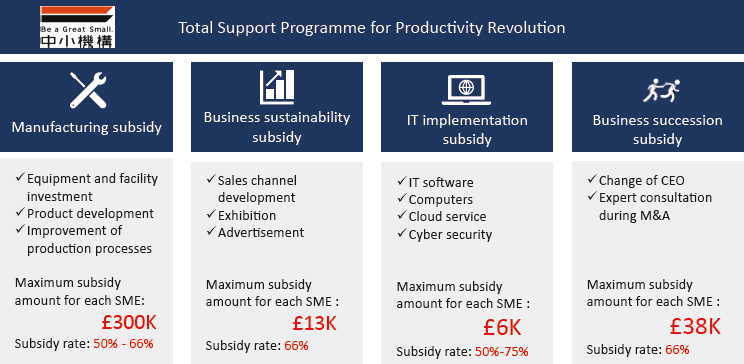
SMRJ is closer to NEDO, but its programs are dedicated to SMEs, offering grants and hands-on consulting to accelerate technology diffusion. Grants are offered for manufacturing development and improvement (maximum $200,000), rapid sales growth (maximum $3 million), new business/or market expansion (maximum $600,000), and information technology implementation ($30,000), as seen in Figure 2-1. In addition, it operates nine SME universities that are focused on business training for SME chief executive officers (CEOs) and chief operating officers (COOs) on how to operate their companies, not on technical training.
Singapore: A*STAR
Despite its limited land area, Singapore is the world’s 5th largest global exporter of high-tech goods.6 Manufacturing plays a substantial role in the economy, contributing nearly 20 percent to gross domestic product (GDP) and employing over 12 percent of the workforce.7 Established industries include semiconductors, aerospace, specialty chemicals, complex equipment, and biomedical.
Singapore’s innovation strategy in advanced manufacturing thrives on multinational engagement and collaboration and is overseen by Singapore’s Research Innovation and Enterprise Council, chaired by Lee Hsien Loong, former Prime Minister of
___________________
6 World Bank, 2023, “High-Technology Exports (Current US$),” Comtrade database, United Nations, https://data.worldbank.org/indicator/TX.VAL.TECH.CD?most_recent_value_desc=true
7 Singapore Economic Development Board, 2024, “How Singapore Can Partner Businesses in Their Advanced Manufacturing Journey in Asia,” https://www.edb.gov.sg/en/business-insights/insights/how-singapore-can-partner-businesses-in-their-advanced-manufacturing-journey-in-asia.html.
SOURCES: Yukihiro Sato, presentation to the committee, and Y. Sato and A. Goenka, 2023, “How Can SMEs Play a Greater Role in Tech Adoption?” Cambridge Industrial Innovation Policy Blog, https://www.ciip.group.cam.ac.uk/reports-and-articles/how-can-smes-play-a-greater-rolein-tech-adoption.
Singapore. Singapore’s Ministry of Trade and Industry funds and aligns Singapore’s national Agency for Science, Technology and Research (A*STAR), Singapore’s Economic Development Board, and Enterprise Singapore. A*STAR’s mission is to make factories in Singapore more competitive. A*STAR focuses on research, industry development and commercialization, and talent development with more than 6,000 staff, including 4,700 researchers, engineers, and technical support staff. It is multinational with 37 percent of its staff from more than 60 countries. A*STAR receives 40 percent of its funding from the Ministry of Trade for Core Research Projects and 60 percent from industry and competitive grants. A*STAR Initiatives include the Advanced Remanufacturing and Technology Centre (ARTC), a public–private collaborative platform where industry leaders, research institutes, and government agencies co-develop and test-bed advanced manufacturing solutions to achieve translational R&D (TRLs 4–7) with industry.
ARTC follows a membership consortium model with over 95 industry members, ranging from global multinational corporations to SMEs to start-ups. Many U.S. companies are anchor members and have secured strategic agreements with ARTC.8,9 ARTC
___________________
8 Halliburton, 2019, “Halliburton Becomes Anchor Member of Singapore’s ARTC Tech-Sharing Platform,” News Release, November 3, https://www.worldoil.com/news/2019/11/4/halliburton-becomes-anchor-member-of-singapore-s-artc-tech-sharing-platform.
9 ARTC, 2019, “P&G Anchor Membership,” June 20, Agency for Science, Technology and Research, https://www.a-star.edu.sg/artc/news-events/news-events/2019/the-anchor-membership-upgrade-signing-ceremony-was-held-on-20th-june-2019.-the-upgrade-signifies-the-strong-commitment-from-p-g-to-work-with-artc.
is staffed with 35 business development managers with the mission of building value chains of end users, technology providers, suppliers, and system integrators within and across sectors. Eighty percent of the business development account managers are focused full time on Tier 1 (anchor) and Tier 2 members. The other 20 percent are focused on new business development. In addition, 45 project managers are employed to support funded programs and train professionals. Eighty-four percent of the projects are with SMEs and start-ups. Jointly funded initiatives such as A*STAR Gap are also available for TRLs 8–9.
Taiwan: Industrial Technology Research Institute
Industrial Technology Research Institute (ITRI) is the global pacesetter for applied technology research institutes. ITRI’s original technology transfer semiconductor contract with RCA was the basis for Taiwan’s semiconductor manufacturing industry. Taiwan Semiconductor Manufacturing Company itself was a spinoff from ITRI led by its then-President Morris Chang.
ITRI’s six different research labs are tied to an industry sector. Their focus can dynamically change depending on the technology trends and the funding from the Ministry of Economic Affairs. It has pilot and shared facilities that are set up like a quasi-factory equivalent at each campus. ITRI has a staff of 6,569, of which 1,251 hold doctorates, and a structured and active alumni network. It also has branch locations in the United States, Japan, and Germany.
Patents, licensing, and venture capital (VC) follow-up funding for start-ups are three major metrics for success for ITRI, and each can drive further government funding for specific programs. It incubates approximately 200 start-ups and supports spinouts through its ecosystem as well as its own VC arm. ITRI provides technical consulting to SMMs, including helping them move into overseas markets. Additionally, ITRI helps and manages 80 percent of the start-up program funding for all of Taiwan. They estimated that more than 50 percent of start-ups receive some sort of Taiwan government program subsidy in early stage. Thus, ITRI is part of a continuous pipeline from working with the Taiwanese government to identify future target areas, early development work, and all the way through scale-up for production readiness.
Currently, AI is a major focus for ITRI. It has created an AI Application Strategy Office to promote the development of innovative AI technologies and applications. “ITRI College” provides learning services and plans to train 350,000 government officials over the next 4 years in AI-related education. Additionally, Taiwan is setting up 100 pilot lines for SMMs to learn how AI can help them in manufacturing lines, with ITRI accountable for roughly 45 of these pilots.10
___________________
10 Industrial Technology Research Institute, 2019, “About us,” https://www.itri.org.tw/english/ListStyle.aspx?DisplayStyle=20&SiteID=1&MmmID=617731521661672477.
China: Manufacturing Innovation Centers
China has established approximately 45 manufacturing institutes (MICs), each with investments 10–100 times larger than a typical Manufacturing USA institute. China’s MICs program was modeled after Manufacturing USA and other international manufacturing institutes. The financial models of MICs are for-profit in focus areas, with equity institute owners, including central government support.
According to a Center for Strategic and International Studies (CSIS) report on the Made in China 2025 document (both published in 2015), 10 key industrial sectors were prioritized for innovation.11 It is noteworthy that “equipment” or “machinery” is mentioned in 7 of the 10 areas, reflecting China’s determination to fund capital-intensive industries. More telling is the goal of achieving 80 percent domestic production of key equipment by 2025, but only 50 percent of industrial software. The United States still leads significantly in software development, fueled by its software-focused VC system.
Each institute connects with and collocates alongside State Key Laboratories and other resources, forming manufacturing ecosystems for its target industries. Research staff at those State Key Laboratories have a long tenure. Those research staff have been heavily leveraged by MICs. China has been forming entire industrial cities, bringing in small and large manufacturers clustered around its manufacturing technology institutes.
All the MICs are administered by one central government agency, while provinces and local governments follow closely what the central government calls for. Therefore, collaboration among sister institutes is common.12
KEY THEMES, BEST PRACTICES, AND RECOMMENDATION SYNTHESIZED FROM INTERNATIONAL MODELS
Industrial Strategy
As noted in the introductory chapter, although the United States has different programs supporting advanced manufacturing, it lacks a true industrial strategy reaching across government and the private sector, which could coordinate growth and adoption of manufacturing technologies. This is an ongoing vulnerability of the U.S. manufacturing system. Table 2-1 shows a comparison of manufacturing institute program offerings in the seven countries against which the committee benchmarked the Manufacturing USA program.
A common belief among mainstream American economists is that manufacturing is a legacy sector destined to decline in importance in an advanced economy, with
___________________
11 S. Kennedy, 2015, “Made in China 2025,” Critical Questions (blog), Center for Strategic and International Studies (CSIS), https://www.csis.org/analysis/made-china-2025.
12 M. Molnar, K. Rogers, F. Gayle, et al., 2025, China’s Manufacturing Innovation Centers: A Benchmarking Report for the Manufacturing USA Network, NIST AMS 600-17, National Institute of Standards and Technology, https://www.nist.gov/publications/chinas-manufacturing-innovation-centers-benchmarking-report-manufacturing-usa-network.
TABLE 2-1 Comparison of Manufacturing Institute Program Offerings13
| Country | Belgium | China | Germany | Japan | Singapore | Taiwan | United Kingdom | USA |
|---|---|---|---|---|---|---|---|---|
| Institute program offerings | IMEC | MICs | Fraunhofer | METI | A*STAR | ITRI | Catapult | Manufacturing USA |
| Standards Development | ||||||||
| Business Development | ||||||||
| SMM Service & Support | ||||||||
| In House Technical Staff | ||||||||
| In House Pilot Production Facilities | ||||||||
| Higher TRL Offerings | ||||||||
| Industrial Strategy | ||||||||
| Cross Disciplinary Strategies | ||||||||
| Role/Influence on Early TRL Funding | ||||||||
| Institute Financing for Entrepreneurs | ||||||||
| Dedicated Scale-Up Financing | ||||||||
| Rotating/Permeable Technical Staff | ||||||||
| Foundational Technologies |
NOTES: Green indicates presence of the offering; Yellow indicates presence of the offering at some of the program institutes. A*STAR = Agency for Science, Technology and Research; HVM = High Value Manufacturing; IMEC = Interuniversitair Micro-Electronica Centrum VZW; ITRI = Industrial Technology Research Institute; METI = Ministry of Economy, Trade and Industry; MICs = Manufacturing Innovation Centers; SMMs = small and medium-sized manufacturers; TRL = Technology Readiness Level.
SOURCE: Committee generated.
industrial policy only hastening its demise.14 East Asian countries take a very different view. The committee found that most of the nations it studied have industrial strategies that integrate technology development, trade, the financial system, tax policies, and
___________________
13 The table was updated after release of the report to clarify that some Manufacturing USA institutes have program offerings in Business Development and Higher TRL.
14 G. Becker, 1985, “The Best Industrial Policy Is None at All,” Business Week, August 26.
other policies to support advanced manufacturing. These nations view manufacturing as a strategic sector that is critical for growth and economic and national security. Industrial strategy guides and enables growth of the sector.
For instance, the “Singapore Manufacturing 2030 vision” is a strategic plan for Singapore manufacturing to grow its value added by 50 percent by 2030. A*STAR is supporting this plan in numerous ways such as building an AI Center of Excellence to help the manufacturing sector adopt AI. Outreach to SMMs is part of this effort.15
Taiwan has a formal plan to further grow five key industries—semiconductors, AI, military, security and surveillance, and next-generation communications16—as well as to upgrade its start-up ecosystem. ITRI has created a 2035 Technology Strategy & Roadmap.17
In China, the government’s approach is to identify critical gaps in technology—often orchestrated by national academy members—to lay out a 5-year roadmap with clear milestones and timelines, and to then invest accordingly. This process repeats every 5 years, with the plan published broadly to align investments at provincial and regional levels. The advantage of China’s approach is concentrated investment that establishes critical infrastructure to resolve major bottlenecks, with little concern for immediate return on investment. Government officials are promoted based on achievements in advancing local GDP. This creates both the motivation to adopt global best practices and a risk-tolerant environment that fosters innovative and competitive financial and incentive systems to attract manufacturing and technology investment.
A successful industrial strategy requires much more than just a written policy document. It requires institutions capable of implementing this strategy, as well as accountability. It requires high-level political support, but also independence from short-term political meddling.18
In other countries, this support for industrial strategy and manufacturing institutes is found at the highest level of government. For example, the current chair of A*STAR is also the Permanent Secretary of National Research and Development and a Permanent Secretary in the Prime Minister’s Office of Singapore.
President Xi Jinping has called out industrialization as a key task for comprehensively promoting the building of China into a superpower. He has specifically commented on the importance of translational research institutes, stating, “many exemplary models have been formed that combine industry, universities, and research institutions,
___________________
15 International Trade Administration, 2022, “Singapore Advanced Manufacturing,” August 28, U.S. Department of Commerce, https://www.trade.gov/market-intelligence/singapore-advanced-manufacturing.
16 National Development Council, 2024, “Five Trusted Industry Sectors,” Executive Yuan, Republic of China (Taiwan), https://english.ey.gov.tw/News3/9E5540D592A5FECD/52616955-2e61-4a30-95b0-1fd59c010933.
17 Industrial Technology Research Institute, 2025, “ITRI 2035 Technology Strategy and Roadmap,” https://itrisdgs.itri.org.tw/eng/datadetailTab2?SiteID=1&MmmID=1307114034215647471.
18 R. Cherif, F. Hasanov, and G. Xie, 2026, “Institutions for Industrial Policy: The Foundation of Economic Development,” IMF Working Paper WP/26/63, International Monetary Fund, https://www.imf.org/-/media/files/publications/wp/2026/english/wpiea2026063-source-pdf.pdf.
BOX 2-1
Without a Whole-of-Government Industrial Strategy, the United States Will Continue to Lag Behind in Advanced Manufacturing
Policy Options
The following are key considerations for an industrial strategy and other strategies:
- ➢ WHOLE-OF-GOVERNMENT EFFORT TO DEVELOP INDUSTRIAL STRATEGY: In concert with the National Security Strategy, a whole-of-government effort is needed to develop a formal Industrial Strategy, integrating technology development, scale-up financing, standards leadership, trade, and workforce development into a coherent national framework.
- ➢ PROPOSED FINANCING SOLUTIONS IN THE UNITED STATES: A Role for the Institutes
Within the next 2 years, create new federal manufacturing and financing mechanisms that include
- globally competitive R&D tax credit
- patient-capital funds,
- a sovereign wealth fund with a strategic focus on manufacturing,
- intellectual property–backed lending programs, and
- coordinated public–private guidance funds.
Formally integrate Manufacturing USA institutes as advisors to manufacturing financing bodies, providing technical due diligence, scale-up roadmaps, readiness assessments, and first-of-kind validation data that de-risk future investments.
and it will be well worth summarizing them carefully.”19 Box 2-1 emphasizes the importance of an industrial strategy, including financing solutions.
Although the United States does not publish an industrial strategy, it does publish a National Security Strategy that calls for outcomes that are difficult to achieve absent an accompanying industrial strategy. The 2025 U.S. National Security Strategy prioritized
___________________
19 X. Jinping, 2020, “Certain Major Issues for Our National Medium- to Long-Term Economic and Social Development Strategy” [国家中长期经济社会发展战略若干重大问题], Qiushi (求是)), November 1, English translation by Georgetown University Center for Security and Emerging Technology, https://cset.georgetown.edu/wp-content/uploads/t0235_Qiushi_Xi_economy_EN.pdf.
economic security, including re-industrialization and reviving the defense industrial base.20 Here it focused on emerging and critical technologies, but it was vague about how this re-industrialization would be accomplished, mentioning tariffs and new technologies. An industrial strategy could make these plans for re-industrialization and technological revival more concrete. As the 2025 report noted, “A strategy is a concrete, realistic plan that explains the essential connection between ends and means.” But unfortunately, that is currently lacking in the United States when it comes to industrial policy.
If there is lingering doubt about the value of a plan to grow the 14 technology sectors deemed critical by the U.S. government, an industrial strategy report could explicitly say so, or alternatively it could force policymakers to think through the next steps of how to do this. The recent findings of the U.S.-China Economic and Security Review Commission evaluating the success of MIC2025 add a sense of urgency about the need for such a strategy. While the strategy was not successful in every sector, the Commission found, “Across ten key technologies in MIC2025, China has met or exceeded many of the very ambitious global market share, local sourcing, and technology development targets it set for itself in 2015.21
Recommendation 2-1: In concert with the National Security Strategy, the National Economic Council, the Office of Science and Technology Policy and the Department of Commerce, Department of Defense, Department of Energy, and any other agencies supporting advanced manufacturing should convene and within the next 2 years issue a formal U.S. Industrial Strategy, integrating technology development, scale-up financing, standards leadership, trade, and workforce development to align resources and maximize the national impact of federal manufacturing programs including Manufacturing USA institutes.
Financing for Manufacturing
Perhaps the most critical element of a successful industrial strategy is resources, meaning both money and people. Financing directed toward advanced manufacturing underpins the industrial strategies of East Asian countries. The United States, in contrast, lacks key financing tools that could support the scale-up of hardware industries and the flourishing of the manufacturing sector. As discussed in the first chapter, the U.S. financial model has led to manufacturing disinvestment. There are gaps in government financing programs for TRLs 6–9 and scale-up. Even when it comes to something as simple as the size of its R&D tax credit, the United States lags other manufacturing nations. A 2024 Information Technology and Innovation Foundation analysis found that the United States ranked 31st out of 32 countries (28 Organisation for Economic Co-operation and Development [OECD] nations and the 4 BRIC [Brazil, Russia, India, and China] economies) in their R&D tax credit support. America’s low R&D tax credit
___________________
20 D.J. Trump, 2025, “National Security Strategy of the United States of America,” November, https://www.whitehouse.gov/wp-content/uploads/2025/12/2025-National-Security-Strategy.pdf.
21 U.S.-China Economic and Security Review Commission, 2025, Made in China 2025: Evaluating China’s Performance, November 14, https://www.uscc.gov/research/made-china-2025-evaluating-chinas-performance.
(20% “regular tax credit” with the effective credit percentage significantly lower) is hindering advanced manufacturing.22
Increasing the R&D tax credit could help incentivize the growth of domestic U.S. manufacturing.23
Recommendation 2-2: By 2030, the U.S. Congress should take legislative action to define a globally competitive research and development tax credit for manufacturing processes and technologies and should actively explore expanding other tax reforms supporting manufacturing.
R&D tax credits on their own are unlikely to be sufficient to address scale-up, with many constraints to widespread production and commercialization that can’t be resolved with just one tax credit. Therefore, East Asian countries have pursued targeted tools for financing the scale-up of advanced manufacturing using multiple investment approaches often missing in the United States, such as government-backed patient capital.24
China, as discussed previously, financed MIC2025 through government guidance funds, which combine VC with private equity, and as their name implies, are guided by the government’s strategy.25 Governments back manufacturing through subsidies, which are widespread. These subsidies can be covert and take many forms including below-market equity infusions, below-market loans, grants, tax concessions, cheap energy inputs, and other types of support, which are hard to identify and quantify. The OECD noted that “Assessing the scope and scale of government subsidies is difficult. This is due to a persistent lack of reliable data comparable across countries . . . and the unwillingness of some governments to comprehensively disclose their own measures and associated costs.”26 Nonetheless, the OECD has been able to measure subsidies at the firm level. Here, China stood out compared to OECD countries, with sizable subsidies for firms in heavy industry. These firms in turn often gained global market share.
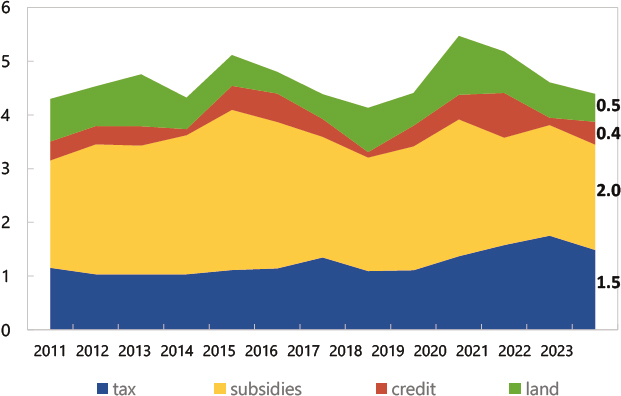
A related analysis by the International Monetary Fund found that industrial policy support has been equivalent to a subsidy of up to 4.4 percent of GDP as of 2023.
___________________
22 J.G. Gravelle and M.P. Keightley, 2026, The Federal Research and Development (R&D) Tax Credit, CRS Report R48848, Congressional Research Service, https://www.congress.gov/crs-product/R48848.
23 T. Long, 2025, The Case for Expanding Federal and State R&D Incentives, November 17, Information Technology and Innovation Foundation, https://itif.org/publications/2025/11/17/the-case-for-expanding-federaland-state-rd-incentives.
24 Definitions of R&D or other types of expenditures eligible for tax relief differ across jurisdictions. However, production scale-up, pilot production, and commercialization are typically excluded (unless technical uncertainty is present), according to the internationally recognized methodology for collecting and using R&D statistics, the OECD’s Frascati Manual; https://www.oecd.org/en/publications/2015/10/frascati-manual-2015_g1g57dcb.html
25 N. Luong, Z. Arnold, and B. Murphy, 2021, Understanding Chinese Government Guidance Funds: An Analysis of Chinese-Language Sources, Georgetown University Center for Security and Emerging Technology, https://cset.georgetown.edu/publication/understanding-chinese-government-guidance-funds.
26 OECD, 2025, “How Governments Back the Largest Manufacturing Firms: Insights from the OECD MAGIC Database,” OECD Trade Policy Paper No. 289, https://www.oecd.org/content/dam/oecd/en/publications/reports/2025/02/how-governments-back-the-largest-manufacturing-firms_64f9eef0/d93ed7db-en.pdf.
NOTE: Represented as percent of GDP.
SOURCE: Figure 4 in D. Garcia-Macia, S. Kothari, and Y. Tao, 2025, “Industrial Policy in China: Quantification and Impact on Misallocation,” International Monetary Fund Working Paper No. 2025/155, https://www.imf.org/en/publications/wp/issues/2025/08/07/industrial-policy-in-china-quantification-and-impact-on-misallocation-568888.
The largest instruments are cash subsidies (2.0 percent of GDP in 2023), followed by tax benefits (1.5 percent), land subsidies (0.5 percent), and subsidized credit (0.4 percent).27 In contrast, industrial policy subsidies in other major manufacturing countries averaged only about 1.4 percent of GDP (see Figure 2-2).
Additionally, foreign nations have created government-owned sovereign wealth equity funds which can serve as a financing mechanism for scale-up and advanced manufacturing. Examples of state funds include Singapore’s Temasek and the Japan Investment Corporation. The mission of some is to maximize returns, but others have industrial policy goals including growing national champions. The European Commission, as part of its “Start up and Scale up strategy” has called for a new fund precisely targeting the scale-up needs of hardware companies, the “Scaleup Europe Fund.”28
___________________
27 D. Garcia-Macia, S. Kothari, and Y. Tao, 2025, “Industrial Policy in China: Quantification and Impact on Misallocation,” International Monetary Fund Working Paper No. 2025/155, https://www.imf.org/en/publications/wp/issues/2025/08/07/industrial-policy-in-china-quantification-and-impact-on-misallocation-568888; and C. Criscuolo, L. Díaz, L. Guillouet, G. Lalanne, C.-É. van de Put, C. Weder, and H.Z. Deutsch, 2023, “Quantifying Industrial Strategies Across Nine OECD Countries,” Science, Technology and Industry Policy Paper No. 150, OECD, https://doi.org/10.1787/5f2dcc8e-en.
28 European Commission, 2025, “Communication from the Commission to the European Parliament, the Council, the European Economic and Social Committee and the Committee of the Regions: The EU Startup and Scaleup Strategy,” https://research-and-innovation.ec.europa.eu/document/download/2f76a0df-b09b-47c2-949c-800c30e4c530_en?filename=ec_rtd_eu-startup-scaleup-strategy-communication.pdf.
IP-backed financing is another financing mechanism for scale-up. Here, in essence, firms with few fixed assets pledge their IP as collateral for a bank loan. China, Singapore, Japan, and EU governments are exploring IP-backed financing programs for SMMs. Singapore has already piloted an IP-backed financing program and has launched the Singapore IP Strategy 2030 “for Singapore to become a global hub for IP financing.” The United States significantly lags in developing comparable policies for IP-backed financing for hardware scale-up.
The U.S. VC system, the envy of the world, is not designed to finance capital-intensive sectors with slower, lower returns, such as manufacturing; rather, it supports software and pharma, less so hardware technology. In terms of 2024, U.S. VC Deal Value ($B) by Sector, 46 percent went to software, followed by 12 percent to pharma.
The objective of Chinese government guidance funds is very different from that of U.S. VC funds. The U.S.-China Economic and Security Review Commission concluded that “[Chinese government] guidance funds have a mandate to focus on strategic technologies rather than simply generating return. By contrast, funding patterns in Silicon Valley have trended toward favoring consumer-facing companies with less innovative technology but a shorter timeline to profitability.”29 Furthermore, the U.S. VC investments are increasingly concentrated in AI. Of U.S. VC dollars allocated in 2025, 41 percent were allocated to just 10 start-ups, 8 of which were AI companies.
Conclusion 2-1: Based on the evidence available through international benchmarking by the committee, Manufacturing USA–equivalent organizations with leading advanced manufacturing sectors only achieve large-scale technology adoption and national impact when embedded within national industrial strategies.
Conclusion 2-2: Based on the evidence available through international benchmarking by the committee, Manufacturing USA–equivalent organizations with leading advanced manufacturing sectors deploy strategic financing tools that support a thriving manufacturing sector.
Overarching Conclusion 2-1: Given that leading foreign competitors with Manufacturing USA–analogous programs have industrial strategies and strategic financing tools, the committee concludes that without a national industrial strategy and new scale-up financing tools including subsidies, the United States will continue to lag behind in advanced manufacturing due to implementation of piecemeal efforts.
Proposed Financing Solutions in the United States: A Role for the Institutes
U.S. policymakers have at times recognized the financing challenges facing American manufacturing, but previous legislative attempts to address this market failure have themselves failed. However, it is conceivable that economic competition with China
___________________
29 U.S.-China Economic and Security Review Commission, 2021, 2021 Annual Report to Congress, https://www.uscc.gov/annual-report/2021-annual-report-congress.
will drive policy change in the United States, including the creation of new financing instruments and institutions. Current possibilities include:
- A U.S. sovereign wealth fund (with a mission of funding domestic manufacturing);
- A more globally competitive Export-Import Bank of the United States (U.S. Exim);
- Legislative proposals to provide manufacturers with more access to capital, such as the Industrial Finance Corporation Act; and
- An expanded DoD Office of Strategic Capital or a similar function in a different agency that can scale investments in technologies critical to the industrial base, not just the defense industrial base. DOE still retains its loan program through the Office of Energy Dominance Financing, previously known as the Loan Programs Office.
Overall current financing programs are spread across 10 agencies. In general, the U.S. government does not offer equity financing. Current lending programs are typically risk averse and are serving other missions. The United States needs new financing solutions for manufacturing, and it would be beneficial for the institutes to have a voice in the proposals under discussion. Manufacturing USA could play an advisory role in identifying technologies for further support as well as finding the right new investment tools. Institute members have untapped first-hand knowledge of what would be most effective nationally.
Recommendation 2-3: To address systemic capital gaps facing hardware-intensive technologies, the U.S. Congress, working with relevant agencies, should, within the next 2 years, authorize funding and set policy to create new federal manufacturing and financing mechanisms that include patient-capital funds, a sovereign wealth fund with a strategic focus on manufacturing, intellectual property–backed lending programs, coordinated public–private guidance funds, and other mechanisms. Manufacturing USA institutes should be formally integrated as advisors to manufacturing financing bodies, providing technical due diligence, scale-up roadmaps, readiness assessments, and first-of-a-kind validation data that de-risk future investments and inform investment decisions.
This infrastructure directly amplifies the Chapter 3 call for deeper institute responsibility in technology transfer and maturation, pilot-scale readiness, and TRL or Manufacturing Readiness Level (MRL) progression and quantification.
Manufacturing USA could also play a greater role in derisking new technology investments to enable higher rates of market adoption and commercial success. Derisking an investment in a technology can mean proving that a technology is scalable and can reach mass production; it is not just cost sharing or a financial guarantee. The institutes have the capability of road-mapping a technology from proof of concept all the way through TRLs 7–9. If you can show that a technology can successfully get through testing, demonstration, and pilot production, you have
gone a long way to derisking the actual investment for VC. The Manufacturing USA institutes with their unique capabilities can help rapidly figure out which technologies can and cannot successfully overcome bottlenecks to scaling, information of great importance to investors.
The institute directors and the Advanced Manufacturing National Program Office (AMNPO) could articulate and frame these capabilities to U.S. policymakers on an annual basis. As a first step, it is important that they consider and reposition the institutes as a vehicle for risk management in addition to their other offerings. It is critical that agencies such as DoD, which invest in new technologies and fund institutes, be made aware of the institutes’ untapped capabilities to reduce financial risk. In this way, the institutes can accelerate the adoption of new technologies in the United States and advise on the optimal financing solutions needed to support manufacturing. AMNPO could lead these efforts.
Foundational Technologies
Foundational technologies—broadly defined as technologies used for inputs in advanced technologies—are a focus point of institutes in competitor nations but not typically of Manufacturing USA. For instance, the National Institute of Standards and Technology’s study of China’s institutes found that as part of its industrial policy review process, China establishes a new institute where it sees a technology gap, including dependency on foreign sources:
Given that a bottleneck for China has been its dependency on foreign sources for core components, many topic areas have been designated to address this vulnerability, particularly in the foundational fields of new materials, semiconductors, and key components for advanced machinery and machine tools, in addition to maintaining their competitive edge in core and future technologies such as batteries, artificial intelligence, and next-generation information technology.30
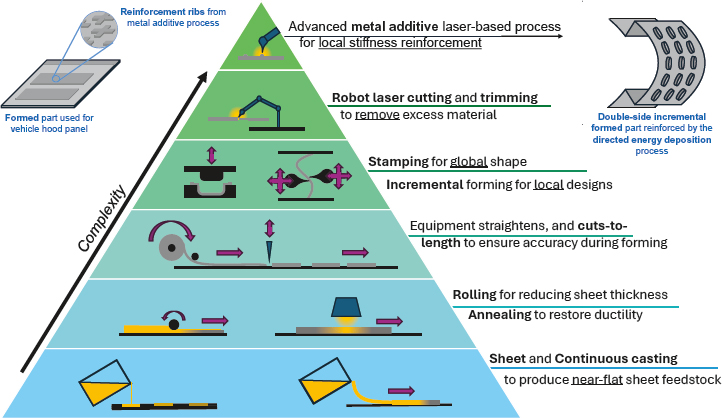
In contrast, the United States risks losing its lead, or even capabilities, in many foundational technologies (see Figure 2-3) as it has de-industrialized. In remarks to the committee, David Furrer of Pratt and Whitney observed that the United States needs to modernize foundation technologies such as “casting, forgings, and additive fabrications such as welding.”31 Furthermore, in an August 2025 press release, the Advanced Robotics for Manufacturing Institute said
Cast and forged components lie at the heart of critical commercial and defense systems, providing a vital contribution to warfighter readiness for the United States. However,
___________________
30 M. Molnar, K. Rogers, F. Gayle, et al., 2025, China’s Manufacturing Innovation Centers: A Benchmarking Report for the Manufacturing USA Network, NIST AMS 600-17, National Institute for Standards and Technology, https://www.nist.gov/publications/chinas-manufacturing-innovation-centers-benchmarking-report-manufacturing-usa-network.
31 David Whitney, presentation to the committee, August 13, 2025.
these industries are plagued by significant issues, including personnel safety concerns, material availability, and cost, further exacerbated by the legacy platforms, whose designs and processes were largely conceived, defined, and stored on paper. The challenges for the United States to produce low-volume, high-mix cast and forged components pose a critical and enduring issue.32
Additionally, the Institute for Advanced Composites Manufacturing Innovation states that
Workforce shortages in the U.S. casting and forging (C&F) industry, the downstream fabricator and OEM [original equipment manufacturer] supply chain installing castings and forgings, and the associated government workforce pose a significant risk for the U.S. defense industrial base. Department of Defense (DoD) assets and warfighter support systems depend on U.S. manufacturing capacity, which relies on adequate domestic and allied workforce and materials production. Between now and 2028, the defense industrial base will need at least 122,000 additional shipbuilders, engineers, and other critical DoD support roles. Failure to meet the demand for metallurgical engineers and related trade professionals in the base metals industry creates a critical vulnerability in U.S. national defense.33
___________________
32 ARM Institute, 2025, “ARM Institute Funds New Robotic and Inspection Projects for Casting & Forging,” press release, August 28, https://arminstitute.org/news/casting-forging-2025-projects.
33 METAL (Metallurgical Engineering Trades Apprenticeship & Learning), 2024, “Transforming U.S. Metal Manufacturing Workforce in the Castings and Forging Industry,” METAL News (blog), August 5, IACMI, https://www.metalforamerica.org/transforming-u-s-metal-manufacturing-workforce-in-the-castings-and-forging-industry.
Foundational technologies have not traditionally been a strategic focus area for most Manufacturing USA institutes.34,35 The institutes were established to pursue advanced technologies, to leapfrog competitors. But given U.S. vulnerabilities in foundational technologies used as inputs for advanced technologies, broadening the Manufacturing USA strategic focus to include these technologies is critical. The idea is not to drop advanced technologies but to apply these efforts to foundational technologies as well.
Recommendation 2-4: Manufacturing USA sponsoring agencies should immediately conduct a coordinated assessment to identify foundational manufacturing technologies in which U.S. capabilities have eroded or are in danger of erosion relative to those of international peers. Within 2 years, agencies should either (a) add foundational technology workstreams to existing institutes or (b) stand up new institutes where critical gaps exist.
The committee has observed that though some of the institutes have put resources into foundational technologies, the point of the coordinated assessment is to create a complete list, to identify agency priorities and potential solutions and determine future investment requirements.
These foundational capabilities reinforce the advanced technology transfer and scale-up issues presented in Chapter 3.
One outcome of this exercise is that existing institutes may need to make improvements in foundational technologies as part of their agenda. Certain foundational technologies might be used as inputs across institutes, meaning that there is room for collaboration across Manufacturing USA and avoidance of duplication by the institutes.
As part of this exercise, the sponsoring agencies may find that entirely new institutes will be required to address U.S. deficiencies in foundational technologies.
U.S. manufacturing success requires both advanced and foundational technologies. The United States needs to be proficient in both. Foundational technologies mark a strategic shift for most Manufacturing USA institutes, but also an opportunity for Manufacturing USA and DoD, DOE, and DOC to engage in how to broaden their technology focus.
DESIGN, STAFFING, AND OPERATION OF THE INSTITUTES
Business Development
Business development is just as important for a technology’s flourishing and success as technology development. The premise that institutes are going to solve the innovation “valley of death” purely from a technology program is a fallacy. Entrepreneurs also need to understand market needs and trends, including around product design and competitors’ offerings.
___________________
34 LIFT is a clear exception.
35 M.C. Demirel and D. Adler, 2024, “Threading the iInnovation Chain: Scaling and Manufacturing Deep Tech in the United States,” American Affairs 8(4): 58–79, https://americanaffairsjournal.org/2024/11/threading-the-innovation-chain-scaling-and-manufacturing-deep-tech-in-the-united-states/.
Successful international models have dedicated business development programs for entrepreneurs to help their companies grow. The offerings include market assessment and advice, IP strategies, active alumni support, and in some cases, financing. For example:
- When ITRI becomes involved with a start-up, the project is assessed by a committee of venture capitalists from Taiwan and Silicon Valley, as well as entrepreneurs outside of ITRI who have relevant start-up experience and interest in the area.
- ITRI has a center that engages with different industries and companies to understand their needs, with the information linked back to ITRI labs.
- ITRI has a structured alumni network. When people who have worked with ITRI retire, they can join the alumni network to provide mentorship for start-ups. ITRI has a pool of 24,000 alumni experts.
- ITRI has a 100 percent–owned subsidiary VC arm, Industrial Technology Investment Corporation. It was formed roughly 40 years ago.
- A*STAR in Singapore has an “Innovation & Enterprise (I&E) Group” which “helps companies turn research into business results.”36
- Japan, as noted previously, has created nine SME universities that are focused on training SME CEOs and COOs on how to operate their companies. This goes well beyond just tech transfer issues.
- Fraunhofer has two dedicated programs to support business development. AHEAD is Fraunhofer’s “deep tech accelerator,” identifying industry partners and assessing if there is an actual market need for a technology. Fraunhofer Venture includes access to internal and external funding and support leading to spin-offs.
A critical offering missing from the Manufacturing USA system is an in-house business development function. This is not just technology transfer at a higher TRL but around technology development from lower TRLs throughout the valley of death. The business case for a technology is often missing from these technical discussions.
Business development requires national-level, cross-institute solutions because it involves the broader scale-up challenge facing U.S. technologies, as well as the specific challenges facing specific entrepreneurs. Therefore, it requires new program elements for Manufacturing USA to support entrepreneurs, such as the possibility of a CEO university. But it also includes advising on new public policies supporting scale-up of technologies in the United States, such as new financing tools.
Business development can be tightly linked to regional development, both as a source of demand for new technologies and a source of supply for a skilled workforce. This finding is further addressed and incorporated into Recommendation 5-1 in Chapter 5.
___________________
36 Singapore Agency for Science, Technology and Research (A*STAR), n.d., “Innovation & Enterprise (I&E),” https://www.a-star.edu.sg/enterprise.
SMMs: Closing the Productivity Gap
The productivity gap between global frontier firms (top 5 percent) and nonfrontier firms continues to increase across 21 developed countries.37 Laggard firms (bottom 40 percent of productivity distribution) despite being in general younger and smaller than productive firms “converge at a slower rate in digital and skills intensive industries” according to the OECD.
In the United States, SMMs lag in adopting advanced manufacturing technologies and are often not even digitalized. For example, McKinsey Global Institute found that “micro, small, and medium-sized enterprises (MSMEs) in the U.S. are only half as productive as large companies, a stark contrast to the 60% productivity ratio seen in other advanced economies.”38
Addressing this gap has been seen as more of a MEP issue, rather than an issue for the institutes, but in fact, it is a national issue. Other countries have implemented massive, targeted programs to improve SMM capabilities and technology diffusion. These include tech advisory services and sometimes subsidies for tech implementation. The scale and resources devoted to these efforts are unmatched by the United States. These programs hold lessons for how the United States can improve the performance of SMMs.
For instance, in Japan, SMRJ offers both consultative services and subsidies with an annual budget of GBP 1.6 billion (2023 totals) to improve productivity and facilitate technology diffusion: a manufacturing subsidy, a business sustainability subsidy, information technology implementation subsidy, and business succession subsidy.
In Germany, where SMMs form the backbone of the industrial economy, they have been a focus of the Fraunhofer program. Starting in 1976, Fraunhofer created a government-financed program dedicated to contract research for SMMs. Even today, Germany’s SMMs are not always digitized, and here, Fraunhofer offers digital transformation programs, with a program representative suggesting what is the most suitable technology, the cost, and the benefits.
In the United Kingdom, MEP-like programs are housed inside the HVM Catapult. The HVM Catapult provides workforce training as well as helping SMMs to access new markets or connect with the right partners.
A*STAR has a technology adoption program targeted to SMMs, which identifies and then translates technologies of use to them. In another program, research scientists and engineers are seconded to the SMEs to facilitate their in-house R&D
___________________
37 F. Calvino and C. Criscuolo, 2022, “Gone Digital: Technology Diffusion in the Digital Era,” Brookings Institution (blog), January 20, https://www.brookings.edu/articles/gone-digital-technology-diffusionin-the-digital-era.
38 K. Ellingrud, 2024, “Time to Think Big to Close America’s Small Business Productivity Gap,” McKinsey, originally published in Forbes, December 19, https://www.mckinsey.com/mgi/media-center/time-to-think-big-to-close-americas-small-business-productivity-gap; P.M. Swamidass, 2003, “Modeling the Adoption Rates of Manufacturing Technology Innovations by Small US Manufacturers: A Longitudinal Investigation,” Research Policy 32(3): 351–366. https://doi.org/10.1016/S0048-7333(02)00019-7;S. Berger and B. Armstrong, 2022, “The Puzzle of the Missing Robots,” MIT Case Studies in Social and Ethical Responsibilities of Computing, Winter (January), https://doi.org/10.21428/2c646de5.9461c9fb.
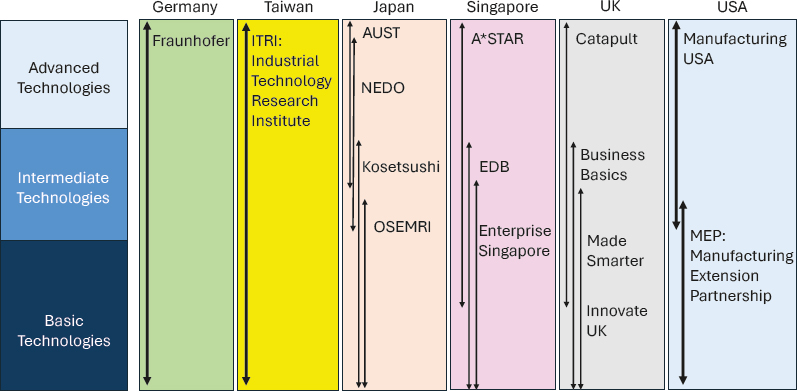
technology upgrading to further enhance their business competitiveness. See Figure 2-4 for comparisons.
AI implementation for SMMs is increasingly a key part of these international SMM technology transfer offerings. This is quite distinct from AI model competition, the focus of much of the discussion in the United States.
Countries have established dedicated AI implementation programs for manufacturing. Fraunhofer has developed an AI-based system for automation that it offers to SMMs. ITRI, as noted previously, has created an AI Application Strategy office, and Taiwan is setting up pilot production lines for SMMs so they can learn about how AI can be deployed in manufacturing.
In-House Prototyping and Pilot Production Capabilities
A recurring feature of successful international manufacturing institutes surveyed by the committee was the capability for in-house prototyping and pilot production, as found at IMEC, the HVM Catapult, A*STAR, ITRI, and elsewhere. The underlying rationale for these shared physical facilities is that they are necessary to achieve economic competitiveness and help foster eventual commercial production of new technologies.
The European Commission views these scale-up production capabilities as a strategic asset for European competitiveness. It uses the broader terminology of “technological infrastructure” to describe these pilot production facilities which it defines as:
Facilities, equipment, capabilities and support services required to develop, test and upscale technology to advance from validation in a laboratory up to higher Technology Readiness Levels prior to competitive market entry. They can have public, semi-public
or private status. Their users are mainly industrial players, including SMEs, which seek support to develop and integrate innovative technologies towards commercialization of new products, processes and services, whilst ensuring feasibility and regulatory compliance.39
In the United States, technological infrastructures can be housed at universities, original equipment manufacturers (OEMs), in addition to institutes. Others been created regionally outside of the Manufacturing USA system through the Economic Development Administration or state grants.
University production facilities tend to be early stage in orientation with limited capacity and not suitable for higher MRL or TRL testing. OEMs are unlikely to offer access to SMMs or other potential competitors.
As the committee heard from one SMM founder, the absence of pilot production facilities for his technology (spinning) at the institutes caused him to leave the United States and shift scale-up production to Germany.
Hence, there are good reasons to provide these pilot production facilities at an institute. In the case of Manufacturing USA, NextFlex offers them, but they are not widespread across the institutes. Creating these facilities at institutes could offer scale and higher TRL levels not found at a university. They could also provide access for SMMs not found with an OEM. Furthermore, the cost of these facilities can be too burdensome for even an OEM to undertake in-house. The rationale for IMEC is that the cost of a semiconductor fabrication plant was too expensive for any single company and so a shared production facility was required.
Technological infrastructure is indeed expensive, requiring substantial capital investments and ongoing operational expenditures. The EU Commission noted that “funding is a key challenge.” It therefore is developing a strategic roadmap of how to prioritize investments in these facilities which it noted are essential to supporting SMMs and start-ups. Part of this exercise is building the business case for these facilities, identifying both user demand and the potential funding mix that could make them financially sustainable.
The cost of adding production capability depends on the technology. Therefore, institutes interested in expanding in this direction could set up a working group to identify the cost and other challenges, but also the benefits, particularly to the region or state as well as the business case for facility. The European Union has already undertaken a similar planning exercise that is worth examining as a model.
These production capabilities could go beyond the TRL level found at universities. Flexibility, controllability, reconfigurability—standard interface in terms of hardware and software—could all be considered in planning. Adding these new piloting capabilities to an institute could have a snowballing effect on regional economic development. Ideally, the state or region, in addition to the federal government, could provide funding. This finding is expanded into Recommendation 3-3 in Chapter 3.
___________________
39 European Commission: Directorate-General for Research and Innovation, 2019, Technology Infrastructures: Commission Staff Working Document, Publications Office, https://data.europa.eu/doi/10.2777/83750.
In-House Research Staff
Applied research conducted by an in-house engineering and scientific staff is a core offering of international institutes. IMEC has approximately 6,000 in-house researchers. HMV Catapult has in-house scientific and engineering staff of 3,500 employees. A Fraunhofer board member told the committee that “applied research is the foundation of our organization.”
U.S.-based OEMs often turn to foreign institutes for these applied research capabilities. Their reasons are multifold including access to scaling capabilities not available in the United States, access to expertise and talent, access to foreign markets and customers, and access to international funding, all of which are indicative of the strengths of these institutions, particularly given that many of these companies have large research staffs of their own. The impact to SMMs would be that much greater given their lack of research staff.
An executive from Boeing, Philip Freeman, told the committee that the company uses manufacturing institutes outside the United States for their dedicated research staffs and laboratory facilities. For instance, Boeing executes projects through AMRC in Sheffield, part of the HMV Catapult. Freeman told the committee why:
You have the opportunity to develop research knowledge that spans several corporations. Boeing may have an interest in machining operations. GE may have an adjacent interest. AMRC staffers that end up working on those projects gain an appreciation for the needs across multiple industries and can stitch that knowledge together into directed research projects that can have a broader scope than individual company-led projects. Universities have a high turnover of graduate students. One of the advantages of AMRC is their employees are going to be there for 10 years and are able to carry that knowledge from project to project and grow that capability as opposed to someone who is pursuing their doctorate.
University research labs, which are common in the United States, are not an equivalent to a staffed industry research consortium. They typically do not work on the same technological issues, and researchers do not bring the same industry knowledge and experience.
Rotating Research Staff
As a subset of their research staff, some international institutes have formal programs to rotate through doctoral-level or postdoctoral engineering staff as researchers. For instance, IMEC has 1,200 doctoral students or postdocs, working on long-term topics related to the manufacturing activities at IMEC but not directly for any company. At the Catapult centers, government funding supports collaboration with various academic doctorate programs.
This staff turnover is a purposeful strategic activity. It benefits students, industry, the manufacturing institutes, as well as the nation and its industrial base. The students typically move into the manufacturing industry and SMEs. The churn, rather than a loss of talent, for institutes is a way to grow a specialized workforce and increase the capacity of the nation to absorb or pioneer new manufacturing technologies.
In the United States, by way of contrast, there is a bifurcation between university education and applied manufacturing research, with a few exceptions such as the handful of engineering policy centers or introductory manufacturing survey courses taught as part of mechanical engineering.40
For Manufacturing USA institutes to offer in-house research capabilities would require significant additional resources, and so government funding is required.
An in-house research staff and a stronger research base could open additional potential funding streams for institutes. It would allow the institutes to tackle more ambitious technological challenges and to capture funding for joint or umbrella research projects that would otherwise be inaccessible to them. To facilitate collaborations with academic and national labs, and to prevent duplicate research, the research area and scope of in-house research (and the staff level) would need to be carefully designed to leverage the existing regional resources. Joint paid appointments between Manufacturing USA institutes and other entities are highly encouraged.
Higher TRL and MRL Offerings
One outcome of institutes having in-house production facilities as well as scientific staff would be the ability to offer higher TRLs and MRLs than are currently the case. Foreign institutes quite often target higher TRLs that may include TRL 7, and even TRL 8. Typically, to do this, well-equipped and well-staffed facilities are needed. Some of the equipment and staffing may come from the industry partners. This higher TRL offering is one reason OEMs turn to these institutes.
But a key beneficiary of Manufacturing USA institutes being able to offer higher TRLs would be SMMs, particularly if they do not have the proficiency or resources to develop technologies to the highest TRL approaching commercialization. However, for institutes to be able to offer higher TRL and MRL levels would take resources. It would also require other changes: Under RAMI, DOC institutes cannot offer this without a statutory change.
COMBINING TECHNOLOGIES: CROSS-DISCIPLINARY STRATEGIES
International models have pursued a cross-disciplinary strategy, incorporating and fostering advanced technologies used horizontally as inputs across institutes. The goal is not merely for an institute to be able to provide more than one technology as demanded by users but also to combine them in innovative ways.
For instance, Taiwan ITRI’s 2035 Technology Strategy and Roadmap is focused on a cross-disciplinary strategy incorporating advanced technology to “foster breakthroughs in applications.” Dedicated to driving industry growth, ITRI continues to explore innovative combinations. ITRI has also launched a cross-disciplinary strategy office to facilitate collaborations.
___________________
40 NASEM, 2023, Infusing Advanced Manufacturing into Undergraduate Engineering Education, National Academies Press, https://doi.org/10.17226/2593.
Combining technologies is a core part of China’s Innovation Development Strategy, where AI, 5G, and robotics are being used to try to improve productivity across economic sectors. In the United States, the committee heard from Michael Cook from Rockwell Automation who expressed the desirability of increased collaboration among the institutes around “horizontal technologies” such as AI or cybersecurity.
This finding is further addressed and incorporated into recommendations in Chapter 4, including Recommendation 4-3, which highlights the potential role of MEP in coordinating integrated technology packages.
Standards
Standards enable new technology acceptance, deployment, and commercialization, and help grow market size. The establishment of technological standards as the result of a project can be a metric of the project’s success. It can also aid technology transition because the results can be communicated through the standard. A collaborative environment to identify needed standards and to generate content and support for a given standard naturally aligns with the institute’s capabilities. One area of success for many of the institutes has been activities leading to standards.
There are important global strategic considerations in setting the standard for a technology. A recent World Bank study found that China “has emerged as an increasingly prominent player in international standard setting, with its influence growing rapidly.”41 China’s approach to setting standards involves multiple stakeholders: the government, universities, industry, and research institutes, supported by preferential policies.
This focus by China on leading and driving standards has been highlighted by others, including the difference in approach where the U.S. model is private-sector led, while China’s strategy is government led which aligns with their industrial policies.42 The NIST benchmarking study found that the Chinese MICs differ from Manufacturing USA in that one of their tasks is to “strengthen the guiding and guaranteeing of standards.”
Additionally, in China and other countries, predominantly in Asia, but sometimes seen in the UK, the government will fund individuals to formalize the standard with a Standards Development Organization such as the International Electrotechnical Commission or the International Organization for Standardization.
Partly in response to this situation, NIST funded a new Standardization Center of Excellence in the area of critical and emerging technologies,43 which aligns with the U.S. government’s National Standards Strategy for Critical and Emerging Technology and its Implementation Roadmap.
However, it is unknown if the new Center of Excellence strategy will include leveraging the institutes, who are already naturally focused on standards in their topic area.
___________________
41 J. Gong and V. Zhang, 2025, “China’s Evolution in International Standardization: From Follower to Global Leader,” World Bank Working Paper, https://thedocs.worldbank.org/en/doc/a588e8a85c44a-ca841687aff78d25a54-0050062025/original/John-Jiong-Standardization-in-China.pdf
42 A. Agarwal, 2025, “The Silent Struggle: How Technical Standards Shape Global Tech Power,” Special Competitive Studies Project newsletter, https://scsp222.substack.com/p/the-silent-struggle-how-technical.
43 See www.ascet.com.
Recommendation 2-5: The setting of standards is increasingly a geopolitical consideration; hence, within 2 years, Manufacturing USA institutes and the Advanced Manufacturing National Program Office should highlight the standards roadmaps that different institutes are generating, encourage the new National Institute of Standards and Technology–funded Standardization Center of Excellence to leverage these roadmaps, and obtain funding for actual standards writing as part of the institutes’ projects.
A more proactive and nationally aligned approach to standards will accelerate technology adoption, improve interoperability, and enhance U.S. competitiveness in global markets.
This recommendation supports Chapter 3’s emphasis on definitional clarity, interoperability, and ecosystems required for late-stage technology transfer.
INTERNATIONAL COLLABORATION OPPORTUNITIES
Foreign institutes have a presence in the United States and are working with U.S. companies and universities. For instance, IMEC has offices in the United States and works with U.S. companies and universities, and Fraunhofer USA conducts “applied research and development for customers in industry and for state and federal government.”44 Collaboration between Manufacturing USA institutes and international institutes, however, has not been part of the U.S. initiatives.
There are other international candidates for collaboration opportunities. ITRI is one example. It has a track record of working with international institutes to conduct joint R&D research. Here ITRI’s capabilities in 6G development have been an area of focus for collaborative work. ITRI has worked with Catapult centers in the United Kingdom, Fraunhofer in Germany, and the U.S. national laboratories.
Recommendation 2-6: With ongoing sponsoring agency review and approval, starting in 2026, Manufacturing USA institutes should pursue structured collaborations with leading international manufacturing institutes in areas where complementary strengths exist. These partnerships should focus on shared research, pilot-scale demonstration, standards development, and knowledge exchange that advances domestic technology transfer and scale-up.
Agency oversight is deemed necessary to ensure that such collaborations support U.S. strategic interests while strengthening the nation’s competitive position in advanced manufacturing. Collaborations with countries of concern as identified by Congress or the federal government should be excluded.
___________________
44 Fraunhofer USA, Profile, https://www.fraunhofer.org/en/startpage/profile.html.


