Summary
The electricity system is undergoing a period of immense change in its technologies and operation. The U.S. Department of Energy’s (DOE’s) Office of Electricity requested an Issue Paper from the National Academies of Sciences, Engineering, and Medicine that elevates and synthesizes insights for creating effective and efficient research, development, and demonstration (RD&D) in the electricity system. The authors present promising specific areas for innovation and the structural elements needed to enhance the effectiveness and efficiency of the electricity RD&D system. The discussion of these elements is structured into four categories: the locus of electricity innovation and which actors are producing these advances, the connectivity and integration of the innovation system and how to overcome its gaps, opportunities for partnerships and collaborations, and how to attain leverage for creating the largest innovation impacts with a set amount of resources. The U.S. electricity system is at a pivotal point in its evolution. DOE can engage with its innovation partners in different ways throughout the technology life cycle to create an electricity system that is future-ready and serves the public interest.
Introduction
RD&D efforts are essential underpinnings for the electricity system’s ability to support the livelihoods of its users and enable the growth and strength of the U.S. economy. RD&D endeavors produce new technologies, services, and operational capabilities that enter into use throughout the system with the rate of diffusion affecting how quickly the electric sector can change.
Often, the RD&D process is characterized as being top-down (driven by organizational leadership) or bottom-up (coming from researchers and employees). There is an increasing recognition over the past two decades that the top-down and bottom-up processes are intertwined (Li 2023; Owen 2009). In this Issue Paper the authors recognize the role and value of both. Top-down processes set the architectural and directional dimensions of the ecosystem and bottom-up processes leverage diverse capital, knowledge, and resource bases that give shape and context to top-down RD&D aspirations.
Supporting an efficient and effective innovation ecosystem for electric power will be important for unlocking the capabilities to address the challenges and opportunities facing this system. At the time of writing, these include strains on system reliability (DOE 2025a; NERC 2025), challenges to grid resilience (Costello 2019; Gibson 2020; NASEM 2017), accelerating demand growth (ACP 2025; ICF 2025), concerns over electricity prices (McGee and Tyndall 2025; Wiser et al. 2025), regulatory paradigms that may unnecessarily constrain innovation (Kiesling et al. 2025; Schwartz 2022), and increasingly complex supply chain considerations (Howard 2025). The U.S. federal government has a strong history of supporting RD&D endeavors for critical technologies and systems, with DOE’s efforts specifically enabling improvements in reliability and affordability for the U.S. energy systems (Urecki and Das 2025). These outcomes result not just from DOE’s direct research work but also from its engagement of a broad network of innovation partners including national laboratories, universities, and the private sector (NASEM 2021a).
This Issue Paper is authored under the auspices of the National Academies’ Forum on Informed Investment, Technology, and Policy Pathways for the Electricity System and Interdependent Energy Infrastructure. This forum convenes leaders from across the electricity system to provide a trusted and balanced venue for information sharing; gain common understanding; and grapple with complex technical, economic, environmental, regulatory, policy, and societal changes prompted by grid modernization efforts. The forum’s work is sponsored by DOE’s Office of Electricity and is undertaken in response to its requested priorities and topics of interest.
DOE’s Office of Electricity has the mission of leading research and development (R&D) to strengthen and modernize the electricity system to maintain a reliable, affordable, and secure electricity delivery infrastructure (DOE n.d.a). The Office of Electricity’s vision statement includes leveraging its expertise in cutting-edge research, system-level analyses, and partnerships with stakeholders to develop advanced systems and technologies for the grid.
DOE’s Office of Electricity requested an Issue Paper from the National Academies on effective, efficient, and informed RD&D for the electricity system amid this period of immense technological and operational change for the grid. In particular, the authors were asked to elevate and synthesize insights for creating effective and efficient RD&D in the electricity system. The full Statement of Task is included in Appendix A.
This Issue Paper describes approaches that can be taken toward creating the most impactful RD&D outcomes for the electricity system. These insights will be characterized in four sections as follows:
- Locus and Actors: Understanding the industries and types of institutions producing innovations for electricity grid operational advancement.
- Connectivity and Integration: How to overcome disruptions from “seams” in the innovation process for the electricity system, such as issues in handing off advancements between sets of actors in the innovation process.
- Partnerships and Collaboration: Opportunities for building informed and prudent public–private, cross-sector, and international partnerships on science and technology for the grid to advance innovation for the electricity system.
- Leverage: How to create the largest possible impact in electric sector innovation with a set amount of resources.
There are differing and sometimes disjointed definitions of “impact.” For the purpose of this Issue Paper, “impact” is considered to be a broadly acceptable attainment along the dimensions of safety, reliability, resilience, affordability, sustainability, and strategic self-sufficiency (with regard to supply chains). These are the typical dimensions considered by utilities and other operational and regulatory entities in the electricity system. The ability to attain the largest impact in this context is constrained by the set amount of resources available for investment and support for innovations resulting in a cost-effectiveness approach to this exercise.
The goal in this Issue Paper is neither to be exhaustive nor be prescriptive. Rather, the authors highlight some of the most promising specific areas for innovation and structural elements that are key for enhancing the effectiveness and efficiency of the electricity RD&D system. Details of how these issues and elements specifically are designed and implemented will depend significantly on a range of other sectoral, macroeconomic, budgetary, and policy considerations that are beyond the scope of this Issue Paper.
Each of these discussions was informed by the authors’ professional experience and research (see Appendix B); information-gathering conversations with invited experts (see Appendix C); and webinar conversations hosted by the National Academies’ Forum on Informed Investment, Technology, and Policy Pathways for the Electricity System and Interdependent Energy Infrastructure (see Appendix D). All insights from this Issue Paper reflect those of the credited authors and are not consensus statements of the National Academies or reflect the authors’ organizations’ views.
Locus and Actors
Stable, Long-Term Planning and Priorities
The RD&D process is characterized by inherent uncertainty. As such, the hallmark of an effective RD&D system is a stable operating environment wherein long-term priorities for the evolution of the electricity system have broad buy-in by government and grid operators through systematic, multi-level planning processes. Of course, it should be noted that long-term planning processes in stable environments do not necessarily result in innovation on their own, with actors often requiring incentives and motivation to innovate. Planning stability has been present in greater or lesser degrees throughout periods of U.S. RD&D policy for the electric sector.
Single country-, state-, or province-level planning relies on a cooperative structure between the government entity and the utility industry based on a long-range view of what is needed. However, states that have chosen to allow wholesale markets to drive the resource mix are inherently pushing the investment risk to the market and forgoing some level of control in exchange for market efficiencies. This creates a tradeoff with long-run investment stability in critical infrastructure, because market participants may not collectively take a long-term strategic view with the security of the supply and supply chains. This can be partially compensated for through above-market incentives and state-sponsored contracts for desired technologies and resources; however, at the national level it can be viewed as a relatively unrestrictive approach to stimulating strategic, long-run investment in critical technologies and infrastructure. This approach is consistent with an assumption that international supply chains for all critical technologies and components will remain reliable in the long run. Given current geopolitics, there are indications that this may no longer be a stable assumption.
The long-term, strategic infrastructure decision is therefore more complex in the United States. The United States has a two-tier regulatory system, with responsibilities delineated by the Federal Power Act (16 U.S.C. §§ 791-828c). Under the Federal Power Act, states have legal jurisdiction for planning for generation
(if they choose to do so). As described above, states in restructured regions have chosen to rely on wholesale electricity market structures that allow private investors to dictate the ultimate resource mix in response to price signals reflecting supply and demand conditions in the wholesale markets. Some states have expressed preferences for zero emission resources by providing local state incentives.1 The federal regulator Federal Energy Regulatory Commission (FERC) is generally resource-neutral and does not have jurisdiction to plan the resource mix. Therefore, by implication, the independent system operators (ISOs) and regional transmission organizations (RTOs) are not able to plan the resource mix and instead rely on a variety of resource adequacy mechanisms to ensure that grid reliability standards are met (CAISO 2021; ERCOT 2023; ISO-NE 2025; NYISO 2025). This raises a challenge with respect to providing long-term investment stability to manufacturers of certain key technologies and components—such as those pertaining to transformers, energy storage, and grid communications—because they will be subject to market risk and will have to make their own forecasts regarding future demand. A state of uncertainty as to demand or market support for these products may lead to under-investment to achieve strategic state level or federal level goals.
Internationally, there are examples of intentional planning for the electricity system that are worth highlighting as potential reference points. In Australia, the Australian Energy Market Operator (AEMO) uses its Integrated System Plan (ISP) as a roadmap for the National Electricity Market (NEM) power system over at least the next 20 years. Australia’s National Electricity Rules require AEMO to produce an ISP every 2 years. A key requirement of the ISP is an Optimal Development Path (ODP), which outlines the mix of generation, storage, and network investments required to meet both consumer needs and government energy and emissions targets. The ODP assesses options available and identifies the lowest cost, resilient, pragmatic path to the NEM’s energy future of net zero by 2050, including innovative electricity system technologies and capabilities. The ISP is used by governments and industry to inform policy and investment in energy infrastructure (AEMO 2025). In the United Kingdom, the energy regulator Ofgem sets price controls for companies operating the nation’s gas and electricity networks using the RIIO framework (Revenue = Incentives + Innovation + Outputs) (Ofgem 2018). RIIO framework price controls support energy network companies in treating customers fairly, improving their service, and movement toward to low-carbon energy sources. The RIIO framework also lets energy network companies access or compete for funds to support innovation projects, advancing electricity RD&D.2
Singapore experiences different challenges on its electricity system than the United States and Europe. The top challenges for Singapore’s electric grid are not feed-in-tariffs, microgrids, natural disasters, or transmission over hundreds of miles; rather, Singapore faces challenges deploying and integrating renewables, managing a transition to electric mobility, and ensuring operational stability and reliability. The drivers of Singapore’s Smart Grid 2.0 strategy are decarbonization, decentralization, and digitalization;
___________________
1 As of January 2026, the Database of State Incentives for Renewables & Efficiency® (DSIRE) features 384 state-administered financial incentive programs applicable to renewable energy technologies, including solar, wind, energy storage, biomass, fuel cells, geothermal, hydroelectricity, and ocean energy (NC Clean Energy Technology Center 2026).
2 RIIO price controls are set in 5-year increments and cover gas and electricity transmission, gas distribution, and electricity distribution. The first set of RIIO price controls, RIIO-1, ran from 2013 to 2023. The current set of price controls, RIIO-2, includes RIIO-T2, RIIO-GD2, and RIIO-ED2. RIIO-T2 is the price control for the electricity transmission and gas transmission networks and runs from 2021 to 2026. RIIO-GD2 is the price control for the gas distribution network and runs from 2021 to 2026. RIIO-ED2 is the price control for the electricity distribution network and runs from 2023 to 2028. The future price control period (RIIO-3) for gas and electricity transmission and gas distribution will run from 2026 to 2031. For electricity distribution, RIIO-3 will run from 2028 to 2033.
objectives include sustainable growth while maintaining energy security and affordability (SPECS n.d.). Singapore’s Smart Grid 2.0 strategy is intentionally flexible but focused on the distribution network and challenges unique to a densely populated metropolitan city-state in the tropics (cooling load, heavy industry). Its priorities include clean energy generation, energy efficiency, and grid resilience. Innovations that would support these priorities include power generation from natural gas and hydrogen, deployment of solar and storage, building and industrial energy efficiency, transportation electrification, digital technologies, artificial intelligence (AI), and data analytics.
In addition to the above international examples, there are also examples of U.S. state-led integrated resource planning, whereby the state authorities and local utilities work together to plan both the resource mix and the transmission system. These examples include Georgia (commitments to nuclear power and gas; Georgia Power 2025) and Minnesota (commitments to renewables, storage, and gas; MN PUC 2025). Other states have chosen to restructure the electric industry and rely on wholesale electricity markets and competition to drive investment in the most efficient resources, with some states choosing to “steer” the market by creating investment incentives for favored resources. These examples include Texas, New York, California, and the New England region (New York State Energy Planning Board 2025). Other regions of the country such as the Southwest Power Pool and the Midcontinent Independent System Operator rely on a hybrid where individual states and their utilities develop local integrated resource plans that drive market entry (Ehrendreich 2020; MPSC 2017; SPP 2025).
States are able to make long-term commitments to resource developers and infrastructure investors, except in smaller regions like New England where they typically do not plan on a collective basis. This leaves the federal government as the backstop for ensuring investments in strategic grid technologies or components, either through congressional action or through DOE. DOE has a long history of supporting RD&D efforts and more recently investments in domestic manufacturing capabilities. Given the current global supply chains and the massive demand from data centers and electrification initiatives, policymakers, regulators, and researchers have raised the question of whether current planning structures are sufficient. This question is difficult to answer with certainty because government interventions inevitably create potential tradeoffs and potential efficiencies, particularly because policies can vary greatly from one election cycle to the next. This Issue Paper sketches out the possibilities and tradeoffs of government support in RD&D.
Innovation from the Technology Sector and Large Loads
To advance well-supported RD&D efforts for the electricity system, it is essential to understand the breadth of institutions and industries that produce innovations for the grid. This section begins with an overview of the structure of actors influencing innovation in the system. Once defined, specific sectoral categories where innovation is entering the electricity system are described: data centers and large loads, opportunities for co-location and load flexibility, transmission system planning and interconnections, grid hardware components, and decision-support and energy management tools (including AI).
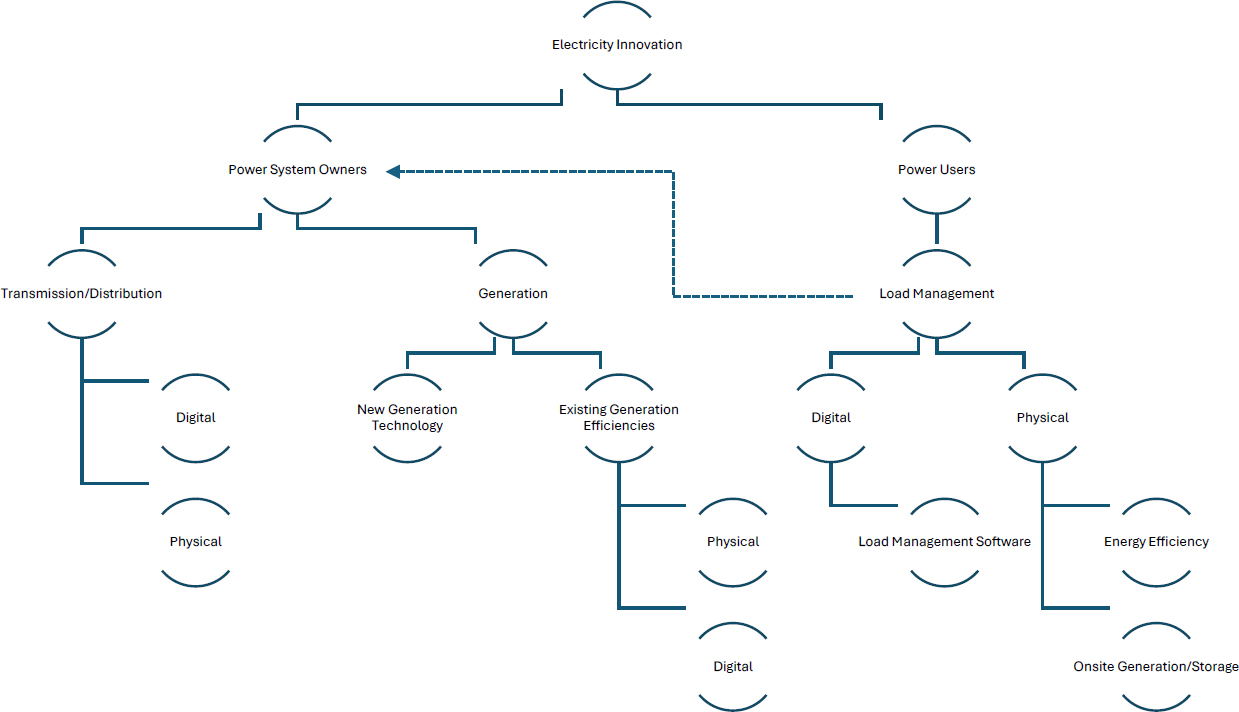
Innovation in the electricity sector is typically bifurcated between power system owners and power users, with the relationships between parts of this system shown in Figure 1. Owners of power system assets
approach the system with the intention of generating electricity and/or extending the useful life of existing system resources to meet demand. Their primary motivation is to increase revenues and manage competition (ICF 2020; Monast et al. 2019). On the other hand, typical power system users are motivated to lower costs of power consumption (Brennan et al. 1997; NASEM 2023). At a basic level, expected cost savings enabled by adopting innovation at the user level must exceed a certain threshold for them to invest in the technology or approach.
SOURCE: Created by Utopia Hill.
Innovations in the electricity system used to come from a relatively small number of sectors but are now increasingly coming from a range of sectors, notably including software (Rai 2025). In addition to products from the software sector influencing how the electricity system operates, the inputs to this sector (e.g., data centers for computing) also impact demands on the grid. These are prime, though not the only, examples of the changing locus of electricity RD&D (the software sector is more integral now) and the broadening of the set of relevant actors (technology majors).
At the time of writing, data centers constitute the majority of large loads seeking to connect to the grid in certain regions; as a result many utilities are now seeking tailored rate designs and/or interconnection tariffs for these large loads (Frick and Lam 2025; Quint et al. 2025; Satchwell et al. 2024; Wilson and Zimmerman
2023). The size of these loads and the speed at which data center developers and users are seeking to add these to the system have been part of a prompt for utilities and grid operators to reexamine their processes for interconnection (Agrawal 2025). These dynamics are an example of innovation from an outside sector (e.g., AI and its computing and data center needs) now prompting actors in the electricity system to pursue innovative approaches to reforming the interconnection queue and related study processes, as well as regulatory and pricing innovations pertaining to large loads.
One innovative approach to meeting the power demanded by data centers and other large loads is co-location. Co-locating generation with demand was noted in the Secretary of Energy’s letter to FERC directing the commission to initiate rulemaking on large loads (Wright 2025), with co-location offering one potential means for meeting the timing and load demanded by data centers (Lew 2025). One prominent example of such an effort at the time of writing is an announced project between Google and Interest Power to co-locate renewable energy generation and storage with data centers (Howland 2024). DOE also announced projects leveraging siting on DOE lands to develop AI infrastructure along with energy infrastructure (DOE 2025b). While multiple efforts to co-site generation with load are being explored outside of the traditional monopoly utility setting, innovation efforts in this space will likely influence practices for large loads in monopoly utility, vertically integrated, and other settings. While there is overlap between these operational environments, cross-learning is often insufficient and slow, and there is not currently a broad understanding of which innovative approaches show promise in this space and which do not. Thus, it would be important to facilitate knowledge-sharing and cross-learning opportunities in this space.
Innovative efforts are also being explored to leverage load flexibility from data centers (Silverman 2025) with curtailment-enabled headroom providing the possibility to integrate large loads on to the system while minimizing the impact on reliability and affordability (Norris et al. 2025). Curtailment, demand response, and load flexibility from data centers would require their participation—something that some analysts have deemed a “regulatory fiction” (Allsup 2025). While there are particular concerns on whether data centers would find the incentives to participate in flexibility efforts valuable enough for the Pennsylvania-New Jersey-Maryland Interconnection, some other areas of the country have explored efforts to create this headroom through legislation. Texas SB6 requires large loads with on-site backup generation to either curtail load or deploy backup generation in emergencies. Accordingly, co-location and load flexibility for data centers are current illustrative examples of technologies prompting explorations and innovations in grid operations and regulation.
The area of improving transmission system planning and grid interconnections, typically with an eye to speeding up interconnection queues, is receiving attention, with focus recently increased due to FERC involvement in the context of large loads (Rosner 2025). Accordingly, RD&D is of interest and importance in this space. Much of the work is in automating interconnection processes (managing project intake and updates, error identification, and other ways to do the large number of small tasks). There are companies in this space (including GridUnity and Enverus) using AI to speed up interconnections, whereas companies like Energy Exemplar allow grid planners to model networks and conduct scenario analysis to better inform investment decisions. Many of the tools to accomplish improvements in this space are proprietary, which may hinder DOE or its National Laboratories’ abilities to deftly navigate this innovation space. Accessible tools
could provide the opportunity to enhance pre-competitive RD&D across both public- and private-sector actors. This is also an area ripe for R&D investment. The R&D budgets are relatively thin compared to the technology sector and the locus of activity in this area is well diversified among the United States, Europe, and Asia.
At the same time, it is important to consider RD&D as inclusive of more than just the “high-tech” system components and products that garner popular attention. The innovation sources for important hardware components that are essential to the electric power system are, in many cases, now largely outside of the United States. For example, the United States has mostly outsourced the RD&D and manufacture of the high voltage (HV) and extra HV components to Asia and Europe (DNV 2024; Ford 2025), including power transformers, switchgear, high-voltage direct current (HVDC) cables and converter stations, and HV power electronics used for grid stabilization and renewable integration (including inverters). The area of HV power electronics (e.g., inverters, Static Var Compensators or StatComs) is especially important for managing grid stability, which is affected by large penetrations of renewables and data centers. Accordingly, this leaves the U.S. system vulnerable to disruptions in supply chains, introduces potential cyber and physical security risks, and potentially makes these components more costly (McCalley 2023). Wait times for key grid components are now many years, limiting the ability to expand and scale the grid quickly. Part of the cause is vendors experiencing many up and downswings in cost or demand over time, leading them to move their manufacturing to places with either low labor costs or stable demand (ACORE 2023). Incentives can be leveraged to support domestic manufacturing; however, businesses and investors prefer incentives with certainty over a long time period (~10–20 years), as well as access to accelerated funding to support the necessary significant investments in domestic manufacturing. If businesses or investors believe there is a risk in receiving incentives, few will take that risk because it will impact their return on investment. Instead, they will pivot to areas with lower total costs. There is growing recognition of the importance of increasing domestic manufacturing for electricity system elements, but policymakers have different ideas of the appropriate mechanisms to incentivize and support such investments. A successful future initiative on this topic would require buy-in from all major parties and people. Pursuing this outcome in fits and starts would create confusion and investment uncertainty for producers, manufacturers, and other key actors in this system.
The general area of Energy Management Systems (EMS) and operational decision-support tools could benefit from more investment, given the economic leverage one might create from a more efficient dispatch of the system while maintaining overall grid reliability. This topic ranges from the classic EMSs provided by traditional vendors to a wide range of smaller companies that provide grid monitoring tools to monitor and advise operators on key grid metrics (e.g., inertia, voltage stability). Many vendors have R&D plans to integrate inputs from other complementary vendors and software solutions and to integrate AI-driven innovations in some form to improve operational decision-support tools. Non-traditional vendors such as Google with its Tapestry platform are seeking to develop a unified data architecture and AI-informed platform for operational decision support (Google X n.d.). The locus of RD&D is more diversified in this particular arena, with a relatively strong center of competence in the United States, but also relatively poor funding compared to other sectors (generally because the regulated utility sector and its vendors have a relatively low R&D budget compared to other industries).
Distributed Energy Resources and the Shifting Sources of Innovation
The effects of the entrance of innovation into the electricity system from outside traditional sources are exemplified by the proliferation of distributed energy resources (DERs). DERs (including behind-the-meter distributed generation sources, storage assets, community solar, community energy and microgrids, and EMSs) installed at the grid edge and by customer choice have transformed a largely one-way system of operation (with power flows and operational decisions flowing from the utility and grid operator outward to the consumer) to a bidirectional system (with power flows and electricity management decisions made at both ends) (Gao and Rai 2019; NASEM 2025a). In this way, utilities are indirectly experiencing competition from the customer, who can uptake DERs and energy management software and devices. These technologies may reduce utility revenue streams (through reduced direct electricity purchases by the customer) and increase complexity for the system operator, but may also improve reliability for operations (NASEM 2023).
Demand response has great potential to support grid reliability, mitigate price volatility, and enable or optimize the performance of other electricity system innovations (ESIG 2025a). However, demand response capacity in the United States remains below 7% of peak load. Adoption has been limited by a variety of factors, including lack of knowledge and experience across all parties (system operators, state regulators, policymakers, and consumers), market fragmentation leading to inconsistent rules across utility service areas, onerous communication and metering rules, lack of detailed performance data during grid events, and weak financial incentives (ESIG 2025a).
The bidirectional grid motivates new approaches to energy management innovations. Accordingly, there is a growing environment of “grid-edge” technologies being introduced to the market. Layering advancements in machine learning and AI present possible improvements in the ability to process vast amounts of data to understand and provide predictive approaches to bidirectional grid management (S&P Global 2025). Digital energy management innovations can be particularly beneficial given the high upfront costs for physical energy innovation, enabling an affordable pathway to support the key intentions for power system operators and customers. There are still research and management needs to support a full understanding of the architecture and operation of the distribution system to leverage grid-edge assets and maintain a reliable and efficient bidirectional grid (ESIG 2022; NASEM 2021a).
As there is increased uptake of innovative technologies or systems, steps may be taken to integrate them into more traditional operational paradigms. DERs provide two approaches to this form of integration. One is fitting these technologies into the shape of more traditional assets; notably, with FERC Order 2222 allowing aggregations of DERs in wholesale markets but requiring them to participate with the responsiveness and reliability of traditional generation sources (FERC 2020). The other is leveraging the unique elements of these technologies (their decentralization) to support the operation of the traditional system. Examples include an effort by Green Mountain Power to reduce outages through customers adopting battery storage systems (Weiss-Tisman 2025) and a program by Duke Energy that compensates households for allowing them to draw power from home storage systems when demand is at its highest and a proposed similar program for non-residential customers (Ouzts 2025).
Systems-level energy efficiency, distributed energy resources, demand response, market coordination, and many other innovations being proposed for the electric system all depend on a broad suite of enabling technologies all with their own business cases, research communities, and innovation pathways. Areas where innovation will be needed include telecommunications technologies, software, analytical tools, information technology, sensors, cameras, big data, machine learning, and weather data (ESIG 2023). Capturing the potential benefits of DERs requires integration, which is made possible through additional innovation in DER interconnection, distribution and transmission planning, data access and communication, distribution system operations, utility regulation, tariffs, and electricity markets (ESIG 2022).
Pulse Taking and Integrating Electricity Industry Research, Development, and Demonstration Investment
Utilities make limited amounts of investment into RD&D themselves (though they do make contributions to groups like the Electric Power Research Institute (EPRI) that conduct this work, discussed further in the section Partnerships and Collaboration). Table 1 summarizes the R&D investment by utilities and electrical equipment, appliances, and components industries in comparison with other relevant sectors. It should be noted that computer and electronic products, computer systems designs, and software R&D influence the electricity sector and elements of these innovations are often incorporated into electricity system operations. But as shown in Table 1, the R&D intensity of the utility and electrical equipment industries is notably lower than for industries such as chemicals and pharmaceuticals.
TABLE 1 Research and Development (R&D) Intensity by Industry, 2023
| Industry | R&D Intensity (%) |
|---|---|
| All industries | 5.1 |
| Manufacturing | 5.5 |
| Chemicals | 10.6 |
| Pharmaceuticals and medicines | 17.8 |
| Motor vehicles, bodies, trailers, and parts | 3.2 |
| Computer and electronic products | 16.0 |
| Electrical equipment, appliances, and components | 4.3 |
| Non-manufacturing industries | 4.8 |
| Software publishers | 14.6 |
| Computer systems design | 11.8 |
| Finance and insurance | 1.9 |
| Utilities | 0.1 |
NOTES: R&D intensity is calculated by all R&D expenditures divided by domestic net sales. The category of Utilities may encompass multiple ownership models from Business Enterprise Research and Development Survey respondents.
SOURCE: Author generated using data from NCSES 2025.
Some investor-owned utilities have technology laboratories and research programs (e.g., Duke Energy [Wells 2020], PG&E [PG&E n.d.]). These research arms conduct important work for interconnection, standard development, and bridging developments in the vendor ecosystem to the specific application needs and considerations of the utility. The bespoke nature of particular parts of the electricity system may be a potential friction in efficiency improvements for key system assets. One important example of non-standardized equipment where such streamlining may be helpful is transformers, which face backlogs (an average of 3 years for high-voltage transformers and 1 year for distribution transformers [Martucci 2025]) that have the potential to result in or exacerbate reliability challenges.
The limited amount of investment into electricity innovation by its industry coupled with the broader benefits of a resilient, affordable, efficient, and secure electricity system for U.S. society and the economy, in turn, motivates the role for federal investment in this sector. In addition to RD&D efforts by DOE’s Office of Electricity, the Advanced Research Projects Agency–Energy has provided support for early-stage high-risk, high-reward R&D in electricity through several active and alumni programs (ARPA-E n.d.). There are three categories in which the programs can be placed: physical infrastructure and hardware transformation (DC-GRIDS, GOPHURRS, GRIDS); grid control, stability, and power electronics (GENI, GRADIENTS, NODES, ULTRAFAST); and optimization, data, and software intelligence (GO Competition, GRID DATA, PERFORM).
DOE support over multiple decades has precipitated the successful launch and continued improvement of many energy efficiency technologies. Historically these advancements have been at the device level (e.g., lightbulbs, refrigerators); but future opportunities will likely be at the systems level (e.g., intelligent efficiency, grid-interactive efficient buildings, advanced manufacturing) (ACEEE 2018; Cresko et al. 2025; Goetzler et al. 2019; Harris et al. 2019; Laitner et al. 2015; Nadel 2023; Neukomm et al. 2019; Nubbe et al. 2019; Roth and Reyna 2019).
Because the sources of electricity innovation are shifting, and increasingly outside of the traditional electric sector, the National Academies’ Committee on the Future of Electric Power in the U.S. recommended that DOE
should periodically issue a request for proposals from non-DOE affiliated entities to conduct an independent assessment that “takes the pulse” of the global and U.S. innovation systems that are relevant to the electric power sector. Such pulse-taking efforts should look widely at diverse sources of innovation both domestic and international. It should also assess the track record of various efforts to steer innovation, and varied policy and market incentives and barriers to adoption of innovations.3
Complementing such an effort could be a periodical review and affirmation of which aspects of the utility system do and do not appear to be a natural monopoly, informing market design, governance, and regulatory decisions which ultimately affect the uptake of innovation.
___________________
3 See Recommendation 4.1 in NASEM 2021a.
Connectivity and Integration
Seams and Hand-Offs in the Electricity Innovation Process
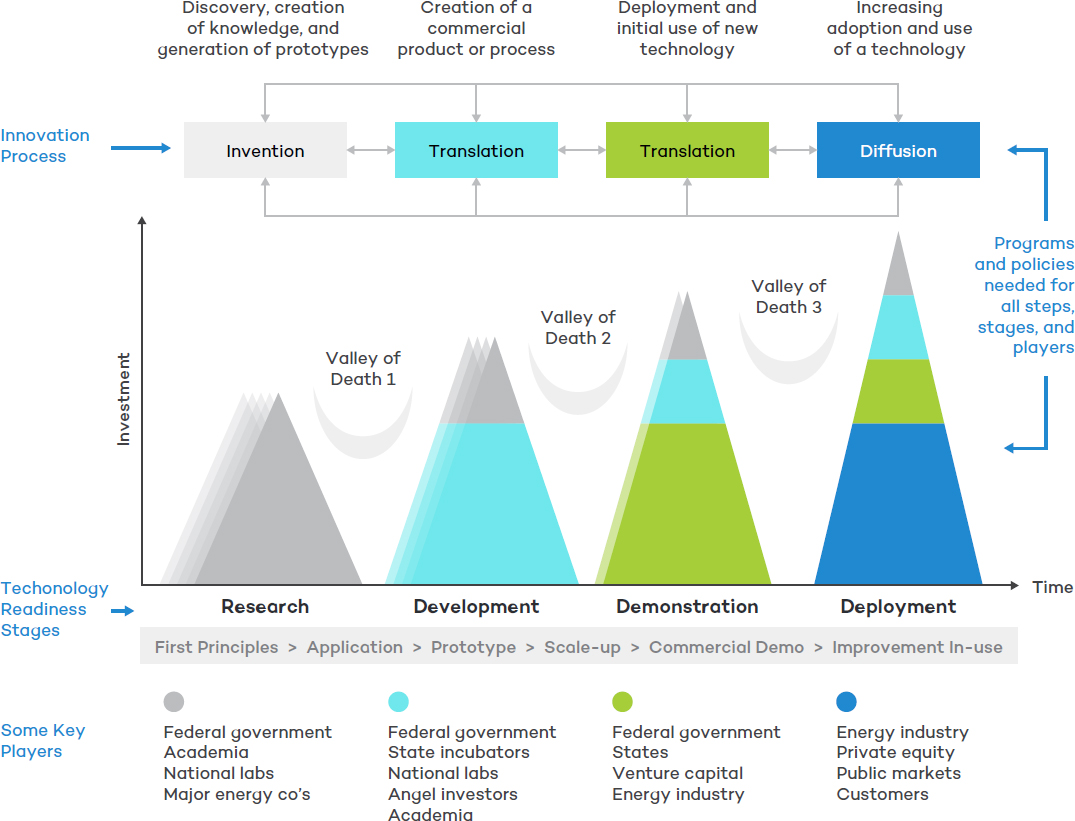
There are numerous “seams” in the innovation process where hand-off between certain stages of RD&D can experience negative disruptions. The challenge of continuing the energy innovation process across these seams motivates a role for DOE’s support and engagement. The energy innovation pipeline presents many opportunities for failure. These have been characterized as “valleys of death,” and have been depicted along with relevant actors at each corresponding part of the innovation process in Figure 2.
SOURCE: Breakthrough Energy 2019.
The “commercialization” valley of death between development and demonstration occurs in part because the private sector hesitates to invest in a technology at this stage of its development, motivating the use of federal innovation policy to support demonstrations of technologies at these stages (Hart 2017). The imbalance of capital availability has been documented for many technologies, including nuclear and other
emissions-free technologies. While venture and infrastructure capital (for technologies at the early and later stages of commercialization, respectively) are both readily available, there is a “missing middle” gap in financing for technologies that have matured past the stage for venture financing but are not sufficiently scaled and de-risked for infrastructure investors (Herzlinger et al. 2024; O’Sullivan and Ragahavan 2023).
One commercialization challenge particular to the electricity sector relates to utility pilots, which may be constrained by cost or regulation. One model offering a path forward is Energy Impact Partners, a venture investment firm with utilities sitting as limited partners on the fund who can provide feedback from their vantage point and expertise with the grid and then take on technology demonstrations and provide feedback to the other partners (Energy Impact Partners n.d.). Innovation is not a linear process and structures such as this can provide the means to create communication and connection between what is occurring in the market and occurring in the electricity system.
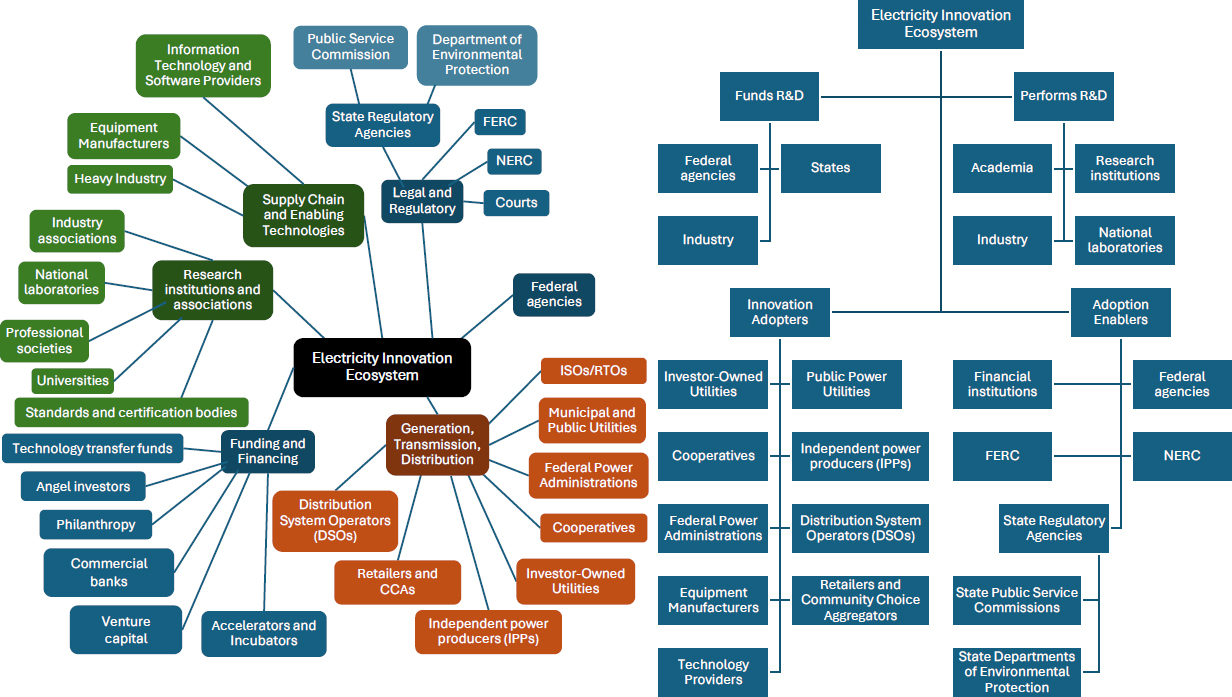
Getting electricity innovation to market (typically in generation and utility companies) is a long and intensive process (Gross et al. 2018; NASEM 2021a). Many players are involved and each need to interface with other players, bilaterally or multi-laterally, for different parts of the technology development and adoption value chain (Gao and Rai 2023; Kiesling et al. 2025; NASUCA 2022). Figure 3 presents an illustration of the breadth of entities in this innovation ecosystem.
One common pitfall in innovation is the availability of independent testbeds to benchmark performance against standards and utility and financing expectations occurring at the third “valley of death” between demonstration and deployment. Some examples in the United States context can be found in a summary of DOE and utility-supported, blockchain-based pilots, which supported and assessed the trial of blockchain technology in multiple energy applications ranging from grid control to supply chain management (Credle et al. 2025). Another key barrier entails demonstrated technology to scalable manufacturing. Other sectors can be a helpful guide here, from approaches to creating a bio-industrial pilot plant network (Starr et al. 2025) in chemical engineering to the defense sector’s efforts to create a strong innovation pipeline through the adoption and use of technologies (DIB 2023).
Ofgem provides some illustrative examples to address hand-offs and seams in the innovation process, including funding and network-building efforts supported by its Strategic Innovation Fund (Innovate UK n.d.a) and Network Innovation Competition (Ofgem n.d.a) for funding.
Just as there is variety in those creating RD&D in the electric sector, there is also variation in the electricity system these innovations are entering. It is critical to acknowledge that there is not one, homogenized electricity system for the entire United States. Instead, the electricity system is a patchwork of different market designs, grid operators, and regulatory landscapes (Heard and Holmes 2025). These differences affect the likelihood, ability, and forms in which innovations may be taken up throughout the electricity system. These differences can present opportunities for RD&D (if one area of the grid is more amenable to demonstrations or to the adoption of innovative technologies) but also challenges (e.g., if different areas of
NOTE: CAISO = California Independent System Operator; DOE = U.S. Department of Energy; DHS = U.S. Department of Homeland Security; DOW = U.S. Department of War; ERCOT = Electric Reliability Council of Texas; EPRI = Electric Power Research Institute; FERC = Federal Energy Regulatory Commission; IEEE = Institute of Electrical and Electronics Engineers; ISO-NE = Independent System Operator New England; MISO = Midcontinent Independent System Operator; NERC = North American Electric Reliability Corporation; NYISO = New York Independent System Operator; SPP = Southwest Power Pool; PJM = Pennsylvania-New Jersey-Maryland Interconnection; WECC = Western Electricity Coordinating Council.
the grid require different kinds of pilots and/or each has its own approval process for a pilot, these can be burdensome for a smaller company with an innovative product). Federal support offers benefits across the system through identifying pilots that have easily transferable lessons, communicating these lessons, and providing opportunities for scaling and coordination. These are difficult activities to coordinate, making DOE and federal actors well suited to strategically identify key lessons and gaps.
Advancing Innovation in the Regulated Utilities Context
One substantial “seam” or hand-off gap in the electricity system is where the innovation ecosystem intersects with regulated utilities. The traditional regulated utility model requires costs and investments to meet some sort of cost–benefit threshold, calculated with either a reasonable level of certainty ahead of time subject to performing as planned (pre-approval with later reasonableness and prudence review) or after the fact, after the cost has been demonstrated or the investment made, with the review for reasonableness or prudence at the utility’s risk. This structure does not provide strong incentives for innovation, inherent in which is a rapid cycle of experimentation and plenty of failure.
The timing to move from pilots to further demonstration or deployment of new technologies in the regulated utility context is one key example, with the utility’s decision making often moving slow enough to create complications for venture investors, creating too long of a timeline for venture returns. For traditional utilities to be innovators themselves takes a margin for error with investors and regulators that is not commonly seen, especially in a rising cost environment where rate case scrutiny is frequent and intense.
An insightful counterexample on this issue in recent years includes technological advances that can limit liability issues (e.g., reduce wildfire risk), because those may present incentives for investment to support innovation. Additionally, innovations in distributed technologies for the electricity system (e.g., battery storage, improvements in backup generators) and in technologies used by independent power producers can enter through the mass market, bypassing utility pilots.
To achieve greater deployment of advanced electrical technologies, the National Academies’ Committee on the Future of Electric Power in the U.S. recommended that states “implement regulatory reforms that allow utilities to recover the costs of larger R&D budgets alongside other forms of regulatory approval that encourage more adoption of new technologies.” In states that already provide direct funding for technology demonstration programs, “state policy makers should expand those programs and ensure reliable long-term provision of funds. These programs can be models for other state-based innovation funding, especially where they put attention on the need not just for larger spending but also stronger incentives for adoption of new technologies, including those coming from outside the regulated sector” (NASEM 2021a).4
Over the past couple of decades, several structures enabling utility-enabled innovation have emerged and traditional utilities and regulators have found ways to introduce innovations, albeit usually in smaller examples or by collaborating with external parties. Such structures, often small in scale and scope, lie outside the traditional rate-of-regulation model. A promising approach to providing the space for testing new technologies, capabilities, and innovations is “regulatory sandboxes” that allow for such testing under modified regulatory rules to speed adoption (Relf et al. 2025). The creation of these sandboxes is an example of regulators and government providing a form of support to particular technology types by establishing confidence in their potential use and by providing an opportunity to draw down risk through testing. Figure 4 presents states that are exploring types of sandbox mechanisms. While more mature internationally (Energy Market Authority 2017; OEB n.d.; Ofgem n.d.b), regulatory sandboxes are being increasingly explored across
___________________
4 See Recommendation 4.4 in NASEM 2021a.
the U.S. electricity system (see Figure 4). As one example, Portland General Electric created a regulatory-approved sandbox (“smart grid testbed”) for testing DERs, interoperability, and customer-side technology (PGE n.d.). Another model can be seen from Avista that, to accompany its utility business, developed a venture arm allowing for non-regulated R&D and equity investments (PitchBook n.d.).

SOURCE: Relf et al. 2025.
Some emerging best practices for regulatory sandboxes include establishing clear objectives and terms, identifying the innovation barriers the sandbox is attempting to address, providing clear guidance on project eligibility and related processes, conducting evaluation and reporting, providing sufficient staffing
and resources, creating channels for feedback and continuous learning, and communicating information both about the sandbox and the results and findings from its efforts (Relf et al. 2025). Additionally, the circumstances under which sandboxes are a better approach to innovation than pilot projects remains an open research question.
Building examples of experimentation necessitates creating more intentional pathways that make space for experimentation while containing customer risk. Emerging mechanisms include dedicated innovation allowances, streamlined pilot approval processes, “safe-to-fail” prudence standards, performance-based incentives for measurable innovation outcomes, and platform approaches that let third parties bring new solutions onto utility systems under clear rules. These can be paired with hybrid models—localized innovation zones, outcome-based procurement, pay-for-performance pilots, or large-load innovation cost sharing—to shift utilities from passive participants to active integrators of breakthrough technologies.
One other possible pathway for innovation in the regulated utility space is that the third-party innovator—potentially supported by the government—agrees to wear the risk rather than the utility or its ratepayers (Herzlinger et al. 2024). Examples include PacifiCorp and TerraPower, where PacifiCorp’s risk is limited and TerraPower and DOE carry the technology risk (DOE n.d.b; TerraPower n.d.) and Google (Terrell 2023) and Fervo (Fervo n.d.), where Google is financing and demonstrating early-stage technology risk rather than a utility bearing that risk.
In addition to federal funds and support being able to mitigate technology risk, DOE and the National Laboratories’ involvement with an innovative testbed project (even at a relatively small funding amount) can provide reputational benefits that support the effort. Also at a low cost is the use of the convening power of the federal government, which can help elevate efforts from particularly innovative efforts in the electricity system (see the section The Convening Power of the Federal Government for further discussion).
Consortiums among researchers, utilities, industry, and/or academia are another means of intentional partnership to advance innovation, which can realize greater gains for members of such a group than could be obtained individually (discussed in detail in the following section). Reliable multi-year funding streams by states directly investing in electricity RD&D can play an instrumental role in cultivating a stable environment for innovation and can create models for other states to reference in their innovation efforts.5
Partnerships and Collaboration
The Necessity of Partnerships to Bring Innovation to Practice
The electricity system is comprised of numerous actors, and for RD&D to be effective at producing advances that can be put into practice, any innovation will need the support of multiple parties and partners.
___________________
5 See Recommendation 4.4 in NASEM 2021a.
The rapid growth in syncrophasors across the electricity system is an example of successful R&D efforts resulting from partnerships (DOE 2016; Overholt et al. 2015). DOE, the federal Power Marketing Administrations, and EPRI began to partner to advance area-wide measurement and monitoring in the 1990s. The 2003 U.S.–Canada blackout prompted DOE to fund a National Institute of Standards and Technology (NIST) laboratory for testing phasor measurement units (PMUs), now the NIST Smart Grid Testbed, and to establish the Eastern Interconnection Phasor Program, which then expanded to become the North American SynchroPhasor Initiative (NASPI), a national R&D community composed of the utility industry, manufacturers, vendors, academia, national laboratories, government agencies, and standards-making bodies. The community investigates all aspects of time-synchronized measurement, from the technologies to data analytics to necessary supporting technologies. NASPI has been a public–private partnership (PPP) since its establishment in 2003, receiving funding from DOE, the North American Electric Reliability Corporation, the Pacific Northwest National Laboratory, and EPRI over the course of its existence. Funding from the American Reinvestment and Recovery Act of 2009 resulted in more than $325 million in direct federal and private funding being committed to PMU technologies, and more than 1,000 PMUs installed. The advancement of wide area monitoring and control has been successful because of a consistent long-term vision coupled with the ability to adjust as the mission progresses and reliable long-term funding from both government and private sources.
There are many RD&D initiatives that failed to gain widespread adoption for decades (superconducting cables, small modular reactors, standardized transformers, microgrids, thermal energy storage, HVDC, and high-voltage transmission build-out, among others). A variety of factors can limit the success of electric sector innovations. The utility industry is a risk-averse industry, and some technologies, despite reaching market readiness, remain too costly compared to incumbent technologies. Sometimes a technology may be market ready but not aligned with state and federal regulations and goals.
There is a limit to the extent that innovation can be created primarily through “technology push” strategies, where R&D efforts drive new technologies forward. Complementing these R&D efforts, “user pull” or “demand pull” to support the demonstration and commercialization of technologies can play an instrumental role in strengthening the energy innovation ecosystem (NASEM 2021b). Walter Copan, former director of NIST, characterized in a National Academies’ workshop the three elements of user pull as fostering a culture that embraces innovation, building relationships that span both personal and institutional connections, and engaging in an innovation ecosystem that includes entrepreneurship, investment, and industry associations (NASEM 2021b).
Collaboration does have a cost, so it is essential to present and rigorously articulate the value proposition for collaborations, as well as what the expectations are from the parties involved.
Collaboration endeavors can be additive (no one organization or team has the resources or skillsets to conduct the project alone), or collaboration can be multiplicative (addressing multiple barriers at the same type or different types with the potential to yield breakthroughs). In both cases, collaboration requires buy-in and trust from the participating parties, with everyone in alignment on wanting the same outcome.
International partnerships are an example of a multiplicative partnership, with opportunities for learning across the different ways of organizing and operating electricity systems throughout the world. Additionally, many countries have adoption of digitalization technologies or inverter-based resources on their grids beyond what is seen in the United States, presenting opportunities for learning. There are always risks to international collaboration that cannot be ignored. In many cases these risks can be managed, though the risks need to be layered on top of the value proposition considered for any collaborative effort.
Some notable international organizations relevant to the electricity sector include:
Institute of Electrical and Electronics Engineers (IEEE)—world’s largest technical professional organization. It includes the Power & Energy Society (PES) that includes technical information and standards, professional development, networking and collaboration, publications and research, and industry advancement. All IEEE technical standards are international, and the organization has more than 950 global chapters.
CIGRE—established in 1921 in Paris, France, its current membership includes thousands from 90 countries and 1,250 member organizations, organized around 61 in-country national committees spanning 16 domains of work encompassing all of the core areas of the power system. Across these domains more than 250 working groups draw and build on practical expertise to solve existing and future challenges facing the power system.
International Electrotechnical Commission (IEC)—global organization that develops and publishes international standards for electrical, electronic, and related technologies. It is a not-for-profit organization with a network of more than 170 countries and 20,000 experts working to ensure safety, reliability, and efficiency in these technologies and to facilitate global trade.
Energy Systems Integration Group (ESIG)—non-profit organization that connects experts from communities pertaining to energy systems integration for information provision, education, and peer-to-peer connection. Founded in 1989 with a focus on utility wind energy—but expanded to encompass elements throughout the electricity system—ESIG members range from market operators to utilities to power producers to researchers among others in the electricity ecosystem.
Electric Power Research Institute (EPRI)—global R&D network around the world, collaborating with more than 450 companies in 45 countries. Founded in Palo Alto, California, in 1972, now with more than 1,300 employees, EPRI maintains a global presence in Europe, the Middle East, Africa, Asia, and the Americas.
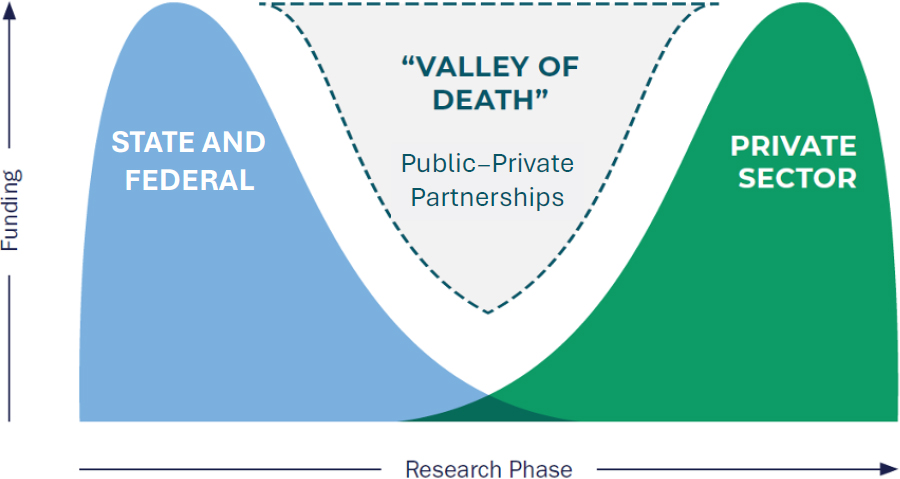
PPPs are another means for creating technology transfer and a strengthened RD&D ecosystem. These partnerships have an opportunity to bridge the gap between available (national and subnational) government funding and that offered by the private sector, as illustrated in Figure 5.
SOURCE: Adapted from NCInnovation 2024.
DOE facilitates public–private information-sharing initiatives such as the Better Buildings & Better Plants Initiative, where members share their solutions on topics such as energy efficiency (DOE 2020). Similar efforts could be explored, as would be appropriate, for electric sector organizations. Exploring opportunities for open architectures for the grid and what data can be made publicly available can present avenues for innovators outside of the traditional system to develop breakthroughs that benefit utilities, regulators, and customers. There is an opportunity for DOE and/or the National Laboratories to play a role in creating a platform for responsible data sharing and access, including functioning as a repository, setting data standards, and determining any security considerations necessary for use. DOE and/or the National Laboratories can also help standardize metrics across the system and publicize and disseminate efforts that have already undertaken this work.
DOE’s National Laboratories present an opportunity to leverage the strengths of these assets as part of PPPs. Long-standing partnerships, particularly ones that span multiple levels in the organization (from leadership to scientists and engineers) can build impactful ties between industry and national laboratory expertise to inform innovation efforts. Durable partnerships across National Laboratories (Lab-to-Lab) can be a successful endeavor when there are aligned laboratory and DOE program staff.
One example worth highlighting is DOE providing a grant to the National Laboratory of the Rockies (NLR) to enable meetings between the laboratory and the IEEE every 2 months for 2 years to develop the IEEE 1547 DER interconnection standard. This collaboration, introduced in 2003, paved the way for the laboratory’s
further involvement in interconnection and DER research, resulting in NLR’s work to revise the standard in 2018 (NLR 2021).
Collaborative efforts within DOE can be limited when these endeavors run up against technology-specific silos. One prominent barrier of this type is when congressionally appropriated funds are siloed to a technology-specific area. Another is when a project spans multiple technology domains within DOE, such that it does not get considered as a core priority for any one collaborator.
Federally funded R&D corporations are a way of incorporating the PPP model, which can draw on the expertise of the National Laboratories and university system. This model first began in the defense sector and has since expanded and been adopted by other sectors and parts of the federal government, including DOE. One such example with the private sector is the long-standing partnership between Los Alamos National Laboratory and Procter & Gamble, which was developed for predicting, preventing, and reducing equipment failures (thus reducing operating costs and capital expenditures) (Sauers 2010). Encouraging partnerships within different levels of the same organization can also present benefits to break down silos and create coordinated RD&D; for example, between a procurement team and an innovation leadership team within a utility.
Given the growing operational complexities of the electricity system, ISOs and RTOs are now seeking direct partnerships with universities and researchers through grantmaking. Past awards for joint research between grid operators and universities have been made with support from DOE, presenting an opportunity to connect academia, grid operation, and the federal government in collaboration on shared projects. Accordingly, grants, federal funding, and collaboration with entities outside of the federal apparatus (e.g., nongovernmental organizations, community organizations, state and local governments, Tribes) can strengthen opportunities to advance electricity RD&D.
The private sector can also find multiple pathways to capitalize revenues with the digital innovations as shown with increased venture capital funding in this space. A PPP would benefit the private sector to understand the motivations of the public space and to focus its efforts accordingly. These partnerships can be beneficial for the public sector by leveraging the private sector’s experience in product delivery and potential comparative efficient gains (Castalia Strategic Advisors 2018). Examples of PPPs have been successfully utilized in smart grid efforts from Singapore to Germany to Houston (Volodarsky 2021).
There are opportunities for collaboration and innovation in sectors moving toward greater amounts of electrification in their operations. Examples include electrification in industry and manufacturing, which motivate needed upgrades in the grid from utility patterns—particularly in the distribution system—but also creates avenues for the simultaneous adoption of greater digitization and Internet of Things technologies from the technology sector (Donadel 2021; Industry Signals 2025). Another example is increasing the electrification of transportation technologies, where the Joint Office of Energy and Transportation has engaged with partners in electric utilities to collaborate on topics including streamlining permitting, reducing time to power, leveraging existing rights-of-way for electricity
infrastructure, and coordinating vehicle charging and discharging with the system as a grid-edge asset (Joint Office of Energy and Transpiration n.d.).
Airports represent one specific facility type exemplifying collaborations of the facility operators with electricity utilities and equipment vendors to implement new innovations for meeting emerging facility needs. These emerging needs relate to increasing resilience for facilities, meeting increasing electricity demands, and improving power quality (e.g., voltage changes that impact equipment). Electricity outages at Hartsfield-Jackson Atlanta International Airport in 2017, New York’s John F. Kennedy International Airport, and London’s Heathrow Airport in 2025 all resulted in large-scale flight disruptions throughout the system and each caused tens of millions of dollars in damages (Dubec 2025; ET Online 2025; Yamanouchi 2017). Events like this and numerous smaller-scale power disruptions documented by the U.S. Government Accountability Office at a majority of airports responding to the agency’s survey help motivate many airports to invest in new electricity resilience innovations (GAO 2023). Those investments include microgrids, on-site electricity generation and storage, and grid interconnection redundancy (Chokshi 2025; Macias et al. 2025; Miller and Rutledge 2025; San Diego International Airport 2019). These investments are not only used to help with potential disruptions in the electricity grids but airports are also dealing with an overall growth in electricity demands and technological innovations that allow self-generation of power that help reduce power demands from the grid. The wide interests of airports have spurred the development of tools to help other facilities assess innovations related to resilience and microgrids and sector-wide conferences on topics such as energy management (ACI-NA n.d.; NASEM 2021c, 2024).
Benefits from Partner Engagement and Transparency in the Funding Opportunity Announcement Process
At a high level, when DOE typically implements RD&D efforts, it identifies an area of priority, releases a Funding Opportunity Announcement (FOA), and receives and reviews replies. If FOA and RD&D topics are defined first by the government without seeking input from the relevant partner communities and potential recipients, they could result in the agency overlooking key RD&D needs. Accordingly, it is important to think about how DOE can engage the relevant innovation ecosystem early in the FOA creation process. Expanding engagement with private entities and states can ensure that efforts are aligned and not duplicated, targeted to the right problems, and create greater transparency and inclusion of stakeholders’ needs for particular innovation solutions. One specific approach could be DOE’s Office of Electricity developing joint R&D FOAs with states to pool federal and state resources that could expand the impact of funding, especially during limited funding availability.
A variety of different FOAs with different deadlines and different requirements can be challenging to navigate, not only for potential grantees but also for the interested public and other entities such as states. Participating in the FOA response process could be burdensome for those in the innovation ecosystem without university or corporate backing. It may be worth considering approaches to create less restrictive or even open FOAs, which can then widen the pool of possible respondents and participants. One possible solution could be to expand the navigator concept that allows for broader searches of opportunities (see, e.g., the U.S. Department of Transportation’s navigator [DOT n.d.]). Such an approach would also allow stakeholders an
opportunity to understand funding priorities and upcoming RD&D funding opportunities could be grouped by theme (i.e., storage, grid communications) and accompanied with a summary in accessible, plain language. This approach could also enable the structuring of FOAs, which are oriented toward solving particular challenges, instead of prescribing a particular technology as a solution to the issue.
When RD&D efforts are underway, transparency is often lacking. DOE’s Office of Electricity could update the stakeholder community often about the schedule and success or failures of a project. Discussing not only successes but also failures openly allows stakeholders and other innovators to learn alongside DOE and not repeat mistakes. This increased transparency, coupled with greater communication with prospective FOA respondents, can build a stronger fabric of partnerships that can strengthen the network of actors working to bring electricity innovation into practice.
Leverage
Creating Maximum Impact from Innovation Efforts
Creating the largest possible impact from an innovation effort benefits from having a defined goal or end state one is trying to reach. Specifically, this could be a defined state for the grid (e.g., high performance along reliability metrics, price stability, low marginal costs of generation) and then working backward to determine which innovations are needed to reach that end state. DOE program offices establish long-term goals and strategies that they can then align with their programmatic activities. Working backward from a defined future vision for the grid can enable RD&D efforts that target high-leverage breakthroughs, rather than just what the next incremental step in the development of a particular technology might be.
DOE has a history of creating strong successes in advancing energy technologies, from the SunShot Initiative reducing the total cost of solar energy (DOE n.d.c) to early DOE investments enabling the technology for the hydraulic fracturing revolution in shale gas (DOE 2011). One vision DOE could adopt for its innovation efforts is creating a “hotbed of spillovers” with learnings and advancements from various efforts and projects informing each other. Importantly, to create maximum impact, this cannot just be successes. Mistakes and failures should be communicated accessibly, broadly, and without judgment, so that they are not repeated.
Viewing RD&D support in the context of “leverage” and utilizing a limited set of resources present an incentive for identifying disruptive innovation, which may yield larger returns than incremental innovation. However, it is important to note that even though the benefits of incremental innovation may be marginal, many of these may create improvements of electricity system operational capabilities. An evaluation of the returns on DOE-funded research in energy efficiency and pollution control programs from 1975 through 2000 found that these programs generated benefits amounting to approximately three times the research’s cost (NRC 2001). A 2001 National Research Council report concluded that the highest net benefits accrued to programs focused on end-use energy efficiency. This was namely where research prompted changes in DOE-issued minimum energy efficiency performance standards, which, in turn, increased the adoption of newly developed technologies.
There are many steps throughout the innovation cycle and many ways to attain impact along the dimensions noted. Accordingly, a robust RD&D portfolio would invest in multiple topics in parallel. It would not pick winners and losers and would acknowledge that one may not fully know where the next breakthrough area for innovation will be. Importantly, an innovation program should define metrics for success, invest in tracking and evaluating its results, and disseminate relevant findings to the innovation ecosystem to inform parallel efforts.
Regulatory Innovation and Operational Experimentation
There are multiple paths for applying leverage to drive innovation. It is possible to do so through developing organized markets. It also possible to drive regulation by putting pressure on regulated monopolies to keep spending down. On the other side, lax regulation may stifle utility innovation. Each pathway will lead to a different set of innovations. There has been success in driving down generation costs from breaking up vertically integrated utilities, but that may have pushed utilities to squeeze out more earnings from other parts of the rate base (Cicala 2025).
Barriers to attaining innovation are not just technological or funding based, but are also institutional and structural. Utilities face constraints that limit their investment in innovation. The RD&D ecosystem could be bolstered by regulatory innovations; for example, allowing utilities to organize auctions for interconnection, which could provide near-term revenue. Such regulatory experiments would need to be carefully considered (e.g., the auctions example would result in only those with the financial means getting the chance to interconnect) but could present pathways to understand how to create positive impact in the context of limited funds and growing strains on the grid.
In addition to experiments with regulatory innovation, similar thinking could be applied to the operational elements of the grid. Simulation has been a primary way of conducting electricity system research, though substantial impacts could be learned by developing the means to conduct effective and responsible experiments. The National Academies’ Committee on the Future of Electric Power in the U.S. recommended such an approach in the context of grid architectures:
Because there will always be limits to what can be learned through simulation, the Department of Energy (DOE) should choose the most promising new architectures indicated by large-scale simulation studies in order to identify and plan a number of large-scale field experiments that could verify the advantages of such grid architectures under actual operations. Such field experiments of grid architecture would be qualitatively and quantitatively much larger in scope than the usual prototyping of a component such as a storage device, and should be reserved for when adequate resources and opportunities are available.6
Thorough and prudently considered experimentation could provide a way to test innovative technologies and grid operational approaches and gain insights not as readily available through simulation. However, there
___________________
6 See Recommendation 5.8 in NASEM 2021a.
are open questions about the costs of large-scale field experiments, who would cover these costs, and how replicable results would be.
DOE has a strong and established role in supporting the early stages of RD&D for the electricity system. It has opportunities to extend its influence on technology transfer, commercialization, and other later-stage impacts in the innovation process. Extending and expanding efforts for cooperation, cost sharing, and other partnerships with the private sector could build out DOE’s capabilities in the space. Enhancing these efforts would directly align with DOE’s Office of Electricity’s vision statement of “work[ing] closely with industry and other stakeholders to drive technological and operational advancements to sustain U.S. global leadership in energy” (OE n.d.).
To effectively support RD&D in the electricity sector, it is important to understand which efforts have been successful and which have failed. Devoting organizational resources and funding toward tracking impacts and conducting evaluation on active efforts are essential for informing the design of effective and efficient programs in the future. Disseminating the results of such evaluation efforts can provide insights for states, industry consortia, and other actors who seek to support RD&D themselves.
Getting the Most Out of the Existing System
One point of high-leverage investment can be in technologies and operational capabilities that increase and improve the utilization of existing system assets. The general area of grid-enhancing technologies (GETs) is growing fast. These technologies first emerged in Europe, and while there are now numerous U.S.-based GET companies, due to policy and regulatory support and funding from DOE, the locus of RD&D in this area is Europe (INL 2022). The opportunity presented by these technologies is to extract more capacity from the existing transmission network. GETs generally include dynamic line rating technologies that allow the system operator to run the transmission system closer to the thermal limits; power flow control technologies (see the information on StatComs and HV power electronics above) that facilitate the integration of inverter-based resources on the grid while managing for any stability problems, and in doing so, allow more flow than what would otherwise be possible without them; and advanced conductors, as reconductoring with advanced conductors allows for more flow in the same right-of-way (ESIG 2025b).
There are several regulatory hurdles to the adoption of GETs. U.S. transmission system operators (TSOs) prefer a more traditional “wires” investment approach because they have strong incentives to increase their rate base as they are paid a cost-of-service return on assets (Kiesling 2025; Makholm 2024). Current regulatory structures do not incentivize utilities to invest in GETs prior to new transmission lines. Also, in Europe, it is a requirement to give preference to the dispatch of renewable energy (EU ETS 2024). This requirement coupled with the TSO model results in more frequent switching of systems to manage congestion (compared with the United States, where the transmission is mostly “locked down” during real-time operations and congestion management is done through redispatch of the system). The idea of the locational marginal pricing–based markets in the United States is to have the generation market respond to the congestion rather than dynamically altering the transmission topology in real time. To do both in real time is complex and will affect price formation in the markets. Accordingly, there would be
benefits in an RD&D effort to investigate the feasibility of combining the best of the European approach (dynamic transmission topology management with less dynamic generation dispatch and scheduling) with the U.S. approach (dynamic generation dispatch and management with less dynamic transmission topology management) within the context of the existing wholesale market structures, which is a complex optimization problem.
Physical energy innovations often take years if not decades to perfect and the private markets generally do not take on risk without known short- and long-term return on investments. This is an area where public funds and support can be beneficial (Murray 2017). Physical energy innovation includes not only new generation technologies and existing technology enhancements (increase production and/or increase useful life) but also the creation and manufacturing of the hardware to support digital innovation (i.e., smart meter programs [DOE n.d.d]). RD&D efforts that can improve the electricity system do not need to be constrained to physical, engineered assets. There are opportunities to leverage existing policy and planning assets such as existing transportation rights-of-way that can be used for siting transmission infrastructure (NASEM 2025b), which also fits into this general strategy set.
One non-physical asset that could create benefits for the electricity industry is AI technologies and capabilities. The opportunities offered by this set of tools is not without precedent. The internet has revolutionized all aspects of commerce, industry, and everyday life and the electricity sector is no exception. In addition to the enterprise-level changes with myriad changes to managing and automating approaches to engineering and administration, real-time operations have been similarly revolutionized. One example was the implementation of wholesale power trading. In the mid-1990s, FERC mandated transmission deregulation and the internet was the enabling technology for how this was implemented.7 These changes were the beginning of dramatic structural changes to the entire electricity sector, including the introduction of entirely new organizations to implement and manage these changes (including ISOs).
In another example of leveraging non-energy technology for the benefit of the electricity sector, precision timing available from global navigation satellite systems (GNSS) revolutionized time-synchronized measurements, specifically PMU technology. These measurements have driven substantial enhancements in system reliability, leveraging the billions invested in deploying GNSS.
The Role for Prizes
DOE and other federal agencies have the authority to administer competitive prizes to incentivize innovation (DOE n.d.e; Gallo 2020). The structure of prize competitions can vary substantially, with possible rewards including both cash and non-cash assistance (Kempe 2024).
Prizes can be a useful tool for engaging innovators with limited funding, as competitions operate on an accelerated timeline, do not require any direct cost sharing or government contracting, and typically have low barriers to entry. As summarized by the Congressional Research Service, the Office of Management
___________________
7 Issued in 1996, FERC Order 888 mandated open access to interstate transmission to facilitate wholesale electricity competition. The companion order, 889, described how this would be implemented, mandating an internet-facing trading system.
and Budget and the Office of Science and Technology Policy have characterized the benefits of federal prize competitions as allowing agencies to:
(1) pay only for success; (2) establish ambitious goals and shift technological and other risks to prize participants; (3) increase the number and diversity of individuals, organizations, and teams tackling a problem, including those who have not previously received federal funding; (4) increase cost effectiveness, stimulate private-sector investment, and maximize the return on taxpayer dollars; and (5) motivate and inspire the public to tackle scientific, technical, and societal problems. (Gallo 2020)
Prizes have been a tool used by DOE’s Office of Electricity with recent notable instances including the Energy Storage Innovations Prize, the Feeder of the Future Prize, and the Digitizing Utilities Prize (DOE 2023, 2025c, 2026). Prizes are not the perfect tool for every application or intended result. They may not be the appropriate tool when close funder oversight is beneficial, if the path to success is already well known, if success is difficult to define, or if the goal is to fund a particular community or multiple teams (Kane 2025). It is important to understand prizes as part of the innovation ecosystem. They can be leveraged to create communities of practice around a certain technology or capability, but they could also disrupt the development of a healthy innovation ecosystem (e.g., if a “winner takes all”). Accordingly, as with all tools in the innovation toolkit, evaluating the appropriateness of using prizes for the intended goal is important.
The Convening Power of the Federal Government
An asset for innovation and coordination that should not be overlooked is the convening power of the federal government. DOE and other federal agencies create convenings and coordinating sessions that, as a result of being hosted by the federal government, rise in importance and prominence above those hosted by non-federal organizations. These efforts can also play an important role in bridging language and conceptual gaps between different sectors or areas of expertise through common engagement at an event or on a particular topic. These engagements can even provide the means to improve communications within organizations like utilities, where employees with different expertise and working in different roles also experience these communication and coordination challenges. Through these convenings, the government can prompt coordination and galvanize action on particular important topics while incurring only the cost of event planning and hosting.
The highest impact of the federal government will vary at different stages of the innovation process. In early research it may be as a funder, but in later stages (such as demonstrations) it may instead be as a convener or a platform for information sharing.
Conclusion
The core ideas of this Issue Paper apply along two dimensions. The first addresses specific issue areas that require innovation and would likely offer substantial cross-cutting value from dedicated RD&D efforts. The second pertains to structural elements, which are instruments that can be leveraged to support achievements along that first dimension.
Through the exploration of key RD&D needs for the electricity system, the authors identified specific areas for targeted innovation efforts: co-location of large loads and generation, interconnection queue reform and process enhancement, unlocking load flexibility, demand response and DER capabilities for a bidirectional grid, grid-enhancing technologies, and technology advances that can limit liability issues for utilities. This is not a comprehensive or exhaustive list of areas where the electricity system could benefit from RD&D efforts, but instead reflects potentially high-impact and high-leverage areas that surfaced from the authors’ examination of the electricity RD&D ecosystem at the time of writing.
RD&D may be supported through efforts that enhance structural elements of the electricity RD&D system. Some of these efforts include the use of technology testbeds, pilot programs with utilities, the use of regulatory sandboxes, efforts to increase the utilization of existing system assets, and experimentation in addition to simulation. Specific efforts may be strengthened through further support for partnerships (including consortia and PPPs), convenings facilitated by DOE, and pulse-taking efforts that survey the current needs of the electricity innovation ecosystem. Engagement with partners early in the FOA process can be a means to ensure responsiveness to electricity RD&D needs. The tracking and broad communication of impacts (both successes and failures) can provide information and awareness that build a healthy and informed innovation ecosystem.
The U.S. electricity system is at an inflection point in its history. DOE and its innovation partners are situated to shape the electricity system to be future-ready and in the public interest. DOE’s role will vary for different technologies and at different places in the technology life cycle, but it has tremendous scope and potential to shape the future of the electricity system at this pivotal point in its evolution.


