Exploring the Impact of Artificial Intelligence on the Airport Industry (2026)
Chapter: Exploring the Impact of Artificial Intelligence on the Airport Industry
Introduction
This Airport Cooperative Research Program (ACRP) First Look aims to provide an overview of artificial intelligence (AI) technologies and applications and their connections with airports, including the opportunities and challenges of implementing AI to support airport business and operations. These business and operations include airside, terminal, landside, and cross-domain areas.
This paper begins with a brief introduction to AI, including its history, and evolution, followed by a discussion of the current needs and challenges faced by airports. This paper then explores technological advancements that may improve airport business and operations, with a focus on operational efficiency, safety, and passenger experience. Consideration is also given to regulatory requirements and other factors that are relevant to initiating AI implementation.
This paper further identifies future research needs, highlighting gaps in technology applications within the airport industry. It also explores potential risks, failure points, and operational challenges associated with examples of AI adoption discussed in this paper. The First Look provides an initial overview of AI in Nexus with the airport industry and helps set the stage for deeper discussion on these topics during the ACRP Insight Event Exploring the Impact of Artificial Intelligence on the Airport Industry on May 19-20, 2026. In addition, it gives examples of AI applications across other sectors, such as smart buildings, healthcare, manufacturing, logistics, finance, and retail. These examples may offer insights that are transferable into aviation.
The appendix includes a more detailed overview of AI, covering different types of AI, public perceptions, and common practical applications, thereby providing readers with a foundational understanding of AI.
What is Artificial Intelligence?
AI is a rapidly advancing technology that can transform how individuals and industries interact with computers and machines (McKinsey & Company, 2024). AI is a branch of computer science that is dedicated to solving cognitive problems commonly associated with human intelligence, including learning, problem-solving, and pattern recognition. One of AI’s defining characteristics is the ability to adapt to changing circumstances and perform complex tasks that traditional computer programs struggle to handle (McKinsey & Company, 2024; Marr, 2018).
AI can be defined based on its intended goals. Systems designed to perform specific tasks are known as Narrow AI; common applications of Narrow AI include natural language processing, speech recognition, and image classification. AI that aims to replicate or surpass human reasoning is classified as Super AI. While Super AI remains purely theoretical, existing AI
applications fall under Narrow AI (Lumenalta, 2024a; IBM Data and AI Team, 2023). For more information on the different types of AI, see the appendix.
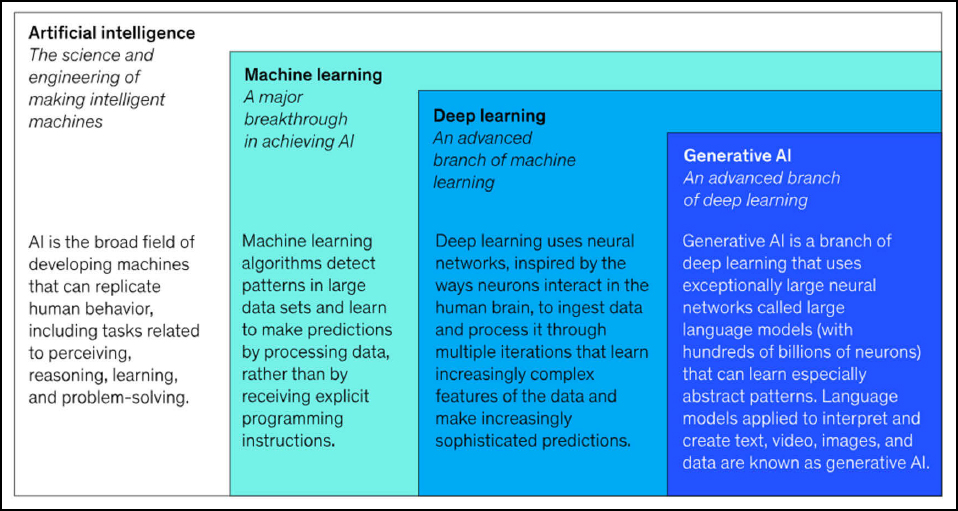
Figure 1 illustrates AI’s hierarchy. At its broadest, AI involves creating machines that simulate aspects of human behavior, including analyzing sensory data, engaging in data-driven learning, making decisions, and solving problems. A major area of advancement in AI is machine learning. Here, algorithms detect patterns and make predictions from data rather than following explicit programming.
Deep learning, a branch of machine learning, uses neural networks to process data through multiple layers, capturing complex features for sophisticated applications (Lumenalta, 2024a; McKinsey & Company, 2024). Generative AI (GenAI), a further specialization of machine learning, uses large neural networks to learn abstract patterns and create entirely new content, representing one of AI’s most advanced capabilities (Ranka, 2023; McKinsey & Company, 2024).
AI technologies are being widely and rapidly adopted across industries, including airports, to address current needs and challenges. As AI technologies advance, they are becoming increasingly embedded in daily operations, enabling smarter decision-making, automated workflows, and new opportunities for growth and innovation (Ranka, 2023). However, implementing and maintaining AI presents challenges, such as high operational costs, data privacy concerns, regulatory compliance, transparency, and public acceptance (McKinsey & Company, 2024). These issues need to be carefully examined to ensure that adopting AI in airports delivers long-term value and trust.
History and Evolution
AI has roots in the mid-20th century, beginning with Alan Turing’s proposal of the “imitation game,” now known as the Turing Test, to measure machine intelligence (McKinsey & Company, 2024). Building on such early ideas, computer scientist John McCarthy formally introduced the term “artificial intelligence” in 1956 at the Dartmouth Workshop, a landmark event that sought to unify research on machines capable of intelligent behavior (Marr, 2018; McKinsey & Company, 2024).
Early AI centered on symbolic or rule-based reasoning but struggled with complex real-world problems. By the late 1960s, researchers expanded AI concepts into robotics, leading to advances such as Simultaneous Localization and Mapping, which is now commonly used in autonomous vehicles. During the 1980s behavior-based robotics was introduced, in which early neural networks allowed machines to adapt to changing environments (McKinsey & Company, 2024).
In the 1990s, neural networks regained attention, leading to important breakthroughs in computer vision and language processing. Despite these advances, AI systems still heavily rely on human intervention to process new information and perform tasks beyond their initial training (McKinsey & Company, 2024). A major turning point came in 2012 with the rise of deep learning, in which multilayer neural networks enabled AI to recognize complex patterns, make adaptive decisions, and support predictive applications across industries, including airport operations (McKinsey & Company, 2024; Marr, 2024).
Most recently, GenAI powered by large language models (LLMs) and techniques such as generative adversarial networks and retrieval-augmented generation (RAG) have progressed far beyond pattern recognition. AI can now generate realistic images, produce contextually relevant information, and create entirely new forms of content, including text, visuals, and videos. These advancements make it possible to design automation systems that dynamically adapt to workflow changes, enhance decision-making based on domain-specific rules, and train on synthetic data in simulated environments while preserving data privacy and ensuring data integrity (Ranka, 2023; McKinsey & Company, 2024).
Artificial Intelligence in the Airport Environment
This section provides an overview of the business and operational needs of the airport industry, including both the opportunities and challenges that the industry currently faces and examines how AI technologies may be used to leverage the opportunities and overcome the challenges.
In addition, this section further reviews AI initiatives and studies, identified in the preceding literature review, related to airports. The findings revealed that most AI-related research has focused on airside operations, highlighting strong interest in technological advancements in air traffic management, aircraft movement, runway and pavement assessment, and other flight-side
logistics. Considerable scholarly attention has also been directed toward terminal operations where research has focused on security screening, passenger processing, baggage handling, and service systems. Airports have long used technologies such as rule-based camera systems and biometrics and sensors for self-service check-in, baggage screening, security, and management systems to provide these services to passengers. However, AI now enables advanced functionalities, including predictive capabilities, behavioral analysis, personalized services, and operational optimization, which could further enhance and transform the passenger experience.
Beyond these domains, this section further examines the technological opportunities and challenges related to integrated airport operations from a global perspective that extend across multiple operational zones, including cross-functional and peripheral areas.
Lastly, this section discusses the regulatory framework required to guide the development and application of AI, with particular emphasis on ensuring safety, fairness, and transparency while responding to the evolving challenges and societal impacts of these technologies (Meyer et al., 2025). Collectively, these insights lay a foundation for understanding how AI can holistically enhance airport business and operations across diverse domains, including technology integration, passenger experience, accessibility, and stakeholder collaboration. In doing so, AI has the potential to enhance efficiency, improve safety, and more effectively meet the needs of customers (Vantage Group, 2025).
The Current Needs and Challenges of Airports
Airports, which are often administered by municipal or public authorities, are essential public assets that bear significant accountability to the communities they serve. Their fundamental purpose is to attract passengers, airlines, and commercial partners, and they function as critical nodes in the air transportation system that foster regional economic growth through mechanisms such as visitor expenditures and tax revenues (Airports Council International, n.d.; Vantage Group, 2025). However, many airports face ongoing business challenges related to balancing operational efficiency, financial sustainability, and passenger satisfaction while facing volatile traffic patterns and rising costs associated with operating, maintaining, and modernizing infrastructure and resources.
Many airports continue to encounter persistent operational challenges while striving to achieve objectives such as ensuring safe flight operations, maintaining high passenger throughput, enhancing customer satisfaction, and reducing overall costs. Broadly, airport operations can be categorized into airside, landside, and terminal operations. Airside operations encompass all activities and infrastructure within the secure area of an airport, including aircraft movement and critical facilities such as the runways and taxiways. A constant challenge in airside operations is meeting stringent safety and regulatory requirements while simultaneously managing efficient aircraft movement, practicing effective baggage handling, and minimizing delays. These efforts are further complicated by operational constraints related to runway and pavement conditions,
airspace security, weather hazards, and communication and coordination inefficiencies (Turner, 2021).
For terminal operations, the primary focuses are passenger experience, security, and baggage-handling services within the terminal. These operations face ongoing challenges related to improving operational efficiency, such as optimizing passenger flow, reducing delays and congestion at check-in counters and security checkpoints, and improving passenger services. Increasingly, navigating these challenges involves providing passengers with personalized assistance and advanced wayfinding solutions (Vantage Group, 2025).
While some airports have begun implementing AI applications and experimenting with emerging technologies to address both business and operational needs, most airports, including many smaller airports, continue to rely on traditional systems. Compared to other industries, airports have been slower to adopt and test new technologies, largely due to their operational complexity, the necessity of uninterrupted operations, and stringent safety and regulatory requirements. These factors create significant barriers to replacing legacy systems with innovative solutions that may require extensive data integration and infrastructure upgrades, regulatory compliance, and rigorous validation and testing. In addition, modernizing outdated infrastructure often entails significant upfront investment. At the same time, deploying new systems that require greater computational power introduces consistent maintenance demands and eventual scalability challenges as technological capabilities continue to evolve.
The following section explores the opportunities and challenges associated with using AI technologies within both airside and terminal operations, as well as in cross-domain applications that address the broader needs and constraints that airports currently face. It further highlights examples of how AI is already being implemented in airport operational settings from a global perspective.
Additionally, the following section offers insights from the broader implementation of AI not only in the United States but also internationally These experiences have provided airports with proven, practical solutions, with many examples drawn from overseas, where AI-driven technologies have been more widely adopted in airport operations.
The Opportunities and Challenges of Artificial Intelligence
Airport Business
AI presents promising opportunities for airports to enhance revenue generation, sustainability, and broader operational and strategic goals. In terms of revenue, AI can enable dynamic pricing strategies and personalized marketing, allowing airports and retailers to optimize promotions, duty-free offerings, parking, and car rentals by leveraging insights into passenger behavior, demand fluctuations, and passenger flow patterns. Such applications have the potential to expand
ancillary revenue streams (Lumenalta, 2024b; Vantage Group, 2025; Arun et al., 2025; Rojek et al., 2025).
On the sustainability side, AI can optimize energy management within terminals by optimizing heating, cooling, and lighting systems, while predictive analytics can help monitor and mitigate carbon emissions associated with ground operations and aircraft taxiing (Arun et al., 2025; Rojek et al., 2025).
Beyond revenue and sustainability, AI can support regulatory compliance by monitoring adherence to safety and security standards, foster innovation and technology integration through smart systems and automation, and enhance asset management by predicting maintenance needs and optimizing equipment use. In addition, predictive analytics and operational insights can strengthen airline and route development, thereby supporting long-term competitiveness (Vantage Group, 2025; IBM, 2024; Arun et al., 2025; Rojek et al., 2025; Jiang et al., 2023). By leveraging these AI-driven capacities, airports can improve financial performance, operational efficiency, passenger experience, and strategic planning.
However, implementing AI in airports presents several challenges that must be addressed. Dynamic pricing and personalized marketing rely on robust data governance frameworks, particularly with respect to data privacy and accurate forecasting models. Similarly, sustainability optimization requires high-quality energy and emissions data, along with substantial investment in smart infrastructure (Vantage Group, 2025; Arun et al., 2025; Rojek et al., 2025). Regulatory compliance and safety monitoring raise additional legal, ethical, and transparency considerations, while integrating innovative technologies is often constrained by legacy systems and interoperability limitations (Jiang et al., 2023; Vantage Group, 2025).
Furthermore, AI-driven asset management and carrier or route development depends on reliable predictive models, standardized data formats, and sustained human oversight to ensure informed and accountable decision-making (IBM, 2024; Vantage Group, 2025). Realizing the full potential of AI in airports requires comprehensive planning, developing a targeted workforce, and establishing a robust governance structure to manage risks while enabling innovation.
Generative Artificial Intelligence
GenAI refers to a set of machine learning capabilities that allow computers to produce new content, such as text, images, audio, or synthetic data, based on patterns learned from historical datasets (Goodfellow et al., 2016). These models have been widely adopted across many sectors and can support a variety of content creation and analysis tasks. LLMs represent one of the most common forms of GenAI. LLMs are trained using large collections of textual and graphical information, which enables them to identify typical patterns and generate coherent outputs in response to user prompts (Brown et al., 2020).
LLMs do not possess human-level reasoning or memory. Instead, they generate responses by statistically analyzing relationships in the data on which they are trained (Bender et al., 2021).
When used by airport professionals, an LLM can function as a digital assistant that helps draft documents, summarize large volumes of information, compare alternatives, or answer domain-specific questions. The model performs these types of tasks by drawing on learned patterns rather than direct experience; for this reason, human oversight and validation remain essential (NIST, 2023).
Core Concepts and Types of Generative AI
In addition to LLMs, several other forms of GenAI are relevant to airport environments. Vision and language models integrate visual and textual inputs to interpret and generate multimodal content (Zhang et al., 2024). Generative image models use algorithms, such as diffusion processes, to create synthetic images for testing or training purposes (Cao et al., 2024). Multimodal GenAI systems combine text, images, video, or sensor data to support more complex analytical tasks (Maksoud et al., 2025). Together, these systems can enhance the way airports manage information, develop training content, and support decision-making processes.
Potential Generative AI Application Areas in Airport Environments
Although the maturity and suitability of GenAI tools vary, several emerging applications are relevant to airport operations. The examples below represent potential near-term uses and illustrate opportunities for further exploration. This section is not intended to be comprehensive; instead, it provides a direction to begin considering other use cases that can help identify research gaps.
Airport Operations and Incident Management
GenAI tools can assist airport operations centers with summarizing incident logs, Notices to Airmen, meteorological products, and operational advisories. These automatic summaries can support shift handovers, after-action reviews, and routine operational reporting (Yang and Huang, 2023). These applications may improve efficiency and reduce manual documentation workloads.
Airfield and Maintenance Activities
Vision and language models and synthetic image-generation tools may supplement existing airfield inspection and maintenance programs. These tools can help organize inspection results, support trend analysis, and create synthetic images that improve the training of computer vision models (National Academies of Sciences, Engineering, and Medicine, 2024). Maintenance teams may also use GenAI tools to consolidate notes, work orders, and sensor readings into structured summaries.
Security and Baggage Operations
Image-generation models can create synthetic training materials that support machine learning systems used in automated threat detection or baggage screening. LLMs may help supervisory personnel identify recurring patterns in security data or summarize checkpoint anomalies. These applications may improve review processes while still requiring human validation (U.S. GAO, 2023).
Planning, Environmental Review, and Construction
Airport planning, environmental documentation, and construction program management typically involve substantial text and repeated revisions. GenAI may assist planners and project managers by generating preliminary draft materials, synthesizing stakeholder feedback, organizing technical specifications, or comparing planning alternatives. These uses may support staff during periods of high workloads or tight deadlines (ICAO, 2025).
Passenger-Facing Communication and Accessibility
Conversational systems powered by LLMs may provide multilingual support, answer common questions, and offer accessibility accommodations for passengers. These tools can supplement existing customer service channels and provide consistent information to travelers. As with all GenAI tools, accuracy must be verified through human validation.
Administrative and Back Office Functions
GenAI tools can support administrative functions such as procurement documentation, finance reporting, policy review, training content development, and human resources communication. These applications can improve administrative efficiency without affecting safety-critical operations (EASA, 2023).
3. Challenges and Limitations
Adopting GenAI in airport environments presents several important challenges that must be carefully considered before integrating the technology into operational or administrative workflows. One of the most significant issues is accuracy and reliability. GenAI models can produce responses that appear coherent but are factually incorrect or unsupported by the underlying data. These errors, sometimes referred to as hallucinations, may not be immediately obvious to users (Wach et al., 2023). For this reason, airports need robust processes that ensure staff review and verify any GenAI-generated content before using it to guide decisions, particularly in safety-related or regulatory contexts.
Data privacy and security also represent major concerns. Many airport functions rely on sensitive operational information, security procedures, passenger data, and infrastructure specifications. Introducing GenAI tools, especially those hosted on commercial cloud platforms, creates questions regarding data governance, confidentiality, retention policies, and the handling of restricted information. Therefore, airports must assess whether existing cybersecurity and privacy protections are sufficient for environments that involve interactions with external AI
models and determine what adjustments are needed to safeguard information (NIST, 2023; GAO, 2023).
Further limitations arise from the lack of formal regulatory guidance. Currently, neither the Federal Aviation Administration (FAA) nor the International Civil Aviation Organization (ICAO) has established standards that specifically address the use of GenAI within aviation or airport operations. This absence of regulatory direction means airports must rely on broader principles of safety risk management, data integrity, and compliance when considering GenAI applications (EASA, 2023; ICAO, 2025). Without established frameworks, airports may take cautious approaches that limit the extent to which GenAI can be integrated into safety-critical or operational decision-making processes.
Workforce readiness is another important factor that influences successful adoption of GenAI. Airport personnel will need training that helps them understand how GenAI works, how to craft effective prompts, how to evaluate the quality of outputs, and how to identify limitations or risks. Introducing GenAI tools has the potential to change traditional workflows, and staff may require new competencies to supervise GenAI-enabled processes. Developing these skills requires time and organizational support, and airports will need to ensure that GenAI tools supplement rather than replace staff expertise (EASA, 2023; Jarrahi et al., 2025).
Finally, integrating GenAI with existing technology systems can be complex. Many airport operational systems, maintenance platforms, and administrative databases were designed decades ago and may not be readily compatible with modern AI architectures. Introducing GenAI tools into these environments may require new interfaces, updated data governance frameworks, or coordination with multiple technology vendors (National Academies of Sciences, Engineering, and Medicine, 2024). In some cases, the limitations of legacy systems may restrict the potential benefits that GenAI can provide or require significant investment before integration becomes feasible.
Taken together, these challenges illustrate that while GenAI offers substantial promise, its adoption within airport environments must proceed carefully. Effective use will depend on strong oversight, thoughtful governance, and continued evaluation as the technology and regulatory environment evolve.
Airside Operations
Counter-Unmanned Aircraft System
Unmanned aircraft systems (UAS) offer transformative benefits for airside operations and maintenance, such as facilitating runway and infrastructure inspections and surveillance without disrupting airport operations. However, they also present growing security concerns. As UAS operations increasingly rely on advanced communication technologies, potential vulnerabilities may compromise both airspace integrity and airport security. Safe and secure UAS integration,
requires advanced technologies capable of detecting, tracking, identifying, and mitigating unauthorized drones (Wang et al., 2020).
Counter-Unmanned Aircraft Systems (C-UAS) are specifically designed to lawfully and safely disable, disrupt, or assume control of unauthorized drones. In recent years, substantial research has focused on both detection and mitigation technologies, although these remain in research phase and have not yet been widely implemented in commercial airports. Common detection methods are based on real-time acoustic sensing, computer vision, passive radio frequency (RF) monitoring, radar, and multi-sensor data fusion. Mitigation strategies range from RF jamming and electromagnetic pulse interference to spoofing, hacking, and physical capture techniques (Wang et al., 2020).
Among detection techniques, AI, particularly deep learning, has demonstrated promise in improving the accuracy and robustness of radar, vision, and RF-based systems. In radar detection, neural network-based deep learning techniques are increasingly used to automate feature extraction and pattern recognition, thereby enabling more reliable classification of UAS versus non-UAS targets. In the case of computer vision and RF-based detections, ongoing research emphasizes the need for lightweight, compact, and cost-effective deep learning models capable of operating efficiently under real-world situations (Wang et al., 2020).
Relying on simple detection or mitigation techniques alone is often unreliable because each method has distinct strengths as well as inherent limitations. For example, acoustic sensing is highly susceptible to background noise and adverse weather conditions, such as strong wind. Computer vision systems struggle with a limited detection range and are sensitive to lighting conditions. Radar and multi-sensor fusion approaches often require higher processing power and entail significant implementation costs. Consequently, future C-UAS systems must adopt more integrated approaches (Figure 2) by combining multiple detection techniques and fusing data from diverse sensors, including video, radio, and audio inputs, and other ground and aerial data sources.
AI plays a key role in this integration by dynamically fusing heterogeneous data streams, recognizing patterns, and maintaining situational awareness in real time. On the mitigation side, priority should be given to non-destructive methods that safely redirect or neutralize unauthorized drones without causing damage to personal property (Wang et al., 2020).

A key focus moving forward is developing a unified and systematic framework to support an effective UAS defense strategy. As shown in Figure 3, stakeholders must work together to balance detection and mitigation techniques in a collaborative, adaptive, and scalable framework. Local UAS coordinators act as intermediaries between UAS operators and airspace authorities, leveraging manufacturer-provided control interfaces to ensure secure operations, enforce regulatory requirements, and assume control when necessary.
Airspace authorities are tasked with maintaining regulation databases, disseminating information through shared platforms, and safeguarding the security and integrity of published data. UAS manufacturers are responsible for defining environmental requirements for safe operation, providing control interfaces for coordinators, and advancing detect-and-avoid technologies to support UAS integration. Finally, trusted information providers contribute by supplying safety and security data, as well as reviewing reports from communities, thereby ensuring the reliability and transparency of UAS management practices (Wang et al., 2020).
However, the rapid development of the UAS industry, coupled with evolving regulatory requirements, underscores the dynamic nature of this emerging sector of aviation. This evolving ecosystem is poised to significantly influence, and in some cases disrupt the traditional mechanisms of airport operations. In parallel, AI technologies will continue to evolve to support adaptive threat detection, predictive risk assessment, and automated decision-making, aligning C-UAS capabilities with changing operational and regulatory environments.

Pavement and Runway Assessments
Implementing AI for pavement and runway assessment presents a significant opportunity to strengthen infrastructure maintenance, improve operational efficiency, and enhance safety. AI technologies, such as machine learning, deep learning, and computer vision, offer innovative solutions that enable the automation and optimization of these processes, thereby increasing accuracy, consistency, and timeliness in assessment. These technologies are still largely in research and pilot phases, but they have the potential to transform traditional methods of inspecting and maintaining pavements, which often rely on manual surveys that can be time-consuming and prone to human error.
Artificial Intelligence-Powered Pavement Crack Detection
One example of technology that can be used for pavement and runway assessment is Benesch’s AI-powered pavement crack detection system. This data-centric solution integrates AI and machine learning with Bentley’s digital twin technologies and drone-based imagery (Figure 4). This innovative system automates the digitization, classification, and analysis of pavement cracks, reducing manual fieldwork by over 75%, thereby minimizing operational disruptions such as traffic delays or airport closures and enabling seamless integration of inspection data with maintenance and design teams. The digital twin platform further provides real-time, holistic visualization and historical comparisons of asset conditions, providing a reliable basis for improving structural assessments and supporting data-driven decision-making (Camus, 2024; LiDAR News, 2023).

Unmanned Aerial Vehicle-Based Pavement Inspection
A recent research study demonstrated an efficient methodology for runway pavement inspection by combining UAS-collected imagery with optimized deep learning architecture designed for lightweight yet powerful feature extraction, capable of detecting pavement defects at various scales. Specifically, the study used EfficientNet for feature extraction and a Feature Pyramid Network for segmentation, which integrates image features across scales to improve detection and segmentation performance.
This integrated approach enables precise identification of surface distresses. One major challenge of this approach lies in the need for extensive manually annotated training data because each crack and defect in the imagery must be labeled at the pixel level for supervised machine learning. This annotation process is not only costly and labor-intensive but also prone to human error, which limits scalability to large datasets. To address this challenge, the study incorporated both manually annotated real-world datasets and automatically labeled synthetic datasets through simulation (Figure 5). Introducing synthetic data improves prediction accuracy and enhances robustness while reducing reliance on extensive manual labeling efforts. The use of UAS further expanded monitoring capabilities, enabling wide-area coverage while significantly reducing inspection time and labor costs. Collectively, these advancements demonstrate strong potential for achieving fully automated, real-time pavement assessment that is both efficient and cost-effective (Alonso et al., 2024).
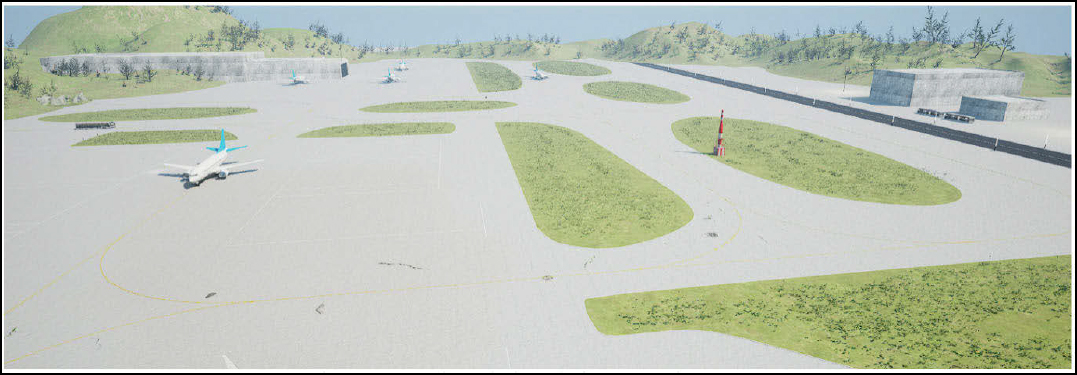
AI is playing an increasingly important role in enhancing runway safety and efficiency. For example, AI helps to detect and remove foreign object debris (FOD). Automated runway monitoring solutions that integrate millimeter-wave radar with electro-optical sensors and AI-powered image processing algorithms can continuously detect hazardous debris, such as tire fragments, asphalt chunks, and loose hardware, without disrupting flight schedules. By pinpointing the exact location of debris in real-time, these systems enable maintenance crews to be dispatched immediately, allowing for rapid removal and minimizing runway closures (Turner, 2021).
Several airports, including Chicago-O’Hare and Boston Logan International Airports in the United States, have already deployed FOD detection technologies. Despite these advancements, significant challenges remain in implementation. These challenges include high costs of deployment and maintenance, the need for seamless integration with existing airport operations and the requirement for staff training to respond effectively to automated alerts. Additional challenges involve managing false positives and missed detections, addressing limited datasets for AI model training, and meeting the high computational demands of such systems (Shan et al., 2025).
Computer Vision-Based Runway Surveillance
In addition to enhancing and automating pavement assessments, AI-driven systems are also being explored for the real-time aircraft monitoring to improve aircraft sequencing and navigation support. For instance, a computer vision-based framework has been designed to enhance airport ground surveillance by providing continuous monitoring and analytics of runway and taxiway operations. The system uses an adaptive deep neural network to automatically detect and track aircraft and calculate speed and separation on the airfield. Experimental results demonstrated an average precision of detection and tracking of up to 99.8% on simulated data. The framework also accurately identified aircraft positions relative to airport infrastructure,
thereby supporting improved situational awareness and operational safety. Figure 6 shows an example of aircraft detection and speed estimation using deep learning (Thai et al., 2020).

Integrating AI into runway and group operation assessment delivers significant benefits, including enhanced efficiency, reduced operational disruptions, and improved safety. By adopting these advanced AI technologies, airports can take a more proactive approach to managing airside operations and infrastructure maintenance, which leads to safer and more efficient operations.
Ground Handling
AI presents significant opportunities for improving ground-handling operations, particularly in areas such as baggage loading and unloading, turnaround efficiency, and safety. By leveraging computer vision, robotics, and predictive algorithms, AI can optimize resource allocation, reduce delays, and minimize human error in time-critical processes. Several airports have already begun implementing advanced baggage-handling solutions. For example, Krasnodar International Airport uses robotic manipulators equipped with cameras, barcode scanners, and advanced algorithms to automate baggage picking and loading. These robots can lift up to 42 kilograms and load one piece of baggage every 40 seconds in a predetermined sequence, thereby dramatically increasing efficiency while reducing physical strain on workers and minimizing operational errors (Jiang et al., 2023). However, challenges of implementing such AI systems may include the high cost of implementation, integration with legacy airport systems, the need for specialized staff training, and ensuring reliability in dynamic operational environments where weather conditions, irregular baggage sizes, or unexpected disruptions can affect performance. Despite these challenges, airports continue to adopt such AI systems with the potential to streamline workflows, enhance accuracy, and improve overall operational efficiency across ground-handling services (Turner, 2021).
Terminal and Landside Operations
Passenger Experience
AI applications can be used to transform the passenger experience by enhancing security, personalizing services, and streamlining the travel process, thereby creating a more efficient, safe, and seamless journey from arrival to boarding (Vantage Group, 2025). While many automated passenger services already exist, such as self-service check-in kiosks, chatbots, self-service baggage drops, and camera or lidar-based systems that enable self-driving capabilities for vehicles, AI and machine learning can further enhance these technologies by optimizing operations and improving the overall passenger experience.
By recognizing traveler behaviors and patterns, and by analyzing different phases of passengers’ journey, such as check-in, baggage drop-off, security checkpoints, and boarding, machine learning can help reduce wait times and queues through personalized services and optimized staffing. Predictive analytics can be integrated into existing systems to improve asset management and maintenance activities, thereby helping to avoid operational disruptions and delays caused by equipment failure. Emerging technologies, such as autonomous vehicles and AI-chatbots, represent additional opportunities that airports can leverage to further enhance the passenger experience inside the terminal (Jiang et al., 2023). Many of the AI technologies described above have been increasingly adopted in airports operations overseas. The following sections describe the functionalities of these technologies, how they enhance existing systems, and some of the challenges associated with operating them.
Artificial Intelligence-Powered, Self-Service Check-in Systems
AI technologies are increasingly used to enhance, rather than replace, existing self-service check-in systems by enabling adaptive decision-making and data-driven optimization. While most check-in kiosks operate through predefined, rule-based automation, AI analyzes large volumes of passenger and operational data to identify patterns, predict peak demand, and dynamically adjust staffing or kiosk availability. Machine learning models can also support fraud detection by identifying anomalies in passenger identification data and improving biometric verification accuracy over time, and ultimately providing a more personalized check-in experience, which enhances service satisfaction and efficiency (Jiang et al., 2023).
For example, Hong Kong International Airport uses machine learning to automate its self-service check-in system, using a combination of facial recognition, passport scans, and other biometric data to verify passenger identities and facilitate a faster, more secure process. Figure 7 shows an example of the smart check-in kiosk that enables full self-service departures (Hong Kong International Airport, n.d.).
Similarly, Heathrow and Los Angeles International Airports have adopted advanced machine learning systems to streamline the check-in process and reduce wait times by analyzing factors such as time of day, passenger volume, and other operational data. These data are also being used
to optimize staffing and check-in station layouts, further improving the overall passenger experience (Hong Kong International Airport, n.d.; Jiang et al., 2023).
Unlike basic automation systems, integrated AI-driven analytics monitor system performance, passenger flow, and error rates. This approach allows continuous improvement of self-service operations rather than full automation. These data-driven insights support more efficient routing, reduced waiting times, and improved service planning.

Despite these benefits, implementing AI-powered check-in systems presents several challenges. Airports must ensure the accuracy and reliability of machine learning algorithms, which require high-quality, standardized data, and continuous model updates. Passenger trust and adoption can also be an issue because some passengers may be hesitant to rely on automated systems for identity verification. The complexity of integrating AI with existing operational workflows can create coordination challenges across departments. In addition, ethical considerations, such as preventing algorithmic bias and ensuring transparent decision-making, are critical to maintaining fairness and compliance.
Artificial Intelligence-Powered, Self-Service Baggage Drop
Another technological opportunity for airports lies in deploying AI technologies to modernize and accelerate baggage-handling processes. In baggage handling, most systems rely on automation for tagging and routing; however, AI can enhance this process through intelligent monitoring and predictive analytics. For example, AI algorithms can analyze real-time data to detect luggage dimensions, detect potential misrouting, anticipate baggage congestion, and optimize conveyor use (Jiang et al., 2023).
Computer vision models are being developed to assist with baggage recognition and verification, complementing but not replacing the rule-based systems that manage physical sorting and routing. At Singapore Changi Airport, these AI-enabled systems go a step further by integrating passenger identification with boarding passes and baggage tags, reducing the risk of baggage loss and enhancing security by ensuring that only verified passengers can claim their luggage. This approach helps minimize wait times and streamlines the baggage drop process. Figure 8 shows the self-service baggage drop at Changi Airport (Kolesnikov-Jessop, 2017).
Beyond operational efficiency, computer vison models have the potential to transform passenger experience by analyzing ticketing and reservation data to anticipate passenger needs and providing personalized services and recommendations. Although biometric matching and data integration relies largely on deterministic technologies, AI’s role lies in improving operational foresight, reducing error rates, and supporting maintenance through predictive diagnostics. Together, these innovations present a compelling path to enhanced baggage security, operational efficiency, and passenger satisfaction (Kolesnikov-Jessop, 2017; Jiang et al., 2023).
However, implementing AI-powered baggage systems also introduces challenges. High upfront costs, infrastructure retrofitting, and integration with existing airport systems can be barriers. The reliance on accurate data and machine learning algorithms requires robust quality control and continuous monitoring to prevent misrouting. Data privacy and security concerns may arise when handling sensitive passenger information, and staff must be trained to intervene when the system fails. In addition, technical malfunctions could disrupt baggage flow and passenger experience, requiring contingency plans to maintain reliability.

Autonomous Robots and Vehicles
The growing demand for punctual and convenient air travel is prompting airports to adopt autonomous robots and vehicles as an innovative solution for improving efficiency and service quality. Autonomous vehicles and robots in airports primarily use automation combined with selective AI components, such as computer vision for navigation or natural language processing for passenger interaction. Their AI capability lies in adaptive learning (for example, improving navigation in crowded areas) and personalization (for example, language preference recognition), rather than full autonomy. This hybrid approach allows robots to provide efficient, context-aware assistance while ensuring safety and compliance within controlled airport environments. These
technologies can assist passengers with wayfinding through terminals and baggage claim areas, provide flight information, transport baggage, deliver food from shops, and support elderly or disabled passengers by offering mobility and guidance assistance (Jiang et al., 2023).
For example, Incheon International Airport in Seoul, South Korea, has integrated a fleet of autonomous robots into its operations since 2018 to assist travelers with a wide variety of functions, enhancing traveler experience as they move through the airport terminal. The guide robot (Figure 9) can escort passengers to their gates, provide flight information and details about restricted items, and even take and send photos to passengers. These robots are equipped with self-driving capabilities and voice recognition to distinguish commands from background noise in the airport. They also communicate in four different languages, enabling them to serve a broader range of travelers (Delta News Hub, 2018; Jiang et al., 2023; Kim, 2018; YTN, 2018).

The airport utilizes other robots, such as a self-driving food delivery robot that autonomously navigates the terminal to deliver food and beverages directly to passengers’ gates. It also utilizes self-driving vehicles to assist in transporting elderly or disabled passengers who may have difficulty walking long distances, as well as self-service luggage-carrying robots available for travelers to use (Delta News Hub, 2018).
Recently, the airport partnered with Hyundai Motor and Kia’s Robotic Lab to explore opportunities to introduce AI-powered automatic charging robots for electric vehicles. The airport plans to test the technology, gather user feedback, evaluate the system’s effectiveness, and develop scenarios to optimize the service (Yonhap, 2025).
Figure 10 and Figure 11 illustrate the various applications of robots used at Incheon International Airport (Delta News Hub, 2018, Yonhap, 2025).


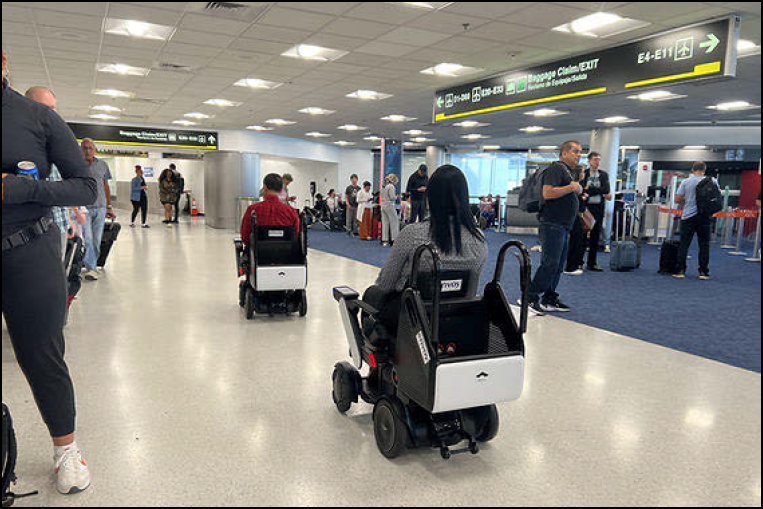
In 2024, several airports in the United States, including the Miami International Airport and the Detroit Metropolitan Wayne County Airport, implemented fleets of self-driving electric wheelchairs to enhance accessibility for travelers with mobility challenges. These wheelchairs are typically requested at check-in and are equipped with AI algorithms, sensors, and cameras to autonomously navigate pre-mapped routes through the terminal to the passenger’s gate. They provide equal access to air travel and consistent travel experience for passengers with disabilities (Figure 12) (Breitfeller, 2024; Wayne County Airport Authority, 2025).
The autonomous robots and vehicles are designed to improve efficiency and enhance the passengers’ experience at airports by delivering smarter and more convenient services. However, implementing these systems presents several challenges that must be addressed for successful deployment. Integrating robots into the complex and dynamic airport environment requires adjusting existing systems and coordinating with other operations.
Passenger interaction and trust can also be an issue because some travelers may feel uncomfortable sharing private documents or relying on robots, while staff require sufficient training to assist when problems arise.
Safety and navigation in crowded terminals add further complexity because robots must avoid obstacles, clearly communicate intentions, and appropriately respond to unexpected situations.
Ethical and privacy concerns may arise from the use of cameras and sensors, requiring responsible and transparent data handling and protection of passenger privacy.
Maintenance and reliability are also critical because malfunctions or breakdowns can disrupt airport operations and cause delays. For this reason, robust maintenance plans are essential.
Addressing these challenges requires a thoughtful approach that combines technological innovation, seamless system integration, and attention to human factors to ensure autonomous robots and vehicles truly enhance the airport experience (Jiang et al., 2023).
Artificial Intelligence-Driven Chatbots
GenAI-powered chatbots are becoming an essential part of everyday life and are dramatically transforming businesses across industries through advanced capabilities, such as natural language understanding and personalization solutions to drive revenue growth, minimize
expenses, and increase customer satisfaction. By leveraging GenAI, chatbots can be integrated into airports and engage travelers in a conversational, human-like manner, offering tailored guidance and support while reducing the workload of airport staff. In addition to assisting individual passengers, chatbots can also support operational management by interpreting traveler feedback, identifying areas for improvement, customizing workforce training, and proactively flagging potential operational or service issues (Jiang et al., 2023).
In August 2024, Bristol Airport in the United Kingdom became the first major UK airport to introduce a GenAI chatbot to improve customer service. The AI chatbot is accessible through the airport’s website or mobile app. It provides 24/7 assistance on a variety of inquiries, including parking, security, lounge booking, airline information, special assistance, and lost property (Voxly Digital, n.d.). The AI chatbot is built on a RAG framework and utilizes LLMs from OpenAI, incorporating a customized knowledge base derived from the airport’s website to ensure conversational responses, including the interpretation of typos and emojis (Voxly Digital, n.d.). According to the airport’s customer support team, since the launch of the system, the AI chatbot has helped deliver real-time support that enhances the overall passenger experience while reducing customer support workload and creating time for more complex issues. Despite a 13% increase in website traffic in 2024, overall traffic on the Contact Us and FAQ pages has dropped by 8% (Great State, n.d.).
Implementing a GenAI chatbot may present several challenges. Maintaining the accuracy and consistency of responses is essential because incorrect guidance could disrupt travel plans or cause frustration. Protecting passenger data and ensuring privacy are also concerns, requiring careful handling of sensitive information. Additionally, the system must be continuously updated to reflect changes in airport procedures, the environment, services, and regulations.
Passenger trust and adoption pose another challenge because some travelers may be hesitant to rely on AI for travel bookings.
Cost is also a significant factor as deploying and maintaining a GenAI chatbot may involve substantial initial investment in technology, integration with existing systems, and staff training, as well as ongoing maintenance and upgrade expenses.
Addressing these considerations is key to successfully implementing and sustaining a GenAI chatbot system that effectively enhances both operational efficiency and customer satisfaction at the airport.
Security Automation
The U.S. Transportation Security Administration (TSA) uses a combination of screening technologies, deception detection, video surveillance, and facial recognition to enhance airport security. Computed Tomography (CT) scanners, equipped with AI, have been installed at major airports, including Los Angeles International Airport, John F. Kennedy International Airport, and Phoenix Sky Harbor International Airport, to help identify potential threats. Over the next five
years, 77% of U.S. airports plan to implement major biometric ID management programs. Facial recognition is already in use at several airports to scan passengers during customs, and Hartsfield-Jackson International Airport has opened a biometric terminal featuring facial recognition at self-service kiosks, security checkpoints, and boarding gates (Jiang et al., 2023). This section will also explore automated security systems powered by AI algorithms, along with their challenges.
Artificial Intelligence-powered Threat Detection
Airports are increasingly leveraging AI to enhance traveler safety by proactively identifying and mitigating potential risks. By analyzing large datasets, machine learning algorithms can recognize patterns of behavior that may indicate security threats. Each passenger is treated as a unique data point, with individual profiles built from booking details, travel history, and other personal information. These structured and unstructured data are processed using unsupervised learning models, which assign a risk score to each traveler. Gaussian distributions are used to capture complex relationships among passenger characteristics, while classification systems categorize individuals so that higher-risk travelers can be flagged quickly (Jiang et al., 2023).
Additionally, AI uses computer vision to monitor security camera feeds to identify suspicious behavior, illegal activity, or potential security threats. Facial recognition enables the identification of passengers who have been previously flagged for security concerns, thereby helping to prevent incidents such as terrorism or smuggling. Machine learning can also detect travelers who may pose a risk based on their travel patterns, including visits to specific countries. Together, these AI-driven systems can allow airports to adopt a proactive and data-informed approach to ensuring the safety and security of all passengers (Jiang et al., 2023).
AI-driven security systems may face several challenges. Privacy concerns arise from the collection and analysis of personal data, and biases in training datasets can lead to a disproportionate flagging of certain groups. Real-time processing of massive data streams requires substantial computational resources, and some individuals may deliberately attempt to deceive AI systems using disguises, unusual behavior, or other methods to evade being flagged as a security risk. Balancing security effectiveness with ethical considerations remains a critical challenge for the deployment of AI in airports.
Artificial Intelligence-Powered Departure Gate and Baggage Screening
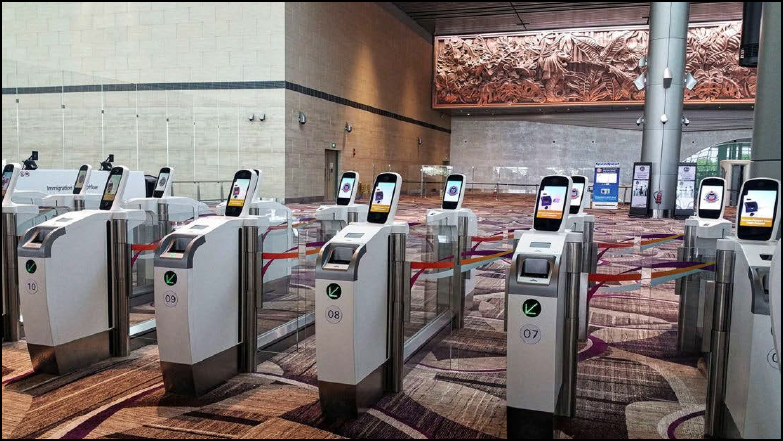
Automated self-screening systems and baggage detection are increasingly used at airports to strengthen security and streamline passenger flow. AI-powered departure gates are transforming airport operations by enabling a faster, more secure, and fully automated departure process. These gates integrate facial recognition and biometric verification systems to authenticate travelers’ identities in real time, eliminating the need for manual ID checks and boarding pass scanning. With machine learning algorithms, the gates can dynamically detect anomalies, prevent unauthorized access, and optimize passenger flow during peak hours (Jiang et al., 2023). Figure 13 is an example of the departure gate in Singapore Changi Airport (Kolesnikov-Jessop, 2017).
On the other hand, baggage detection systems range from explosive detection units to advanced 3D and 360° CT scanners that assist security personnel in identifying hazardous items for further inspection. For example, the TSA utilizes 3D imaging, combined with machine learning algorithms, to flag potential explosives and other prohibited items in carry-on luggage. To train these algorithms, synthetic datasets and threat simulants are used to replicate a wide variety of real-world hazards. Airport scenarios are carefully modeled and simulated, allowing security teams to develop comprehensive training libraries that prepare AI to recognize complex threat characteristics (Jiang et al., 2023; Cheung, 2023).

Computer vision-based detection further enhances baggage screening by automatically analyzing X-ray images for prohibited items. These systems can process black-and-white 2D X-rays, colorized images, and 3D CT scans at speeds of up to 30 bags per second. By accurately identifying potential threats, these systems reduce false alarms, save time, improve passenger safety, and minimize human error. Machine learning continuously refines these systems, improving both efficiency and cost-effectiveness (Jiang et al., 2023).
A practical example of this baggage detection technology is in Singapore Changi Airport, which implemented a comprehensive smart baggage screening system as part of its airport-wide
continuous security upgrades. Using advanced 3D and 360° CT-based scanners, passengers can keep electronic devices in their carry-on luggage during screening, eliminating the need for unpacking. The system integrates AI-driven detection algorithms to automatically identify prohibited items efficiently while achieving the desired security improvements. As technology matures, Changi Airport is expected to further increase the screening and clearance speed by up to 50%, significantly improving efficiency, reducing the time required for manual image processing, and enhancing the overall airport experience. Figure 14 shows an example of staff using AI-powered baggage screening. (Cheung, 2023; Jiang et al., 2023).
Implementing automated screening systems presents challenges. Rapidly processing high volumes of baggage requires substantial computing power, and biases in training data can lead to false alarms or overlooked threats. Airports must carefully balance processing speed, detection accuracy, and passenger privacy to ensure these AI-driven technologies operate effectively and responsibly.
Automated Operations
Airports are increasingly turning to automated operations powered by AI algorithms to improve operational efficiency, accuracy, and passenger experience. From boarding procedures to baggage handling, AI-driven systems analyze data in real time to optimize workflows, reduce delays, and minimize human error. These technologies enable airports to manage high volumes of passengers and luggage more effectively while offering personalized and seamless services, laying the foundation for smarter and more reliable airport operations (Jiang et al., 2023).
Automated Boarding System
While most technology used in self-boarding systems relies primarily on facial recognition and biometric data to streamline the boarding process, machine learning can enhance the boarding and baggage experience by reducing wait times, optimizing passenger flow, and providing more intelligent, personalized services. By analyzing factors such as booking information, passenger numbers, aircraft size, and baggage volume, algorithms can determine the most efficient boarding sequence to minimize overall boarding time. Machine learning can also track real-time passenger movements, including arrival times and progress through the security checkpoint, enabling dynamic adjustments to the boarding process as needed (Jiang et al., 2023).
Patterns in boarding behavior, such as boarding priority, speed, and timing, can be analyzed to identify potential inefficiencies and bottlenecks. This capability can reduce queues, improve passenger flow, and enhance overall operational efficiency. In addition, by considering passenger history, preferences, and prior flight experiences, machine learning can provide a more personalized boarding experience by tailoring services to individual needs while maintaining a smooth and efficient boarding process (Jiang et al., 2023).
Implementing machine learning in an automated boarding system comes with challenges. Collecting and processing passenger data for real-time optimization may raise privacy and
security concerns, and unpredictable passenger behavior, such as delays, missed connections, or last-minute changes, can disrupt AI-generated boarding sequences. System reliability is also critical because malfunctions in gates, facial recognition, or algorithms can lead to delays. Integrating AI solutions with existing airport infrastructure often requires significant investment, and ensuring passenger trust and acceptance of AI-driven processes is essential for their successful adoption.
Automated Baggage System
Automated baggage systems powered by machine learning are transforming airport operations, making air travel faster, more efficient, and more reliable. By analyzing data from baggage scanners, passenger information, and operational workflows, airports can optimize routing, loading, and unloading procedures, reducing resource use and improving overall operational efficiency. Machine learning can also anticipate potential issues throughout the baggage-handling process, allowing staff to proactively address problems and minimize delays. Rapidly and accurately identifying, sorting, and delivering baggage is essential, and automation reduces reliance on manual handling while lowering the risk of human error. By using machine learning, airport personnel can track passenger and baggage information with higher precision by assigning baggage to the correct passenger after tags are scanned and detecting damage or lost items through image recognition algorithms (Jiang et al., 2023).
For instance, Eindhoven Airport is testing a label-free, machine learning–driven baggage-handling system. Passengers can photograph their baggage, drop it off, and retrieve it at the destination without needing printed tags. The system uses image recognition to categorize baggage and match it to registered datasets, capturing details such as origin, type, color, manufacturer, and dimensions, which also reduces environmental waste associated with labels (Jiang et al., 2023).
Airlines are also beginning to integrate machine learning into their broader baggage operations. For instance, Air Canada combines Amazon Alexa, cloud computing, and AI algorithms to provide passengers with real-time baggage status updates. By combining tracking data with machine learning tools, airports and airlines have the potential to significantly improve efficiency, reduce errors, and enhance passenger satisfaction. While these innovations are still in the early stages of development, they point toward a future where AI plays a central role in seamless baggage management (Jiang et al., 2023).
Other Zones and Cross-Domain Applications
Cross-Domain Applications
Large airports generate vast amounts of data across multiple domains, including terminal operations such as check-in, passenger flow, security screening, boarding, and baggage drop; airside operations, such as aircraft movement, taxiing, runway operations, gate assignment, and baggage loading; and landside operations, such as traffic management, parking, and access
control. AI technologies collect and analyze these diverse datasets using techniques such as machine learning for predictive passenger flow, computer vision for crowd monitoring and baggage tracking, and optimization algorithms for gate and runway assignment, enabling real-time optimization of airport operations that maximize efficiency, reduce delays, and enhance overall airport performance.
Cross-domain AI applications enable seamless integration of operations by bridging terminal, airside, and landside domains. For example, by coordinating real-time landside traffic volume with terminal check-in and security throughput, linking boarding readiness to aircraft turnaround activities such as cleaning, maintenance and fueling, and managing baggage flow from drop-off to aircraft loading, airports can maximize operational efficiency, reduce delays, enhance passenger experience, and optimize resource utilization across the airport (Jiang et al., 2023).
For passengers, this cross-domain approach improves the experience at every phase of their airport journey, from arrival and parking, through check-in and security, to boarding and departure. AI-driven insights can simplify tasks such as completing check-in paperwork, navigating security checkpoints, boarding, and deboarding. By analyzing passenger data with predictive analytics and recommendation algorithms, airports can generate detailed profiles that identify travel preferences, historical patterns, and potential service needs. Staff can then offer personalized solutions such as targeted wayfinding, priority services, or proactive assistance, reducing waiting times and enhancing passenger satisfaction (Jiang et al., 2023).
AI can also be used to dynamically adjust airport operations based on predictive and real-time passenger patterns, aircraft patterns, and resource availability. For instance, flight schedules, aircraft capacity, load factors, and transfer rates can be optimized with reinforcement learning models, while predictive analytics can enable proactive responses to potential bottlenecks or disruptions, such as passenger surges at security or delayed connections affecting boarding processes (Jiang et al., 2023).
Several airports have already implemented cross-domain AI applications. For example, Amsterdam Airport Schiphol has actively deployed cross-domain AI systems that integrate terminal, airside, and landside operations to enhance operational efficiency. The airport uses AI-driven asset management systems, such as IBM Maximo, to perform corrective and predictive maintenance, enabling real-time monitoring and prioritization of service incidents across all domains (Jiang et al., 2023; IBM, 2024). In its Deep Turnaround initiative, the airport utilizes AI-based image processing, along with predictive insights, to track over 70 turnaround events across 30 turnaround processes. This process enables detecting delays up to 30 minutes in advance, allowing for proactive adjustments and informed decision-making in airside operations (Royal Schiphol Group, n.d.; Jiang et al., 2023).
AI-powered tools for real-time passenger flow management, including Dynamic Time Slots, Flow Balancing, and Gate Planning Insights, leverage sensor data and predictive modeling to optimize gate assignments and improve passenger movement from landside to terminal
(Future Travel Experience, 2025). Together, these applications demonstrate Schiphol Airport’s commitment to using AI to create seamless, efficient, and well-coordinated airport operations across multiple domains.
Implementing cross-domain AI also has several challenges. Integrating data from different systems across terminal, airside, and landside operations can be challenging due to varying formats, protocols, and standards. High-quality and diverse datasets are essential for accurate predictions, but incomplete, inconsistent, or biased data are often the reality and can reduce model reliability. Real-time decision-making across domains can also be disrupted by unexpected events such as hazardous weather, flight incidents, or emergencies. Maintaining system robustness while ensuring passenger privacy, data security, and compliance with regulatory requirements poses ongoing challenges. In addition, providing reliable performance across terminals, airside, and landside operations while managing the coordination and dependencies among multiple systems is a key challenge for deploying cross-domain AI in airports.
Airport Administration and Back-Office Operations
AI has evolved from a frontline passenger service tool to a strategic enabler of efficiency in airport administration and back-office operations. Back-office functions, such as finance, procurement, human resources, compliance, and maintenance planning, constitute the operational “nerve center” of an airport (Airports Council International, 2024). When integrated with AI and data-driven systems, these internal processes can deliver significant productivity gains and cost savings while strengthening overall organizational resilience.
In finance and procurement, machine learning algorithms can automate invoice verification, detect anomalies in vendor transactions, and forecast expenditure patterns. Such systems improve financial accuracy and transparency while reducing manual workload and error rates (Guida, Caniato, Moretto, & Ronchi, 2023). Similarly, AI tools in human resources management enhance workforce scheduling and talent acquisition by analyzing operational demand and performance data (Tan & Masood, 2021). These tools align staffing with passenger-traffic forecasts, improving resource utilization and employee satisfaction.
Predictive maintenance, enabled by AI and the Internet of Things (IoT), is a particularly transformative application in airport infrastructure management. By integrating sensor data from facilities such as baggage-handling systems, HVAC units, and power grids (Gupta et al., 2023; Mao et al., 2023), AI models can predict component failures, minimize unplanned downtime, and optimize maintenance schedules. This process not only improves reliability but also extends asset lifecycles and reduces maintenance costs.
Furthermore, AI-based analytics support airport administrators in compliance management, safety auditing, and sustainability monitoring. Through natural language processing and intelligent data extraction, AI can automate report generation, track regulatory adherence, and
analyze operational data for continuous improvement. Collectively, these applications demonstrate that AI’s value extends far beyond customer-facing systems—serving instead as a “force multiplier” that enhances efficiency, accuracy, and decision-making across the airport’s internal ecosystem (Airports Council International, 2024).
Full-Scale Airport System
From the previous literature review task, research on full-scale airport systems is increasingly adopting a holistic approach to digitalization, integrating multiple operational domains and data platforms to enhance efficiency, resilience, and passenger experience. Key themes include weather nowcasting, AI-driven policy and transformation, workforce planning, and infrastructure failure analysis. AI-powered weather nowcasting enables airports to predict short-term changes in wind, rain, visibility, and other critical conditions, allowing air traffic control and ground operations to proactively adjust runway usage, taxiing schedules, and gate assignments. Workforce planning and AI-driven transformation tools help optimize staffing and resource allocation in real time, while predictive infrastructure monitoring identifies potential failures in equipment, baggage systems, or other terminal facilities before disruptive operations occur.
However, implementing such comprehensive digital systems also brings several challenges. Integrating data across diverse platforms and operational domains can be highly complex, while predictive models require continuous updates to maintain accuracy under rapidly changing conditions. At the same time, airport staff must be appropriately trained and ready to act on AI-generated insights for ongoing change management, operational adjustments, and close coordination across departments to fully leverage the advantages of a digitalized, AI-enabled airport system.
Regulations
Ensuring safe and responsible use of AI in airports requires robust regulation and compliance oversight. Regulatory agencies often face challenges in keeping pace with rapidly evolving AI technologies, making it difficult to establish clear standards for their deployment. The inherently complex and opaque nature of AI algorithms further complicates oversight because authorities must verify that these systems operate fairly and without bias (Jiang et al., 2023).
Currently, much of AI regulation is handled on a country-by-country or organizational basis, which results in fragmented and inconsistent rules. Establishing an international regulatory framework would promote uniformity in standards, enabling equitable development and application of AI across borders. Ethical considerations are also critical, requiring policies that prevent algorithms from making biased decisions influenced by factors such as race, gender, ethnicity, or other sensitive attributes. A regulatory body that operates globally is needed not only to guide technology adoption but to also address issues, including data privacy violations, security breaches, ethical concerns, and other risks arising from improper use of AI (Jiang et al. 2023).
Effective data governance is a key component of AI regulatory efforts, fostering transparency and collaboration between technology providers and users. In airports, proper AI regulation and policy, including safety and reliability, data privacy and security, transparency, and nondiscrimination, enhance accountability and help the public understand how AI systems make decisions, ensuring that these systems operate safely, efficiently, and fairly. In addition, supporting travelers in developing knowledge of how airport technology’s function, their benefits and risks, and the responsible use of these technologies helps ensure a safe and efficient travel environment (Jiang et al., 2023).
Within the current regulatory environment, it is important to recognize that formal standards that govern the certification, approval, or safety assurance of AI systems in airport operations have not yet been established by major aviation authorities such as the FAA, ICAO, or national air navigation service providers. Consequently, the notion of developing “certification-ready” AI frameworks must be understood in a forward-looking context rather than an immediately attainable requirement. The purpose of highlighting this gap is to underscore a structural limitation in the present regulatory landscape that has direct implications for the deployment of AI-enabled systems in airports.
Identifying the absence of established certification pathways is a necessary step toward shaping a coordinated regulatory trajectory for AI integration. This process includes encouraging early-stage collaboration between regulators, airport authorities, system developers, and standards bodies to define expectations around AI assurance, data governance, transparency, and validation methodologies. Such preparatory work is essential to ensuring that evolving AI development practices, particularly those related to safety-critical or operationally sensitive functions, align with the direction of future regulatory oversight.
While formulating comprehensive AI certification frameworks will require significant deliberation and harmonization across jurisdictions, articulating this need within the current regulatory discussion ensures strategic preparedness. It positions airports and technology providers to adapt their AI design, testing, and operational integration practices to facilitate smoother compliance once formal standards emerge. In this sense, recognizing the regulatory gap does not imply immediate feasibility but rather provides a foundation for guiding responsible and regulation-aligned AI adoption within airport environments.
Artificial Intelligence Action Plan
While most of the literature and discussion in this paper focuses on AI opportunities and challenges in airports, there is relatively little guidance on how airports can practically begin AI implementation. Airports seeking to adopt AI can benefit from aligning their strategies with national AI guidance, such as the U.S. federal Winning the AI Race: America’s AI Action Plan, released on July 23 and 24, 2025, by the Trump administration. The plan lays out strategies aimed at advancing U.S. leadership in AI (Meyer et al., 2025).
The plan emphasizes removing regulations and procurement barriers that may impede AI innovation and adoption while ensuring that AI systems are safe, reliable, and ethically aligned. It seeks to move governance toward federal preemption over state-level AI regulations and directs federal agencies to procure only “truthful” and “ideologically neutral” LLMs that do not manipulate responses in favor of ideological dogmas (Meyer et al., 2025).
For airports, this suggests starting with pilot projects in areas where AI tools can enhance the safety and efficiency of airside and terminal operations, provided they are unbiased, transparent, accurate, and compliant with federal regulations. Airports should prioritize collecting high-quality, standardized data to feed AI and machine learning algorithms while ensuring human oversight in decision-making processes.
By leveraging national guidance on procurement and technology integration, airports can focus on AI applications that improve operational efficiency, enhance passenger experience, and strengthen safety and security protocols. In support of these efforts, the federal plan accelerates permitting for data centers, semiconductor fabrication plants, and energy infrastructure, and promotes domestic semiconductor production critical to national security. It also encourages the export of U.S.-developed AI tools to allied nations and directs federal agencies to expand oversight to mitigate AI misuse and security risks, providing a framework for safe and strategic AI development (Meyer et al., 2025).
Research Gaps
The systematic literature review of AI in airports has expanded rapidly, reflecting the sector’s pursuit of efficiency, safety, and enhanced passenger experience. While most peer-reviewed publications focus on airside and terminal operations, it is recognized that many mature AI applications at airports remain unpublished. For example, AI technology has been adopted by many U.S. airports for landside operations, including parking, ground transportation, and curbside management, yet related publications are underrepresented in the literature database. Despite the rapid growth of research on AI in the airport industry, several critical gaps remain. Based on the synthesized findings as described above, the following are essential research gaps for future studies:
- Operational Efficiency, Safety, and Resilience. AI has been applied to many operation optimization scenarios; however, most methods are validated in simulation environments rather than real-world airport contexts. This gap raises questions about scalability, resilience, and performance under disruptions such as severe weather, cyberattacks, or surges in passenger demand. Airport practitioners are also concerned about the tradeoff between the cost of infrastructure configurations and the efficiency of AI applications, questions such as “to what extent (evaluation toolkit) should a cost-effective AI solution be the optimal fit to airports”, and “to what level of services should airports choose to implement their AI applications (local customized vs. Edge computing vs. Cloud computing-based).” Future research should focus on scalable deployment, cost-effectiveness, integration of AI into
- safety management systems, and adaptive multi-agent approaches for resource allocation. For example, the AI-driven traffic management at John F. Kennedy Internation Airport demonstrates potential but requires broader testing.
- Data Integration, Governance, and Interoperability. Although airports generate vast amounts of data across airside, terminal, and landside systems, much of it remains siloed. Studies highlight the absence of standardized frameworks for sharing and combining data across stakeholders, limiting the effectiveness of AI-driven decision support systems. There is a strong need for: a) unified data governance frameworks/protocols to ensure quality, privacy, and compliance, and b) standards for interoperability between AI systems, IoT devices and sensors, and legacy airport infrastructure.
- Ethics, Privacy, and Trust. While AI is increasingly used for biometrics, surveillance, and security automation, where people’s identical information is collected and analyzed, few studies address issues of bias, transparency, and passenger consent. Similarly, explainable AI (XAI) approaches, which are essential for safety-critical environments, are still underdeveloped (Abdulrashid et al., 2024). Research needs include: a) explainable AI methods to build operator trust, b) certification-ready AI frameworks compatible with FAA/ICAO/TSA standards, c) how AI applications should be integrated to airport operations with the different levels of autonomous settings (for example, human-in-the-loop, human-on-the-loop, etc.), and it should be explored and validated in scenario-based settings, and d) how airports should be self-prepared for GenAI applications, such as synthetic data and content creation for scenario-based training and passenger experience enhancement.
- Security, Cybersecurity, and Risk Management. While AI is promising in drone detection, anomaly detection, and baggage screening, challenges remain in reducing bias, improving low-light/weather robustness, and ensuring the ethical use of biometrics. With IoT and smart sensors embedded in airports, cyber vulnerabilities are a growing concern. Needs include AI-driven cyber defense mechanisms, testbeds for IIoT-enabled smart airports, and resilience models that anticipate disruptions such as cyberattacks or passenger surges. For example, the SAir-IIoT testbed research underscores the need for real-world cyber defense validation.
- Sustainability, Infrastructure, and Construction. AI-enabled solutions for pavement inspection, waste sorting, and energy optimization are emerging, but they remain underutilized. Research should focus on tools that quantify environmental benefits, support green airport operations, and incorporate lifecycle cost-benefit analysis. In the construction industry, AI is currently limited in its application to planning, scheduling, risk prediction, and project management. Wider adoption across the project lifecycle is needed to reduce delays and enhance safety. For example, unmanned aerial vehicles and AI pavement detection and automated waste sorting bins show potential but require longitudinal validation.
Overall, the literature makes it clear that while AI is already advancing airport safety and security, operational efficiency, and passenger services, future research must address data
integration, trust, resilience, security, and sustainability to realize its transformative potential fully.
Conclusion
This ACRP First Look provided a foundational overview of AI technologies and their impact on airports, highlighting both opportunities and challenges. AI holds significant potential for airports to enhance operational efficiency, safety, security, passenger experience, and overall airport performance. AI applications span airside, terminal, landside, and cross-domain operations, including air traffic management, runway and pavement assessment, passenger processing, baggage handling, security, and other areas. AI-driven, automated systems provide actionable insights and enhance decision-making, demonstrating how airports can leverage data, advanced sensors, and algorithms to improve accuracy, reduce delays, and optimize airport business and operations. Overall, AI offers transformative potential for airport operations, but successful deployment requires a strategic, well-governed, and incremental approach.
However, realizing these benefits involves challenges such as high deployment and maintenance costs, integrating with legacy systems, addressing data quality and standardization issues, ensuring cybersecurity and regulatory compliance, and the need for workforce training and passenger adaptation. As AI adoption grows, careful planning, pilot testing, and human oversight will be crucial to striking a balance among technological advancement and safety, reliability, and passenger trust. Future research should address data integration and interoperability, ethical use and privacy, operational efficiency and resilience, security and risk management, and sustainable infrastructure development. In addition, the ACRP Insight Event Exploring the Impact of Artificial Intelligence on the Airport Industry May 19–20, 2026, will help equip airport practitioners with current knowledge on technology applications, opportunities, and challenges, supporting informed planning and strategic AI implementation.


