A Miracle and a Privilege: Recounting a Half Century of Surgical Advance (1995)
Chapter: Plates
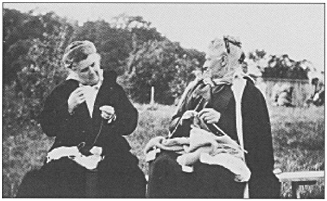
Harriet Seymour Daniels (left) Sarah Tompson Moore (right) — two grand-mothers (in their 60s), knitting in the sun, Grafton, Vermont, about 1915.
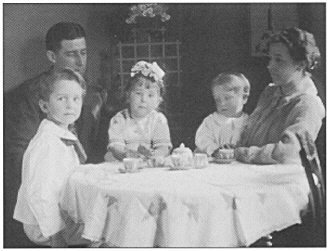
A young family strikes a Victorian pose in Evanston, Illinois, about 1916: Phillip W. and Caroline D. Moore with their children (from left to right), Phillip Wyatt Jr. (age 6), Harriet Lucy (age 4), and Francis Daniels (age 3).
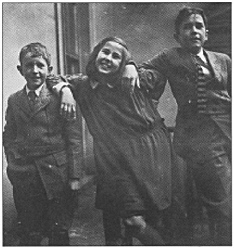
Three supportive siblings: FDM (age 10) holding up his sister (age 11) and brother (age 13), about 1923.
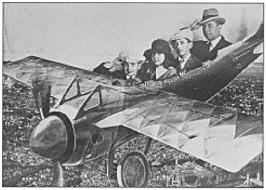
Flying over the Eiffel Tower in a photographer’s pasteboard airplane in Paris are Francis in front, with sister, brother, and father behind, about 1923.
Plate 1
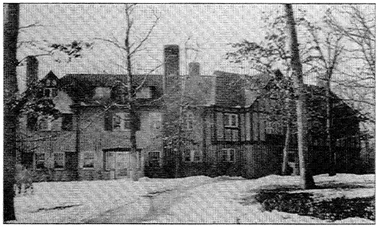
Family home in Hubbard Woods, Illinois, where FDM Lived from 1918 (age 5) until departure for college at age 18.
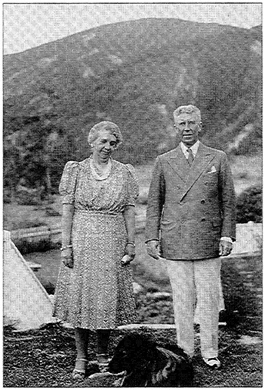
Philip and Caroline Moore (at 55) on the terrace at Horseshoe Ranche in Wyoming, about 1934.
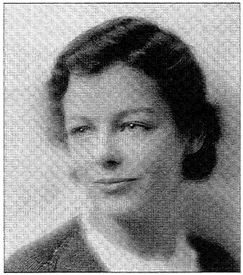
Laura Benton Bartlett as a high school girl, age 17 in 1932.
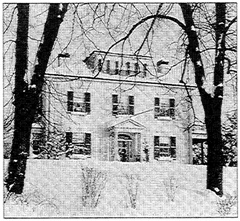
Home of FDM and family from 1944 to 1974; 371 Walnut Street in Brookline, Massachusetts, wintertime, 1950.
Plate 2
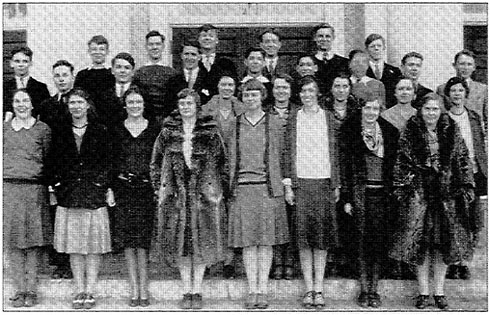
Class of 1931, North Shore Country Day School. There are 15 boys and 13 girls. (FDM is in the back row, fourth from the left.)
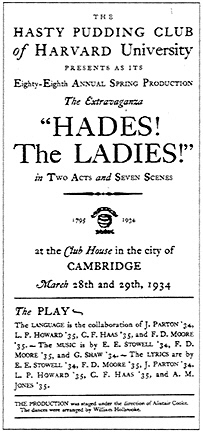
Playbill for the 1934 Hasty Pudding Show at Harvard College, listing the authors, composers, and the Director.
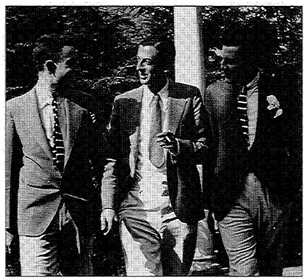
Alistair Cooke, Director of the 1934 Hasty Pudding Show “Hades! The Ladies!,” is flanked by FDM (left) and Matson Holbrook (right) between rehearsals at Pinehurst, North Carolina, April, 1934.
Plate 3

The Great Picture of Handsome Dan II, pedigreed “By Harvard, Out of Yale,” licking John Harvard’s boot, as it appeared on the cover of the March 1934 issue of the Lampoon. This picture was also printed on a deck of cards that sold widely among alumni.
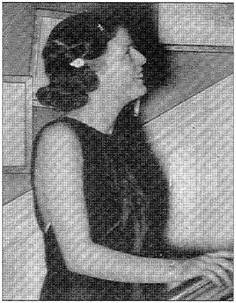
Laura Bartlett on a visit to Cambridge, 1934. She is standing on the stairs of the Hasty Pudding Club at the Annual Dance before the opening night of the show.

The New York Times photo of FDM (left) and Robert Cummings (right) getting ready to return Dan to his rightful owners in New Haven and only too happy to reveal The Great Secret to the press.
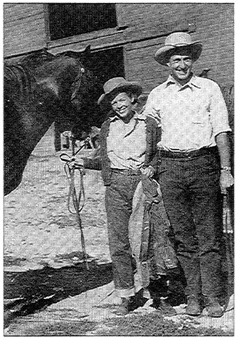
Wyoming honeymooners. Laura Bartlett Moore and FDM in front of the barn at Horseshoe Ranche. August 1935.
Plate 4
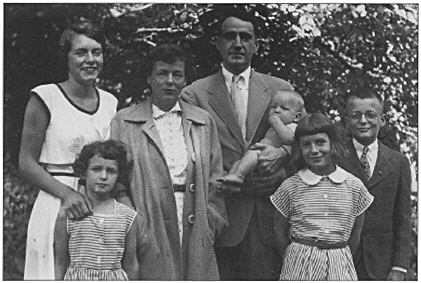
The family is complete. On the lawn of the Bartlett home in Winnetka, Illinois, are (from left to right) Nancy (age 14), Caroline (age 6), Laura (age 35), FDM (age 37) holding Chip in arms (FDM, Jr., age 6 months), Sally (age 9), and Peter (age 11), in spring of 1951.
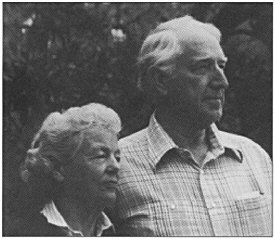
The same honeymooners nearing their 50th anniversary while on vacation, March 1983.

Marrying off the last of three daughters. Caroline, on FDM’s arm, starting down the aisle for her marriage to James Tripp, First Parish Church, Brookline, Massachusetts, October 14, 1972.
Plate 5

Ticket admitting “Mr. Gray” to the Lectures on Anatomy presented by Professor John Warren in 1811. Note use of the term “Cambridge University,” a designation for Harvard that was occasionally used in those days.
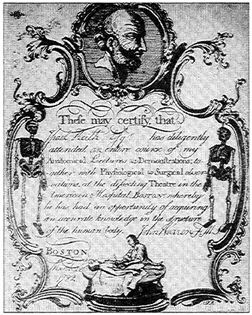
Certificate of Attendance at “an entire course of my Anatomical Lectures and Demonstrations,” signed by John Warren and dated March 28, 1782.

Portrait of John Warren by Rembrandt Peal. John was the first Professor of Surgery (and Anatomy) on the medical faculty of Harvard College.
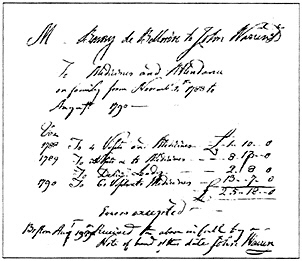
Bill for professional services rendered by John Warren to an officer of the French Navy covering the period from November 1788 to August 1790. Note obstetrical charge for “Delivery Lady.” Next to his signature, Warren has certified that the bill was paid in full. Since he was a physician, not a Doctor of Medicine, there is no “M.D.” after his signature.
Plate 6
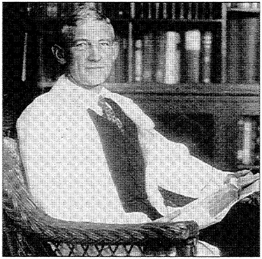
Elliott Cutler, Moseley Professor of Surgery and Head of the Department of Surgery at the Brigham during FDM’s medical school years. Cuder was the fourth Moseley Professor and the seventh Professor of Surgery in the direct line from John Warren.

Walter Bradford Cannon, George Higginson Professor of Physiology during FDM’s years at medical school. Cannon’s studies of the function of the adrenal glands demonstrated an integrated and highly evolved response to injury.
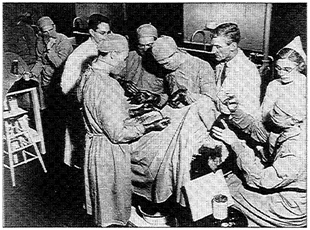
Student surgery course, 1938. At right is Miss Gertrude Gerrard instructing the student anesthetist Branch Craige; to their right is Elliott Cutler, making suggestions to the student surgeon Eben Alexander and his assistant John Brabson during an operation on a dog. The second assistant is Charles Jennings. In white surgical garb, standing at the end of the table to the left, is Carl Walter, instructor. Behind him, chin in hand, is FDM about to anesthetize another animal.
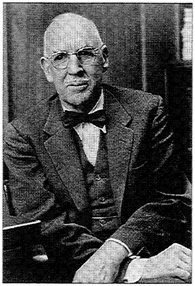
C. Sidney Burwell, Dean of Harvard Medical School during FDM’s student years. In 1950, Burwell was succeeded by George Packer Berry.
Plate 7
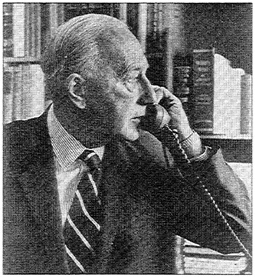
Claude E.Welch, surgical instructor during FDM’s early years and later a colleague at the Massachusetts General Hospital (MGH).

FDM as a third-year student carrying out his first research project, evidently weighing something as accurately as he can on an old-fashioned balance.
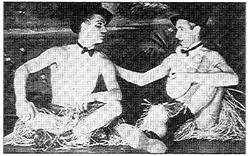
Annual medical student spoof of the faculty, 1939. Set in the South Sea Isles, this scene shows two natives clad in remnants of a tuxedo over grass skirts: Donald D. Matson (left) is having an argument with Alexander H. Bill (right). Both men later became eminent surgeons.
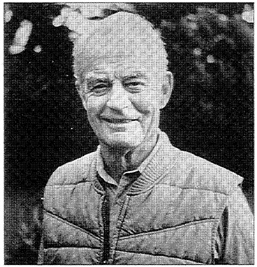
Richard Warren, surgeon of the MGH and the Brigham, descendant of the Warren surgical lineage, and close friend of FDM. His son, Richard Agassiz Warren, married Sally Moore.
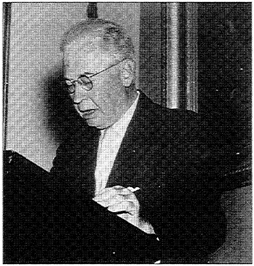
A. Baird Hastings, Hamilton Kuhn Professor and Head of the Department of Biochemistry at Harvard Medical School during FDM’s student years and a source of inspiration to FDM’s later work.
Plate 8
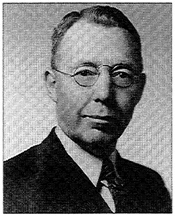
Leland S. McKittrick, surgeon of the Massachusetts General Hospital (MGH) and New England Deaconess (Palmer Memorial) Hospital. It was as McKittrick’s assistant that FDM began surgical practice in 1943.
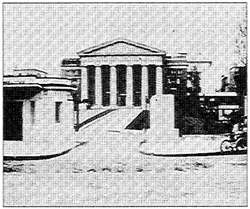
Entrance to the old Peter Bent Brigham Hospital (PBBH) as seen from Brigham Circle, about 1920.

The MGH at the time of FDM’s internship. The large building (completed in 1939) was the George Robert White Building, which was given over entirely to surgery.

Three teachers at MGH who strongly influenced FDM’s career plans (left to right): Fuller Albright. Director of the Metabolic Ward 4 in the Department of Medicine; Edward Delos Churchill, Homans Professor and Head of the Surgery Department; and Oliver Cope, Churchill’s assistant and Director of the Department during Churchill’s wartime absence.
Plate 9
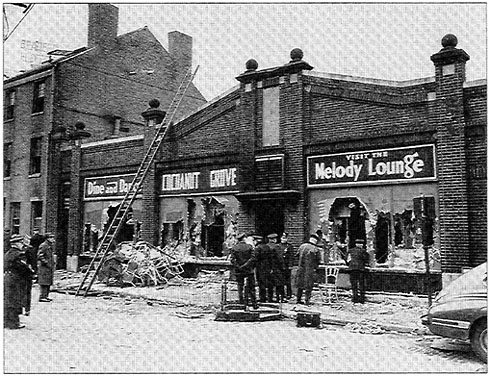
Scene the morning after the fire at the Cocoanut Grove Night Club (November 28,1942).
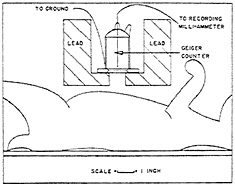
Drawing by FDM for one of his early articles on the use of radioactive dyes (1943) showing an anesthetized rabbit positioned under a Geiger counter. An abscess in the animal’s belly could be detected when the tagged dye was injected intravenously.

A Grand Rounds skit (about 1940) in which a patient joins in the fun as his feeding tube is finally removed. FDM, then a junior resident, confirms that the hated tube has in fact been withdrawn and is “closed for the season.”
Plate 10

John Homans (left) and David Cheever (right). These two mainstays of Brigham surgery served on the staffs of Harvey Cushing, then Elliott Cutler, and finally FDM. They are shown here at about the time of their retirement, in 1951.

Laurie and FDM in 1981 at the dedication of the seventh floor of the new Brigham and Women’s Hospital (BWH) tower. This floor included the Bartlett Unit (named after Laurie’s father), the Laura B. Moore Unit, and the FDM Unit for Comprehensive Care.
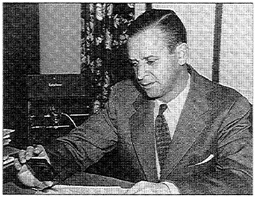
J. Hartwell Harrison, Elliott Carr Cutler Professor of Surgery and Head of the Division of Urology, as a young man (about 1950). Harrison’s work made safe kidney transplantation possible, because he was the surgeon for all living donors in the early cases.

View up Shattuck Street about 1980. Harvard Medical School (HMS) main administration building on the near right. In the background is the newly completed tower of the BWH.
Plate 11
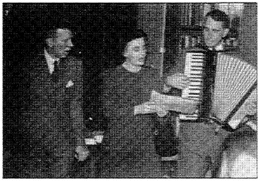
FDM playing the accordion for a Christmas party in the Surgical Office, about 1952. Holding the music is Mrs. Soma Weiss, widow of the beloved teacher of internal medicine for FDM’s generation at HMS. To her right is George Thorn, singing along.
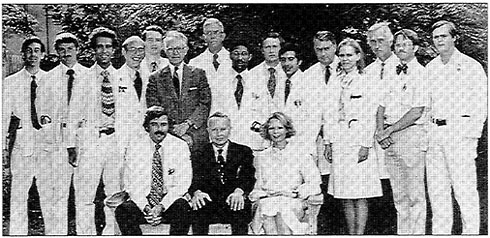
Members of the surgical staff in 1978, two years after John Mannick took over as department head: Seated on bench (from left to right) are George Linville, John Mannick, and Jeanne Petrek. Standing are (front row) Eric Shaeffer, FDM, Frank Smith George Kacoyanis, Sigurd Guyton, Fred Mansfield, and Tom Hosea and (back row) Peter Einstein, Robert Beattie, Kurt Newman, Robert Olson, John Brooks, Clyde Lindquist, Nathan Couch, and Philip Drinker.
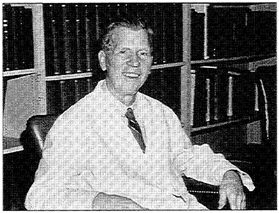
George Widmer Thorn, Hersey Professor of the Theory and Practice of Physic, about 1950. An inspiring colleague as Physician-in-Chief at the Brigham. Thorn was a seminal figure in the development of the artificial kidney, transplantation, and the treatment of adrenal disease.

F. Stanton Deland, attorney, Harvard Overseer, golfer, yachtsman, and long-time friend of FDM. Deland was the guiding genius in the four-hospital merger that led to the building of the new hospital.
Plate 12
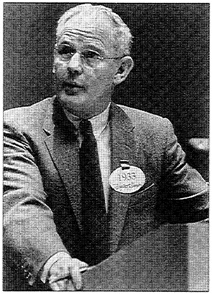
J. Englebert Dunphy, a graduate of the Cutler years at the Brigham, later a staff member with FDM, and then Professor and Head of the Departments of Surgery at Portland (Oregon) and San Francisco (University of California).

FDM and George Thorn in conference over a cup of coffee with Mrs. Weiss.
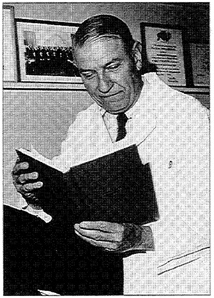
Gustave J. Dammin, Professor of Pathology, steadfast guide to the entire transplant program.
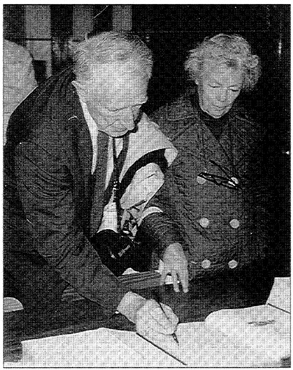
On a trip to Beijing, China, in 1981; FDM and Laura Moore at the Library of the Chinese National Academy of Sciences, autographing books by FDM that were ready and waiting for the author’s arrival.
Plate 13
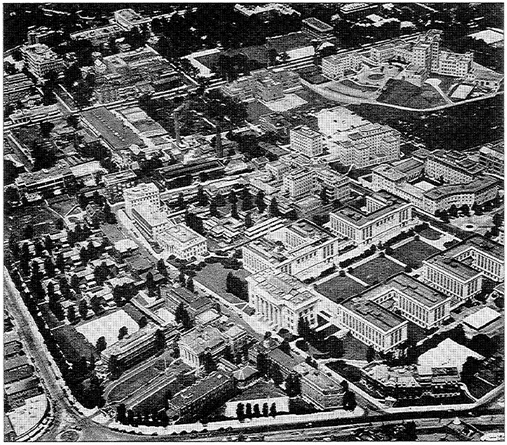
Here and on the opposite page are two aerial views, taken in 1934 and 1994, showing the Brigham Hospital and a portion of the Harvard Medical School, along with some of its nearby hospitals and laboratories. Brigham Circle can be seen at the lower left in both photos. The two Greek-pillared porticos of the Brigham (bottom center) and the Medical School (just behind, to the right) have remained unchanged. Francis Street stretches upward to the left; parallel to it and to the right is Shattuck Street.
In this 1934 view, the plantings around the four Brigham pavilions and the open spaces among the surrounding hospitals lend the scene an almost rural/suburban aspect. At the intersection of Shattuck Street and Huntington Avenue (below right) stands Huntington Memorial Hospital. Children’s Hospital can be seen to the left of the Medical School, with Beth Israel Hospital above and to the right.
Plate 14
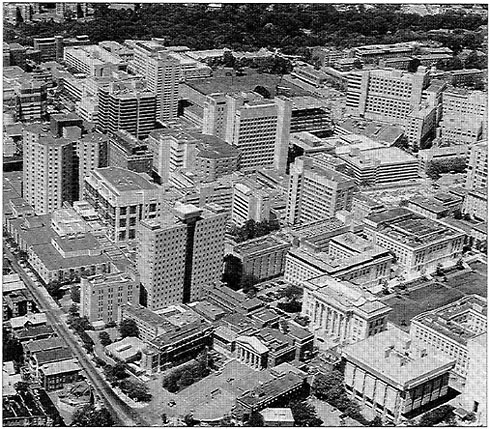
In this 1994 view the construction of the past 60 years becomes evident. The new tower of the Brigham includes the four hexagonal buildings (center left); below it is the Center for Women and Newborns and the two tall, rectangular towers of the Thorn Research Building, with the lower structures of the Ambulatory Care Center between them. Now, the intersection of Shattuck Street and Huntington Avenue has been taken over by the Countway Library of Medicine (below right). New construction at the Children’s and Beth Israel Hospitals as well as the Dana-Farber Cancer Institute and the New England Deaconess Hospital has helped to convert the entire neighborhood into a huge medical center. The two Greek porticos remain as testimony to the classical architecture of the turn of the century, Harvard Medical School having been completed in 1906 and the Brigham in 1912.
Plate 15
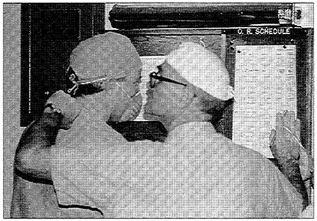
Characteristic scene in the PBBH operating room corridor. Roy Vandam, Professor and Head of the Department of Anaesthesia, may seem to be checking the operating list with one of the staff anesthetists, Patrick Bennett, but in point of fact he is looking at his watch to see if progress is on schedule.

Visiting Professor Sir James Paterson Ross of London is at the bedside with FDM. Several students could gather for conversation with both the patient and the visitor. This patient was flattered by so distinguished a visitor from abroad. She and Sir James corresponded for some years after this visit.
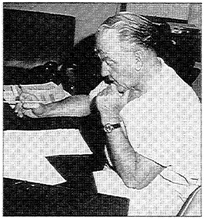
Characteristic scene in the surgeons’ room, about 1965. Dwight Harken is dictating operative notes after one of his operations on the heart for relief of mitral stenosis.

Sally Hurlbut. FDM’s scrub nurse for many years and daughter of close friends Dr. and Mrs. Robert S. Hurlbut of Cambridge.
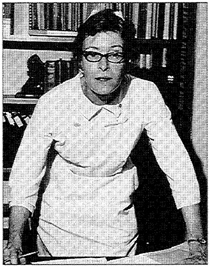
Marion Metcalf, extraordinary nurse who was Head of the Department of Nursing at the PBBH and subsequently in charge of all nursing for the four merged hospitals.
Plate 16
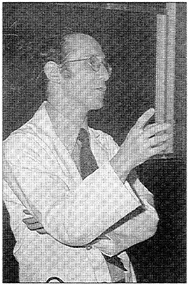
Steven A. Rosenberg, a graduate of Johns Hopkins Medical School and the Brigham Surgical Residency program, now Chief of Surgery at the National Cancer Institute.

John Mannick (center), FDM’s successor as Professor and Head of the Department, first at Peter Bent Brigham Hospital (PBBH) and then at the newly merged Brigham and Women’s Hospital. On his right is FDM, on his left is Nicholas Tilney, the first Francis D. Moore Professor of Surgery.
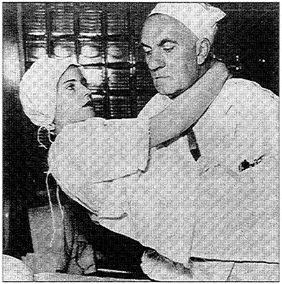
Adolph Watzka, operating room orderly through the regimes of Cushing and Cutler and into the early years of FDM. Strong, gentle, and skilled in managing very sick patients, Watzka never wore a facemask in the operating room. If questioned about this, he stated that he “never breathed there.”

John R. Brooks, early arrival at PBBH with FDM and for many years assistant to FDM in administration of the Department of Surgery. Brooks later became the Frank L. Sawyer Professor and Head of Surgery for the Harvard Health Services in Holyoke House, Cambridge.
Plate 17
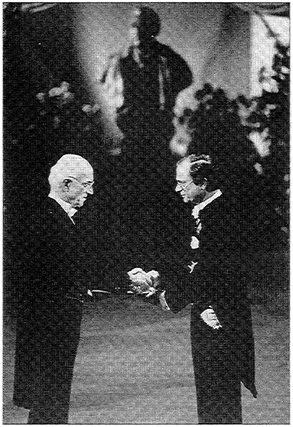
Joseph Murray receiving the Nobel Prize from the King of Sweden in December 1990, in recognition of his early successful transplant operations.

David Hume, who performed the first set of human kidney transplants between unrelated persons.
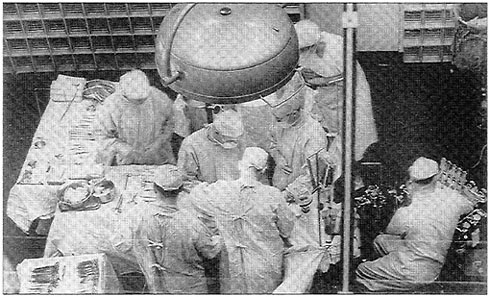
The first successful kidney transplantation in man, performed on an identical twin with his brother as donor, on December 23, 1954, at PBBH. The patient’s head (hidden by the anesthesia screen) is at the lower right. Joseph Murray, the surgeon, stands on the patient’s right. Opposite Murray is the assistant, John Rowbotham; to his left is Edward Gray, and to the surgeon’s left is Dan Pugh. Roy Vandam (back turned) is the anesthetist. To the upper right is the circulating nurse, Edith Comisky. The scrub nurse (above left) is Miss Rhodes.
Plate 18

The Herrick twin donor (Ronald) pushes his recipient brother (Richard) in a wheel-chair on their way home, January 1955. Both look healthy after their historic operation.
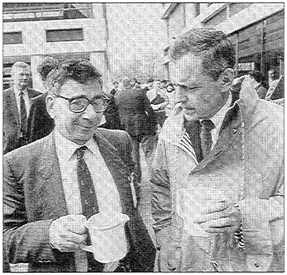
Sir Roy Calne of Cambridge (left) and Tom Starzl of Pittsburgh celebrating Sir Roy’s 25 years at Cambridge. The two leaders of transplant science are drinking tea from laboratory jugs became the teacups ran out.
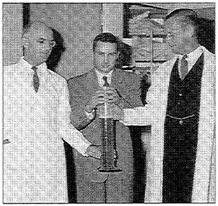
Transplantation humor: “Who owns this urine?” Holding the cylinder containing the precious fluid is the donor (the patient’s twin brother) who claims it was his kidney that made the urine. On the left, Joseph Murray (the operating surgeon) claims his patient’s urine. To the right, also claiming the urine, is J. Hartwell Harrison, who removed the kidney to make its urine available to the patient. The patient (not shown), whose urine it might now appear to be, seems to have no claim at all.

Canine recipients of transplanted kidneys, enjoying company on the veranda outside the surgical laboratories of Harvard Medical School (HMS), 1960. Under azathioprine immunosuppression, these animals are healthy and well Dr. George Hitchings (center) and Dr. Gertrude Elion (to his right), the researchers who synthesized this drug, along with Dr. Donald Searle (to his left), Medical Director of Burroughs Wellcome, are visiting the lab. Dr. Joseph Murray (far right) and several members of the team. including Ted Hager (second from right), Larry Ayres (far left) and Roy Calne (second from left), are also enjoying the scene.
Plate 19

FDM talking with Daniel C.Tosteson, the present Dean of HMS, about 1990.

George Picker Berry, who succeeded C. Sidney Burwell as Dean of HMS in 1950.
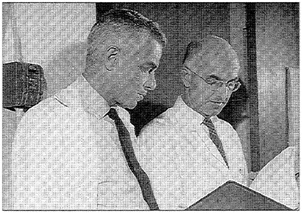
John Merrill (left) and Joseph Murray (right), collaborators with Hume on transplant research, about 1963. Merrill, a member of George Thorn’s medical service at PBBH, was responsible for all patients with chronic renal failure and was in charge of dialysis on the artificial kidney.

Robert H. Ebert, Dean of HMS (following George Packer Berry) and architect of the Harvard Community Health Plan.
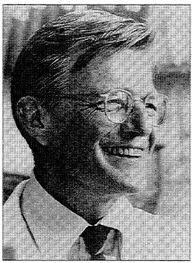
Paul Snowdon Russell, long-time director of surgical transplantation and research at the Massachusetts General Hospital.
Plate 20
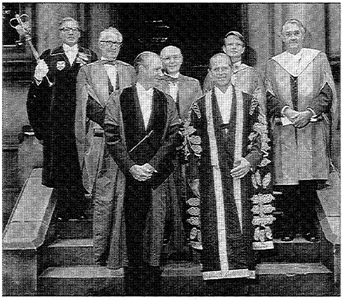
FDM receives an honorary degree at the University of Edinburgh, June 25,1976. This event marked the 250th anniversary of the founding of the faculty of medicine at Edinburgh. The two robed gentlemen standing in front are Sir Hugh Robson (left), Principal and Vice Chancellor of the University, and Prince Philip (right). Behind them are the tour honorands (from left to right): FDM, Professor William Goslings of the Netherlands, Robin Irvine of the University of Otago (New Zealand), and Professor Henry Harris of Oxford.
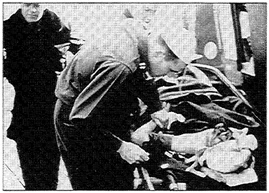
Early morning in Korea, 1952. Scene at a Mobile Army Surgical Hospital (MASH #8209), site of the surgical research unit under Colonel John M. Howard. A helicopter has brought in a wounded man.
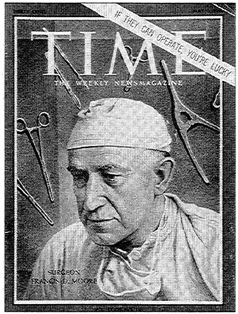
Cover of Time, May 3,1963. The story was written by Gilbert Cant and Ruth Mehrtens.
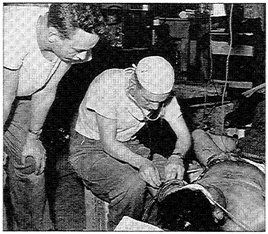
Care begins for another casualty. The detailed study by Col. Howard of a few such wounded men made it possible to give better care to many without research.
Plate 21

The Moores and the Robs about 1950. Charles Rob was Professor of Surgery at St. Mary’s Hospital in London. The Moores were visiting his department as part of the Brigham-St. Mary’s exchange. Mary Rob is standing in front of FDM, on the left, and Laurie Moore is on the right.
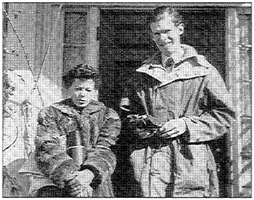
Laurie with Bent Friis-Hansen, a visitor and laboratory collaborator for several years, early scholar of body composition in children, and later Director of Pediatrics at Copenhagen.

André Monsaingeon with Laurie. André, a collaborator and visitor on several occasions, headed the surgical unit at I’Hôpital Paul Brousse, south of Paris, and was later Dean of the University of Paris School of Medicine at Orly.
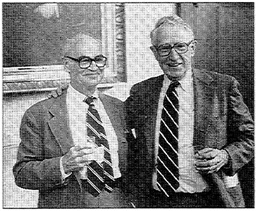
Reminiscing about the “good old days” are Roy Vandam, Professor and Head of Anaesthesia at the Brigham, and FDM at the time of his retirement.
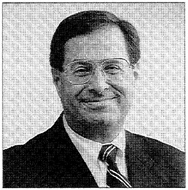
Michael Zinner, the new Moseley Professor, took up his work in July 1994, succeeding John Mannick. Zinner is the seventh Moseley Professor, and the tenth in the “old line” stretching back to the early Warrens and the Revolutionary War.
Plate 22
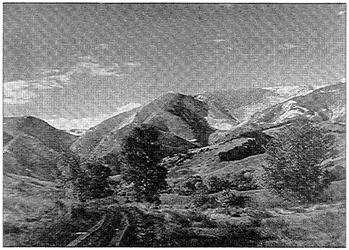
Wyoming. 1934. Coming along the ranch road in early September, with snow on the mountains ahead.

Laurie on her favorite horse, “Babe” — the product of an unusual Shetland/Arab cross.
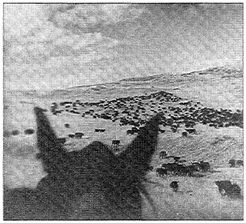
Cattle roundup as seen by (and from) a horse.
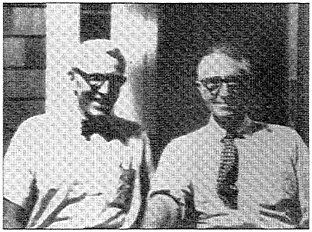
Codgers, Fisher Howe III (left), lifelong friend and confidant, is having a laugh with FDM. about 1985.
Plate 23
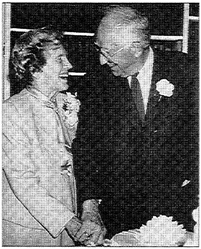
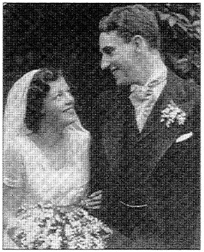 | Two weddings. On the left, Laura Bartlett and Francis Moore. June 24, 1935. On the right, Katharyn Saltonstall and FDM, May 13, 1990. |
 |

Marion, Massachusetts, and Buzzards Bay. about 1960. Two small boats (Herteshof 12-footers) racing in the harbor. Sea Worm, the Moore boat (H– 181), is “covered” by Pratt’s Wee Capa (H-115). How to get out of this fix? Son Peter at die tiller, FDM puts some heavy weight forwazd by the mast, daughter Sally to leeward.

Laurie at the wheel of Angelique while FDM offers some free advice.

FDM and Katharyn in 1994. about the time of their fourth wedding anniversary.
Plate 24