Reproductive Health in Developing Countries: Expanding Dimensions, Building Solutions (1997)
Chapter: FRONT MATTER
NATIONAL ACADEMY PRESS
2101 Constitution Ave., N.W. Washington, D.C. 20418
NOTICE: The project that is the subject of this report was approved by the Governing Board of the National Research Council, whose members are drawn from the councils of the National Academy of Sciences, the National Academy of Engineering, and the Institute of Medicine. The members of the committee responsible for the report were chosen for their special competences and with regard for appropriate balance.
This report has been reviewed by a group other than the authors according to procedures approved by a Report Review Committee consisting of members of the National Academy of Sciences, the National Academy of Engineering, and the Institute of Medicine.
This activity was funded by a cooperative agreement with the Office of Population of the U.S. Agency for International Development and by grants from the Andrew W. Mellon Foundation and the William and Flora Hewlett Foundation. Any opinions, findings, conclusions, or recommendations expressed in this publication are those of the author(s) and do not necessarily reflect the view of the organizations or agencies that provided support for this project.
Library of Congress Cataloging-in-Publication Data
Reproductive health in developing countries: expanding dimensions, building solutions / Amy O. Tsui, Judith N. Wasserheit, and John G. Haaga, editors; Panel on Reproductive Health, Committee on Population, Commission on Behavioral and Social Sciences and Education, National Research Council.
p. cm.
Includes bibliographical references and index.
ISBN 0-309-05644-6 (cloth)
1. Gynecology—Social aspects—Developing countries. 2. Human reproduction—Social aspects—Developing countries. 3. Hygiene, Sexual—Developing countries. I. Tsui, Amy Ong. II. Wasserheit, Judith N. III. Haaga, John, 1953- . IV. National Research Council (U.S.). Panel on Reproductive Health.
RG103.R453 1997
614.5'992'091724—dc21 97-4867
CIP
Reproductive Health in Developing Countries: Expanding Dimensions, Building Solutions is available for sale from
National Academy Press
2101 Constitution Avenue, N.W. Washington, D.C. 20418 Call 800-624-6242 or 202-334-3313 (in the Washington Metropolitan Area).
This report is also available on line at http://www.nap.edu
Printed in the United States of America
Copyright 1997 by the National Academy of Sciences. All rights reserved.
Jos Luis Bobadilla
1955-1996
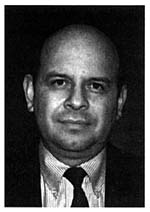
This volume is dedicated to our colleague José Luis Bobadilla, who died as it neared completion.
José Luis had an exceptionally active career as scholar, teacher, and policy adviser. He was a leading researcher on the neglected field of perinatal mortality in developing countries, and one of the first to document the harmful effects of inappropriate use of obstetric interventions. Much of his work dealt with evaluations of the effectiveness of antenatal, obstetric, and neonatal health care. In recent years he was a leader in both developing and applying new ways to use mortality and disability statistics and cost-effectiveness analysis for health planning in developing countries.
José Luis was a particularly energetic and constructive member of the National Research Council's Committee on Population and of the Panel on Reproductive Health. He combined an ability to carry out research and an ability to discern the important points for health policy in a way that very few can equal. His tragically early death was mourned by his friends all over the world, in many different institutions and policy and research networks. We particularly remember him as a friend who always steered the discussion toward the goal: to make a difference in public health.
Ronald D. Lee, Chair, Committee on Population
The National Academy of Sciences is a private, nonprofit, self-perpetuating society of distinguished scholars engaged in scientific and engineering research, dedicated to the furtherance of science and technology and to their use for the general welfare. Upon the authority of the charter granted to it by the Congress in 1863, the Academy has a mandate that requires it to advise the federal government on scientific and technical matters. Dr. Bruce M. Alberts is president of the National Academy of Sciences.
The National Academy of Engineering was established in 1964, under the charter of the National Academy of Sciences, as a parallel organization of outstanding engineers. It is autonomous in its administration and in the selection of its members, sharing with the National Academy of Sciences the responsibility for advising the federal government. The National Academy of Engineering also sponsors engineering programs aimed at meeting national needs, encourages education and research, and recognizes the superior achievements of engineers. Dr. William A. Wulf is president of the National Academy of Engineering.
The Institute of Medicine was established in 1970 by the National Academy of Sciences to secure the services of eminent members of appropriate professions in the examination of policy matters pertaining to the health of the public. The Institute acts under the responsibility given to the National Academy of Sciences by its congressional charter to be an adviser to the federal government and, upon its own initiative, to identify issues of medical care, research, and education. Dr. Kenneth I. Shine is president of the Institute of Medicine.
The National Research Council was organized by the National Academy of Sciences in 1916 to associate the broad community of science and technology with the Academy's purposes of furthering knowledge and advising the federal government. Functioning in accordance with general policies determined by the Academy, the Council has become the principal operating agency of both the National Academy of Sciences and the National Academy of Engineering in providing services to the government, the public, and the scientific and engineering communities. The Council is administered jointly by both Academies and the Institute of Medicine. Dr. Bruce M. Alberts and Dr. William A. Wulf are chairman and vice chairman, respectively, of the National Research Council.
PANEL ON REPRODUCTIVE HEALTH
AMY O. TSUI (Cochair),
Department of Maternal and Child Health and Carolina Population Center, University of North Carolina, Chapel Hill
JUDITH N. WASSERHEIT (Cochair),
Division of STD Prevention, Centers for Disease Control and Prevention, Atlanta
ALAKA M. BASU,
Division of Nutritional Sciences, Cornell University
JOSE LUIS BOBADILLA*,
Inter-American Development Bank, Washington, D.C.
WILLARD CATES, JR.,
Family Health International, Research Triangle Park, NC
CHRISTOPHER J. ELIAS,
The Population Council, Bangkok, Thailand
MARJORIE A. KOBLINSKY,
John Snow, Inc., Arlington, Virginia
PIERRE MERCENIER,
Institute of Tropical Medicine, Antwerp, Belgium
MARK R. MONTGOMERY,
State University of New York, Stony Brok, and The Population Council, New York
SUSAN E. PICK,
Instituto Mexicano de Investigacion de Familia y Poblacion, Mexico City, D.F.
ALLAN ROSENFIELD,
School of Public Health, Columbia University
HELEN SAXENIAN,
The World Bank, Washington, D.C.
JAMES TRUSSELL,
Office of Population Research, Princeton University
HUDA ZURAYK,
The Population Council, Cairo, Egypt, and The American University of Beirut, Beirut, Lebanon
JOHN G. HAAGA, Study Director
CAROLE JOLLY, Study Director (to November 1994)
SUSAN SHUTTLEWORTH, Senior Project Assistant (to September 1994)
JOEL A. ROSENQUIST, Senior Project Assistant
TRISH DeFRISCO, Senior Project Assistant
JOYCE WALZ, Administrative Associate (to May 1996)
COMMITTEE ON POPULATION
RONALD D. LEE (Chair),
Department of Demography, University of California, Berkeley
CAROLINE H. BLEDSOE,
Department of Anthropology, Northwestern University
JOSÉ-LUIS BOBADILLA*,
Inter-American Development Bank, Washington, D.C.
JOHN BONGAARTS,
The Population Council, New York
JOHN B. CASTERLINE,
The Population Council, New York
LINDA G. MARTIN, RAND,
Santa Monica, California
ROBERT A. MOFFITT,
Department of Economics, Johns Hopkins University
W. HENRY MOSLEY,
Department of Population Dynamics, School of Hygiene and Public Health, Johns Hopkins University
MARK R. MONTGOMERY,
Department of Economics, State University of New York, Stony Brook, and The Population Council, New York
ANNE R. PEBLEY, RAND,
Santa Monica, California
RONALD R. RINDFUSS,
Department of Sociology, University of North Carolina, Chapel Hill
JAMES P. SMITH, RAND,
Santa Monica, California
BETH SOLDO,
Department of Demography, Georgetown University
MARTA TIENDA,
Population Research Center, University of Chicago
AMY O. TSUI,
Carolina Population Center, University of North Carolina, Chapel Hill
JOHN G. HAAGA, Director
Preface
The Panel on Reproductive Health in Developing Countries was established in 1994 under the auspices of the Committee on Population of the National Research Council. This volume is its final report.
The Committee on Population has been involved for many years in the study of reproductive health issues in developing countries. Previous reports have dealt with particular reproductive health issues, often with a focus on Africa:
the effects of contraception and reproductive patterns on women's and children's health;
organization of family planning programs;
developing new contraceptives and introducing new contraceptive technology into programs;
adolescent fertility and contraceptive use in Africa; and
the AIDS epidemic in Africa.
In addition to these major studies, the committee has organized workshops on issues in family planning, health, and mortality in developing countries and published short summaries and collections of papers on these topics.
The Panel on Reproductive Health builds on this work and the work of related committees of the Institute of Medicine. The idea for the panel was discussed by the committee and its sponsors during the period of preparations for the 1994 International Conference on Population and
Development (ICPD) in Cairo, Egypt. The ICPD Programme of Action, signed by representatives of more than 180 governments, set a new agenda for family planning and other health and social programs in developing countries. The task for the panel was to delineate the magnitude and patterns of reproductive health problems and to review what is known about the effectiveness of interventions designed to deal with them.
The committee was especially fortunate to be able to call on Amy Tsui of the University of North Carolina at Chapel Hill and Judith Wasserheit of the U.S. Centers of Disease Control and Prevention to cochair the panel. The members of the panel brought to the task an array of disciplinary backgrounds—medicine, economics, sociology, psychology, biology, anthropology, and biostatistics—and geographic perspectives, spanning Asia, the Middle East, Africa, and Latin America. They met five times over the course of 2 years, listening to evidence and arguments, drafting and redrafting the report, and debating their conclusions. We are grateful for all their efforts.
The committee was also fortunate to have the services of the study director, John Haaga, who worked closely with the cochairs in drafting and editing report chapters and coordinating the contributions of various panel members, as well as planning meetings, supervising staff, and commissioning background work. With the cochairs, he accomplished a prodigious amount of synthesis and revision.
Carole Jolly of the Committee on Population staff, assisted by Susan Shuttleworth, organized the panel and its early work, and served very efficiently as its first program officer until she moved overseas with her family. Joel Rosenquist organized meetings and handled the production of numerous drafts, with efficiency and good humor. Trish DeFrisco very capably took over his responsibilities at key points when Joel was occupied with another panel; the two of them worked well as a team. Eugenia Grohman skillfully edited the report and made numerous valuable contributions to the project.
The committee is grateful as well to the sponsors of this project: The U.S. Agency for International Development, the Andrew W. Mellon Foundation, and the William and Flora Hewlett Foundation. We would particularly like to thank Ellen Starbird, Carolyn Makinson, and Joseph Speidel for their encouragement and intellectual contributions to the charge to the panel.
The panel's work drew on the efforts of a great many people. Kevin O'Reilly and Monir Islam of the World Health Organization wrote a background paper on interventions for prevention of sexually transmitted diseases, especially HIV/AIDS, that was very useful in the preparation of this report. Rae Galloway of John Snow International wrote a background
paper on the determinants and consequences of micronutrient malnutrition, which contributed to the panel's work on safe pregnancy and delivery. Cate Johnson of the U.S. Agency for International Development wrote an informative background paper for the panel on protein-energy malnutrition. Gustavo Angeles of the Carolina Population Center, University of North Carolina, analyzed data from the Demographic and Health Surveys on fertility intentions and on service availability. Suzanne Cohen of the University of North Carolina at Chapel Hill assisted in preparing case study material on national implementation of reproductive health programs. Sarah Verbiest and Jessica Lee of the same university provided research assistance on reproductive health services of nongovernmental organizations. Jennifer Johnson-Kuhn of Northwestern University helped review literature on abortion and family planning. Peter Cowley and Melissa Gamponia revised spreadsheet cost models and advised panel members and staff on illustrative cost studies (discussed in Chapter 7 and Appendix C). Nancy Crowell and Katherine Darke of the National Research Council Staff wrote background notes and commented on drafts dealing with violence and female genital mutilation. The participants in a workshop on reproductive health interventions organized by the panel wrote and discussed background papers that were very useful in preparing several parts of this report.
We are grateful to all those who have given their talents and energy to this effort, and we sincerely hope that the result will contribute to the improvement of reproductive health.
Ronald D. Lee, Chair
Committee on Population


