Introducing the National Science Education Standards, Booklet (1997)
Chapter: National Science Education Standards
inquireencourage
What are theNational Science Education Standards?
The National Research Council * released the National Science Education Standards in December of 1995. The Standards define the science content that all students should know and be able to do and provide guidelines for assessing the degree to which students have learned that content. The Standards detail the teaching strategies, professional development, and support necessary to deliver high quality science education to all students. The Standards also describe policies needed to bring coordination, consistency, and coherence to science education programs.
TheNational Science Education Standardsinclude standards for
Content
Teaching
Assessment
Professional Development
Program
System

* | The National Research Council is the principal operating agency of the National Academy of Sciences, the National Academy of Engineering, and the Institute of Medicine. |
communicateobserve
Why do we need theStandards?
Understanding science offers personal fulfillment and excitement.
Citizens need scientific information and scientific ways of thinking in order to make informed decisions.
Business and industry need entry-level workers with the ability to learn, reason, think creatively, make decisions, and solve problems.
Strong science and mathematics education can help our nation and individual citizens improve and maintain their economic productivity.
Who developed theStandards?
Committees and working groups of scientists, teachers, and other educators appointed by the National Research Council developed the Standards. They engaged in a four-year process that involved review and critique by 22 science education and scientific organizations and broad state and local participation of over 18,000 individuals, including scientists, science educators, teachers, school administrators, and parents. The national consensus that resulted from this process gives the Standards a special credibility. Educators throughout the country who use them to inform changes in science education programs can be assured that the Standards represent the highest quality thinking this country can provide its citizens.
reflectlearn
The vision of theStandards:
All students, regardless of age, gender, cultural or ethnic background, disabilities, aspirations, or interest and motivation in science, should have the opportunity to attain high levels of scientific literacy.
Guiding Principles behind theStandards
Science is for all students.
Learning science is an active process.
School science reflects traditions of contemporary science.
Improving science is part of systemwide educational reform.

interactwonder
How do students learn science?
The Standards are based on the premise that learning science is something that students do, not something that is done to them. The Standards envision an active learning process in which students describe objects and events, ask questions, formulate explanations, test those explanations, and communicate their ideas to others. In this way, students build strong knowledge of science content, apply that knowledge to new problems, learn how to communicate clearly, and build critical and logical thinking skills.

Through their study of science, students
Experience the richness and excitement of the natural world
Apply scientific principles and processes to make personal decisions
Discuss matters of scientific and technological concern
Increase their potential contribution to society and to the economy
understandsess
What should students know and be able to do?
The Content Standards describe the knowledge and abilities students need to develop, from kindergarten through high school, in order to become scientifically literate.
What is scientific literacy?
Scientific literacy is the knowledge and understanding of scientific concepts and processes required for personal decision making, participation in civic and cultural affairs, and economic productivity. People who are scientifically literate can ask, find, or determine answers to questions about everyday experiences. They are able to describe, explain, and predict natural phenomena.
Scientific literacy has different degrees and forms; it expands and deepens over a lifetime, not just during the years in school. The Standards outline a broad base of knowledge and skills for a lifetime of continued development in scientific literacy for every citizen, as well as provide a foundation for those aspiring to scientific careers.
encouragereflect
How are theNational Science Education Standardsdifferent from the American Association for theAdvancement of Science’sBenchmarks for Science Literacy?
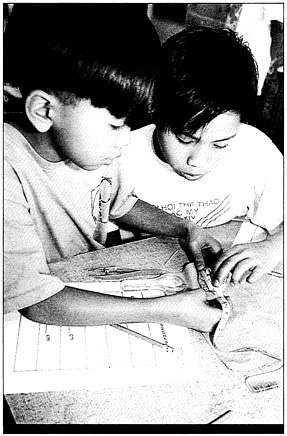
The documents differ in three ways. First, they divide content by different grade levels. The Benchmarks are statements of what all students should know and be able to do in science, mathematics, and technology by the end of grades 2, 5, 8, and 12; the Standards use grades 4, 8, and 12 as end points. Second, the Standards place greater emphasis on inquiry, including it as important science content as well as a means of teaching and learning. Third, the Standards offer a broader set of standards for improving science education. They address all components of education, including teaching, assessment, professional development, program, and system, recognizing that improvement cannot occur or be sustained in one segment of the system alone. There is, however, a high level of consistency between the two documents in describing the content to be learned. The National Research Council believes that the use of the Benchmarks complies fully with the spirit of the content standards.
communicateobserve
What is included in content standards?
Content standards are divided into eight categories:
Unifying concepts and processes
Science as inquiry
Physical science
Life science
Earth and space science
Science and technology
Science in personal and social perspectives
History and nature of science
The content standards include traditional school science content but, in addition, encompass other knowledge and abilities of scientists. The first category of the content standards, unifying concepts and processes, identifies powerful ideas that are basic to the science disciplines and help students of all ages understand the natural world. This category is presented for all grade levels because the concepts are developed throughout a student’s education. The other content categories are clustered for grades K-4, 5-8, and 9-12. Students develop knowledge and abilities in inquiry, which ground their learning of subject matter in physical, life, and earth and space sciences. Science and technology standards link the natural and designed worlds. The personal and social perspectives standards help students see the personal and social impacts of science and help them develop decision-making skills. The history and nature of science standards help students see science as a human experience that is ongoing and ever-changing.
CONTENT STANDARDS | |||
| Grades K-4 | Grades 5-8 | Grades 9-12 |
Unifying Concepts and Processes | Systems, order, and organization Evidence, models, and explanation Change, constancy, and measurement Evolution and equilibrium Form and function | Systems, order, and organization Evidence, models, and explanation Change, constancy, and measurement Evolution and equilibrium Form and function | Systems, order, and organization Evidence, models, and explanation Change, constancy, and measurement Evolution and equilibrium Form and function |
Science as Inquiry | Abilities necessary to do scientific inquiry Understandings about scientific inquiry | Abilities necessary to do scientific inquiry Understandings about scientific inquiry | Abilities necessary to do scientific inquiry Understandings about scientific inquiry |
Physical Science | Properties of objects and materials Position and motion of objects Light, heat, electricity, and magnetism | Properties and changes of properties in matter Motions and forces Transfer of energy | Structure of atoms Structure and properties of matter Chemical reactions Motions and forces Conservation of energy and increase in disorder Interactions of energy and matter |
Life Science | Characteristics of organisms Life cycles of organisms Organisms and environments | Structure and function in living systems Reproduction and heredity Regulation and behavior Populations and ecosystems Diversity and adaptations of organisms | The cell Molecular basis of heredity Biological evolution Interdependence of organisms Matter, energy, and organization in living systems Behavior of organisms |
Earth and Space Science | Properties of earth materials Objects in the sky Changes in earth and sky | Structure of the earth system Earth’s history Earth in the solar system | Energy in the earth system Geochemical cycles Origin and evolution of the earth system Origin and evolution of the universe |
Science and Technology | Abilities of technological design Understandings about science and technology Abilities to distinguish between natural objects and objects made by humans | Abilities of technological design Understandings about science and technology | Abilities of technological design Understandings about science and technology |
Science in Personal and Social Perspectives | Personal health Characteristics and changes in populations Types of resources Changes in environments Science and technology in local challenges | Personal health Populations, resources, and environments Natural hazards Risks and benefits Science and technology in society | Personal and community health Population growth Natural resources Environmental quality Natural and human-induced hazards Science and technology in local, national, and global challenges |
History and Nature of Science | Science as a human endeavor | Science as a human endeavor Nature of science History of science | Science as a human endeavor Nature of scientific knowledge Historical perspectives |
exploreinquire
What do teachers of science do?
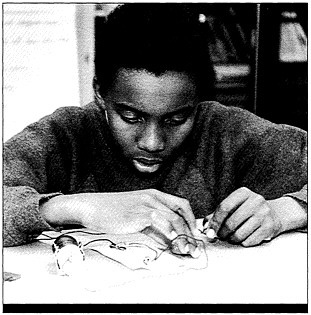
The Teaching Standards provide an answer to this question. Science teaching lies at the heart of the vision of science education presented in the Standards. Effective teachers of science have theoretical and practical knowledge about student learning, science, and science teaching. The teaching standards describe actions these teachers take and skills and knowledge they have to teach science well.
Teachers of science
Plan an inquiry-based science program
Guide and facilitate learning
Assess student learning and their own teaching
Design and manage learning environments
Develop communities of science learners
Participate in on-going development of the school science program

How can teachers apply theStandardsin their classrooms?
Individual teachers are encouraged by the Standards to give less emphasis to fact-based programs and greater emphasis to inquiry-based programs that engage students in an in-depth study of fewer topics. However, to attain the vision of science education described in the Standards, more than teaching practices and materials must change. The routines, rewards, structures, and expectations of districts, schools, and other parts of the system must endorse the vision, and provide teachers with resources, time, and opportunities to change their practice. Teachers can use the program and system standards to communicate this need to administrators and parents.
interactlearn
How is science learning assessed?
The Assessment Standards provide criteria to judge progress across the system toward the science education vision of scientific literacy for all. They can be used in preparing evaluations of students, teachers, programs, and policies.
Assessments should
Be deliberately designed for the decisions they are intended to inform
Measure both achievement and opportunity to learn
Clearly relate decisions to data
Demonstrate fairness in design and use
Support their inferences with data

Will theStandardshelp teachers test their students more effectively?
Teaching and testing are integral components of instruction, and cannot be separated. As content and teaching strategies become aligned with the Standards, so must classroom assessments. The assessment standards identify essential characteristics of effective assessment policies, practices, and tasks at all levels. Teachers who use the standards will think differently about what to assess, when to do so, and the best ways to determine what their students are learning. They will consider carefully the fundamental understandings their students are working to learn, the place their students are in developing understanding, and a variety of alternatives to help their students demonstrate what they know.
Will Standardized tests Change?
The Standards address the need for systems to reconsider the purpose, data analysis, and sample size in all large-scale assessments. There are already indications that changes in items on common standardized tests are being considered, as are the designs used by states, districts, and others who conduct large-scale science assessments.
wonderencourage
What do teachers need to know and how will theylearn it?
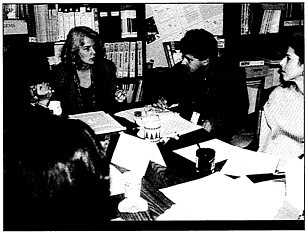
The Professional Development Standards make the case that becoming an effective teacher of science is a continuous process, stretching from preservice throughout one’s professional career. The professional development standards can be used to help teachers of K-12 science have the on-going, in-depth kinds of learning opportunities that are required by and available to all professionals.
Professional Development Standards call for teachers to haveopportunities to
Learn science through inquiry
Integrate knowledge of science, learning, and teaching
Engage in continuous reflection and improvement
Build coherent, coordinated programs for professional learning
reflectcommunicate
How will teachers gain the science content knowledge they need?
To help their students achieve high levels of science literacy, teachers need to understand deeply the content they teach. Building science knowledge
Involves active investigation
Focuses on significant science
Uses scientific literature and technology
Builds on teachers’ current knowledge
Encourages on-going reflection
Supports collaboration among teachers
How will teachers improve their science teaching?
Effective teachers of science have specialized knowledge that combines their understanding of science with what they know about learning, teaching, curriculum, and students. They develop this unique type of knowledge through both preservice and inservice learning experiences that
Deliberately connect science and pedagogy
Model effective teaching practices
Address the needs of teachers as adult learners
Take place in classrooms and other learning situations
Use inquiry, reflection, research, modeling, and guided practice
assess
What is an effective school science program?
The Program Standards address the need for comprehensive and coordinated science experiences across grade levels and support needed by teachers in order for all students to have opportunities to learn. The program standards will help schools and districts translate the Standards into effective programs that reflect local contexts and policies.
Program Standards call for
Consistency across all elements of the science program and across K-12
Quality in the program of studies
Coordination with mathematics
Quality resources–teachers, time, materials
Equitable opportunities for achievement
Collaboration within the school community to support a quality program
interactexplore
Quality Programs of Study
Include all content standards
Select developmentally appropriate content
Emphasize student understanding through inquiry
Connect science to other subjects
Are theStandardsa science curriculum?
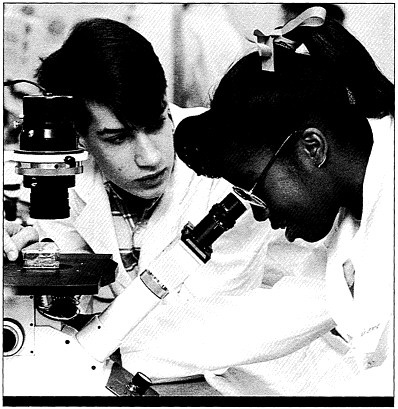
Curriculum is the way content is designed and delivered. It includes the structure, organization, balance, and presentation of the content in the classroom. The Standards do not prescribe a specific curriculum but, rather, provide criteria that can be used at the local, state, and national levels to design a curriculum framework, a key element in a school or district’s science program, or to evaluate and select curriculum materials. Effective science programs are designed to consider and draw consistency from the content, teaching, and assessment standards, as well as professional development, program, and system standards.
reflectlearn
How does the system support science learning?
The System Standards call on all parts of the educational system—including local districts, state departments of education, and the federal education system—to coordinate their efforts and build on one another’s strengths. The standards can serve as criteria for judging the performance of components of the system responsible for providing schools with necessary financial and intellectual resources.
System Standards require
Policies consistent with vision of theStandards
Coordination of policies within and across system
Continuity of support over time
Sufficient resources to support program
Equitable policies
Attention to anticipated effects
Individual responsibility for achieving the vision

The road ahead.
The changes required to achieve the vision of the Standards are substantial and will take well into the 21st century. No one group can implement them. The challenge of a Standards-based science program extends to everyone within the education community. Change will occur locally, and differences in individuals, schools, and communities will result in different pathways to improvement, different rates of progress, and different school science programs. What is important is that change be pervasive and sustainable, leading to high quality science education for all students.
Credits
Cover. Fairfax County, VA, high-school student. Randy Wyant, courtesy Fairfax County Public Schools.
Cover. Students at Glebe Elementary School, Arlington, VA, work on an activity from Organisms, a first-grade unit in the Science and Technology for Children (STC) curriculum program. Photographer: Eric Long, courtesy National Science Resources Center.
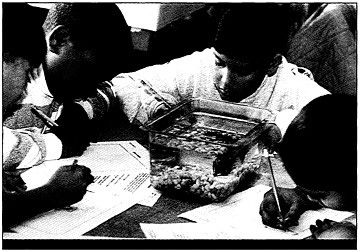
Inside Back Cover. Students at Bailey’s Elementary School, Fairfax, VA, work on an activity from Animal Studies, a fourth-grade STC unit. Photographer: Rick Vargas.
page 1. Student in Fairfax County, VA. Photographer: Tom Schudel.
page 3. Students at Watkins Elementary School, Washington, DC, work on an activity from Chemical Tests, a third-grade STC unit. Photographer: Jeff Tinsley, courtesy NSRC.
page 4. Student recording data. Photographer: Kim Alberto, courtesy National Science Teachers’ Association.
page 6. Students at Bailey’s Elementary School, Fairfax, VA, work on an activity from Animal Studies, a fourth-grade STC unit. Photographer: Rick Vargas, courtesy NSRC.
page 7. Student at Stuart-Hobson School, Washington, DC, works on an activity from Magnets and Motors, a sixth-grade STC unit. Photographer: Dane A. Penland, courtesy NSRC.
page 10. Teacher and student at laboratory centrifuge in Fairfax County, VA. Photographer: Randy Wyant.
page 11. Students at Watkins Elementary School, Washington, DC, work on an activity from Chemical Tests, a third-grade STC unit. Photographer Dane A. Penland, courtesy NSRC.
page 12. Teachers’ curriculum workshop. Courtesy Joyce Weiskopf.
page 15. Students in Fairfax County, VA. Photographer: James Corrie.
page 16. Fairfax County, VA, high-school students in astronomy lab. Photographer: Randy Wyant.


