Does the current Ebola vaccine protect against every type of Ebola virus?
Based on Science
No. The currently approved Ebola vaccine used for outbreak response is called Ervebo. Ervebo protects against one species of Ebola virus, called Zaire ebolavirus. It has not been proven to protect against other Ebola viruses, including Bundibugyo virus. The 2026 outbreak in Uganda and the Democratic Republic of the Congo is caused by Bundibugyo virus, a different Ebola virus for which there is currently no approved vaccine.
Last update May 22, 2026
“Ebola virus” refers to several different viruses.
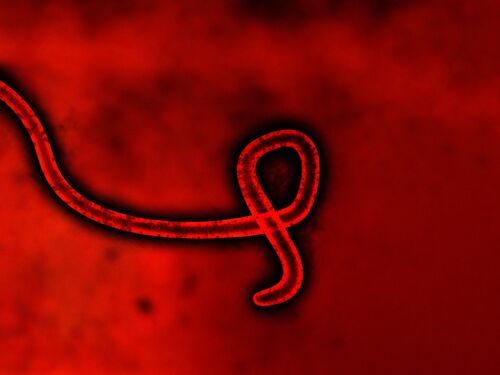
People often talk about “Ebola” as though it is a single virus, but there are actually several different Ebola viruses.
The species known to cause disease in people include:
Zaire ebolavirus
Sudan ebolavirus
Bundibugyo ebolavirus
Taï Forest ebolavirus
These viruses are related, but they are not identical. Because these viruses differ from one another, a vaccine or treatment developed for one Ebola virus may not work as well—or at all—against another.
The approved Ebola vaccine was designed for Zaire ebolavirus.
The currently approved Ebola vaccine, Ervebo, was developed to protect against Zaire ebolavirus. Clinical studies during and after major outbreaks showed that the vaccine helped protect people exposed to that virus.
Past outbreaks helped scientists test whether vaccines were safe and effective, even under difficult emergency conditions. Public health experts have emphasized that research during outbreaks is critical for developing vaccines and treatments more quickly and safely.
The current outbreak involves a different Ebola virus.
On May 17, 2026, the World Health Organization declared the outbreak in the Democratic Republic of the Congo and Uganda a Public Health Emergency of International Concern. The outbreak is caused by Bundibugyo virus, not Zaire ebolavirus.
Because the approved Ebola vaccine was designed for Zaire ebolavirus, it should not be assumed to protect against Bundibugyo virus. There is currently no approved vaccine specifically designed to protect against Bundibugyo virus.
This can create confusion because news reports may refer generally to “the Ebola vaccine” without explaining that vaccines may only work against certain Ebola viruses.
Scientists continue working on vaccines for additional Ebola viruses.
Researchers are studying vaccines and treatments for multiple Ebola viruses. Past outbreaks helped identify important research priorities for improving outbreak response and speeding development of vaccines and other treatments.
Experts have also called for faster, better-coordinated clinical trials during epidemics, since outbreaks can spread quickly and opportunities to study vaccines may be limited. since outbreaks can spread quickly and opportunities to study vaccines may be limited.
Developing vaccines that protect against multiple Ebola viruses is scientifically challenging, but researchers continue to study broader protection strategies.
Accurate information matters during outbreaks.
Misinformation often spreads quickly during disease outbreaks, especially when scientific understanding of the virus continues to evolve. Confusion about Ebola vaccines may lead people to assume that one vaccine protects against every Ebola virus, which is not currently the case.
Initial brainstorming and outlining for articles in this series, produced in 2026, may include input generated with the assistance of artificial intelligence. Human experts review all AI-supported content to ensure factual accuracy, relevancy and the appropriate context.