How does Ebola spread from person to person?
Based on Science
Ebola spreads through direct contact with the body fluids of a symptomatic person or with contaminated clothing or other materials. Ebola virus is in saliva and other body fluids but has not been found to spread as easily as airborne viruses, such as COVID-19 or measles.
Last update May 22, 2026

Ebola spreads through direct contact with infected body fluids.
People can become infected with Ebola if body fluids from someone who is sick or who has died from Ebola enter the body through broken skin or through the eyes, nose, or mouth. According to the Centers for Disease Control and Prevention (CDC), body fluids that can spread Ebola include:
Blood
Vomit
Feces
Saliva
Sweat
Urine
Semen
Breast milk
Amniotic fluid
Vaginal fluid
The virus can also spread through contact with contaminated objects such as needles, medical equipment, bedding, or clothing exposed to infected fluids.
During past outbreaks, Ebola spread most often through close physical contact with and caregiving of symptomatic people. The National Academies publication The Ebola Epidemic in West Africa describes how transmission often occurred in households, healthcare settings, and during burial practices involving direct contact with the body fluids of someone who had died from Ebola.
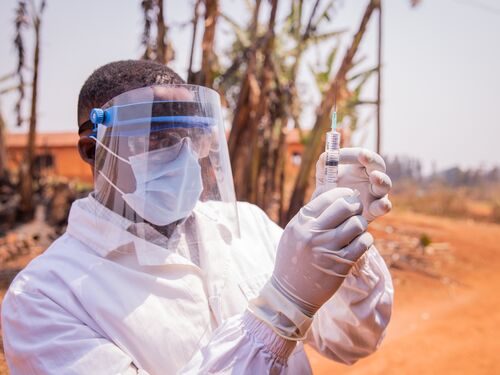
Proper handwashing can protect against secondary contact with the Ebola virus, as can wearing protective clothing while caring for a person with Ebola.
Ebola does not spread through casual everyday contact.
There are no documented cases of Ebola virus being transmitted through the air, only through direct contact with the virus. This is unlike measles and COVID-19, which spread quickly through the air.
The World Health Organization states that Ebola can spread when infected body fluids come into contact with broken skin or with the eyes, nose, or mouth.
Without contact with infected body fluids or contaminated materials, a person would not catch Ebola from:
Walking past someone
Sitting near someone briefly
Casual conversation
Properly handled food or drinking water that has not been contaminated with infected body fluids
Breathing the same air during brief, casual contact
This distinction is important because misinformation about how Ebola is spread can lead to life-threatening situations and harmful stigmatizations.
People are not considered contagious before symptoms begin.
According to the CDC, people infected with Ebola generally do not spread the virus until symptoms begin, typically within 8-10 days but ranging from 2-21 days.
Early symptoms can include:
Fever
Fatigue
Headache
Muscle pain
Later symptoms can include:
Vomiting
Diarrhea
Bleeding
Abdominal pain
Rash
Studies show that people become more contagious as the amount of virus in their body fluids increases.
Researchers studying previous outbreaks identified rapid isolation of symptomatic patients, contact tracing, and access to protective equipment as key tools for reducing spread. Public health experts have also emphasized the importance of trusted community partnerships and clear communication during outbreak response efforts.
Healthcare workers and caregivers can face higher risk of exposure.
People caring for Ebola patients may face higher exposure risk because they come into close contact with infected body fluids. During past outbreaks, many infections occurred in healthcare settings before protective equipment and infection-control measures were fully implemented.
The National Academies workshop, The Ebola Epidemic in West Africa highlighted the importance of protective equipment, training, laboratory capacity, and public trust in healthcare systems to help reduce transmission during outbreaks.
Clear information can help reduce fear and misinformation.
Outbreaks often generate fear, rumors, and misinformation about how diseases spread. Understanding how Ebola is actually transmitted can help people evaluate alarming claims they may encounter.
Initial brainstorming and outlining for articles in this series, produced in 2026, may include input generated with the assistance of artificial intelligence. Human experts review all AI-supported content to ensure factual accuracy, relevancy and the appropriate context.