National Academies Partners with Vanderbilt University on Energy Issues Symposium
Program News
By Brent Heard
Last update September 18, 2026
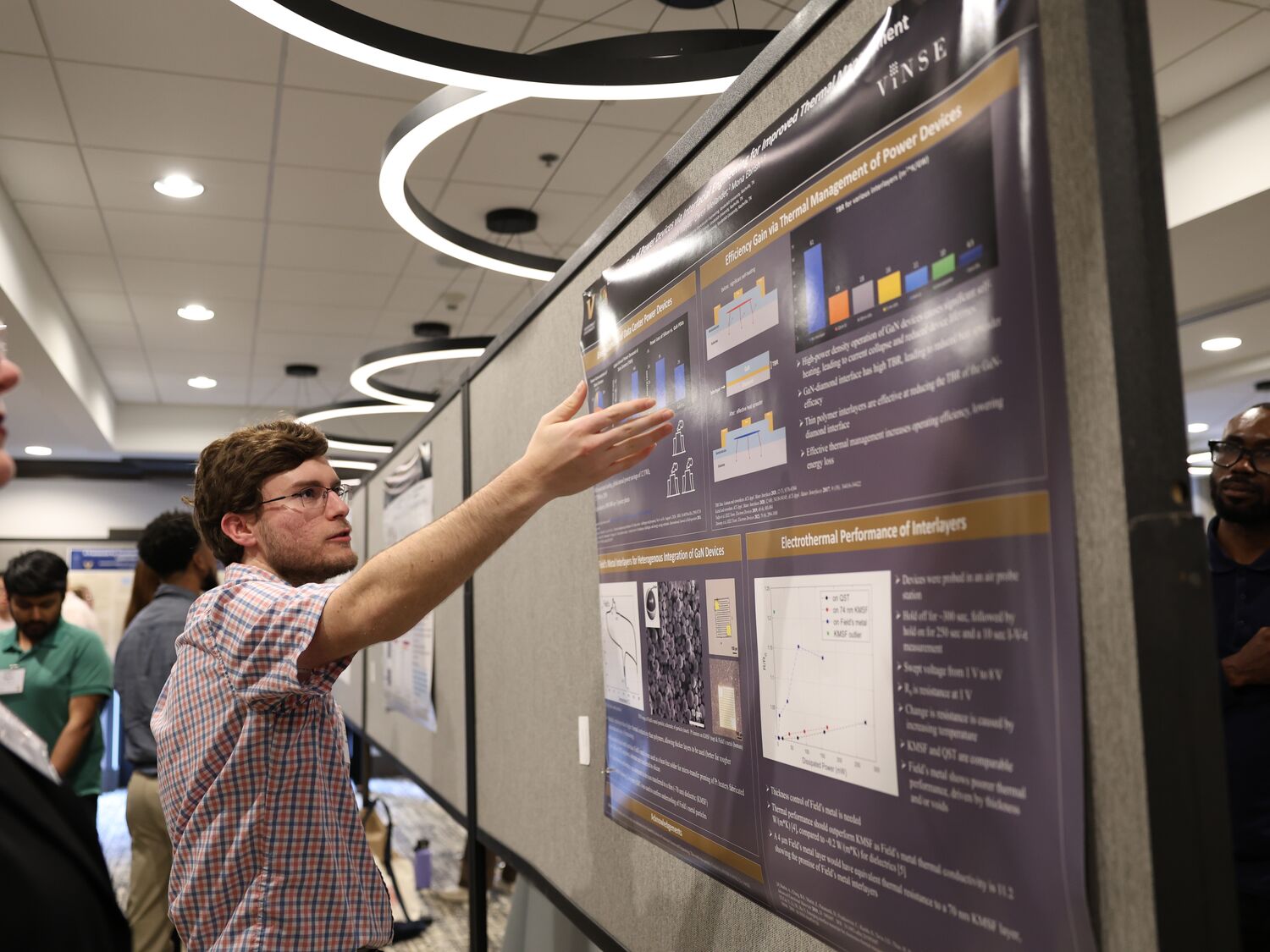
Photo courtesy Vanderbilt University
From September 2-4, the Vanderbilt Center for Sustainability, Energy, and Climate (VSEC) held its annual symposium in partnership with New Voices in Sciences, Engineering, and Medicine, a program of the National Academies. This event marked the first occasion that the program co-convened an event with a New Voices member’s institution.
The core theme of this year’s symposium was integrating energy systems across multiple scales. Accordingly, the event featured interdisciplinary speakers and panels addressing energy-related research and applications from the atomic and materials levels to the systems governance level. Hussam Mahmoud and Hiba Baroud, VSEC director and deputy director, explained how such interdisciplinarity is central to VSEC’s mission to promote research, education, engagement, and outreach for a sustainable, resilient, and adaptive planet. These sentiments were echoed in keynote presentations by Krishnendu Roy, Vanderbilt’s dean of engineering, and Susan Margulies, vice provost for research and innovation.
The symposium featured five panel discussions organized and co-hosted by New Voices members Yamil Colon, Elena Krieger, Matteo Muratori, Karma Sawyer, and Jim Yoon. The panels explored a range of energy and sustainability topics ranging, such as advanced battery and semiconductor materials; energy and resilience projects undertaken by the city of Nashville; multiscale electric vehicle and grid integration; the community impacts from climate events; and barriers to communities accessing clean energy.
These panel sessions complemented keynote talks on energy systems, including a perspective on global trends in energy sources and consumption by Jennifer Port, ExxonMobil’s industrial decarbonization chief; an overview of agrivoltaics projects at Silicon Ranch from founder Matt Kisber, former commissioner of the Tennessee Department of Economic and Community Development; and a summary of Oak Ridge National Laboratory’s innovative work on nuclear, materials, artificial intelligence, and quantum computing from deputy for science and technology Susan Hubbard.
In his closing remarks, Mahmoud identified three key themes that emerged throughout the symposium: integration, resilience, and implementation. He noted that the energy system is becoming increasingly interconnected, and it will need to function even when conditions are far from normal. Yet, technological solutions to achieve these goals will only matter if they can be deployed, which will require collaboration across disciplines. Partnerships like those between VSEC and New Voices can facilitate connections and conversations to advance such efforts.
Read more about the symposium in Vanderbilt University Research News.