How the Heat Can Go to Your Head
Program News
By Sam Gerard
Last update September 17, 2026
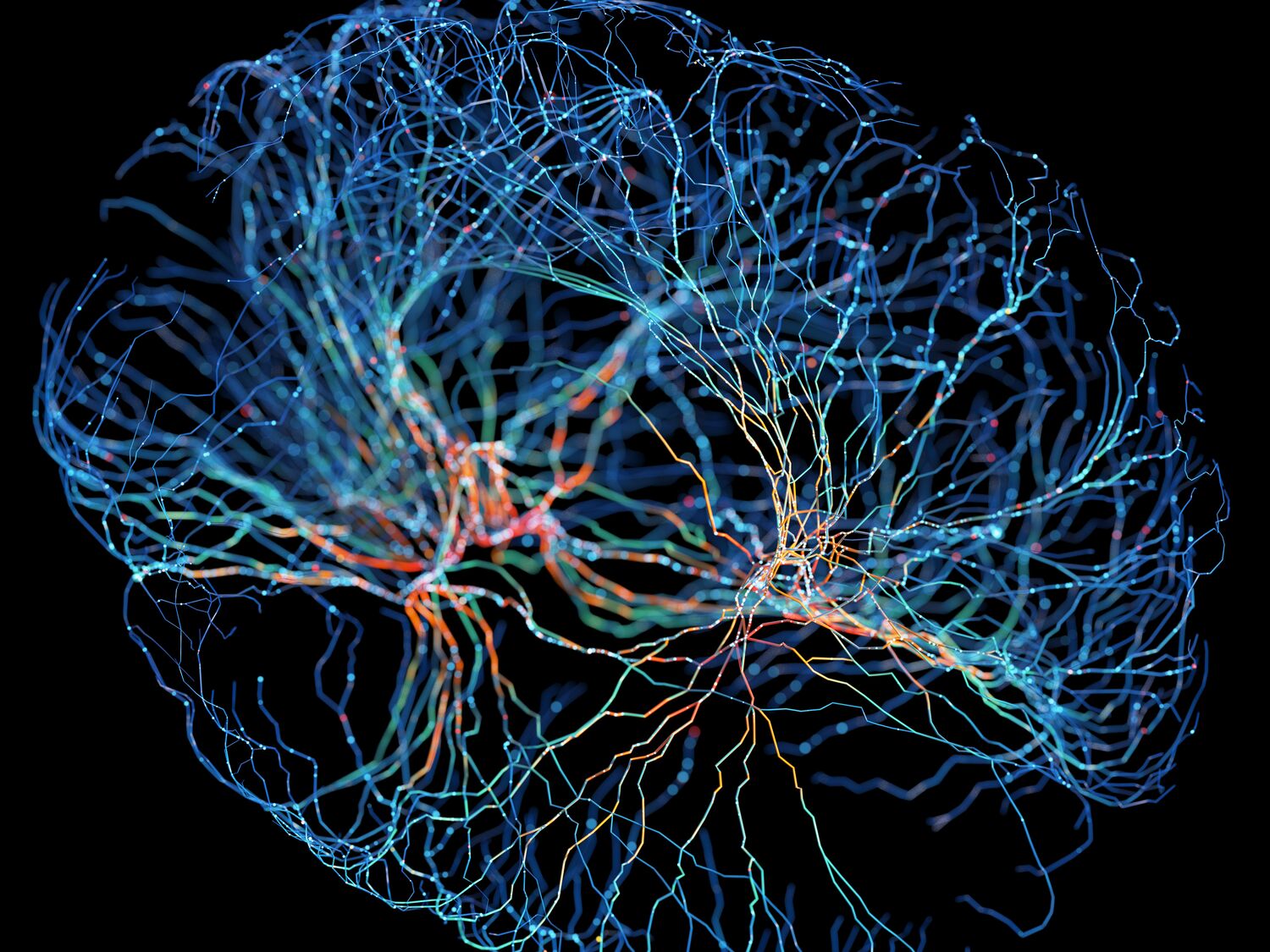
Neuron system
Extreme heat is difficult to ignore. On July 4, Washington, D.C., reached 103 F, breaking a daily record that had stood since 1919. Throughout the summer, all of the contiguous United States witnessed above-average temperatures. Heat at this magnitude places added demands on brain and body functions.
As temperatures continue rising and extreme heat events become more frequent, researchers are asking: Are hot days threatening our health? How does repeated heat stress affect the brain, and how do those effects manifest across the life course?
At a Climate Conversations webinar held in May, experts in neuroscience, mental health, and health care explored environmental stressors that can affect brain health in the lifespan and shape neurological outcomes as well as mental well-being. One major takeaway from the webinar: Brain health is shaped by far more than what happens inside the skull.
Increasingly, researchers are assessing the “exposome” — or the environmental variables accumulated across a person’s life and how they impact biology and health — to better understand the interconnected relationship between the brain, the rest of the body, and the social and physical environments in which people live.
At the webinar, neuroscientist Burcin Ikiz, founder of EcoNeuro, emphasized how these variables can affect a person’s well-being.
“Our brains work the best under certain optimal temperatures and environment,” she noted, adding that even relatively small deviations can place stress on the brain, while “acute extreme heat for a couple days during a heat wave can impact our cognition, our decision-making, as well as our memory.”
When heat is intense or prolonged, the coordinated signals required to keep the body’s internal temperature in a safe range can become more taxing. This process competes for physiological resources, and dehydration, cardiovascular strain, poor sleep, and thermal discomfort can make attention, judgment, learning, and complex decision-making more difficult.
The health implications of a heat wave do not end when the sun goes down. Other National Academies' discussions of brain health have also explored links between circadian disruption and neurological and psychiatric vulnerability. At the extreme end of the spectrum, heatstroke can directly threaten the central nervous system. Survivors of severe heatstroke can experience lasting neurological complications. But an important research gap lies between these acute emergencies and everyday heat exposure: Scientists are still working to understand what repeated, less severe heat exposure may mean for long-term brain and mental health.
“We’ve seen [mental health] impacts increase at such a frequent and intense rate,” said Katie Hayes, public health adjunct professor at George Mason University. “We have some clarity in the research right now that really describes the depth of the impacts and the fact that these impacts are going to be increasing.”
Exposure is not evenly distributed — the environments in which people live, work, learn, and age can have different consequences for brain health. People without reliable access to air conditioning or cool indoor spaces may have fewer opportunities for physiological recovery, particularly when nighttime temperatures remain high. Existing cardiovascular or neurological conditions can further increase vulnerability.
The growing evidence does not suggest that every hot day causes lasting neurological harm. However, it does suggest that heat interacts with many of the systems that support brain health — and that those interactions deserve closer study as extreme temperatures become more common.
“The cumulative impacts on the brain can really change how it ages, functions, and develops,” said Ikiz. “Research needs to shift from studying brains in isolation to understanding brain health within ecosystems.”
Understanding brain health in a warming world will require looking not only at acute heat illness, but also at sleep, cognition, cardiovascular function, inflammation, resilience, development, and the cumulative exposures people experience over a lifetime.
“Our brains have a really incredible capacity for recovery and for resilience,” Ikiz reassured, emphasizing that reducing or modifying harmful exposures can help support recovery.
The good news is that the knowledge base is evolving quickly. Hayes noted that a recent scan conducted for a health assessment identified over 800 peer-reviewed articles about warming conditions and mental health published between 2022 and 2024.
The National Academies’ work has explored different dimensions of warming and its impact on brain health, such as extreme weather impacts the wildland-urban interface, the relationship between brain and body health, chemical exposure and brain health, and the interconnection of environmental and mental health. Discussions on the connections between heat and health will continue this October at an upcoming event hosted by Climate Crossroads in partnership with the National Academy of Medicine.
“We’re not only focused [on] identifying the problem area anymore,” Hayes commented. “We’re really trying to focus on what we do about it.”