Minority Students in Special and Gifted Education (2002)
Chapter: 9 Weighing the Benefits of Placement
Part IV
Improving Outcomes
In this section we turn our attention away from the processes that lead to special education placement and toward the outcomes for students once they are assigned. Is special education a benefit for the students who are placed in it? Do the additional resources improve students’ educational prospects? Are the benefits similar for students of different races/ ethnicities? The answer to these questions signals the level of concern that is warranted regarding the disproportionate representation of minority children. If the educational achievement and life prospects of special education children is advanced through program placement, then disproportionate representation is less alarming than if the reverse is true. The ultimate goal of reducing the disparities in early experiences that generate disproportionate need for services may still be a social policy priority. But special education would nonetheless be a helpful mechanism for responding to the need for additional supports for school success. Without evidence of educational benefit, however, assignment to special education warrants close scrutiny.
We ask the same questions for gifted and talented programs. Are there interventions that make a difference for students placed in these programs? Our concern here is different in nature. The more effective interventions for gifted student prove to be, the greater the concern when minority children who may benefit from that education are not identified. In contrast to special education, the “gifted” label itself may confer a benefit through
higher expectation and positive perceptions of teachers, peers, and placed students.
In Chapter 9 we review the literature on what works for special education and gifted students. While the research literature provides encouraging findings regarding effective interventions, evidence that looks at racial/ ethnic groups separately was virtually absent. Similarly, there is a paucity of research on the extent to which interventions with documented positive outcomes are used and the difference in utilization among schools in districts with widely differing financial and demographic characteristics.
Our report has covered many different topics, and our recommendations appear in several different chapters. In a final chapter, we revisit the major conclusions of the report. We summarize our answers to the four questions that have structured this inquiry. We then present our recommendations as a consolidated proposal for policy change.
9
Weighing the Benefits of Placement
Placement in a gifted and talented program is widely viewed as beneficial. In addition to providing instruction that is closely tailored to the students served, eligibility signals positive judgment of the student as highly capable. At the outset of this report, we noted a paradox in special education that is not present in gifted education. Special education provides additional resources to support the achievement of eligible students, yet eligibility singles out the student’s achievement or behavior as substandard in some respect. And while instruction that is tailored to the needs of high-achieving students raises expectations for their performance, instruction tailored to low-achieving students has the potential to undermine their performance by lowering expectations. Whether placement of minority students in special education in disproportionate numbers should be viewed as a problem depends in part on whether the trade-off is worthwhile. Is special education beneficial to the students it serves? Does the benefit of special education differ for students in different racial/ethnic groups?
DO STUDENTS BENEFIT FROM SPECIAL EDUCATION INTERVENTIONS?
A rapidly growing body of research details what interventions have been demonstrated to work with students who are identified for special education. We summarize these findings below, emphasizing at the outset
that the extent to which effective practices are used among students of any race or ethnicity is largely unknown.
The findings reviewed here are drawn from research conducted primarily with students with learning disabilities (LD) and to a lesser extent students with emotional and behavioral disorder (ED/BD). This emphasis reflects the bulk of the research conducted in the past 20 years. Little research on curriculum and instruction has been conducted in that period with students with mild mental retardation (MMR). Most of the research on moderate and severely mentally retarded children has addressed issues of where and not how to teach them, with the debate often being more philosophical than empirical in nature.
Features of Effective Interventions
Considerable progress has been made over the past two decades in designing, implementing, and evaluating effective academic and behavioral interventions for students with disabilities (Gerber, 1999-2000). These interventions have been closely linked to models of learning and to providing access for students with disabilities to the general education curriculum. With the support of the U.S. Department of Education, the Office of Special Education Programs, and the National Center for Learning Disabilities, research syntheses have been completed to examine the converging findings related to intervention studies for children with LD. These syntheses have addressed the overall effectiveness of interventions for students with learning disabilities (Swanson et al., 1999), specific findings for reading comprehension (Gersten et al., 2001) and written expression (Gersten and Baker, 2001), higher-order processing (Swanson, 1999), grouping practices that are associated with improved outcomes in reading (Elbaum et al., 1999), behavioral interventions (Marquis et al., 2000), and interventions for students with learning disabilities associated with improved outcomes in self-concept (Vaughn and Elbaum, 1999). For summaries of the above-stated syntheses, see Gersten and Baker (2000a, b) and Swanson et al. (1999).
Initially presented in Vaughn et al. (2000), the following principles of instruction associated with effective outcomes for students with LD are drawn from the above described syntheses in special education. It is reasonable to assume that the best intervention practices would be hybrids that capitalize on as many of these findings as is sensible.
1. Research on effective interventions for students with LD has demonstrated success with both general and special education. All the research conducted thus far demonstrating significantly positive effects for students with LD has also resulted in at least as high (often higher) effect sizes for all other students in the class, including average and high-achieving students.
Given the increasing numbers of students with LD who are provided instruction in the general education classroom, this is a very important finding. Teachers and parents need not be concerned that effective interventions provided for students with disabilities will provide less than effective outcomes for students without disabilities. In addition, it demonstrates that effective interventions for students with disabilities can be generalized and effective in the broader learning community. Thus, intervention practices associated with positive outcomes for individuals with LD have educational benefits for all learners.
It is important to note, however, that it is unclear how these interventions influence students identified as gifted. While many of the interventions and features of instruction designed to improve outcomes for students with disabilities have overall positive outcomes for most students, this should not suggest that students who are gifted or those with severe learning disabilities would not benefit from instruction and curriculum that is even further differentiated. In the case of students who are gifted, more complex curriculum that provides extensive opportunities to extend learning would be needed. For many students with learning disabilities, this may include highly specialized instruction that is provided one-on-one or in very small groups, extended time to learn the building blocks of literacy and math, greater specificity in pacing instruction, additional practice, and continuous feedback.
2. Explicit instruction is a consistent feature of effective interventions (Elbaum et al., 1999; Gersten and Baker, 1998; National Institute of Child Health and Human Development, 2000; National Research Council [NRC], 1998; Swanson, 1999). Students with disabilities reach mastery more quickly when overt strategies for completing tasks are identified and taught. Examples of overt strategies are the explicit teaching of the steps in the writing process (see for review, Swanson et al., 1999; Wong, 1999) or the use of “think alouds” as a means for teaching reading comprehension strategies. The benefit to making instruction explicit and overt is twofold. First, students are given an opportunity to learn how to think about completing a task in a way that they would probably not discover on their own. Second, overt instruction allows teachers and peers to provide students with feedback during the learning process.
The utility of direct instruction has been considered effective for students with ED (Coleman and Vaughn, 2000). In one study, direct instruction was more effective than another approach (i.e., Language Master and independent practice) in terms of increasing sight word acquisition of students with behavioral and emotional disorders (Yell, 1992). A study using focus groups of ED teachers demonstrated that they perceived direct instruction to be effective for these students (Coleman and Vaughn, 2000). In
addition, direct instruction was more likely to increase on-task behavior and decrease disruptive behaviors of students with behavioral problems than cooperative learning or independent practice (Nelson et al., 1996).
3. Interactive dialogue between teacher and student and between students is a feature of effective reading and writing programs. The role of the teacher and the other students is to provide ongoing and systematic feedback to assist in repairing misunderstandings or revising text, giving students an opportunity to learn from each other and to expand their knowing by linking it to the constructs and thinking of fellow students. For example, Wong (1999) concluded that the quality of feedback and verbal interaction between teacher and student leads to improved outcomes in the quality of written expression.
4. Basic or fundamental elements of reading and writing, such as sounding out words in reading and handwriting in writing, are essential elements for students with LD. For example, Berninger and colleagues (1998) found that students’ speed of writing is linked with improved outcomes in writing. Word-level reading and decoding of sight words are interventions that are associated with high effect sizes in reading (Swanson et al., 1999). Consequently, effective intervention approaches in reading and writing build skills and knowledge both specifically and broadly using both top-down and bottom-up instruction.
5. Small-group instruction and pairs are connected with improved outcomes in reading and writing. As stated earlier, a critical component of effective interventions in reading and writing is interactive dialogue between teacher and student (Gersten and Baker, 1998). For example, in reading, Englert and colleagues (1994) promoted teacher-student dialogue in ways that mediated students’ performance and facilitated their use of cognitive strategies while reading. Likewise, interaction between students in the form of peer tutoring has shown effectiveness with all students (Mathes and Fuchs, 1994) and particularly for students with disabilities when they serve as the tutor (Elbaum et al., 1999). These benefits seem to reach beyond academic outcomes. In fact, in a synthesis of intervention studies for elementary students with LD that included self-concept as one of the outcome measures (Elbaum and Vaughn, 2001), interventions focusing on academic skills within cooperative group structures also showed gains in self-concept.
Similarly, students with ED/BD increased their academic performance in various areas (e.g., reading, math) by tutoring (Lock and Fuchs, 1995; Maher, 1982, 1984; Scruggs and Osguthorpe, 1986). Tutoring interventions in special education usually take two formats, cross-age tutoring and
peer tutoring (Scruggs and Osguthorpe, 1986). In cross-age tutoring, an older student tutor serves as “expert” providing instruction to a younger student (Durrer and McLaughlin, 1995; Scruggs and Osguthorpe, 1986). Peer tutoring consists of same-age pairs of students working together (Scruggs and Osguthorpe, 1986).
The effectiveness of cross-age tutoring on academic outcomes for students with ED/BD has been well established by many researchers. A recent synthesis on reading intervention for students with ED/BD revealed that cross-age tutoring was the most distinct practice associated with improved reading outcomes for students with ED/BD (Coleman and Vaughn, 2000). Studies by Maher (1982, 1984) reported that cross-age tutoring in which adolescents with BD tutored elementary students with MR yielded increased academic performance (in social science and mathematics) for both tutors and tutees. Top and Osguthorpe (1987) implemented cross-age tutoring by assigning 4th- to 6th graders with BD as tutors for 1st graders without disabilities in reading. Both tutors and tutees increased their reading performance, and tutors with BD improved their self-esteem as well. Similarly, cross-age tutoring was associated with social gains for students with BD (Scruggs and Osguthorpe, 1986).
The effectiveness of peer tutoring on academic outcomes yields lower effect sizes than cross-age tutoring, but it is a promising practice for students with ED/BD. Adolescents with BD in roles of both tutor and tutee improved their mathematics outcomes after participating in peer tutoring (Franca et al., 1990). Similarly, peer tutoring yielded improved spelling outcomes for adolescents with BD (Stowitschek et al., 1982). Partner reading, which is a component of class-wide peer tutoring, yielded enhanced on-task behavior and positive social interaction for students with ED/BD (Lock and Fuchs, 1995).
6. Motivation to learn, task difficulty, and task persistence influence intervention effectiveness. As early as 1982, Keogh noted that “the organization of curricular content, and the order and sequence of presentation, may have important consequences for children’s accomplishments” (p. 33). Planning instruction around task difficulty to ensure students experience success and persist in learning activities has long been recognized as a critical feature of effective instruction for students with LD (Gersten et al. 1984). In addition, “time on task” has been established as an essential factor linked to improved academic outcomes. However, time on task and persistence with tasks is affected by students’ motivation to learn and their working on tasks that are challenging, meaningful, and within their capabilities. Most of the instructional activities in which students with LD are engaged are at inappropriate levels of task difficulty. Students who experience some successes in school are much more likely to participate actively in
educational or work experiences following school (SRI International, 1995). Conscious attention to task difficulty is likely to be linked to higher levels of student achievement (Swanson and Hoskyn, 1998). To date, research in instructional areas such as reading comprehension, expressive writing, and problem solving has rarely addressed these issues of task difficulty, persistence, and motivation in a systematic fashion. In part, this is because the domains of these topics have not been well systematized (Kucan and Beck, 1997), especially in terms of task difficulty and measurement. This may well be a productive direction for future research.
Maintaining motivation to learn for students with BD/ED was identified as a challenge for teachers (Coleman and Vaughn, 2000). These students lack interest in school and tend to attribute their failure in school to their inability rather than the need for increased practice (Cutler, 1982; Luchow et al., 1985). Kim (1999) found that students with BD showed higher rates of off-task behaviors under learning conditions that provided difficult tasks and low adult attention.
7. Procedural facilitators or strategies help students develop a plan to guide their learning in the areas of reading comprehension, written expression, and general higher-order processing. Students with LD are not likely to discover these plans of action on their own, and therefore it is necessary that they be explicitly taught. For example, although students with LD may possess the conceptual and background knowledge to generate texts about a particular topic (e.g., the American Revolution), they may appear to have little of this foundation knowledge because they do not have a strategy for generating the categories and structure of expository text about the American Revolution, including setting, key characters, plot, etc. (Englert and Raphael, 1988). By teaching students strategies, the teacher provides them with “their culture’s best kept secret about how to obtain academic success” (Harris and Pressley, 1991:395).
With practice, proficiency with the strategy develops, and there is an increased likelihood that students will apply the strategy on their own in new contexts. To facilitate the spontaneous application of strategies, it would seem that students must be explicitly taught where, when, and how to use a particular strategy. Once students have this metacognitive knowledge, they can take ownership of the strategies and modify them for use in different situations. Some of the research in science on using self-assessment procedures to monitor task and progress may be particularly useful for students with disabilities (White and Frederiksen, 1998).
Evidence of Effectiveness
According to Kavale and Forness (2000), who reported findings from meta-analyses of the effectiveness of many interventions in special education, the following types of interventions have been highly effective with students with disabilities (the number in parentheses is the mean effect size): computer-assisted instruction (0.52), peer tutoring (0.56), direct instruction (0.84), behavior modification (0.93), reading comprehension (0.98, 0.113), and mnemonic strategies (0.162).
Hockenbury et al. (1999-2000) also comment on the effectiveness of special education:
Special education has a considerable history of devising and testing effective instructional methods for atypical students. These include, for example, direct instruction (e.g., Gersten, 1985; White, 1988), self-monitoring (e.g., Lloyd et al., 1989; Webber et al., 1993), mnemonic instruction (e.g., Mastropieri and Scruggs, 1998; Scruggs and Mastropieri, 1990), strategy training (e.g., Deshler and Schumaker, 1986; Ellis et al., 1991; Hughes and Schumaker, 1992), curriculum-based measurement (e.g., Deno and Fuchs, 1987; Fuchs and Fuchs, 1996), applied behavior analysis (e.g., Jenson et al., 1988; Wolery et al., 1988), and functional assessment (e.g., Arndorfer and Miltenberger, 1993; Horner and Carr, 1997). Some of these instructional methods are applicable in some form to many students in general education. This does not, however, preclude the need for special education. One thing that is right about special education is that it includes devising and testing empirically methods of instruction that are effective with atypical students, whose instruction often must be different in content or be made more explicit, carefully controlled, carefully monitored, intensive, and sustained than instruction for typical learners (p. 6).
Minority Students with Learning Disabilities and Behavior Disorders
Minority students are often represented in intervention research. However, findings for minority students are rarely, if ever, disaggregated and compared to majority students with LD or BD. The assumption is that the performance of minority students with disabilities is comparable to majority students with disabilities.
Recently, a synthesis on instructional practices for English language learners was reported (Gersten and Baker, 2000a). Combining both a multivocal synthesis and a more traditional meta-analysis, results provide minimal guidelines for instruction of students who are English language learners. Eight studies that provided both an experimental and a control group were located. Effect sizes ranged from -0.56 to 1.95, with a median effect size of 0.25. This documents the frequently held belief that there is
little empirical data on the effectiveness of interventions with English language learners. Even these studies were often unclear about how interventions were implemented and the language of instruction.
In any study with diverse populations, there are certain variables akin to Keogh’s “marker variables” for LD (Keogh et al., 1978). For minority students and English language learners, these would include, at a minimum, socioeconomic status (SES), ethnicity or race, and language proficiency in both languages if bilingualism is involved. These variables are particularly salient to consider when interpreting results from intervention studies. Of the 180 intervention studies of students with LD that were synthesized by Swanson et al. (1999:78), the majority did not report ethnicity; however, of the studies that did report it, 7 studies included Asians/Pacific Islanders, (4.71, 6.01), 25 studies included blacks (7.42, 7.97), 36 studies included whites (11.67, 8.45), 11 studies included Hispanics (9.36, 10.11), 2 studies included Native Americans/Alaskan Natives (1.0, —). (Note: The first number in parentheses represents the mean number of students and the second number the standard deviation.) Findings disaggregated by ethnicity were neither provided nor possible to calculate.
Special Education Settings Versus the General Education Classroom
Interventions that are designed to be implemented in the general education classroom for students whose primary disabilities are in learning and behavior demonstrate improved outcomes for all participants, even those who are average to high achieving. However, the overall outcomes, even of the most effective class-wide interventions implemented in general education classrooms, demonstrate low to modest effects for students with disabilities that are unlikely to significantly improve academic and social outcomes in ways that will adequately compensate for how far behind they are.
For most students with disabilities, overall improvements in general education classroom instruction are a necessary but insufficient means to adequate instruction (Zigmond and Baker, 1994; Zigmond et al., 1995). This is not a commentary on where students are taught (general education classroom, resource room, special education setting), but rather a recognition that additional intensive and specifically designed instruction is necessary to enhance their outcomes.
Since students with reading disabilities are the subgroup for whom there are the most converging data, we provide a brief discussion of their response to treatment. The effectiveness of intervention strategies for children at risk for, or having, reading problems has been examined in several recent meta-analyses.
Group Size. One of the most significant ways to improve the intensity and effectiveness of instruction is to modify dramatically the size of the group taught. For students with reading disabilities, this means that students need to be instructed in groups of four or fewer.
Elbaum et al. (2000) carried out a meta-analysis of the effects of one-to-one tutoring in reading for students at risk for reading problems. They cumulated the results of 31 studies that contained a total of 219 effect sizes reported from 44 independent samples of children. The main results of interest were that the average weighted effect size was 0.39. The average weighted effect size for Reading Recovery of 0.60 was significantly greater than that for the other interventions of 0.27. However, the average weighted effect size for Reading Recovery is biased positively because many studies do not report results for all children who received the intervention. When intervention is provided by volunteers rather than professional educators, training and supervision were critical. Amount of intervention provided was not a predictor of variability in effect sizes across studies. In another meta-analysis, Elbaum and her colleagues (1999) cumulated studies that examined the effects of peer tutoring in reading. The average weighted effect size for peer tutoring in reading was 0.40.
Similarly, Russ and her colleagues (2001) synthesized the research about class size for students with disabilities. The findings revealed that students’ engagement in tasks increased when group size decreased, regardless of age or type of disability. In addition, small group sizes were associated with higher academic performance of students with mild disabilities.
Focus of Instruction. Swanson (1999) carried out a meta-analysis of the effects of various reading interventions for children and adolescents who were identified as having a learning disability. They cumulated the results of 54 studies that contained a total of 159 effect sizes for word recognition and 58 studies that contained a total of 176 effect sizes for reading comprehension. The average weighted effect sizes were .57 for word identification and .72 for reading comprehension. Variability in effect sizes across studies was not predicted by number of treatment sessions. Larger effect sizes for word recognition were associated with interventions that featured segmentation and sequencing as tools for simplifying complex or difficult tasks and metacognitive instruction in the form of advance organizers.
R.K. Wagner (2000) carried out a meta-analysis of the effects of phonological awareness training on seven reading-related outcome measures: phonemic decoding (word attack), word identification, word-level decoding (a composite of phonemic decoding and word identification), fluency, comprehension, spelling, and phonological awareness. Results presented in Table 9-1 show that average weighted effect sizes ranged from a low of 0.36 for fluency to 0.84 for phonological awareness. Various moderators
TABLE 9-1 Effect Sizes from Meta-Analysis of the Effects of Phonological Awareness Training
Outcome | Average Weighted Effect Size | 95 percent CI |
Word-level decoding | 0.46 | 0.39-0.54 |
Phonemic decoding | 0.79 | 0.69-0.90 |
Word identification | 0.38 | 0.31-0.46 |
Fluency | 0.36 | 0.13-0.59 |
Comprehension | 0.48 | 0.34-0.62 |
Spelling | 0.47 | 0.40-0.55 |
Phonological awareness | 0.84 | 0.77-0.91 |
SOURCE: Wagner (2000). | ||
predicted variability in effect sizes across studies, but these moderators varied across the seven outcome measures.
The studies that reported posttraining follow-up data were used in a separate meta-analysis to assess maintenance of effects after training. Unlike most treatments, for which dissipation of training effects is expected over time, an intriguing possibility is that the effects of phonological awareness training may actually increase over time. Empirical support for this idea is provided by a study reported by Lundberg et al. (1988), in which the effects of phonological awareness training done in preschool appear to become larger from 1st to 2nd grade in the absence of any additional phonological awareness training. Theoretical support for the possibility of maintenance or even increase in posttraining effects is provided by idea of Matthew effects in reading (Stanovich, 1986). The reference is to the biblical notion of the rich getting richer and the poorer getting poorer, which in the present context translates into the widening gap between good and poor readers that is observed as children move through their elementary school years. One explanation of Matthew effects is differences in the instructional experience provided to good and poor readers. It has been estimated that within a regular classroom, children in the top reading group read an order of magnitude more words in school per week than do children in the bottom reading group. A second explanation is motivational differences, which derive from whether reading is easy and enjoyable or difficult and painful. Children who experience success at early reading may be more likely to read more both in and out of school than children who experience early failure.
Alternatively, it may be the case that the effects of phonological awareness lessen over time after completion of the training program, as is characteristic of the effects of most interventions. This possibility is even more likely if it is the case that the effects of phonological awareness training are
largely to “hot-house” beginning readers by enabling them to read sooner that they would otherwise, but ultimately no better overall. Consider the question of when to commence reading instruction. The conventional wisdom is that although it is possible to teach many children to read in kindergarten or even in preschool, there is no advantage in doing so because children who are taught to read in 1st grade soon will catch up with those taught to read earlier. Might the same outcome be expected for phonological awareness training? If so, no long-term effects of training are expected.
The results on maintenance of effects of training are presented in Table 9-2 . Negative values for weighted mean are interpreted as dissipation of training effects after treatment ends, whereas positive values are interpreted as enhanced training effects upon follow-up. All of the weighted means were either significantly negative or not reliably different from zero. Clearly, training effects are not magnified over time once training has ended. At best they are maintained or diminish considerably.
Numbers of Children Who Appear to Benefit
Substantial effect sizes, which reflect the average performance of an intervention group relative to a control group, can be obtained even when, for example, a third of the group fails to respond to the intervention at all.
These issues can be illustrated by an intervention study carried out by Torgesen et al. (2001): 60 children with severe reading problems were randomly assigned to two instructional programs. Both programs incorporated principles of effective instruction. They differed in whether articulatory-based cues were used in training phonemic awareness and in amount of decontextualized training in phonemic awareness and phonemic decoding skills. An Auditory Discrimination in Depth (ADD) program provided considerable decontextualized training using articulatory-based cues. An Embedded Phonics (EP) program provided less decontextualized training,
TABLE 9-2 Maintenance of Effects of Training
Outcome | Average Weighted Effect Size | Z | p |
Phonemic decoding | -0.148 | -1.53 | n.s |
Word identification | -0.221 | -4.66 | <0.001 |
Fluency | 0.199 | 1.24 | n.s. |
Comprehension | -0.092 | -1.05 | n.s. |
Spelling | -0.154 | -3.12 | <0.001 |
Phonological awareness | -0.560 | -10.0 | <0.001 |
SOURCE: Wagner (2000). | |||
did not use articulatory-based cues, but provided more practice reading connected text. All children received 67.5 hours of one-to-one intervention and were followed for two years after the intervention was completed. The performance of both groups was compared to growth they had made during their previous 16 months in LD resource rooms before the intervention began, yielding effect sizes of 4.4 and 3.9 for the two interventions.
Group averages for eight reading outcomes are presented in Table 9-3 for the ADD group and Table 9-4 for the EP group. Performance is expressed in standard scores with the average represented by scores of 90 or above. Note that group performance reaches the average range for word attack accuracy (phonemic decoding), remains a bit lower for word identification accuracy, and is lower for rate or efficiency than for accuracy. Percentages of children who had scores that were below the average range, and conversely, the percentage of children whose performance reached the average range (percentage normalized) are presented in Tables 9-5 and 9-6 for the two intervention groups. The key results for our purposes are that although these were powerful interventions, a substantial number of children remained below average, especially for measures of rate or efficiency.
Torgesen (2000) provided estimates of the number of treatment resisters, defined as falling below the 30 percentile after completion of the intervention. These results are presented in Tables 9-5 and 9-6. Based on these results, between 4 and 5 percent of children would continue to need help if the best existing interventions were given to all who needed them. These results are consistent with evaluations of other interventions. For example, as previously discussed, evaluating the success of Reading Recovery is com-
TABLE 9-3 Outcomes for Eight Reading Measures Expressed in Standard Scores: Additory Discrimination in Depth (N = 30)
| Pre | Post | 1 Yr | 2 Yrs |
Decoding measures | ||||
Word attack | 68.5 | 96.4 | 90.7 | 91.8 |
Nonword efficiency | 74.3 | 83.3 | 81.6 | 84.3 |
Word identification | 68.9 | 82.4 | 82.7 | 87.0 |
Sight-word efficiency | 69.7 | 74.5 | 79.3 | 82.1 |
Gray oral | ||||
Accuracy | 73.8 | 89.4 | 93.7 | 91.3 |
Rate | 71.3 | 75.4 | 75.0 | 72.7 |
Comprehension measures | ||||
Passage comprehension | 80.1 | 91.0 | 92.8 | 94.7 |
Gray oral | 73.3 | 85.6 | 90.2 | 87.9 |
SOURCE: Wagner (2000). | ||||
TABLE 9-4 Outcomes for Eight Reading Measures Expressed in Standard Scores: Embedded Phonics (N = 30)
| Pre | Post | 1 Yr | 2 Yrs |
Decoding measures | ||||
Word attack | 70.1 | 90.3 | 87.0 | 89.9 |
Nonword efficiency | 75.7 | 83.7 | 80.6 | 82.7 |
Word identification | 66.4 | 80.5 | 78.2 | 83.9 |
Sight-word efficiency | 67.3 | 72.7 | 74.4 | 77.8 |
Gray Oral | ||||
Accuracy | 77.5 | 87.5 | 90.8 | 90.4 |
Rate | 71.5 | 72.1 | 72.1 | 70.7 |
Comprehension measures | ||||
Passage comprehension | 82.2 | 88.2 | 91.5 | 96.9 |
Gray oral | 79.4 | 86.0 | 88.1 | 87.2 |
SOURCE: Wagner (2000). | ||||
plicated by the fact that some children who are not successful in the program are not included in evaluation reports. However, at least one-third of children who complete Reading Recovery successfully make insufficient progress in subsequent years to maintain adequate reading skills (Center et al., 1995). An extensive evaluation of the program Success for All determined that 16 percent of children from schools in which the program had been implemented for three years remained at least one year below grade level, and 3.9 percent were at least two years behind.
Ironically, the estimate that between 4 and 5 percent of children would continue to need help if the best existing interventions were given to all who need them is similar to the percentage of children currently who are receiving special education services for reading problems. Recall that 5.8 percent of school-age children are served under the Individuals with Disabilities Education Act (IDEA) for specific learning disabilities. Using the estimate that reading is the primary problem for 80 percent of children with specific learning disabilities results in an estimate of 4.8 percent currently receiving special education services for specific reading disabilities. Thus, the number of children who need continued help is not likely to diminish even if a program were put in place so that children with reading problems could receive the best available treatments. However, because of bias in the referral and placement process that results in an abundance of boys with concomitant behavior and attention problems receiving services, many of the 4 to 5 percent of children who would need continued help do not overlap with the 4 to 5 percent of children currently being served. We would expect
TABLE 9-5 Percentage of Children in Embedded Phonics Program with Standard Scores Below 90 (Percentage Normalized)
| Pre | Post | 2 Yrs |
|
Decoding measures | ||||
Word attack | 100 | 54 | 46 | (54) |
Nonword efficiency | 100 | 83 | 83 | (17) |
Word identification | 100 | 83 | 67 | (33) |
Sight-word efficiency | 100 | 100 | 87 | (13) |
Gray Oral | ||||
Accuracy | 79 | 62 | 35 | (44) |
Rate | 100 | 100 | 91 | (09) |
Comprehension measures | ||||
Passage comprehension | 75 | 46 | 21 | (54) |
Gray oral | 71 | 50 | 52 | (19) |
SOURCE: Wagner (2000). | ||||
more girls, for example, to be identified in this group. In addition, the impact would vary by state, given their marked differences in rates of identification and placement of children with reading problems.
While the behavioral problems of students with ED/BD are well documented (Kauffman, 1993; Kerr and Nelson, 1989; Russell and Ann, 1985), the academic difficulties of this population often have not been the focus of research. However, students with ED/BD have demonstrated severe aca-
TABLE 9-6 Percentage of Children in Auditory Discrimination in Depth Program with Standard Scores Below 90 (Percentage Normalized)
| Pre | Post | 2 Yrs |
|
Decoding measures | ||||
Word attack | 100 | 16 | 31 | (69) |
Nonword efficiency | 100 | 92 | 73 | (27) |
Word identification | 100 | 72 | 61 | (39) |
Sight-word efficiency | 100 | 100 | 88 | (12) |
Gray Oral | ||||
Accuracy | 92 | 40 | 35 | (57) |
Rate | 100 | 96 | 88 | (12) |
Comprehension measures | ||||
Passage comprehension | 65 | 40 | 15 | (50) |
Gray oral | 92 | 64 | 46 | (46) |
SOURCE: Wagner (2000). | ||||
demic difficulties. According to Kauffman (1993), more than two-thirds of students with ED/BD fall below their grade level. Reading is one of the areas in which they demonstrate significant difficulties (Coleman and Vaughn, 2000; Mastropieri et al., 1985). Despite needs for effective reading instruction, there are very few intervention studies in reading for students with BD/ED (Coleman and Vaughn, 2000).
Current Classroom Practice
Current classroom practice deviates far too extensively from the knowledge of best practice to enhance outcomes for students with disabilities, and the quality of teacher preparation for both special and general education teachers with respect to instructing youngsters with disabilities is seriously inadequate. While there are indeed educators for whom this is not true— they are the exceptions.
To what extent is knowledge about effective instructional practices actually part of district and school recommendations and actually implemented in classrooms? The answer “it depends on the school or teacher” is both apparent and true, but less than useful in addressing the issue of adequacy of implementation of educational and behavioral practices for students with disabilities.
There is general consensus that considerably more is known about effective instruction than is implemented (Carnine, 2000; Chall, 2000). There is a range of explanations for why this is the case and what should be done about it, but little disagreement that research-based practices are not broadly implemented. And students who have the most to lose by not being provided with the most effective practices are students with disabilities and minority students.
Prior to the IDEA requirement for access to the general education curriculum, observational studies of students with LD in general education settings revealed that many students were not provided access to the general education curriculum and that meaningful participation often did not occur. For example, in a year-long study that was conducted in 60 general education classrooms during social studies and science classes in which a student with LD was present during the lesson: (a) instruction for students with disabilities was not differentiated; (b) students with disabilities were provided little instruction or support that allowed them to have meaningful access to the general education curriculum, despite significant gaps in reading and study skills; (c) students with disabilities demonstrated significantly low levels of interaction, including not asking for or receiving instructional assistance; and (d) students with disabilities did not respond to questions from the teacher (McIntosh et al., 1993).
Across multiple sites and settings (e.g., Zigmond et al., 1995), studies have confirmed the undifferentiated instruction provided for students with disabilities (Baker and Zigmond, 1990). This does not necessarily mean that students with LD were not receiving an appropriate education, so long as their progress was being monitored appropriately. These studies as well as others have resulted in questions about how to ensure that students with disabilities are provided with access to the general education curriculum and how their progress should be monitored. The notion of monitoring students’ progress is a direct result of the lack of sufficient data for determining that placement in special education was associated with improved outcomes for students with disabilities.
There has been a convergence of the knowledge base about effective interventions for teaching reading to struggling readers (NRC, 1998); however, too little of this knowledge has been woven into the instruction provided for students with disabilities. For example, instruction in reading for students with difficulties is often provided as a whole class format, even when group sizes are as small as three to six (Allington et al., 1986). Although most agree that “children learn best when instruction corresponds to their current reading level, and may not learn well if the instruction is not attuned to their stage in learning to read” (Brady and Moats, 1997:9), students with LD are often provided with the same reading instruction, even though their abilities cut across a broad range (i.e., 3 to 5 grade levels; Vaughn et al., 1998). Students with disabilities are not provided instruction tailored to meet their individual needs in large part because teachers are responsible for teaching too many students at one time (Moody et al., 2000). Thus, many students with disabilities are not provided the explicit intensive instruction they need (Zigmond and Baker, 1995).
Minority Students in Special Education
The committee is not aware of any published studies that compare the quality of special education programs or the efficacy of specific instructional practices among various racial/ethnic groups. However, from what is known of the context of schools that serve minority children from low-income communities, it is reasonable to suspect that certain aspects of these schools will not be conducive to state-of-the-art practice. Two particular aspects that are likely to be detrimental to special education efficacy in such settings are low parental empowerment and lower levels of education and experience of school personnel.
In Chapter 5 we referred to the fact that parent advocacy is considered a factor that should protect children from inappropriate placement or treatment. The literature on parent advocacy, however, shows that minority
parents with low incomes tend to be perceived by school personnel as generally passive and uninvolved in the special education process. Qualitative studies of interaction between school personnel and family members indicate that the responsibility for this pattern lies as much in the way discourse is structured by school personnel as in various logistical barriers faced by such parents (Bennett, 1988; Connery, 1987; Harry et al., 1995; Harry, 1992; Lynch and Stein, 1987; Patton and Braithwaite, 1984; Tomlinson et al., 1977; Sharp, 1983). In the study by Harry et al., for example, participant observations and interviews in an inner-city school district serving black students revealed little effort to encourage parental presence at individualized education program (IEP) conferences. Parents were frequently told that it would be all right if they couldn’t attend and that the “paperwork” would be sent to them to sign and return. Interviews with parents revealed that many did not understand the importance of the conferences or that their input could influence the outcomes.
Also as discussed in Chapter 5, it is known that schools serving low-income minorities are staffed with less qualified and less experienced personnel (Darling-Hammond and Post, 2000; U.S. Department of Education, 2001a). It is evident that in special education specific expertise and high-quality personnel preparation is particularly important. It is also one of the tenets of special education that children should receive individualized instruction and that, to accomplish this, small class sizes should be expected. Yet in a three-year ethnographic study of 12 elementary schools in a large urban school district in a southern state, Klingner and Harry (2001) found that it was common for classes for children with high-incidence disabilities to have between 18 and 24 students with one teacher. In the research sample, however, the two schools that served higher-income populations had much smaller class sizes, typically between 6 and 10 students. The findings of this study also reflected the pattern of less skilled teachers in the schools that served low-income populations.
There is currently a severe shortage of special educators and related personnel (Council for Exceptional Children, 2001). Nearly 98 percent of public schools currently report a shortage of special education teachers (Boyer, 2000). According to the Bureau of Labor Statistics, employment of special education teachers is expected to increase faster than the average for all occupations through 2008.
These severe personnel shortages will present significant challenges to the nation’s capacity to deliver appropriate education, intervention, and supportive services to students with special needs. Since school districts with the highest concentrations of minority students have more difficulty attracting and retaining teachers (see Chapter 5), services are likely to suffer most in those school districts. A key focus of concern should be teacher preparation programs.
These findings point to the likelihood of rather discrepant patterns of parental influence as well as instructional quality in special education programs serving low-income, minority populations.
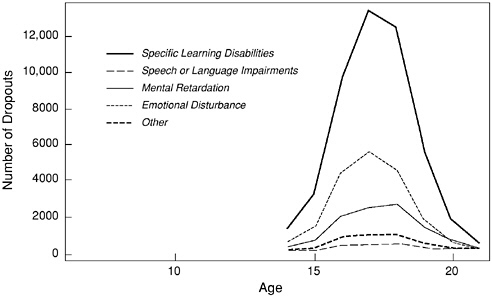
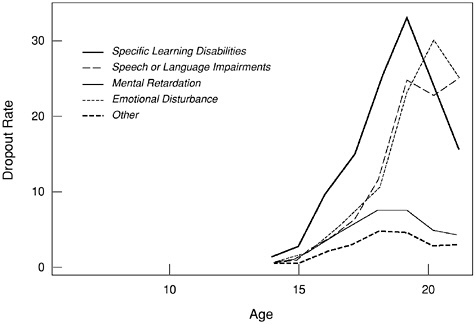
The National Longitudinal Transition Study of Students in Special Education (SRI International, 1995) revealed that after high school, only 73 percent of students with LD were involved in work or educational activities. Furthermore, only 50 percent of students with BD/ED were employed (SRI International, 1995). Dropout rates are particularly high for BD/ED and LD students. As Figure 9-1 shows, almost a third of students in these two categories fail to graduate. This highlights the need for continued attention to instructional research in this area to enhance outcomes for these students.
On a positive note, appropriate interventions that enhance outcomes for students with LD have been identified, and there is substantial research documenting their effectiveness. These findings have brought the field a long way from the “process approaches” to instruction that characterized early research efforts. However, there is still a long way to go. For example, understanding of the importance of task persistence on learning is still emerging. Similarly, strategy instruction is known to be effective, but surprisingly little is known about how to get students to “own” strategies, adapt them, and apply them spontaneously to new contexts. Investigation of these areas and others must continue in order take the field and the students to the next level.
The big principles of instruction presented earlier are not revolutionary. Certainly, these principles are both intuitively reasonable and well recognized as effective instructional practices for students with LD. However, these principles are rarely implemented in classrooms (McIntosh et al., 1993) and certainly less than consistently. The future challenge is to increase the sustained implementation of these documented effective practices in all classrooms.
WHAT WORKS FOR GIFTED STUDENTS?
Most gifted and talented students spend the majority of their time at school in the general education classroom. Relatively little is known about the extent to which instruction is differentiated for them. Westberg and colleagues (1993) conducted structured observations in a national sample of 46 3rd and 4th grade classrooms. The study found very little differentiation of curriculum in any area; in 84 percent of the activities in which students participated, there was no difference at all. The greatest amount of differentiation occurred in mathematics, in which advanced content instruction constituted 11 percent of the mathematics activities (Westberg et al., 1993).
Any evaluation of the relative effectiveness of services or curricular options offered to students identified as gifted, and particularly to minority students who are identified as gifted, is hampered by the relative lack of empirical research on intervention effects. As noted throughout this report, the field of gifted education is characterized by a literature with a very small research base. Rogers (1989) concluded from her review of the major databases that only 32 percent of all citations were reports of research. In 1990, Carter and Swanson identified 1,700 articles focusing on giftedness, winnowed them to prominent, frequently cited articles, and found that only 29 percent were based on data compared with 78 percent of a similarly devised list of articles on learning disabilities. More recent reviews by Ziegler and Raul (2000) of articles published in 1997 and 1998 in the five journals addressing gifted education and by Heller and Schofield (2000), of six journals published between 1992 and 1998 reaffirmed that only a small proportion of publications in gifted education are data based (33 percent in the Ziegler and Raul study and 23 percent in the Heller and Schofield analysis).
Shore et al. (1991) concluded that of 110 recommended practices in gifted education, only 40 percent were supported by empirical evidence in the literature, “most of them marginally, and few of these directly address curriculum, programming or pedagogy” (p. 279). While there has been a body of research that has addressed many of these pedagogical issues related to the gifted population since that time, problems surrounding interpretation of the results prevail. Among those problems is the wide variability in definition of giftedness used in the studies, making comparison and generalization difficult.
A methodological shortcoming of many of the studies is the use of single-sample reporting (lack of control groups or comparison groups) or equal quality control in qualitative studies, which limits interpretation of the findings. For example, Ziegler and Raul (2000) report that only 20 of 90 data-based articles they reviewed included control group information. Furthermore, in many cases the populations studied were derived from groups determined by identification procedures of local school divisions rather than researcher-imposed criteria for giftedness or researcher assessment, leaving exact determination of the groups served as gifted somewhat vague and indeterminate.
The drawing of clear, sound conclusions from the research base is hampered by the intertwined variables of differing program delivery options and curricular offerings and the assessment of broad curricular models with multiple and varied expected outcomes rather than specific instructional strategies. For example, the term “acceleration” may refer to early entrance to kindergarten, grade skipping, or early entrance to college, or it may mean acceleration of the curriculum while maintaining age-expected grade placement (e.g., independently studying algebra while in third grade). While all of
these options involve delivering content that is more advanced than grade-level expectations, the environment for delivery may have widely differing effects on social and emotional adjustment. Similarly, curricular options entitled “enrichment” may use curricular options ranging from a specific curricular model, such as the Schoolwide Enrichment Model (Renzulli and Reis, 1985), to activities structured around a set of guidelines for curricular modification, such as those that grew out of the work of the National/State Leadership Training Institute (Kaplan, 1979), or models for differentiation in the regular classroom (Tomlinson, 1999; Winebrenner, 2000).
Nonetheless, the meta-analyses of grouping programs for gifted students that involve a substantial adjustment of curriculum to match identified student strengths have shown clear positive effects on gifted children (Kulik, 1992; Kulik and Kulik, 1997). Rogers (1991) also concluded that ability grouping for curriculum extension in a pull-out program produces an academic effect size of 0.65.
Research on Curriculum Models
Research studies on several of the major curriculum models has yielded some evidence of success in achieving the goals specified by the models for a particular type of gifted student. We briefly discuss acceleration, schoolwide enrichment, triarchic components, and integrated curriculum models.
Acceleration
Perhaps no other curriculum or programming model has been more widely investigated than acceleration. In this report, acceleration is considered a curriculum model in the sense that whatever the placement of the child, he or she will either be studying the content at a more rapid pace or at a more advanced level than might be expected of a child of that age or normal grade placement. As one example of this model, the effects of the Study of Mathematically Precocious Youth on students who score exceptionally high on the quantitative portion of the SAT as middle-school students have been reported in more than 300 published articles, journals, and books. These reports have ranged from case studies of individual children to long-term follow-ups of the effects on groups of students who had been enrolled in the program. Outcome variables that are assessed in control group studies are represented by a study that compared students who participated in the Johns Hopkins University Center for Talented Youth academic programs with nonparticipating eligible students over a 5-year time period. In general, the Johns Hopkins model has been an out-of-school model with instruction offered through colleges and universities during the summer. Both groups exhibited high academic achievement, but the center youth took more advanced courses at an earlier age and enrolled in more
college courses while in high school (Barnett and Durden, 1993). While many of the other studies do not include control samples, reviewers of this literature conclude that the model garners “long-term positive repeated impacts” (VanTassel-Baska, 2000).
Kulik and Kulik (1984) examined the more general model of acceleration in a meta-analysis of 26 controlled studies in which the achievement of accelerated students in school settings was directly compared with non-accelerated students. The achievement of the accelerants exceeded that of the nonaccelerants by nearly one full grade level. Shore et al. (1991) conclude from their qualitative analysis of the literature that “the academic benefits of acceleration are clear” (p. 79). Many of the same authors that extol the academic benefits of acceleration also point to a lack of evidence that acceleration has deleterious emotional effects. Cornell et al. (1991), however, question that assertion, noting that studies of acceleration have failed to use control groups or have failed to assess adjustment prior to the implementation of acceleration.
School-wide Enrichment Model
Research on the Enrichment Triad Model (Renzulli, 1977), which evolved into the Schoolwide Enrichment Model, has documented that students and teachers both hold positive perceptions of the program (Cooper, 1983; Olenchak and Renzulli, 1989; Reis, 1981). The more liberal definition of giftedness espoused by the model and the more inclusive nature of many of the instructional activities are considered a strong base for talent development (Renzulli and Reis, 1994). The limited research on outcomes has compared only the products of students identified for the program with those identified by more traditional methods (finding no difference in quality) (Reis, 1981) and has documented that students who complete the products characteristic of the model more often initiate similar projects both inside and outside the school setting than did similar students who did not receive such instruction (Starko, 1986).
The Triarchic Model
The Triarchic Componential Model (Sternberg, 1981) was not developed as a curriculum model, but rather as a model of intellectual functioning. In this model, Sternberg (1988) posits that intellectual ability is made up of three components: memory-analytic, creative-synthetic, and practical-contextual. Sternberg and his colleagues have demonstrated that elementary, middle school, and high school students who are instructed in curricular and instructional formats that match exceptional strength in one of the triarchic areas or who excelled in all three perform better on mea-
sures of achievement than students who do not receive matched instruction. (Sternberg and Clinkenbeard 1994; Sternberg et al., 1996, 1998a, b).
Integrated Curriculum Model
A specific unit of science instruction based on another curriculum model (Integrated Curriculum Model) has shown promise for the development of integrated science process skills in gifted children (VanTassel-Baska et al., 1998). Gifted students in classrooms (including homogeneous self-contained classrooms, pull-out classes, cluster-grouped gifted students within heterogeneous classrooms, and heterogeneous classrooms) instructed for 20-36 hours using a problem-based unit earned significantly higher scores (on an assessment of specific skills in the process of designing, collecting data and analyzing data) than an “equally able” (p. 200) comparison group. While the size of the differences between means was quite small, the effect size of 1.3 suggests that this model warrants further consideration. The type of gifted students who benefit from this unit are not described, as they were identified by the schools in which the classrooms were located. Staff of the curriculum development project scored the test protocols, and no independent verification of the model has been conducted. As in the last model, the developers or advocates of the model have done the evaluation. In addition, no systematic investigation of the effects on minority students has been included either within general studies of the model or with designs that specifically included minority students.
Specific Instructional Practices
Compacting
One of the most widely recommended practices for use with academically gifted students is called “compacting.” In this strategy, students are preassessed to determine what parts of a particular unit of instruction (content or skill) a child has already mastered. Then instruction is designed so that students with mastery may extend their learning or accelerate to new learning. For those areas in which mastery is not demonstrated, the students either receive individual instruction or are included in the whole-class instruction on that topic or in that skill. The success of compacting was documented in a study in which treatment students who had had between 40 and 50 percent of their curriculum eliminated did not score significantly differently on achievement measures than students who had experienced the full range of the curriculum. Examination of trends indicates that ceiling effects on the one-year-out-of-level tests may have masked greater gains by the treatment group.
In another out-of-school instructional intervention, young mathematically precocious children began receiving treatment as kindergarteners or 1st graders. Collecting data over a 2-year period, Robinson et al. (1997) demonstrated that a constructivist curriculum (problem posing, multiple solution paths, translating math concepts from one domain to another, solution sharing) delivered 14 times per academic year on Saturday mornings resulted in greater gains by the treatment group on measures of quantitative achievement.
Direct Instruction and Inquiry Development
While any studies of direct instruction versus other models conducted in classroom settings are most likely to include gifted students, the literature most often fails to analyze relative effects of the instructional model on that particular subgroup of students. Judy et al. (1988) investigated the relative effects of direct instruction versus inquiry approaches to learning about analogical reasoning. They found that gifted students benefited more from direct instruction but suggested that the difference may have been because of its novelty to the students. An earlier study of the efficacy of the inquiry development materials developed by Suchman (1962) compared with traditional science activities with high-IQ 7th grade students found no significant differences on measures of critical thinking or science achievement (Youngs and Jones, 1969).
Peer Tutoring
Peer tutoring is a strategy used in many classrooms based on the assumption that all students benefit from the experience. Higher-achieving students, including those who are gifted, presumably gain greater and deeper understanding of the content area taught by virtue of the teaching experience. Feldman et al. (1976) reviewed the empirical data on the effects of peer tutoring on tutors and tutees and found that while the positive effects on low-achieving student tutors were documented, the effects on high-achieving students were not, and the effects on tutees were inconclusive. A review by Arreaga-Mayer et al. (1998) points to the benefits of peer tutoring for several at-risk groups, but no evidence is presented on benefits to the gifted student. The research of Judy et al. (1988) did include gifted students in tutoring situations, who did not benefit from the tutoring experience. Wiegmann et al. (1992), in contrast, found that high-ability students benefited most from playing the student role. Other studies of peer tutoring do not contribute to the understanding of effects on students at the highest level of performance for a variety of reasons (e.g., consideration of the
“high” group as those above the median in a class—Depaulo et al., 1989— or samples of college students).
Training in Mnemonic Strategies
In a comparison of free study and the use of high, medium, and low structure mnemonic strategies with gifted students, their learning of low-level factual recall of information was enhanced by the provision of complex mnemonic strategies. Gifted students transferred those strategies to new learning situations, albeit more effectively with minimal prompting (Scruggs and Mastropieri, 1988; Scruggs et al., 1986).
Grouping Arrangements
The practice of tracking has been much debated. Since the work of Oakes was published in 1985 suggesting that ability grouping “does not appear to be related to either increasing academic achievement or promoting positive attitudes and behavior,” and that “poor and minoirty students seem to have suffered most from tracking,” (p. 191), tracking is widely considered an unacceptable practice. Mosteller et al. (1996) challenge that conclusion. Tracking can refer to very different practices—some of which involve instruction that is carefully tailored to each group, and some involving no instructional differentiation. In their review of the literature, Mosteller and colleagues find some studies that show positive effects when curriculum is differentiated. They argue that more careful experimental research needs to be conducted before firm conclusions can be drawn regarding when and for whom tracking does and does not provide benefits.
Educators in the field of gifted education still recommend “cluster grouping” (ensuring that small groups of gifted students are placed in the context of one classroom) and within-class grouping on the basis of student achievement in specific academic domains for instruction in that content area. Since 1987, there have been four major reviews of the literature on grouping practices (Kulik and Kulik, 1987, 1982; Lou et al., 1996; Slavin, 1987).
Mixed Results of Within-Class Grouping
The earlier meta-analyses of the literature on the relative effects of within-class grouping versus whole-class instruction reported positive effects of grouping practices (Kulik and Kulik, 1987, 1991; Slavin, 1987). The average effect sizes reported in those reviews ranged from 0.32 (Slavin, 1987) to 0.17 (Kulik and Kulik, 1987) in studies that compared grouping with no-grouping arrangements. In a more recent review of the literature on
grouping practices, Lou et al. (1996) examined effect sizes of studies of small-group instruction versus no grouping on several outcome variables and the effects of heterogeneous grouping versus homogeneous grouping on achievement outcomes. They concluded that the overall effect size of small group instruction on achievement was 0.17. “On average, student learning in small groups within classrooms, achieved significantly more than students not learning in small groups” (p. 439).
They also noted that the range of effect sizes indicated great heterogeneity in results. Their analysis of factors affecting the range of effect sizes on achievement produced the finding that in grouping/no-grouping comparisons, the high- and low-ability groups of students demonstrated larger effect sizes than the medium-ability students. Grouping was more effective when the group composition was based on mixed sources of information for assigning groups, when grouping was based on specific or general ability plus other factors, when groups were composed of small numbers (3-4 members), when teachers received extensive or even different training, and when class sizes were either small (less than 25) or large (more than 35). In their analysis of student attitudes and self-concept, they found that within-class grouping resulted in more positive attitudes toward the subject matter and significantly higher general, but not academic, self-concept (d = 0.16).
Furthermore, comparisons of homogeneous versus heterogeneous groupings revealed “no evidence that one form of grouping was uniformly superior for promoting the achievement of all students” (p. 450). The average learner benefited significantly overall from homogeneous groupings; however, the researchers noted that the degree to which instructional materials were tailored appropriately to the groups’ readiness to learn and the peer influences greatly influence student performance in small-group learning situations.
In a comparative study of grouping arrangements, Delcourt et al. (1994) found that students in special schools, separate class programs, and pull-out programs showed higher levels of achievement than students served in within-class programs and students not served in gifted programs. The performance of black students in this study indicated that that program type did not have a differential effect on this subgroup compared with white students. There were no differences across program type or race/ ethnicity for social acceptance. Students from the gifted comparison group, the pull-out programs, and the within-class programs had high perceptions of scholastic abilities. Again, there were no differences between white and black students on this variable. Similarly, Lockart (1996) found significantly higher reading achievement gains among gifted students in homogeneous classrooms or those receiving weekly enrichment in pull-out programs than the gains among gifted students in heterogeneous grouping
arrangements. In both of these studies, initial achievement levels served as covariates in the analyses.
In a study of cluster grouping in one school division, the researchers found positive effects on the achievement of all students in the schools studied compared with a comparison group of students in another district (Gentry and Owen, 1999) but noted that cluster grouping was accompanied by a variety of other factors, such as regrouping for math and reading instruction, that probably also influenced achievement.
Reviews of the practice of cross-age or cross-grade-level grouping also support this practice in general, pointing out that specific practices, for example, grouping in specific content areas such as reading or mathematics, are the most effective (Gutierrez and Slavin, 1992; Kulik, 1992). Kulik notes that the average effect size for gifted students in the two studies that reported separately for ability level was only 0.12.
In an exploratory study of the effects of training in metacognitive awareness in homogeneous and heterogeneous grouping of gifted students, Sheppard and Kanevsky (1999) reported greater awareness of complexity of thinking and greater awareness of differences in thinking related to differences in tasks in both groups. Furthermore, the gifted students in the homogeneous group showed a greater increase in metacognitive awareness; they offered more sophisticated and creative responses; and they spontaneously made connections to and extended each other’s ideas. Students in the heterogeneous group were more hesitant and conforming.
In two studies of attributional retraining of gifted females, Heller and Ziegler (1996) found that in German junior high and college students’ attributions for success and failure in mathematical domains could be modified by systematic feedback, both direct and indirect, and that the changes in attributions resulted in significantly greater gain scores in the domain in which the students were studying. Recent work by Carol Dweck (2000) also suggests the potential of attributional retraining.
Cooperative Learning
One of the commonly accepted guides to classroom practice relies on the assumption that what is good for all students is good for the gifted. And the literature on certain instructional strategies leads the reader to accept that conclusion when it may or may not be an appropriate interpretation. One case in point is the instructional strategy of cooperative learning.
This particular instructional strategy gained widespread recognition as the middle school movement sought ways of maintaining the philosophical principles accompanying heterogeneous classrooms. Claims were made that cooperative grouping provides a vehicle through which all students, includ-
ing the gifted, benefit academically and socially. This overgeneralization is typified by an article in Educational Leadership (a publication widely read by administrators, curriculum supervisors, and teachers) stating that “cooperative learning can benefit all students even those who are low achieving, gifted, or mainstreamed” (Augustine et al., 1990). Middle school educators have accepted the instructional strategy as integral to their classroom practice, despite reported uncertainty and lack of clarity in appropriate practice of the strategy (Tomlinson et al., 1997b).
While numerous studies have shown that, in general, cooperative learning positively affects student achievement and self-esteem, critics have questioned the appropriateness of the practice with gifted students (e.g., Kenny et al., 1995; Robinson, 1991). Their skepticism is based on the paucity of research evidence that supports using cooperative learning with this population, the “basic skill” measures used in most studies, and the use of only traditional classroom instruction for control conditions rather than educational treatments considered more appropriate for gifted students. In some studies, the top 25 percent of the class is considered the high-ability group (e.g., Johnson et al., 1993; Lucker et al., 1976), or high ability is defined as a score above the median on a teacher-made placement test (Mervasch, 1991) or is based on teacher judgement only (Johnson and Johnson, 1981; Johnson et al., 1983).
Furthermore, the practice of heterogeneously grouping students for cooperative learning activities has been questioned. One controlled field experiment assessed the effect on both gifted and nongifted students of both heterogeneous and homogeneous grouping in cooperative learning settings (Kenny et al., 1995). Gifted students outperformed their nongifted peers in all groups and worked at a faster pace and produced more work in homogenous groups, but achievement differed significantly based on group composition. Materials were not tailored for student level of achievement, however, perhaps limiting possible gains. Gifted students’ self-concept did not differ based on group arrangement, but students grouped with gifted students experienced a significant decrease in social but not academic or general self-concept. In this study, students overall perceived each other to be less friendly, less of a teammate, less smart, less likeable, and less of a leader after working in cooperative groups regardless of ability or type of grouping arrangement. Nongifted students were perceived by their peers as less competent on task-related dimensions after being in heterogeneous groups with gifted students.
Minority and Low-Income Students
The literature on curricular or programming options that have been successful in the development of the talents of minority and low-income
students in particular is very limited. The dearth of research on specific interventions is consistent with funding patterns to support identification of and programming for these populations. Patton et al. (1990) surveyed state directors of gifted programs and found that 82.6 percent (43 states) had no specific funds allocated for disadvantaged but gifted students. No state indicated separate program standards. Although most of the model projects funded by the Jacob K. Javits Gifted and Talented Students Education Program focused on the identification and development of giftedness in underserved populations (Ross, 1994), the collection of data with control or comparison groups was rare.
Qualitative analysis of teacher and parent responses has been conducted in case studies of low-income and minority children (Tomlinson et al., 1997a). It indicates that even modest affirmation of talent and intervention, using a model of instruction based on structuring learning experiences to address student interests and cultural differences, which focused on hands-on learning and recognizing varied learning strengths (verbal, spatial, linguistic), brought about transformations in student learning behaviors as perceived by parents and teachers. This approach also resulted in greater identification of these students as gifted in later years.
Initial research using a language arts unit of the Integrated Curriculum Model (discussed in an earlier section) provides preliminary data on effectiveness for lower-SES groups (VanTassel-Baska et al., 2002). It demonstrated equal gains between high-SES students and a low-SES group composed of 72 percent of students on free or reduced lunch status and 67 percent minority (unspecified).
The early intervention projects designed to close the achievement gap between minority and low-SES children have largely focused on the general success of the programs, not on the issue of giftedness. However, Gandara (2000) concludes that these programs in general have an impact on higher-level functioning for children who are not at serous risk (p. 24). In one study that examined the factors associated with particularly high levels of academic achievement of Head Start students in 1st grade, the authors attributed the outcome to features of the home environment (Robinson et al., 1998). Gandara (2000) also concludes from her review of the school reform initiatives at the elementary school level that “school-wide reform efforts directed toward strengthening the curriculum (among other things) can have an impact on raising the achievement of high achieving African-Americans to even higher levels, conceivably to a level commensurate with gifted performance, at least in math” (p. 26). The conclusion she reaches about precollege programs, such as A Better Chance, Upward Bound, and I Have a Dream, is that while these programs are successful in increasing college attendance rates, there is striking “absence of evidence that these programs have a significant impact on academic performance” (p. 29).
There is little evidence of intervention programs at the high school level focused on producing exceptionally high achievers from minority groups (Gandara, 2000). One program showing promise is the Puente project. Larger proportions of students in this program attended college and they “demonstrated significantly higher interest in intellectual activity and in being a good student than matched control students from the same schools” (Gandara et al., 1998).
Benefits of Gifted and Talented Assignment1
Adelman (1999) argues that the rigor of the curriculum to which students are exposed is the best predictor of their long-term outcomes (college attendance and completion) irrespective of race or ethnicity. If he is correct, then one of the most important roles that programs for gifted and talented students can play is in preparing and channeling them into upper-level curricula. As Adelman points out, the best proxy for a rigorous curriculum is taking math courses beyond two years of algebra. Students who take beginning algebra in the 8th grade are on track to take high-level math courses later in high school; those who postpone algebra will have a more difficult time reaching higher-level math in the time remaining to them in high school. Therefore, being assigned to algebra in the 8th grade is an important marker of a student’s assignment to a rigorous curriculum and a good predictor of future academic attainment. Using 8th grade data from the National Education Longitudinal Study database, Rumberger and Gándara (in preparation) asked if students from different ethnic groups who were in gifted programs had an equal chance of being assigned to algebra in the 8th grade. Table 9-7 displays the percentages of students from each major ethnic group who were in gifted and talented programs in the 8th grade and who were also assigned to algebra. All data are based on student self-report.
Evidently being in a gifted and talented program is highly associated with being assigned to algebra in the 8th grade, suggesting that students who have been identified as gifted are generally perceived as being more academically able, at least in mathematics. Students in gifted and talented programs were two to three times more likely to be assigned to algebra than those students who were not in the program. For students not in a gifted program, differences among racial/ethnic groups in the percentage of students assigned to algebra were relatively small. However, there are considerable discrepancies by race/ethnicity in assignment to algebra for students
TABLE 9-7 Percentage of Students in Gifted and Nongifted Programs Who Are Assigned to Algebra in Grade 8 (Percentage)
Ethnicity | Gifted in Grade 8 Algebra | Nongifted in Grade 8 Algebra |
White | 73 | 28 |
Hispanic | 52 | 26 |
Black | 60 | 27 |
Asian | 83 | 35 |
SOURCE: Data from National Education Longitudinal Study of 1988, U.S. Department of Education, National Center for Education Statistics (Gandara, 2000). | ||
who are in a gifted and talented program. Asian and white students are much more likely to be assigned to algebra than are black or Hispanic students. Hispanic students have the least likelihood of being in algebra, whether they are in the program or not. To consider why would this be, Gandara (2000) then examined grades and achievement test scores for each of the groups to determine if students’ grades or test scores were responsible for the discrepancies in algebra placement. Table 9-8 displays the percentages of students falling into each test score quartile and at each of four levels of grade point average by ethnicity.
Grades and test scores probably explain a fair amount of the variance in assignment to algebra in the 8th grade by race/ethnicity. For white students, 82.4 percent had overall grades of 3.0 or higher, and for Asians, 90.4
TABLE 9-8 Percent of Students with Specified Grades and Test Scores by Ethnicity for 8th Grade Gifted and Talented Students
Ethnicity | Test Score 1st Quartile (Low) | Test Score 2nd Quartile | Test Score 3rd Quartile | Test Score 4th Quartile (High) | Grades Less Than 2.0 | Grades 2.0–2.99 | Grades 3.0–3.49 | Grades 3.5+ | ||
White | 18.1 | 25.8 | 30.3 | 23.0 | 2.2 | 15.3 | 20.0 | 62.4 | ||
Hispanic | 29.7 | 22.6 | 22.9 | 20.9 | 6.9 | 24.8 | 28.3 | 40.1 | ||
Black | 39.6 | 19.1 | 13.7 | 18.9 | 17.7 | 30.4 | 22.6 | 29.3 | ||
Asian | 11.4 | 7.7 | 17.0 | 37.9 | 2.2 | 7.5 | 21.7 | 68.7 | ||
SOURCE: Data from National Education Longitudinal Study of 1988, U.S. Department of Education, National Center for Education Statistics (Gandara, 2000). | ||||||||||
had 3.0 or higher, and grades correlate highly with assignment to upper track classes. However, the fact that Hispanic students were less likely than blacks to be assigned to algebra is not explained by grades or test scores, inasmuch as both were higher for Hispanics than for black students. This may be related to other findings noted earlier that teachers are somewhat less likely to identify Hispanic students for gifted classes and that even training in identification procedures does not appear to reduce this problem substantially. The discrepancies in grades among different racial/ethnic groups does raise another fundamental concern, however: Are students from different racial/ethnic groups being selected into gifted and talented programs on the basis of very different criteria? And, if this is the case, does the curriculum to which they are exposed in the program meet their needs equally? Put another way, does the experience of being in a gifted program contribute significantly to closing the high achievement gap between groups? The labeling effect of being identified as gifted may be a factor in some black and Hispanic students being assigned to algebra (given their overall lower grades and test scores). However, it is difficult to know to what extent the benefits of the program extend beyond the label for these underrepresented students.
CONCLUSIONS AND RECOMMENDATIONS
Throughout this chapter we have highlighted what we know about effective instruction for special needs students, particularly those identified as having learning disabilities or emotional disturbance and those identified as gifted and talented. The principles of what constitutes good instruction apply across all students. The generally applicable principle of managing task difficulty might require that the pace of instruction, the amount of repetition, and the speed at which complexity or abstraction can be introduced be made different for students at opposite ends of the achievement spectrum. But all students benefit when, for example, the goals of instruction are explicit and metacognition is incorporated into instruction.
Instructional practices that have been verified as effective in research are not widely used. Making those practices more common is likely to require a research and development effort that does not end with promising findings—but rather begins with them. Those findings will need to be translated into effective curricula and other teaching tools, field-tested in classroom practice, and carefully scaled up when appropriate in a studied fashion. We repeat our recommendation for research and development from Chapter 5, but specify several additional areas that the research and development program should cover.
Federal-Level Recommendations
Recommendation RD.1: We recommend that education research and development, including that related to special and gifted education, be systematically expanded to carry promising findings and validated practices through to classroom applicability. This includes research on scaling up promising practices from research sites to widespread use.
Research on what works in special education offers some important principles, but too few well-tested interventions with a solid evaluation of the conditions under which they work and for whom. In particular, the research base with respect to English language learners needs to be strengthened.
While there has been substantial progress on educational interventions for students who are having difficulty learning to read, little is currently known that can guide educational interventions for the nonresponders to reading interventions. Research needs to attend now to this group of students.
We have given relatively little attention either in research or in program development to the education of gifted and talented students. This research base needs to be strengthened substantially.
Features of cultural sensitivity that have an impact on learning outcomes for minority students have not been rigorously researched and evaluated in classroom settings. While a significant amount has been written about culturally appropriate accommodations, many of the recommendations have no empirical basis (such as matching learning styles) and should be avoided. Shoring up the empirical foundation for culturally sensitive teaching practice should be a research priority.
Development is needed of effective mechanisms for communication of research findings to practitioner, policy, and teacher educator communities.
Successful teaching of all students requires a substantive and complex knowledge base in the subject matter being taught, in how children learn, and in pedagogical strategies to promote learning. Understanding the cultural, gender, and other differences in how individual students learn is also an essential skill for effective teaching. Successful in-school implementation of the types of assessments and interventions the committee proposes to maximize educational effectiveness for all students—including the gifted and talented—those who are low achieving and those with disabilities— requires intensive training based on the scientific evidence supporting those strategies. The changes the committee recommends in this report can occur only if there is a significant cadre of well-prepared education professionals and paraprofessionals to implement them. There is ample evidence, how-
ever, that the growth in knowledge about effective teaching and learning has not begun to significantly impact the practices of educators, administrators, and support services personnel in many schools (National Research Council, 1999c). There is also evidence that part of the reason for the failure of local educators to embrace scientific advances in teaching and learning is the inadequacy of educator preparation programs and professional development activities (Clifford and Guthrie, 1988; Goodlad et al., 1990; National Commission for Teaching and America’s Future, 1996; Orlosky, 1988; Roth, 1999; Zeichner et al., 1996).
Many commentators have asserted that higher education-based educator preparation programs are particularly unresponsive to the scientific advances of the past several decades concerning teaching and learning (Clifford and Guthrie, 1988; Goodlad et al., 1990; Murnane et.al., 1991; National Commission for Teaching and America’s Future, 1996). In fact, many states have begun to rely on alternate routes to educator certification in an effort both to bypass traditional college and university teacher preparation programs and to address a shortage of people interested in education jobs.
These three significant challenges—unresponsive educator preparation programs, a failure to infuse scientific advances into local practice, and the impending shortage of individuals willing to work in education settings— present the potential for significant barriers to the effective implementation of the committee’s recommendations.
Recommendation TQ.4: The committee recommends that a panel be convened in an institutional environment that is protected from political influence to study the variety of programs that now exist to train teachers for general, special, and gifted education; the mechanisms for keeping training programs current and of high quality; the standards and requirements of those programs; the applicability of training to the demands of classroom practice; and the long-term impact of the programs in successfully promoting educational achievement for pre-K, elementary, and secondary students. Direct comparison with other professional fields (e.g., medicine, nursing, law, engineering, accounting) may provide insight in this endeavor applicable to education.
The marketplace will demand responses to the staffing shortage. The need for an assessment of the current state of the nation’s educator preparation mechanisms and recommendations for improvement could be a useful first step toward linking research and practice via effective professional training.