Inspection and Other Strategies for Assuring Quality in Government Construction (1991)
Chapter: APPENDIX E QUALITY PERFORMANCE MEASUREMENT
APPENDIX E
QUALITY PERFORMANCE MEASUREMENT
by William B. Ledbetter
To utilize the Quality Performance Management System, the project management team should divide a project into its major phases (e.g. design, construction, and start-up) and its major disciplines of work (Figure E1). Whenever possible, the disciplines should include those needed for the constructed product, but the number of disciplines should be kept to a minimum. It is very important that the discipline breakdown be consistent throughout ALL phases of the project. For example, an item of work during the design phase which is classified as CIVIL must not be classified as STRUCTURAL during the construction phase. Unless this is rigidly followed, the resulting information will be of little use.
Once a project is divided into its major phases and disciplines, the following three types of costs must be captured:
The normal cost of performing work (which is the productive work).
The quality management costs (by major activity).
The cost of rework (by primary CAUSE).
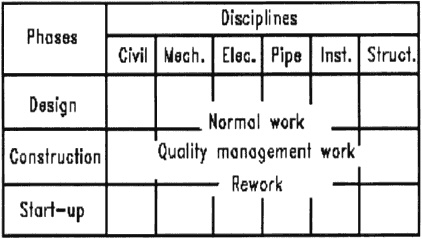
Figure E1Interrelationships Between Project Phases and Major Disciplines
Most organizations use only a handful of activities as quality management, ranging from design and constructibility reviews to inspections and tests. They include both prevention and appraisal activities. Each organization should establish the specific quality management activities deemed necessary and develop clear definitions for them. The Construction Industry Institute (CII) lists 15.37
Rework is categorized by major cause. The cause is coupled with the time of detection (phase) for management action. The CII identifies a total of 26 possible deviation categories (marked "x" in Table E1).38
TABLE E1Major Causes of Rework, by Phase
Primary Cause |
| When Detected (Phase) | ||
(Party and Type) | Design | Procurement | Construction | Start-Up |
Owner Change | x | x | x | x |
Designer Error/Omission |
| x | x | x |
Designer Change | x | x | x | x |
Vendor/Error/Omission | x | x | x | x |
Vendor Change | x | x | x | x |
Construction/Error Omission |
| x | x |
|
Constructor Change |
| x | x |
|
Transporter Error |
| x | x | x |
Organizations wishing to implement QPMS should perform the following steps:
Acquaint all personnel with the purpose and scope of the QPMS. This is a very important step! In many organizations there is a "cultural" bias against this type of effort that must be overcome if QPMS is to be successful. The organization will achieve the desired result only by assuring everyone that the results are only going to be used to help an organization improve the quality of its operations and the products and services it provides to its customers, thereby improving the organization's competitive position. Furthermore, the organization must assure personnel that the system will NOT be used as a tool for punishment.
Examine specific organizational needs for the data. Each organization must adapt QPMS to its specific needs and procedures. The organization decides which project phases are to be tracked and what major disciplines are involved. It should define disciplines clearly for the entire project and use IDENTICAL DISCIPLINE BREAKDOWNS FOR ALL PHASES.
Decide which quality management activities and rework causes should be tracked. Each organization and project is unique. Each organization must identify which quality management activities and rework causes are germane to most of the projects that the organization executes and define them clearly.
Modify the existing accounting system or set up an independent system to implement the QPMS. Some accounting systems are quite flexible and can be adapted to include the QPMS categories. Others will not accommodate the system. If the existing system is not adaptable, it is relatively easy to develop a stand-alone coding system which can be used in conjunction with a personal computer to capture, analyze, and report quality-related data with minimum effort.
Develop forms to capture relevant quality-related data. The organization may use its existing forms, if they track the quality-related data required by QPMS, or develop new forms. Some quality costs, such as those in Table E2, require frequent,
TABLE E2Informational Requirements for Capturing Cost of Quality Data
Personnel times/costs |
By salary or wage scale |
By quality management activity or rework category |
By discipline and phase |
Equipment usage/costs |
By hourly or daily rate |
By quality management activity or rework category |
By discipline and phase |
Materials usage/costs |
By quality management activity or rework category |
By discipline and phase |
even daily, tracking. Fortunately, continual record-keeping of such information is quite common in the construction industry and should represent no great additional burden. Some quality costs may be too small to justify tracking (e.g., materials used in design).


