Livable Cities of the Future: Proceedings of a Symposium Honoring the Legacy of George Bugliarello (2014)
Chapter: The Critical Role of Transportation in Livable Cities of the Future-Patrick J. Foye
The Critical Role of Transportation in Livable Cities of the Future
Patrick J. Foye1
Port Authority of New York and New Jersey
ABSTRACT
The Port Authority of New York and New Jersey is a bistate agency that operates and maintains the following transportation infrastructure assets:
• six bridges and tunnels connecting the two states;
• five airports that constitute the busiest commercial aviation system in the United States;
• two bus terminals, including the Port Authority Bus Terminal, the oldest and busiest bus facility in the world;
• the Port Authority Trans-Hudson (PATH) rail system, used by more than a quarter of a million commuters every weekday;
• marine facilities on both sides of the Hudson River that are the largest destination for cargo on the East Coast and third largest port in the country; and
• the 16-acre World Trade Center site.
This paper presents an overview of Port Authority plans to meet the transportation challenges of the future to ensure that the region, which
___________________
1 This paper was presented at the symposium by John Ma, chief of staff to the executive director, on behalf of Patrick Foye.
encompasses 1,500 square miles in both states, remains livable and economically viable.
INTRODUCTION
It is fitting that this symposium is taking place at the New York University (NYU) Polytechnic Institute because one of the founders of NYU was Albert Gallatin. Aside from his many accomplishments during a distinguished career in public service—as treasury secretary, congressman, and foreign minister to France—Gallatin is also known as the “father of the American road.”
In 1808 he reported to President Thomas Jefferson and the Congress on the state of the nation’s transportation infrastructure—its roads, canals, harbors, and rivers. One of the results of his report was the construction of the Cumberland Road, also known as the National Highway, from Western Maryland to Illinois—the first-ever federal highway project. Gallatin knew that modern, reliable transportation infrastructure was vital to the country’s survival and its economic well-being. At the same time, in his role as treasury secretary, he was a strong advocate of fiscal discipline for our newly formed nation.
The Port Authority shares Gallatin’s views on the need for both modern, reliable transportation infrastructure as a way to promote economic growth and development and fiscal discipline in building and operating that infrastructure. Billions of dollars are required to maintain the Port Authority’s airports, bridges, tunnels, mass transit facilities, and ports—some of which predate the Great Depression—in a state of good repair.
The Port Authority’s facilities enable commerce, create and sustain jobs, and drive economic development throughout the New York–New Jersey region and beyond (Figure 1). Partnerships with the private sector are but one way to maximize the Port Authority’s investment dollars and deliver the greatest benefit to the public that relies on the agency’s critical transportation infrastructure.
This paper addresses
• transportation challenges facing cities today,
• what the Port Authority of New York and New Jersey is doing to meet those challenges as they relate to the bistate region, and
• the role of public-private partnerships in helping the Port Authority address the region’s infrastructure needs to create livable cities.
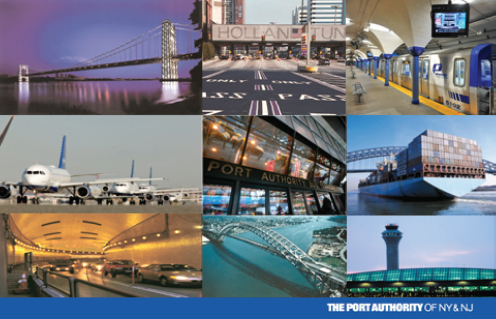
FIGURE 1 The Port Authority of New York and New Jersey
THE WAY FORWARD
Port Authority transportation infrastructure assets support more than 550,000 regional jobs and generate tens of billions of dollars in annual economic activity. But that infrastructure is aging: many bridges and tunnels are more than 80 years old, and many airport terminal facilities are 45 years old or more. The agency has done its job of maintaining them but is facing a cycle of major replacement and renewal. To ensure that the city and entire port region remain livable and competitive—and that people can travel to and from work reliably, fly in and out of the region whether on business or for vacations, and connect with their families in the region and around the country and the world—the Port Authority must renew its transportation infrastructure. To that end, it is updating its $25 billion, 10-year capital plan, the economic impact of which will be the creation of 125,000 direct and indirect jobs, $7.5 billion in wages, and more than $29 billion of economic activity.
But the leap from planning for the future to delivering completed projects requires more than vision and good intentions. If the Port Authority is to meet its obligation to build and maintain key assets in the region’s transportation infrastructure and ensure a sustainable, livable region for the future, it must follow Gallatin’s lead and manage the capital program in a
disciplined, responsible manner. One of the ways to stretch resources is by engaging in partnerships with the private sector wherever feasible. Public-private partnerships will allow the Port Authority to
• reduce the capital burden on its balance sheet,
• lower construction and maintenance costs and risk,
• complete projects faster in some cases, and
• deliver greater value for the public.
The Port Authority is involved in several public-private partnerships that will help improve its transportation infrastructure for the region.
EXAMPLES OF PORT AUTHORITY PUBLIC-PRIVATE PARTNERSHIPS
Goethals Bridge
One public-private partnership supports the Port Authority’s plan to replace the Goethals Bridge (Figure 2). Connecting Staten Island and New Jersey, the Goethals Bridge, opened in 1928, was one of the first bistate projects completed by the Port Authority. It sits at the center of one of the most strategic cargo transportation corridors in the nation—last year $33 billion of goods and more than 28 million vehicles crossed in both directions.
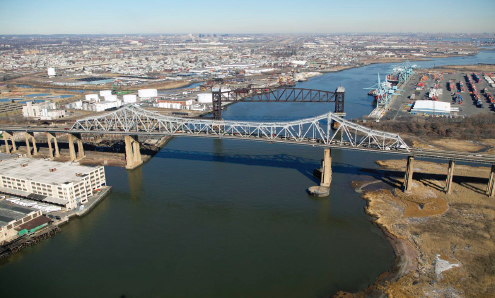
FIGURE 2 Existing Goethals Bridge (Foreground)

FIGURE 3 Proposed Goethals Bridge Replacement
But the bridge is now physically and functionally obsolete and does not meet modern highway standards. The roadway has no median, no shoulders, and 10-foot-wide lanes instead of the 12-foot-wide lanes that are standard today. In inclement weather, motorists must cross at significantly reduced speeds.
A modern replacement Goethals Bridge is critical to the future of the city and the region. The Port Authority is pursuing a public-private partnership for a replacement bridge. Private developer teams are competing to design and build the bridge and then assume responsibility for its maintenance over a 35-year period. The Port Authority will continue to set and collect tolls on the bridge. In terms of economic development, this roughly $1.5 billion project is estimated to create 2,500 direct construction jobs (Figure 3).
The partnership structure requires that the developer secure its own financing, reducing the burden on the Port Authority’s balance sheet. While private financing is often more expensive than Port Authority debt, the project has been designated for a $500 million loan through the US Department of Transportation’s Transportation Infrastructure Finance and Innovation Act (TIFIA). This will allow the developer to borrow money long-term at rates roughly equal to those of US Treasury bonds.
The project has also qualified for private activity bonds, which will allow the private developers to issue tax-exempt bonds to finance the project. The Port Authority will collect toll revenues and repay the developer a fixed annual amount over time once it has finished construction of the
replacement bridge. This arrangement lowers the risk for the Port Authority and gives the private entity a huge incentive to stay on schedule and on budget—if the developer fails to meet established metrics or cuts corners, payment will be reduced.
LaGuardia Airport
The Port Authority is considering a public-private partnership to rebuild LaGuardia Airport’s Central Terminal Building (CTB; Figure 4). Here again is a facility that is old, obsolete, and unable to meet the demands of travelers today, let alone in the future. It is crowded and lacks amenities and retail offerings for travelers, especially after security screening. It consistently ranks among the worst airport terminals in the United States in customer surveys.
The CTB opened in 1964 at the dawn of what was then called the “jet age.” DC-9s were the most modern aircraft and the terminal was designed to accommodate 8 million passengers annually. Last year, about 12 million passengers passed through it, and the number is expected to reach 15 million by 2020.
Beyond capacity issues, the gates are not configured to handle today’s larger, wider aircraft, resulting in costly delays. How costly? A study by the Partnership for New York City found that delays at the Port Authority’s three

FIGURE 4 Current LaGuardia Central Terminal Building
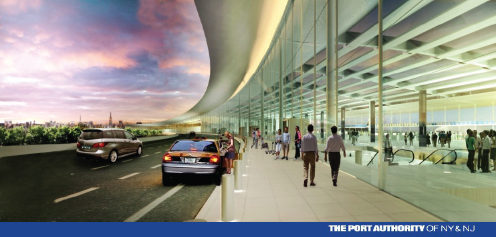
FIGURE 5 Rendering of Proposed Update of the LaGuardia Central Terminal Building
main airports—JFK, LaGuardia, and Newark-Liberty—cost the regional economy $2.6 billion annually.
In December 2011 the Port Authority issued a request for information from developers and received proposals from several teams. The CTB upgrade is estimated as a $3.6 billion project that will create roughly 6,300 direct jobs and generate hundreds of millions of dollars in wages over the six to eight years it will take to complete (Figure 5).
World Trade Center
The Port Authority is partnering with the Durst Organization to bring tenants and jobs to a new World Trade Center, transforming the 16-acre site in lower Manhattan into an urban beacon of hope, freedom, and sustainability for the future (Figure 6). The building is more than 55 percent leased more than a year before completion. The restored 16-acre site will feature almost half a million square feet of retail space, the 9/11 Memorial and Museum, and a state-of-the-art transportation hub that will link PATH trains, 13 subway lines, and the Battery Park City Ferry Terminal. Unlike the original World Trade Center site, which was a “superblock” without streets across the site, the rebuilt site will feature a semi-open street grid, facilitating improved access to the buildings and integration of the site into the surrounding neighborhoods.
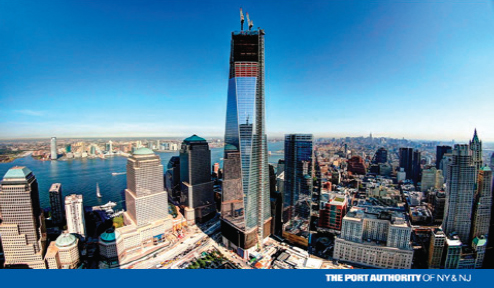
FIGURE 6 One World Trade Center
Understanding that livable cities of the future must be sustainable, the Port Authority is making One World Trade Center one of the most environmentally friendly buildings of its size anywhere. It is seeking LEED Gold Certification, and the building will feature state-of-the-art technologies to reduce carbon emissions, energy use, and environmental impact; in fact, it has been designed to reduce whole building energy consumption to 20 percent below New York State Energy Code requirements.
MEASURES IN SUPPORT OF SUSTAINABILITY
The Port Authority is committed to sustainable infrastructure investment and responsible environmental stewardship in all its facilities. For example, in August 2012 the Port Authority Board approved a $4.9 million Clean Vessel Incentive Program that encourages ship operators to improve engines, use cleaner fuels, and upgrade technology to reduce emissions. The program is expected to eliminate almost 500 tons of air pollutants annually.
In Brooklyn, the Port Authority is funding the first onshore port power facility serving ships at the cruise terminal: ships can turn off their engines while docked and use a land-based electrical grid to run their systems. This project will remove 1,500 tons of carbon dioxide, 95 tons of nitrous oxide, and 6.5 tons of particulate matter from the air annually.
The Port Authority’s $60 million Hudson-Raritan Estuary Resource Program has protected more than 340 acres for public use. The program preserves open space habitat and wetlands on both sides of the Hudson.
CLOSING REMARKS
The Port Authority is responsible for the transportation infrastructure that drives economic development and prosperity in our region. It is committed to accomplishing the dual mission of sustainably meeting the transportation needs of the region, now and in the future, while serving as a catalyst for jobs and economic development. Without sustainable transportation systems, there won’t be livable cities.


