Communicating Chemistry: A Framework for Sharing Science: A Practical Evidence-Based Guide (2016)
Chapter: ELEMENT 2: Identify and familiarize yourself with your resources.
ELEMENT 2
Identify and familiarize yourself with your resources.
Once the participants and goals have been identified, the next step is to identify the resources available for implementation of your event. Creating an inventory of available resources will assist in planning and in identifying gaps or opportunities. The following questions can guide you as you consider the resources you need.
Are there organizations I can partner with?
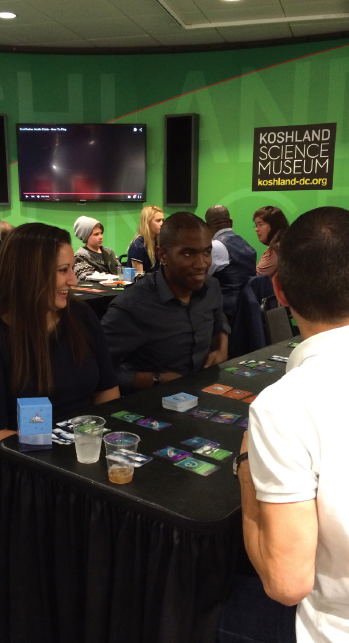
One of the best ways to access resources is to find a group or organization to partner with. Partnering with an organization such as a science center could allow a chemist to safely implement a demonstration or hands-on activity, for example. Organizations such as the American Chemical Society and the Center for Advancement of Informal Science Education may help you identify potential collaborators and opportunities to obtain funds to support the activity. Local resources—such as a Boys & Girls Club, a library, a science or children’s
museum, or a community group—may have opportunities to participate in an existing program or to facilitate a one-time event. Potential collaborators might also be experts in informal science education or evaluation who regularly engage in the development or assessment of informal science communication activities and also promote them.
Consider collaborating with a local nongovernmental organization experienced in communicating about the environmental impacts of fertilizers. For example, the Chesapeake Bay Foundation is a conservation organization that advocates for science-based solutions to the pollution degrading the Chesapeake Bay and its rivers and streams. The organization regularly engages in outreach activities and runs several educational programs—from field experiences for students to teacher professional development classes—to boost understanding of the Bay’s poor health and of actions to improve water quality in local communities. Perhaps this organization could provide ideas for hands-on demonstrations, worksheets and online tools for participants, and also expertise in the types of participants who will likely attend and how best to work with them.
What physical resources are available, such as space, how is the space set up, and what are the safety considerations?
For activities that are in-person events (as opposed to virtual online events), the size of the event space, the number of staff, the allotted time, and monetary needs are traditional considerations that influence the type and scope of a communication activity. It is crucial to consider safety requirements for any communication activity that involves a demonstration or interactive component. Consider whether
there is adequate space for participants to handle materials and whether adequate safety equipment is available. Are seats fixed in place (as is common in auditoriums) or can they be shifted to provide a buffer of safety? Will there be sufficient time to set up and to clean up after the demonstration? Consider special audience needs as well. Other considerations can include availability of a sign-language interpreter or webcasting capabilities, which would add new dimensions to an activity.
What resources will you need for your presentation on fertilizers and their impacts? One of the outcomes you developed is to teach soil testing at the event—is the space’s layout appropriate for a demonstration or can it be configured to be so? Will you need help with the demonstration, such as additional staff or possibly audience members? Or, could it be a hands-on activity involving the participants? This might only be possible with a smaller number of participants and would require additional resources, such as multiple samples and testing kits. You could also consider collaborating with an environmental researcher who is an expert on the local lake and who can demonstrate eutrophication in a way that you cannot.


