Practices and Standards for Plugging Orphaned and Abandoned Hydrocarbon Wells: Proceedings of a Workshop (2025)
Chapter: 1 Introduction
1
Introduction
WORKSHOP OVERVIEW
When oil and gas production began in the 19th century in North America, standards and regulations for the drilling and plugging of wells had not yet been developed. Over time, many of these and other wells were abandoned—unplugged, or not plugged to modern standards, and have sat idle for an extended, possibly unknown, period of time. These wells might not have been originally operated and maintained in accordance with existing statutes and regulations and, due to degradation over time and potential improper prior operations, they can emit methane, contaminate groundwater, and impact ecosystems, creating risks for both the environment and the public. Orphaned wells are documented, unplugged, and nonproducing with no known owner or operator capable of properly closing the well. A documented well has a record establishing the existence and location. Approximately 150,000 orphaned wells have been identified on state, private, and federal lands. Undocumented wells are abandoned wells for which there is limited or no knowledge, including location, and are not in any regulatory agency’s inventory or for which the regulatory agency has some evidence, but requires additional research or investigation to verify. Undocumented wells represent a vast uncertainty not just in remediating individual wells, but also for estimating the cost of addressing the problem nationwide. This uncertainty is highlighted by the wide range in the number of estimated undocumented wells specified in the presentations from 250,000 to 800,000. For the purposes of this workshop and proceedings, “wells” refer to hydrocarbon wells, unless otherwise explicitly specified.
As new streams of funding continue to emerge, states are expanding their efforts to address the health and safety concerns presented by these wells, while encountering unique challenges and opportunities related to the wells themselves, surrounding areas, and broader well-plugging requirements. To explore and share the variety of existing
procedures and standards for plugging orphaned and abandoned wells, including current best practices for well-plugging technologies, the National Academies of Sciences, Engineering, and Medicine convened a workshop on July 18–19, 2024.1 Sponsored by the Department of the Interior’s (DOI’s) Orphaned Wells Program Office (OWPO), the workshop included members of the federal government, state leaders, tribal representatives, industry experts, and other affected parties. This proceedings has been prepared by the workshop rapporteurs as a factual summary of what occurred at the workshop. The planning committee’s role was limited to planning and convening the workshop (see Appendix C for biographical sketches of the workshop planning committee members). The views contained in the proceedings are those of individual workshop participants and do not necessarily represent the views of all workshop participants, the planning committee, or the National Academies of Sciences, Engineering, and Medicine.
After welcoming the attendees to the event, workshop planning committee chair Mary Feeley, formerly of ExxonMobil, explained the goals of the workshop:
- Discuss historic and current well-plugging standards as well as design and operational practices used in the United States;
- Assess how standards and practices differ based on well age, well depth, well location, material specification, geologic and geophysical environment, production type, distance to populated areas, and remediation and restoration requirements;
- Consider how cost, technology, and other factors impact well-plugging plans; and
- Examine the environmental benefits of and the mitigation of adverse environmental impacts from well-plugging (see Appendix A for the workshop’s full statement of task and Appendix B for the workshop agenda).
Feeley indicated that in addition to supporting the work of both OWPO and the individual states, the information gathered during this workshop will help inform an upcoming National Academies consensus study, Technologies and Practices for Plugging and Remediating Orphaned and Abandoned Oil and Gas Wells.2 The consensus study will examine the following:
- Current and emerging plugging and abandonment technologies, best practices, equipment, and materials for well characterization, wellbore plugging and barrier placement, wellbore integrity and verification, and durability and lifespan;
- Evaluate unexpected or unique circumstances that necessitate varying criteria and standards, including engineering design, costs, logistics, and technical management;
___________________
1 To view videos of the workshop presentations and discussions, see https://www.nationalacademies.org/event/42861_07-2024_practices-and-standards-for-plugging-orphaned-and-abandoned-hydrocarbon-wells-a-workshop.
2 For more information about the consensus study, see https://www.nationalacademies.org/our-work/technologies-and-practices-for-plugging-and-remediating-orphaned-and-abandoned-oil-and-gas-wells.
- Assess available data on potential causes, frequency, consequences, and remediation of plug failures;
- Examine post-plugging monitoring techniques, approaches, and technologies that are or will be important for the long-term protection of both the environment and public health and safety; and
- Identify technology, materials, and policies that warrant further research and that could contribute to the success of well-plugging and abandonment efforts by industry, states, tribes, and federal agencies.
The consensus study report could inform a technical approach for implementing orphaned well clean-up, as required by the Bipartisan Infrastructure Law.3
SPONSOR REMARKS
To provide important context for the workshop, Kimbra Davis, DOI, presented an overview of OWPO. She explained that on November 15, 2021, President Biden signed the Infrastructure Investment and Jobs Act (IIJA) into law, providing ~$4.7 billion over 9 years for states, tribes, and federal agencies to plug, remediate, and restore orphaned wells and well sites across the United States. OWPO was established in January 2023, she noted, to ensure that this investment is implemented effectively and efficiently to “transform a legacy of environmental pollution” across the United States into a “legacy of environmental stewardship.” Of the $4.7 billion, ~$4.3 billion was set aside for wells on state and private lands, $250 million was allocated for activities on federal lands, and $150 million was reserved for activities on tribal lands.
Individual states, federal agencies, and tribes often have different procedures, standards, and requirements for plugging wells, and Davis noted that this workshop could provide an opportunity to discuss challenges and opportunities, share best practices, and learn from one another. She stressed that OWPO’s goal is to understand the current landscape of well-plugging across the United States, why particular jurisdictions follow certain requirements and implement unique processes for well-plugging, and the merits of each state’s approach in terms of environmental health and safety.
As of late 2021, states had identified almost 130,000 orphaned wells on state and private lands, and another 16,000 orphaned wells have been identified on federal lands—and both numbers are expected to continue to increase as more are identified. Davis suggested that sustained collaborative efforts among federal, state, and local officials; academia; nonprofits; industry; and the public to address the orphaned well problem are essential.
Davis indicated that the program as of March 31, 2024, had plugged more than 7,700 orphaned wells on state and private lands and as of July 18, 2024, awarded $960 million to 25 states. Additionally, $145 million was distributed to five federal land management agencies—Bureau of Land Management, National Park Service, Fish and Wildlife Service, Forest Service, and Bureau of Safety and Environmental
___________________
3 The Bipartisan Infrastructure Law is also referred to as the Infrastructure Investment and Jobs Act.
Enforcement—that plan to plug nearly 600 orphaned wells on public lands and waters. (As of July 18, 2024, 190 of these wells had been plugged.) Furthermore, $40 million has been awarded to tribes to begin plugging wells later in 2024. In total, nearly 8,000 orphaned wells have been plugged with IIJA funds. She added that to complete this work, numerous jobs were created in both urban and rural areas across the United States, where millions of people live near wells (see Figure 1-1) that were posing serious health and safety risks.
Davis underscored that if orphaned wells are not plugged, methane can leak into the atmosphere and exacerbate climate change. Local air pollution issues also can arise if other hydrocarbons are leaking from these wells. Orphaned wells can prevent communities from recognizing the full economic potential of their land, and she noted that implementation of the Orphaned Wells Program thus presents both an “enormous challenge and a transformative opportunity.”
ORGANIZATION OF THIS PROCEEDINGS
The chapters that follow summarize the presentations and discussions among workshop speakers and participants. Chapter 2 offers perspectives on the costs, challenges, and benefits of plugging orphaned and abandoned wells, including a discussion of various states’ well-plugging and abandonment standards and procedures.4 Chapter 3 describes how wellbore integrity and subsurface conditions are evaluated for well-plugging prioritization. Chapter 4 considers wellbore procedures and best practices, and Chapter 5 focuses on issues related to environmental risks and monitoring. Chapter 6 explores opportunities for and experiences with remediation, reclamation, and restoration. Finally, Chapter 7 highlights advances in plugging and abandonment for idled wells, and Chapter 8 presents examples of key workshop themes.
___________________
4 The National Academies commissioned a white paper that compiles state practices and discusses statutory and regulatory standards, methods, and design of plugging plans and requirements for well-plugging activities. This white paper is available at https://nap.nationalacademies.org/resource/28035/White_Paper_Orphaned_Wells_Workshop_Proceedings.pdf.
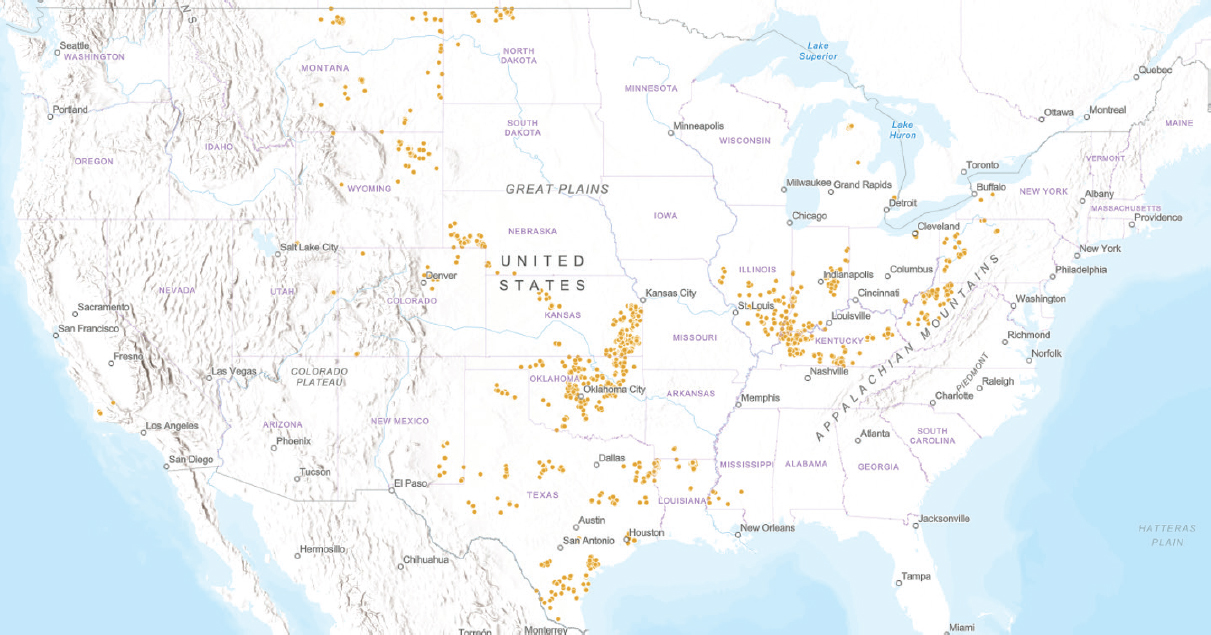
SOURCE: DOI Orphaned Wells Program Office, 2024.


