Recently completed
Topics
This consensus study committee will consider approaches to understanding and assessing drought in the United States. This review will encompass data sources, metrics, and indicators for characterizing drought in the context of changing drought baselines and trends. The committee will recommend a framework for incorporating non-stationarity considerations into drought assessment in a changing climate, for use across a range of geographic regions and of spatial and temporal scales and to inform decision-making for short-term risk management and long-term adaptation.
News and updates
U.S. Needs New Drought Assessment Framework as Droughts Become More Severe and Unpredictable
News Release
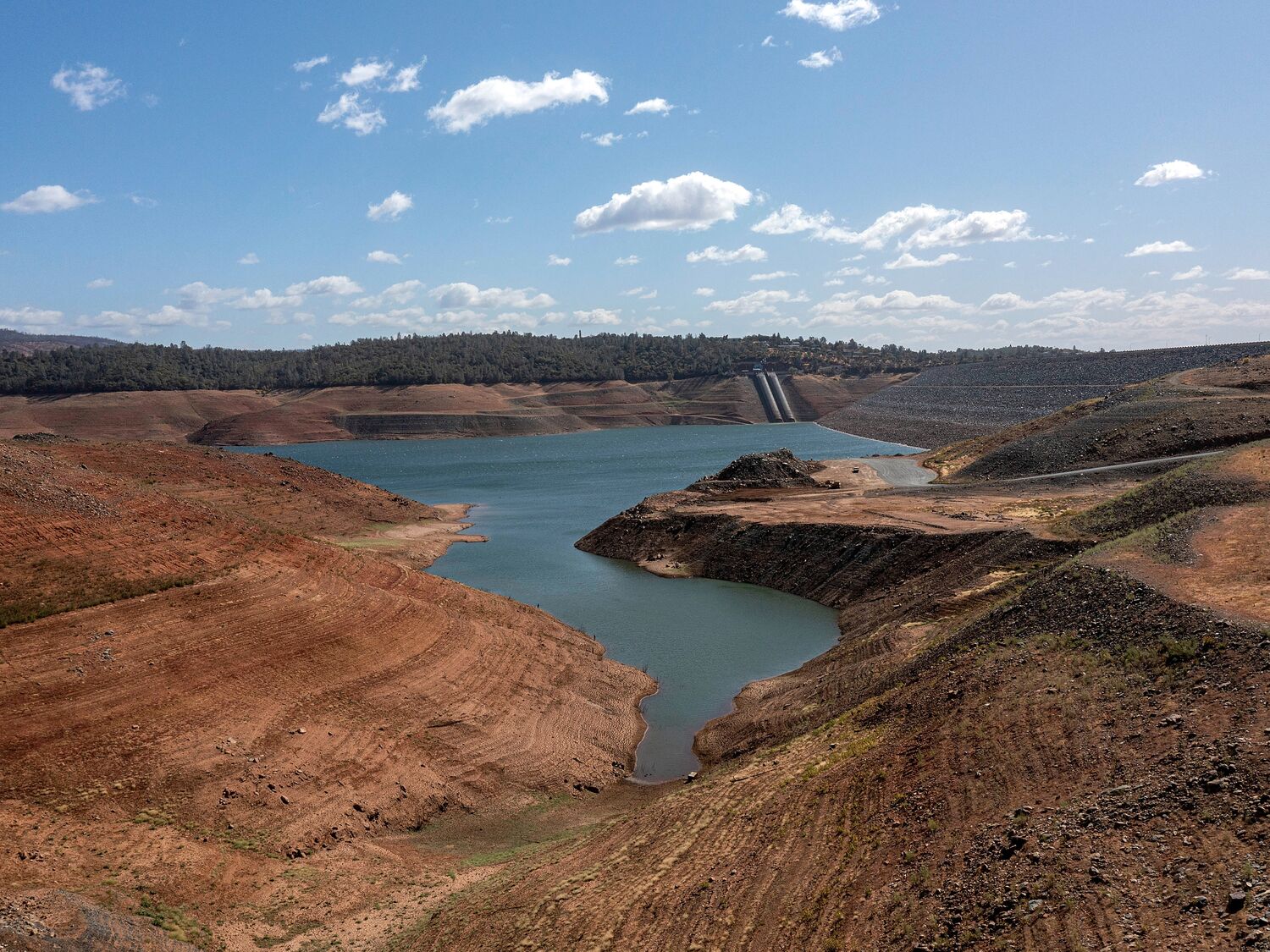
As droughts in the United States become more frequent and longer-lasting, new assessment tools are needed. A new National Academies report examines how the field of drought assessment can better account for shifting drought conditions and proposes a framework to support drought monitoring, planning, and decision-making to meet future challenges.
Featured publication
Consensus Study Report
·2026
Since the beginning of the twenty-first century, the U.S. Southwest has been weathering the nation's first multidecadal megadrought, the most severe of many such droughts over the past 1,200 years. Droughts are becoming more frequent and longer-lasting, occurring against a backdrop of long-term regi...
View details
Statement of Task
The National Academies of Sciences, Engineering, and Medicine will convene an ad hoc committee to consider approaches for future drought characterization, assessment, and response.
More specifically, the study will:
- Discuss the drought-to-aridification continuum and differentiate among drought, multidecadal drought, and aridification. How do factors such as periods of record, drought type, regionality, and seasonality affect these classifications? How do current periods of record affect drought outlooks and predictions?
- Evaluate data sources currently used for drought assessment. What data will be needed to address non-stationarity? What methodologies can be used to improve future drought assessment, taking into account non-stationarity?
- Discuss metrics and indicators used in drought assessment and identify opportunities to inform decision making, including increasing integration of non-stationarity and incorporating uncertainty and/or confidence.
- Review existing and emerging approaches, both nationally and globally, for incorporating non-stationarity in drought assessment. Are some approaches more appropriate for specific regions and/or time periods?
The committee will recommend a framework for incorporating non-stationarity considerations into drought assessment, for use across a range of geographic regions and of spatial and temporal scales.
Contributors
Committee
Chair
Member
Member
Member
Member
Member
Member
Member
Member
Member
Member
Member
Sponsors
Department of Commerce
Interstate Council on Water Policy
National Academies Presidents’ Committee
Staff
Steven Stichter
Lead
Charles Burgis
Dominique Jenkins
Major units and sub-units
Center for Health, People, and Places
Lead
Earth Systems and Resources Program Area
Lead