Wormwood Forest: A Natural History of Chernobyl (2005)
Chapter: 4 Nuclear Sanctuary
4
Nuclear Sanctuary
I will let loose wild animals against you and they shall bereave you of your children and destroy your livestock; they shall make you few in number, and your roads shall be deserted.
Leviticus 26:22
Rats and roaches—in fiction, movies, and Internet chat sites, these familiar pests are ubiquitous parts of imagined postnuclear landscapes, their adaptability and fecundity supposedly giving them the ability that humans and more cuddly creatures lack, to survive in radioactive wastelands.
Although the conventional explosion at Chernobyl didn’t have the blast of a nuclear bomb, much less the unimaginable devastation of all-out nuclear war, the dread permeating the most devastating portraits of doomsday are less connected with the immediate effects of a nuclear exchange. Indeed, most nuclear war fiction has devoted little attention to the fireballs of fusion blasts and has focused more on the fate of survivors in the deadly irradiated environment or on the lives of some distant descendants, for whom the nuclear war is ancient history but the effects of its lingering radiation continue to devastate.
Both reflecting and fueling popular imagination, these postnuclear badlands are often populated by fantastic and repellant mutants—both human and not—some enhanced with superpowers such as telepathy or grown to gigantic size. But even rodents and insects of standard size crawl across the radioactive rubble in the doomsday visions of scientific minds, like that of Stanford University biologist Paul R. Ehrlich,
who once gloomily predicted a postapocalyptic world: “There may be a few [human] survivors in very deep, very well-stocked shelters, but there will be nothing for them to do when they come out. They’ll mostly serve as food for cockroaches and rats that are likely to survive the war much better than human beings.”
As if to confirm all of the darkest scenarios, rodents actually did have a population boom after Chernobyl. In 1987 and 1988, house and field mice seemed poised to overrun the evacuated zone when their numbers exploded from about 20 to 30 per hectare to as many as 2,500! Evidently attracted by plentiful food in the unharvested fields left behind after the evacuation, the rodent problem became so acute that some zone authorities wanted to poison them. But biologists stepped in and predicted that the population would soon stabilize on its own. And that is exactly what happened.
First the population explosion attracted predators: foxes, weasels, and especially raptors. In just one square mile of meadow near the buried village of Kopachi in the 10-kilometer zone, there were enough rodents to support marsh harriers and short-eared owls, kestrels, and falcons.
Still, there were too many mice and there wasn’t enough in the fields for all of them to eat. But these critters have small ranges and couldn’t go on long treks in search of food. Nor could they escape into the neighboring forest to which they are not adapted. So, in the autumn of 1988, most of the mice starved. This, in turn, caused another temporary boom in the number of meat-eating scavengers that descended on the bonanza of dead. But once the fields were cleansed of rodent corpses, nature’s sanitation workers also left. It was one of the first examples of how, in the absence of human intervention, nature in the zone could recover its balance.
It is a balance that now includes radiation, though even this is a mutable quantity that depends on the multitude of factors affecting any ecosystem. Radionuclides migrate with water and wind. Levels of contamination in animals have varied over the years as some radionuclides decayed and others made their way through the food chain, often in unpredictable ways. Thus, although the amount of radionuclides in animals decreased steadily in the first three years after the disaster, it started rising again in the fourth year with a peak in 1992-1994. This anomaly has yet to be fully explained. One theory is that the pine
needles that bore the brunt of the initial fallout took six to eight years to decompose fully. So they began adding their considerable stores of radionuclides to the food chain only in 1992. But this theory doesn’t explain why moose shot in Belarus in 1992 had the lowest levels of radioactivity of the postdisaster years—though it could be because Belarus shoots few zone animals for science annually, so the samples aren’t statistically representative.
In fact, very little is known about the radioactive animals of Chernobyl.
What is known is that there are many, many more of them than before the disaster.
PLUTONIUM SAFARI
The zone in late autumn was a subtle landscape, painted with a cool palette of green pines, pale yellow fields, and silvery birches capped with a filigree of copper branches. Bare willows provided unexpectedly bright splashes of orange that framed the road on an unusually sunny and warm November afternoon.
I was in an old green Soviet army jeep that spouted exhaust fumes as it carried my companions and me over a narrow, potholed road sprouting shrubs and scattered with moss rugs. We were in a deep-orange part of the radiation maps, where the 1986 winds dumped 20 to 50 curies of cesium-137 on every square kilometer.
After passing a battered white sign for Zapillya—about five miles west of Chornobyl—the driver turned left onto a sandy trail. It was a fire line that was supposed to lead us to what everyone hoped would be glimpses of the zone’s big game. Actually, I tried to keep my hopes low. Large animals are generally shy. Despite many trips to the zone, the only large animal I had seen was the moose in Belarus. On the Ukrainian side of the border, the largest wild mammal I had seen was a fox pouncing in a field. But at the very least, I thought I might learn a little about tracking.
My guide that day was Oleksandr Berovsky, whom everyone called Sasha. A strapping 29-year-old with buzz-cut blond hair, Sasha was captain of the Chornobyl fire department. But his passion was animals. A veterinarian by training who became a fireman only as an alternative to the military draft, Sasha satisfied his original calling by
raising pheasants, quails, ducks, and rabbits in the fire department’s outbuildings and spending his free time riding the department’s horses in the zone’s wild lands.
Yuri Kolesnik, another fireman with a neat black mustache, often joined him on those trail rides and had joined us on our wildlife expedition.
We were following the jeep tracks that Sasha had left the previous day, when he spotted a lot of wildlife. Since most wild animals don’t wander aimlessly around their territory but follow a network of paths that they know intimately and can use to escape if necessary, it made sense for us to follow his tracks. Soon enough, we left the smooth sand and turned onto a narrow, rutted path through brush and forest.
“You can only do this ride in a UAZ,” said Sasha after the jeep bounced its way over a rough patch through a thick jumble of branches that slapped the windows. It was similar to the jeep that Palytayev drove in Belarus, but in worse condition.
“Or an SUV,” I said.
“It would get all scratched from the overgrowth. That would be a shame. With the UAZ, it doesn’t matter,” said Sasha, who had offered the UAZ after hearing that I intended to drive my 1998 Nissan on the expedition. Actually, I thought that we were going to drive into the woods and then go on foot to look for tracks. Evidently, that was not Sasha’s plan, at least not the way I imagined—and it was a good thing, too.
“This was once a rye farm,” Sasha explained when we came upon a field of tall grasses and bushes. Then he jerked his head towards the distance.
“There are some roe deer,” he said, using the Ukrainian word koza. Koza actually means “goat,” but it is a shortened version of kosuli, the Ukrainian name for roe deer. It is also the meaning of their Latin name Capreolus capreolus—“small goat.” In fact, the graceful roe deer with their small forked antlers are about the size of goats, which is how I excused my inability to see them despite all of Sasha’s pointing.
Everyone else saw them, but they were all holding binoculars while I was holding my notebook and pen—with which I scribbled almost indecipherable notes in the bouncing jeep—and a new digital recorder that I was using for the first time and very much hoped was recording all that my pen was missing.
We got out of the jeep and Sasha kept asking me: “Do you see them?”
But the deer blended in perfectly with the surrounding field. No matter how hard I squinted, I only saw brownish forms that could have been bushes for all that I could tell. I spotted them only when they ran off, their creamy rumps bounding like flags over the brush.
“There they go!” I exclaimed, thrilled to have seen any wild animals at all.
They were, like all living things in the zone, radioactive, though different species display different seasonal fluctuations depending on what they eat. Roe deer’s radioactivity levels are highest in the spring and summer, when they tend to feed on grasses instead of their winter diet of buds and shoots. Being physiologically active, buds and new twigs concentrate radionuclides. But grass absorbs them even more because its shallow roots penetrate only the upper layers of soil, where most radionuclides are concentrated.
In a 1992-1993 study of zone game, a kilo of some roe deer’s meat contained nearly 300,000 becquerels of cesium-137! This was during the anomalous period of high radioactivity levels that may have been caused by decaying pine needles. Radionuclide concentrations have been dropping since then to an average of 30,000 becquerels in 1997 and 7,400 in 2000, although such levels are still dangerous. In Belarus, the maximum permissible amount of cesium in a kilogram of game meat is 500 becquerels. Ukraine doesn’t distinguish between sources of meat and sets a maximum limit of 200 becquerels.
Grazing animals don’t only eat radionuclides that have been taken up by plants. They also pick up cesium and strontium directly from the soil that they eat when they pull up plants together with their roots. Indeed, these root layers contain the most radionuclides, including transuranic elements such plutonium and americium that don’t get into plants very much through their roots. One reason for this is because they don’t mimic any nutritious elements like calcium or potassium. Moreover, plutonium readily and strongly bonds to other atoms to make molecules. But since chemical elements get into plants’ roots only in their ionic form, as positively or negatively charged atoms—and not molecules—plutonium’s path into plants and into the animals that eat them is usually chemically blocked. Plutonium does, however, get on plants when the wind kicks up dust.
With a half-life of 24,110 years, plutonium-239 gets a lot of attention in antinuclear literature because, among other reasons, no imaginable container will remain intact long enough for its safe disposal and storage. But plutonium-240 also has a not-short half-life of 6,564 years, while the half-life of plutonium-241 (about 14 years) means that it is far more radioactive than either of the others.
We were driving through a region where each square meter got sprinkled with about 3,000 becquerels of plutonium-239 and 240. This wasn’t too bad, considering that each square meter of the Red Forest got more than 300 times as much, or about 1 million becquerels per square meter.
But you won’t find plutonium-241 on the colorful contamination maps, though it is by far the most abundant of the plutonium isotopes that Chernobyl released. The amount of plutonium-241 is from 50 to 100 times as high as the 238, 239, and 240 isotopes combined. But although plutonium-241 can emit an alpha particle, it usually decays by way of a weak beta particle that is hard to detect, making the isotope very difficult to find and map.
Although they are heavy metals and thus toxic, the plutonium isotopes are not, as common myth would have it, the “deadliest substance known to man.” They are actually less deadly than some poisons, such as arsenic, that don’t provoke such existential dread. Their radioactivity is more dangerous than their chemical toxicity, but even that depends on the type of isotope and where it is located.
Plutonium alpha particles are very energetic. Plutonium-239’s alpha is four-and-a-half times as powerful as cesium-137’s beta, and its two protons give the particle a double positive charge that rips electrons off neighboring atoms. At the same time, however, the alpha particle is heavy and the nucleus that emits it is surrounded by negatively charged electrons, providing a kind of subatomic friction that drags on the alpha and begins to slow it down almost immediately. External alpha radiation can’t penetrate more than a few microns of skin before stopping, picking up some loose electrons and becoming harmless helium. So however counterintuitive it may seem, merely walking around a field of plutonium is actually not very dangerous.
The element does, however, become dangerous if it is inhaled. In the early period after the disaster, when much of the contamination—including plutonium—was on the surface, it could be inhaled easily. Now that nearly all of the radionuclides have sunk more deeply into
the soil, the transuranic elements can still occasionally be inhaled, especially in dry and windy weather that kicks up surface dust. But now they get mainly into animals that consume some soil with their food.
The plutonium in nuclear fuel is very insoluble, and the body excretes 99.9999 percent of it if it is eaten. But the fate of plutonium in an animal depends largely on its size. Nano-sized particles, a billionth of a meter in size, are so small that they dissolve into the bloodstream and get metabolized. But since the body has no use for plutonium or anything resembling it, most of the stuff eventually gets excreted, although a tiny fraction of a percent concentrates in the liver and bone. Large pieces, such as specks of dust, are treated like dirt and get excreted or expelled by coughing. The medium-sized particles, a millionth of a meter in size, are the most problematic. There is no reaction in the body to get rid of them, so they tend to stay a long time, shooting alpha particles at surrounding tissue.
In living tissue, which is mostly water, alpha particles usually travel less than the diameter of some cells before stopping. But their energy is so intense that they are like bombs thrown into a small room, destroying everything. Inhaled plutonium is especially dangerous because it lodges in the lungs where it increases the risk of lung cancer in laboratory animals. How much it increases that risk in humans is a matter of some debate, with the nuclear industry citing low numbers and their opponents asserting high ones.
Although all plutonium isotopes can emit alpha radiation, plutonium-241 can also decay by way of a beta particle. When this happens, it produces americium-241, which is much more worrisome than the original plutonium-241. Americium is more soluble than plutonium, which means that it moves more easily with water through the food chain. Its alpha radiation is even more powerful than plutonium’s, and it decays to neptunium-237, which also decays by way of an energetic alpha particle and has a half-life of more than 2 million years. The zone’s americium-241 will reach its maximum level in 2059, when it will then be more than double the amounts of plutonium-239 and 240.
Unfortunately, americium has been little studied in zone animals because it is difficult to separate from tissue and the small rodents that are the subjects of most Chernobyl animal research don’t have much tissue to begin with.
The jeep bumped through a pine forest, strewn with tree trunks and branches that had recently been cleared to make a fire line. The carpet of sand muffled the sound of the jeep, but not enough to stop a group of roe deer from prancing nervously and then bounding off deeper into the forest.
When Yuri Kolesnik spotted some tracks in the sand, we piled out for a closer look.
“Los,” he said, using the common Slavic name for “moose.” The track was certainly large. The hoofprint’s cleaves were about five inches long and almost as wide. Only domestic cattle could have comparably sized tracks, and there were no cattle wandering wild in the zone.
There were, however, some European bison. The largest European mammal was very similar to the North American buffalo, both in appearance and in being brought to the brink of extinction. Bison became extinct in the wild in 1919, but they survived in zoos and have been reintroduced in the Bialowiecza forest, a nature reserve of old primordial woodlands that straddles the border between Poland and Belarus. Some Bialowiecza bison were brought to the Belarusian radiological reserve and released into the wild in 1996. By 2004 there were 37 adults and 3 calves, and the reserve wanted to bring in more since Bialowiecza was getting overpopulated. But all of the bison were on the left bank of the Pripyat River—although they might cross it someday.
Yuri confidently announced that the print belonged to a bull moose, since a female’s would be smaller.
He followed the tracks for a bit and then stopped. “Wolves,” he said, and we all caught up with him to examine the big canine paw prints. There were a lot of them.
“I’ve seen a pack of 13 and smaller groups of 2 and 3,” said Sasha. “Once I saw a pair just lying on the side of the road. They saw us and then just wandered off.”
Farther on, near a pond dammed by beavers, we passed a pine sapling with frayed branches and stripped bark—typical signs of moose, Yuri said—before coming upon a path running parallel to a large field. A section of barbed wire marked the border of the 10-kilometer zone, and somewhere inside Sasha spotted something and ordered the driver, whose name was Boris, to back up to an opening in the barrier.
“You are now illegally entering the 10-kilometer zone,” Sasha told me cheerfully as the jeep lurched over a deep ditch to emerge onto a relatively smooth trail.
He was technically correct. According to my program, which named all the places that I would visit on that trip, my point of entry into the “ten” was the checkpoint in Leliv. And we were a good 15 miles from it. But since I did have permission to be in the inner zone, it was unlikely that I’d suffer any consequences even in the highly unlikely event that militia were patrolling the wormwood forests—especially since Sasha, the fire chief, was my escort.
As Boris maneuvered the jeep, Sasha and Yuri looked through their binoculars at some distant specks.
“Red deer,” said Yuri.
I squinted and peered through my binoculars but found it impossible to focus in the bumpy jeep. I only saw the deer when it seemed that the entire herd had started to leap across our path.
My recorder preserved my inarticulate reaction: “Super. Wow. My God, they’re beautiful!” I had gone on the “safari” expecting to find tracks and spoor. Instead, a herd of red deer was running around my transportation.
The herd crossed our trail as the deer ran from the field into the woods. Twice as big as the roe, red deer are second in size only to the moose. Each antler in an adult stag’s crown could be two feet long and weigh more than six pounds, depending on the availability of food. Red deer favorites such as shrubs, bark, tree shoots, and grasses were plentiful in the zone. But the stags had already dropped their antlers for the winter.
Boris revved the engine to catch up with them for a better view.
“There’re more,” said Sasha, looking through his binoculars and pointing at some distant clumps that hadn’t run away with the main group.
I had read several field guides to European mammals before the journey. But if I really wanted to observe wildlife, I clearly had to make a choice between holding my recorder and holding binoculars.
But then I spotted them. They were trying to get away from us, but our noisy jeep probably seemed like a formidable barrier between them and the herd that had already fled into the forest. They trotted off in the opposite direction and soon disappeared from view.
“This is a pantry for boars,” said Sasha, when we drove past an overgrown apple orchard in an abandoned village of decaying log cabins and low-slung farm buildings shedding chips of dingy white paint.
Wild boars’ seasonal radioactivity level fluctuations differ from those in roe deer. They are relatively low in the autumn, when the boars like to dine on windfall fruits, which don’t accumulate radionuclides. Yet while roe eat soil with their food in the warm months, boars do so in winter, when they plow through radioactive forest litter and soil with their snouts in search of roots, small animals, worms, and insects. Boars are the most contaminated of the zone’s ungulate species, followed by roe deer and moose.
One of hottest boars in the Ukrainian zone had 444,200 becquerels of cesium in a kilogram of meat. Belarus beat that with a boar that measured 661,000 becquerels per kilo. But these were both hunted in the early 1990s. As with roe deer, radioactivity levels have been falling since then.
At first, different individual animals, even those from a single herd found eating in the same place, showed widely different levels of contamination. In 1992 one boar could measure 40,000 becquerels per kilo, while another had less than 300. Roe deer told a similar story. Because animals move around—and large animals have considerable ranges—a roebuck killed in a highly contaminated area could be relatively clean, while another one killed in a clean area could be very contaminated. Moreover, a boar dining on evening primrose leaves in a heavily contaminated field where most of the radionuclides were embedded in fuel particles would be less radioactive than another boar eating evening primrose in a less contaminated field sprinkled with condensed cesium, because the condensed radionuclides get into the plants and the fuel particles don’t.
By the turn of the millennium, however, the large animals had become more uniformly contaminated and spread all over the zone territory. A boar shot in Leliv in 2002 measured 1,000 becquerels per kilogram, while another one in Ladyzhychi, at the mouth of the Pripyat River five miles away, measured 650. On the left bank of the Pripyat River, a boar shot in a very dirty patch of Belarus that same year had 4,800 becquerels per kilo, while in Otashiv, a clean village on the Ukrainan right bank, a boar shot a year earlier measured 10,000 becquerels. It’s possible that the boar swam from some of the contaminated islands at the river delta.
Yet even 18 years after the disaster, an individual animal can get highly contaminated by eating mushrooms, especially varieties such as porcini with localized mycelia that reach through litter to the mineral layers of soil. One mushroom found in 2002 contained 900,000 becquerels! Of course, that was per kilogram, meaning a boar would have to eat that amount of mushrooms to pick up so many becquerels. But a kilo of mushrooms isn’t too much for a boar to eat.
We didn’t actually see any boar that day, though we did see plenty of their signs and literally fell into one of their wallows when the jeep got stuck in a deep, muddy ditch filled with water from many past rains that had nowhere to drain because the ground was clay, like the radioactive waste trenches in Burakivka.
We all got out to lighten the load and inspect the damage. The muddy waters reached to well above the wheel hubs, but Boris heroically reached into the glop and switched the front wheels into four-wheel drive before sitting back in the driver’s seat and revving the engine. I climbed a sharp, slippery hillock to escape the mud spattering from the jeep’s ineffectually spinning wheels.
After lurching back and forth several times, Boris killed the rattling engine and the firemen considered what to do. Though Sasha had his cell phone and the jeep also had a CB radio, everyone preferred to continue the expedition instead of waiting for a rescue winch.
It was highly unlikely that another car would pass by to help us. We spotted only one other car that day, and this was when we emerged onto a paved road for two minutes before descending into the bush again. Altogether, about 100,000 vehicles visit the Ukrainian zone annually, or less than 300 a day. That’s about the number of cars that would fit in the parking lot of a midsized American strip mall, spread over an area the size of Rhode Island—though in fact nearly all of the cars are concentrated in the two Chernobyls, the town and the nuclear plant. There are even fewer cars in the Belarusian zone.
“Pile branches into the hole under the front wheel. That should give us some traction,” Sasha commanded, as he began collecting the plentiful autumn deadwood. A dead tree stood atop the mound I had climbed, and Yuri clambered up the slope to snap some branches off its bare boughs.
“The boars wallowed and then rubbed themselves on the trunk here,” he said pointing to some dark stains on the bark and the deep tracks left by the boar’s cloven hoofs.
I also broke branches off the dead tree and threw them into the watery ditch, though the wet clay was very slippery and I shuffled carefully to avoid falling in together with the jeep.
The short November day was on the verge of closing, but none of the firefighters seemed worried. Sasha confidently gave orders, and we piled branches into the ditch while Boris shoveled some clumps out of the ascent to make it less steep. Once we had a large enough pile of branches, Boris climbed back into the driver’s seat and started the engine.
It took about five minutes of lurching back and forth, smashing branches into gradually larger footholds for friction, before the jeep finally emerged onto dry ground.
“Things can get worse,” Yuri said with a smile after we had all piled back in. “But not often.”
Twilight was falling, and we soon spotted four more roe deer that just watched us pass without running away. Then a red deer leaped across the road in front of us to join a larger herd that began running parallel to the jeep. More red deer sprang out of the dusk and ran across our path. Chestnut-colored in the summer, the deer’s brown winter pelage blended into the falling darkness, though their creamy rump patches were clearly visible.
“I’ve never seen this many of them,” said Sasha as the jeep curved around a copse of pine trees.
Once plentiful, red deer had largely disappeared from Chernobyl lands in the years before the nuclear disaster. The first immigrants to the zone had probably wandered in from Dymer, a small town about an hour’s drive south of Chernobyl, with a large forestry farm that borders the 30-kilometer zone. Even after 18 years however, the zone herds numbered no more than 200 to 300 head. Altogether, we had seen about 25 of them.
Moose, in contrast, are far more plentiful. Although estimating wild animal populations always involves some guesswork, the last count in 2000 estimated about 3,500 moose in the zone. For comparison, northern New York had up to 200 in the year 2000. Alaska had some 150,000, but Alaska is 300 times bigger than the zone.
Yet we were seeing more red deer than moose.
Then Yuri, who had appointed himself moose-searcher, studied a field of bushes and saplings before announcing: “Los.”
We all piled out of the jeep for a closer look. But it was getting dark and, if I couldn’t spot roe deer in daylight, I could even less see whatever ungulates were the shadowy forms in the distance.
“Those are red deer,” Sasha insisted, looking through his binoculars.
Although a bull moose can be twice the size of a red stag, a female moose can be comparable to a red stag—especially if the stags have dropped their antlers for the winter. But wild animals don’t stand still to be measured in the wild. If they do, they are usually dead. At a distance and in poor light, they can be hard to identify.
All that I could see were five brownish forms that I could distinguish from the bushes in the field only because they were moving. But Yuri continued studying them through his binoculars.
I started following Sasha back to the jeep when Yuri declared: “They are los! I can see their white stockings!”
Sasha peered through his binoculars again and didn’t argue with Yuri’s identification. After a brief approach towards the forest, the moose evidently decided that we weren’t a threat and simply stood there, fading with the light.
They were only shadowy forms to my unaided eye, like wave functions of large deer-like creatures that had not yet collapsed into a specific species. It was as though the firemen’s observation had made them moose and I just had to take their word for it. But I had no problem with that. The subatomic world described in this book is observed only indirectly, with dosimeters, scintillators, cyclotrons, and esoteric equations understood only by the shamans of science. And I believe them. Sometimes even very big things like moose can only be seen by those who know how to look.
The mooses’ four pale stockings are, apart from size, a way of distinguishing them from red deer, whose legs are brown. Red deer also form matriarchal herds year-round. Stags join them only to rut. Moose, in contrast, are solitary in the summer, and the cows herd together with the males in the winter under the leadership of an alpha female. Young cows give birth to a single calf, but tend to give birth to two as they grow older. Chernobyl cows, regardless of their age, are usually seen with a single calf.
This could be a sign of reduced fertility, which is known to affect other zone animals. For example, wild rodents that spend their lives in the zone have litters of four or so, although laboratory strains of mice
and voles exposed to zone radiation produced average litters of seven pups. But unlike moose, whose gestation is 235 days, a vole can have up to seven litters a year in the wild. So, even though Chernobyl voles die at a younger age than their counterparts outside the zone, they also begin reproducing at a younger age, so their population remains stable.
No one knows if similar trends are present with moose because such studies are more difficult and expensive to do with large mammals. All that you need to catch 25 mice is 25 mousetraps, a few ounces of cheese, and a couple of days. Doing the same with, say, moose or boar or deer requires special hunting permits and numerous expeditions that can take months and a good deal of money.
Sampling some animals requires even more than that. For example, because European bison are a protected species, numbering about 2,000 worldwide, the Belarus environmental protection agency must give written permission to shoot one. But although one Chernobyl bison has been lame for three years and scientists at the radiological reserve have been trying to get permission to put it down in order to study its radioactivity levels, the agency continues to say no.
The only comprehensive study of radioactivity in the zone’s wild animals, which involved shooting about 50 boar and 50 roe deer from both the Belarusian and the Ukrainian portions of the zone, was funded by the European Union. But when that 1992-1993 study was complete, the Europeans concluded that it was enough.
Belarusian scientists sample zone wildlife regularly, and they even have a charming little hunting lodge in the depths of their wormwood forests. But they hunt no more than 10 animals annually, while Ukraine no longer conducts much scientific hunting at all. A few animals are occasionally killed, but haphazardly. In fact, neither country has conducted any significant large animal hunts since the European study.
PREDATOR AND PREY
The next day I went to Center for the Radioecological Monitoring of the Zone of Alienation, known as the EcoCenter. Once the headquarters for scientists from a variety of institutions, domestic and foreign, studying the impact of radiation on the zone environment, the EcoCenter accumulated a wealth of unique research. But after 2000 the former schoolhouse just a few blocks from Chernobylinterinform be-
came a much quieter place. After cutbacks and layoffs, the EcoCenter had only four people working with wildlife.
Nearly all Chernobyl research had moved to the International Radiological Laboratory in Slavutich, which is one of the make-work projects that the international community (primarily the United States) put money into in the hopes of keeping the former nuclear plant workers and scientists employed, rather than tempted to sell their knowledge and skills to pariah states or terrorists. Unfortunately, no one gave much thought to the fate of the scientists and nuclear experts at the EcoCenter. Few of them got work in Slavutich.
A livestock specialist with a cleft chin and blue eyes, Igor Chizhevsky was one of the remaining EcoCenter experts, and we chatted over tea and cookies in his spacious, well-equipped office.
He handed me a small photo album in which the first picture showed Igor’s colleague climbing a tree to a huge pile of sticks on the tree’s flat crown.
“It’s a white-tailed eagle nest,” Igor explained. Large raptors with eight-foot wingspans, white-tailed eagles are very rare in most of Europe. In Ukraine and Belarus, they are listed as endangered. In the zone, though, with its rich supplies of favorite foods such as fish and hares, there are as many as 50 white-tailed eagles. This may not seem like very many, but before Chernobyl, there weren’t any. They probably discovered the inviting habitat during their migrations to and from their nesting grounds in Finland.
The photos showed Igor’s colleague Serhiy Gashchak from the International Radioecological Institute banding a white-tailed eagle fledgling and attaching a satellite tracking system.
“So, do you know where it is now?” I asked. It was mid-November and most raptors had long since migrated south.
“I don’t know if it’s the system, or the coordinates, but according to this data …,” Igor sighed before continuing, “the last signal we had was from China.”
I laughed and so did Igor. “Of course, that’s impossible,” he said. “The eagles normally migrate to Africa. And the previous signals we had were in Ukraine. So, it must be a mistake.”
Whether it was a mistake or not, the eagle’s signal disappeared altogether the following year.
I continued leafing through the photo album and came upon a picture of a ruler next to a deep depression in the sand.
“That’s a brown bear track,” said Igor. “This was last July. The forest rangers spotted it first and they called us. Though there had been sightings of bears and bear signs before, this was the first one that we could document.”
No wonder they were all excited. Bears are endangered in Ukraine.
At eight inches in length, it was a big print. With the widest geographic distribution of all bear species, brown bears include the Alaskan Kodiak and American grizzly. The Eurasian brown bear that strolled through the Chernobyl zone was smaller than its North American cousins, but it was still an impressive creature. And it left its print not far from the boar wallow where our jeep got stuck the previous day.
“The print was made the night before we took the picture. We think the bear was a male looking for new territory. It was heading in the direction of Belarus,” Igor said.
Bear signs were also reported in Belarus that summer, though none were confirmed, leaving the bear’s origins and destination a mystery.
The album also had a series of dusky photos taken with automatic cameras: a badger, three wolves, a beaver, some red deer, moose, boars, and a polecat. A raccoon dog stuck its nose towards the lens, distorting its face like a funhouse mirror.
Originally from East Asia, raccoon dogs look just like what their name suggests—very furry dogs with raccoon-like masks. They are unusual amid canids in being able to climb well, and they are the only canids to hibernate in winter. They swim well, too, and often like to hunt in wetlands, near shores, and in thick reeds. The Soviet Union introduced them in the 1950s as fur animals. Some were deliberately released into the wild, and their descendants became a serious pest in Eastern Europe before their populations stabilized.
The last pictures in the album were of two dead roe deer and a boar, their blood smeared on the floor of Igor’s laboratory before he butchered them for tissue samples. The two species are useful to compare because they have different digestive systems. Like cattle and sheep, deer are ruminants that swallow their food essentially unchewed then regurgitate it for additional chewing before reswallowing it. Ruminants’ stomachs contain three or four compartments to handle the different stages of digestion. Boars, in contrast, are like people, horses, and domestic pigs. Their stomachs contain only one compartment.
Roe deer and boar dominate scientific studies because they are
populous and popular game that can wander out of the zone and pose a danger to people who hunt them for food. There are as many as 3,000 roe deer in the Ukrainian zone and about as many in the Belarusian reserve. And the 7,000 wild boar in both zones represent a 10-fold increase over predisaster years. Their zone numbers might be still higher, but about 600 wolves keep them in check.
Being at the top of the food chain, wolves—like other predators—have very high levels of radioactivity in their muscles.
“Some say that there are too many wolves. But you only hear that from people who want an excuse to hunt them,” Igor said. “The population is just right relative to the amount of prey.”
Ukraine first allowed limited wolf hunts in the winter of 2003-2004. Belarus, in contrast, has licensed hunts every winter. In the 2003-2004 season, foreigners who paid generously for the opportunity shot nearly 100 wolves from helicopters. Wolves are especially considered a nuisance outside the radiological reserve. A hunter who shoots one wolf gets a free boar-hunting license. The prize for three wolves is a free moose license.
As of the last count in 2000, there were 66 species of mammals living in the Ukrainian zone, including as many as 1,500 beavers, which had virtually disappeared from the area before the disaster, 1,200 foxes, and 300 raccoon dogs. Presumably there were similar numbers on the Belarusian side, though they had not done any animal counts for many years.
Lynx have also appeared in the zone. Decimated in Western Europe about 100 years ago, the long-legged cats with tufted ears are endangered in Ukraine and Belarus. But a 1999 poll of forest rangers—not the most accurate census method, but inexpensive—estimated 15 lynx in the Ukrainian zone, and a similar number are thought to be in Belarus. The zone is one of the few European wild lands large enough to accommodate the lynx’s enormous 170-square-mile range. It is also teeming with roe deer, the lynx’s favorite food, and hunters, the lynx’s worst enemy, are officially banned.
As predators, lynx probably also have high radioactivity levels in their muscle, although no one has actually sampled one to check. But they may have less radioactivity than wolves because roe deer are usually less radioactive than boars, which are wolves’ choice prey.
While the animal populations have not yet reached the zone’s capacity, the growth in the number of large mammals may be slowing, at
least compared to the rapid growth in the 1990s. To know for sure if they are beginning to stabilize, however, the populations would have to be relatively unchanged for five years, and it is not at all clear that either Ukraine or Belarus will provide the funding needed to do the counts in 2005. What is certain is that the numbers are not falling.
Since the health of an animal population is measured by its size rather than the health of all of its individual members (which is practically impossible to measure), then—however counterintuitive it may seem—the huge populations of large Chernobyl mammals are healthy indeed. The same is true of smaller mammals, including rodents.
Not all species are doing well, however. Chronic radiation exposure hits hardest at creatures with long development periods. Those that develop in contaminated soil are especially vulnerable. Maybugs are big beetles that grow from fat white larvae that spend their first three to four years eating roots in the soil. The radiation in zone soil seems to negatively affect their development, though no one knows how or why because finding out would require studies for which neither the affected countries nor the international community has money or interest. All that is known is that there are fewer maybugs in the zone than outside it. Also, the zone’s male stag beetles are more asymmetrical than controls, but like the partly albino swallows, crooked stag beetles are not attractive and are less likely to mate.
So, the apocalyptic fiction of a radioactive world inhabited by rodents and insects is not entirely true, at least not in the case of Chernobyl. Indeed, the American cockroach, which conventional wisdom considers a likely survivor of a nuclear holocaust, is actually a wimp among insects when it comes to radiation resistance. To be sure, it is more resistant than humans. But cockroach populations die at levels that other insects don’t even notice.
Given the budgetary constraints on scientific hunting in the zone, some radiological information is gleaned from accidental finds such as shed antlers or the remains of animals killed by predators.
“We have a few red deer antlers picked up here and there,” Igor explained as I followed him into his laboratory, where he picked up some kind of radiation gadget and placed the sensor—a long wand attached with a wire to a box with dials and gauges—very close to a huge, nine-point antler on a shelf.
“It’s clean,” he said. “Five or six microroentgens of gamma radiation.”
Although exposure is always measured as an hourly rate, most people in Chernobyl just tell you the number of roentgen, without saying “per hour.”
The reading was lower than normal background, meaning that the antlers had not accumulated any appreciable cesium-137, whose decay product, barium-137, emits gamma rays.
“But lets check for beta radiation,” said Igor and flipped a switch on the detector. “This is higher—170 beta particles per square centimeter per minute.”
The maximum permissible level was 20.
A five-point antler that lay next to it on the shelf was slightly dirtier: 400 beta particles per square centimeter.
“The beta radiation is from strontium-90, which metabolically mimics calcium, so it collects in bone, teeth, antlers,” said Igor. “Cesium mimics potassium and concentrates in muscle, less so in liver.”
“But these were accidental finds. We don’t know where the stags that dropped them came from,” said Igor. “They could have wandered in from clean places.”
Then I asked Igor to check the soles of my shoes, which still had some dried mud on them from the previous day’s adventures near the boar wallow.
“Hmmm,” he said with the tone of a doctor presented with a worrisome and mysterious symptom. But it meant nothing. The readings were practically zero.
Not so for the collection of animal skulls on the laboratory shelves. A small boar’s skull contained 1,300 beta particles per square centimeter. A larger one, from an older animal, measured 2,700.
Then Igor led us to the lab table, piled with some plastic bags. “This is what I’ll be working on after you leave—preparing samples for the lab. I can do rough radiation estimates here, but I need the lab for more accurate results.”
He unwrapped one bag containing the lower leg of a roe deer. Another contained the remains of a headless hoopoe found in a relatively clean spot near the mouth of the Pripyat River. Though its colors are subdued and unobtrusive on the ground, the hoopoe is transformed in flight, revealing a dazzling wing pattern of black and white. It also has a fan-shaped crest tipped with black that looks like an American Indian chief’s elaborate headdress when opened. Hoopoes are unlike any other
European bird. The first hoopoe I spotted during a picnic outside Kiev led me to take up birding as a casual hobby.
Of course, I had to ask Igor the obvious question, the question that I get asked whenever I tell people about my travels to Chernobyl and one I’ve repeated to nearly every scientist I’ve interviewed about zone wildlife.
“So, have you seen any mutants?”
But the answers are invariably the same.
“No,” said Igor.
“C’mon,” I exclaimed. “Everyone knows that radiation causes mutations. How can it be that there are none in Chernobyl?”
“Because with wild animals, mutants die. If they actually are born, we never see them because scavengers eat them before we get a chance,” Igor responded. “Only the individuals that can adjust to the conditions here survive.”
I recalled the eight-legged colt, dubbed “Gorbachev’s colt” after a Ukrainian scientist brought a life-size photo of it to Moscow in 1988 to show Mikhail Gorbachev what Chernobyl was doing to the country’s animals. Actually, no one knew for certain if the disaster caused the deformities. But if it did, the colt survived long enough to be politically useful only because it was born on a collective farm and not in the wild.
Not all mutations cause gross deformities. Certain Chernobyl wasps, for example, display more variety in the patterns on their bodies than wasps outside the zone. Yet when it comes to mammals, even genetic changes, with effects invisible to the naked eye, have been minimal. One 1996 study of Chernobyl rodents reported high rates of genetic mutation in two species of voles, but the increased rates turned out to be mistakes and the authors retracted their conclusion a year later.
Other studies have found a slightly higher number of mutations in the mitochondrial DNA of Chernobyl bank voles. Mitochondria are the tiny subcellular structures that generate energy. They have their own snippet of DNA, probably because they were once free-living bacteria that set up shop in more advanced cells hundreds of millions, perhaps even billions, of years ago. But even their mutation rate is not statistically significant. Thus far, no one knows why there haven’t been more genetic changes.
Igor showed me an entire freezer drawer packed with spadefoot
toads he collected in the Red Forest during the summer. Frozen into round clumps, the toads were among the first zone amphibians to be studied. In general, amphibians are environmental bellwethers because their unshelled eggs and permeable skin make them hypersensitive to environmental perturbations. But amazingly enough, no deformed frogs have been found in the Red Forest.
You are more likely to encounter a deformed toad or frog in the United States, where there has been a shocking increase in frog and toad malformations, especially missing or extra legs. One cause may be a natural parasite whose populations bloom when runoff from fertilizer, cattle manure, and other contaminants gets into ponds where the frogs develop. The parasites lodge on tadpoles, forming cysts that disrupt the growth of their limbs. But because the only cattle in the zone are experimental and agriculture is banned, Chernobyl frogs don’t have that problem. Although excessive ultraviolet radiation can also cause deformities in frogs, for now it seems that runoff is worse than radiation—at the least the type of radiation found in the zone.
“The population and diversity of small creatures in the Red Forest are the same as in comparable places that are less radioactive,” said Igor. “If there are differences, they are based on factors other than radiation.”
Indeed, although the charismatic megafauna I saw on my safari were most exciting to watch, the vast majority of radiology research on Chernobyl wildlife has focused on animals with far less star appeal: rodents. Not only are they plentiful and easily caught, the little creatures play a large role in the movement of radionuclides through the food chain.
LINKS IN THE FOOD CHAIN
Although the doses to wild animals in the early months after the disaster were largely from external radiation, internal radiation exposure has grown in importance over the years as radionuclides washed off surfaces and into the soil. Some remained in the ground in the form of fuel particles; some decayed away. Sticky clay particles, bacteria, and other elements in the soil adsorbed others.
Part of what remained, especially the soluble and condensed cesium and strontium, followed the flow of energy and the nutrients that they mimic in the ecosystem. Autotrophs such as higher plants, vari-
ous groups of algae, and certain protists and bacteria that harness the sun’s energy to photosynthesize their own food, pick up radioactive strontium and cesium chemically disguised as calcium and potassium. Heterotrophs, which can’t manufacture their own food and must eat autotrophs for nourishment, pick up their radionuclides as well.
Herbivores get nutrition by eating living plants. Carnivores and parasites get it by feeding on other animals. The animals’ droppings are food for coprophages, or dung eaters, while their bodies eventually provide food for the saprophages—various insects, worms, microorganisms, and fungi that dine on the dead.
Dust to dust, it all ends up back in the food chain.
Actually, since most organisms eat more than one kind of food and are prey for more than one kind of predator, it is more accurate to speak of a “food web” rather than a “food chain.” One field vole can eat some grass and in turn be eaten by an owl that eventually dies of old age. Another vole can gnaw on bark and become dinner for a fox, which in turn becomes breakfast for a wolf.
Since the concentration of nutrients grows with each link of the food chain, so do concentrations of some radionuclides such as cesium that imitate them. It has long been known that large predators generally accumulate the most toxins and contaminants, including radioactivity, in their food chains. But other food chains also concentrate radionuclides with each link. In fact, insects that eat dung and those that eat dead animals accumulate radionuclides at rates comparable to those of large carnivores.
Of all the creatures great and small in the zone, the large animals—regardless of their diet—can accumulate the highest amounts of radionuclides simply because their size provides more storage capacity. But rodents actually receive the highest doses. Indeed, rodents, especially mice and voles, have higher radiation doses than large animals precisely because they are small and, like maybug larvae, spend much of their time in radionuclide-laced soil.
A typical vole eating grass on a moderately contaminated pink patch of the radiation maps, where cesium contamination levels are 50 to 100 curies per square kilometer, accumulates up to 44,000 becquerels of cesium in its eight- or nine-month lifetime.
Now, cesium-137 decays to gamma-emitting barium-137 by emitting a high-energy beta particle that can travel about half an inch in biological tissue. In the cesium-packed muscles of a moose, that half-
inch is more likely than not to remain within the muscle tissue. In the tiny body of a vole, however, half an inch in any direction is likely to lead to a vital organ.
A similar story holds true for external radiation. Whereas gamma rays penetrate all living things with equal opportunity and heavy alpha particles barely penetrate anything at all, the damage that external beta radiation can do differs among beta particles—because of their different energies—and the species of animal they hit. A boar wallowing in the mud of a pink patch of the zone can be exposed to beta radiation from all sides. But even cesium-137’s most energetic beta particle won’t penetrate much deeper than its fur and maybe a few millimeters of muscle, depending on which part of the boar’s body it hits. Because boars don’t wallow all the time, however, their external beta exposure is often more localized, say, from the soil to their hoofs or from the bark of a tree they rub against.
Voles, in contrast, often nest in underground tunnels and spend much of their outdoor life in direct contact with the soil surface, putting them in direct and constant contact with environmental radionuclides. Because of the animals’ small size, beta radiation from external sources is much more likely to hit an internal organ.
All of this damage may explain why Chernobyl rodents have shorter life spans and smaller litters than their counterparts outside the zone. Rodents from the 10-kilometer zone have more pathogen colonies on their skin than controls, indicating that their immune systems are depressed. But this does not affect their numbers or their disproportionately large impact on radionuclide recycling in the ecosystem.
In fact, given their numbers, reproductive potential, and short life spans, the average population of rodents in one moderately contaminated hectare of the zone processes 3.5 million becquerels of cesium annually. This amounts to only a tiny fraction of a curie, but if you multiply that fraction by the Belarus and Ukrainian zones’ total area of about half a million hectares—and ignore the patchiness of the radioactivity levels, which will affect how much cesium the rodents take up—it turns out that rodents process about 50 curies annually. This is a large and significant amount because the cesium becomes biologically active and readily taken back into the food chain when it leaves the animals’ bodies, in either the excrement from living rodents or the decomposed tissue from dead ones.
Unlike mice, large animals have large ranges, a fact that has different food chain implications. Game animals wander outside the zone’s borders where they can be shot by hunters or leave droppings laced with radioactive cesium. Boars are particularly peripatetic. Igor’s friends in his hometown of Ivankiv, a 20-minute drive from the zone’s southern border, once shot a boar that measured 6,000 becquerels of cesium in a kilogram of meat.
“I told them not to eat it,” he said.
Igor himself once shot a roe deer measuring 1,000 bequerels in the hunting grounds outside Ivankiv. “I ate that one,” he said with a mischievous smile.
“You’re kidding, right?” exclaimed Chernobylinterinform’s Rimma Kyselytsia, who had come by to take me to my next appointment. “The maximum allowable levels of cesium-137 for meat are 200 becquerels per kilo.”
The maximum permissible amount of strontium in a kilogram of meat is 20 becquerels. In fish it is 150 becquerels of cesium per kilogram and 35 for strontium, while in fruit it is 70 becquerels of cesium and 10 of strontium. The maximum amount of cesium allowed in a kilogram of mushrooms or berries is 500 becquerels of cesium and 50 of strontium.
“That’s in Ukraine,” said Igor. “But Ukraine practices overkill when it comes to radioactivity levels in food. The international standard for permissible radioactivity levels is 1,000 becquerels and that’s good enough for me.”
The United Nations set the 1,000-becquerel standard for cross-border trade in food, but other countries also set lower thresholds—though not as low as Ukraine’s. In Japan it’s 350 becquerels per kilogram. In Europe it’s 600. In Belarus the maximum cesium level allowable in game meat is 500 becquerels.
Soaking meat in brine for an hour can remove nearly half of the radionuclides, while soaking for a day gets rid of more than 80 percent, though it also leaches out vitamins and nutrients.
Rimma looked at Igor skeptically.
“Hey, I’ve never measured outside the norm,” he said defensively.
All zone workers annually undergo mandatory physicals, including measurements of their internal radioactivity.
“The last time I had 70 becquerels,” he said.
“Well, I don’t eat game and I had less than zero,” said Rimma. “It was within the margin of error.”
“My highest was 700 becquerels,” said Igor as if it was a game of one-upsmanship. “We had this tradition when we went boar hunting under the European research program in ’92-’93. At the end of every season, we ate a boar piglet. I got measured very soon after one of those meals.”
Cesium, like the potassium it imitates, doesn’t stay in the body but turns over constantly, reaching equilibrium after about 100 days. This means that for any new cesium or potassium entering the body the same amount is excreted. So, if Igor ate only clean food after consuming the piglet, potassium would gradually replace the radioactive cesium, cleansing him in about three months. The same is true of livestock. Meat from cattle pastured on radioactive grass will be clean if they eat uncontaminated fodder for three months before slaughter. Migrating birds lose their cesium in their wintering grounds.
Strontium, in contrast, is like calcium and keeps building up in the body for many years. So as a rule, the older the individual (of whatever species), the higher its strontium count.
This could explain why differences in the amounts of strontium in individual Chernobyl rodents are lowest in the winter. In summer the scientists collecting samples catch both older individuals, who have accumulated a lot of strontium in the course of their lifetime, and young ones, who haven’t. So the differences between them can be large. In winter, however, the older rodents tend to die and the live rodents caught in the scientists’ traps are all younger and, thus, closer to the lower end of the strontium scale.
After living in Kiev for 12 years and buying food at unregulated farmers markets (or right from farmers’ doorsteps), I wondered if I had internalized any radioactivity on my own end of the food chain. So Rimma took me to a surprisingly pleasant room in the Chornobyl polyclinic where Vasilina Puchkova, a chatty and cheerful engineer, told me to sit in a red vinyl chair attached to a scintillator that measured the radioactivity emanating from my chest.
I had to sit still for about two minutes with my back pressed against the chair. But it was an entertaining wait. Puchkova had a mini-museum of Polissian arts and crafts that she had collected from aban-
doned villages over the years: embroidered linen towels and hemp blouses, silvery samovars, a spinning wheel, and dozens of wooden implements whose purpose I could only guess.
After three minutes, a picture of my internal radioactivity appeared on Puchkova’s computer and we gathered around the monitor, which displayed a graph showing the energy of the radiation on the x axis, and its activity on the y axis. I experienced a moment of trepidation when I saw the mysterious peaks and troughs, but then Puchkova assured me: “Not to worry” (Figure 3).
“This is where your cesium peak would be, if you had any,” she said, pointing to a flat part of my graph. “But you don’t. Well, maybe you do, but the amount is too small for this instrument to measure. It only gives a rough estimate.” Then she pointed to the sole peak on the graph. “This is potassium-40. Everyone has this and it’s not counted in the results.”
A typical person weighing about 150 pounds contains about 17 milligrams of potassium-40. Like the natural uranium isotopes, it is a primordial radionuclide—a chemical echo of the cosmos’s creation. It is weakly radioactive with a half-life of more than a billion years. Other natural radionuclides in our bodies are not primordial but, like carbon-14, are created by cosmic rays zapping elements in the Earth’s upper atmosphere.
The numerical results were in the form of a becquerel count from the excess Chernobyl cesium, but my count was minus 7 or 8 because the program made its estimate on the basis of the average Ukrainian’s
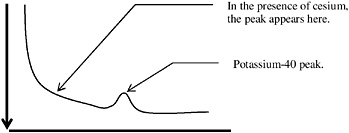
FIGURE 3 Mary’s internal radioactivity chart.
body weight for a given height and age. Since I am thinner than the average forty-something, five-foot-eight-inch Ukrainian woman, I ended up with a negative reading. It was a pleasant surprise. I might have had more cesium from living and eating in Kiev in the early 1990s, but potassium, radioactive and otherwise, had replaced it.
While we were there, Rimma got herself tested, with a result of 100 becquerels rather than the zero she had been expecting.
“Where’d that come from?” she wondered.
Another woman who came in while we chatted with Puchkova wasn’t so lucky. Her graph showed a cesium-137 peak that measured 2,822 becquerels.
“That’s not bad at all,” Puchkova said when the woman left. “It’s only when the readings exceed 37,000 that we have to report it to the zone administration, and even then, it doesn’t mean that the person will be banned from working here.”
“See, Rimma, 100 becquerels isn’t so bad,” I said, filled with confidence over my negative reading, though rather concerned about the high internal radioactivity readings that were tolerated in zone workers.
“It’s nothing,” Puchkova told Rimma. “It’s within the scintillator’s margin of error.”
“I know. I’m not worried,” Rimma responded. “I’m just wondering where I got it. I haven’t eaten any mushrooms.” After thinking a few moments, she said: “I know! The last time I visited the samosels they treated me with some honey. Bees can carry a lot of radionuclides.”
Covered in tiny branched hairs that make them like flying balls of Velcro, honey bees are like nature’s dust mops. They pick up bits of everything while foraging and bring it all back to the hive, making them excellent, cheap, and fast environmental sentinels. Bees are so efficient at environmental monitoring that radioactive cesium will be detectable in their hives even when its levels in the environment are negligible. The flip side, of course, is that their honey concentrates radionuclides.
“How about strontium? Do you measure that, too?” I asked Puchkova. Even if my body had already expelled some old radioactive cesium, any strontium I might have picked up over the years would still be lurking somewhere in my bones or my teeth. Germany recorded a 10-fold increase in strontium-90 in baby teeth after Chernobyl. Of course, I was an adult and because my teeth were already formed, they
were less likely to have absorbed any strontium-90 than a child whose teeth were still growing.
Puchkova shook her head. “No one has figured out how to accurately measure strontium in living tissue yet. There have been some experiments, but you have to lay there for something like eight hours and the results are still unreliable.”
Strontium-90 was difficult to measure in the body for the same reason it is difficult to measure in the field. Its beta radiation can’t be distinguished from beta radiation from other isotopes without taking physical samples and doing a lot of cooking in the lab. But I wasn’t about to let anyone take samples of me.
And so I left, reassured about my cesium levels and totally in the dark about my strontium. It was unsettling. Like a roebuck browsing on tasty buds in the wilds of the zone, I was clueless about the radionuclides that may or may not be in my body. Except the roebuck doesn’t know what it doesn’t know. I knew. And that made us very different kinds of links in the food chain.


