Food Safety and Foodborne Disease Surveillance Systems: Proceedings of an Iranian-American Workshop (2006)
Chapter: The Role of Risk Analysis in a Science-Based Approach to Food Safety--Charles Yoe
The Role of Risk Analysis in a Science-Based Approach to Food Safety
Charles Yoe
Professor of Economics, College of Notre Dame of Maryland
Traditional food safety management systems with their focus on end-product testing no longer suffice to deal with the complex, persistent, pervasive, and rapidly changing food safety problems of a global economy. Science-based approaches to food safety systems are increasingly in use. Many science-based approaches to food safety have already been implemented successfully. Risk analysis, a process comprising risk management, risk assessment, and risk communication, is an essential element of any science-based food safety system. Risk analysis is a problem-focused paradigm designed to work with ambiguous data, using many people to find the best solution now while looking toward the best solution in the future. Disease surveillance both provides risk assessment with data and is guided by the research needs identified by risk assessment.
TRADITIONAL FOOD SAFETY SYSTEMS NO LONGER SUFFICE
Food safety is an essential public health issue for all countries. Foodborne diseases present a real and formidable problem in both developed and developing countries, causing great human suffering and significant economic losses. Up to one-third of the population of developed countries is affected by foodborne diseases each year, and the problem is likely to be even more widespread in developing countries. The true dimensions of the problem are unknown because most cases of foodborne disease are not reported. This absence of reliable data hinders the effectiveness of public health professionals and food safety regulators.
Effective food safety systems are vital to public health, in order to maintain consumer confidence in the food system and provide a sound regulatory founda-
tion for domestic and international trade in food, which in turn supports economic development. The emphasis of food safety regulatory agencies must continue to be on prevention, reduction, or elimination of foodborne hazards throughout the food chain. New international trade agreements developed under the auspices of the World Trade Organization (WTO) have shown how necessary it is that regulations governing international trade in foods be based on scientific principles. The Sanitary and Phytosanitary Agreement (SPS), for example, permits countries to take legitimate measures to protect the life and health of consumers, animals, and plants with the provisos that such measures can be justified scientifically and do not unnecessarily impede trade.
Food safety is the responsibility of everyone in and along the food chain, from regulators to producers to consumers; however, governments are responsible for providing an enabling institutional and regulatory environment for food control. Traditional food safety systems are no longer sufficient to meet the food safety needs of either the developed or the developing world.
The focus of traditional food safety systems has often been on hygiene, inspection, and end-product control. These systems may include food laws and regulations, food control management, inspection and laboratory services, and mechanisms for information, education, and communication. Decision making in traditional systems has often been ad hoc, relying on one or more of the following:
precedent;
trial and error;
expert opinion;
compromise;
safety assessment;
the precautionary principle;
professional judgment;
inspection;
zero tolerance; or
ignorance.
Much progress has been made with these traditional approaches to food safety problems, but these systems are now inadequate. Among other failings, traditional approaches:
do not adequately detect and resolve many current problems;
do not effectively deal with the complexity and rapid pace of change;
do not effectively integrate science and social values in decision making; and
do not address the entire food chain.
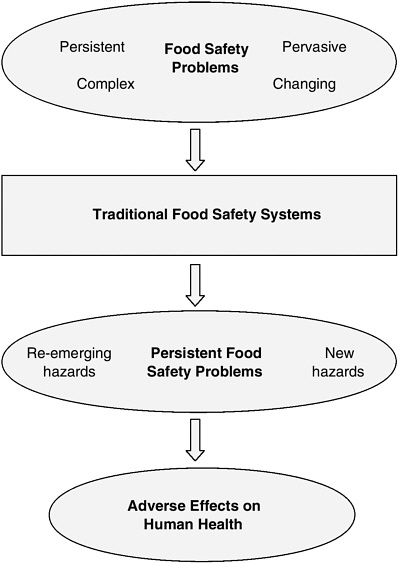
FIGURE 1 Shortcomings of traditional food safety systems.
Although traditional food safety systems have been somewhat effective in reducing food hazards in the past, they are unable to detect and resolve many current problems and deal effectively with the full range of complex, persistent, and pervasive challenges confronting different parts of the food chain (see Figure 1). Too many complex, persistent, and pervasive food problems are escaping the traditional systems. Re-emerging and newly emerging pathogens are but examples of these problems. The toll on human health around the globe is unacceptable, all the more so because many of these problems can be addressed.
PERSISTENT PROBLEMS
Traditional systems no longer suffice to solve the world’s food safety problems. The food hazard concerns of virtually all nations include one or more of the following:
misuse of food additives, colors, and flavors;
veterinary drug residues and use of growth promoters;
animal feed additives;
fertilizer and growing aids;
irradiation;
microbiological contamination that is ubiquitous, re-emerging, or newly emerging;
mycotoxins and other naturally occurring food toxicants;
pesticide residues;
pollutants;
defective packaging and labeling;
adulteration and tampering; or
extraneous matter.
When these hazards exist within the context of global changes in food production and consumption, the result is a growing number of food safety problems. Production of food on a large scale means that a single mistake can have more extensive and far-reaching consequences than the small-scale production of the past could. Many more people can be affected by a single incident.
The desire for more year-round foods means nations must import from new producers who may lack the knowledge about good agricultural practices, good manufacturing practices, and good hygiene practices that exists among nations more experienced with these foods.
In the United States more food is being consumed outside the home where consumers have less control over the conditions under which the food is being prepared. Much of this food is being prepared by relatively untrained food workers. A great deal of this food is being prepared in large quantities and served in such institutions as schools, nursing homes, and prisons.
Consumers are increasingly interested in more exotic foods and imports. In the United States raw vegetables and fruits, sushi, sashimi, raw shellfish, and other underprocessed foods expose consumers to a greater variety of hazards that can be relatively unknown in the countries where they are eaten. As life expectancies increase and health care improves, there are more immunocompromised consumers than ever. These populations are often more vulnerable to many of the modern food safety hazards. The increasing importance of international trade makes it likely that many of these trends will continue to spread around the world.
SCIENCE-BASED FOOD SAFETY SYSTEM
A number of developing countries are already taking steps to improve and strengthen their systems for food safety management. Several are moving away from the traditional approach focused on end-product control toward a science-based process. Food safety regulators in many countries are already implementing different types of science-based actions and decision making in their day-today work (see Box 1). Science and good data are essential to decision making in a modern food safety system.
A science-based approach strengthens the capacity of traditional food safety systems to meet current challenges and improve the availability of safe food for consumers. Scientific evidence can be used to minimize the occurrence of foodborne hazards, to reduce and manage risk, and to improve the outcomes of decision making. A science-based approach enhances the ability of food safety regulators to identify hazards, characterize the nature and extent of those hazards, assess exposure to the identified hazards, and estimate the likelihood of the resulting risks and potential impacts on human health.
Risk analysis is an important part of a science-based approach to food safety (see Figure 2). Risk analysis provides a means to strengthen the ability of traditional food safety systems to meet current challenges. It provides a framework to effectively manage, assess, and communicate risks through the cooperation of the diverse stakeholders involved. Most importantly, it aids decision makers and supports decision making with evidence.
As a concept a science-based approach to food safety is not completely new. It is related to such processes as good agricultural practices, good hygiene practices, good manufacturing practices, and the Hazard Analysis and Critical Control Point (HACCP) system, which are already used in many countries. What is new is the use of risk analysis as a framework to view and respond to food safety
BOX 1 Implementing Hazard Analysis and Critical Control Point (HACCP) systems Establishing acceptable daily intakes for chemical additives in food Estimating maximum allowable exposure levels to pesticides Using labels to warn consumers about potential food allergens Using risk assessment to support food safety regulations and other decision making Establishing product safety standards, performance standards, and specifications for use in international trade Resolving trade disputes based on the WTO Sanitary and Phytosanitary Agreement |
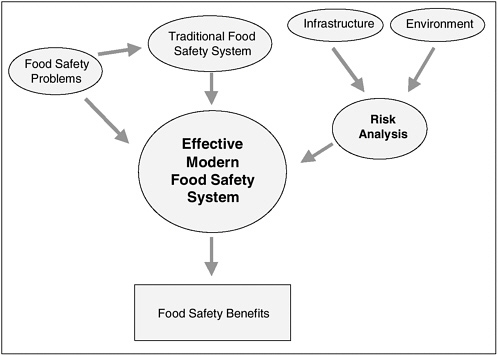
FIGURE 2 An effective modern food safety system.
problems in a systematic, structured, and scientific way in order to enhance the quality of decisionmaking throughout the food chain.
A science-based risk analysis framework builds on the traditional systems and creates a need for modern food safety and public health institutions and infrastructures as well as an overall environment that values and supports the risk analysis paradigm. Risk analysis is just one part of an effective food safety system. It will also be necessary to develop and improve other essential components of food safety systems, such as national food safety policies and infrastructure, food legislation and inspection services, laboratories, epidemiological surveillance of foodborne diseases, monitoring systems for chemical and biological contamination, and the update and harmonization of standards.
RISK ANALYSIS IS A PARADIGM
Risk analysis is more than an activity. It is a way of thinking about things and organizing resources to solve problems. It is a science-based approach to problem solving, but it is more than science. It is the interface between science and the values of an organization or society. It is a paradigm designed to make decisions in the face of uncertainty.
As a paradigm, risk analysis has several distinctive features. First, it is purpose oriented to find the right problem. The initial activities in a risk analysis model focus on carefully defining the problem to be addressed and on setting priorities among multiple problems. Second, risk analysis copes well with soft data. It tolerates ambiguity. It is a decision-making approach that is designed to recognize and address the fact that decisions must be made in the absence of all the data we would like to have to make those decisions. Third, risk analysis seeks needed information from a variety of sources. In so doing it involves many people. Fourth, it is flexible and can be updated. Risk analysis has a future-focused vision of the solution after the next one. In other words, risk analysis supports the best decision possible given the state of our understanding of the problem and of current social values. As data gaps are filled and understanding improves or as values change, risk analysis recognizes that the next solution may differ from the current one. As such, risk analysis is suited to continuously improving decisions.
What are the benefits of risk analysis? The list below provides a preliminary answer to this question.
It improves the quality of our thinking before a decision is made. Uncertainty is ubiquitous, so identifying and addressing it is essential for good decision making.
It can help assure a safe domestic food supply.
It provides information needed to protect human, animal, and plant life and health.
It is essential for international trade (e.g., SPS). Many international organizations and agreements rely on its use, including the WTO, the Food and Agriculture Organization/World Health Organization Codex Alimnetarius Commission, Office Internationale des Epizooites, and the International Plant Protection Convention.
Freed from the burden of proving safety, often an impossible task, it allows industry to innovate.
It is, this author believes, better than the alternatives.
Risk analysis always exists within a context. Organizations use risk analysis. Thus, risk analysis takes place within an organizational culture. Within an organization a structure and decision-making process already exists. The organization has a mission, goals, objectives, and legal and resource constraints that define its reality. Within this organization there are decisions to be made. Risk analysis is a process and a paradigm, a way of approaching problems and decisions that will look different in every organization that uses it.
RISK ANALYSIS DEFINED
As a structured decision-making process, risk analysis includes three distinct but closely connected components: risk management, risk assessment, and risk communication (see Figure 3).
Multiple definitions of risk analysis and its components exist. The definitions adopted by the Codex Alimentarius Commission are the ones most commonly used in the international food safety community. Nonetheless, it can be instructive to consider informal definitions of the risk analysis tasks as well as the formal definitions.
Risk analysis provides food safety regulators with the information and evidence they need for effective decision making. The process usually begins with risk management, which defines the problem, articulates the goals of the risk analysis, and defines the questions to be answered by the risk assessment. The science-based tasks of measuring and describing the nature of the risk being analyzed are performed during the risk assessment. Risk management and assessment are performed within an open and transparent environment based on communication and dialogue. Risk communication encompasses an interactive exchange of information and opinions among risk managers, risk assessors, the risk analysis team, consumers, and other stakeholders. The process often culminates with the implementation and continuous monitoring of a course of action by risk managers. Risk analysis is a highly interactive, iterative, and ongoing process.
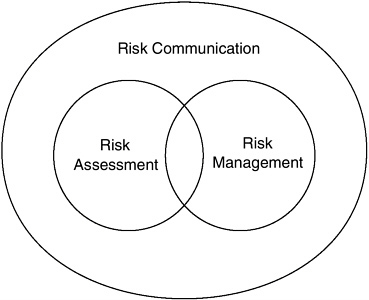
FIGURE 3 Components of risk analysis.
SOURCE: (FAO/WHO, 2001, p. 44).
Risk analysis is a decision-making framework that describes an ongoing mode of operation rather than a discrete activity that is initiated and completed and returned to the shelf until it is needed again. As such, risk analysis represents a paradigm shift, a new way of approaching food safety problems.
In the past, food safety decision-making paradigms have relied on professional judgment and expert opinion, precedent, trial and error, inspections, zero tolerance, and precaution. These methods have been inadequate for solving existing, newly emerging, and re-emerging food safety problems due in part to a rapidly increasing pace of change and compounding complexity in an increasingly international world.
Risk analysis is a new decision-making paradigm that is designed to integrate science and social values in the face of ubiquitous uncertainties. It is purpose oriented to find the right problem and to define it carefully. Risk analysis copes well with soft data and seeks needed information from a variety of sources. In the process it involves many people. Risk analysis tolerates ambiguity. The current best solution is rarely going to be the final resolution of an issue. Risk analysis offers the advantage of being able to identify the best available solution while retaining the flexibility to deal with a future-focused vision of the solution after this one. Consequently, it is flexible, updateable, and well suited to continuously improving food management decisions.
RISK MANAGEMENT
Risk analysis activities usually begin with the risk manager. Risk management can be defined informally as the work required to answer the following questions:
What questions do we want the risk assessment to answer?
What can be done to reduce the impact or likelihood of the risk described?
What are the trade-offs of the available management options?
What is the best way to address the described risk?
Codex Alimentarius defines risk management as follows:
Risk Management The process, distinct from risk assessment, of weighing policy alternatives, in consultation with all interested parties, considering risk assessment and other factors relevant for the health protection of consumers and for the promotion of fair trade practices, and, if needed, selecting appropriate prevention and control options (FAO/WHO, 2001, p. 44).
The four-step risk management model in Figure 4 lists several specific tasks undertaken in each step. Some of these rely directly or indirectly on good scientific evidence obtained from an integrated surveillance and monitoring system.
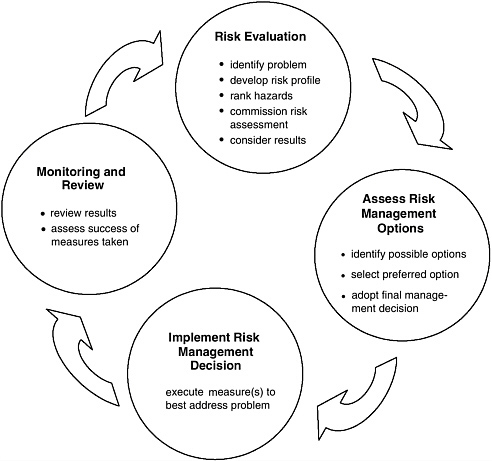
FIGURE 4 Codex Alimentarius food safety risk management model.
The integral role of surveillance and monitoring in risk management is clearly evident in this model.
RISK ASSESSMENT
Sometimes a risk assessment may be needed to collect scientific data required by the risk manager for decision making. Risk assessment can be defined informally as the work required to answer these following questions:
What can go wrong?
How can it happen?
How likely is it?
What are the consequences?
Codex Alimentarius defines risk assessment as follows:
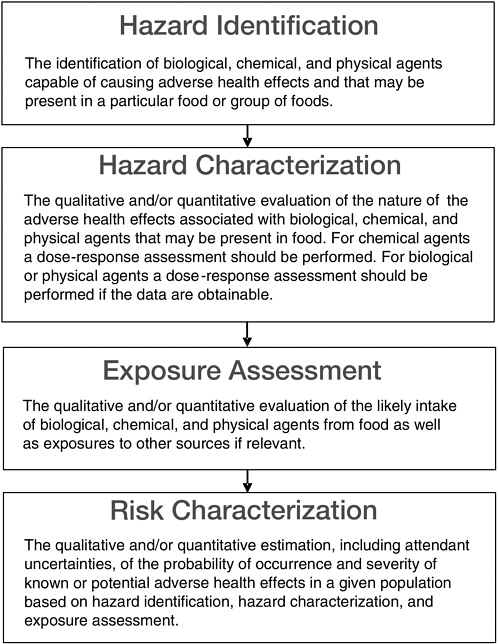
Risk Assessment A scientifically based process consisting of the following steps: i) hazard identification; ii) hazard characterization; iii) exposure assessment; and iv) risk characterization. The definition includes quantitative risk assessment, which emphasizes reliance on numerical expressions of risk, and also qualitative expressions of risk, as well as an indication of the attendant uncertainties (FAO/WHO, 2001, p. 44).
Figure 5 presents the codex definitions of the steps of a risk assessment. The first three steps rely directly on scientific evidence. The risk characterization step provides a risk estimate that is based on the information from the three preceding steps.
RISK COMMUNICATION
All risk management and risk assessment activities take place in an environment of risk communication. Risk communication can be defined informally as the work required to answer the following questions:
Why are we communicating?
Who is our audience?
What do our audiences want to know?
What do we want to get across?
How will we communicate?
How will we listen?
How will we respond?
Codex Alimentarius defines risk communication as follows:
Risk Communication The interactive exchange of information and opinions throughout the risk analysis process concerning hazards and risks, risk-related factors and risk perceptions, among risk assessors, risk managers, consumers, industry, the academic community and other interested parties, including the explanation of risk assessment findings and the basis of risk management decisions (FAO/WHO, 2001, p. 44).
Risk communication tasks can be divided broadly into internal and external risk communication. Internal communications are those interactions between risk managers and risk assessors that are critically important to the risk analysis process. External risk communication tasks involve the members of the risk management team, their stakeholders, and other interested parties external to the food safety organization that is doing the risk analysis.
NECESSARY CONDITIONS FOR RISK ANALYSIS
Several essential conditions are necessary for a nation to effectively incorporate the risk analysis paradigm into its food safety system. These include the following:
A functional food safety system. Countries need to have the essential foundations of a food safety system in place, including adequate food laws and regulations, a national food control strategy, effective inspection and laboratory services, scientific and technical capacity, infrastructure, foodborne disease surveillance, epidemiological data, food monitoring, and mechanisms for integrating this information with education, and communication.
Knowledge about risk analysis. Government officials and decision makers at the highest levels must be aware of risk analysis and the value it adds to a nation’s public health program. Similarly, food safety regulators and scientists who become risk managers and risk assessors need to learn what risk analysis is, why it is carried out, and how to perform the three tasks of risk analysis. Although government has the main role in performing risk analysis, it is also important to ensure that the food industry and consumers understand the essence of risk analysis.
Support and participation of key stakeholders. Risk analysis will be effective only if it takes place in an environment in which government, industry, academic institutions, and consumers recognize, value, and participate in the process. Industry must find value in the results of risk analysis. Academic institutions must produce information that meets the needs of risk analysis. Consumers and businesses must be able to recognize and derive clear benefits from the risk analysis process. Similarly, mechanisms must be in place to enable stake-holders to participate in the development of risk analysis policy, as well as in the various activities performed during risk analysis.
DISEASE SURVEILLANCE IS ESSENTIAL TO SUCCESS OF RISK ANALYSIS
According to Thacker and Berkelman (1998) as quoted in the National Research Council report Scientific Criteria to Ensure Safe Food (2003), “Public health surveillance is the ongoing, systematic collection, analysis, interpretation, and dissemination of health-outcome-specific data for use by the public health sector to reduce morbidity and mortality and to improve health.”
Potter et al. (2000) provide three traditional reasons for foodborne disease surveillance:
To identify, control, and prevent outbreaks of foodborne disease;
To monitor trends and determine the targets and efficacy of control measures;
To determine the burden of specific diseases on public health.
To these can be added:
To provide the scientific evidence necessary for the successful incorporation of risk analysis into a modern food safety management system.
The information gathered through surveillance and monitoring is critical to the conduct of risk assessments. Hazard characterization and exposure assessments may make extensive use of the epidemiological data obtained from disease surveillance systems. Figure 6 shows the role of surveillance in the cycle of public health protection in a circular flow of information and activity. This cycle is then shown to influence the conduct of risk assessments and, in turn, to be influenced by the needs of risk assessment.
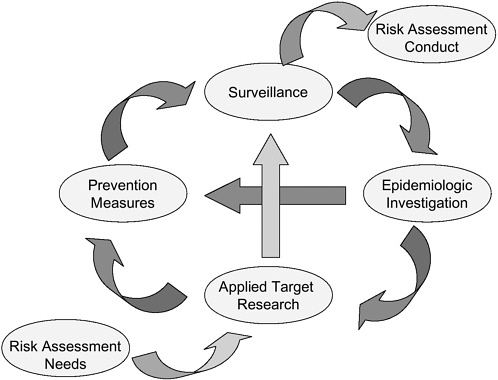
FIGURE 6 Surveillance systems and risk assessment.
SOURCE: Adapted from NRC (2003, Figure 2.1, p. 29).
In general, foodborne disease surveillance has been essential for the following:
Estimating the burden of foodborne diseases, and monitoring trends;
Identifying priorities and setting policy in the control and prevention of foodborne diseases;
Detecting, controlling, and preventing foodborne disease outbreaks;
Identifying emerging food safety issues; and
Evaluating foodborne disease prevention and control strategies.
It is not evident that surveillance is essential to successful risk assessment, although it is an undeniable fact that surveillance supports better risk assessment. Several strategies (NRC, 2003) in public health surveillance may be helpful to the risk analysis process. Each is discussed briefly below.
Routine Surveillance. Surveillance of human illness provides information about illnesses possibly due to food. Monitoring case reports of specific, notifiable infections is important for defining trends, identifying outbreaks, and evaluating food safety programs. These data provide the essential information needed by risk analysts to characterize hazards and exposures to these hazards and to set national priorities for risk assessment. Some surveillance tasks, such as monitoring levels of antimicrobial resistance in foodborne pathogens, can be important to real-time risk assessments. Timely analysis and dissemination of the results of this surveillance to regulators, industry, the public, and risk assessors and managers is essential.
Sentinel Site Surveillance. Investigating and reporting specific outbreaks or specific illnesses can provide more detailed information than a national surveillance system. Such systems may serve as a platform for conducting case-control studies to identify risk factors. These data in turn can be instrumental in enabling risk managers to pinpoint their assessments and resulting risk mitigation options.
Foodborne Outbreak Reporting. It is important to distinguish the relationship between exposure and infection, and between exposure and illness. Investigating and reporting clusters of cases of specific infections helps risk managers determine their risk management priorities. These data also provide information essential to the risk assessors’ hazard characterization and when possible, exposure assessments. This type of surveillance strategy, along with the others mentioned here, provides valuable evidence for risk managers to assess the success of the measures taken to reduce risks. The ongoing nature of risk analysis requires the continual reduction of data gaps and development of up-to-date databases.
Specialized Surveys of Behavior. Systematically obtaining data on the behavior of the population and their resulting exposure to specific risks is essential to the conduct of sound hazard characterization and exposure assessment. Behavior data has been one of the most persistent data gaps in the first generation
of microbial risk assessments. In general, the lack of relevant food-related behavioral information has been a weak link in the risk assessment chain, regardless of the hazard.
Food monitoring is also essential to good quantitative risk assessment. Rapid and early pathogen identification and illness prevention have become high priorities for all parties interested in the safety of the food chain. The development of effective, reliable, and cost-effective methods to control or eliminate pathogens throughout the complete food chain, from farm to table, has become correspondingly more important. New methods for rapid bacterial detection, antimicrobial intervention, and food safety inspection have been developed to help prevent or reduce foodborne illness. The data acquired from these techniques needs to be made available in a timely and effective manner to support the risk analysis paradigm.
The detection of pathogenic microorganisms is needed to enhance food safety for consumers and to minimize the potentially adverse economic impact on producers resulting from false-positive tests. Public concern over the presence of undesired chemical residues in raw and processed foods resulting from the use of antibiotics, hormones, pesticides, fungicides, and the like is increasing. Foodborne illness outbreaks caused by consumption of perishable and minimally processed foods are growing problems of contemporary society. It is of paramount importance that detection methods be precise, reliable, sensitive, specific, and rapid so that any pathogens and toxins in foods may be identified rapidly and accurately prior to their spread over the marketplace. And it is of paramount importance to the future of risk assessment that prevalence, concentration, and load data be made available in a useful form that supports probabilistic risk assessment.
Predictive microbiology is crucial to the accurate modeling of relationships critical to reasonable risk characterizations. Information about the temporal distribution and frequency of occurrence of a pathogen, its concentration and spatial distribution, its seasonality, and any niche it might occupy are essential for risk assessors’ understanding and estimation of the survival, persistence, amplification, attenuation, control, and treatment of the pathogen of interest.
It is not just the collection of data that is necessary to risk assessors; the form is equally important. In the past it may have been sufficient to summarize food monitoring data with a mean and a standard deviation of pathogen concentration. Many data were reported as detects and nondetects. In some studies, data were summarized in categorical classes, such as one log or less.
Risk assessors seek rich databases. They want to be able to use all the data. A dataset with actual pathogen loads in a sample is preferred over any of the previous examples. Risk assessment may require reorienting the data collection practices of bench scientists and perhaps even epidemiologists.
The World Health Organization (WHO, 2001, p. 20) offered six conclusions
and recommendations on the interaction between surveillance and risk analysis, also provide a fitting summary for this paper:
To achieve a risk-based food safety program to reduce or prevent foodborne diseases, countries which are WHO members should invest resources in public health surveillance and the integration of epidemiologic and risk analysis activities at the national and international levels.
Risk managers, in consultation with epidemiologists, risk assessors, and other stakeholders, should develop a prioritized list of pathogens and/or foods for which extra data are needed.
Countries which are WHO members should encourage epidemiologists and risk assessors to identify characteristics of outbreaks that may provide relevant data for quantitative risk assessment and secure adequate laboratory support. Countries should also develop mechanisms for collecting and collating enhanced food microbiologic information that can be obtained in outbreak settings by developing mechanisms to obtain food samples and to quantitatively analyze these samples.
Countries should move toward integrating surveillance systems for human and animal disease and monitoring systems for food contamination. Integration would also assist quantitative risk assessment.
WHO should establish clearinghouses or other exchange mechanisms for raw data and results of data analysis as well as appropriate control of use of shared data.
WHO should support the efforts of developing countries to assess their capacity to collect and use basic epidemiological data. WHO should foster partnerships between developed and developing countries for active support (i.e., technology transfer or financial support) of the latter.
REFERENCES
FAO/WHO (Food and Agriculture Organization/World Health Organization). 2001 Joint FAO/WHO Food Standards Programme. Codex Alimentarius. Commission on General Principles. Procedural Manual, 12th ed. Rome: Food and Agriculture Organization of the United Nations/World Health Organization. Available at http://www.fao.org/documents/show_cdr.asp?url_file=/DOCREP/005/Y2200E/y2200e00.htm. Accessed December 1, 2005.
NRC (National Research Council). 2003. Scientific Criteria to Ensure Safe Food. Washington, D.C.: The National Academies Press.
Potter, M., D. Archer, A. Benson, F. Busta, J. Dickson, M. Doyle, J. Farber, B. B. Finlay, M. Goldblatt, C. Hedberg, D. Hoober, M. Jahncke, L.-A. Jaykus, C. Kaspar, A. P. Liang, J. Lindsay, J. Pestka, M. Pierson, P. Slade, R. B. Tompkin, and M. L. Tortorello. 2000. Emerging Microbiological Food Safety Issues: Implications for Control in the 21st Century. Chicago: Institute of Food Technology.
Thacker, S. B., and R. L. Berkelman. 1988. Public health surveillance in the United States. Epidemiological Review 10:164-190.
WHO (World Health Organization). 2001. Global surveillance of foodborne disease: Developing a strategy and its interaction with risk analysis. WHO/CDS/CSR/EPH/2002.21. Geneva, Switzerland. Available at http://www.who.int/foodsafety/publications/foodborne_disease/surveillance_strategy/en/. Accessed December 1, 2005.


