Acute Exposure Guideline Levels for Selected Airborne Chemicals: Volume 19 (2015)
Chapter: 6 Tetrafluoroethylene Acute Exposure Guideline Levels
Acute Exposure Guideline Levels
PREFACE
Under the authority of the Federal Advisory Committee Act (FACA) P.L. 92-463 of 1972, the National Advisory Committee for Acute Exposure Guideline Levels for Hazardous Substances (NAC/AEGL Committee) has been established to identify, review, and interpret relevant toxicologic and other scientific data and develop AEGLs for high-priority, acutely toxic chemicals.
AEGLs represent threshold exposure limits for the general public and are applicable to emergency exposure periods ranging from 10 minutes (min) to 8 hours (h). Three levels—AEGL-1, AEGL-2, and AEGL-3—are developed for each of five exposure periods (10 and 30 min and 1, 4, and 8 h) and are distinguished by varying degrees of severity of toxic effects. The three AEGLs are defined as follows:
AEGL-1 is the airborne concentration (expressed as parts per million or milligrams per cubic meter [ppm or mg/m3]) of a substance above which it is predicted that the general population, including susceptible individuals, could experience notable discomfort, irritation, or certain asymptomatic, nonsensory
____________________
1This document was prepared by the AEGL Development Team composed of Sylvia Milanez (Oak Ridge National Laboratory), Gary Diamond (SRC, Inc.), Lisa Ingerman (SRC, Inc.), Chemical Manager George Woodall (National Advisory Committee [NAC] on Acute Exposure Guideline Levels for Hazardous Substances), and Ernest V. Falke (U.S. Environmental Protection Agency). The NAC reviewed and revised the document and AEGLs as deemed necessary. Both the document and the AEGL values were then reviewed by the National Research Council (NRC) Committee on Acute Exposure Guideline Levels. The NRC committee has concluded that the AEGLs developed in this document are scientifically valid conclusions based on the data reviewed by the NRC and are consistent with the NRC guidelines reports (NRC 1993, 2001).
effects. However, the effects are not disabling and are transient and reversible upon cessation of exposure.
AEGL-2 is the airborne concentration (expressed as ppm or mg/m3) of a substance above which it is predicted that the general population, including susceptible individuals, could experience irreversible or other serious, long-lasting adverse health effects or an impaired ability to escape.
AEGL-3 is the airborne concentration (expressed as ppm or mg/m3) of a substance above which it is predicted that the general population, including susceptible individuals, could experience life-threatening health effects or death.
Airborne concentrations below the AEGL-1 represent exposure concentrations that could produce mild and progressively increasing but transient and nondisabling odor, taste, and sensory irritation or certain asymptomatic, nonsensory effects. With increasing airborne concentrations above each AEGL, there is a progressive increase in the likelihood of occurrence and the severity of effects described for each corresponding AEGL. Although the AEGL values represent threshold concentrations for the general public, including susceptible subpopulations, such as infants, children, the elderly, persons with asthma, and those with other illnesses, it is recognized that individuals, subject to idiosyncratic responses, could experience the effects described at concentrations below the corresponding AEGL.
SUMMARY
Tetrafluoroethylene is a colorless, odorless, and highly flammable gas. It is insoluble in water and in most organic solvents. Fluorocarbons as a class exhibit high chemical stability which might be responsible for their lack of biologic action in contrast with chlorocarbons. The primary end use of tetrafluoroethylene is for polymerization to produce Teflon®. Recent production data were not available.
No human data on exposure to tetrafluoroethylene were available. However, numerous laboratory studies of rodents exposed for durations up to 6 h were sufficient to derive AEGL values for tetrafluoroethylene. At lethal and near-lethal concentrations, animals died of pulmonary congestion. At nonlethal concentrations, tetrafluoroethylene was nephrotoxic in rodents. Nephrotoxicity is related to metabolism to a reactive intermediate via the hepatic glutathione Stransferases (GST). In the kidney, the glutathione conjugate is metabolized to the cysteine S-conjugate and is then bioactivated via renal ß-lyase to a reactive thiol. The resulting renal cell necrosis and regeneration is thought to be responsible for renal neoplasms in rats following chronic exposure. In all cases where recovery was evaluated, surviving animals had evidence of recovery from renal lesions.
The AEGL-1 values for tetrafluoroethylene are based on a no-observed-adverse-effect level (NOAEL) for reversible renal lesions observed in rats and
mice following a 6-h exposure to tetrafluoroethylene at 1,200 ppm (Keller et al. 2000). Renal toxicity results from a metabolite formed after a series of metabolic steps. No data comparing the toxicokinetics of tetrafluoroethylene in humans and rodents are available, but data from related compounds suggest that species differences in metabolism could be important. Thus, a default interspecies uncertainty factor of 10 was applied. A default intraspecies uncertainty factor of 10 also was applied because data on variability in the toxicokinetics of tetrafluoroethylene in humans are lacking and because of evidence that polymorphisms in several of the enzymes in the bioactivation pathway for this and related compounds might modify susceptibility. The total uncertainty factor was 100. Time scaling was performed using the equation Cn × t = k. Data on tetrafluoroethylene were insufficient for determining an empirical value for the exponent n, so default values of n = 3 for extrapolating to shorter durations and n = 1 for extrapolating to longer durations were used (NRC 2001). Because of the uncertainty associated with time scaling a 6-h point-of-departure to a 10-min value, the 10-min AEGL-1 value was set equal to the 30-min AEGL-1 value.
The AEGL-2 values for tetrafluoroethylene are based on reversible renal effects observed in rat studies. Dilley et al. (1974) found reversible renal lesions following a 30-min exposure to tetrafluoroethylene at 3,500 ppm, and Odum and Green (1984) found minor changes in urinary clinical chemistry parameters following a 6-h exposure at 3,000 ppm (increases in urinary glucose and enzyme activity were not statistically significant). These effects meet the definition of the AEGL-2. A 4-h exposure at 3,700 ppm resulted in renal tubule necrosis (Haskell Laboratory 1977), an irreversible effect (exceeds the definition of the AEGL-2). Although histopathologic examinations were not performed after a 6-h exposure at 4,000 ppm (Odum and Green 1984), it is likely that irreversible effects also took place. At 6,000 ppm for 6 h, renal-cell necrosis was observed.
The 6-h exposure to tetrafluoroethylene at 3,000 ppm (Odum and Green 1984) was considered a NOAEL for irreversible effects, and was used as the point-of-departure for calculating AEGL-2 values. An interspecies uncertainty factor of 10 and an intraspecies uncertainty factor of 10 were applied for the same reasons described of the AEGL-1 values. Time scaling was also performed in the same manner as for the AEGL-1 values. Because of the uncertainty associated with time scaling a 6-h point-of-departure to a 10-min value, the 10-min AEGL-2 value was set equal to the 30-min AEGL-2 value.
AEGL-3 values for tetrafluoroethylene are based on a study in Syrian hamster. Mortality rates in hamsters exposed to tetrafluoroethylene at 10,200, 20,700, 25,000, 30,000, 40,100, or 78,700 ppm for 4 h were 0, 0, 10, 70, 100, and 100%, respectively. Those data were used to calculate a 4-h BMCL05 (benchmark concentration, 95% lower confidence limit with 5% response) of 20,822 ppm, which was used as the point-of-departure. The choice of that concentration is supported by the highest nonlethal concentration of 20,000 ppm in a 4-h study with rats (Haskell Laboratory 1959). An interspecies uncertainty factor of 10 and an intraspecies uncertainty factor of 10 were applied for the same reasons described of the AEGL-1 values. Time scaling was also performed
in the same manner as for the AEGL-1 values. Because of the uncertainty associated with time scaling a 4-h point-of-departure to a 10-min value, the 10-min AEGL-3 value was set equal to the 30-min AEGL-3 value. The AEGL values for tetrafluoroethylene are presented in Table 6-1.
Tetrafluoroethylene has carcinogenic potential, but neither inhalation nor oral carcinogenicity slope factors are available. An assessment based on the carcinogenic potential of tetrafluoroethylene indicates that AEGL values for a theoretical excess lifetime cancer risk of 10-4 would be lower than the AEGL values developed on the basis of noncancer end points (see Appendix C). The tumorigenic response to tetrafluoroethylene is the result of repeated long-term exposure causing repetitive tissue damage. Because AEGLs are applicable to rare events or a single once-in-a-lifetime exposure and because of the uncertainty in assessing excess cancer risk following a single acute exposure of 8 h or less, the acute toxicity values were used to set AEGL levels.
1. INTRODUCTION
Tetrafluoroethylene is a colorless and odorless gas. It is insoluble in water and in most organic solvents. Tetrafluoroethylene is extremely flammable and unstable; therefore, it is shipped in cylinders that contain stabilizers (Haskell Laboratory 1959; Matheson 1980). It is easily ignited by heat, sparks, or flames (HSDB 2012). The lower explosive limit for tetrafluoroethylene is 100,000 ppm (DuPont 1988). Additional chemical and physical properties of tetrafluoroethylene are presented in Table 6-2.
Fluorocarbons as a class exhibit high chemical stability. The C-F bond is stable because of the short inter-atomic distance between the atoms (Clayton 1967). The bond affinity may explain the lack of biologic action of fluorocarbons in contrast with chlorocarbons.
TABLE 6-1 AEGL Values for Tetrafluoroethylene
| Classification | 10 min | 30 min | 1 h | 4 h | 8 h | End Point (Reference) |
| AEGL-1a | 27 ppm | 27 ppm | 22 ppm | 14 ppm | 9.0 ppm | NOAEL for |
| (nondisabling) | (110 mg/m3) | (110 mg/m3) | (89 mg/m3) | (56 mg/m3 ) | (37 mg/m3) | reversible renal lesions in rats and mice (Keller et al. 2000). |
| AEGL-2 (disabling) | 69 ppm (280 mg/m3) | 69 ppm (280 mg/m3) | 55 ppm (220 mg/m3) | 34 ppm (140 mg/m3) | 23 ppm (92 mg/m3) | NOAEL for renal necrosis in rats (Odum and Green 1984). |
| AEGL-3 | 420 ppm | 420 ppm | 330 ppm | 210 ppm | 100 ppm | 4-h BMCL05 |
| (lethal) | (1,700 mg/m3) | (1,700 mg/m3) | (1,400 mg/m3) | (850 mg/m3) | (430 mg/m3) | for lethality in hamsters (Haskell Laboratory 1980). |
aTetrafluoroethylene has no distinctive odor.
TABLE 6-2 Chemical and Physical Properties of Tetrafluoroethylene
| Parameter | Value | References |
| Synonyms | Ethene, tetrafluoro; perfluoroethylene; FC-1114; Fluoroplast 4; TFE monomer | HSDB 2012 |
| CAS registry no. | 116-14-3 | HSDB 2012 |
| Chemical formula | CF2 = CF2 | Matheson 1980 |
| Molecular weight | 100.02 | HSDB 2012 |
| Physical state | Colorless gas | HSDB 2012 |
| Melting point | -131.15°C | HSDB 2012 |
| Boiling point | -75.9°C | HSDB 2012 |
| Solubility in water | 159 mg/L at 25°C | HSDB 2012 |
| Density/specific gravity | 1.519 g/cm3 at -76°C | HSDB 2012 |
| Vapor density (air = 1) | 3.87 | HSDB 2012 |
| Vapor pressure | 2.45 × 104 mm Hg at 25°C | HSDB 2012 |
| Flammability limits | 14-43% | Matheson 1980; |
| Lower explosive limit: 100,000 ppm | DuPont 1988 | |
| Conversion factors | 1 ppm = 4.09 mg/m3 | AIHA 2004 |
| 1 mg/m3 = 0.244 ppm | ||
Tetrafluoroethylene is manufactured in enclosed systems in a four-step process involving the production of hydrogen fluoride and chloroform from calcium difluoride, hydrogen sulfide, methane, and chlorine (Gangal 2004). Hydrogen fluoride and chloroform are subsequently reacted in the presence of antimony trifluoride to form chlorodifluoromethane. Chlorodifluoromethane is pyrolysed at 590-900°C to produce a yield of 95% tetrafluoroethylene. When tetrafluoroethylene is shipped, Terpene B (0.4%) or d-limonene is added to inhibit polymerization (Gangal 2004).
US production of tetrafluoroethylene was between 50 and 100 million pounds in 2006 (HSDB 2012). Approximately two-thirds of tetrafluoroethylene produced is polymerized to produce Teflon®. Tetrafluoroethylene is dimerized to produce octafluorocyclobutane propellant for food product aerosols. It is also used in refrigerants, foam blowing agents, solvents, fluoropolymers, and sterilant gas (HSDB 2012).
The toxicity of tetrafluoroethylene has been reviewed by Clayton (1967), Kennedy (1990), ACGIH (2001), ECETOC (2003), and AIHA (2004). A number of unpublished studies conducted for the DuPont Chemical Company were available for review. Studies have also been conducted on the toxicity of pyrolysis products of tetrafluoroethylene resins. Because numerous combustion products, including hydrogen fluoride, are formed when resins are burned, the results of the pyrolysis studies are not discussed in this document.
2. HUMAN TOXICITY DATA
No human studies on the toxicity of tetrafluoroethylene were found. Monitoring data from several plants that use tetrafluoroethylene in closed systems indicate that 7-h time-weighted-average concentrations are 6.5 ppm or lower (FIG 1982). Alarms in the plants are set at 20 ppm.
3. ANIMAL TOXICITY DATA
3.1. Acute Lethality
Lethality data from studies of animals exposed to tetrafluoroethylene by inhalation are summarized in Table 6-3 and briefly discussed below.
3.1.1. Rats
Groups of four male CD rats were exposed by inhalation to tetrafluoroethylene at nominal concentrations of 10,000, 20,000, 40,000, 80,000, or 800,000 ppm for 4 h (Haskell Laboratory1959). The method used to generate the test atmosphere was not described. Tetrafluoroethylene was scrubbed with H2SO4 to remove the Terpene B inhibitor. The mortality rate was 0/4 at 10,000 ppm, 0/4 at 20,000 ppm, 2/4 at 40,000 ppm, 4/4 at 80,000 ppm, and 4/4 at 800,000 ppm. Rats in the 800,000-ppm group died after 2.75 h of exposure. The LC50 (lethal concentration, 50% lethality) was approximately 40,000 ppm. Clinical signs included labored breathing during exposure (all concentrations), weight loss (≥40,000 ppm), inactivity, dark eyes, prostration, and convulsions. Gross necropsy revealed hepatic injury (≥40,000 ppm), renal damage (all concentrations), and pulmonary congestion and edema (≥80,000 ppm).
Sakharova and Tolgskaya (1977) exposed groups of male and female rats (number and strain not specified) to tetrafluoroethylene at unspecified concentrations for 4 h. LC50 values are presented in Table 6-3. At necropsy, lesions were observed in the liver, kidneys, and brain. Renal lesions included degeneration and necrosis of the convoluted tubules. No further details were reported by the investigators.
A study by Zhemerdei (1958) is not included in Table 6-3 because of insufficient details (Kennedy 1990). The study reported 100% mortality in rats exposed to tetrafluoroethylene at 25,000 ppm for 2 h. The lowest concentration causing mortality in rabbits was 40,000 ppm; the exposure duration was not specified.
3.1.2. Mice
Sakharova and Tolgskaya (1977) exposed male and female mice (strain not specified) to unspecified concentrations of tetrafluoroethylene for 4 h. The LC50 value was 35,000 ppm. Details of the study were not provided.
TABLE 6-3 Acute Lethality in Laboratory Animals Exposed to Tetrafluoroethylene
| Species | Concentration (ppm) | Exposure Duration | Effect | Reference |
| Rat | 10,000 | 4 h | 0% mortality | Haskell Laboratory 1959 |
| 20,000 | 0% mortality | |||
| 40,000 | 50% mortality | |||
| 80,000 | 100% mortality | |||
| 800,000 | 100% mortality | |||
| Rat | 31,000-32,000 | 4 h | LC50 | Sakharova and |
| Tolgskaya 1977 | ||||
| Mouse | 35,000 | 4 h | LC50 | Sakharova and |
| Tolgskaya 1977 | ||||
| Guinea pig | 28,000 | 4 h | LC50 | Sakharova and |
| Tolgskaya 1977 | ||||
| Hamster | 10,200 | 4 h | 0% mortality | Haskell Laboratory 1980 |
| 20,700 | 4 h | 0% mortality | ||
| 25,000 | 4 h | 10% mortality | ||
| 30,000 | 4 h | 70% mortality | ||
| 40,100 | 4 h | 100% mortality | ||
| 78,800 | 4 h | 100% mortality | ||
| 28,500 | 4 h | LC50 (calculated) |
3.1.3. Guinea Pigs
Sakharova and Tolgskaya (1977) exposed male and female guinea pigs (strain not specified) to unspecified concentrations of tetrafluoroethylene for 4 h. The LC50 value was 28,000 ppm. Details of the study were not provided.
3.1.4. Hamsters
Groups of 10 male Syrian hamsters were exposed by inhalation to tetrafluoroethylene at analytically-determined concentrations of 0, 10,200, 20,700, 25,000, 30,000, 40,100, or 78,700 ppm for 4 h (Haskell Laboratory 1980). All animals exposed at the two lowest concentrations survived the 14-day observation period. Mortality rates in the 25,000- and 30,000-ppm groups were 1/10 and 7/10, respectively; the deaths occurred over 1-10 days. All animals in the 40,100- and 78,700-ppm groups died. The calculated LC50 value was 28,500 ppm (95% confidence interval: 26,400-31,500 ppm). Clinical signs included salivation and lethargy at 40,100 ppm and clear discharge from the nose and reduced response to sound at 78,700 ppm. No obvious clinical signs were observed at concentrations of 30,000 ppm or lower. Following exposure, moderate weight loss, defined as 6-15 g/day, occurred at concentrations of 20,700 ppm and higher. Following exposure at 10,200 ppm, weight loss was slight for one day after exposure. No histopathologic examinations were performed.
3.2. Nonlethal Toxicity
All acute toxicity studies reporting nonlethal effects from tetrafluoroethylene were conducted with rats. Results from those studies are summarized in Table 6-4. Relevant information is also available from a repeat-exposure study that described effects in rats after the first exposure to tetrafluoroethylene (Keller et al. 2000; see Section 3.3).
A group of 15 adult male Sprague-Dawley rats were exposed by inhalation to tetrafluoroethylene at 3,500 ppm for 30 min (Dilley et al. 1974). Ten of the animals were maintained for 2 weeks for metabolism studies. Five of the rats were serially killed for pathologic examination. No deaths were reported. Exposure to tetrafluoroethylene produced an increase in urinary fluoride, potassium, and creatinine and diuresis. Gross examination of the tissues performed 3-4 days after exposure revealed marked hyperemia of the renal medulla and a pale band in the cortex near the corticomedullary junction. Small ischemic-appearing areas were found occasionally in the mid-cortical area. These grossly-observed renal changes were nearly absent after 2 weeks. No lesions were observed microscopically.
A group of 10 CD male rats was exposed to tetrafluoroethylene at an analytically-determined concentration of 3,700 ppm for 4 h (Haskell Laboratory 1977). Renal damage (degeneration of the epithelium of the tubules) was found immediately after exposure. After a 14-day recovery period, fibrosis of the renal tubules was present. There were no clinical signs during exposure.
Groups of four male Wistar-derived rats were exposed to tetrafluoroethylene at 0, 1,000, 2,000, 3,000, 4,000, or 6,000 ppm for 6 h (Odum and Green 1984). The method used to generate the test atmosphere was not described. Rats were killed 24 h after the start of the exposure. No deaths were reported. Kidneys from the control and 6,000-ppm groups were examined microscopically.
TABLE 6-4 Non-lethal Toxicity in Rats Exposed to Tetrafluoroethylene
| Concentration (ppm) | Exposure Duration | Effect | Reference |
| 3,500 | 30 min | Reversible renal changes. | Dilley et al. 1974 |
| 3,700 | 4 h | Renal tubule fibrosis. | Haskell Laboratory 1977 |
| 1,000 | 6 h | No effects. | Odum and Green 1984 |
| 2,000 | 6 h | NOAEL for renal effects. | |
| 3,000 | 6 h | Increases in urinary glucose and enzyme activity were small, variable, and not statistically significant. | |
| 4,000 | 6 h | Increases in urinary glucose and enzyme activity were statistically significant. | |
| 6,000 | 6 h | Renal necrosis. |
Marked damage to the proximal tubule of the kidneys was found in treated animals. The damage was characterized by renal tubular necrosis involving the pars recta of the proximal tubule and by calcified intratubular deposits in the medulla. Evaluations of the 24-h urine collections found high concentrations of urinary glucose and marked increases in alkaline phosphatase and γ-glutamyltranspeptidase activity. Damage to the kidneys in the lower dose groups was assessed by urinary glucose and enzyme activity levels. Using those two parameters, the 6-h exposure at 2,000 ppm was a no-observed-effect level and the 6-h exposure at 3,000 ppm resulted in small and variable (but not statistically significant) effects on urinary glucose and alkaline phosphatase and γ-glutamyltranspeptidase activity. At 4,000 ppm, increases in urinary glucose and enzyme activity were statistically significant.
3.3. Repeat-Exposure Studies
3.3.1. Dogs
Two dogs were exposed to tetrafluoroethylene at 1,000 ppm for 4 h/day, 5 days/week for a total of 25 exposures (Haskell Laboratory 1946; Table 6-5). The blood pressure of one dog dropped as exposures continued, but the second dog did not show any significant trend in blood pressure measurements. No abnormal heart sounds were detected. Both dogs gained weight during the exposure period. The dogs were subsequently exposed to tetrafluoroethylene at 4,000 ppm for 4 h on one day and for 6 h on the following day. Both tolerated the exposures “quite well.” In another experiment, a dog was exposed to several concentrations of tetrafluoroethylene a few weeks apart. A 4-h exposure at 500 ppm had no effect on blood pressure, but a “fairly marked” drop in blood pressure was reported in the dog after being exposed at 1,000 ppm or higher. A fourth dog was exposed twice to tetrafluoroethylene at 2,000 ppm for 1 h. Blood pressure was unaffected after the first exposure, but dropped “fairly sharply” 4 h after the second exposure. Blood pressure measurements were not provided. The third and fourth dogs were killed 1 month after the last exposure, and no gross or microscopic lesions of the heart, lungs, spleen, liver, kidneys, or adrenal glands were found.
3.3.2. Rats
Groups of 10 male CD rats were exposed to tetrafluoroethylene at 0, 100, 500, 1,000, or 2,500 ppm (analytic concentrations of 0, 101, 500, 991, or 2,490 ppm) for 6 h/day, 5 days/week for 2 weeks (Haskell Laboratory 1981). Half of the animals were evaluated at the end of exposure and the other half after a 14-day recovery period. No clinical signs of toxicity were observed during treatment. Increases in renal and hepatic weight, reductions in serum alkaline phosphatase and glutamic pyruvic transaminase activity, and renal lesions were observed. Renal
TABLE 6-5 Repeat-Exposure Studies of Tetrafluoroethylene
| Species | Concentration (ppm) | Exposure Duration | Effect | Reference |
| Dog, unspecified breed | 1,000 | 4 h/d, 5 d/wk, 25 exposures |
Few observations; drop in blood pressure in 1/2 dogs. | Haskell Laboratory 1946 |
| 4,000 | 4 and 6 h | Tolerated “quite well.” | ||
| CD rat, 10 males/group | 0, 100, 500, 990, 2,490 |
5 h/d, 5 d/wk, 2 wk |
No clinical signs at any concentration. No effect at 990 ppm. Reversible changes in clinical chemistry parameters and reversible renal lesions at 2,490 ppm. | Haskell Laboratory 1981 |
| CD rat, 10 males/group | 0, 1,100, 3,510 | 4 h/d, 5 d/wk, 2 wk; killed 0 and 14 d postexposure |
Reversible renal lesions at 1,100 ppm. Incomplete recovery of renal lesions at 3,510 ppm. | Haskell Laboratory 1977 |
| F344 rat, 25 females/group | 0, 31, 300, 600, 1,200 |
6 h/d, 9 exposures over 12 d |
No cell proliferation in the kidneys after one exposure at any concentration. Increase in renal cell proliferation in 1,200-ppm group after test day 5 (recovery by test day 12); microscopic renal lesions at 600 and 1,200 ppm; renal function unaffected; liver and spleen unaffected. | Keller et al. 2000 |
| F344/N rat, 5/sex/group | 0, 312, 621, 1,250, 2,500, 4,990 |
6 h/d, 5 d/wk, 12 exposures over 16 d |
Reduced weight gain in males and females at 5,000 ppm. Increased renal weight in all males and in females exposed at ≥2,500 ppm. Renal tubule degeneration in males and females exposed at ≥625 ppm. No renal lesions at 312 ppm. | NTP 1997 |
| CD rat, 15/sex/group | 0, 203, 606, 1,990 | 6 h/d, 5 d/wk, 90 d |
Body and organ weight changes at 1,990 ppm; tubular nephrosis at 606 and 1,990 ppm. No-effect level was 200 ppm. | Haskell Laboratory 1982 |
| CD rat, 50/sex/group | 0, 312, 625, 1,250, | 5 h/d, 5 d/wk, 90 d |
No clinical signs; reduced body weight and weight gain at 5,000 ppm; increased renal and hepatic weight at ≥625 ppm in one or both sexes; anemia; renal tubule degeneration in males at ≥625 ppm and in females at ≥2,500 ppm. | NTP 1997 |
| B6C3F1 mouse, 25 females/group |
0, 31, 300, 600, 1,200 |
6 h/d, 9 exposures over 12 d |
No cell proliferation in the kidneys after one exposure at any concentration; increase in renal cell proliferation in 600- and 1,200-ppm groups after test day 5 (recovery by test day 12); microscopic renal lesions at 1,200 ppm; no decreased renal function; liver and spleen unaffected. | Keller et al. 2000 |
| B6C3F1 mouse, 5/sex/group | 0, 312, 622, 1,260, 2,500, 4,990 |
6 h/d, 5 d/wk, 12 exposures over 16 d |
No clinical findings; no effect on body weight or weight gain; some organ weight differences in females at ≥2,500 ppm; renal tubule epithelial cell karyomegaly in males at ≥1,250 ppm and in females at ≥ 2,500 ppm; no renal lesions at 312 or 612 ppm. | NTP 1997 |
| B6C3F1 mouse, 48/sex/group | 0, 312, 625, 1,250, 2,500, 5,000 |
5 h/d, 5 d/wk, 90 d |
No clinical signs; no effect on body weight and weight gain; no effect on organ weight; anemia in males at ≥2,500 ppm and in females at 5,000 ppm; polyuria at ≥2,500 ppm (both sexes); renal epithelial cell karyomegaly at ≥1,250 ppm in both sexes; no renal lesions at 312 or 625 ppm. | NTP 1997 |
| Syrian hamster, 10 males/group |
0, 101, 500, 991, 2,490 |
6 h/d, 5 d/wk, for 2 wk |
No clinical signs; no renal lesions; testicular atrophy in 2,490-ppm group only after 14-day post-exposure period. | Haskell Laboratory 1981 |
| Syrian hamster, 15/sex/group | 0, 203, 606, 1,990 | 6 h/d, 5 d/wk, 90 d |
No effect on body weight or body weight gain; increased renal weight in females at 1,990 ppm; testicular atro h in males at 1,990 ppm. | Haskell Laboratory 1982 |
lesions were found in the 2,490-ppm group only, and consisted of swelling of the tubular epithelial cells, dilation of the tubular lumen, and sparse cellular degeneration in the juxtamedullary cortex. These effects were not apparent after the 14-day recovery period. Urinary fluoride concentrations remained elevated after 14 days.
Groups of 10 male CD rats were exposed to tetrafluoroethylene at analytically-determined concentrations of 1,100 or 3,510 ppm for 4 h/day, 5 days/week for 2 weeks (Haskell Laboratory1977). At the higher concentration, mild to moderate body weight loss (unspecified) during the test phase was reported, but recovery took place during the 2-week postexposure period. Five rats from each group were killed immediately after exposure, and examinations revealed degenerative changes in the kidneys. Following the 2-week postexposure period, recovery from renal lesions was almost complete in the 1,100-ppm group and was incomplete in the 3,510-ppm group.
Groups of 25 female F344 rats were exposed to tetrafluoroethylene at 0, 31, 300, 600, or 1,200 ppm for 6 h/day over 12 days (Keller et al. 2000). The regimen involved 5 days of consecutive exposure, 2 days of no exposures, and 4 days of consecutive exposure. Groups of rats were killed after the first, fifth, and ninth exposure for evaluation of cell proliferation in the liver, kidneys, and spleen. The organs also were examined microscopically after the ninth exposure. No biologically significant effects on cell proliferation were found after a single exposure. On test day 5, a statistically and biologically significant increase in cell proliferation (indicated by cell labeling following infusion with 5-bromo-3´deoxyuridine) in the kidney was observed in rats exposed at 1,200 ppm (nine-fold increase over the control value). The effect on cell proliferation was transient as cell proliferation was absent or less evident by test day 12. After the ninth exposure, minimal lesions of the kidney were observed microscopically in rats exposed at 600 and 1,200 ppm. Cell proliferation and lesions were accompanied by increases in renal weight. No microscopic changes were found in the liver or spleen.
Groups of five male and five female F344/N rats were exposed to tetrafluoroethylene at analytically-determined concentrations of 0, 312, 621, 1,250, 2,500, or 4,990 ppm for 6 h/day, 5 days/week for 12 exposures over a 16-day period (NTP 1997). Animals were observed twice daily for clinical signs and weighed weekly. Blood samples were taken before the animals were killed to evaluate hematology parameters. Animals were killed the day after the last exposure. Selected organs were weighed and selected tissues were examined microscopically. All rats survived to the end of the study. In contrast with respective control groups, the final mean body weights of males and females exposed at 4,990 ppm were statistically significantly reduced by 14% (p < 0.01) and 10% (p < 0.05), respectively. No treatment-related differences in hematology parameters were found. Relative to body weight, hepatic weight was significantly greater in treated males than in the controls, but appeared unaffected in the treated females. Absolute and relative renal weight was increased in all treated males and in females exposed at 2,500 and 4,990 ppm. Renal tubule degeneration was observed in all males exposed at 625 ppm or higher and in all females exposed
at 1,250 ppm or higher. Renal tubule degeneration was observed in three of five females exposed at 625 ppm. The severity of the lesion increased with concentration.
Groups of 15 male and 15 female CD rats were exposed by inhalation to tetrafluoroethylene at 0, 203, 606, or 1,990 ppm, 6 h/day, 5 days/week for up to 90 days (Haskell Laboratory 1982). Five rats per sex were killed after 45 days for interim evaluation. Decreased final body weight and body weight gain were observed in both sexes exposed at 1,990 ppm. Absolute and relative hepatic weights were significantly increased in both sexes at the end of the study, as were the absolute and relative renal weights of male rats in the 1,990-ppm group. Urinary fluoride concentrations increased in a concentration-dependent manner. At both the interim and final evaluations, tubular nephrosis was seen in male and female rats exposed at 606 and 1,990 ppm; frequency increased with exposure duration.
Before performing a chronic toxicity and carcinogenicity study, NTP (1997) conducted a 13-week range-finding study with F344/N rats (see Section 3.8 for details). At the end of the study, minimal to mild lesions of the kidney were observed in 10/10 male rats exposed at 650 ppm or higher and in 9/10 and10/10 female rats exposed at 2,500 and 5,000 ppm, respectively.
3.3.3. Mice
Groups of 25 female B6C3F1 mice were exposed to tetrafluoroethylene at 0, 31, 300, 600, or 1,200 ppm for 6 h/day over 12 days (Keller et al. 2000). The regimen involved 5 consecutive days of exposure, 2 days of no exposure, and 4 consecutive days of exposure. Groups of mice were killed after the first, fifth, and ninth exposure for evaluation of cell proliferation in the liver, kidneys, and spleen. The organs were examined microscopically after the ninth exposure. No biologically significant effects on cell proliferation were observed after a single exposure. On test day 5, a statistically and biologically significant increase in cell proliferation (indicated by cell labeling) in the kidney was observed in mice exposed at 600 and 1,200 ppm. The effect on cell proliferation was transient and was absent or less evident by test day 12. After the ninth exposure, minimal lesions of the kidney were observed microscopically in mice exposed at 1,200 ppm. Cell proliferation and lesions were accompanied by increases in renal weight. No microscopic changes were found in the liver or spleen.
Groups of five male and five female B6C3F1 mice were exposed to tetrafluoroethylene at analytically determined concentrations of 0, 312, 622, 1,260, 2,500, or 4,990 ppm for 6 h/day, 5 days/week, for 12 exposures over a 16-day period (NTP 1997). Observations were the same as in the study with rats (Section 3.3.2). All mice survived to the end of the study. The final mean body weights of males and females were similar among the respective control and exposure groups. No treatment-related differences in hematology parameters were found. The absolute and relative hepatic weights of females in the 5,000-
ppm group were significantly greater (25% and 15%, respectively) than those of controls. The absolute hepatic weight of females in the 2,500-ppm group was also increased by 19% relative to that of the controls. The absolute renal weight of females in the 5,000-ppm group was increased by 17% relative to that of the controls. Renal tubule karyomegaly (enlargement of the cell nucleus) was observed in male mice exposed at 1,250 ppm or higher and in female mice exposed to 2,500 ppm or higher. One of five females in the 1,250-ppm group was also affected. The severity of this lesion increased with concentration.
3.3.4. Hamsters
Groups of 10 male Syrian hamsters were exposed to tetrafluoroethylene at analytically-determined concentrations of 0, 101, 500, 991, or 2,490 ppm for 6 h/day, 5 days/week for 2 weeks (Haskell Laboratory 1981). No clinical signs of toxicity were observed during exposure. The three deaths that occurred during the exposures were not concentration-related and could not be attributed tetrafluoroethylene. Urinary fluoride concentrations were elevated immediately following the exposures (991- and 2,490-ppm groups), but not after the 14-day recovery period. After the recovery period, serum albumin was reduced in the three highest exposure groups. No changes in renal or hepatic weights or histopathologic lesions of the kidney were observed in hamsters killed immediately after exposure or after 14 days. Testicular atrophy was observed in the 2,490-ppm group only after the 14-day recovery period. This effect was not significant at lower concentrations.
Groups of 15 male and 15 female Syrian hamsters were exposed to tetrafluoroethylene at 0, 203, 606, or 1,990 ppm, 6 h/day, 5 days/week for up to 90 days (Haskell Laboratory 1982). Six hamsters per sex were killed after 45 days for interim evaluation. At the end of the study, body weight and body-weight gain appeared unaffected. Organ weights were variable; a clear increase in organ weights over control values was found only for renal weight in females exposed at 1,990 ppm. Urinary fluoride concentrations appeared to increase in a concentration-dependent manner, but reduced urine production complicated collection of samples. Considerable variation was seen in testes weight and maturity among the exposed groups, making the evaluation of testicular atrophy problematic. However, atrophic changes were observed in the testes, regardless of maturity, of hamsters exposed at 1,990 ppm at both the interim evaluation (4/6 test animals vs 1/6 controls) and final evaluation (5/9 test animals vs 1/9 controls).
3.4. Neurotoxicity
Rats exposed to tetrafluoroethylene for 5-10 min at concentrations of 500,000-700,000 ppm showed no signs of narcosis Haskell Laboratory (1946). Because this study used concentrations anticipated to be in the lethal range, the results cannot be used to estimate risk to humans. Rats exposed to lethal and
near-lethal concentrations showed no typical signs of narcosis (Sakharova and Tolgskaya 1977).
3.5. Cardiac Sensitization
In a standard cardiac sensitization test, none of four dogs and neither of two cats were sensitized by after being exposed to tetrafluoroethylene at 250,000-500,000 ppm for durations of 5-15 min (Burgison et al. 1955). Because this study used concentrations anticipated to be in the lethal range, the results cannot be used to estimate risk to humans.
3.6. Developmental and Reproductive Toxicity
No information on the developmental or reproductive effects of tetrafluoroethylene in animals was found.
3.7. Genotoxicity
Tetrafluoroethylene vapor was evaluated for mutagenicity in Salmonella typhimurium strains TA97, TA98, TA100, and TA1535, with and without metabolic activation by S9 rat liver homogenate (Haskell Laboratory 1986a). Test atmospheres (headspace concentrations) were 0.5-5% (4,900-48,200 ppm). Tetrafluoroethylene was not mutagenic in any test strain. Cysteine conjugates of tetrafluoroethylene were not mutagenic in the S. typhimurium assay, with or without metabolic activation by S9 rat kidney homogenate (Green and Odum 1985). The structurally-similar chemical tetrachloroethylene was not mutagenic in the S. typhimurium test and failed to induce sister chromatid exchanges or chromosomal aberrations in cultured Chinese hamster ovary cells (summarized in NTP 1997). Tetrachloroethylene produced equivocal results in the mouse lymphoma mutagenicity assay.
Tetrafluoroethylene did not induce gene mutations at the HPRT locus in cultured Chinese hamster ovary cells (Haskell Laboratory 1986b). Exposures were for 5 h with metabolic activation and for 18 h without metabolic activation. Nominal atmospheric concentrations were 20-100%. A retest also produced negative results (Stahl 1988).
Tetrafluoroethylene was tested for clastogenic (chromosome-damaging) activity in vitro in Chinese hamster ovary cells, with and without metabolic activation (Vlachos 1987). Measured atmospheres of tetrafluoroethylene were 30.4-100%. No significant increases in structural chromosomal aberrations were seen after exposure for 5 h without metabolic activation or for 2 h with metabolic activation.
In a 13-week study, male and female B6C3F1 mice were exposed to tetrafluoroethylene at 0, 312, 625, 1,250, 2,500, or 5,000 ppm for 6 h/day, 5 days/week
(Sheldon et al. 1988; NTP 1997). No increase in the frequency of micronucleated erythrocytes in peripheral blood samples was found.
Hong et al. (1998) investigated the frequency of H- and K-ras mutations in hepatocellular tumors taken from B6C3F1 mice in the NTP (1997) carcinogenicity study (see Section 3.8). The frequency of H-ras codon 61 mutations in all treatment groups was lower than in the study controls and lower than in historical controls. K-ras mutations at several codons and H-ras mutations at codon 117 were not detected in hepatocellular neoplasms. The investigators concluded that hepatocellular neoplasms caused by tetrafluoroethylene are developed via a ras-independent pathway.
3.8. Chronic Toxicity and Carcinogenicity
The National Toxicology Program (NTP 1997) evaluated the inhalation carcinogenicity of tetrafluoroethylene in F344/N rats and B6C3F1 mice of both sexes. NTP concluded that there was clear evidence of carcinogenic activity of tetrafluoroethylene in male F344/N rats based on increased incidences of renal tubule neoplasms and hepatocellular neoplasms. There was clear evidence of carcinogenic activity in female F344/N rats based on increased incidences of renal tubule neoplasms, liver hemangiosarcomas, hepatocellular neoplasms, and mononuclear cell leukemia. There was clear evidence of carcinogenic activity in male and female B6C3F1 mice based on increased incidences of hepatic hemangiomas and hemangiosarcomas, hepatocellular neoplasms, and histiocytic sarcomas. On the basis of these studies, the International Agency for Research on Cancer (IARC 1999) concluded that there is sufficient evidence in experimental animals for the carcinogenicity of tetrafluoroethylene. Tetrafluoroethylene is possibly carcinogenic to humans (Group 2B). IARC reported that no epidemiologic data relevant to carcinogenicity in humans were available. The American Conference of Governmental Industrial Hygienists recommended a rating of A3 – confirmed animal carcinogen with unknown relevance to humans (ACGIH 2001, 2013). NTP’s chronic toxicity and carcinogenicity studies are described below.
Groups of 60 male F344/N rats were exposed to tetrafluoroethylene at 156, 312, or 625 ppm and groups of 60 female F344/N rats were exposed at 312, 625, or 1,250 ppm for 6 h/day, 5 days/week for 104 weeks (NTP 1997). Groups of 10 animals per sex were evaluated after 15 months for organ weight changes and clinical pathology. Survival was reduced in males in the 625-ppm group (2%) compared with the control group (34%). Survival in females of all treatment groups was reduced (30-36%) compared with controls (56%), but the reductions were not concentration-related. The incidence of cataracts in females exposed at 1,250 ppm was greater than in the controls. The primary non-neoplastic tissue lesions were hyperplasia and degeneration of the renal tubules in some or all of the treated males and females and were concentration related. Correlated with these lesions were increased incidences of renal tubule neoplasms (primarily adenomas) in males exposed at 625 ppm and females exposed
at 1,250 ppm. In males, incidences of renal tubule adenoma or carcinoma were 3/50 in controls, 5/50 at 156 ppm, 9/50 at 312 ppm, and 13/50 at 625 ppm. The incidences in females were 0/50 in controls, 3/50 at 312 ppm, 3/50 at 625 ppm, and 10/50 at 1,250 ppm. Liver neoplasms (hemangiosarcomas and hepatocellular adenomas or carcinomas) were increased in both sexes of all treatment groups. Mononuclear cell leukemia was increased in a concentration-related manner in females of all the treatment groups.
In the same study (NTP 1997), groups of 58 male and 58 female B6C3F1 mice were exposed to tetrafluoroethylene at 0, 312, 625, or 1,250 ppm for 95-96 weeks. Groups of 10 animals per sex were evaluated after 15 months for organ weight changes. There were no treatment-related clinical findings. Survival rates were severely reduced in both sexes of treated mice. Reduced survival was attributed to exposure-related hepatic neoplasms. Body weight was generally unaffected until the end of the study. Non-neoplastic effects included hepatic angiectasis (both sexes in all treatment groups), hematopoietic cell proliferation of the liver (females in all treatment groups), renal tubule dilation (males in all treatment groups), renal tubule karyomegaly (males in the 625- and 1,250-ppm groups and females in the 1,250-ppm group), hematopoietic cell proliferation of the spleen (both sexes in all treatment groups). Concentration-related neoplastic lesions in both sexes included hepatocellular adenomas or carcinomas, hepatic hemangiomas and hemangiosarcomas, and histiocytic sarcomas. The incidences of hepatocellular adenoma or carcinoma in male mice were 26/48 in controls, 34/48 at 312 ppm, 39/48 at 625 ppm, and 35/48 at 1,250 ppm. The incidences in female mice were 17/48, 33/48, 29/47, and 28/47, respectively. Renal neoplasms were not increased in treated mice.
3.9. Summary
Acute lethal concentrations (approximate 4-h LC50 values) of tetrafluoroethylene were 28,000-40,000 ppm (Sakharova and Tolgskaya 1977; Haskell Laboratory 1959; 1980). The highest nonlethal values were 20,000 ppm for the rat (Haskell Laboratory 1959) and 20,700 ppm for the hamster (Haskell Laboratory 1980). No significant interspecies differences in acute lethality were found. Pulmonary congestion was observed at lethal or near-lethal concentrations. At lower concentrations, the kidney was the primary target of tetrafluoroethylene; no effects were observed in the liver. Renal damage was characterized by high concentrations of urinary glucose and increases in the activity of several enzymes. A 6-h exposure to tetrafluoroethylene at 2,000 ppm was a NOAEL for renal effects and a 6-h exposure at 3,000 ppm produced minimal effects (Odum and Green 1984). A 6-h exposure at 6,000 ppm resulted in frank renal effects. A 4-h exposure at 3,700 ppm produced pathologic changes in the kidney that were not completely reversible (Haskell Laboratory 1977). A single 6-h exposure to tetrafluoroethylene at 1,200 ppm was a no-effect concentration for renal lesions as evidenced by a lack of cell proliferation (Keller et al. 2000).
In repeat-exposure studies, renal lesions were reversible in rats exposed to tetrafluoroethylene at 2,490 ppm for 5 h/day for 2 weeks (Haskell Laboratory 1981) but were not completely reversible at 3,510 ppm for 4 h/day for 2 weeks (Haskell Laboratory 1977). Renal lesions were also reversible in rats exposed at 1,200 ppm for 6 h/day for 12 days (Keller et al. 2000).
Tetrafluoroethylene was not mutagenic or genotoxic in several assays. Chronic exposure resulted in carcinogenic effects in rats and mice of both sexes (NTP 1997). The kidneys, liver, and blood were targets of carcinogenicity.
4. SPECIAL CONSIDERATIONS
4.1. Metabolism and Disposition
No human studies on the absorption, distribution, metabolism, or excretion of tetrafluoroethylene were found.
Absorption of tetrafluoroethylene by the lungs is low, reflecting low solubility. Ding et al. (1980) exposed rabbits to tetrafluoroethylene at 1,000 ppm for 60 min via a face mask. Alveolar absorption was 6.8%.
The nephrotoxic effects of tetrafluoroethylene are attributable to a reactive metabolite formed in the kidney after a series of preliminary metabolic steps. The metabolism of tetrafluoroethylene was reviewed by Schnellmann (2008). CYP-450 oxidation, a pathway common to many haloalkenes, does not appear to be involved in the metabolism of tetrafluoroethylene. Tetrafluoroethylene is metabolized in the liver by glutathione (GSH)–S-transferases (GST) to S-(1,1,2,2-tetrafluoroethyl)glutathione. In the small intestine and bile, the GSH conjugate is degraded by the loss of glutamic acid and glycine to the cysteine Sconjugate. Mercapturic acid conjugates may also be formed in the small intestines. The cysteine S-conjugate is reabsorbed into the blood and transported to renal cells. Metabolism of the GSH conjugate to the cysteine conjugate, via the activity of γ-glutamyl transferase and a dipeptidase, may also occur in the kidney (Schnellmann 2008). Finally, the cysteine conjugate is metabolized by renal β–lyase to ammonia, pyruvate, and a reactive thiol that is capable of binding to macromolecules (Schnellmann 2008). This activation pathway has been observed in vitro in human proximal tubular renal cells (Chen et al. 1990).
Some tetrafluoroethylene may be metabolized further as evidenced by increased excretion of urinary fluoride after single or repeat exposure (Dilley et al. 1974; Kennedy 1990; Keller et al. 2000). Only a small amount of F¯ ion was detected in the urine of rats exposed to tetrafluoroethylene at 3,700 ppm for 30 min (Dilley et al. 1974).
4.2. Mechanism of Toxicity
At high concentrations, death from tetrafluoroethylene may be due to pulmonary congestion. Nephrotoxic effects of tetrafluoroethylene are attributa-
ble to a reactive metabolite in the kidney; there is a correlation between the covalent binding of the reactive thiol of the cysteine conjugate with renal proteins and nephrotoxicity (reviewed by Schnellmann 2001). In addition, administration of the cysteine S-conjugate of tetrafluoroethylene (precursor of the reactive metabolite) by intraperitoneal injection (Lock and Ishmael 1998) or oral gavage (Keller et al. 2000) resulted in nephrotoxicity similar to that observed with the parent compound in inhalation studies. In animal models, the toxicity of tetrafluoroethylene is characterized by proximal tubular necrosis and is observed clinically as increases in urinary glucose and protein, cellular enzyme activity, and blood urea nitrogen. The mitochondrion might be the ultimate target of the reactive metabolite, as decreases in cellular respiration are observed before cell death. No hepatocellular toxicity was observed from tetrafluoroethylene by any route of administration.
The mechanism of action that leads to tumor formation may be renal tubule damage via the processing of the glutathione conjugate. Cell necrosis followed by chronic regeneration of the epithelium in the kidney (increased cell proliferation) results in greater opportunity for error in DNA synthesis and mutation (Cohen and Ellwein 1990; Cohen 1998).
4.3. Structure-Activity Relationships
C-F containing compounds are generally less toxic than their chlorinated counterparts because of the stability of the C-F bond (Odum and Green 1984). For three fluoroethylenes—dichlorodifluoroethylene, chlorotrifluoroethylene, and tetrafluoroethylene—toxicity decreased as the number of fluorine atoms increased (Sakharova and Tolgskaya 1977). Using rat 4-h LC50 values for comparison, dichlorodifluoroethylene and chlorotrifluoroethylene were approximately 240 and 18 times more toxic, respectively, than tetrafluoroethylene.
For halogenated methanes, ethanes, and ethylenes, fluorine substituents decrease tissue solubility (Gargas et al. 1988). Therefore, uptake of fluoroethylenes is lower than that of chloroethylenes.
4.4. Other Relevant Information
4.4.1. Species Variability
Species differences in toxicity among rats, mice, and guinea pigs exposed to tetrafluoroethylene were not obvious (see Tables 6-3, 6-4, and 6-5).
Data comparing uptake or metabolism of tetrafluoroethylene by rodents and humans are not available. However, data on compounds with similar metabolic pathways suggest species differences in metabolism that may also apply to tetrafluoroethylene. For example, physiologically-based pharmacokinetic modeling of the related compound tetrachloroethylene (which, unlike tetrafluoroethylene, is also metabolized via CYP450 oxidation) suggested that blood concen-
trations of the parent compound were comparable in mice, rats, and humans exposed via inhalation (Chiu and Ginsberg 2011). However, predictions of the oxidative- and conjugative-metabolite concentrations were very different among the three species, with lower predicted concentrations of oxidative metabolites and higher (10-fold or greater) predicted concentrations of conjugative metabolites in humans (Chiu and Ginsberg 2011). Although the prediction of higher concentrations of conjugative metabolites in humans had significant uncertainty associated with it (because of sparse data) and might be partly explained by lower relative oxidative metabolism (a pathway not relevant to tetrafluoroethylene), the model results suggest the possibility of important interspecies differences in metabolism that might affect susceptibility to tetrafluoroethylene.
4.4.2. Susceptible Populations
No data on the variability in human susceptibility to tetrafluoroethylene toxicity was available. As noted above, metabolism of tetrafluoroethylene to the penultimate nephrotoxic metabolite involves several steps and enzymes, including glutathione-S-transferase, γ-glutamyl transferase, and the cysteine-Sconjugate β-lyase. Polymorphisms in any of these enzymes may increase or decrease susceptibility to tetrafluoroethylene nephrotoxicity by an unknown amount. For example, Moore et al. (2010) observed differential risks of renal cancer (believed to occur through a similar metabolic activation pathway) in people occupationally exposed to the related compound trichloroethylene, depending on their GST and cysteine β-lyase genotypes. In addition, sex-dependent differences may exist in the human metabolism of tetrafluoroethylene (although obvious sex differences in tetrafluoroethylene toxicity in laboratory animals were not discernable; see Table 6-5). In vitro studies using rodent renal cells suggest sex differences in the metabolism of the related compound tetrachloroethylene to its nephrotoxic metabolite (occurring through a similar metabolic pathway) (Lash et al. 2002).
4.4.3. Concentration-Exposure Duration Relationship
Tetrafluoroethylene has low solubility in biologic fluids. Although blood concentrations of halogenated hydrocarbons reach equilibrium rapidly and do not increase greatly with exposure duration (NRC 1996; Bakshi 1998), metabolism and resulting damage to the kidneys may have a time component. No empirical data on the relationship between concentration and exposure duration for a single end point were found. When such data are lacking, time scaling is performed using the equation Cn × t = k, where the exponent n ranges from 0.8 to 3.5 (ten Berge et al. 1986). Temporal scaling was performed using default values of n = 3 when extrapolating to shorter durations and n = 1 when extrapolating to longer durations (NRC 2001).
4.4.4. Concurrent-Exposure Issues
No concurrent exposure issues relevant to tetrafluoroethylene were found.
5. DATA ANALYSIS FOR AEGL-1
5.1. Human Data Relevant to AEGL-1
No human studies on tetrafluoroethylene were available for deriving AEGL-1 values.
5.2. Animal Data Relevant to AEGL-1
Only a few acute studies of tetrafluoroethylene assessed effects that meet the definition of the AEGL-1. After a single 6-h exposure of female rats or mice to tetrafluoroethylene at 1,200 ppm, there was no increase in cell proliferation in the kidney (the target organ) (Keller et al. 2000). Cell proliferation would indicate cell necrosis followed by replacement. Groups of four male Wistar-derived rats had no damage to the kidneys immediately following a 6-h exposure to tetrafluoroethylene at 2,000 ppm, and minimal damage was found after a 6-h exposure at 3,000 ppm (Odum and Green 1984). Damage was assessed via clinical chemistry parameters.
5.3. Derivation of AEGL-1 Values
The AEGL-1 values for tetrafluoroethylene are based on a NOAEL of 1,200 ppm for reversible renal lesions in rodents. Renal cell proliferation was not observed in rats or mice following a 6-h exposure to tetrafluoroethylene at 1,200 ppm in the well-conducted study by Keller et al. (2000). Renal toxicity from tetrafluoroethylene results from a metabolite formed after a series of metabolic steps. No data comparing the toxicokinetics of tetrafluoroethylene in humans and rodents are available, but data from related compounds suggest that species differences in metabolism may be important (see Section 4.4.1). Thus, a default interspecies uncertainty factor of 10 was applied. A default intraspecies uncertainty factor of 10 also was applied because data on variability in the toxicokinetics of tetrafluoroethylene in humans are lacking and because of evidence of polymorphisms in several of the enzymes in the bioactivation pathway for this and related compounds that might modify susceptibility (see Section 4.4.2). The total uncertainty factor was 100. Time scaling was performed using the equation Cn × t = k. Data on tetrafluoroethylene were insufficient for determining an empirical value for the exponent n, so default values of n = 3 for extrapolating to shorter durations and n = 1 for extrapolating to longer durations were used (NRC 2001). Because of the uncertainty associated with time-scaling a 6-h
point-of-departure to a 10-min value, the 10-min AEGL-1 value was set equal to the 30-min AEGL-1 value. Table 6-6 presents the AEGL-1 values for tetrafluoroethylene. The calculations are presented in Appendix A, and a category plot of the AEGL values in relation to the toxicity data on tetrafluoroethylene is presented in Appendix B.
Repeat-exposure studies showing minimal effects from tetrafluoroethylene support the AEGL-1 values. When the exposures in the key study with rats and mice (Keller et al. 2000) were repeated for up to 12 days, cell proliferation occurred in both species after five exposures at 1,200 ppm, but was less evident or absent after nine exposures. Nine exposures over 12 days produced occasional degeneration or necrosis of renal tubule epithelial cells at 600 ppm (rats) and 1,200 ppm (rats and mice). The investigators considered the renal effects to be minimal in rats at both 600 and 1,200 ppm. In rats and hamsters exposed to tetrafluoroethylene at concentrations of 203, 606, or 1,990 ppm over 90 days, 203 ppm was the no-observed adverse effect concentration for both species (Haskell Laboratory 1982). No renal lesions were found in rats or mice exposed to tetrafluoroethylene at 312 ppm for 90 days (NTP 1997).
6. DATA ANALYSIS FOR AEGL-2
6.1. Human Data Relevant to AEGL-2
No human studies on tetrafluoroethylene were available for deriving AEGL-2 values.
6.2. Animal Data Relevant to AEGL-2
Several acute exposure studies of tetrafluoroethylene reported effects meeting the definition of the AEGL-2. Rats exposed at 3,500 ppm for 30 min exhibited gross changes of the kidney, but no renal lesions were observed microscopically 14 days after exposure (Dilley et al. 1974). Exposure at a slightly higher concentration of 3,700 ppm for a longer duration (4 h) resulted in irreversible effects (Haskell Laboratory 1977). In that study, fibrosis of the renal tubules was observed after a 14-day recovery period. Although microscopic examinations of the kidneys were not performed, clinical chemistry values indicated that a 6-h exposure of rats to tetrafluoroethylene at 2,000 ppm was a no-effect concentration for renal damage (Odum and Green 1984). A concentration of 3,000 ppm can be considered the threshold for renal lesions as clinical chemistry
TABLE 6-6 AEGL-1 Values for Tetrafluoroethylene
| 10 min | 30 min | 1 h | 4 h | 8 h |
| 27 ppm | 27 ppm | 22 ppm | 14 ppm | 9 ppm |
| (110 mg/m3) | (110 mg/m3) | (89 mg/m3) | (56 mg/m3) | (37 mg/m3) |
parameters were only slightly affected (effects on urinary glucose concentrations and activity of several enzymes were small, variable, and not statistically significant). At 4,000 ppm, increases in urinary glucose and enzyme activity were statistically significant and, on the basis of the Haskell Laboratory (1977) study, renal fibrosis likely resulted.
6.3. Derivation of AEGL-2 Values
Renal effects in two acute exposure studies of tetrafluoroethylene in rats meet the definition of the AEGL-2. Reversible renal lesions were reported by Dilley et al. (1974) and changes in clinical chemistry parameters indicating reversible renal effects were found by Odum and Green (1984). The 30-min exposure of rats to tetrafluoroethylene at 3,500 ppm (Dilley et al. 1974) was not used because time scaling would result in concentrations incompatible with the AEGL-1 values. A 6-h exposure of rats to tetrafluoroethylene at 3,000 ppm resulted in increases in urinary glucose concentrations and enzyme activity levels that were small, variable, and not statistically significant (Odum and Green 1984). Thus, 3,000 ppm was considered a NOAEL for irreversible renal lesions and was used as the point-of-departure for calculating the AEGL-2 values.
For the same reasons described above for the AEGL-1 values, a total uncertainty factor of 100 was applied; a factor of 10 for interspecies differences and a factor of 10 for intraspecies differences. Time scaling was performed as described for the AEGL-1 values. Because of the uncertainty associated with time-scaling a 6-h point-of-departure to a 10-min value, the 10-min AEGL-2 value was set equal to the 30-min AEGL-2 value. Table 6-7 presents the AEGL-2 values for tetrafluoroethylene. The calculations are presented in Appendix A, and a category plot of the AEGL values in relation to the toxicity data on tetrafluoroethylene is presented in Appendix B.
Repeat-exposure studies of tetrafluoroethylene that result in reversible effects support the choice of the key study. In the rat, renal lesions consisting of cellular degeneration in the juxtamedullary cortex were reversible after exposure to tetrafluoroethylene at 2,490 ppm for 6 h/day, 5 days/week for 2 weeks (Haskell Laboratory 1981). No pathologic lesions were found in the kidneys of dogs exposed at 4,000 ppm for 4 h on one day and 6 h on the following day (Haskell Laboratory 1946). Although the study is old, the results are consistent with other studies.
7. DATA ANALYSIS FOR AEGL-3
7.1. Human Data Relevant to AEGL-3
No human studies on tetrafluoroethylene were available for deriving AEGL-3 values.
7.2. Animal Data Relevant to AEGL-3
Lethality studies of tetrafluoroethylene in several species are available. The highest 4-h nonlethal concentrations were 20,000 ppm in the rat (Haskell Laboratory 1959) and 20,700 ppm in the hamster (Haskell Laboratory 1980). In the latter study, groups of 10 male Syrian hamsters were exposed by inhalation to tetrafluoroethylene at concentrations (analytically determined) of 0, 10,200, 20,700, 25,000, 30,000, 40,100, or 78,700 ppm for 4 h (Haskell Laboratory 1980). All animals in the two lowest exposure groups survived the 14-day observation period. Mortality rates in the 25,000, and 30,000 ppm groups were 1/10 and 7/10, respectively; the deaths occurred over 1-10 days. All animals in the 40,100- and 78,700-ppm groups died. The calculated LC50 was 28,500 ppm (95% confidence interval: 26,400-31,500 ppm). Clinical signs included salivation and lethargy at 40,100 ppm and clear discharge from the nose and reduced response to sound at 78,700 ppm. No obvious clinical signs were observed at concentrations of 30,000 ppm or lower.
7.3. Derivation of AEGL-3 Values
Using data from the 4-h study of tetrafluoroethylene in hamsters (Haskell Laboratory 1980), a benchmark concentration approach was used to derive AEGL-3 values (NRC 2001). The 4-h BMCL05 of 20,822 ppm was used as the point-of-departure. The choice of BMCL05 is supported by the highest 4-h nonlethal concentration of 20,000 ppm in a study of rats (Haskell Laboratory 1959).
For the same reasons described above for the AEGL-1 values, a total uncertainty factor of 100 was applied; a factor of 10 for interspecies differences and a factor of 10 for intraspecies differences. Time scaling was performed as described for the AEGL-1 values. Because of the uncertainty associated with time-scaling a 4-h point-of-departure to a 10-min value, the 10-min AEGL-3 value was set equal to the 30-min AEGL-3 value. Table 6-8 presents the AEGL-3 values for tetrafluoroethylene. The calculations are presented in Appendix A, and a category plot of the AEGL values in relation to the toxicity data on tetrafluoroethylene is presented in Appendix B.
TABLE 6-7 AEGL-2 Values for Tetrafluoroethylene
| 10 min | 30 min | 1 h | 4 h | 8 h |
| 69 ppm | 69 ppm | 55 ppm | 34 ppm | 23 ppm |
| (280 mg/m3) | (280 mg/m3) | (220 mg/m3) | (140 mg/m3) | (92 mg/m3) |
TABLE 6-8 AEGL-3 Values for Tetrafluoroethylene
| 10 min | 30 min | 1 h | 4 h | 8 h |
| 420 ppm | 420 ppm | 330 ppm | 210 ppm | 100 ppm |
| (1,700 mg/m3) | (1,700 mg/m3) | (1,400 mg/m3) | (850 mg/m3) | (430 mg/m3) |
The 4- and 8-h values of 210 ppm and 100 ppm, respectively, are supported by repeat-dose studies in which dogs tolerated tetrafluoroethylene at 4,000 ppm for 4 or 6 h for 2 days without overt toxicity (Haskell Laboratory 1946) and rats tolerated 2,490 ppm for 5 h/day for 2 weeks (Haskell Laboratory 1981), 3,510 ppm for 4 h/day for 2 weeks, and 4,990 ppm for 6 h/day, 5 days/week for up to 90 days (NTP 1997) without overt signs of toxicity.
8. SUMMARY OF AEGLS
8.1. AEGL Values and Toxicity End Points
The AEGL values for tetrafluoroethylene are presented in Table 6-9. Laboratory studies in rodents were sufficient to derive AEGL values for most of the exposure durations. At lethal and near-lethal concentrations, animals died of pulmonary congestion. At nonlethal concentrations, tetrafluoroethylene was nephrotoxic in rodents. Nephrotoxicity is related to metabolism of tetrafluoroethylene to a reactive intermediate via the hepatic glutathione S-transferases. In the kidney, the glutathione conjugate is metabolized to the cysteine S-conjugate and then bioactivated via renal ß-lyase to a reactive metabolite. The resulting renal cell necrosis and regeneration is thought to be responsible for renal neoplasms in rats after chronic exposure to tetrafluoroethylene.
The AEGL-1 values are based on a NOAEL for reversible renal effects in rats and mice, and the AEGL-2 values are based on renal necrosis in the rat. AEGL-3 values are based on an estimated lethality threshold in hamsters, which is supported by a study in rats.
An estimation of AEGL values based on the carcinogenic potential of tetrafluoroethylene resulting from a single, short-term exposure was made (see Appendix C). The assessment shows that AEGLs derived on the basis of carcinogenic effects would be lower than all of the AEGL values. The carcinogenicity assessment was based on a long-term exposure study showing tumorigenic responses in several organs and tissues of rats and mice. The tumorigenic response in the kidneys is believed to be secondary to repeated tissue injury. In other organs, no precancerous lesions were observed in either species following subchronic exposure. With the exception of lesions of the kidneys, there are no acute exposure data demonstrating a tumorigenic response. Because of the uncertainties inherent in assessing excess cancer risk following a single acute exposure at durations of 8 h or less, the acute toxicity values were used to set the AEGL values.
8.2. Other Standards and Guidelines
Tetrafluoroethylene has been cleared by the U.S. Food and Drug Administration under 21 CFR 177.1550 for food-related uses in perfluorocarbon resins made by polymerizing or copolymerizing the chemical.
Current standards and guidelines for tetrafluoroethylene are presented in Table 6-10. The emergency response planning guidelines (ERPGs) of the American Industrial Hygiene Association (AIHA 2004, 2013) are higher than the AEGL values. The ERPG-1 value is based on urinary fluoride concentrations (an indicator of mild transient health effects) in rats and hamsters exposed to tetrafluoroethylene at 200 ppm for 90 days (Haskell Laboratory 1982). For the ERPG-2, a 30-min exposure to tetrafluoroethylene at 3,500 ppm that resulted in grossly observable changes in the kidneys of rats (Dilley et al. 1974) and the repeated daily 6-h exposure at 500 ppm ((Haskell Laboratory 1981) were considered. The potential for cancer from a single 1-h exposure was considered small. The 1-h ERPG-3 was based on a judgment that the LC50 values for most species were around 30,000 ppm for a 4-h exposure and no adverse clinical effects were found in rats or mice exposed at 5,000 ppm for 6 h/day, 5 days/week for 13 weeks (NTP 1997).
The American Conference of Governmental Industrial Hygienists established a threshold limit value for tetrafluoroethylene of 2 ppm (ACGIH 2001, 2013) to minimize the potential for renal toxicity and hepatic and renal cancers based on a 2-year bioassay in rodents (NTP 1997).
TABLE 6-9 AEGL Values for Tetrafluoroethylene
| Exposure Duration | |||||
| Classification | 10 min | 30 min | 1 h | 4 h | 8 h |
| AEGL-1 (nondisabling) |
27 ppm | 27 ppm | 22 ppm | 14 ppm | 9.0 ppm |
| AEGL-2 (disabling) |
69 ppm | 69 ppm | 55 ppm | 34 ppm | 23 ppm |
| AEGL-3 (lethal) |
420 ppm | 420 ppm | 330 ppm | 210 ppm | 100 ppm |
TABLE 6-10 Standards and Guidelines for Tetrafluoroethylene
| Exposure Duration | |||||
| Guideline | 10 min | 30 min | 1 h | 4 h | 8 h |
| AEGL-1 | 27 ppm | 27 ppm | 22 ppm | 14 ppm | 9.0 ppm |
| AEGL-2 | 69 ppm | 69 ppm | 55 ppm | 34 ppm | 23 ppm |
| AEGL-3 | 420 ppm | 420 ppm | 330 ppm | 210 ppm | 100 ppm |
| ERPG-1 (AIHA)a | – | – | 200 ppm | – | – |
| ERPG-2 (AIHA)a | – | – | 1,000 ppm | – | – |
| ERPG-3 (AIHA)a | – | – | 10,000 ppm | – | – |
| TLV-TWA (ACGIH)b |
– | – | – | – | 2 ppm |
aERPG (emergency response planning guideline, American Industrial Hygiene Association) (AIHA 2004, 2013).
The ERPG-1 is the maximum airborne concentration below which it is believed nearly all individuals could be exposed for up to 1 h without experiencing other than mild, transient adverse health effects or without perceiving a clearly defined objectionable odor. The ERPG-2 is the maximum airborne concentration below which it is believed nearly all individuals could be exposed for up to 1 h without experiencing or developing irreversible or other serious health effects or symptoms that could impair an individual’s ability to take protective action.
The ERPG-3 is the maximum airborne concentration below which it is believed nearly all individuals could be exposed for up to 1 h without experiencing or developing life-threatening health effects.
bTLV -TWA (threshold limit value–time-weighted average, American Conference of Governmental Industrial Hygienists) (ACGIH 2001, 2013) is the time-weighted average concentration for a normal 8-h work day and a 40-h work week, to which nearly all workers may be repeatedly exposed, day after day, without adverse effect.
8.3. Data Adequacy and Research
No human data on tetrafluoroethylene are available. Data from studies with rodents were adequate for deriving AEGL values for several exposure durations. Although some of the data were old, more recent and well-conducted repeat-exposure studies were available.
9. REFERENCES
ACGIH (American Conference of Governmental Industrial Hygienists). 2001. Documentation of Threshold Limit Values for Chemical Substances and Physical Agents and Biological Exposure Indices: Tetrafluoroethylene. American Conference of Governmental Industrial Hygienists, Cincinnati, OH.
ACGIH (American Conference of Governmental Hygienists). 2013. TLVs and BEIs Based on the Documentation of the Threshold Limit Values for Chemical Substances and Physical Agents and Biological Exposure Indices. American Conference of Governmental Industrial Hygienists, Cincinnati, OH.
AIHA (American Industrial Hygiene Association). 2004. Emergency Response Planning Guidelines: Tetrafluoroethylene. Fairfax, VA: AIHA Press.
AIHA (American Industrial Hygiene Association). 2013. Current ERPG values. Pp. 22-31 in The AIHA 2013 Emergency Response Planning Guidelines and Workplace Environmental Exposure Level Guides Handbook. Fairfax, VA: AIHA Press [online]. Available: http://www.aiha.org/get-involved/AIHAGuidelineFoundation/EmergencyResponsePlanningGuidelines/Documents/2013ERPGValues.pdf [accessed Jan. 12, 2015].
Bakshi, K.S. 1998. Toxicity of alternatives to chlorofluorocarbons: HFC-134a and HCFC123. Inhal. Toxicol. 10(10):963-967.
Burgison, R.M., W.E. O’Malley, C.K. Heisse, J.W. Forrest, and J.C. Krantz, Jr. 1955. Anesthesia XLVI. Fluorinated ethylenes and cardiac arrhythmias induced by epinephrine. J. Pharmacol. Exp. Therap. 114(4):470-472.
Chen, J.C., J.L. Stevens, A.L. Trifillis, and T.W. Jones. 1990. Renal cysteine conjugate β-lyase-mediated toxicity studied with primary cultures of human proximal tubular cells. Toxicol. Appl. Pharmacol. 103(3):463-473.
Chiu, W.A., and G.L. Ginsberg. 2011. Development and evaluation of a harmonized physiologically based pharmacokinetic (PBPK) model for perchloroethylene toxicokinetics in mice, rats, and humans. Toxicol. Appl. Pharmacol. 253(3):203-234.
Clayton, J.W., Jr. 1967. Fluorocarbon toxicity and biological action. Fluorine Chem. Rev. 1(2):197-252.
Cohen, S.M. 1998. Cell proliferation and carcinogenicity. Drug. Metab. Rev. 30(2):339-357.
Cohen, S.M., and L.B. Ellwein. 1990. Cell proliferation in carcinogenesis. Science 249(4972):1007-1011.
Crump, K.S., and R.B. Howe. 1984. The multistage model with a time-dependent dose pattern: Applications to carcinogenic risk assessment. Risk Anal. 4(3):163-176.
Dilley, J.V., V.L. Carter, Jr., and E.S. Harris. 1974. Fluoride ion excretion by male rats after inhalation of one of several fluoroethylenes or hexafluoropropene. Toxicol. Appl. Pharmacol. 27(3):582-590.
Ding, X.Z., H.T. Yu, M. Hu, C.F. Liu, and F.Z. Ko. 1980. Studies on the absorption, distribution, and elimination of four organofluorine compounds in rabbits [in Chinese]. Chung-hua Yu Fang I Hsueh Tsa Chih 14(1):39-42.
DuPont (E.I. duPont de Nemours and Company, Inc.). 1988. Material Safety Data Sheet. E.I. DuPont de Nemours & Co., Wilmington DE.
ECETOC (European Centre for Ecotoxicology and Toxicology of Chemicals). 2003. Tetrafluoroethylene (CAS No. 116-14-3). Joint Assessment of Commodity Chemicals Report JACC 042. Brussels, Belgium: ECETOC. December 2003 [online]. Available: http://www.ecetoc.org/jacc-reports [accessed Jan. 13, 2015].
EPA (U.S. Environmental Protection Agency). 1994. Methods for Derivation of Inhalation Reference Concentrations and Application of Inhalation Dosimetry. EPA/600/8-90/066F. Office of Research and Development, U.S. Environmental Protection Agency [online]. Available: http://cfpub.epa.gov/ncea/cfm/recordisplay.cfm?deid=71 993 [accessed Jan. 12, 2015].
EPA (U.S. Environmental Protection Agency). 2005. Guidelines for Carcinogen Risk Assessment. EPA/630/P-03/001B. Risk Assessment Forum, U.S. Environmental Protection Agency, Washington, DC [online]. Available: http://www.epa.gov/ttnatw01/cancer_guidelines_final_3-25-05.pdf [accessed Jan. 12, 2015].
FIG (Fluoroalkene Industry Group). 1982. Exposure Data. EPA Document No. 40-8234037. Microfiche No. OTS 0507502.
Gangal, S.V. 2004. Perfluorinated polymers. Kirk-Othmer Encyclopedia of Chemical Technology. Wiley Online Library.
Gargas, M.L., P.G. Seybold, and M.E. Andersen. 1988. Modeling the tissue solubilities and metabolic rate constant (Vmax) of halogenated methanes, ethanes, and ethylenes. Toxicol. Lett. 43(1-3):235-256.
Green, T., and J. Odum. 1985. Structure/activity studies of the nephrotoxic and mutagenic action of cysteine conjugates of chloro- and fluoro-alkenes. Chem. Biol. Interact. 54(1):15-31.
Haskell Laboratory. 1946. Possible Toxicity of Tetrafluoroethylene (F-1114) and Trifluorochloroethylene (F-1113). Medical Research Project MR-127. Haskell Laboratory of Industrial Toxicology. Wilmington, DE, October 7, 1946. Submitted to EPA, Washington DC, by E.I. duPont de Nemours and Company, Inc., Wilmington, DE, with cover letter dated October 15, 1992. EPA Document No. 88920010560. Microfiche No. OTS0555829.
Haskell Laboratory. 1959. Acute Inhalation of Tetrafluoroethylene in Rats. Haskell Laboratory Report No. 58-59. Medical Research Project MR-515. Submitted to EPA,
Washington DC, by E.I. duPont de Nemours and Company, Inc., Wilmington, DE, with cover letter dated October 15, 1992. EPA Document No. 88-920009680. Microfiche No. OTS0571337.
Haskell Laboratory. 1977. Acute and Two-Week Inhalation Toxicity Studies. Haskell Laboratory Report No. 239-77. E. I. du Pont de Nemours and Company Haskell Laboratory for Toxicology and Industrial Medicine, Newark, DE. EPA Document No. 878220696. Microfiche No. OTS0215306.
Haskell Laboratory. 1980. Inhalation Median Lethal Concentration (LC50) in Hamsters. Haskell Laboratory Report No. 809-80. E. I. du Pont de Nemours and Company Haskell Laboratory for Toxicology and Industrial Medicine, Newark, DE. EPA Document No.878220695. Microfiche No. OTS0215306.
Haskell Laboratory. 1981. Subacute Inhalation Toxicity of Tetrafluoroethylene. Haskell Laboratory Report No. 298-81. Medical Research Project MR No. 3831-001. E. I. du Pont de Nemours and Company Haskell Laboratory for Toxicology and Industrial Medicine, Newark, DE. October 19, 1981. EPA Document No. 878220694, Microfiche No. OTS0215306.
Haskell Laboratory. 1982. Ninety-Day Inhalation Toxicity Study with Tetrafluoroethylene (TFE) in Rats and Hamsters. Haskell Laboratory Report No. 208-82. E. I. du Pont de Nemours and Company Haskell Laboratory for Toxicology and Industrial Medicine, Newark, DE. EPA Document No. 878220690. Microfiche No. OTS0215306.
Haskell Laboratory. 1986a. Mutagenicity Evaluation of Tetrafluoroethylene in Salmonella typhimurium. Haskell Laboratory Report No. 197-86. Submitted to EPA, Washington DC, by Fluoroalkene Industry Group, Wilmington, DE with cover letter dated July 10, 1986. EPA Document No. 86860000093. Microfiche No. OTS0510242.
Haskell Laboratory. 1986b. Mutagenicity Evaluation of Tetrafluoroethylene in the CHO/HPRT Assay. Haskell Laboratory Report No. 446-86. Medical Research Project MR No. 7808-001. E. I. du Pont de Nemours and Company Haskell Laboratory for Toxicology and Industrial Medicine, Newark, DE, August 19, 1986. EPA Document No. 40-8834257. Microfiche No. OTS0522807.
HSDB (Hazardous Substances Data Bank). 2012. Tetrafluoroethylene (CAS Reg. No. 116-14-3). TOXNET, Specialized Information Services, National Library of Medicine, Bethesda, MD [online]. Available: http://toxnet.nlm.nih.gov/cgi-bin/sis/htmlgen?HSDB [accessed Sept. 10, 2013].
IARC (International Agency for Research on Cancer). 1999. Tetrafluoroethylene. Pp. 1143-1151 in Re-evaluation of Some Organic Chemicals, Hydrazine and Hydrogen Peroxide. IARC Monographs on the Evaluation of Carcinogenic Risks to Humans Vol. 71 (Part 3). Lyon: IARC Press [online]. Available: http://monographs.iarc.fr/ENG/Monographs/vol71/mono71.pdf [accessed Jan. 12, 2015].
Keller, D.A., G.L. Kennedy, Jr., P.E. Ross, D.P. Kelly, and G.S. Elliott. 2000. Toxicity of tetrafluoroethylene and S-(1,1,2,2-tetrafluoroethyl)-L-cysteine in rats and mice. Toxicol. Sci. 56(2):414-423.
Kennedy, G.L. 1990. Toxicology of fluorine-containing monomers. Crit. Rev. Toxicol. 21(2):149-170.
Lash, L.H., W. Qian, D.A. Putt, S.E. Hueni, A.A. Elfarra, A.R. Sicuri, and J.C. Parker. 2002. Renal toxicity of perchloroethylene and S-(1,2,2-trichlorovinyl)glutathione in rats and mice: Sex- and species-dependent differences. Toxicol. Appl. Pharmacol. 179(3):163-171.
Lock, E.A., and J. Ishmael. 1998. The nephrotoxicity and hepatotoxicity of 1,1,2,2-tetrafluoroethyl-L-cysteine in the rat. Arch. Toxicol. 72(6):347-354.
Matheson. 1980. Tetrafluoroethylene. Pp. 663-666 in Matheson Gas Data Book, 6th Ed., W. Braker, and A.L. Mossman, eds. Lyndhurst, NJ: Matheson.
Moore, L.E., P. Boffetta, S. Karami, P. Brennan, P.S. Stewart, R. Hung, D. Zaridze, V. Matveev, V. Janout, H. Kollarova, V. Bencko, M. Navratilova, N. Szeszenia-Dabrowska, D. Mates, J. Gromiec, I. Holcatova, M. Merino, S. Chanock, W.H. Chow, and N. Rothman. 2010. Occupational trichloroethylene exposure and renal carcinoma risk: Evidence of genetic susceptibility by reductive metabolism gene variants. Cancer Res. 70(16):6527-6536.
NRC (National Research Council). 1985. Emergency and Continuous Exposure Guidance Levels for Selected Airborne Contaminants, Vol. 5. Washington, DC: National Academy Press.
NRC (National Research Council). 1993. Guidelines for Developing Community Emergency Exposure Levels for Hazardous Substances. Washington, DC: National Academy Press.
NRC (National Research Council). 1996. Toxicity of Alternatives to Chlorocarbons: HFC-134a and HCFC-123. Washington, DC: National Academy Press.
NRC (National Research Council). 2001. Standing Operating Procedures for Developing Acute Exposure Guideline Levels for Hazardous Chemicals. Washington, DC: National Academy Press.
NTP (National Toxicology Program). 1997. NTP Technical Report on the Toxicology and Carcinogenesis Studies of Tetrafluoroethylene (CAS No. 116-14-3) in F344/N Rats and B6C3F1 Mice (Inhalation Studies). NTP TR 450. NIH 97-3366. U.S. Department of Health and Human Services, Public Health Service, National Institute of Health, National Toxicology Program, Research Triangle Park, NC [online]. Available: http://ntp.niehs.nih.gov/ntp/htdocs/lt_rpts/tr450.pdf [accessed Jan. 14, 2015].
Odum, J., and T. Green. 1984. The metabolism and nephrotoxicity of tetrafluoroethylene in the rat. Toxicol. Appl. Pharmacol. 76(2):306-318.
Sakharova, L.N., and M.S. Tolgskaya. 1977. Toxicity and the nature of action of some halogen derivatives of ethylene, such as difluorodichloroethylene, trifluorochloroethylene and tetrafluoroethylene [in Russian]. Gig. Tr. Prof. Zabol. 21(5):36-42.
Schnellmann, R.G. 2008. Toxic responses of the kidney. Pp. 583-608 in Casarett and Doull’s Toxicology: The Basic Science of Poisons, C.D. Klaassen, ed., 7th Ed. New York: McGraw-Hill.
Sheldon, T., C.R. Richardson, I.P. Bennett, and N. Cryer. 1988. Tetrafluoroethylene: An Evaluation in the Mouse Micronucleus Test. Report No. CTL/P/2142. ICI Central Toxicology Laboratory, Alderley Park Macclesfield, Cheshire, UK. Submitted to EPA, Washington, DC, by Chemical MFGS Association with cover letter dated May 19, 1988. EPA Document No. 40880034259. Microfiche No. OTS0522808.
Stahl, R.G. 1988 . Mutagenicity Evaluation of Tetrafluoroethylene in the CHO/HPRT Assay. Haskell Laboratory Report No. 88-88. Medical Research No. MR 5625-001. E. I. du Pont de Nemours and Company Haskell Laboratory for Toxicology and Industrial Medicine, Newark, DE, May 7, 1988. EPA Document No. 86-880000270. Microfiche No. OTS0514161.
ten Berge, W.F., A. Zwart, and L.M. Appelman. 1986. Concentration-time mortality response relationship of irritant and systemically acting vapours and gases. J. Hazard. Mater. 13(3):301-309.
Vlachos, D.A. 1987. Evaluation of Tetrafluoroethylene in the In Vitro Assay for Chromosome Aberrations in Chinese Hamster Ovary (CHO) Cells. Haskell Laboratory Report No. 52-87. Medical Research Project MR 7808-001. E. I. du Pont de Nemours and Company Haskell Laboratory for Toxicology and Industrial Medi-
cine, Newark, DE. Submitted to EPA, Washington, DC, by Fluoroalkene Industry Group, Wilmington, DE with cover letter dated April 3, 1987. EPA Document No. 86870000296. Microfiche No. OTS0513045.
Zhemerdei, A.I. 1958. Data on toxicology of tetrafluoroethylene [in Russian]. Tr. Leningr. Sanit. Gig. Med. Inst. 44:164-176.
APPENDIX A
DERIVATION AEGL VALUES FOR TETRAFLUOROETHYLENE
| Derivation of AEGL-2 Values | |
| Key study: | Keller, D.A., G.L. Kennedy, Jr., P.E. Ross, D.P. Kelly, and G.S. Elliott. 2000. Toxicity of tetrafluoroethylene and S-(1,1,2,2-tetrafluoroethyl)-L-cysteine in rats and mice. Toxicol. Sci. 56(2):414-423. |
| Toxicity end point: | NOAEL for reversible renal lesions in rats and mice (1,200 ppm for 6 h) |
| Uncertainty factors: | Total uncertainty factor: 100 Interspecies: 10, because data on interspecies differences in the toxicokinetics of tetrafluoroethylene are lacking |
| Intraspecies: 10, because data on variability in the toxicokinetics of tetrafluoroethylene in humans are lacking and because of evidence that polymorphisms in several of the enzymes in the bioactivation pathway for this and related compounds may modify susceptibility | |
| Modifying factor: | None |
| Time scaling: | Cn × t = k; default values of n = 3 for extrapolating to shorter durations and n = 1 for extrapolating to longer durations were used (NRC 2001). The 10-min AEGL-1 value was set equal to the 30-min AEGL-1 value because of the uncertainty associated with extrapolating a 6-h point-of-departure to a 10-min value. (1,200 ppm ÷ 100)3 × 360 min = 622,080 ppm-min (12 ppm ÷ 100)1 × 360 min = 4,320 ppm-min |
| Calculations: | |
| 10-min AEGL-1: | Set equal to the 30-min AEGL-1 value of 27 ppm |
| 30-min AEGL-1: | C3 × 30 min = 622,080 ppm-min |
| C = 27 ppm | |
| 1-h AEGL-1: | C3 × 60 min = 622,080 ppm-min |
| C = 22 ppm | |
| 4-h AEGL-1: | C3 × 240 min = 622,080 ppm-min |
| C = 14 ppm | |
| 8-h AEGL-1: | C1 × 480 min = 4,320 ppm-min | |
| C = 9.0 ppm | ||
| Derivation of AEGL-2 Values | ||
| Key study: | Odum, J., and T. Green. 1984. The metabolism and nephrotoxicity of tetrafluoroethylene in the rat. Toxicol. Appl. Pharmacol. 76(2):306-318. | |
| Toxicity end point: | NOAEL for irreversible renal lesions (3,000 ppm for 6 h) | |
| Uncertainty factors: | Total uncertainty factor: 100 | |
| Interspecies: 10, because data on interspecies differences in the toxicokinetics of tetrafluoroethylene are lacking Intraspecies: 10, because data on variability in the toxicokinetics of tetrafluoroethylene in humans are lacking and because of evidence that polymorphisms in several of the enzymes in the bioactivation pathway for this and related compounds may modify susceptibility | ||
| Modifying factor: | None | |
| Time scaling: | Cn × t = k; default values of n = 3 for extrapolating to shorter durations and n = 1 for extrapolating to longer durations were used (NRC 2001). The 10-min AEGL-2 value was set equal to the 30-min AEGL-2 value because of the uncertainty associated with extrapolating a 6-h point-of-departure to a 10-min value. | |
| (3,000 ppm ÷ 100)3 × 360 min 9.72 × 10⁶ ppm-min | ||
| (30 ppm ÷ 100)1 × 360 min = 10,800 ppm-min | ||
| Calculations: | ||
| 10-min AEGL-2: | Set equal to the 30-min value of 69 ppm | |
| 30-min AEGL-2: | C3 × 30 min = 9.72 × 10⁶ ppm-min | |
| C = 69 ppm | ||
| 1-h AEGL-2: | C3 × 60 min = 9.72 × 10⁶ ppm-min | |
| C = 55 ppm | ||
| 4-h AEGL-2: | C3 x 240 min = 9.72 × 10⁶ ppm-min | |
| C = 34 ppm | ||
| 8-h AEGL-2: | C1 × 480 min = 10,800 ppm-min | |
| C = 23 ppm | ||
| Derivation of AEGL-3 Values | ||
| Key study: | Haskell Laboratory. 1980. Inhalation Median Lethal Concentration (LC50) in Hamsters. Haskell Laboratory Report No. 809-80. DuPont Co., Haskell Laboratory, Newark, DE. | |
| Toxicity end point: | Estimated lethality threshold in the hamster (4-h BMCL05 of 20,822 ppm) | |
| Uncertainty factors: | Total uncertainty factor: 100 | |
| Interspecies: 10, because data on interspecies differences in the toxicokinetics of tetrafluoroethylene are lacking Intraspecies: 10, because data on variability in the toxicokinetics of tetrafluoroethylene in humans are lacking and because of evidence that polymorphisms in several of the enzymes in the bioactivation pathway for this and related compounds may modify susceptibility | ||
| Modifying factor: | None | |
| Time scaling: | Cn × t = k; default values of n = 3 for extrapolating to shorter durations and n = 1 for extrapolating to longer durations were used (NRC 2001). The 10-min AEGL-3 value was set equal to the 30-min AEGL-3 value because of the uncertainty associated with extrapolating a 4-h point-of-departure to a 10-min value. | |
| (20,822 ppm ÷ 100)3 × 240 min = 2.166 × 10⁹ ppm-min | ||
| (20,822 ppm ÷ 100)1 × 240 min = 49,968 ppm-min | ||
| Calculations: | ||
| 10-min AEGL-3: | Set equal to the 30-min value of 420 ppm | |
| 30-min AEGL-3: | C3 × 30 min = 2.166 × 10⁹ ppm-min | |
| C = 420 ppm | ||
| 1-h AEGL-3: | C3 × 60 min = 2.166 × 10⁹ ppm-min | |
| C = 330 ppm | ||
| 4-h AEGL-3: | 20,822 ppm ÷ 100 = 208 ppm (rounded to 210 ppm) | |
| 8-h AEGL-3: | C1 × 480 min = 49,968 ppm-min | |
| C = 100 ppm | ||
APPENDIX B
CATEGORY PLOT FOR TETRAFLUOROETHYLENE
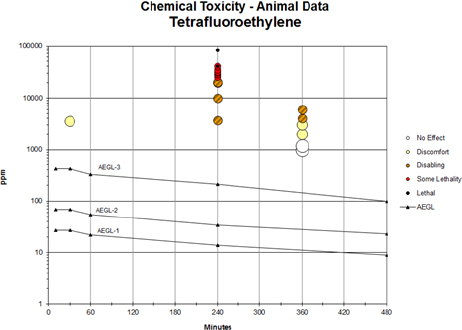
FIGURE B-1 Category plot of toxicity data and AEGL values for tetrafluoroethylene.
TABLE B-1 Data Used in Category Plot for Tetrafluoroethylene
| Source | Species | ppm | Minutes | Category |
| AEGL-1 | 27 | 10 | AEGL | |
| AEGL-1 | 27 | 30 | AEGL | |
| AEGL-1 | 22 | 60 | AEGL | |
| AEGL-1 | 14 | 240 | AEGL | |
| AEGL-1 | 9 | 480 | AEGL | |
| AEGL-2 | 69 | 10 | AEGL | |
| AEGL-2 | 69 | 30 | AEGL | |
| AEGL-2 | 55 | 60 | AEGL | |
| AEGL-2 | 34 | 240 | AEGL | |
| AEGL-2 | 23 | 480 | AEGL | |
| AEGL-3 | 420 | 10 | AEGL | |
| AEGL-3 | 420 | 30 | AEGL | |
| AEGL-3 | 330 | 60 | AEGL |
| Source | Species | ppm | Minutes | Category |
| AEGL-3 | 100 | 480 | AEGL | |
| AEGL-3 | 210 | 240 | AEGL | |
| Dilley et al. 1974 | Rat | 3,500 | 30 | 1, reversible renal changes |
| Haskell Laboratory 1977 | Rat | 3,700 | 240 | 2, renal tubule fibrosis |
| Haskell Laboratory 1959 | Rat | 10,000 | 240 | 2, no mortality |
| Haskell Laboratory 1959 | Rat | 20,000 | 240 | 2, no mortality |
| Haskell Laboratory 1980 | Hamster | 20,700 | 240 | 2, no mortality |
| Haskell Laboratory 1980 | Hamster | 25,000 | 240 | SL, 10% mortality |
| Sakharova and Tolgskaya 1977 | Guinea pig | 28,000 | 240 | SL, 50% mortality |
| Haskell Laboratory 1980 | Hamster | 28,500 | 240 | SL, 50% mortality |
| Haskell Laboratory 1980 | Hamster | 30,000 | 240 | SL, 70% mortality |
| Sakharova and Tolgskaya 1977 | Rat | 31,500 | 240 | SL, 50% mortality |
| Sakharova and Tolgskaya 1977 | Mouse | 35,000 | 240 | SL, 50% mortality |
| Haskell Laboratory 1959 | Rat | 40,000 | 240 | SL, 50% mortality |
| Haskell Laboratory 1980 | Hamster | 40,100 | 240 | 3, 100% mortality |
| Haskell Laboratory 1959 | Rat | 80,000 | 240 | 3, 100% mortality |
| Odum and Green 1984 | Rat | 1,000 | 360 | 0, no effects |
| Keller et al. 2000 | Rat and | 1,200 | 360 | 0, no renal cell proliferation |
| mouse | ||||
| Odum and Green 1984 | Rat | 2,000 | 360 | 1, no renal effects |
| Odum and Green 1984 | Rat | 3,000 | 360 | 1, nonsignificant clinical |
| chemistry changes | ||||
| Odum and Green 1984 | Rat | 4,000 | 360 | 2, significant clinical |
| chemistry changes | ||||
| Odum and Green 1984 | Rat | 6,000 | 360 | 2, renal necrosis |
For category: 0 = no effect, 1 = discomfort, 2 = disabling, SL = some lethality, 3 = lethal.
APPENDIX C
CANCER ASSESSMENT OF TETRAFLUOROETHYLENE
The US Environmental Protection Agency (EPA) has not conducted a cancer assessment of tetrafluoroethylene. NTP (1997) has conducted cancer bioassays for this chemical in F344 rats and B6C3F1 mice. There was clear evidence of carcinogenicity in male and female rats and male and female mice.
Groups of 60 male F344/N rats were exposed to tetrafluoroethylene at 0, 156, 312, or 625 ppm for 6 h/day, 5 days/week for 104 weeks (NTP 1997). A statistically significant increase in hepatocellular adenomas or carcinomas (4/50, 7/50, 15/50, and 8/50) and renal tubule adenoma or carcinoma (single sections 1/50, 0/50, 6/50, and 3/50; single and step sections 3/50, 5/50, 9/50, and 13/50) were found. The incidence of any of these tumors in male rats was 5/50, 7/50, 16/50, and 11/50 with increasing concentration.
Groups of 60 female rats were exposed to tetrafluoroethylene at 0, 312, 625, or 1,250 ppm for 6 h/day, 5 days/week for 104 weeks (NTP 1997). A statistically significant increase in hepatocellular adenoma or carcinoma (0/50, 7/50, 12/50, and 8/50), hepatic hemangiosarcoma (0/50, 0/50, 5/50, and 1/50), renal tubule adenoma or carcinoma (single sections 0/50, 3/50, 1/50, and 5/50; single and step sections 0/50, 3/50, 3/50, and 10/50), and mononuclear cell leukemia (16/50, 31/50, 23/50, and 36/50) was found. The incidence of any of these tumors in female rats was 16/50, 33/50, 32/50, and 41/50 with increasing concentration.
In the same study (NTP 1997), groups of 58 male and 58 female B6C3F1 mice were exposed to tetrafluoroethylene at 0, 312, 625, or 1,250 ppm for 95-96 weeks. In male mice, a statistically significant increase in the incidences of hepatic hemangioma or hemangiosarcoma (0/48, 26/48, 30/48, and 38/48), hepatocellular adenoma or carcinoma (26/48, 34/48, 39/48, and 35/48), and histiocytic sarcoma in all organs (0/48, 12/48, 7/48, and 7/48) was found. The incidence of any of these tumors in male mice was 24/48, 35/48, 47/48, and 44/48 with increasing concentration. In female mice, a statistically significant increase in the incidences of hepatic hemangioma or hemangiosarcoma (0/48, 31/48, 28/47, and 35/47), hepatocellular adenoma or carcinoma (17/48, 33/48, 29/47, and 28/47), and histiocytic sarcoma in all organs (1/48, 21/48, 19/47, and 18/48) was found. The incidence of any of these tumors in female mice was 17/48, 45/48, 45/48, and 44/48 with increasing concentration.
These data were used to derive an inhalation unit risk for tetrafluoroethylene using procedures consistent with EPA (1994, 2005) guidelines. The total cancer risk of any tumor is the value of interest; therefore, the data on the incidence of any tumor that was statistically significant was used. The derivation of the inhalation unit risk was calculated after conversion to continuous exposure (24 h/day and 7 days/week) as described in EPA (1994). Exposure in the bioassay in ppm was multiplied by 6 h/24 h and 5 days/7 days. The multi-stage model was used to calculate the lower 95% confidence limit for a 10% tumor response (BMCL10). If data from all concentrations did not provide an adequate fit, the highest concentration was omitted. The inhalation unit risk was calculated by dividing 0.1 by the BMCL10. The calculated inhalation unit risks from the individual bioassays were 0.00598 (ppm)-1 for male rats, 0.00798 (ppm)-1 for
female rats, 0.0149 (ppm)-1 for male mice, and 0.0413 (ppm)-1 for female mice. The geometric mean of these values (0.013 [ppm]-1 or 5.32 × 10⁻² [mg/m3]-1) was used in the calculation of the carcinogenicity assessment as described in NRC (2001).
Calculations to estimate a concentration of tetrafluoroethylene that would cause a theoretical excess cancer risk of 10-4 are presented below:
Risk of 1 × 10⁻⁴: (1 × 10⁻⁴ risk) ÷ (5.32 × 10⁻² mg/m3)-1 = 1.88 × 10⁻³ mg/m3
To convert 1.88 × 10⁻³ mg/m3 for a 70-year exposure (25,600 h) to a 24-h exposure:
24-h exposure = dose × 25,600 h
= (1.88 × 10⁻³ mg/m3) × 25,600
= 48.15 mg/m3
To account for uncertainty regarding the variability in the stage of the cancer process at which tetrafluoroethylene may act, a multistage factor of 6 is applied (Crump and Howe 1984):
(48.15 mg/m3) ÷ 6 = 8.0 mg/m3 (2.0 ppm)
Therefore, on the basis of potential carcinogenicity of tetrafluoroethylene, an acceptable 24-h exposure would be 8 mg/m3 (2.0 ppm). If the exposure is limited to a fraction of a 24-h period, the fractional exposure becomes 1/fraction × 24 h (NRC 1985).
24-h exposure = 8.0 mg/m3 (2.0 ppm)
8-h exposure = 24 mg/m3 (5.9 ppm)
4-h exposure = 48 mg/m3 (12 ppm)
1-h exposure = 192 mg/m3 (47 ppm)
0.5-h exposure = 385 mg/m3 (94 ppm)
For 10-5 or 10-6 risk levels, the 10-4 values are reduced by 10-fold or 100-fold. The mechanism of action that leads to renal tumor formation may be attributed to renal tubule damage via the processing of the glutathione conjugate. Cell necrosis followed by constant regeneration of the epithelium in the kidney (increased cell proliferation) results in greater opportunity for error in DNA synthesis and mutation. The mechanism of action leading to neoplasms in the liver and other organs is unclear. No treatment-related lesions of the liver in rats or mice of either sex were found after 16-day or 13-week exposures to tetrafluoroethylene at 5,000 ppm for 6 h/day, 5 days/week, although hepatic weights were increased (NTP 1997). Because of the uncertainties inherent in assessing excess cancer risk following a single acute exposure of 8 h or less duration, the acute toxicity values were used to set the AEGL values for tetrafluoroethylene.
APPENDIX D
ACUTE EXPOSURE GUIDELINE LEVELS FOR TETRAFLUOROETHYLENE
Derivation Summary
AEGL-1 VALUES
| 10 min | 30 min | 1 h | 4 h | 8 h |
| 27 ppm | 27 ppm | 22 ppm | 14 ppm | 9 ppm |
| Key reference: Keller, D.A., G.L. Kennedy, Jr., P.E. Ross, D.P. Kelly, and G.S. Elliott. 2000. Toxicity of tetrafluoroethylene and S-(1,1,2,2-tetrafluoroethyl)-L-cysteine in rats and mice. Toxicol. Sci. 56(2):414-423. | ||||
| Test species/Strain/Number: Rat, F344, 25 females/group. Mice; B6C3F1, 24 females/group. | ||||
| Exposure route/Concentrations/Durations: Inhalation; 0, 31, 300, 600, or 1,200 ppm for 6 h | ||||
| Effects: No biologically significant effect on cell proliferation at any concentration | ||||
| End point/Concentration/Rationale: NOAEL for reversible renal effects (1,200 ppm for 6 h) | ||||
| Uncertainty factors/Rationale: | ||||
| Total uncertainty factor: 100 | ||||
| Interspecies: 10, because data on interspecies differences in the toxicokinetics of tetrafluoroethylene are lacking | ||||
| Intraspecies: 10, because data on variability in the toxicokinetics of tetrafluoroethylene in humans are lacking and because of evidence that polymorphisms in several of the enzymes in the bioactivation pathway for this and related compounds may modify susceptibility | ||||
| Modifying factor: None | ||||
| Animal-to-human dosimetric adjustment: Not applied | ||||
| Time scaling: Cn × t = k; default values of n = 3 for extrapolating to shorter durations and n = 1 for extrapolating to longer durations were used (NRC 2001). Because of the uncertainty associated with time scaling a 6-h point-of-departure to a 10-min value, the 10-min AEGL-1 value was set equal to the 30-min AEGL-1 value. | ||||
| Data adequacy: The key study was well-conducted. Additional animal studies conducted at higher concentrations show a continuum of renal toxicity. | ||||
AEGL-2 VALUES
| 10 min | 30 min | 1 h | 4 h | 8 h |
| 69 ppm | 69 ppm | 55 ppm | 34 ppm | 23 ppm |
| Key reference: Odum, J., and T. Green. 1984. The metabolism and nephrotoxicity of tetrafluoroethylene in the rat. Toxicol. Appl. Pharmacol. 76(2):306-318. | ||||
| Test species/Strain/Number: Rat; Wistar-derived; 4 males/group | ||||
| Exposure route/Concentrations/Durations: Inhalation; 0, 1,000, 2,000, 3,000, 4,000, or 6,000 ppm for 6 h | ||||
| Effects: | ||||
| 1 000 ppm: no observed effects | ||||
| 2,000 ppm: NOAEL for renal effects | ||||
| 3,000 ppm: threshold for urinary glucose and enzyme changes | ||||
| 4,000 ppm: significant increases in urinary glucose and enzyme activities | ||||
| (no histologic examination) | ||||
| 6,000 ppm: renal necrosis (histologic examination) | ||||
| End point/Concentration/Rationale: NOAEL for renal necrosis (3,000 ppm for 6 h) | ||||
| Uncertainty factors/Rationale: | ||||
| Total uncertainty factor: 100 | ||||
| Interspecies: 10, because data on interspecies differences in the toxicokinetics of tetrafluoroethylene are lacking | ||||
| Intraspecies: 10, because data on variability in the toxicokinetics of tetrafluoroethylene in humans are lacking and because of evidence that polymorphisms in several of the enzymes in the bioactivation pathway for this and related compounds may modify susceptibility | ||||
| Modifying factor: None | ||||
| Animal-to-human dosimetric adjustment: Not applied | ||||
| Time scaling: Cn × t = k; default values of n = 3 for extrapolating to shorter durations and n = 1 for extrapolating to longer durations were used (NRC 2001). Because of the uncertainty associated with time scaling a 6 h point-of-departure to a 10-min value, the 10-min AEGL-2 value was set equal to the 30-min AEGL-2 value. | ||||
| Data adequacy: The key study was well-conducted. That study and other animal studies of tetrafluoroethylene at other concentrations showed a continuum of renal toxicity. | ||||
AEGL-3 VALUES
| 10 min | 30 min | 1 h | 4 h | 8 h |
| 420 ppm | 420 ppm | 330 ppm | 210 ppm | 100 ppm |
| Key reference: Haskell Laboratory. 1980. Inhalation Median Lethal Concentration (LC50) in Hamsters. Haskell Laboratory Report No. 809-80. DuPont Co., Haskell Laboratory, Newark, DE. | ||||
| Test species/Strain/Number: Hamster; Syrian; 10 males/group | ||||
| Exposure route/Concentrations/Durations: Inhalation; 10,200, 20,700, 25,000, 30,000, 40,100, or 78,700 ppm for 4 h | ||||
| Effects: | ||||
| 10,200 ppm: 0% mortality | ||||
| 20,700 ppm: 0% mortality | ||||
| 25,000 ppm: 10% mortality | ||||
| 30,000 ppm: 70% mortality | ||||
| 40,100 ppm: 100% mortality | ||||
| 78,700 ppm: 100% mortality | ||||
| End point/Concentration/Rationale: 4-h BMCL05 of 20,822 ppm | ||||
| Uncertainty factors/Rationale: | ||||
| Total uncertainty factor: 100 | ||||
| Interspecies: 10, because data on interspecies differences in the toxicokinetics of tetrafluoroethylene are lacking | ||||
| Intraspecies: 10, because data on variability in the toxicokinetics of tetrafluoroethylene in humans are lacking and because of evidence that polymorphisms in several of the enzymes in the bioactivation pathway for this and related compounds may modify susceptibility | ||||
| Modifying factor: None | ||||
| Animal-to-human dosimetric adjustment: Not applied | ||||
| Time scaling: Cn × t = k; default values of n = 3 for extrapolating to shorter durations and n = 1 for extrapolating to longer durations were used (NRC 2001). Because of the uncertainty associated with time scaling a 4-h point-of-departure to a 10-min value, the 10-min AEGL-3 value was set equal to the 30-min AEGL-3 value. | ||||
| Data adequacy: The results of the key study are supported by a similar mortality pattern in rats (Haskell Laboratory 1959). | ||||
This page intentionally left blank.


