Acute Exposure Guideline Levels for Selected Airborne Chemicals: Volume 19 (2015)
Chapter: 2 Diketene Acute Exposure Guideline Levels
Acute Exposure Guideline Levels
PREFACE
Under the authority of the Federal Advisory Committee Act (FACA) P.L. 92-463 of 1972, the National Advisory Committee for Acute Exposure Guideline Levels for Hazardous Substances (NAC/AEGL Committee) has been established to identify, review, and interpret relevant toxicologic and other scientific data and develop AEGLs for high-priority, acutely toxic chemicals.
AEGLs represent threshold exposure limits for the general public and are applicable to emergency exposure periods ranging from 10 minutes (min) to 8 hours (h). Three levels—AEGL-1, AEGL-2, and AEGL-3—are developed for each of five exposure periods (10 and 30 min and 1, 4, and 8 h) and are distinguished by varying degrees of severity of toxic effects. The three AEGLs are defined as follows:
AEGL-1 is the airborne concentration (expressed as parts per million or milligrams per cubic meter [ppm or mg/m3]) of a substance above which it is predicted that the general population, including susceptible individuals, could experience notable discomfort, irritation, or certain asymptomatic, nonsensory effects. However, the effects are not disabling and are transient and reversible upon cessation of exposure.
____________________
1This document was prepared by the AEGL Development Team composed of Kowetha Davidson (Oak Ridge National Laboratory), Lisa Ingerman (SRC, Inc.), Heather Carlson-Lynch (SRC, Inc.), Chemical Manager Robert Benson (National Advisory Committee [NAC] on Acute Exposure Guideline Levels for Hazardous Substances), and Ernest V. Falke (U.S. Environmental Protection Agency). The NAC reviewed and revised the document and AEGLs as deemed necessary. Both the document and the AEGL values were then reviewed by the National Research Council (NRC) Committee on Acute Exposure Guideline Levels. The NRC committee has concluded that the AEGLs developed in this document are scientifically valid conclusions based on the data reviewed by the NRC and are consistent with the NRC guidelines reports (NRC 1993, 2001).
AEGL-2 is the airborne concentration (expressed as ppm or mg/m3) of a substance above which it is predicted that the general population, including susceptible individuals, could experience irreversible or other serious, long-lasting adverse health effects or an impaired ability to escape.
AEGL-3 is the airborne concentration (expressed as ppm or mg/m3) of a substance above which it is predicted that the general population, including susceptible individuals, could experience life-threatening health effects or death.
Airborne concentrations below the AEGL-1 represent exposure concentrations that could produce mild and progressively increasing but transient and nondisabling odor, taste, and sensory irritation or certain asymptomatic, nonsensory effects. With increasing airborne concentrations above each AEGL, there is a progressive increase in the likelihood of occurrence and the severity of effects described for each corresponding AEGL. Although the AEGL values represent threshold concentrations for the general public, including susceptible subpopulations, such as infants, children, the elderly, persons with asthma, and those with other illnesses, it is recognized that individuals, subject to idiosyncratic responses, could experience the effects described at concentrations below the corresponding AEGL.
SUMMARY
Diketene is a non-hygroscopic, light-colored or colorless liquid that is polymerized on standing. It is flammable and has a moderate fire risk. Diketene has a pungent odor. It is an irritant, causing mild irritation of the eyes, nose, and throat after occupational exposure at 0.58 ppm for 1 min. Inhalation of diketene was not lethal to rats at 250 ppm for 1 h or to rabbits at 194 ppm for 10 min, but deaths occurred in rats exposed at 500 or 750 ppm for 1 h. Rats exposed to diketene at 250-750 ppm for 1 h showed signs of ocular and respiratory-tract irritation. Deaths occurred in mice exposed to diketene at 870 ppm for 10 min and in guinea pigs exposed at 194 ppm for 10 min. Pulmonary edema was found in the animals that died. The 1-h LC50 (lethal concentration, 50% lethality) values for rats were 548 ppm for males, 689 ppm for females, and 612 ppm for both sexes combined.
Data were insufficient for deriving AEGL-1 values for diketene. Therefore, AEGL-1 values are not recommended.
Data were also insufficient for deriving AEGL-2 values for diketene. The standing operating procedures for deriving AEGL values specify that AEGL-2 values for chemicals with steep concentration-response curves may be estimated by dividing the AEGL-3 values by a factor of 3. The steepness of the lethality concentration-response curve for diketene indicates that a factor of 3 should be adequate for reducing the AEGL-3 values to a level consistent with the definition of AEGL-2.
AEGL-3 values were derived on the basis of an acute inhalation study in which rats were exposed to diketene at 250, 500, or 750 ppm for 1 h (Katz
1987). The point-of-departure was the lethality BMCL05 (benchmark concentration, 95% lower confidence limit with 5% response) of 181 ppm, which was calculated using a log-probit model. A total uncertainty factor of 30 was applied; a factor of 10 for interspecies differences and a factor of 3 for intraspecies variability. Diketene is irritating and much of its toxicity is likely caused by a direct chemical effect on the tissue; that type of portal-of-entry effect is not expected to vary greatly among individuals. The intraspecies uncertainty factor of 3 is further supported by the similarity in mortality incidence and clinical signs between male and female rats exposed to diketene (Katz 1987). A modifying factor of 2 was also applied because of the limited database on diketene. Time scaling was performed using the equation Cn × t = k. Data on diketene were insufficient for determining an empirical value for the exponent n, so default values of n = 3 for extrapolating to shorter durations (10 and 30 min) and n = 1 for extrapolating to longer durations (4 and 8 h) were used.
The AEGL values for diketene are presented in Table 2-1.
1. INTRODUCTION
Diketene is a light-colored or colorless non-hygroscopic liquid that polymerizes on standing (AIHA 2000; Lewis 2007). It is flammable and has a moderate fire risk. Diketene is used in the production of pigments and toners, pesticides, food preservatives, and pharmaceutical intermediates (HSDB 2003; Lewis 2007). The odor of diketene has been described as pungent (Lewis 2007).
The chemical and physical properties of diketene are presented in Table 2-2.
2. HUMAN TOXICITY DATA
2.1. Human Lethality
No data regarding exposure of humans to lethal concentrations of diketene were found.
TABLE 2-1 AEGL Values for Diketene
| Classification | 10 min | 30 min | 1 h | 4 h | 8 h | End Point (Reference) |
| AEGL-1 (nondisabling) |
NRa | NRa | NRa | NRa | NRa | Insufficient data |
| AEGL-2 (disabling) |
1.8 ppm (6.2 mg/m3) |
1.3 ppm (4.5 mg/m3) |
1.0 ppm (3.4 mg/m3) |
0.25 ppm (0.86 mg/m3) |
0.13 ppm (0.45 mg/m3) |
One-third of the AEGL-3 values. |
| AEGL-3 (lethal) |
5.5ppm (19 mg/m3) |
3.8 ppm (13 mg/m3) |
3.0 ppm (10 mg/m3) |
0.75 ppm (2.6 mg/m3) |
0.38 ppm (1.3 mg/m3) |
BMCL05 for lethality (Katz 1987) |
aNot recommended. Absence of AEGL-1 values does not imply that exposures at concentrations below the AEGL-2 values are without effect.
TABLE 2-2 Chemical and Physical Properties of Diketene
| Parameter | Value | References |
| Synonyms | 3-Butenoic acid, 3-hydroxy-, beta-lacone; ethenone, dimer; ketene, dimer; 4-methylene-2-oxetanone; vinylaceto-beta-lactone | HSDB 2003 |
| CAS registry no. | 674-82-8 | HSDB 2003 |
| Chemical formula | C4H4O2 | HSDB 2003 |
| Molecular weight | 84.08 | HSDB 2003 |
| Physical state | Light-colored or colorless liquid | AIHA 2000; |
| Lewis 2007 | ||
| Melting point | -6.5°C | HSDB 2003 |
| Boiling point | 127.4°C | HSDB 2003 |
| Density/Specific gravity | 1.096 (20/20°C) | Lewis 2007 |
| (water = 1) | 1.0897 | HSDB 2003 |
| Vapor density (air = 1) | 2.9 | HSDB 2003 |
| Solubility | Soluble in common organic solvents; soluble in water | Lewis 2007 |
| Vapor pressure | 10 mm Hg at 24.3°C | AIHA 2000 |
| 1.07 kPa at 20°C | HSDB 2003 | |
| Flash point (tagged closed cup) | 34°C | AIHA 2000 |
| Autoignition temperature | 310°C | AIHA 2000 |
| Conversion factors | 1 mg/m3 = 0.29 ppm; 1 ppm = 3.44 mg/m3 |
AIHA 2000 |
2.2. Nonlethal Toxicity
Occupational exposure to diketene at a concentration of 2 mg/m3 (0.58 ppm) for 1 min caused mild irritation of the conjunctiva and mucosa of the nose and throat (Danishevskii 1948,1951; Feldman 1967).
2.3. Summary
No studies were found on human exposure to lethal concentrations of diketene. A concentration of 0.58 ppm caused mild ocular, nasal, and throat irritation.
3. ANIMAL TOXICITY DATA
3.1. Acute Lethality
3.1.1. Rat
Groups of five male and five female CRL:CD®(SD)BR rats were exposed to diketene at concentrations of 0, 250, 500, or 750 ppm for 1 h and observed for 14 days after exposure (Katz 1987). The analytic concentrations were 271 ± 2.4, 466 ± 13.7, and 778 ± 16.9 ppm, respectively. The rats were exposed in a 420-L
stainless steel and glass chamber with 10-13 air changes per hour. The chamber atmosphere was analyzed four or five times using an infrared analyzer; the nominal concentration was calculated on the basis of the amount of diketene used and the air flow rate. All rats were subjected to gross examination, but no tissues were collected for microscopic examination.
Mortality and clinical signs are summarized in Table 2-3. The mortality rate was 0/10, 3/10, and 7/10 rats (sexes combined) in the 250-, 500-, and 750-ppm groups, respectively. All deaths occurred within 48 h after exposure, except for one male rat exposed at 750 ppm that died on day 6. The LC50 values were 548 ppm for male rats, 689 ppm for female rats, and 612 ppm for both sexes combined. LC10 values calculated by the investigators were 346 ppm for males, 410 ppm for females, and 370 ppm for both sexes combined. All rats exposed to diketene exhibited excessive tearing (lacrimation) during exposure and for a few hours after exposure. Porphyrin discharge from the nose was observed in male and female rats for up to 48 h after exposure at 500 and 750 ppm. Effects on the respiratory tract consisted of gasping in all rats at all concentrations and wheezing in one or two rats per group. Rales were observed in one male rat in each exposure group and one female in the 500-ppm group, but the effect might not have been due to diketene, because no increase in the incidence of rales occurred with a 15-fold increase in the exposure concentration. No gross lesions were found in any rats exposed to diketene.
3.1.2. Mice
Wooster et al. (1947) exposed groups of 4, 30, and 20 mice to diketene at concentrations of 194, 580, or 870 ppm, respectively, for 10 min. Diketene was prepared at a known concentration in acetone and sprayed into the chamber from a glass atomizer; the concentration of diketene in inhaled air was 0.67 mg/L (194 ppm). The animals were observed for up to 15 days after exposure. No additional details on the experimental protocol were provided. One mouse died
TABLE 2-3 Mortality and Clinical Signs in Rats Exposed to Diketene
| Exposure Concentration | ||||||||
| 0 | 250 | 500 | 750 | 0 | 250 | 500 | 750 | |
| Parameter | No. males | No. females | ||||||
| No. exposed | 0 | 5 | 5 | 5 | 0 | 5 | 5 | 5 |
| Mortality | 0 | 0 | 2 | 4 | 0 | 0 | 1 | 3 |
| Excessive tearing | 0 | 5 | 5 | 5 | 0 | 5 | 5 | 5 |
| Porphyrin discharge | 0 | 0 | 2 | 2 | 0 | 0 | 2 | 3 |
| Gasping | 0 | 5 | 5 | 5 | 0 | 5 | 5 | 5 |
| Rales | 0 | 1 | 1 | 1 | 0 | 0 | 1 | 0 |
| Wheezing | 0 | 1 | 0 | 0 | 0 | 0 | 1 | 2 |
| Poor condition | 0 | 0 | 0 | 4 | 0 | 0 | 0 | 1 |
Source: Katz 1987.
after exposure at 870 ppm, but no deaths occurred in mice exposed at 580 or 194 ppm. No specific clinical signs or pathologic findings were described. The investigators noted that the findings in the animals that died were similar to those described for animals (particularly the cat) exposed to ketene. Microscopically, animals that died after ketene exposure had proteinaceous edematous fluid in the alveoli of the lungs and in the perivascular connective tissue of the bronchial and bronchiolar vessels. After describing the microscopic lesions in animals that died after ketene exposure, Wooster et al. (1947) stated that “the findings in the few animals dying after diketene poisoning were similar.” That suggests that the mice that died after exposure to diketene had alveolar and bronchial edema (pulmonary edema).
3.1.3. Other Species
All three guinea pigs died after exposure to diketene at 194 ppm under the same conditions as described for mice (see Section 3.1.2) (Wooster et al. 1947). No clinical signs or pathologic effects were described. From the investigators’ description that the findings in the dead animals were similar to those of animals that died from ketene exposure, it was implied that the guinea pigs also had pulmonary edema.
3.2. Nonlethal Toxicity
Wooster et al. (1947) exposed four rats and three rabbits to diketene at 0.67 mg/L (194 ppm) for 10 min under the same conditions as described for mice (see Section 3.1.2). All of the animals survived to the end of the study. No clinical signs or pathologic lesions were described.
3.3. Other End Points of Toxicity
No data were found on the neurotoxicity, developmental toxicity, reproductive toxicity, genetic toxicity, or carcinogenicity of inhaled diketene in experimental animals.
3.4. Summary
Table 2-4 summarizes the lethal effects of acute inhalation exposure to diketene in several species. The LC50 for a 1-h exposure of rats to diketene ranged from 548 to 689 ppm. Rats died after exposure to diketene at concentrations 500 or 750 ppm for 1 h, guinea pigs died after exposure at 194 ppm for 10 min, and mice died after exposure at 870 ppm for 10 min. No deaths occurred in rats and rabbits after exposure to diketene at 194 ppm for 10 min. Ocular and respiratory-tract irritation were observed in rats exposed at lethal and nonlethal concentrations
of diketene greater than 250 ppm. The primary findings in mice and guinea pigs exposed to diketene were the same as those found in the cat that died after exposure to ketene (alveolar and bronchial edema or pulmonary edema).
4. SPECIAL CONSIDERATIONS
4.1. Metabolism and Disposition
No data on the uptake, metabolism, disposition, or excretion of inhaled diketene were found.
4.2. Mechanism of Toxicity
Diketene is an irritant (Lewis 2007). Wooster et al. (1947) noted that the pathologic changes caused by ketene were similar to those of phosgene.
4.3. Structure-Activity Relationships
Diketene is the dimeric form of ketene, and is similar to but less toxic than ketene. At high temperatures (510-603°K), diketene undergoes thermal decomposition to form ketene, cyclobuta-1,3-dione, and cyclobuta-1,2-dione (Bui et al. 2007). Wooster et al. (1947) exposed rats, cats, guinea pigs, and rabbits to ketene for 10 min and observed the survivors for up to 15 days. Ketene exposure caused severe damage to the respiratory tract (pulmonary edema), but the pathologic effects were described only for cats. The lowest concentrations associated
TABLE 2-4 Summary of Acute Lethality Data from Studies of Laboratory Animals Exposed to Diketene by Inhalation
| Species (sex) | Concentration | Exposure Time | Effect (% lethality) | Reference |
| Rat | 194 | 10 min | 0% | Wooster et al. 1947 |
| Rat (females) | 689 | 1 h | LC50 | Katz 1987 |
| Rat (males and females) | 612 | 1 h | LC50 | Katz 1987 |
| Rat (males) | 548 | 1 h | LC50 | Katz 1987 |
| Rat (females) | 410 | 1 h | LC10 | Katz 1987 |
| Rat (males and females) | 370 | 1 h | LC10 | Katz 1987 |
| Rat (males) | 346 | 1 h | LC10 | Katz 1987 |
| Mouse | 870 | 10 min | 5% | Wooster et al. 1947 |
| Mouse | 194-580 | 10 min | 0% | Wooster et al. 1947 |
| Guinea pig | 194 | 10 min | 100%a | Wooster et al. 1947 |
| Rabbit | 194 | 10 min | 0% | Wooster et al. 1947 |
aOnly three animals exposed.
with mortality were 35 ppm for the mouse, 125 ppm for the rat, 183 ppm for the cat and guinea pig, and 325 ppm for the rabbit. In contrast, no deaths were observed in mice exposed to diketene at 194-580 ppm for 10 min, and 100% mortality occurred in rabbits exposed to diketene at 194 ppm for 10 min (Wooster et al. 1947).
4.4. Species Variability
According to Wooster et al. (1947), guinea pigs died after exposure to diketene at 194 ppm for 10 min, but mice, rats, and rabbits survived a 10-min exposure at 194 ppm. Thus, the guinea pig appears to be more sensitive than other species to diketene.
4.5. Susceptible Populations
No data are available on populations that might be susceptible to diketene.
4.6. Concentration-Exposure Duration Relationship
Lethality data from the study by Katz (1987) was used to create Figure 2-1, which shows a steep concentration-response curve. See Section 3.1.1. for a description of the study.
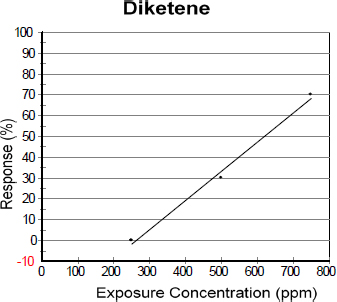
FIGURE 2-1 Concentration-response relationship between diketene and lethality in rats.
4.7. Concurrent Exposure Issues
No concurrent exposure issues for diketene were found.
5. DATA ANALYSIS FOR AEGL-1
5.1. Human Data Relevant to AEGL-1
Humans occupationally exposed to diketene at 0.58 ppm for 1 min experienced mild irritation of the eyes, nose, and throat (Danishevskii 1948, 1951).
5.2. Animal Data Relevant to AEGL-1
No animal data relevant to deriving AEGL-1 values for diketene were found.
5.3. Derivation of AEGL-1 Values
No AEGL-1 values were derived for diketene. The only data available for deriving AEGL-1 values are from a study in which workers exposed to diketene at 0.58 ppm were reported to experience mild irritation of the eyes, nose, and throat. That information is from a secondary source and could not be verified, so the data are considered insufficient for deriving AEGL-1 values. Absence of AEGL-1 values does not imply that exposures at concentrations below the AEGL-2 values are without adverse effects.
6. DATA ANALYSIS FOR AEGL-2
6.1. Human Data Relevant to AEGL-2
No human data relevant to deriving AEGL-2 values for diketene were found.
6.2. Animal Data Relevant to AEGL-2
Lacrimation and gasping were observed in rats exposed to diketene at 250 ppm for 1 h, and none of the animals died (Katz 1987). No deaths occurred among groups of mice exposed to diketene at 194-580 ppm for 10 min (Wooster et al. 1947).
6.3. Derivation of AEGL-2 Values
The experimental data from animal studies were not appropriate for deriving AEGL-2 values for diketene. Although rats exposed at 250 ppm for 1 h
showed clinical signs indicative of ocular and respiratory-tract irritation and no deaths occurred (Katz 1987), the BMCL05 for lethality (used as the point-of-departure for deriving AEGL-3 values) was lower than the highest concentration causing no lethality in rats. Therefore, the rat study should not be used to derive AEGL-2 values. The standing operating procedures for deriving AEGL values specify that AEGL-2 values for chemicals with steep concentration-response curves may be estimated by dividing the AEGL-3 values by 3 (NRC 2001). Because diketene is judged to have a steep concentration-response relationship for lethality, that approach was used to determine AEGL-2 values for diketene. The AEGL-2 values for diketene are presented in Table 2-5.
7. DATA ANALYSIS FOR AEGL-3
7.1. Human Data Relevant to AEGL-3
No human data relevant to deriving AEGL-3 values for diketene were found.
7.2. Animal Data Relevant to AEGL-3
In an acute inhalation study using rats exposed to diketene vapor (250, 500, and 750 ppm) for 1 h (Katz 1987), deaths occurred at the two highest concentrations. The exposure conditions and results of the study were well documented. Wooster et al. (1947) reported that one of 20 mice died after exposure to diketene at 870 ppm for 10 min and all three guinea pigs exposed to diketene at 194 ppm for 10 min died. These data show that the guinea pig is the more sensitive species to diketene.
7.3. Derivation of AEGL-3 Values
The AEGL-3 values were derived on the basis of the mortality study of rats exposed to diketene at 250, 500, or 750 ppm for 1 h (Katz 1987). A BMCL05 of 181 ppm was calculated using the log-probit model in EPA’s Benchmark Dose Software (v. 1.3.2), and an LC01 (lethality threshold, 1% lethality) of 276 ppm was calculated by probit regression analysis. The BMCL05 of 181 ppm was used as point-of-departure for deriving AEGL-3 values. A total uncertainty factor of 30 was applied; a factor of 10 for interspecies differences and a factor of 3 for intraspecies variability. The factor of 3 was applied because diketene is
TABLE 2-5 AEGL-2 Values for Diketene
| 10 min | 30 min | 1 h | 4 h | 8 h |
| 1.8 ppm | 1.3 ppm | 1.0 ppm | 0.25 ppm | 0.13 ppm |
| (6.2 mg/m3) | (4.5 mg/m3) | (3.4 mg/m3) | (0.86 mg/m3) | (0.45 mg/m3) |
irritating and much of its toxicity is likely caused by a direct chemical effect on the tissue. That type of portal-of-entry effect is not expected to vary greatly among individuals. A factor of 3 is further supported by the fact that mortality incidences and clinical signs were similar between male and female rats exposed to diketene (Katz 1987). A modifying factor of 2 was also applied because of the limited database on diketene. Time scaling was performed using the equation Cn × t = k. The data on diketene were inadequate to determine an empirical value for the exponent n, so default values of n = 3 when extrapolating to shorter durations (10 and 30 min) and n = 1 when extrapolating to longer durations (4 and 8 h) were used. The AEGL-3 values for diketene are presented in Table 2-6.
8. SUMMARY OF AEGLS
8.1. AEGL Values and Toxicity End Points
The AEGL values for diketene are presented in Table 2-7. AEGL-1 values are not recommended because of insufficient data. AEGL-2 values were estimated by reducing the AEGL-3 values by a factor of 3. AEGL-3 values were derived from the BMCL05 for lethality calculated from an acute inhalation study in rats.
8.2. Other Standards and Guidelines
The Russian occupational exposure limit for diketene is 1 mg/m3 (0.29 ppm) (RTECS 2006). The AEGL-2 and AEGL-3 values for 1-h exposures are similar to the emergency response planning guidelines (ERPG-2 and ERPG-3) of the American Industrial Hygiene Association (AIHA 2000) (Table 2-8). No other standards or guidelines for diketene were found.
TABLE 2-6 AEGL-3 Values for Diketene
| 10 min | 30 min | 1 h | 4 h | 8 h |
| 5.5 ppm | 3.8 ppm | 3.0 ppm | 0.75 ppm | 0.38 ppm |
| (19 mg/m3) | (13 mg/m3) | (10 mg/m3) | (2.6 mg/m3) | (1.3 mg/m3) |
TABLE 2-7 AEGL Values for Diketene
| Classification | 10 min | 30 min | 1 h | 4 h | 8 h |
| AEGL-1 (nondisabling) |
NRa | NRa | NRa | NRa | NRa |
| AEGL-2 (disabling) |
1.8 ppm (6.2 mg/m3) |
1.3 ppm (4.5 mg/m3) |
1.0 ppm (3.4 mg/m3) |
0.25 ppm (0.86 mg/m3) |
0.13 ppm (0.45 mg/m3) |
| AEGL-3 (lethal) |
5.5 ppm (19 mg/m3) |
3.8 ppm (13 mg/m3) |
3.0 ppm (10 mg/m3) |
0.75 ppm (2.6 mg/m3) |
0.38 ppm (1.3 mg/m3) |
aNot recommended. Absence of AEGL-1 values does not imply that exposures at concentrations below the AEGL-2 values are without effect.
TABLE 2-8 Standards and Guidelines for Diketene
| Exposure Duration | |||||
| Guideline | 10 min | 30 min | 1 h | 4 h | 8 h |
| AEGL-1 | NR | NR | NR | NR | NR |
| AEGL-2 | 1.8 ppm | 1.3 ppm | 1.0 ppm | 0.25 ppm | 0.13 ppm |
| AEGL-3 | 5.5ppm | 3.8 ppm | 3.0 ppm | 0.75 ppm | 0.38 ppm |
| ERPG-1 (AIHA)a | – | – | 1 ppm | – | – |
| ERPG-2 (AIHA) | – | – | 5 ppm | – | – |
| ERPG-3 (AIHA) | – | – | 20 ppm | – | – |
aERPG (emergency response planning guideline, American Industrial Hygiene Association) (AIHA 2000).
The ERPG-1 is the maximum airborne concentration below which it is believed nearly all individuals could be exposed for up to 1 h without experiencing other than mild, transient adverse health effects or without perceiving a clearly defined objectionable odor. The ERPG-1 for diketene is based on the threshold-limit value for ketene.
The ERPG-2 is the maximum airborne concentration below which it is believed nearly all individuals could be exposed for up to 1 h without experiencing or developing irreversible or other serious health effects or symptoms that could impair an individual’s ability to take protective action. The ERPG-2 for diketene is based on clinical signs from a 1-h rat lethality study.
The ERPG-3 is the maximum airborne concentration below which it is believed nearly all individuals could be exposed for up to 1 h without experiencing or developing life-threatening health effects. The ERPG-3 is based on 1-h lethality data (LC50 of 612 ppm) in the rat.
8.3. Data Adequacy and Research Needs
Additional animal studies with exposure durations relevant to the AEGL durations other than 1 h and with at least one species other than rat are needed to better characterize the acute inhalation toxicity of diketene. The diketene concentrations tested should encompass the entire spectrum of AEGL end points, ranging from 90-100% lethality to no lethality and no-effect-levels for clinical signs and pathologic findings.
9. REFERENCES
AIHA (American Industrial Hygiene Association). 2000. Emergency Response Planning Guidelines: Diketene. Fairfax, VA: AIHA.
Bui, B., T.J. Tsay, M.C. Lin, and C.F. Melius. 2007. Theoretical and experimental studies of the diketene system: Product branching decomposition rate constants and energetics of isomers. Int. J. Chem. Kinet. 39(10):580-590.
Danishevskii, S.L. 1948. Farmakologija i Toksilkologija, No. 3, p. 58 (as cited in Feldman 1967).
Danishevskii, S.L. 1951. P. 187 in Voprosy Gigieny Truda i Professional’nih Zabolevanii, Vol. 10. Moskva: VOZ (as cited in Feldman 1967).
Feldman, Y.G. 1967. The experimental determination of the maximum permissible onetime concentration of diketene in the atmosphere. Hyg. Sanit. 32(1-3):9-14.
HSDB (Hazardous Substances Data Bank). 2003. Acetyl ketene (CAS Reg. No. 674-82-8). TOXNET, Specialized Information Services, U.S. National Library of Medicine, Bethesda, MD [online]. Available: http://toxnet.nlm.nih.gov/cgi-bin/sis/htmlgen?HSDB [accessed September 10, 2013].
Katz, G.V. 1987. Acute Inhalation Toxicity and One-Hour LC10 Value of Diketene in the Rat. Study No. TX-86-265, February 4, 1967. Toxicological Sciences Section, Health and Environment Laboratories, Eastman Kodak Company, Rochester, NY.
Lewis, Sr., R.J. 2007. Diketene (CAS Reg. No. 674-42-8). P. 437 in Hawley’s Condensed Chemical Dictionary, 14th Ed. New York: Wiley-Interscience.
NRC (National Research Council). 1993. Guidelines for Developing Community Emergency Exposure Levels for Hazardous Substances. Washington, DC: National Academy Press.
NRC (National Research Council). 2001. Standing Operating Procedures for Developing Acute Exposure Guideline Levels for Hazardous Chemicals. Washington, DC: National Academy Press.
RTECS (Registry of Toxic Effects of Chemical Substances). 2006. 4-methylene-2-oxeta-none (CASRN 674-82-8). RTECS No. RQ8225000 [online]. Available: http://www.cdc.gov/niosh/rtecs/rq7d80e8.html [accessed Nov. 21, 2014].
Wooster, H.A., C.C. Lushbaugh, and C.E. Redemann. 1947. The inhalation toxicity of ketene and ketene dimer. J. Ind. Hyg. Toxicol. 29(1):56-57.
APPENDIX A
DERIVATION OF AEGL VALUES FOR DIKETENE
Derivation of AEGL-1 Values
Insufficient data were available for deriving AEGL-1 values for diketene. Therefore, AEGL-1 values are not recommended. Absence of AEGL-1 values does not imply that exposures below the AEGL-2 values are without effect.
Derivation of AEGL-2 Values
The AEGL-2 values for diketene were estimated by dividing the respective AEGL-3 values by 3. That procedure is in accordance with the standing operating procedures for deriving AEGL values for chemicals with steep concentration-response curves (NRC 2001).
| Calculations: | |
| 10-min AEGL-2: | 5.5 ppm ÷ 3 = 1.8 ppm |
| 30-min AEGL-2: | 3.8 ppm ÷ 3 = 1.3 ppm |
| 1-h AEGL-2: | 3.0 ppm ÷ 3 = 1.0 ppm |
| 4-h AEGL-2: | 0.75 ppm ÷ 3 = 0.25 ppm |
| 8-h AEGL-2; | 0.38 ppm ÷ 3 = 0.13 ppm |
| Derivation of AEGL-3 Values | |
| Key study: | Katz, G.V. 1987. Acute Inhalation Toxicity and One-Hour LC10 Value of Diketene in the Rat. Study No. TX-86-265, February 4, 1967. Toxicological Sciences Section, Health and Environment Laboratories, Eastman Kodak Company, Rochester, NY. |
| Toxicity end point: | Lethality (1-h BMCL05 of 181 ppm) |
| Time scaling: | Cn × t = k; default values of n = 3 when extrapolating to shorter durations and n = 1 when extrapolating to longer durations |
| (181 ppm ÷ 60)3 × 60 min = 1,647 ppm-min | |
| (181 ppm ÷ 60)1 × 60 min = 181 ppm-min | |
| Uncertainty factors: | 10 for interspecies differences |
| 3 for intraspecies variability | |
| Modifying factor: | 2 for limited database |
| Calculations: | |
| 10-min AEGL-3: | C3 = (1,647 ppm-min ÷ 10 min) |
| C = 5.5 ppm | |
| 30-min AEGL-3: | C3 = (1,647 ppm-min ÷ 30 min) |
| C = 3.8 ppm | |
| 1-h AEGL-3: | C = (181 ppm-min ÷ 60 min) |
| C = 3.0 ppm | |
| 4-h AEGL-3: | C1 = 181 ppm-min ÷ 240 min |
| C = 0.75 ppm | |
| 8-h AEGL-3: | C1 = 181 ppm-min ÷ 480 min |
| C = 0.38 ppm |
APPENDIX B
ACUTE EXPOSURE GUIDELINE LEVELS FOR DIKETENE
AEGL-1 VALUES
Insufficient data were available for deriving AEGL-1 values for diketene. Therefore, AEGL-1 values are not recommended. Absence of AEGL-1 values does not imply that exposures below the AEGL-2 values are without effect.
AEGL-2 VALUES
| 10 min | 30 min | 1 h | 4 h | 8 h |
| 1.8 ppm | 1.3 ppm | 1.0 ppm | 0.25 ppm | 0.13 ppm |
| Data adequacy: No adequate studies were available for deriving AEGL-2 values for diketene. The AEGL-2 values were estimated by dividing the respective AEGL-3 values by 3. That procedure is in accordance with the standing operating procedures for deriving AEGL values for chemicals with steep concentration-response curves (NRC 2001). | ||||
AEGL-3 VALUES
| 10 min | 30 min | 1 h | 4 h | 8 h |
| 5.5 ppm | 3.8 ppm | 3.0 ppm | 0.75 ppm | 0.38 ppm |
| Key reference: Katz, G.V. 1987. Acute Inhalation Toxicity and One-Hour LC10 Value of Diketene in the Rat. Study No. TX-86-265, February 4, 1967. Toxicological Sciences Section, Health and Environment Laboratories, Eastman Kodak Company, Rochester, NY. | ||||
| Test species/Strain/Number: Rat; CRL:CD®(SD)BR; 5 males and 5 females per group | ||||
| Exposure route/Concentrations/Durations: Inhalation; 250, 500, and 750 ppm for 1 h | ||||
| Effects: | ||||
| 250 ppm: Signs of ocular (lacrimation) and respiratory tract irritation (gasping and rales). | ||||
| 500 ppm: Three rats died (2 male, 1 female); clinical signs were the same as those observed at 250 ppm, plus porphyrin discharge from the nose. | ||||
| 750 ppm: Seven rats died (4 male, 3 female); clinical signs were same as those observed at 500 ppm. | ||||
| End point/Concentration/Rationale: Lethality, 1-h BMCL05 of 181 ppm | ||||
| Uncertainty factors/Rationale: | ||||
| Total uncertainty factor: 30 | ||||
| Interspecies: 10 | ||||
| Intraspecies: 3, because diketene is irritating and much of its toxicity is likely caused by a direct chemical effect on the tissue. That type of portal-of-entry effect is not expected to vary greatly among individuals. A factor of 3 is further supported by the fact that mortality incidences and clinical signs were similar between male and female rats exposed to diketene (Katz 1987). | ||||
| Modifying factor: 2 for limited database | ||||
| Animal-to-human dosimetric adjustment: None | ||||
| Time scaling: Cn × t = k; default values of n = 3 when extrapolating to shorter durations and n = 1 when extrapolating to longer durations. | ||||
| Data adequacy: Only one adequate animal study was available for evaluating the acute inhalation toxicity of diketene. Additional studies in rats exposed for other durations and studies in at least one other species are needed to better characterize the acute inhalation toxicity of diketene. | ||||
APPENDIX C
CATEGORY PLOT FOR DIKETENE
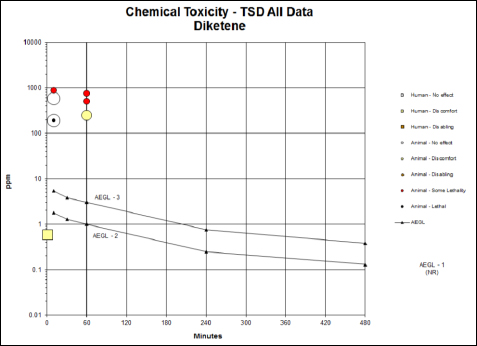
FIGURE C-1 Category plot of toxicity data and AEGL values for diketene.
TABLE C-1 Data Used in Category Plot for Diketene
| Source | Species | ppm | Minutes | Category | Comments |
| AEGL-2 | 1.8 | 10 | AEGL | ||
| AEGL-2 | 1.3 | 30 | AEGL | ||
| AEGL-2 | 1.0 | 60 | AEGL | ||
| AEGL-2 | 0.25 | 240 | AEGL | ||
| AEGL-2 | 0.13 | 480 | AEGL | ||
| AEGL-3 | 5.5 | 10 | AEGL | ||
| AEGL-3 | 3.8 | 30 | AEGL | ||
| AEGL-3 | 3.0 | 60 | AEGL | ||
| AEGL-3 | 0.75 | 240 | AEGL | ||
| AEGL-3 | 0.38 | 480 | AEGL | ||
| Danishevskii 1948, 1951; Feldman 1967 | Human | 0.58 | 1 | 1 | Mild irritation of the conjunctiva and mucosa of nose and throat |
| Source | Species | ppm | Minutes | Category | Comments |
| Katz 1987 | Rat | 250 | 60 | 1 | No mortality, lacrimation |
| Katz 1987 | Rat | 500 | 60 | SL | 30% mortality |
| Katz 1987 | Rat | 750 | 60 | SL | 70% mortality |
| Wooster et al. 1947 | Mouse | 194 | 10 | 0 | No mortality |
| Wooster et al. 1947 | Mouse | 580 | 10 | 0 | No mortality |
| Wooster et al. 1947 | Mouse | 870 | 10 | SL | 1/20 died |
| Wooster et al. 1947 | Guinea pig | 194 | 10 | 3 | 3/3 died |
For category: 0 = no effect, 1 = discomfort, 2 = disabling, SL = some lethality, 3 = lethality.
APPENDIX D
BENCHMARK CONCENTRATION CALCULATION
| Probit Model. (Version: 2.8; Date: 02/20/2007) |
| Input Data File: C:\BMDS\DATA\DIKETENE.(d) |
| Gnuplot Plotting File: C:\BMDS\DATA\DIKETENE.plt |
| Mon Apr 09 09:49:14 2007 |
| BMDS MODEL RUN |
The form of the probability function is:
P[response] = Background
+ (1-Background) * CumNorm(Intercept+Slope*Log(Dose)),
where CumNorm(.) is the cumulative normal distribution function
Dependent variable = COLUMN3
Independent variable = COLUMN1
Slope parameter is not restricted
Total number of observations = 4
Total number of records with missing values = 0
Maximum number of iterations = 250
Relative Function Convergence has been set to: 1e-008
Parameter Convergence has been set to: 1e-008
User has chosen the log transformed model
Default Initial (and Specified) Parameter Values
background = 0
intercept = -13.4507
slope = 2.10082
Asymptotic Correlation Matrix of Parameter Estimates
(*** The model parameter(s) – background have been estimated at a boundary point, or have been specified by the user, and do not appear in the correlation matrix)
| intercept | slope | |
| intercept | 1 | -1 |
| slope | -1 | 1 |
Parameter Estimates
| 95.0% Wald Confidence Interval | ||||
| Variable | Estimate | Std. Err. | Lower Conf. Limit | Upper Conf. Limit |
| Background | 0 | NA | ||
| Intercept | -16.3675 | 5.52762 | -27.2014 | -5.53353 |
| Slope | 2.55065 | 0.87102 | 0.843482 | 4.25782 |
NA - Indicates that this parameter has hit a bound implied by some inequality constraint and thus has no standard error.
Analysis of Deviance Table
| Model | Log (likelihood) | # Parameters | Deviance | Test d.f. | P-value |
| Full model | -12.2173 | 4 | |||
| Fitted model | -12.5124 | 2 | 0.590315 | 2 | 0.7444 |
| Reduced model | -22.4934 | 1 | 20.5522 | 3 | 0.0001304 |
AIC: 29.0249
Goodness of Fit
| Dose | Est. Prob. | Expected | Observed | Size | Scaled Residual |
| 0.0000 | 0.0000 | 0.000 | 0 | 10 | 0.000 |
| 271.0000 | 0.0188 | 0.188 | 0 | 10 | -0.438 |
| 466.0000 | 0.2433 | 2.433 | 3 | 10 | 0.418 |
| 778.0000 | 0.7296 | 7.296 | 7 | 10 | -0.211 |
Chi-square = 0.41 d.f. = 2 P-value = 0.8142
Benchmark Dose Computation
Specified effect = 0.05
Risk type = Extra risk
Confidence level = 0.95
BMD = 321.212
BMDL = 180.893


