Memorial Tributes: Volume 22 (2019)
Chapter: JACQUES I. PANKOVE
This page intentionally left blank.
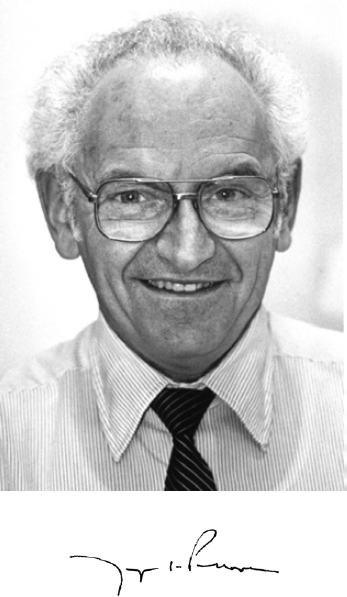
JACQUES I. PANKOVE
1922–2016
Elected in 1986
“For pioneering contributions to the advancement of electronic devices, including transistors and electro-optics.”
JACQUES ISAAC PANKOVE passed away July 12, 2016, at age 93. He was born in Chernigov, Ukraine, on November 23, 1922, to Evsey and Miriam Pantchechnikoff. The family moved to Constantinople in 1923 and then to Marseille, which they left in 1942 to come to the United States, with visas from two of Evsey’s brothers, who had fled earlier to Oakland, California. The family travelled on a ship built to transport cork—the passengers occupied the cargo space. During World War II Jacques served in the US Signal Corps.
He earned his BS and MS in electrical engineering from the University of California, Berkeley, in 1944 and 1948, and his PhD in physics from the University of Paris in 1960.
Beginning in 1948 he spent his professional career at the RCA Laboratories in Princeton, where I had the privilege of meeting him in 1968 when I joined the staff there. As we both focused on light-emitting devices, we had frequent occasions to meet and share research ideas.
Jacques was a uniquely talented visionary who knew how to take concepts to reality. He developed prototypes of the first
__________________
This tribute draws on Jacques’s own account of his experiences, posted on the University of Colorado Boulder website (https://www.colorado.edu/memorybox/jacquespankove.html).
commercial transistor, the first gallium arsenide (GaAs) infrared light-emitting diode (LED), and the first GaAsP visible injection laser. He deserves particular credit for being the first to demonstrate blue LEDs using gallium nitride (GaN).
With more than 90 patents to his name, he covered a broad field of research innovations beyond light-emitting devices. His research on the physical properties of GaN led to novel devices with applications in solid-state lighting, information storage, and high-power and high-frequency electronics, among other areas. In the early 1980s he discovered how hydrogen impacts the properties of silicon.
He was promoted to the prestigious position of fellow of the technical staff at the laboratories and given exceptional freedom to pursue his own research ideas. He was a legendary contributor and went out of his way to help other researchers, with extraordinary talent—and humility.
These attributes served him well in several stints in academia. He was a visiting Gordon McKay Lecturer at UC Berkeley in 1968, a visiting professor at the University of Campinas in Brazil in 1975, and a Distinguished Visiting Professor at the University of Missouri in 1984.
His Berkeley class notes became the basis of his classic textbook, Optical Processes in Semiconductors (Prentice Hall, 1971). He also edited two volumes—Electroluminescence (1977) and Display Devices (1980)—of Springer’s Topics in Applied Physics series, and was an editorial board member for several research journals.
He retired from RCA Laboratories in 1985 and joined the Solar Research Institute as well as the University of Colorado Boulder, where he was the Hudson Moore Jr. Endowed Chair in the Electrical and Computer Engineering Department until his retirement in 1993. During this time he held a joint appointment as a distinguished scientist at the National Renewable Energy Laboratory in Golden.
Jacques was also an entrepreneur and founded Astralux to continue to develop the transistor and other potential applications of GaN and to commercialize some of his research ideas.


