Performance-Based Track Geometry, Phase 3 (2023)
Chapter: Chapter 2 Research Approach
CHAPTER 2
Research Approach
2.1 Track Geometry Comparison Analysis – 2013 Vs. 2018/2020
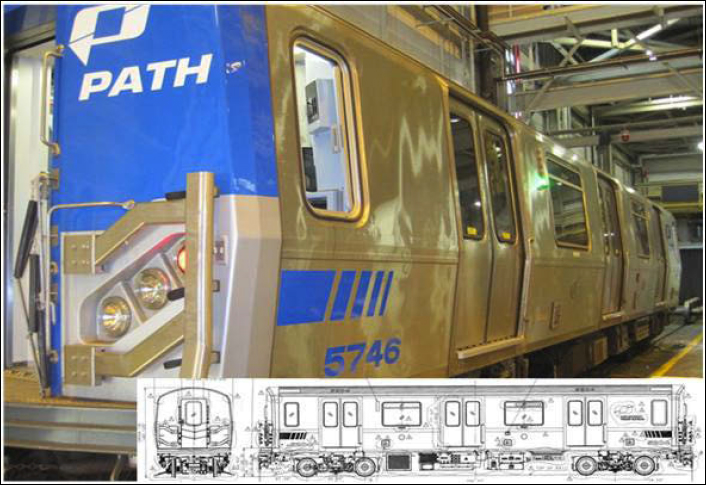
As in Phase 2 of the project, MxV Rail continued its partnership with PATH in Phase 3. During Phase 3, PATH supported the research efforts by providing recent track geometry data collected on PATH track. The track geometry data used during the Phase 2 research efforts was collected in 2013 alongside the RQ measurements from the PA5 passenger car (Figure 1) in revenue service on PATH track. In Phase 3, MxV Rail obtained PATH track geometry data collected in 2018 for analysis. While MxV Rail compared and analyzed 2013 and 2018 data, PATH was in the process of commissioning a newly acquired track geometry measurement car. After PATH completed the commissioning process, MxV Rail received new track geometry data sets collected in late 2020. MxV Rail analyzed and compared the 2020 data with the 2013 data to evaluate track geometry degradation over time. PATH confirmed that, compared to the parameters used in 2013 geometry testing, the polarity definitions for the track geometry parameters used by the new track geometry car remained unchanged.
MxV Rail completed the comparison analysis, presented the findings to the TCRP D-7 oversight panel, and discussed the track geometry changes over a seven-year span. The TCRP deemed the track geometry variations between 2013 and 2020 acceptable, and MxV Rail engineers were greenlit to proceed with the use of the 2013 PA5 car RQ and geometry data to conduct simulation work and evaluate the viability of the PBTG technology for transit systems.
2.2 NN Model Development and Viability of PBTG for Transit Systems
Based on Phase 2 on-track test findings, PATH track segments that stretched from Newark to the World Trade Center and from Exchange Place to Newark presented more RQ issues compared to the rest of the network. These areas were considered the optimum locations for the NN models to learn how to recognize the patterns of track geometry degradation and operating conditions associated with recorded RQ issues. The RQ and track geometry data from those two lines were processed to build a synchronized database of ride quality and track geometry data to develop the NN models. The data was taken from the dynamic response of the PATH PA5 car to selected track and operating conditions. Additionally, a few dynamic events from the PA5 NUCARS model car simulations at 10 mph below track speed were included to expand the training data. MxV Rail used this model that was developed and validated during Phase 2 of the project.
To examine PBTG viability for transit systems, MxV Rail also researched common railroad RQ and safety standards and evaluated their applicability to the current PBTG technology for transit systems and RQ assessments. Each specification has different criteria that can be used to dictate comfort or safety limits. The following specifications were studied:
___________________
4 International Organization for Standardization (ISO).1997. Mechanical vibration and shock — Evaluation of human exposure to whole-body vibration Part 1: General requirements. ISO 2631-1:1997 (E), Second edition corrected and reprinted 1997-07-15, Switzerland.
5 Railway Applications – Testing and Simulation for the acceptance of running characteristics of railway vehicles – Running Behaviour and stationary tests, March 2016.
6 Code of Federal Regulations, Title 49, Part 213, Subpart G, Section 213.333 “Automated vehicle-based inspection systems,” Federal Railroad Administration (FRA). Washington, D.C. (2022). URL https://www.ecfr.gov/current/title-49/subtitle-B/chapter-II/part-213/subpart-G/section-213.333.

