Reforming the Coast Guard's Certificate of Compliance Program for Liquefied Gas Carriers: Promoting Efficient Implementation and Safety Effectiveness (2024)
Chapter: 4 Review of Proposed Options to Reform the Certificate of Compliance Program
4
Review of Proposed Options to Reform the Certificate of Compliance Program
Congress called for this study of options for reforming the Certificate of Compliance (COC) program out of concern that ongoing and projected growth in liquefied gas carrier (LGC) traffic arrivals would stress the U.S. Coast Guard’s ability to implement the program efficiently while also maintaining its safety assurance role. To this point, this report has focused on understanding and explaining the causes and magnitude of the challenge that prompted Congress to request the study. Chapter 2 reviewed current and expected trends in liquefied gas export volumes and LGC traffic activity, while also describing the operations and scheduling of these vessels for loading at U.S. terminals. The chapter explained how rapid growth in gas exports and LGC traffic coupled with the high costs associated with underutilized export terminal facilities creates an operational environment that is highly averse to the risk of delays and uncertainties that can arise from the scheduling and conduct of COC exams. Chapter 3 reviewed the Coast Guard’s role in assuring that domestic and foreign-flag vessels are fit for safe operations in U.S. waters and ports, and specifically how the Service’s marine inspectors make these verifications through Port State Control (PSC) examinations that include COC-specific requirements for LGCs. Chapter 3’s review of the COC’s special requirements, in the context of the Coast Guard’s need to build capacity and make the most effective use of its marine inspection workforce, sheds light on the concerns terminal operators have about the prospect of exam delays while also raising general concerns about the Coast Guard’s ability to keep conducting high-quality exams in the face of sharp and sustained growth in exam requests.
The reviews and analyses from these two chapters surfaced a number of findings that support why Congress is interested in options for reforming the COC program. This chapter begins by recapping these key findings, followed by an assessment of their likely implications on the Coast Guard’s continued ability to implement the COC program in an efficient and effective manner. This assessment caused the study committee to conclude that the need for reform is real and becoming increasingly urgent so as to warrant a hard look at options for program redesign and implementation reform.
The committee is charged with examining seven specific reform options, some focused on modifying how the Coast Guard manages and deploys its marine inspection workforce and others focused on how the requirements of the COC program could be modified. To recap from Chapter 1, the options to be considered are as follows:
- Modifying the marine inspection workforce’s composition, management, and deployment by
- changing the location of marine inspection units to examine gas carriers, including the establishment of a unit near the Panama Canal that can concentrate on carriers bound for the United States;
- placing all qualified inspectors under the command of a single officer in charge, marine inspection (OCMI), in each Coast Guard district;
- extending the duration of the assignments of active-duty gas-qualified inspectors in units that frequently examine gas carriers;
- increasing the staffing of the Coast Guard’s Liquefied Gas Carrier National Center of Expertise (LGC NCOE) to enable more of the center’s national verifying officers (NVOs) to be deployed to lead COC exams; and
- using more civilians to conduct and support COC exams.
- Modifying the requirements of the COC program for carriers presenting different characteristics that could be indicative of risk by
- extending the duration of COCs for gas carriers that are less than 10 years of age and participate in a Coast Guard vessel quality assurance program; and
- making other adjustments to COC program requirements informed by a gas carrier’s risk factors, considering vessel age, inspection record, and incident history as possible factors.
The second half of Chapter 4, therefore, turns to a review of these options, considering their advantages, challenges, and impacts on the COC
program’s implementation efficiency and safety assurance effectiveness. Taking this review into account, the chapter concludes with an assessment of whether any of the specific options proposed hold promise for policy emphasis.
In the committee’s view, none of the seven proposed options, as specified, would be sufficiently impactful, or sufficiently impactful early enough, to maintain the COC program’s efficiency and effectiveness. However, variants of the options, and combinations of them introduced over time, could form the basis of an effective response. The study charge gives the committee discretion to advise on a course of action for reforming the COC program. This chapter’s review of the seven options is helpful for understanding the logic behind the course of action that is recommended in Chapter 5.
PRESSING NEED FOR REFORMS
The ongoing and forecasted growth in liquefied natural gas (LNG) and liquefied petroleum gas (LPG) exports, as documented in Chapter 2, suggests that LGC arrivals are on course to grow by more than 50% during the next decade, after having tripled during the past decade. This means that by 2034 there will be 2,000 more LGC arrivals than in 2023 and nearly 5,000 more arrivals than in 2013 (see Figure 4-1).
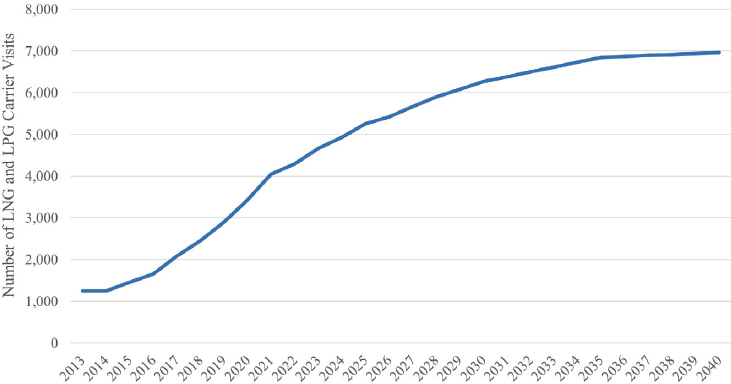
NOTE: See Appendix C, Tables C-1 and C-2 for the number of carrier visits for the figure.
SOURCE: Coast Guard data (provided to the committee), 2023.
The PSC exam data presented in Chapter 3 and Appendix C show that about one in every seven arriving LGCs undergoes a COC exam. By simply assuming that the same ratio of exams to arrivals will persist, the forecasted growth in LGC arrivals will mean that the Coast Guard’s gas-qualified inspectors will be called upon to lead more than 1,000 exams per year before 2035. This compares to about 200 exams per year a decade ago and fewer than 700 today (see Figure 4-2).
The Coast Guard’s ability to keep pace with the marked growth in demand for LGC exams over the past decade is impressive when considering that the gas-qualified inspector workforce has essentially remained stable during this period. As growth in LGC traffic continues over the next decade, the Coast Guard will have a difficult time meeting the demand for more exams efficiently unless COC program requirements are modified and/or significant changes are made in the size, management, and deployment of the gas-qualified marine inspection workforce.
The legislative request for this study, which proposes a suite of seven reforms for review, anticipated the committee’s finding that without policy changes the marked growth in LGC traffic will risk the Coast Guard’s ability to implement the program efficiently. The advantages and challenges of these proposed options are therefore assessed next. This assessment informs the committee’s own proposals for reform, which are presented in Chapter 5.
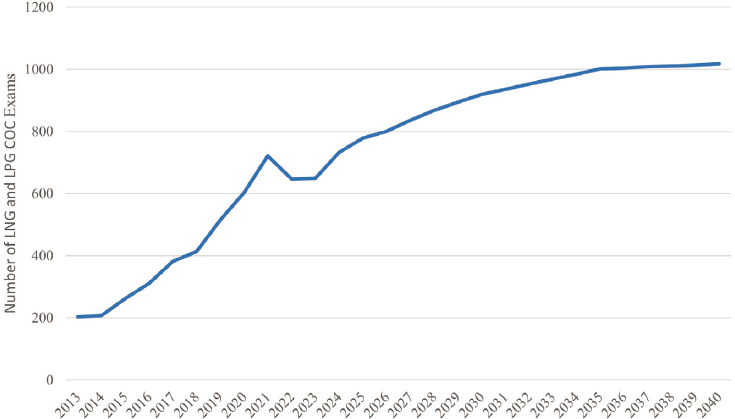
NOTE: See Appendix C, Tables C-1 and C-2, for the forecasted COC exams from 2024 to 2040.
SOURCE: Coast Guard data (provided to the committee), 2023.
ADVANTAGES AND CHALLENGES OF THE PROPOSED OPTIONS
This section examines the seven options for modifying the COC program and its enforcement by the Coast Guard, as specified in the Statement of Task (SOT) and the legislative mandate for this study. Of interest is whether the reforms would enable more efficient program implementation in the face of growing gas carrier traffic volumes without compromising the program’s safety assurance role. Advantages and challenges of each option are identified and then assessed with these interests in mind, focusing first on the five options related to the composition, management, and deployment of the marine inspection workforce. This is followed by a similar review of the two options that would modify the COC program’s requirements.
For each option, primary consideration is given to whether and by how much the option could improve the Coast Guard’s ability and capacity to implement the COC program more efficiently while preserving, or even enhancing, its effectiveness in assuring safety. Other issues not directly pertinent to the COC program, such as an option’s potential to affect the Coast Guard’s fulfillment of its other mission-critical responsibilities, are also noted because they too will affect the overall feasibility and desirability of an option.
Conducting COC Exams of Gas Carriers at the Panama Canal
The SOT asks that consideration be given to establishing a Coast Guard marine inspection unit to conduct gas carrier COC examinations near the Panama Canal while the vessels are in anchorage awaiting transit through the canal en route to loading cargo from U.S. ports. The SOT is not clear about whether such a unit would be assigned permanently or on an intermittent basis. In either case, the aim would be to reduce delays at U.S. loading ports for a portion of gas carriers arriving from Asia.
During this study, the Coast Guard’s LGC NCOE piloted such an option during March/April and September 2023.1 In each case, inspection teams were temporarily deployed for 1 to 2 weeks to conduct COC examinations (renewal and annual) at the southern entry (Pacific Ocean) to the canal in Balboa, Panama. In announcing the two sessions, the Coast Guard emphasized the importance of filling the majority of available inspection slots. Applicants had to schedule their examinations 2 weeks in advance and present a contract confirming that the carrier would be loading at a U.S. port. The tankship inspection fee ($1,100) and overseas user fee ($4,585) had to be paid in advance, and applicants were responsible for reimbursing the costs incurred by marine inspectors for lodging in and travel to Balboa.
___________________
1See https://www.iss-shipping.com/uscg-coc-exams-prior-to-northbound-transit-of-panama-canal.
The Coast Guard reported that a total of 11 carriers were examined during the two sessions in 2023.2 In scheduling an additional 2-week Panama Canal session for late January 2024, the Coast Guard stressed the importance of filling at least two-thirds of the inspection slots.3 By mid-January, however, the Coast Guard decided to cancel the session due to a lack of applicants, stemming from fewer gas carriers transiting the canal because of traffic congestion, changes in the mix of traffic in favor of European routings, and unusually high delays and transit fees in the drought-stricken canal.4 Having earlier expressed an interest in conducting a May 2024 session, the Coast Guard announced that trends in canal transits would need to be monitored before deciding whether and when to schedule future sessions.
The Coast Guard’s mixed success during 2023 and 2024 in attracting gas carriers for COC examinations at the Panama Canal demonstrates some of the advantages and challenges of this approach as an option for reducing the risk of COC-related delays to vessels. A full assessment of this option, however, must take into account considerations other than these direct benefits from efficient COC program implementation, including implications on the availability of the deployed marine inspectors for other vessel inspections and collateral duties for their home units.
Before turning to a discussion of the advantages and challenges of Panama Canal exams, it merits noting that the Coast Guard’s Activities Europe5 and Activities Far East6 units currently perform compliance examinations for some foreign-flag ships.
Advantages and challenges associated with the Panama Canal option are as follows.
Advantages
Conducting COC examinations in a remote location where gas carriers are idle and anchored en route to U.S. loading ports can reduce the risk that an arriving vessel will need to wait for exams near the terminal and miss its scheduled loading time. Such delays, when they do occur, likely have costs to vessel and terminal operators that far exceed the additional fees the Coast Guard must levy to cover its cost of administering the remote examinations.
___________________
2Personal communication, Coast Guard CVC-2 official, February 6, 2024.
3See https://nortonlilly.com.pa/us-coast-guard-gas-carrier-coc-examination-program.
4See https://nortonlilly.com.pa/cancelation-uscg-gas-carrier-coc-exam-program-balboa-panama.
5See https://www.atlanticarea.uscg.mil/Our-Organization/Area-Units/Activities-Europe/Inspections/Foreign-Vessel-Information.
6See https://www.pacificarea.uscg.mil/Our-Organization/District-14/D14-Units/Activities-Far-East-FEACT/FEACT-Marine-Inspections.
Challenges
The Coast Guard’s cancellation of a Panama Canal session during January 2024 due to a lack of applicants is indicative of how gas carrier routes and traffic patterns can fluctuate, which complicates the planning of examination sessions. The sessions must attract sufficient interest to ensure that the costs incurred in dispatching inspectors to the locations can be recouped and that inspectors are productively employed. Even when scheduled sessions can be cancelled in advance, the Coast Guard will incur unrecoverable planning costs. Moreover, if all of the usual PSC compliance verifications cannot be conducted on an LGC due to it being in foreign waters, a carrier examined at the Panama Canal may need to undergo a separate PSC exam when arriving at a U.S. port.
Furthermore, when Coast Guard marine inspectors are assigned to remote locations, even temporarily, they are no longer available to conduct inspections of other vessels, perform other collateral duties such as emergency response, and work on other qualifications for their own professional growth. The deployment of gas-qualified marine inspectors could even lead to COC examination delays at U.S. ports where marine inspection units are understaffed.
Placing Gas-Qualified Inspectors Under a Single OCMI Authority in Each District
The Coast Guard’s 9 district commanders assign command and control to 37 sector commanders, usually at the captain rank. The OCMI authority is typically one of several authorities of the sector commander, including captain of the port, federal maritime security coordinator, search and rescue mission coordinator, and maritime federal on-scene coordinator. In serving as OCMI, the sector commander is responsible for overseeing marine inspectors and other prevention personnel, including all vessel inspection programs. A deputy OCMI may also be assigned to the sector. In some sectors, the commanding officer of a Marine Safety Unit (MSU) retains OCMI authority in geographic areas of responsibility—for instance, at MSU Port Arthur in Sector Houston-Galveston and MSU Houma in Sector New Orleans.
Three Coast Guard districts—5, 7, and 8—accounted for more than 95% of LGC arrivals in 2022 (see Figure 4-3). LGC traffic activity in District 5 in the Mid-Atlantic region is concentrated in Sector Delaware Bay, while most of the traffic in District 7 in the Southeast is concentrated in San Juan, Puerto Rico. District 8, encompassing the Gulf Coast, accounts for the predominant share (more than 75%) of gas carrier arrivals, all in the three sectors of Houston-Galveston, Corpus Christi, and New Orleans.
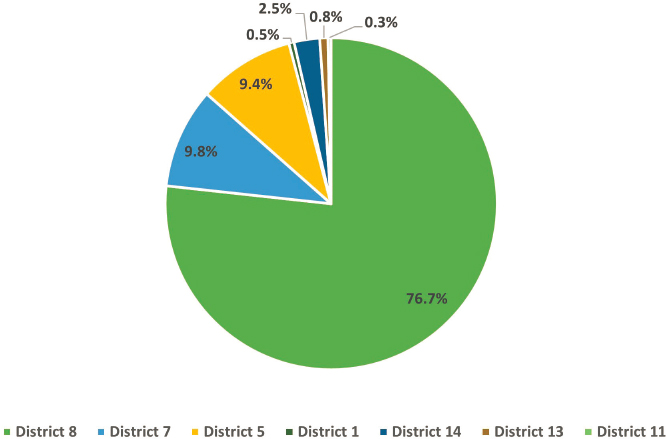
SOURCE: Coast Guard data (provided to the committee), 2023.
Houston-Galveston accounted for most (78%) of the LGC arrivals in District 8 during 2022.
Currently, active-duty, gas-qualified marine inspectors may be assigned to any one of the Coast Guard’s districts, sectors, and other commands, including locations with little or no gas carrier traffic. Active-duty personnel are assigned in accordance with overall Service workload needs as well as the career progression interests of the individuals. As a general matter, the Coast Guard must take into account these broader Service and career progression interests when making choices about where to assign personnel. In 2023, the Coast Guard reported that it had approximately 170 active-duty and civilian gas-qualified inspectors across all districts. Figure 4-4 shows the percentage of these inspectors by district. Gas-qualified inspectors are concentrated in District 8, which accounts for 40% of the inspectors and more than 75% of LGC arrivals (as shown in Figure 4-3). Coast Guard data show that more than 15% of gas-qualified inspectors are in units that have no LGC arrivals.
As shown in Chapter 3, Table 4-1 provides the number of marine and gas-qualified inspectors, the number of LGC arrivals, and the number of LGC COC exams conducted during 2022 in District 8’s busiest sectors. Approximately 80% of the COC exams conducted during 2022 occurred in District 8. According to the option raised in the SOT, each of these
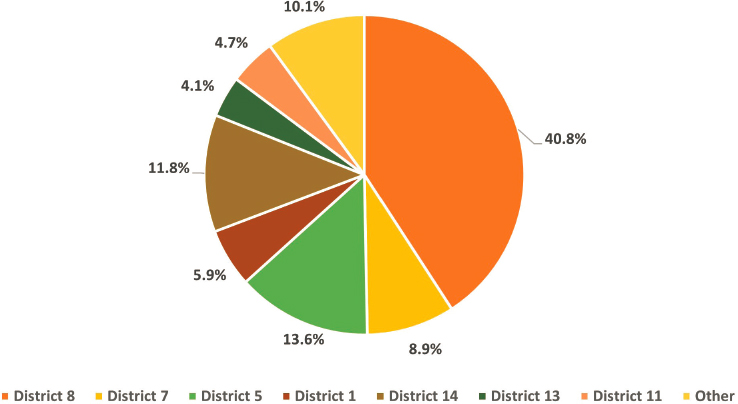
SOURCE: Coast Guard data (provided to the committee), 2023.
TABLE 4-1 Number of Marine and Gas-Qualified Inspectors, LGC Arrivals, and LGC COC Exams, District 8’s Busiest Sectors and Subunits
| District 8 Sector and Subunits | Number of Marine Inspectors | Number of Gas-Qualified Inspectors | 2022 LGC Arrivals | 2022 LGC COC Exams Conducted |
|---|---|---|---|---|
| Sector Houston-Galveston; MSU Texas City | 65 | 27 | 1,685 | 250 |
| MSU Port Arthur; MSU Lake Charles | 35 | 18 | 1,162 | 229 |
| Sector Corpus Christi; MSD Victoria; MSD Brownsville | 22 | 10 | 516 | 52 |
| Sector New Orleans; MSU Baton Rouge | 72 | 10 | 159 | 12 |
| Total | 194 | 65 | 3,522 | 543 |
NOTES: COC = Certificate of Compliance; LGC = liquefied gas carrier; MSD = Marine Safety Detachment; MSU = Marine Safety Unit. Gas-qualified inspectors include commissioned officers, chief warrant officers, and civilians.
SOURCE: Coast Guard data (provided to the committee), 2023.
gas-qualified inspectors would be placed under the command of a single OCMI in the district or perhaps under the command of a newly created OCMI. The purpose of such a single command would be to better align the assignment of gas-qualified marine inspectors with the varied demand for COC services across ports and sectors within the district.
It is unclear whether the single-OCMI option, as envisioned by Congress, would lead to all of a district’s gas-qualified inspectors being relocated to that OCMI’s sector or whether they would remain in their home sectors ready to be deployed to other locations when the OCMI requires assistance. It merits noting that the Coast Guard has created a specialized OCMI for inspectors of offshore oil and gas facilities within District 8’s Outer Continental Shelf (OCS) Division.7 In this case, inspectors are located at a few different sector locations but work for the OCS OCMI, who is narrowly focused on the inspection and operation of mobile offshore drilling units (MODUs) and offshore facilities that produce oil and gas. This consolidation was intended to make more efficient use of limited inspection resources and improve the consistency of OCMI decisions, while improving the proficiency of OCS marine inspectors.
Another management model, though not from an OCMI, is the Coast Guard’s Area-level Marine Safety and Security Teams and Maritime Security Response Teams, whose responsibilities include high-risk maritime law enforcement, port security, and counterterrorism operations. These teams are available to deploy, support, and augment the response workforce at any sector.
Advantages and challenges associated with this option, which will depend in part on its structuring, are as follows.
Advantages
The primary advantage of placing all of a district’s gas-qualified inspectors under the command of single OCMI is that it would allow the repositioning of gas-qualified marine inspectors as needed to align with changes in the volume of gas carrier traffic in specific ports and sectors. Presumably, the inspectors could be concentrated in high-volume ports, enabling the Coast Guard to use the skills and competencies of its gas-qualified examiner workforce more intensely and efficiently. In having more opportunities to conduct the exams, inspectors may also increase their proficiency, potentially leading to higher-quality work. A specialized OCMI also may be in a
___________________
7Consolidation of Officer in Charge, Marine Inspection for Outer Continental Shelf Activities. Federal Register 80:20159–20163. https://www.govinfo.gov/content/pkg/FR-2015-04-15/pdf/2015-08533.pdf.
better position to standardize protocols and processes to further boost the consistency and quality of the COC examinations.
At the time of this report, MSU Port Arthur is the current home of the LGC NCOE, and it would offer advantages to having its OCMI authorities expanded to include responsibility for directing all of District 8’s gas-qualified inspectors.
Challenges
If all gas-qualified inspectors in a district are consolidated in a single high-volume sector under the command of the sector’s OCMI, members of this marine inspection unit may need to travel long distances for COC examinations scheduled at other sectors. The time and travel required could offset some of the benefits of consolidation. Furthermore, the origin units would need to cover the workload of the relocated inspectors, who usually provide a range of services other than gas carrier examinations. Given the shortage of marine inspectors generally, this lost capacity could prove difficult for the short-staffed units. If the structuring of the specialized OCMI does not entail the consolidation of gas-qualified inspectors in a single sector, unit cohesion challenges may arise as marine inspectors in a single unit may be under the command of different OCMIs.
The committee did not assess the effectiveness of the Coast Guard’s OCS OCMI consolidation but notes that far fewer foreign-flag MODUs operate on the OCS, and those that do typically stay on location for longer periods of time. Similarly, a typical OCS facility is not “flagged,” remains stationary, and operates in just one location. More importantly, the typical OCS facility does not face the same commercial pressures and challenges associated with scheduling and coordinating Coast Guard inspections during a narrow window while in a U.S. port. In contrast, the workload associated with gas carriers is more geographically distributed, increasing rapidly, and concentrated on foreign-flag vessels that are continuously transiting in and out of U.S. ports.
Increasing the Role of the LGC NCOE in Conducting COC Exams
Currently located within MSU Port Arthur, the LGC NCOE houses the Coast Guard’s subject matter expertise in the specialized area of carriers that haul liquefied gases in bulk, commercial ships that use liquefied gas as fuel, and the safety and engineering systems of liquefied gas storage facilities. It was created in 2009 and was followed by an act of Congress giving it and other NCOEs the responsibility to “(1) promote and facilitate education, training, and research; (2) develop a repository of information
on its missions and specialties; and (3) perform any other missions as the Commandant may specify.”8
As the Coast Guard’s repository for LGC expertise, the LGC NCOE has an important role in supporting the development of training requirements for gas carrier examiners and best practices for conducting exams. The LGC NCOE’s NVOs include five gas-qualified traveling inspectors who are responsible for evaluating the proficiency and consistency of marine inspection units in performing exams. They frequently participate in exams to meet demand and ensure that inspectors are well versed on appropriate protocols. The addition of more NVOs to the center’s staff, including inspectors who can deploy in support of COC exams in different OCMI zones, could therefore provide a force multiplier for marine inspection units in District 8 and elsewhere. Advantages and challenges associated with this option are as follows.
Advantages
More NVOs serving as traveling inspectors would add to the Coast Guard’s capacity to conduct COC exams, as long as the added LGC NCOE officers do not deplete the ranks of the experienced marine inspectors in the origin units from which they are likely to be drawn. As force multipliers for COC exams, the NVOs would also be available for inspector training and guidance that may increase the consistency and efficiency of exams. The coupling of this option with the creation of a single OCMI in MSU Port Arthur (or wherever the LGC NCOE is located) to command all District 8’s gas-qualified inspectors might be advantageous by capitalizing more fully on the center’s technical expertise. This enlarged role would seem to be within the prerogative of the Coast Guard as authorized in the law creating NCOEs.
Challenges
The Coast Guard must make choices about how it allocates resources for furthering its prevention mission; allocating and filling more NVO billets for the gas carrier specialty may result in fewer billets being filled in other areas unless budgets are increased accordingly. If the personnel added to the LGC NCOE are drawn from existing marine inspection units and their ranks are not replenished, the force multiplier effect will be diminished. It merits noting too that even though the center is in close proximity to much of the Gulf Coast’s LGC traffic activity, its NVOs would still need to travel to reach many other terminals, creating budgetary implications and
___________________
8H.R. 3619, Coast Guard Authorization Act of 2010, Section 521, https://www.congress.gov/bill/111th-congress/house-bill/3619.
reducing the time available for the officers to perform other duties such as designing and conducting training and education courses on LGC, fuel, facility, and bunkering inspections.
Extending the Assignment of Active-Duty, Gas-Qualified Inspectors in Locations with High Demand for COC Exams
The Coast Guard has invested significant resources in the training of inspectors to conduct gas carrier examinations. This suggests that these competency investments should be used prudently and perhaps more intensely by ensuring that gas-qualified inspectors are assigned for longer periods to ports with significant LGC traffic. However, understanding the implications of a such a policy change requires consideration of the reasons for existing rotational practices that apply to active-duty personnel. With all such considerations in mind, the advantages and challenges of this option are as follows.
Advantages
Gas carrier qualifications are considered advanced-level marine inspection qualifications and are often earned by an individual 4–6 years after they begin inspecting vessels. Extending the rotational assignments of gas-qualified personnel in districts and sectors where they can make greater use of their competencies could therefore allow the Coast Guard to recoup more of its investment in this specialized training. In principle, this option would reduce turnover rates and increase the pool of inspectors available to conduct examinations at high-volume ports. Longer assignments at such locations that increase the field experience of inspectors could also lead to increased proficiency in the conduct of LGC examinations. For some active-duty personnel, the extended assignments might be welcome to provide opportunities for mastering their specialty and to allow them and their families to remain in one location for a longer period if the location is desirable.
Challenges
Whether extending the rotations of gas-qualified inspectors would be in the broader interest of the Coast Guard requires consideration of the purpose of rotational assignments. The Coast Guard’s active-duty marine inspector workforce consists of commissioned officers and chief warrant officers (CWOs), all of whom rotate assignments about every 3 years. The Coast Guard expects its junior officers to expand their knowledge and competencies through varied assignments. The Coast Guard’s career progression
guidance (for operations ashore prevention officers)9 advises commissioned officers to seek back-to-back 3-year field tours in vessel inspections and other prevention disciplines. Furthermore, after completing these initial operational assignments, guidance advises officers to go into additional staff and operational rotations for career advancement.
Thus, given the Coast Guard’s expectations for career progression through rotational assignments, if junior officers perceive gas specialization to be limiting for promotion opportunities by reducing rotations, they may choose other specialties. For some personnel too, the relatively few (and sometimes remote) locations where this specialty can be applied may not be attractive for extended placement. Such effects could hinder the Coast Guard’s ability to attract high-caliber personnel to the gas specialty. Furthermore, by increasing the number of gas-qualified marine inspectors in a single location by extending assignments, staffing shortages could be exacerbated in other locations that will receive fewer transfers.
Increasing the Use of Civilian Inspectors and Third-Party Contract Inspectors for COC Exams
Use of Civilian Inspectors
The Coast Guard had about 808 marine inspector positions in 2023, about 22% of which were civilians.10 Civilians accounted for about 24% of the Coast Guard’s 170 gas-qualified inspectors. Some civilian inspectors are former active-duty military members, especially retired CWOs, while others are trained by the Coast Guard through the Civilian Apprentice Marine Inspector Program. Hiring and training more civilians to conduct LGC exams could therefore serve as a force multiplier for active-duty inspectors. The advantages and challenges of hiring more civilian inspectors are as follows.
Advantages of Hiring More Civilian Inspectors
Unlike active-duty personnel who seek rotations and varied duty assignments for career progression, civilians are more likely to be satisfied by remaining at a single location for their entire careers. This stability can facilitate hiring and retention, as well as ensure continuity of operations.
___________________
9Coast Guard Commandant for Operations, “Operations Ashore Junior Officer Career Guide,” 2015, https://www.dco.uscg.mil/Portals/9/DCO%20Documents/5p/5ps/Design%20and%20Engineering%20Standards/docs/Ops_Ashore_Junior_Officer_Career_Guide_2015.pdf?ver=2017-06-16-142233-273.
10Coast Guard data (provided to the committee), 2023.
The Coast Guard could retain a core workforce of gas-qualified inspectors to serve the highest-demand ports without losses from rotational turnovers. Furthermore, inasmuch as civilian positions can provide post-retirement employment for active-duty inspectors, the expanded availability of civilian billets could also make the gas carrier specialty an attractive career choice among CWOs interested in the prevention field. In addition to enlarging the pool of gas-qualified inspectors, greater reliance on civilians could reduce the demand for training due to the long-term commitment of the civilians and their lower turnover.
Challenges of Hiring More Civilian Inspectors
While greater use of civilians for LGC examinations could alleviate challenges associated with attracting and training increasingly larger numbers of active-duty personnel for this work, the Coast Guard would still need additional budgetary resources to recruit, hire, and train civilians. In locations with significant LGC activity, the competencies and skill sets of gas-qualified inspectors will be in demand both by the marine industry and the Coast Guard, creating pay competition that industry will be more prepared to meet. If the availability of civilian work entices uniformed gas-qualified inspectors to leave active duty sooner, the gains in inspectors from adding more civilian billets may be partially offset by a decline in active-duty inspectors. Furthermore, when active-duty personnel convert to the civilian workforce, they are no longer available to the Coast Guard to perform collateral duties other than inspections. From the Coast Guard’s longer-term perspective, if increased reliance on civilians leads to fewer active-duty personnel possessing gas qualifications, the Service may experience a dwindling knowledge base in this growing prevention area, including among officers on the path to OCMI.
Another outcome to consider is that extensive reliance on civilians could lead to more restrictions on when COC exams can be conducted. While active-duty inspectors can conduct exams during weekends, on holidays, and after hours, the normal work regime of civilians is more constrained; therefore, fewer windows may be available for the scheduling of exams, potentially creating delays for operators and exam backlogs that cannot be reduced by scheduling more after-hours work. Civilians would need to be compensated for overtime and other work performed outside normal working hours, and civilian inspectors could choose to decline such work.
Third-Party Contract Inspectors
In addition to hiring civilians, the Coast Guard benefits from the services of civilians working as surveyors for third parties, including classification
societies, authorized and contracted by vessel operators to perform certain certification and verification functions on behalf of the Coast Guard. While the Coast Guard does not currently authorize or contract with third parties to implement the COC program, this remains a possibility. It is notable, for instance, that in addition to requiring each gas carrier to be examined at least once each year, the statute (46 USC 3714) requires a “special and detailed inspection of structural strength and hull integrity” for vessels more than 10 years of age. For this work, the statute permits the Coast Guard to contract with other parties for the purpose of providing flexibility in foreign areas where Coast Guard marine inspectors are not available. Because nothing in the statute would appear to prevent such contracting for COC exams, the advantages and challenges associated with using third party contract inspectors are as follows.
Advantages of Third-Party Contract Inspectors
The use of other inspectors working for third parties in lieu of Coast Guard marine inspectors is not new and therefore would have the advantage of related precedent. For example, under 46 Code of Federal Regulations Parts 2 and 8 the Coast Guard delegates authority for certain statutory certifications and services to classification societies, whose surveyors complete inspections on behalf of the Coast Guard. Congress has authorized, and the Coast Guard currently allows, recognized third parties to complete inspections of U.S.-flag commercial vessels, including tank ships, as part of the Alternate Compliance Program (ACP).11
In the same manner as hiring more civilian inspectors, the use of third-party civilian surveyors would serve as a force multiplier. Gas-knowledgeable personnel working for classification societies and deployed outside the United States are already recognized by the Coast Guard; these personnel could conduct exams globally, including when carriers are undergoing other inspections and examinations. Ship Inspection Report (SIRE) inspectors could also be considered, and they would have reduced training requirements. Engaging third parties in this way could help alleviate the issues of scheduling vessel inspections upon arrival in the United States while also reducing Coast Guard inspector workloads. A key rationale for the Coast Guard’s use of third parties for inspection and compliance verification services in other programs, such as the ACP, is that the delegation to third parties can free up Coast Guard personnel for other critical prevention duties, thus having net positive benefits on safety assurance and mission fulfillment.
___________________
11National Academies of Sciences, Engineering, and Medicine, Strengthening U.S. Coast Guard Oversight and Support of Recognized Organizations (Washington, DC: The National Academies Press, 2021).
Challenges of Third-Party Contract Inspectors
A number of issues related to the use of contract inspectors for gas carrier COC exams would need to be addressed. First, there is the issue of how the third parties would be compensated and by whom. The statute that applies to the 10-year structural and hull integrity inspection requires the Coast Guard to issue regulations that establish reasonable fees for services completed by contract inspectors. Gas carrier operators would be liable for the fees, which are required to be deposited in the U.S. Department of the Treasury and not in Coast Guard accounts. Thus, in addition to the time and effort necessary to promulgate the fee regulations, the Coast Guard would need to have funds appropriated to compensate the contracted third parties and could not be expected to shift resources from other priorities.
Second, the Coast Guard would likely need to separate the COC exam from the PSC exam. The authorities for the two exams are distinct, but currently there is no practical difference in the scope of the exams and the standards applied. Coast Guard policy explicitly states that a COC exam on a foreign gas carrier is a PSC exam, and the Coast Guard uses Port State Control officers (PSCOs) to complete them. The qualifications for an inspector to conduct a COC exam on a foreign gas carrier are the same as the qualifications to conduct a PSC exam on a foreign gas carrier.12 However, according to international requirements, classification society surveyors are not permitted to serve as PSCOs, since they would be verifying vessel certificates that they had issued; SIRE surveyors would also have to be free of any commercial and financial pressures to be qualified to conduct PSC exams.13 As a practical matter, the COC and PSC exams likely would need to be separated to retain the integrity of the PSC; therefore, savings to the Coast Guard’s workload would be reduced.
Finally, the Coast Guard would need to develop a program to ensure that contract inspectors are properly trained, qualified, and managed. Even if they are experts in gas carriers, contract inspectors would need to understand and be prepared to apply and enforce the Coast Guard’s requirements and policies. The Coast Guard would have to establish a program to conduct robust oversight and monitor and assess the performance of the contract inspectors. The Coast Guard currently has personnel who understand gas carrier safety and operations. To retain effective oversight, the Coast Guard would need to ensure that its organic expertise, capacity, and competencies related to gas carriers are preserved.
___________________
12COMDTINST 16000.73, Coast Guard Marine Safety Manual, Vol. II: p. D6-1.
13International Maritime Organization A32/Res. 1155 Procedures for Port State Control, 2021, p. 7 of the Annex.
Given the need for Coast Guard inspectors to continue to conduct gas carrier PSC exams and to maintain gas carrier expertise, the potential role for third parties as a force multiplier may be limited.
MODIFYING CERTIFICATE OF COMPLIANCE PROGRAM REQUIREMENTS
Extend the Duration of the COC for Gas Carriers Less Than 10 Years Old and Enrolled in a Vessel Quality Program
This option would involve three changes to the COC program: (1) extending the duration of the certificates beyond 2 years for eligible gas carriers, (2) making eligibility for the extension contingent on the vessel being less than 10 years old, and (3) making eligibility further contingent on the vessel being enrolled in a Coast Guard quality assurance program. Background on each element is provided next.
Extend the Duration of the COC
While the SOT does not specify a validity term that should be assessed in this study, it is reasonable to assume that any extension would not exceed 5 years, which is the term for Certificates of Inspection (COIs) required for U.S.-flag vessels, including U.S. tank ships. As discussed in Chapter 3, the current 2-year validity of COCs as well as the requirement for an annual interval exam are established by statute. Thus, congressional action would be required for the Coast Guard to make any changes to the duration of the certificates and to the minimum frequency of the interval exam.
Congress is not likely to extend the COC’s duration for a period longer than the 5 years applicable to inspected domestic vessels, but it could choose a shorter duration of 3 or 4 years. It is important to note, however, that the 5-year period aligns with the inspection schedules for most internationally required certificates (including some International Convention for the Safety of Life at Sea and Load Line Certificates). In 2000, the Coast Guard increased the duration of COIs to 5 years.14 The change was made to harmonize the COI cycle with international cycles per congressional direction in the Coast Guard Authorization Act of 1996.
When it made the change to the COI’s duration more than 20 years ago, the Coast Guard did not anticipate any adverse safety assurance implications because the change did not reduce the frequency of interval inspections, which continue to be conducted annually. The request for this study to assess the option of extending the COC’s duration does not mention the
___________________
14Fed. Register Vol. 65, No. 27, 6494–6510, February 9, 2000.
annual interval exam and whether consideration should be given to keeping it, changing its frequency, or giving the Coast Guard discretion to maintain or revise it.
Restrict Eligibility to Gas Carriers Less Than 10 Years of Age
The option in the SOT calls for gas carriers that are less than 10 years of age to be eligible for an extended COC term, provided they are enrolled in a quality assurance program. While reasons for requiring enrollment in such a program are discussed below, the rationale for the 10-year age cutoff may derive from a statutory requirement that once a gas carrier reaches this age it must undergo a special inspection of structural strength and hull integrity (as noted above). Interest in an age as risk-related criterion stems from the recognition that newer vessels are likely to be in better condition than and be technologically superior to older vessels.
Coast Guard PSC exam records do suggest that gas carrier age is a factor in the incidence of deficiencies. As shown in Figures 4-5 and 4-6, gas carriers under 10 years of age accounted for approximately two-thirds of exams conducted from 2013 to 2023, but they accounted for less than half of the exams with at least one detected deficiency. Furthermore, during this 11-year period, 52 gas carriers were detained because of deficiencies and more than two-thirds of the detained vessels were 10 years or older (see Figure 4-7).
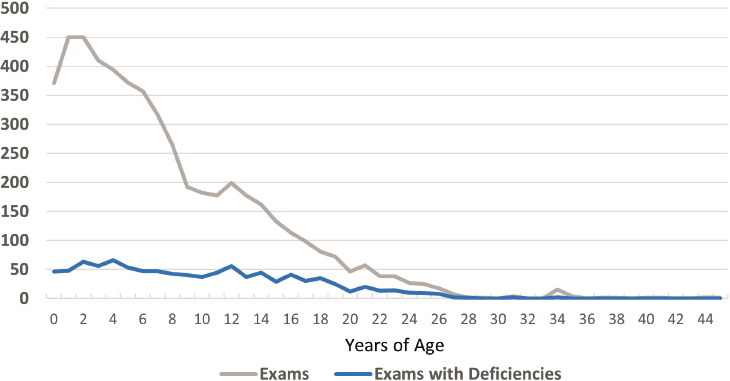
SOURCE: Coast Guard data (provided to the committee), 2023.
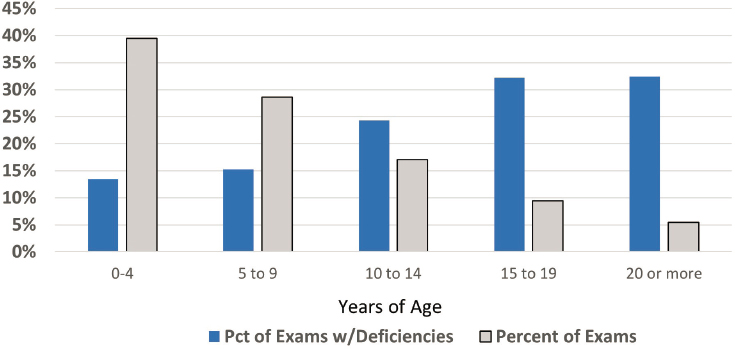
SOURCE: Coast Guard data (provided to the committee), 2023.
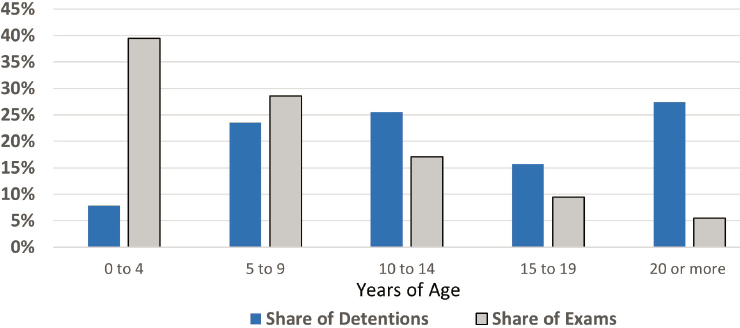
SOURCE: Coast Guard data (provided to the committee), 2023.
Require Enrollment in a Quality Assurance Program
Quality Shipping for the 21st Century (QUALSHIP 21) is the Coast Guard’s quality assurance program for foreign-flag vessels. To be eligible initially and to maintain eligibility throughout the 3-year enrollment period, the vessel must be registered to a program-qualified flag administration and have no
substandard detentions, marine violations, or serious marine casualties during the previous 36 months. In addition, the vessel must have passed a PSC exam, may not be owned by a company with more than one PSC detention during the past 24 months, and must have international certificates issued by a recognized organization (i.e., approved classification society) in good standing by the Coast Guard.
During 2023, 551 gas carriers were enrolled in QUALSHIP 21. They accounted for 61% of gas carrier PSC and COC exams. For these enrolled carriers, the Coast Guard continues to require the 2-year COC renewal exam and an annual interval exam; however, the examiner may choose to reduce the scope of the latter exam. If the enrolled vessel is in both QUALSHIP 21 and another program known as E-Zero, Coast Guard has extended the 3-month window beyond the annual exam to 6 months.15 Apart from this benefit, the QUALSHIP 21 program does not provide any other promoted incentives for gas carrier enrollment because the Coast Guard cannot legally change the 2-year COC validity term or waive the annual interval exam. It merits noting that for enrolled cargo vessels, such as container ships that are not required to have COCs, the Coast Guard has extended the PSC exam frequency from 1 to 2 years.
The option to extend the duration of the COC for gas carriers enrolled in QUALSHIP 21 could be a tangible benefit to vessel operators that does not compromise the safety assurance role of the COC program, assuming that the enrollment criteria are effective in screening for lower-risk vessels. In reviewing PSC exam records from 2013 to 2023, enrollment in QUALSHIP 21 appears to be associated with reduced frequencies of detected deficiencies. Figure 4-8 shows that more than 60% of the 674 gas carrier PSC exams conducted in 2023 involved vessels enrolled in QUALSHIP 21 and that enrollment rates exceeded two-thirds for gas carriers under the age of 10. Furthermore, the data in Table 4-2 show that despite this high percentage of gas carrier exams by QUALSHIP 21 enrollees, they accounted for less than 37% of exams with at least one detected deficiency. The rate of exams with deficiencies for QUALSHIP 21 enrollees was only 6.1% compared to 16.2% for unenrolled gas carriers. Gas carriers under the age of 10 and enrolled in QUALSHIP 21 had the lowest rates of exams with deficiencies—only 3.4%.
Advantages
Given the rapid pace of growth in LGC traffic activity, this option has the advantage of early, straightforward implementation, as many gas carriers
___________________
15See https://www.dco.uscg.mil/Portals/9/DCO%20Documents/5p/CG-5PC/CG-CVC/CVC2/psc/safety/qualship/QS21_EZero.pdf.
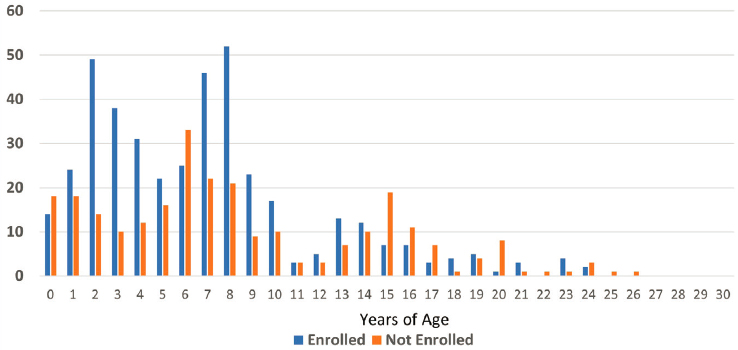
SOURCE: Coast Guard data (provided to the committee), 2023.
TABLE 4-2 Gas Carrier PSC Exam Results by Vessel Age and Enrollment in QUALSHIP 21, 2023
| Vessel Enrollment Status and Age | Percent of Exams with One Deficiency or More | Percent of All Exams (N = 674) | Percent of All Exams with One Deficiency or More (N = 68) |
|---|---|---|---|
| Enrolled in QS21 | 6.1 | 60.7 | 36.8 |
| Not enrolled in QS21 | 16.2 | 39.3 | 63.2 |
| Vessel <10 years old | 5.8 | 73.6 | 42.6 |
| Vessel ≥10 years old | 21.9 | 26.4 | 57.4 |
| QS21 and <10 years old | 3.4 | 48.1 | 16.1 |
| QS21 and ≥10 years old | 28.2 | 12.6 | 35.2 |
| All Other | 12.5 | 39.3 | 48.7 |
NOTES: QS21 = QUALSHIP 21 enrollee. Exams can identify more than one deficiency.
SOURCE: Coast Guard data (provided to the committee), 2023.
are already enrolled in QUALSHIP 21 and the Coast Guard knows or can readily determine the age of all vessels. Presumably all eligible gas carriers would be offered the extended COC when they renew.
Eligible gas carriers (i.e., a vessel that is less than 10 years old and enrolled in a quality assurance program) could potentially benefit from a longer validity period if they would become cargo-restricted less often.
Export terminal operators are reluctant to allow gas carriers to load when they are in their renewal windows out of concern that vessel loading will be delayed while waiting for the exam and the vessel potentially detained at the loading berth. If the eligibility conditions for the extended COC are effective in screening for gas carriers with lower risk (which the data reviewed above suggest is reasonable to assume), the Coast Guard could focus more of its workload on conducting COC exams for older, ineligible gas carriers that are potentially higher risk. The impacts of the COC’s intended safety margins may be minimal because the vessels eligible for the extended COC would still be subject to PSC exams when arriving at U.S. ports. If lengthening the COC’s duration reduces the frequency of cargo restrictions, this could be advantageous to terminal and vessel operators. The change could also benefit the Coast Guard by reducing the number of pressing requests from arriving carriers to conduct renewal exams prior to their assigned loading times at terminals.
Challenges
The Coast Guard cannot alter the COC’s duration of interval exams without congressional authorization. Any statutory change that is conditioned on a vessel enrolling in a quality assurance program would need to be written in a way that gives the Coast Guard flexibility to set quality standards based on risk information introduced from other types of quality assurance initiatives or to introduce other risk-informed reforms.
What is not clear, however, is whether Congress would also change the requirement for vessels to undergo one or more exams at fixed intervals during the extended duration of the COC. Current law requires an exam within 90 days of the 1-year anniversary of the 2-year COC for the vessel to maintain the certificate’s validity. Congress could retain this requirement for an annual exam or establish some other fixed interval for one or more exams during the lengthened period of the COC. In either case, the holder of the COC would risk the validity of the certificate if the window for scheduling and passing the fixed-interval exam was missed. Here again, vessels in this window could be treated as cargo-restricted, which would mean that terminal operators could be reluctant to allow them to dock at load berths. In addition, the Coast Guard may continue to be pressed to schedule these exams in advance of assigned loading times.
Another issue that could present challenges concerns the proposed requirement that a gas carrier must be enrolled in a quality assurance program to be eligible for the extended COC. The exam data presented above suggest that gas carriers enrolled in the Coast Guard’s QUALSHIP 21 program have exam histories that are better than unenrolled gas carriers. During the time period of the COC, however, there is no guarantee that the
vessel will maintain QUALSHIP 21 eligibility. As a result, a QUALSHIP 21 vessel that is granted a longer COC could drop out of the program partway through the extended COC’s duration. This possibility of a changing eligibility status could complicate COC administration. In addition, new vessels under 3 years of age would not be eligible for the QUALSHIP program, since at least 3 years of data are required for program enrollment.
Make Other Adjustments to the COC Program Using Risk-Informed Methods
The previous option, if administrable, would move the COC program in the direction of being more risk-informed, but its impact in motivating safety vigilance could be reduced at least somewhat by excluding older gas carriers that are well managed and well maintained. For a risk-informed reform to be more impactful on program efficiency and effectiveness for safety assurance, more sophisticated and quantitative methods could be considered. The Government Accountability Office (GAO),16 as discussed in Chapter 1, recognized this potential and thus recommended that this study take a closer look at options for reforming the COC program so that its requirements and implementation account more directly for the variability in the risks that individual carriers can pose.
Assessing and regulating the control of risk can be challenging for high-hazard activities that are characterized by rare incidence occurrence but the potential for catastrophic consequences when an incident does occur.17 The bulk transportation of liquefied gases, which present explosion and flammability hazards, is generally viewed as a high-hazard activity. Because gas carriers can experience low-frequency, high-consequence events, these industries may have incident and safety performance records that are not fully indicative of the potential for such a major event. Knowledge gained from evaluating past incidents must be supplemented with other types of data to assess and manage risks, including data on off-normal or unusual events, conditions, and sequences that did not lead to an incident but that can indicate an elevated level of risk. Monitoring and evaluating the causes of such events and conditions, which are commonly referred to as “precursors,” can aid in the design of interventions, or “barriers,” intended to avert incidents. Box 4-1 provides an overview of such risk-related terms and concepts. A 2004 National Academies report points to this and other important reasons for monitoring industry performance for precursors:
___________________
16GAO, Assessment of a Risk-Based Approach for Conducting Gas Carrier Exams Is Needed, January 2022.
17National Academies of Sciences, Engineering, and Medicine, Designing Safety Regulations for High-Hazard Industries (Washington, DC: The National Academies Press, 2018).
BOX 4-1
Common Risk-Related Terms and Conceptsa,b
Hazards are conditions that can lead to an adverse event. A risk is commonly defined as the product of the frequency with which an event is anticipated to occur and the consequences of the event. Risk analysis is the process of understanding what adverse events could occur from a hazard, their likelihood, and how severe their consequences could be. A risk analysis can provide the basis for risk assessments or evaluations to inform decisions about how to mitigate the risk.
Precursors are the conditions, events, and sequences that can precede and lead up to incidents. Their reporting and evaluation can be used to identify threats and design interventions or barriers. Barriers can reduce the likelihood that a hazard will create an adverse event, or they may reduce the consequences should the event occur. These barriers, or safeguards, either in place or needed to reduce risk, can be identified using a wide variety of risk analysis techniques, both qualitative and quantitative. Depending on circumstances and the level of information needed, these techniques may include fault trees, event trees, bowtie analysis, risk matrices, and probabilistic risk analysis.
Risk evaluation is the process of comparing the results of the risk analysis with the risk acceptance criteria for the purpose of making decisions. Risk acceptance criteria include legal and regulatory requirements and economic considerations. Decisions based on risk acceptance criteria constitute risk management.
Risk evaluation can be performed from the perspective of consequences to workers and other individuals and from the perspective of other consequences, including environmental degradation. Individual risk is often measured as the frequency of an expected fatality or injury per million work hours (or year), or within a given population per year. Risk evaluation can also include estimates of other adverse consequences such as the risk of environmental and ecological damages.
__________________
a American Bureau of Shipping, Guidance Notes on Risk Assessment Applications for the Marine and Offshore Industries, May 2020. See https://ww2.eagle.org/content/dam/eagle/rules-and-guides/current/other/97_riskassessapplmarineandoffshoreoandg/risk-assessmentgn-may20.pdf.
b National Academy of Engineering, Accident Precursor Analysis and Management: Reducing Technological Risk Through Diligence (Washington, DC: The National Academies Press, 2004), https://doi.org/10.17226/11061.
First, reviewing and analyzing observed precursors can reveal what can go wrong with a particular system or technology and how accidents can develop (modeling). For example, a precursor may reveal a previously unknown failure mode, which can then be incorporated into an updated model of accident risk. Second, because precursors generally occur much more often than accidents, analyses of accident precursors can help in trending the safety of a system (monitoring). For example, a precursor reporting system can provide evidence of improving or deteriorating safety
trends and hence decreasing or increasing accident likelihoods. This information might not be apparent from sparse or nonexistent accident data. Trends in observed precursors can also be used to analyze the effectiveness of actions taken to reduce risk. Finally, and perhaps most important, precursor programs can improve organizational awareness (mindfulness) of safety problems.18
A risk-informed safety oversight program for LGCs would leverage such precursor data along with other information that may be indicative of risk, such as the known condition, age, and design of a vessel, to shape and periodically revise the key features, or barriers, of the oversight program and to prioritize enforcement and compliance verification activities. Risk-informed processes are used by regulators of other high-hazard industries and to a certain degree by the Coast Guard in administering other regulatory and safety oversight programs. The committee is aware, for instance, that the Coast Guard provides marine inspectors with guidance to prioritize vessels for PSC exams and to set their scope based on examination and compliance history, vessel characteristics, and quality profiles of the flag state, ship management association, and recognized organization. The Coast Guard has also established a risk-informed methodology as a targeting tool for inspecting offshore oil and gas facilities.19 The methodology consists of grouping inspection targets into three tiers: low, average, and high performers. The tiers are based on static criteria, such as the age and class of the facility, and criteria with changing values, such as the time since the facility’s previous inspection and its operational status. The Coast Guard tracks performance and updates rankings of facilities to reflect changes. The updates allow it to shift inspection resources as necessary.20 The goal is to allocate inspection person-hours so that two-thirds are spent on the low performers, one-fourth on average performers, and one-twelfth on high performers.
A way to think about the COC program is that the requirement for an annual exam serves as a barrier, or safeguard, and the vessel deficiencies identified during exams provide the Coast Guard with precursor information to make informed judgments about risk, including judgments that can be used to adjust the scope of the annual exam. As a practical matter, however, the program’s main design elements—fixed-interval exams applicable
___________________
18National Academy of Engineering, Accident Precursor Analysis and Management: Reducing Technological Risk Through Diligence (Washington, DC: The National Academies Press, 2004), p. 8, https://doi.org/10.17226/11061.
19D8 OCS Policy Letter 03-2016, “Interim D8 OCS Risk-Based Inspection Resource Allocation Methodology.” See https://www.dco.uscg.mil/Portals/9/OCSNCOE/References/Policy-Letters/D8/D8ocs-PL-03-2016.pdf?ver=ZJ07jog1aGd_jyYw44pfjQ%3D%3D.
20National Academies of Sciences, Engineering, and Medicine, Modernizing the U.S. Offshore Oil and Gas Inspection Program for Increased Agility and Safety Vigilance (Washington, DC: The National Academies Press, 2021), p. 100.
to all vessels—are not risk-informed but rather statutorily mandated with little room for the Coast Guard to make adjustments for lower-risk vessels. If authorized by Congress, the Coast Guard could presumably introduce a risk-informed regime into the COC program. A starting point might be the option discussed above, which would extend the COC’s duration for newer (less than 10 years of age) gas carriers that meet criteria for quality assurance. This set of reforms would allow inspectors to focus more attention on higher-risk vessels. Additional reforms could be patterned after the aforementioned targeting tools for PSC and offshore facility exams.
Success with such modest program reforms could eventually lead to the advent of a more comprehensive risk-informed program. For instance, if Congress were to give the Coast Guard discretion to decide on the need for and frequency of interval exams or the duration of the COC, the use of risk-informed methods could guide these decisions to ensure that safety assurance is not degraded—and ideally enhanced. An exemplar is the U.S. Nuclear Regulatory Commission’s (NRC’s) program for the country’s approximately 100 nuclear power facilities. The NRC relies on an assortment of indicator data with safety significance. The agency closely monitors the safety performance indicators so that inspections can be pivoted to plants and plant activities showing signs of problems. Prior to redesigning its safety assurance program in this way, the NRC followed a traditional enforcement regime consisting of detailed inspections of all plants at regular intervals. This process was resource-intensive and did not provide regulators with confidence that the most problematic safety issues were receiving sufficient attention in the frequency and focus of inspections.21
A similar performance monitoring scheme for a redesigned COC program could involve the development of an operator reporting system for safety-significant events, behaviors, and conditions. These may include instances when a safety-critical device or system is faulty or not available or when the crew members make safety-related errors. If statutory changes allowed for more discretion about the frequency of interval exams, for instance, such a reporting system would put the Coast Guard in a better position to specify when interval exams should be conducted and how the exams should be focused. Anonymous reporting might be required, at least initially, to encourage candid and regular reporting by operators, but some operators may be motivated to provide data without anonymity if they are confident in the quality of their operations and desire more exam flexibility. Ultimately, carrier safety performance would be monitored in “real time” rather than at fixed intervals (i.e., annual exams). The Coast Guard would only need to perform an exam if event data deviated in a way that safety
___________________
21“ROP Framework,” U.S. NRC, last updated January 4, 2024, https://www.nrc.gov/reactors/operating/oversight/rop-description.html.
came into question. Furthermore, for cases in which such an exam is required, its focus could be the underperforming system. This targeting would allow the operator and Coast Guard to make the best use of resources and limit delays.
The advantages and challenges associated with introducing risk-informed methods into the COC program are summarized next, keeping in mind that their significance would depend in part on the role these methods would play, such as informing the scope of interval exams or supporting a major redesign of the program.
Advantages
Risk-informed methods can give the Coast Guard flexibility to focus its limited enforcement resources on the highest-risk vessels, components, operations, and companies rather than spread resources over all vessels, including some that pose substantially lower risk than others. This advantage can be especially important in an environment in which gas carrier activity is growing to a level that will potentially stress the Coast Guard’s examination and inspection capacity. The safety assurance role of the COC program could ultimately be enhanced by targeting the highest-risk activities and by using risk factors to aid in the identification of emerging safety issues.
Challenges
To capitalize more fully on risk-based methods, the Coast Guard will need the latitude to shape key features of the COC program, such as the frequency and scope of interval exams and duration of COCs. This will require statutory changes. The demands on the Coast Guard to collect, maintain, synthesize, and analyze the array of data needed to identify and assess risk factors may tax its analytic and IT capabilities and not align with its available competencies. The competitive nature of the marine industry and its global character may limit operator cooperation and prevent the Coast Guard from collecting the data needed to develop risk-based performance indicators. It is important to recognize, however, that the Coast Guard already has in place a specialized center with significant technical expertise on LGCs. The LGC NCOE could provide a natural home for the expertise required to support a risk-informed COC program.
SUMMARY ASSESSMENT OF OPTIONS
LGC traffic activity is growing fast and is expected to remain at unprecedented levels for the next decade and more. Thus, when assessing COC reform options, it is important to consider whether the option could have
a meaningful effect in the near term (2 to 4 years) on the Coast Guard’s ability to implement the program efficiently and preserve safety while also considering potential impacts over the longer term (10 years or more). The following summary assessment is offered for the seven reviewed options with these timing and impact interests in mind.
Changing the Marine Inspection Workforce
Given the forecast that high levels of LGC arrivals will be sustained over time, the Coast Guard will almost certainly need to increase the size and availability of its gas-qualified workforce through new and varied means. However, in considering their advantages and challenges, none of the five proposed options for modifying the marine inspection workforce’s composition, management, and deployment stands out as having the potential to be the centerpiece of policy that would have an early impact in preserving the Coast Guard’s efficient and effective implementation of the COC program. Because many of the options would require the recruiting and training of gas-qualified inspectors, whether active-duty or civilian, it could take many years for the beneficial impacts of even concerted efforts to be felt.
Deploying gas-qualified inspectors to conduct remote exams has the advantage of early implementation. Examination sessions piloted at the Panama Canal, however, did not attract sufficient demand to suggest that regular sessions would be well subscribed. Such deployments could nevertheless serve as stopgap measures during periods of high demand for exams, provided that such periods could be predicted confidently far enough in advance for session planning. Likewise, extending the tours of gas-qualified inspectors in ports with significant gas carrier activity could be implemented quickly, but it would likely only marginally increase the pool of inspectors available for COC exams. It could have a significant downside if the practice discourages interest in gas carrier qualifications by limiting rotational assignments and career progression opportunities.
Placing all gas-qualified inspectors in a district under the command of a single OCMI could allow for more intense and efficient use of gas-qualified inspectors in high-demand ports, as long as consolidation does not increase the amount of unproductive time spent by inspectors having to travel to conduct exams in distant sectors. If this option is pursued, the Coast Guard could assign the specialized OCMI to the LGC NCOE (at least for District 8) and ensure that enough gas-qualified inspectors under the OCMI’s command are located in proximity to where gas carriers require exams. Increasing the number of NVOs at the LGC NCOE would serve as a force multiplier; however, it would require a devotion of budgetary, recruiting, and training resources to ensure that the added inspectors are net additions to the gas-qualified inspector workforce and not comprised
mainly of personnel transferring from other marine inspection units without replacements.
Hiring more Coast Guard civilians to conduct LGC exams would take more time than the other options. It too would require budgetary, recruiting, and training resources to ensure that the civilian positions are not filled largely by inspectors retiring early from active duty. A larger force of civilian inspectors could also constrain the Coast Guard’s ability to schedule exams during off hours and to keep pace with exam scheduling demands during peak traffic periods. One means of tapping the expertise of civilians with existing knowledge of gas carriers would be to use contract inspectors, such as by delegating COC examination services to third parties such as authorized class societies. There are many issues that would need to be addressed for this option to succeed, including appropriated funds, supplemental training, avoidance of conflicts of interest, and adequate Coast Guard oversight of third-party services. Because understanding and working through these issues could take time (as noted in the text above), a pilot program might be advantageous to test the concept; however, even a pilot program would need an adequate amount of time to stand up.
Modifying COC Program Requirements
The committee was asked to consider two options for modifying COC program requirements that would introduce risk-informed reforms. The first involves specific changes that would extend the COC’s duration beyond 2 years with eligibility, limited to vessels less than 10 years of age and enrolled in a Coast Guard quality assurance program. The second option is more open-ended by not specifying how the COC program would be reformed to become more risk-informed—presumably by being more data-driven and using more varied criteria than vessel age and enrollment in a quality program.
While both of these options would require congressional action, the first option could be implemented relatively quickly because the Coast Guard already has a quality assurance program, QUALSHIP 21, with criteria intended to screen for lower-risk cargo vessels, and many gas carriers are enrolled. The Coast Guard knows or can readily determine which carriers would meet the age criteria for eligibility. A review of gas carriers’ PSC exam histories reveals that gas carriers enrolled in QUALSHIP 21 are less likely to have deficiencies than gas carriers that are not enrolled. Moreover, vessels less than 10 years old are less likely to have deficiencies than older gas carriers, and the exam performance history of those enrolled in QUALSHIP 21 is even better.
An extended COC validity term for gas carriers that meets these two eligibility conditions could, in principle, allow the Coast Guard to shift its
inspector resources to the higher-risk population of ineligible gas carriers. Eligible gas carriers could potentially benefit from a longer validity period if they would become cargo-restricted less often. As a practical matter, however, current law requires an exam within 90 days of the 1-year anniversary of the COC in order for the vessel to maintain the certificate’s validity. If the statutory requirement for such fixed-interval exams is retained, vessels in the window when such an exam is required may continue to be treated as cargo-restricted by terminal operators reluctant to assign them loading berths. The Coast Guard, in turn, may continue to be pressed to schedule the exams outside ports in advance of assigned loading times. Another potential issue with an eligibility requirement that entails enrollment in QUALSHIP 21 is that vessels may not remain in the program for the entire duration of their COC, complicating program administration.
The second program reform option, consisting of more comprehensive risk-based modifications to the COC program, could have early positive impacts on COC program efficiency and effectiveness that increase over time. However, any significant shift in this direction would require the Coast Guard to have the capacity to monitor for risk factors and the flexibility to make adjustments in program implementation that may not be conducive to prescriptive COC requirements. The Coast Guard has the authority to examine foreign arriving vessels under its existing PSC authorities at any time and can use its discretion to decide when to conduct an exam and how to set its scope. For this purpose, the Coast Guard has risk-informed criteria. However, current statute requires that all gas carriers, irrespective of their risk factors, undergo an annual exam to maintain their COC. Absent this requirement, the Coast Guard could apply PSC methods for assessing the need for an arriving gas carrier to undergo an interval exam and to establish its scope, ideally using risk criteria that are most relevant to LGCs.
Given that older vessels have accounted for a disproportionate share of gas carrier exams with deficiencies and detentions, one would expect that age would be one criterion used by the Coast Guard to select arriving gas carriers for risk-informed PSC exams. Current enrollment in QUALSHIP 21 could be another criterion. Having the discretion to make these choices, the Coast Guard could continuously improve its assessment of gas carrier risks, albeit with a requisite need to acquire more data, analytic capabilities, and means for monitoring gas carrier condition and performance.
The use of risk-informed methods to oversee vessel safety in an efficient and effective manner is a strategy that the Coast Guard has employed before when given an ability to do so under applicable authorities and constraints. Informed by this chapter’s review of options for reforming the COC program, the committee recommends steps in the next chapter that are intended to give the Coast Guard this ability legally and with the requisite implementation capacity.
This page intentionally left blank.


