Transit Traction Power Cables: Replacement Guidelines (2024)
Chapter: 1 Introduction

CHAPTER 1
Introduction
1.1 Guide Structure
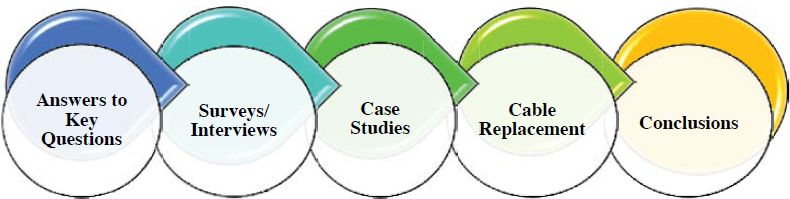
This guide presents research on the replacement of transit traction power cables. The guide includes a study of current practices for (1) assessing insulation aging, and (2) replacement of cables before failure, including (a) approaches used in transit systems for which there are no monitoring programs or testing systems, (b) factors affecting the life of cables, and (c) effective practices of transit agencies. A systematic review of the current literature was conducted, and in-depth case studies identifying gaps and significant issues were conducted to develop guidelines for the transit industry in the United States. To inform practitioners and provide solutions to their problems, a detailed cable life evaluation was carried out, and an optimized process to evaluate the lifespan of cables was developed. The structure of the guide is shown in Figure 1.1.
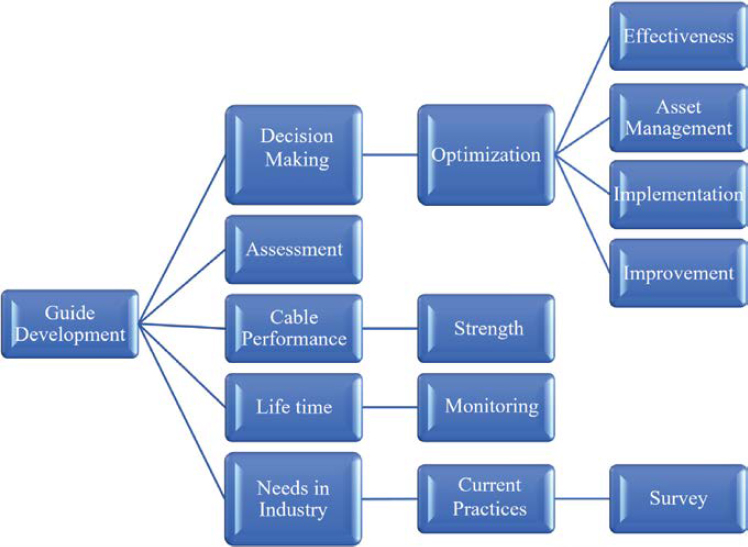
First, an in-depth literature review was conducted. The literature review focused on specific innovations, lessons learned, sound industry practices, and decision support. In addition, short-term and long-term planning, setting of conditions and performance targets for cables, cable performance evaluations, lifespan evaluations, investment planning, transit asset management, allocation of risk and reward in the industry, and more were investigated. A synthesis of the existing literature was integrated with survey data to develop the guide. Data were gathered from several agencies through individual interviews and surveys. The information gathered was summarized, and critical information gaps were identified. The research team collected data from relevant practitioners in the field and engaged with industry subject-matter experts experienced in the design, construction, maintenance, and operation of traction power systems. The results of the survey were evaluated and statistically analyzed. After reviewing the survey results, 10 case studies were developed to outline the cable maintenance practices of various types of transit systems. The guide was developed as demonstrated in Figure 1.2 and includes examples of strategies that seek to develop optimum and continuous solutions. Implementing an effective strategy for developing the guide was essential prior to suggesting optimum processes to design and implement solutions. An optimization model was established for the guide. Figure 1.3 presents the work plan to develop the guide. Figure 1.4 and Table 1.1 summarize the guide.
1.2 Background
It is important for transit agencies to have effective strategies for determining the end of life and replacement criteria for transit traction power cables. Monitoring approaches and indicators for the cables are also important. Effective strategies vary and can be listed as a process of maintaining, upgrading, and operating cables with cost-effective strategies and optimum duration and periods. These processes should be informed by the mainstream practices of the industry. Strategic management and optimization algorithms for traction power cables should be carried
out with performance-based and decision-based techniques. System analysis for quality information should include strength, capacity, and performance analyses. An accurate stated definition plays an important role in decision-making. The strategic cycle for transit traction power cables is outlined in Figure 1.5. These items will be considered during the process of evaluating, improving, implementing, documenting, and reporting on the performance of cables. The strategic cycle process for replacement of transit system cables has continuous and dynamic characteristics, with many parameters related to performance checks, optimization, monitoring, and processes. Defining these parameters is the most important component of the strategic cycle process development. Figure 1.6 shows examples of installed cables. Table 1.2 introduces the key questions determined and addressed in the research. These questions formed the structure of the guide.


Table 1.1. Chapter summary.
| Chapter | Title | Summary | Sections |
|---|---|---|---|
| 1 | Introduction | The guide was developed using the research results for “replacement of transit traction power cables.” The guide includes a study of current practices for (1) assessing insulation aging, and (2) replacement of cables. |
|
| 2 | Answers to Key Questions | In this chapter, key questions are identified and answered. The literature review is discussed in relation to these questions. The findings of the research works are classified in eight parts. The research findings determine the lifetime of underground cables and the time spent replacing them. The estimated lifetime of the cables is around 35 to 40 years, based on experimental research results. There are various test methods available to detect cable failure. |
|
| 3 | Survey and Interviews | The survey process was carried out in various locations. In the process, old, new, large, and small systems were covered. Participants were selected from multiple locations and asked to describe their practices. |
|
| 4 | Case Studies | After reviewing the survey results, 10 case studies were developed to demonstrate maintenance practices from a variety of systems (small, large, old, and new) by engaging industry subject-matter experts experienced in the design, construction, maintenance, and operation of traction power systems. |
|
| 5 | Cable Replacement | Cable replacement is evaluated with an optimization process and finite element analysis. The optimization process begins with estimating cable failure rates. The failure rate models can be estimated using historical failure rates. |
|
| 6 | Conclusions | The guide presents practical solutions for the problems faced by transit agencies. Problems faced and solutions found by the agencies are discussed to share best practices. The sections are designed to help practitioners obtain organized and systematic information related to traction power cables. | — |
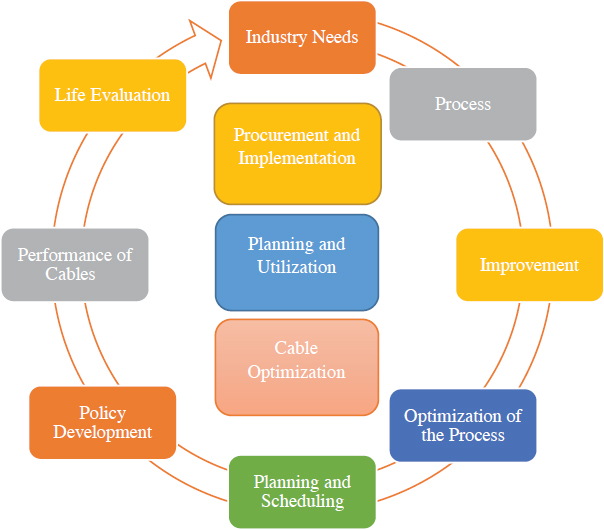
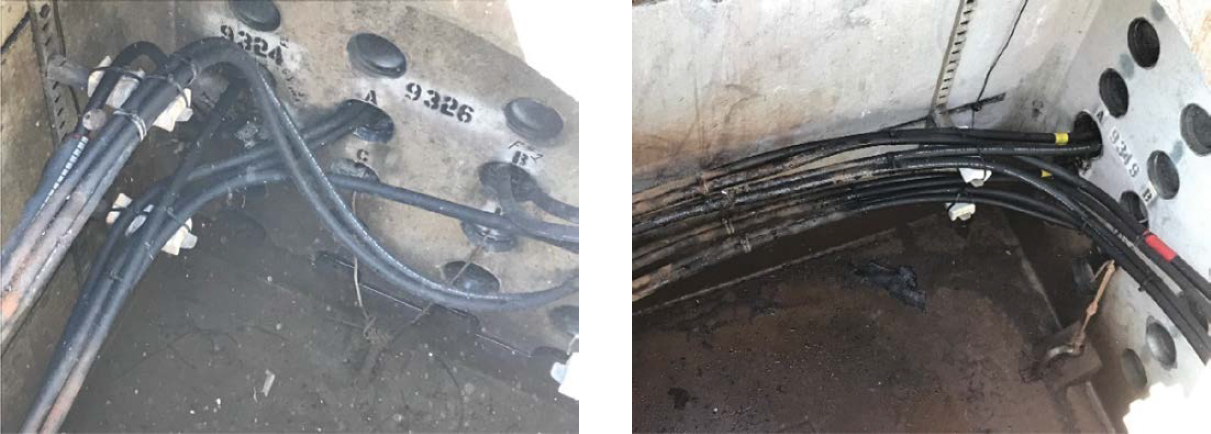
Table 1.2. Key questions related to traction power cables.
| Questions | Responses |
|---|---|
| Q1: How is the degree of degradation measured, and what is the industry standard for degradation? | A measurement unit needs to be determined. For instance, for a mile of highway, the degree of degradation can be a composite unit that includes the area of potholes, the number of potholes, and the distribution of the depth of potholes. Similarly, a measurement unit should be defined for transit power cables. |
| Q2: What is the lifespan of insulated cables? | |
| Q3: What are the diagnostic indicators for when insulated cables should be replaced? | Current practices need to be determined to avoid failures, with an accurate indication of replacement considering the cost/benefit trade-off. The lifetime of cables can be increased if these reasons are understood well. |
| Q4: In what conditions will a cable achieve its maximum useful life? | |
| Q5: What conditions will accelerate the degradation of a cable? | The current environment and the best characterization of a smart replacement strategy for transit power cables need to be defined. A practical, cost-effective construction environment should be determined for a smart replacement strategy. |
| Q6: What strategies can be employed to extend the useful life of insulated cables? |


