Funding for Maintenance of Complete Streets (2026)
Chapter: 2 Literature Review

CHAPTER 2
Literature Review
This chapter summarizes the academic literature and technical resources that relate to the funding and maintenance of Complete Streets projects. This chapter begins with a brief overview of Complete Streets policies and support for Complete Streets within U.S. DOT, as well as within state DOTs. This is followed by a review of select studies and reports that specifically address maintenance of active transportation facilities. Lastly, an overview is provided of the state DOT Complete Street policies that address maintenance.
2.1 Introduction
The Complete Streets movement has spread rapidly since the term was coined in 2003. Over the last 20 years, hundreds of jurisdictions across the United States have adopted Complete Streets policies. These policies direct transportation agencies to plan, design, implement, and maintain roadway networks for all transportation methods.
Four common provisions found across state Complete Street policies are
- Accommodation of pedestrians and bicyclists in local plans,
- Application to specific roadway and project types,
- Funding to support the construction and maintenance of active transportation facilities, and
- Pursuing network connectivity for all modes (Fenton 2012).
The term Complete Streets represents much more than the physical changes to a communityʼs streets. Complete Streets means changing transportation planning, design, maintenance, and funding decisions. Some communities have decided to pursue an additional tax that will fund transportation improvements. For maximum effect, a Complete Streets Policy would make it the default approach for all projects, not just new construction, and include direct application of a Complete Streets approach to rehabilitation, repair, major maintenance, and operations work. Figure 1 illustrates how the rate of pedestrian deaths varies by race and ethnicity.
As shown in Figure 2, neighborhoods with lower income levels suffer higher-than-average rates of pedestrian fatalities.
This report focuses on maintenance of the active transportation facilities, which include sidewalks and connections to transit stops. Although state highways include many facilities and areas where this is not the case (e.g., rural interstates), state DOTs also manage conditions where highways intersect with local networks and where state highways are the backbone of local transportation networks (e.g., the Main Streets of many small towns). In these cases, the stateʼs provision of Complete Streets has a direct bearing on safety and pedestrian fatalities.
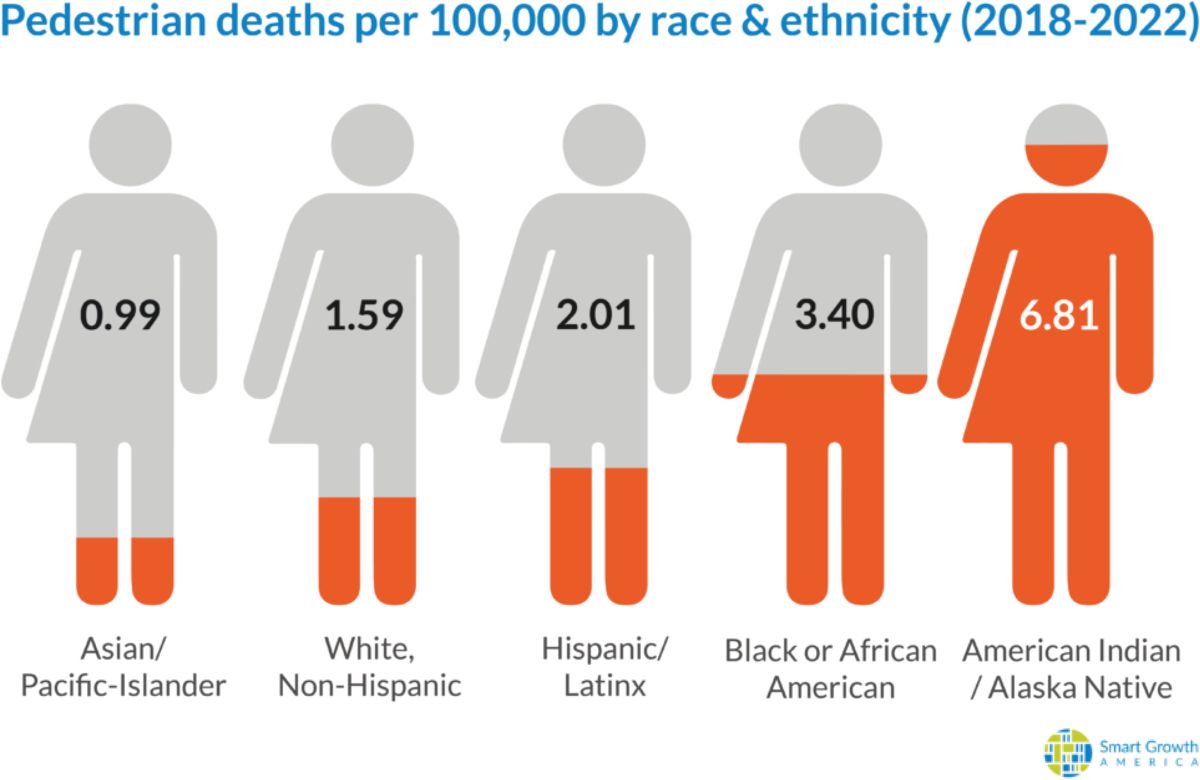
Source: NHTSA and Smart Growth America 2024
Long Description.
The chart shows figures for Asian or Pacific-Islander at 0.99, White, Non-Hispanic at 1.59, Hispanic or Latinx at 2.01, Black or African American at 3.40, and American Indian or Alaska Native at 6.81. The data highlights significant disparities, with American Indian or Alaska Native having the highest rate. The chart is part of a discussion on Complete Streets policies aimed at improving pedestrian safety and transportation planning.
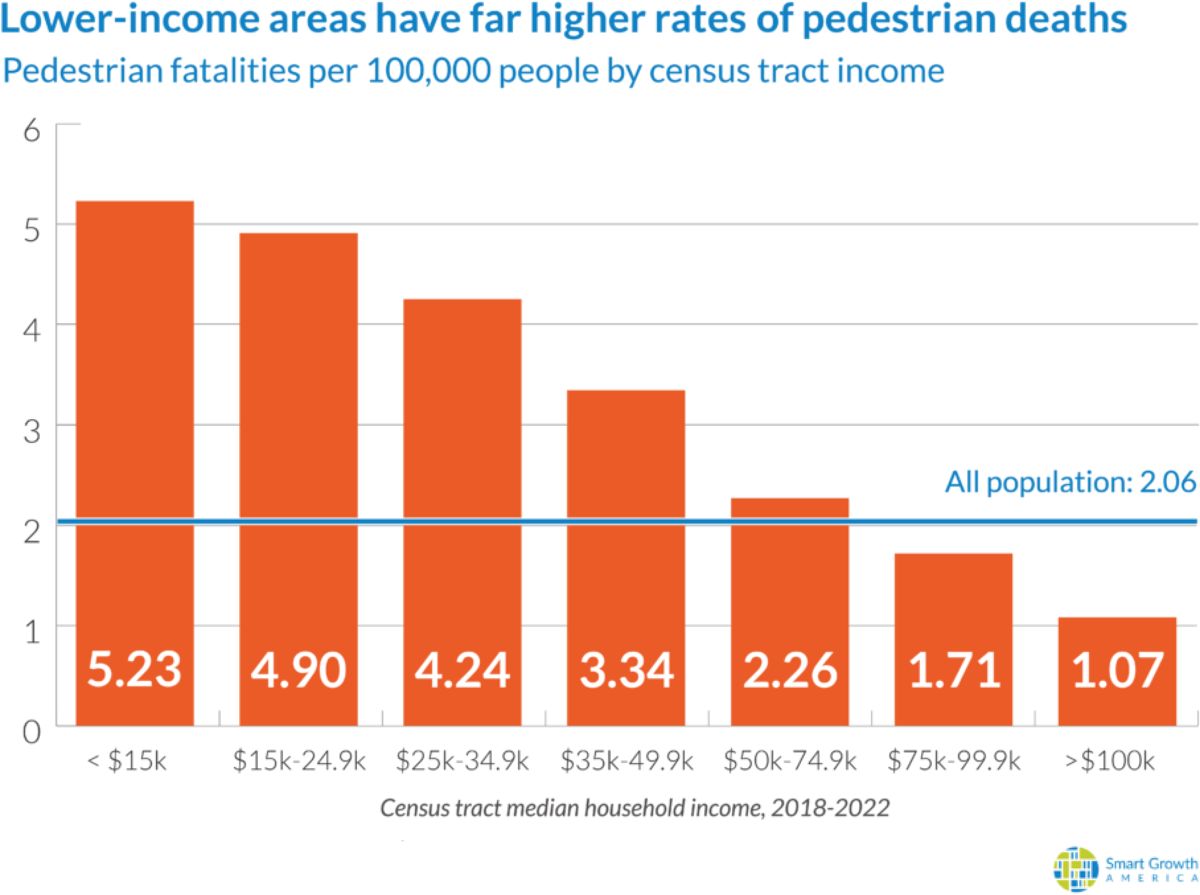
Source: NHTSA and Smart Growth America 2024
Long Description.
The bar chart illustrates pedestrian fatalities per 100,000 people across different census tract income levels from 2018 to 2022. The x-axis represents income brackets, ranging from less than 15,000 dollars to over 100,000 dollars. The y-axis shows fatalities per 100,000 people, with a scale from 0 to 6. The chart reveals that lower-income areas, particularly those earning less than 15,000 dollars, experience the highest fatality rate of 5.23, compared to 1.07 in areas earning over 100,000 dollars. The overall population average is marked at 2.06 fatalities.
Maintenance matters when discussing the distribution of Complete Streets. State DOTs routinely and universally maintain the state highway system. Budget constraints and other factors result in varying degrees of maintenance and varying levels of the systematic management of maintenance. Yet there is no doubt as to who is responsible for maintaining highway vehicular lanes. This is not so with multi-use pathways, sidewalks, bike lanes, or other Complete Streets features. Many states will not maintain these facilities. Some state DOTs still do not systematically incorporate active transportation in design or planning. Several state DOTs will develop active transportation facilities only when local government agrees to maintain them, thus making
the degree to which safe pedestrian facilities are provided tied to the financial well-being and priorities of local governments.
2.2 FHWA National Complete Streets Assessment Baseline Report
The FHWA National Complete Streets Assessment (NCSA) Survey Project aimed to develop and conduct a national survey to measure and better understand the status of Complete Streets practices among all 52 DOTs (including Washington, DC, and Puerto Rico). The successful survey data collection effort reached all 52 DOTs during the implementation phase from December 2022 to February 2023. This section of the report presents the national-level Complete Streets data findings from the survey. In terms of data collection for Complete Streets efforts, respondents were asked to select all the types of data collected to support their safety studies and multimodal planning related to Complete Streets.
One of the main questions respondents were asked was whether their DOT has Complete Streets performance measures in place. Fourteen state DOTs, or 27 percent of all respondents, indicated that they did and that they use performance measures that are specific and shared or available to the public.
Exemptions embedded in existing state policies and practices further lower the number of projects that include Complete Streets elements. Fourteen states do not include Complete Streets elements if the active transportation project requires purchasing right-of-way (ROW), nine do not include Complete Streets elements if they believe inclusion will increase delay or congestion for vehicles, and 16 do not include Complete Streets elements if the project is only engaging in an operation or maintenance project.
North Carolina found that structural/organizational changes in the agency were needed to advance implementation and to help make Complete Streets the default approach. The state of North Carolina now has an Integrated Mobility Division that is both a reflection of and a reason for excellence in Complete Streets implementation. In its formation, the Bike and Pedestrian Team was merged with the Public Transit Team. This North Carolina reorganization also included the formation of a Core Technical Team workgroup.
Complete Streets Policies
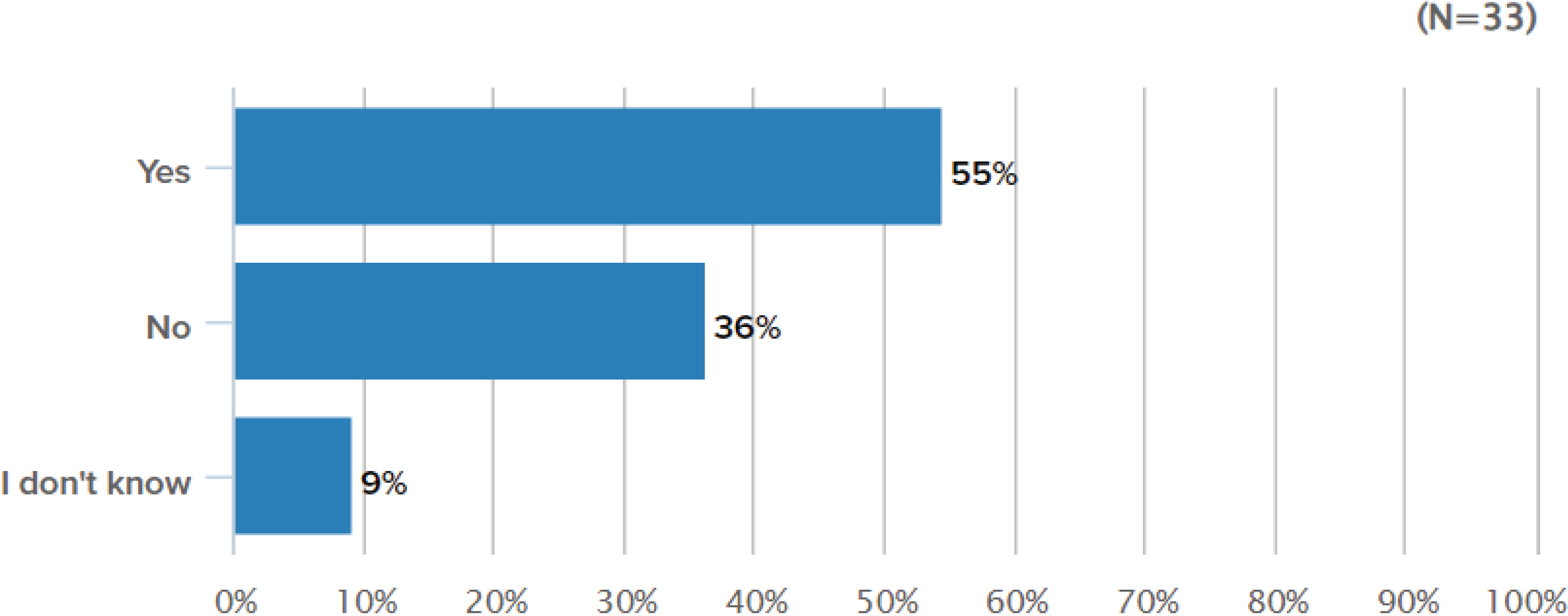
Of the 52 DOT respondents to the FHWA NCSA survey, 63 percent (33 DOTs) reported having a Complete Streets Policy. Over the course of the data collection process, 55 percent of DOT respondents (18 of 33 DOTs) reported having both a Complete Streets Policy and a section in it covering maintenance requirements and responsibilities (Figure 3).
2.3 Federal Definitions of Maintenance and Preservation Activities
Historically, FHWA has concentrated its efforts on new construction for widening projects, new routes, and various other safety and mobility improvements. Maintenance, particularly of the preventive type, was not an early priority. This perspective shifted with the enactment of the Intermodal Surface Transportation Efficiency Act (ISTEA) in 1991, which allowed federal funds to be used for certain maintenance-like operations, requiring 80 percent of the funding for preservation efforts. The issuance of a pivotal memorandum, Preventive Maintenance Eligibility, in October 2004 underscored the need for maintenance (Gee 2004).
Long Description.
The bar chart illustrates the responses of 33 departments of transportation (DOTs), including Puerto Rico, regarding whether their Complete Streets Policy addresses future maintenance and operation needs for bicycle and pedestrian facilities. The horizontal axis represents the percentage from 0 to 100, while the vertical axis lists the responses: “Yes”, “No”, and “I donʼt know”. Fifty-five percent of DOTs responded “Yes”, indicating they have policies covering maintenance needs. Thirty-six percent responded “No”, and 9 percent were uncertain.
Building upon that new emphasis on maintenance needs, an additional memorandum, Pavement Preservation Definitions, was published the next year (Geiger 2005). This memorandum provided the definitions shown in Figure 4. The distinction is largely in the purposes, with pavement preservation and preventative maintenance extending the life of the highway and achieving other goals (https://www.pavementpreservation.org/wp-content/uploads/2010/05/PP_Defs_Memo_09_05.pdf).
NCHRP Web-Only Document 272: Existing and Emerging Highway Infrastructure Preservation, Maintenance, and Renewal Definitions, Practices, and Scenarios, published in 2020, describes the evolving nature of maintenance and preservation, as well as the changing definitions that are key for state DOTs to understand because they dictate which activities are eligible for federal funding (Mallela et al. 2020). It discusses the substantive changes ushered in with the Moving Ahead for Progress in the 21st Century Act (MAP-21) and how that legislation updated definitions of routine and preventive maintenance. These definitions are shown in Figure 5.
23 U.S. Code § 116 clearly assigned maintenance responsibilities to state DOTs, although it does not specifically address active transportation facilities. As described in subsequent sections, various states have developed different data sets, cost estimates, and maintenance protocols for
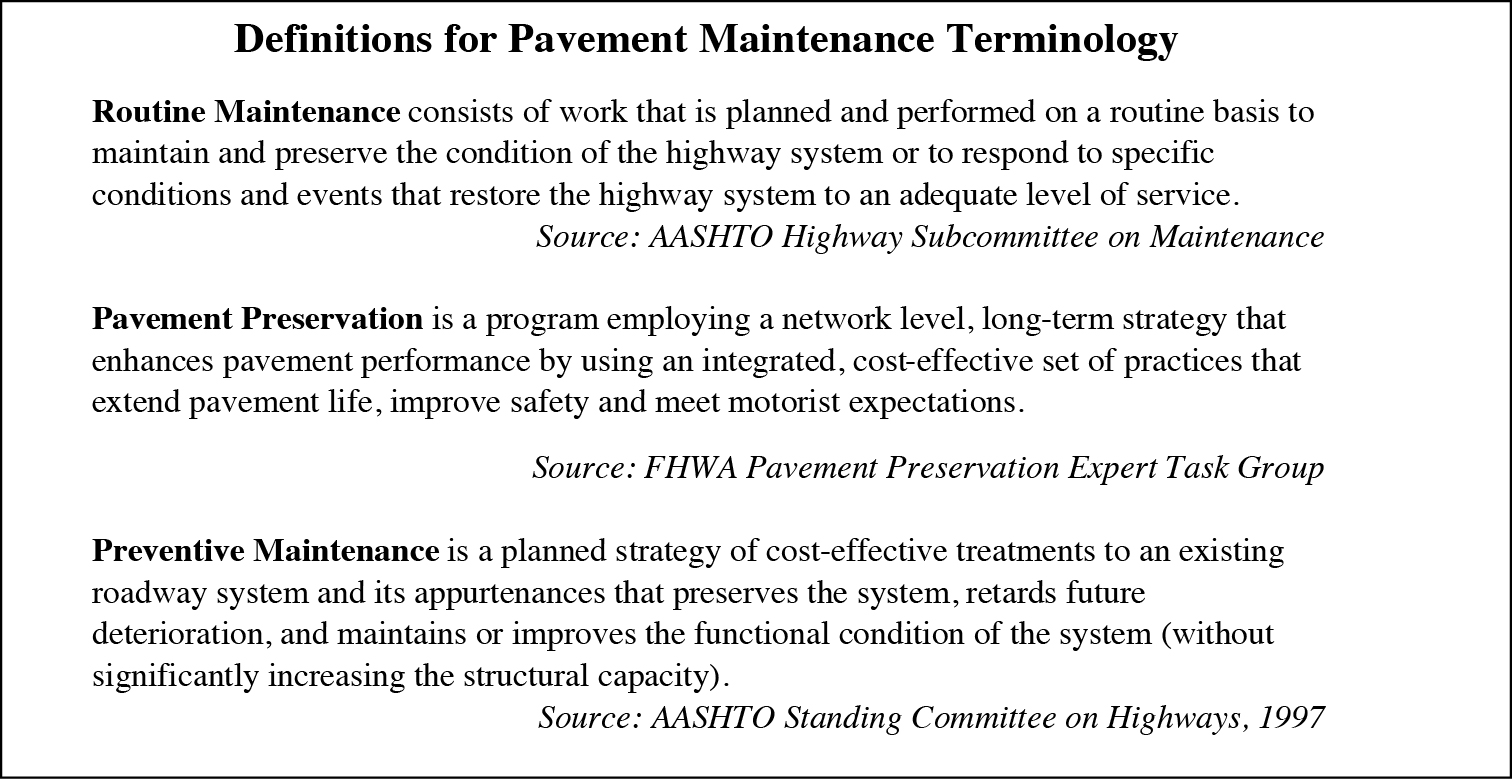
Long Description.
The text box is titled Definitions for Pavement Maintenance Terminology. The text box includes the following definitions: Routine Maintenance consists of work that is planned and performed on a routine basis to maintain and preserve the condition of the highway system or to respond to specific conditions and events that restore the highway system to an adequate level of service (Source: AASHTO Highway Subcommittee on Maintenance). Pavement Preservation is a program employing a network level, long-term strategy that enhances pavement performance by using an integrated, cost-effective set of practices that extend pavement life, improve safety, and meet motorist expectations (Source: FHWA Pavement Preservation Expert Task Group). Preventive Maintenance is a planned strategy of cost-effective treatments to an existing roadway system and its appurtenances that preserves the system, retards future deterioration, and maintains or improves the functional condition of the system (without significantly increasing the structural capacity) (Source: AASHTO Standing Committee on Highways, 1997).
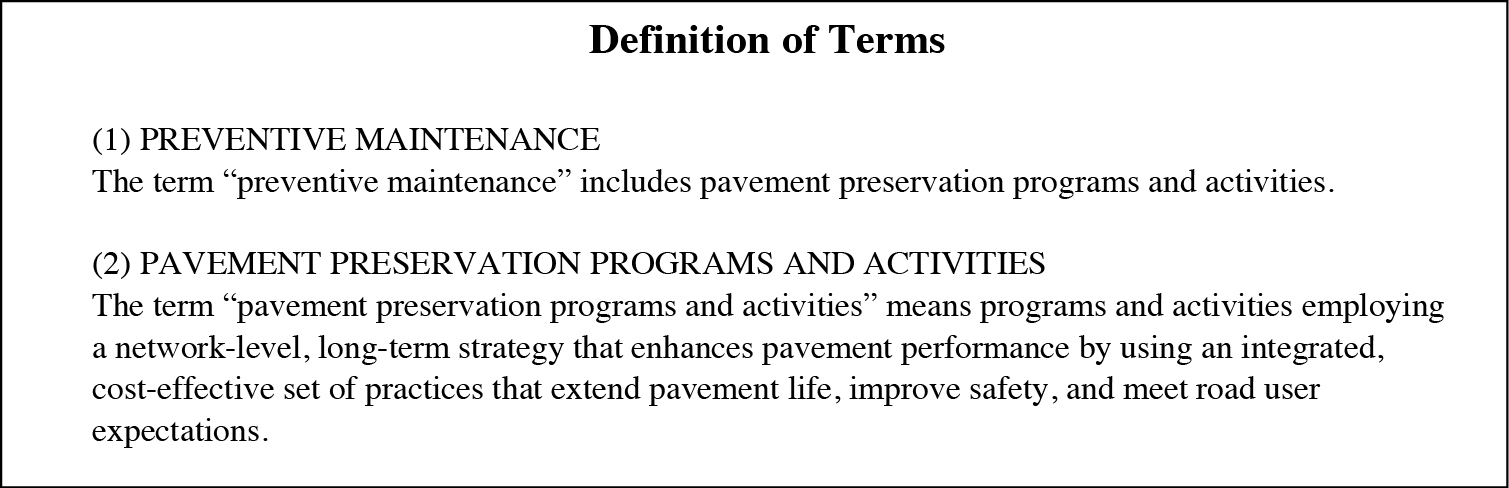
Long Description.
The text box is titled Definition of Terms. The text box includes the following defintions: (1) Preventive Maintenance: The term “preventive maintenance” includes pavement preservation programs and activities; (2) Pavement Preservation Programs and Activities: The term “pavement preservation programs and activities” means programs and activities employing a network-level, long-term strategy that enhances pavement performance by using an integrated, cost-effective set of practices that extend pavement life, improve safety, and meet road user expectations.
their respective DOTs. A selection is summarized here. The following examples from Montana and Minnesota provide examples of state DOT policies on the maintenance of active transportation facilities.
Transport Policy recently published a study on Complete Streets asset management, which provides a synthesis of current practice and a recommended roadmap for continued improvement (Gadsby et al. 2024). The authors surveyed all 50 states and conducted interviews with the California DOT (Caltrans), the Washoe County Regional Transportation Commission, and others. This study cites research on Complete Streets Policy and roadway safety linking stress levels for cyclists with pavement condition. The roadmap was developed at the National Center for Sustainable Transportation and builds upon their related research conducted on asset management and Complete Streets.
Montanaʼs Inventory and Plan
Montanaʼs shared use paths, which serve pedestrians, cyclists, and other nonmotorized users, play a vital role in promoting recreational activities, alternative transportation, and public health. However, maintaining these paths presents several challenges and implications for the Montana Department of Transportation (MDT). This agency developed the Shared Use Paths Inventory and Detailed Maintenance Plan (hereafter Detailed Maintenance Plan) (MDT 2015). To understand current maintenance needs for the shared use paths, a random one-tenth-mile section was selected within each mile of the facility, and the following data were recorded:
- Cracking—including type (i.e., alligator, longitudinal, and transverse) and the severity of the cracking;
- Oxidation—including the severity of the oxidation;
- Potholes and raveling—including type (i.e., pothole, raveling, and edge raveling) and severity; and
- Drainage issues—including severity.
From this data set, MDT developed average costs for different activities on different types of facilities.
The Detailed Maintenance Plan is a description of the work required for current surface maintenance needs, general maintenance, and pavement preservation maintenance with associated costs (MDT 2015). Current maintenance needs are a one-time cost to bring the pathsʼ surfaces up to an acceptable level. These costs are based on the 2015 MDT Maintenance Costs for similar roadway activities. These costs also were compared to shared use path maintenance costs used by other agencies (Milwaukee County Trails Network Plan 2007; Illinois Center for Transportation 2012).
General maintenance is performed on a yearly basis. This includes monitoring and evaluating path conditions, mowing, cleaning drainage structures, sweeping, and snow removal (which is the largest annual expense). Snow removal is included in general maintenance, but it is noted that snow removal may not be performed on every path. Weed spraying and debris removal costs are part of MDTʼs normal maintenance operations, and those costs are not included. The following is an excerpt from the Detailed Maintenance Plan (MDT 2015):
The pavement preservation plan and treatment recommendations were developed from other states and city plans (Milwaukee County Trails Network Plan 2007; Illinois Center for Transportation 2012; Riverʼs Edge Trail Maintenance Plan 2014). These included best practices to protect and sustain the investment of shared use paths. The most common three surface types found on the shared use paths include asphalt, gravel, and concrete. The gravel surfaces (7.5 miles) and concrete surfaces (7.1 miles) are not considered as those costs are minor and those surfaces comprise less than 10 percent of the shared-use path mileage and preservations costs are minor. There are four general treatments for asphalt pavement preservation which include crack sealing, patching, fog sealing and overlays. Generally, MDT recommends a crack seal every 4 years, a fog seal every 8 years and a pavement overlay every 25 years. In order to calculate the costs of these pavement preservation activities, it is assumed that one-quarter of the paths will be crack sealed every year, one-eight of the paths will be fog sealed, and 1∕25 of the paths will have an overlay every year.
Costs were determined from past maintenance costs using a 3-year average when possible. Additionally, recent bid costs were used from both maintenance and construction. The General Maintenance Plan should be performed yearly, regardless of the type of path. The total cost for general maintenance is $263.30 per path mile. The total cost for snow removal is $3,600.00 per path mile. The total cost to perform general maintenance on 180 miles of shared use path (excluding 8 miles of striped bike lanes) is approximately $670,000, of which $624,000 is the cost of snow removal efforts on all paths. The 2015 MDT Maintenance Costs are summarized here:
- Path evaluation: $2.30 per path mile
- Mowing (5 feet on either side): $40.00 per path mile
- Cleaning drainage structures: $51.00 per path mile
- Sweeping and cleaning: $85.00 per path mile occurring two times per year
- Snow removal: $180.00 per path mile occurring 20 times per year (the number of snow removal times was based on an average of snow removal on paths/trails over the past 5 years and one-tenth the number of times MDT plowed highways over a 3-year period)
In conclusion, maintaining shared use paths in Montana requires a comprehensive approach that addresses environmental challenges, financial constraints, user needs, community involvement, and technological advancements. Proactive and well-funded maintenance strategies, like those provided in the Detailed Maintenance Plan, are essential to ensure these valuable assets remain safe, functional, and enjoyable for all users.
Minnesotaʼs Identification of Notable Practices
The Minnesota DOT (MnDOT) conducted a literature review and agency interviews to document current best practices for designing and implementing pedestrian safety countermeasures. Elements of the study, as discussed here, address maintenance needs and provide specific direction for use by maintenance crews. The results were published as the 2023 MnDOT report titled Designing and Implementing Maintainable Pedestrian Safety Countermeasures.
Designing and implementing Complete Streets in Minnesota involves a multifaceted approach that addresses environmental conditions, usability factors, and long-term sustainability. The stateʼs unique climate and diverse urban and rural environments present specific challenges and opportunities for maintaining active transportation facilities.
Much of the report is focused on pedestrian features and intersections. Maintenance is needed when ADA Detection Panels (i.e., dome pads) and other features experience displacement,
deterioration, and debris accumulation. Detection panels can lose adhesion (when glued versus pressed). Domes of some materials (e.g., rubber, concrete) can shear with snow removal and puddles; ice and snow can accumulate at the bottom of ramps.
Regarding pedestrian pavement markings, this synthesis suggests repainting/reinstallation when needed. The winter maintenance requirements are to remove snow from all lanes to uncover crosswalks. The report goes on to warn how snowbanks in a crosswalk area can affect sight distances for drivers and pedestrians and how salt, sand, and plowing abrasiveness wears markings.
Regarding costs, impacts on agencies have been separated into two categories: those specific to winter maintenance and those that generally occur throughout the year. Winter maintenance costs and challenges center around the ability of certain equipment to operate around pedestrian infrastructure when clearing snow and responsibilities for clearance. Additionally, there are the costs presented by plow damage (e.g., chipped concrete, worn pavement markings) and the drainage of snowmelt, particularly at curb ramps. General maintenance costs include addressing physical damage, concrete repairs, pavement marking repainting, and drainage for the curb ramps and speed humps or speed tables. None of the winter or general maintenance costs for the pedestrian features of interest present significant obstacles to implementation, but they do represent items for consideration when planning and designing for the future. Advanced planning and an understanding of the costs of a feature can help to potentially address issues through alternative designs, equipment purchases, or budgeting prior to construction.


