Learning from Our Buildings: A State-of-the-Practice Summary of Post-Occupancy Evaluation (2001)
Chapter: Appendix D Supplemental Information to Chapter 4
NAVAL FACILITIES ENGINEERING COMMAND

Reference: CUSTOMER QUALITY SURVEY
Dear Navy/Marine Corps team member:
Thank you for taking the time to complete this survey. We have developed this survey to help understand what is important to you about the new facility with which you are associated. The results will allow Naval Facilities Engineering Command to recognize what makes a high quality facility in the eyes of its customers and to focus better on areas that might need improvement.
All the information provided by you in this survey will be treated as private and confidential and used only for NAVFAC to review their planning, design, construction and maintenance criteria and management turnover processes for continuous improvement. We do not want your name on the survey.
We value your input to the survey -- please answer as fully as you can. Thanks, again!
Note 1: Questions have both positive and negative wording. Be careful.
Note 2: All areas may not directly apply to you. Do the best you can.
Section I: About Yourself
Please provide some information about yourself and your connection to this facility. Information in this section will be used to assist NAVFAC in sorting out which “customer” groups have common concerns about the facility planning, design, construction and turnover process.
NAVAL FACILITIES ENGINEERING COMMAND CUSTOMER QUALITY SURVEY
|
Your connection to this facility (check the best one): |
Your involvement in the construction of this facility (check as many as applicable): |
||
|
___ |
I use this facility as living quarters. |
___ |
Had no part in the planning, design, construction or maintenance turnover of this facility. |
|
___ |
I use this facility as a workplace. |
___ |
Participated in planning phase (before facility was funded). |
|
___ I supervise or manage users of this facility. |
___ |
Participated in design phase (after facility was funded). |
|
|
___ |
My main job is to maintain this facility. |
___ |
Participated in construction phase (interacted with ROICC on construction issues or changes). |
|
___ I supervise or manage maintainers of this facility. |
___ |
Participated in maintenance turnover phase (turnover from ROICC after construction). |
|
|
___ |
I use this facility only as a guest or customer - not employed here or living here. |
___ |
Received training in maintenance of facility from ROICC/contractor or NAVFAC. |
|
___ |
Other (please explain): |
|
|
NAVAL FACILITIES ENGINEERING COMMAND CUSTOMER QUALITY SURVEY
|
Section II: Functionality - How well the facility supports your mission. |
|
|||||
|
Please indicate how strongly you agree or disagree with these statements by checking the corresponding blank. |
Strongly Agree 5 |
4 |
3 |
2 |
Strongly Disagree 1 |
No Opinion/ Don’t Know/ Doesn’t Apply |
|
Facility seems well suited to our mission. |
___ |
___ |
___ |
___ |
___ |
___ |
|
Visitors in this facility can find their way around easily. |
___ |
___ |
___ |
___ |
___ |
___ |
|
Installed equipment is not appropriate for this facility. |
___ |
___ |
___ |
___ |
___ |
___ |
|
Kitchen is well suited to our needs. |
___ |
___ |
___ |
___ |
___ |
___ |
|
Facility floor plan is compatible with our organization. |
___ |
___ |
___ |
___ |
___ |
___ |
|
Furnishings make the spaces more pleasing to work in. |
___ |
___ |
___ |
___ |
___ |
___ |
|
Telephone receptacles conveniently placed. |
___ |
___ |
___ |
___ |
___ |
___ |
|
Facility supports our computer usage. |
___ |
___ |
___ |
___ |
___ |
___ |
|
There are not enough electrical oufiets for all the equipment we use. |
___ |
___ |
___ |
___ |
___ |
___ |
|
Workspace-to-workspace movement is quick and easy. (When I need to go see somebody else in the facility, I can get there conveniently.) |
___ |
___ |
___ |
___ |
___ |
___ |
|
Electrical capabihty can be expanded without major modification of facility. |
___ |
___ |
___ |
___ |
___ |
___ |
|
Facility is flexible enough to meet changing needs. |
___ |
___ |
___ |
___ |
___ |
___ |
Comments:_______________________________________ _________________________________________________ _________________________________________________
NAVAL FACILITIES ENGINEERING COMMAND CUSTOMER QUALITY SURVEY
Section III: Environmental Issues
Please indicate how strongly you agree or disagree with these statements by checking the corresponding blank.
|
|
Strongly Agree 5 |
4 |
3 |
Strongly Disagree 2 |
1 |
No Opinion/ Don’t Know/ Doesn’t Apply |
|
There is a problem with indoor air quality. |
___ |
___ |
___ |
___ |
___ |
___ |
|
Hazardous Materials can be managed safely in this facility. |
___ |
___ |
___ |
___ |
___ |
___ |
|
Trash collection is a problem inside this facility. |
___ |
___ |
___ |
___ |
___ |
___ |
|
Storage of cleaning equipment and materials is not a problem. |
___ |
___ |
___ |
___ |
___ |
___ |
|
It’s hard to keep this facility looking squared away inside. |
___ |
___ |
___ |
___ |
___ |
___ |
|
Facility orientation (way it faces on site) uses sun, shade and prevailing wind to best advantage. |
___ |
___ |
___ |
___ |
___ |
___ |
Comments:_______________________________________ _________________________________________________ _________________________________________________
NAVAL FACILITIES ENGINEERING COMMAND CUSTOMER QUALITY SURVEY
Section IV: Quality of Life in your facility
Please indicate how strongly you agree or disagree with these statements by checking the corresponding blank.
|
|
Strongly Agree 5 |
4 |
3 |
2 |
Strongly Disagree 1 |
No Opinion Don’t Know/ Doesn’t Apply |
|
Heating and air conditioning make facility comfortable to work in. |
___ |
___ |
___ |
___ |
___ |
___ |
|
Facility is conveniently accessible for visitors. |
___ |
___ |
___ |
___ |
___ |
___ |
|
Facility is conveniently accessible for occupants. |
___ |
___ |
___ |
___ |
___ |
___ |
|
It is easy for disabled persons to get around in this facility. |
___ |
___ |
___ |
___ |
___ |
___ |
|
Disabled persons can operate all necessary functions of facility. |
___ |
___ |
___ |
___ |
___ |
___ |
|
Lighting in facility is adequate. |
___ |
___ |
___ |
___ |
___ |
___ |
|
Spaces provide the work privacy we need. |
___ |
___ |
___ |
___ |
___ |
___ |
|
This facility is too noisy. |
___ |
___ |
___ |
___ |
___ |
___ |
|
Attention to detail in construction is evident. |
___ |
___ |
___ |
___ |
___ |
___ |
|
Material finishes are appropriate to overall purpose of facility. |
___ |
___ |
___ |
___ |
___ |
___ |
|
Little things, like doorknobs, switches, faucets, etc., do not seem to work or fit. |
___ |
___ |
___ |
___ |
___ |
___ |
Comments:_______________________________________ _________________________________________________ _________________________________________________
NAVAL FACILITIES ENGINEERING COMMAND CUSTOMER QUALITY SURVEY
Section V: Safety in your facility
Please indicate how strongly you agree or disagree with these statements by checking the corresponding blank.
|
|
Strongly Agree 5 |
4 |
3 |
2 |
Strongly Disagree 1 |
No Opinion/ Don’t Know/ Doesn’t Apply |
|
Exterior lighting provides adequate security for users of facility. |
___ |
___ |
___ |
___ |
___ |
___ |
|
Facility design enhances physical security. |
___ |
___ |
___ |
___ |
___ |
___ |
|
Emergency exits are clearly marked and easily accessible. |
___ |
___ |
___ |
___ |
___ |
___ |
|
Fire alarms are accessible. |
___ |
___ |
___ |
___ |
___ |
___ |
|
Disabled persons will have trouble getting out of facility. |
___ |
___ |
___ |
___ |
___ |
___ |
|
Design of facility enhances safe operating conditions. |
___ |
___ |
___ |
___ |
___ |
___ |
|
Safety systems for occupational hazards are readily available. |
___ |
___ |
___ |
___ |
___ |
___ |
Comments:_______________________________________ _________________________________________________ _________________________________________________
NAVAL FACILITIES ENGINEERING COMMAND CUSTOMER QUALITY SURVEY
Section VI: Appearance of your facility
Please indicate how strongly you agree or disagree with these statements by checking the corresponding blank.
|
|
Strongly Agree 5 |
4 |
3 |
2 |
Strongly Disagree 1 |
No Opinion/ Don’t Know/ Doesn’t Apply |
|
Facility looks good. |
___ |
___ |
___ |
___ |
___ |
___ |
|
Facility fits well with overall appearance of base (size, design and color). |
___ |
___ |
___ |
___ |
___ |
___ |
|
Interior design enhances work environment. |
___ |
___ |
___ |
___ |
___ |
___ |
|
Landscaping looks good. |
___ |
___ |
___ |
___ |
___ |
___ |
|
Main entry is a pleasing, inviting way into facility. |
___ |
___ |
___ |
___ |
___ |
___ |
|
This facility is of award caliber. |
___ |
___ |
___ |
___ |
___ |
___ |
Comments:_______________________________________ _________________________________________________ _________________________________________________
NAVAL FACILITIES ENGINEERING COMMAND CUSTOMER QUALITY SURVEY
Section VII: The Planning Process for your facility
Please indicate how strongly you agree or disagree with these statements by checking the corresponding blank.
|
|
Strongly Agree 5 |
4 |
3 |
2 |
Strongly Disagree 1 |
No Opinion/ Don’t Know/ Doesn’t Apply |
|
Planned size was adequate for actual requirements. |
___ |
___ |
___ |
___ |
___ |
___ |
|
Facility site was well planned to accommodate services hke delivery and trash removal. |
___ |
___ |
___ |
___ |
___ |
___ |
|
Location of facility was well planned to fit organization’s mission. |
___ |
___ |
___ |
___ |
___ |
___ |
|
Moving to our new facility has had a negative effect on working with organizations outside the facility. |
___ |
___ |
___ |
___ |
___ |
___ |
|
Space criteria for designing facility matched requirements of mission. |
___ |
___ |
___ |
___ |
___ |
___ |
|
Parking is adequate, convenient and safe. |
___ |
___ |
___ |
___ |
___ |
___ |
|
Mission changes since planning facility have made design inadequate. |
___ |
___ |
___ |
___ |
___ |
___ |
|
Customer actively participated in planning process for new facility. |
___ |
___ |
___ |
___ |
___ |
___ |
Comments:_______________________________________ _________________________________________________ _________________________________________________
NAVAL FACILITIES ENGINEERING COMMAND CUSTOMER QUALITY SURVEY
Section VIII: Maintenance of your facility
Please indicate how strongly you agree or disagree with these statements by checking the corresponding blank.
|
|
Strongly Agree 5 |
4 |
3 |
2 |
Strongly Disagree 1 |
No Opinion/ Don’t Know/ Doesn’t Apply |
|
Roof has a problem with leaks. |
___ |
___ |
___ |
___ |
___ |
___ |
|
Windows seal tightly against weather. |
___ |
___ |
___ |
___ |
___ |
___ |
|
Ventilation system is quiet. |
___ |
___ |
___ |
___ |
___ |
___ |
|
Air conditioning ducts drip. |
___ |
___ |
___ |
___ |
___ |
___ |
|
Doors operate smoothly. |
___ |
___ |
___ |
___ |
___ |
___ |
|
Windows operate smoothly. |
___ |
___ |
___ |
___ |
___ |
___ |
|
Training received in maintaining this facility was about right. |
___ |
___ |
___ |
___ |
___ |
___ |
|
Heating and air conditioning are too hard to operate. |
___ |
___ |
___ |
___ |
___ |
___ |
|
We know what to do when something goes wrong with heating or air conditioning. |
___ |
___ |
___ |
___ |
___ |
___ |
|
Plumbing works well. |
___ |
___ |
___ |
___ |
___ |
___ |
|
Manuals received are clear and useful in maintaining facility systems. |
___ |
___ |
___ |
___ |
___ |
___ |
|
Equipment is easy to access. |
___ |
___ |
___ |
___ |
___ |
___ |
|
We put in a trouble call frequently on this facility. |
___ |
___ |
___ |
___ |
___ |
___ |
|
Facility contractor did a good job of responding to problems. |
___ |
___ |
___ |
___ |
___ |
___ |
|
Material finishes are easy to maintain. |
___ |
___ |
___ |
___ |
___ |
___ |
|
Facility grounds are easily maintained. |
___ |
___ |
___ |
___ |
___ |
___ |
|
Planned maintenance budget supports facility. |
___ |
___ |
___ |
___ |
___ |
___ |
NAVAL FACILITIES ENGINEERING COMMAND CUSTOMER QUALITY SURVEY
|
Maintenance of your Facility continues: |
___ |
___ |
___ |
___ |
___ |
___ |
Comments:_______________________________________ _________________________________________________ _________________________________________________
Section IX: Coordination and Communication with NAVFAC
The statements below refer to different aspects of how much or how well your command dealt with NAVFACENGCOM during the planning, design and construction phases of your facility. Please indicate how strongly you agree or disagree with these statements by checking the corresponding blank.
|
|
Strongly Agree 5 |
4 |
3 |
2 |
Strongly Disagree 1 |
No Opinion/ Don’t Know/ Doesn’t Apply |
|
NAVFAC handled planning process well. |
___ |
___ |
___ |
___ |
___ |
___ |
|
NAVFAC handled design process well. |
___ |
___ |
___ |
___ |
___ |
___ |
|
NAVFAC handled construction process well. |
___ |
___ |
___ |
___ |
___ |
___ |
|
NAVFAC handled maintenance turnover process well. |
___ |
___ |
___ |
___ |
___ |
___ |
|
NAVFAC used our input during design process. |
___ |
___ |
___ |
___ |
___ |
___ |
|
ROICC was responsive to our concerns during construction process. |
___ |
___ |
___ |
___ |
___ |
___ |
|
Partnering during construction was a useful experience. |
___ |
___ |
___ |
___ |
___ |
___ |
|
Acquisition strategy decision should have involved customer more. |
___ |
___ |
___ |
___ |
___ |
___ |
Coordination and Communications comments:
_________________________________________________ _________________________________________________ _________________________________________________
|
How satisfied are you with the quality of this facility? |
___ Highly Satisfied |
___ Somewhat Satisfied |
___ Neutral |
___ Somewhat Dissatisfied |
___ Highly Dissatisfied |
___ No Opinion |
What are the BEST things about this facility?
1.
2.
3.
4.
5.
What are the WORST things about this facility?
1.
2.
3.
4.
5.
|
How satisfied are you with the NAVFAC facility delivery process? |
___ Highly Satisfied |
___ Somewhat Satisfied |
___ Neutral |
___ Somewhat Dissatisfied |
___ Highly Dissatisfied |
___ No Opinion |
|
What was BEST about the process? |
What was WORST about the process? |
|
1. |
1. |
|
2. |
2. |
|
3. |
3. |
|
4. |
4. |
|
5. |
5. |
|
If you could influence NAVFAC to strengthen, change, or modify an existing service or offer new service; what would you propose? |
|
Thank you for your time and your thoughtful responses.
Focus Group Questions for Team Leader
Allow an hour - hour &1/2 for focus group discussion. The purpose of the discussion is to determine consensus areas among the participants of their strongly held positive and/or negative views.
The focus group questions relate to the questionnaire and are as follows:
-
How well does this facility support your mission? In other words, in what ways does this facility help or hinder your?
-
Tell us about the environment inside the facility (air quality, trash, clean-up, sun/shade, lighting, etc.)
-
How comfortable is this facility to be in? How about handicapped access?
-
How safe do you feel in or around this facility?
-
Tell us about the appearance of the facility. Looks good/not so good/what?
-
How do you feel about the planning that went into this facility? Were you involved?
-
How well is this facility maintained and how easy is it to do?
-
Coordination and communication are often mentioned as important parts of the planning, designing and construction of a new facility. How do you feel about this aspect of the Naval Facility Engineering Command’s involvement in the delivery of this facility?
-
Overall, how satisfied are you with the quality of this facility?
-
Is there any NAVFAC product or service that you feel strongly contributed to the success or failure of your project.
-
If you could add, subtract, or change a service, what would you propose?
When the consensus held view shows a need for further evaluation and action ensure the problem is clearly defined. If required for definition, use “rough” sketch or photograph(s). Your final report should clearly communicate all positive/negative consensus areas.
The activity Point-of-Contact shown on page one of your report will receive feedback from the survey following its submittal and evaluation. The feedback will occur through the Engineering Field Division or Engineering Field Activity who administered the design and construction.
EXAMPLE OF GENERAL SERVICES ADMINISTRATION CRITERIA-BASED POE
|
To: |
Building Occupants and Users |
|
Due Date: |
May 1st, 1997 |
|
Return to: |
U.S. Marshal Service (c/o Jim Falkenstrom) |
|
Re: |
Post-Occupancy Evaluation |
|
|
Bruce R. Thompson U.S. Courthouse/Federal Building, Reno, Nevada |
The General Services Administration is conducting a Post-Occupancy Evaluation (POE) of the Bruce R. Thompson U.S. Courthouse/Federal Building, Reno, Nevada. The purpose of this evaluation is to assess how well the building performs for those who occupy it in terms of the functions for which it was designed. The results of the study will be used to help improve the design of Federal Buildings and U.S. Courthouse facilities in the future.
Please respond only to those questions of the following survey that are applicable to you. Please indicate your answers by marking the appropriate blanks with an “X”.
1. In an average work week, how many hours do you spend in the following types of spaces:
|
Hours |
Court room(s) |
Judicial Chamber Areas |
Other Offices |
Other Areas (specify) |
|
0-5 |
|
|
|
|
|
6-10 |
|
|
|
|
|
11-15 |
|
|
|
|
|
16-20 |
|
|
|
|
|
21-25 |
|
|
|
|
|
26-30 |
|
|
|
|
|
31-35 |
|
|
|
|
|
36-40 |
|
|
|
|
|
More than 40 |
||||

|
2. Please rate the overall quality of the following areas of the building:
|
|
P |
F |
G |
VG |
EX |
|
a) Courtoom ................................................................... |
|
|
|
|
|
|
b) Judge’s personal office (chambers) ............................. |
|
|
|
|
|
|
c) Staff offices of the judge ................................................ |
|
|
|
|
|
|
d) Public corridors ........................................................... |
|
|
|
|
|
|
e) Public restrooms .......................................................... |
|
|
|
|
|
|
f) Storage ........................................................................ |
|
|
|
|
|
|
g) Elevators ..................................................................... |
|
|
|
|
|
|
h) Parking ........................................................................ |
|
|
|
|
|
|
i) Other (specify) ____________________ |
|
|
|
|
|
Comments _______________________________________________________
3. Please rate the quality of the courtroom in terms of the following:
|
|
P |
F |
G |
VG |
EX |
|
a) Adequacy of space ............................... |
|
|
|
|
|
|
b) Ceiling height ....................................... |
|
|
|
|
|
|
c) Storage space ....................................... |
|
|
|
|
|
|
d) Lighting ................................................ |
|
|
|
|
|
|
e) Acoustics .............................................. |
|
|
|
|
|
|
f) Temperature/Temperature Controls ..... |
|
|
|
|
|
|
g) Image/Aesthetics .................................. |
|
|
|
|
|
|
h) Security/Security Systems .................... |
|
|
|
|
|
|
i) Flexibility of Use ................................. |
|
|
|
|
|
|
j) View to the Outside ............................. |
|
|
|
|
|
|
k) Other, specify _______________....... |
|
|
|
|
|
Comments _____________________________________________ _____________________________________________________
4. Please rate the quality of the Chambers and/or judicial staff office areas in terms of the following:
|
|
P |
F |
G |
VG |
EX |
|
a) Adequacy of space ............................... |
|
|
|
|
|
|
b) Storage space ....................................... |
|
|
|
|
|
|
c) Lighting ................................................ |
|
|
|
|
|
|
d) Acoustics .............................................. |
|
|
|
|
|
|
e) Temperature/Temperature Controls ..... |
|
|
|
|
|
|
f) Image/Aesthetics .................................. |
|
|
|
|
|
|
g) Security/Security Systems .................... |
|
|
|
|
|
|
h) Flexibility of Use ................................. |
|
|
|
|
|
|
i) View to the Outside ............................. |
|
|
|
|
|
|
j) Other, specify _______________....... |
|
|
|
|
|
Comments _____________________________________________ _____________________________________________________
5. Please rate the quality of public areas in the building in terms of the following:
|
|
P |
F |
G |
VG |
EX |
|
a) Adequacy of space ............................... |
|
|
|
|
|
|
b) Ceiling height ....................................... |
|
|
|
|
|
|
c) Storage space ....................................... |
|
|
|
|
|
|
d) Lighting ................................................ |
|
|
|
|
|
|
e) Acoustics .............................................. |
|
|
|
|
|
|
f) Temperature/Temperature Controls ..... |
|
|
|
|
|
|
g) Image/Aesthetics .................................. |
|
|
|
|
|
|
h) Security/Security Systems .................... |
|
|
|
|
|
|
i) Flexibility of Use ................................. |
|
|
|
|
|
|
j) View to the Outside ............................. |
|
|
|
|
|
|
k) Other, specify _______________....... |
|
|
|
|
|
Comments _____________________________________________ _____________________________________________________
6. Please rate the quality of materials used in this building:
|
|
P |
F |
G |
VG |
EX |
|
Courtrooms |
|||||
|
a) Floors ............................................. |
|
|
|
|
|
|
b) Ceilings .......................................... |
|
|
|
|
|
|
c) Walls .............................................. |
|
|
|
|
|
|
Chambers/Judicial Staff Areas |
|||||
|
a) Floors ............................................. |
|
|
|
|
|
|
b) Ceilings .......................................... |
|
|
|
|
|
|
c) Walls .............................................. |
|
|
|
|
|
|
Other Offices |
|||||
|
a) Floors ............................................. |
|
|
|
|
|
|
b) Ceilings .......................................... |
|
|
|
|
|
|
c) Walls .............................................. |
|
|
|
|
|
|
Public Areas |
|||||
|
a) Floors ............................................. |
|
|
|
|
|
|
b) Ceilings .......................................... |
|
|
|
|
|
|
c) Walls .............................................. |
|
|
|
|
|
7. Please rate the quality of the building as a whole in terms of the following:
|
|
P |
F |
G |
VG |
EX |
|
a) Aesthetic quality/”look” of the exterior ............... |
|
|
|
|
|
|
b) Aesthetic quality/”look” of the interior ................ |
|
|
|
|
|
|
c) Ability of visitors to find their way around .......... |
|
|
|
|
|
|
d) Amount of space .................................................. |
|
|
|
|
|
|
e) Environment in the building (lighting, acoustics temperature, temperature control, etc.) ........................ |
|
|
|
|
|
|
f) Functional layouts/flows ...................................... |
|
|
|
|
|
|
g) Availability of conference rooms .......................... |
|
|
|
|
|
|
h) Adaptability to changing uses ............................... |
|
|
|
|
|
|
i) Security (during business hours) .................... ....... |
|
|
|
|
|
|
j) Security (after business hours) ............................. |
|
|
|
|
|
|
k) Housekeeping and Maintenance ........................... |
|
|
|
|
|
|
l) Provision of natural light and views ...................... |
|
|
|
|
|
|
m) Other, specify _____________________......... |
|
|
|
|
|
Comments _____________________________________________ _____________________________________________________
8. Please select and rank in order of importance the five qualities of the building (listed in Question 7) that matter most in making a productive work environment for you:
1. _______________________________________________
2. _______________________________________________
3. _______________________________________________
4. _______________________________________________
5. _______________________________________________
9. Please identify important spaces and facilities that are lacking in the building:
10. Do you work primarily in (please check one):
___ An open office are or special rooms (computer or file rooms)?
___ A cubicle workstation with panels surrounding
___ A private office
___ Other, please describe ___________________________________________
11. Please rate the quality of your primary work space in terms of the following:
|
|
P |
F |
G |
VG |
EX |
|
a) Size .......................................................................... |
|
|
|
|
|
|
b) Configuration ............................................................ |
|
|
|
|
|
|
c) Storage ...................................................................... |
|
|
|
|
|
|
d) Noise level ................................................................ |
|
|
|
|
|
|
e) Number and location of electrical outlets ................. |
|
|
|
|
|
|
f) Number and location of data/telecom outlets ............ |
|
|
|
|
|
|
g) Lighting Level ........................................................... |
|
|
|
|
|
|
h) Freedom from glare ................................................... |
|
|
|
|
|
|
i) Temperature/Temperature control ............................... |
|
|
|
|
|
|
j) Air Quality (stuffiness, odors, etc.) ............................. Computer users only |
|
|
|
|
|
|
k) Keyboard location ..................................................... |
|
|
|
|
|
|
l) Glare on screen ......................................................... |
|
|
|
|
|
|
m) Number and location of data/telecom outlets ............ |
|
|
|
|
|
12. Thinking about the entire building and your workplace, what two things do you like the most?
1. _________________________________________________________
2. _________________________________________________________
13. What do you like least about the building and your workplace?
1. _________________________________________________________
2. _________________________________________________________
14. Comparing this building to your previous work environment, which do you prefer? ________________________________ Please explain why:
Your Department: __________________ Located on Floor:__________________
PLEASE INDICATE ON THE ATTACHED FLOOR PLANS THE LOCATION OF YOUR PRIMARY WORKSPACE.
Thank you for your assistance.

Post Occupancy Evaluation
Instructions
Date: [ ____________ ]
To: Postmaster/Facility Manager
Manager, Administrative Services Office
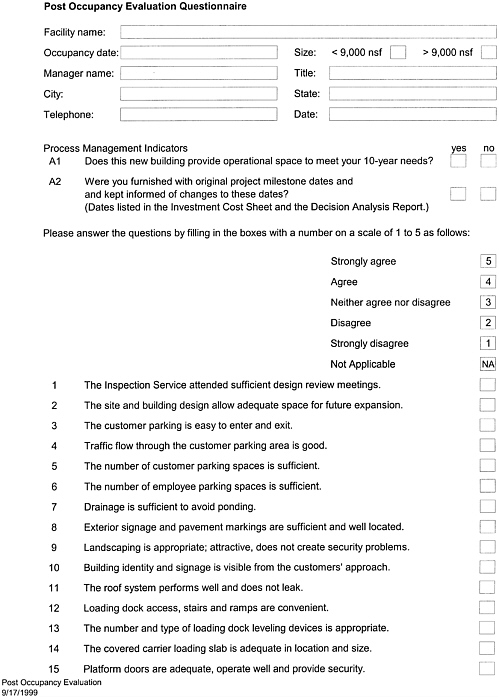
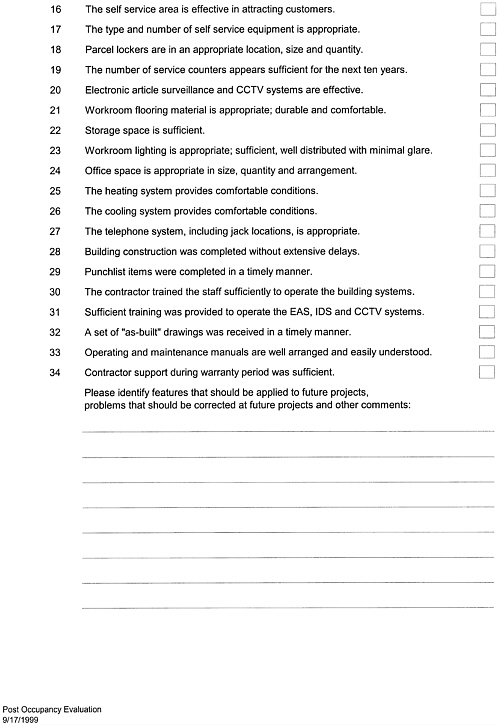
To better serve you, Facilities conducts a Post Occupancy Evaluation program to determine how well a recently completed facility serves your needs and to identify areas for improvement in future facilities. Your participation in this survey is valued and important since both positive and negative comments will help improve the facilities.
The Post Occupancy Evaluation Questionnaire is attached. It would be appreciated if you would complete and answer all questions to the best of your ability. You may wish to ask your staff for input on those issues with which they are more familiar.
-
One copy of the questionnaire is to be completed by the PostmastedFacility Manager.
-
Another copy of the questionnaire is to be completed by the Manager, Administrative Services Office.
-
The questionnaire is to be completed between four and six months after the facility is occupied.
Most questions are statements which ask if you “strongly agree” (5) or “strongly disagree” (1). You may select any of the numbers between 1 and 5 to indicate the extent of your agreement. You may comment on any question on the form or attach more detailed comments. Please provide comments on any item where you check “strongly disagree”. If a question does not apply to your facility (for example, if the questions asks about parcel lockers or carrier platforms and your facility does not have them) indicate NA for not applicable.
Your responses will be reviewed by the Manager, Design & Construction at the FSO responsible for construction of the building, and will be forwarded to Headquarters. As part of this program, some facilities will be selected for a site visit and more in-depth study. Findings on all facilities will be summarized to identify patterns and to improve USPS standard design criteria and procedures on future postal facilities.
Please return the completed questionnaire to me by [ __________ ]. If you have any questions please call me at [ ___-___-___ ]. Thank you for your assistance.
Manager, Design & Construction
Facilities Service Office