Personal Cars and China (2003)
Chapter: Appendix B Case Study: Shanghai, China
Appendix B
Case Study: Shanghai, China
Daniel Sperling, Institute of Transportation Studies, University of California, Davis Lu Ximing, Shanghai City Comprehensive Transportation Planning Institute Zhou Hongchang, Tongji University, Shanghai
Shanghai is experiencing rapid economic growth. Affluence is motivating dramatic and far-ranging changes in urban structure, transportation, and energy use. This report examines two transportation trajectories that Shanghai might follow.
Shanghai’s metropolitan population of about 16 million people1 continues to grow relatively slowly, but its economy is growing rapidly. The average per capita income is roughly $4,000,2 three times higher than that of the rest of China, and the Shanghai economy is expected to grow at more than 7 percent a year through 2020.
Massive new transport system investments planned for the next two decades are aimed at lowering Shanghai’s extremely high population density, supporting economic growth, and enhancing the quality of life. The list of new investments is impressive: expansion of the new airport; construction of a deep-water harbor, three new bridges, and tunnel river crossings; completion of a 200-kilometer (km) modern rapid transit rail system; expansion of suburban highways; and construction of 2,000 km of
new and upgraded urban roads. These investments will improve the city’s transportation system, but are costly and threaten greater energy use and air pollution.
A central issue in Shanghai’s development is the role of personal vehicles, especially cars. The city currently devotes little land to roads and has only 650,000 cars and trucks, very few of which are privately owned, placing vehicle ownership levels well below those of virtually all cities of similar income. Even with this small number of vehicles, Shanghai already suffers from serious transport-induced air pollution and traffic congestion.
Shanghai city planners project a quadrupling of cars and trucks in the city by 2020. This projected increase is premised principally on two factors: (1) rapid income growth, which will make car ownership possible for a much larger segment of the population; and (2) falling vehicle prices resulting from China’s imminent accession to the World Trade Organization (WTO). Prices are expected to fall because of increased competition, compulsory reductions in vehicle tariffs, and easier access to consumer credit.
The magnitude of the increase in vehicle use is not certain, however. Even apart from WTO membership, vehicle ownership and use—and their environmental implications—will be strongly influenced by three interrelated policy debates: industrial policy toward the automotive industry, air quality policy, and transportation and urban growth policy.
The city’s decisions about vehicle use will be critical in shaping Shanghai’s future. In this case study, which addresses the forces about to transform Shanghai’s transportation system, two transportation scenarios of the future are constructed, drawing upon extensive interviews with decision makers and experts in Shanghai and Beijing. One scenario is premised on rapid motorization, the other on dramatic interventions to restrain car use and energy consumption. Neither is a “business-as-usual” scenario, because this characterization is meaningless in a time of massive investments and policy shifts. Rather, these scenarios are meant to characterize two competing transportation trajectories, taking as given the projected strong economic growth. If the economy grows more slowly, motorization will be slower. Even in the most conservative scenario, though, vehicle travel, vehicle ownership, and energy use increase dramatically.
Caution is urged in generalizing the findings of this case study to other cities in developing nations. Shanghai is not a typical Asian city, given its surging economy and its world-class planning capabilities and strong government institutions. However, the conditions for reining in growth are more propitious here than perhaps any other megacity of the world. If the city is effective at restraining vehicle use, Shanghai may serve as a model for other cities in the developing world.
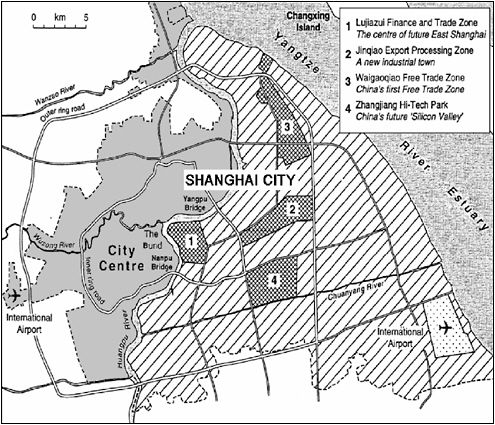
FIGURE B-1 Shanghai. SOURCE: Re-created from Wu (1999) and Shanghai Map Publishing House, 1997.
SHANGHAI: A CITY IN TRANSITION
Sixteen million people reside in the 6,340 km2 of Shanghai, located on the eastern coast of China in the Yangtze River Delta. The population density of the central city currently averages 22,700 persons per square kilometer. The densest area exceeds 60,000 persons per square kilometer, roughly three times that of Manhattan (Mei et al., 1998:126; Kenworthy and Laube, 1999:429; Wu, 1999:210).
Much of the total land area is rural (Mei et al., 1998:119). The older urban area comprises 280 square kilometers, and a newly urbanized area on the opposite side of the Huangpu River covers another 130 km2 (see Figure B-1). The urban area of Shanghai is thus about twice the size of Washington, D.C. (Kenworthy and Laube, 1999:393). As a result of market forces and deliberate planning policies, city authorities expect the urban area to expand from 410 km2 today to 1,100 km2 in 2010 (Mei et al. 1998:128; Wu, 1999:210, Figure 2).
Shanghai is one of only four cities in China to have the status of a province rather than a municipality. As a result, Shanghai has a higher profile and greater access to national funds than most other cities. Even so, infrastructure spending in Shanghai was low until the 1990s. Because of historical political considerations, the central government did not return a proportionate share of the large tax revenues collected in Shanghai. Housing was in bad repair, as was commercial and industrial space, and road capacity per capita was among the lowest in the world (Wu, 1999:209).
These conditions have changed. Infrastructure funding from local and central government sources, domestic and foreign investment, and international loans have sharply increased (Wu, 1999:207). Massive construction of office and residential space, transportation infrastructure, and public utilities is under way.
This massive investment in infrastructure is due partly to the city’s thriving economy. The city has grown faster than the national average, and is widely expected to exceed the nation’s forecasted economic growth of 7 percent a year into the foreseeable future.3
A central feature of Shanghai’s development plans is to reduce its high population density. The local planning authority is pursuing a plan of multicentralization by building eleven satellite cities to siphon portions of the population away from the dense core. Substantial relocation of industry to these cities has already occurred, and many high-rise apartment buildings are under construction. Multicentralization is not a unique phenomenon or goal; it is the de facto or formal planning strategy of most major cities around the world, though Shanghai is pursing this goal more aggressively and deliberately than most.
SHANGHAI’S TRANSPORTATION PICTURE
Despite rapid economic growth, vehicle ownership remains remarkably low in Shanghai. Meanwhile, the city has been investing huge sums in road and rail infrastructure, in part to support decentralization of the city. More infrastructure, satellite cities, and population dispersion will mean more cars, energy use, and environmental stress (see Box B-1).
Shanghai’s development has been shaped by its historical role as China’s largest seaport. Railways, highways, inland canals, and ocean ship-
|
BOX B-1 Comprehensive Transportation Planning for Shanghai City Among major Chinese cities confronting rapidly accelerating motorization, Shanghai has the lowest ratio of cars to population. Although Shanghai is not free of pollution or congestion, it has less of each than Beijing and Guangzhou. This situation has been achieved largely through the use of regulations, incentives, and fees imposed by Shanghai’s municipal government to preserve the city’s unique character and environment. Under the five-year plan for the automotive industry, however, policy related to automobile ownership and use will be coordinated at the national level. Shanghai is therefore in the process of adjusting its planning so that it can join the national movement toward motorization while protecting commerce, transport, and the urban environment. Shanghai’s experience with transportation management and the options under consideration may be useful to other municipalities facing similar challenges. Those assessing the future economic development of China, including the Shanghai region, predict a 10 percent increase in the gross domestic product (GDP) during 2001–2005, the years covered by the tenth five-year plan. The increase in Shanghai is uncertain, with growth during the next 15 years projected to be about 7 percent. The city’s population is estimated to reach from 17.5 to 21 million and the number of motor vehicles to reach between 2 and 3.5 million. For Shanghai, the implications of the expected population and transportation pressure are clear: planning for the suitable development of transportation facilities must begin immediately. For planning purposes, Shanghai has adopted three principles: development, integration, and prioritization. The development principle means attempting to achieve moderate growth, while preparing for higher growth and avoiding wasted resources if the growth should be lower. Planners must dynamically balance the improvement in transportation services with the rate of growth, try to develop transportation facilities moderately ahead of schedule, and adopt an effective system for traffic demand management. The integration principle means integrating all traffic systems into a single organic system, including transportation facilities and land use and economic policies. The prioritization principle calls for investing first in the projects that will have the most important impact, making best use of advanced transportation management methods to create a highly efficient and fair traffic system. Present Status of Comprehensive Planning In 1992 a consortium of municipal organizations in Shanghai completed the Shanghai Comprehensive Transportation Planning system, SCTP1, with the technical assistance of overseas experts. Since then, the population and the state of motorization have changed as a result of economic develop- |
|
ment policies. At the end of 2000 a revised plan, SCTP2, was announced, based on the second citywide transportation research survey in 1995 and a series of other commissioned studies. The studies noted a series of specific problems with the current transportation system that require correction:
SCTP2 will attempt to prepare Shanghai to meet the future challenges just described, and, in doing so, will adopt a focus that extends beyond the city center to the entire metropolitan area. During the interval between the completion of SCTP1 in 1992 and the initiation of SCTP2 in 2000, the city transportation system did not stand still. During the 1990s the length of roads increased 40 percent, to 6,829 km, the reach of public transportation increased 13 percent, to 23,007 km, and the total number of motor vehicles increased 250 percent, to nearly 700,000. Finally, three new subway lines were added, with a total length of 65 km. Furthermore during this period, the standard of transportation service was upgraded significantly, and public transportation became more diversified. Taxis made 2 million person-trips a day. During rush hour, the full loading rate of buses was reduced from 8–9 persons per square meter to 5 persons per square meter. The road system also was improved through the addition of 65 km of overhead freeway and the widening of arteries and main streets, and an Adaptive Signal Timing System was adopted to keep traffic running smoothly. Meanwhile, during the 1990s more than 1 million residents moved from the city center to the periphery and the suburbs. In all these changes, the general goal was, and still is, to construct an accessible, convenient, efficient, safe, reliable, and low-polluting transportation system that is up to international standards and conforms to Shanghai’s particular characteristics. Shanghai’s comprehensive transportation system will consist of four linked elements. The passenger transport system will be based on public ground transportation, with taxis and ferries as supplements. The road system will be based on a framework of freeways and artery roads with evenly distributed local streets, including adequate and convenient parking facilities. The linking system with the outside world |
|
will include airports, a deep harbor, an information depot, freeways, and high-speed railways, linked to the citywide road system, the passenger transit system, and the freight system. It will have intermodal terminal facilities, with the capability to support the expected passenger and freight traffic. Finally, the transportation management system will use advanced technologies to ensure smooth operations, safety, environmental protection, and high efficiency. The passenger transport system will embrace four distinct public transport services. The rail system will be expanded, with a capacity ratio of rail transportation to buses of 6:4. The rail system will have three levels: citywide freeway, townwide artery, and interborough main streets. Traditional public ground transportation will support more than half of the passenger trips, serving short- and medium-distance passengers and those traveling to areas not covered by rail. Within the public ground transportation system, priority will be given to buses for parking, traffic flow, and passenger transfer nodes. To help limit congestion, the number of taxis will be controlled to reduce the vacancy rate from 50 percent to 30 percent. The role of ferries also will be reduced, with an emphasis on providing more service for bicycles. Finally, terminals will be built to facilitate passenger use of the multimodal system. The road system will be designed specifically to increase the capacity of the downtown street area. Downtown roads will be classified as freeways, arteries, main streets, or local streets. New, outgoing arteries from downtown will serve the new suburban cities, airports, and industrial areas, with speed limits higher than on ring roads and internodal connectors, for both passengers and freight. Part of the road system will be designated for freight to expedite commercial activity without causing excess congestion of central areas. Bicycle lanes will be constructed, and separation of motor vehicles and nonmotorized vehicles will be maintained. Similarly, the pedestrian environment will be protected, with walk signals and pedestrian malls in commercial areas. A new comprehensive parking system, with fees and space designed to limit auto traffic in the city center, will include public parking lots for the transportation nodes in the suburbs. Perhaps most important, a traffic management system will be developed to manage the time distribution and space distribution of traffic flow, using methods such as land use management, toll fees, parking restrictions, information guidance for drivers, and restricted area policies. The goal will be to create a modern traffic environment suitable for an international metropolis. The Adaptive Signal Timing System will be expanded and improved. A major feature of the new system will be an Intelligent Transportation System (ITS) based on information technology. The main information resources of the ITS will include real-time traffic flow, socioeconomic information, parking availability, vehicular traffic, freight traffic, police status, and a basic geographic information system. The ITS will enable the Shanghai authorities to monitor and respond to changes in the vehicle |
|
population and patterns of use, to employ new roads and other facilities rapidly after they are placed in service, and to evaluate continually the effectiveness of the transportation management system to provide optimal service at all times. Safety will be a primary goal of the traffic management system, and safeguards for pedestrians and bicycles will receive high priority. Among the measures being considered are designating exclusive lanes for buses in the downtown area, controlling the emissions and noise of motor vehicles, separating motor vehicles from nonmotorized vehicles and pedestrians from vehicles, optimizing signal time slots to reduce the emissions caused by deceleration and low speed, reducing the traffic accident frequency, strengthening inspection requirements for vehicles and roads, and accelerating the replacement of old, poor, and damaged cars to improve the overall standard of Shanghai’s road transportation system. —Lu Ximing Shanghai City Comprehensive Transportation Planning Institute |
ping lines meet in Shanghai to exchange freight and passengers. Since the late 1970s economic activity and intercity movement of passengers and goods have sharply increased. Shanghai’s port handles 18 percent of the nation’s exports, and ranks sixth in the world in capacity (China Mingbao News, September 21, 2000). With the booming economy, the seaport is becoming busier. Land delivery of goods through Shanghai’s urban transport system also is increasing. Like almost everywhere else in the world, highway transport of passenger and freight has increased faster than railway and sea transport, and airline transport has increased fastest of all. Thus both passenger and freight transport in Shanghai have gradually shifted to more energy-intensive modes (State Statistical Bureau, 1998).
Intracity travel, on the other hand, has relied on modes of travel that consume very little energy. Until about 1990 almost all travel was by foot, bicycle, or bus. Cars, scooters and motorcycles were rare.
Over the last two decades, bicycles have gradually assumed a larger role, replacing walking, and buses have continued to account for a large share of passenger travel. By the end of the 1980s Shanghai reportedly had the largest urban bus system in the world, and the number of riders was still increasing. But limited funding was leading to lagging investments in network expansion, bus amenities, and service frequency. As a result this deterioration of service, combined with higher personal incomes, other, more personalized modes became relatively more attractive.
Shanghai responded in the 1990s in several ways. To restrain large and growing bus subsidies, it introduced competition into the bus supply system. Other cities in China did the same, but Shanghai pursued change more aggressively than most. In Shanghai the municipal bus company was deregulated, and several independent operating companies were created to compete for operating concessions. Bus data from different sources conflict, but all agree that Shanghai continued to have the largest bus system in China through the 1990s, though passenger volumes were shrinking.4 Shanghai planners anticipate renewed growth in bus travel in the coming decades, with ridership doubling by 2020. They expect that continuing reforms will strengthen the bus industry and that new road infrastructure will be built to serve buses. Plans include building six elevated busways to facilitate bus travel in congested areas.
Planners expect the doubling of bus ridership in part because of a large overall increase in passenger travel. Residents started traveling more and further in the 1980s and increasingly so in the 1990s not only because of income growth, but also because of industry relocation. The movement of factories from the central city to the periphery created long commutes for many workers. Because the newly developed areas were not densely populated, and therefore not profitable to serve, bus companies provided limited service. And because the commuting distance was often too far for bicycles, motorized two-wheelers (scooters and small motorcycles) became a popular mode of travel.
The automobile population in Shanghai is well below the world average for cities of similar income levels. The vehicle population began to expand rapidly in the 1990s, increasing from 300,000 to 600,000 between 1990 and 1998 (Xia and Lu, 1999:22) and reaching about 650,000 in 2000. Businesses and governments own most of these vehicles. About 40,000 are taxis. Individuals own only about 15,000–50,000.5 The city government controlled new vehicle registrations with a high vehicle registration fee through 1998. The city has used an auction system for vehicle registrations since then.
Even with the small vehicle population, the streets are congested— the result of high population density, many pedestrians and bicycles, and limited road infrastructure. Bicycling and walking are the primary means of travel, together accounting for over 60 percent of total trips taken in 1995 in Shanghai (Shanghai City Comprehensive Transportation Planning Institute, 1997a:5). Shanghai residents own 6–7 million bicycles (roughly one for every two residents), plus 250,000 scooters and small motorcycles, and about 500,000 mopeds (less than 50 cubic centimeters).6 The scooter and motorcycle population is declining in the central city area because of new restrictions on the registration of new scooters and other vehicles with two-stroke engines. These restrictions are premised on air pollution and safety concerns. This decline may be temporary, however. As incomes increase, travel patterns disperse, and cleaner-burning four-stroke engines (and perhaps battery-powered two-wheelers) become available, sales of motorcycles and scooters are likely to surge.
Because most walking and bicycling trips are short, measuring the modal split by passenger-kilometers traveled paints a different picture than measuring it by number of trips, as indicated by Figure B-2.7 Motorized travel now accounts for about two-thirds of all passenger-kilometers traveled. About two-fifths of that motorized travel is by car and motorized two-wheelers.8
Although the absolute number of vehicles is still relatively small, traffic congestion and air pollution are becoming severe. By 1993 transportation accounted for most of Shanghai’s urban air pollution, contributing an estimated 90 percent of carbon monoxide, 92 percent of volatile organic gases, and 23 percent of nitrogen oxide (NOx) emissions. In 1996 monitor-

FIGURE B-2 Travel by mode, Shanghai. A. Modal split by number of trips (1995); B. Modal split by number of passenger-kilometers traveled (2000). SOURCES: Lu et al. (1996) and Shanghai City Comprehensive Transportation Planning Institute (1997a).
ing data indicated that transportation accounted for 56 percent of NOx emissions (Chen, 1997).
To limit air pollution and traffic congestion, city officials began capping the registration of all new cars and trucks in 1998 at 50,000 annually (Shanghai City Comprehensive Transportation Planning Institute, 1998). The government also limits ownership of motorized two-wheelers. In 1996 Shanghai capped the registration of mopeds (under 50 cc), allowing owners to transfer registrations to new mopeds but not to purchase additional mopeds, and soon after banned the use of all scooters and motorcycles (over 50 cc) from the city center. The only unrestricted motorized vehicles are two-wheelers powered by batteries, but few of these are available.9
These motorcycles and scooters are unlike those seen in the United States and most of Western Europe. They are very small, with inexpensive two-stroke engines that are inefficient and highly polluting. The largest ones are almost all less than 150 cc, much smaller than most scooters and motorcycles in the United States.
Restrictions on motorized two-wheelers stem in part from their high emissions and noise. They also are perceived as unsafe because they mix with slower moving bicycles and often are driven aggressively by young
men. The prevailing view in the government seems to be that these vehicles are part of the early stages of economic development that they will soon pass through—a view based largely on the rise and then near disappearance of scooters and motorcycles in Western Europe.
A more complex problem confronting Shanghai is traffic congestion. Serious congestion is relatively new. The problem is quite different from that of most U.S. cities, mainly because of the large number of bicycles and pedestrians sharing the roadways with cars, motorized two-wheelers, and buses. Even freight movement is sometimes performed by bicycle in Shanghai. There is limited road space because land is intensively used for other purposes, making traffic congestion an endemic problem.
Transport Infrastructure: Plans and Investments
Shanghai has responded to pressure on the urban transport system with massive infrastructure investments. From 1991 to 1998 about 14.6 percent of the GCP was devoted to construction—and a significant percentage of that for transportation, a much higher rate than is typical for developing country megacities; the surface area of paved roads increased by 62 percent (Shanghai City Comprehensive Transportation Planning Institute, 1997c, 1998).10 In 1993 Shanghai spent three times more money on urban construction and maintenance than any other Chinese city, about half on roads, bridges, and mass transit (Ministry of Construction, 1994).11 From 1991 to 1996 Shanghai spent approximately RMB83 billion ($10 billion) on transport infrastructure, including two major bridges, a tunnel, an inner ring road, 65 km of elevated freeways, and the first line of its new subway system. Wu Weiping writes: “The pace was something like building the Brooklyn and Manhattan bridges in New York and the Lincoln and Holland tunnels between New York and New Jersey all in five years” (Wu, 1999:209). Shanghai has plans to continue with intensive infrastructure investments, building both additional roadway infrastructure and public transit infrastructure.
The major motivation for this burst of activity was to fill the transport infrastructure deficit resulting from decades of deferred investment. By 2000 the projects from the first plan were completed, and the local gov-
ernment declared that the infrastructure deficit no longer existed (People’s Daily Newspaper, September 25, 2000).
The second phase of the urban transport planning effort began in 1995.12 It is aimed at moving housing and industry outside the city center to decentralize the metropolitan region. Shanghai’s Land Use Master Plan predicts for 2020 a population increase of 2–3 million, a multicenter metropolis with a strong central business district, a new city center in Pudong New Area on the east side of the Huangpu River, and eleven satellite towns, all linked by an efficient transport network.
The second plan also calls for three Huangpu River crossing facilities, a second runway for the new international airport, a new deep-water harbor for container ships, 200 km of rail (of which 65 km were completed by 2001), six elevated busways, and 650 km of divided highway in suburban areas, of which 520 kilometers will be new (Shanghai Highway Administration, 1999:5–11). Roads serving as part of the intercity network will charge tolls. The new rail system will be largely underground and is forecast to carry 8 million passengers a day by 2020.
Vehicle Ownership in Shanghai
The most striking aspect of Shanghai’s transport system is the small number of cars and the rarity of private vehicle ownership. As noted earlier, Shanghai has only about 15,000–50,000 privately owned vehicles. Beijing, with similar income and population, has perhaps 10 times more. Even in terms of the number of total vehicles, Shanghai has fewer than most cities of comparable wealth. Shanghai has several times the income of Delhi, for example, but less than half the number of private vehicles (see Table B-1).
The scarcity of privately owned cars is related to issues of access, cost, ease of use, and quality. First, it is expensive and time-consuming to acquire a driver’s license (Ni, 2001). One must enroll in an official driving school at a cost of RMB4150 ($500), a significant expense for the typical Shanghai resident. The course consists of three weeks of classroom sessions, more than a month of behind-the-wheel training, and three separate road tests.
Second, it is very expensive to own and operate a car in Shanghai (Gwilliam, 1995:391). Fuel prices are similar to those in the United States,
TABLE B-1 Cars per 1,000 Inhabitants, Seven Cities
|
City |
Population |
Cars per 1,000 Inhabitants |
|
Santiago |
5,500,000 |
129a |
|
Delhi |
13,418,000 |
63a |
|
Shanghai |
16,000,000 |
22a |
|
London |
6,852,000 |
340b |
|
New York City |
7,497,000 |
230b |
|
Tokyo |
8,164,000 |
210b |
|
Paris |
8,791,000 |
340b |
|
a 1998–2000. b 1990. SOURCES: Authors and Focas (1998). |
||
but parking costs $1–3 per hour in downtown Shanghai. The greatest barrier is purchase price. Based on the current exchange rate (RMB8.28 = U.S.$1), the sale price of a small, domestically produced sedan is about $10,000. The actual price is much higher. A tax of approximately 10 percent and a large local registration fee must be paid at the time of purchase. Until 1998 the registration fee was approximately $20,000 on new cars. Under pressure from the central government, the city discarded the high fees and created a vehicle registration auction similar to the one used in Singapore to limit the number of new vehicles that could be registered per month in the city (Stares and Zhi, 1995a:79). In early 2000 the auctioned registration fee was approximately $2,500.
For imported cars, the cost is even higher because of extremely high tariffs. However, in November 1999 China and the United States signed a WTO accession agreement that cut tariffs of 80–100 percent on imported cars (varying by type and price of vehicle) to 25 percent in 2006.
Cost is a barrier not only because it is high relative to average incomes, but also because consumer credit is not yet widely available in China. This means that a prospective car owner must pay the full amount upfront, an outlay that remains beyond the reach of virtually all families. Yet, in addition to reduced tariffs on imported cars, WTO accession will require opening up the financial services market, which should lead to easier access to consumer credit. The result would be much greater ease in purchasing vehicles. The extent to which consumer credit will in fact become more available remains uncertain, however, as does the extent to which Chinese consumers will embrace buying on credit.
A third deterrent to car ownership is limited road infrastructure and severe traffic congestion. Land use patterns in Shanghai evolved before
motorized transport. The city grew in a very densely developed radial pattern, with narrow streets conducive to bicycle use and pedestrians. Services, schools, and jobs are well mixed with housing and within easy bicycling distance for most people. Because trips are generally short and bicycles and public transit both widely available, cars bring little extra value for everyday travel. For intercity travel, options include train, bus, or airplane. Road touring vacations are rare in China.
The fourth explanation for low private vehicle ownership rates is the relatively low quality of vehicles that have been available for sale. The tariffs on imported cars are aimed at protecting the fledgling domestic automotive industry, giving substantial market power to local producers. The result is elevated prices for products that are often technologically outdated. Most vehicles have been produced by joint ventures between major international automakers and local companies, until recently using technology from the 1980s.
Motorization in the Coming Decades
Pressure for increased private auto ownership in Shanghai comes from several sources: income growth, car economics, social status, population growth, and population dispersal.
Car economics, and therefore car sales, are affected by government policies in various ways. One is through national industrial policy. In 1991 China designated automotive manufacturing a pillar industry, initiating a major debate, still under way, over the extent to which the government should promote automotive manufacturing. Shanghai is deeply engaged in this debate because it is a major industrial center and already home to one of the three largest automotive manufacturing companies in China.
In 1991 Chinese leaders established a national goal to produce 1.2 million cars per year by 2000 and 3.5 million per year by 2010, with 90 percent of output sold domestically. The policy encouraged private car ownership, eliminated government control of vehicle purchases, reduced taxes, and allowed the marketplace to determine car prices (ITE-SPC, 1994). However, actual production in 2000 of about 0.6 million fell far short of the 1.2 million goal.
During the late 1990s, nearly every province, including Shanghai, encouraged local investment in the automotive industry. The result was excess capacity and a plethora of small, inefficient companies. Many local governments have given up their earlier ambitions, but several joint ventures between local companies and international automakers have taken off. These companies now have the capability to bring the latest technology and products into China.
Although Shanghai never articulated a clear strategy, policy makers presumed that the auto industry would be a boon to the local economy.
Shanghai has been particularly aggressive and successful in this regard. By 2000 auto-related production accounted for 20 percent of GCP (State Statistical Bureau, 1998). Shanghai is home to the largest automotive company in the country, which includes a joint venture with Volkswagen producing over 200,000 cars and another with General Motors (GM) that began production in 2000 and is building a large manufacturing complex. The GM joint venture also is exploring production of simple, inexpensive “agricultural vehicles” that cost from RMB5,000 ($600) to RMB25,000 ($3,000) and are designed for passenger and goods transport in small cities and rural areas.
Some observers suggest that consumers recently have been deferring their car purchases, partly in anticipation of better and less expensive cars becoming available after China’s accession to the World Trade Organization. In any case, dramatic increases in car buying are assured in coming years. In Shanghai some of the barriers that deter private car ownership are already being lifted. WTO membership will result in higher car quality and, barring new taxes, lower car prices. Given the huge population and rapid income growth, foreign automakers and parts suppliers are expected to enter the Chinese market in an aggressive manner. This intensified competition, along with the increased availability of consumer credit, will be a strong force for increased car ownership.
Beyond economics, a second reason to expect increased car ownership in Shanghai is status. The private car is both a personal and a national symbol of status and success. Many Chinese believe that when more people own cars in China, the status of the entire nation is elevated in the eyes of the international community. This view of the car as a status symbol is not unique to China.
A third explanation is population dispersal. Shanghai’s multicentralization policy will reduce density in the city center by creating multiple urban centers around the periphery. This decentralization will lead to longer trip distances, reducing the attractiveness of walking and bicycling while enhancing the attractiveness of private vehicles.
A fourth explanation for vehicle growth is population growth. Shanghai is an affluent city and an attractive destination for many Chinese seeking a better life.
Yet Shanghai has powerful local institutions that can effectively manage growth. The extent to which they restrain vehicle ownership and use will depend largely on evolving perceptions about the desirability of motorization and larger national policies. The national government continues to pursue a strategy to make the auto industry a pillar of the national economy. In 2000, in support of this strategy, the central government announced that 238 vehicle fees were being eliminated (Energy Foundation, 2000).
Another important, though often ignored, element of the debate over
automotive industry investments is motorized two-wheelers. They are often ignored for three reasons. First, China already has a large two-wheeler manufacturing industry; roughly half of all motorized two-wheelers in the world are manufactured in China. Second, motorized two-wheelers require much less investment and manufacturing and engineering capability than cars. Third, as indicated earlier, many Chinese policy makers see large-scale use of motorized two-wheelers as a relatively brief phenomenon in the development process of the country, much as occurred in Europe.
POLICIES AND STRATEGIES
This section examines current and prospective transportation and environmental strategies.
Air Quality and Energy
In the past, air pollution problems in Shanghai owed their existence to the city’s heavy industry. Most of these factories have been relocated to surrounding areas, partly to clean up Shanghai’s air. Now, a substantial portion of Shanghai’s air quality problem is produced by the transport sector, despite relatively few motorized vehicles in the city.
Indeed, the transport sector has become a focal point for air quality issues in many urban areas in China. The national government recently implemented stringent regulations aimed at limiting air pollution from urban transportation sources. Among the new pollution regulations implemented in China are vehicle emissions standards, mandatory inspection and maintenance programs for vehicles in certain cities, and gasoline quality standards. The new vehicle emissions standards are ambitious, equivalent to the standards that first took effect in Europe in October 1993 (known as European Emission Standard I, or Euro I) and in the United States in the early 1980s. The gasoline quality standards include a nationwide ban on leaded gasoline, effective January 2000, which apparently is being observed and enforced. However, sulfur levels remain high in both gasoline and diesel fuel, impeding the introduction of advanced emissions control technology.
Shanghai’s city planners have been environmental leaders in China. Air pollution is severe in Shanghai, though considerably less so than in Beijing. Along with several other large cities, Shanghai began eliminating leaded gasoline ahead of the national government in 1998. In July 1999, again ahead of national requirements, the city promulgated new emissions standards for other pollutants, and in the late 1990s began switching many vehicles to cleaner-burning liquefied petroleum gas (LPG) and com-
pressed natural gas (CNG). The taxi fleet is currently being retrofitted to burn LPG, and the bus fleet is being retrofitted to burn CNG. The first CNG station opened in October 1998.
Although the pollutants that cause deterioration of local air quality are largely different from the gases that contribute to global warming, many, but not all, of the strategies to reduce air pollution also reduce GHG emissions. In any case, air quality initiatives are and will be far more effective than GHG emissions initiatives because air quality tends to be a strongly compelling, popularly embraced goal; GHG reduction is not. Still, initiatives to reduce air pollution build environmental consciousness and strong constituencies that carry over to other environmental goals. Moreover, any strategy that restrains vehicle use will generate large air quality, GHG emissions, and energy benefits.
Some believe that widespread use of alternative fuels such as natural gas may be a leading strategy to help solve China’s environmental and energy problems (Weisbord, 1999). Indeed, CNG combustion results in much lower air pollutant emissions than gasoline or diesel combustion, though the effect on greenhouse gases is not as dramatic.13 CNG also is less costly than gasoline and, by replacing gasoline, provides substantial energy security benefits. China is now importing petroleum, and imports are expected to grow. The natural gas situation is more positive. China has larger domestic supplies of natural gas than petroleum, and Shanghai has access to gas from the East China Sea as well as northwest China. Little natural gas is used today in China, but the country plans to exploit domestic sources and import liquefied natural gas. A pipeline from northwest China to Shanghai is scheduled to be completed in 2007 (Guangzhou Daily, February 3, 2000, in Chinese).
An important target of air pollution control efforts in Shanghai, and a large source of the pollution are two-stroke scooters and motorcycles. New registrations for these vehicles have not been granted since 1996, but their population remains high because old registrations can be transferred to new vehicles.
The city recently began to promote electric scooters as an option for residents who want the convenience of a new scooter. Motorized two-wheelers are particularly attractive in Shanghai as a means of personal transport because they are faster than bicycles, affordable for many, and
easier to park than cars. Several electric scooter companies have established service and battery exchange networks for their customers to increase convenience (Shanghai Evening News, February 10, 2000). Electric scooters provide huge air quality benefits and are far more energy-efficient than existing scooters, though GHG benefits are modest, the result of 75–80 percent of electricity in the country being generated from coal.
In summary, Shanghai has already embraced the goal of improved environmental quality. Indeed, most strategies to reduce adverse environmental impacts of transportation are mutually compatible and consistent. Environmental goals also are an impetus to restrain motorization and introduce electric-drive propulsion technologies that use fuel cells or hybridized combinations of electric motors and small internal combustion engines. These advanced technologies are very clean and energy-efficient. Hybrid-electric technologies reduce energy consumption by up to 50 percent, and fuel cells potentially even more.
Avoiding Gridlock
The key question is: Can Shanghai continue to manage the growing desire for personal vehicles? Shanghai faces a difficult challenge in expanding its transport system. Increasing affluence and falling car prices lead to rapid motorization superimposed on a dense city that has minimal road capacity. Without exceptional investments, management, and policy intervention, the city could quickly become gridlocked.
As noted earlier, serious traffic congestion is a relatively new problem for Shanghai. A variety of policies and investments aimed at meeting Shanghai’s transportation challenge are already in place. The vehicle population is controlled using a monthly auction system for new vehicle registrations. Freight movement by truck in the central city is restricted during the daytime when passenger travel demand is highest. Over the last decade 130 km of expressway were built, in large part to support the multicentralization process, with another 520 km planned (Shanghai Highway Administration, 1999). Substantial investments have been and continue to be made in public transit, including a new subway system that opened its third line in 2000.
Also important, city planners are strongly committed to enhancing intermodal connections. Pedestrian and bicycle paths are being built to transit stations, ferry service is designed to carry bicycles, and bus routes are designed as feeders to rail transit line-haul service. There are plans to build 44 large-scale passenger transit terminals that will provide for transfers between buses, rail, and ferry boats, and accommodate taxis, private cars, and bicycles. Specific plans are being made to use high-speed magnetic levitation (maglev) rail, bus, and car to enhance access to the inter-
national airport. Shanghai planners are expanding and improving multimodal freight terminals. Transfer terminals are being built and expanded at the harbor, airport, and rail stations, and along the city’s ring roads.
Transportation is a central concern in Shanghai. A poorly managed transport system can hamper economic growth by creating costly, long, and erratic connections. Shanghai planners and managers understand that a well-managed system reduces costs and eases access, and they seem committed to improving transport to keep pace with the growing economy.
Bicycle Infrastructure
Bicycles produce no pollution and are an inexpensive form of transport, but they are uncomfortable in bad weather, can be unsafe, and are unsuitable for some people. Bicycles use road space more efficiently than cars, but less efficiently than buses. There is widespread agreement among Shanghai planners and leaders that bicycle use should be limited.
One means of making the best use of existing road space is to separate traffic operating at different speeds. The presence of bicycles greatly slows motorized traffic if they share road space. Sharing the road with motorized traffic also can be quite dangerous. On most streets in Shanghai, bicycles and small scooters are separated from the flow of buses and cars with wide bicycle lanes. These lanes are used heavily, improving safety and lessening traffic congestion. Nevertheless, traffic delays occur where these lanes cross intersections (where turning bicycles and cars disrupt traffic flow). Where bicycle use is light, this would not be a problem. In Shanghai, however, this situation can cause significant delays. During busy times of the day, it is common to see more than 50 bicycles and scooters stopped at a red light. At some intersections in Beijing, separate traffic signals have been installed for the two sets of vehicles, but it is not clear that signals improve traffic flow in these cases. Other strategies under consideration are bicycle-only streets (Wu and Li, 1999:49), and intersection overpasses for bicycles and pedestrians.
Information Technologies for Traffic Management
On congested links, even minor accidents or adverse weather conditions can be highly disruptive. The increasing availability of low-cost information technologies now makes it possible to monitor and manage traffic flow in real time. In the mid-1980s Shanghai began installing advanced traffic coordination systems. Approximately 1,000 intersections are now monitored, and 18 different systems are controlling surface and elevated roads, tunnels, bridges, and subway rail.
Unfortunately, these systems are not efficiently linked, and traffic information is not shared among different systems. The city is planning to correct this situation within the next five years through development and implementation of an integrated traffic coordination system (Shanghai Evening News, November 16, 2000). The result should be improved efficiency, especially via timed signal lights and rapid removal of vehicle breakdowns. But with widespread congestion and growing travel demand, more fundamental vehicle restraint strategies must accompany advanced traffic management.
Restraining Use of Full-size Private Cars
To restrain use of full-size private cars, policy makers must focus on car purchases. The fixed costs of using a private car for transport are much higher than the associated variable costs, such as tolls and parking fees. In fact, once a person owns a car, much of the price of transportation has already been paid. A car owner will often choose to drive even when convenient and inexpensive alternatives exist. The most effective way to avoid this situation is to offer attractive transportation alternatives and raise the variable costs of vehicle use to reflect environmental and other associated costs. Existing policies include stringent and expensive driver licensing and vehicle taxes. Policies under consideration range from car-free zones in especially dense areas to rules on what types of vehicles companies can build and sell.
Shanghai is already planning to charge substantial tolls for highways being built to serve the new satellite cities (although it eliminated bridge and tunnel tolls in 2000 on the premise that they were redundant with high vehicle registration fees). At least one car-free zone is in operation in downtown Shanghai, and most cargo truck travel is banned during the daytime. Parking in downtown Shanghai is expensive, and taxi service is reasonably priced. A relatively inexpensive but effective option to restrain vehicle use is already being pursued in Shanghai—the creation of strategically placed car-free zones during peak periods in areas well served by public transit. Car traffic would be banned (with the possible exception of taxis) in designated areas during peak travel periods. In many parts of the world, this type of policy would be difficult to implement because of large infrastructure capacity and high car ownership levels. Car owners, being the wealthiest and most powerful residents, would use their political and economic power against the proposed policy. However, China’s centralized decision-making structure is relatively more resistant to such pressures.
In 1997 a car-free zone was introduced on Nanjing Road, the main shopping street in Shanghai. At first, the zone was car-free only on weekends, but with the recent construction of an underground rail transit sta-
tion in the area, car-free restrictions were extended to weekdays as well. Shanghai has also implemented a similar policy on freight traffic. Between 7 a.m. and 7 p.m. most heavy freight traffic is banned from the central city. This practice is common in many large Chinese cities (Stares and Zhi, 1995a:82.). With this precedent, local leaders are likely to accept the creation of more extensive car-free areas in Shanghai during peak periods.
Another policy might be to charge high parking fees, with fees highest in the densest areas, coupled with limitations on parking space. This strategy is already being pursued to some degree in Shanghai, where parking fees are extremely high compared with the average income of a Shanghai resident.
Improving Substitutes to Full-size Private Cars
The most important alternative to the private car is public transit. Shanghai has been investing heavily in public transit in recent years, over-hauling the bus system, and constructing an ambitious 200 km heavy rail metro system. The city is also building high-rise apartments and bicycle parking lots near new rail transit stations. The convenience of Shanghai public transit is enhanced with an integrated electronic fare collection system. Since 2000 people have been able to ride all modes of public transit in Shanghai, including buses, rail, and ferry boats, with one transit card (Wang, 1999).
Another alternative to the full-size private car is a smaller private vehicle. Many large auto manufacturers around the world are developing and selling very small cars for crowded city use. In Japan, over one-quarter of new vehicle sales have long been minicars (defined as having engine capacity of less than 660 cubic centimeters [cc]). These vehicles are not suited to long-distance or high-speed travel, but they function well for urban use. They are typically about half the size of a conventional sedan. New, inexpensive models are under development.
Scooters and motorcycles also economize on road space while providing many of the benefits of a personal car. Government policies could favor the use of minicars and electric scooters over conventional sedans by providing preferential parking, reducing fees, and relaxing vehicle registration fees.
Another option that would limit cars on the road is car sharing. This new form of car ownership is becoming popular in Switzerland and Germany (Shaheen et al., 1998; Carsharing, 2000; Gakenheimer and DeLisi, 2000). In Shanghai, car sharing could become the main method of accessing full-size vehicles for the general population. In car-sharing organizations in Europe, members pay a yearly fee plus a charge per hour of use
and per kilometer of travel. These fees cover all expenses associated with owning a vehicle, including insurance, maintenance, and fuel.
Good traffic management together with Shanghai’s planned infrastructure investments and a forward-thinking approach to vehicle policy could make Shanghai’s transport system a world-class model.
Leapfrog Technology Opportunities
Leapfrog technologies are advanced technologies that allow developing countries to go beyond what is typically being used in developed countries. Shanghai could leapfrog the pollution problems and other pitfalls that industrialized countries have encountered on their development paths.
The two scenarios in this study present a set of strategies and technologies that include varying quantities of leapfrog technologies. One leapfrog technology gaining considerable attention is fuel cells. Fuel cells provide the promise of very low air pollution and GHG emissions and high energy efficiency. Even more innovative solutions are possible, though not specifically targeted in the scenarios. They include automated bus rapid transit systems in which groups of buses operate on a network of specialized lanes—an enhancement of the elevated busway system already contemplated. These buses could branch off at either end of a line to collect and deliver riders in less dense areas.
Likewise, small cars with small battery packs or fuel cells could operate on an electrified road, perhaps under automated control. The cars would gain power from the roadway, either from conductive or inductive electricity transfer. With automated control, the capacity of the roadway would be very high (because lanes would be narrow and headway distances between vehicles very small). The vehicles would veer off from the automated, powered roadway at the beginning and end of their trip.
These dual-mode car and bus systems might prove highly efficient from an economic and environmental perspective and provide high-quality service. Except for full vehicle automation, these technologies are technically well within reach of current engineering capabilities. They have not been implemented largely because of an array of financing, liability, and institutional issues. In developed cities, the cost and challenge of retrofitting the existing road infrastructure is daunting. In developing cities, where infrastructure is not yet in place, there is an opportunity to design the transportation system to accommodate these technologies right from the beginning. Given China’s enormous population and growing wealth, it may be the time and place to begin testing these revolutionary concepts.
SCENARIOS FOR THE FUTURE
Vehicle ownership and use will soar in Shanghai under any plausible scenario. But with more vehicles and travel will come more air pollution, energy use, GHG emissions, and road infrastructure costs. These impacts can be mitigated by restraining vehicle ownership and use. At times, the impacts also can be mitigated independent of one another and sometimes even independent of vehicle use. They are not necessarily locked into a fixed relationship with motorization. The best, but not only, example of targeted strategies is air pollution control.
Enhanced emissions control technology can greatly reduce air pollution from conventional internal combustion engine vehicles. Indeed, China is already embarking on that path with the adoption of Euro II emissions standards. Energy use and GHG emissions are far more difficult to reduce. In the most extreme case, fossil energy use and GHG emissions could be almost completely eliminated—without changing car ownership levels—by substituting nonfossil energy sources. In less extreme scenarios, energy consumption (and therefore greenhouse gases) could be reduced by reducing the size and weight of vehicles and the combustion efficiency of the engines. Vehicles can be large sedans or small minicars, and they can use relatively inefficient conventional internal combustion engines or highly efficient advanced diesel engines and fuel cells. A small, efficient vehicle, for example, would consume as little as one-tenth of the energy consumed by a large, gas-guzzling sport-utility vehicle. And demand for road space can be reduced, not only be restraining vehicle use, but also by downsizing vehicles, managing roadways more efficiently (for example, with advanced traffic management technologies), and creating new car-sharing ownership mechanisms.
Exactly how Shanghai develops will have far-reaching implications for Shanghai’s economic, environmental, and social well-being. Here two scenarios of Shanghai’s transport future are postulated. Each is motivated by a different set of political, economic, and environmental conditions.
Scenarios are commonly employed to deal with complexity and uncertainty in forecasting. Ideally, the researchers generate relevant information using credible research methods and objectively analyze it by means of alternative scenarios of the future that provide upper and lower bounds on a plausible range of motorization levels and adverse environmental impacts. The scenarios reflect realistic, but often quite contrary, development paths. This approach can provide a useful context for the development of a “no regrets” public policy and business strategy.
To generate scenarios, the authors interviewed Chinese transportation experts and political leaders in Shanghai and Beijing. They also analyzed historical data and examined various options and strategies. The
TABLE B-2 Energy Use for Vehicles and Fuels, Shanghai, 2000 and 2020 (kilometers per liter of fuel)
final set of parameters was specified after extensive consultation among the authors and with others.
The two scenarios generated are both premised on consensus forecasts of strong, continued economic growth. If economic growth were faster or slower, vehicle ownership and energy use would be higher or lower than indicated by the scenarios. However, because this study does not address economic policy, economic variables were not considered. Even in the most conservative scenario, assuming continued economic growth, large increases will be experienced in vehicles, energy use, and GHG emissions.
Neither scenario is meant to represent (or indicate) “business-asusual,” because even that characterization is meaningless in this period of massive investments and policy shifts. Instead, these scenarios are meant to provide upper and lower bounds on likely increases in motorization and associated transportation impacts over the next 20 years.
The key parameters for the two scenarios are presented in Tables B-2 and B-3. They include population,14 amount of motorized and non-motor-
TABLE B-3 Key Travel and Population Parameters for Scenarios, 2000 and 2020
|
|
2000 |
2020 Low |
2020 High |
|
Passengers per vehicle |
|||
|
Passenger car |
2.5 |
3.0 |
2.5 |
|
Scooter |
1.2 |
1.3 |
1.2 |
|
Minicar |
1.5 |
1.8 |
1.5 |
|
Bicycle |
1.0 |
1.0 |
1.0 |
|
Bus |
27 |
32 |
27 |
|
Passenger modal split by passenger-kilometer (percent) |
|||
|
Gasoline cars |
14 |
25 |
52 |
|
Diesel cars |
0 |
5 |
0 |
|
CNG/LPG cars |
1 |
3 |
0 |
|
Gasoline minicars |
0 |
1 |
0 |
|
Battery and fuel cell minicars |
0 |
4 |
0 |
|
Two-stroke two-wheelers |
12 |
0 |
2 |
|
Electric two-wheelers |
0 |
6 |
0 |
|
Four-stroke two-wheelers |
0 |
7 |
5 |
|
Diesel bus |
20 |
15 |
15 |
|
Gasoline bus |
19 |
1 |
6 |
|
CNG bus |
0 |
3 |
2 |
|
Fuel cell bus |
0 |
2 |
0 |
|
Rail transit |
0 |
16 |
12 |
|
Walking |
7 |
3 |
3 |
|
Bicycle |
27 |
9 |
3 |
|
Total |
100 |
100 |
100 |
|
Population (millions) |
16 |
18 |
20 |
|
Total passenger travel (ratio) |
1a |
3.4 |
4.2 |
|
a Baseline. NOTE: CNG= compressed natural gas; LPG = liquefied petroleum gas. |
|||
ized travel by mode, fuel consumption characteristics, and average vehicle occupancies.
High Motorization Scenario
This scenario is premised on market forces playing a greater role in the economy, and government playing a lesser role. It is assumed that Shanghai follows the path of fast-growing cities in Asia that have relatively high car ownership and GHG emissions for their income levels. These cities include Bangkok and Jakarta, both known for their high levels of air pollution and traffic congestion.
It also is assumed that Shanghai and the central government determine that the automotive industry will be a pillar of economic development, as conceived in the 1990s. Consumer choice is allowed to flourish, and a greater share of wealth is created and managed by the private sector.
Following this scenario of expanding private sector initiative and lessening government control, it is postulated that investments in alternative fuels founder, immigration accelerates, and investments in large public infrastructure projects slow, especially for rail transit. The car population increases fourfold, which is the mid-range forecast of the Shanghai City Comprehensive Transportation Planning Institute. Immigration exceeds official forecasts, with the overall population expanding to 20 million (compared with 16 million in 2000 and 18 million in 2020 for the low-emissions scenario). Increased immigration puts pressure on the municipal budget.
Although the demand for transport increases greatly and the multicentralization plan is well under way, government is unable to respond as it did in the 1990s. Funding for the rail transit system is suspended after only 5 of the 10 planned lines are built. Those lines that are running are popular, but daily trips by rail are only convenient for a fraction of the population. An increasing share of funds is diverted to buses, which require less capital investment than rail. Bicycle use remains high among the poor. Others walk or use buses. More bike lanes are built to serve the high demand and reduce conflicts with vehicles and buses on mixed-use roads.
The shift toward personal motor vehicles (motorcycles, scooters, and cars) accelerates for several reasons. With increased income, reduced car prices, and newly available consumer credit, many more people can purchase vehicles. Frustration over poor-quality buses and longer commutes to work lead to increased car buying. Work trips lengthen because jobs and housing become more dispersed as a result of multicentralization.
The private automobile is a symbol of wealth in Shanghai, and wealthier residents use their cars regularly despite deteriorating traffic

FIGURE B-3 Mode of travel in passenger-kilometers, high motorization scenario, 2020.
conditions. Dirty, inefficient two-stroke two-wheelers remain banned and are replaced by clean four-stroke and electric scooters. Not only are four-stroke engines much cleaner burning, but they consume about one-third less energy than two-stroke engines (see Table B-2). Nonetheless, their large number and intensive use results in a substantial overall increase in emissions.
The central government pursues its plan to create a strong, technologically sophisticated, domestic automotive industry with large investments from international automakers. The principal target markets are large Chinese cities such as Shanghai. Shanghai is successful in attracting a disproportionate share of the automaker investments. City officials relax vehicle taxes and other restrictions in response to the growing political clout of the local automotive industry and local motorists.
Cars increase their share of total passenger travel from 15 percent in 2000 to 52 percent in 2020. Scooters and motorcycles drop from 12 to 7 percent, bicycles from 27 to 3 percent, walking from 7 to 3 percent, and mass transit from 39 to 34 percent (see Figure B-3). These reductions in nonmotorized travel are large, but comparable with other major cities. They result from an influx of poor immigrants who cannot afford bicycles, lower population densities, and greater motorization. The net result is a 4.2-fold increase in passenger travel and over a sevenfold increase in energy use.
Low Motorization Scenario
In the low motorization scenario, Shanghai follows the path of cities such as Singapore, Tokyo, and Hong Kong. As in Singapore, government plays an active role in restraining vehicle purchases and use. But the challenge is much greater for Shanghai because it is much larger.
Motorized travel and energy use are much lower in this scenario. Rail transit plays a large role, providing high-quality service at high capacity; it serves as an attractive alternative to private vehicle use. The availability of high-quality rail transit slows the shift to personal vehicles.
Motor vehicle growth management policies, such as limitations on vehicle registrations, continue to be effective. With the population remaining relatively stable and income growing quickly, public resources are available for transportation improvements. The rail transit system is completed on schedule in 2010, and ridership is high. High-density housing is available near rail lines in satellite cities. Extensive bicycle park-and-ride lots at rail stations encourage daily commuters to use bicycles and public transport. The city invests in improved bicycle lanes and high-tech vertical bicycle parking structures at high-volume stations in dense areas.
After accession to the WTO, the central government abandons the idea of creating an automotive industry founded on conventional cars and technology. Local companies find it difficult to compete directly with automobiles from the international market. Instead, Shanghai encourages local manufacturers to build minicars, also known as city cars, and agricultural vehicles for rural areas. Disincentives are imposed on the use of larger vehicles. To provide a release for pent-up vehicle demand, Shanghai also provides seed funding, technical assistance, and parking and purchase incentives for the car-sharing organizations proliferating around the city.
Minicars become very popular. An increasing number are powered by electricity, although some have small internal combustion engines that burn gasoline and diesel fuel. Some use hybridized combinations of batteries and combustion engines. After 2010 fuel cells are used. Minicars are narrower and approximately half the length of full-size vehicles and therefore cause substantially less traffic congestion and consume much less space for parking. The lower volume of bicycle and vehicle traffic on the roads allows the remaining traffic to move faster, including buses. This gives the Shanghai bus system a strong reputation for reliability and increases ridership. The city continues with its multicentralization strategy, and satellite cities are served primarily by express bus and rail transit. Those who own city cars are able to drive them from the satellite cities to central Shanghai on roads built exclusively for small cars, motorcycles, and scooters. Because they handle only small, light vehicles, such roads take less space and cost much less to build than conventional roads. Sepa-

FIGURE B-4 Mode of travel in passenger-kilometers, low motorization scenario, 2020.
rate but contiguous lanes are built to higher standards at higher cost for express buses and freight trucks.
In this restrained motorization scenario, cars increase their share of travel from 15 to 38 percent between 2000 and 2020; mass transit, motorcycles, and scooters maintain their current share; and walking and bicycling drop considerably (though the absolute amount of travel by walking and bicycling stays roughly constant) (see Figure B-4). Pollution, energy use, and greenhouse gases are restrained by the use of cleaner fuels and more energy-efficient technologies. The net result in this case is a 3.4-fold increase in passenger travel and a fourfold increase in energy use.
CONCLUSION
To date, Shanghai has been highly effective in managing the demand and supply for transport during a period of explosive economic growth. Transport plans and investments have been well coordinated with larger, broader urban development plans. But strong economic growth is going to create even more pressure for personal transport and even more difficult challenges for Shanghai’s leaders.
Will Shanghai side with those who believe that primary emphasis must be placed on industrial development and serving people’s desires
for personal transport? This policy approach supports major investments in the automotive industry, with recognition that the presence of a strong automotive industry inevitably undermines efforts to restrain vehicle use. This approach follows that of other cities and nations, including South Korea and Brazil.
Or will Shanghai maintain tight control of vehicle growth and use? Will it follow the path of cities such as Hong Kong, Singapore, and to some extent Tokyo, which restrained vehicle use?
Shanghai will experience a large increase in vehicles and energy use into the foreseeable future. The two scenarios presented here represent a plausible upper and lower trajectory of motorization and transport investments. Although both represent rapid growth, the gap between the two expands rapidly, with implications for Shanghai’s economic, environmental, and social well-being.
Many factors influence Shanghai’s development path, not all of which are under Shanghai’s control. These factors include (1) national and local support of the domestic automotive industry; (2) the effect of China’s accession to the World Trade Organization on consumer credit and vehicle availability and prices; (3) success of the multicentralization plan; (4) investments in bus and rail transit; (5) investments in road infrastructure; (6) control and pricing of parking and road use; (7) policies for motorcycles and scooters; and (8) population growth rates. The vast difference between the two scenarios suggests that there are many opportunities to influence motorization and its adverse effects.
Shanghai is already actively pursuing a broad range of transportation policies and investments. Major investments are being made in rail transit and busways; conventional roads, bridges, and tunnels, many of which support the multicentralization strategies of Shanghai; “intelligent” transportation technologies for traffic control; and new freight transport terminals and distribution centers on the outskirts of the city (important in helping divert large intercity trucks away from city streets). Existing efforts appear well organized, and policies and programs seem well integrated across various levels of city planning. But escalating demand for increased travel and vehicle ownership will create pressure for change. If the high economic and environmental cost of motorization is to be restrained, redoubled commitment to these policies is necessary now. Especially important are commitments to public transportation and restraints on car use. At the heart of these expanded initiatives is provision of a high-quality array of transportation options to travelers, including enhanced mass transit services for those otherwise inclined to shift to personal vehicles. This strategy would lead to better use of existing infrastructure and less need for infrastructure investment.
Although Shanghai is unique in many respects, virtually all of the fundamental strategies and policies examined in this case study, and even most of the specific actions, are applicable to other cities. Some of the strategies and actions proposed by the Shanghai’s planning agencies are described in Box B-1. To the extent that Shanghai can restrain motorization and its adverse effects by adopting such recommendations, as in the low motorization scenario, it could serve as a model for other cities in the developing world. However, if vehicle use, energy consumption, and greenhouse gases skyrocket in Shanghai, as in the high motorization scenario, it is a signal that restraint of motorization will be virtually impossible throughout the developing world.
ACKNOWLEDGMENTS
An earlier version of this chapter was prepared for and published by the Pew Center on Global Climate Change in Washington, D.C. The Center was established by the Pew Charitable Trusts to bring a new cooperative approach and critical scientific, economic, and technological expertise to the global climate change debate. The Center is independent, nonprofit, and nonpartisan. Important contributions to this chapter from Deborah Salon and Mark Delucchi of the University of California, Davis, are gratefully acknowledged.
REFERENCES
Bose, R., D. Sperling, K. S. Nesamani, G. Tiwari, M. Delucchi, L. Redmond, and L. Schipper. 2001.Transportation in Developing Countries: Greenhouse Gas Scenarios for Delhi, India. Washington, D.C.: Pew Center on Global Climate Change.
Carsharing 2000: Sustainable transport’s missing link. 2000. Journal of World Transport Policy and Practice (special issue) 5 (September).
Chang, D. T. 1999/2000. A new era for public transport development in China. Woodrow Wilson Center’s China Environment Series, Issue 3. Washington, D.C.
Chen C. 1997. Shanghai urban motor vehicle emission pollution reduction strategies. Report for World Bank Project D5, July.
Delucchi, M. A. 1997. A Revised Model of Emissions of Greenhouse Gases from the Use of Transportation Fuels and Electricity. Institute of Transportation Studies, UCD-ITS-RR-97-22. University of California, Davis, November.
Energy Foundation. 2000. China eliminates 238 vehicle fees to encourage automobile ownership. China Clippings 7(June):16.
Focas, C., ed. 1998. The Four World Cities Transportation Study. London: London Research Center.
Gakenheimer, R., and D. DeLisi. 2000. Urban China Adjusting to Motorization: A Place for Car Sharing? Cooperative Mobility Program, Massachusetts Institute of Technology, May.
Gwilliam, Kenneth. 1995. Theme paper 10: Shaping the future: Getting the prices right. In China’s Urban Transport Development Strategy: Proceedings of a Symposium in Beijing, November 8–10, 1995. World Bank Discussion Paper No. 352, S. Stares and Zhi L., eds. World Bank, Washington, D.C.
Institute of Tech-economics of the State Planning Commission of China (ITE-SPC). 1994. Household automobile development strategies for China. Economy Daily. October 24 (in Chinese).
Kenworthy, J. R., and F. B. Laube. 1999. An International Sourcebook of Automobile Dependence in Cities 1960–1990. Boulder: University Press of Colorado.
Logan, J. 2000. Energy and emissions for the 21st century environment. China Clippings (Energy Foundation, San Francisco, California) 8(December):30–31.
Lu X., Chen X., and Xu X. 1996. Urban Passenger Transport Planning and Urban Development. Shanghai City Comprehensive Transportation Planning Institute. Shanghai: East China Polytechnic Publishing House.
Mei A., Wu J., and Zhi L. 1998. Shanghai’s land use. In The Dragon’s Head: Shanghai, China’s Emerging Megacity, H. D. Foster, D. C. Lai, and N. Zhou, eds. Victoria, B.C.: Western Geographical Press.
Ministry of Construction. 1994. 1993 Urban Construction Statistical Report. Beijing.
Ni C-C. 2001. Strict rules abound in Shanghai’s driving test, licensing. LA Times. January 21.
Rao, D. 1999. Analysis on private car purchasing in Beijing and Shanghai. China Autos (October).
Shaheen, S., D. Sperling, and C. Wagner. 1998. Car sharing in Europe and North America: Past and future. Transportation Quarterly 52(3):35–52.
Shanghai City Comprehensive Transportation Planning Institute. 1997a. Metropolitan Transport Comparative Study—Shanghai Report for UNCRD (United Nations Centre for Regional Development).
———. 1997b. Shanghai City Transportation Study.
———. 1997c. Shanghai Transportation Report.
———. 1998. Shanghai Transportation Report.
Shanghai Highway Administration. 1999. Shanghai Metropolitan Highway Network Planning: 1999–2010. June.
Shanghai Metropolitan Highway Network Planning Agency. 1998. Shanghai Highway Network Planning, 2020.
Stares, S., and Zhi L. 1995a. Theme paper 1: Motorization in Chinese cities: Issues and actions. China’s Urban Transport Development Strategy: Proceedings of a Symposium in Beijing, November 8–10, 1995. World Bank Discussion Paper No. 352. World Bank, Washington, D.C.
Stares, S., and Zhi L., eds. 1995b. China’s Urban Transport Development Strategy: Proceedings of a Symposium in Beijing, November 8–10, 1995. World Bank Discussion Paper No. 352. World Bank, Washington, D.C.
State Statistical Bureau. 1998. Statistical Yearbook of Shanghai 1998. Beijing: China Statistical Publishing House.
———. 2001. China Statistical Yearbook 2001. Beijing: China Statistical Publishing House.
Stiglitz, J. E. 1997. The future of China. Speech at World Bank—International Monetary Fund Annual Meeting, Hong Kong SAR, China, September 22.
Wang B. 1999. City to initiate one-card transit. Shanghai Daily. December 28.
Weisbord, R. E. 1999. Solving China’s urban crisis: China’s transportation energy future. Journal of Urban Technology 6(1):89–100.
Wu W. 1999. City profile: Shanghai. Cities 16(3).
Wu Y. and Li X. 1999. Improve urban transport, protect urban environment—sustainable development for Chinese urban transportation. In China Urban Transportation for the 21st Century. Beijing: China Construction Publishing House.
Xia L. and Lu X. 1999. Review and vision of Shanghai urban transportation development. In China Urban Transportation for the 21st Century. Beijing: China Construction Publishing House.
Ying D. 1998. Shanghai’s land use. In The Dragon’s Head: Shanghai, China’s Emerging Megacity, H. D. Foster, D. C. Lai, and Zhou N., eds. Victoria, B.C.: Western Geographical Press.
Zhou H., D. Sperling, M. Delucchi, and D. Salon. 2001. Transportation in Developing Countries: Greenhouse Gas Scenarios for Shanghai, China. Washington, D.C.: Pew Center on Global Climate Change.


