Liquid Transportation Fuels from Coal and Biomass: Technological Status, Costs, and Environmental Impacts (2009)
Chapter: 2 Biomass Resources for Liquid Transportation Fuels
2
Biomass Resources for Liquid Transportation Fuels
America’s transportation systems will undergo major and multifaceted transformations as the nation addresses human-driven climate change, the availability and cost of liquid transportation fuels, and the need for energy security. Plant biomass has the potential to play an important role in America’s energy future. Plants convert solar energy to chemical energy naturally for their growth and development through the process of photosynthesis. Plant biomass can be produced sustainably and converted into liquid transportation fuels via biochemical conversion (Chapter 3) or thermochemical conversion (Chapter 4). Liquid transportation fuels derived from biomass feedstock are often referred to as biofuels. The amount of biomass that can be produced in an area depends on the local availability of sunlight, water, and other resources. In principle, biofuels are attractive alternatives to gasoline because they are made from renewable feedstocks and can decrease the net release of greenhouse gases by the transportation sector. Although those benefits are important, they must be viewed in the context of other societal needs that are also met by the nation’s land base, especially needs for food, feed, fiber, potable water, carbon storage in ecosystems, and preservation of native habitats and biodiversity. Responsible development of feedstocks for biofuels and expansion of biofuel use in the transportation sector would be economically, environmentally, and socially sustainable. This chapter addresses the questions raised in the statement of task regarding the following:
-
The quantities of biomass that could potentially be produced and collected in a sustainable manner for use as feedstocks for liquid transportation fuels.
-
The input and costs involved in growing and harvesting the crops or in collecting the feedstock and delivering it to a biorefinery for production of liquid transportation fuels.
-
The land-use, agricultural, price, greenhouse gas, and other environmental implications of biomass production for liquid fuels.
-
Research and development (R&D) needed to advance production of biomass feedstock for transportation fuels.
The chapter examines the quantities of different types of biomass that can be harvested or produced while minimizing competition between food and fuel and minimizing adverse environmental effects. It also assesses the total costs of various feedstocks that will be delivered to a processing plant for conversion to biofuel. The panel considered societal needs on the basis of recent analyses that have explored tradeoffs between using land for biofuel production and using it for food, feed, fiber, and other ecological services that land resources provide.
CURRENT BIOMASS PRODUCTION FOR BIOFUELS
Biofuel produced in the United States is overwhelmingly dominated by ethanol made from corn grain; biodiesel derived from soybean oil makes up most of the remainder. In the 2007 crop year (from September 2, 2007, to August 31, 2008), 3.0 billion bushels of corn, or 23 percent of the year’s harvest, was used to produce 8.2 billion gallons of ethanol (NCGA, 2008). Around 450 million gallons of biodiesel were also produced, about 90 percent of which was derived from the oil extracted from 275 million bushels of soybean, 17 percent of the year’s harvest (USDA-NASS, 2008a; NBB, 2008). On an energy-equivalent basis (in British thermal units), corn grain ethanol and soybean biodiesel together made up 2.1 percent of the liquid transportation fuel used in the United States in 2007 (EIA, 2008).
The social, economic, and environmental effects of domestic biofuels have been mixed. Diverting corn, soybean oil, or other food crops to biofuel production could induce competition among food, feed, and fuel, but increases in crop price have helped to revive rural economies. From the perspective of farmers and small rural communities, development of ethanol plants has created greater local demand and higher prices for corn grain (and for soybean through parallel efforts associated with production of biodiesel). Local investment in and control of these plants have also provided well-paying employment opportunities
that reinvigorated many small midwestern communities, but some argue that the number of jobs added to the local economy is overestimated (Low and Isserman, 2009). For farmers, the increase in corn grain prices, which averaged $2.36 ± 0.40 per bushel of grain (25 kg) in 1973–2005 but $3.04 and $4.00 per bushel in 2006 and 2007 (USDA-NASS, 2008a), was of great importance. The increased prices were results of an increased global demand for corn as animal feed and for grain ethanol production. Higher commodity prices have also led to markedly higher values of fertile farmland, and have adversely affected low-income consumers in the United States and abroad and the drawing of land out of the U.S. Conservation Reserve Program (CRP). On a global scale, high commodity prices are expected to accelerate clearing of rain forest and savanna. There is growing concern about the use of grain for fuel instead of food. Other environmental concerns, especially the loss of nitrogen by leaching (Donner and Kucharik, 2008), have also been pointed out. Corn and soybean are renewable biofuel feedstocks, but large amounts of fertilizer and pesticide are often needed to grow them (Hill et al., 2006). The resulting greenhouse gas and other pollutant effects of those practices can be harmful to human health and the environment.
Corn grain ethanol and soybean biodiesel are viewed by some as intermediate fuels in the transition from oil to advanced biofuels made from cellulosic biomass. As a biofuel feedstock, cellulosic biomass has numerous advantages over food and feed crops, including its availability from sources that do not compete with food and feed production. Biomass can be reclaimed from municipal solid-waste streams and from residual products of some forestry and farming operations. It can also be grown on idle or abandoned cropland, on which food or feed production is already minimal. Growing cellulosic biomass can require less fossil fuel, fertilizer, and pesticide inputs than growing corn and soybean (Tilman et al., 2006), especially if legumes (nitrogen-fixing plants) are included in the mix (NRC, 1989). In addition, cellulosic biomass can serve not only as a feedstock for biofuel production but also as a source of the heat and power required for biorefineries and thus displace fossil fuels and fossil-fuel-derived electric power (Morey et al., 2005). Therefore, this chapter focuses on the biomass resources available for cellulosic biofuel production.
Sustainable Production of Biomass for Conversion to Biofuels
Globally, about 12 billion acres of land are used for agriculture, about 4 billion of which are cultivated and the remainder used for grazing. Any substantial
expansion of agriculture to accommodate dedicated biofuel crops via the direct conversion of natural ecosystems—such as native rain forests, savannas, and grasslands—into cropland could threaten those ecosystems and reduce their biodiversity. Biofuels can also indirectly cause land to be cleared when fertile agricultural soils or food crops are used for biofuels. Such indirect land clearing provides land used to grow “replacement” food crops. Moreover, intact ecosystems are major storehouses of carbon: terrestrial vegetation stores as much carbon as the atmosphere does, and terrestrial soils store twice as much (Schlesinger, 1997). Dry biomass—whether wood of trees, hay, or corn stover—contains about 45 percent carbon. On combustion or decomposition, every ton of dry biomass contributes about 1.5 tons of carbon dioxide (CO2) to the atmosphere. In many cases, conversion of intact ecosystems to grain or fuel-crop production could incur losses of biomass and soil carbon to the atmosphere as CO2 that greatly exceeds the greenhouse gas savings associated with biofuel production on such lands for many years (Box 2.1) (Fargione et al., 2008; Searchinger et al., 2008).
Biofuels offer opportunities for greenhouse gas reductions, but large amounts of cellulosic biomass will be needed. Sustainably produced biomass would be derived from various agricultural or forestry residues, from current waste streams, or from dedicated fuel crops grown on agricultural reserve land or on land so degraded that it is no longer cost-effective for commodity production (Tilman et al., 2006). The United Nations Environment Programme and other sources estimate that globally there are about 400–500 million hectares of such land (Campbell et al., 2008; Field et al., 2008).
Collecting agricultural residues and producing biofuel crops both have environmental benefits and costs. Removing biomass and crop residues, such as corn stover, could increase soil erosion by wind and water and deplete soil carbon reserves, ultimately affecting water entry, retention, runoff, nutrient cycling, productivity, and other critical functions. Depending on the crop, soil type, and terrain, various amounts of biomass or crop residues need to be left on a field to mitigate soil erosion and sustain soil carbon and nitrogen (Wilhelm et al., 2007). The proportion of biomass that has to be left on the soil surface to prevent erosion is higher for annual crops than for perennial crops because of the tillage generally used to establish a new crop each year. Perennial crops, especially grasses, have dense long-lived root systems that can maintain soil resources.
When ecosystems are cleared of perennial vegetation and converted to annual row crops, soil carbon stores tend to decline by 30–50 percent until a new equilibrium is reached (Davidson and Ackerman, 1993). Removal of plant residues, such
as corn stover or wheat or rice straw, without such offsetting practices as growing cover crops or decreasing tillage intensity, could reduce soil carbon to a lower equilibrium. A portion of the crop residue is needed for erosion and nutrient management and to sustain soil organic carbon, which is the carbon fraction associated with all types of organic matter, including plant and animal litter, microbial biomass, water-soluble organic compounds, and stabilized or recalcitrant organic matter (Stevenson, 1994; Johnson et al., 2006a). Removing plant residues for any purpose would decrease the annual carbon input, gradually diminish soil organic carbon (Figure 2.1), and threaten the soil’s production capacity (Johnson et al., 2006a). Therefore, a “systems” approach1 is required for sustainable biomass production to ensure that its production has a low impact on global food, feed, and fiber production and that addressing the biofuel problem does not aggravate other critical challenges, including soil, water, and air quality; carbon sequestration; greenhouse gas emissions; rural development; and wildlife habitat.
A Landscape Vision of Feedstock Production
The rapidly emerging technologies to develop and use lignocellulosic materials for production of bioenergy and bioproducts might offer an opportunity to reduce the environmental footprint of the transportation sector and improve the environmental sustainability of agriculture. For example, periodically mown perennial biomass crops could be used to reduce some of the agricultural production “externalities” if they are planted as buffer strips and in locations that would help to reduce soil erosion, improve water quality, sequester carbon, and provide wildlife habitat (Tilman et al., 2006; Doornbosch and Steenblik, 2007; Ernsting and Boswell, 2007; Fargione et al., 2008; Searchinger et al., 2008).
Implementation of a landscape approach for producing biofuel feedstocks while addressing some of the externalities associated with agriculture could be made more feasible by precision agriculture (Giles and Slaughter, 1997; Tian et al., 1999; Ferguson et al., 2002; Khosla et al., 2002; Robert, 2002) and other changes (Zhang et al., 2002; Berry et al., 2003; Dinnes, 2004). Examples of how watershed-scale or landscape-scale management could potentially address those multiple
|
BOX 2.1 Effects of Land-Use Change on Greenhouse Gas Emissions Recent studies have focused on the life-cycle greenhouse gas emissions from different biofuels compared with gasoline or diesel. Despite some important disagreement, the prevailing view is that corn grain ethanol emitted less greenhouse gas than did gasoline, that biofuels from sugarcane provided an even greater benefit, and that cellulosic ethanol, once commercialized, would further increase the benefit (Farrell et al., 2006; Hill et al., 2006; Wang et al., 2007). Some earlier studies recognized that carbon sequestration achieved by changing practices to reduce carbon on a landscape could be offset by increased carbon releases on other landscapes, which would result in a smaller net decrease or even a net increase in total carbon emission (Murray et al., 2004; IPCC, 2006). However, emissions from change in land use were not explicitly included in the comparative analyses of different biofuels in the life-cycle assessment. If land is cleared and used to grow plants for biofuels, much of the carbon stored in the biomass and some of that in the soil is released as CO2. A more complete life-cycle analysis than the earlier biofuel analyses would deduct the carbon lost into the atmosphere from land-clearing and no longer being stored in an ecosystem. That approach is being implemented by the U.S. Environmental Protection Agency under the 2007 renewable fuels standard mandated in the Energy Independence and Security Act (EISA). Fargione et al. (2008) determined the greenhouse gas carbon released in converting forest or grassland to biofuel production, which they called the “carbon debt,” and the years of biofuel production required to “pay back” the debt. They argued that the carbon debt would arise from land where upland and lowland forest in Southeast Asia was converted to produce palm oil, where various forms of cerrado forest in Brazil were converted for production of biodiesel fuel, and where CRP grasslands were converted to corn for ethanol—scenarios with payback periods of 48 years (the CRP) to more than 400 years (lowland palm oil). If land converted to biofuel production had been sequestering carbon, as would occur with regrowing forests and conservation grasslands, it is also necessary to consider the greenhouse gas effects of forgoing the benefits that would have occurred on the same land if it had not been used for biofuel production. Similarly, in a global agricultural system, if land used for food production is converted to biofuel production, some portion of the decrease in food production will be replaced by cultivation elsewhere and to a substantial extent through the conversion of noncropland to cropland (Searchinger et al., 2008). This indirect cause of converting forest and grassland to cropland also creates a carbon debt that needs to be accounted for in order to evaluate effects on greenhouse gases fully. Searchinger et al. (2008) used the international model developed by the Center for Agricultural and Rural Development at Iowa State University and the Food and Agricultural Policy Research Institute at Iowa State University and the University of Missouri–Columbia to estimate emissions from such indirect land-use changes. They found that each acre of corn diverted to ethanol in the United States would result in roughly 0.8 acre of new cropland worldwide. They concluded that U.S. corn grain ethanol increased greenhouse gas emissions over 30 years by 93 percent relative to |
|
gasoline and that it would take 167 years to pay back the carbon debt. Ethanol made from switchgrass grown on former corn land increased emissions over 30 years by 50 percent relative to gasoline. Estimating effects of land-use change on greenhouse gas emissions requires a worldwide agricultural land-use model, a basis of estimating which ecosystems will contribute to new cropland, and a basis of estimating carbon release per hectare. Each step contains uncertainties. The path through which land conversion takes place is complicated, requiring consideration of animal-feed by-products of biofuel production, crop-switching, reduction in food demand as a result of higher prices, likely regions of expansion, different yields in different countries, and alternative means of increasing production (for example, increased fertilizer use, drainage, or irrigation). All those factors interact and require at least a partial-equilibrium model for analysis. Because of the complexity, the exact magnitude of indirect carbon debt is difficult to determine with great certainty. Nevertheless, the analyses of Searchinger et al. (2008) show that conversion of fertile farmlands to biofuel production is likely to have caused substantial indirect greenhouse gas release via land conversion to pasture or row crops and that indirect effects cannot be ignored in determining the full life-cycle greenhouse gas effects of biofuels. The best way to minimize such indirect effects is to avoid using for biofuel production those fertile lands that are well suited for food and feed production. One way to deal with indirect land-use conversion, followed by the EISA, is to require calculation of indirect land-use change for each source or type of biofuel and to mandate only the biofuels that achieve specified reductions in greenhouse gas emissions relative to those from gasoline. The requirement has the obvious benefit of encouraging only biofuels that, on balance, reduce greenhouse gas emissions. One limitation of the approach is the failure to consider effects on food production and prices or other environmental effects of agricultural expansion, including loss of biodiversity and other ecosystem services. An alternative approach that takes into account both food and carbon limitations would mandate or provide incentives only for biofuels that present little risk of substantial emissions from land-use change. Such a policy would emphasize biofuel production from waste products or from feedstocks grown on marginal land (that is, areas that sequester little carbon or produce little food but can produce biomass for biofuels). Such a policy would be designed to avoid greenhouse gases, biofuel-food competition, and other potential environmental effects of agricultural expansion on water quality or quantity and biodiversity. It would also avoid the difficulty of estimating greenhouse gas emissions from indirect land-use conversions accurately. In summary, the greenhouse gas benefit of biofuels compared with petroleum-based fuels depends not only on direct greenhouse gas emissions from biofuels during their life cycle (that is, from the growth of biomass to the production and burning of the biofuels) but also on any indirect emissions that might be incurred by changes in land use. The appropriate quantification of indirect greenhouse gas emissions is being debated. Policies could play an important role in ensuring that the biofuels produced provide environmental benefits. |
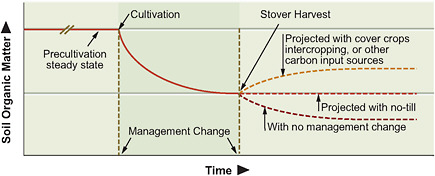
FIGURE 2.1 Conceptual diagram of how agriculture has affected soil organic matter and what may occur after various strategies for crop-residue removal.
concerns while supplying the necessary volume of biofuel feedstocks are presented in Appendix E.
BIOMASS RESOURCES
The following is an assessment of biomass resources for liquid fuel production using technologies available and management practices known in 2008 and projected to be available in 2020. It is predicated on two fundamental principles: (1) that biomass production for liquid fuels should not compete for land on which an existing crop is produced for food, feed, or fiber or compete for pasture land that will be needed to feed a growing and increasingly affluent population, even with yield increases, and (2) that the environmental impact on land used for biomass production should be no worse than that of its previous use and provide greater benefits wherever possible (for example, reducing fuel loads in fire-prone areas, managing volumes of urban waste, and increasing soil carbon sequestration in restoration of native grassland ecosystems). Although many other possible visions of biomass availability that do not hold as closely to those two principles are possible, the panel chose to conduct its assessment with those two in mind.2
Among the biomass sources considered are corn stover, straw from wheat and seed grasses (for example, bluegrass and fescue), traditional hay crops (for example, alfalfa and clover), normal and high-yielding fuel crops, woody residues, animal manure, and municipal solid waste. Advantages of and concerns about each of these feedstocks are described below. The resource amounts that could be made available by using technologies and management practices of 2008 and the resource amounts projected to be available by 2020 are also described.
Corn Stover
In 2007, 13.1 billion bushels of corn grain was harvested in the United States from 86.5 million acres of cropland. Assuming a 1:1 ratio of dry weight of corn grain to stover (Johnson et al., 2006a), the amount of stover produced was estimated to be 370 million tons. Not all the corn stover can be used to produce biofuel, however, because this crop residue is also a “resource” that farmers use to mitigate wind and water erosion and to maintain soil organic matter. The amount of stover that needs to be left on the land for those purposes depends on the tillage practice being used as soil is being prepared for planting by plowing, ripping, or turning (Johnson et al., 2006a; Wilhelm et al., 2007). Perlack et al. (2005) estimated that no-tillage requires 0.35–0.5 ton of stover per acre to protect against wind and water erosion, but that amount of crop residue is not sufficient to control soil erosion if more aggressive tillage is used (Figure 2.2) and is not sufficient to sustain soil organic matter (soil carbon). To maintain soil organic matter, 2.3–5.6 tons/acre needs to be left in the field, depending on crop rotation and tillage practice (Wilhelm et al., 2007). Maintaining soil organic matter is crucial for sustaining soil structure, water entry and retention, nutrient cycling, biological activity, and other critical soil processes.
Erosion control and maintenance of soil organic matter are critical factors to be considered in the estimation of the sustainable amount of corn stover that could be harvested to produce biofuel. The national average corn-grain production in 2008 was 151 bushels/acre (USDA-NASS, 2008b). If erosion is to be controlled and soil organic matter maintained, the potential harvestable corn stover even with no-tillage practices is reduced from 3.58 tons/acre to 0.06–1.25 tons/acre depending on the crop rotation (Figure 2.2). If more intensive tillage
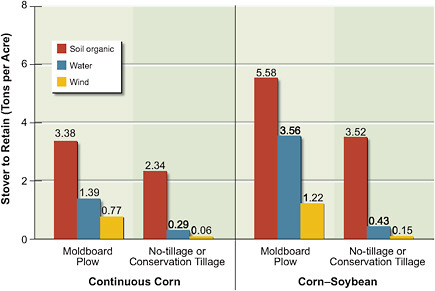
FIGURE 2.2 Tillage and crop-rotation effects on the amount of corn stover required to protect soil resources against wind or water erosion and to sustain soil carbon (organic matter) levels.
Source: Adapted from Wilhelm et al., 2007.
equivalent to moldboard plowing is used, as is the case for about 17 percent of U.S. corn cropland, all the corn stover in the corn–soybean rotation is required for maintenance of soil organic matter, and only 0.2 ton/acre would be available as a feedstock if corn is grown continuously. Using the higher harvestable value3 of 1.25 tons/acre and recognizing that only 70 percent of the available cropland area at most would be planted continuously in corn because of disease, insects, and other factors, the maximum sustainable amount of corn stover available as biofuel feedstock in 2007 would have been 75.7 million tons. That value, rounded to the nearest million tons, was used for the panel’s baseline estimate for the amount of corn stover that could be harvested sustainably. The panel’s projection of 112 million tons available by 2020 was calculated in a similar manner and allowed for increased yield as a result of genetic improvement and improved management. (See Appendix F for details of those estimates.)
Wheat Straw and Seed-Grass Straw
Wheat straw and grass straw can be biofuel feedstocks as the technology to convert them to liquid fuels develops. Banowetz et al. (2008) estimate that the Pacific Northwest states of Idaho, Oregon, and Washington could provide at least 6.5 million tons of crop residues with the wheat straw and grass straw yields in 2007 after the appropriate amount of wheat straw and grass straw are left on the field to protect soil resources. However, those straws are often distributed across the landscape at an average available density of about 1 ton/acre, so transporting them to centralized biomass-processing plants would probably increase transportation costs and transportation-dependent greenhouse gas releases. One approach for overcoming those limitations would be to establish localized preprocessing and densification centers. Similar estimates by Nelson (2002) for Kansas, Texas, Ohio, Illinois, and Missouri projected the availability of another 8.8 million tons of wheat straw for harvest from the Great Plains each year. The panel estimated that 15 million dry tons of wheat and grass straws per year could be available for fuel production on the basis of earlier studies. It assumed a 20 percent increase in available wheat and grass straws by 2020.
Hay
U.S. hay production ranged from about 50 million tons in 1999 to about 142 million tons in 2006 (USDA-NASS, 2008b). The average yield in 2007 was 2.4 tons/acre. Most hay is consumed as animal feed, but as with corn grain, average yields are often lower than many good producers achieve. On the basis of the 30-year record of increases in hay yields, the panel estimated that 10 percent of the average production for 2003–2007 (15 million tons) could be available for biofuel production without substantially affecting the hay price and supply. The portion of the hay crop used as biofuel feedstock was assumed to have very low nutritional quality for animal production because of excessive weathering. The low-quality hay would be marketed only in areas where biofuel plants provided an alternative marketing option to local farmers. The assumed supply of hay for use as a biofuel feedstock is small because hay production is dispersed, bulky, and expensive to transport. As with wheat and grass straws, the panel’s projection of available hay for biofuels in 2020 was based on a 20 percent yield increase as a result of better genetics and management practices.
Dedicated Fuel Crops
When this report was being written, most agricultural land in the United States was being used for food, feed, hay, livestock, and forestry production or was enrolled in the CRP. This section considers the potential for producing biofuels on CRP lands to avoid potential conflicts over land requirements for existing or future food, feed, and fiber needs. Other lands—such as power-line rights of way, road rights of way, land classified by the U.S. Department of Agriculture (USDA) as “idle” land, or lands abandoned by agriculture sufficiently long ago as not to be classified—merit further study for their potential to produce biomass crops. Although they are not formally considered in this report, such lands might be used for production of dedicated fuel crops in lieu of or in addition to the CRP lands discussed below. The potential yields from those lands, however, have not been assessed, because few side-by-side studies of dedicated fuel crops grown on lands of different fertility and climate have been performed.
The CRP compensates farmers for removing land from crop production for environmental reasons (such as erosion control, water-quality improvement, and provision of wildlife habitat by planting appropriate perennials) and economic reasons (such as curbing production of surplus commodities and providing income support for land owners) (USDA-FSA, 2008a). If the land has not been severely eroded or depleted of essential nutrients and if expected rainfall patterns are not disrupted by increasing climate variability, a portion of it could be used for dedicated perennial fuel-crop production with appropriate site-specific agricultural practices. Planting an appropriate species or mixture of perennials and harvesting them late in the growing season could produce biofuel feedstock while potentially providing many of the same environmental benefits envisioned for CRP land. Because some land was enrolled in the CRP because of low yields of annual crops, the panel focuses on using such lands for perennials, which generally are more efficient in using nutrients in resource-poor soil than are annuals.
As of early 2008, about 35 million acres was enrolled in the CRP (USDA-FSA, 2008b). However, not all types of CRP land can be used for dedicated fuel-crop production without losing their current environmental benefits. The different types of conservation practices used on CRP land and those considered potentially compatible with biofuel-crop production by this panel are listed in Table 2.1. The categories of practices considered by the panel to be unavailable for biofuel-crop production included those already in wooded areas, in wetland restorations, or containing particular wildlife habitat. Using that classification, about 24 million
TABLE 2.1 CRP Acreage by Conservation Practice as of June 2008
|
Categorya |
Practice |
Total Acres |
Acres Potentially Suitable for Biomass |
|
CP1 |
New introduced grasses and legumes |
3,066,914 |
3,066,914 |
|
CP2 |
New native grasses |
6,953,918 |
6,953,918 |
|
CP3 |
New softwood trees (not longleaf) |
367,203 |
0 |
|
CP3A |
New longleaf pines |
213,011 |
0 |
|
CP3A |
New hardwood trees |
473,552 |
0 |
|
CP4 |
Permanent wildlife habitat |
2,518,289 |
0 |
|
CP4B |
Wildlife-habitat corridors |
10,609 |
0 |
|
CP5 |
Field windbreaks |
90,643 |
0 |
|
CP6 |
Diversions |
540 |
0 |
|
CP7 |
Erosion-control structures |
406 |
0 |
|
CP8 |
Grass waterways |
129,655 |
0 |
|
CP9 |
Shallow-water areas for wildlife |
52,685 |
0 |
|
CP10 |
Existing grasses and legumes |
13,848,334 |
13,848,334 |
|
CP11 |
Existing trees |
1,056,369 |
0 |
|
CP12 |
Wildlife-food plots |
85,998 |
0 |
|
CP15 |
Contour grass strips |
82,430 |
0 |
|
CP16 |
Shelterbelts |
35,713 |
0 |
|
CP17 |
Living snow fences |
5,826 |
0 |
|
CP18 |
Salinity-reducing vegetation |
256,442 |
0 |
|
CP20 |
Alternative perennials |
13 |
0 |
|
CP21 |
Filter strips (grass) |
1,056,700 |
0 |
|
CP22 |
Riparian buffers |
848,533 |
0 |
|
CP23 |
Wetland restoration |
1,491,794 |
0 |
|
CP23 |
Wetland restoration (floodplain) |
115,883 |
0 |
|
CP23A |
Wetland restoration (nonfloodplain) |
43,879 |
0 |
|
CP24 |
Cross-wind trap strips |
725 |
0 |
|
CP25 |
Rare and declining habitat |
1,221,521 |
0 |
|
CP26 |
Sediment retention |
12 |
0 |
|
CP27 |
Farmable wetland pilot (wetland) |
53,767 |
0 |
|
CP28 |
Farmable wetland pilot (upland) |
127,609 |
0 |
|
CP29 |
Wildlife-habitat buffer (marginal pastureland) |
97,489 |
0 |
|
CP30 |
Wetland buffer (marginal pastureland) |
24,843 |
0 |
|
CP31 |
Bottomland hardwood initiative |
41,976 |
0 |
|
CP32 |
Hardwood trees (previously expired) |
8,563 |
0 |
|
CP33 |
Upland bird-habitat buffer initiative |
197,036 |
0 |
|
CP36 |
Longleaf pine initiative |
57,915 |
0 |
|
CP37 |
Duck nesting-habitat initiative |
37,088 |
0 |
|
CP38 |
State acres for wildlife enhancement |
37,041 |
0 |
|
Unknown |
|
401 |
0 |
|
Total |
|
34,711,325 |
23,869,166 |
|
aCP, conservation practice. Source: USDA-FSA, 2008b. |
|||
acres of CRP land could potentially be converted to appropriate dedicated fuel-crop production. Landowners, however, might choose to leave land in the CRP for various reasons or to return it to food, feed, and fiber production, an option that becomes more profitable as crop prices rise (Secchi and Babcock, 2007).
Biomass yields depend on a host of factors, including location, choice of crop, cultivation practices, fertility status, and seasonal weather patterns. Switchgrass (Panicum virgatum) is the most immediately implementable and has been the focus of the Department of Energy’s Bioenergy Feedstock Development Program for more than a decade. Although more is known about switchgrass yields than about the yields of any other proposed biofuel crop, the available data cannot yet adequately address the yields likely to be achieved on potentially usable, typical CRP lands. A recent review of published switchgrass yield trials across the United States showed an average annual yield of 4.6 tons/acre (Heaton et al., 2004a). Farmers are more likely to plant the cultivated varieties (cultivars) that had the highest yields in those trials, and a separate tally of the two highest-yielding switchgrass cultivars in independent trials across the United States showed an average of 6.1 tons/acre (McLaughlin and Kszos, 2005). Such trials are generally used as the basis of models for predicting yields. Two studies predicted an average yield of 5.4 tons/acre on existing cropland across the United States with the use of best management practices (Graham and Walsh, 1999; McLaughlin et al., 2002). Their predicted yield might not be achievable on CRP land if, as might often be the case, its soil has degraded physical, chemical, and biological conditions or if it is isolated in small fields or the terrain is not suitable for efficient mechanical harvesting. In general, the land most likely to be put into switchgrass production (for example, CRP acreage) tends to be of lower quality than test plots that are typically situated on fertile ground. For example, McLaughlin et al. (2002) estimated switchgrass yields on previously idled land to be 85 percent of those on land most recently in food production.
Trials like those described above are typically conducted on small plots, and although they are useful for evaluating ranking of cultivars best adapted to local environmental conditions, the results are not necessarily indicative of what can be expected of farm-scale production (Monti et al., 2009). Schmer et al. (2008) noted that most biofuel-crop data are derived from small plots of less than 6 yd2 each, and they assisted farmers in establishing farm-scale switchgrass trials in Nebraska, South Dakota, and North Dakota. Average postestablishment yields in 2003–2005 were 2.7, 3.6, and 3.2 tons/acre in Nebraska, South Dakota, and North Dakota, respectively. In contrast, values predicted on the basis of small-plot trials were
5.4, 5.1, and 4.4 tons/acre (Graham and Walsh, 1999). Moreover, small-plot trials conducted concurrently in Nebraska with the cultivars represented in the farm-scale trials yielded an average of 6.4 tons/acre, or over twice the average yield of the larger plots (Schmer et al., 2006; Vogel, 2007). Thus, actual farm-scale fuel-crop production results in harvested yields about 35–50 percent lower than those of small-scale plots. Lower yields in large-scale production might be a result of farmers’ inexperience with the cropping system or differences in cropland quality. But in the experiments of Schmer et al. (2008), farmers worked closely with the researchers, and the land that was used had been in active annual crop production until it was converted to switchgrass production.
An alternative biomass source is diverse mixtures of native prairie species—about equal initial densities of legume species and warm-season grass species—and seems likely to fare better in drier areas and on soils that are nitrogen-limited. In the only side-by-side comparison done to date, a high-diversity mixture of perennial grasses, legumes, and forbs had biomass yields about 200 percent greater than those of switchgrass monocultures (Tilman et al., 2006). That one study, however, was done without fertilization, with unimproved cultivars, and on a highly degraded soil of much lower fertility than the land used in the studies of switchgrass mentioned earlier and Miscanthus. Further field trials are necessary to assess the yield of switchgrass and mixtures of perennial grasses. To provide a preliminary estimate of potential yield of perennial grasses, the panel assumed that their yield is about 4 tons/acre, for two reasons: many studies report yields of 2–6 tons/acre (Heaton et al., 2004a; Fike et al., 2006; Perrin et al., 2008; Vadas et al., 2008), and producers are likely to use species or cultivars that have high yields, and 4 tons/acre is about 60 percent of the high yield reported.
Another dedicated perennial fuel crop being evaluated and developed is Miscanthus. Miscanthus is an exotic and potentially invasive grass species (unless sterile hybrids that reproduce only vegetatively are used) from Asia that has high yield potential. Recent European trials have resulted in average biomass yields of 10 tons/acre (Heaton et al., 2004b). Yield trials in the United States have been limited to Illinois, where the average yield was 13.2 tons/acre (Heaton et al., 2008), close to the 14.7 tons/acre predicted for that state on the basis of European data (Heaton et al., 2004b). Miscanthus has higher water requirements than switchgrass does and therefore would have a more restricted production range.
Although the initial result suggests that high-diversity mixtures rich in warm-season grasses and cool-season legumes have the potential to be a viable source of biomass on highly degraded land, further field trials are needed to test that pos-
sibility; to determine the regions, soil types, and other conditions for which such mixtures, switchgrass, Miscanthus, or other feedstock species would be superior biomass sources; and to assess the effects of dedicated fuel crops on other ecosystem services. The panel emphasizes that much work is needed to achieve greater confidence in any projections of perennial grassland biomass production for biofuels.
Short-rotation woody crops, such as hybrid poplar and willow, could also provide biomass while maintaining environmental benefits of the CRP (Johnson et al., 2007). Woody-crop yield might be greater than average in New England and the northern regions of the Great Lakes states (Graham and Walsh, 1999). (See also figures in Milbrandt, 2005.) Additional research to identify appropriate woody species on various land types is needed.
The panel’s estimates of biomass that could be produced from dedicated fuel crops are presented in Table 2.2. The yields are the amounts potentially achievable with current technology if production of biomass feedstocks had high priority. CRP land would also have to be made available for dedicated fuel-crop production. In reality, the amounts would not be achievable for at least a few years.
TABLE 2.2 Estimated Biomass Supply That Could Be Available from Dedicated Fuel Crops with 2008 Technologies and Management Practices and in 2020
|
|
Yield (tons/acre) |
Areaa (millions of acres) |
Total (millions of tons) |
|
2008 |
|
|
|
|
Normal yieldingb |
4 |
12 |
24 |
|
High yieldingc |
9 |
6 |
54 |
|
Total |
|
|
102 |
|
2020 |
|
|
|
|
Normal yielding |
5 |
16 |
40 |
|
High yielding |
10.5 |
8 |
84 |
|
Total |
|
|
164 |
|
aCRP land has not been used for dedicated fuel-crop production as of 2008. The panel assumed that two-thirds of the CRP land would be used for dedicated fuel production as an illustration. bNormal-yielding candidate crops include high-diversity perennial grass-legume mixtures, such perennial grasses as switchgrass, and short-rotation woody plants grown on upland degraded soils. cHigh-yielding biomass crops include varieties of Miscanthus grown on low-lying, moist, and fertile soils. |
|||
Woody Residues
Woody biomass is available from four sources other than dedicated fuel crops: forestry-industry residues, fuel-treatment residues,4 forest-product residues, and urban wood residues. Perlack et al. (2005) estimated that as much as 41 million tons of forestry-industry residues could be collected after adjusting for recovery losses of 35–50 percent. That estimate is consistent with that of Milbrandt (2005), which is 62 million tons before adjusting for recovery losses. The panel supports the Perlack et al. (2005) recommendation that the nutrient-rich fraction of harvestable residues—which includes leaves, needles, and fine branches—be uncollected to maintain soil fertility.
The dead material on the forest floor provides readily available fuel for forest fires. The U.S. Forest Service has estimated that the amount of dead material on the forest floor could be as great as 60 million tons per year or nearly 2 billion tons over 30 years. If economically viable methods to thin overstocked forests mechanically can be developed, much of that material could be removed from forests in the western states (Perlack et al., 2005). Forest thinning could have the additional beneficial effect of reducing the amount of high-quality timber lost to forest fires each year (Fight and Barbour, 2005).
Most residue from forest-products industries are already used, but Perlack et al. (2005) estimated that an additional 8 million tons per year is available, which is higher than Milbrandt’s estimate of 5 million tons (Milbrandt, 2005). Urban wood residues include wood from tree trimmings by utilities and private companies, construction and demolition, and municipal solid waste. Perlack et al. (2005) estimated that urban wood residues collectively could provide 36 million tons of woody biomass. That estimate is comparable with Milbrandt’s (2005) estimate of 34 million tons. After subtraction of the currently used 8 million tons (Perlack et al., 2005) and 13 million tons of municipal solid waste wood (accounted for later in this chapter), it is assumed that 15 million tons would be available as a feedstock for biofuel production.
Overall, the panel considers that, with proper forethought and planning and demand, the infrastructure necessary to produce about 124 million tons of woody biomass could potentially be developed by 2020.
Animal Manure
The USDA Natural Resources Conservation Service (USDA-NRCS, 2003) calculated the amount of recoverable livestock manure on a national scale on the basis of the USDA National Agricultural Statistics Service (USDA-NASS) 1997 Census of Agriculture data to determine the costs associated with establishing national comprehensive nutrient-management plans for animal-feeding operations. The calculations were based on a minimum number of on-site animal units and related characteristics. All farm livestock operations that produced less than 200 lb/yr of recoverable manure nitrogen were excluded. With those criteria and data, USDA-NRCS estimated that 60.6 million tons of dry manure could be recovered each year. The optimal use of the manure material would be as fertilizer, but many concentrated animal-feeding operations produce more manure than can be effectively used locally as fertilizer. Thus, the panel estimated that 10 percent could currently be diverted to biofuel production. The panel’s estimate for 2020 assumes a 20 percent increase in the supply of manure that could be diverted to biofuel production by that year.
Municipal Solid Waste
In 2006, U.S. residents, businesses, and institutions produced more than 251 million tons of municipal solid waste, which is about 4.6 pounds of waste per person per day (Table 2.3) (EPA, 2007). Residential waste (including waste from apartment houses) accounted for 55–65 percent of the total waste generated. Waste from schools and commercial locations, such as hospitals and businesses, amounted to 35–45 percent. The largest component of municipal solid waste is organic material. Of the municipal solid waste generated in 2006, paper and paperboard products accounted for 34 percent; yard trimmings and food scraps 25 percent; plastics 12 percent; metals 8 percent; rubber, leather, and textiles 7 percent; wood 6 percent; glass at 5 percent; and other miscellaneous wastes about 3 percent.
Several municipal solid-waste management practices—such as source reduction, recycling, and composting—divert materials from the waste stream. As of 2008, 32.5 percent is recovered and recycled or composted, 12.5 percent is burned at combustion facilities, and the remaining 55 percent is disposed of in landfills. The panel agrees with Perlack et al. (2005) and Milbrandt (2005) that more municipal solid waste could be used as a biofuel feedstock. The panel assumed
TABLE 2.3 Estimated Municipal Solid Waste Available Each Year for Production of Liquid Transportation Fuels
|
Municipal Solid-Waste Component |
Millions of Tons |
|||
|
Generated |
Currently Recovered |
Currently Unrecovered |
Potentially Usable for Bioenergy |
|
|
Paper and paperboard |
85.3 |
44.0 |
41.3 |
41.3 |
|
Glass |
13.2 |
2.9 |
10.3 |
0.0 |
|
Steel |
14.2 |
5.1 |
9.1 |
0.0 |
|
Aluminum |
3.3 |
0.7 |
2.6 |
0.0 |
|
Other nonferrous metals |
1.7 |
1.2 |
0.5 |
0.0 |
|
Plastics |
29.5 |
2.0 |
27.5 |
27.5 |
|
Rubber and leather |
6.5 |
0.9 |
5.7 |
5.7 |
|
Textiles |
11.8 |
1.8 |
10.0 |
10.0 |
|
Wood |
13.9 |
1.3 |
12.6 |
12.6 |
|
Other materials |
4.6 |
1.1 |
3.4 |
0.0 |
|
Food |
31.3 |
0.7 |
30.6 |
30.6 |
|
Yard trimmings |
32.4 |
20.1 |
12.3 |
12.3 |
|
Miscellaneous inorganic wastes |
3.7 |
0.0 |
3.7 |
0.0 |
|
Total |
251.3 |
81.8 |
169.6 |
139.9 |
|
|
Fraction recoverable for bioenergy |
About 2/3 |
||
|
|
Total amount recoverable for bioenergy |
About 90.0 |
||
that 90 million tons of the unrecovered organic and plastic fractions of municipal solid waste are available for bioenergy and that about two-thirds of that could be collected (Table 2.3). In comparison, San Francisco recycles about 70 percent of all urban waste, and city administrators have set a target of 75 percent. By 2020, the panel estimates that 100 million tons of municipal solid waste will be available for production of liquid transportation fuels. That estimate is based on the assumption that per capita municipal solid-waste generation will remain constant at 4.6 lb/person per day, as it has since 1990 (when it was 4.5 lb/person per day), and that additional municipal solid-waste generation is a result of population growth of 12 percent (from 304 million in 2008 to 341 million in 2020) (U.S. Census Bureau, 2008).
Summary of Lignocellulosic Feedstocks
The panel’s baseline and 2020 projections for potential biofuel-feedstock supplies are summarized in Table 2.4. The estimated supplies are much lower than previous estimates (Milbrandt, 2005; Perlack et al., 2005; Biomass Research and Development Board, 2008), but the estimates are justified because of the emphasis on the amounts that could be collected in a sustainable manner without unintended consequences for soil, water, and air resources or for society as a whole and because they take into account the effects of climatic variation (including drought
TABLE 2.4 Estimated Lignocellulosic Feedstock That Could Potentially Be Produced for Biofuel with 2008 Technologies and Agricultural Practices and in 2020
|
Feedstock Type |
Millions of Tons |
|
|
2008 |
2020 |
|
|
Corn stover |
76 |
112 |
|
Wheat and grass straw |
15 |
18 |
|
Hay |
15 |
18 |
|
Dedicated fuel crops |
104 |
164 |
|
Woody residues |
110 |
124 |
|
Animal manure |
6 |
12 |
|
Municipal solid waste |
90 |
100 |
|
Total |
416 |
548 |
|
Key assumptions: Corn stover—For continuous corn, 2.3 tons/acre must be left on fields to sustain soil carbon and control erosion. Anything above that can be harvested for biofuel production. Corn rotated with soybean requires that 3.5 tons/acre be left to meet those needs. The panel assumes that no more than 70 percent of the corn will be grown continuously and that future yield increases will mirror those achieved during the last 30 years. Wheat straw and grass straw—Estimates are based on those of Banowetz et al. (2008) and Nelson (2002). Future increases are based on historical rates of increase in crop yields. Hay—The panel assumes that price increases for biomass will encourage higher yields in hay, creating a 10 percent yield increase that can be dedicated to biofuel production. Dedicated biofuel-biomass crops—The panel assumes that 18 million acres of CRP land could be planted currently as an illustration and that 24 million acres of CRP or similar land would be planted with perennial plants (switchgrass, mixed prairie species, Miscanthus, and so on). The field-scale yields are assumed to be 60 percent of those reported for small-scale test plots. Woody biomass—Estimates are based on the Milbrandt (2005) and Perlack et al. (2005) reports but exclude all currently marketed woody biomass residues and municipal solid-waste wood (about 13 million tons). |
||
and extreme weather patterns) on yields. Despite the low estimates, the panel reaffirms that research and development directed toward sustainable lignocellulosic-biofuel production are important for the nation’s energy security.
Alternative Scenarios
The panel presented a scenario in which 550 million dry tons of cellulosic feedstock can be harvested or produced sustainably in 2020. Its estimates are not predictions of what would be available for fuel production in 2020. The actual supplies of biomass could exceed the panel’s estimates if existing croplands are used more efficiently (Heggenstaller et al., 2008) or if genetic improvement of dedicated fuel crops exceeds the panel’s estimate. In contrast, the panel’s estimates could be lower if producers decide not to harvest agricultural residues or not to grow dedicated fuel crops on their CRP land.
Genetic and genomic advances could result in improved species and cultivars of dedicated fuel crops that have much higher yields than estimated by the panel. The agricultural industry aims to achieve a 40–50 percent increase in yield of commodity crops per acre in the next 10–20 years (Associated Press, 2008; York News-Times, 2009). If its goal is achieved, less acreage might be needed for food and feed production, and some agricultural land could be freed up for fuel-crop production. However, if historical trends in U.S. corn yields continue (Cassman and Liska, 2007), the predicted increases in yields would be 12 percent in 10 years and 24 percent in 20 years (see Figure 3 in Cassman and Liska, 2007). The historical yield increases have been achieved through major advances in corn-production technology, including new breeding methods, expansion of irrigated area, soil testing and balanced fertilization, conservation tillage, integrated pest management, and transgenic hybrids (Cassman and Liska, 2007). Moreover, at least part of any increase in commodity yields would be used to meet the increasing demand for food for a growing population and the increasing demand for feed due to an increasing preference for meat-based diets (Myers and Kent, 2003).
Geographic Distribution
The geographic distribution of biomass of dedicated fuel crops was estimated from the locations of CRP lands suitable for growth of switchgrass and mixed high-diversity prairie or Miscanthus (assuming equal land dedicated to each perennial crop and using published farm-scale yields), residue from agriculture and forestry (modified from Milbrandt, 2005), and municipal solid waste (estimated county
by county on the basis of the population of each county and the national average per capita rate of municipal solid-waste production). The geographic distribution of biofuel feedstocks allows an estimation of the current amounts of biomass that could be grown within a given distance of a biorefinery. For illustrative purposes, the amounts for areas within a radius of 40 miles (equivalent to a driving distance of about 50 miles) are shown in Figure 2.3. Biomass transportation costs are high because of the low density of biomass. With the exception of woody material (primarily pulpwood), 40–50 miles has historically been the maximum distance considered economically feasible for biomass transport. On the basis of the projected biomass supply in Table 2.4, the number of sites within a 40-mile radius of where biorefineries could be established is shown in Figure 2.4. The wide variation in potential biomass supply means that the size of biorefineries might vary widely. For example, there are 290 sites where 1,500–10,000 dry tons of biomass per day could be supplied to a biorefinery within a 40-mile radius (about a 50-mile driving distance).
Barriers and Challenges to Deployment
One potential rate-limiting step in achieving large-scale lignocellulosic biofuel production might be the gathering of farmers, biomass integrators, and biofuel-conversion facilities into a well-organized and sustainable cellulosic-ethanol industry. Several factors need to be addressed to bring the three groups together: the efficient delivery of geographically distributed, low-density, logistically difficult materials to biorefineries in a timely manner without harming the “normal” farming operations associated with modern agriculture; determination of the full life-cycle greenhouse gas signatures of various cellulosic feedstocks when grown in a particular region with locally prescribed “best practices”; and the certification of greenhouse gas benefits so that resulting biofuels can qualify for subsidies or carbon credits associated with greenhouse gas standards, such as the standard in the 2007 EISA. A fourth critical factor might be the perception by biofuel conversion facilities that crop residues and other similar materials are literally “trash” or waste products and thus have low or no value for farmers.
Crop residues are often perceived as trash because farmers sometimes use the same term when they speak of crop residues with regard to later tillage or planting operations. Those residues can create a nuisance if they are not managed properly. Referring to crop residues as trash also reflects in part traditional American perceptions regarding the beauty of clean, weed-free fields, straight rows, and other
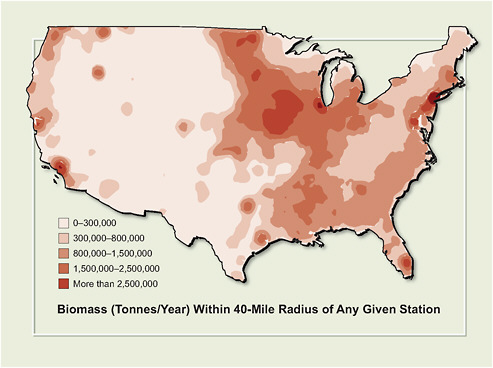
FIGURE 2.3 Geographic distribution of potential biomass supply for biofuel production. Shading shows the annual supply of all potential biomass feedstocks within a 40-mile radius of any point in the lower 48 states. Potential biomass supplies considered were municipal solid wastes, dedicated perennial crops on degraded lands, and environmentally appropriate proportions of crop and forestry residues.
Source: Modified from Milbrandt, 2005. County-by-county data provided by A. Milbrandt, National Renewable Energy Laboratory.
visual characteristics that Coughenour and Chamala (2000) referred to as the culture of agriculture. However, the same farmers who call crop residues trash also recognize the importance of crop residues for protecting soil resources from wind and water erosion, for cycling essential plant nutrients, for building and sustaining soil organic matter and soil fertility, and for sustaining the biological life in the soil. The environmental concerns of removing crop residues from fields have been well documented (Johnson et al., 2006a,b; Blanco-Canqui and Lal, 2007; Lal, 2007; Wilhelm et al., 2007). Farmers will insist on being adequately compensated not only for the time, labor, and other expenses incurred in harvesting, storing, and delivering crop residues but also for the nutrients, carbon content, and erosion control that will have to be replaced with increased fertilization and
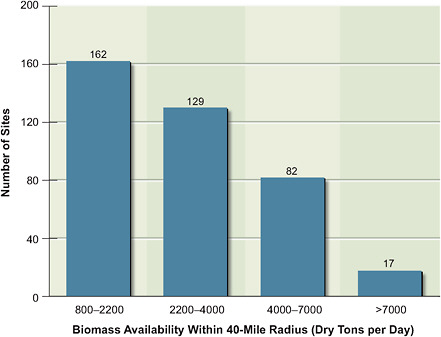
FIGURE 2.4 The number of sites in the United States with a potential to supply the indicated daily amounts of biomass within a 40-mile radius of each site. Note that 17 sites can provide more than 7000 dry tons of biomass per day, which is equivalent to more than 2.5 million dry tons per year.
other management strategies if the materials are harvested and sold as a biofuel feedstock. From the farmers’ perspective, the rationale for those actions is that economic growth that destroys ecological support systems is neither sustainable nor true progress.
The wide geographic distribution of lignocellulosic materials is an issue that affects the supply of all potential feedstock sources (including crop residues, dedicated perennials, cover crops, and woody species). Farmers recognize the spatial variability in their fields and know that some areas (such as sideslopes and hilltops) can tolerate no crop-residue removal, whereas crops in other areas (such as depressions and toeslopes) might show a positive yield response to residue removal because seedbed conditions are more favorable. To address that concern on a field scale, a single-pass harvesting system is being developed to collect both grain and stover from some areas but to collect only grain in areas where the crop residue is needed to sustain biological, chemical, and physical properties and processes in
the soil. Spatial variability will also affect production of perennial grasses on land enrolled in the CRP and similar land that has been taken out of production for various reasons. CRP and similar land is highly erodible and often is dissected by many gullies or ditches, is encumbered by rock outcrops, or has thin and nonproductive soils. Collectively, all those factors will hinder mechanical harvesting and increase the cost and logistical problems associated with delivering lignocellulosic feedstocks to biorefineries.
Another important concern, especially for midwestern farmers, is the amount of time available to handle stover when grain harvesting, trucking, storage, and fall tillage already occupy almost all their available time and labor between crop maturity and the onset of winter weather. Any new operation that threatens to slow grain harvesting will be viewed with skepticism because of current time demands and the unpredictable vagaries of fall weather. That concern is also one of the reasons for developing a one-pass harvesting system, but there is also substantial concern that additional wheel traffic will increase soil compaction and that on-farm storage will require space or even facilities that are not available on many parcels of land. To address the latter concern, several research programs in the Department of Energy, universities, and the USDA Agricultural Research Service are examining approaches for increasing the weight and fuel density of cellulosic feedstocks through various pretreatment and storage techniques (for example, Kaliyan and Morey, 2009). The low density of the materials and the high cost of transporting them to centralized refineries is also being addressed by developing more distributed networks for preprocessing and densification. Current ideas range from developing local farmer cooperatives to developing mobile processing equipment that can be assembled on a site, used, disassembled, and moved to another site. The latter appears most probable with respect to thermochemical conversion with mobile pyrolyzers—a system that has been commercialized by the Dynamotive Energy Systems Corporation in Canada.
Because of increasing global concerns about atmospheric greenhouse gases, future U.S. legislation will probably require certification of the full life-cycle greenhouse gas effects of crop production and of conversion to biofuels for each method of growing a crop and each method of converting the crop to a biofuel. It will be impractical to do such certification farm by farm, so it will be necessary to establish certifiable best practices for a given crop in a given region and then to establish ways to certify that individual farmers follow the practices. The determination of the greenhouse gas signatures of a crop and associated best practices
will require a partnership between agricultural and environmental researchers and farmers.
Another approach to bringing all parties together for successful lignocellulosic-ethanol production is to implement the landscape approach described earlier in this chapter. That will require not only cooperation among biomass producers and purchasers but also policies that address energy, water quality, air quality, soil quality, wildlife habitat, carbon sequestration, community development, and other land-use issues in a coordinated manner. With the current patterns of land ownership and high rental rates (62 percent in Iowa), incentives have to be provided to farmers to address various environmental concerns simultaneously and to encourage optimal use of all types of land. Incentives will be required to manage fields that are near streams or that have depressions that help to recharge groundwater resources. In those fields, biomass crops that can tolerate wet soil conditions during spring can be used to mitigate the effect of the drainage of nutrient-rich waters to streams, rivers, and ultimately the Gulf of Mexico. Those fields would no longer be tilled annually, so there would be greater opportunities for sequestering carbon and thus helping to mitigate the increasing atmospheric CO2 concentrations. Crop-production practices that improve yield could be developed and adopted and would help to alleviate global concerns that food and fuel production are not compatible. This land-management approach could also lead to what has been referred to as “sustainable cropping systems” that would have increased value not only for the commodities to be sold but also for their environmental and social benefits.
In summary, if managed properly, the production of lignocellulosic biofuels could contribute to U.S. energy security. It could also have benefits for some sectors of American agriculture, for the environment, and for rural communities. There are challenges to the development of the biomass-supply industry for the production of lignocellulosic biofuels: organizing farmers, biomass integrators, and biofuel conversion facilities into a well-organized and sustainable cellulosic-ethanol industry; determining the full life-cycle greenhouse gas signatures of various biofuel crops; certifying the greenhouse gas benefits; and addressing the perception that crop residues and other similar materials are trash or waste products and thus have low or no value for farmers. The challenges are formidable, but they can be overcome with an incentive-based, organized, and planned U.S. agricultural industry. As outlined in the 2007 EISA, grain ethanol is expected to provide 15 billion of the 36 billion gallons of annual biofuel production that is to be available by 2020. The incentives for achieving the EISA’s goal of biofuel produc-
tion are in place to accelerate the production of cellulosic or other future biofuels and the benefits that they can provide.
RESEARCH AND DEVELOPMENT
Genetic Improvement of Feedstocks
Most plants used by humans have been adapted for agriculture and human food, feed, or fiber preferences by genetic selection. In some cases, such as with corn and sugarbeet, the gains in yield of product have been enormous. In addition, the advances in understanding the genetic bases of biological processes and mechanisms during the last 25 years, accompanied by the development of methods for genetic modification of most species (NRC, 2008a), have led to optimism that future advances in plant improvement can be engineered. Indeed, Robert Fraley, the chief technology officer for Monsanto Company, was quoted in the Financial Times (Cameron, 2007) as saying in 2007 that “we think we can double yields over the next 25 years.” He went on to note that new “traits” in soybean would lead to increases in yield similar to the increase seen in corn in recent years. The breeding of corn and soybean is now carried out largely by the commercial sector, so predictions from leading companies might be relevant. In contrast, corn yields have increased in a markedly linear fashion in the past (1.8 bushels/acre per year), even with such major advances as the use of double-cross hybrids, improved cultivation practices, and transgenic resistance to insect pests with Bacillus thuringiensis (Cassman and Liska, 2007).
Because relatively little effort has gone into improving the productivity of dedicated herbaceous energy crops (grasses and legumes in particular), it seems likely that substantial gains in total biomass accumulation can be realized during the next several decades. The most rapid gains in both herbaceous and woody species will almost certainly be obtained through selection of superior genotypes accompanied by conventional breeding. The application of modern genomic technologies to conventional breeding could greatly accelerate progress by providing measurements of natural genetic diversity and by allowing unambiguous identification of genotypes in segregating populations (Bouton, 2007; NRC, 2008a). Moreover, recent advances in analytical instrumentation would facilitate characterization of the chemical composition of biomass and the selection of varieties that are optimized for processing into fuels. For instance, it would be advanta-
geous to identify varieties that are low in compounds that are toxic to microorganisms used in fuel production. Similarly, it would be advantageous to select for altered lignin composition or for changes in polysaccharide composition that facilitate decomposition of biomass to sugars, although such traits might actually reduce the overall fitness of the varieties expressing them.
Because there is still substantial uncertainty about which species of plants (besides sugarcane and its relatives) will ultimately be used as dedicated energy crops, it is challenging to estimate how much biomass yield can be improved in energy crops. However, in general terms, it seems unlikely that yield will increase to an extent similar to that observed in some food crops, such as maize, wheat, and rice, in which some of the yield increase has been obtained by increasing harvest index (that is, the ratio of grain to stover) rather than by increasing total biomass accumulation. In contrast, some of the important factors, such as resistance to disease or tolerance of abiotic stress, are likely to be as important for energy crops as for conventional crops, so some gains are to be expected by breeding for such traits. It also seems likely that, for much of the land that will be available to produce energy crops, the first species selected will be those already adapted to the regional water and temperature conditions and having reasonable biomass production in the designated habitat. Because the amount of water used by plants is determined by physical principles, it will not be possible to develop plants with substantially reduced needs for water. The most that could be achieved is to develop plants that can withstand periods of water deficit without serious physiological damage or loss of yield.
In addition to conventional breeding and selection, directed genetic modification could play a role in maximizing biomass production in the next 15–20 years. There has been substantial progress in identifying the genes that control tolerance of drought, cold, salt, insects, nematodes, and pathogens in crop species (Meksem et al., 2001; Brueggeman et al., 2002; Skinner et al., 2005; Rice Chromosomes 11 and 12 Sequencing Consortia, 2005). In some cases, it might be possible to extend the range of highly productive tropical species into temperate regions by enhancing their cold tolerance. For instance, there has recently been progress in developing Eucalyptus varieties that survive freezing and thrive in regions far north of the current limit for the species. The use of such a species for energy in addition to fiber may increase biomass production in the southeastern United States greatly. The results of research on crop species will translate directly to applications in many energy crops that are closely related to some important crops.
It might be possible to develop plants that have fundamental changes in
chemical composition or architecture that are useful in the downstream processing to fuels. For instance, many of the molecular details of lignin synthesis and deposition are known, and it is theoretically possible to develop plants with novel lignin structure that are easier to process (Liang et al., 2008). It might also be possible to make useful changes in the structure of some of the polysaccharides, such as cellulose and hemicellulose, which would allow less energetically expensive preprocessing of biomass during conversion to fuels. In that respect, it has been proposed that it would be useful to develop transgenic plants in which the enzymes required to hydrolyze the biomass to sugars are produced by the plants themselves and stored in the plant until they are activated during preprocessing. That concept might, in principle, decrease the cost of the conversion of biomass to fuel substantially.
More speculatively, some scientists are interested in the idea of developing plants in which liquid fuels similar to gasoline and diesel accumulate in the tissues and can be harvested directly in the field by cold-pressing. That idea is attractive because it might allow a higher capture of solar energy, would greatly decrease processing costs, and would leave all mineral nutrients and much biomass in the field. Such a modification of plants would draw as much on knowledge of developmental biology as on knowledge of metabolism and photosynthesis. Plant improvement for energy or for food, feed, and fiber depends on the development of comprehensive knowledge about plants.
Systems Research for Lignocellulosic-Biomass Production
In addition to research on feedstock improvement to increase yield, studies need to be conducted to understand the favorable and unfavorable effects of lignocellulosic-biomass production on different landscapes. To ensure that potential energy security and environmental benefits of biofuels are achieved while minimizing effects on food and feed production, feedstock and commodity-crop production would have to be addressed together. The landscape vision discussed earlier in this chapter and in Appendix E is needed to balance the production of commodity crops and biomass for fuel against the externalities that can result in adverse environmental effects, such as the hypoxia in the Gulf of Mexico, unintended soil carbon release, and increasing food prices. Systems research that recognizes the connections between processes that occur on the farm and in the ecosystem and that reach across spatial, temporal, and trophic dimensions and scales is needed to develop and implement the landscape vision. Such research is necessary to
determine the regions, soil types, and conditions in which different dedicated fuel crops would be appropriate and to assess the environmental, ecological, and social effects of such crop production. That complex topic and the research needs associated with it are addressed in another in-process National Research Council study on 21st-century systems agriculture.
COSTS OF SUPPLYING BIOFUEL FEEDSTOCKS
Cellulosic biomass has come to the fore as a potential source of biofuels, but there have been few attempts to provide a comprehensive accounting of the economic costs of supplying crop residue and dedicated fuel-crop feedstocks. In this section, the panel presents a simple but comprehensive economic model to provide a break-even cost to a farmer or forester for supplying the marginal or last unit of cellulosic biomass to a biofuel-processing plant. Six cellulosic biomass-feedstock sources are considered: corn stover, wheat straw, switchgrass, native prairie plants, Miscanthus, and woody biomass.
The biomass suppliers’ willingness-to-accept (WTA) price for the marginal or last dry ton of delivered cellulosic material is assumed to be equal to the marginal cost of producing the last ton. The WTA price or marginal cost of the last ton is assumed to include land-rental cost or other forgone net returns from not selling or using the cellulosic material for feed or bedding and to include all other costs incurred in sustainably producing, harvesting and storing the biomass, and transporting it to the processing plant. The cost or feedstock price is the long-run equilibrium price that would induce suppliers to deliver biomass to the processing plant. The WTA price or marginal cost curve (or supply curve) slopes upward to the right, which implies that as the biomass processor seeks larger supplies to operate the plant on a continuous basis, the processor not only will have to pay more for each successive ton but also will have to pay the same price for all tons delivered in a competitive market environment. The biomass-feedstock costs might appear higher than anticipated by previous studies, but the panel assumed a price that will be sufficient to induce biomass suppliers to deliver 1000–4000 dry tons per day 350 days per year to sustain production of a single plant and assumed a national industry that will use more than 500 million tons per year by 2020. Because an established market for cellulosic biomass does not exist, the panel did not have long-run marginal-cost estimates to determine feedstock-supply costs in this assessment. Instead, the analysis relied on published parameter values and
cost estimates that were updated with 2007 prices. Those WTA prices are analogous to prices used by economists in nonmarket valuation analyses and experiments. On the basis of published research, estimates were developed for low-cost, baseline, and high-cost alternatives. Those alternatives provide a representative range of research values and an indication of how sensitive the WTA price is to the range of parameter values found in the literature. Particular parameter values could change as a result of technological improvements, changes in energy prices and input costs, and alternative assumptions used in the literature.
The supplier’s WTA price for the last dry ton of delivered cellulosic material is equal to the total costs that the supplier incurs at market equilibrium. Costs include establishment and seeding, harvesting and maintenance, transportation, storage, nutrient replacement, and land and biomass opportunity costs. For woody biomass, additional costs include chipping and stumpage fees. The discussion that follows indicates the nature and range of cost estimates that appear in the literature, differences in assumptions and reported costs, and inclusion in the comprehensive accounting of all the economic costs of supplying cellulosic biomass.
Biomass Input Costs
Harvested biomass contains essential plant nutrients (Appendix G) that need to be resupplied to the soil if the availability of the biomass is to be sustainable. Nutrient replacement cost varies with feedstock and harvesting technique. After adjustment for 2007 costs,5 estimated costs of nutrient replacement range from $4/ton to $21/ton of harvested biomass (Aden et al., 2002; Perlack and Turhollow, 2003; Edwards, 2007; Hoskinson et al., 2007; Khanna and Dhungana, 2007; Khanna et al., 2008; Petrolia, 2008; Karlen and Birrell, Unpublished). Details of those estimates are provided in Appendix H. A baseline nutrient-replacement cost of $15/ton was used for corn stover, with low and high costs of $10/ton and $20/ton. For switchgrass and Miscanthus, a baseline cost of $10/ton and low and high cost estimates of $5/ton and $15/ton are used. For wheat straw, the baseline cost is $5/ton, and the low and high costs are $0/ton and $10/ton. Presumably, no nutrient replacement is necessary for woody biomass if leaves or needles and fine stems are left on the landscape. For mixed-species prairie biomass, which uses nitrogen fixed by legumes and is harvested in fall after senescence and translocation
of the macronutrients to perennial roots, nutrient-replacement cost is estimated at $0–$5/ton. A baseline cost of $5/ton and low and high costs of $0/ton and $10/ton were used for this material because if unpublished research trials evaluating nitrogen applications to prairie grasses are successful, both yield and nutrient-replacement costs would increase compared with costs of current prairie grass production and nutrient removal by those species.
Several reports have estimated costs of harvesting and maintenance of cellulosic material (McAloon et al., 2000; Aden et al., 2002; Sokhansanj and Turhollow, 2002; Suzuki, 2006; Duffy, 2007; Edwards, 2007; Hess et al., 2007; Khanna and Dhungana, 2007; Kumar and Sokhansanj, 2007; Mapemba et al., 2007; Khanna et al., 2008; Mapemba et al., 2008; Perrin et al., 2008). Harvesting costs include costs of labor, equipment, and fuel. Maintenance costs include costs of general equipment and storage. Key points of the studies are summarized in Appendix H. Given their results, the baseline harvesting and maintenance cost is $40/ton for switchgrass, Miscanthus, prairie grasses, and wheat straw. The panel was not aware of any published estimates of the harvesting and maintenance cost for woody biomass and assumed that it was about $40/ton. The low and high costs are $35/ton and $45/ton. For corn stover, the baseline cost is $45/ton and the low and high costs are $40/ton and $50/ton. It is important to note that those costs include the extra labor required during a relatively narrow timeframe for harvesting corn stover and are based on sustainably harvesting 2 tons of corn stover per acre. Sustainable harvesting incurs higher costs per ton than harvesting all stover.
Transportation and storage costs will play a critical role in the development of the cellulosic-ethanol industry. The low density of grass biomass complicates the logistical dimensions of transportation and storage and contributes to the marginal cost of delivered biomass. The panel’s model captures transportation and storage costs separately; transportation cost is determined according to a variable cost per dry ton per mile times the miles to the refinery. Estimates for corn stover transportation range from $11/ton to $31/ton (Aden et al., 2002; Perlack and Turhollow, 2002; English et al., 2006; Hess et al., 2007; Mapemba et al., 2008; Vadas et al., 2008). Switchgrass transportation costs have been estimated to cost around $14–36 per ton (Duffy, 2007; Kumar and Sokhansanj, 2007; Mapemba et al., 2007; Khanna et al., 2008; Mapemba et al., 2008; Perrin et al., 2008; Vadas et al., 2008), and Miscanthus transportation costs have been estimated to cost around $14–36 per ton (Mapemba et al., 2007; Khanna et al., 2008; Mapemba
et al., 2008), all adjusted to 2007 costs.6 Woody biomass transportation costs are expected to range from $11 to $22 per dry ton (Summit Ridge Investments, 2007).
Other research has separated the cost of transportation into distance variable cost (DVC) and distance fixed cost (DFC). DVC estimates range from $0.09 to $0.63/ton per mile (Kaylen et al., 2000; Kumar et al., 2003, 2005; Searcy et al., 2007; Petrolia, 2008). DFC estimates, mainly for biomass loading and unloading, range from $7.30 to $9.80/ton (Kumar et al., 2003, 2005; Searcy et al., 2007). Expected one-way transportation distances range from 22 to 67 miles (Perlack and Turhollow, 2002, 2003; English et al., 2006; Mapemba et al., 2007; Khanna et al., 2008; Vadas et al., 2008).
On the basis of those values, the panel’s baseline transportation cost for corn stover, switchgrass, Miscanthus, prairie grasses, and wheat straw is $0.35/mile per ton, with a baseline distance of 30 miles. The low- and high-cost estimates are $0.25/mile per ton for 20 miles and $0.45/mile per ton for 40 miles. For woody biomass, variable transportation costs and a chipping fee were used. The low, baseline, and high transportation costs are $0.40/ton for 40 miles, $0.50/ton for 50 miles, and $0.60/ton for 70 miles. The chipping fee is $8/ton, $10/ton, and $12/ton for the low-cost, baseline, and high-cost scenarios. The panel validated its estimates with a model developed by French (1960) that included both fixed and variable distance costs and biomass-density estimates (McCarl et al., 2000).
Biomass-storage estimates were found to range from $2/ton to $17/ton (Duffy, 2007; Hess et al., 2007; Khanna et al., 2008; Mapemba et al., 2008; Petrolia, 2008) after adjustment for 2007 costs.7 Given those estimates and information from the industry, a baseline storage cost for corn stover, switchgrass, Miscanthus, prairie grasses, and wheat straw of $15/ton was used. The assumed low and high costs are $10/ton and $20/ton. The baseline storage cost for woody biomass is assumed to be $10/ton and the low and high costs $0/ton and $20/ton.
Presumably, corn stover, wheat straw, and woody biomass suppliers will not incur costs of establishment and seeding. But because switchgrass, mixed prairie grasses, and Miscanthus do not produce another cash crop, sellers need to be compensated for their establishment and seeding, which were assumed to recur every 10 years in the case of switchgrass and every 20 years in the case of Miscanthus.
Cost estimates for switchgrass establishment and seeding, adjusted to 2007 costs,8 are between $30–200/acre (Duffy, 2007; Khanna et al., 2008; Perrin et al., 2008; Vadas et al., 2008). Miscanthus establishment and seeding cost adjusted to 2007 costs was estimated to be around $43–350/acre (Lewandowski et al., 2003; Khanna et al., 2008). The panel’s baseline value for switchgrass establishment and seeding cost is $100/acre and the low and high costs $75/acre and $125/acre. For Miscanthus and mixed prairie grasses, the baseline establishment cost is $225/acre and the low and high costs $175/acre and $275/acre. In the future, Miscanthus establishment costs could be similar to those of switchgrass as new seeded cultivars are developed (Christian et al., 2005) and commercialized, but current cost estimates are based on rhizome propagation.
To provide a complete accounting of economic costs incurred by the producer of biomass on a long-run basis, cropland rental costs (or the forgone net returns from using biomass in its next-best use) are included. Economists refer to these costs as opportunity costs because they represent the net returns forgone by the producer for not using cropland to produce the next-best crop or product. For example, land-rental rates typically reflect the net returns from producing the most profitable crop in the region, such as corn and soybean in the Corn Belt. The net returns from those crops determine how much a farmer can pay to rent an additional acre of cropland. When farmers plant perennial grasses instead of corn and soybeans, they need at least as high or higher net returns to compete for that cropland. In addition, it is argued that the farmer might require a premium beyond the WTA price to cover the risk of growing a perennial crop for 10 years or longer. Likewise, cellulosic biomass might incur an opportunity cost if there are alternative uses of the biomass, such as animal feed. If the biomass is sold for ethanol production rather than used for feed, the farmer incurs an opportunity cost equal to the net returns of using or selling biomass for livestock feed or bedding.
The panel categorized cropland-rental cost and alternative biomass-use cost in a single opportunity-cost category. Corn stover opportunity costs range from $22/acre to $143/acre (Edwards, 2007; Khanna and Dhungana, 2007). Given those research estimates, a baseline opportunity cost of $50/acre was assumed for corn stover and low and high costs of $0/acre and $100/acre. The opportunity costs of switchgrass and Miscanthus are much higher if they are grown on land of sufficient fertility to be suitable for corn, soybean, or other higher-value crops,
with estimates ranging from $76/acre to $230/acre (Khanna and Dhungana, 2007; Khanna et al., 2008). Estimates of opportunity cost of nonspecific biomass range from $10/acre to $76/acre (Khanna et al., 2008; Mapemba et al., 2008). The opportunity cost of woody biomass is estimated to range from $0/ton to $25/ton (Summit Ridge Investments, 2007). Miscanthus grows best on sandy or silty loam soils with high water-holding capacity and organic-matter content and in regions with good rainfall during the growing season, much like productive corn land. Likewise, switchgrass might do well on lands that are less productive than those for corn but in a region with a longer growing season and more rainfall. Thus, the opportunity cost of a given biomass crop will depend on the type of land on which it is produced and on alternative uses for the biomass. For switchgrass and Miscanthus, a baseline cost of $200/acre was assumed with low and high costs of $150/acre and $250/acre.
Although it could be argued that switchgrass and mixed prairie grasses will perform well on similar land and thus have similar opportunity costs, mixed prairie grasses are reported to perform well on abandoned land (Tilman et al., 2006) that is likely to have low agricultural value and thus earn lower cash returns similar to CRP payments and have a lower opportunity cost. Thus, mixed prairie grasses were assumed to be planted on land with lower opportunity cost, such as CRP land or cropland pasture. For illustrative purposes, the baseline and low opportunity costs of mixed prairie grasses assume that the supplier still receives a CRP payment and therefore has an opportunity cost of $0/acre. The high opportunity cost of mixed prairie grasses was assumed to be $85/acre. The wheat straw baseline opportunity cost was assumed to be $0/ton and the low and high costs $10/ton and $30/ton. The negative and zero opportunity costs of wheat straw are based on the nuisance cost of seeding a new crop of small grain. Occasionally, straw is burned at harvest to avoid grain-planting problems in the following crop year. Instead of an opportunity cost for woody biomass, a stumpage fee was included with an assumed baseline of $0/ton, and low and high costs of $0/ton and $5/ton. The $5/ton cost assumes that a portion of the stumpage fee charged at timber harvest is attributed to the slash or woody biomass by-product.
The final variable in the model is biomass yield per acre of land. Biomass yield is a parameter that has the potential to be variable in both the near and the distant future. Corn stover yield per acre will vary with soil quality and other topographical characteristics, and the current yield is estimated to be 2–3 tons/acre (Edwards, 2007; Khanna and Dhungana, 2007; Vadas et al., 2008). Estimates of potential switchgrass yield range from 0.89 to 9.8 tons/acre (McLaughlin et al.,
2002; Vogel et al., 2002; Lewandowski et al., 2003; Heaton et al., 2004a; Berdahl et al., 2005; McLaughlin and Kszos, 2005; Fike et al., 2006; Shinners et al., 2006; Duffy, 2007; Khanna and Dhungana, 2007; Khanna et al., 2008; Perrin et al., 2008; Vadas et al., 2008). Grass-yield estimates range from 2.2 to 6.2 tons/acre (Banowetz et al., 2008). Miscanthus has much higher yield estimates, from 3.4 to 17.8 tons/acre (Lewandowski et al., 2003; Heaton et al., 2004a,b; Khanna and Dhungana, 2007; Christian et al., 2008; Khanna et al., 2008). Therefore, a baseline yield value for corn stover of 2 tons/acre was assumed with low and high yields of 1.5 and 2.5 tons/acre. For switchgrass and mixed prairie grass, the low, baseline, and high yields are assumed to be 2, 4, and 6 tons/acre, respectively. Miscanthus yields, are assumed to be 6, 9, and 12 tons/acre. Note that high yields are associated with low costs and vice versa.
Baseline and Sensitivity Results
The biomass supplier’s WTA price or marginal cost is described by the equation below, which is generalized for nonspecific biomass. Depending on the type of biomass, some parameter values will equal zero.

in which PSbiomass is the WTA price or marginal cost that the biomass producer would require to produce, store, and deliver 1 dry ton of biomass feedstock to the processing plant; CNR is the nutrient replacement cost per dry ton of biomass; CHM is the harvesting and maintenance cost per dry ton of biomass; CT is the transportation cost per dry ton of biomass per mile; D is distance (in miles) to the biorefinery; CF is the chipping fee per dry ton of biomass at the roadside; SF is the stumpage fee per dry ton of biomass; CS is the storage cost per dry ton of biomass; CES is the annualized biomass establishment and seeding costs per acre; COpp is the land and biomass opportunity cost in the best alternative use of biomass delivered per acre; and YB is the biomass yield of the biomass crop per acre.
Given the baseline values specified, the biomass supplier’s baseline WTA per dry ton of biomass is $110 for corn stover, $151 for switchgrass, $123 for Miscanthus, $127 for prairie grasses, $85 for woody biomass, and $70 for wheat straw. Table 2.5 lists the WTAs for the six feedstocks in the low-cost, baseline, and high-cost scenarios.
The baseline costs (and yield) of different feedstocks were estimated on the
TABLE 2.5 Willingness-to-Accept Price for Biomass in Low-Cost, Baseline, and High-Cost Scenarios in 2020
|
Biomass |
Willingness-to-Accept Price (dollars per ton) |
||||
|
Low Cost |
50% Lowa (2020) |
Baselinea (2008) |
50% High |
High Cost |
|
|
Corn stover |
65 |
86 |
110 |
140 |
175 |
|
Switchgrass |
93 |
118 |
151 |
199 |
286 |
|
Miscanthus |
82 |
101 |
123 |
150 |
186 |
|
Prairie grasses |
79 |
101 |
127 |
179 |
273 |
|
Woody biomass |
59 |
72 |
85 |
104 |
124 |
|
Wheat straw |
40 |
55 |
70 |
97 |
123 |
|
aBolded numbers represent the panel’s estimated willingness-to-accept prices in 2008 and 2020. |
|||||
basis of all baseline values established above. The low-cost scenario uses all low cost estimates coupled with high yield to estimate costs, and the high-cost scenario uses all high cost estimates coupled with low yield to estimate costs for different biomass feedstocks. Next, the panel assumed that the low- and high-cost scenarios occurred with a probability of 0.5, or half the cost deviation between the baseline scenario and the high- and low-cost scenario estimates (comparable with Monte Carlo values).
The estimates listed in Table 2.5 can be interpreted in two ways. First, the low- and high-cost scenarios can be viewed as best and worst cases, assuming that everything worked or everything went wrong. More realistically, the 50 percent low- and 50 percent high-cost scenarios constitute a more reasonable range of outcomes around the baseline estimates for WTA or supply price per dry ton of cellulosic biomass feedstocks delivered to biofuel-processing plants when all costs incurred by suppliers of dry biomass delivered to the plant are considered. Second, the estimates reported in Table 2.5 as baseline (2008) can be viewed as estimates of today’s costs, and the 50 percent low estimates can be viewed as estimates of biomass costs in 2020. On the basis of the research information available, the 2008 or baseline cost estimates in Table 2.5 are the best estimates of current biomass supply costs today. The 50 percent low estimates are the panel’s projections of what has a high probability of happening in going from 2008 technologies to
2020 technologies. For example, the panel assumes that biomass crop yields will increase because of plant breeding and improvements in seed and plant physiology for propagation, germination, and disease, weed, and insect control. The management of biomass crops will improve, including adaptation to more suitable land types and climatic regions, production practices, and improved harvesting practices. Finally, substantial advances in the logistical dimensions of biomass handling, storage, and transportation will be needed to make biomass feedstock more economically competitive with fossil fuels. Many of the studies referred to in deriving the cost estimates assume yields and crop management reflecting future potential and goals, which are the basis of the low-biomass-cost scenario.
ENVIRONMENTAL EFFECTS
Potential Carbon Reductions from the Use of Biofuels
The panel was tasked to consider not only the economic costs of supplying various crop, forest, and dedicated biomass feedstocks for biofuel production but also the environmental costs and benefits. In general, the production of lignocellulosic biomass feedstocks for liquid fuels would probably have smaller adverse environmental effects than crop production for current biofuels and in some cases might provide additional benefits, such as lowering forest-fire risk (by removal of fuel-treatment biomass), increasing crop yield (by harvesting corn stover in specific areas), reducing the need for landfills (by collecting municipal solid waste), and restoring wildlife habitat (by re-establishing diverse prairies for growing dedicated fuel crops). Numerous environmental effects of biomass production, both favorable and unfavorable, have been described throughout this chapter, and the following brief sections are intended largely to highlight additional supporting studies in a broader discussion of next-generation biofuel sustainability.
Effects on Greenhouse Gas Emissions
Greenhouse gas emissions from biofuel-feedstock production have two primary sources: fossil fuels and the land itself. Biofuels produced from lignocellulosic feedstocks would have distinct advantages over current biofuels in both respects. Crop and forest residues, animal manure, and municipal waste—all parts of existing product streams—can be collected with minimal use of fossil fuels and, if collected in accordance with the sensitivities described earlier in this chapter, with
little or no effect on soil greenhouse gas flux. Compared with corn, dedicated fuel crops can be grown with the use of less diesel for running farm equipment and less natural gas for producing nitrogenous fertilizers (Farrell et al., 2006; Hill et al., 2006). With respect to greenhouse gas flux from the land itself, perennial biomass crops may increase soil carbon (Liebig et al., 2008; Anderson et al., 2009; Pineiro et al., 2009), and corn by and large does not, even with conservation tillage practices (Baker et al., 2007). Lower nitrogen-fertilizer requirements for dedicated fuel crops also lead to lower nitrous oxide emission directly from the soil and indirectly from nitrogen runoff into waterways. The net effect is best evaluated in the context of a fuel’s full life cycle of production and use.
A number of recent studies have consistently shown that biofuels produced from lignocellulosic biomass are likely to emit less greenhouse gas than is emitted by petroleum-based fuels (Farrell et al., 2006; Tilman et al., 2006; Adler et al., 2007; Wang et al., 2007) if there is no indirect greenhouse gas emissions by the conversion of native ecosystems to plant displaced crops (Fargione et al., 2008; Searchinger et al., 2008).
Schmer et al. (2008) evaluated perennial herbaceous plants, including switchgrass (Panicum virgatum L.), as cellulosic bioenergy crops. They addressed two major concerns: net energy efficiency and economic feasibility of switchgrass and similar crops. Prior energy analyses were based on data on smaller research plots (less than 5 m2), but Schmer et al. (2008) managed switchgrass as a biomass-energy crop in field trials of 3–9 ha (1 ha = 10,000 m2) on marginal cropland on 10 farms across a wide precipitation and temperature gradient in the midcontinental United States. Agricultural-energy input costs, biomass yield, estimated ethanol output, greenhouse gas emissions, and net energy results were reported. Annual biomass yields of established fields averaged 5.2–11.1 tonnes/ha with a resulting average estimated net energy yield of 60 GJ/ha per year. Average greenhouse gas emissions from cellulosic ethanol derived from switchgrass were 94 percent lower than the estimated emissions from gasoline. That study is a baseline that represents the genetic material and agronomic technology available for switchgrass production in 2000 and 2001, when the fields were planted. Improved genetics and agronomics may improve energy sustainability and biofuel yield of switchgrass further.
The panel was tasked to develop a comprehensive accounting of greenhouse gas emissions associated with the different cellulosic feedstocks. The panel estimated the greenhouse gases released during different phases of production, harvesting, transportation, and storage by using the coefficients presented by Farrell
et al. (2006). Details for the calculations are provided in Appendix H; although some of the values might underestimate engineering assumptions regarding carbon input, the panel did not have any more appropriate data from which to derive a more accurate set of carbon-input numbers. The estimates were then integrated with the estimates of greenhouse gas emissions from the biochemical conversion or thermochemical conversion and from the combustion of fuel products to provide an estimate of life-cycle emissions from different fuel products in Chapter 6.
Environmental Effects Beyond Greenhouse Gas Emissions
Although greenhouse gas emissions have been the central focus of research concerning the environmental effects of biomass production for liquid fuels, other key effects must also be considered. These, not surprisingly, tend to be in the suite of effects that have long been considered for agriculture and forest management. On the whole, lignocellulosic-biomass feedstocks present distinct advantages over food-crop feedstocks in efficiency of water use (NRC, 2008b), nutrient and sediment loading into waterways (Schilling et al., 2008; Broussard and Turner, 2009), enhancement of soil fertility (Fornara and Tilman, 2008), emissions of criteria pollutants that affect air quality (Wu et al., 2006; Hill et al., 2009), and habitat for wildlife, pollinators, and species that provide biocontrol services for crop production (Landis et al., 2008). In contrast, dedicated fuel crops might pose problems not typically associated with the first-generation biofuel-crop feedstocks, including the potential to become invasive. Indeed, many of the ideal traits of biomass crops have been shown to contribute to invasiveness, including C4 photosynthesis, long canopy duration, rapid spring growth, translocation of nutrients underground in fall, and high efficiency of water use (Raghu et al., 2006).
To guide the development of lignocellulosic biomass sources that have high overall environmental benefit, a host of recent reports have outlined sustainability criteria in ways that can aid policy decisions (Reijnders, 2004; Groom et al., 2007; Firbank, 2008; Robertson et al., 2008). The approaches that they advocate support the panel’s landscape vision of biomass production in which a wide array of wastes, residues, and dedicated fuel-crop feedstocks are considered for producing liquid fuels; this not only protects purchasers of biomass against fluctuations in availability but also provides additional ecosystem services engendered by landscape diversity.
FINDINGS AND RECOMMENDATIONS
Cellulosic biomass can be produced domestically and used to produce liquid transportation fuels to improve U.S. energy security and to reduce greenhouse gas emissions from the transportation sector.
Finding 2.1
An estimated annual supply of 400 million dry tons of cellulosic biomass could be produced sustainably with technologies and management practices already available in 2008. The amount of biomass deliverable to conversion facilities could probably be increased to about 550 million dry tons by 2020. The panel judges that this quantity of biomass can be produced from dedicated energy crops, agricultural and forestry residues, and municipal solid wastes with minimal effects on U.S. food, feed, and fiber production and minimal adverse environmental effects.
The 2020 cost of biomass feedstocks, when produced in sufficient quantities to support biofuel-production facilities, is estimated to range from $55 to $118 per dry ton delivered to either biochemical-conversion or thermochemical-conversion plants.
Finding 2.2
Improvements in agricultural practices and in plant species and cultivars will be required to increase the sustainable production of cellulosic biomass and to achieve the full potential of biomass-based fuels. A sustained research and development (R&D) effort in increasing productivity, improving stress tolerance, managing diseases and weeds, and improving the efficiency of nutrient use will help to improve biomass yields.
Recommendation 2.1
The federal government should support focused research and development programs to provide the technical bases for improving agricultural practices and biomass growth to achieve the desired increase in sustainable production of cellulosic biomass. Focused attention should be directed toward plant breeding, agronomy, ecology, weed and pest science, disease management, hydrology, soil physics, agri-
cultural engineering, economics, regional planning, field-to-wheel biofuel systems analysis, and related public policy.
Crop residues; residues from pulp, timber, and other forestry operations; forest thinnings; and some cover crops can be used to produce fuels that have much lower CO2 emission than fossil fuels do if the biomass sources are harvested so as to preserve soil carbon and nutrients and to minimize erosion. Some components of municipal solid waste can also be used as cellulosic feedstock to reduce and reuse waste. Using biomass as a resource for energy in a sustainable manner requires holistic assessment of the effects of biomass production or harvesting on soil, water, and air quality; food, feed, and fiber production; carbon sequestration; wildlife habitat and biodiversity; rural development and related issues; and the resulting supply of energy so that multiple concerns are addressed simultaneously. If food crops or lands used for food production are diverted to produce biofuel rather than food, additional land will probably be cleared elsewhere in the world and drawn into food production. The greenhouse gas emissions caused by such clearing of land, especially forests, will decrease or even negate the greenhouse gas benefits of the resulting biofuels.
Finding 2.3
Incentives and best agricultural practices will probably be needed to encourage sustainable production of biomass for production of biofuels. Producers need to grow biofuel feedstocks on degraded agricultural land to avoid direct and indirect competition with the food supply and also need to minimize land-use practices that result in substantial net greenhouse gas emissions. For example, continuation of CRP payments for CRP lands when they are used to produce perennial grass and wood crops for biomass feedstock in an environmentally sustainable manner might be an incentive.
Finding 2.4
Depending on the locations in which it is grown and the management practices used to produce it, the production of cellulosic biomass for fuels has the potential to improve agricultural sustainability. Research that emphasizes the relationship between cellulosic-biomass production and its surrounding landscape as a system is needed to improve knowledge and understanding of the environmental effects of harvesting crop or woody residues or growing the fuel crops and the potential
ecosystem services that they provide. Such research would require expertise in a wide array of topics.
Recommendation 2.2
A framework should be developed to assess the effects of cellulosic-feedstock production on various environmental characteristics and natural resources. Such an assessment framework should be developed with input from agronomists, ecologists, soil scientists, environmental scientists, and producers and should include, at a minimum, effects on greenhouse gas emissions and on water and soil resources. The framework would provide guidance to farmers on sustainable production of cellulosic feedstock and contribute to improvements in energy security and in the environmental sustainability of agriculture.
Large regions of the United States could produce sufficient biomass to provide about 300,000 tons of biomass per year within a 40-mile radius of strategically located biomass-conversion facilities. Biomass is also available in other regions but at lower densities. The major U.S. regions that can deliver large quantities of biomass include portions of the Northwest, the upper Midwest, and the East.
Finding 2.5
Biomass availability could limit the size of a conversion facility and thereby influence the cost of fuel products from any facility that uses biomass irrespective of the conversion approach. Biomass is bulky and difficult to transport. The density of biomass growth will vary considerably from region to region in the United States, and the biomass supply available within 40 miles of a conversion plant will vary from less than 1,000 tons/day to 10,000 tons/day. Longer transportation distances could increase supply but would increase transportation costs and could magnify other logistical issues.
Recommendation 2.3
Technologies that increase the density of biomass in the field to decrease transportation cost and logistical issues should be developed. The densification of available biomass enabled by a technology such as field-scale pyrolysis could facilitate transportation of biomass to larger-scale regional conversion facilities.
REFERENCES
Aden, A., M. Ruth, K. Ibsen, J. Jechura, K. Neeves, J. Sheehan, B. Wallace, L. Montague, A. Slayton, and J. Lukas. 2002. Lignocellulosic Biomass to Ethanol Process Design and Economics Utilizing Co-Current Dilute Acid Prehydrolysis and Enzymatic Hydrolysis for Corn Stover. Golden, Colo.: National Renewable Energy Laboratory.
Adler, P.R., S.J. Del Grosso, and W.J. Parton. 2007. Life-cycle assessment of net greenhouse gas flux for bioenergy cropping systems. Journal of Applied Ecology 17:675-691.
Anderson, S.H., R.P. Udawatta, T. Seobi, and H.E. Garrett. 2009. Soil water content and infiltration in agroforestry buffer strips. Agroforestry Systems 75(1):5-16.
Associated Press. 2008. Monsanto says its seeds will double yield of corn, soybeans and cotton by 2030. Available at http://www.iht.com/articles/ap/2008/06/04/business/NA-FIN-COM-USMonsanto-Future.php. Accessed March 4, 2009.
Baker, T., I. Bashmakov, L. Bernstein, J.E. Bogner, P.R. Bosch, R. Dave, O.R. Davidson, B.S. Fisher, S. Gupta, K. Halsnaes, G.J. Heij, S. Kahn Ribeiro, S. Kobayashi, M.D. Levine, D.L. Martino, O. Masera, B. Metz, L.A. Meyer, G-J. Nabuurs, A. Najam, N. Nakicenovic, H.H. Rogner, J. Roy, J. Sathaye, R. Schock, P. Shukla, R.E.H. Sims, P. Smith, D.A. Tirpak, D. Urge-Vorsatz, and D. Zhou. 2007. Technical summary. In Climate Change 2007: Mitigation. Contribution of Working Group III to the Fourth Assessment Report of the Intergovernmental Panel on Climate Change, B. Metz, O.R. Davidson, P.R. Bosch, R. Dave, and L.A. Meyer, eds. New York: Cambridge University Press.
Banowetz, G.M., A. Boatang, J.J. Steiner, S.M. Griffith, V. Sethi, and H. El-Nashaar. 2008. Assessment of straw biomass feedstock resources in the Pacific Northwest. Biomass and Bioenergy 32(7):629-634.
Berdahl, J., A. Frank, J. Krupinsky, P. Carr, J. Hanson, and H. Johnson. 2005. Biomass yield, phenology, and survival of diverse switchgrass cultivars and experimental strains in western North Dakota. Agronomy Journal 97:549-555.
Berry, J.K., J.A. Delgado, R. Khosla, and F.J. Pierce. 2003. Precision conservation for environmental sustainability. Soil and Water Conservation 58:332-339.
Biomass Research and Development Board. 2008. Increasing Feedstock Production for Biofuels. Economic Drivers, Environmental Implications, and the Role of Research. Available at http://www.brdisolutions.com/Site%20Docs/Increasing%20Feedstock_revised.pdf. Accessed February 10, 2008.
Blanco-Canqui, H., and R. Lal. 2007. Soil and crop response to harvesting corn residues for biofuel production. Geoderma 141:355-362.
Bouton, J.H. 2007. Molecular breeding of switchgrass for use as a biofuel crop. Current Opinion in Genetic Development 17:553-558.
Broussard, Whitney, and R. Eugene Turner. 2009. A century of changing land-use and water-quality relationships in the continental US. Frontiers in Ecology and the Environment 7(6):302-307.
Brueggeman, R., N. Rostoks, D. Kudrna, A. Kilian, F. Han, J. Chen, A. Druka, B. Steffenson, and A. Kleinhofs. 2002. The barley stem rust-resistance gene Rpg1 is a novel disease-resistance gene with homology to receptor kinases. Proceedings of the National Academy of Sciences USA 99:9328-9333.
Cameron, D. 2007. Rivals give Monsanto food for thought. Financial Times, September 4.
Campbell, J.E., D.B. Lobell, R.C. Genova, and C.B. Field. 2008. The global potential of bioenergy on abandoned agriculture lands. Environmental Science and Technology 42:5791-5794.
Cassman, K.G., and A.J. Liska. 2007. Food and fuel for all: Realistic or foolish? Biofuels, Bioproducts and Biorefining 1:18-23.
Christian, D., A. Riche, and N. Yates. 2008. Growth, yield and mineral content of Miscanthus x Giganteus grown as a biofuel for 14 successful harvests. Industrial Crops and Products 28(3):320-327.
Christian, D.G., N.E. Yates, and A. Riche. 2005. Establishing Miscanthus sinensis from seed using conventional sowing methods. Industrial Crops and Products 21(1):109-111.
Coughenour, C.M., and S. Chamala. 2000. Conservation Tillage and Cropping Innovation: Constructing the New Culture of Agriculture. Ames: Iowa State University Press.
Davidson, E.A., and I.L. Ackerman. 1993. Changes in soil carbon inventories following cultivation of previously untilled soils. Biogeochemistry 20:161-193.
Dinnes, D.L. 2004. Assessments of Practices to Reduce Nitrogen and Phosphorus Nonpoint Source Pollution of Iowa’s Surface Waters. Iowa Department of Natural Resources and USDA-ARS National Soil Tilth Laboratory. Available at ftp://ftp.nstl.gov/pub/NPS/NPS%20Nutrient%20Pollution%20Assessments%20of%20Conservation%20Practices.pdf. Accessed April 25, 2008.
Donner, S.D., and C.J. Kucharik. 2008. Corn-based ethanol production compromises goal of reducing nitrogen export by the Mississippi River. Proceedings of the National Academy of Sciences USA 105(11):4513-4518.
Doornbosch, R., and R. Steenblik. 2007. Biofuels: Is the cure worse than the disease? In Round Table on Sustainable Development. Paris: Organisation for Economic Cooperation and Development.
Duffy, M. 2007. Estimated Costs for Production, Storage, and Transportation of Switchgrass. Available at http://www.extension.iastate.edu/agdm/crops/pdf/a1-22.pdf. Accessed April 25, 2008.
Edwards, William. 2007. Estimating a Value for Corn Stover. Available at http://www.extension.iastate.edu/agdm/crops/pdf/a1-70.pdf. Accessed April 25, 2008.
EIA (Energy Information Administration). 2008. Annual Energy Review 2007. DOE/EIA-0384(2007). Washington, D.C.: U.S. Department of Energy, Energy Information Administration.
English, B.C., D.G. de la Torre Ugarte, K. Jensen, C. Hellwinckel, J. Menard, B. Wilson, R. Roberts, and M. Walsh. 2006. 25% Renewable Energy for the United States by 2025: Agricultural and Economic Impacts. University of Tennessee, Knoxville. Available at http://www.25x25.org/storage/25x25/documents/RANDandUT/UTEXECsummary25X25FINALFF.pdf. Accessed April 25, 2008.
EPA (U.S. Environmental Protection Agency). 2007. Municipal Solid Waste Generation, Recycling, and Disposal in the United States: Facts and Figures for 2006. Available at http://www.epa.gov/epaoswer/nonhw/muncpl/pubs/msw06.pdf. Accessed April 25, 2008.
Ernsting, A., and A. Boswell. 2007. Agrofuels: Towards a Reality Check in Nine Key Areas. Available at http://www.tni.org/reports/ctw/agrofuels.pdf. Accessed April 25, 2009.
Fargione, J., J. Hill, D. Tilman, S. Polasky, and P. Hawthorne. 2008. Land clearing and the biofuel carbon debt. Science 319:1235-1238.
Farrell, A., R. Plevin, B. Turner, A. Jones, M. O’Hare, and D. Kammen. 2006. Ethanol can contribute to energy and environmental goals. Science 311:506-509.
Ferguson, R.B., G.W. Hergert, J.S. Schepers, C.A. Gotway, J.E. Cahoon, and T.A. Peterson. 2002. Site-specific management of irrigated maize: Yield and soil residual nitrate effects. Soil Science Society of America Journal 66:544-553.
Field, C.B., J.E. Campbell, and D.B. Lobell. 2008. Biomass energy: The scale of the potential resource. Trends in Ecology and Evolution 23:65-72.
Fight, R.D., and R.J. Barbour. 2005. Financial Analysis of Fuel Treatments. Portland, Oreg.: U.S. Department of Agriculture, Forest Service.
Fike, J., D. Parrish, D. Wolf, J. Balasko, J. Green, Jr., M. Rasnake, and J. Reynolds. 2006. Long-term yield potential of switchgrass-for-biofuel systems. Biomass and Bioenergy 30(3):198-206.
Firbank, Les G. 2008. Assessing ecological impacts of bioenergy projects. Bioenergy Research 1(1):12-19.
Fornara, D.A., and D. Tilman. 2008. Plant functional composition influences rates of soil carbon and nitrogen accumulation. Journal of Ecology 96(2):314-322.
French, B. 1960. Some considerations in estimating assembly cost functions for agricultural processing operations. Journal of Farm Economics 62:767-778.
Giles, D.K., and D.C. Slaughter. 1997. Precision band sprayer with machine-vision guidance and adjustable yaw nozzles. Transactions of the American Society of Agricultural and Biological Engineers 40:29-36.
Graham, R.L., and M.E. Walsh. 1999. A National Assessment of Promising Areas for Switchgrass, Hybrid Poplar, or Willow Energy Crop Production. Oak Ridge, Tenn.: Oak Ridge National Laboratory.
Groom, M.J., E.M. Gray, and P.A. Townsend. 2007. Biofuels and biodiversity: Principles for creating better policies for biofuel production. Conservation Biology 22:602-609.
Heaton, E., T. Voight, and S.P. Long. 2004a. A quantitative review comparing the yields of two candidate C4 perennial biomass crops in relation to nitrogen, temperature and water. Biomass and Bioenergy 27:21-30.
Heaton, E.A., J. Clifton-Brown, T.B. Voight, M.B. Jones, and S.P. Long. 2004b. Miscanthus for renewable energy generation: European Union experience and projections for Illinois. Mitigation and Adaptation Strategies for Global Change 9:433-451.
Heaton, E.A., F.G. Dohleman, and S.P. Long. 2008. Meeting US biofuel goals with less land: The potential of Miscanthus. Global Change Biology 14(9):2000-2014.
Heggenstaller, A.H., R.P. Anex, M. Liebman, D.N. Sundberg, and L.R. Gibson. 2008. Productivity and nutrient dynamics in bioenergy double-cropping systems. Agronomy Journal 100:1740-1748.
Hess, J.R., C.T. Wright, and K.L. Kenney. 2007. Cellulosic biomass feedstocks and logistics for ethanol production. Biomass, Bioproduction and Biorefining 1:181-190.
Hill, J., E. Nelson, D. Tilman, S. Polasky, and D. Tiffany. 2006. Environmental, economic, and energetic costs and benefits of biodiesel and ethanol biofuels. Proceedings of the National Academy of Sciences USA 103(30):11206-11210.
Hill, J., S. Polasky, E. Nelson, D. Tilman, H. Huo, L. Ludwig, J. Neumann, H. Zheng, and D. Bonta. 2009. Climate change and health costs of air emissions from biofuels and gasoline. Proceedings of the National Academy of Sciences USA 106:2077-2082.
Hoskinson, R.L., D.L. Karlen, S.J. Birrell, C.W. Radtke, and W.W. Wilhelm. 2007. Engineering, nutrient removal, and feedstock conversion evaluations of four corn stover harvest scenarios. Biomass and Bioenergy 31:126-136.
IPCC (Intergovernmental Panel on Climate Change). 2006. Guidelines for National Greenhouse Gas Inventories, Volume 4, Agriculture, Forestry and Other Land Use. Available at http://www.ipccnggip.iges.or.jp/public/2006gl/vol4.html. Accessed April 24, 2009.
Johnson, J.M.F., R.R. Allmaras, and D.C. Reicosky. 2006a. Estimating source carbon from crop residues, roots, and rhizodeposits using the national grain-yield database. Agronomy Journal 98:622-636.
Johnson, J.M.F., D. Reicosky, R. Allmaras, D. Archer, and W. Wilhelm. 2006b. A matter of balance: Conservation and renewable energy. Journal of Soil and Water Conservation 63:121-125.
Johnson, J.M.F., M.D. Coleman, R.W. Gesch, A.A. Jaradat, R. Mitchell, D.C. Reicosky, and W.W. Wilhelm. 2007. Biomass-bioenergy crops in the United States: A changing paradigm. American Journal of Plant Science and Biotechnology 1(1):1-28.
Kaliyan, N., and R.V. Morey. 2009. Factors affecting strength and durability of densified biomass products. Biomass and Bioenergy 33:337-359.
Karlen, D.L., and S.J. Birrell. Unpublished. Crop Residue—What’s It Worth? U.S. Department of Agriculture and Iowa State University. Available at http://www1.eere.energy.gov/biomass/pdfs/Biomass_2009_Sustainabiliy_III_Karlen.pdf. Accessed April 25, 2009.
Kaylen, M., D.L. Van Dyne, Y.S. Choi, and M. Blase. 2000. Economic feasibility of producing ethanol from lignocellulosic feedstocks. Bioresource Technology 72:19-32.
Khanna, M., and B. Dhungana. 2007. Economics of Alternative Feedstocks in Corn-Based Ethanol in Illinois and the US: A Report from Department of Agricultural and Consumer Economics. Urbana-Champaign: University of Illinois. Available at http://www.farmdoc.uiuc.edu/policy/research_reports/ethanol_report/Ethanol%20Report.pdf. Accessed April 25, 2009.
Khanna, M., B. Dhungana, and J. Clifton-Brown. 2008. Costs of producing Miscanthus and switchgrass for bioenergy in Illinois. Biomass and Bioenergy 32(6):482-493.
Khosla, R., K. Fleming, J.A. Delgado, T.M. Shaver, and D.G. Westfall. 2002. Use of site-specific management zones to improve nitrogen management for precision agriculture. Journal of Soil and Water Conservation 57:513-518.
Kumar, A., J. Cameron, and P. Flynn. 2003. Biomass power cost and optimum plant size in western Canada. Biomass and Bioenergy 24(6):445-464.
Kumar, A., J. Cameron, and P. Flynn. 2005. Pipeline transport and simultaneous saccharification of corn stover. Bioresource Technology 96(7):819-829.
Kumar, A., and S. Sokhansanj. 2007. Switchgrass (Panicum vigratum, L.) delivery to a biorefinery using Integrated Biomass Supply Analysis and Logistics (IBSAL) model. Bioresource Technology 98:1033-1044.
Lal, R. 2007. Biofuels from crop residues. Soil and Tillage Research 93:237-238.
Landis, D.A., M.M. Gardiner, W. van der Werf, and S.M. Swinton. 2008. Increasing corn for biofuel production reduces biocontrol services in agricultural landscapes. Proceedings of the National Academy of Sciences USA 105:20552-20557.
Lewandowski, I., J. Scurlock, E. Lindvall, and M. Christou. 2003. The development and current status of perennial rhizomatous grasses as energy cops in the US and Europe. Biomass and Bioenergy 25(4):335-361.
Liang, H.Y., C.J. Frost, X.P. Wei, N.R. Brown, J.E. Carlson, and M. Tien. 2008. Improved sugar release from lignocellulosic material by introducing a tyrosinerich cell wall pep-tide gene in poplar. CLEAN—Soil, Air, Water 36:662-668.
Liebig, M.A., S.L. Kronberg, and J.R. Gross. 2008. Effects of normal and altered cattle urine on short-term greenhouse gas flux from mixed-grass prairie in the northern Great Plains. Agriculture Ecosystems and Environment 125:57-64.
Low, S.A., and A.M. Isserman. 2009. Ethanol and the local economy: Industry trends, location factors, economic impacts, and risks. Economic Development Quarterly 23:71-88.
Mapemba, L.D., F.M. Epplin, R.L. Huhnke, and C.M. Taliaferro. 2008. Herbaceous plant biomass harvest and delivery cost with harvest segmented by month and number of harvest machines endogenously determined. Biomass and Bioenergy 32(11)1016-1027.
Mapemba, L., F. Epplin, C. Taliaferro, and R. Huhnke. 2007. Biorefinery feedstock production on conservation reserve program land. Review of Agricultural Economics 29(2):227-246.
McAloon, A., F. Taylor, W. Yee, K. Ibsen, and R. Wooley. 2000. Determining the Cost of Producing Ethanol from Corn Starch and Lignocellulosic Feedstocks. Golden, Colo.: National Renewable Energy Laboratory.
McCarl, B., D. Adams, R. Alig, and J. Chmelik. 2000. Competitiveness of biomass fueled electrical power plants. Annals of Operations Research 94:37-55.
McLaughlin, S.B., D.G. de la Torre Ugarte, C.T. Garten, Jr., L.R. Lynd, M.A. Sanderson, V.R. Tolbert, and D.D. Wolf. 2002. High-value renewable energy from prairie grasses. Environmental Science and Technology 36:2122-2129.
McLaughlin, S.B., and L.A. Kszos. 2005. Development of switchgrass (Panicum virgatum) as a bioenergy feedstock in the United States. Biomass and Bioenergy 28:515-535.
Meksem, K., E. Ruben, D. Hyten, M. Schmidt, and D.A. Lightfoot. 2001. High-throughput detection of polymorphism physically linked soybean cyst nematode resistance gene Rhg4 using Taqman probes. Molecular Breeding 7:63-71.
Milbrandt, A. 2005. A geographic perspective on the current biomass resource availability in the United States. Available at http://www.osti.gov/bridge. Accessed November 9, 2008.
Monti, A., S. Fazio, and G. Venturi. 2009. The discrepancy between plot and field yields: Harvest and storage losses of switchgrass. Biomass & Bioenergy 33(5):841-847.
Morey, R.V., D. Tiffany, and D. Hatfield. 2005. Biomass for Electricity and Process Heat at Ethanol Plants. St. Joseph, Mich: American Society for Agricultural and Biological Engineers.
Murray, B.C., B.A. McCarl, and H.C. Lee. 2004. Estimating leakage from forest carbon sequestration programs. Land Economics 80:109-124.
Myers, N., and J. Kent. 2003. New consumers: The influence of affluence on the environment. Proceedings of the National Academy of Sciences USA 100:4963-4968.
NBB (National Biodiesel Board). 2008. U.S. Biodiesel Production Capacity. Jefferson City, Mo.: NBB.
NCGA (National Corn Growers Association). 2008. World of Corn. Chesterfield, Mo.: NGCA.
Nelson, R.G. 2002. Resource assessment and removal analysis for corn stover and wheat straw in the eastern and midwestern United States: Rainfall and wind-induced soil erosion methodology. Biomass and Bioenergy 22:349-363.
NRC (National Research Council). 1989. Alternative Agriculture. Washington, D.C.: National Academy Press.
NRC. 2008a. Achievements of the National Plant Genome Initiative and New Horizons in Plant Biology. Washington, D.C.: The National Academies Press.
NRC. 2008b. Water Implications of Biofuels Production in the United States. Washington, D.C.: The National Academies Press.
Perlack, R., and A. Turhollow. 2002. Assessment of Options for the Collection, Handling, and Transport of Corn Stover. Oak Ridge, Tenn.: Oak Ridge National Laboratory.
Perlack, R., and A. Turhollow. 2003. Feedstock cost analysis of corn stover residues for further processing. Energy 28:1395-1403.
Perlack, R.D., L.L. Wright, A.F. Turhollow, R.L. Graham, B.J. Stokes, and D.C. Erbach. 2005. Biomass as feedstock for a bioenergy and bioproducts industry: The technical feasibility of a billion-ton annual supply. Washington, D.C.: U.S. Department of Agriculture and U.S. Department of Energy.
Perrin, R., K. Vogel, M. Schmer, and R. Mitchell. 2008. Farm-scale production cost of switchgrass for biomass. BioEnergy Research 1(1):91-97.
Petrolia, D.R. 2008. The economics of harvesting and transporting corn stover to fuel ethanol: A case study for Minnesota. Biomass and Bioenergy 32(7):603-612.
Pineiro, G., E.G. Jobbagy, J. Baker, B.C. Murray, and R.B. Jackson. 2009. Set-asides can be better climate investment than corn ethanol. Ecological Applications 19:277-282.
Raghu, S., R.C. Anderson, C.C. Daehler, A.S. Davis, R.N. Wiedenmann, D. Simberloff, and R.N. Mack. 2006. Adding biofuels to the invasive species fire? Science 313:1742.
Reijnders, L. 2004. Conditions for the sustainability of biomass based fuel use. Energy Policy 34:863-876.
Rice Chromosomes 11 and 12 Sequencing Consortia. 2005. The sequence of rice chromosomes 11 and 12, rich in disease resistance genes and recent gene duplications. BMC Biology 3:20.
Robert, P.C. 2002. Precision agriculture: A challenge for crop nutrition management. Plant and Soil 247:143-149.
Robertson, G.P, V.H. Dale, O.C. Doering, S.P. Hamburg, J.M. Melillo, M.M. Wander, W.J. Parton, P.R. Adler, J.N. Barney, R.M. Cruse, C.S. Duke, P.M. Fearnside, R.F. Follett, H.K. Gibbs, J. Goldemberg, D.J. Mladenoff, D. Ojima, M.W. Palmer, A. Sharpley, L. Wallace, K.C. Weathers, J.A. Wiens, and W.W. Wilhelm. 2008. Sustainable biofuels redux. Science 322:49.
Schilling, K.E., M.K. Jha, Y-K. Zhang, P.W. Gassman, and C.F. Wolter. 2008. Impact of land use and land cover change on the water balance of a large agricultural watershed: Historical effects and future directions. Water Resources Research 44: W00A09.
Schlesinger, W.H. 1997. Biogeochemistry: An Analysis of Global Change. 2nd ed. San Diego, Calif.: Academic Press.
Schmer, M.R., K.P. Vogel, R.B. Mitchell, L.E. Moser, K.M. Eskridge, and R.K. Perrin. 2006. Establishment stand thresholds for switchgrass grown as a bioenergy crop. Crop Science 46:157-161.
Schmer, M.R., K.P. Vogel, R.B. Mitchell, and R.K. Perrin. 2008. Net energy of cellulosic ethanol from switchgrass. Proceedings of the National Academy of Sciences USA 105:464-469.
Searchinger, T., R. Heimlich, R.A. Houghton, F. Dong, A. Elobeid, J. Fabiosa, S. Tokgoz, D. Hayes, and T-H. Yu. 2008. Use of U.S. croplands for biofuels increases greenhouse gases through emissions from land use change. Science 319:1238-1240.
Searcy, E., P. Flynn, E. Ghafoori, and A. Kumar. 2007. The relative cost of biomass energy transport. Applied Biochemistry and Biotechnology 137-140(1-12):639-652.
Secchi, S., and B.A. Babcock. 2007. Impact of high crop prices on environmental quality: A case of Iowa and the Conservation Reserve Program. Ames: Iowa State University. Available at http://www.card.iastate.edu/publications/DBS/PDFFiles/07wp447.pdf. Accessed April 25, 2009.
Shinners, K.J., G.C. Boettcher, R.E. Muck, P.J. Weimer, M.D. Casler. 2006. Drying, harvesting, and storage characteristics of perennial grasses as biomass feedstocks. ASABE Paper No. 061012. St. Joseph, Mich.: American Society of Agricultural and Biological Engineers.
Skinner, J.S., J. von Zitzewitz, L. Marquez-Cedillo, T. Filichkin, P. Szücs, K. Amundsen, E.J. Stockinger, M.F. Thomashow, T.H.H. Chen, and P.M. Hayes. 2005. Barley contains a large cbf gene family associated with quantitative cold tolerance traits. In Advances in Plant Cold Hardiness: Molecular Genetics and Transgenics, T.H.H. Chen, M. Uemura, and S. Fujikawa, eds. Oxon, United Kingdom: CAB International.
Sokhansanj, S., and A. Turhollow. 2002. Baseline cost for corn stover collection. Applied Engineering and Agriculture 18:525-530.
Stevenson, F.J. 1994. Humic Chemistry: Genesis, Composition, Reactions. 2nd ed. New York: Wiley.
Summit Ridge Investments, LLC. 2007. Eastern Hardwood Forest Region Woody Biomass Energy Opportunity. Granville, Vt: Summit Ridge Investments.
Suzuki, Y. 2006. Estimating the Cost of Transporting Corn Stalks in the Midwest. Ames: Iowa State University College of Business, Business and Partnership Development.
Tian, L., J.F. Reid, and J.W. Hummel. 1999. Development of a precision sprayer for site-specific weed management. Transactions of the ASABE 42:893-900.
Tilman, D., J. Hill, and C. Lehman. 2006. Carbon-negative biofuels from low-input high diversity grassland biomass. Science 314:1598-1600.
U.S. Census Bureau. 2008. Projections of the Population and Components of Change for the United States: 2010 to 2050. Washington, D.C.: U.S. Census Bureau.
USDA-FSA (U.S. Department of Agriculture, Farm Service Agency). 2008a. Conservation Reserve Program: Summary and Enrollment Statistics—Fiscal Year 2007. Washington, D.C.: USDA-FSA.
USDA-FSA. 2008b. Conservation Reserve Program: Monthly Summary—June 2008. Washington, D.C.: U.S. Department of Agriculture.
USDA-NASS (U.S. Department of Agriculture, National Agricultural Statistics Service). 2007a. Agricultural Prices 2006 Summary. Washington, D.C.: U.S. Department of Agriculture, National Agricultural Statistics Service.
USDA-NASS. 2007b. Agricultural Prices December 2007. Washington, D.C.: U.S. Department of Agriculture, National Agricultural Statistics Service.
USDA-NASS. 2008a. Quick Stats. Available at http://www.nass.usda.gov/QuickStats/PullData_US.jsp. Accessed October 6, 2008.
USDA-NASS. 2008b. Crops and Plants. Available at http://www.nass.usda.gov. Accessed August 22, 2008.
USDA-NRCS (U.S. Department of Agriculture, Natural Resources Conservation Service). 2003. Costs Associated with Development and Implementation of Comprehensive Nutrient Management Plans. Part I: Nutrient Management, Land Treatment, Manure and Wastewater Handling and Storage, and Recordkeeping. Available at http://www.nrcs.usda.gov/technical/NRI/pubs/cnmp1full.pdf. Accessed October 13, 2008.
Vadas, P.A., K.H. Barnett, and D.J. Undersander. 2008. Economics and energy of ethanol production from alfalfa, corn, and switchgrass in the upper Midwest, USA. BioEnergy Research 1:44-55.
Vogel, K. 2007. Switchgrass for Biomass Energy: Status and Progress. Available at http://ageconsearch.umn.edu/bitstream/8030/1/fo07vo01.pdf. Accessed March 2, 2009.
Vogel, K., J. Brejda, D. Walters, and D. Buxton. 2002. Switchgrass biomass production in the Midwest USA: Harvest and nitrogen management. Agronomy Journal 94:413-420.
Wang, M., W. May, and H. Huo. 2007. Life-cycle energy and greenhouse gas emission impacts of different corn ethanol plant types. Environmental Research Letters 2:1-9.
Wilhelm, W.W., J.M-F. Johnson, D.L. Karlen, and D.T. Lightle. 2007. Corn stover to sustain soil organic carbon further constrains biomass supply. Agronomy Journal 99:1665-1667.
Wu, M., Y. Wu, and M. Wang. 2006. Energy and emissions benefits of alternative transportation liquid fuels derived from switchgrass: A fuel life cycle assessment. Biotechnology Progress 22(4):1012-1024.
York News-Times. 2009. Seed companies look to increase corn yields. Available at http://www.yorknewstimes.com/articles/2009/02/04/news/doc49891c8e093e3392930640.txt. Accessed March 4, 2009.
Zhang, N., M. Wang, and N. Wang. 2002. Precision agriculture—A worldwide overview. Computers and Electronics in Agriculture 36:113-132.