Integrating the Human Sciences to Scale Societal Responses to Environmental Change: Proceedings of a Workshop (2023)
Chapter: 10 Workshop Wrap-Up
10
Workshop Wrap-Up
The workshop concluded with a session led by Robyn Wilson, Planning Committee Chair and Professor of Risk Analysis and Decision Science at The Ohio State University, who identified the synergies, overlapping nature, and lessons learned from the various panel presentations and discussions. She noted that panelists offered insight into the interplay and dynamics between various scales—namely, between individuals, communities, and extensive political systems. Additionally, Wilson emphasized the importance of considering the spatial and temporal dimensions and dynamics required to comprehensively address resilience challenges. She noted that building transdisciplinary approaches and exploring new ways of working are essential for driving change. Finally, she discussed prominent workshop themes such as scaling societal response, responding to environmental change, implementing community collaboration for sustained change, applying best practices for integrating the human sciences, and sustaining effective change.
SCALING SOCIETAL RESPONSE
Wilson suggested that, when scaling societal response, it is crucial to consider the various factors influencing action across socio-ecological systems—this may entail examining how multiple, interconnected elements interact within a particular system or multiple systems. Furthermore, she emphasized the importance of considering the levels of organization at which change occurs, and the diverse scales and scopes of influence involved (Figure 10-1). Additionally, Wilson noted that it is crucial to consider spatial and temporal dynamics, acknowledging both historical contexts and the future implications of actions. Wilson quoted Gary Belkin, Director of the Billion Minds Institute and workshop sponsor representative, who suggested strategies to “supersize” or amplify the impact of success stories to increase their effectiveness in addressing societal and environmental challenges. She highlighted the significance of recognizing human factors embedded in environmental systems and considering the level of organization and hierarchies of system design. According to Wilson, an openness to integrating the various dimensions of the human sciences can enhance understanding of the complex dynamics of each discipline and, on a larger scale, leverage opportunities for transformative change.
RESPONSES TO ENVIRONMENTAL CHANGE
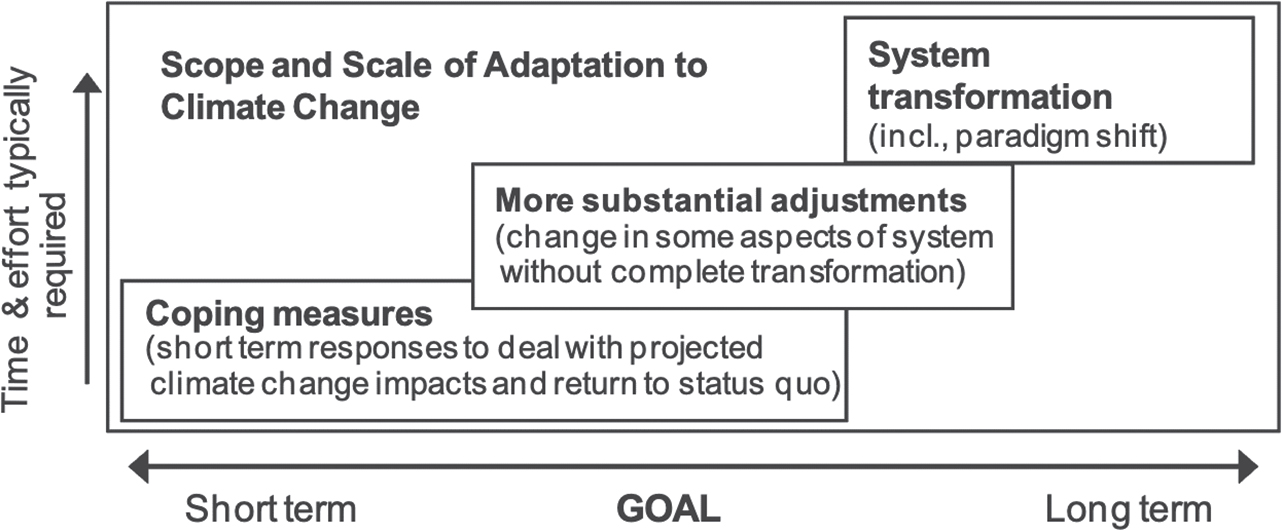
In responding to environmental change, Wilson emphasized the need to focus on system transformations, acknowledging that such paradigm shifts require evolutionary change, which is slower than investing in short-term
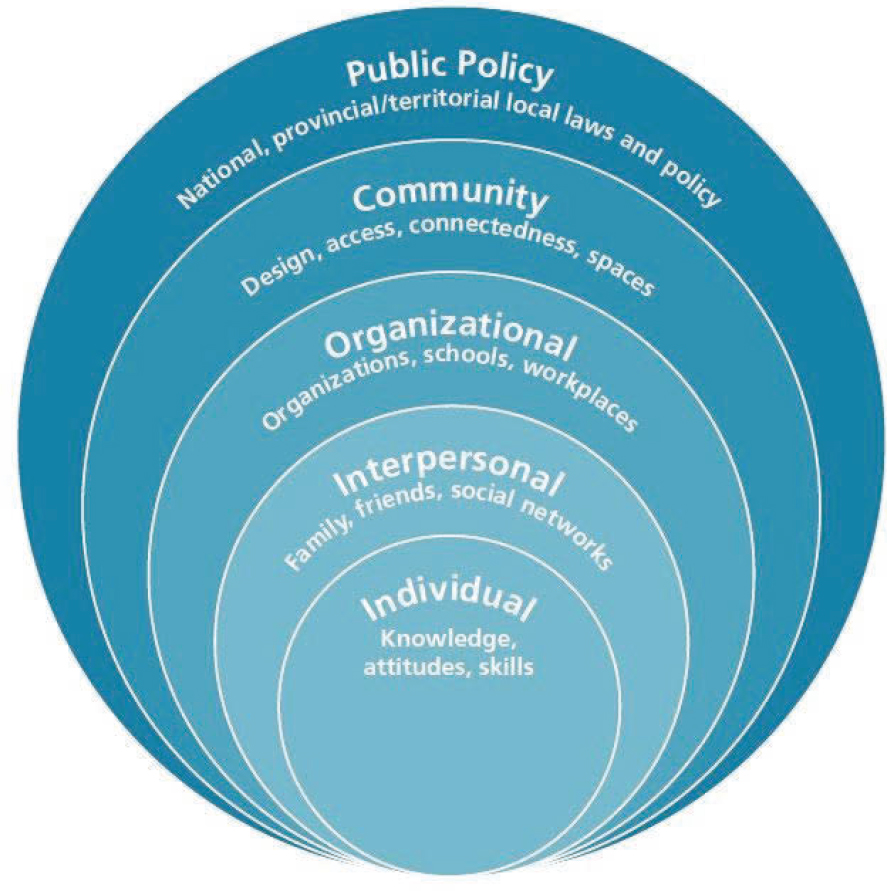
SOURCE: Wilson, R. (2023). Wrap-up Discussion-Scaling Societal Response (slide #3), presentation for the Workshop on Integrating the Human Sciences to Scale Societal Responses to Environmental Change. Adapted from Heise, L., Ellsberg, M., & Gottemoeller, M. (1999). Ending violence against women. Population Reports, 27(4). Johns Hopkins University School of Public Health, Center for Communications Programs.
coping measures and adjustments (Figure 10-2). She referred to those panelists who discussed best practices for integrating and building science-community partnerships and analytic approaches. Moreover, she simultaneously acknowledged the wealth of exemplary approaches to adaptation and response stemming from both the human sciences and communities. She also referenced the engagement of panelists in discussions about disseminating these valuable lessons with the aim of improving future resilience. Wilson noted, for example, how building climate resilience happens at the intersection of mitigation (i.e., actions designed to reduce emissions that cause climate change) and adaptation (i.e., actions that manage the risk of climate change impacts; Figure 10-3).
IMPLEMENTING COMMUNITY COLLABORATION FOR SUSTAINED CHANGE
Wilson pointed out that panel discussions revealed evidence of current resilience-promoting initiatives that, surprisingly, may have exceeded initial expectations. She highlighted several effective resilience-promoting strategies, including efforts to improve communication, especially in cases of threats and emergency management. She also underscored the efficacy of narratives in creating impactful change, empowering communities, fostering cooperation within and between practices, framing climate as a health issue, adopting longer-term perspectives, and addressing inequities and environmental justice. She recognized the potential benefits of improved partnerships in the contexts of developing enhanced and sustained theories and evidence, improving access to new and reliable open data sources, increasing relevant research, promoting scalable lessons, and avoiding maladaptive resiliency
SOURCE: Wilson, R. (2023). Wrap-up Discussion-Responding to Environmental Change (slide #5), presentation for the Workshop on Integrating the Human Sciences to Scale Societal Responses to Environmental Change. Originally from Moser, S. C., & Ekstrom, J. A. (2010). A framework to diagnose barriers to climate change adaptation. Proceedings of the National Academy of Sciences, 107(51), 22026–22031. https://doi.org/doi:10.1073/pnas.1007887107. Reprinted with permission from PNAS.
responses. She further noted that, despite widespread understanding of the advantages of integrating the human sciences to enhance responses to environmental change, challenges remain. Such challenges include achieving greater collaboration, shared learning, widespread implementation, and transformative change, as well as scaling up successful approaches across collectives—all of which were noted as critical areas for further exploration. Wilson emphasized the need, moving forward, to identify the most effective strategies and approaches for communities, foster enhanced collaboration, and promote shared learning to overcome barriers and drive meaningful action.
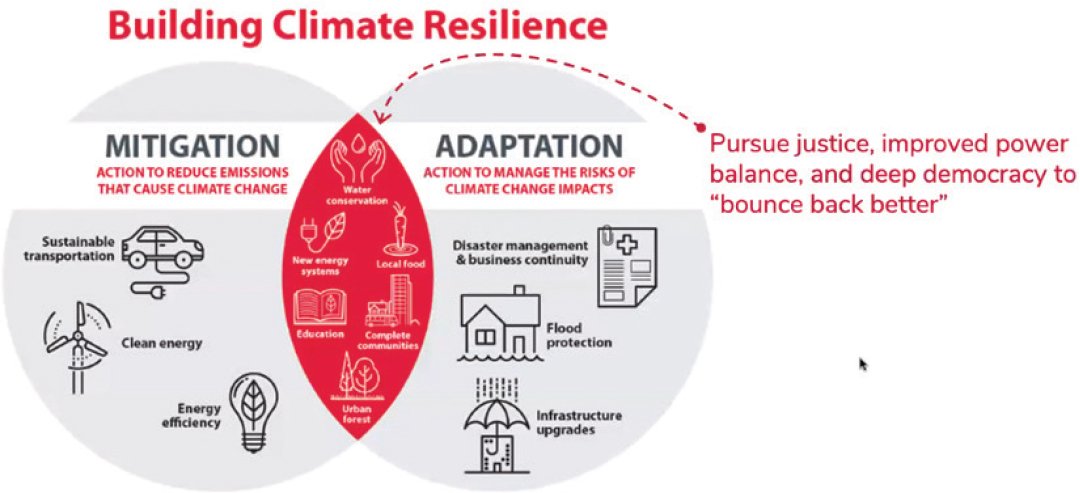
SOURCE: Wilson, R. (2023). Wrap-up Discussion-Responding to Environmental change (slide #4), presentation for the Workshop on Integrating the Human Sciences to Scale Societal Responses to Environmental Change. Originally from The City of Calgary. (2018). Climate resilience strategy: Mitigation & adaptation action plans. https://www.calgary.ca/content/dam/www/uep/esm/documents/esm-documents/climate-resilience-plan.pdf. Reprinted with permission.
BEST PRACTICES FOR INTEGRATING THE HUMAN SCIENCES
Wilson identified challenges hindering the integration of the human sciences and the replication of successful integrational approaches. Relating to overcoming these barriers, she noted how panelists not only engaged in discussions on practical and achievable next steps but also highlighted the importance of implementing actionable team science. In addition, Wilson noted direct knowledge translation as an essential strategy and emphasized the importance of accompaniment and co-creation, using evidence from participants, researchers, communities, and stakeholders. She also talked about the significance of embracing multiple types of knowledge and expertise, recognizing the importance of “knowing one’s place” in the collaborative process.
Additionally, Wilson called for the need to conduct dynamic and cumulative initiatives designed to identify practical solutions within and across disciplinary contexts. She reiterated that open science and data sharing are crucial for advancing knowledge and for increasing the accessibility and usability of research and information, maximizing their impact. Wilson stressed the need to first, focus on critical, current questions such as empowerment; second, develop methods to scale up successful strategies; and third, address specific, pressing challenges by creating a “library” of solutions aimed at fostering collaboration and overcoming barriers to integration and replication.
SUSTAINING EFFECTIVE CHANGE
To address long-term challenges faced by environmental change-response efforts, Wilson emphasized the importance of implementing various strategies drawn from the human sciences. She highlighted the relevance of shifting the culture in terms of establishing appropriate incentives within academia and traditional Western science; she voiced her belief in fostering a cultural environment that values community engagement, actionable team science, and transformative research. Additionally, she mentioned that efforts should be made to increase representation within the research community, to ensure the inclusion of diverse perspectives and voices. Efforts would benefit from an understanding of how factors interact across scales and between disciplinary perspectives; limitations of early-career-stage faculty; and diversity or “the effects of the interventions and the disciplines that are being represented in the methods being used in the interpretation of those results, and the experiences that people bring to understanding these trends.”
Wilson also highlighted the need to reimagine workforce education and incorporate diversity, equity, inclusion, and justice training into institutional policy. In terms of funding, she noted that the establishment of centers and institutes will necessitate increased support for long-term, community-engaged, interdisciplinary scientific endeavors. In this context, she underscored that funding systems should be adjusted to acknowledge and accommodate community engagement. She noted that co-shaping policy mechanisms is crucial for empowering individuals and communities to enact transformation while avoiding maladaptive responses. Wilson concluded by saying that fostering meaningful connections among the human sciences and communities and implementing multifaceted approaches are crucial to driving positive change and addressing complex challenges around environmental change response.
PARTICIPANT REMARKS
Following Wilson’s comments, the floor was opened for participants to discuss additional comments and themes heard during the workshop. These included the following:
- Restructuring Grading and Tenure of Faculty: A participant asked Wilson to expand on the importance of restructuring the grading and evaluation of faculty members. As background, Wilson highlighted aspects of the land grant extension system that encourages flexibility and the freedom to conduct not only education and research but also outreach and the translation of science for communities. She mentioned that the current land grant system is problematic in the way its design is rooted in agricultural and rural areas, and she noted the need to broaden the model to make it more inclusive.
- Importance of Being Present: Planning Committee Member Alaí Reyes-Santos, Professor of Practice at the School of Law and Associate Director of the Pacific Northwest Just Futures Institute for Racial and Climate Justice at the University of Oregon, emphasized the importance of researchers and community members alike being present in relevant spaces and collaborating with relevant partners such as law clerks and other stakeholders.
- Brain Drain and Youth Engagement: An attendee highlighted the challenge presented by what is referred to as “brain drain,” in which young individuals leave their home communities, especially when career and educational opportunities are sparse. This can drain communities of human capital and other social resources. The attendee then asked about how best to mobilize hope and, by doing so, recruit youth back home—which may be difficult due to the pessimism some young people feel. On this topic, Wilson and Shahzeen Attari, an Associate Professor in the O’Neill School of Public and Environmental Affairs at Indiana University Bloomington, discussed concerns about the state budget in Indiana and the lack of funding for emerging issues, emphasizing with their remarks the need to encourage youth-related progress by taking steps to “future-proof” resources and reduce regional challenges such as siloed, immutable environments.
- Utilizing Professional Organizations: Stephen H. Linder, Planning Committee Member and Professor in the Department of Management, Policy and Community Health in the School of Public Health at the University of Texas Health Science Center at Houston; Director of the Institute for Health Policy; and Co-Director, Community Engagement, Gulf Coast Center for Precision Environmental Research, suggested that academics often underutilize nontraditional professional organizations that might offer more integrative approaches. He then underscored the importance of not relying solely on universities and human scientists to drive change and provide multidisciplinary leadership. He drew on the example of the American Academy of Pediatrics, which is “a consensus-based organization that creates new norms and new guidance about practice . . . they may introduce new concepts in a series of policy statements that then become part of the socialization for new pediatricians.”
- Institutional Commitment and Academic Leadership: Linder also stressed the significance of institutional commitment and the role that academic institutions must play in leading efforts toward the integration and transformation of human sciences to stimulate resilience in the face of environmental challenges.
- Paid Research vs. Volunteer Engagement: Raj Pandya, Vice President of Community Science at American Geophysical Union, shared his insights on the dichotomy between unpaid and funded research, and the tendency to focus on traditional academic work instead of engagement, advocacy, and voluntary contributions due to limited time and resources, especially in early-career stages. Wilson suggested that tenured individuals seem to have more flexibility in this regard—and that advocacy and outreach often become personal endeavors done on one’s own time. Pandya explained that it is increasingly important for tribal and historically Black colleges and universities to elevate, engage, and celebrate the work of these institutions. Despite all these challenges, Pandya encouraged people to continue engaging in outreach activities because doing so will bring joy to all parties.
These additional comments concluded the workshop by highlighting further considerations for promoting collaboration, addressing academic challenges, and fostering engagement and advocacy within the human sciences to inform efforts for enhanced human responses to environmental change.
This page intentionally left blank.


