Structural Racism and Inequity in the U.S. Aviation Industry: Foundations and Implications (2024)
Chapter: 1 Introduction

1. INTRODUCTION
The built environment encompasses a kaleidoscope of transportation systems and physical structures that people navigate to access resources, reach destinations, and perform the tasks that sustain and enrich their lives. However, the function, quality, and overall accessibility of these transportation systems can vary greatly across geographies and demographics. Further, the institutions and planning processes that shape these transportation systems have both generated and compounded social inequities. In recent years, the topics of social and racial equity have become prominent in public discourse and have been elevated as a priority within the transportation industry, particularly after the global civic response to the murder of George Floyd, an unarmed Black man, by a group of Minneapolis, Minnesota police officers in 2020. To transform social equity from a stated priority into meaningful corrective or reparative actions, transportation practitioners must first develop an appreciation and understanding of the ways that existing systems, development practices, and planning processes perpetuate harm to oppressed people and communities.
1.1 Purpose and Limitations
As a transportation mode with characteristics and purposes distinct from many surface transportation systems, the aviation industry requires its own intentional exploration of inequity. This publication (referred to as the Grounded in History publication) provides broader historical context related to systemic racism and inequity in the transportation sector, while maintaining a specific focus on the U.S. aviation industry and airport development. This publication equips readers to: recount the historical context of racism and inequity in the U.S. aviation industry and airport development, understand the lenses through which to view ongoing inequities and lived experiences, and describe the connection between the past and present-day legacies. This publication also complements the guidance, tools, and case studies available in the associated ACRP 02-99 Toolkit, titled “Incorporating Environmental Justice and Equity Principles and Data into Airport Decision-Making” (referred to as the Equity Toolkit publication). With foundational learning objectives completed in the Grounded in History publication, readers will be better prepared to implement the Equity Toolkit publication and incorporate environmental justice, equity principles, and data into their airport’s decision-making processes.
1.2 Structural Origins of Inequity
This Grounded in History publication provides evidence that the structural origins of inequity, as experienced in the United States, can be traced back to four broad conceptual themes: group-based othering (Chapter 2), settler colonialism (Chapter 3), economic systems of racial capitalism (Chapter 4), and systemic oppression (Chapter 5). The chapters describe key concepts and provide specific examples of how the legacies of these histories manifest in the aviation industry today. Where Chapters 2 through 5 provide historical context, Chapter 6 begins to explore the aspirational goal of inclusive, equitable, and just transportation planning and decision-making processes. Chapter 6 offers an overview of the geographic patterns of inequity, the social movements that influenced transportation planning, and the nuanced approaches to pursuing transportation equity. The diagram in Figure 1 orients the reader with the concepts that are of primary significance in the structural origins of inequity. Figure 2 mirrors the concepts shown in Figure 1 and offers some examples of how the legacies of inequity manifest within the aviation industry, which are further described throughout the chapters.
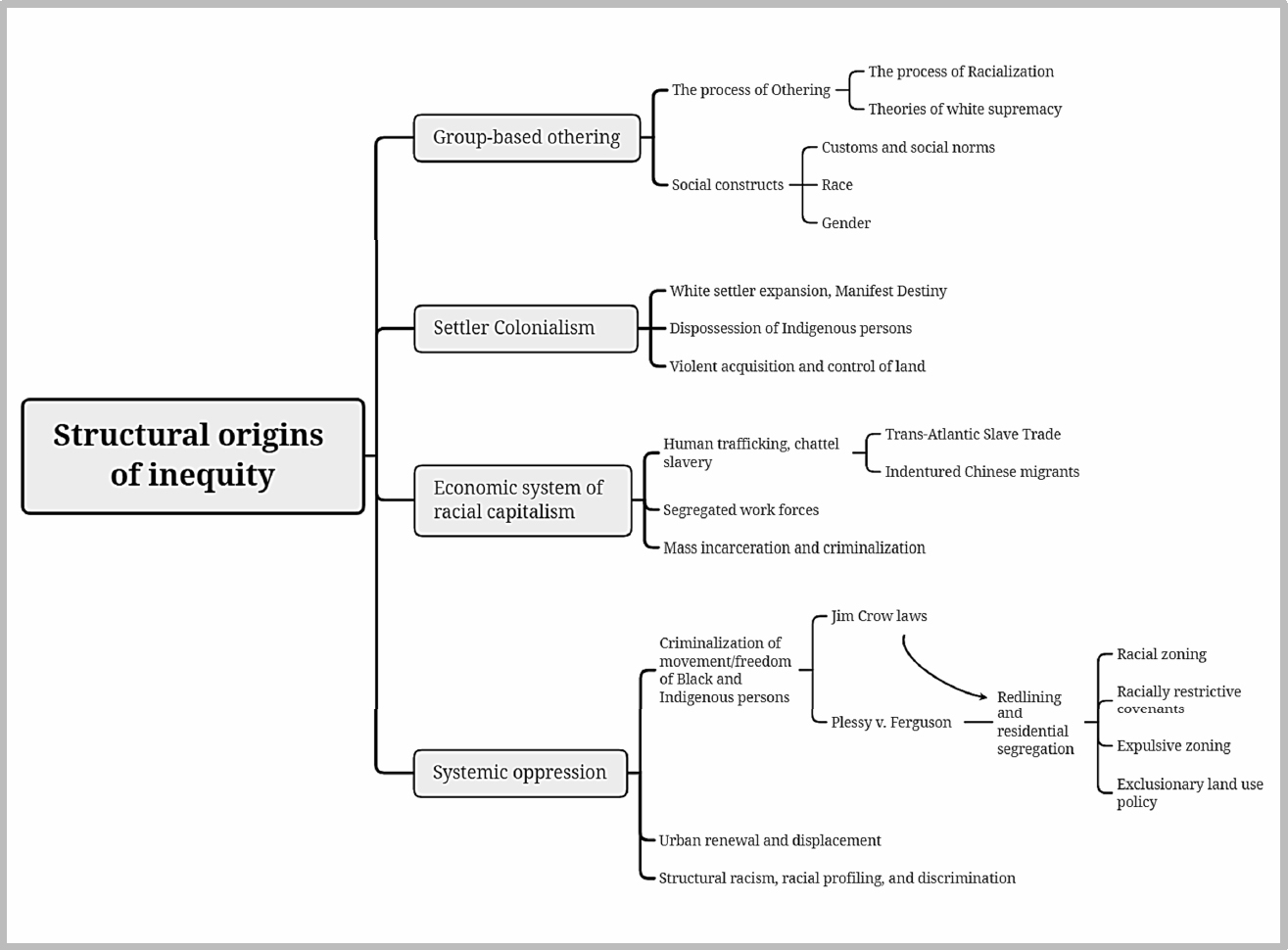
Source: The Ohio State University
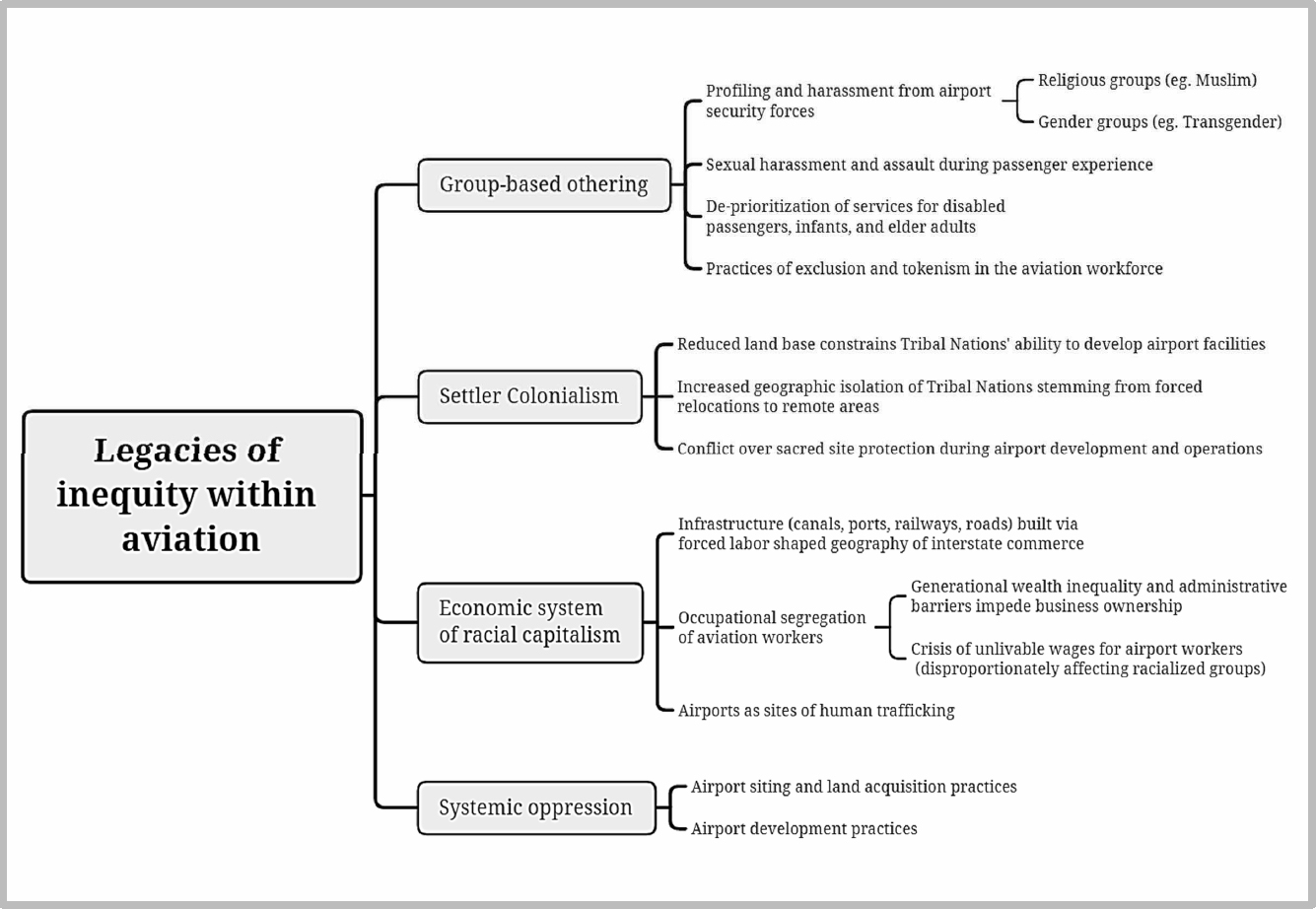
Source: The Ohio State University
1.3 Learning Goals
This publication intends to improve a reader’s knowledge of systemic racism within the United States and deepen their understanding of the linkages between historical instances of harm and specific outcomes that persist within the aviation industry today (with a focus on airports where applicable). The following learning objectives for each chapter guide airport practitioners to reflect on the range of systemic inequities and consider ways to intervene on current practices within their industry, their organization, or their specific role.
 |
Chapter 2: “Group-Based Othering”
|
 |
Chapter 3: “Settler Colonialism
|
 |
Chapter 4: “Economic System of Racial Capitalism”
|
 |
Chapter 5: “Systemic Oppression”
|
 |
Chapter 6: “Foundations of Transportation Equity”
|


