Exploring Airport Employee Commuting and Transportation Needs (2024)
Chapter: 4 Survey Results

CHAPTER 4
Survey Results
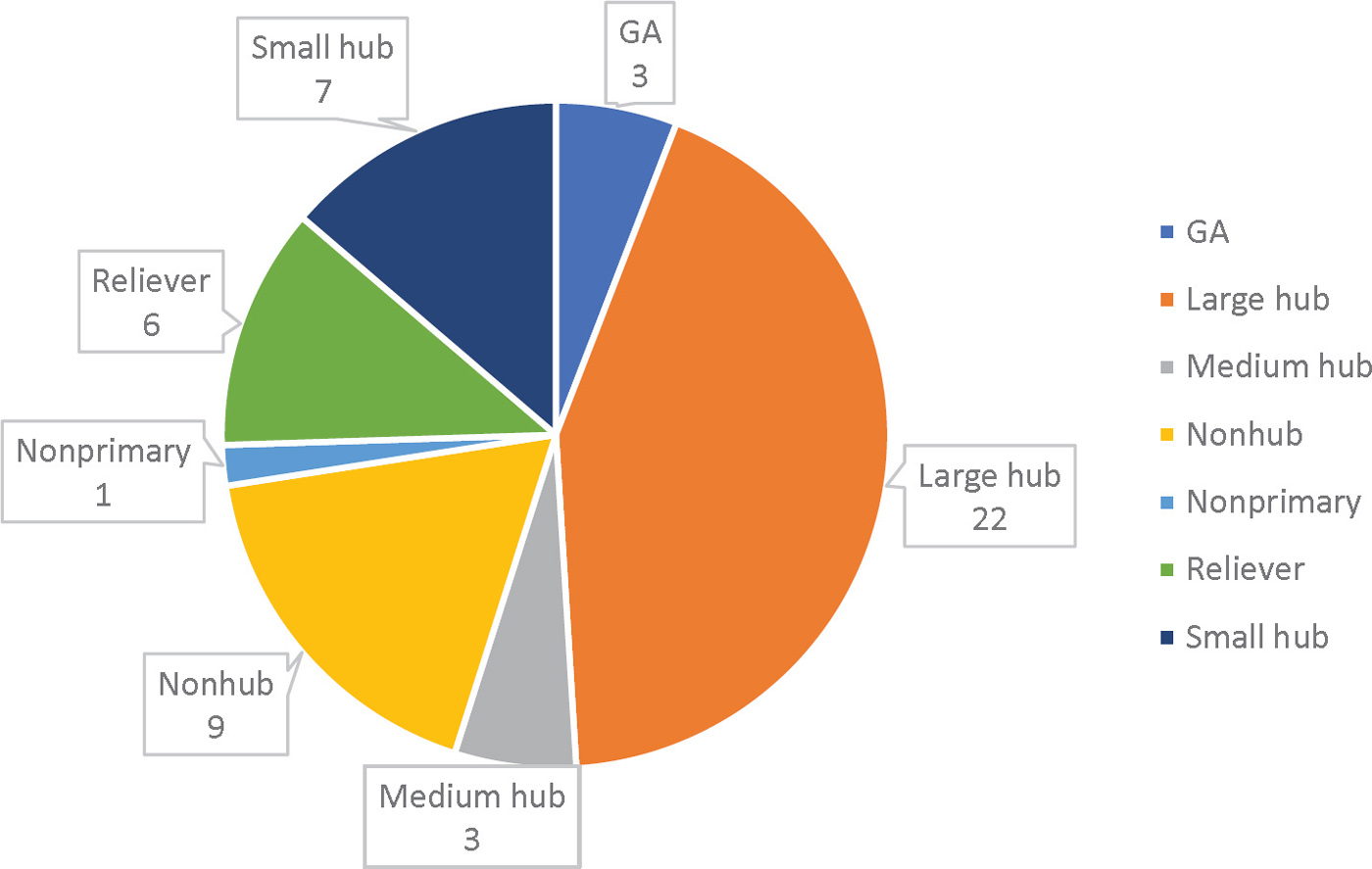
To better understand how employees at airports commute to and from work, the reasons for their mode choice, and the benefits offered by their employer, a nationwide survey of airport employees was conducted. The survey was widely disseminated, and 51 responses were received. The responses represent all categories of airports, as well as 20 U.S. states. Aggregated, the responses provide insight into how employees of airports across the country view the commuting experience. It should be noted that responses were not required for each question; thus, some questions have fewer than 51 responses.
As presented in Figure 5, many of the survey participants (22) are employees of large hub airports. The next largest segment of employees represent nonhub airports (nine participants). In essence, the 51 survey participants represent all airport sizes.
The following U.S. states are represented in the survey:
- Arizona
- California
- Colorado
- Florida
- Illinois
- Indiana
- Iowa
- Kentucky
- Maryland
- Minnesota
- Nebraska
- Nevada
- New York
- Pennsylvania
- Tennessee
- Texas
- Utah
- Virginia
- Washington
- Wyoming
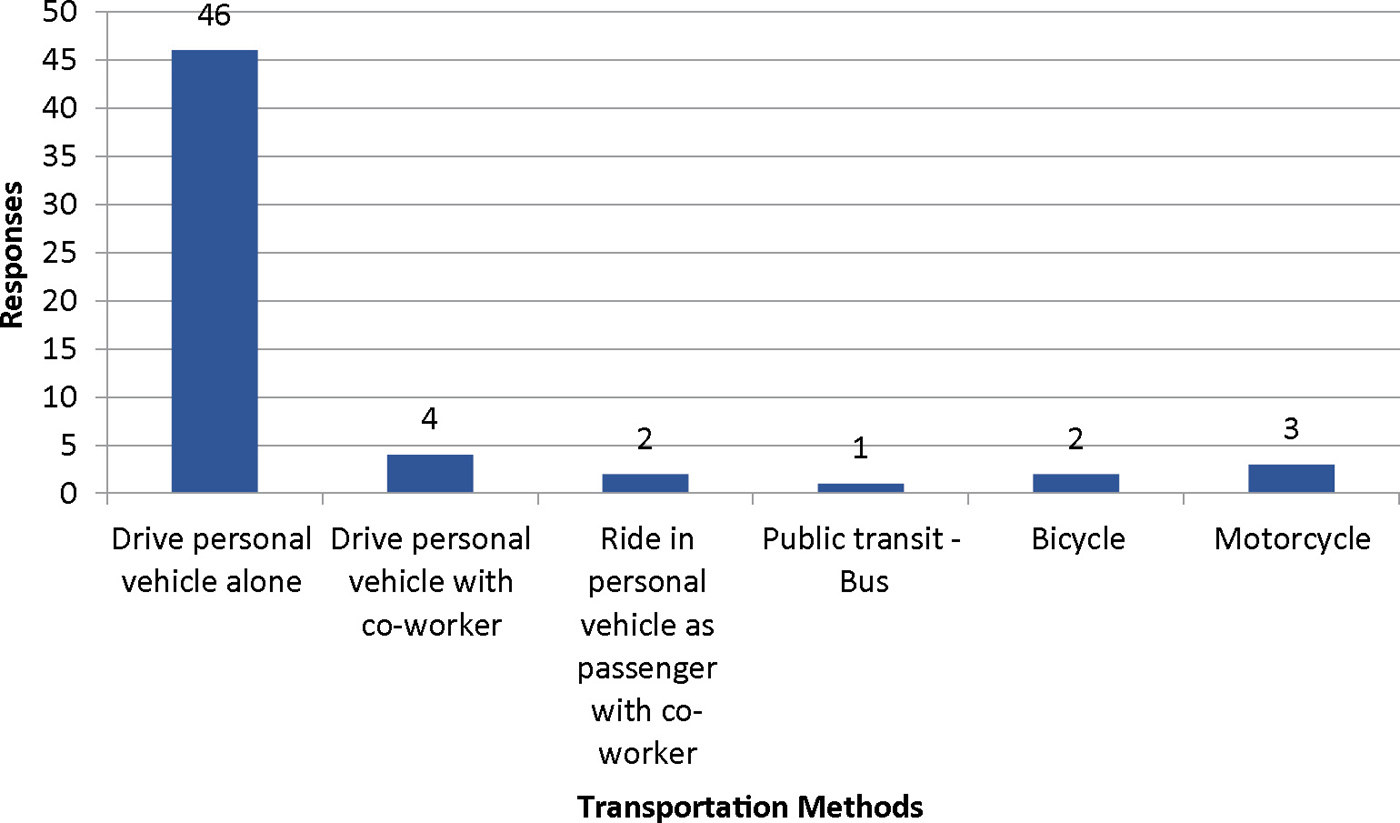
As presented in Figure 6, where participants were asked to select all the transportation methods they use to get to work, employees mostly commute to work driving alone in a personal vehicle (46 responses out of 58). This finding matches common themes in the literature. Although a percentage of employees also use alternate modes, a small percentage using these other modes may not produce significant benefits for the airport, community, or environment.
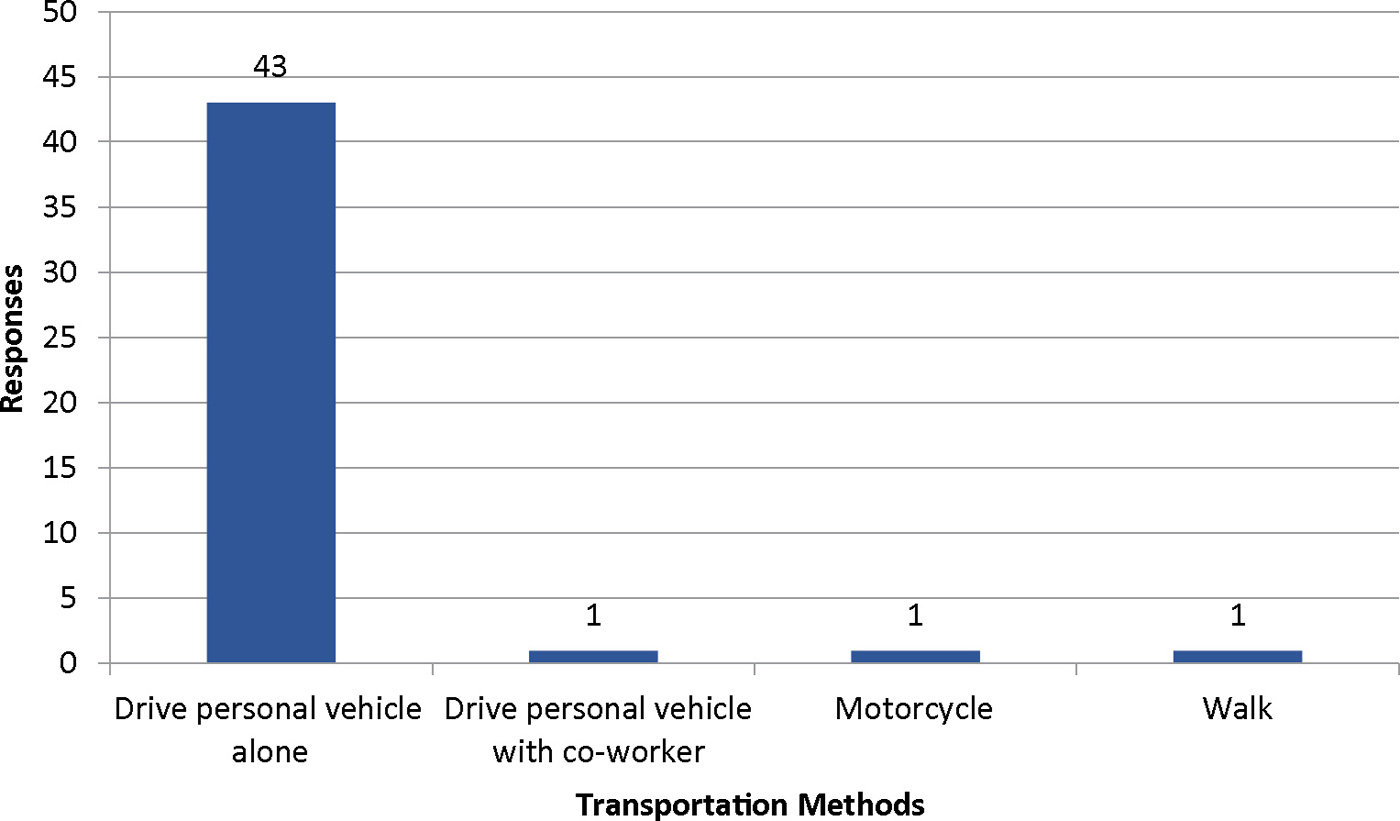
Participating employees were also asked about the primary commuting mode used at least 51% of the time (Figure 7). Commuting via SOV was the most popular (43 responses out of 46), and some participants carpool, drive a motorcycle, or walk at least 1% of the time.
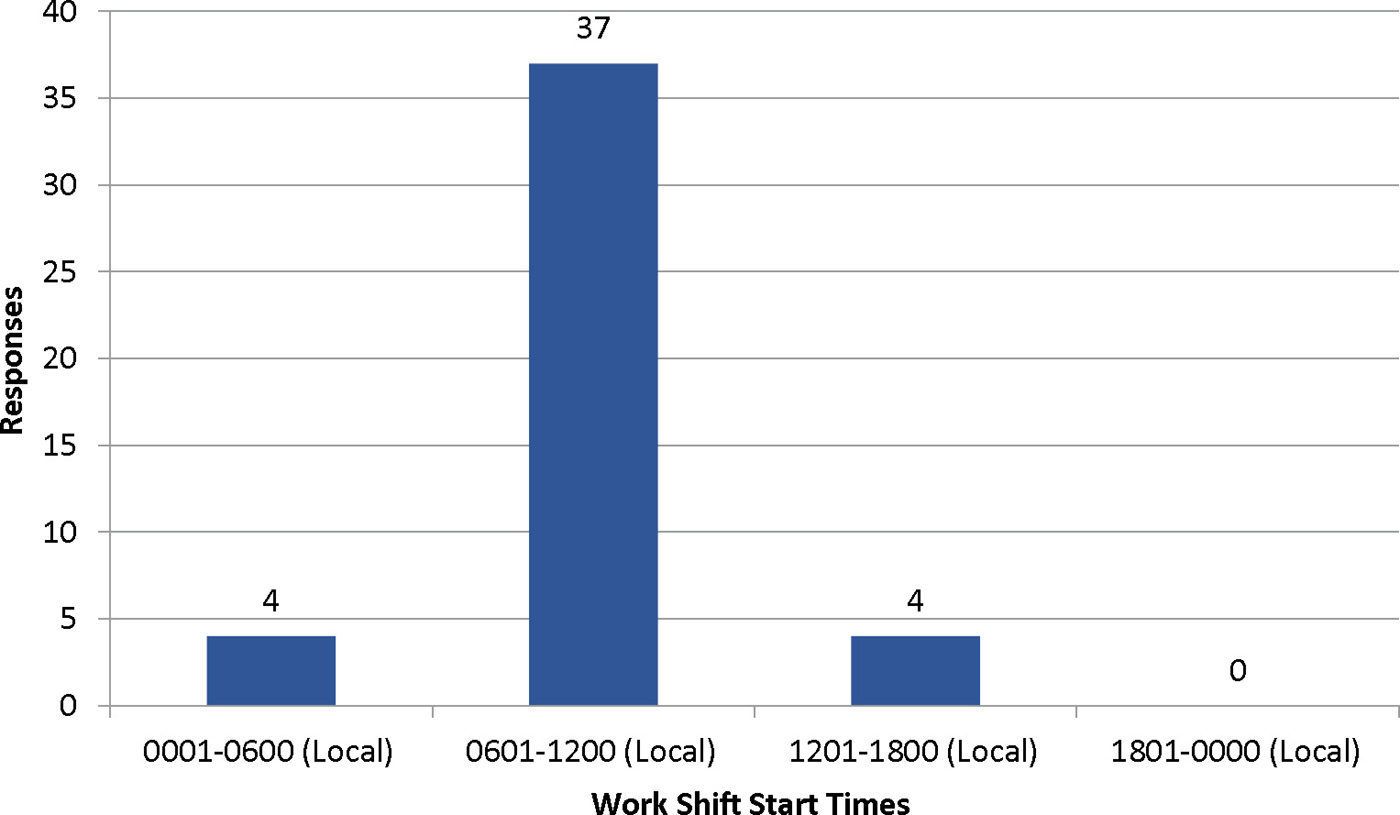
To more fully understand how work shifts may not coincide with public transit operating hours, participants were asked, “What time do you normally begin each workday?” As presented in Figure 8, although four responses out of 45 identify they begin work between the hours of 1:00 a.m. and 6:00 a.m., the majority (37 responses) begin work between the hours of 6:01 a.m. and 12:00 p.m., likely during operating times of public transit.
Participants were also asked about the duration of time they spent commuting each day (Figure 9). Almost half (20 responses out of 45) spent 16–30 minutes commuting one-way each day. The next most common spent either less than 15 minutes (nine responses) or 31–45 minutes (nine responses). The majority of responses spent 30 minutes or less commuting one-way each day.
To better understand the distance participants commuted each day, they were asked, “Approximately how many miles is your residence located away from the airport?” The majority
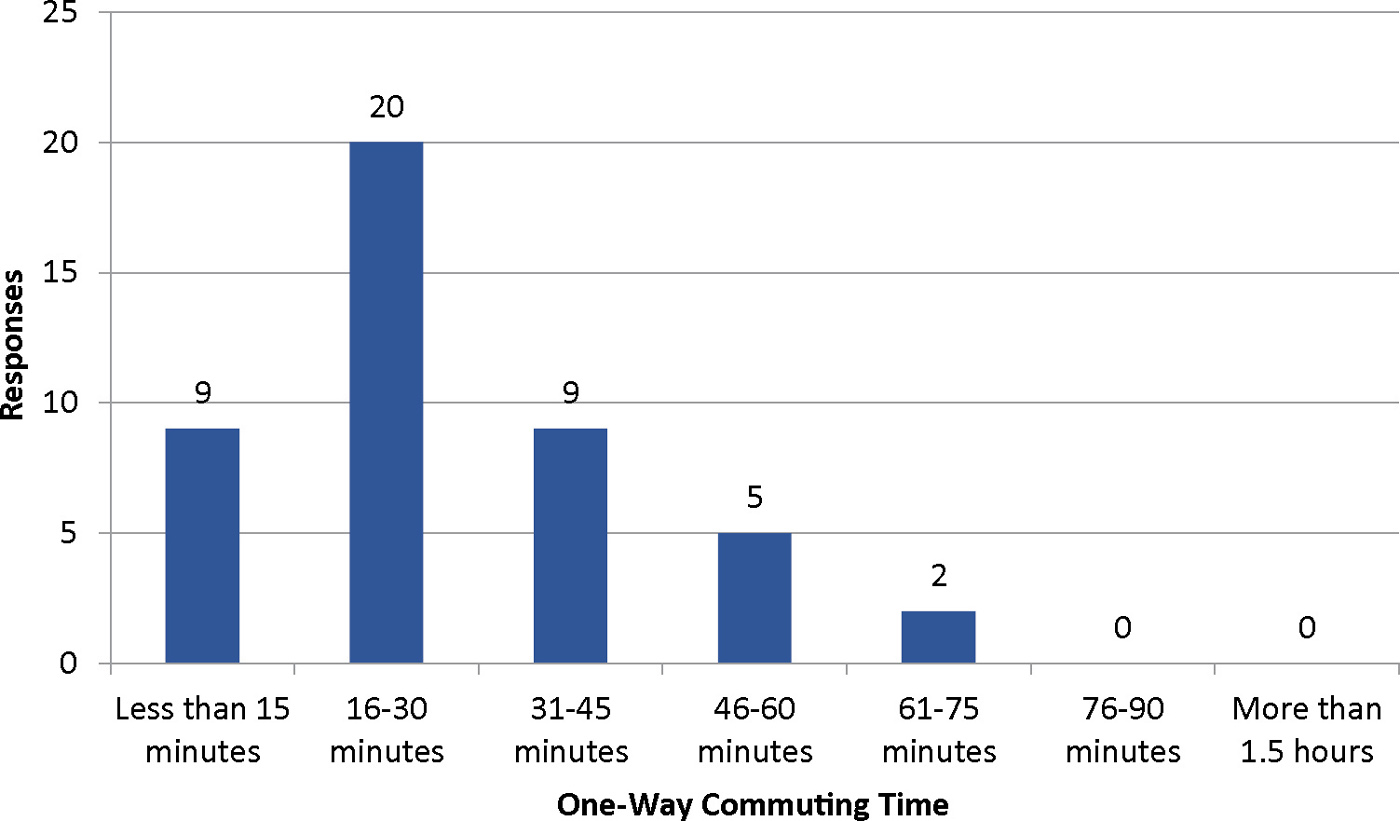
(39 responses out of 45) live 20 miles or less from the airport (Figure 10). This finding is consistent with 38 responses spending 45 minutes or less in their one-way commute (Figure 9).
To gain insight into employee commuting behavior, including the thought process associated with mode choices, participants were asked how they choose their method of commuting. Themes of the open-ended responses include:
- Convenience,
- Public transit not accessible,
- Lack of safe bicycle routes,
- Start time of shift,

- Time to travel to work, and
- Weather/temperatures.
As one participant shared:
Convenience, cost, and safety are my top three reasons for commuting with a personal vehicle. The convenience of owning a commuter vehicle easily allows me to leave directly from home to the office based on the traffic of the day. My [car] has decent prices on gas mileage and maintenance. While public transportation may have cost benefits, nothing compares to safety during the commute. The airport is surrounded by … areas that are known to attract … gang activities. I would never consider using local transportation since the bus stops are known to attract this activity as well. Having a car I can use for personal use allows me to enter and exit the airport property safely while minimizing local interaction.
Participants were also asked if they had tried another method of commuting that didn’t work for them. Although the majority of participants answered “No,” themes from the analysis of open-ended comments include:
- Carpooling (due to work schedule conflicts and coworker reliability),
- Public transit (due to poor schedule times/frequency), and
- Bicycle (due to weather/traffic challenges and unscheduled meetings).
One participant shared, “No, but I do have a light-rail station located 1/4 mile away from my house and considered using this at one point in my career. The problem is I would have to transfer trains to get to the airport then take a shuttle to my office location. This would triple my commute time.”
Another participant shared, “No. There are no other options. A car is required for this position for this reason. I also have to travel to the airport terminal throughout the day, so I need a car for that as well. There is no public transportation between my office building and the airport.”
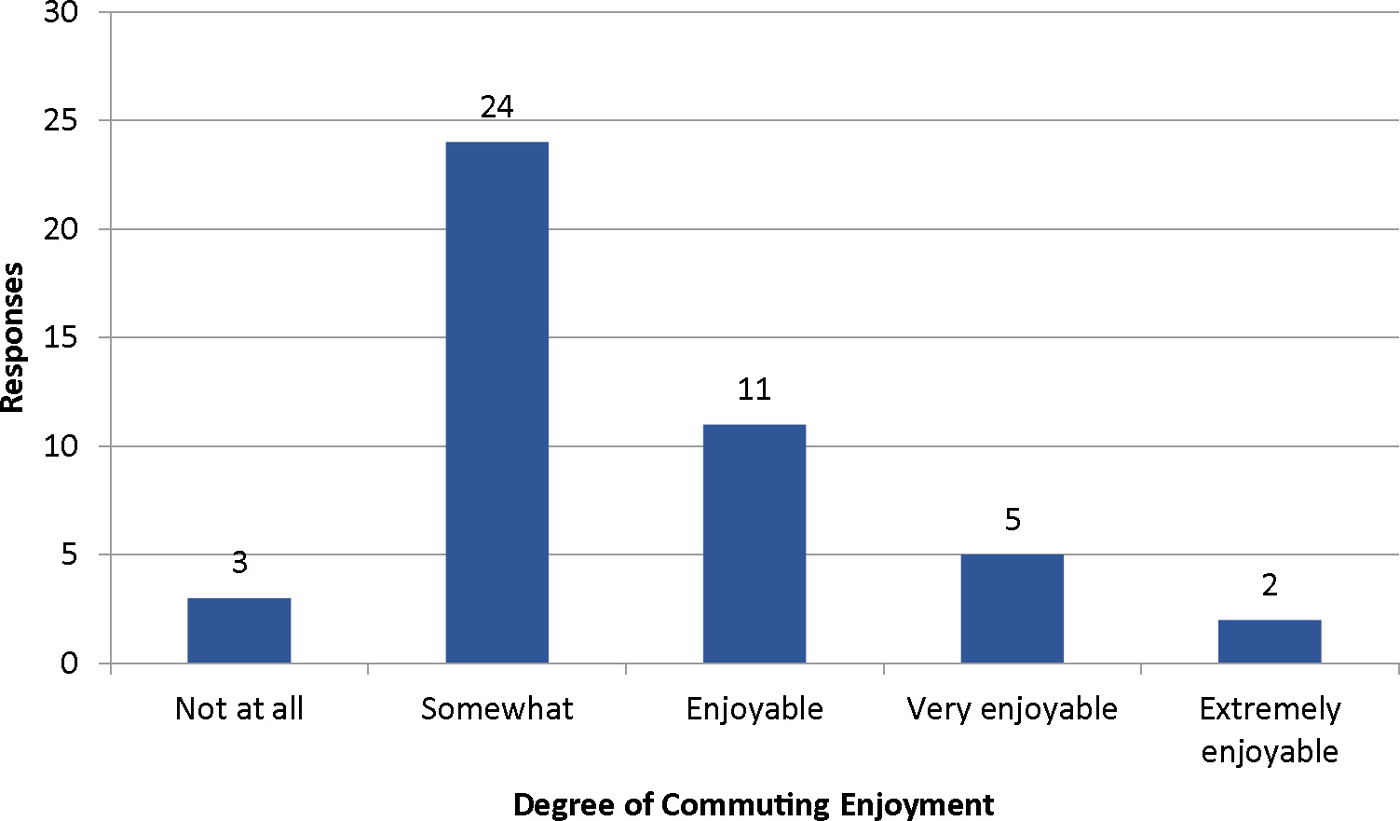
To understand the degree that the commute is enjoyable (or not), participants were asked, “To what degree do you enjoy commuting to/from work each day?” As presented in Figure 11, the majority (24 responses out of 45) expressed their commute is somewhat enjoyable. A total of 18 respondents find their commute either enjoyable, very enjoyable, or extremely enjoyable.
The literature indicated the health consequences of the commute, generally equating better health benefits with active commuting strategies, such as bicycling, and poor health benefits
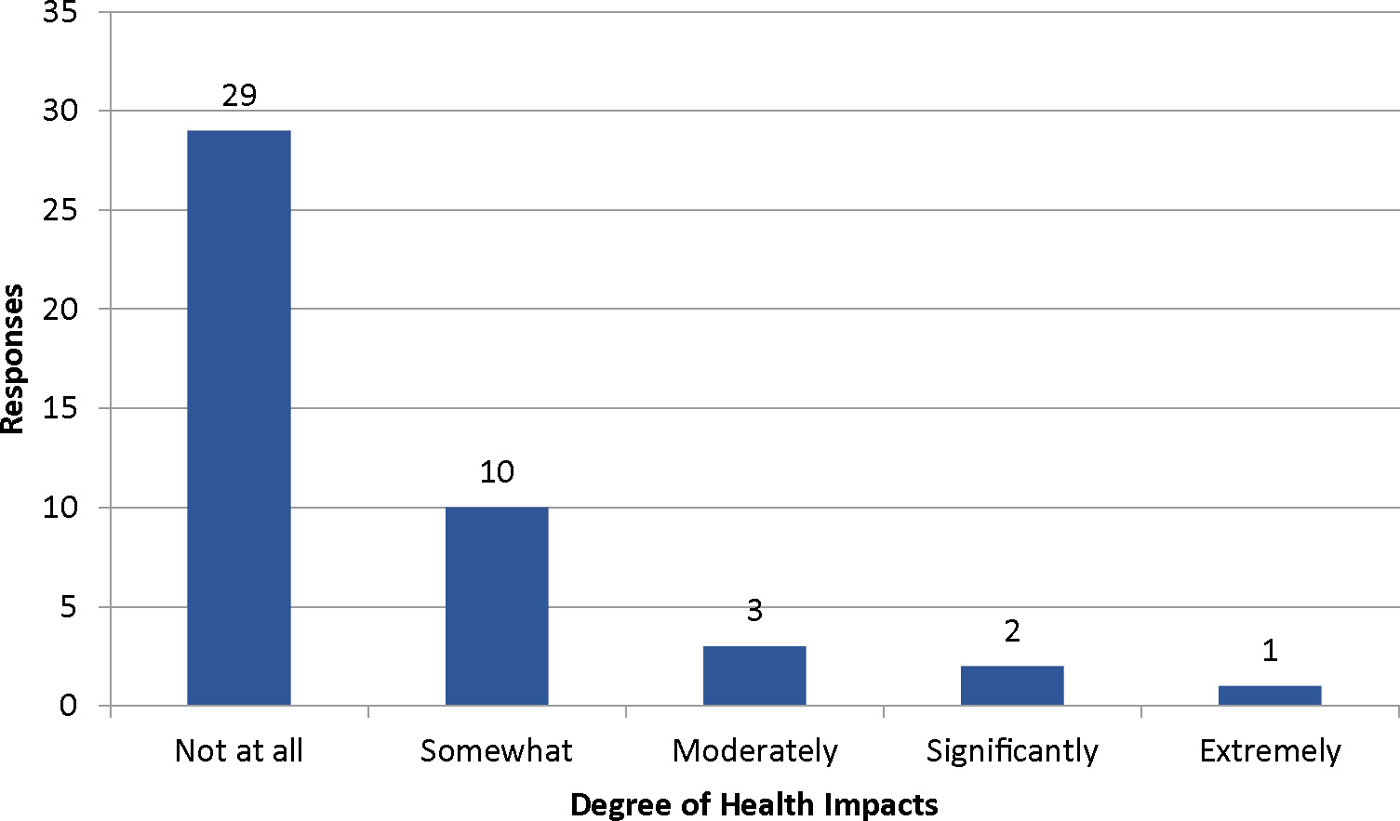
resulting from less active commuting modes, including via single occupant vehicle. To further explore this, participants were asked, “To what degree has your health been impacted by your daily commute?” As presented in Figure 12, the majority (29 responses out of 45) of participants indicate the commute has had no impact on their health. Ten responses indicate the commute has somewhat impacted their health.
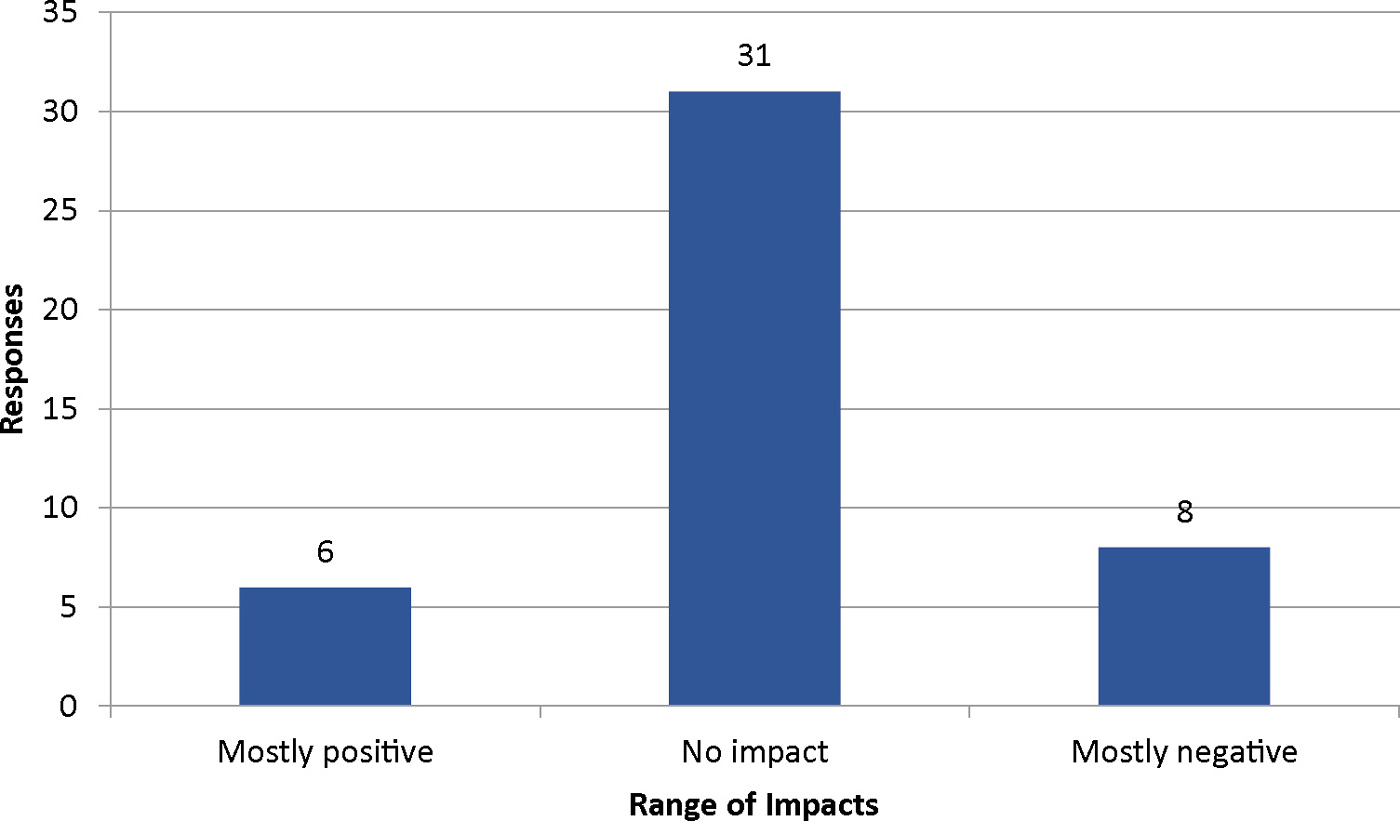
Participants were subsequently asked if the impact on their health had been mostly positive or negative. Although 31 responses out of 45 have seen no impact, eight responses have seen a mostly negative impact, while six responses have seen a mostly positive impact on their health (Figure 13).
To better understand the nature of work-life balance related to the daily commute, participants were asked, “To what degree has your work/life balance been impacted by your daily commute?”
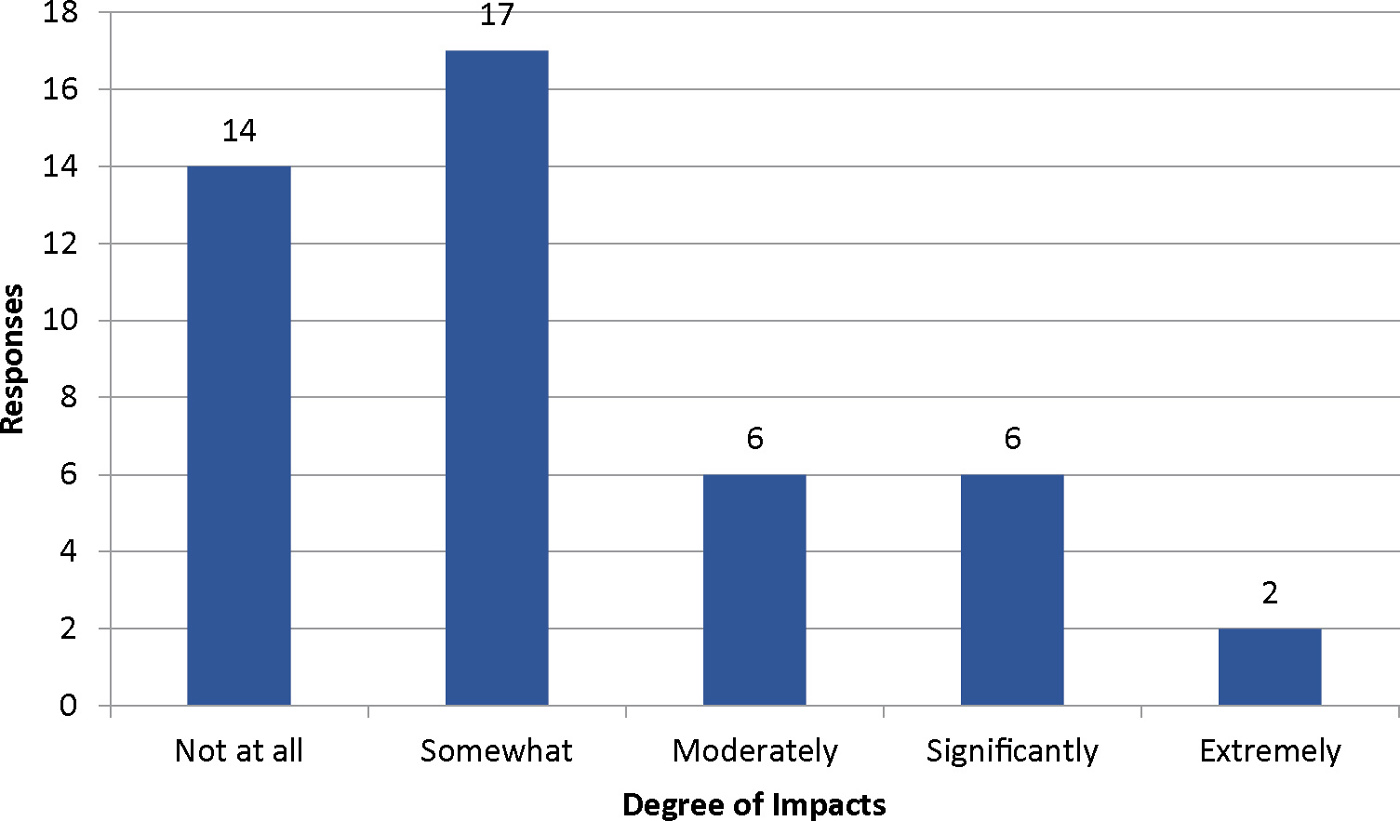
Generally, it appears that the impact has been minimal, as 14 responses out of 45 state, “Not at all” and 17 responses state, “Somewhat.” Eight responses stated that the commute significantly or extremely impacted their work-life balance (Figure 14).
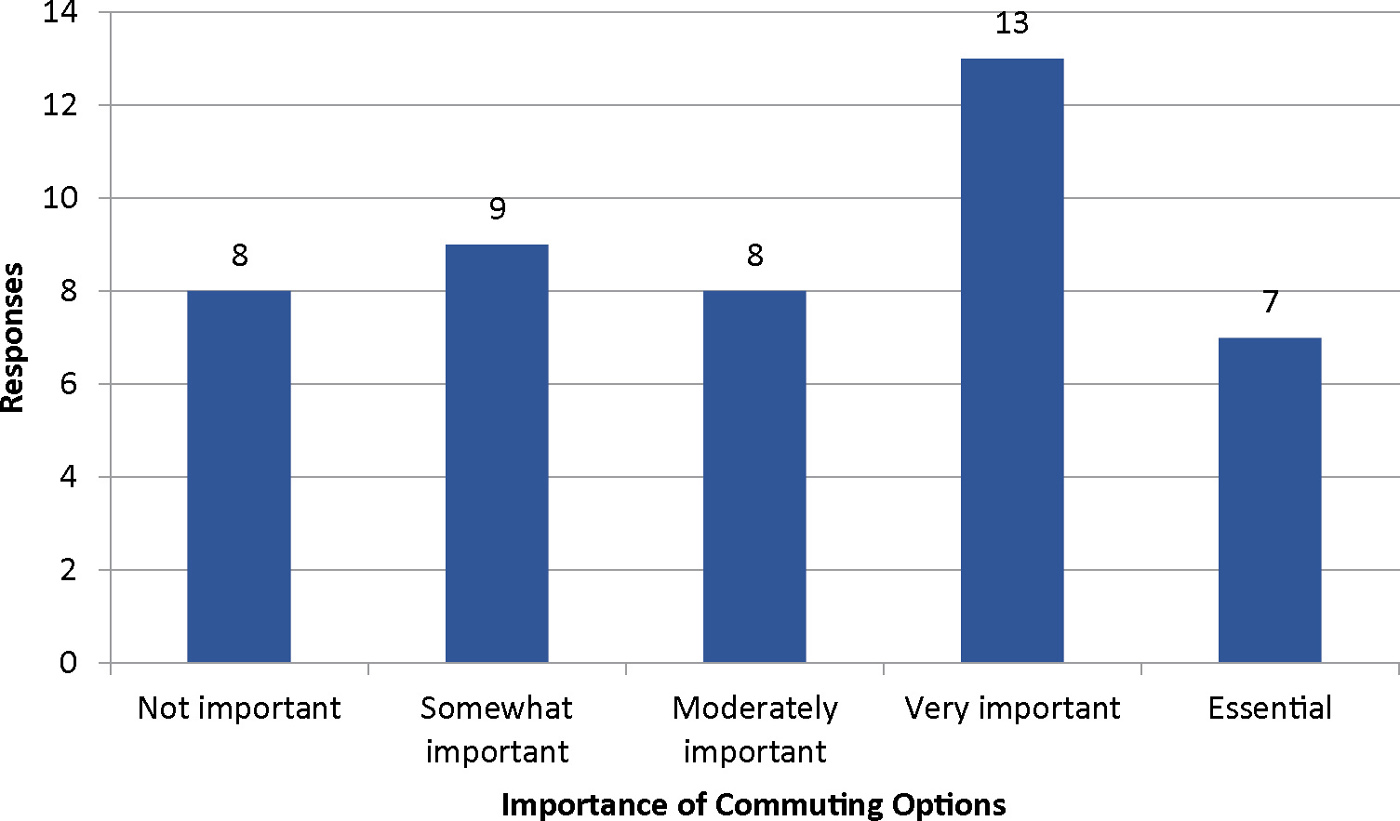
To understand the degree to which commuting challenges impact employment at airports, participants were asked, “When considering an airport to work for, how important are commuting options to you?” Almost half (20 responses out of 45) indicate that commuting options are very important or essential. Seventeen responses indicate that commuting options are somewhat important or moderately important, and eight responses indicate that commuting options are not important (Figure 15).
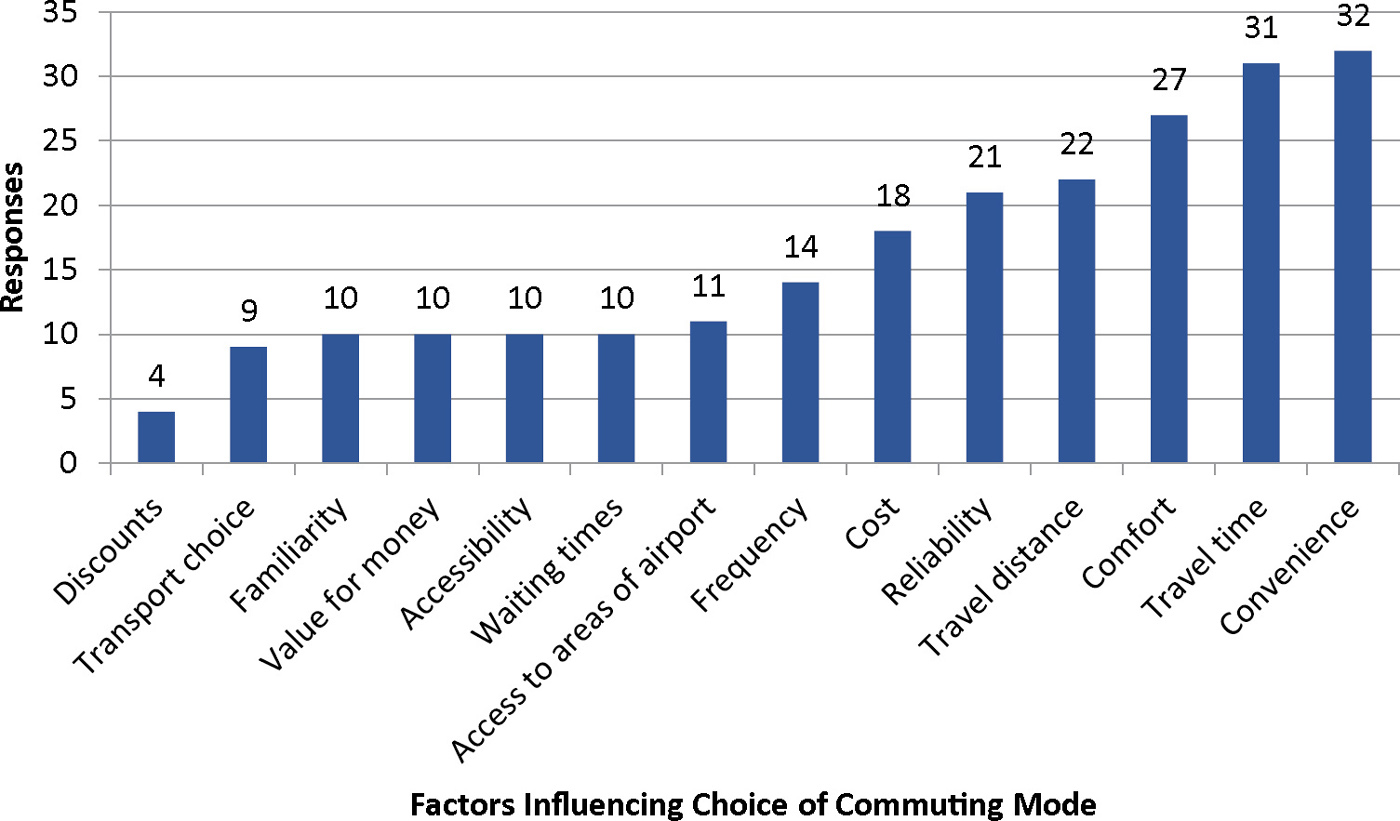
Participants were asked which factors are the most important in choosing a commuting mode to and from work. Participants could select as many options as they desired for this question. There were 45 participants who responded. As presented in Figure 16, the top five factors are:
- Convenience (32 responses),
- Travel time (31 responses),
- Comfort (27 responses),
- Travel distance (22 responses), and
- Reliability (21 responses).
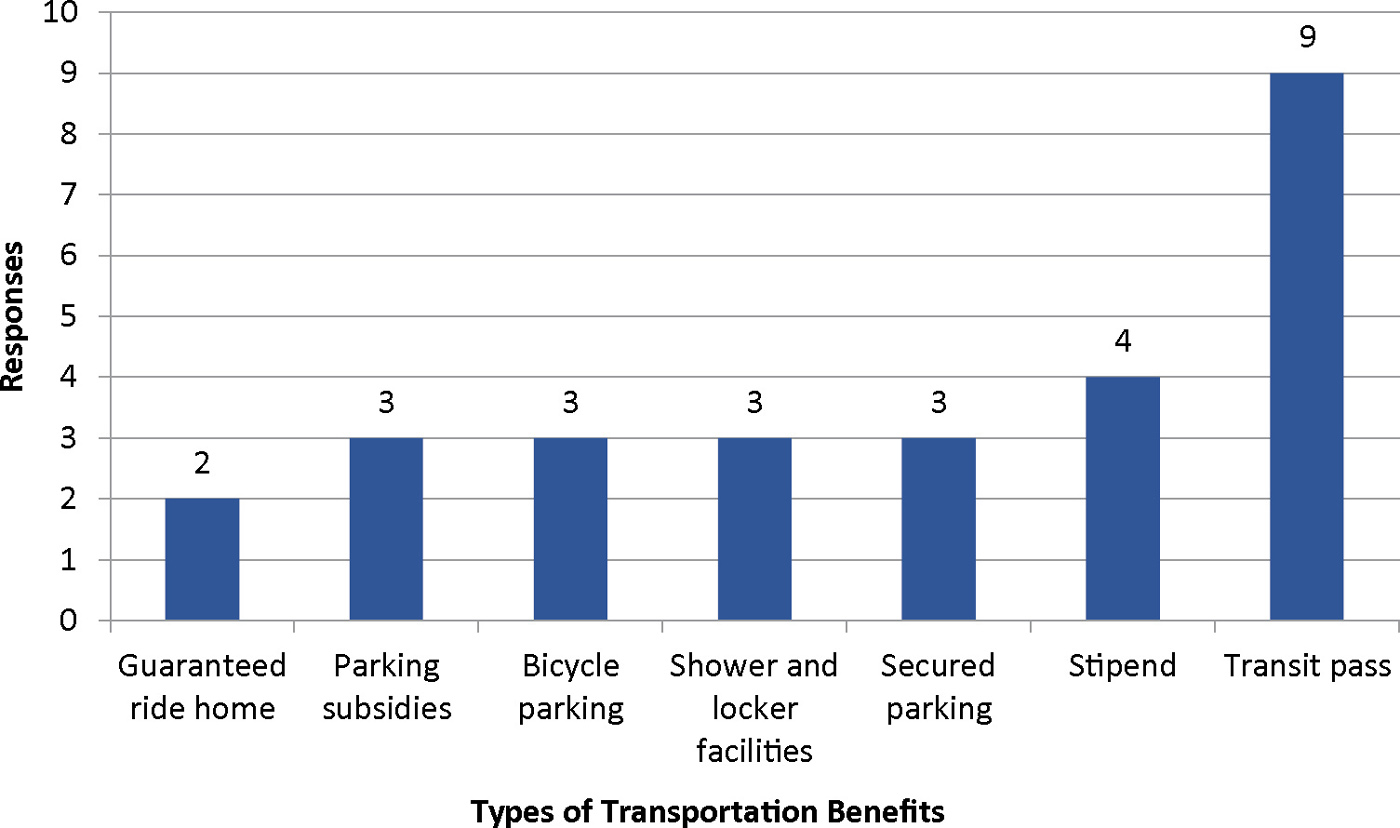
To understand the types of transportation benefits airport employees have access to, participants were asked, “What type of transportation benefits does your employer provide?” Transit pass was the most common benefit, indicated by nine out of27 responses. Stipends, secured parking, shower and locker facilities, bicycle parking, parking subsidies, and a guaranteed ride home were also provided by some employers (Figure 17).
Participants were asked what their airport could do to better meet their commuting needs. Suggestions included:
- Additional parking,
- Add more EV chargers,
- Affordable housing closer in proximity to the airport,
- Airport station on the public rail,
- Better maintained streets and additional bike lanes,
- Covered motorcycle parking,
- Encourage carpooling,
- Provide a company vehicle,
- Provide flexible work hours, including telecommuting, and
- Reimburse the time required to drive to and from work.
As one participant shared, “I would not mind public transport or biking to work, however, the streets are not safe for bicycling and there is no public transport that stops near my office. There is
also no transportation that goes from the terminals/airport to the administrative office which is on the other side of the airfield.”
Participants were also asked if their commute directly impacted the longevity of their employment with the airport. This was an open-ended question, and 44 participants responded. An analysis of the answers provided shows that the majority indicated that the commute does not affect their employment longevity.
According to one participant, “It may one day. There is extreme growth in this area and transportation is becoming more and more difficult. Congestion and overpopulation is leading to a longer and longer commute. If it gets to be unsustainable/unreasonable to make it to work, I may have to find something else.” Another participant shared, “When I purchased my home, its location/distance from the airport was a major criterion in the final decision.”
Participants were then asked to share any lessons learned from their commuting experience. Some of these were:
- Alter commute times to reduce the duration of the commute.
- Work/life balance is important, and a long commute may not outweigh job position or salary.
- More free parking at the airport is needed.
- There are benefits to living closer to the airport.
- Weather, such as harsh winter weather, can affect the duration of the commute.
As one participant shared, “Timing is everything. There are definite windows of opportunity where the commute isn’t quite so bad. It would be nice to have the flexibility from leadership to take advantage of that.” Another participant states plainly, “Commuting time takes minutes out of your life. Keep it short.”
Participants were asked to share any additional thoughts regarding their commuting experience. Some verbatim responses include:
- My location for work is behind the airport they would have to shuttle me and the others from a drop off point. Also, I’m the only one on this shift I work so carpooling would be hard.
- Finding affordable housing on government salary near large hub airports will drive you farther to find housing. If you love what you do, it won’t matter.
- Roadways need rebuilding to add capacity.
- [Our] … County has a public transit option, but I’ve never used it because the commute is so short it wouldn’t make sense.
- Transit must be convenient and efficient, or employees won’t use it.
- I would love it if there were more walking/biking paths, or metro that does stop by the airport, however, the closest metro stop is in another city.
- I chose my home based upon the distance from the airport.
- It should be required for the company to reimburse employees for any time, including drive time, dedicated to performing the job.
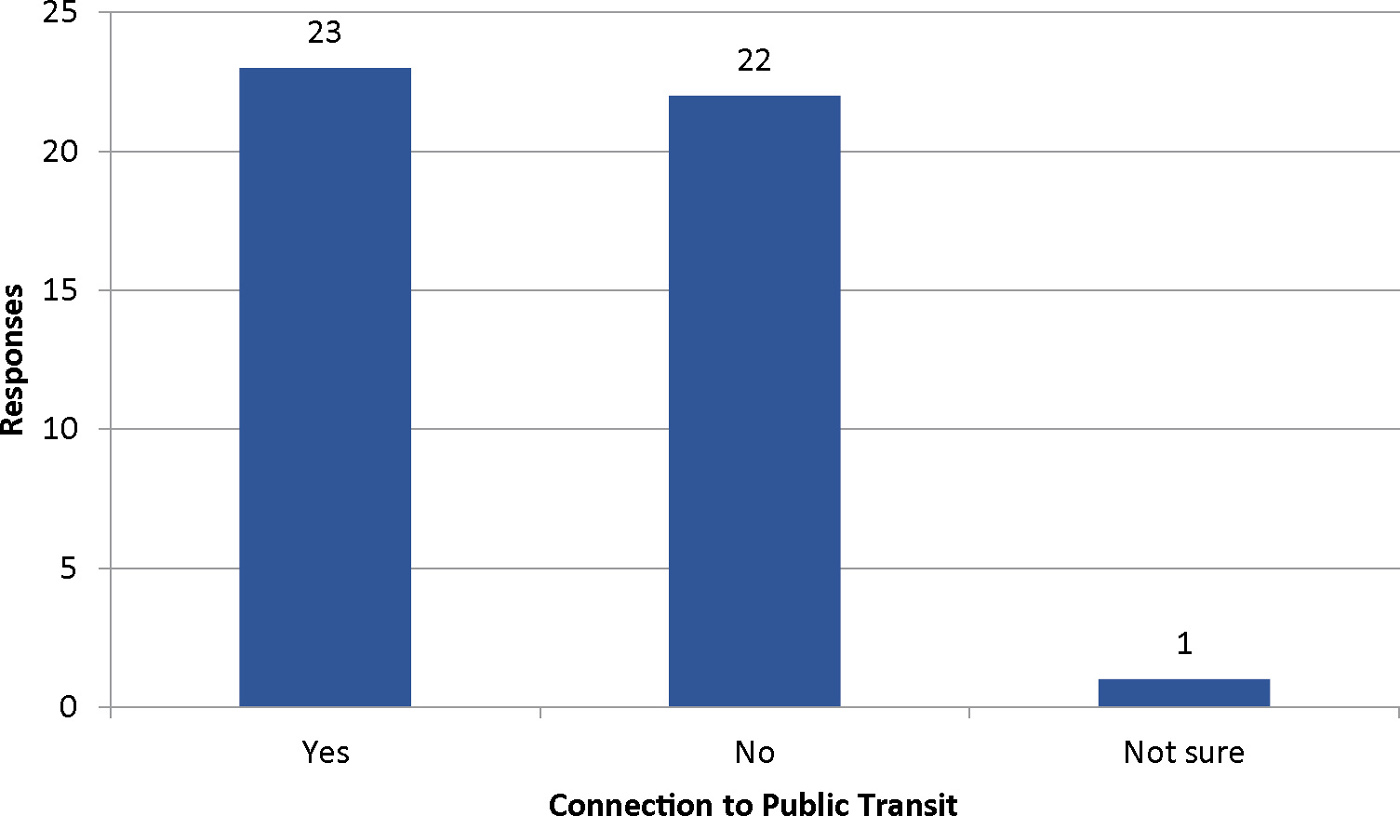
To better understand if employees were able to commute to the airport using public transit, participants were asked, “Is your airport directly connected to public transit (either light rail/subway or bus)?” As presented in Figure 18, exactly half (23 responses out of 46) of participants indicate their airport does have direct access to public transit.
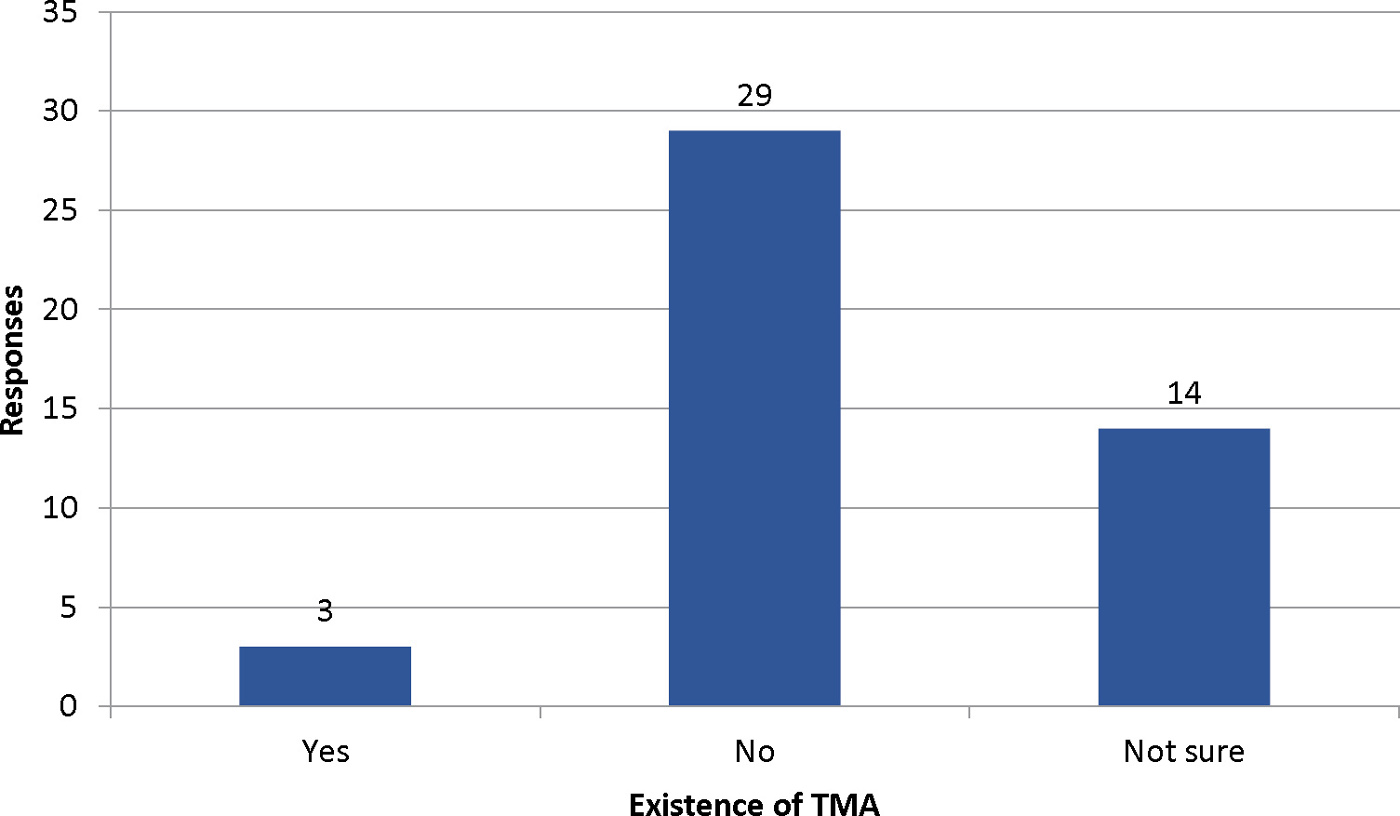
Participants were asked, “Does your airport have a Transportation Management Association?” The majority of participants (29 responses out of 46 responses) answered “No” (Figure 19). Research has shown that an airport can provide transportation options for employees with or without a TMA.
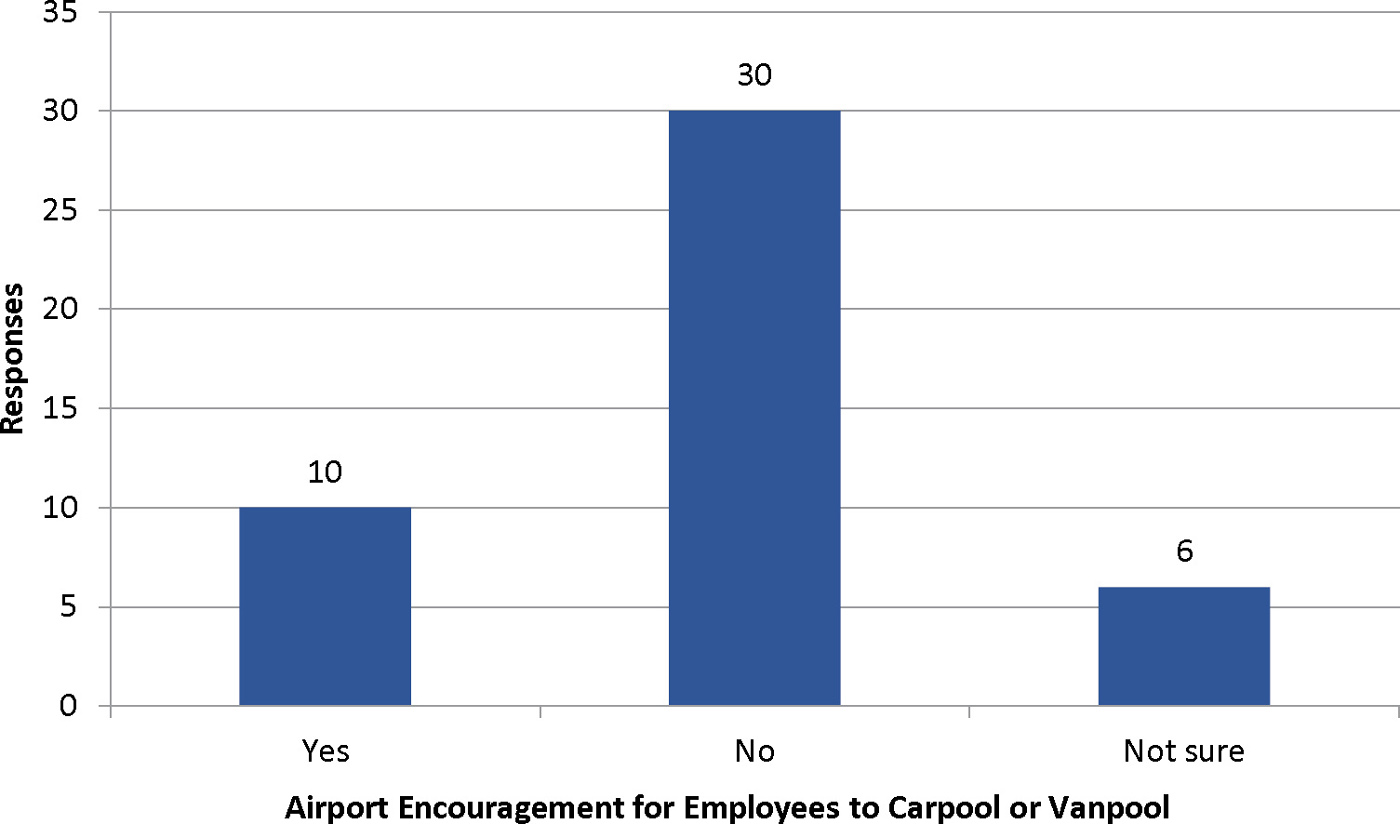
To understand the degree to which airports influence employee use of carpools or vanpools, participants were asked, “Does your airport encourage employees to carpool or vanpool to work?” The majority of participants (30 responses out of 46) indicate their airport does not encourage employees to use carpools or vanpools, and six responses are not sure (Figure 20).
By understanding the degree to which airports provide for employee parking, it is easier to understand the common use of SOVs by employees. Participants were asked, “Does your airport have convenient employee parking?” The majority of participants (42 responses out of 46) indicate their airport does have convenient employee parking (Figure 21). Convenient airport parking encourages the use of SOVs.
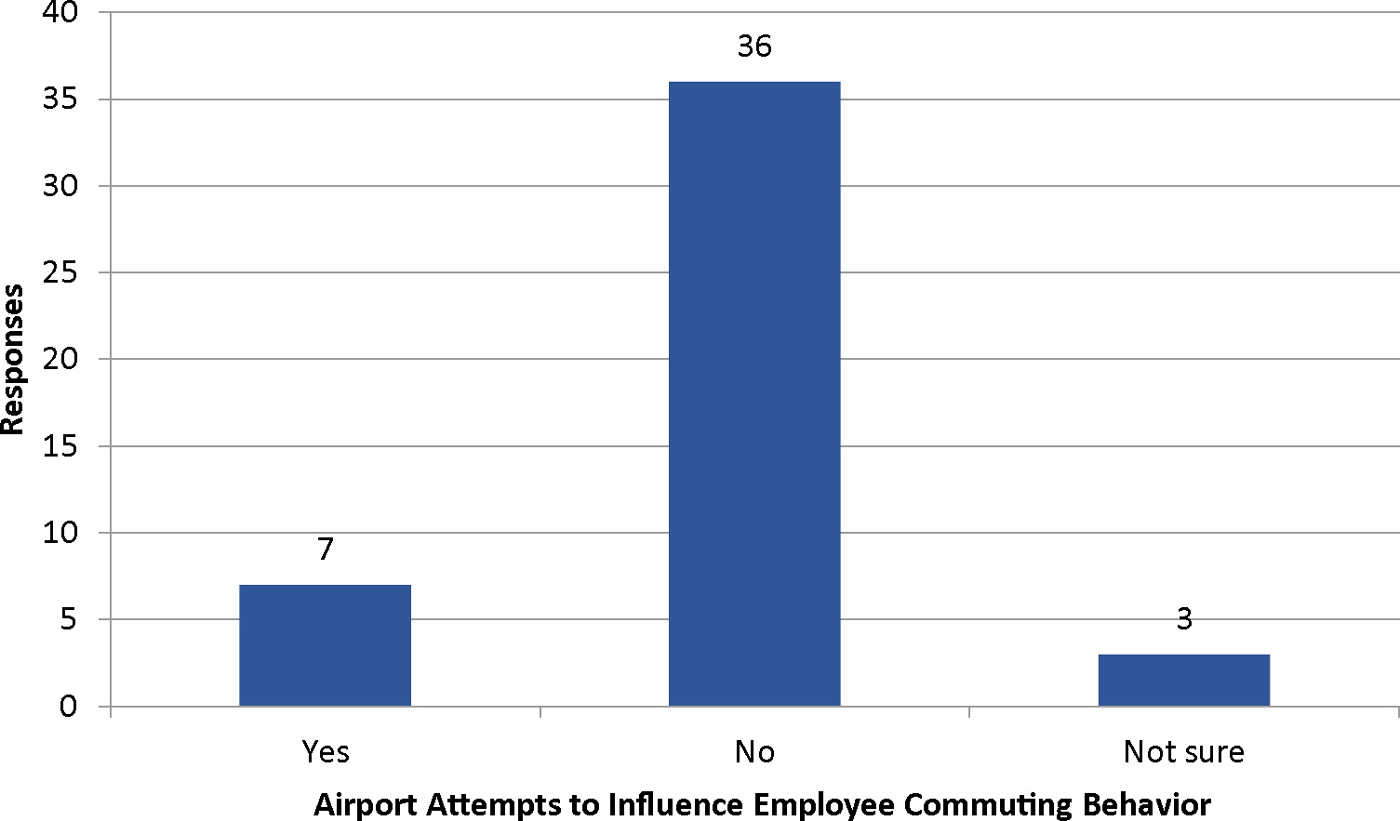
Finally, participants were asked, “Has your airport attempted to influence the manner by which you commute to/from work?” Thirty-six responses out of 46 indicate their airport has not attempted to influence their commuting mode (Figure 22). This indicates that more effort could be expended by airports in attempting to alter employee commuting practices.
For those seven responses that airport employers have attempted to influence the manner by which they commute to and from work, attempts include:
- Bike to work day;
- Transit options and free use of transit;
- A survey asking about public transit;
- Promoting public bus and light rail as a way to drive, park, and ride;
- Communicating available commuting options;
- Provide a stipend; and
- Provide regional transit cards, which allow access to light rail, train, and buses.

Summary
The survey findings indicate that employees of airports are unique in their commuting experiences and expectations. While some employees enjoy the commute, others abhor it. While some employees wish there were more bike lanes, others wish there were more parking spaces available for SOVs. Indeed, the data indicates the diversity of employee commuting challenges, requiring airport staff to be innovative in not only understanding employee commuting behavior, but also in providing options to employees, as well as incentives to influence employee commuting behavior. It would be rare for one solution to meet all employee commuting needs.


