Gulf-Alaska Knowledge Exchange: Learning from the Legacy of Past Oil Spills: Proceedings of a Workshop Series (2025)
Chapter: 3 Workshop 2: Thibodaux, Louisiana
3
Workshop 2: Thibodaux, Louisiana
The second workshop of the Gulf-Alaska Knowledge Exchange Workshop Series was held on December 10 and 11, 2024, at the Donald G. Bollinger Memorial Student Union on Nicholls State University’s campus in Thibodaux, Louisiana. The 1.5-day workshop focused on centering communities during the response process; having the best science and technology for transformative recovery; and ensuring that here are preparations for the physical, mental, and behavioral health impacts of an oil spill. A wide range of speakers, panelists, invited guests, and audience participants from across both the Southern Gulf Coast and Gulf of Alaska regions shared their perspectives throughout the workshop, citing their experiences in industry, government, community-based organizations, and tribes, and as members of affected communities. The workshop was structured with opening speakers on each day and panels to focus on the three main themes of the workshop. Each panel was followed by discussion in breakout groups for both online and in-person participants. The workshop concluded with an in-person interactive session that garnered takeaways from those in the room through a rotating discussion-based activity.
DAY 1 OPENING REMARKS
Lauren Alexander Augustine (executive director of the Gulf Research Program [GRP]) welcomed participants to the second workshop in the Gulf-Alaska Knowledge Exchange Workshop Series in Thibodaux,
Louisiana. She set the stage by orienting participants to the GRP. Alexander Augustine emphasized the national scope of offshore drilling operations, which allows the GRP to be involved in both the Gulf region and Alaska to bring in the experiences from the two biggest spills in U.S. history—Deep-water Horizon and Exxon Valdez. While the GRP does not directly drill, regulate, or respond to oil spills, its role in advancing safety lies in funding and supporting relevant science and collaboration.
Reflecting on her early career, Alexander Augustine noted that her first job after college was working on the Oil Pollution Act of 1990 (OPA 90)1 at U.S. Coast Guard Headquarters. She found herself at the lowest rungs of the hierarchy, yet she was engaged in the foundational work of crafting legislation aimed at preventing future oil spills.
Looking ahead, Alexander Augustine underscored the long-time horizon of the GRP’s work, with nearly two decades remaining to apply insights from past spills to emerging challenges, such as aging infrastructure and abandoned wells. She recounted a recent discussion in Washington, D.C., where stakeholders were asked what they would do about orphaned wells if given a “magic wand.” The most common answer was to go back 50 years and make different decisions with future consequences in mind. That same forward-looking spirit, she said, should guide the work of this workshop. “What can we do now,” she asked, “so that 50 years from now, our children and grandchildren will say, ‘They were really thinking’?”
Following Alexander Augustine’s workshop welcome, Rosina Philippe, an elder of the Atakapa-Ishak/Chawasha people, opened the workshop with a grounding reflection. She invited participants to pause and honor the presence and guidance of the ancestors. She welcomed all attendees to the unceded lands of the Chawasha, Chitimacha, Acolapissa, and other First Nations and Indigenous peoples of the Southern Louisiana region. Philippe reminded attendees that “when we work for the environment, we work for the flora, the fauna, the water, the air, life-giving components that make our human lives possible.” She encouraged participants to carry forward the spirit and wisdom of the ancestors in their discussions, to treat each other with respect, and to honor the original stewards of the land.
Ed Levine (planning committee chair) then welcomed attendees and opened by framing the event in the context of lessons from the Exxon Valdez
___________________
1 Oil Pollution Act (OPA) of 1990, P.L. 101-380, 101st Congress, August 18, 1990. H.R.1465 - 101st Congress (1989-1990): Oil Pollution Act of 1990 | Congress.gov | Library of Congress (accessed August 12, 2025).
and Deepwater Horizon oil spills, two disasters with striking similarities despite dramatically different spill volumes.
Reflecting on the first workshop (held in Anchorage, Alaska), Levine noted how deeply the memory of these spills still resonates with community members, exemplified in lingering emotional, environmental, and personal consequences. He highlighted the need for increased community involvement in response and planning and shared that throughout the Anchorage workshop the importance of communication had been emphasized, as illustrated prominently in the word cloud generated by the participants at the workshop’s conclusion. Levine also underscored the often-overlooked toll on responders, sharing candidly from his own experiences during many responses and disasters. He further reminded the group that “responders are people, too,” noting the stress, trauma, and personal sacrifices endured during prolonged response efforts.
Turning to the day’s agenda, Levine described a workshop program designed to elevate community voices and expertise. The panels would explore community engagement, mitigation strategies, ecosystem impacts, and mental and behavioral health. He emphasized the value of the workshop’s cross-sector participation, including representatives from government, industry, academia, nongovernmental organizations (NGOs), and frontline communities, and encouraged open dialogue and knowledge sharing across all participants and between the Gulf and Alaska regions.
“We are all smarter later,” Levine concluded. “I encourage you to learn from one another, find awareness through dialogue … Our goal is to make anything that happens less impactful if possible and take the opportunity to get smarter.”
ANCHORAGE WORKSHOP OVERVIEW
Francis Wiese (senior scientific scholar, GRP) provided a brief summary of the first workshop held in Anchorage, Alaska, in October 2024. Building on the theme introduced by Levine, Weise noted the importance of not only becoming smarter after a disaster but also staying smarter over time. Wiese cautioned that while individuals tend to retain long memories, society often does not, emphasizing the need for continued engagement and shared learning to sustain progress and prevent complacency.
Wiese identified several takeaways that reflected themes from his wrap-up at the end of the Anchorage workshop. First, he observed that similarities between Alaska and the Gulf region go far beyond the oil spills themselves. Anchorage workshop participants from both areas shared
comparable concerns, values, and experiences, reinforcing the importance of cross-regional dialogue. Second, Wiese stressed the central role of communication. He asserted that the most powerful theme to emerge from the Anchorage workshop was the lasting emotional and psychological impact of oil spills. Many individuals still experience deep trauma from past events, and lingering personal and mental health effects are often left unaddressed because of inadequate funding and planning. Another major theme was the call for a more holistic systems approach to preparedness, response, and recovery. Anchorage participants urged a shift away from narrow technical fixes toward strategies that consider the interconnected social, ecological, and economic systems. Finally, Wiese highlighted the importance of building relationships to making these workshops meaningful. Therefore, he underscored that forming strong relationships before, during, and after a crisis are the foundation for effective recovery and long-term resilience.
SESSION 1: COMMUNITY-CENTERED RESPONSE
The first session of the December 2024 workshop featured two panelists from Alaska, two from the Gulf region, and one panelist who worked on both spills, and focused on the importance of community-centered planning as it relates to the role of local factors in knowledge sharing and proactive community involvement in response efforts. Moderated by Mây Nguyễn, the panel featured perspectives from Danielle Verna and Lloyd Montgomery from Alaska, Kelly Samek and Cynthia Sarthou from the Gulf Coast, and Ann Hayward Walker, who was part of the response team during both the Exxon Valdez and the Deepwater Horizon oil spills.
Mây Nguyễn (planning committee member) opened the first panel session by emphasizing her long-standing commitment to the Gulf region as a native of Louisiana. She introduced the panel’s focus on community-centered planning, highlighting the critical role of local knowledge, the cultural impacts of oil spills, and the importance of proactive strategies to involve communities in response and preparedness efforts. Nguyễn noted that the panel brought together more than 150 years of collective experience, with deep roots in both Gulf Coast and Alaskan communities.
Panelists’ Remarks
Danielle Verna (environmental monitoring project manager, Prince William Sound Regional Citizens’ Advisory Council [PWSRCAC]) focused
her remarks on three replicable tools used in the Prince William Sound region to engage communities and build preparedness. These tools were developed in direct response to the 1989 Exxon Valdez oil spill. With 35 years of reflection and progress, she noted that these tools could be transferable to other regions at risk of an oil spill, including the Gulf region.
Verna began by noting the far-reaching ecological, economic, and social impacts of the Exxon Valdez spill, emphasizing that social disruption is a critical but often overlooked dimension of disaster. She illustrated this with images from Cordova: one showing residents protesting the lack of financial compensation for individuals, and another with a sign mourning the “death of our environment” (see Figure 3-1). These examples reflected the depth of community trauma and the importance of mechanisms to amplify local voices in the decision-making process.
The first tool she described was the Regional Citizens’ Advisory Councils (RCACs). There are two such councils in Alaska, the PWSRCAC and the Cook Inlet Regional Citizens Advisory Council (CIRCAC). These councils serve in an advisory capacity to both industry and regulators and were mandated under OPA 90. Independent funding from the Alyeska
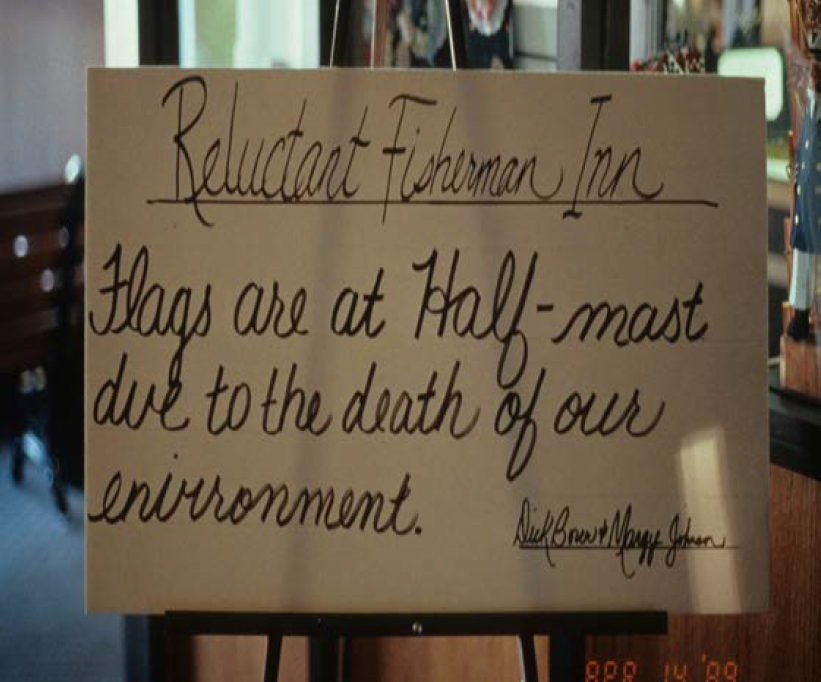
SOURCE: https://www.flickr.com/photos/arlis-reference/5015871057/
Pipeline Service Company allows RCACs to operate autonomously and to hire technical experts to advise on complex regulatory matters. A robust volunteer structure, which includes a large board and five technical committees, ensures that local experience informs recommendations over time.
The second tool is the Regional Stakeholder Committees, which provide a direct line of communication from communities to the unified command during a spill response. It enables local residents to raise concerns, identify needed resources, and offer assistance in real time. Unique to the Prince William Sound Area Contingency Plan, this mechanism has been tested and refined through drills and is supported by toolkits and resources available online.
The third tool Verna described is the guidebook Coping with Technological Disasters: A User Friendly Guidebook,2 developed with sociologist Dr. Steve Picou. Designed to address the social and psychological disruption caused by manmade disasters, the guidebook includes definitions, strategies for community resilience, and peer listener training resources. The materials help communities understand trauma and support one another in the aftermath of a spill. She asserted, “This is meant to bring people together.” These resources, like the others, are publicly accessible and designed to be adapted for use in other regions.
Verna concluded by emphasizing that while many improvements have followed in the wake of the Exxon Valdez oil spill, these three tools stand out as tangible, transferable strategies for strengthening community-centered preparedness and response.
Ann Hayward Walker (founder, SEA Consulting Group) shared reflections from her decades of experience supporting oil spill response efforts, including the Exxon Valdez and Deepwater Horizon incidents. While describing her role as support staff in the Incident Command System (ICS), her remarks focused on one central question: What could be done to meaningfully engage communities in the event of another large-scale spill, even if the institutional framework remained unchanged?
Hayward Walker emphasized that the current oil spill response system prioritizes environmental protection but does not sufficiently address human impacts. Drawing lessons from several major spills throughout her
___________________
2 PWSRCAC (Prince William Sound Regional Citizens’ Advisory Council). 2021. Coping with Technological Disasters: A User Friendly Guidebook (Version 4). https://www.pwsrcac.org/wp-content/uploads/filebase/resources/coping_with_technological_disasters/Coping-with-Technological-Disasters-A-User-Friendly-Guidebook-Version-4.pdf (accessed July 2, 2025).
career, she outlined the range of psychological, physical, economic, social, and cultural effects that communities face, particularly in natural resource–dependent areas like subsistence fishing communities.
She highlighted that oil spill responses are inherently uncertain. Each incident presents unique conditions, and decisions must be made quickly with incomplete information. Effective response requires inclusive collaboration between response managers and community members, who often possess localized knowledge critical to understanding current environmental conditions. “The best available information, knowledge about what to do, comes from all of us, the responders who know about spills, but also fishermen and others who may know the current better than what monitoring tells us … if we want to really address the problem in real time, we have to collaborate.”
Hayward Walker also addressed the challenges of communicating during a spill. People process information differently, and complex questions cannot be addressed with brief or delayed messages. Instead, she advocated for ongoing dialogue and rapid access to trustworthy, up-to-date information, especially for local leaders who serve as key messengers within their communities.
Turning to practical recommendations, Hayward Walker pointed to existing tools within the ICS and the Incident Management Handbook (IMH) that could support community engagement. She described roles and procedures, such as the liaison officer for external engagement and an assistant safety officer for public health to improve risk communication, support mental and behavioral health, and aid academic research coordination. Importantly, Hayward Walker noted that although these elements were included in the 2014 version of the IMH, they are often underutilized. However, she confirmed that the updated IMH, set for release in early 2025 will retain this language,3 presenting an ongoing opportunity to operationalize these roles more effectively.
In closing, she reiterated that real-time community engagement in response and recovery are not only possible within the existing system but also essential for building community resilience.
Kelly Samek (Gulf regional lead and federal program officer with the National Oceanographic and Atmospheric Administration [NOAA] Sea
___________________
3 U.S. Department of Homeland Security, U.S. Coast Guard. May 2014. U.S. Coast Guard Incident Management Handbook. U.S. Coast Guard COMDTPUB P3120.17B. https://media.defense.gov/2025/Jun/27/2003744875/-1/-1/0/INCIDENT_MANAGEMENT_HANDBOOK_COMDTPUB_3120.PDF (accessed July 2, 2025).
Grant) focused on the geographic and jurisdictional differences between Alaska and the Gulf region that shaped a different experience of response in the Gulf during the Deepwater Horizon spill. In Florida, she explained, a statewide moratorium on offshore drilling, combined with limited federal spill experience in local offices, left many agencies unprepared to engage effectively. Her own early assignment as a new lawyer at the Florida Department of Environmental Protection illustrated how under-resourced the state was in oil spill law and policy.
Given this context, Samek highlighted the crucial role of NGOs and boundary organizations such as Sea Grant. These institutions were able to step in as trusted intermediaries, bridging gaps in policy understanding and scientific knowledge. NGOs played a vital role in interpreting how frameworks like the OPA 90 applied in local contexts and often were the only credible voice trusted by both the public and state agencies. She stressed the importance of institutional memory related to disaster, noting that NGOs often retain the knowledge of what was learned during crises like Deepwater Horizon and help prevent complacency.
Samek also reflected on the limitations of current legal and institutional frameworks for community involvement. While many laws do not explicitly provide pathways for community engagement, she suggested that opportunities still exist, especially within planning processes and spill response structure, though they are rarely utilized. She urged participants to actively seek out or even create spaces for engagement, even if they are not mandated by law or currently in place.
She concluded by encouraging others to recognize and leverage underutilized legal and procedural openings for public involvement and emphasized the importance of remaining engaged beyond the immediate aftermath of a spill to improve preparedness and resilience.
After giving an opening greeting in a Alaskan native language, Lloyd Montgomery (elder, Native Village of Eyak in Alaska) offered reflections grounded in his experience and deep connection to the sea and Alaska’s coastal communities. He emphasized the importance of retaining and preserving data and evidence related to oil spill research, planning, and response. Sharing a story about a lost dataset from a float-tracking study in Prince William Sound, he cautioned that valuable information can be easily lost without proper documentation and oversight, which does not always come naturally to citizen science volunteers.
Montgomery also called attention to small-scale pollution risks in local harbors, such as oil sheens from sunken boats. He encouraged ports and
harbors to require insurance and proactive planning to address minor, but environmentally harmful, leaks, particularly in saltwater settings.
Cynthia Sarthou (former executive director, Healthy Gulf) spoke candidly about the lack of long-term community engagement and preparedness in the Gulf region, based on lessons from the BP Deepwater Horizon disaster. She emphasized that no consistently implemented system for involving communities in oil spill response planning or training exists. She asserted that the Coast Guard is the lead response agency but typically has limited involvement with communities outside of mandatory activities during spills and often is focused on other areas of jurisdiction when not actively responding to an oil spill.
Sarthou highlighted a broader cultural and political reluctance in the Gulf region to acknowledge the potential for another large spill. She noted that industry environmental assessments that routinely omit worst-case scenarios unless forced to consider a Deepwater Horizon-sized spill by lawsuits reflect this denial. She called for a proactive framework to involve communities in preparedness, especially local fishers, who are often key resources for environmental information because they are on the water every day but are not included in planning or training efforts.
She also drew attention to the high frequency of small oil spills in Louisiana (potentially over a thousand each year), which are rarely monitored or followed up on with damage assessments. She stated, “It is simply presumed that the oil goes away and there is no impact. But there is impact.” These minor spill incidents contribute to environmental and community harm that frequently goes unaddressed.
Sarthou was especially critical of response technologies like chemical dispersants and in situ burning, which were used during the BP spill to remove oil from Gulf waters. These strategies, she argued, shifted the impact to the seafloor and marine life, causing potentially lasting ecological damage that was minimized or not well quantified in official narratives. Further, she raised that “there really needs to be a focus on what are other response technologies that could be applied that are not as environmentally harmful.”
Finally, she emphasized the need for better systems to support affected communities after a spill. Many local residents do not understand how to access resources like legal claims or health monitoring. During the Deepwater Horizon claims process, community members struggled to understand how systems like the Natural Resource Damage Assessments (NRDA) or OPA 90 would affect them, and how subsistence-based or bartering economies fit into this system for getting money and support. She called for
meaningful communication with communities before, during, and after disasters to address these gaps.
Community-Centered Response Panel Q&A
After each of the panelists made opening remarks, Mây Nguy n asked them what they see as the biggest barriers to achieving deeper community engagement in oil spill planning and response.
Cynthia Sarthou emphasized the need to recognize fishing communities as important knowledge holders. She noted that distrust between industry and fishers has often prevented meaningful engagement and called for efforts to integrate local expertise into planning and preparedness from the start. Ann Hayward Walker identified two major barriers: (1) the lack of institutional directives and funding for community engagement and (2) the drop-off in interest for oil spill planning and preparedness as time moves on from a spill. Kelly Samek agreed that the passage of time is a major challenge, allowing urgency to wane. She stressed the importance of engaging communities in ways that feel constructive and resonate emotionally, especially in the absence of an active crisis. Danielle Verna added to the warnings about complacency as time since a spill increases and advocated for a bottom-up drive for engagement. She explained that Alaska’s RCAC model, which benefited from both legislative support and early grassroots organization, helps institutionalize community involvement and maintain pressure for accountability with agencies and industry. Lloyd Montgomery offered a practical example from Alaska, where more than 400 local fishing vessels actively participate in semi-annual oil spill response drills. Montgomery underscored the importance of community preparedness, firsthand training, and coordination among ports throughout Prince William Sound. Following up on these comments, Verna also highlighted that the Ship Escort Response Vessel System, or SERVS, through which fishing vessels are trained and contracted for oil spill response, is the result of Alaska’s strong state planning standard, which legally requires the capacity to clean up 300,000 barrels of oil within 72 hours. She noted that similar legal requirements by other states could serve as the necessary impetus for community training and preparedness in other regions.
An audience participant noted the significant psychological and economic impacts of smaller, less-publicized oil spills on fishing communities in Texas and Louisiana, stating that these events often go unacknowledged,
leaving affected people without support. The participant asked panelists about the tools, resources, or organizations that communities could connect with to find support during such events.
Verna again recommended their guidebook for coping with technological disasters, originally developed in Alaska and later adapted by the Mississippi-Alabama Sea Grant. The guide and accompanying online trainings are designed to support communities facing psychological and social disruptions from both large and small disasters. Hayward Walker and an audience participant both weighed in and emphasized the critical role of trusted local advocates. During the Deepwater Horizon response, Sea Grant agents served as key connectors between agencies and fishing communities. They highlighted the importance of having people embedded locally who could quickly disseminate information, particularly when official channels are slow or ineffective. Samek underscored the interdisciplinary nature of Sea Grant programs and encouraged outreach professionals to also connect with Sea Grant’s legal and policy resources, to help communities understand the legal side of oil spills and advocate for themselves.4
An audience member asked how to shift from having community engagement mechanisms recently written into the IMH to actually practicing them before and during an oil spill response.
Hayward Walker explained that participation requires familiarity with the vocabulary and structure of the ICS, which can be a barrier for community members unfamiliar with response protocols. Hayward Walker emphasized that meaningful community engagement should be a critical part of training and preparedness exercises, not just mentioned in the IMH. She suggested that agencies, state officials, and industry that lead the ICS should proactively practice the lesser-used parts of IMH that support public involvement. Ultimately, she said, adapting the existing system to better include community voices requires both institutional will and financial resources. Without funding or regulatory pressure, these adaptations are unlikely to happen, but with commitment, they are entirely feasible, and the legal framework is already there for them.
The final question came from an audience member who raised concerns about the lack of transparent reporting on smaller oil spills in the Gulf. Noting the frequency and environmental significance of these incidents, particularly for subsistence communities, they asked why spill data are not systematically tracked and publicly shared.
___________________
4 See https://seagrant.noaa.gov/communities/law-policy/ (accessed July 15, 2025).
Sarthou agreed that the underreporting of small spills is a major issue. She explained that when Healthy Gulf attempted to track spills, it was difficult to find information about whether or not the spill had been recorded or responded to by state or federal authorities. Sarthou attributed the lack of transparency to a broader political reluctance to acknowledge oil spills in the Gulf, stemming from a desire to avoid public resistance to oil and gas development. She warned that the region faces increasing risks as drilling expands into deeper waters. Therefore, she called for more oversight, transparency, and public awareness to counter the prevailing narrative in the region that “it can’t happen again.”
In her final remarks, Nguyễn summed up her main takeaways from the session as, “We have knowledge … We have vocabulary. Our challenge for us is building memory, remembering us. And our call to action is to practice, practice, practice… [and] building regulatory institutional space, having trusted outreach partners on the ground, building out those roles for the trusted partners to keep the memory and sustain the memory… We have to remember. And practice, build memory.”
GROUNDING SPEAKER
Colette Pichon Battle (executive director, Taproot Earth) provided a localized, grounding perspective following the first panel. Speaking from her lived experience as a Louisiana native and legal advocate, she offered reflections on the lasting community-level impacts of the Deepwater Horizon oil spill and the broader challenges of disaster response and preparedness in the coastal regions of the Gulf.
Pichon Battle recalled her work leading a legal team that provided free assistance to families and fisherfolk during the BP claims process. Many individuals had previously been denied compensation until legal representation helped validate their claims, highlighting systemic gaps in access to recovery resources. She shared that this experience revealed not only the importance of trusted intermediaries but also the consequences when community voices are not included in planning and response systems.
She emphasized that many people in South Louisiana rely on local natural resources, not only for cultural reasons but also for their basic food supply. Oil spills that disrupt fisheries and subsistence activities carry lasting social, economic, health, and emotional impacts, especially in communities that are already facing poverty and targeting.
Pichon Battle encouraged attendees to think beyond compliance-based approaches and consider deeper, relationship-based models for integrating
communities into environmental management practices. She suggested that community engagement should be built on shared stewardship, not just consultation or convenience. This includes acknowledging the emotional and cultural ties people have to their environments and recognizing local knowledge as essential to resilience.
In closing, she reminded the group that the Gulf Coast is changing rapidly due to land loss and sea level rise and stressed the urgent need to protect what is left of the Louisiana coast. She invited attendees to approach their work not only as professionals but as people with a shared responsibility to care for each other and the ecosystems that sustain us all.
Facilitated Breakout Session 1
In this breakout session, participants were invited to share and discuss their experiences with community-focused disaster responses and insights into improving existing processes based on lessons learned from the Exxon Valdez and Deepwater Horizon oil spills. Breakout discussion facilitators for Session 1 provided a report out to the group at-large, sharing the common themes and ideas their groups discussed during the hour.
Multiple groups discussed the need to incorporate community input during the planning, recovery, and response by creating a formal process to engage with the community. They also mentioned the importance of engaging with communities—especially when there is not an active oil spill response—to build trust and establish relationships ahead of a disaster. This requires members of the response community to identify and partner with influential community leaders, including political leaders, or leaders from churches, tribes, or trusted organizations who serve as a point of contact and liaison for the community. Many participants emphasized the importance of meeting people where they are and listening to their concerns, rather than making participation inconvenient or impeding the flow of information. A few groups commented that community members are often expected to volunteer their time, often without compensation. This comment resulted in discussions about the need to incentivize people to attend workshops or meetings with food and honoraria. One group talked about local community variation and how no one-size-fits-all solution exists. They described how the frequent cycling of Coast Guard personnel makes it difficult to establish trusting relationships. Another group discussed strategies for engaging with the Coast Guard at the community level and how to invite them into local meetings during their short tenure.
One group highlighted that the biggest difference between the two regions was the presence of the RCACs in Alaska, which provide ongoing, meaningful engagement with communities. This led to a conversation around the idea of “communiversities,” where communities and universities come together. Scientists work with local communities and community members go to the universities for events, which facilitates meaningful engagement. They also discussed the importance of storytelling to personalize and humanize what happens during any large or small spill. Several participants highlighted the difficulty with incentivizing communities in the Gulf region to engage in planning efforts due to the heavy presence of the oil and gas industry and its importance in the local economy. They also talked about the importance of creating reasonable expectations about what response can achieve since options are limited when a spill happens, and responders often have to decide between the lesser of two bad options.
Oil spill response fatigue was also brought up during discussions. The loss of institutional and community memory over time can be a barrier, and it can be difficult to maintain readiness between spills. To retain that knowledge, participants talked about including more organizations in tabletop preparedness exercises. They also discussed incorporating ICS into existing trainings such as municipal, clean marina, or clean boat trainings. Many conversations focused on incorporating local communities into response exercises. Some participants expressed their view that the locals are the experts on their waterways and their boats and crews should be sought out for oil spill cleanup, especially to compensate for lost wages due to fishery closures. Workshop participants expressed that locals were not allowed to participate in the Deepwater Horizon response because they would be the litigants in the claims processes, and the industry did not want people to see the extent of the spill damage.
Accessibility for communities was another common theme, which emerged from conversations about how contingency plans can be hundreds of pages long and very technical, so it may not be feasible for someone from a community to review them. To address this issue, the plans could be presented to communities with an opportunity to review and provide their local knowledge and identify gaps. One group stated that a lot of small spills occur each year and result in large cumulative impacts over time. Another group discussed the general need for information, and how information is communicated in an unbiased way and by whom. They discussed creating visual representations or other means of communicating oil spill risks as
potential mechanisms to prepare communities for an event that industry says will never happen again, so it is more front and center for people.
SESSION 2: TRANSFORMATIVE RECOVERY
Session 2 of the workshop centered on developing new approaches to revolutionize mitigation techniques and the recovery of key natural resources. This session was moderated by Collin Ward (planning committee member) and featured panelists Adriana Bejarano and Scott Eustis from the Gulf region, and Susan Saupe and Jeffrey Short from Alaska, as well as Jacqueline Michel, who worked across both regions. Ward opened the session by framing the panel’s focus on transformative recovery, with an emphasis on restoring the natural environment following oil spills. He noted that while community engagement and community-driven science have been central themes of the workshop, significant work remains in understanding and addressing the ecological impacts of spills, especially because so many communities depend on these resources.
Panelists’ Remarks
Adriana C. Bejarano (environmental scientist, NOAA Office of Response and Restoration) opened the panel by emphasizing that prevention is the most effective recovery strategy; however, since not every spill can be prevented, she outlined five guiding questions that are central to addressing a spill: What spilled? Where will it go? What resources will be impacted? How will they be impacted? What can be done to help?
Bejarano described research advances that have occurred in oil spill science since the Exxon Valdez and Deepwater Horizon disasters. She highlighted improvements in computational models that predict oil fate transport, which have been augmented by the growing integration of local and community knowledge to prioritize protection of the most critical resources. She also underscored the importance of accessible and up-to-date data systems, including tools that map sensitive resources and archive past spills to inform future response efforts.
Regarding response tools, Bejarano detailed progress in spill control technologies, including the deployment of capping stacks for deepwater wells and enhancements in approaches for in situ burning and dispersant applications. She shared the development of a new dispersant formulation showing promising results for lower toxicity without sacrificing
effectiveness. She noted that improved techniques in mechanical dispersion and remote monitoring with unmanned vehicles allow responders to track and assess oil movement while maintaining worker safety.
Bejarano also spoke about advances in wildlife recovery and rehabilitation, citing that improvements in protocols have led to higher survival and re-release rates. She emphasized the importance of understanding natural ecosystem variability to be able to attribute changes to an oil spill, especially under the growing influence of climate change and other external stressors that complicate recovery assessments.
She concluded by emphasizing that while the spill response community has made notable scientific and technological strides, many tools are still evolving, and continued innovation and long-term monitoring, particularly with community involvement, are essential for advancing recovery outcomes.
Susan Saupe (director of science and research, CIRCAC) focused her remarks on the importance of defining clear recovery endpoints after oil spills and on the challenges of assessing ecological impacts without adequate baseline data. She outlined several common approaches to measuring recovery. Acknowledging that the best approach is to compare impacts to pre-spill data, Saupe explained that given a lack of baseline data, control-impact studies can be used by basing them on matching habitats or populations of interest. Each approach has limitations, especially when natural variability, delayed effects, or generational impacts are not well understood, and each can complicate restoration goals. To achieve better restoration endpoints, Saupe noted, long-term monitoring and more nuanced metrics are needed for a wider range of species.
Saupe described how the Exxon Valdez Oil Spill Trustee Council addressed these limitations by expanding the definition of restoration to include habitat protection and by providing funding for long-term ecological studies. These strategies aimed to improve future decision-making even in the absence of perfect data. She also highlighted the importance of community organizations, such as the RCACs in Prince William Sound and Cook Inlet, which provide a model for long-term, community-informed oversight.
Saupe clarified that although RCACs are often viewed as adversarial to industry, their work is largely collaborative, with many scientific efforts coproduced alongside industry and agency partners. Much of this work is leveraged beyond core funding, including initiatives in habitat mapping, contaminant monitoring, and oil spill planning, which through the help
of the RCACs, are reviewed and informed by local fishermen and board members.
She concluded her remarks by advocating for stable, long-term funding, early involvement of subject-matter experts, and meaningful integration of local knowledge in all phases of spill preparedness and recovery. Forums like this workshop, she noted, were “need(ed) to transfer the knowledge and take all the lessons learned from past events and carry them into future events.”
Scott Eustis (community science director, Healthy Gulf) described the ongoing challenge in the Gulf of chronic, small-scale oil spills, many of which go unmonitored, unreported, and unpenalized. Reviewing public data sets, he noted that more than 1,000 spills are reported annually across the Louisiana and Texas coast, amounting to roughly 1 million gallons of oil being spilled into the Gulf each year. Of those spills, only a small fraction are followed up with federal assessments, leaving gaps in enforcement, fines, and environmental accountability, and local communities vulnerable and powerless.
He emphasized the value of outside scientific collaboration in documenting these events, particularly during disasters like Hurricane Ida, when local monitoring capacities were overwhelmed. He highlighted the recurring nature of spills in certain vulnerable locations and called for better contextualization by researchers and the media to show that these events are historically repeated, not isolated incidents.
Eustis used the Taylor Energy leak as a case study in long-term response failure. Initially, it was reported as releasing only a gallon of oil per day, meaning it would not be a significant concern; however, independent monitoring revealed daily releases in the thousands of gallons. Even given this new information, “it started in 2004, and we’re still in response,” taking years of scientific advocacy, industry partnerships, and lawsuits before a contractor was able to contain the leak.
He concluded that recovering from chronic spills requires persistent scientific and regulatory attention, collaboration with frontline workers, and structural support for long-term decommissioning and accountability for abandoned infrastructure.
Jeffrey Short (founder, JWS Consulting and former NOAA research chemist) compared the scientific insights and response efforts from the Exxon Valdez and Deepwater Horizon spills, emphasizing how each revealed major knowledge gaps and opportunities for discovery. He noted that “while it was obviously a terrible event, the Exxon Valdez was a unique scientific opportunity” that offered a rare chance to study oil spill impacts in a
relatively pristine environment. Studies began within 24 hours of the tanker running aground and resulted in strong data on mortality and ecosystem effects, demonstrations of high toxicity of fish eggs to oil, the finding that marine life did not avoid oil, and findings regarding the significance of indirect ecosystem impacts beyond the spill area.
In contrast, Deepwater Horizon involved a much larger and more complex spill in an already heavily polluted environment. The scale of the spill overwhelmed damage assessment efforts as shown in Figure 3-2, making it more difficult to be certain of mortality estimates for many species. Nevertheless, it led to major discoveries, such as the role of marine snow in transporting oil to the seafloor, the creation of compounds of unknown toxicity created from oxidation reactions caused by sunlight exposure, and the vulnerability of wetland insects. Further, Short discussed his findings that the abnormally high rate of bird deaths was due to their ingestion of contaminated forage fish that survived after the spill.
Short concluded, “I just want to emphasize that there’s still a lot that we don’t know about how oil damages the environment. And new discoveries depend critically on knowing when, where, and how to look. And the salient issues that are around today include evaluating the effects of marine

SOURCE: NOAA National Environmental Satellite, Data, and Information Service.
snow, the toxicity of photo oxidation products, toxic mechanisms on insects and marine mammals, and indirect community-level effects. But the larger message is, like I said, there’s a lot we still don’t know.”
Jacqueline Michel (president, Research Planning Inc.) discussed lessons learned from decades of shoreline and wetland oil spill response, including her roles in the Exxon Valdez and Deepwater Horizon spills. Focusing on coastal environments, particularly wetlands, she emphasized that recovery approaches must be site-specific and can often benefit from letting nature repair itself, provided oil is not heavily saturating soil or vegetation.
She highlighted in situ burning as a highly effective removal method in certain scenarios, especially for lighter oils like condensate, though control of the burn remains a challenge. In other cases, mechanical removal is the best way to minimize disturbance of a wetland, as response workers are always trying to minimize the harm done by the oil and the treatment. Focusing specifically on Louisiana, she explained that replanting has to be considered a part of the response process since the accelerated shoreline erosion of the area does not provide time to wait for species to regrow after an in situ burn or other disruptive treatment strategy.
Michel shared that while many wetlands recover within one to two growing seasons, recovery can take decades in colder or more sheltered environments with thick oil deposits or intensive oil recovery treatment. She stressed that more research is still needed on faunal recovery, the influence of lingering oil, and climate-related changes in ecosystem dynamics.
Finally, she called for more robust, well-designed monitoring programs and broader data sharing, along with community involvement to help prioritize protection of critical areas and improve public understanding of ecosystem services.
Transformative Recovery Q&A with Panelists
Following the panelists’ presentations, Collin Ward asked the panel to draw on their extensive experience to share one aspect of oil spill recovery that could be approached differently or improved upon.
Adriana Bejarano emphasized aligning research with the needs of end users, advocating for stakeholder-driven studies that target critical questions of interest to these end users to maximize limited resources. Similarly, Susan Saupe called for stronger coordination and communication among researchers, responders, agencies, and communities to bridge operational and scientific challenges. Scott Eustis urged greater attention to inactive
and idle oil infrastructure, especially following hurricanes, highlighting the environmental risks they pose and the lack of enforcement or remediation due to bankrupt operators. Jeffrey Short stressed the importance of public trust, recommending honest communication about scientific uncertainty and the difficult trade-offs responders must make during emergencies. Jacqueline Michel advocated for more comprehensive and consistent data collection from spills to better inform future response and recovery decisions.
An audience participant was interested in panelists’ views on the decision to use dispersants to sink oil rather than managing it on the surface during the initial spill response, citing their concerns over the toxicity of the substances.
Several panelists emphasized that dispersants are a tool with a narrow window of effective use, and the benefits and risks of using them depend heavily on spill conditions. Expressing her personal opinion and not that of her agency, Bejarano noted that they are most appropriate in offshore settings to protect nearshore resources and response workers, but they require careful monitoring and correct application. Michel and Saupe both highlighted that decisions around dispersant use vary by region, with different RCACs in Alaska taking distinct positions based on local environmental conditions and the associated risks. Eustis criticized the pre-approval of outdated chemical stockpiles and questioned the suitability of dispersants in the Gulf. Short framed dispersant use as the least bad option in a suite of bad options under certain circumstances, explaining how distributing oil into the water column can reduce localized exposure and support biodegradation, if the technology is applied correctly.
In response to an audience member’s question about who conducts oil spill monitoring and how that information is shared, Saupe explained that, in Alaska, long-term monitoring funded after the Exxon Valdez spill is publicly accessible after rigorous review processes through user-friendly data portals. Michel added that in the Gulf Coast region, especially after the Deepwater Horizon spill, Sea Grant programs have played a vital role in translating complex scientific studies into plain-language fact sheets to ensure that communities can understand and access key findings. Both stressed that improving outreach and information sharing remains essential, especially for fishing or low-capacity communities that may lack access to digital tools.
Ward wrapped up the session by recommending that participants with additional questions on dispersants consult the National Academies of Sciences, Engineering, and Medicine’s consensus study The Use of Dispersants in
Marine Oil Spill Response5 for further insight. A final online question about whether community science can play a role in recovery monitoring was left open for discussion in the breakout groups.
Facilitated Breakout Session 2
Similar to Session 1, after the panel concluded, participants engaged in a Session 2 facilitated breakout discussion focused on the themes of improving response techniques and improved technology they had discussed. During the report out, all groups mentioned aspects of communication. Discussions revolving around communication concluded that scientists are often good at talking to each other but need to be trained to talk with the public in a way that can be understood by a nontechnical audience. There was also an acknowledgment that there is more than one target audience, as different groups of people have different needs for communication at different times. Information and data are often not accessible, in both medium (through large, online datasets) and language (English and a lot of jargon). Groups also discussed the need to communicate early and often, especially using various mediums and multiple languages. Another group recognized the difficulty in balancing the accuracy of information with the timeliness of information. Groups talked about not losing the community’s trust by being honest and sharing the full range of bad and good news. These approaches could help combat miscommunication and misinformation by prioritizing listening over telling.
Multiple groups identified the loss of institutional knowledge in the oil spill world due in part to the long periods of time between large spills. One way to combat this loss is to include students at all levels in research and engagement efforts, because they are the next generation of scientists. The idea of subject-matter libraries was shared, which aim to store trainings, presentations, and documents related to oil spill science for universal access. Multiple groups also discussed the importance of involving people before a large spill happens. The many small oil spills that occur each year could be used as opportunities to train for larger spills. A few groups emphasized that community participation builds trust and transparency, which is not present in many places but could be fixed via trainings. The episodic nature of funding was also discussed by multiple groups since disaster funding spikes
___________________
5 National Academies of Sciences, Engineering, and Medicine. 2020. The Use of Dispersants in Marine Oil Spill Response. Washington, DC: The National Academies Press. https://doi.org/10.17226/25161 (accessed June 12, 2025).
following a spill then steadily declines over time. One group suggested reallocating some of the taxes that are put on the oil and gas industry to provide funding for long-term monitoring and research funding.
One breakout group highlighted a lack of established methodology for data collection on ecological damage and recovery metrics. Another group acknowledged that measuring a baseline can be difficult, especially in an already degraded area like the Gulf. There was also a discussion on the need for baseline information to include all sources—local knowledge, traditional knowledge, assessments, and other studies. Groups also talked about the value of local or traditional ecological knowledge, which provides historical, year-round, deep understanding of these systems. Physical scientists can learn from social scientists about how to incorporate local knowledge into their methodologies.
DAY 2 OPENING REMARKS
Frank Paskewich, (president, Clean Gulf Associates), opened Day 2 with a detailed overview of cooperative response capabilities along the Southern Gulf Coast. Clean Gulf Associates is a nonprofit, dues-based oil spill response cooperative composed of 77 offshore drilling, production, and pipeline companies. The cooperative operates six strategically located bases across Texas and Louisiana with the goal of maintaining the ability to respond to any incident in the region within 2 hours. He even stated, “So if I get called right now that there’s an incident, in 2 hours we will have a resource roll-ready to head out to the site.”
Paskewich emphasized the importance of pre-positioned, specialized equipment that can scale to meet the needs of both minor and major spills. Among the standout assets described was the HOSS barge, a High-Volume Open Sea Skimming System capable of extended offshore operations. He also detailed the cooperative’s suite of shallow water skimmers designed for the Gulf’s unique bathymetry, which enables rapid nearshore response.
The presentation highlighted how technical innovation has transformed response effectiveness over the past decade. Clean Gulf Associates now utilizes infrared cameras, X-band radar, and drone surveillance to enable 24/7 operational coverage. Eighteen crew members have been trained in drone operation, which has allowed them to improve oil tracking and recovery, particularly in challenging conditions or difficult to access areas.
Paskewich also addressed the contentious topic of dispersants, noting it was a source of concern raised during day 1. He acknowledged the complexity of the decision to use dispersants, characterizing it as a situational tradeoff made under high-stakes conditions, such as preventing oil from reaching sensitive shorelines or port infrastructure. Drawing from his 26-year career in the U.S. Coast Guard, he underscored that dispersants remain a legally mandated and viable tool in the offshore response toolkit.
He then shared his lessons learned from two major Gulf incidents: Hurricane Katrina and the Deepwater Horizon disaster. During Katrina, Paskewich served as the Coast Guard incident commander for Louisiana response operations, overseeing oil spill response, as well as all search and rescue and infrastructure recovery efforts. He cited 10 major and 134 minor oil spills followed the hurricane, most of which occurred due to leaks from tankfarms along the upper Mississippi River Corridor. The experience required him to delegate many responsibilities, coordinate with the Environmental Protection Agency, and improvise solutions under an unprecedented crisis.
By contrast, the Deepwater Horizon spill presented a prolonged offshore challenge, with 87 days of uncontrolled release and extensive impacts along the shoreline. Paskewich noted the structural and logistical differences between the Southern Gulf Coast and Alaska operations, including greater infrastructure availability in the Gulf, warmer climate, consistent daylight, higher wave heights, and vastly different seabed characteristics that were more affected due to the site of the spill on the seabed. These environmental variables shaped response options and outcomes in critical ways.
He closed by emphasizing the layered nature of oil spill response that utilizes many approaches to attack the problem and the value of national and international cooperative networks that remain vigilant for response. Clean Gulf Associates participates in both the Association of Petroleum Industry Cooperative Managers and the Global Response Network, which promote mutual learning and equipment validation around the world through site visits and technical exchanges. “You don’t operate in your own little bubble,” he stated, reinforcing the importance of collaborative improvement across geographies and sectors.
Karolien Debusschere (deputy coordinator, Louisiana Oil Spill Coordinator’s Office [LOSCO]) followed with a perspective focused on policy, coordination, and the role of community engagement in oil spill response. LOSCO, created under OPA 90, serves as Louisiana’s lead agency for oil
spill response, designating the state on-scene coordinator and overseeing NRDA in coordination with state and federal partners.
Debusschere emphasized that while high-profile disasters like the Deepwater Horizon and Exxon Valdez spills receive national attention, smaller spills are a frequent reality in Louisiana. These incidents require regular coordination and support a highly active and practiced response community. She noted that oil spill response differs significantly from that of natural disasters like hurricanes. In a spill response, the responsible party leads much of the operational work, funding the response and providing equipment under federal requirements. In contrast, natural disasters are typically managed entirely by government agencies, with separate emergency declarations and federal funding structures.
This structural difference becomes especially complex during major spills, when the public often expects the traditional emergency response model that they are used to from natural disasters. As a result, communication and coordination across agencies and communities can become strained. Debusschere stressed the importance of strong planning practices and the need to use these opportunities to clarify these relationships and expectations ahead of a disaster.
Drawing from her experience in area contingency planning, she observed a steady decline in stakeholder participation over the years. When the initial Area Contingency Plans (ACP) were developed in the early 1990s, planning committees often had 80 to 100 participants and broad representation from federal, state, industry, and community stakeholders. Today, the level of participation has diminished, with many community members no longer engaging with ACP processes because of competing responsibilities, a lack of institutional continuity, and waning interest during long periods without a major spill.
Debusschere expressed concern that this decline leaves a critical gap in preparedness. Planning is the one opportunity to exchange information, clarify roles, and address concerns before an emergency occurs. Without sustained community involvement, valuable perspectives are lost. She challenged the broader response community to reconsider what it means to claim “stakeholder engagement” and how that engagement can be institutionalized in a meaningful way.
She concluded, “It should be the community, and so I challenge us all, including me, to kind of figure out how we can solve this, and how we can do better in the future,” ensuring that the full range of local knowledge and priorities are reflected in oil spill response planning.
SESSION 3: PROACTIVE PREPAREDNESS
Session 3 of the workshop focused on response to monitoring and measuring community and behavioral health to assist decision-makers involved in oil spill response. Shannon Guillot-Wright (associate professor, University of Texas Health Science Center at Houston) moderated the session, which featured panelists Tap Bui of Louisiana, Rosemary Ahtuangaruak and Laura Eichelberger from Alaska, and Hannah Covert, who worked extensively in the Gulf post-Deepwater Horizon. Guillot-Wright opened the session by emphasizing that although community and behavioral health are increasingly recognized as important aspects of disaster preparedness, the panelists in this session have long been advancing this work, often behind the scenes, and are now helping to bring it into the spotlight. Guillot-Wright framed the session as an opportunity to expand visibility and integration of this critical work within oil spill response frameworks, especially through community health approaches.
Panelists’ Remarks
Rosemary Ahtuangaruak (founder and executive director, Grandmother’s Growing Goodness; former mayor, Nuiqsut, Alaska) opened the panel with a powerful account of how oil and gas development has affected the health of her Alaskan community. As founder and executive director of Grandmother’s Growing Goodness, and a longtime community health aide, she spoke from a wealth of firsthand experience about the compounding health impacts of environmental exposure to the oil and gas industry.
She described how residents in her village began experiencing respiratory distress on nights when natural gas flares were visible nearby, often forcing her to stay up all night to provide care. Yet, she noted, the Indian Health Service prohibits community health aides from asking questions about environmental health, leaving a critical gap in understanding and documentation.
Efforts to address these issues through research have been limited. Ahtuangaruak emphasized that researchers rarely begin by asking communities what their health concerns are, and industry-funded studies often exclude meaningful data because of their own agendas. For example, traditional hunting grounds that fall outside arbitrary mapping boundaries are left out of impact assessments, skewing the understanding of how development affects subsistence practices within communities.
She also raised concern about gag orders imposed on local councils that prevent residents from speaking openly about industry-related incidents, further silencing communities. During the 2012 Repsol blowout, a gas plume covered the village within hours and caused widespread respiratory symptoms. She shared how an elder, who was forced to relocate to Anchorage to be able to breathe more easily, finally understood the severity of the air quality issues after experiencing them firsthand.
Her remarks also linked exposure to serious health outcomes, including two leukemia cases in infants born during an expansion of gas operations. In one case, the child survived after the mother temporarily left the village; the other child, whose mother stayed, died within a year.
Most recently, during a gas leak at a natural gas drill site at the Alpine Field operated by ConocoPhillips Alaska, residents experienced symptoms days before they were notified of the incident. As mayor at the time, she was not informed promptly, and the local clinic ultimately closed down because medical staff there were unsure how to handle the exposure. As a result of these incidents, she asserted, “Every one of our community members have to evaluate: Do I risk exposure, or do I prevent? Those are not easy questions when you want to try to pay for your house bills.”
Ahtuangaruak concluded with a call to integrate environmental health concerns into medical care and emergency planning. She emphasized that community members are routinely forced to choose between protecting their health and meeting their basic needs, a decision no one should ever have to make. She urged that community knowledge and lived experiences should be treated as essential to effective preparedness and response planning.
Tap Bui (co-executive director, Sông Community Development Corporation) offered insights into how disaster recovery and oil spill response intersect with the lived experiences and cultural context of Vietnamese communities in Louisiana. She began by reflecting on her organizations origins and explaining that “Sông” means “river” in Vietnamese, illuminating the central role that rivers play both in Southeast Asia and coastal Louisiana. Founded in 2021, Sông Community Development Corporation builds on the work of earlier community development and organizing efforts in the wake of Hurricane Katrina and the BP Deepwater Horizon oil spill.
She provided historical context for the Vietnamese diaspora in Louisiana, tracing the community’s roots back to the refugee resettlement in 1975 into Arkansas after the Vietnam War. With the support of the Archdiocese of New Orleans, Vietnamese families then relocated into low-income
housing in New Orleans. Today, the Vietnamese American population in the greater New Orleans area exceeds 30,000 people. The community remains strongly centered with the Roman Catholic Church, particularly in New Orleans East, where approximately 8,000 Vietnamese Americans reside. Bui also reflected on her own identity as a Buddhist growing up in a predominantly Catholic community, noting that understanding cultural and religious identity continues to shape community dynamics and changes the necessary engagement strategies for working in communities.
Bui emphasized the cumulative trauma experienced by Vietnamese communities in Louisiana, beginning with the Vietnam War and compounded by events like Hurricane Katrina and the BP Deepwater Horizon oil spill. These repeated tragedies, she explained, have resulted in layers of intergenerational trauma that remain largely unaddressed. She called for oil spill preparedness and response efforts to account for this historical and cultural context when considering mental and behavioral health needs.
She concluded by encouraging a deeper understanding of how past trauma shapes present-day engagement, recovery, and resilience in disaster-affected communities.
Laura Eichelberger (senior epidemiology and health research consultant, Alaska Native Tribal Health Consortium) shared her work focused on bringing visibility to underrecognized community health concerns through participatory and culturally grounded research. She began by acknowledging the Alaska Native communities and elders who have been her teachers and collaborators throughout her career.
Though not directly involved in oil spill response, Eichelberger drew connections between her work and the session theme through the lens of visibility, erasure, and normalization of suffering of these communities. Her central research question focused on how to responsibly draw attention to overlooked health issues, which has guided her work in two key areas, household water insecurity and the COVID-19 pandemic in rural Alaska.
She explained that more than 3,000 Alaska Native households lack running water and sanitation, and many more experience seasonal interruptions. These conditions are often normalized in communities, making them difficult to quantify through standard research tools. Her team has found households using less water than the minimum usage recommended in refugee camps, despite residents reporting that they “have enough.” She highlighted the challenge of conducting longitudinal research in settings where scarcity is both chronic and culturally adapted to, making it difficult to characterize.
Eichelberger emphasized the importance of qualitative and participatory methods in understanding community experiences. One of her approaches that she calls unfiltered storytelling uses public interviews to allow residents to share their experiences directly and without academic intervention. She described one example in which a community health aide from Buckland shared a raw and emotional image from the pandemic that expressed both their frustration and resilience, an insight that might not have emerged in a traditional survey format.
She described another method she calls Indigenous-centered knowledge exchange, which is grounded in cultural ceremony and allows people to speak freely using their own Alaska Native language. Working alongside culture bearers that are a part of these communities, Eichelberger’s team has facilitated gatherings in the Yup’ik tradition of the Qasgiq, which included traditional songs, stories, and teachings. These forums were led by elders and conducted in Native languages, helping shift power dynamics in the research process back to the community and encouraging a holistic, community-driven narrative.
She concluded by reflecting on how policy discussions often happen in urban centers far removed from the communities they reference. Creating space for Indigenous voices to speak on their own terms, not only about disasters but also about daily life and resilience, is critical to building more equitable and effective health and disaster response systems.
Hannah Covert (independent consultant) closed the panel with a public health perspective on proactive preparedness in the Gulf Coast region. Framing her remarks around the long-term nature of disasters, she emphasized that while events like oil spills may appear acute, their underlying impacts stretch across time and are often exacerbated by the social determinants of health, which often reflect structural vulnerabilities.
She noted that the Deepwater Horizon oil spill occurred in a region already facing multiple environmental hazards, including hurricanes, flooding, and extreme heat. The Gulf Coast is home to many medically underserved communities, with long-standing health disparities including elevated rates of chronic conditions and limited access to care, particularly outside major urban centers.
Covert highlighted research showing that mental and behavioral health impacts extended far beyond individuals with direct exposure to the oil during the Deepwater Horizon disaster. In one study conducted in Florida and Alabama, communities experienced elevated anxiety and depression regardless of whether they physically encountered oil. The key variable in
many cases was economic loss, illustrating that individuals who lost income because of the oil spill suffered the most severe health effects.
She contended that one element of true preparedness is having a robust and integrated public health infrastructure available before a disaster strikes, which must include primary care, behavioral health, and environmental and occupational health. After the Deepwater Horizon spill, a $105 million allocation from the medical benefits settlement funded the founding of the Gulf Region Health Outreach Program (GRHOP), a court-supervised initiative designed to strengthen community health capacity across 17 counties and parishes in Alabama, Florida, Louisiana, and Mississippi.
As associate director of the Environmental Health Capacity and Literacy Project within GRHOP, Covert helped lead efforts to train healthcare providers, place community health workers in clinics, and deliver continuing education in environmental health. Mental and behavioral health services were embedded in primary care clinics, many of which had never offered such services before. This integration improved access and enabled an ease of handoffs between primary care providers and mental health professionals, increasing continuity of care and easy access.
The program ultimately reached thousands of patients and providers, and many of the community health worker positions remained in place after the program concluded. Throughout her remarks, Covert reinforced the importance of investing in long-term, systems-based approaches that address both the visible consequences of disasters and the underlying health vulnerabilities that make communities more susceptible to harm.
Proactive Preparedness Panel Q&A
Shannon Guillot-Wright started the question-and-answer session by asking the panelists to reflect on the concept of human resilience, questioning whether it should be viewed as an individual trait or as something shaped by structural systems. She further asked: What can governmental or academic partners do to help communities build the conditions that support meaningful resilience?
Rosemary Ahtuangaruak emphasized that resilience must be cultivated within communities and grounded in culturally meaningful practices. For her, connecting with the land and elders provides strength, and empowering youth through education is key. She called for resources to flow through communities, rather than around communities, highlighting that external efforts often fail to grasp the complexity of stressors faced
by residents. Funding restrictions and bureaucratic barriers, she added, frequently prevent or slow the type of support that communities actually need. Tap Bui challenged the term “resilience,” noting that while widely used, it can obscure structural neglect and justify disinvestment. She argued that recovery funding often disappears after initial disaster relief, and real resilience must involve long-term empowerment. Bui urged institutions to shift power back to communities by rethinking extractive research practices and working proactively with residents to reframe challenges as opportunities for empowerment and local innovation. Laura Eichelberger echoed skepticism about the term resilience, warning that it can erase suffering or be used as a buzzword. However, she emphasized that resilience does exist in communities. In Alaska, it was evident in strong, local leadership networks and in subsistence practices during the pandemic. She stressed the importance of supporting existing cultural strengths while increasing access to the needs communities are struggling to achieve. Hannah Covert reinforced the idea that resilience cannot be separated from structural conditions. She pointed to the lack of basic health infrastructure in Gulf Coast communities prior to the Deepwater Horizon spill, such as the absence of behavioral health services in federally qualified clinics. The GRHOP helped fill some of these gaps, but she underscored that such infrastructure should be established before major disasters, rather than in response to them.
An audience member noted the lack of health agencies in oil spill planning and response processes and encouraged community participation in ACP and Regional Response Team meetings as entry points for community engagement before a disaster occurs.
In response, Covert reiterated that stronger relationships must be established before a disaster. She supported the idea of improving coordination between health services and response efforts, particularly regarding mental and behavioral health referrals. During the Deepwater Horizon spill, she noted, many communities had no existing referral systems for mental health services, an issue that has since improved but still requires proactive, long-term planning to maintain any gains and continue to increase access. Ahtuangaruak responded by highlighting a key barrier: communities often lack the resources to participate in planning processes. While public comment opportunities exist, the broader decision-making framework is already set, and local input rarely shapes the agenda. She stressed that without equitable access to the process, community voices are left out of both planning and response. Bui agreed that communication must be a two-way street but
emphasized the structural challenges to participation that communities face. Many planning meetings are scheduled during working hours, lack language accommodations, or present information in technical or inaccessible ways. She urged agencies to meet communities where they are (i.e., geographically, culturally, and logistically) and to recognize that behavioral health concerns are not limited to the post-disaster window but affect people daily for decades. Effective engagement, she further concluded, must also extend beyond the formal planning spaces.
An audience member reflected on the challenge of building long-term capacity in communities that have a history of chronic inequality and trauma, yet only receive funding in episodic bursts following major disasters. Referencing the earlier discussion of the GRHOP, they asked how such temporary funding can be leveraged to raise the baseline of community health and preparedness in a lasting way.
Covert emphasized that sustainability must be a core consideration from the outset of any disaster-funded program. In the GRHOP, some investments were designed to integrate into existing financial models, allowing services to continue after funding ended. Community health workers proved especially valuable in helping patients manage chronic conditions and navigate insurance, prompting some clinics to retain those roles independently. However, smaller organizations struggled more with sustaining positions. The key, she noted, is ensuring that temporary programs are built with long-term viability in mind.
As moderator, Guillot-Wright then asked each panelist to provide some final remarks before closing out the panel. Ahtuangaruak emphasized that while communities continue to gather data and respond to environmental and health changes, they lack control over the permitting processes that drive these harms. Until the root causes like a lack of community-engaged permitting for industrial development are addressed, communities will remain in a reactive posture, unable to prevent further threats to their health and safety. Bui echoed this concern and called for a greater role for government agencies and researchers in policy advocacy. She urged those already engaged in community research to take the next step by elevating community concerns into the policy space, particularly given the shifting political landscape in Louisiana. Eichelberger built on that message by offering a concrete example from her work in Newtok, Alaska. She described how a small study documenting water and sanitation conditions amid climate-driven relocation helped local leaders advocate effectively at the federal level. Eichelberger stressed that researchers can contribute meaningfully by
pairing quantitative data with personal narratives to ensure that findings are accessible to those positioned to influence policy.
Facilitated Breakout Session 3
The third session panel was also followed by a facilitated breakout discussion to allow participants to identify ways to increase physical, mental, and behavioral health preparedness for oil spill response. Across all groups there was a consensus that mental health for response is not adequately addressed or recognized. Some corporations may provide mental health support, but that does not happen at the state or federal level. A few groups spotlighted the success of peer listener trainings, since asking for help may be difficult for people who are affected, including the response workers. They discussed the importance of briefing response workers beforehand regarding what they can expect to experience and letting them know there is a space to debrief and receive support from trained professionals.
One group highlighted that community health benchmarks need to be directly cocreated with the community and that the ICS should explicitly include mental and behavioral health and community orientation. One group shared the success of a 24-hour suicide emergency hotline that saved lives in the immediate aftermath of the Exxon Valdez oil spill. One group also noted that compounding disasters (e.g., oil spills and climate change) and the resulting community and mental health challenges lead to displacement, which makes it difficult to build sustained, thriving communities. One group mentioned that benchmarks should be determined by a community’s goal for its own health and economy, and that often benchmarks are too specific and localized to work for different communities. A few groups also asked how funding could be made more consistent, since community health and mental health are long-term concerns and not simply of interest when an event occurs.
Multiple groups talked about building a culture of collaboration. Groups again highlighted the importance of building trust and relationships, embracing differences, and identifying similarities between cultures, languages, and professions. Participants also noted that it is unrealistic to expect community members to participate effectively or consistently without receiving compensation. It is also important to create opportunities for the science community to learn from and about communities. Rather than just showing up after a disaster, researchers should frequently engage in true dialogue with communities so that a relationship can be established
before an event occurs. Another group mentioned that research should be cocreated and conducted with communities, and that research and efforts like developing community and mental health plans should be community led. Academics and government can bring tools to the community, but plans should be developed and implemented by the community. Integrating culture by having music, arts, and food available helps gain buy-in, which ultimately makes any meetings or trainings more successful.
Overall, many participants thought it would be difficult to affect meaningful changes in this space if these topics are not integrated into the contingency plans. One breakout group mentioned that to enact change, there should be a larger focus on the youth because they are the future, less rigid, and more open to change. Another group raised the idea of embedding the oil spill information in an all-hazards program so that people are exposed to it and apply lessons learned to smaller more localized spills.
INTERACTIVE WORLD CAFÉ SESSION
While the virtual workshop activities concluded with the end of Session 3, the in-person workshop participants had a brief afternoon session to combine and reinforce key points and draw out new ideas. The session was designed as an interactive World Café6 session, where the roughly 50 participants rotated through several small discussion groups structured around different themes, and captured their shared ideas, strategies, and remaining barriers on sticky notes that were placed on poster boards labeled with discussion themes. The six primary discussion themes were formal response processes, community involvement in preparedness, mental health, communication and trust, community-driven research, and miscellaneous. After rotating through four of the six groups, participants were then encouraged to walk around to each poster, reading the sticky notes and voting on the comments they most agreed with on each themed board. Full lists of responses and votes can be found in Appendix D.
Regarding Formal Response Processes, several comments focused on increasing training, improving communication, and increasing community engagement. Two comments received a lot of support: (1) “Amend OPA 90 to give the Incident Command System authority to insist on damage assessment studies even if the RP (Responsible Party) doesn’t agree and the
___________________
6 For information about the World Café methodology, see https://theworldcafe.com/key-concepts-resources/world-cafe-method/ (accessed June 22, 2025).
RP must still pay for them” and (2) “Conduct more drills and exercises that include community outreach.”
For the Community Involvement in Preparedness board, several comments focused on proposed improvements to the claims process, strategies for involving the fishing community in response, and ways to prioritize engagement in the ICS, especially of tribal voices. The most up-voted comments of this discussion were (1) “Add community and tribal panel/module into USCG [United States Coast Guard] crisis management training course,” (2) “Engage industry to include community involvement in exercises,” and (3) “Create a response planning standard so locals can participate in response and practice in advance or contract and pay for their time.”
The board for Mental Health illustrated a conversation about assessing existing needs and building mental and behavioral health services into the systems that operate during a response effort. In this section the comments that received the most support from other participants were (1) “ACPs should specifically include mental and community health annexes, just like there are sensitive areas, cultural resources, etc.,” (2) “Community liaison position within the ICS working ESG [environmental, social, and governance] issues,” and (3) “SoVI – social vulnerability index’s environmental justice, etc., are mapped at detail that can be the initial basis for identification [of] vulnerable communities.”
The discussion for the Communication and Trust board centered on concrete ways to improve communication and trust building including meeting communities where they are, improving accommodations for community members to engage, finding the right people to carry out engagement, and working with trusted community leaders and partners like Sea Grant. The most heavily supported comment on this board was “Create RCACs in other regions to establish clear lines of communications and trusted sources.”
On the Community-Driven Research board, comments focused on centering the community by giving community members credit for involvement, working with local partners, sustaining the relationships over time, and understanding where communities come from politically and what their concerns and issues are. Several comments on this board received a lot of audience support, including (1) “Throw money at the barriers to participation (pay for expertise and labor, solve problems like transportation, training, child care),” (2) Pay community advisors who help make research relevant,” (3) “‘Adopt a Scientist’ [to] help scientists get comfortable with locals’ culture,” and (4) “Need to recognize that community input and
local knowledge has value. Find ways to make sure people are recognized for their input.”
And finally, on the Miscellaneous board, participants covered a range of topics such as abandoned oil infrastructure, chronic spills, prioritizing prevention, and the use of controlled oil releases for improving preparedness and response. The two most well-supported comments from this board were (1) “Expand language for what OPA money can be spent on instead of response only, include preparedness, prevention, and recovery” and (2) “More funding consistently—less episodic.”
CLOSING REMARKS
Francis Wiese offered closing reflections at the end of the workshop, highlighting several themes that emerged over the course of the 2 days. He began by urging participants not to lose sight of the progress made. Despite the complexity of oil spill impacts and planning challenges, he noted that many effective tools, approaches, and relationships already exist and must be actively used and promoted, particularly in the space of collaborative decision-making.
A central theme in his remarks was the importance of context. He emphasized that communities start from very different places in terms of empowerment, governance, and existing disparities. These differences shape how impacts are felt and how recovery unfolds. He cautioned against a one-size-fits-all approach and stressed that response strategies must be rooted in the realities of the communities they serve.
Wiese also called attention to the problem of episodic funding, noting that short-term solutions often overshadow the long-term planning and investment needed to build true resilience. He encouraged participants to think beyond environmental metrics and emphasized the need to cocreate social, economic, and health benchmarks with communities.
Another major theme he cited was the importance of shifting from a reactive posture to proactive planning, even within a response-driven field. This shift includes normalizing attention to chronic and cumulative issues, such as repeated low-level spills that often go unaddressed. Achieving this shift, he said, will require more complex forms of collaboration that bring together different knowledge systems, sectors, and lived experiences.
Finally, Wiese underscored that community integration must be a mandatory part of planning and response efforts. While many plans acknowledge community input, it is often treated as a supplement rather
than a requirement. Unless community participation is built into the core of response systems, it risks being deprioritized during emergencies.
He concluded by noting that while many challenges remain, the solutions and relationships needed to move forward already exist, exemplified by the discussions throughout this workshop series, but they must be further utilized to improve our preparedness and response capabilities.
THIBODAUX WORKSHOP THEMES
A summary table of themes (see Table 3-1) was developed to capture the main points emphasized by participants and speakers throughout the workshop. Each theme is linked to the speaker(s), breakout session, and/or World Café session that identified it and organized by target audience to clarify its relevance.
TABLE 3-1 Themes from Thibodaux Workshop 2 with Attribution
| Audience | Themes | Attribution |
|---|---|---|
| All Audiences | Establish relationships with trusted local advocates and community liaisons ahead of disasters to serve as key connectors. | Kelly Samek, Cynthia Sarthou, Breakout Groups |
| Recognize the psychological and cultural impacts of spills; cocreate and embed mental and behavioral health plans in oil spill response systems. | Rosemary Ahtuangaruak, Danielle Verna, Breakout Groups | |
| Address barriers to community (i.e., local fishers and frontline communities) participation in all facets of pre– and post–oil spill activities (e.g., timing, compensation, language access). | Tap Bui, Cynthia Sarthou, Breakout Groups, World Café | |
| Create nontechnical summaries of research findings for community use and share data through centralized, publicly accessible channels. | Jacqueline Michel, Susan Saupe, Breakout Groups, World Café | |
| Communities | Engage in continuous preparedness, not only during spills but also during interstitial periods. | Lloyd Montgomery, Breakout Groups |
| Build relationships with responders and participate in trainings. | Breakout Groups | |
| Document and preserve local data, stories, and knowledge to avoid loss of valuable insight. | Lloyd Montgomery | |
| Government (federal, state, and local) | Institutionalize community participation in contingency planning (e.g., via regional stakeholder committees, tribal liaisons, community health annexes). | Karolien Debusschere, World Café Session |
| Update and practice underutilized ICS roles and processes that support community engagement and health (e.g., assistant safety officer for public health). | Ann Hayward Walker, Breakout Groups |
| Audience | Themes | Attribution |
|---|---|---|
| Provide ongoing funding and support for long-term monitoring, community resilience building, and mental health infrastructure to combat the episodic nature of oil spill funding. | Hannah Covert, Francis Wiese | |
| Ensure transparency around small spills and chronic pollution; publish spill data and track environmental consequences. | Scott Eustis, Breakout Groups | |
| Include community-centered planning in United States Coast Guard crisis training and drills and consider state laws similar to Alaska’s Ship Escort Response Vessel program for local vessel engagement. | Lloyd Montgomery, World Café | |
| Academia | Align research with community needs by building sustained relationships, centering local knowledge, and coproducing research (e.g., communiversities, Adopt a Scientist) to ensure practical relevance. | Adriana C. Bejarano, Laura Eichelberger, Breakout Groups, World Café |
| Invest in longitudinal, culturally sensitive studies using mixed methods, including qualitative and Indigenous-centered practices. | Laura Eichelberger, Breakout Groups | |
| Involve students and early-career scientists in preparedness to mitigate institutional knowledge loss. | Breakout Groups | |
| Establishing and maintaining robust baseline environmental data is essential for effective oil spill impact assessment and recovery planning. | Jacqueline Michel, Susan Saupe, Jeffrey Short, Breakout Groups |


