Gulf-Alaska Knowledge Exchange: Learning from the Legacy of Past Oil Spills: Proceedings of a Workshop Series (2025)
Chapter: 4 Workshop 3: Washington, D.C.
4
Workshop 3: Washington, D.C.
The third and final workshop in the Gulf-Alaska Knowledge Exchange Workshop Series was held at the National Academy of Sciences building in Washington, D.C., on March 25 and 26, 2025. This 1.5-day workshop focused on strategies for effective information exchange and communication before, during, and after an oil spill; how to ensure that affected community needs are prioritized based on lessons learned; and effective strategies, technologies, and policies aimed at preventing oil spills in the United States. As with the other workshops in this series, diverse perspectives were shared by speakers, panelists, invited guests, and audience members representing communities, community-based organizations, and agencies.
DAY 1 OPENING REMARKS
Lauren Alexander Augustine (executive director, Gulf Research Program [GRP]) opened the workshop by welcoming the workshop attendees and participants. After providing a brief description of the GRP, Alexander Augustine described three outcomes of the Deepwater Horizon settlement fund that the GRP is striving to achieve—building the science and evidence base, identifying and finding effective solutions for existing challenges, and preparing a future workforce that is scientifically and environmentally literate and ready to tackle any future energy production-related changes. She explained that the impetus of this workshop series stemmed from a desire to explore strategies to prevent or reduce the risk or potential impacts of
another spill of national significance by learning from people in these two regions who have been directly affected by previous oil spills and by creating a forum where they can exchange and explore ideas and strategies. Through this workshop series, she would like people to explore questions such as, What if a spill happened today?, What lessons have been learned since the last major spill?, and What steps can be taken now to mitigate or minimize impacts should another major oil spill occur? Following Alexander Augustine’s remarks, Ed Levine (planning committee chair) also welcomed and thanked the workshop attendees for attending in person and online and reviewed the workshop goals.
KEYNOTE SPEAKER
Gary Shigenaka (National Oceanic and Atmospheric Administration [NOAA], retired) began his talk by remarking on his 42-year career at NOAA and his 30 years of experience responding to oil spills, spanning in time from the Exxon Valdez spill through to the Deepwater Horizon spill in the Southern Gulf. He addressed the history of oil spills by briefly listing the largest (i.e., worst) and first oil spills. In his opinion, the Lakeview Gusher oil spill that occurred in the California desert in 1907 and spills that occurred during the Gulf War in 1991 are probably the largest spills that have ever occurred. Other spills of note are the Ixtoc I and Deepwater Horizon oil spills in the Gulf (in 1979 and 2010, respectively). Early large oil spills include the Torrey Canyon spill in 1967, the Torpedo Alley oil spill that occurred along the East Coast in 1942 during World War II, and perhaps the earliest large oil spill, the Petriana spill off the coast of Australia in 1903. Comparatively, he noted that the Exxon Valdez was not a very large spill; however, that does not mean that it is any less significant.
A common theme noted by Shigenaka is that humans have been spilling oil since it was discovered and put to use. For this reason, identifying the timing of the first oil spill can be difficult. Some early publications include depictions of oil spills from storage tanks or derricks (the framework over an oil well or drilling site). Shigenaka also described a spill in Oil Creek Valley, Pennsylvania, in 1864 when oil-laden shallow bottom boats collided or hit the shoreline after being released down the river after a dam release. The Times of London reported on a similar incident in 1865 after boats, rafts, and barrels sent down a river using a flood of water from
opening a dam collided, resulting in a release of ~50,000 barrels or ~2 million gallons of oil.
The Exxon Valdez oil spill, which occurred in Prince William Sound on March 24, 1989, resulted in the largest spill and the largest cleanup to that date. The Exxon Valdez vessel struck Bligh Reef in Prince William Sound while transporting Alaskan crude oil from Valdez, Alaska, to Long Beach, California, releasing 10.8–11.2 million gallons of oil. The primary root causes of the Exxon Valdez spill were human failure and lack of oversight, which are common themes for most of the oil spills throughout history. He shared a photo from a 1989 Exxon shipping company calendar, which ironically featured the Exxon Valdez in March 1989 (the same month as the spill) under the heading “Time to be careful—now.”
Extensive cleanup followed the Exxon Valdez spill, but 35 years later sheening is still evident on the water surface, and oil that sticks to sorbent materials can still be found in some locations in Northwest Bay, Eleanor Island, and Prince William Sound. Recovery of habitats and species after the oil spill has been variable. Many fish, birds, and mammals recovered within 2 to 3 years, while others—such as clams, mussels, and sediments—are still recovering, and some killer whales and pigeon guillemots have not recovered. Herring have also been categorized as “not recovering”; however, a new fishery opened last year for the first time since the oil spill, which may be a hopeful sign that additional recovery is occurring. Despite comments at the time of the spill by Exxon executive Don Cornett to the contrary, human communities in Alaska have not recovered from the Exxon Valdez spill, have not been made whole, and have not forgotten the pledge made by Exxon, clarified Shigenaka. He shared a photo of a shame pole (a Tlingit practice in Alaska) that includes Cornett’s phrase “We will make you whole” and includes a caricature of Exxon’s CEO at the time of the spill, Lee Raymond, upside down with a Pinocchio nose.
Shigenaka explained that the Exxon Valdez spill resulted in the passage of the Oil Pollution Act of 1990 (OPA 90), a landmark piece of legislation in the spill response world.1 Among many requirements, OPA 90 requires vessel and facility contingency planning, the establishment of the Oil Spill Liability Trust Fund, and creation of Regional Citizens’ Advisory Councils (RCACs) in Prince William Sound and Cook Inlet. He noted that the
___________________
1 Oil Pollution Act (OPA) of 1990, P.L. 101-380, 101st Congress, August 18, 1990 https://www.congress.gov/bill/101st-congress/house-bill/1465 (accessed April 30, 2025).
RCACs were a major advance in the way that communities get involved in oil spill oversight.
The Deepwater Horizon oil spill in the waters along the Southern Gulf Coast began on April 20, 2010, and lasted for 87 days. Eleven people perished during the initial stages of the Macondo well blowout. Throughout the timespan of the spill, between 134–210 million gallons of oil spilled into the Gulf, resulting in the largest and most expensive cleanup in U.S. history. Investigative reports following the spill attributed the cause to systemic failures and multiple procedural and equipment failures. Shigenaka explained that the spill was a result of human oversights and failures, and he emphasized that the disaster was preventable. Unlike after the Exxon Valdez spill, no major legislation was passed in the wake of the Deepwater Horizon spill, though industry has made some modest changes in the way it does business.
Residual oil can still be found in the Gulf, particularly in the marshes and in the mangroves. Oil affects animals and plants at the cellular and genetic levels and then cascades out to individual animals and to communities. Preliminary damage assessment reports from NOAA related to the Deepwater Horizon spill projected that recovery time for an important group of animals, cetaceans—which include whales and dolphins—is estimated to be longer than 100 years. Shigenaka shared a graphic from Sandifer et al. (2020),2 showing that oil and oil spills can have psychological and physical health effects at the individual level, economic effects at the individual and community levels, and sociological and cultural effects at the community level (see Figure 4-1).
Oil Spill Communication
Shigenaka approached the topic of oil spill communication by focusing on five elements of communication that he believes warrant special consideration: responsible parties responding to media and stakeholders, responders to stakeholders, non-Native English speakers, scientists to scientists, and emergence of social media.
When discussing the first element, Responsible Parties to Media and Stakeholders, Shigenaka described several examples of communication
___________________
2 Sandifer P., L. Knapp, M. Lichtveld, R. Manley, D. Abramson, R. Caffey, et al. 2020. Framework for a Community Health Observing System for the Gulf of Mexico Region: Preparing for Future Disasters. Frontiers in Public Health. October 15, 2020. DOI: 10.3389/fpubh.2020.578463. PMID: 33178663.

SOURCE: Sandifer et al., 2020.
failures during past spills. He mentioned mistakes made by Fred Hartley, the president of Unocal, after a platform blowout caused an oil spill in Santa Barbara in 1969. Hartley stated during Senate testimony, “I am always tremendously impressed at the publicity that death of birds receives versus the loss of people in our country in this day and age. Although it has been referred to as a disaster, it is not a disaster to people. There is no one being killed.” Hartley’s statement caused a major outcry in affected communities and after getting picked up by the media, helped plant the seed for several pieces of landmark environmental legislation during President Nixon’s time in office.
Shigenaka also reminded the workshop attendees of Exxon’s “We will make you whole” blunder during the Exxon Valdez spill mentioned earlier. In response to the Deepwater Horizon spill, BP CEO Tony Hayward downplayed the amount of oil that went into the Gulf Coast waters and complained about how the oil spill was really disrupting his life and lifestyle. These examples were perhaps “not the best way to communicate what is going on with a large oil spill,” said Shigenaka.
For the second element, Responders to Stakeholders, Shigenaka shared a photo of responder and Coast Guard Captain Meredith Austin addressing a scared and anxious crowd in Louisiana, noting that this type of forum is not the best for communicating or engaging stakeholders. After this event, the Coast Guard shifted to different formats for meeting with communities, such as those similar to science fairs where people could approach responders on a one-to-one level and actual conversations could take place. This shift totally changed the dynamic of how responders were able to engage with the community, explained Shigenaka.
For the third element, Non-Native English Speakers, Shigenaka explained that during the Deepwater Horizon spill response, NOAA started distributing one-page fact sheets about different aspects of oil spill science in multiple languages, for example, a Vietnamese version for Vietnamese and Cambodian communities in the Gulf region.
In discussion of the fourth element, Scientist to Scientist, Shigenaka stressed the importance of scientific conferences and gatherings, specifically noting the importance of the Alaska Marine Science Symposium (which he also referred to as the Exxon Valdez Oil Spill Symposium), the Gulf of Mexico Research Initiative, and the Gulf of Mexico Oil Spill and Ecosystem Science Conference. “Efforts like this benefit the scientists and … benefit the communities along the Gulf …,” said Shigenaka.
For the fifth element, Emergence of Social Media, Shigenaka shared a graphic showing an analysis of retweets during the Deepwater Horizon spill. In addition to the official spill communication source, people received information from other sources such as the National Wildlife Federation and International Bird Rescue. Some sources added misinformation to the conversation, which is the risk with social media, explained Shigenaka. He noted that responders are still trying to determine the best ways to utilize and engage social media.
Long-term Effects of Oil on Local Communities
Shigenaka praised Elaina Thompson and the Islands’ Oil Spill Association (IOSA) where Thompson is the executive director, noting that he believes it is the only community-based spill response organization in the country. The State of Washington and the Coast Guard depend on volunteers who are trained by IOSA to be the initial responders to oil spill incidents and to give them accurate information related to spills. IOSA responded to 31 spills between 2023 and 2024 and has become an integral part of spill response in Northern Puget Sound.
In summarizing his remarks, Shigenaka reiterated that the spills he highlighted in his talk were largely caused by human failure, oversights, and mistakes; he shared a quote from the Columbia space shuttle accident report that was requoted in the Deepwater Horizon Blowout Preventer Failure Analysis Report: “Complex systems almost always fail in complex ways.”3 Examples of these failures, including technological failures, can be seen daily in the news. Some industry groups embrace the concept of operational integrity, which incorporates people, equipment, and systems to accomplish a task. For this work, “there has to be a functional overlap among all of those circles or else something bad can happen,” cautioned Shigenaka. He also noted that care should be taken before relying on artificial intelligence (AI), since AI is not infallible, and suggested that people adhere to the proverb, “Trust, but verify.” In closing, Shigenaka noted his concern that reductions in the federal workforce have resulted in the loss of many veteran employees and hundreds of years of knowledge and experience related to spill response and related
___________________
3 Engineering Services LP. 2014. Deepwater Horizon Blowout Preventer Failure Analysis Report: To the U. S. Chemical Safety and Hazard Investigation Board. CSB-FINAL REPORT-BOP(06-02-2014), p. 3. https://www.csb.gov/assets/1/20/appendix_2_a__deepwater_horizon_blowout_preventer_failure_analysis1.pdf (accessed May 15, 2025).
research and science. “I do not think there is any way that this is not going to affect our capacity, our ability to respond to oil spills,” stated Shigenaka.
Video Presentation
Gregory Kallenberg (producer and director, Rational Middle Media) briefly discussed and previewed the digital film he produced along with teammates Jeremy Spring and Chris Lyon from the first two workshops in the Gulf-Alaska Knowledge Exchange Workshop Series. The short documentary contained footage taken during the Anchorage and Thibodaux workshops, as well as excerpts from interviews with several workshop participants and planning committee members. Documentary participants shared personal reflections about the Exxon Valdez and Deepwater Horizon oil spills, along with additional insights related to the workshop discussions and goals. The Rational Middle Media team was also on hand to record segments of the Washington, D.C., workshop and conduct additional interviews with participants. Footage from the D.C. workshop and new interviews will be incorporated into the video shown by Kallenberg.4
Recap of Anchorage and Thibodaux Workshops
Adriana Bejarano (environmental scientist and former planning committee member) began her remarks by highlighting some of the recurring themes from the first two workshops in the Gulf-Alaska Knowledge Exchange Workshop Series. The first workshop in Anchorage, Alaska, in October 2024 focused on the socioeconomic impacts of the spills on the fishery industry, community-driven science, and proactive preparedness through community capacity. Themes from the second workshop in Thibodaux, Louisiana, in December 2024 included community planning and participation, impact mitigation and recovery from natural resources, and spill impacts on community wellbeing. Bejarano emphasized that the overall objective for the workshops in this series is to share knowledge, strategies, and best practices so that improvements can be made if there is another spill.
Bejarano noted that although the Exxon Valdez and Deepwater Horizon spills were very different in terms of restoration, the amount of oil that
___________________
4 The final video from Rational Middle Media covering the entire Gulf-Alaska Workshop Series can be accessed at https://www.nationalacademies.org/our-work/gulf-alaska-knowledge-exchange-a-workshop-series.
was released in the environment, the geography, and the communities that were affected, there were also several similarities. People who had first-hand experiences living in those communities still clearly remember what happened. One Anchorage participant noted that although the Exxon Valdez spill happened 35 years ago, “it seems like it was yesterday.” This sentiment was shared by many people participating in both workshops.
Beyond the ecological impacts, there have also been human health impacts in terms of socioeconomic impacts, physiological stress, and trauma, and many stories related during the workshops described trauma passing from one generation to the next. Bejarano noted the need for sustained support, awareness, and engagement in communities where spill impacts compounded conditions that existed in these communities prior to the oil spills. She shared that she repeatedly heard words like anger, loss, suffering, uncertainty, pain, and fear from workshop participants, and for many members of these communities, these feelings and realities materialized into divorce, drug use, and suicide.
Similarities Between Workshops—Prevention and Recovery
A great deal of discussion during the first two workshops focused on prevention and recovery. Bejarano explained that regulations have been strengthened and technological advancements have focused on prevention. Response capabilities, oil detection, environmental monitoring, and access to information have also improved. Data repositories have integrated scientific knowledge that can be incorporated into models and used for decision-making. There have also been strides in terms of response, though Bejarano noted that much remains to be done. She quoted a Kodiak fisherman who said, “The big lesson we learned is do everything we can do to prevent spills, but they are going to happen, so we need to be ready.”
Recovery was a primary topic during the second workshop in Thibodaux, Louisiana. Participants heard that recovery occurs at different rates depending on resources and mitigation actions. Long-term monitoring is essential to track these changes, and recovery can be affected by the availability of long-term funding. Natural variability exists in the environment and therefore it is challenging to gauge whether resources have fully recovered. Workshop participants also discussed the lack of baseline data and the fact that a “normal” baseline today may not have been previously considered normal because baselines continue to change in space and time. “There is a lot that we do not understand,” stated Bejarano.
Participants at both workshops discussed the importance of including the knowledge and experiences of local and Indigenous communities in recovery assessments, and some discussions focused on the myriad factors that can influence a community’s recovery to pre-spill living standards and conditions. Bejarano explained that some progress has been made in terms of wildlife response, rescue and rehabilitation, outcomes, and techniques, but more is needed. Researchers once believed that marine mammals could smell oil and avoid it, but this did not happen in the aftermath of the Alaska and Gulf oil spills. Lessons such as these from past incidents can inform and improve strategies for future spill recovery.
Opportunities: Strategic Collaborations and Relationship Building
Both workshops emphasized building, creating, maintaining, and sustaining relationships and collaborations, so that connections do not fade over time. Integrating community science, and community and Indigenous knowledge, into all aspects of oil spills—from preparedness to response to restoration—is a priority. Communities shared their interest in contributing to these efforts, and several workshop participants shared examples of successful collaborations. Emphasizing this message, Bejarano quoted Torie Baker, a panelist from Anchorage, who said, “In these darkest hours, listen to the people who are closest to the waters. Develop those relationships. They will serve you well.” Also important is respect for and protection of community, cultural, and Indigenous knowledge. Researchers should be more aware about the sensitivity and knowledge that these communities bring to the conversation. To help maintain long-term collaborations and relationships, researchers should strive to include communities in all their conversations and planning.
The importance of communication was a main topic during the previous workshops. Speakers from the Anchorage and Thibodaux workshops stressed that the capacity to process information and receive knowledge varies from person to person and messages should be targeted to specific audiences. Messages or specific points should be conveyed using simple terms and should be calibrated to the receiving audience’s background and knowledge. One workshop participant described this approach as a way to “put the hay where the horses can get it.” Communication must also be reciprocal. If researchers want to convey a message to a community, they must also be active listeners and strive to understand the community’s
perspective so that they can collectively work together to find the best solutions for everyone involved.
Bejarano explained that existing models could be useful for building collaborations and partnerships. As an example, she mentioned the Consensus Ecological Risk Assessment workshops that were sponsored by the Coast Guard. These workshops provided an opportunity for stakeholders from different sectors to collaboratively brainstorm and strategize about different approaches to spill response. They also provided a forum to learn from other participants, confront challenges, and clarify perceptions. Bejarano believes that this model could provide an effective framework to continue to build collaborations and partnerships in the future.
Bejarano also stressed the importance of joint training with a communication component. Content for these trainings would be developed based on the experiences of spill response members and would provide an opportunity to bring community members, including trusted community ambassadors, into the conversation. She also emphasized that researchers should be taught how to communicate effectively, and if they are not the best spokesperson to convey a particular message, efforts should be made to communicate using trusted, effective messengers.
Bejarano also addressed steady loss of institutional knowledge. She encouraged mentorship as a mechanism to communicate and transfer knowledge to others. Bejarano suggested that experienced responders should seek opportunities to mentor others, and early-career professionals in this field should pursue opportunities to be mentored.
In concluding, Bejarano urged people to build and maintain connections, noting that “it is through those connections that we are going to be building trust and that is going to help us with the next spill.” She praised the Anchorage and Thibodaux workshops and remarked on the wonderful conversations that took place during those events. Bejarano completed her remarks by expressing her hope that these conversations would continue throughout this workshop.
SESSION 1: EFFECTIVE INFORMATION EXCHANGE AND COMMUNICATION
Panel 1: Risk Communication
Panel 1 of Session 1 focused on strategies for effective information exchange and communication before, during, and after an oil spill. The
panel was moderated by Ed Levine and included Ann Hayward Walker, Anne Zink, and Melissa Finucane as panelists. Levine clarified that the panel would delve into a range of topics related to risk communications, including exploring past approaches, examining how communications can be structured to empower communities, identifying potential challenges, discussing the longitudinal framework of communications (including before, during, and after a disaster), and explaining the distinction between individual risk and community risk in communications.
Ann Hayward Walker (founder, SEA Consulting Group) opened the panel discussion saying that throughout her career she has had “the honor of coordinating science to make better decisions.” She began her involvement with oil spills in 1980 and worked on the Exxon Valdez and Deepwater Horizon spills. She has always been a proponent of research and science and has been driven to learn what works and can lead to future advancements. Hayward Walker was the practitioner principal investigator for two communication projects that specifically focused on oil spills, the first in the 1990s and the second occurring after the Deepwater Horizon spill.
Hayward Walker reflected on the emphasis that the opening speakers placed on people, when the sciences involved in oil spills are primarily environmental sciences or physical sciences. She questioned whether speakers might really be talking about decision science, meaning how an individual’s beliefs, judgments, and opinions affect their decision-making, whether someone is leading in an official capacity, or whether someone in a Native community is trying to decide the best course of action. Knowing how to effectively advise people is very complicated. Hayward Walker’s goal in communicating is to convey applicable information—using the social sciences, science related to human health, or decision science—so that people can have a shared understanding about what needs to be done.
Hayward Walker defined risk communication as “the exchange of information about the nature of risk and risk management options.” She contends that a short, carefully crafted message, although essential for conveying information, will never address everyone’s questions and concerns. Immediately after a spill, actions and decisions must be made based on limited, unverified information, and when crafting messages, it is important to clearly convey that these unknowns exist. Effective risk communication for an oil spill is a combination of managing potential oil spill–related risks and effectively communicating in a way that considers recipients’ existing beliefs, including perceptions about risk and decisions.
Hayward Walker explained that while not all oil spills are disastrous, the Exxon Valdez and Deepwater Horizon spills were certainly large-scale disasters. Any spill that affects a community’s livelihood or way of life is not a mainstream occurrence. Hayward Walker described Type 4 disasters or emergencies as a new way to describe situations that were never anticipated or planned for. Hayward Walker provided an example of her time working in the command post and assigned to aerial dispersants in response to an oil plume. People in the community were scared, especially those whose livelihoods directly depended on the environment, and everybody was unhappy with the use of dispersants. Her view at the time was that direct involvement in the cleanup process would lead to greater awareness of what was happening. To that end, watermen and fishermen were hired to help clean up the spill, but they thought the recommendations for the use of personal protective gear were useless. For future responses, Hayward Walker believes that the best answers will be determined by states, along with industry discretion.
Hayward Walker explained that if you must communicate in real time and something unexpected happens, engagement is the only way to achieve two-way communication. People involved with the Incident Command System (ICS) must include community engagement on the ICS 201 form (an official form that provides a concise overview of the incident to incoming personnel). “If it is not on there, we have already lost. We will never get ahead,” said Hayward Walker. She noted that incident-specific information to address public questions and concerns must be developed and shared. In response to community questions and concerns, responders should provide background information via a website, and to support community engagement, ICS should be assigned cross-functional responsibilities. As a prerequisite, she contends that people working with the responders should understand the role of the ICS. There must also be mutual respect, and engagement boundaries.
Hayward Walker believes that for responders to be trusted, they must identify and work with trusted community leaders who hopefully have technical capacities—possibly community health workers, public health officials, or people affiliated with a local university. Finding these trusted leaders would be the responsibility of the Federal Emergency Management Agency’s (FEMA) emergency managers because the responders do not have those types of connections. The responder’s job is “top-down, not bottom-up,” said Hayward Walker.
In closing, Hayward Walker reiterated her belief that the answers lie with the states and industry, since industry is the entity that is expected to
quickly expend funds to address problems related to the response. Regulations only address disasters through insurance and claims, and working with the community has never really been part of the regulations. “If we want to make a difference, if we want to do things right, we must use our discretion to adapt a system,” concluded Hayward Walker. The enormous flexibility of an ICS should enable it to adapt.
Anne Zink (former chief medical officer, Alaska, and senior fellow, Yale School of Public Health) framed her talk by saying she will be relating “three brief stories, three brief takeaways, and one quick ask.” Her first brief story focused on who she is. She described herself as someone who lives in the lands of the Dena’ina people in Alaska. As a practicing emergency medicine physician, she learned that effective public policy often fails in the emergency department, so she decided to become involved in trying to change policies. After attending and running innumerable meetings, she eventually was honored with becoming Alaska’s chief medical officer 6 months prior to the worldwide COVID-19 pandemic, and she served in this role for 5 years. She sees several similarities—regarding issues pertaining to communication, trust, individual health, science health, and communities—between earlier workshop conversations and lived experiences in public health and population health.
As a health expert, she believes that “health is at the basis of all we do.” Zink contends that health affects a person’s ability to work, interact with family and friends, and engage with community, and being healthy provides the bedrock for a vibrant and active life. She provided an example of an emergency department where people’s lives are regularly and unexpectedly upended by accidents or terminal cancer diagnoses. In Zink’s opinion, addressing health needs should be built into response strategies.
Zink’s second story combines what happened during the 1918 pandemic with lessons she learned during Alaska’s COVID-19 response. Alaska Native people experienced the highest mortality rates during the 1918 pandemic, when illness was transmitted into communities by fishermen and by mail. Some communities guarded their borders with guns, and by refusing entry to outsiders, those communities survived and never experienced the pandemic. A century later, these are the communities that have maintained their traditions, culture, and trust, and rely on their Native traditional roots. Comparatively, communities like Dillingham City in Alaska that allowed the fishing industry to come in during the 1918 pandemic were decimated. Today, a building that operated as an orphanage during the 1918 pandemic is now occupied by the Dillingham hospital. “It is incredibly powerful to walk through those halls and to walk through that story,” said Zink.
When COVID-19 spread to Alaska in 2020, the government was eager to keep the processing plants operating. Alaska regularly has about a 2-week supply of food, but operations were decreased at the ports and meatpacking plants due to outbreaks. The federal government wanted to keep fishing open, and state officials and federal representatives flew to Dillingham to strategize about how to make that happen. Zink explained that when planning her response, she always kept learnings from Tom Tilden, chief of the Curyung Tribe in Dillingham, in mind. He had explained to her that his family escaped to the woods during the 1918 pandemic, and when they returned only children and dogs were found alive. Now that he was chief, Tilden drew upon his families’ experience and refused to allow people to come in for fishing and risk decimating his community again. He saw what was happening in other parts of the world and believed that their experience would not be any different.
“Understanding the historical and cultural impacts of what happens in large events is incredibly important,” Zink said. Without historical context, it is difficult to plan a response. As far as we know, no cases of COVID-19 were reported in Alaskan communities from fishing because they relied on lessons from the past to determine their response. For Zink, gaining the historical perspective from the Alaska Native elders, and learning how they responded to previous challenges, completely changed Alaska’s response to COVID.
The third story Zink shared focused on adverse childhood experiences (ACEs). In the 1990s, an obesity doctor was talking to his patient and unintentionally learned they had a history of sexual abuse. When he started to ask his other patients similar questions, he learned that many of his obesity clinic patients had one or more significant traumatic experiences that happened when they were young. In addition to sexual abuse, these included traumatic experiences such as incarceration, living in poverty, or other forms of abuse.
Between 1995 and 1997 the Centers for Disease Control and Prevention and Kaiser Permanente conducted a study of ACEs.5 Researchers found a significantly higher risk of death in people who experienced one or more ACEs. Of the 17,000 participants, 63 percent had one ACE and ~17 percent had four or more ACEs. Researchers found that as the number of ACEs increased in participants, the rate of cardiovascular disease,
___________________
5 Felitti, V. J., R. F. Anda, D. Nordenberg, D. F. Williamson, A. M. Spitz, V. Edwards, et al. 1998. Relationship of Childhood Abuse and Household Dysfunction to Many of the Leading Causes of Death in Adults: The Adverse Childhood Experiences (ACE) Study. American Journal of Preventive Medicine 14(4): 245–258.
depression, diabetes, stroke, and substance abuse also increased. Adverse experiences, which could include oil spills or pandemics, especially those that are experienced during early childhood development (ages 1 to 3), have enormous long-term impacts. This is an important consideration when responding to difficult challenges with communities, with listening, and with strategic planning.
Zink also highlighted three major components of successful response to local communities. The first is community engagement. Alaska’s State Health Improvement Plan is done in conjunction with the tribes, based on established relationships. During COVID-19, Alaska’s vaccine strategy was designed in collaboration with the tribes. This approach doubled the workforce and improved efficiency, and community members and tribes worked cooperatively to get people vaccinated. Communities, empowered with information, knowledge, and resources, accomplished much more than the state could have done alone.
The second component Zink emphasized was the importance of sound, democratized data that were collected with appropriate permissions in place and were shared transparently. Alaska will not publish anything from a public health perspective that has not been vetted by the tribal epicenter. “We will not say anything about you, without you,” clarified Zink. Researchers should gauge the community response before, rather than after, releasing their findings.
The third highlight from Zink focused on communication and the importance of listening over talking. Zink believes it is a leader’s job to facilitate communication. During the COVID-19 pandemic, she worked with trusted community leaders using their preferred means of communication, and rather than dictating what she needed, she would ask them what the state could do for them.
In closing, Zink explained that her ask is something that was asked of her by an Alaska Native elder. He told her that the information he shared with her was not her knowledge to keep, and he asked what she was going to do with it. With this question in mind, Zink challenged the workshop participants to consider how to build health and community resilience and how best to share that knowledge. Zink explained that she struggles with this question daily, adding, “How do we share knowledge through these challenges, so we can build a healthier and happier future?”
Melissa Finucane (vice president of science and innovation, Union of Concerned Scientists) began her remarks by describing a previous job as a senior behavioral and social scientist at Rand Corporation where she
led the Gulf of Mexico Research Initiative (GoMRI) for resilient Gulf communities, examining human dimensions of the Deepwater Horizon oil spill impacts. GoMRI took a very interdisciplinary approach that included scientists from several Gulf Coast institutions—Louisiana Public Health Institute, Louisiana State University, Tulane University, University of South Alabama, and Xavier University—and several community organizations, government and private business representatives, and people across a range of disciplines including computer scientists, epidemiologists, legal professionals, economists, among many others. Their work was teaching oriented and focused on developing knowledge and information and effectively communicating that information to influence existing practices.
Finucane emphasized that funding for human dimensions research is lacking, noting that a 2016 paper by Murphy and colleagues6 suggested that studies on the effects of oil spills on human health only comprise ~1 percent of peer-reviewed journal articles. Of the $500 million spent by GoMRI, only 4.2 percent went toward topics related to human dimensions research. Human social-ecological systems are very complex; some researchers believe that they are more complicated than ecosystems and technical-mechanical engineering–type systems, though these systems may interact. When human social-ecological systems recover, they do so in complex and dissimilar ways. Two main takeaways from her work with GoMRI are that impacts are nuanced and multidimensional in nature and the importance of looking at pathways for impacts and recovery.
One of the basic principles of risk perception or risk communication is that risk is a social construct and that means different things to different people. “Risk management is a social process,” said Finucane, with consequences for family, relationships, routines, and livelihoods, especially when impacts are also connected to natural resources. Risk evolves over time as information and situations evolve during a crisis. Many Gulf Coast communities have experienced hurricanes and COVID-19 since they last experienced an oil spill. Finucane stressed that understanding resilience and recovery through this long-term lens is important because crises will continue to occur. When human dimensions research is underfunded, long-term efforts to maintain, transfer, and advance this knowledge are undermined.
___________________
6 Murphy, D., B. Gemmell, L. Vaccari, C. Li, H. Bacosa, M. Evans, et al. 2016. An In-depth Survey of the Oil Spill Literature Since 1968: Long Term Trends and Changes Since Deepwater Horizon. Marine Pollution Bulletin 113(1-2): 371–379. DOI:10.1016/j. marpolbul.2016.10.028.
In her closing remarks, Finucane stressed that one of the biggest research challenges she faces is the lack of baseline data. This lack is partially due to the nature of disasters, because the location and timing of a disaster is unknown, but there are observing systems that can collect information about people and their general health, mental health, community health, and economic health so that we are better prepared. Having that information can help researchers and others better understand the causal mechanisms that can lead to resilience, recovery, or persistent dysfunction. “Yes, we absolutely need behavioral health,” concluded Finucane.
Risk Communication Panel Q&A
Following the panelists’ remarks, Ed Levine opened the question-and-answer session by asking whether panelists had questions for one another. In response, Anne Zink asked Melissa Finucane what the data show regarding the importance of sharing information when there are more unknowns than answers. Finucane responded that to some extent risk communication started with the aim of determining how to communicate about uncertainty, which continues to be done. Her field of risk perception and behavioral and decision-making science involves trying to provide information that will help people determine what actions they should take, while realizing that taking no action might be appropriate if the information is inadequate. Finucane stressed the importance of conveying uncertainty in a way that allows someone to leave the conversation with a better sense of what they need to do. In other words, Finucane stated, “what can I do now that sets me or my family or my community up for resilience and success in the long-term?” Levine added that people in coordination roles have a saying: “We always reserve the right to be smarter later. Tomorrow we will have new information. We will get back to you.”
An audience member asked whether any laws pertain to the Department of Health and Human Services involvement with oil spills. If not, why not, and should there be a law that could help to make this happen? Ann Hayward Walker acknowledged that gaps exist in oil spill laws and clarified that when laws were enacted they were developed from an environmental perspective that emphasized keeping people away from the pollutant. She does not think that the laws will be fixed but believes improvements can be made if people are aware enough to exercise discretion when carrying out their responsibilities. Zink agreed, adding that this was in line with taking
a Health in All Policies approach, where health is a component of whatever is done. The One Health Initiative, which involves merging thinking about environmental ecosystem health and individual health—from antibiotic resistance to disaster management—is another approach. In general, Zink believes that people think health is well funded since there is Medicaid and Medicare funding, but policymakers do not consider health unless they become sick, and then they scramble to include it. In the same way that people know that exercising regularly and taking care of their physical and mental health makes them healthier overall, she contends that preventative health and protective measures should be applied to all environmental, social, and economic policies.
An audience member clarified that the oil spill response community’s work is based upon the National Response System (NRS), which is laid out in the National Contingency Plan (NCP) and codified by statute. It can be said that the oil response community needs to communicate better, but it is not funded for that purpose. He believes that the ability to have effective risk communication is failing because of existing policies and procedures, activation of spill response organizations only during an actual spill response, and the lack of funding for preparedness and planning. Current planning is only attended to by veteran oil spill responders who held oil spill–related jobs.
Another audience member shared that as more time passes without a disaster, people start to believe that the risk is lower. They asked the panelists whether any information addresses how to counter this tendency. In response, Finucane agreed and added that lowered perception of risk has consequences, especially regarding preparation. She suggested finding strategies to maintain the knowledge across generations, building relationships within communities and with scientists, and possibly using film as a medium. Capturing messages with images and music can help sustain or uplift information that people should remember in between rare occurrences of crises such as oil spills. Zink suggested regularly teaming with existing organizations and maintaining those relationships but letting other people lead. Other organizations, such as hospitals, have preparedness funds, and connections could be made with these organizations that have similar aims. She also commented that different communications strategies are needed to target individual and community risks, and she stressed the importance of knowing one’s role and responsibilities. She added that having different spokespeople rather than having one specific message can also be helpful because everyone hears messages differently. Hayward Walker
commented that industry and government, especially the Coast Guard and the Environmental Protection Agency (EPA), are driven by procedures and regulations, and the boundaries of what they are supposed to do are very well defined. She believes that answers may lie in making policy decisions regarding sharing control, especially with sharing information before it has been vetted by the legal teams. Hayward Walker ended by posing a series of questions to the audience. “Can we let people inside and trust that everybody wants to do the right thing? Can we share control, and can we adapt to adding new objectives to prep exercises? Will we try community engagement and practice it?”
Panel 2: Community Engagement
Panel 2 of Session 1 focused on best practices in community-centered planning when engaging with local, affected communities. The panel was moderated by Mây Nguy n (planning committee member), and Ken Castner from Alaska, Kristina Peterson from the Gulf region, and Elaina Thompson from Washington state served as panelists.
Nguyễn began the panel by introducing herself and describing this panel as a group of experienced community leaders who have “built trust in their respective communities” and “have had multiple touchpoints across thousands of communities and individuals over time.” She explained that the panelists are the community leaders who are communicating with and for the people when disasters occur. Nguyễn reminded the audience that engagement is a two-way street that involves agencies communicating back and forth with communities. Within each distinct community, there are engagement levels around building solutions. She finished her opening remarks by reminding the audience that engaging with communities is possible and achievable and “there is nothing to fear about community engagement.”
Ken Castner (former mayor, Homer, Alaska) began his remarks by describing himself as a regular guy who has lived in Homer, Alaska, for 52 years. He was involved when leadership was required, and he is comfortable applying pressure when warranted. Castner described the people’s anger at the onset of the Exxon Valdez oil spill. After flying to see the spill and seeing oil coming from Prince William Sound, he organized local fishermen to do what they could to help because he saw no response under way. Representatives from Exxon and community members all had opinions about what needed to be done, and eventually a multiagency team was formed. Simultaneously with the spill, Caster went to Juneau to work on some legislation.
He attributes the lack of oil lobbyists in Juneau that spring with being able to pass some important legislation. Overall, Castner described the Exxon Valdez oil spill as a devastating event with lingering and long-lasting effects on the communities, especially considering the United States Supreme Court decision that limited Exxon’s liability.7
Castner then discussed issues relating to COVID-19. He learned about COVID in early March 2020 while attending a World Affairs Councils of America meeting in San Francisco and understood early on that the disease was spread through airborne transmission. He was told to “keep the community from singing, shouting, and doing those gleeful sorts of things,” he said. He knew that social distancing would have a profound effect and that the economy would be drastically affected. Castner worked with community members to not only develop strategies to protect the community from COVID-19, but also to determine how they would survive as a community where people play and pray together and regularly interact. Working with the bigger employers in town, Castner worked to devise strategies to keep Homer’s economy intact. Castner is still annoyed that he was forced to sign an emergency declaration during COVID and become part of the ICS. Doing so meant that for 14 months the City of Homer operations were overseen by the fire chief with no input from elected people or the population-at-large. This was an extremely difficult time for Castner, and he firmly believes that the ICS was never developed for something like a pandemic.
In closing, Castner shared his recent experience attending a community meeting about sea-level rise in Point Reyes Station, California, where a few months previously a combination of factors caused flooding into Tomales Bay. While there was talk about the need for money and a process to deal with the flooding, no ideas were presented regarding putting prevention strategies in place to avoid future incidents. Castner believes that the meeting participants were completely at the mercy of agencies that would not allow them to even talk about prevention. “I am just not a big fan of agency control,” concluded Castner. “I think that governments are made to facilitate the things that we cannot do as individuals.” Castner later added that he believes industry has no interest in being reckless. In his opinion, industry has made several changes; funded a great deal of prevention work; and investigated burning, containment, and the use of dispersants.
___________________
7 Exxon Shipping Co. v. Baker, 554 U.S. 471 (2008). https://supreme.justia.com/cases/federal/us/554/471/ (accessed July 8, 2025).
Kristina Peterson (cofounder and facilitator, Lowlander Center) began her remarks by describing how she had three different roles when the Deepwater Horizon disaster took place. She is from Louisiana and when the Deepwater Horizon spill occurred, she was an environmental hazards planner working at the University of New Orleans and a cultural anthropologist across the state, she was a Presbyterian clergy person in a small bayou town, and she worked as an organizer-facilitator with several small fishing communities along the Louisiana coast. At the same time, she was planning information exchanges and establishing connections with people in Alaska since the two states had so much in common.
Shortly after the Deepwater Horizon spill occurred, Peterson received a conference call from Patience Andersen Faulkner of Alaska that included various leaders within the Prince William Sound area—mayors, health workers, fishers, a bishop, and others—discussed how they were affected by the Exxon Valdez spill and what Louisiana communities might need to think about and anticipate. This 3-hour call helped Peterson think through everything that was happening and would happen. “We took our journey together, and we have been friends with the Prince William Sound [community] ever since,” said Peterson.
Peterson looks upon an oil spill catastrophe as a spiritual event because of its effect on the spirituality and the soul of the involved communities. She said that people within affected communities continue to die and experience different kinds of dysfunctionality. Peterson shared a slide showing old, aging pipelines, explaining that several of the pipelines were built on solid ground but now are in saltwater (see Figure 4-2). Louisiana has had severe land loss issues, and all of the pipelines in that area “are very problematic,” said Peterson.
From exchanges with her Alaska contacts, she learned the importance of baseline monitoring, community involvement in determining what needs to be researched, and appropriate methodologies. Peterson stressed the importance of formal and informal networks to gain knowledge and support. She believes that large and small organizations that contribute to grassroots efforts should be supported with funds for adaptation and mitigation work. Also needed are connections with resources that can be accessed on a continuous basis, for example, establishing a memorandum of understanding with the accidental water pollution research center Cedre in Brest, France.8 Her group has ongoing relationships with Children of the Spills9 and several other
___________________
8 Cedre. https://wwz.cedre.fr/en/About-Cedre (accessed July 21, 2025).
9 Children of the Spills. http://childrenofthespills.org/ (accessed August 1, 2025).
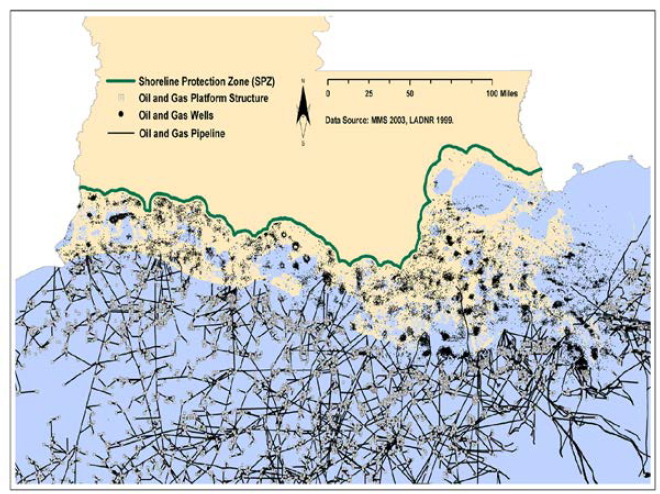
SOURCE: UNO-CHART.
organizations to strengthen their understanding and their work. She believes funding is needed to support not only research but also local organization or networks that are doing mitigation work like living shorelines or FORTIFIED Gold housing.10
With help from the Prince William Sound RCAC, Peterson’s group developed legislation to work toward the creation of a citizens’ participation group with local fishers that would operate in a similar fashion to the RCACs in Alaska. When the group approached the Gulf Coast Ecosystem Restoration Council (or RESTORE Council),11 however, they learned that the Louisiana Coastal Protection and Restoration Authority12 limited Louisiana’s participation. “Everything had to go through the state master plan, which then excluded the local communities,” said Peterson. Peterson believes that several policies, funding, and research
___________________
10 See, for example, https://www.fisheries.noaa.gov/insight/understanding-living-shorelines and https://ibhs.org/fortified-grant-programs/ (accessed August 5, 2025).
11 Gulf Coast Ecosystem Restoration Council. https://www.restorethegulf.gov/ (accessed August 1, 2025).
12 Coastal Protection and Restoration Authority. https://coastal.la.gov/ (accessed August 1, 2025).
should be changed. She recommended that funds directed to communities should go to the local groups that are useful sources of information, are strong proponents of resilience, and maintain and build strong, trusting relationships.
Elaina Thompson (executive director, IOSA) began her remarks by sharing her success story about IOSA, which she described as “a small community engagement, bottom-up strategy for oil spill response.” IOSA’s headquarters are in the San Juan Islands in Washington state at the northern side of the Puget Sound, adjacent to one of the main waterways for oil transport, big tanker ships, and cargo ships. Communities are vulnerable in this area, because their local waters are constantly filled with myriad vessels and ships.
IOSA was formed in 1985 by the local citizens when little attention was paid to this rural, remote community after a spill occurred. Calls for assistance went unanswered and shellfish beds were destroyed, but there were no repercussions for the damage because the Exxon Valdez spill had not yet happened and the OPA 90 had not yet been enacted. IOSA achieves its response success in the community through locally trained volunteers living in San Juan County. For the past 40 years, they have proven that enlisting volunteers can be a successful way to do local, initial spill response.
IOSA has changed over the years. It was originally funded through reimbursements, but finding consistent funding was a challenge. After almost failing in 2019, IOSA’s strong support from the community led to $20,000 pledges from four large regional industry oil refineries to support contingency planning and response. These pledges served as a catalyst that led to a county levy vote to raise taxes in the local community. Once the vote passed, IOSA could get sustainable county levy funding, which is dispersed quarterly. Rather than writing grants for funding, Thompson operates with a memorandum of understanding, and IOSA is audited every 3 years. Now sustainable funding for IOSA comes from the county, the state, industry, and local communities. This year Thompson is converting IOSA from a 501(c)(4) to a 501(c)(3) organization, which could be helpful if it needs additional local community funds. In the past four decades, IOSA has responded to an estimated 800 local oil spill incidents, amounting to approximately 20 per year. These incidents are small, but without cleanup could equal the equivalent of one large incident if combined. Thompson described IOSA as a one-of-a-kind organization that has had a big effect on its community.
Thompson explained that IOSA’s Tier One Volunteer Response Program is successful because it collaborates with other organizations. It has successfully recruited volunteers by working with local community organizations—such as parks, ports, marinas, land trusts, fire departments, or the sheriff’s office—that allow their employees to volunteer for IOSA once a month or every other month while being paid by their employers for their time. This means people can volunteer during their workday, and they are enthusiastic about leaving their jobs to volunteer and learn about spill response.
Thompson explained that she promotes purpose and ownership by providing volunteers with gear, business cards, and assigned leadership positions and roles. She provides all of the responders in her Tier One Response Program with IOSA business cards to hand out when they talk to local mariners and boat owners. Thompson actively engages with her community by feeding and surveying them, while always focusing on proactive communication and relationship building. Each year, Thompson and one staff member host an industry meeting and several community forums, workshops, and educational opportunities. She accomplishes this work with the help of board members and volunteers. “In big-scale responses and recovery, if you do not have these relationships with these agency and industry folks in advance—if they do not know you, if you cannot call them—then it makes the job 3 times more difficult to help your community,” said Thompson.
Thompson contended that IOSA is valuable because it provides a high level of initial response support that does not require reimbursement because it already has basic funding. It shares its equipment and resources if needed, and it has become the relationship bridge between the industry and agency partners in their community. Thompson has only worked at IOSA for 2 years, so she emphasized that IOSA’s success is due to the foundation of all the former workers and volunteers and all the building and hard work they devoted to it.
Community Engagement Panel Q&A
An audience member stressed the importance of knowing what communities are doing and suggested that community trainings be brought into the command post as part of an operator’s oil spill response plan to help operators develop relationships and understand those resources. They
acknowledged that people who depend on the water for their livelihood have the best knowledge about a spill’s affect on local waters, which was evident from experiences responding to spills in Alaska and in the waters along the Gulf Coast. “It sounds like we need to bring it up to another level,” they said.
Another audience member asked whether enough is being done to ensure that good, accurate information is broadly disseminated as opposed to misinformation that can drive the public’s general perception. Ken Castner replied that it is unhelpful to focus on how other people perceive what is being done. Unsolicited advice from outsiders can cause widespread frustration within communities. Kristina Peterson responded that people should go into communities so that they see and learn from people who have the same jobs and responsibilities as they do. By doing this, they become the voice and the witnesses to the information that is spread beyond the community. A previous panelist pointed out that individuals at the local level can make a difference in sharing information, especially when deciding whether messages get retweeted. Responders must be connected in some appropriate way with members of the community within the ICS framework. Mây Nguy n agreed that local leaders often must cope with misinformation that infiltrates a lot of local community-level work, and she stressed the importance of focusing on the hubs of these informal networks.
An audience member commented that they participate in the annual oil spill drills that take place in Valdez, Homer, Kodiak, Cordova, and Chenega. Peterson responded that it would be wonderful to have the means to fund Gulf fishers to attend the Alaskan trainings so that hands-on learning could take place. Nguyễn agreed that having Gulf fishers participate in annual training efforts in Alaska would help increase the Gulf Coast’s capacity to strengthen community-driven responses.
An audience member offered to send a representative from their consortium to the Lowlander Center to update Peterson on statute and regulation changes and their plans to quickly and comprehensively respond to another large spill. Peterson expressed interest in their offer and asked the consortium to engage fishers and different fishing organizations so that their efforts could be integrated. Gary Shigenaka, the keynote speaker, commented from the audience that researchers and responders should inform communities of their activities and existing technologies, but it would be preferable to involve communities in protecting their own environment. He encouraged people to think more about early involvement in design and implementation.
An audience member asked Elaina Thompson whether she receives any reimbursement for IOSA’s oil spill responses. Thompson explained that IOSA was originally designed to always seek reimbursement, but the stable funding it receives from the state, county, and industry has made this unnecessary. IOSA’s primary goal is to be the initial responder, though it may receive reimbursement for a larger response or be asked to fill any gaps and then get hired and reimbursed. IOSA typically has one or two larger-scale responses per year. Most calls are for smaller responses, when 100–500 gallons are not quite large enough to send a whole team of people from Seattle. It often fills gaps with volunteers and monitors for smaller spills.
Thompson responded to an audience question about IOSA’s disposal of the oil it collects by explaining that initial response is the goal, then recovery and clean up. After that occurs, IOSA then passes the response to a primary response contractor, the state, or the responsible party. IOSA is focused on the relationships and the initial response and then looping in the entire community and doing joint training drills with tribes and industry.
In response to an audience question about replicating the framework in other locations, Thompson shared that IOSA is not a franchise, but this idea motivated her to attend this workshop. She believes that other remote coast communities could adopt IOSA’s model by passing local county levies to support sustainable funding, which could then be supplemented by state and industry funds. An audience member shared that for the past 15 years he has worked with ExxonMobil, the Marine Spill Response Corporation, the Washington State Department of Ecology, and others to conduct tribal HAZWOPER (Hazardous Waste Operations and Emergency Response) trainings in Washington state because these community members are seen as the first responders in hard-to-reach areas. “It is a great model,” he said.
SESSION 2: AFFECTED COMMUNITIES
Session 2 focused on how to ensure that the needs of affected communities are prioritized based on lessons learned from previous oil spills and other disasters. This session was structured differently than Session 1 in that Panels 1 and 2 participants in Session 2 remained at the panelist tables for the entire session. A Q&A session was held after Panel 1, and a combined Q&A session with all Session 2 panelists was held after Panel 2.
Panel 1: Affected Communities
Panel 1 of Session 2 focused on the mental, physical, economic, and social impacts felt by local communities. This session was moderated by Karolien Debusschere (deputy oil spill coordinator, Louisiana Oil Spill Coordinator’s Office), and the panelists were Liesel Ritchie, Sandy Ha Nguyen, and Jereme Altendorf.
Liesel Ritchie (professor, Virginia Tech) began her remarks by describing her areas of specialization as technological hazards and disasters, and her dissertation research, started in 2001, was on the long-term impacts of the Exxon Valdez oil spill. Since that time she has studied several spills, including the Deepwater Horizon, with support from the National Science Foundation (NSF). When the Deepwater Horizon spill occurred, she was in Cordova, Alaska, completing an NSF grant focused on the long-term impacts of the compensation process on the Cordova community. For 20 years, she has continued to work with communities in Cordova, and, as she and her colleagues conducted their research, they also established relationships with community members. “If you’re doing good social science, it’s not just about throwing out a questionnaire,” said Ritchie.
Research and her own experiences have shown that events such as large oil spills cause initial stress after the spill, but residual stress from litigation, cleanup activities, and the claims processes can cause as much, if not more, stress than the actual event. She has also found that regardless of the nature of the spill, the impacts experienced by individuals, groups, and communities are similar. Ritchie shared that although it is not possible to prevent every spill, she believes that improvements can be made to the compensation processes and policies post-spill.
Ritchie described the Public Welfare Review Technique (PWR-T), conceived in 2018, to address the need for real-time understanding of public perceptions during and after a spill. She described this as a parallel technique to the Shoreline Cleanup and Assessment Technique (SCAT), and it includes standardization of terms, definitions, forms, conditions, and methodologies; gathering experts with legal authority and jurisdiction and representatives from threatened communities to jointly implement the PWR-T; establishing science-based, politically neutral mitigation, response, and recovery strategies and tactics; and establishing sanctioned mitigation, response, and recovery end points. The steps for implementation of the PWR-T mirror those of SCAT (see Table 4-1).
| Step | Shoreline Cleanup Assessment Technique | Public Welfare Review Technique |
|---|---|---|
| 1 | Conduct reconnaissance survey | Identify and meet with key actors |
| 2 | Segment the shoreline | Identify key stakeholder groups in spill area |
| 3 | Assign teams and conduct shoreline surveys | Assign social science team lead and begin data collection and analysis |
| 4 | Develop cleanup guidelines and endpoints | Develop report(s) on finding and observations |
| 5 | Submit reports and sketches to Planning Section | Submit report that includes an executive summary with recommendations for response actions |
| 6 | Monitor effectiveness of cleanup | Monitor implementation of recommended actions |
| 7 | Do final evaluation of cleanup activities | Collect and analyze post-incident evaluation data to assess community-level recovery status |
SOURCE: Modified from Hayward Walker et al. 2021.13
Ritchie believes that it is problematic that regulations do not account for the social sciences or any social dimensions. She ended her remarks by asking, “Where are the resources, where are the regulations, and where is the support for us to collect these data that are so important?”
Sandy Ha Nguyen (founder, Coastal Communities Consulting, Inc.) introduced herself by saying, “I was born to a fisherman, am married to one, and second wife to about a couple hundred of them.” In her commercial fishing community, it is common for women to attend to the home and the finances while the men work. Nguyen began disaster-related work for
___________________
13 Hayward Walker, A., R. McKinnon, L. Ritchie, D. Gill, T. Hasenaeur, and J. Giese. 2021. Oil spill preparedness and response: Building the capacity to protect public welfare and support community resilience. 2020 International Oil Spill Conference Proceedings. https://www.researchgate.net/publication/356771636_Oil_Spill_Preparedness_and_Response_Building_the_Capacity_to_Protect_Public_Welfare_and_Support_Community_Resilience (accessed August 5, 2025).
hurricanes when she was 14 years old. For the past 15 years she has provided a nonprofit service and helped commercial fishermen, growing her office from one to seven staff members.
When a hurricane hits her area, Nguyen is the last person to leave and the first person the fishermen look for when they return, because her services are most needed during the recovery process. She likes to return to the most-affected areas after a hurricane because she sees hope in these places, and, at least for a few days following a hurricane, racism seemingly disappears. Community members immediately start working collaboratively on recovery efforts—quite a bit through the bartering of services and skills—without waiting for government funds that could take 3–4 years to materialize. When the Deepwater Horizon spill occurred, Nguyen’s community was still recovering from the repeated damage caused by Hurricanes Katrina, Rita, and Gustav. She does not believe that disaster recovery is about making people whole, but rather it is about making people resilient and learning how to adapt to changes.
Nguyen explained that Louisiana is in urgent need of help because of the combined effects of recovery from hurricanes, the oil spill, COVID-19, and a decline in profits due to imported shrimp. To prepare for another disaster, Nguyen would like to see funds go to community-based organizations like hers for direct outreach and communication efforts. She has been working to translate scientific information into laymen’s terms and then translating into Cambodian, Vietnamese, and Spanish for members of her community, so that they can understand the science, a process that she finds challenging and time-consuming.
To increase economic development opportunities, Nguyen would like to have secondary income streams for fishermen. She questioned why it is so difficult for fishermen to get credentials or be offered jobs and training. She has an upcoming meeting about creating another Vessels of Opportunity (VOO) program that could provide secondary incomes, which she believes would be relatively easy to do if federal boats are hired and the fishermen receive payments and training on a yearly basis. If a large spill occurs, the trained boats could form a task force with the owners of other boats that would also get paid. Nguyen believes investment in a VOO program would be insignificant compared to potential damages paid after a spill.
Jereme Altendorf (associate director, Arctic Programs and Strategy Implementation, University of Alaska Anchorage [UAA]) prefaced his remarks by noting that he recently retired from the Coast Guard after 23 years, so the opinions he expresses are his own. Altendorf stated that 33 U.S.
Code 1320 (International pollution abatement)14 “prohibits the discharge of oil or the release of hazardous substances to navigable waterways or the adjoining shorelines.” Every oil spill is a civil action that could be enforced with associated criminal penalties, and they all result in significant social impacts. The NRS—which is designed to respond to oil and chemical spills—is a separate system from emergency management and FEMA, which he thinks is a role that is more easily understood. FEMA is visible, and it gives preparedness and resiliency grants when people are suffering after a disaster. Altendorf explained that this is not how the NRS was designed to work or how it works in reality. “NRS is a top-down, federal government-led system that overly relies on local communities to understand how the system works in ways that, in [his] opinion, are not working anymore,” said Altendorf, and he emphasized that “the public expectations for communications dramatically exceed the government’s current capabilities.”
Altendorf believes that local communities’ ability to adapt, respond, and recover from spills are hampered by federal officials. More tasks are being pushed down to local communities, leaving local officials’ task saturated. While the Coast Guard provides millions of dollars in funding to ports for resiliency and security, under the current NRS, no preparedness grants are available. These grants “don’t exist, and they need to,” said Altendorf. Further, the NRS does not account for work being done for public health communities, but Altendorf believes it should. He would like to see trained, local on-scene coordinators—a local preparedness official whose sole purpose is to think about these issues on behalf of the community—so if a spill occurs, federal officials have an immediate point-of-contact who can help coordinate the local response because they received and spent money on preparedness.
Altendorf also believes that implementation of the National Contingency Plan must be updated and modernized. In addition to equipment, relationships and management of interactions should be tested. “The social cost of these things is hard, and we are just not doing it,” said Altendorf. He believes that including social impacts in the preparation exercise guidelines is essential. In his opinion, the Coast Guard’s and EPA’s centralization of services is making things more difficult rather than helping communities.
___________________
14 See, for example, 33 U.S.C. §1320. United States Code, Title 33 - Navigation and Navigable Waters, Chapter 26 - Water Pollution Prevention and Control, Subchapter III - Standards and Enforcement, Sec. 1320 - International pollution abatement. https://www.govinfo.gov/content/pkg/USCODE-2011-title33/html/USCODE-2011-title33-chap26-subchapIII-sec1320.htm.
Altendorf believes that special teams should be reimagined. If a spill occurs, the Coast Guard’s National Strike Force or EPA will send teams to deploy gear and resources and conduct real-time air monitoring. What is not available, explained Altendorf, is “a team to go out and do local community outreach sustained from the beginning of a spill through to the end after the litigation.”
Lastly, Altendorf explained that the NRS’s mode of communication is antiquated and ineffective for engaging with people and communities in a modern world. Reimbursement schemes, deployed under the Oil Spill Liability Trust Fund, are still completed with pdf files and emails rather than through a phone app. Altendorf would like to see the Oil Spill Liability Trust Fund deploy an information technology team to build an app to use during responses to adjudicate claims via a cell phone. Without such upgrades, Altendorf believes that we are underprepared for the next disaster. He is also concerned about issues related to social media and ensuring that messages from the federal government and communities reach their intended audience. “We can’t do that if we’re fighting misinformation or pretending it doesn’t exist,” said Altendorf.
In closing, Altendorf reiterated his messages about realigning port resiliency and security funding in the NRS and helping to build community-based preparedness programs. He also stressed the need for recognition that every spill is a civil action that last for years and that it is absolutely necessary to find, develop, and modernize the implementation of new programs.
Affected Communities Panel Q&A
Following the panelists’ presentations, Karolien Debusschere asked them to name a few things that they think will help communities recover. Sandy Ha Nguyen cautioned that people must understand the community needs where they work, and messages must be conveyed so that community members understand the messages without feeling intimidated. She was able to secure $45 million in settlement claims for her clients because she had all of the necessary information, learned to understand the legal terminology, and knew the process. She also believes that the settlement process needs to be streamlined and improved. Organizations going into communities must find and work with trusted community members, and they must realize they are affecting lives and businesses and working with
people who are dealing with mental health consequences and other trauma. Jereme Altendorf responded that the federal government will not meet those expectations if it cannot find ways to develop, nurture, and maintain connections and networking between big spills. Most Coast Guard personnel are transferred every 2–3 years, so it is challenging to maintain relationships with the community. Altendorf’s job at UAA is focused on helping agencies implement policy better, noting an excessive focus on policies and procedures rather than on talking to people about what is happening. He also reiterated that special teams should be reimagined in order to provide better services. Liesel Ritchie agreed with Altendorf, but she would like to see some regulations that allow the involvement of social scientists so that voices like Sandy Nguyen’s can be heard. Other people who have a role in spill response are already appropriately involved—physical sciences, marine biologists, toxicologists—but social scientists should be part of the response, so that they can do the work they are trained to do in the communities. Altendorf added that most trained federal officials are only concerned about external and emergency communications, which are typically one-way. He suggested that perhaps pushing Ritchie’s message might gain traction if it is supported and seen as best management practice. “That is something we should strive to,” agreed Altendorf.
Debusschere asked the panelists whether they were aware of instances when social sciences were included in emergency management or disaster response. Nguyen responded that she has had success working with NOAA and other state and federal agencies because she has invested years into building these relationships. She learns from scientists and researchers that want to help her community, and she educates the fishermen, so that they understand and participate. She would like to see RCACs in every coastal community in the country, since she does not believe that anybody cares about rural, coastal America.
Panel 2: Response and Research Communities
Panel 2 focused on the response and research community and the mental, physical, economic, and social impacts felt by responders and researchers. This panel was also moderated by Karolien Debusschere and featured Mike Drieu, Gabrielle McGrath, and Tim Steffek as panelists.
Mike Drieu (manager, Gulf of America Emergency, Preparedness and Response Projects, Occidental Petroleum Corporation) explained that
he is an operator, but he spent 21 years in the Coast Guard (retiring in 2005) and has 9 years’ experience working for Wild Well Control, a well blowout company. Throughout his career he saw similar issues in relation to the response communities—including the local communities—because there was a dependence on knowledge from local people to help identify important or sensitive areas to strategically place equipment. When he was stationed Alaska in the mid-1990s, the effects of oil spills were still evident in the community, and he saw firsthand some of the challenges that the community faced when big events occur. He also served on a strike team that liaised with local communities and federal agencies. Drieu recalled one incident when a freight vessel was drifting, and there was concern that the vessel could release oil. He was surprised to learn that community members were also worried about rats leaving the ship and harming the nesting habitat of local birds. Another time while responding to a fishing vessel accident, he learned that local crab boats were sinking because of stability issues, and several lives had been lost. In addition to working on the response, his team was able demonstrate how stability could be improved by widening the boats.
In 2010, when Drieu was with Wild Well, he saw that the offshore community had a lot of spill response equipment and Wild Well worked with some local communities, but their response plans limited community volunteers to cleaning wildlife. Communities let them know they wanted response equipment so that they could improve their readiness, which Drieu considers to be important. He believes that local communities should be included when decisions are being made and that state and federal plans should include affected communities. An important example of this approach is the Vessels of Opportunity program that started in Alaska and was later adopted in the Gulf region.
In addition, sometimes environmental trade-offs are unavoidable, such as the decision to use dispersants or other technologies. Drieu understands the controversies; however, local shoreline communities depend on returning to the water for their livelihood. Providing some financial compensation to put them to work acts as a band-aid, in his opinion. People living in those communities deal with major disruption and considerable stress. Drieu emphasized that people should identify the resources available to help people deal with traumatic events such as stress or mental health issues, though he recognizes that these resources are limited. Trained professionals are also needed to help address mental health concerns.
Gabrielle McGrath (portfolio manager/spill response specialist, RPS) began her remarks by reviewing her work history and explaining that her comments would reflect two different perspectives—as an active-duty responder with the Coast Guard and as a consultant and researcher. As a responder she was a qualified pollution responder, a federal on-scene coordinator representative, and an ICS instructor. As a responder she learned the importance of advance planning. During her time in the Coast Guard, she led three area committees and worked on updating area contingency plans. Having current plans is critical for a responder, especially for new personnel needing to reference the plan. She shared a recent push in the Coast Guard to make plans available online, or on the phone or a tablet, for easy access.
From 2019 to 2024, McGrath worked on a project with Ann Hayward Walker for a Bureau of Safety and Environmental Enforcement (BSEE)–funded project15 focused on the Gulf, Alaska, and Southern California to build offshore response information into the area plans where there is BSEE-mandated activity on the outer continental shelf. The project stemmed from an incident-specific preparedness review after the Deepwater Horizon spill that found the needs for BSEE to be more involved with area committees and for offshore response information in the contingency plans. She praised the opportunity she had to work with the area committees, tribes, and different community members to coordinate efforts.
McGrath also shared her experiences with the Deepwater Horizon response, clarifying that these were her own personal experiences and she was not speaking on behalf of the Coast Guard. When the Deepwater Horizon spill occurred, the Coast Guard was very focused on maritime security. Because of the protracted nature of the spill and separate command posts in Louisiana and in Mobile, Alabama, the Coast Guard had difficulty staffing so many different areas. McGrath had been working as the deputy commander of the International Ice Patrol when she was sent to Mobile. Accompanying McGrath were her children (aged 2, 5, and 9) and her mother; her husband and a baby-sitter joined them in Mobile for part of the time. Coast Guard staff were so overburdened that at one point the Coast Guard band was sent to Mobile to assist personnel. It was a very high-stress,
___________________
15 Bureau of Safety and Environmental Enforcement. Offshore Information for Coastal Zone Area Contingency Planning. https://www.bsee.gov/what-we-do/oil-spill-preparedness/offshore-information-for-coastal-zone-area-contingency-planning (accessed August 1, 2025).
exhausting environment, and she worked very long hours juggling work and family responsibilities.
When someone from the Coast Guard is transferred to be a responder, McGrath noted, they remain responsible for their regular job. Though she was working on Coast Guard response in Mobile, she continued to serve as second-in-command of the International Ice Patrol. McGrath also had to deal with computer challenges and many lost emails because she was required to switch assigned computers as she switched from job to job.
McGrath shared her lingering concerns regarding community distrust of the Coast Guard. She acknowledged the importance of engaging communities, ensuring their involvement, and ensuring that their needs are heard and addressed, but she also believes that it is important for communities to trust the federal agencies that are trying to help. She and other Coast Guard personnel saw many instances of distrust during the Deepwater Horizon spill. She understands the community members’ frustrations stemming from the oil spill but notes that the Coast Guard was there to help. McGrath recalled a time traveling to branch offices that covered coastline between Mississippi and the Panhandle of Florida to ensure that the operational plans were in sync. While attending a session at the emergency operations center in Jackson, Mississippi—a community that suffered significant damage by Hurricanes Katrina and Rita—she saw people look at her with disgust, anger, and frustration, even though she was only there to help and she had nothing to do with the current situation. McGrath stressed the importance of ensuring that these relationships are two-sided—that the federal government is trusted but also listening to the community.
In McGrath’s current position at RPS she had the honor of working with Dr. Deborah French-McKay, a renowned oil spill modeler, who led modeling studies for the Natural Resource Damage Assessment for the Deepwater Horizon spill when RPS was hired by NOAA. When spills occur, funding is made available for research, and this work enabled the use of primary data to validate the oil spill trajectory model. This opportunity was great, until the funding ran out. McGrath explained that it would be helpful to have more consistent sources of funding for projects like this so that improvements can be ongoing and not just happen when a big spill occurs.
Wrapping up her remarks, McGrath’s final point focused on academics. When coordinating a response, it is important to work with intelligent,
experienced people who want to do the research, but she stressed that researchers should also understand the people and communities with which they will be working. Without this basic understanding, resources might go to researchers who will not work effectively in these communities.
Tim Steffek (senior policy advisor, American Petroleum Institute [API]) began his remarks by explaining that API has an emergency preparedness and response portfolio that primarily covers oil spills on behalf of the oil and gas industry but also deals with events like the COVID-19 pandemic and natural disasters. Steffek has spent the past 15–16 years working to bridge the gap between researchers, industry, and policymakers, both through his current work at API and previous work with BSEE’s Research and Development program, where he focused on dispersant and herder research.
In briefly addressing the topic of API’s communication, Steffek explained that API has been very good at coordinating convening activities, operating its systems and processes, and communicating with its stakeholder groups, including federal, state, and industry. To date, local academics and the local or affected communities have not been recognized by stakeholders, but he credited the first two National Academies workshops in this series for highlighting this omission to API.
Steffek shared a few slides with the workshop participants, the first of which featured the International Oil Spill Conference (IOSC), which he clarified is not an API effort. IOSC has existed for approximately 55 years and is the longest running and the most widely attended oil spill conference in the world. At last year’s IOSC, a “Respond to Mental Health” survey was initiated that stemmed from a 2017 study by Kwok et al.16 that focused on mental health indicators associated with the Deepwater Horizon response. They found that depression prevalence increased by 22 percent and Post-Traumatic Stress Disorder (PTSD) increased 35 percent among Deepwater Horizon responders, with even higher rates found among those who smelled oil while conducting their response activities. Steffek explained that these physical manifestations came from disrupted routines, mental and physical stress from enduring a long response, and the compounding effect of negative perceptions from community members
___________________
16 Kwok, R. K., L. S. Engel, A. K. Miller, A. Blair, M. D. Curry, W. B. Jackson, et al. 2017. The GuLF STUDY: A Prospective Study of Persons Involved in the Deepwater Horizon Oil Spill Response and Clean-Up. Environmental Health Perspectives, 125(4): 570–578. doi:10.1289/ehp715 (accessed July 20, 2025).
and the media. Although responders are trying to do their best, they often experience instances where they feel demonized and demoralized. The study by Kwok et al. (2017) found that responders, including local community members, receive insufficient support both during and after a spill response.
To better understand these stressors, IOSC developed a pioneering survey, sponsored by Oil Spill Response Limited, a cooperative oil spill removal organization that operates internationally. The in-depth survey was distributed to roughly 10,000 members of the response community, starting with IOSC attendees and then organizations like API and other contacts worldwide. To date, approximately 250 responses have been received and are being analyzed with the goal of having preliminary data and a report by late 2025, and a peer-reviewed paper sometime in 2026.
The survey is a first step, but Steffek asked, “What do we do with that data?” He anticipates that the information will be shared with the response community globally and that there will be subsequent publications that can be translated into other languages for presentations, conferences, meetings, and other workshops. Steffek also hopes the data will lead to the development of new projects and better tools to ensure that spill responders—including the local community volunteers—have the appropriate support systems during and after the response. Mental health issues, including the experiences of responders, are being highlighted at several recent and upcoming conferences, and Steffek believes that based on data and stories like that shared by Gabrielle McGrath API needs to support these issues in relation to the oil spill response community.
Response and Research Communities Panel Q&A
Karolien Debusschere asked the panelists for their ideas about what would significantly improve the conditions for responders or the research community. Mike Drieu responded that Occidental is reexamining its plans and working on identifying better resources at the local level. Recent work with Sea Grant benefited its external communications and environmental units, but gaps remain. Some local communities are eager to help, and he would like to develop those relationships so that they can build trust and not lose the local knowledge. Drieu suggested that based on talks he has had with Frank Paskewich after the Thibodaux, Louisiana, workshop, his organization may be able to work more closely with local communities
when they deploy their equipment. Tim Steffek answered from a different perspective. He described how milestone oil spill events have happened sporadically with decades between each event. Shortly after one of these events the funding flows, leading to research and development, and there is momentum. However, between spills a brain drain occurs and resources wane, and Steffek expressed concern regarding how quickly these systems could be reactivated if another spill occurs. He acknowledged that API is experiencing recruiting issues in this space, and he believes that there needs to be a focus on exposing and preparing the next generation of spill responders and academic researchers before the next milestone event happens. Jereme Altendorf commented that the $6 billion Oil Spill Liability Trust Fund has a response portion, and through legislation, some of this funding could go toward preparedness. He believes that this is possible, and an outline for what to do with that money exists, such as getting into local communities and having meetings with a purpose, an objective, and a clear outcome, and other ideas that have been raised during this workshop. Gabrielle McGrath agreed that consistent interactions with local communities during area committee meetings is important, but she wondered how local communities could be made to feel comfortable at those meetings and whether they would be willing to share their perspective so that coordination and trust can be built before another incident occurs. Responding to McGrath, a participant commented that area committee meetings should be advertised and clarify why it is meaningful for communities to attend.
An audience member commented that even though new rules for hurricane shut-in, Deepwater Asgard did not stop production during Hurricane Zeta. They asked whether panelists consider the Deepwater Asgard incident to be a close call that could have led to another deepwater rig oil spill and asked for their thoughts about the combination of the increasing intensity of the Gulf storms and the rules around hurricanes. Drieu responded that emergency evacuation plans are evaluated 24, 48, and 72 hours in advance of a forecasted storm. Decisions to stop certain planned activities are initiated 70, 80, or even 100 hours ahead of time. Because early in the storm life cycle, some storms are not fully formed or even named and therefore determining the storm’s path is virtually impossible. He has seen instances when decisions to shut in are being made to prevent an accident, but those decisions ideally need to be made more than 72 hours in advance. When storms move very quickly, decisions must be made ahead of time. Part of the evacuation involves getting non-essential people off the platform so that
nobody is hurt or killed, and those decisions are made in tandem with those about how to best protect the environment. Drieu noted that Deepwater Asgard was a close call, which nobody wants that to happen again. He believes that making use of adequate planning resources and contingencies should help prevent similar situations from happening. An audience member responded to the question by saying that the Deepwater Asgard well was “safed-out” (meaning it was plugged and abandoned), disconnected, and moved off location, so it had no chance of blowing out. Therefore this was not an oil spill, but it had the potential to be a disaster where someone could be injured. Another audience member noted that recently technology and forecasting have been unable to accurately forecast these fast-moving storms, leaving little time to prepare.
Ken Castner, a panelist from Session 1, Panel 2, commented that he fully supports the Coast Guard and appreciates its support with helicopter rescues of fishermen. He also made Homer, Alaska, a Coast Guard City when he became mayor. Yet, when negotiating rulemaking after OPA 90, Castner found the Coast Guard to be much less willing than API and the unions to meet the local people halfway. He finds it frightening that the Coast Guard still does not have an agreement in place outlining what it will do if an emergency occurs. Altendorf responded that there is little reward “for leaning in, in an agency that has historically not been honest with what its actual capabilities are.” It is incredibly challenging for a lieutenant or a captain to make those difficult decisions in an environmental response. Altendorf explained that he has dedicated his professional career to environmental protection and has had to work hard to continue to work in the environmental response realm. He noted internal pressure for the Coast Guard to move toward having subject-matter experts and for keeping retirees engaged to provide continuity. Drieu added that when working with environmental response, there is a unified command for an incident, a state representative for much of the offshore activities in the Gulf, a federal on-scene coordinator, a responsible party, and an incident commander. If an incident is big, it is extremely important for representatives from state and local agencies to have a say in what happens, so that they are not overridden. During the Deepwater Horizon response, the federal on-scene coordinator was replaced by admirals, which set a precedent. “What is a unified command if they’re being torn apart because you’ve got the federal agency that’s being an influence outside their control?” asked Drieu. He also believes that academia and industry should work together ahead of
time, so the combination of science and experience will continue to lead to future advances.
An audience member shared that they live in an area with ineffective horizontal collaborations between the Coast Guard, the State of Virginia, the head of the Incidence Management Assist Team, and the ICS. Protecting the public’s welfare is included in the NCP, but public welfare is not defined. They speculated that a requirement to engage with affected communities as part of the incident and objective would direct the response organization and unified command to fund this effort and put it into action. Therefore compensation would be provided for people working in communities. Altendorf identified an overreliance on the part of agencies on purpose-built teams and structures that were created in the 1980s and are now obsolete. He noted that nothing is preventing the Coast Guard from changing anything about the National Strike Force, but there has to be motivation to do so. Without a funding stream and a reason, he would be unable to do what needs to be done. “I am only going to get good at it if I continually engage,” said Altendorf, “in order to connect I have to be able to write a check.” McGrath suggested that changes could be made by adding new scenarios to the list of objectives for different kinds of incidents in the next iteration of the Incident Management Handbook.17
After noting Ritchie’s comment that social disruption inherently leads to anxiety, an audience member asked if there is a quick way of measuring social disruption. Ritchie responded that social disruption, community wellbeing, and mental health can be determined using standardized measures and modules of questions, which has been used in the Gulf Coast. Comparisons can be made across events regarding social disruption and through mental health questionnaires.
An audience member shared that after an event like an oil spill, support for small, grassroots groups or recovery groups dissipates because people who previously provided support can no longer afford to do so. Therefore, leaders of these organizations end up doing their ongoing work as well as any additional work associated with the oil spill. When funds were made available to local nonprofits and faith-based groups, the onerous paperwork
___________________
17 U.S. Department of Homeland Security, U.S. Coast Guard. May 2014. U.S. Coast Guard Incident Management Handbook. U.S. Coast Guard COMDTPUB P3120.17B. https://media.defense.gov/2025/Jun/27/2003744875/-1/-1/0/INCIDENT_MANAGEMENT_HANDBOOK_COMDTPUB_3120.PDF (accessed July 2, 2025).
and applications made it almost impossible for these groups to submit applications. She wondered whether regulations could help remedy this situation. In her case, she ended up receiving funds from a fundraiser that was hosted by friends from the Coast Guard. Those funds were appreciated, but she finds it unconscionable that the other systems failed.
Another audience member said that a foundation in New Orleans has funded her for the past 15 years. Although not a large amount, the funding provides an incentive to get back into the community right away. She added that some people find that working, filing claims, sharing information, and spending time with others are all forms of therapy. Ritchie shared that Steve Picou and Duane Gill developed a listening program after the Exxon Valdez oil spill when it became evident that most commercial fishermen or their partners would not seek mental health treatment. The Peer Listening Program18 involved training lay persons—such as bartenders, hair stylists, retail workers, people in ministry—to actively listen. The program was not intended to replace mental health treatment, but it taught people to be empathetic listeners and helped people talk through their concerns. Trained peer listeners could also refer people to professional services, if needed. Peer listening programs were adopted after Hurricane Katrina and were used by Sea Grant during the Deepwater Horizon spill.
An online attendee asked, “As government funding is pulling back on research and science, do you envision industry stepping up the funding to keep engagement and advocacy efforts like this moving forward?” Steffek responded that his research and development budgets at API have been tight since the end of the Joint Industry Task Force that closed about 5 years after the Deepwater Horizon incident. He does not anticipate that industry will increase research and development funding to make up for the government shortfall.
Breakout Session
To end the first day of the workshop, the participants took part in a round-robin breakout activity to allow all present to share their thoughts on best practices, lessons learned, and areas for improvement. The activity was
___________________
18 Picou, J. S. 2001. Prince William Sound Regional Citizens’ Advisory Committee (PWSRCSC), Gulf of Mexico Peer Listener Training Manual Team. Peer Listener Training Manual: Gulf of Mexico Edition. MASGP-11-006. https://www.pwsrcac.org/wp-content/uploads/Peer-Listener-Training-Manual-Final-Approved-September-2023.pdf (accessed September 8, 2025).
structured along the oil spill timeline with poster boards covering different phases of the spill: prevention and preparedness, day of spill, early days post-spill, and longer-term recovery and restoration. Each posterboard was prefilled with a few of the standard processes that occur during that phase to help anchor participants’ thoughts, who were then tasked with writing comments about that phase on sticky notes, voting on the comments of others with stickers, and discussing them with others at their table. Each participant rotated through all four poster boards during the session. The full list of comments can be found in Appendix E.
The Prevention and Preparedness board featured a wide range of topics including actively involving communities in planning efforts, modernizing communication tools, regularly testing equipment and response procedures, facilitating cross-sector training, and supporting baseline and longitudinal research. The comments that received the most support from other participants were (1) “Actively invite and encourage local agency and stakeholders to attend AC (Area Contingency) meetings,” (2) “Integrate community engagement into drills (including tribal governments),” (3) “Barrel tax to fund research,” and (4) “Include social science as a science.”
The Day of Oil Spill board focused on ways to increase the speed of response deployment; use clear, inclusive communication early; use innovations in technology for better assessments; and ensure science and legal teams are ready to join the process. Participants felt most strongly about (1) “Communicate to [the] public what agencies are on hand and in what capacity,” and (2) “Pre-identify trusted spokespeople for public interactions.”
For the Early Days Post-Spill board, the participants identified several common themes around the need to assess and adjust response strategies; address human health, mental health, economic, and cultural impacts; maintain open and transparent communication with the public; ensure tribal and community participation in ICS decision-making; and align research with community needs. The comments that were most supported on this board were (1) “Have [a] social science specialist lead [a] social impact needs assessment (early scan),” (2) “Stakeholder input [is needed] in ICS structure,” and (3) “[Include] HAZWOPER-trained rehabilitators and veterinary specialists.”
The Longer-term Recovery and Restoration board featured several key topics such as sustaining environmental and community monitoring, ensuring that lessons learned are shared, being transparent in the communications, engaging in joint community-academia research efforts, and fixing
legislative gaps to plan for future threats. Specific comments that received the most support from other participants were (1) “Need reliable funding to ensure consistency of long-term monitoring,” (2) [Need] “inter-disaster/oil spill research and baselines, in particular, public health and social science research,” and (3) “It’s a crappy system but don’t tear it apart without a better model.”
DAY 2 OPENING REMARKS
Levine welcomed the workshop attendees and thanked the planning committee members and staff for their work planning the workshops. He stressed that in addition to chemistry, biology, and physics, science includes the social sciences, health science, and medical sciences, and all are integral to the decision-making process. Levine also directed people to review the recommendations in the National Academies of Sciences, Engineering, and Medicine report, Oil in the Sea IV,19 which should be available in Spanish early in 2026. Following Levine’s remarks, Bernie Goldstein (professor emeritus, University of Pittsburgh and member of the planning committee) introduced Maureen Lichtveld as the keynote speaker.
KEYNOTE SPEAKER
Maureen Lichtveld (dean, University of Pittsburgh School of Public Health) explained that she would discuss lessons learned, successes, and the transdisciplinary framework that public health offers regarding oil spill work. In discussing lessons learned, Lichtveld noted that finding ways to better communicate health research needs has improved in the past decade, though work remains in areas such as using culturally relevant data, integrating intergenerational and interdisciplinary perspectives, and integrating human and ecosystem health and social sciences.
Lichtveld posited that funds are spent on response rather than preparedness because “nothing happens during this inter-disaster period.” Though some progress has been made in communication and coordination, little has been made in capacity building, collectively referred to by Lichtveld as the 3Cs. Considering the ICS, she questioned whose system it is
___________________
19 NASEM (National Academies of Sciences, Engineering, and Medicine). 2023. Oil in the Sea IV: Quick Guide for Practitioners and Researchers. Washington, DC: The National Academies Press. https://doi.org/10.17226/27155.
and who the system is for. If it is for agencies, she questioned whether that includes communities, because human health and an individual’s health are often missing from the policies of EPA and others. Lichtveld believes that work remains to integrate the 3Cs into the ICS.
Lichtveld and her colleagues from the National Institute of Environmental Health Sciences developed studies to examine potential after-effects from the Deepwater Horizon oil spill. Working as part of the Transdisciplinary Research Consortium for Gulf Resilience on Women’s Health partnership, studies focused on three questions that were raised by affected communities: Is the seafood safe to eat? What will happen with the women who are pregnant now? Is the air safe to breathe?
In a study focused on answering the question regarding risk perceptions pertaining to whether seafood was safe to eat, members of her team went shrimping with the Vietnamese community.20 This was important because people in that community caught the seafood they ate rather than purchasing it at the market, and it was a way to build trust. During a meeting attended by federal agency representatives, a former colleague talked about how to assess risk related to shrimp consumption. Based on her team’s current work with the Vietnamese community, however, one of Lichtveld’s colleagues showed that risk assessment assumptions should be modified from the NHANES (National Health and Nutrition Examination Survey) figures to account for the large amount of shrimp consumed in this population and the lower average weight of Vietnamese community members. Their study showed that the risk of eating seafood was not a concern for this population.
Lichtveld was also previously involved in an unpublished study of the middle-skilled workforce, made up of primarily males (19 to 22 years of age), who worked on oil rigs for approximately 2–3 months. The study team worked with high school principals to develop a proposed curriculum for the workers. Proposed content areas related to oil safety included worker health and safety, facilities preparedness, and response planning. Proposed content areas pertaining to health included community preparedness and planning, cultural competence, psychosocial basics, and basic knowledge about how to link community members with resources and services.
___________________
20 Wickliffe, J. K., B. Simon-Friedt, J. L. Howard, E. Frahm, B. Meyer, M. J. Wilson, et al. 2018. Consumption of Fish and Shrimp from Southeast Louisiana Poses No Unacceptable Lifetime Cancer Risks Attributable to High-Priority Polycyclic Aromatic Hydrocarbons. Risk Analysis. Epub March 13, 2018. https://pubmed.ncbi.nlm.nih.gov/29534340/ (accessed May 12, 2025).
Proposed content areas for employability skills included communication and workforce cultural competence.
Lichtveld and her colleagues also worked closely with members of the United Houma Nation in another unpublished study to determine what it means when community members are forced to leave their homes and land because of the cumulative impacts of natural and technological disasters. This study took place in six case communities and focused on issues such as building decision-making capacity and translating and disseminating research.
Lichtveld noted her work with a National Academies consensus study21 focused on community resilience in which the committee defined the six capitals or domains of community research—natural, built, social, financial, human, and political. Looking to the future, Lichtveld is proposing a transdisciplinary public health framework that includes translational science and translating and disseminating research. Much of the completed public health work has focused on specific programs, such as oil spill research or intervention policies. Less work has been done on surveillance, laboratory practice, and epidemic investigations, and minimal work has been done on basic public health infrastructure—such as information and knowledge systems, workforce capacity, and organizational capacity. Strategies for building resilience through investments in data, human and physical infrastructure, funding, human capital, and government were described in a recent National Academies report22 authored by an expert committee chaired by Lichtveld.
Lichtveld explained that in terms of oil spills, community engagement is the central component that connects science, policy, and practice, and that all these relationships are bidirectional (see Figure 4-3). Lichtveld believes that well-conducted science should be able to lead to risk reduction, but practice also can influence and inform science. Science can influence evidence-based policy through translation and application, and monitoring and implementation influence what is happening in practice and the value and importance of science-driven policy.
Lichtveld explained that 10–20 percent of risk of health impacts is at the individual level and can be attributed to personal attributes, while 80–90 percent of risk comes from moderating factors such as social
___________________
21 NASEM. 2019. Building and Measuring Community Resilience: Actions for Communities and the Gulf Research Program. Washington, DC: The National Academies Press. https://doi.org/10.17226/25383.
22 NASEM. 2023. Advancing Health and Resilience in the Gulf of Mexico Region: A Roadmap for Progress. Washington, DC: The National Academies Press. https://doi.org/10.17226/27057.
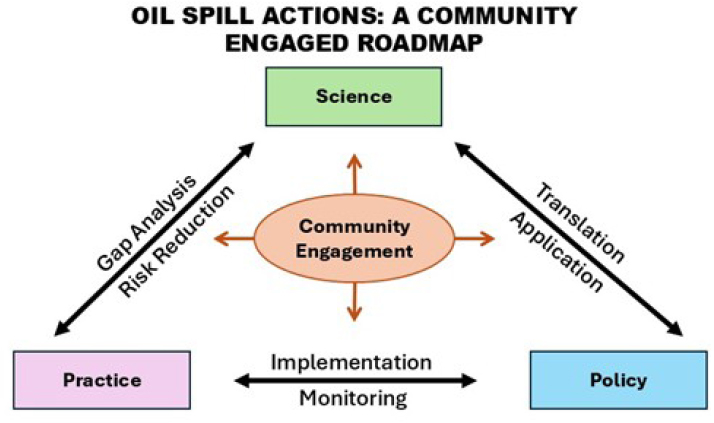
SOURCE: Adapted from M. Lichtveldt’s presentation, March 26, 2026.
supports, community assets, access, and preexisting conditions. Minimizing the risk for moderating factors has the highest likelihood of reducing overall risk. As healthcare costs continue to rise, Lichtveld suggested that a strategy for the future would be to use AI and machine learning to predict where vulnerable communities will be and prepare appropriately beforehand—not when the response is under way.
Q&A with Keynote Speaker
An audience member asked how to begin the process of convincing people to address existing mental health issues in a diverse coastal area such as Louisiana that is repeatedly recovering from disasters and is dealing with family disruptions and high rates of suicide and domestic violence. Lichtveld responded that the first step would be to conduct a community needs assessment so that solutions can be tailored to a specific community. Ideally this assessment would take place through a community-driven process that bonds public health and the community together. She cautioned that a community should not let anybody from outside decide and define the community’s priorities and, once they are defined, the community should work with agencies who are willing to be more cross-disciplinary in nature.
SESSION 3: PREVENTION
The prevention presentations in Session 3 explored effective strategies, technologies, and policies aimed at preventing oil spills in the United States.
The presenters included Tom Coolbaugh, Donna Schanz, and Kevin Sligh. A Q&A session followed each presentation.
Special Presentation – Tom Coolbaugh
Tom Coolbaugh (ExxonMobil, retired, and founder, Coolbaugh Associates) spent more than 32 years with ExxonMobil and had earlier jobs working for chemical companies. He approached this presentation from the industry’s perspective. He is a research scientist by training with a focus on the science and technology of how to effectively respond to oil spills. Coolbaugh spent time on vessels during the Deepwater Horizon response and in the Prince William Sound. While in Alaska, he saw oil-sniffing dogs that could detect oil at very low levels. He found it impressive to use dogs to find actionable oil that cannot be readily seen or smelled. When he was in the Gulf, he focused on identifying the most effective dispersants. After evaluating seven or eight dispersants, he determined that Corexit 9500 was the appropriate choice for several reasons.
Coolbaugh recalled that when he worked at ExxonMobil, Rex Tiller-son, a former chairman of ExxonMobil and former U.S. secretary of state, made the comment that every member of the ExxonMobil workforce is a risk manager and stressed that employee efforts should focus on what can be controlled and done to mitigate risk. Coolbaugh shared that the International Tanker Owners Pollution Federation has tracked oil spills for decades. Several bad spills occurred in the 1960s and 1970s, and the number of spills has continued to decrease since that time. The goal is to get as close to zero spills as possible.
Coolbaugh served on a National Academies committee that produced the report Responding to Oil Spills in the U.S. Artic Marine Environment.23 He referred to a table in that report that shows the probability of an oil spill along with the expected magnitude of impact (see Figure 4-4). Coolbaugh stressed that the focus should be on the upper right of the table (events with high probability and high impact) more than the lower left (events with low probability and low impact) and that it makes the most sense to focus on areas where actions could mitigate the largest potential effects. If
___________________
23 TRB and NRC (Transportation Research Board and National Research Council). 2014. Responding to Oil Spills in the U.S. Arctic Marine Environment. Washington, DC: The National Academies Press. https://doi.org/10.17226/18625.

SOURCE: TRB and NRC, 2014.
the risks are low probability or low impact, it probably makes more sense to devote time and effort someplace else. Coolbaugh described dispersants as one tool in the response toolbox. He believes all the strategies in the response toolbox should be considered even if there are still unknowns regarding efficacy or people are afraid of it. Every spill is different, and every tool in the response toolbox should be considered based on the unique challenges of each spill.
Coolbaugh stressed that training is key, but of the different kinds of training some are more effective than others. He spent a lot of time in ExxonMobil operations worldwide working with its response community and local communities to understand their priorities. Training is important in a variety of settings because it allows team members to interact with regulatory agencies and response organizations and to become familiar with the ICS (or the Incident Management System, which was preferred internationally). The ICS allows for a common language when working with other teams. Training also helps team members understand the Net Environmental Benefit Analysis (NEBA) approach. NEBA helps people understand the
implications of their decisions to act or not to act. A planning cycle provides a framework of the ICS so everyone knows what needs to be done ahead of time, and what should be done during operational periods.
Coolbaugh participated in an ecological risk assessment that brought together biologists, regulatory agency personnel, the Coast Guard, and industry. During this process, a great deal of time was spent determining choices and evaluating participant’s priorities. “Getting all the right people in the room, including the community members, was certainly key,” said Coolbaugh. During this process they learned how an assessment can change based on factors such as what time of year an incident occurs or what resources are available. When going into a new area, it is important to engage with key individuals who understand the local priorities. He believes that industry should focus on identifying what it can do to help and how it can help the community improve and recover. Coolbaugh recalled times when they were sure they knew a community’s priorities but later learned the community had different priorities and needs. From scenarios like this, he learned that understanding a local community’s needs and wants is much more important than coming in with preconceived filters. He also came to appreciate the value of establishing a solid foundation and a good working relationship well in advance of a real event, and stressed that “until you go into a community, you only have your own expectations of what it’s going to be.”
Response community training is conducted in many different settings. He has routinely participated in trainings on the outer coast of Washington state, at the Northwest Oil Spill Control Course in Port Angeles, Washington, and with the Coast Guard. Coolbaugh has been conducting trainings for 15 years and enthusiastically continues to do so in his retirement.
Coolbaugh stressed that industry puts a lot of effort into preparedness through work with different organizations such as the API, Ipieca, or the International Maritime Organization (IMO). In addition to working with ExxonMobil, he was also the shareholder representative for Oil Spill Response Limited—an international oil spill removal organization—and the chair of the Global Initiative for West, Central, and Southern Africa, a joint IMO and Ipieca effort. Coolbaugh explained that the industry has been actively involved in many places working on mechanical recovery, in situ burning, dispersants, and monitoring and evaluation. He has found that simply evaluating a situation is a very important step. “Sometimes it is the right thing to do. By not doing something, you’re actually doing something better,” concluded Coolbaugh.
Q&A with Tom Coolbaugh
An audience member asked how to keep people focused on the reality that a disaster can occur anytime, even though none may have occurred in quite some time. How do you get past the bureaucratic and corporate mentality that the chance of an accident is so low that anything more than abiding by the prep guidelines is excessive? Coolbaugh agreed that this complacency exists and acknowledged that there is a lot of attention following an event and then after several years everything returns to the baseline. After the Exxon Valdez spill, Exxon (now ExxonMobil) created the Operations Integrity Management System, and it was the primary resource that everyone worked from. After the Deepwater Horizon spill, BP created its own version called the Operations Integrity System. When Exxon and Mobil merged in 1999, they were very different companies, but within the oil industry they were fairly similar. Mobil’s approach was to do what needed to be done and ask for forgiveness later, while Exxon’s approach was to trust a decision but verify what is said and done. Coolbaugh explained that some people believed that Mobil was too risk averse because virtually every well they dug was productive. The thinking was, if they were not experiencing failures, they were not trying hard enough or taking enough risks. If everything is going smoothly, which happens in a research lab, more or different tests need to be done, because much more can be learned from a failure.
Research budgets declined in the early 2000s but increased after the Deepwater Horizon spill. Now, budgets have fallen much faster and most of the researchers have retired. “There aren’t that many people left,” said Coolbaugh. ExxonMobil Research and Engineering headquarters in Clinton, New Jersey, is closing and moving to Spring, Texas, to a campus built for 10,000 people, but he thinks it is unlikely that many people from New Jersey will make the move. Attracting new people is also difficult. Coolbaugh was able to advocate for oil spill science at universities in Europe and North America and managed to coax some people into Ph.D. programs focusing on the future of oil spill science, but this area of research is contracting due to downsizing and retirements.
An audience member noted that during the workshop people have offered to work with other people, show other people what they do, or show people their facility, and those exchanges were wonderful. Is there a way to engrain that mentality more in how we operate? Coolbaugh replied that there are several reasons why this is challenging. Identifying
who is available or where relevant work is being done is difficult. There are research papers or one-pagers, but it is unhelpful to be told to read a stack of papers to learn something. Coolbaugh worked with a company in Washington, D.C., called The Clearing24 that helped his team understand how to communicate more effectively. Another option is to contact respected organizations like the Oil Spill Recovery Institute, API, or Ipieca, or try to identify trusted sources and understand what technologies are available. Coolbaugh also suggested accessing research organizations such as Ohmsett, Cedre, and SINTEF that have experience working with and helping people understand the technology. “When you see something, it means that much more,” said Coolbaugh. He also acknowledged the challenge of getting people together. His team tried to include community members in some of the ExxonMobil exercises, but legal constraints complicated this effort. They worked to create a program called Confident Ambassadors to increase workers’ confidence to offer opinions or resources. In this program, workers received training in technology and how to speak up when they hear something that sounds incorrect. Also helpful are resources like the Oil in the Sea reports from the National Academies. Coolbaugh believes that one of the most important focus points for oil spill response is determining where the spilled oil is located. “If you can’t see it or you can’t get to it, it doesn’t matter how good your equipment is,” explained Coolbaugh. Utilizing aircraft, satellite imagery, or unmanned aerial vehicles (drones) to spot oil in real-time allows more effective use of available resources in a timely manner.
Special Presentation – Donna Schantz
Donna Schantz (executive director, Prince William Sound Regional Citizens Advisory Council [PWSRCAC]) began her remarks by providing an overview of the Exxon Valdez spill (see Schantz’s remarks from the Anchorage workshop in Chapter 2 for more details) and then she focused on some advances that have resulted from OPA 90, one of several major pieces of legislation that were passed after the Exxon Valdez oil spill. One of the most important OPA-90–related changes that was specific to Alaska and the Prince William Sound was the creation of the Regional Citizens’ Advisory Councils. Alaska has two councils; one for Cook Inlet and the other for Prince William Sound. While the RCACs are federally
___________________
24 See https://theclearing.com/ (accessed July 3, 2025).
mandated, they receive all of their funding from industry, rather than the federal government, yet they operate completely independent from industry. Schantz thinks of the RCACs as anti-complacency groups. Congress determined complacency on the part of industry and regulators to be a contributing factor to the spill, so it decided that involving citizens in decisions that affect the safe transport of oil was one way to combat complacency. In other words, “Those with the most to lose from an oil spill should have a seat at the table and a voice in decisions that impact safety,” said Schantz.
The PWSRCAC represents the entire oil spill region, from Valdez to Kodiak Island. It represents aquaculture, Alaska Natives, communities, commercial fishing, environmental groups, recreation, and tourism. Its funding supports scientific research and the hiring of technical experts to help the RCACs provide advice and recommendations to industry and regulators. For the past 36 years, Schantz explained, “the citizens councils have played a pivotal role in ensuring that oil can be produced and transported safely from Alaska to markets.”
Though this panel is focused on prevention, Schantz stressed that if a spill occurs, the RCACs are already in place to ensure that people in the area are ready, informed, and involved. Their area plans have a mechanism that allows them to access the emergency operations center and a provision that allows them to convene a regional stakeholder committee should another major oil spill occur. This would allow citizens to have a voice in decisions during a response. Therefore the RCACs, which only exist in Alaska, can interact with the unified command to provide local knowledge, concerns, and information. Schantz described how the RCACs have worked with many different people throughout the years. After the BP spill, many people went to the area purporting to be experts and trying to promote their goods and services. The PWS RCAC has now developed a clearinghouse to determine who is bogus and who has legitimate credentials. “Relying on those who have the experience is exceedingly important,” said Schantz.
Regarding prevention, Schantz first highlighted the Alyeska Pipeline Service Company and its ship escort response vessel system, which is referred to as SERVS. Alyeska’s SERVS was created after the Exxon Valdez oil spill to prevent spills and provide response and preparedness capabilities. Today SERVS’ equipment and trained personnel are ready to immediately respond to an event. An important prevention component of SERVS is the state-of-the-art escort tugboats that accompany each laden oil tanker
through Prince William Sound. Tugboats were a requirement of OPA 90; now two escort tugs—each equipped with response equipment—use power and innovation to prevent catastrophic accidents and provide emergency towing for tankers. The tug crews are trained to slow or stop a tanker in an emergency and help ensure a tanker’s safety on the water. Oil tankers in Prince William Sound are also prohibited from leaving the dock if existing weather conditions would affect a tug crew’s ability to safely pass a line to the tanker and to take it under control. PWS RCAC staff can ride the tugs to observe exercises, verify capabilities and preparedness, and provide local input or recommendations. Recently the PWS RCAC made recommendations to industry and regulators pertaining to line-throwing devices that would be used to attach a line to a tanker in distress. This recommendation was based on a recent study that evaluated effectiveness, feasibility, environmental impacts, and costs.
Another component of SERVS is the use of local fishing vessels (or Vessels of Opportunity), which would help prevent oil from spreading and mitigate the impacts to communities and the environment if another spill occurs. SERVS contracts with more than 350 vessels manned by local fishermen, who receive training annually and understand the local waters and participate to protect their livelihoods. They serve as the core of the response system in Prince William Sound. Unfortunately, the use of local fishing vessels is currently threatened by a law passed in 2023 that was intended to support this program but is being misinterpreted by the Coast Guard. The RCACs are part of an industry-wide effort to remedy this misunderstanding, because Schantz and others believe that losing this local response participation would greatly diminish capabilities, not only in Alaska but also across the whole nation.
The last item Schantz highlighted was the Joint Pipeline Office, which was created in 1990 and is composed state and federal agencies with authority over the Trans-Alaska Pipeline System. The office was designed to better coordinate efforts, monitor environmental safety, and ensure regulatory compliance; and it was a model for providing government services, interacting with the public and industry, and helping create prevention partnerships between citizens, industry, and regulators. Unfortunately, the Joint Pipeline Office has essentially disbanded, and current roles and responsibilities within the office are unclear. At the RCAC’s urging, the Government Accountability Office initiated a review in 2024 to determine how roles in the Joint Pipeline Office have changed and to determine what gaps currently exist in regulatory oversight. Schantz expects the review to
be released soon, and she is hopeful that any report recommendations can help improve that system.
Q&A with Donna Schantz
Recounting how Schantz had explained that the RCACs direct research and then communicate about that research, an audience member asked whether she could share any successful strategies or tools to help scientists communicate innovations or new findings. Donna Schantz agreed that this is a huge challenge and recommended asking the RCACs help scientists communicate their findings. The RCACs have used the Coping with Technological Disasters Guidebook25 and the Peer Listener Training Manual,26 which they have updated and turned into a downloadable audiobook. They are also considering the possibility of translating it into different languages and posting about it on social media. She explained that the RCACs are working to identify effective dissemination strategies for scientific information so that information can be easily understood by members of the public.
Ed Levine asked Schantz to talk about how the RCACs integrate with the Coast Guard and the area contingency planning process, what they add to the planning, and how they help the citizens. In response, Schantz explained that as outlined in OPA 90, several agencies are ex officio or nonvoting members of the RCAC boards, so they attend RCAC meetings and hear their concerns, which allows for a reciprocal exchange of information. Regarding involvement with the area committee process, the RCACs receive invitations to participate in workgroups to support improvements and update the plan, and they can provide planning input outside the official formal public comment process. For example, RCAC members served on a workgroup to help define how the regional stakeholder committee process would work should a spill occur and to enhance community knowledge of how to effectively contribute to unified command during incidents.
___________________
25 PWSRCAC (Prince William Sound Regional Citizen’s Advisory Council). 2021. Coping with Technological Disaster: A User Friendly Guidebook, version 4. https://www.pwsrcac.org/wp-content/uploads/filebase/resources/coping_with_technological_disasters/Coping-with-Technological-Disasters-A-User-Friendly-Guidebook-Version-4.pdf (accessed August 1, 2025).
26 PWSRCAC. 2004. Peer Listener Training Manual. https://www.pwsrcac.org/wp-content/uploads/filebase/newsroom/rfps/Peer-Listener-Training-Manual-2004.pdf?no_preview=1 (accessed August 1, 2025).
Special Presentation – Kevin Sligh
Kevin Sligh (BSEE, retired) began his remarks by describing this workshop as “a space where science, lived experiences, and shared values come together to shape smarter, safer, and more resilient futures.” Sligh has had key leadership roles within the Coast Guard, FEMA, and BSEE, and is now the founder of his own consulting business. Through these experiences Sligh has seen how human error and nature’s unpredictability affect disaster prevention and responses. He has witnessed the strength of communities in the Gulf Coast, Alaska, and elsewhere, and learned how people living in communities face significant environmental challenges and risks. Stakeholders, partners, leaders, and advocates within these communities are working and striving for a safer tomorrow.
Sligh asked the workshop participants to close their eyes and think about earlier workshop discussions, and about where they were and what their lived experience was when the Exxon Valdez and the Deepwater Horizon oil spills occurred. Since that time, some of the changes that have occurred include a double-hull tanker requirement, blowout preventers, OPA 90, the Oil Spill Liability Trust Fund, and the current version of the NCP, which federal, state, local, and tribal representatives use daily. While some of the previous workshop discussions focused on community impacts associated with the National Response Plan and the NCP, Sligh focused his remarks on four interconnected areas that senior agency leaders consider during responses or long-term recovery—progress in spill prevention since the Exxon Valdez and Deepwater Horizon oil spills, the importance of safety culture and risk management, the ways in which collaboration can strengthen prevention, and how the future national resilience strategy will influence prevention work.
Sligh described the Exxon Valdez and Deepwater Horizon oil spills as defining moments that exposed inherent weaknesses and failures within the oil industry operational system and oversight mechanisms, and the consequences of insufficient preparedness. Since those spills, there have been several important technological advances. OPA 90 resulted in an improved regulatory framework that made provisions for a double-hull tanker requirement, the establishment of BSEE, and rules that strengthened offshore safety. Other improvements include real-time systems monitoring, automated shutoff systems, and the use of artificial intelligence for predictive maintenance, along with other significant technological improvements.
The Deepwater Horizon oil spill also showed that risks remain, despite the use of sophisticated systems, if the safety culture is lacking. “Both incidents [the Exxon Valdez and Deepwater Horizon disasters] were a failure of process, communication, and accountability,” explained Sligh, and having a strong safety culture is one of the best prevention strategies. BSEE focuses on the idea that safety must be a mindset. “Human error still causes most incidents, so investments in training, scenario planning, and complacency assessment are just as critical as the hardware,” he said. In high-reliability fields such as aviation and nuclear power, preventing small errors from leading to catastrophic consequences is achieved through meticulous process safety management and rigorous risk assessment. Approaches like these should continue to be embraced and adopted by the oil and gas industry; in addition, the ICS should be adaptable and welcoming to a broader range of participants, including diverse stakeholders and local leaders, to improve response and prevention efforts.
Sligh’s third topic focused on the importance of community-led collaboration in relation to prevention. He emphasized that “agency leaders know that true prevention isn’t top-down.” Sligh reminded the audience that the RCACs originated in the aftermath of the Exxon Valdez tragedy. He believes that RCACs—because of how successfully they bring local knowledge and oversight into prevention planning—should serve as a national model for community involvement. To Sligh, the strength of community-led collaborations was evident when the Murphy Oil USA refinery spill occurred on August 30, 2025, in Louisiana during Hurricane Katrina. Local governments and residents mobilized after the spill, and the local people who were familiar with the land and waters took lead roles in developing successful cleanup strategies and long-term recovery efforts. These examples demonstrate the need for continued public partnerships, local training programs, and full transparency. Sligh also stressed that communities should cocreate solutions. True collaboration means that there is recognition of the human toll—mental, physical, and economic—that communities and responders endure. “Investing in behavioral health support, long-term economic recovery, and culturally appropriate services must be a part of any meaningful prevention framework,” said Sligh.
In his remarks about the future, Sligh discussed the recent presidential executive order focused on achieving efficiency through state and local preparedness, and how this change might offer new leadership opportunities. Because of this executive order, state, local, and federal responders will explore new strategies that can consider the human toll of disasters,
including mental health concerns. Sligh encouraged workshop participants to engage in these conversations as state and local responders take on more responsibilities. “Localized risk management enables targeted spill strategies that reflect regional realities,” said Sligh. He stressed that strengthening partnerships between government, industry, and community stakeholders can lead to astute and more inclusive disaster planning, though Sligh also cautioned that planning success will depend upon having adequate funding and technical training, and coordination with federal partners. Without this support, the results could amount to fragmented efforts and uneven outcomes.
In closing, Sligh emphasized that prevention is a shared responsibility that requires everyone—scientists, industry leaders, regulators, Indigenous voices, and residents—to continue to fight for improvements. He urged workshop participants to foster collaborations and act with intention and empathy before another disaster occurs. Sligh concluded his remarks by saying, “Our oceans and coastlines are national treasures, and our communities are national assets. Our shared future depends on collective commitment to resilience that’s smarter, more just, and more prepared than ever before.”
Q&A with Kevin Sligh
A member of the audience asked Sligh about his experience with BSEE and whether he saw safety culture improvements in oil companies along the Gulf Coast. In response, Sligh referred to the safety alerts that BSEE issued when he was the director. In addition to conducting investigations and working with legal counsel, BSEE stressed the importance of preventing accidents by remaining vigilant. It also stressed a focus on the safety culture and the safety mindset when dealing with industry. To motivate industry to focus on safety, it spoke with operators and mid-level managers about their safety culture and to let them know that BSEE was truly being vigilant. “It’s not perfect, but it’s getting better, and the incidents of [a lack of safety] safety are lessening every year,” concluded Sligh.
Prevention Panel
The Prevention Panel delved into critical themes surrounding oil spill prevention in the United States, including policy initiatives, opportunities for improved community engagement, and challenges with resource allocation. This panel was moderated by Fran Ulmer (former lieutenant
governor of Alaska and current fellow at the Belfer Center for Science and International Affairs at Harvard University). Panelists were Vice Admiral Thomas J. Barrett (retired), Rich Sears, and Charlie Williams.
Tom Barrett (U.S. Coast Guard, retired, and Alyeska Pipeline Service Company, retired) began his remarks by stressing that prevention involves many people and entities—industry, federal and state governments, agencies, Congress, tribes, citizens scientists, research boards, academia, unions, nonprofits—working in a complex system where extensive coordination is needed. He is always aware that they operate in very fierce but also very fragile marine and onshore environments.
Each of the groups he listed has different perspectives and objectives and considers different risks. The Coast Guard focuses on readiness (the assets and capabilities) and respect, meaning that “you’re not allowed a single instance of outrage or improper or intemperate treatment of any person, or you’ll incur the severe displeasure of the President.” Barrett also stressed that preparation equals performance—meaning that being ready is important because no one knows what will happen tomorrow—and culture trumps strategy.
One of the ways that Barrett frames an organizational culture and how he thinks about it is “speak up, step up.” He recalled a time when he represented the Coast Guard during a high-level White House meeting and intended to be simply an observer but was specifically called upon to brief the meeting attendees on the Coast Guard’s response. Reflecting on this meeting later, Barrett realized he had information that no one else knew, and he would not have shared it if he had not been specifically asked to participate in the briefing. Barrett believes that this realization is also applicable to organizational culture. Individuals should be free to speak up about anything at an organization, especially if they see a problem. “If you have that, you’re going to be better off,” said Barrett. He also shared his observations that industry is not an enemy, know when you need to use more force, and make friends. “The time to make friends is before you need them,” said Barrett, and one of his favorite ways to make friends is to invite people for coffee. He has never wanted to meet someone for the first time when there was a problem. Barrett praised Anne Zink and her message that knowledge is not yours to keep, stressing the importance of leveraging what you know and making it relevant. As for preventing oil spills, perfection should be the goal.
Rich Sears (Shell Oil Company, retired, and gamechanger at LeadingEnergyNow) began by describing the oil and gas industry as a complicated
business of very complex technologies and technical systems (particularly offshore). Since any encountered problems are serious interdisciplinary problems, they are typically managed with complex people systems so that the people with the right expertise can become involved at the right time. People in the industry think they understand the natural system—the Earth—no one has any idea what is under Earth’s surface until the drill bit gets there. “That unknown is the real challenge in the whole thing,” said Sears.
Sears explained that to do this business correctly, process safety management must be controlled. In the oil and gas business, process safety management is “keeping the hydrocarbons behind pipe,” which is accomplished by company culture. Rather than focusing on having a safety culture, what really matters is whether the underlying company culture embraces safety as one of its values, along with technology, making money, and other priorities. All difficult problems never go away; companies with the right culture always remember the problems they have tried to solve. They understand the problems still exist in the background, and they must be aware of those problems and recognize them. Without this recognition, disasters like the Deepwater Horizon occur, where—due to a company’s culture—individuals try to solve complex problems in an incremental piecewise fashion, and then they think they can put that problem aside and not worry about it anymore.
Sears evaluates companies and their culture by reading their annual reports. Rather than focusing on the financial operating data, he looks at the chairman and chief executive’s letters to the shareholders to learn what they say they value, what they are proud of, and what is most important to them. From these letters, Sears determines whether a company truly understands safety. The companies that see safety as a value rather than a priority will talk about their strategic priorities in terms of integrated systems, technologies, solutions, asset integrity, and sustainability, and about delivering energy, improving lives, and making things better in the world. Sears does not believe that all companies understand this about safety especially when they say things like “safety is our highest priority.” Companies that do not understand safety also talk about the importance of rules by quoting safety metrics or measure their success by using examples such as lost time incidents. Sears believes that these types of companies are looking backwards and trying to avoid the next accident, while successful organizations, companies, or regulators, understand the
risk they create and how they manage it. They set performance expectations, they do not focus on rules, and they create the right culture. “That is the first step in spill prevention,” concluded Sears.
Charlie Williams (executive director, Center for Offshore Safety, Shell Oil Company, retired) began his remarks by explaining that he would focus on one specific segment of safety and environmental management systems, or risk management. He acknowledged the importance of learning from the past by examining incidents like the Deepwater Horizon spill while also noting that the safety record in the Gulf—regarding performance, safety, and other areas—has significantly improved over time. Learning from the small number of safety incidents is informative, but Williams also stressed the importance of managing safety and risk by determining what is being done well or why something is working and then striving to make further improvements.
Williams continued by noting the importance of optimizing human performance to improve safety and resilience. There should be awareness about how decisions are made when changes occur, and how recovery can happen when something bad happens. Williams explained that human performance and human decision-making are significantly affected by the mindset of the people working in the risk management system and within a culture, and that improving the culture can lead to improvements in those areas. The creation of the Center for Offshore Safety (COS) was transformative because it was the first industry organization that focused entirely on safety and environmental management systems. Emphasis was placed on getting the oil and gas industry together to learn to realize that safety management should not be a goal, but rather a journey of continuous improvement.
Williams shared some significant new improvements about management of change that pertain to ensuring good decision-making in industry. The first example he described was how to directly improve management of change by focusing on real-time monitoring. With real-time monitoring, data are collected offshore and shared with an onshore team so that the two teams can work collaboratively to review the shared data and collectively determine what improvements can be made, what issues might be concerning, or what actions might be needed in the future.
Another area of improvement highlighted by Williams was improving human performance and human reliability through progress focusing on situational learning and competency. Rather than teaching people using
PowerPoint presentations and follow-up evaluations, true learning is realized when someone can execute a job correctly and competently. One of many ways to create competency is through on-the-job mentoring and coaching, where someone must demonstrate competence rather than simply watch other people do the work.
Simulation capability has also significantly improved, and simulators are being used to develop competency. Without a simulator, competency can be improved by taking operations managers offshore and observing how they respond to different scenarios and problems and then asking coaches critique and evaluate their actions and responses. Improvements have been made to deep-water well control models, but well-control trainings can also occur in tandem so that coaches can observe their teamwork. Therefore an entire team’s behavior can be observed and coached rather than delivering individual trainings team members.
Williams also discussed situational awareness and its influence on decision-making. He explained that in the past, people were trained by being asked to identify hazards from a picture. This approach was somewhat effective, but he stressed that situational awareness is about more than simply spotting dangers. Situational awareness includes knowing whether an individual understands the hazard, whether they can predict how the hazard might escalate and lead to future problems, and whether they understand how a particular hazard might interact with other hazards.
The final issue Williams raised focused on barrier management. He explained that the key to risk management is identifying hazards, building barriers, and preventing hazards from escalating. Decision-making comes into play with making sure barriers are maintained and in place, deciding whether operations need to stop if barriers are lost, or deciding to keep operations from restarting until barriers are reestablished. In this way barrier management really focuses on decision-making.
Prevention Q&A with Panelists
To begin the Q&A session, Fran Ulmer asked each panelist a specific question. To Charlie Williams she reiterated that the Center for Offshore Safety was established after the Deepwater Horizon oil spill and was intended to help with prevention and raising industry standards. Despite the Deepwater Horizon Oil Spill Commission’s recommendation that the COS be independent from industry—so that it could exercise greater oversight and enforcement—that did not occur, and a different approach was taken.
She asked Williams how COS operationalizes safety improvements at the industry level. In response, Williams cited data collection as one tool used by the COS to operationalize safety. The COS collects industry data about accidents and forward-looking data, such as whether a company is completing planned maintenance. It would consider a company’s safety culture to be inadequate if it does not complete planned maintenance. The COS is also focused on collecting leading-type indicators and specific data regarding risk management and safety management areas. These data are widely published so that problematic and successful areas are all shared and visible. Oversight is also important. The COS works in cooperation with BSEE, which sets regulations and audits the safety management systems. All companies need to comply with the same basic safety management system and undergo audits by independent auditors. Williams believes that the main pressure to improve safety currently comes from entities competing for the best performance measures.
Ulmer asked Rich Sears what influences a particular company’s culture to have a safety orientation. In response, Sears shared that he does not think having a safety culture is determined by an individual. He is aware of company CEOs who seem to understand safety culture, but the organization never does. Some CEOs are ineffective at translating their sense of what safety culture means into an organization’s broader culture and behavior. Sears provided two examples. He explained that Exxon has always been the best oil company in terms of efficiency and financial performance, but after the Exxon Valdez oil spill it realized that despite its strengths, it would fail if it had accidents or polluted the environment. Exxon realized that safety and environment are important parts of asset integrity, and because of this realization, it created the Operations Integrity Management System, a “whole holistic, systemic view of assets and their business which naturally incorporated everything.” Sears’s other example focused on Shell. When Shell talks about risk, it does not specifically single out safety. Instead, safety is just another challenging technical problem that must be managed. Sears summarized his response by saying, “It has to come from the inside, and it has to be rooted in what the company is really all about, whether it’s asset integrity or technology or whatever.” Williams added that he believes that consistently making good decisions in support of safety in an organization leads to having a good safety culture. Differences in culture can be observed between facilities’ businesses or within a company, because how people behave determines local culture. Rather than checking rules compliance, Williams suggests going on location to see what is really happening, how
the work is being done, and what kind of environment exists. Changes will need to be made in places where things are not going well. An individual’s performance and beliefs about safety are greatly influenced by working in an organization with a good safety culture. Williams believes that having in-person check-ins are one of the best strategies for developing a strong safety culture.
While questioning Tom Barrett, Ulmer first remarked on his diverse experiences as a regulator, operator, and responder. Considering all these different roles, Ulmer asked Barrett to share effective strategies to engage communities at these different stages in a useful way. Barrett responded that his most successful community work was through organized engagement through the RCACs. They provide a mechanism for community members that is focused on businesses and risks. Absent that organizational structure, Barrett suggests listening to constituents and elected representatives. He recently had conversations with Alyeska Pipeline Service Company in Alaska, where he heard concerns about community mental health. He viewed this as an opportunity to listen, ensure that strategies are understood, and provide strategic messaging.
An audience member asked Williams to expand on what efficiencies have been built into increasing safety. Williams responded that a key strategy adopted by industry is completing a daily job safety analysis for every job performed. This analysis is done jointly with workers and leadership, and it involves filling out a form about the work and having the leader sign it. This very intensive planning is completed daily for each job, but true incorporation of situational awareness means that the people preparing to execute a job should know of any changes that might have occurred between the last analysis and when they begin to execute the job and, if necessary, have the confidence to stop and adapt the plans for the current situation. Williams explained that there is a focus on planning the jobs and discussing the plan with the crew in advance, but this does not negate the need to require changes to the plan to meet the current situation when work is executed.
An audience member shared their belief that stop-work authority was the most critical change in industry culture that came about after the Deepwater Horizon spill. Stop-work authority gave workers at any location or organizational level the authority to stop work if they see something that could be hazardous or needed corrective action without risking their job. Williams agreed but cautioned that the most difficult thing in the world to do is exercise that authority. He would like to see some progress toward
changing human performance to make it easier for people to believe that they can make those tough decisions. He also provided an anecdote regarding some workers who shut down work at a gas plant in Texas because they thought something was unsafe. Even though it turned out there was no danger, the leader of the organization went to the plant and praised the workers. “That’s how you build a culture, and that’s how you build a belief in stop-work,” said Williams.
Ed Levine commented that while responding to some recent incidents, he found that light and noise from the cleanup and construction work were the primary pollution threats for the surrounding communities rather than pollution from the spilled oil. He noted that different aspects are now being incorporated into environmental concerns. Barrett agreed and explained that any relevant concerns should be considered and incorporated into developing strategies. He provided two aviation stories with different outcomes as examples. The first was when an aircraft landed on the Hudson River and everyone survived. In this case, there was a skilled aircraft commander, tight cockpit coordination, good levels of experience, and great work by the cabin crew to get everybody out amid a stressful situation. One month later, a commuter aircraft went down in icy conditions near Buffalo, New York, killing one person on the ground and everybody on the aircraft. In that case, the aircraft commander did the wrong thing by reacting in a way that put the plane into a stall position. Barrett believes the less experienced copilot knew better but was intimidated and did not question the actions of the aircraft commander. These examples demonstrate the importance of using relevant information for each situation and of experience. Barrett believes that similar problems—losing experienced people, and inadequate training and standards—exists in the oil and gas industry. Sears provided airbags as an example of how people make decisions without thinking about process safety or unintended consequences. Millions of automobile airbags had to be recalled because shrapnel was released when some airbags deployed, causing injury and loss of life. In the process of trying to make the airbags safer, flaws were unintentionally introduced that made them lethal. Sears stressed the importance of considering solutions to a dilemma as well as any potential consequences that the solution might cause. Solutions cannot be thought about in isolation, but rather as part of a whole system.
An audience member asked what will happen now that there are fewer members of Alyeska and that technological advances are allowing smaller companies to start operating without all the safety features that have been
discussed. Sears responded that he is concerned that new, inexperienced players are venturing into this business without considering the inherent risks or how to manage them. He believes oil and gas will be around for a long time, though some may evolve into other energy systems, and there will likely be new operators that are not attuned to the challenges of working offshore or delivering energy at scale. “They’re going to have to learn it for themselves, and that’s difficult,” concluded Sears.
A member of the audience followed up by asking whether the panelists believe that shareholder expectations drive a company’s culture and what operators must deliver. Sears replied that it comes down to culture. In public corporations, executives are legally required by law to act in the best interests of the shareholders. In the case of Exxon and its Operations Integrity Management System, it found that shareholders could benefit if projects are financially and technologically efficient and if they do not harm people or pollute the environment. Another company’s annual report said that four people were killed during the year, which cannot happen again. Sears explained that the company in the second example was looking backwards, with a chairman who believes that he is saying the right things to shareholders but is, in fact, incompetent at his job. Barrett added that it is the federal governments job to establish standards. Currently, the largest operator on Alaska’s North Slope is Hilcorp, a privately held corporation. Its business model is different from the big operators, and shareholder profits are not a primary concern. It highly incentivizes employees, and its culture is very focused on improving performance and operating safely. Barrett shared that the Pipeline and Hazardous Materials Safety Administration (PHMSA) is trying to figure out is how small agencies prioritize resources, and how to target and invest resources toward higher-risk operators. At PHMSA these issues are an obligation, and it is the government role to regulate these situations. “The government’s job is to keep the minimum standards up there regardless of the size of the operator,” concluded Barrett.
TAKEAWAY SESSION
For the takeaway session, volunteers from the audience provided brief comments regarding messages they heard during the workshop that really resonated and that they will carry with them.
An audience member shared that they were highly energized and stimulated by all the talks, comments, and conversations over the past couple of days. They have been considering who will be responsible for
making changes or improvements going forward and wondered whether representatives from some of those groups—Congress, EPA, and the Coast Guard—were present to hear the discussions. They also heard that community impacts are real and no institutional space exists to address concerns related to the impact of spills on people. Another speaker was energized by the commitment of two workshop attendees to find a way to incorporate community engagement into their next big oil spill drill, and they acknowledged Jereme Altendorf’s comment that special teams should be resources for every on-scene coordinator and regional response team around the country to use. The speaker also wanted to recognize the dedication of the responders like Gabrielle McGrath.
Collin Ward appreciated that his work on the planning committee and attendance at the workshops had provided him with the opportunity to learn strategies to integrate the community into his research and to change his lab’s approach to science moving forward. He does have concerns regarding finding funders to support this work.
Adriana Bejarano praised what she heard about collaboration, communication, cooperation, and challenged the workshop attendees to expand their boundaries by incorporating what they heard at this event and the previous workshops. She expressed the need for big and meaningful changes.
Rich Sears encouraged the workshop attendees not to overlook the value of having this diverse group of people together in one room talking about these issues. The different perspectives and different backgrounds are all valuable, and speaks to the convening power of the National Academies to bring together a group like this.
An audience member commented about the value of insightful sidebar conversations at the workshop and all of the conversations on goal setting and value setting, mitigation, prevention, resilience, from findings to action, and from community engagement to community participation and participatory service learning. The audience member shared that hers was the first generation, going back seven generations, that stayed in the same location. Now two generations have been born in the same region, and they have been invited into the Atakapa-Ishak/Chawasha Tribe. The speaker extended an invitation for everyone who seeks engagement with the stewards of this land of place-based people. With this invitation comes the great responsibility of joining in the stewardship, and the speaker believes this is the secret key to community participation and engagement.
Gary Shigenaka shared that he spent the middle 20 years of his career in the field in Prince William Sound trying to understand the effects of oil
and the effects of cleanup on the shorelines. The outcome of those studies indicated that for the most part, the biological communities were fairly resilient. The shorelines returned in 2 to 4 years and looked pretty good. When he recently encountered his old boss, David Kennedy, who oversaw the response in Prince William Sound during the Exxon Valdez disaster, Kennedy shared that he was surprised when he attended the Anchorage workshop to hear how traumatized and upset people still were. From this exchange, Shigenaka realized that human communities are not as resilient as the biological communities, and he is hopeful that we can reinforce what we have learned about human resiliency and incorporate that into our spill response practices.
Karolien Debusschere commented that work in this area can be very depressing. All jobs responding to spills are difficult; however, she is leaving invigorated by this conversation. She has never seen so many people in one room from so many backgrounds talking about this issue, and she is excited to finally see that happening and hopes it does not stop. She believes that everyone has a role in finding the solutions: “It’s all of us, and I think as long as we keep talking and keeping that in focus, I think we can make a change.”
Charlie Williams reiterated that sociology, psychology, and behavior science are all sciences. He believes that progress has been made with technology, writing of rules, and design of safety management systems, but we have yet to figure out how to create good culture, realize true communication, or improve human performance, while acknowledging that this research is difficult to conduct. Williams added that it is also important to talk about and include the industry workforce as another community that needs to be heard from and represented.
Jereme Altendorf shared that mental health challenges are on everyone’s minds, underlying the new focus on this issue at the International Oil Spill Conference. Communities suffer from PTSD related to post-spill challenges, and Altendorf advocates for incorporating PTSD into the public welfare part of the NCP and other environmental protection statutes. He would like to see a social science of oil spills. He also noted that oil spill response professionals are aging and retiring and no program exists to develop experienced professionals behind them.
Elaina Thompson urged people to think about the many things that can lead to growth. Some things may lead to tragedy or loss, but growth also comes from experiences, meeting new people, and hearing different perspectives. Thompson believes the power of this workshop is that people talk, grow, and learn, and there have been some great examples of
community engagement. She wished that RCACs could be mandated in every coastal community. The Islands’ Oil Spill Association, which she runs, exists because of the support that it receives from the social culture where she lives and resources provided by industry, the state, and the local community government.
CLOSING REMARKS
In her closing remarks, Ulmer shared that throughout all three workshops and her work on the planning committee she was overwhelmed by the sense of purpose that people have articulated and the real sense of mission, regardless of whether someone is representing the private sector or the public sector. She hopes that people go home reenergized, while also acknowledging that these are difficult times to imagine communication training sessions, more money, more rules, or more laws getting passed. She is leaning toward being optimistic because optimists are more useful to society. She doubts that people would have attended the workshop if they did not want to be useful to society. Ulmer encouraged people to continue to explore what they can do. Whether it is communication, coordination, community engagement, outreach, or the way in which they can articulate to others what they have learned here.
Ulmer acknowledged Anne Zink’s quote “This is not my knowledge to keep,” and she encouraged people to take the opportunity to share some of what they heard, learned, and thought about, and maybe start a movement. Ulmer urged everyone to add more people to this movement of ensuring that both people and the environment, and both communities and the responders, can have better experiences than in the past. She thanked all the staff, the committee members, the speakers, the panelists, and all the attendees, and urged people to “remember that the goal is a better model, not destroying what exists.” As for building a better model, Ulmer reiterated the importance of “building on it, improving it, and contributing to it… everyone has a role to play in that.”
WASHINGTON, D.C., WORKSHOP THEMES
Table 4-2 presents a summary of themes that emerged consistently during the workshop. Themes are attributed to the relevant speaker(s) and are grouped by target audience to highlight their applicability, but they do not demonstrate a consensus by all participants.
TABLE 4-2 Themes from Washington, D.C., Workshop with Attribution
| Audience | Themes | Attribution |
|---|---|---|
| All Audiences | Time between spills should be used for sharing knowledge and building relationships among community members, responders, and scientists. | Jereme Altendorf, Melissa Finucane, Kristina Peterson |
| Impacts from spills are similarly experienced by individuals, groups, and communities, regardless of the nature of the spill. | Liesel Ritchie | |
| Communication and trust between all entities involved in an oil spill needs to be reciprocal. | Gabrielle McGrath | |
| Messages such as incident-specific information or research outcomes should be conveyed using simple terms that are understandable by all audiences. | Ann Hayward Walker, Sandy Ha Nguyen, Gary Shigenaka, Anne Zink | |
| Engaging and preparing the next generation of spill responders and academic researchers before the next milestone event happens should be prioritized. | Tim Steffek | |
| It is important to actively listen and engage with trusted leaders and affected community members before, during, and after a disaster when determining policy, priorities, and the appropriate course of action. | Tom Coolbaugh, Mike Drieu, Ann Hayward Walker, Gabrielle McGrath, Sandy Ha Nguyen, Kristina Peterson, Donna Schantz, Kevin Sligh, Anne Zink, | |
| Physical and mental health concerns (e.g., traumatic experiences) should be recognized, addressed, and included in new and existing policies. | Mike Drieu, Tim Steffek, Anne Zink | |
| Funding for human dimension research, especially the collection of baseline human health data, is needed. | Jereme Altendorf, Melissa Finucane, Sandy Ha Nguyen, Kristina Peterson |
| Communities | Stress from litigation, cleanup activities, and the claims processes can cause as much, if not more, stress than the actual event. | Liesel Ritchie |
| Government (federal, state, and local) | Reductions in the federal work force and retirements have led to the loss of valuable knowledge and expertise in oil spill response. | Jereme Altendorf, Tom Coolbaugh, Gary Shigenaka |
| The Incident Command System should be assigned cross-functional responsibilities to support community engagement. | Jereme Altendorf, Ann Hayward Walker | |
| Social sciences or social dimensions are not currently accounted for in existing regulations or preparation exercise guidelines. | Jereme Altendorf, Liesel Ritchie | |
| Modernization of existing policies and procedures (e.g., National Response System, National Contingency Plan, Area Contingency Plans) are needed to help communicate risk to local communities and help them better adapt, respond, and recover from oil spills. | Jereme Altendorf | |
| Trained, local on-scene coordinators should routinely be embedded in the community. | Jereme Altendorf | |
| Deployment of teams after a disaster to coordinate community outreach throughout the spill and recovery is needed. | Jereme Altendorf | |
| State and local agencies should be active participants in response planning after a spill. | Mike Drieu | |
| Academia and Researchers | It is important to have sound, democratized data that were collected with appropriate permissions and are disseminated transparently back to the community. | Anne Zink |
| Industry | Because spills are largely caused by human failure, oversights, and mistakes, it is important to have a strong company culture that embraces safety | Rich Sears, Gary Shigenaka, Kevin Sligh, Charlie Williams |
| Researchers and industry should work together on preparedness | Mike Drieu |
This page intentionally left blank.


