Review of the SBIR and STTR Programs at NASA (2026)
Chapter: 3 The Landscape of NASA SBIR/STTR Applicants and Awardees
3
The Landscape of NASA SBIR/STTR Applicants and Awardees
This chapter focuses on the landscape of NASA’s Small Business Innovation Research and Small Business Technology Transfer (SBIR/STTR) applicants and awardees. The objective is to provide descriptive data with which to understand basic questions about the characteristics and geographic locations of firms receiving NASA SBIR/STTR awards. This analysis covers the fiscal years (FY) 2015–2024 using application data from the government database maintained by the U.S. Small Business Administration (SBA). The chapter reviews the distribution of applications and awards across NASA’s directorates and the geographic distribution of applicants and awards across states, drawing comparisons with private-sector funding.
The committee finds that NASA links its SBIR/STTR offerings closely to its technology needs and that firms that receive its SBIR/STTR awards successfully advance the requested technologies. The programs are run in a homogeneous fashion with projects adapted to relatively small award sizes compared with the maximum permitted levels.1
METHODOLOGY AND SAMPLING
The principal data source for this chapter is the government database of applicants maintained by SBA, as required in 15 U.S.C., Section 638(k)(2).2 This database includes information on all Phase I and Phase II applications submitted to NASA starting in FY2015. The database does not include information on the amount of an award or amount requested in an application, research partners that rejected STTR applications, research partners for any SBIR applications, or any information on the ranking or scores of the applications. These data were supplemented with award information amounts from SBA’s SBIR/STTR Awards database, which contains information on SBIR/STTR award amounts, including
___________________
1 15 U.S.C., Section 638(j)(2)(D), and 15 U.S.C., Section 638(p)(2)(B)(ix). Maximum award amounts are reviewed annually by SBA and posted on its website (SBIR.gov). Agencies may exceed these guidelines by up to 50 percent (SBA, 2023, p. 48-49).
2 The awards data from the government database on applicants were verified using SBA’s SBIR/STTR Awards database (SBIR.gov).
awards from all federal agencies3; other non-SBIR/STTR federal funding from USAspending.gov; and private-sector funding data from PitchBook. In addition, the committee used NASA’s Technology Portfolio Management System (TechPort) to determine SBIR/STTR recipients’ initial and final Technology Readiness Level (TRL) and links between NASA’s SBIR/STTR awards and its overall technology development activities (see Box 3-1).
BOX 3-1
NASA’S TechPort
NASA’s Technology Portfolio Management System (TechPort) provides information on NASA’s technology development through a web-based portal. Currently, TechPort contains 20,037 projects, of which 19,272 are completed and 693 are active. The bulk of these are Small Business Innovation Research and Small Business Technology Transfer (SBIR/STTR) projects: 12,303 are SBIR/STTR projects, of which 12,164 are completed and 139 are active.
For outside users, TechPort provides information on NASA-funded projects, including a detailed description of the project; the primary technology area; anticipated benefits to NASA, the commercial space industry, and other government agencies; the responsible mission directorate; the name and location of the lead organization being funded; key partners to the lead organization; project contacts; and Technology Readiness Levels (TRLs) at the start of the project, current TRL levels, and the estimated TRL for the end of the project.
Importantly, TechPort provides user-friendly access linking its contracts and grants to its technology development and missions. This allows NASA and outsiders to understand the links between NASA’s technology investments and its strategy for filling any technology gaps. This capability is unique among those agencies that offer SBIR/STTR awards. Because it contains changes in the technology readiness of projects, it is a useful mechanism for tracking NASA’s progress on a variety of technologies. The only similar tool among SBIR/STTR-awarding agencies is the National Institutes of Health’s (NIH’s) RePORTER, which contains information on each institute’s and center’s awards, but does not link those awards to NIH’s strategies and missions or track the technology progress of its awards.
Providing links between SBIR/STTR awards and Phase III awards, as well as identifying the mission directorate associated with SBIR/STTR awards, would facilitate understanding of how these firms have advanced NASA’s technology needs. Additionally, TechPort’s database does not contain all contracts and grants offered across NASA. Including all of NASA’s procurement and research and development contracts and grants would allow entrepreneurs to understand how their innovations may fit into NASA’s mission needs. Finally, integrating other outcome measures, such as patents or private capital funding, could help capture the downstream economic effects of these awards.
SOURCE: NASA’s Technology Portfolio Management System, https://techport.nasa.gov.
___________________
3 SBA’s SBIR/STTR Awards database is updated over time and, as of January 2026, may not have included all awards. In addition, award amounts and identifying information (such as the NASA mission directorate) are sometimes missing from this database.
PROGRAM STRUCTURE AND PARTICIPATION
NASA made a total of 5,158 SBIR/STTR awards to 1,265 small businesses in FY2015–2024 (Table 3-1). The total amount awarded during this time frame was a little over $2 billion in inflation-adjusted 2024 dollars. NASA’s programs are designed to provide “funding and non-monetary support to build, mature, and commercialize their [small businesses’] technologies, advancing NASA missions and helping solve important problems facing our country” (NASA, n.d.j, para. 1).4 In addition to Phase I and Phase II awards, NASA offers Phase II-Extended (II-E) awards, Phase II Sequential awards, and Civilian Commercialization Readiness Pilot Program (CCRPP) awards. These post–Phase II awards, described in more detail below, are also included in SBA’s SBIR/STTR database but are difficult to distinguish from regular Phase II awards.
In FY2024, NASA’s spending on SBIR/STTR was $174.4 million—only 4 percent of the total SBIR/STTR spending by federal agencies (Table 3-2). The Department of Defense (DOD) dominates the federal SBIR/STTR landscape, accounting for 63.3 percent of all award funding ($2.73 billion), followed by the Department of Health and Human Services (of which the bulk of awards are from the National Institutes of Health [NIH]) at 18.3% ($789.2 million).
| Number of Phase I and II Awards | Total NASA SBIR/STTR Award Funding | |||
|---|---|---|---|---|
| Fiscal Year | SBIR | STTR | Millions of Nominal Dollars | Millions of 2024 Dollars* |
| 2015 | 463 | 70 | 176 | 233 |
| 2016 | 478 | 75 | 169 | 221 |
| 2017 | 470 | 83 | 166 | 212 |
| 2018 | 446 | 68 | 170 | 213 |
| 2019 | 454 | 70 | 166 | 204 |
| 2020 | 492 | 81 | 188 | 228 |
| 2021 | 455 | 79 | 199 | 230 |
| 2022 | 409 | 73 | 190 | 204 |
| 2023 | 385 | 70 | 182 | 188 |
| 2024 | 365 | 72 | 174 | 174 |
| Total | 4,417 | 741 | N/A | 2,107 |
* Inflation adjusted using the Consumer Price Index with 2024 as the base year.
NOTE: N/A = not applicable.
SOURCES: Committee calculations based on the Small Business Administration’s (SBA’s) SBIR/STTR Awards database (SBIR.gov) as of January 2026 and the government database on applicants maintained by SBA.
___________________
4 Chapter 4 provides details on the programs’ processes and procedures for announcing topics and selecting awardees.
The percentage of NASA’s extramural research and development (R&D) budget that is set aside for SBIR increased from 2.9 percent in FY2015 to 3.2 percent in FY2017, and the set-aide for STTR increased from 0.40 percent to 0.45 percent in that same time period (Table 3-3). While the set-aside percentages have remained the same since 2017, NASA’s extramural research budget has declined in real terms during the past decade, which along with a slight increase in the size of awards in FY2022 led to a decline in the number of SBIR awards from 463 in FY2015 to 365 in FY2024 (Table 3-1).
NASA’s Phase I awards provide funding for idea generation. Unlike other federal agencies, NASA has different timelines for its SBIR and STTR Phase I awards. NASA’s SBIR Phase I awards are for 6 months, while its STTR Phase I awards are for 13 months to facilitate the required collaboration between the small business and a research institution. Phase II awards are for prototype development and are 24 months in duration.
In FY2022, NASA introduced SBIR Ignite, an initiative designed to focus a portion of NASA SBIR funding on more commercialization-oriented technologies. The program targets technologies more mature than those funded by traditional SBIR awards and is intended to encourage participation from
TABLE 3-2 Federal SBIR/STTR Award Funding, by Agency (Fiscal Year 2024)
| Agency | Number of Awards | Total Award Amount (Dollars) | Percentage of Total |
|---|---|---|---|
|
Department of Defense |
3,422 | 2,731,408,692 | 63.3 |
| Department of Health and Human Services | 1,226 | 789,172,812 | 18.3 |
| Department of Energy | 554 | 309,703,773 | 7.2 |
| National Science Foundation | 419 | 197,931,859 | 4.6 |
| NASA | 437 | 174,432,457 | 4.0 |
| All others | 328 | 113,330,839 | 2.6 |
| Total | 6,386 | 4,315,980,432 | 100.0 |
SOURCE: Committee calculations based on the Small Business Administration’s SBIR/STTR Awards database (SBIR.gov) as of January 2026.
| Fiscal Year | |||
|---|---|---|---|
| 2015 | 2016 | 2017–2024 | |
| SBIR | 2.9 | 3.0 | 3.2 |
| STTR | 0.40 | 0.45 | 0.45 |
NOTE: Minimum expenditures for subsequent years remain at fiscal year 2017 levels.
SOURCES: 15 U.S.C., Sections 638(f)(1) and 638(n)(1)(B).
companies that are not looking to sell their product to NASA as their primary customer. Its structure is designed to accelerate the timeline between phases. Each year since the initiative launched, about ten Ignite Phase I awards have been made, and most Phase I recipients have gone on to receive an Ignite Phase II award. By the end of Phase II, technologies funded under SBIR Ignite are expected to reach TRL 5 or 6 (NASA, n.d.f).
NASA offers three post–Phase II SBIR opportunities, two of which require matching funds. NASA’s Phase II Sequential awards go to a small number of Phase II awardees who need additional funding to continue the work of the initial Phase II award. Phase II awardees are eligible to apply for a single Phase II Sequential award. NASA issued six Phase II Sequential awards in FY2023, two in FY2024, and six in FY2025. NASA also offers a Phase II-Extended (II-E) award up to $375,000 that matches outside investments (from another company, venture capital firm, individual investor, or another government agency [outside of SBIR/STTR]). Finally, NASA provides matching funds from $500,000 to $2.5 million through its CCRPP to facilitate accelerated pathways for technologies to either move into NASA missions or other commercial markets. These funds and pathways are especially important in technical domains that are critical for long-term NASA projects such as space exploration where there may be limited incentives for private-sector investment from sources such as venture capital.
The final phase of NASA’s SBIR/STTR programs is Phase III, or the commercialization phase. Phase III contracts are products or services that derive, extend, or complete efforts from Phase I and II awards. They receive further federal R&D support and/or transition to NASA or another federal agency. Phase III activities do not receive SBIR/STTR funds. An SBIR/STTR awardee has certain rights, such as the ability to transition its technology without competition and data rights that other federal contractors do not have (NASEM, 2026). This aspect of the overall structure of the SBIR/STTR programs allows for the possibility that projects initially funded by one agency may ultimately benefit multiple agencies across the federal government as well as the private sector.
Previous National Academies reports have found that transitions to Phase III are difficult to track because of the multiple pathways in which technologies may transition and because subsequent federal R&D or procurement contracts for SBIR/STTR-funded research are not carefully measured (NASEM, 2026). Concerns about transitions to Phase III contracts were noted in the most recent reauthorization of the programs, which includes several provisions for measuring and maximizing Phase III transitions for SBIR/STTR-funded products, services, and technologies.5
NUMBER OF PHASE I APPLICATIONS AND APPLICANTS
Despite the decline in NASA’s budget and the number of Phase I awards it has made, there was not a substantial decline in the number of SBIR Phase I
___________________
5 U.S. Congress, Small Business Innovation and Economic Security Act, P.L. 119–83 (April 13, 2026).
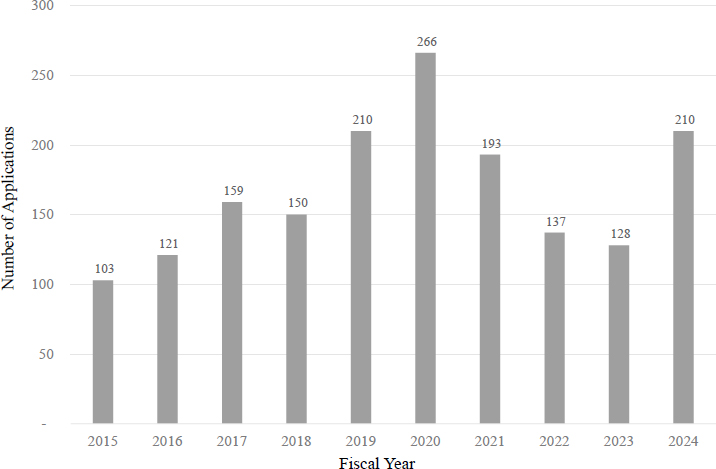
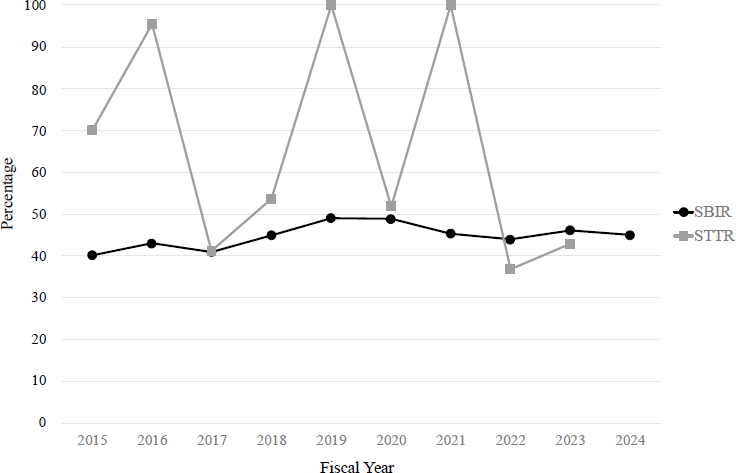
applications from FY2015 to FY2024 (Figure 3-1). The steady number of applications combined with a decline in the number of awards led to a significant decline in the success rate for Phase I SBIR applications, which fell from 28 percent in FY2015 to 18 percent in FY2024 (Figure 3-2). The number of STTR Phase I applications, on the other hand, showed a great deal of variability during this period, rising from 103 applications in FY2015 to a peak of 266 applications in FY2020, declining to 128 in FY2023, and increasing to 210 in FY2024 (Figure 3-3). The success rates for STTR Phase I applications were generally higher than those for SBIR and followed an inverse pattern with the number of applications. NASA allows Phase II applicants only from awardees who received their Phase I awards in the period immediately preceding the Phase II application period (and was not authorized to offer Direct to Phase II awards until the passage of the most recent SBIR/STTR reauthorization).6 The success rate of Phase II SBIR applications remained in the 40- to 50-percent range during this period, while the STTR Phase II success rate was more volatile (Figure 3-4). The variability in success rates for STTR Phase II applications is likely due to the variation in application numbers and the small numbers of applications and awards for STTR relative to the SBIR program.

SOURCE: Committee calculations based on the government database maintained by the Small Business Administration.
___________________
6 U.S. Congress, Small Business Innovation and Economic Security Act, P.L. 119–83 (April 13, 2026), Section 10(a).

SOURCE: Committee calculations based on the government database maintained by the Small Business Administration.
SOURCE: Committee calculations based on the government database maintained by the Small Business Administration.
SOURCE: Committee calculations based on the government database maintained by the Small Business Administration.
NASA’s Phase I success rate is quite competitive, comparable to or lower than many of the most prestigious and competitive research programs in the federal government, such as R01 grants from NIH and the National Science Foundation’s programs. Although the success rate for firms seeking funding from venture capitalists is generally much lower, the pool of applicants for SBIR/STTR funding is narrower than that for venture capital funding. Firms applying for SBIR/STTR awards must satisfy statutory eligibility criteria and must be able to respond to a specific NASA solicitation. What is more, venture deals for space companies have averaged in the tens of millions of dollars, much larger than NASA SBIR/STTR awards (Bryce Tech, 2022). Venture funding also generally requires concise documents, such as pitch decks, whereas government funding requires rigid detailed proposals with technical reports, system registration, due diligence documentation, and strict budget narratives to ensure compliance and alignment with agency goals and federal laws. These factors combine to create a narrower field of potential applicants for NASA’s SBIR/STTR awards than for venture capital investments.
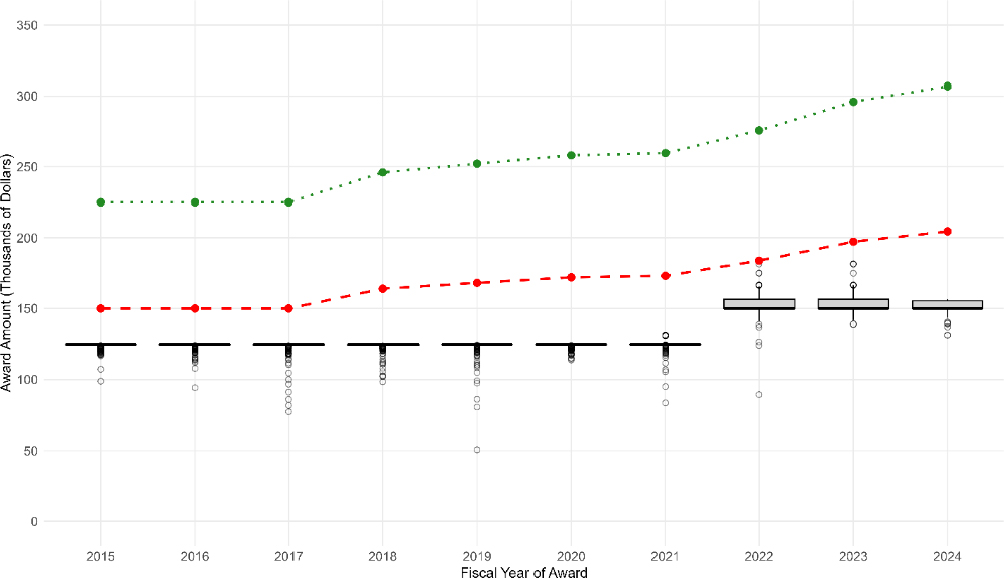
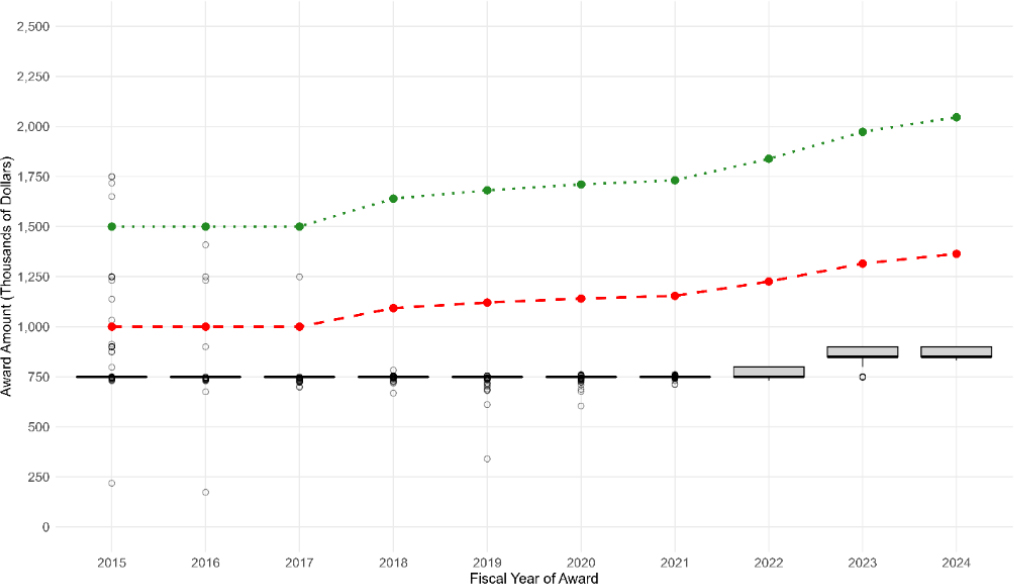
NASA strictly limits the size of its Phase I and Phase II awards, as shown in Figures 3-5 and 3-6. NASA Phase I award amounts remained tightly clustered around $125,000 from FY2015 to FY2021, then increased to approximately $150,000 in FY2022–2024. NASA Phase II award amounts remained fixed around $750,000 from FY2015 to FY2021, with a modest increase to $850,000–
NOTES: Box = 25th–75th percentile; line = median; whiskers = 1.5 × interquartile range. Red dashed line = maximum award size per the Small Business Administration’s (SBA’s) Policy Directive; green dotted line = maximum award size without a waiver from SBA; award amounts are in nominal dollars.
SOURCE: Committee calculations based on SBA’s SBIR/STTR Awards database (SBIR.gov) as of January 2026.
NOTES: Box = 25th–75th percentile; line = median; whiskers = 1.5× interquartile range. Red dashed line = maximum award size from the Small Business Administration’s (SBA’s) Policy Directive; green dotted line = maximum award size without a waiver from SBA; award amounts are in nominal dollars.
SOURCE: Committee calculations based on SBA’s SBIR/STTR Awards database (SBIR.gov) as of January 2026.
$900,000 in FY2022–2024. As part of their applications, firms can also request additional funding for Technical and Business Assistance, as required in the FY2019 National Defense Authorization Act—$6,500 for a Phase I award and $50,000 for a Phase II award, which is included in the total award amount.7
NASA’s award amounts for both Phases I and II are well below the statutory caps, which are inflation adjusted annually by SBA in accordance with the provisions of the SBIR/STTR Policy Directive (SBA, 2023). (These adjusted caps are represented in the figures by the red dashed lines.) Furthermore, as the policy directive indicates, agencies can exceed these adjusted caps by up to 50 percent without requesting a waiver from SBA (represented in the figures by the green dotted lines) and can request a waiver from SBA to offer even larger awards. Overall, award amounts consistently fall below the SBA inflation-adjusted maximums, indicating that NASA adheres to conservative Phase I and Phase II award sizes compared with the allowable amounts.
NASA’s practice of making smaller awards provides the agency more flexibility to fund post–Phase II awards. However, pursuing technologies for space exploration is costly for firms, and the documentation requirements for SBIR/STTR applications are extensive. Phase II Sequential and CCRPP awards also require matching funds from other investors, which may be limited for long-term projects such as space exploration. In practice, only a small share of Phase II awardees receive post–Phase II (Phase II-E, Phase II Sequential, or CCRPP) awards.
DISTRIBUTION OF SBIR/STTR AWARDS ACROSS DIRECTORATES
The committee next analyzed differences among SBIR awards across the mission directorates at NASA that currently offer SBIR awards (directorate information for STTR awards is not available). From most of the committee’s period of analysis, four directorates offered SBIR awards: Space Technology Mission Directorate (STMD), Science Mission Directorate (SMD), Aeronautics Research Mission Directorate (ARMD), and the Human Exploration Operations Mission Directorate (HEOMD). In September 2021, HEOMD was split into the Space Operations Mission Directorate and the Exploration Systems Development Mission Directorate (ESDMD). Over the period FY2015–2024, NASA received more than 17,300 SBIR applications and made over 4,400 SBIR awards. Each directorate has a different mission and technology focus, but the TRLs of the projects and sizes of awards are similar across the directorates.
Table 3-4 presents NASA SBIR awards in FY2024 by directorate and describes each directorate’s mission. The differences in these missions can be illustrated by the differences in technology categories (Box 3-2) among the SBIR Phase I awards across the directorates (Figure 3-7). While many of these taxonomy categories are covered by SBIR awards from all the directorates, TX15
___________________
7 U.S. Congress, John S. McCain National Defense Authorization Act for Fiscal Year 2019, P.L. 115–232, Section 854 (August 13, 2018).
TABLE 3-4 NASA Mission Directorate Descriptions and SBIR Award Data for Fiscal Year 2024
| Directorate | Mission | Number of SBIR Phase I Awards | Number of SBIR Phase II and Post–Phase II Awards | Total SBIR Funding |
|---|---|---|---|---|
| Science Mission Directorate (SMD) | Seeks to discover the secrets of the universe, search for life elsewhere, and protect and improve life on Earth and in space | 92 | 41 | $ 52,618,986 |
| Space Technology Mission Directorate (STMD) | Develops, demonstrates, and transfers new space technologies that benefit NASA, commercial, and other government agencies’ missions | 74 | 34 | $ 48,155,428 |
| Aeronautics Research Mission Directorate (ARMD) | Manages efforts to safely and sustainably transform aviation for the 21st century | 45 | 17 | $ 21,786,122 |
| Exploration Systems Development Mission Directorate (ESDMD) | Defines and manages human exploration system development for lunar orbital, lunar surface, and Mars exploration | 38 | 18 | $ 24,536,115 |
| Space Operations Mission Directorate (SOMD) | Maintains a continuous human presence in space for the benefit of people on Earth through the International Space Station | 5 | 1 | $ 1,653,536 |
NOTES: The Mission Operations Directorate does not offer SBIR or STTR awards. In fiscal year 2022, the Human Exploration Operations Mission Directorate was divided into ESDMD and SOMD.
SOURCES: Committee calculations based on the Small Business Administration’s SBIR/STTR Awards database (SBIR.gov) as of January 2026. Directorate descriptions drawn from NASA, n.d.e.
(flight vehicle systems) and TX16 (air traffic management and range tracking systems) are almost exclusive to awards from ARMD. SMD, which has the largest R&D budget, has a broad portfolio including planetary science, Earth science, astrophysics, heliophysics, and biological and physical sciences. While SMD offers awards across many of the taxonomy categories, the bulk of its Phase I SBIR contracts are in TX08 (sensors and instruments). Recent studies indicate that commercial space sensors are increasingly utilized in NASA missions for a range of essential applications (Popkin, 2017).
While NASA’s SBIR program funds technologies broadly relevant to the agency’s mission, recent research (Boroff and Vertesi, 2026) suggests that its SBIR projects do not comprehensively address the full set of strategic technology gaps the agency has identified. In particular, some mission-critical areas appear to receive limited attention from SBIR participants relative to their importance to NASA. Understanding the alignment between SBIR/STTR topic selection and evolving mission priorities represents an important area for further analysis and potential program refinement.
BOX 3-2
NASA’s Technology Taxonomy
“NASA engages in a variety of technology development activities” and uses a technology taxonomy to “identif[y], organize, and communicate technology areas relevant to advancing the agency’s mission” into 17 distinct areas (NASA, n.d.l, para. 1):
- TX01: propulsion systems;
- TX02: flight computing and avionics;
- TX03: aerospace power and energy storage;
- TX04: robotic systems;
- TX05: communications, navigation, and orbital debris tracking and characterization systems;
- TX06: human health, life support, and habitation systems;
- TX07: exploration destination systems;
- TX08: sensors and instruments;
- TX09: entry, descent, and landing;
- TX10: autonomous systems;
- TX11: software, modeling, simulation, and information processing;
- TX12: materials, structures, mechanical systems, and manufacturing;
- TX13: ground, test, and surface systems;
- TX14: thermal management systems;
- TX15: flight vehicle systems;
- TX16: air traffic management and range tracking systems; and
- TX17: guidance, navigation, and control technologies.
SOURCE: Taxonomy areas drawn from NASA, n.d.l.
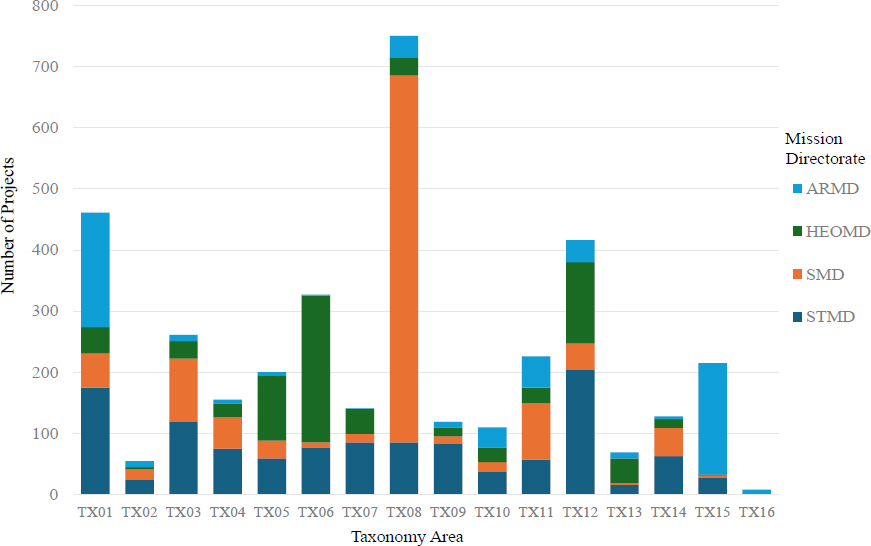
NOTES: Taxonomy category details are provided in Box 3-2. ARMD = Aeronautics Research Mission Directorate; HEOMD = Human Exploration Operations Mission Directorate; SMD = Science Mission Directorate; STMD = Space Technology Mission Directorate.
SOURCES: Committee calculations based on the Small Business Administration’s SBIR/STTR Awards database (SBIR.gov) as of January 2026 and from NASA’s Technology Portfolio Management System (https://techport.nasa.gov).
During FY2015–2024, SMD received the most Phase I applications, followed by STMD, which saw a dramatic increase from 91 applications in FY2015 to over 400 annually starting in FY2017 (Figure 3-8). Among the human exploration directorates, HEOMD saw a decline from 494 applications in FY2016 to 299 in FY2021; its successor ESDMD has continued that downward trend, dropping from 214 in FY2022 to 194 in FY2024.
All the directorates declined in their SBIR Phase I success rate during FY2015–2024 (Figure 3-9). The directorate offering the most SBIR awards during this period, SMD, did not face a substantial decrease in the number of applications, although the number of awards it gave out annually has declined over the 10-year study period (Figure 3-10).
The committee also investigated the TRLs of the Phase I projects that were awarded during this period to see whether there were differences across the directorates. As described in Chapter 2, NASA uses a scale from 1 to 9; in TRL 1, basic principles are observed and reported, and in TRL 9, a technology is successfully demonstrated on missions to fly (Table 3-5). Prior research indicates that when calibrated across directorates, NASA TRLs provide an appropriate benchmark and reasonable proxy for technology development risks and costs at each stage of progress in the project life cycle (Terrile et al., 2015). Table 3-6 shows the TRL levels of an average Phase I recipient at the time of award and end of award. There is little variation in the TRL beginning and ending levels across the directorates. The average starting TRL is just under 3 and the average ending TRL is 4.5.
NEW ENTRANTS TO THE NASA SBIR/STTR PROGRAMS
As discussed in previous National Academies studies of the SBIR/STTR programs, new entrants to the programs play an important role and help provide novel approaches to government-funded innovation efforts (NASEM, 2026). The committee analyzed whether the share of NASA SBIR/STTR awards going to new entrants has increased in recent years. The committee evaluated both the share of awardees that were new to SBIR/STTR from any agency, over time, and the share of awardees that were new to NASA’s SBIR/STTR programs. (See Table 3-7.) The committee found that nearly one-third of NASA awardees over the study period were new to NASA’s programs; however, a substantial number of NASA awardees were not new to the SBIR/STTR program. NASA’s SBIR/STTR budget is dwarfed by the combined budgets of the Air Force and Space Force, which makes it likely that these agencies can attract more applicants than NASA. Moreover, given the larger budgets available within DOD for outreach, leveraging Air Force and Space Force awardees to fulfill NASA-specific technological needs may be a cost-effective way for NASA to achieve its goals.
Concerns about the unevenness in award distribution led to legislative requirements on SBIR/STTR awardees. The 2011 reauthorization of the SBIR/STTR programs introduced Phase I–II transition rate and
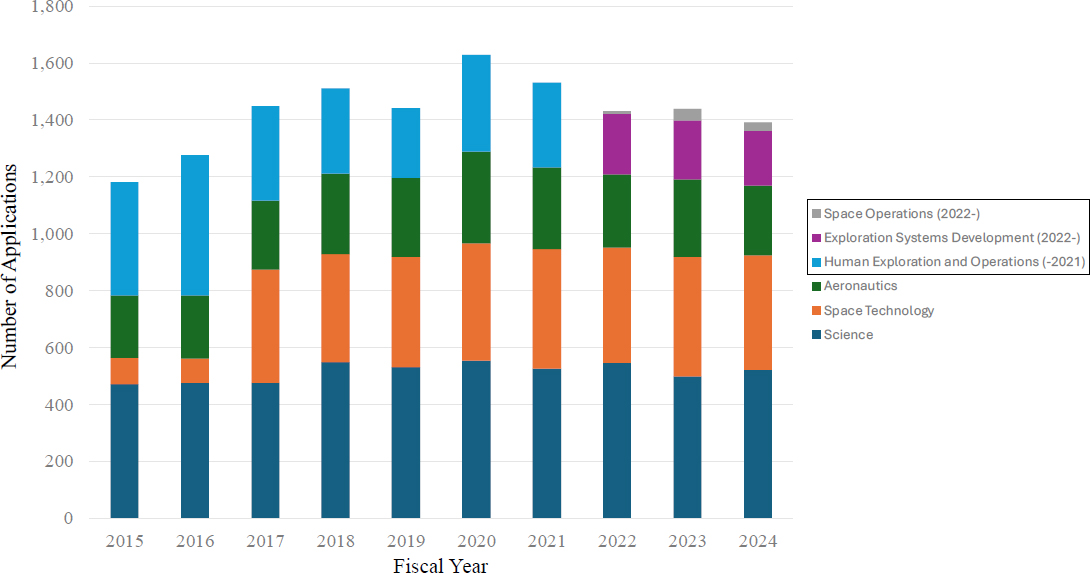
SOURCES: Committee calculations based on the Small Business Administration’s (SBA’s) SBIR/STTR Awards database (SBIR.gov) as of January 2026 and the government database maintained by SBA.
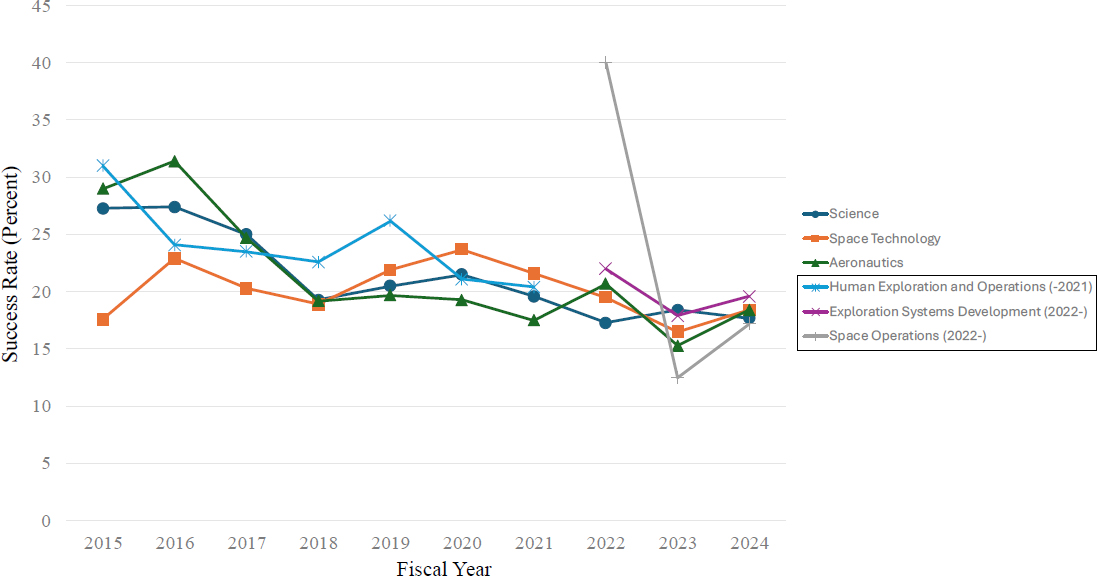
SOURCES: Committee calculations based on the Small Business Administration’s (SBA’s) SBIR/STTR Awards database (SBIR.gov) as of January 2026 and the government database maintained by SBA.
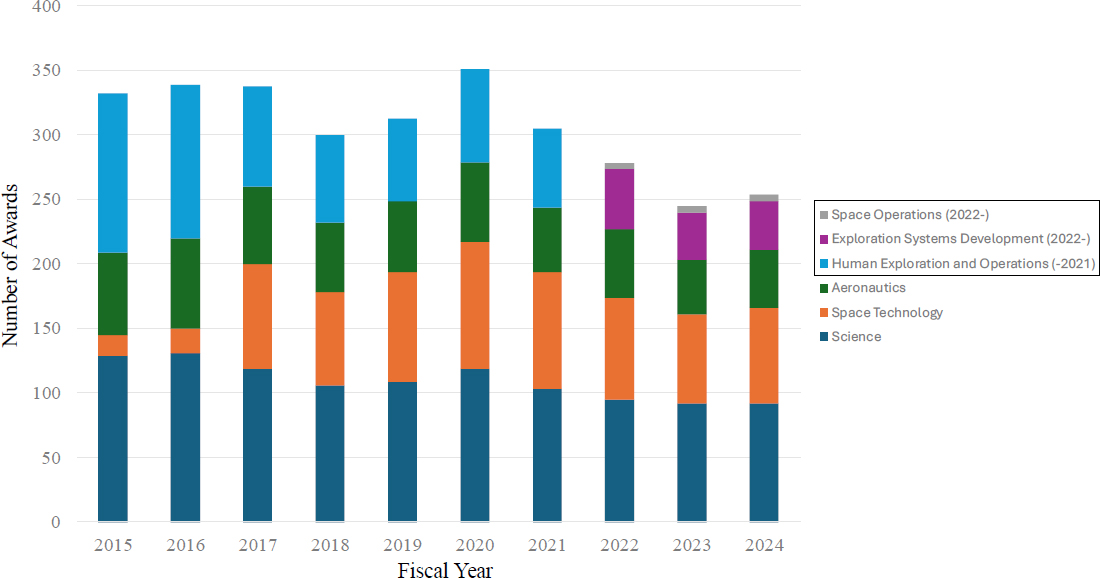
SOURCES: Committee calculations based on the Small Business Administration’s (SBA’s) SBIR/STTR Awards database (SBIR.gov) as of January 2026 and the government database maintained by SBA.
TABLE 3-5 Technology Readiness Level Definitions
| Level | Definition |
|---|---|
| 1 | Basic principles observed and reported |
| 2 | Technology concept and/or application formulated |
| 3 | Analytical and experimental critical function and/or characteristic proof-of-concept |
| 4 | Component and/or breadboard validation in laboratory environment |
| 5 | Component and/or breadboard validation in relevant environment |
| 6 | System/subsystem model or prototype demonstration in a relevant environment (ground or space) |
| 7 | System prototype demonstration in a space environment |
| 8 | Actual system completed and “flight qualified” through test and demonstration (ground or space) |
| 9 | Actual system “flight proven” through successful mission operations |
SOURCE: Drawn from NASA, 2023.
TABLE 3-6 Average Technology Readiness Level (TRL), by Mission Directorate (Fiscal Years 2015–2022)
| Mission Directorate | Average Starting TRL | Average Ending TRL |
|---|---|---|
|
Space Technology Mission Directorate (STMD) |
2.76 | 4.48 |
|
Science Mission Directorate (SMD) |
2.73 | 4.43 |
|
Human Exploration Operations Mission Directorate (HEOMD)/Exploration Systems Development Mission Directorate (ESDMD)/Space Operations Mission Directorate (SOMD) |
2.76 | 4.47 |
|
Aeronautics Research Mission Directorate (ARMD) |
2.64 | 4.48 |
NOTES: Projects started after fiscal year 2022 are not included because they are not completed (and therefore do not have ending TRL levels). In September 2021, HEOMD was split into ESDMD and SOMD.
SOURCES: Committee calculations based on the Small Business Administration’s SBIR/STTR Awards database (SBIR.gov) as of January 2026 and from NASA’s Technology Portfolio Management System (https://techport.nasa.gov).
TABLE 3-7 Award History of NASA SBIR/STTR Awardees (Fiscal Years 2015–2024)
| Fiscal Year | Total Number of Awardees | Number of Awardees with No Previous NASA SBIR/STTR Awards | Number of Awardees with No Previous SBIR/STTR Awards from Any Agency | Percentage of Awardees with No Previous NASA SBIR/STTR Awards | Percentage of Awardees with No Previous SBIR/STTR Awards from Any Agency |
|---|---|---|---|---|---|
| 2015 | 318 | 69 | 38 | 21.7 | 11.9 |
| 2016 | 320 | 69 | 35 | 21.6 | 10.9 |
| 2017 | 329 | 71 | 41 | 21.6 | 12.5 |
| 2018 | 332 | 85 | 55 | 25.6 | 16.6 |
| 2019 | 348 | 94 | 52 | 27.0 | 14.9 |
| 2020 | 402 | 105 | 64 | 26.1 | 15.9 |
| 2021 | 360 | 88 | 43 | 24.4 | 11.9 |
| 2022 | 329 | 85 | 50 | 25.8 | 15.2 |
| 2023 | 322 | 86 | 41 | 26.7 | 12.7 |
| 2024 | 293 | 89 | 41 | 30.4 | 14.0 |
NOTES: Prior award history was determined by matching awardee unique entity identifiers (UEIs) against NASA awards in the SBIR.gov database across all available years. Cases with missing UEI (<1 percent of awarded proposals) were excluded.
SOURCES: Committee calculations based on the Small Business Administration’s (SBA’s) SBIR/STTR Awards database (SBIR.gov) as of January 2026 and the government database maintained by SBA.
commercialization performance metrics that, if not met, would impact eligibility to participate in the programs.8 The SBIR and STTR Extension Act of 2022 created more stringent transition and commercialization performance requirements for what it defines as experienced firms—those receiving more than 50 Phase I or Phase II awards over defined periods.9 In addition to these commercialization and transition requirements, the 2026 reauthorization requires each agency to establish limits on the number of Phase I and Phase II proposals that a small business can submit.10
As shown in Figure 3-11, however, most NASA SBIR/STTR awardees won only a single Phase I award during FY2015–2024, and nearly three-quarters won only one or two Phase I awards. Only 16 firms received over 20 awards in the 10-year study period. Figure 3-12 shows that, even among the top-25 Phase I award recipients, each received fewer than 50 awards during the study period. As
___________________
8 U.S. Congress, National Defense Authorization Act for Fiscal Year 2012, P.L. 112–81, Section 5165 (December 31, 2011).
9 U.S. Congress, SBIR and STTR Extension Act of 2022, P.L. 117–183, Section 8 (September 30, 2022).
10 U.S. Congress, Small Business Innovation and Economic Security Act, P.L. 119–83 (April 13, 2026).
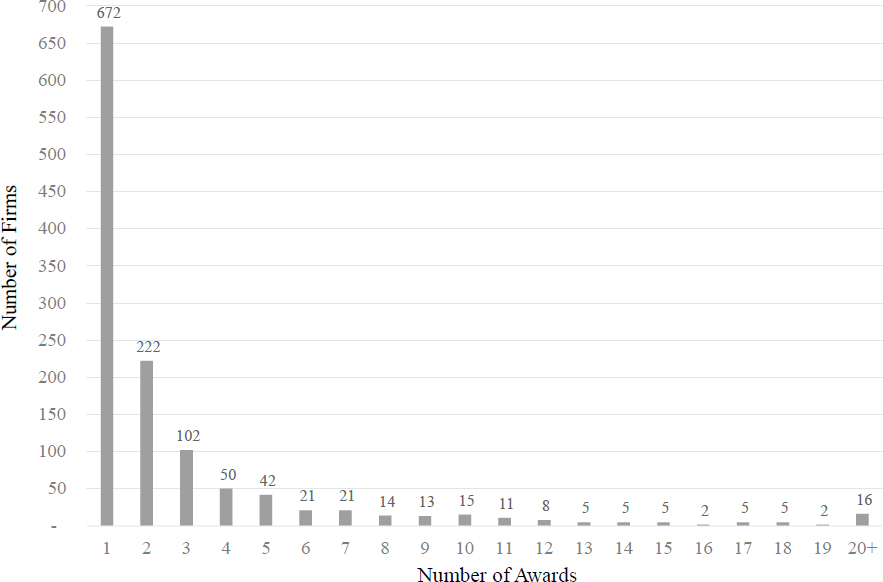
NOTE: Indicates the number of unique firms that received each award count over the period.
SOURCE: Committee calculations based on the Small Business Administration’s SBIR/STTR Awards database (SBIR.gov).
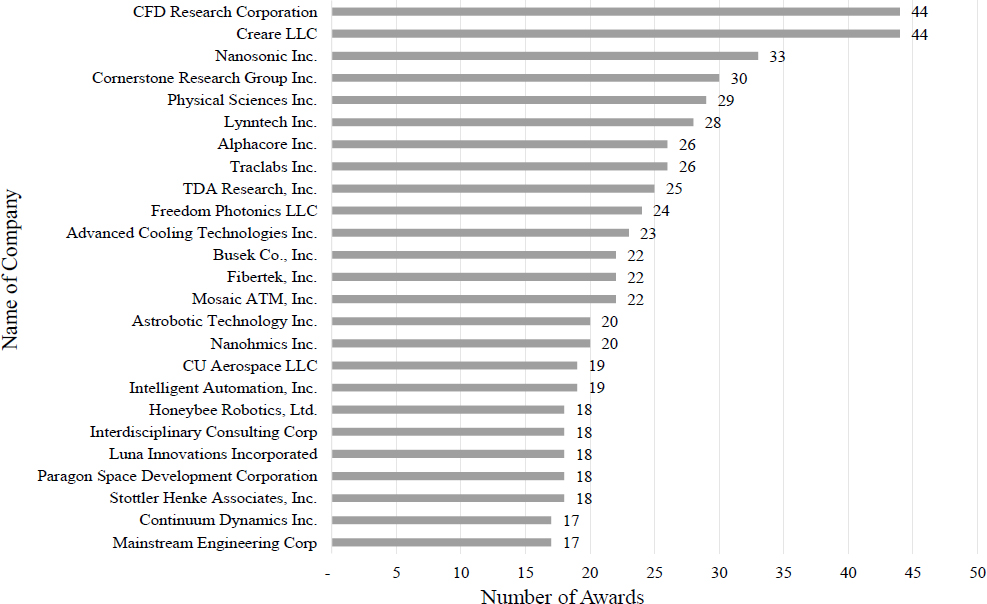
SOURCE: Committee calculations based on the Small Business Administration’s SBIR/STTR Awards database (SBIR.gov) as of January 2026.
NASA’s experiences with its Mars rovers have indicated, SBIR/STTR-funded firms that provided instrumentation for early iterations of the rover were well positioned to provide instruments for succeeding versions. As discussed in Chapter 2, Optimax Systems provided instruments for three different Mars rovers.
Previous National Academies reports have noted that many of these multiple award–winning firms engage new technical experts as principal investigators as they obtain additional SBIR/STTR awards, and these individuals can bring fresh technical perspectives to the government (NASEM, 2026). In addition, previous National Academies reports have found that firms that receive multiple awards are substantially more likely to generate inventions, secure follow-on government or private funding, and contribute meaningfully to national security (NASEM, 2026).
GEOGRAPHIC DISTRIBUTION OF AWARDEES
Analyzing the geographic distribution of NASA SBIR/STTR spending is important because it provides insight into whether the programs are broadening access to federal innovation funding—either beyond the NASA center locations or traditional innovation hubs. The SBA Policy Directive web page indicates that one of the statutory purposes of the SBIR program is to “foster and encourage participation by emerging and undercapitalized SBCs [small business concerns] in technological innovation” (SBA, n.d., “Purpose,” para. c). Several bills introduced during the 199th Congress (2025–2026) focused on outreach and assistance to small businesses located in rural areas or states that have been historically underrepresented in these programs.11
NASA SBIR/STTR participation is geographically concentrated in states with established aerospace or defense ecosystems (Table 3-8). However, many NASA SBIR/STTR awards go to firms located in the Midwest and Rocky Mountain areas (Figure 3-13). These firms are far away from NASA centers or from coastal urban areas, where firms that are funded by venture capital tend to be established, indicating that NASA’s SBIR/STTR programs are helping reduce geographic disparities in innovation opportunity.
The application data show similar trends with the largest number of applications coming from California (nearly 4,000 Phase I applications and over 700 Phase II applications over the 10-year study period), far exceeding the applications from any other state. Colorado, Texas, Virginia, and Massachusetts also represent major centers of participation, each submitting several hundred applications across both phases. These states combine strong research university systems, mature aerospace supply chains, federal laboratory presence, and a high density of small advanced-technology firms; these factors collectively drive sustained proposal volume.
___________________
11 See, for example, the Rural Innovation and Small Business Support Act (H.R. 1590) and SBIR/STTR Application Assistance Act (H.R. 4520).
Most states, however, had firms submitting fewer than 300 Phase I applications over the 10-year period, and many fell well below 100. The distribution reflects the broader geography of the U.S. aerospace and space technology industrial base: participation is not evenly distributed nationwide but instead is clustered in regions with deep technical infrastructure and historical NASA or DOD engagement. This concentration in application volume also drives concentration in absolute award counts (Table 3-8).
At the same time, many of the states with lower participation rates have high success rates when they do apply. As Table 3-9 shows, states such as New Hampshire, Montana, Wyoming, and Rhode Island all have Phase I success rates over 30 percent, well above NASA’s overall average for the period, and above California and Texas, which have success rates of 22 percent.
Figure 3-14 compares average NASA SBIR/STTR funding per capita and average venture capital funding per capita across U.S. states for FY2015–2024. Because California; Massachusetts; New York; Washington, DC; and
TABLE 3-8 NASA SBIR/STTR Phase I and Phase II Awards, by State (Fiscal Years 2015–2024)
| State | Number of Phase I Awards | Number of Phase II Awards | State | Number of Phase I Awards | Number of Phase II Awards |
|---|---|---|---|---|---|
| CA | 759 | 341 | DE | 29 | 10 |
| CO | 326 | 145 | GA | 25 | 10 |
| VA | 253 | 105 | MO | 24 | 11 |
| MA | 226 | 100 | TN | 24 | 12 |
| TX | 221 | 78 | UT | 23 | 10 |
| OH | 151 | 67 | DC | 17 | 5 |
| MD | 145 | 56 | KS | 16 | 9 |
| PA | 133 | 75 | AR | 15 | 4 |
| AZ | 123 | 55 | LA | 14 | 3 |
| FL | 120 | 53 | HI | 12 | 5 |
| NY | 105 | 39 | OK | 12 | 4 |
| AL | 104 | 46 | VT | 11 | 4 |
| IL | 90 | 39 | WV | 9 | 4 |
| WA | 74 | 33 | WI | 8 | 2 |
| NH | 67 | 38 | WY | 7 | 2 |
| OR | 63 | 28 | KY | 6 | 1 |
| MI | 59 | 20 | RI | 6 | 2 |
| CT | 57 | 36 | ID | 5 | 0 |
| NM | 53 | 23 | NV | 5 | 2 |
| NJ | 50 | 23 | MS | 4 | 3 |
| NC | 34 | 12 | SC | 4 | 2 |
| IN | 33 | 12 | IA | 3 | 2 |
| MN | 32 | 12 | ME | 3 | 1 |
| MT | 32 | 20 | SD | 2 | 0 |
SOURCE: Committee calculations based on the Small Business Administration’s SBIR/STTR Awards database (SBIR.gov) as of January 2026.
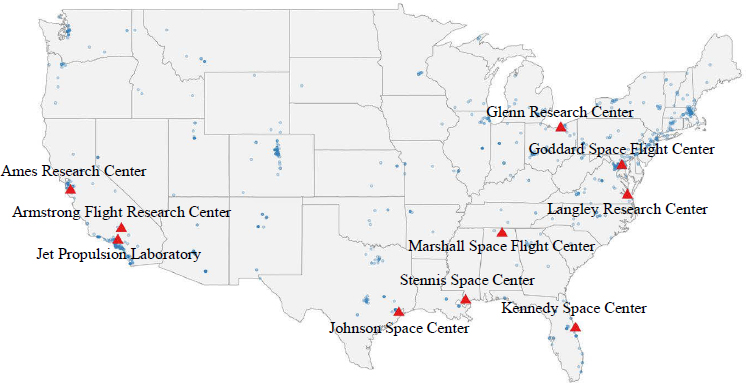
NOTES: Continental United States only. Blue dots signify awards, with the size of the dot indicating the relative award sizes. Red triangles identify the locations of NASA centers.
SOURCE: Committee calculations based on the Small Business Administration’s SBIR/STTR Awards database (SBIR.gov) as of January 2026.
TABLE 3-9 NASA’s SBIR/STTR Programs: Top States, by Phase I Success Rate
| State | Number of Applications | Number of Applicants | Number of Awards | Number of Awardees | Success Rate (Awards as a Percentage of Applications) |
|---|---|---|---|---|---|
| NH | 166 | 20 | 66 | 12 | 39.8 |
| MT | 89 | 23 | 33 | 11 | 37.1 |
| WY | 25 | 13 | 9 | 5 | 36.0 |
| RI | 19 | 12 | 6 | 3 | 31.6 |
| AR | 50 | 9 | 15 | 6 | 30.0 |
| WV | 30 | 6 | 9 | 4 | 30.0 |
| KS | 58 | 12 | 17 | 6 | 29.3 |
| OR | 224 | 39 | 64 | 13 | 28.6 |
| DE | 159 | 60 | 42 | 22 | 26.4 |
| AL | 429 | 88 | 112 | 35 | 26.1 |
SOURCES: Committee calculations based on the Small Business Administration’s (SBA’s) SBIR/STTR Awards database (SBIR.gov) as of January 2026 and the government database maintained by SBA.
Delaware had either high levels of venture capital funding or received many NASA SBIR/STTR awards, they are omitted from the chart to show detailed information for the remaining states. The diagonal line serves as a reference indicating the trend relationship between venture capital and NASA SBIR/STTR funding. This line reveals a general correlation: states with higher venture capital funding per capita also tend to receive more NASA SBIR/STTR funding per capita. Similar to a trend observed in the National Academies report on the SBIR/STTR programs at DOD (NASEM, 2026), this correlation suggests that SBIR/STTR programs are complementary to rather than substitutes for venture capital or other funding. It is likely that underlying conditions that make a state able to succeed in attracting public funding for R&D, such as having a strong science and engineering workforce or high-quality research institutions, are likely to make the state attractive to private-sector innovation funding as well. While
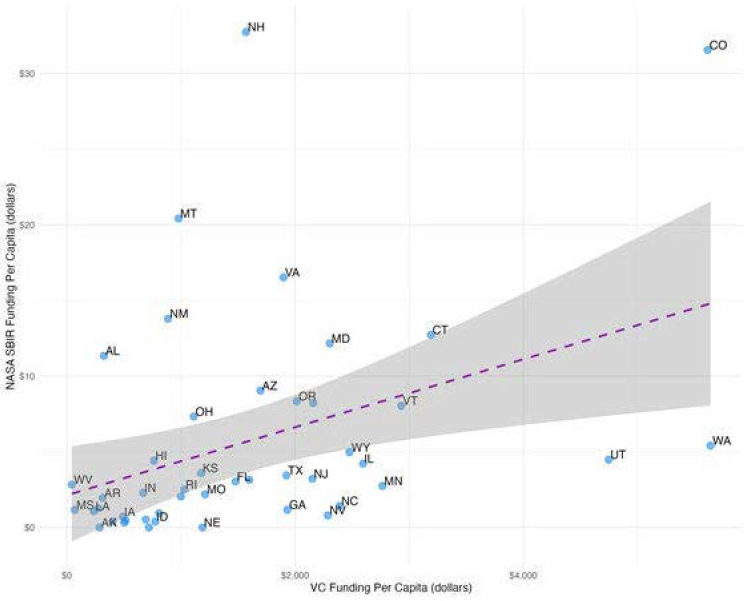
NOTES: California, Massachusetts, the District of Columbia, New York, and Delaware are not included. Inflation-adjusted using the Consumer Price Index with 2024 as the base year.
SOURCES: Committee calculations based on the Small Business Administration’s (SBA’s) SBIR/STTR Awards database (SBIR.gov) as of January 2026, the government database maintained by SBA, and PitchBook data.
this analysis points out only the positive relationship between public and private innovation funding, previous research has shown that public funding can create large innovation spillovers that lead to new firm formation and growth; this, in turn, can attract follow-on private-sector investments (Gross and Sampat, 2023).
This upward trend is not uniform, however; firms in states such as New Hampshire, Montana, New Mexico, Alabama, and Virginia receive high levels of NASA SBIR/STTR funding despite modest venture capital investment, suggesting that federal programs may play a more significant role in supporting innovation in those states. Conversely, states such as Washington and Utah exhibit relatively high venture capital funding but low NASA SBIR/STTR participation. Notably, Colorado stands out with relatively high levels of both per capita venture capital and NASA SBIR/STTR funding, reflecting its high density of aerospace contractors. Overall, the figure underscores the complementary yet uneven roles of public and private capital in regional innovation systems.
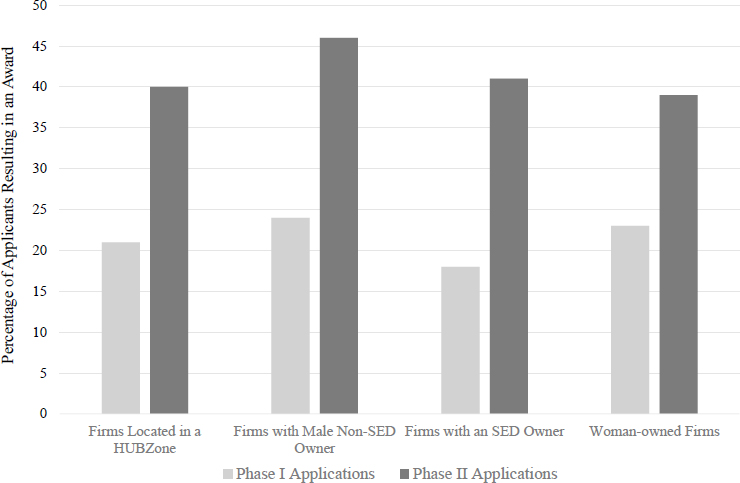
To build on this picture, the committee also looked at success rates for NASA SBIR/STTR Phase I and II applications submitted by firms located within historically underutilized business zones (HUBZones) and compared these success rates with those for firms overall, broken down by certain demographic characteristics (Figure 3-15). For firms located in HUBZones, 21 percent of
NOTES: HUBZone = historically underutilized business zone; SED = socially and economically disadvantaged.
SOURCE: Committee calculations based on the government database maintained by the Small Business Administration.
Phase I applications and 40 percent of Phase II applications resulted in an award during the study period (FY2015–2024). In comparison, Phase I applications from woman-owned firms and from firms owned by members of socially and economically disadvantaged groups resulted in Phase I awards at a lower rate; the same was true for Phase II applications from woman-owned firms. However, because there were fewer than 400 Phase I applications and fewer than 100 Phase II applications during FY2015–2024 from firms located in HUBZones, these differences in success rates may not be statistically significant.
SUMMARY
The evidence presented in this chapter shows that NASA closely aligns its SBIR and STTR solicitations with the agency’s mission and technology needs. Across mission directorates, projects begin at similar early-stage TRLs and progress to midrange levels by the end of Phase I, consistent with the programs’ role in supporting early-stage technology development within NASA’s broader research and technology portfolio. NASA’s SBIR/STTR programs are implemented in a relatively standardized manner, with similar award sizes and structures across directorates and award levels generally below the statutory maximums allowed under SBA guidance.
NASA’s SBIR/STTR programs operate within a broader federal innovation ecosystem in which DOD and NIH account for the majority of federal SBIR/STTR spending. NASA accounts for approximately 4 percent of total federal SBIR/STTR spending. Within this context, NASA’s programs both leverage and contribute to the federal small business innovation base. A substantial share of NASA awardees have prior SBIR/STTR experience with other federal agencies.
Over the past decade, the number of Phase I applications has remained relatively stable, indicating sustained interest among small firms in participating in NASA’s SBIR/STTR programs. However, the number of Phase I awards has declined during this period, resulting in a lower success rate for applicants. Most firms that received NASA SBIR/STTR awards during the 10-year study period received only one award, suggesting that participation is broadly distributed across firms rather than concentrated among repeat recipients. At the same time, the small award amounts offered through NASA’s SBIR/STTR program and the administrative burden of applying may limit the pool of potential applicants. More flexibility in award sizes, perhaps by offering Direct to Phase II awards for technologies that are further developed, could attract a larger applicant pool.12
___________________
12 The 2026 Reauthorization of the SBIR/STTR programs included a provision to allow NASA to offer Direct to Phase II awards. U.S. Congress, Small Business Innovation and Economic Security Act, P.L. 119–83 (April 13, 2026), Section 10(a)(2). Previously, only NIH, DOD, and the Department of Education could offer Direct to Phase II awards. In addition, the 2026 reauthorization allows an agency to offer a larger post–Phase II award (strategic breakthrough award) that matches either new private capital or non-SBIR/STTR funding from a government agency.
Geographically, NASA’s SBIR/STTR awards are concentrated in states with established aerospace and advanced R&D ecosystems, reflecting the national distribution of technical capabilities and industrial infrastructure. Participation also extends well beyond states hosting NASA centers and beyond major venture capital hubs. While states that receive the most venture funding tend to receive the most NASA SBIR/STTR awards on a per capita basis, many states that receive modest venture capital funding are quite successful in receiving NASA SBIR/STTR awards.
Finally, NASA’s TechPort provides a distinctive capability for linking SBIR/STTR awards to NASA’s broader technology development activities. By tracking technology readiness progression and connecting projects to mission directorates and technology areas, TechPort is a valuable tool for understanding how NASA’s small business innovation investments contribute to the agency’s technology portfolio and long-term mission needs.
FINDINGS
Finding 3-1: NASA’s SBIR/STTR programs operate in a highly standardized manner across mission directorates, with uniform award sizes that are consistently below statutory maximums and initial and final TRLs that are similar across mission directorates.
Finding 3-2: The steady volume of NASA’s SBIR/STTR Phase I applications suggests that the programs remain an attractive source of early-stage financing for small firms wishing to contribute to NASA’s mission and work with the federal government. At the same time, a decline in the number of Phase I awards funded has lowered award rates over the past decade.
Finding 3-3: Most NASA SBIR/STTR awardees have won only a single Phase I award, indicating that participation is broadly distributed across firms rather than concentrated among repeat recipients.
Finding 3-4: Generally, state-level analysis reveals a positive association between venture capital investment and NASA’s SBIR/STTR funding, but several states with low venture capital activity have relatively high NASA SBIR/STTR support, on a per capita basis.
Finding 3-5: NASA’s TechPort provides a unique capability for NASA and the wider research community to demonstrate how the agency’s technology investments align with its strategy for filling technology gaps. By linking SBIR/STTR awards to mission directorates and tracking changes in projects’ TRLs, TechPort establishes a foundation for systematic portfolio-level assessment of technology progression.
Finding 3-6: NASA SBIR/STTR funding helps reduce geographic disparities in innovation opportunity. Many NASA SBIR/STTR award recipients are located in regional innovation hubs related to aerospace and academia that are distant from NASA centers.
RECOMMENDATIONS
Recommendation 3-1: NASA’s Small Business Innovation Research/Small Business Technology Transfer (SBIR/STTR) Program Office, in coordination with directorate leadership, should periodically assess whether its standardized SBIR and STTR award amounts and structures are optimally aligned with the technical scope and capital intensity of the technologies it solicits. NASA should offer Direct to Phase II awards or larger post–Phase II strategic breakthrough awards as allowed in the 2026 reauthorization of the SBIR/STTR programs.
Recommendation 3-2: NASA should build on the strengths of the Technology Portfolio Management System (TechPort) for use in portfolio management and evaluation. To improve its ability to provide a systematic analysis of progress in technology readiness and transition pathways across mission directorates, TechPort should link firms funded by the Small Business Innovation Research/Small Business Technology Transfer programs to Phase III awards and include all NASA research and development and procurement grants and contracts, not just a subset of its smaller awards.


