Red-Tinted Bus Lane Experience (2026)
Chapter: 2 Background

CHAPTER 2
Background
This chapter provides basic background information about red-tinted bus lanes and the current state of their use in the United States and Canada. Informed by a review of relevant completed research and studies, this chapter outlines the history of red-tinted bus lanes; briefly describes features of red-tinted bus lanes; identifies challenges that U.S. and Canadian transit agencies and jurisdictions have encountered while planning, implementing, operating, enforcing, and maintaining red-tinted bus lanes; and highlights relevant data gaps.
History of Red-Tinted Bus Lanes in North America
Tinted pavement applications have been documented in North America going back to the 1990s, when the City of Portland, OR, experimented with using blue pavement treatments to identify conflict points between bicycle and automobile traffic. The FHWA allowed green pavement treatments in bicycle lanes on an interim basis beginning in April 2011 (National Association of City Transportation Officials 2014).
In 2006, the FHWA allowed transportation agencies to implement red-tinted pavements for transit on an experimental basis [Knopp 2019; National Association of City Transportation Officials (NACTO) 2016]. The next-published edition of the MUTCD included standards and guidance for edge lines, channelizing devices (e.g., vertical delineators), words and symbols, and signage associated with preferential lanes (including bus lanes) but no standards and guidance for red-tinted pavements (FHWA 2022). In 2019, relying on favorable results from the experimental implementations, the FHWA issued an Interim Approval for use of red tinting as an option for transportation agencies. The Interim Approval specified conditions of application, allowable uses, and design requirements.
In 2023, the 11th edition of the MUTCD included red-tinted transit lanes as a fully approved option for transportation agencies (FHWA 2023). Figure 1 and Figure 2 present relevant content from the 11th edition of the MUTCD. The U.S. Code of Federal Regulations (amended December 19, 2023) provides color specification limits for pavement-marking materials (23 CFR Part 655, Subpart F). Section 1B.05 of the MUTCD indicates that the red-tinting treatments that were implemented as experiments may be allowed to continue if they have been effective and there are no safety concerns. Otherwise, the treatment must be discontinued within 3 months of the conclusion of the experiment.
Today, some metro areas (e.g., San Francisco, CA, and Portland, OR) use red tinting for bus, light-rail transit (LRT), and streetcar lanes. MUTCD language does not preclude the use of red-tinted lanes for rail modes.
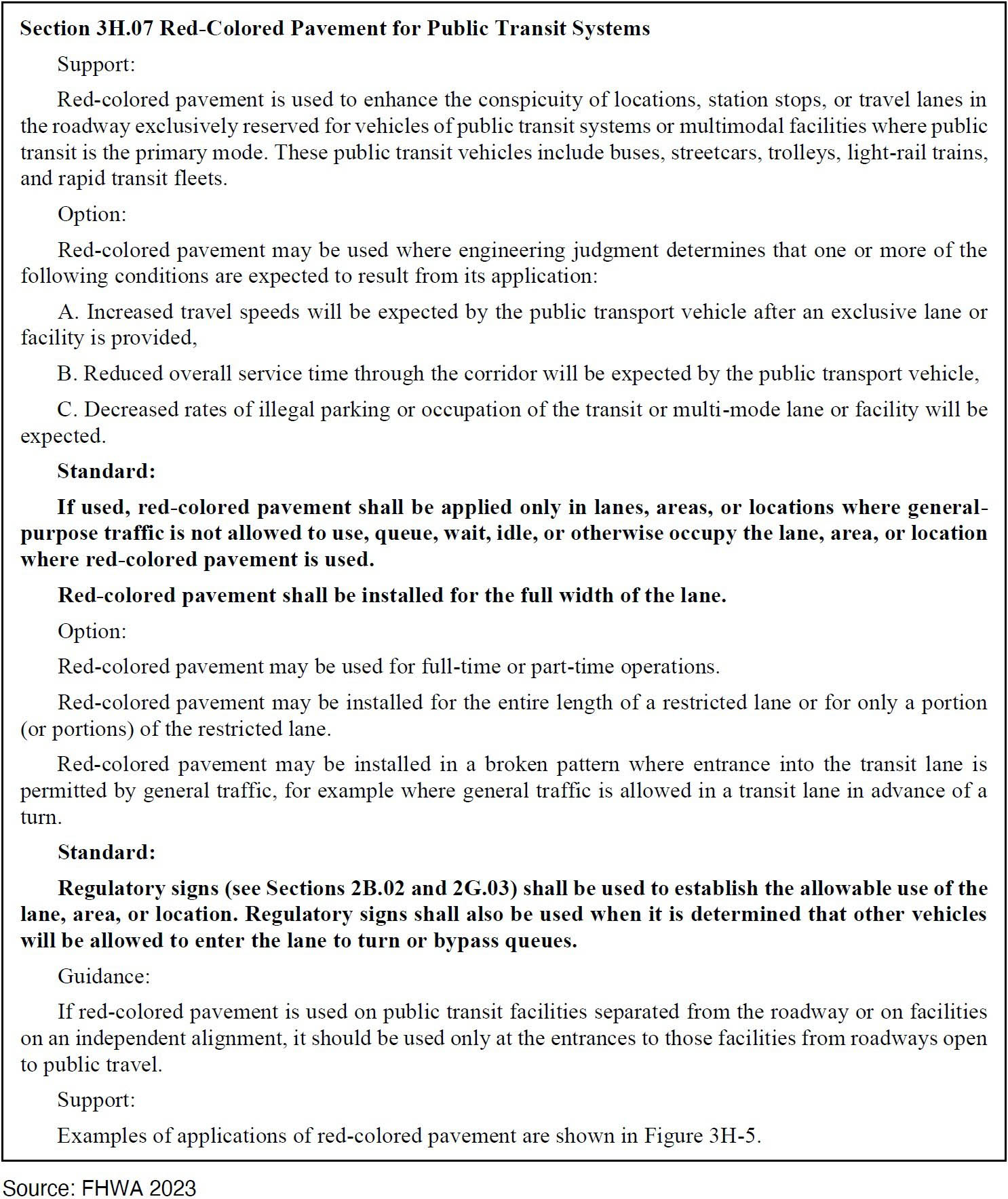
Long Description.
The text in the screenshot reads as follows:
Section 3H.07 Red-Colored Pavement for Public Transit Systems
Support:
Red-colored pavement is used to enhance the conspicuity of locations, station stops, or travel lanes in the roadway exclusively reserved for vehicles of public transit systems or multi-modal facilities where public transit is the primary mode. These public transit vehicles include buses, streetcars, trolleys, light-rail trains, and rapid transit fleets.
Option:
Red-colored pavement may be used where engineering judgment determines that one or more of the following conditions are expected to result from its application:
A. Increased travel speeds will be expected by the public transport vehicle after an exclusive lane or facility is provided.
B. Reduced overall service time through the corridor will be expected by the public transport vehicle.
C. Decreased rates of illegal parking or occupation of the transit or multi-mode lane or facility will be expected.
Standard:
If used, red-colored pavement shall be applied only in lanes, areas, or locations where general-purpose traffic is not allowed to use, queue, wait, idle, or otherwise occupy the lane, area, or location where red-colored pavement is used.
Red-colored pavement shall be installed for the full width of the lane.
Option:
Red-colored pavement may be used for full-time or part-time operations.
Red-colored pavement may be installed for the entire length of a restricted lane or for only a portion (or portions) of the restricted lane.
Red-colored pavement may be installed in a broken pattern where entrance into the transit lane is permitted by general traffic, for example, where general traffic is allowed in a transit lane in advance of a turn.
Standard:
Regulatory signs (see Sections 2B.02 and 2G.03) shall be used to establish the allowable use of the lane, area, or location. Regulatory signs shall also be used when it is determined that other vehicles will be allowed to enter the lane to turn or bypass queues.
Guidance:
If red-colored pavement is used on public transit facilities separated from the roadway or on facilities on an independent alignment, it should be used only at the entrances to those facilities from roadways open to public travel.
Support:
Examples of applications of red-colored pavement are shown in Figure 3H-5.
Source: FHWA 2023
Key Features of Red-Tinted Bus Lanes
Design Elements
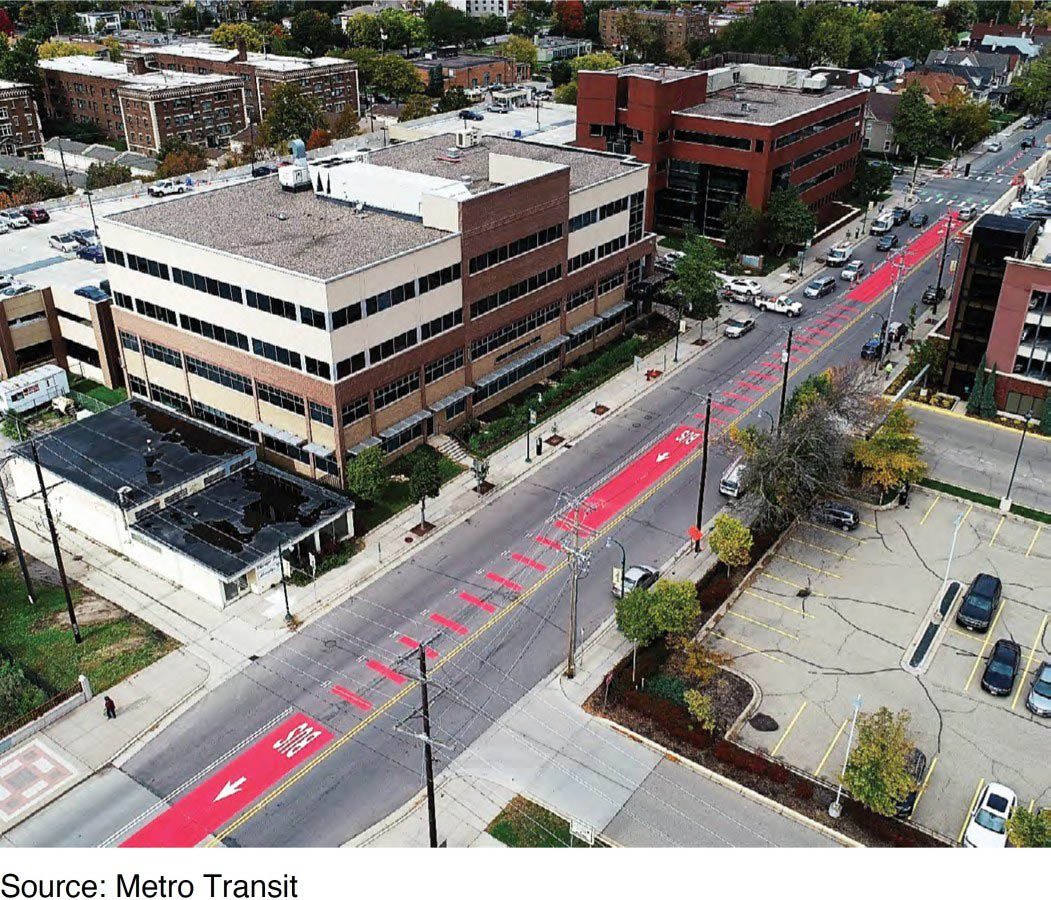
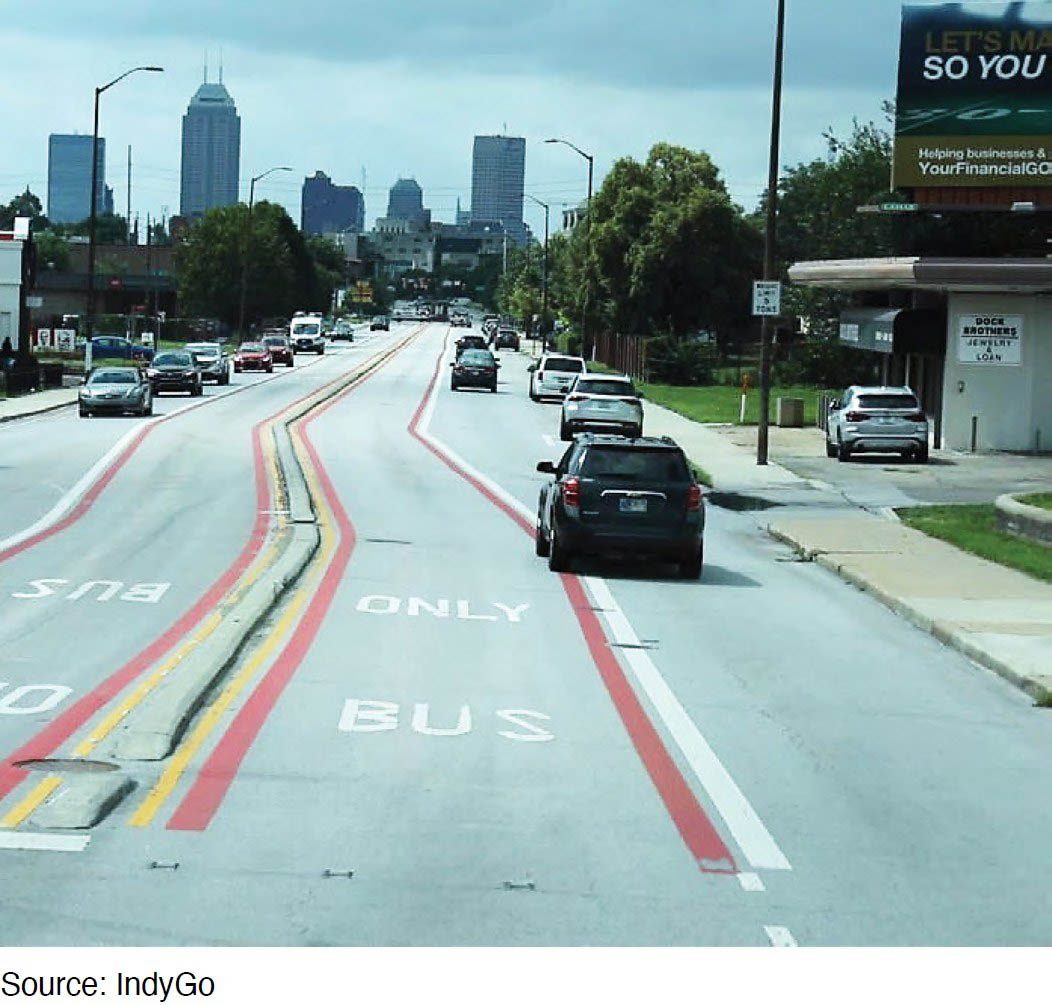
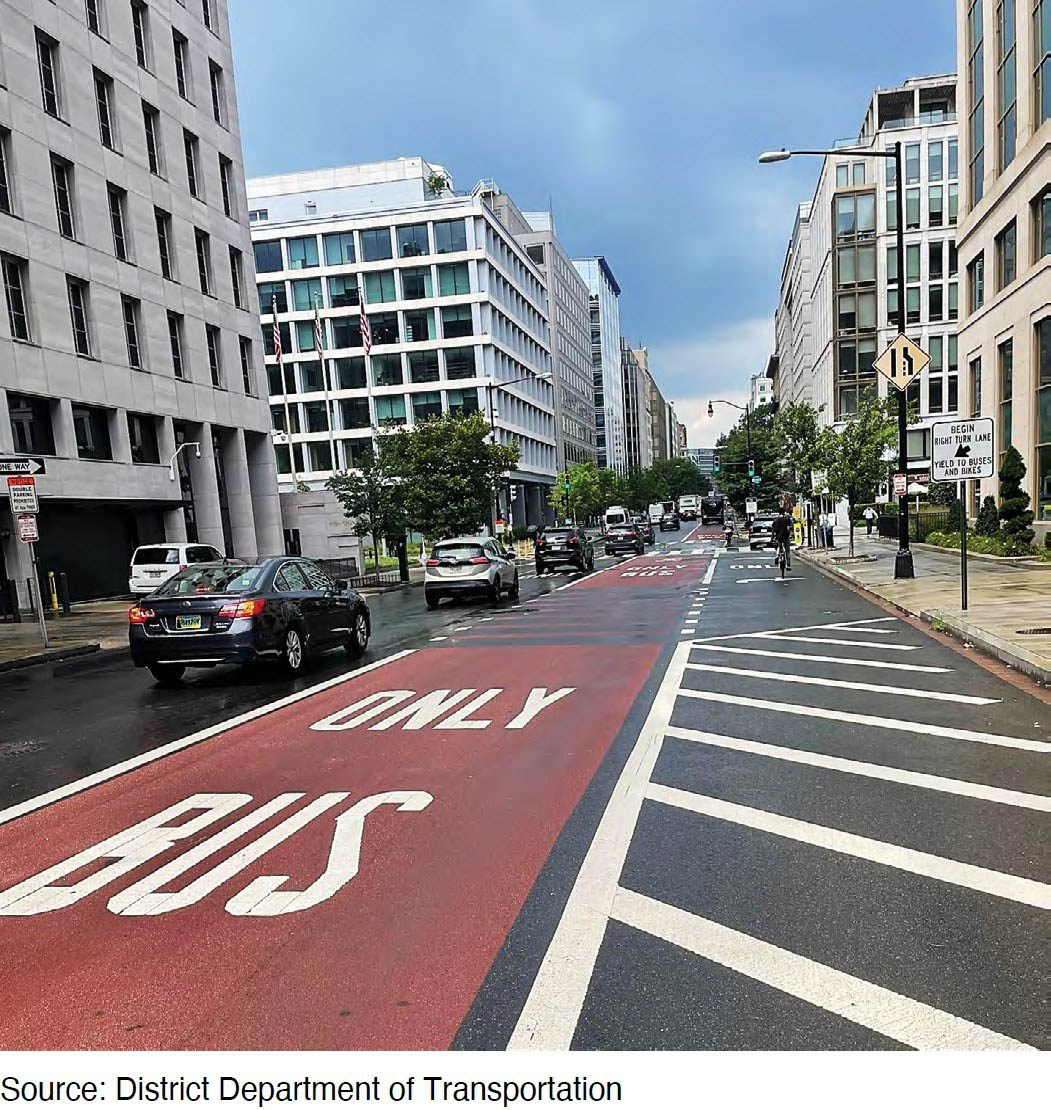
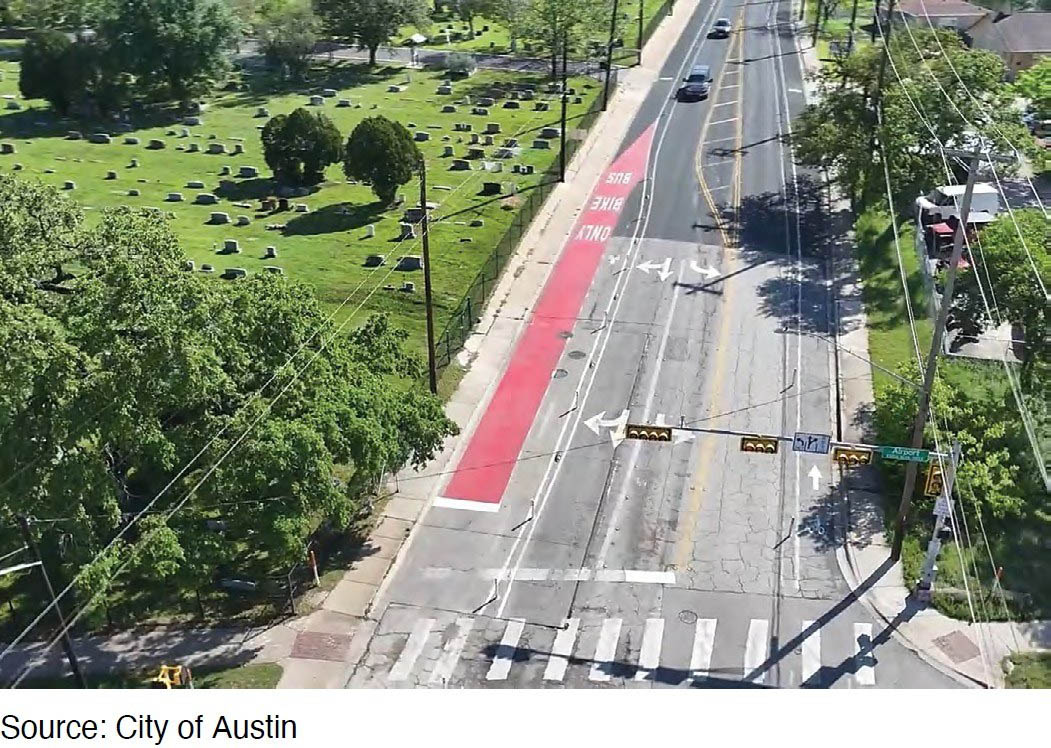
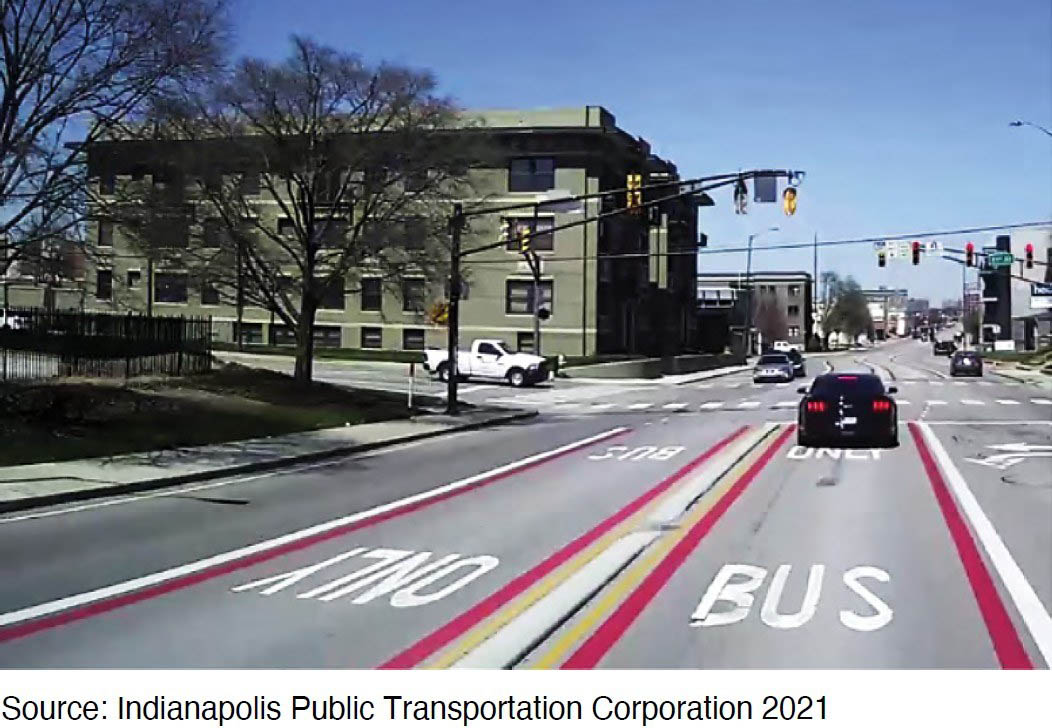
The key design elements of red-tinted bus lanes are pavements or pavement surface treatments; words, symbols, and other pavement markings; signage; and channelizing devices. Figure 2 illustrates these elements, as do Figure 3 through Figure 6.
As indicated in the Definition of Key Terms section of Chapter 1, red-tinting treatments can be implemented in a variety of ways. For example, red tinting might be applied for the full length and width of a bus lane (a red-carpet treatment), or it might be applied only in specific parts of the bus lane (e.g., an intermittent treatment). It might not be applied to a bus lane at all, but, rather, to a queue jump lane or a bus pullout at a bus stop (i.e., a tactical treatment). A red-tinted queue jump lane is shown in Figure 6.
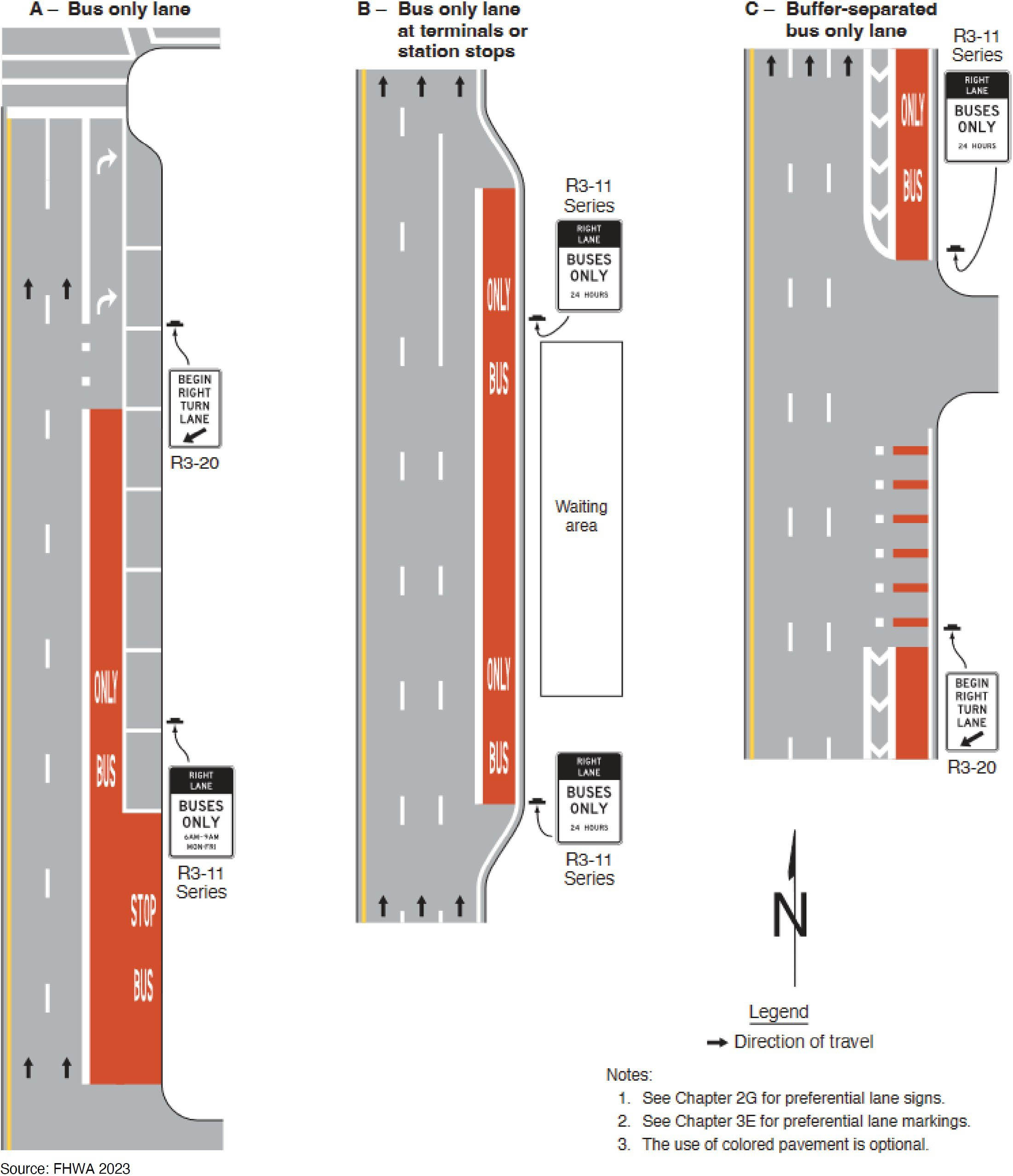
Long Description.
The layout A shows a bus-only lane with red pavement marked ‘ONLY BUS’ and ‘STOP BUS’, along with a ‘BEGIN RIGHT TURN LANE’ (R3 to 20) sign and a ‘RIGHT LANE BUSES ONLY 6 AM to 9 AM MONDAY to FRIDAY’ (R3 to 11 Series) sign. B shows a bus-only lane at terminals or station stops with red pavement marked ‘ONLY BUS’, a designated waiting area, and ‘RIGHT LANE BUSES ONLY 24 HOURS’ (R3 to 11 Series) signs. C shows a buffer-separated bus-only lane with red pavement marked ‘ONLY BUS’, a ‘BEGIN RIGHT TURN LANE’ (R3 to 20) sign, and ‘RIGHT LANE BUSES ONLY 24 HOURS’ (R3 to 11 Series) signs. A legend indicates direction of travel, and notes reference Chapter 2G for preferential lane signs, Chapter 3E for preferential lane markings, and states that the use of colored pavement is optional. Source: FHWA 2023
Materials
Table 2 summarizes types of red-tinting materials that have been used in U.S. and Canadian red-tinted bus lane projects. The content of the table is a compilation of information from multiple previously published documents and information provided by transportation agencies and jurisdictions during this study. The table does not provide an exhaustive list of advantages and disadvantages; rather, it represents typical experiences. The effectiveness of a given red-tinting material may be influenced by the context in which it is used and the methods used to install it; different types of aggregate can be added to these materials to enhance their effectiveness.
Some transportation agencies might report the cost of their red-tinting materials as the costs of purchasing the materials, while others might include installation costs or maintenance costs over time (i.e., life-cycle costs).
The New York City Department of Transportation (NYCDOT) identified several products as approved color surface treatments in January 2024 specifications for bus, bicycle, and pedestrian facilities (New York City Department of Transportation 2024). These are listed in Table 3 to illustrate available products. (Note that this list is not exhaustive, nor are these recommendations. Some products may be more effective than others in different environments and contexts and for different applications.)
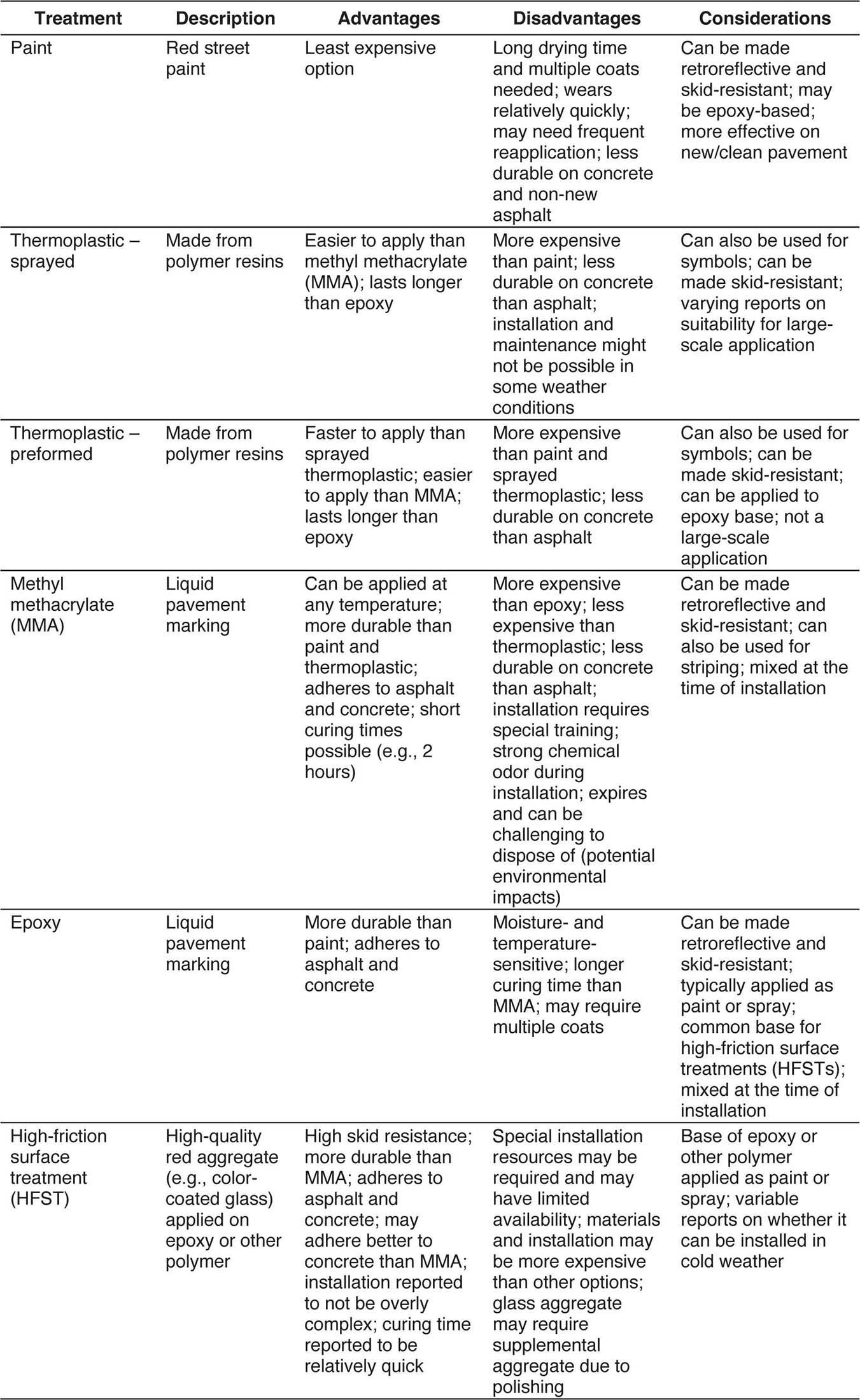
(continued on next page)
Long Description.
The column headers of the table are treatment, description, advantages, disadvantages, and considerations. The data given in the table row-wise are as follows: Row 1: Paint, red street paint, the least expensive option, long drying time and multiple coats needed; wears relatively quickly; may need frequent reapplication; less durable on concrete and non-new asphalt, can be made retroreflective and skid-resistant; may be epoxy-based; more effective on new or clean pavement. Row 2: Thermoplastic — sprayed, made from polymer resins, easier to apply than MMA; lasts longer than epoxy, more expensive than paint; less durable on concrete than asphalt; installation and maintenance might not be possible in some weather conditions, can also be used for symbols; can be made skid-resistant; varying reports on suitability for large-scale application. Row 3: Thermoplastic-preformed, made from polymer resins, faster to apply than sprayed thermoplastic; easier to apply than MMA; lasts longer than epoxy, more expensive than paint and sprayed thermoplastic; less durable on concrete than asphalt, can also be used for symbols; can be made skid-resistant; can be applied to an epoxy base; not a large-scale application. Row 4: Methyl methacrylate (MMA), liquid pavement marking, can be applied at any temperature; more durable than paint and thermoplastic; adheres to asphalt and concrete; short curing times possible (e.g., two hours), more expensive than epoxy; less expensive than thermoplastic; less durable on concrete than asphalt; installation requires special training; strong chemical odor during installation; expires and can be challenging to dispose of (potential environmental impacts), can be made retroreflective and skid-resistant; can also be used for striping; mixed at the time of installation. Row 5: Epoxy, liquid pavement marking, more durable than paint; adheres to asphalt and concrete, moisture- and temperature-sensitive; longer curing time than MMA; may require multiple coats, can be made retroreflective and skid-resistant; typically applied as paint or spray; common base for HFSTs; mixed at the time of installation. Row 6: High friction surface treatment (HFST, high-quality red aggregate (e.g., color-coated glass) applied on epoxy or other polymer, high skid resistance; more durable than MMA; adheres to asphalt and concrete; may adhere better to concrete than MMA; installation reported to not be overly complex; curing time reported to be relatively quick, special installation resources may be required and may have limited availability; materials and installation may be more expensive than other options; glass aggregate may require supplemental aggregate due to polishing, base of epoxy or other polymer applied as paint or spray; variable reports on whether it can be installed in cold weather.
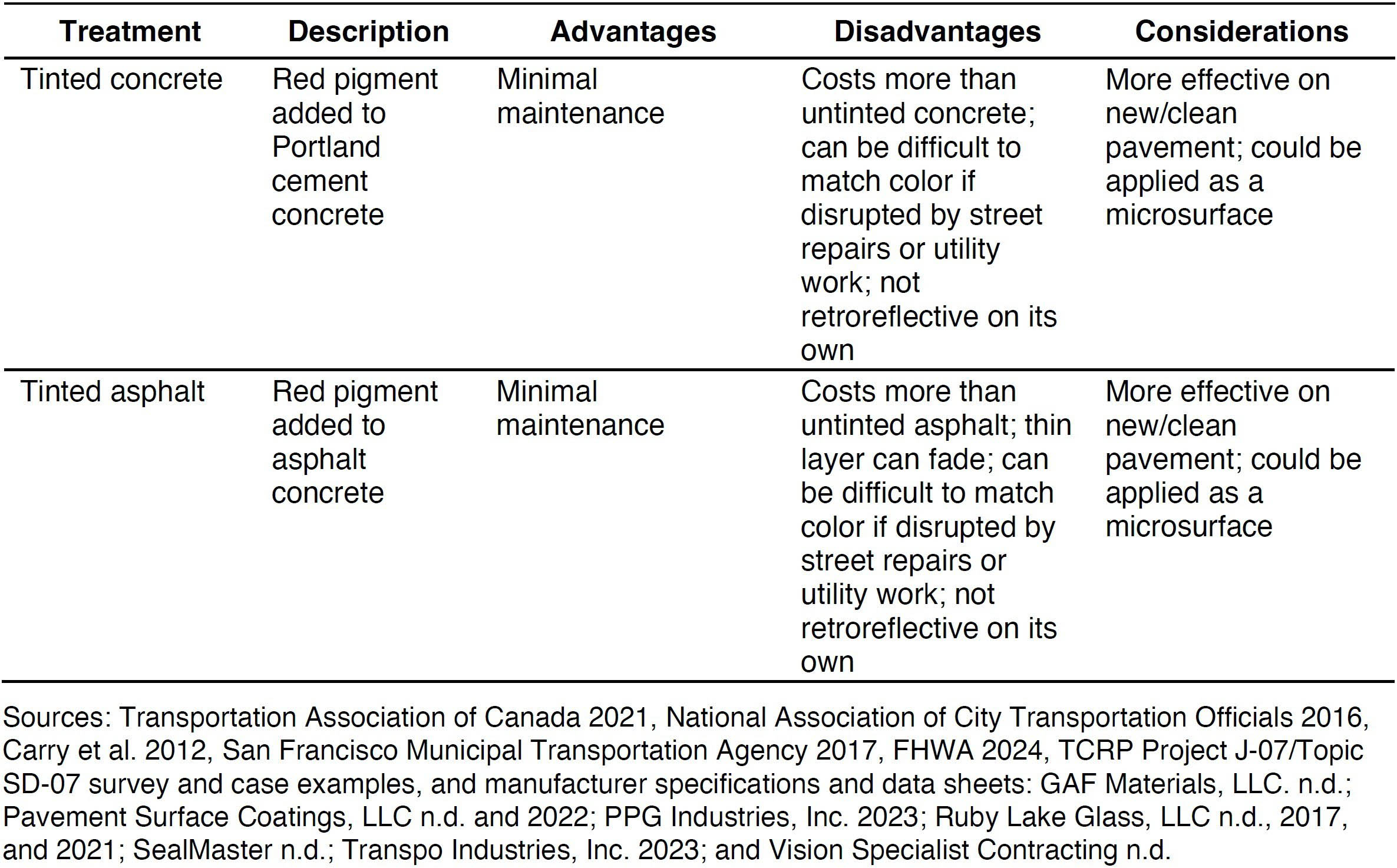
Long Description.
The column headers of the table are treatment, description, advantages, disadvantages, and considerations. The data given in the table row-wise are as follows: Row 7: Tinted concrete, red pigment added to Portland cement concrete, minimal maintenance, costs more than untinted concrete; can be difficult to match color if disrupted by street repairs or utility work; not retroreflective on its own, more effective on new or clean pavement; could be applied as a micro surface. Row 8: Tinted asphalt, red pigment added to asphalt concrete, minimal maintenance, costs more than untinted asphalt; thin layer can fade; can be difficult to match color if disrupted by street repairs or utility work; not retroreflective on its own, more effective on new or clean pavement; could be applied as a micro surface. Sources: Transportation Association of Canada 2021, National Association of City Transportation Officials 2016, Carry et al. 2012, San Francisco Municipal Transportation Agency 2017, FHWA 2024, TCRP Project J-07/Topic SD-07 survey and case examples, and manufacturer specifications and data sheets: GAF Materials, LLC. n.d.; Pavement Surface Coatings, LLC n.d. and 2022; PPG Industries, Inc. 2023; Ruby Lake Glass, LLC n.d., 2017, and 2021; SealMaster n.d.; Transpo Industries, Inc. 2023; and Vision Specialist Contracting n.d.
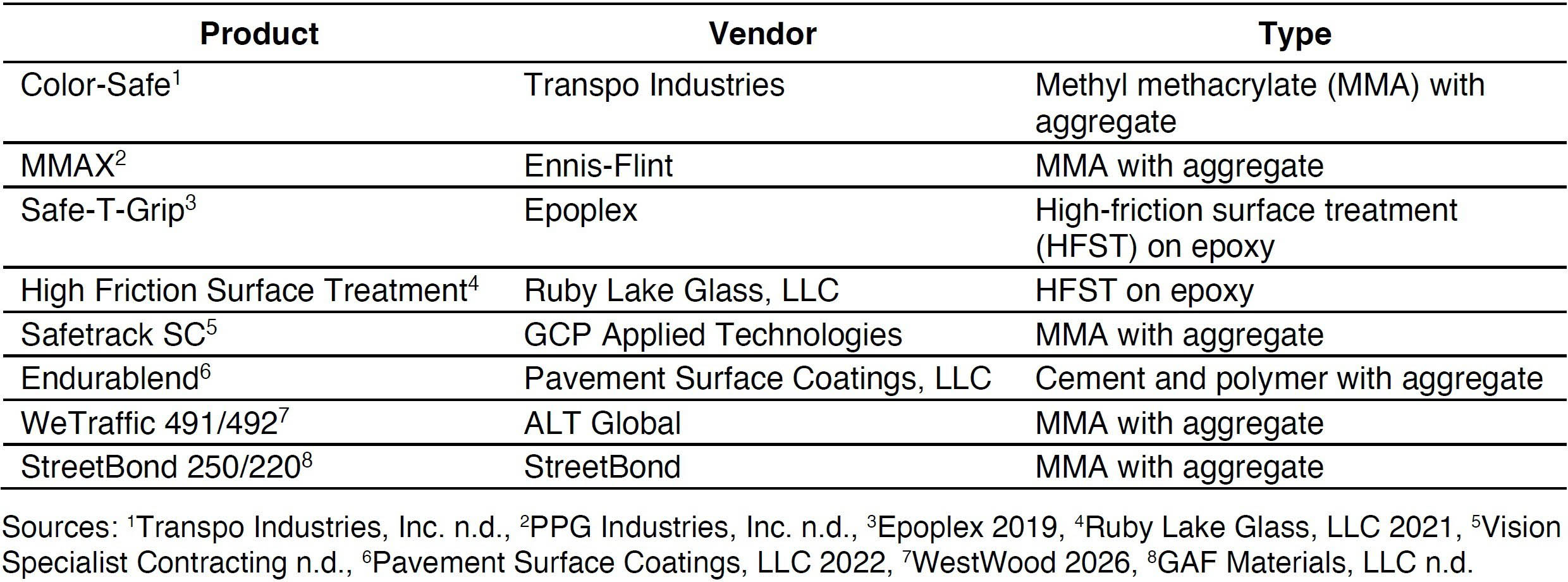
Long Description.
The column headers of the table are product, vendor, and type. The data given in the table row-wise are as follows: Row 1: Color-safe, Transpo industries, MMA with aggregate. Row 2: MMAX, Ennis-Flint, MMA with aggregate. Row 3: Safe-T-Grip, Epoplex, HFST on epoxy. Row 4: High Friction Surface Treatment, Ruby Lake Glass; LLC, HFST on epoxy. Row 5: SAFETRACK SC, GCP Applied Technologies, MMA with aggregate. Row 6: Endura blend, Pavement Surface Coatings, LLC, cement and polymer with aggregate. Row 7: We Traffic 491 or 492, ALT Global, MMA with aggregate. Row 8: Street Bond 250 or 220, Street Bond, MMA with aggregate. Sources: 1 Transpo Industries, Inc. n.d., 2 PPG Industries, Inc. n.d., 3 Epoplex 2019, 4 Ruby Lake Glass, LLC 2021, 5 Vision Specialist Contracting n.d., 6 Pavement Surface Coatings, LLC 2022, 7 WestWood 2026, 8 GAF Materials, LLC n.d.
Considerations that inform the choice of red-tinting treatment for a given application and context include the following:
- Safety (including skid resistance and retro reflectivity) (23 CFR Part 655, Chapter 1; Carry et al. 2016)
- Visibility (including sustained color brightness) (Transportation Association of Canada 2021; 23 CFR Part 655, Chapter 1; Carry et al. 2016)
- Up-front materials costs (Bliss 2019)
- Expected life under local conditions (e.g., weather and level of traffic) (Carry et al. 2016)
- Durability when applied to specific pavement types (Carry et al. 2016)
- Installation costs and environmental and health concerns during installation (Carry et al. 2016)
- Equipment and expertise/training needed for installation (Carry et al. 2016)
- Complexity of installation (Carry et al. 2016, Bliss 2019)
- Speed of installation (which affects the duration of lane and street closures) (Carry et al. 2016)
- Conditions under which installation must occur (e.g., pavement temperature) (Carry et al. 2016)
- Condition and age of the pavement surface to which red tinting will be applied (Carry et al. 2016)
- Ongoing maintenance costs (23 CFR Part 655, Chapter 1)
- Complexity of maintenance, repairs, and restoration (Carry et al. 2016)
- Guidance from agencies that have experience with red-tinting treatments
Planning Experience
Red tinting has been applied to curbside bus lanes, center-running bus lanes, and offset (or floating) bus lanes (23 CFR Part 655, Subpart F). It has also been used in shared bus–bike lanes (23 CFR Part 655, Subpart F).
Strategies for building support for new red-tinted bus lanes or an expanded program of red-tinted bus lanes include quantifying the positive impacts of red tinting (Bliss 2019). Pilot projects—even small ones—can also be useful for building support (Bliss 2019).
Design and Implementation Experience
Installations of different red-tinting treatments are depicted in Figure 7 through Figure 11.
Research results and reports published to date note that some cities install red-tinting treatments in-house, while others rely on contractors for installation. Contractors might have experience and training that in-house staff lack. Relying on contractors might also shift liability for red-tinting treatments (Transportation Association of Canada 2021).
The research publications indicate that experience and training in installing a given red-tinting treatment are important for ensuring that the treatment is installed in accordance with vendor specifications and meets the agencyʼs standards for visibility, durability, and so forth. Substandard installation of red-tinting treatments can result when they are installed on a pavement surface that is in poor condition or has not been correctly prepared (Transportation Association of Canada 2021). The National Association of City Transportation Officials (NACTO) notes that many vendors will provide training during installation (National Association of City Transportation Officials 2014).
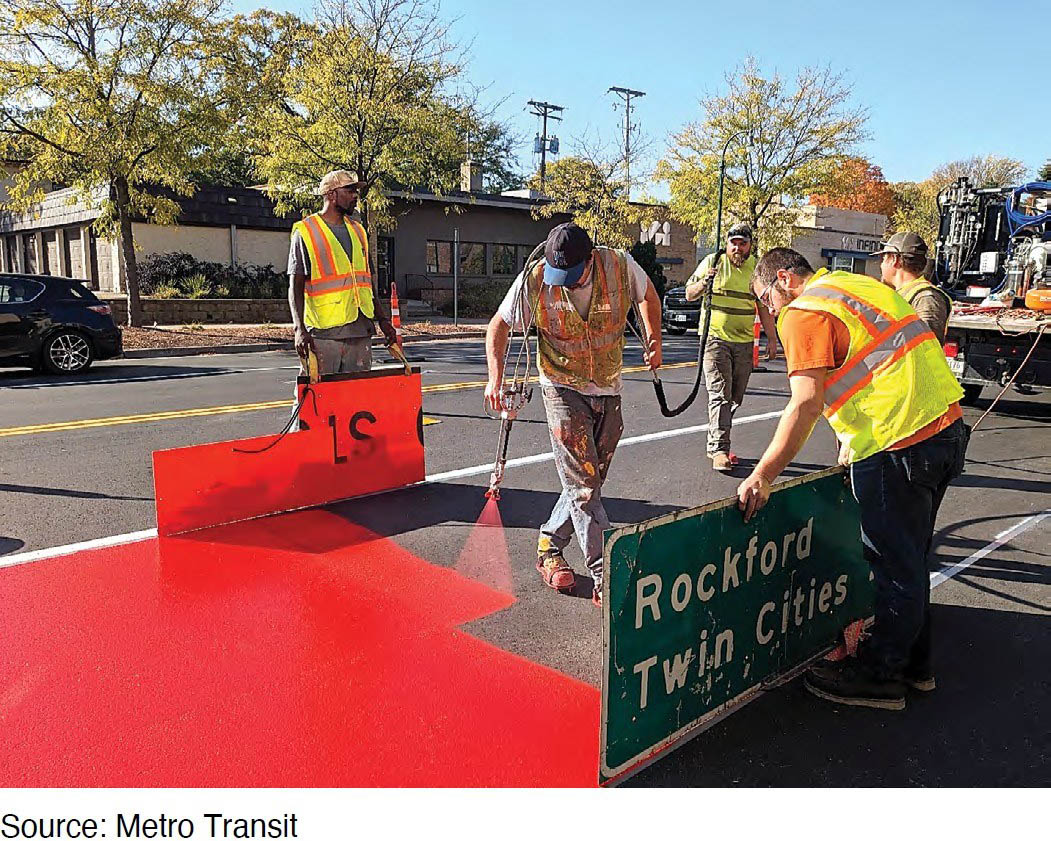
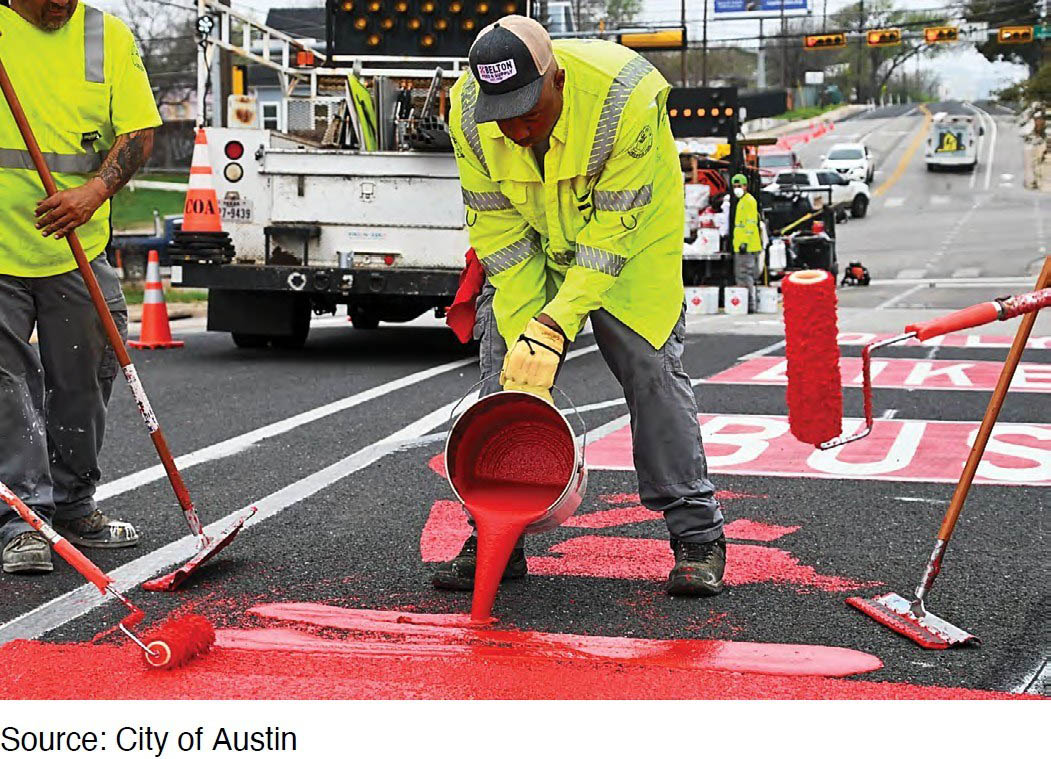
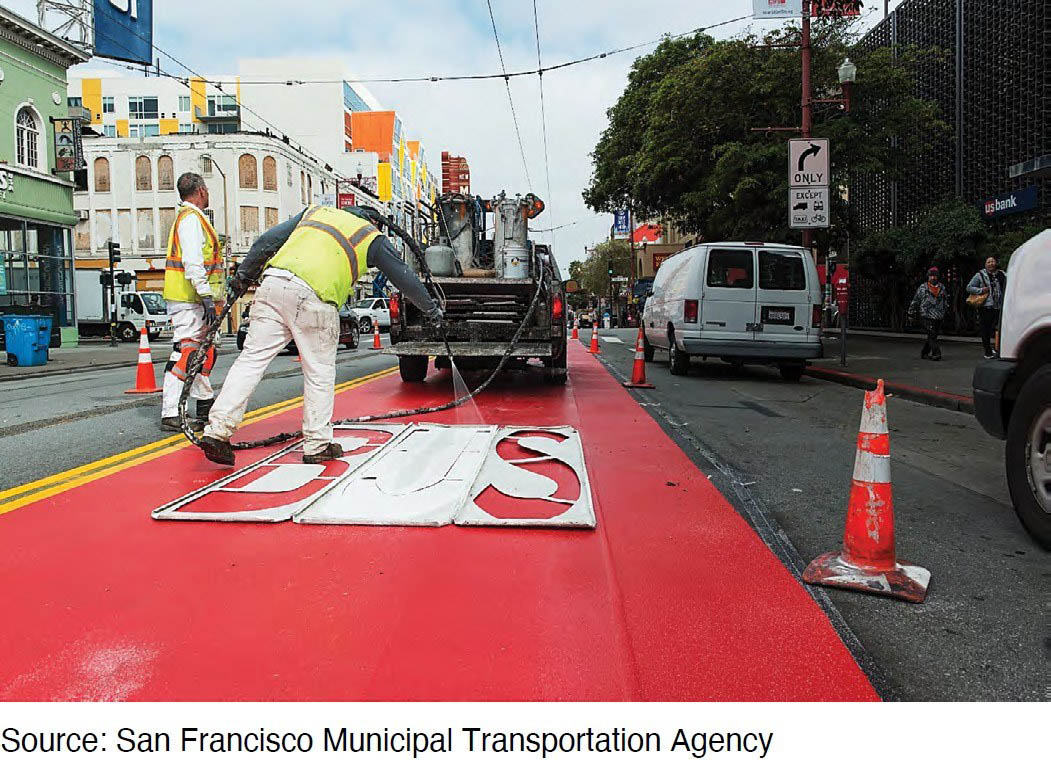
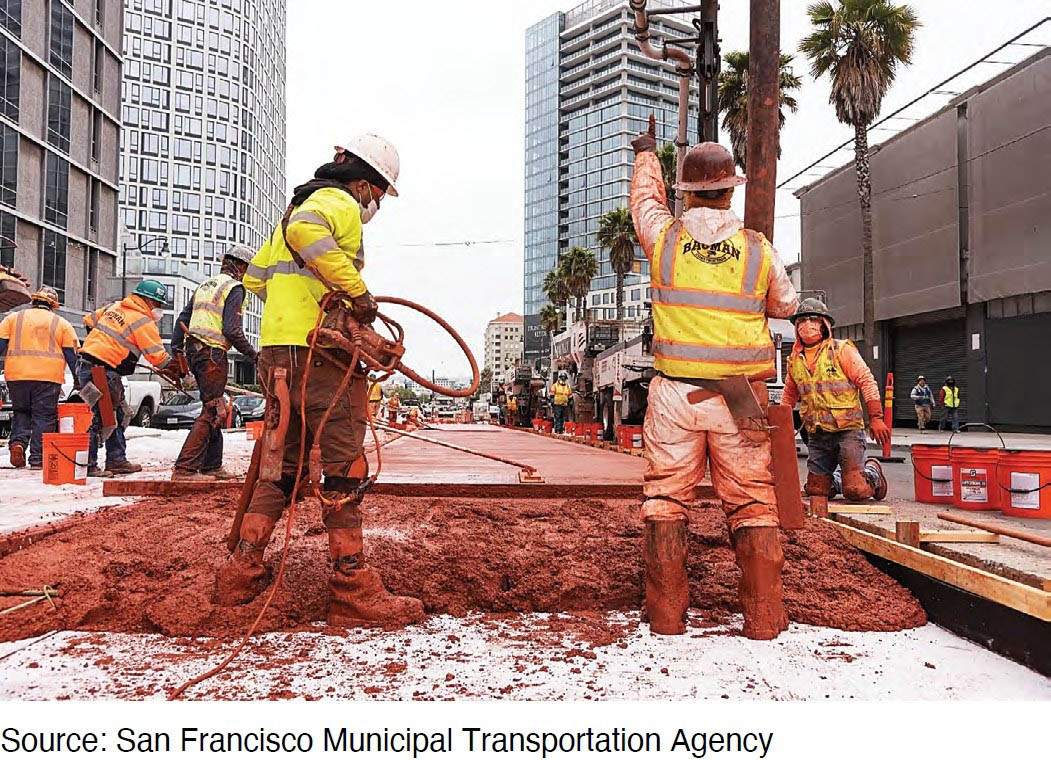
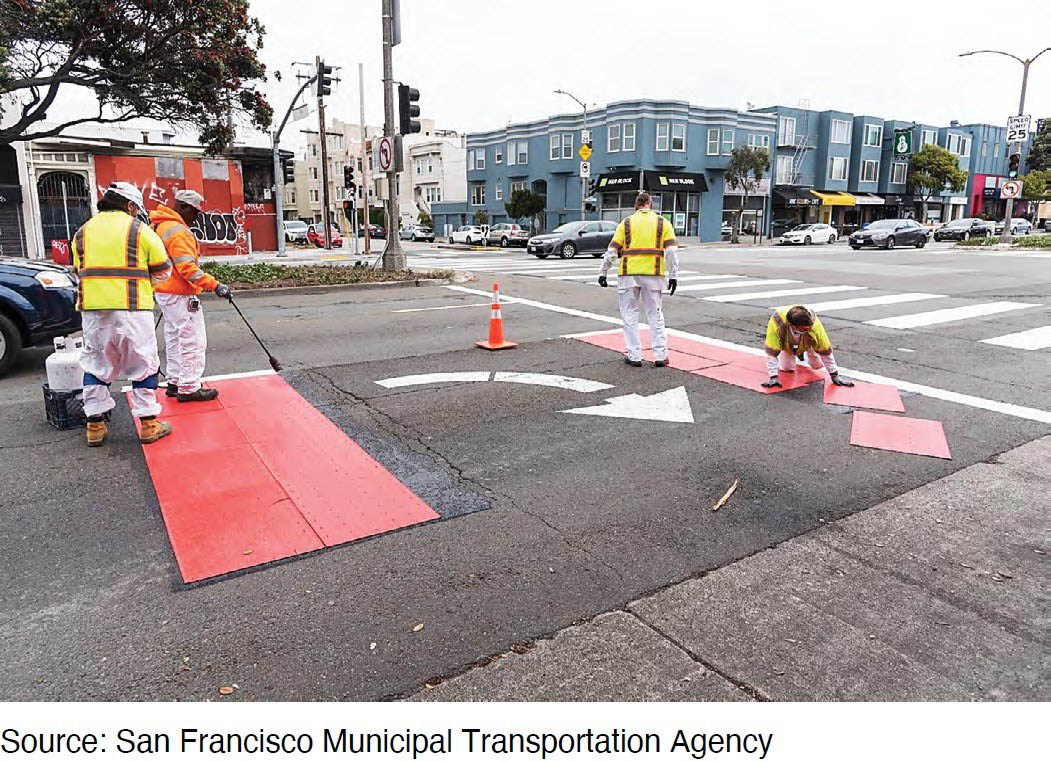
Documented experience with installing red-tinting treatments indicates that some cities prefer to avoid using materials that require extended lane or street closures. A material with a long drying or curing time, for example, could result in long disruptions to transit service or traffic flow (Transportation Association of Canada 2021). Documented experience also indicates that local weather patterns can have an impact on the performance of a given red-tinting treatment. Red-tinting treatments in colder climates might be exposed to lower temperatures, snow, salt, sand, and snowplows. Paint tends to have a shorter lifespan in such conditions. Some agencies have found thermoplastic, methyl methacrylate (MMA), and epoxy-based treatments to be more durable in colder climates (Transportation Association of Canada 2021).
NYCDOT conducts random testing of the materials that will be installed, provides detailed specifications to the contractors installing the materials, and inspects red-tinting installations for thickness, color, skid resistance, and so forth. Contractors are required to repair installation defects (New York City Department of Transportation 2024).
Operations and Enforcement Experience
Research completed to date indicates that red-tinting projects can reduce bus lane violations significantly, as summarized in Table 4. Bus lane violations can be classified as moving violations (i.e., vehicles illegally traveling in the bus lane) or stopped violations (i.e., vehicles illegally parked in the bus lane or illegally stopped in the bus lane for some other reason). Moving violations decreased 51% in San Francisco, 55% in New York City, and 60% in Chicago after installation of red tinting, according to the San Francisco Municipal Transportation Agency (SFMTA; 2017). Moving violations on 3rd Street in San Francisco decreased 48% to 55%, depending on time of day (San Francisco Municipal Transportation Agency 2017). Stopped violations (an example of which is shown in Figure 12) were effectively eliminated in Chicago and were reduced 30% in New York City (National Association of City Transportation Officials 2018).
The Los Angeles Department of Transportation (LADOT) reported in 2022 that the bus lane violation rate at six locations ranged from 1.7% to 34.3% before red tinting was applied and ranged from 0.4% to 16.4% after red tinting was applied, which is a 40% to 75% decrease. The agency also interviewed bus operators about the red-tinting treatments; the bus operators “really liked” the red treatment, and 75% indicated that bus lane violations had decreased (Los Angeles Department of Transportation 2022).
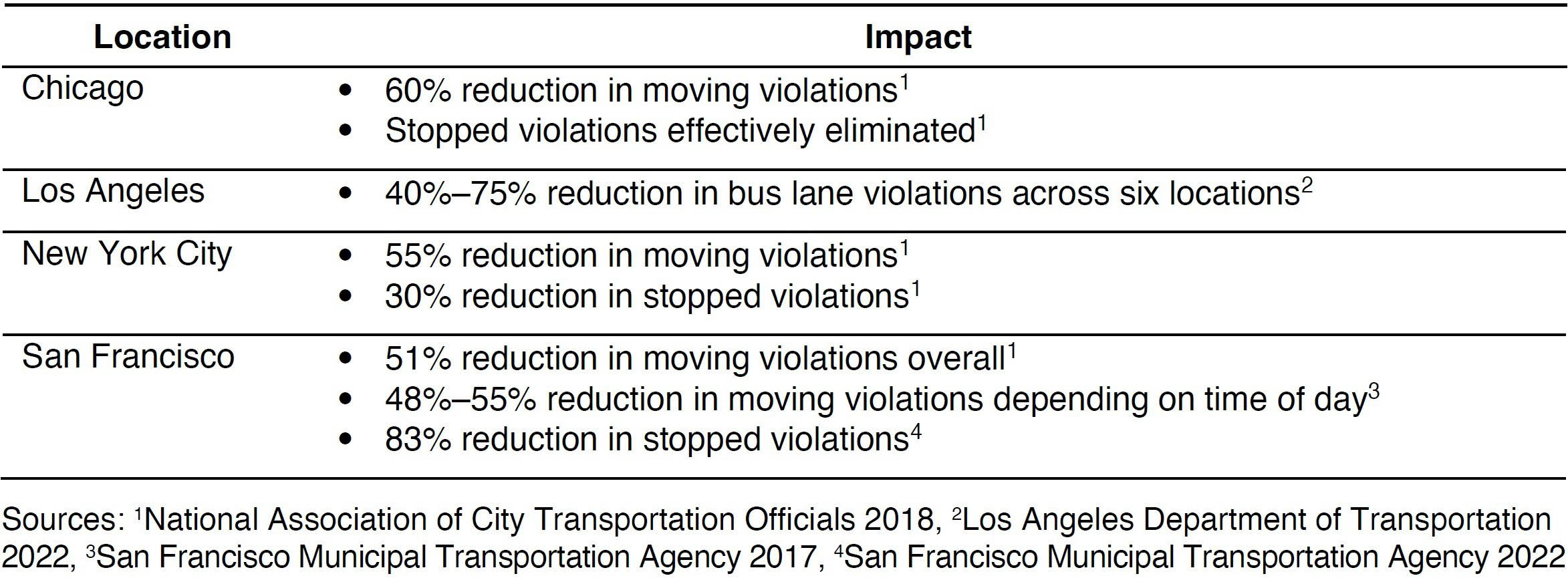
Long Description.
The column headers of the table are location and impact. The data given in the table row-wise are as follows: Row 1: Chicago, 60 percent reduction in moving violations 1; stopped violations were effectively eliminated 1. Row 2: Los Angeles, 40 to 75 percent reduction in bus lane violations across six locations 2. Row 3: New York City, 55 percent reduction in moving violations 1; 30 percent reduction in stopped violations 1. Row 4: San Francisco, 51 percent reduction in moving violations overall 1; 48 to 55 percent reduction in moving violations depending on time of day 3; 83 percent reduction in stopped violations 4. Sources: 1 National Association of City Transportation Officials 2018, 2 Los Angeles Department of Transportation 2022, 3 San Francisco Municipal Transportation Agency 2017, 4 San Francisco Municipal Transportation Agency 2022
The San Francisco Municipal Transportation Agency (SFMTA) concluded in 2015 that red tinting was effective in reducing violations of the Church Street bus lanes in San Francisco. This was determined by comparing the rate of violations of the red-tinted bus lanes on Church Street to the rate of violations of the untinted bus lanes on a comparable street (San Francisco Municipal Transportation Agency 2015). SFMTA found that the red tinting in the Geary Boulevard bus lanes reduced bus lane violations by 47% between 2019 and 2022 (San Francisco Municipal Transportation Agency 2022). This finding corroborated a key finding of SFMTAʼs 2017 red-tinted bus lanes before-and-after study (San Francisco Municipal Transportation Agency 2017). The Geary Boulevard study (San Francisco Municipal Transportation Agency 2022) also indicated a decrease in vehicles illegally parked in the bus lane: from 12 vehicles in 2019 to two vehicles in 2022 (an 83% decrease).
McNeil et al. (2023) reported “relatively high” compliance with bus lane restrictions in Portland, OR. Moving violations of bus lane restrictions in Portland decreased or did not change significantly after red tinting was installed, and more drivers correctly merged into shared bus/turn lanes after the installation of broken-pattern red tinting in the merge areas (McNeil et al. 2023). The authors also cited a 2014 New York City study that found fewer vehicles obstructing red-tinted bus lanes than untinted bus lanes (McNeil et al. 2023).
Reductions in bus lane violations can lead to improved transit service reliability (23 CFR Part 655, Subpart F), which is often expressed in terms of on-time performance (i.e., how closely
actual bus arrivals at a stop match scheduled arrivals) or headway adherence (i.e., evenness of bus arrivals). SFMTAʼs 2017 before-and-after study of red-tinted bus lanes in San Francisco found that the red-tinted bus lanes implemented on an experimental basis reduced the impacts of traffic congestion on transit travel times, increased transit reliability 25%, reduced total crashes 16%, and reduced injury crashes 24% (San Francisco Municipal Transportation Agency 2017). Schmitt reported that the Maryland Transit Administration found red-tinted bus lanes installed in Baltimore in 2017 improved bus travel times on most routes (Schmitt 2019). A commitment to enforcing red-tinted bus lane usage regulations is needed to maximize benefits (Bliss 2019).
Reid reported that bus delays in Minneapolisʼs Hennepin Avenue red-tinted bus lanes resulted in part from encroachment by drivers into the bus lanes (Reid 2020). The report noted that the red-tinting treatment in these bus lanes does not extend from the gutter to the lane line—it is a partial-width red-tinting treatment—and drivers might be confused about where the bus lane begins. The report suggested three options for reducing this confusion. First, red tinting could cover the full width of the lane. Second, the area between the current edge of the red tinting and the lane line could be replaced with a striped buffer. Third, vertical delineators could be installed to identify the edge of the bus lanes; this option is likely to be more visible in snow.
NACTO cited a series of studies that found driversʼ understanding of how to interact with red-tinted bus lanes was high (National Association of City Transportation Officials 2018). McNeil et al. found that Portland drivers recognized red tinting as signifying a restriction on the use of a travel lane, although most did not associate the red color with transit and did not understand red tinting applied in a broken pattern (McNeil et al. 2023). Schmitt cited a study in Washington, DC, that suggested red tinting has a positive impact on enforcement because it makes bus lanes more visible to drivers and takes away the excuse that they were not aware of the lane restrictions (Schmitt 2019). The Maryland Transit Administration concluded in a before-and-after study of Baltimore bus lanes that bus lanes are most successful when they are full-time bus lanes and when they are red-tinted (Maryland Transit Administration 2019). The agency noted that the red tinting increases the visibility of the lanes.
Maintenance Experience
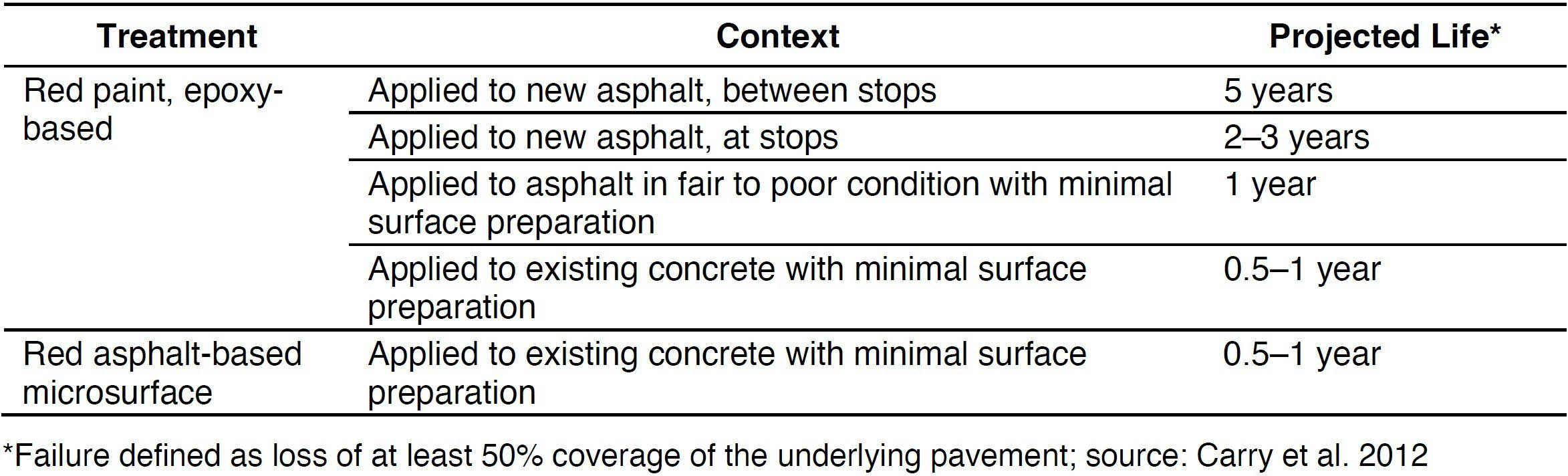
Carry et al. documented a 2012 evaluation of red-tinting material treatments conducted for NYCDOT (Carry et al. 2012). The evaluation found that epoxy-based paint, epoxy-based HFSTs with red aggregate, and a red asphalt-based microsurface treatment performed well in lab and field tests of durability and skid resistance, while a red concrete-based microsurface treatment did not perform well. The evaluation found that red tinting experiences more wear and tear at bus stops than in other portions of bus lanes; this was attributed to engine heat and stopping and starting movements. The evaluation also found that the condition of the underlying pavement has an effect on the life of the red-tinting treatment, as evident in Table 5.
Long Description.
The column headers of the table are treatment, context, and projected life asterisk. Row 1: Red paint, epoxy -based. The first row has four sub-rows: Sub-row 1: Applied to new asphalt, between stops; 5 years. Sub-row 2: Applied to new asphalt, at stops; 2 to 3 years. Sub-row 3: Applied to asphalt in fair to poor condition with minimal surface preparation; 1 year. Sub-row 4: Applied to existing concrete with minimal surface preparation, 0.5 to 1 year. Row 2: Red asphalt-based micro surface; applied to existing concrete with minimal surface preparation; 0.5 to 1 year. An asterisk indicates failure, defined as loss of at least 50 percent coverage of the underlying pavement; source: Carry et al. 2012
The Maryland Transit Administration stated in a 2019 before-and-after study of its bus lanes that the agency used MMA for red tinting because MMA is more durable than thermoplastic, particularly in heavy traffic and snow. The agency also preferred MMA because it is skid-resistant, fade-resistant, easy to apply, and has a low life-cycle cost (Maryland Transit Administration 2019).
SFMTA reported in 2015 that 90% of the red tinting (StreetBond150, an MMA treatment) at midblock locations in the Church Street bus lanes was still in place after 18 months of use. At transit stops, there was 70% to 80% deterioration. At intersection approaches, there was 80% to 90% deterioration. The report noted that the smoothness of the underlying pavement seemed to have an effect on the amount of deterioration. The report concluded that the red tinting is likely to need minor rehabilitation after 5 years, when remaining coverage is expected to be 50% (San Francisco Municipal Transportation Agency 2015).
Bhasin and Hazlett observed that the red-tinted bus lanes in downtown Austin were most discolored and worn where buses made sharp turns in the lane. The researchers reported that keeping red-tinted bus lanes clean improves their chromaticity (hue) and luminosity (brightness) but may not be enough to maintain chromaticity and luminosity over time. The researchers noted that the durability and vibrancy of red-tinting treatments may depend on the local climate (e.g., temperatures and level of rainfall) (Bhasin and Hazlett 2019).


