Preparing Successful No-Effect and No-Adverse-Effect Section 106 Determinations: A Handbook for Transportation Cultural Resource Practitioners (2025)
Chapter: 3 Challenges Involving Historic Properties
CHAPTER 3
Challenges Involving Historic Properties
Historic Bridges
Challenge Summary
Bridges are key pieces of infrastructure and are often bottlenecks in regional transportation systems. Therefore, they often need to be repaired and upgraded for modern use or even replaced because of extensive structural and safety problems. On the other hand, members of the public and Section 106 consulting parties often highly value historic bridges, especially as gateways into communities, and want them to remain as they are. These tensions often set up historic bridges as the focus of contentious Section 106 reviews. Some of the most common challenging bridge rehabilitation and replacement projects include the following:
- Common bridges,
- Cumulative effect of replacement of certain types of bridges,
- Whether the in-kind replacement of bridge elements constitutes No Adverse Effect or an Adverse Effect,
- Safety improvements to bridges,
- Bridges in historic districts or listed in the National Register (both urban and rural), and
- Rehabilitating bridges for pedestrian use.
Case Study: SR 4001/English Center Suspension Bridge Rehabilitation, Pennsylvania
Finding: No Adverse Effect (ACHP Dispute).
Project: Rehabilitation of National Register–listed 1891 bridge to halt deterioration, raise the permitted weight limit, and provide a safe and reliable crossing.
Finding of Effect Overview: The SHPO disputed the state DOT finding of No Adverse Effect. By following the SOI standards, ACHP agreed with the state DOT on a finding of No Adverse Effect, as character-defining features of the bridge would be reused, including one-half of the eyebar suspension chains, the towers that support the chains, all the built-up vertical members, and some of the diagonals.
Challenges associated with projects involving historic bridges stem primarily from disagreements between SHPOs and other consulting parties and FHWA and state DOTS on the assessment of effects; for example,
- “For No Adverse Effect, at what point does a rehab become an Adverse Effect if extensive in-kind material replacement is required? Examples include both covered bridges and steel trusses.”—State DOT Respondent
- “Historic bridges also pose a challenge because the difference between adverse and no Adverse Effect can come down to the type of railing used on a rehabilitation, and sometimes it’s hard to come to an agreement between all the parties involved.”—State DOT Respondent
The case study on the SR 4001/English Center Suspension Bridge rehabilitation in Pennsylvania addresses the question of the extent to which replacement of the original material with a different, compatible material constitutes a loss of integrity and therefore an Adverse Effect.
Case Study: Bridge Street Bridge Rehabilitation, New Hampshire/Vermont
Finding: No Adverse Effect.
Project: Rehabilitation of National Register–eligible 1930s steel arch bridge, including replacement of the deck, select superstructure steel components, and rail; reconstruction of an abutment; and minor road work to approaches.
Finding of Effect Overview: Work done in accordance with SOI standards, including bolting components rather than riveting, an ornamental balustrade rail attached to the back side of new crash-tested rail, and painting to match historic features.
Overcoming the Challenge
To address the challenges associated with historic bridges, survey and interview respondents have used some of the following strategies:
- Identify the aspects of the bridge that convey its historic significance and integrity and retain those things in the bridge rehabilitation. (See the case study on the rehabilitation of the Bridge Street Bridge in New Hampshire and Vermont.)
- Produce digital renderings of proposed changes.
- Solicit comments on the project from a bridge engineer.
- Present more than one design option to consulting parties (e.g., one option affecting the historic bridge design more and one option affecting the historic materials more).
In one example, a state DOT did not find the bridge railing to be a character-defining feature of the bridge and therefore determined that its replacement would not be an Adverse Effect; however, a consulting party disagreed. Through additional consultation, which involved a redesign to preserve the historic rail while allowing crash barriers on the interior side, the disagreement was resolved.
Additional Information and Resources
- NCHRP Web-Only Document 278: Context-Sensitive Design Options for Workhorse Bridges in Rural Historic Districts: Practitioner’s Guide and Research Report (Bedford et al. 2020).
- Guidelines for Historic Bridge Rehabilitation and Replacement (AASHTO 2008).
Linear Historic Resources
Challenge Summary
Many of the linear resources encountered on transportation projects are active transportation systems such as roads and railroads. The results of the online survey and follow-up interviews showed the following key issues in assessing effects on linear resources:
- Assessing the integrity of long transportation networks,
- Lack of state- or regionwide studies of linear resources, and
- Type of effect when one or a few contributing features are affected within a long linear resource.
Evaluations of National Register eligibility and assessments of effects are generally done on a project-by-project basis, because most projects only involve a segment of these resources and not the entire resource. The lack of a comprehensive evaluation of significance that identifies which segments of the entire resource retain integrity on the basis of the resource’s significance and which elements of the linear resource are or are not contributing to its significance makes assessments of effects rather problematic when only a small segment is involved in a project. For these reasons, some states have developed historic contexts that address National Register significance and integrity of linear resources to provide a framework for evaluating segments encountered through a project. A few of these historic contexts have included resource-specific National Register evaluations.
One SHPO respondent raised the issue of cumulative effects of continuous improvements to historic roads:
Many projects that convert intersections along historic roadways that are considered NRHP [National Register of Historic Places]-eligible from traditional designs to roundabouts are considered to have No Adverse Effect. When reviewing projects independently of one another, this seems true; however, it appears that eventually a tipping point will be reached where enough intersections have been converted that a design element of the historic roadway will have been lost without ever having been considered an Adverse Effect. This issue also appears in projects that propose to add sidewalks along segments [of] NRHP-eligible roadways where the rural shoulder is considered a contributing element.
Overcoming the Challenge
Survey and interview respondents suggested several strategies for overcoming the challenges associated with making findings of effect regarding linear resources, particularly for historic roads:
- Take a holistic approach toward the assessment of effects on historic roads.
- Consider and compare the integrity of the historic road in the APE versus the entire road.
- Include linear resource procedures in statewide delegation PA updates.
- Complete statewide highway studies with National Register evaluations of all state highways in entirety.
- Communicate with SHPOs and FHWA on new approaches to linear resources.
- Consider the historically significant boundary for linear resources—the historic boundary may be smaller than the actual ROW.
- The historic boundary may be different in different segments of the linear resource.
It should be noted that some state DOTs currently do not implement a few of these strategies, given their focus only on the APE associated with their projects and on not extending their research or investigations beyond the limits of the project APE.
One state DOT and two SHPOs have developed guidance for evaluating the significance of linear resources and assessing effects on these resources. Following are some tips from these states:
- A nonsignificant linear resource checklist is good to use to establish whether a linear resource, including roads, is significant or not on the basis of established historic contexts for linear resources.
- The process of using a checklist should be agreed upon by the SHPO.
- If the resource is not significant, a full SHPO inventory form for that resource could be replaced by the checklist.
- Project effects on linear resource segments within an APE should be considered with regard to the overall effect on the resource as a whole.
- The features of the resource that are being affected should be considered; effects on a singular feature or scarce features, such as locks, trestles, and dams, are more likely to result in an Adverse Effect on the overall resource than are the minor features of a linear resource. (See the case study on U.S.-93 Improvements in Idaho.)
- Conducting significant historical and archival research regarding the potential presence of linear resources is recommended prior to fieldwork to determine the need for or level of recordation for individual features.
- Conducting a site file search to gather information on whether a linear resource has been previously evaluated, either in total or as a contributing segment of the larger resource, is helpful.
- Historical documentary research should be commensurate with the size and scope of the undertaking.
- When possible, recordation of an entire linear resource is an ideal outcome of encountering a linear resource in the field. In practice, this is rarely possible, so the recordation and evaluation should focus on recording the largest segment possible and evaluating the segment as a contributing or noncontributing component of the linear site as a whole.
Highway Widening
Challenge Summary: The challenge of making findings of effect for highway widening and improvements projects emerged within a discussion of linear resources. Study respondents identified the practice of road widening and the introduction of new lanes as having the potential to adversely affect a historic road over time and result in a cumulative impact.
- What makes a road significant, and is widening a significant road an Adverse Effect? (See the case study on U.S.-93 Improvements in Idaho.)
- How do we stay consistent?
Overcoming the Challenge: Respondents identified a handful of ways to best determine the potential cumulative effects of widening a highway:
- Complete highway corridor safety and planning studies to identify needed long- and short-term projects that also include high-level environmental impacts as part of the effort.
- For divided highway and Interstate interchanges, consider what progressing development might look like at the project location 5 to 10 years after the project’s completion (State DOT Respondent).
- Despite the likelihood that historic settings have already been disturbed, owing to previous construction and improvements to a highway, consider the cumulative effects on resources given a number or placement of seemingly insignificant improvements or types of improvements that were previously not an Adverse Effect.
Additional Information and Resources
- Highways to the Sky: A Context and History of Colorado’s Highway System (Colorado Historical Society and Colorado Department of Transportation 2002). Includes both historic contexts for highways as well as National Register evaluation criteria.
- Walking the Line, Guidance for Identification, Evaluation, and Field Recordation of Historic Linear Sites in Colorado (Horn and Norton 2021). Guidance developed for linear resources by the Colorado SHPO. Summarizes the difficulty of linear resources within the context of Section 106 reviews.
- Historic Survey of Roads in Idaho’s State Highway System: Volume 1: Historic Context (Mead & Hunt 2019a).
- Historic Survey of Roads in Idaho’s State Highway System. Volume 2: Application of the National Register of Historic Places Criteria for Evaluation (Mead & Hunt 2019b).
- Guidance for Recording and Evaluating Linear Cultural Resources (Oregon Parks and Recreation Department and Oregon SHPO 2013). Provides guidance on assessing effects of projects on a wide range of linear resources, including historic roads.
Archaeological Sites
Challenge Summary
Archaeological sites that extend outside the ROW are a particular challenge with respect to making effects findings. If a site extends partially within the ROW, most state DOTs do not test outside the ROW to (1) delineate site boundaries and (2) evaluate National Register eligibility. The challenge is how to assess eligibility and, in turn, effects, when only a portion of an archaeological site is investigated and may be affected by a project.
Overcoming the Challenge
To address these challenges, state DOTs take various approaches. As one state DOT noted, “For long, linear projects, we routinely consider only if portions of the archaeological site within the APE contribute or not to the eligibility of the overall site. Built environment resources are almost always considered as a whole, even if they extend outside of the APE.”
Some state DOTs assume the overall site is eligible and designate the tested portions in the project ROW as either contributing or noncontributing to the significance of the overall site. If the archaeological deposits in the ROW are not intact (i.e., lack integrity), the portion in the ROW is considered noncontributing, and the effect finding would be either No Effect or No Adverse Effect. This scenario assumes that the site is not a property of religious and cultural significance to tribes and that there is no potential within the ROW for human remains.
Case Study: Highway 31, Little Sioux Riverbank Stabilization, Iowa
Finding: No Adverse Effect.
Project: Emergency stabilization of the riverbank to halt encroachment on Highway 31, including the installation of a revetment (riprap) structure to protect a significant archaeological site.
Finding of Effect Overview: A finding of No Adverse Effect was reached by using design changes, including reduction of contractor access points, relocation of the revetment structure, and a change in the profile of the road.
Following are additional examples of how state DOTs address the challenges associated with archaeological sites:
- “Usually, we work towards avoidance. Minimization is rarely used [with archaeological sites].”
- “No Adverse Effect can be reached by [fencing off the site] but in general, most sites just get avoided.”
- “We treat unevaluated sites as eligible, but we are cautious when there is ground disturbance.”
For a highway project in Iowa, cultural resource staff, designers, and engineers worked together to avoid an impact to an adjacent archaeological site. (See the case study on riverbank stabilization along Highway 31 in Iowa.)
Additional Information and Resources
Archaeology: Resources for Conducting Archaeological Studies (NCDOT n.d.). NCDOT supplies separate forms for archaeological resources for documenting findings of “No Adverse Effect” and “Sites Affected.” Forms require NCDOT, North Carolina SHPO, and FHWA signatures.
Historic Districts
Challenge Summary
Transportation improvement projects within historic districts can be challenging in a number of ways, depending on the proposed project and the significance of the district. Some of the most common challenging projects conducted within historic districts include the following:
- Bridge or culvert replacements,
- Streetscape, pedestrian safety, and other micromobility improvements, and
- Highway widening.
Case Study: I-695 (Maryland Beltway) Transportation Systems Management and Operations, Maryland
Finding: No Effect.
Project: Installation of TSMO to reduce congestion, improve mobility and safety, and better adapt to future transportation technology.
Finding of Effect Overview: A disagreement between NPS, the SHPO, and the state DOT concerning visual effects on an adjacent historic resource was resolved through consultation and the relocation of traffic-monitoring equipment to outside the viewshed of the property.
These types of projects pose challenges throughout the Section 106 process, including definition of the APE, determination of the appropriate level of effort for identification, and assessment of the effects. Several survey and interview respondents noted that their biggest challenge was establishing an appropriate APE and level of effort for identification that was commensurate with the nature of a project:
- “We also struggle with what is the appropriate level of effort to identify what might be a very large rural historic district when the project involves an on-line replacement of a culvert with minimal right-of-way acquisitions in the surrounding quadrants. What identification of resources is commensurate with such a small scope of work?”—State DOT Respondent
- “[It is important to] properly defining APE for projects that generate foreseeable associated development.”—SHPO Respondent
Within a rural context, introduction of streetscape, traffic safety, pedestrian safety, and other micromobility improvements where none have existed before can be a challenge to assessing effects, particularly in large rural historic districts where the project constitutes a small portion of the overall historic district or within the viewshed of properties where setting is important. (See the case studies on I-695 TSMO in Maryland and on the I-495 Capital Beltway NEXT Project in Virginia.)
Replacement of historic culverts and bridges in rural historic districts can also be a challenge when effects are being assessed. One state DOT respondent commented,
One challenge [our agency] regularly faces is replacement of small bridges in large rural historic districts. What makes a state standard bridge with no distinguishing design features or use of local materials contribute to, for instance, an agricultural historic district? Is it the location and presence of a crossing, allowing farmers to get their products to markets, which contributes to the district’s significance? Or is it the physical bridge itself? If it’s the former, then is its replacement with a bridge of similar size and scale adverse? If it’s the latter and it is being replaced with a similar bridge, then is it adverse? Is there a standard design that could be used in these situations to either avoid or mitigate for an Adverse Effect?
Culverts or bridges within rural historic districts can be contributing elements to the district because they were constructed during the period of significance for the district. However, sometimes these structures are not documented or recorded in a National Register evaluation of a historic district, and the absence of documentation adds another complexity to assessing project effects on the district. There is also the challenge of the scale of projects involving bridges and culverts as compared with the size of the rural historic district and how that influences the potential for an Adverse Effect.
Overcoming the Challenge
Many state DOTs and SHPOs have been struggling with all the challenges outlined previously, and there are few solutions to overcoming these challenges. Some SHPOs have developed a process for looking at projects and their effect on these resources where the setting is an important aspect of integrity. One SHPO outlined several questions to ask to ascertain the effect of a project on a district:
- Is the setting a character-defining feature of the resource?
- Will the project introduce new features into the setting?
- Will the project remove existing features from the setting?
- Would the introduction of new features or the removal of old features in the setting of this property affect its integrity? If so, which aspects?
- Would changes to the identified aspects of integrity affect the ability of the property to convey its significance?
For projects within historic districts, it is important to review the existing National Register evaluations and nominations, if available, to understand what features in the APE are contributing features to the district. Elements of a historic transportation network or transportation features (such as bridges) within districts, for example, are often not accounted for in the list of contributing and noncontributing features. Therefore, prior to making a finding of effect, it may be necessary to define or reevaluate the contributing and noncontributing elements within a previously identified National Register district.
If a project involves a portion of a district and that portion does not contain elements that contribute to the district, then it will be necessary to assess whether the impacts of the project in that portion diminish the overall integrity of the entire district. Doing this requires having a clear and explicit definition of all of the aspects of integrity associated with the district. There are a few other critical aspects of the project and the historic district or landscape that should be determined before making a finding of effect:
- Is the project affecting only a portion of a larger historic district or property?
- What is the integrity of the portion that the project will affect?
- How does the integrity of the historic resource within the APE compare with the integrity of the rest of the resource?
In determining the level of effort for historic property identification in a larger historic district where only a small portion of the district will be affected by the project, the best approach is to consult with the SHPO early in the project to define what is a reasonable and good faith effort that is commensurate with the potential effects of the undertaking.
Additional Information and Resources
Guidelines for Projects with Potential Visual Effects (Pennsylvania SHPO 2023).
National Historic Landmarks
Project Highlight: Truman Connected
Project Overview: The purpose of the Truman Connected Project is to provide a pedestrian and bicycle path that connects people to various locations within the City of Independence, Missouri. The project overlaps with the Harry S. Truman Historic District National Historic Landmark (NHL) (Figure 4).
Area of Potential Effect: The APE for the overall project consists of the construction limits of the project and a 50-foot buffer beyond the construction limits and in any areas of new ROW or easements and any areas of previously undisturbed greenspace within the construction limits. In addition, all construction activities that fall within the NHL were buffered to the same 50 feet.
Finding of Effect on the NHL: The City of Independence, MO, engaged in consultation with NPS to minimize potential harm to the NHL. The city provided NPS with detailed project information and met with NPS to identify ways to minimize or avoid potential Adverse Effects on the NHL. NPS suggested the avoidance of all historic retaining walls
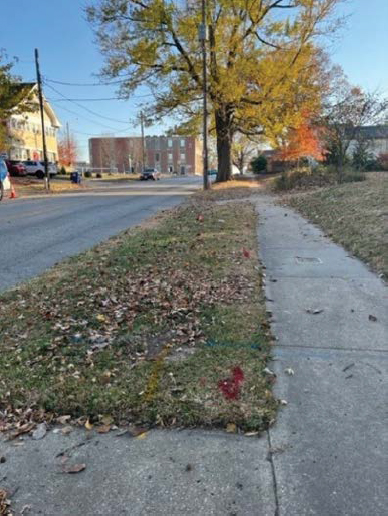
or significant landscape features as acceptable measures for the avoidance of Adverse Effects on the NHL.
The city had a subsequent meeting with the Missouri SHPO, NPS, FHWA, and the Missouri DOT to identify ways to minimize or avoid potential Adverse Effects on the NHL. All parties agreed that the avoidance suggested by NPS was necessary to avoid Adverse Effects. In addition, all sidewalk plaques to be removed during construction of new sidewalk would need to be returned to their original positions.
One additional condition was agreed on to reach a finding of No Adverse Effect: The contractor shall not remove, modify, or in any way disturb the retaining wall bordering the eastern side of an identified archaeological site and shall not conduct any earth-disturbing activities, store materials and equipment, or park vehicles within the established boundaries of the site.
Continued Related Project Work: A concurrent project is being reviewed for improvements to a commercial district surrounding the Independence Square Courthouse in Independence, MO. The commercial district is also included in the Harry S. Truman Historic District NHL. The City of Independence is currently assessing potential adverse effects on Independence Square as a result of the Truman Square Project, which involves the construction of a parklet and bump-outs, as well as tree planting, that may have a potential Adverse Effect on the NHL.


