Personal Protective Equipment for Influenza A(H5N1) in High-Risk Farm Settings: Proceedings of a Workshop (2026)
Chapter: 3 Current Practices and Policies for H5N1 Infection Control and Prevention in Farm Settings
3
Current Practices and Policies for H5N1 Infection Control and Prevention in Farm Settings
The second session of the workshop explored current practices and policies for Influenza A(H5N1) infection control and oversight, related public health initiatives, best practices for personal protective equipment (PPE), and development of controls within agricultural settings. Michelle Kromm, principal at Food Forward, LLC, moderated the session. She described how farm conditions are shaped by numerous factors, including the environment, infrastructure, weather, season, health status of animals, and the daily pressures of production. These conditions intersect with human factors such as language barriers, cultural differences, training logistics, and ease and comfort in using PPE. Kromm stated that overly onerous or impractical recommendations often fail to result in behavior change. Working at the convergence of animal health, worker safety, and public health, veterinarians yield unique insights on strengthening infection control policies to protect farmworkers, veterinarians, animals, and communities, said Kromm.
FEDERAL PERSPECTIVE: NATIONAL INSTITUTE FOR OCCUPATIONAL SAFETY AND HEALTH
CAPT John Gibbins, senior veterinary adviser to the Office of Agriculture Safety and Health (OASH) at the Centers for Disease Control and Prevention (CDC) National Institute for Occupational Safety and Health (NIOSH), outlined NIOSH’s response to highly pathogenic avian influenza (HPAI) outbreaks and discussed balancing public health with feasibility in the workplace. Clarifying that NIOSH is not a regulatory body, he described how the federal agency is charged with conducting research
and issuing recommendations to protect workers across all industries. In 2008, NIOSH issued an alert for employers and workers to address strains of HPAI in poultry settings. The conditions in these facilities can involve exposures to high viral loads, ammonia levels, dust, and heat stress, and outbreaks can generate anxiety about potential loss of livelihood and employment. The 2008 NIOSH guidance1 was utilized in the 2014, 2015, and 2020 HPAI outbreaks, said Gibbins.
Acknowledging numerous challenges and limitations in applying PPE in farm settings, Gibbins outlined the rationale for the NIOSH recommendations. He noted that much was unknown about H5N1 when first detected in dairy cattle in March 2024, including the potential severity of the disease and routes of transmission and infection between cattle, poultry, and people. Gibbins remarked that intense political pressure on federal agencies to issue recommendations often precludes data collection prior to creating guidelines. For instance, pressure to address concerns about potentially infected cattle going to market led to recommendations made prior to the discovery that cattle with H5N1 are not always symptomatic. Recommendations strive to balance the need for practical implementation in the workplace with the need to protect the safety and health of workers and the public, Gibbins stated.
Outbreaks of H5N1 have occurred since the 1990s, with outbreaks in the mid-2000s garnering substantial media attention. Primarily affecting Asia, these outbreaks caused mild disease with occasional severe cases of disease or death. Since the 2022 U.S. spillover from wild birds to farm animals, the number of infected species has greatly expanded and now affects virtually all mammals, said Gibbins. He remarked that more frequent transmission increases the potential for mutation and viral reassortment, generating concern that H5N1 could develop into a pandemic strain. Addressing this concern while balancing the needs for worker and public protection and workplace practicality is challenging, he continued. For instance, the Department of Agriculture (USDA), state departments of agriculture, and industry emphasized the importance of farm biosecurity to prevent H5N1 spread within and between farms; however, guidance that farmers should not allow visitors on farms precluded some public health data collection efforts. Gibbins explained that improved data support more effective PPE guidance and that relationships between sectors help avoid such dynamics. For example, CDC worked to fund researchers with pre-established relationships with producer groups and the agriculture industry. During the COVID-19 pandemic, the National Center for Farmworker Health (NCFH) and the NIOSH-funded Agricultural Centers for Safety and Health were
___________________
1 NIOSH guidance is available at https://www.cdc.gov/niosh/docs/2008-128/default.html (accessed December 8, 2025).
instrumental in distributing information to worker advocacy groups. These partnerships serve as a model for future responses to infectious disease, Gibbins stated.
Gibbins described how NIOSH’s H5N1 outbreak response has included providing tools such as the site-specific hazard assessment to producers and the farming industry. This document guides farmers in making determinations on PPE use by considering factors related to the specific farm, PPE recommendations, and worker concerns. He noted that worker concerns often change once a virus becomes present on a farm, and the recommendations that a producer makes will likely vary for farms experiencing active outbreaks versus farms in the 32 U.S. states that have not yet detected dairy cattle outbreaks. Moreover, the guidance for a farmworker repairing machinery 300 yards away from a cow will vary from the recommendations for workers in milk parlors handling sick cattle, said Gibbins. PPE recommendations and implementation should be tailored to job tasks on the farm and the prevalence of infection in the surrounding area as outlined in the NIOSH hazard assessment.
PUBLIC HEALTH PERSPECTIVE: MINNESOTA DEPARTMENT OF HEALTH
Stacy Holzbauer, CDC career epidemiology field officer assigned to the Minnesota Department of Health (MDH), offered an overview of Minnesota poultry production, the effects of the 2015 H5N2 outbreaks, and recent public health efforts to address H5N1. She noted that Minnesota is the largest producer of turkeys in the United States, producing over 42 million meat turkeys annually across more than 600 turkey farms. Moreover, Minnesota has larger breeder flocks that supply turkey poults (i.e., chicks) nationwide. The state has the 13th highest egg production and 19th highest broiler production in the country. These industries face constant risk of HPAI viruses, particularly given Minnesota’s location on the Mississippi River and central flyways. Given this ongoing risk, the state has long-standing industry surveillance systems in place, Holzbauer explained.
In 2015, Minnesota experienced a large H5N2 outbreak that affected 104 turkey flocks, 5 chicken flocks, and 1 backyard flock, said Holzbauer. Over 9 million birds died or were depopulated, resulting in estimated losses exceeding $650 million and affecting more than 2,500 jobs. The outbreak lasted 3 months, with farm-to-farm spread being a primary driver. Although not a part of the official animal response, MDH provided human health monitoring, testing, and recommendations. The effort conducted routine public health surveillance on responders and detected outbreaks of Campylobacter and influenza B. The Campylobacter outbreak, affecting five on-farm responders, was associated with inadequate availability of
handwashing. Holzbauer noted that MDH investigated the outbreak and recommended a clean trailer for responders to rest and eat in. Additionally, an influenza B outbreak affected more than 30 MDH responders in two emergency operations centers. The agency recommended evaluation, antiviral medication, isolation for symptomatic responders, and influenza vaccination prior to deployment. She explained that these outbreaks highlighted the role of public health as a full partner in HPAI response, after which MDH integrated into the animal health incident management team. Moreover, MDH took on the responsibility of monitoring both poultry workers and USDA and Minnesota Board of Animal Health (MBAH) responders. Holzbauer described how the MDH Zoonotic Diseases Unit (ZDU) worked tirelessly in interviewing and monitoring affected workers, and they eventually automated most monitoring using a Research Electronic Data Capture (i.e., REDCap) database to increase response sustainability.
The establishment of clear MDH roles and responsibilities in HPAI response proved useful in the Minnesota outbreaks occurring since 2022, Holzbauer stated. With the primary goals of protecting human health and supporting responding animal health agencies, MDH interviews and monitors the health of people in contact with infected animals. The agency provides testing for symptomatic individuals, provides PPE, and offers infection control guidance to animal production workers, industry responders, and the public. Serving as a member of the MBAH Avian Influenza Emergency Disease committee and Dairy Emergency Response committee, MDH shares the public health perspective with the animal industry. Furthermore, MDH provides human disease surveillance officers to support incident response efforts. Within the Minnesota HPAI Incident Management Team structure, MDH and the Emergency Disease Management Committee (EDMC) provide public health and industry perspectives, respectively, and report directly to incident commanders. When H5N1 was detected in dairy cattle, Minnesota worked to duplicate the poultry response in the dairy industry. Given that Minnesota is the seventh largest dairy producer in the United States, the response effort entailed rapid education for a large industry. When included in outreach meetings and industry conversations, MDH emphasized the importance of human health monitoring during dairy outbreak response, said Holzbauer.
Dairy representatives reviewed MDH materials and shared MDH expectations with the dairy industry prior to and following positive H5N1 detections, Holzbauer noted. The agency created species- and situation-specific human health sheets and recommendations, including PPE and testing. Case managers and interviewers share these MDH materials in four languages with the owners of affected flocks. In response to industry feedback, MDH developed a one-page infographic on PPE and a PPE informational video for Spanish-speaking farmworkers. Since 2022, MDH
has interviewed, evaluated, and monitored people associated with H5N1 detections in 191 bird flocks, 9 dairy herds, 1 goat herd, and 5 cats. Human exposures reported to MDH total 2,494, and the agency is currently monitoring 21 people. Holzbauer stated that of the 106 people recommended for testing after reporting symptoms, 81 people were tested with no detection of H5N1, and 29 percent tested positive for seasonal respiratory pathogens.
Holzbauer and colleagues published a paper comparing the MDH responses to the HPAI outbreaks in 2015 and in 2022–2023, with a focus on the One Health approach utilized by the MDH ZDU (Scheftel et al., 2025). The paper outlines the flow of information from MBAH and the poultry industry to ZDU, and it includes the methods used for interviewing and monitoring exposed people, handling data, and communications and outreach efforts to the poultry industry. Holzbauer highlighted data points from the paper, including a 37 percent increase in affected flocks and a 127 percent increase in the number of attempted interviews from 2015 to 2022–2023. Whereas in 2015 virtually all attempted interviews were with poultry workers, 36 percent of attempted interviews in 2022–2023 were with contractors, responders, and backyard flock owners. Although the percentage of loss of follow-up or refused interviews increased from 14 percent in 2015 to 35 percent in 2022–2023, the total number of completed interviews nearly doubled. The number of exposed poultry workers was similar, at 359 in 2015 and 309 in 2022–2023. However, the percentage of exposed workers using eye protection, wearing full PPE, and receiving seasonal influenza vaccine significantly declined from 2015 to 2022–2023, according to self-report data. Holzbauer noted that when excluding poultry workers in turkey breeding facilities, where PPE use is routine, compliance in wearing full PPE was 36 percent of exposed workers in 2015 and 23 percent of exposed workers in 2022–2023.
Despite initial detections of HPAI in Minnesota dairy cattle in 2024, poultry continued to account for the majority of affected flocks/herds and associated response efforts, said Holzbauer. The percentage of attempted interviews that resulted in loss of follow-up continued to rise in 2024, largely driven by a considerable number of contract employees hired to respond to detected outbreaks, 75 percent of whom refused interviews or were lost to follow-up. The numbers of exposed workers wearing PPE remained fairly low, with self-reports indicating that approximately half of exposed poultry workers and 10 percent of exposed dairy workers wore full PPE. Approximately a third of both exposed poultry workers and exposed dairy workers self-reported receiving the seasonal influenza vaccine. Holzbauer underscored that other states have reported similar findings.
As the H5N1 response continues, unresolved issues persist, said Holzbauer. Contracted workers hired temporarily for depopulation efforts are often difficult to identify and monitor, and typically, contracted workers do
not know who to contact if they become ill. Some of these workers perform depopulation without use of full PPE. She noted that independent dairy and poultry producers and backyard flock owners are of particular concern because they often do not have dedicated occupational health personnel or access to PPE training or respiratory fit testing. Current outreach efforts are not effective, she stated. Moreover, response fatigue is prevalent and leads to decreased PPE compliance and participation in human health monitoring. Given these challenges, potential paths forward include continued communication and feedback between public health, animal health officials, and industry to enable messaging adjustments and current needs to be met. She remarked that public health officials should engage industry occupational health providers, university extension agents, rural health providers, and immigrant and migrant outreach organizations to enlist trusted messengers in reinforcing public health messaging. Lastly, Holzbauer maintained that public health should meet the industry and community where they are in terms of their understanding and their abilities.
POULTRY PERSPECTIVE: USE OF PERSONAL PROTECTIVE EQUIPMENT IN OUTBREAK PREVENTION AND RESPONSE EFFORTS
Caitlin Green, poultry veterinarian at Michigan Turkey Producers, focused on the role of PPE in poultry outbreak prevention and response methods as well as challenges encountered. The National Poultry Improvement Program has established 14 principles of biosecurity, and PPE is part of this biosecurity plan (National Poultry Improvement Plan, 2025). Green stated that the goals of PPE use in the poultry industry are to protect the flock from outside disease, to protect people, and to train all employees to search for weakness in each layer of protection and mitigate any identified weaknesses. Poultry veterinarians often create, train, troubleshoot, and enforce PPE protocols. While all 14 of the biosecurity principles are utilized on poultry farms, PPE is the final boundary that protects the birds and is the only boundary that protects the people, said Green.
In these efforts, Green trains and retrains people across multiple languages, cultures, ages, and experience levels. Most poultry farmworkers do not have a higher education, and many have a primary language that is not English. She remarked that when farmworkers have disagreed with safety measures, they voiced valid issues or needs that Green was previously unaware of. She emphasized the value of using the language that workers speak, wording that they prefer, and PPE that is practical for them based on their work activities and associated risk levels. Visitors and nonessential employees that travel to multiple sites or work with sick birds are considered high risk. Green stated that as a veterinarian traveling to
multiple farms to see multiple potentially infected animals, she is probably the highest-risk person entering a farm. Thus, she dons shoe covers when leaving her vehicle, then dons coveralls, hair net, gloves, and a respirator before entering each barn, treating every building as a separate biosecurity bubble. Green contended that this level of disposable PPE is reasonable for high-risk individuals with very limited tasks.
In contrast, farmworkers employed and primarily working at only one site pose lower risk to birds, Green noted. They have farm-specific and barn-specific clothing and PPE that generally includes reusable cloth coveralls, which are more durable, comfortable, and allow for better temperature regulation than disposable coveralls. Typically, single-site workers use gloves and respirators as needed. Additional PPE is matched to the task to provide the best protection that allows workers to safely complete their activities. For instance, workers chasing and catching birds often wear durable rubber boots, whereas workers performing stationary sample collection may wear double plastic shoe covers. However, once H5N1 enters the state or county, all biosecurity practices—including PPE—shift toward options appropriate for high risk, such as increases in PPE, cleaning, disinfection, and downtime. Additionally, facilities limit people and activities to a level that still allows the farm to operate, said Green.
A USDA training video2 of PPE donning and doffing procedures presents clear steps for protecting people and preventing disease spread during H5N1 outbreaks. Although Green uses this video in training others on proper PPE, she acknowledged that the video demonstrates conditions that are substantially different than actual working conditions. For example, the doffing procedures in the video are performed with clean, dry, fully intact PPE. In contrast, Green recalled that upon leaving a farm, her PPE is often smeared with manure, her boot covers may be torn by gravel, and she is soaked in sweat that make each layer of PPE stick to her body. The poultry farm working conditions and activities she has witnessed during H5N1 events include carrying birds, building pens, repairing metal roofing during a blizzard, working in mud and ice, sweating in temperatures of 95 degrees with 100 percent humidity, or freezing in temperatures of -10 degrees with 0 percent humidity. Green underscored that these real-life working conditions can complicate PPE doffing procedures.
Green described how H5N1 causes birds to stop drinking water, develop a high fever within hours of infection, and die within a few days. The virus abruptly halts normal farm activity and requires biosecurity and PPE measures to pivot from preventing the introduction of disease in the facility to protecting birds and workers in the presence of disease.
___________________
2 PPE donning and doffing training video available at https://vimeo.com/235056449 (accessed December 8, 2025).
Biosecurity measures include PPE and quarantine procedures. The farm strictly limits traffic onto the facility and implements control zones and testing plans. As the final barrier between a person and H5N1, PPE is discussed with a different lens during threat of outbreak. For instance, Green emphasized that with farms facing H5N1, PPE can fail due to heavy use, heat stress and hypothermia can occur, and increased safety procedures are needed to protect workers when they need to drink, eat, or rest. In these conversations with producers, Green is often asked why the PPE and biosecurity measures are expected to work in containing the virus when they did not prevent it from entering the farm. Additionally, farmers want to know whether PPE will keep workers and their families safe and what to expect if the PPE fails. She remarked that clear answers to these questions are not yet available.
Consistent compliance with PPE recommendations during an outbreak faces numerous challenges on a poultry farm, Green noted. Outbreaks can cause workers to become exhausted, stressed, and overwhelmed, and frustration with uncomfortable PPE that restricts movement and still fails can push workers to their breaking point. She explained that the value that individuals place on PPE often changes; some workers become very anxious about the possibility of missing a layer of protection, sweating through a respirator, or discovering a hole, while other employees appear to stop prioritizing PPE altogether, resenting the work delays caused by multiple PPE changes and repairs. Some farmworkers do not see any value in double-gloving or taping up their boots. Green recalled a situation that proved frustrating for poultry farmworkers. While visiting a farm the morning of depopulation, she saw fence posts delineating the “clean side” of the farm from the “dirty side.” The employees on the “dirty side” were not allowed to doff PPE to take a break, despite having already worked for hours in the dark and cold. Some of the workers’ coveralls were covered in multiple pieces of duct tape, some were coated in mud, and many people had taken off their face respirators in order to wear thermal face coverings. Given the state of the workers, Green remarked that she disagreed with the case manager about the root of the containment crisis. The farmworkers’ PPE was dirty, wet, and damaged as they stood in the snow. Instructed not to drink water or rub their faces, the workers were not allowed to return to their tasks nor doff their PPE and rest. Instead, they were expected to wait in the cold as they worried about their birds, the farm, and their jobs. Moreover, she underscored how emotionally taxing it can be for farmworkers to watch the animals they care for die horrible deaths.
Ultimately, officials at an outbreak site and the habits of staff determine how PPE is used during an outbreak response, Green maintained. She recounted meeting a case manager who arrived at the farm directly from the airport with no PPE, motivating Green to give her own PPE to
this individual. In another situation, she and other responders arrived with bright orange gloves, and the farmworkers assumed that the orange gloves were better than their blue gloves and resisted entering the farm buildings wearing their own gloves. Green gave them her box of medium-sized orange gloves and wore their extra-large-sized blue gloves for the duration of the multi-day site visit.
Green remarked that PPE education and experience is helpful, but it cannot eliminate mishaps, particularly given the inherent risks of a farm setting. For instance, she recalled being with a case manager who was a veterinarian with extensive response experience. This individual slipped in a barn and fell face first into a puddle of water, manure, and euthanasia foam. Although not badly hurt, the case manager’s face and head were soaking wet with dirty liquid and the PPE was in disarray, respirators ruined and goggles filthy. Green helped flush the case manager’s eyes and they tried to determine next steps, neither of them having adequate information to fully understand the potential health risks of this exposure. After discussion, the case manager determined that stopping the suffering of the birds and preventing more virus from being made were the priority. Thus, Green and the case manager completed the barn check without new PPE and without showering.
Having witnessed farmworkers with torn gloves, shavings breaking through seals made with duct tape, coveralls with torn armpit seams, and broken respirators, Green said that employees should be provided with adequate PPE to prevent risks to their health as they tackle pressing and important work. She emphasized that better information and equipment are needed, in addition to strong science on the practices that will keep farmworkers safe and prevent HPAI viruses from spreading to other humans and animals.
DAIRY PERSPECTIVE: FACTORS AFFECTING PERSONAL PROTECTIVE EQUIPMENT USAGE
Joe Armstrong, technical service veterinarian at Zoetis, discussed dairy farm conditions, associated risks, and factors that affect PPE usage. He underscored the importance of providing farmworkers with PPE, educating them about what the PPE is for, and informing them of when the PPE needs to be changed.
Temperatures on farms fluctuate throughout the year, posing challenges of both heat and cold to farmworkers, noted Armstrong. Splashing commonly occurs in milking parlors, and splashed liquid often contains urine, manure, and small amounts of milk. Ventilation in milking parlors is designed to meet the needs of cows rather than the comfort of humans. He stated that cows prefer colder temperatures than people do, and therefore
dairy farms typically run fans most of the time. Even in winter, fans are used to circulate air. The ventilation combined with splashing liquid poses risks to farmworkers. Moreover, employees wash milking parlors with high-pressure hoses, creating wet, slick, and slippery surfaces. Armstrong noted that preventing the spread of pathogens is more difficult in damp environments. Cows present additional occupational hazards, said Armstrong, such as their bodies causing farmworkers’ hands and arms to be pinched and tail switches contacting workers’ faces.
In examining PPE use on farms, Armstrong maintained that numerous factors pertaining to the mindset of farmworkers should be considered. For instance, not all farmworkers have a locker room with dedicated space for changing and storing clothing. Regardless of whether the employer provides PPE, the absence of a dedicated space for transitioning to and from work duties can affect both PPE use and biosecurity, he explained, adding that he has visited farms that lack changing rooms. Armstrong informs employers that if they expect their employees to use PPE, they should provide both the PPE and a dedicated space for donning and doffing. Additionally, many farmworkers are employed at more than one farm, and veterinarians and other professionals offer services at numerous sites. Dedicating PPE to each specific farm can mitigate pathogen spread, Armstrong said, emphasizing that this concept is not yet widely accepted in the dairy industry.
Dairy farms maintain a fast pace, and workers are tasked with moving many cows through undersized milking parlors. Armstrong described an ongoing discussion in the dairy industry about parlor throughput versus parlor efficiency. The former prioritizes workers milking as many cows as quickly as possible, whereas the latter examines ways to make the milking parlor more efficient. Employers expect farmworkers to work quickly, be efficient, maintain cleanliness, and notice any issues present on each cow. The pressure of meeting these expectations can lead farmworkers to resist using PPE, Armstrong highlighted, noting that work can be slowed by working in double gloves, replacing torn gloves, and trying to see through fogged up glasses or goggles. Other factors involving farmworker mindset include the monotony of continuously milking cows and the language barrier sometimes present with employers and/or other workers. Armstrong stated that farmworkers are often related to other employees, and the resulting group dynamics can influence employer and employee relationships. For instance, an employer pressuring a worker to wear PPE could create tension not only with that employee but also with their coworker relatives. Armstrong added that farmers can be unwilling to challenge workers, given the value of reliable employees and the difficulty in recruiting replacement laborers for monotonous, arduous work.
Advocates should consider farm dynamics when visiting farms, Armstrong suggested. He remarked that in recent times, farmworker fear and
distrust of people visiting the farm in an official capacity has come into play. Awareness of this fear can help address and reduce potential resistance, he noted. Additionally, dairy work is often performed in three milking shifts, and thus a farm’s entire workforce is not simultaneously present. Visits occurring at shift change can maximize the number of employees present but will still omit one-third of the workforce. He emphasized that night shift employees are most commonly left out of efforts to inform farmworkers. Armstrong underscored that each dairy is unique, and visitors who overlook differences and attempt to standardize a program across farms will likely encounter resistance.
Armstrong presented a series of photos he took during dairy farm visits to illustrate various conditions and risks he has witnessed. In one photo, farmworkers are injecting a substance into the mammary glands and teat canals of cows while drying them off post-milking, and the workers are wearing aprons, rubber boots, safety glasses, double sleeves, and double gloves. He noted that the double layers enable efficiency in that the top layer can be quickly removed upon being soiled or damaged and a layer of protection remains, eliminating the need to leave the task to don new PPE. The level of PPE demonstrated in Figure 3-1 protects both workers and
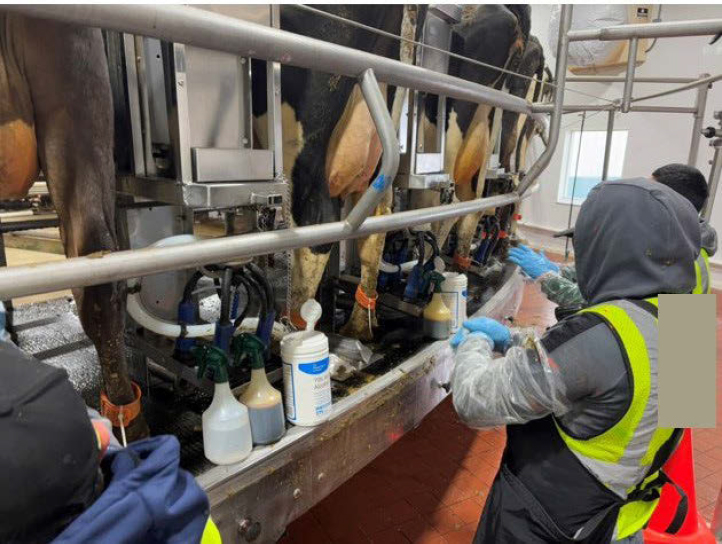
SOURCE: Armstrong presentation, September 29, 2025; photo courtesy of Joe Armstron, Zoetis.
animals, although he acknowledged that the employees are not wearing any respiratory protective devices.
Emphasizing the importance of eye protection, Armstrong described cow tails as often wet with urine and manure, and employees positioned near cow teats are at risk of a tail switch making contact with their faces. The dairy at which the photo was taken requires all employees to wear eye protection, he noted. In contrast, a photo at another dairy shows a worker washing milking machinery with a pressure hose and wearing only rubber boots and gloves for PPE protection. Armstrong remarked that this lower level of protection is fairly common on dairy farms. He recalled witnessing a farmworker wearing jeans, no shirt, and no PPE due to the heat in the milking parlor, and the worker continued in this attire until the outside temperature dropped to 40 degrees. Expectations vary greatly across the dairy industry, often driven by employer perceptions of what practices will best satisfy and retain workers.
Armstrong presented photos depicting buttons that operate milking machinery and a teat dip wand containing teat dip spray, all of which were caked in dry manure. He explained that the manure was on workers’ hands when they handled the buttons and wand, contaminating the devices. Although gloves offer protection, the effects are limited when gloves become sufficiently soiled with manure to leave remnants caked onto machinery. These circumstances highlight the importance of training employees on the proper use of PPE, including the conditions that warrant changing one’s PPE.
DISCUSSION
Role of Case Manager
Kromm asked about the role of case managers in H5N1outbreak response. Green replied that the case manager is part of the incident command system that activates once a positive detection is confirmed. As a federal or state official, the case manager oversees the moment-to-moment and day-to-day decisions made during a response and typically remains onsite daily for the duration of the outbreak. Green stated that the expertise of case managers is highly variable. She described working with individuals serving in the capacity of case manager for the first time and them having no experience with the species, but she has also worked with case managers with multiple deployments in HPAI outbreaks who had valuable expertise in mitigating and managing various risks. Kromm added that case managers serve as the on-site point of contact in making timely decisions.
Emergency Disease Management Committee
Noting the critical role of the EDMC in information exchange to protect animal and human health, Kromm asked Holzbauer to elaborate on the EDMC’s role in outbreak response. She responded that MBAH convenes the EDMC, which serves the primary role of establishing response plans for avian influenza, including low and highly pathogenic strains. Comprised of representatives from industry, MBAH, MDH, and the Minnesota Department of Agriculture, EDMC meets annually to update response plans. The MBAH senior poultry veterinarian organizes these meetings, which provide veterinarians, industry representatives, and public health officials the opportunity to share information. Holzbauer noted that public health is employing wastewater surveillance initiated in response to COVID-19, and this surveillance indicates the presence of HPAI in flocks currently engaged in fall migration. She added that during an outbreak response, EDMC serves as a conduit for industry to provide honest feedback about what is and is not working.
Communication and Relationship Building
Given the benefits of collaborating with existing networks in disseminating information, Kromm asked about building relationships with EDMC, farmworker outreach organizations, and other groups. Gibbins emphasized the importance of building relationships during a steady state, before the onset of an emergency. Outbreak or chemical spill response is not an ideal time to form relationships, he underscored. Thus, outreach to organizations before an emergency enables relationship formation that can then facilitate information rollout during a crisis. He described how OASH partnered with groups including the American Association of Bovine Practitioners, the National Turkey Federation, and milk-producing processing groups. Gibbins stated that these groups did not always like his messages, but nevertheless the lines of communications remained open and he developed a better understanding of their perspective and challenges in the field. The COVID-19 pandemic highlighted the value of preexisting relationships formed with worker groups. He remarked that farmworkers did not want messaging about the pandemic from the federal government, preferring to interact with organizations on the ground offering worker advocacy or assistance with food, rent, or transportation. Gibbins added that because farmworkers place more trust and value in these groups and, in extension, agents than in the federal government, they are more open to their messaging even if the information is the same as that coming from the government.
Personal Protective Equipment Comfort, Feasibility, and Risk-Related Need
Kromm asked about aspects of PPE that merit reconsideration from the lens of dairy worker comfort and safety. Armstrong emphasized that comfort and cost are of central importance to PPE uptake, remarking that PPE should be inexpensive or incredibly durable with a long reuse lifespan. Emphasizing prioritized PPE recommendations, Armstrong stated that a hierarchical list informs workers of the relative importance of each PPE item, such as gloves, eye protection, and coveralls. Contending that adherence to all recommendations can be impractical, time-consuming, expensive, and overwhelming, Armstrong explained that ranked recommendations enable farmworkers to prioritize the PPE item(s) that provides the most safety given their specific tasks. Armstrong noted that instructing farmworkers to follow all recommendations, rather than prioritizing them, can have the inadvertent outcome of overwhelmed employees who eschew all PPE.
Given that changing risk levels can affect the recommended level of PPE, Kromm asked how one determines when farmworkers should be asked to sacrifice human comfort in exchange for a higher level of protection. Green highlighted that the effort involved in taking extra precautions while continuing all daily farm functions during outbreaks that persist for years generates a unique fatigue. Factors that influence risk level include migration season; whether migrating birds are testing HPAI positive; the age of birds, given that older birds are at a higher risk; and whether the farm or the local area has previously experienced HPAI outbreaks. She described how communication with various Michigan agricultural and wildlife oversight groups enables better understanding of pathogen movement throughout the state. Green remarked that some tasks on the farm are inherently risky, and trying to time those tasks to phases when risk of HPAI outbreak is lower can be beneficial. She added that testing a high number of animals is an area requiring substantial support.
Fit Testing
In response to a question about fit testing and medical clearance, Gibbins remarked on the difference between fit testing in a laboratory setting and fit testing in the field. For example, his work with slaughterhouses during the COVID-19 pandemic demonstrated the difficulty in maintaining a seal when entering and exiting coolers or working on the kill floor versus sitting in a chair in a laboratory. Gibbins noted ongoing discussion about newer technologies and procedures, including potential changes to requirements for medical evaluation and fit testing. He highlighted the importance
of explaining what medical evaluations entail and what the Occupational Safety and Health Administration (OSHA) requires, noting that these evaluations are less extensive than some people assume. Green emphasized that many people working in the poultry industry, and likely in the larger field of agriculture, are not employed in the traditional sense. For instance, small family farms are often operated by numerous family members, and short-term workers are common. A strong structure for ensuring that all farmworkers proceed through specific steps is not always in place. Moreover, recruiting an adequate farm workforce can be challenging, and Green stated that replacing workers who fail to use PPE correctly with those who will is not always possible. Adding fit testing to the challenges of hiring sufficient numbers of employees can be stressful for farm owners. Additionally, facial hair can affect fit testing, and Green remarked that asking workers to change their personal appearance could confuse or upset them.
This page intentionally left blank.


