Personal Protective Equipment for Influenza A(H5N1) in High-Risk Farm Settings: Proceedings of a Workshop (2026)
Chapter: 2 H5N1 Transmission and Implications for Personal Protective Equipment Use
2
H5N1 Transmission and Implications for Personal Protective Equipment Use
The first session of the workshop explored viral transmission within and across species, infection characteristics, animal-to-human transmission risk in high-risk farm activities, and the implications of personal protective equipment (PPE) use in farm settings. Matthew Nonnenmann, professor at the University of Nebraska Medical Center, moderated the session.
ANIMAL INFECTION AND TRANSMISSION OF H5N1
Jason Lombard, veterinary epidemiologist at Colorado State University, provided an overview of the timing and transmission of Influenza A(H5N1) outbreaks in the United States. In early 2022, wild ducks harvested by hunters tested positive for H5N1. The first H5N1 outbreak in a commercial flock was detected in February 2022 on an Indiana turkey farm. During the next 2 years, hundreds of commercial and backyard flocks became infected. The first human case of H5N1 was reported in April 2022, although it is unclear whether this case was a true infection or merely a contamination of the nasal passages, Lombard remarked. The first H5N1 genotype, B3.13, was detected in varieties of wild geese in late 2023 and early 2024. In March 2024, the B3.6 H5N1 genotype was detected in a goat. That same month, B3.13 infections were confirmed in dairy cattle, and outbreaks in 18 states have since occurred. Based on genetic analysis of the virus, this was determined to be a wild bird-to-cattle transmission event. Lombard noted that many farms reported cats dying on their farms before or after cows showed clinical signs. In Texas, the first human case of B3.13 was confirmed in 2024. Simultaneously, the B3.13 genotype was detected in alpacas and
the D1.2 genotype was detected in swine, confirming the circulation of multiple influenza genotypes in the United States. In February 2025, the D1.1 genotype was detected in dairy cattle, signifying two additional wild bird-to-cattle transmission events. Lombard added that dairy veterinarians and producers in four states reported having cattle with clinical signs coupled with cat mortalities prior to the March 2024 detection, suggesting that spillover events from wild birds have occurred more than three times.1
Detection of Highly Pathogenic Avian Influenza in Birds
The U.S. Department of Agriculture (USDA) Animal and Plant Health Inspection Service (APHIS) provides an early warning system for the introduction and distribution of avian influenza viruses of concern in the United States, enabling timely and rapid action to reduce the risk of spread to the poultry industry and other affected populations. Lombard specified that APHIS conducts testing of wild birds by using samples of hunter-harvested animals and mortalities; given that this is convenience sampling, the actual infection rate among wild birds is likely higher. Since the first detection in January 2022, APHIS has confirmed H5N1 in over 14,000 wild birds and ducks across 222 different species, with detections in all 50 states (USDA, 2025c). February 2022 saw the first detection of H5N1 in commercial and backyard flocks. Over 1,700 flocks have since been affected, with California, South Dakota, and Minnesota reporting the highest numbers of infected flocks (USDA, 2025a). In September 2025, 23 flocks in North Dakota, South Dakota, and Minnesota were affected. The 2022–2025 outbreaks have necessitated depopulation—i.e., the rapid destruction of a population of animals in response to urgent circumstances—of over 175 million birds. Lombard clarified that unlike wild bird estimates, the infection rate found in commercial flocks is likely to be closer to the actual rate, given that commercial poultry operations are required to test for highly pathogenic avian influenza (HPAI) as part of the National Poultry Improvement Program prior to moving to slaughter. Whole genome sequencing and epidemiological investigations indicated that most commercial flocks were infected from wild bird spillover of the virus as opposed to flock-to-flock transmission.
Detection of Highly Pathogenic Avian Influenza in Mammals
Since 2022, HPAI has affected a variety of species of wild and captive mammals across the United States, including domestic cats (USDA, 2025b).
___________________
1 After the workshop, on December 14, 2025, Wisconsin reported a dairy herd infected with the D1.1 genotype and confirming another unique wild bird-to-cattle transmission.
Lombard noted that many dairies have reported losing entire cat populations to HPAI. Horses are susceptible to avian influenza virus H3, a subtype for which a commercial vaccine is available. A study in Mongolia found evidence of H5N1 spillover to horses, likely from migratory waterfowl, that resulted in no or mild clinical disease (Damdinjav et al., 2025). Over 1,000 HPAI cases have been confirmed in U.S. dairy cattle (USDA, 2025d). Currently, beef cattle are not known to be susceptible to H5N1, but this could change given the susceptibility found in dairy cattle, Lombard explained. Colorado State University has tested over 150 head of beef cattle in areas with known H5N1 dairy cattle cases and has not detected infection nor antibody evidence of infection. He acknowledged that the small sample size necessitates further research to evaluate H5N1 susceptibility in beef cattle.
H5N1 Transmission in Dairy Cattle
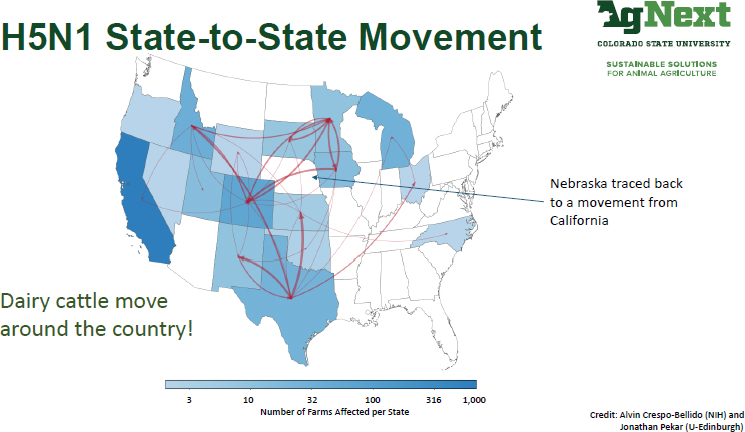
Lombard specified that of the 18 states with confirmed H5N1 dairy cattle cases, California and Idaho have the highest number of herds affected, and Nebraska is the most recent state to become affected. Prior to the confirmation of H5N1 in Texas and Kansas, transmission was largely driven via interstate importation of lactating dairy cattle infected with undetected H5N1 (see Figure 2-1). In April 2024, a federal order was issued requiring testing of all lactating cattle prior to interstate transport. He noted that this order likely mitigated disease dissemination to additional states.
There are multiple routes of H5N1 shedding at play: Lombard and colleagues have confirmed virus shedding in nasal secretions, urine, blood, and milk. Mastitis or abnormal milk are the most common clinical signs of infection in cows, enabling researchers to quickly determine that milk was the most common H5N1 shedding route. He and colleagues detected viremia—i.e., the presence of viruses in the bloodstream—in 20 cows, including 17 clinical and 3 non-clinical cows. Viremia accounts for the detection of H5N1 virus in urine and in aborted fetuses, as viremia is the most likely route for the virus to travel to those organs, said Lombard. Less than 10 percent of clinically affected cows had detectable levels of viruses present in nasal discharge or urine. Feces and saliva were not specifically tested, he added.
Multiple routes of H5N1 shedding create numerous H5N1 exposure routes for cattle. Lombard described how early outbreaks demonstrated high levels of virus in milk, and thus disease transmission intervention focused on milking equipment. He outlined plausible routes of herd-to-herd transmission categorized by risk level. Known transmission risks include humans and lactating cattle, with the latter having transmitted H5N1
SOURCE: Lombard presentation, September 29, 2025.
from the Texas Panhandle to multiple states via cattle movement. Some cases of virus transmission from cattle to poultry farms have been attributed to shared workers or service personnel. Assumed transmission routes include vehicles, and feces and manure, said Lombard, with feces and manure believed to carry a lower risk. Although H5N1 has been detected in manure lagoons, these contain feces, urine, wastewater, and nonsalable milk. Routes of transmission believed to carry low risk include milk trucks, migratory waterfowl, and peridomestic birds. By testing milk trucks in Michigan and California, Lombard and colleagues collected more than 100 samples from each state and only detected the virus in a single sample from each state. However, he acknowledged that this sampling occurred weeks after the outbreaks peaked. Furthermore, recent spillover detections in Arizona and Nevada indicate that the risk of transmission from migratory waterfowl and peridomestic birds could be higher than previously thought. He explained that these populations are commonly sampled two or more weeks after virus is detected on a farm, at which point rates of infected birds are typically less than 10 percent. Until the infection rate is established for migratory and peridomestic birds prior to or at the time of detection in the herd, the risk of transmission cannot be fully understood, said Lombard.
Presence of H5N1 in Milk
Lombard reviewed findings from research that he and colleagues have conducted on bulk tank milk and pen milk samples. The bulk tank holds aggregate, salable milk until it is shipped from the farm. Dairies sort cattle into pens based on milk production, stage of lactation, and other factors. Therefore, samples taken from pens offer more granularity than bulk tank milk samples. They found that cycle threshold (CT)2 values were at 40 in H5N1-negative samples and then decreased to below 30 at the point of detection. He explained that a CT value of 20 represents approximately 400,000 viral copies and is considered a high viral load. They found that CT values from pen milk samples mirror those from bulk tank milk samples, even when clinically ill cows were removed from the salable milk supply. Lombard stated that this finding confirms the presence of nonclinical cows shedding virus at high viral loads. Supporting this finding, they identified individual cows demonstrating no clinical signs of virus and high viral loads in their milk.
Initially, researchers suspected that milking machines were responsible for H5N1 transmission within herds, said Lombard. However, virus was detected in pen milk samples within a few days of clinical signs in cows and within a couple of weeks of detection in bulk milk tanks. This signified rapid spread of H5N1 through the herd that does not support milking machines as the primary or most efficient mode of cow-to-cow transmission. Moreover, data indicate that disease spread typically does not follow the pen milking order, suggesting a different primary mode of cow-to-cow transmission. Studies show that sialic acid receptors, needed for the virus to attach and enter the cell, are numerous within the mammary gland (Nelli et al., 2024). The secretory cells have high levels of metabolic activity, creating high viral loads in the milk of infected glands (Le Sage et al., 2024). Lombard and colleagues collected over 600 samples from sites on 25 dairies in four states. Approximately 30 percent of the samples from parlor surfaces and from milking equipment were positive for H5N1 compared to 14 percent of samples from manure lagoons and less than 1 percent of samples from housing and from water and feed tanks. This indicates that H5N1 is most often detected in the environment close to the parlor where milk is collected. Thus, milk appears to be a major risk for disease transmission between cows and from cows to humans. Given that milking machines are not likely the primary mode of transmission, Lombard posited that milk aerosols may play a larger role in H5N1 transmission than originally thought.
___________________
2 Cycle threshold (CT) refers to the number of polymerase chain reaction (PCR) amplification cycles required for the fluorescent signal to cross the detection threshold; lower CT values indicate higher amounts of target nucleic acid in the sample.
Lombard theorized that the existence of multiple routes of H5N1 transmission explains why no single route has been identified as responsible for the majority of disease transmission. Thus far, field data and recent experimental studies of transmission in the laboratory setting indicate that milk machines are an unlikely route, while low rates of H5N1 in feed and water tanks suggest that oral exposure is also unlikely. Flies have high viral load in their vomit and may therefore be a transmission route. Anecdotal evidence for aerosol transmission indicates that viral plumes spread the virus, Lombard noted, but few aerosol samples have detected H5N1.
ENVIRONMENTAL TRANSMISSION OF H5N1
Seema Lakdawala, associate professor at Emory University, outlined modes of H5N1 transmission in dairy farms and interventions that could mitigate disease spread. Transmission has occurred from cow-to-cow, from cow-to-human, and from farm-to-farm. Various potential modes may be at play, and determining pathogen location is crucial in deciphering possible transmission modes, she noted. Determining where pathogens are located on dairy farms involves understanding the cow milking process. A dairy parlor contains multiple cows that are milked via milking equipment attached to their teats. Due to concerns for safety and humane practices, cows continue to be milked during illness. This milk is diverted from the bulk tank and directed to a waste bucket, which is then disposed of in an on-site waste stream referred to as a manure lagoon. Water from manure lagoons is sometimes used to irrigate fields and can be a source of potential water exposure to peridomestic animals. Lakdawala highlighted that dairy personnel encounter multiple routes of potential exposure, including contaminated milking equipment and waste milk.
Aerosol Sampling
Investigating likely H5N1 transmission mechanisms, Lakdawala and colleagues collected environmental samples from several California dairy farms during active outbreaks, including air samples, surface samples from the dairy parlors, and water samples from manure lagoons (Campbell et al., 2025a). Dairy farmworkers forestrip cows, briefly milking each teat by hand to initiate letdown of milk, before attaching the milking equipment. During forestripping, farmworkers check for indications of mastitis or undesired milk qualities such as a chunky texture. She posited that the forestripping process potentially generates aerosols. Once the milking equipment—containing steel shells with plastic liners—is applied, the shells act as inflation pumps and pull milk from the teats at a flow rate defined by the machinery. Removal of the apparatus results in residual milk in
the liners. Lakdawala reported high levels of virus in swabs of the liners and of the shells, with higher concentrations of virus in the former due to the presence of residual milk (Campbell et al., 2025b). Moreover, testing revealed that not only was H5N1 present, the virus remained infectious with CT values below 30. Lakdawala and colleagues found that milk forms a matrix for increased stabilization of the virus, thus milk can increase the persistence of infectious H5N1 on inflation liners and stainless steel shells (Le Sage et al., 2024). Whereas H5N1 can decay rapidly in the environment, very little decay of the virus was seen on surfaces where milk was present, said Lakdawala.
The letdown and splattering of milk can cause droplets and aerosolization. To test whether these processes transmit H5N1, Lakdawala and colleagues followed dairy farmworkers in the milking parlor and collected air samples on gelatin cassettes using an MD8 Sartorius air sampler, equipment that pulls air at a rate of approximately 50 liters per minute (Campbell et al., 2025b). In addition, they sampled air collected from the exhaled breath of cows. She noted that the gelatin cassettes not only detected H5N1 pathogens, but they also retained the infectivity of the viruses in comparison to other aerosol collection methodologies. Lakdawala highlighted that the virus was present in samples taken from milking parlors and from exhaled cow breath on multiple days and at various sites.
Wastewater Sampling
Waste milk is present in several locations on dairy farms, said Lakdawala. Unsalable milk and water used in cleaning milking parlors are diverted through a milk line cleanout into waste streams on farms. While some farms direct this waste directly onto fields, depositing waste into manure lagoons is more common. Water from manure lagoons can then be used for irrigation. In either case, farm wastewater typically does not enter sewer systems. Collecting wastewater samples from the milk line cleanout, sump pump, manure lagoons, and fields, Lakdawala and colleagues detected H5N1 virus in all locations (Campbell et al., 2025b). They examined the four samples with the highest number of genome copies and found that two of these contained infectious virus. Lakdawala emphasized that dairy farmworkers handle waste stream milk and that wastewater is put into the environment, including areas on the farm visited by migratory birds, posing numerous exposure and transmission opportunities. Given that milk protects H5N1 from decay in the environment, Lakdawala tested the effect of pH on virus infectivity and found that reducing the pH of milk containing H5N1 reduces infectivity of the virus within the span of an hour.
Virus Inoculation and Transmission Research
Despite the presence of virus—much of it infectious—in the milking parlor, waste streams, and in cow exhalations, positive cases of H5N1 in farmworkers have remained low, said Lakdawala. To better understand this dynamic, she and colleagues conducted research on ferrets. They infected one group of ferrets with H1N1 human seasonal flu virus, waited 3 months, and then exposed both a control group and the animals with H1N1 immunity to bovine H5N1 (Le Sage et al., 2025). Findings revealed that preexisting H1N1 immunity from prior infection appears to reduce the lethality, clinical signs, and viral load of ferrets infected with H5N1. She suggested that these findings should be considered in efforts to protect farmworkers.
Lakdawala outlined USDA research on inoculation and viral replication in cows (Baker et al., 2025). Cow udders contain four quarters, and researchers inoculated two of the four quarters with H5N1 via an intramammary route. Observing the animals for 24 days post-infection, they discovered that only the two inoculated quarters shed virus. This signifies that H5N1 does not move from one quarter of the udders to another, she noted. The milking equipment is always applied to cows with the same orientation, i.e., the front right shell and liner are always applied to the front right quarter of the udder. Therefore, in a scenario in which H5N1 is introduced to a farm by a single cow with infection in the front right udder quarter, then distribution of quarter positivity among cows on the farm should be similar if milking equipment is driving virus transmission. In contrast, if other routes such as biting flies or aerosols drive transmission, the virus would have to become systemic and enter the bloodstream to reach mammary tissue and be present in milk. A systemic infection would likely be present in all four quarters of the udder, Lakdawala explained.
Lakdawala and colleagues tested H5N1 quarter positivity in cows to determine if quarter patterns indicated specific routes of transmission (Campbell et al., 2025b). In a longitudinal study of 14 cows on the same farm, they found that some cows had only one teat that tested positive for H5N1, others had virus present in multiple quarters, and others had all four quarters infected. Virus positivity was distributed nearly equally across the four quarters. For instance, five cows had only one quarter that tested positive for H5N1, but the teat that was infected varied throughout the group. Lakdawala stated that these findings suggest that (1) no single mode of H5N1 transmission is primary for dairy cattle; (2) the cows are inundated with virus; and (3) multiple modes of transmission are occurring on farms and are likely simultaneous. She emphasized that some H5N1 positive cows are subclinical.
Implications for Transmission Prevention
Outlining implications of her research, Lakdawala highlighted that H5N1 virus density on dairy farms is highest in the air and on surfaces in the milking parlor, suggesting that PPE implementation is important for farmworkers in the milking parlors. The finding that cows infected with H5N1 can be subclinical and have potential to transmit H5N1 to farmworkers counters the assumption that PPE usage is only needed when working with cows in the hospital pen. She remarked that both PPE and virus inactivation in waste milk and on surfaces should be employed to reduce exposure risk, adding that virus inactivation should take place before farmworkers handle waste stream milk. Lakdawala emphasized that immunity to seasonal H1N1 viruses from prior infections likely reduces the severity of H5N1 disease but that the ferret model indicates that H1N1 vaccination does not appear to be as effective as H1N1 infection in reducing H5N1 severity. Describing that cows are likely inundated with virus spreading via multiple transmission routes, she stated that although each individual route may be inefficient, the level of collective virus exposure may overcome these inefficiencies and result in infection.
HUMAN INFECTION AND TRANSMISSION OF H5N1
Rachel Herlihy, state epidemiologist and deputy chief medical officer at the Colorado Department of Public Health and Environment (CDPHE), discussed human infection and transmission of H5N1 as well as PPE use in Colorado dairy and poultry settings. In January 2022, USDA first detected H5N1 in wild birds in Colorado. The following April, H5N1 was detected in a commercial chicken flock. That same month, a Colorado resident involved in poultry depopulation work tested positive for H5N1 using reverse transcription-PCR testing. This individual experienced very mild illness, with fatigue as the only reported symptom. Herlihy posited that the fatigue may have been related to job demands and, rather than an actual infection, this individual may have had viral contamination in the nasal passages captured by the nasopharyngeal swab. This case initiated CDPHE ongoing surveillance of high-risk individuals. April 2024 saw the first detection of H5N1 in Colorado dairy cattle with clade 2.3.4.4b. In July 2024, this clade appeared in two poultry outbreaks. Over the course of 2024, H5N1 2.3.4.4b was detected in Colorado in 64 herds of dairy cattle; 7 backyard bird flocks; 4 commercial flocks containing a total of 3.5 million birds; and 8 domestic cats exposed via raw pet food, wildlife, or dairy farms. During that period, two outbreaks affected 10 humans, 9 of whom were exposed at a poultry farm and one at a dairy farm, Herlihy noted.
H5N1 in Colorado Dairy Farms
Herlihy described how CDPHE approached human exposure and illness on dairy farms where H5N1 was detected. First, agricultural partners notified CDPHE that milk from a particular farm tested positive for the virus. She emphasized that Colorado was proactive in implementing bulk milk testing, with the Colorado Department of Agriculture initiating the testing and accelerating identification of affected farms. Upon being notified, CDPHE conducted a phone interview with the producer to gain understanding of specific worker exposures, farm practices, and PPE gaps. Next, CDPHE conducted site visits in coordination with state and federal agricultural partners. Herlihy noted that agricultural partnerships aided in establishing trust with producers. During site visits, CDPHE observed workspaces to identify risks to workers, educated farmworkers about the risks of H5N1 exposure and informed them of risk reduction strategies, delivered PPE to address identified gaps, connected farms to a CDPHE website for placing PPE orders, tested any symptomatic workers, and provided oseltamivir treatment to any workers who tested positive. Monitoring, testing symptomatic workers, and treating with oseltamivir continued after conclusion of the site visit. Over the course of 2024, CDPHE delivered PPE to 43 of 64 affected farms via a combination of personal delivery and online ordering, monitored approximately 1,500 workers, tested 19 symptomatic workers, and identified one human case, Herlihy outlined.
In addition to routine public health work, CDPHE engages in public health applied research. In partnership with the Centers for Disease Control and Prevention (CDC) and the Michigan Department of Public Health, CDPHE conducted a serosurvey to better understand seroprevalence and a survey to gain insight on PPE use and exposure risks (Mellis et al., 2024). They found that among 115 workers, 8 had serologic evidence of H5N1 infection. Seropositive workers were more likely to clean the milking parlor and to milk cows than seronegative workers, suggesting that exposure to milk poses a greater risk than assisting with calving, transporting cattle, and other dairy farm duties. Of the eight workers with serologic evidence of infection, none used respiratory protection and three used recommended eye protection. Conjunctivitis was the most common illness in both seropositive and seronegative workers, affecting 75 percent of the seropositive workers who reported H5N1 symptoms and 62 percent of seronegative workers, said Herlihy.
A study of the use of PPE among 83 workers on three Colorado dairy farms revealed variability of PPE use across work duties, types of PPE, and worker awareness of whether the cows they interacted with were sick (Marshall et al., 2024). Access to PPE before the outbreaks was fairly high, at 88
percent for gloves, 71 percent for rubber boots or boot covers, 69 percent for head covers, and 76 percent for eye protection. However, approximately half of farmworkers used NIOSH Approved® respirators3 or other respiratory protective devices after the detection of H5N1 on the farm, and only 26 percent using recommended N95®4 respirators. After H5N1 detection, PPE use while working with sick cows increased by a mean of 28 percent across PPE types and work duties, and use of eye protection while milking cows saw a 40 percent increase. Herlihy remarked that this finding reflects (a) workers’ understanding of risk and risk reduction strategies and (b) the effectiveness of timely education on farms to reduce risk and exposure.
H5N1 in Colorado Poultry Farms
In July 2024, CDPHE responded to two H5N1 outbreaks on poultry farms in northeast Colorado. On July 8, a poultry facility (facility A) confirmed H5N1 and began depopulation the following day utilizing approximately 250 contract workers. On July 11, facility A notified CDPHE that workers on site were ill and in need of evaluation. A small CDPHE team arrived the same day to discover more than 40 symptomatic workers, a number far greater than expected. Calling in reinforcements, CDPHE tested symptomatic workers, identified positive individuals, and provided oseltamivir treatment. On July 14, a second facility (facility B) reported that a bird tested positive for H5N1. That evening, Herlihy and the Colorado state veterinarian met with the producer to emphasize the importance of implementing PPE practices, monitoring, and ensuring worker access to PPE and knowledge of proper use. They recommended use of high-quality, non-fogging sealing goggles to protect workers, Herlihy noted. On July 15, facility B began depopulation utilizing approximately 400 contract workers.
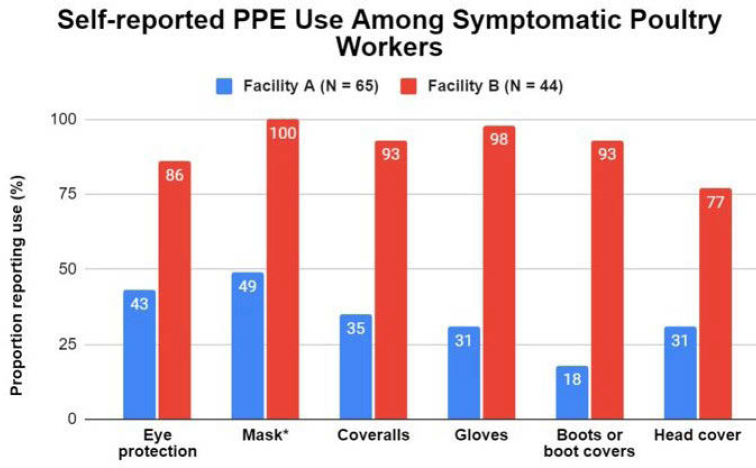
Herlihy recounted that facility A had 265 total workers, 65 of whom (25 percent) were symptomatic and 6 of whom (2.3 percent) tested positive for H5N1 (Drehoff et al., 2024). In comparison, of the 398 workers facility B employed, 44 (11 percent) were symptomatic, 3 (0.8 percent) tested positive for H5N1, and 18 tested positive for COVID-19. As shown in Figure 2-2, self-reported data collected on symptomatic workers at both facilities indicate much higher use of PPE at facility B. She acknowledged that these data could be biased, in that workers might be less motivated to protect themselves with PPE if they were already experiencing symptoms. However,
___________________
3 NIOSH Approved is a certification mark of the U.S. Department of Health and Human Services (HHS) and is registered in the United States and several international jurisdictions. Approval of Respiratory Protective Devices, 42 CFR § 84 (June 8, 1995).
4 N95 is a certification mark of the U.S. Department of Health and Human Services (HHS) and is registered in the United States and several international jurisdictions.
NOTE: PPE = Personal protective equipment.
SOURCE: Herlihy presentation, September 29, 2025; created from data in Drehoff et al., 2024.
these findings could reflect that facility B benefited from the opportunity to learn from the outbreak at facility A and implemented practices to improve PPE compliance. Additionally, these July outbreaks involved high temperatures that reached over 100 degrees during depopulation at facility A and then dropped into the nineties when facility B began depopulation. The slightly cooler temperatures during depopulation at facility B may have contributed to increased PPE compliance, said Herlihy.
Outlining barriers to effective use of PPE at these facilities, Herlihy noted that workers’ goggles frequently fogged up, resulting in removal and exposure to dust and debris that potentially carried viral particles. Given the high temperatures, the facilities used large industrial fans, and these caused slight movement of workers’ respirators on their faces and potentially broke the protective seal between the respirator and the face. Moreover, the labor-intensive nature of poultry farm work can involve crawling, climbing, running, and jumping after birds. Given that ripped coveralls are not uncommon at these facilities, such activity could easily displace PPE. Herlihy noted that a comparison of symptoms of workers who tested positive for H5N1 and of those who tested negative (many of whom tested positive for COVID-19) revealed that individuals with H5N1
were more likely to have conjunctivitis and other eye symptoms, fever, body aches, headaches, and shortness of breath, and they were less likely to have sore throat and congestion.
DISCUSSION
H5N1 Testing
Discussing H5N1detection and understanding routes of transmission, Nonnenmann asked about challenges and benefits of PCR and infectivity assay testing, particularly in terms of data interpretation. Lakdawala replied that quantitative PCR (qPCR) measures the genomic material within the virus. As a negative-sense RNA virus, influenza has eight segments, and PCR typically detects one segment. For the H5-specific test, CDC primers are particularly targeted against hemagglutinin (HA) and, less often, the M gene segment, she stated. H5, H1, and H3 are genes that allow for subtype specificity between circulating seasonal viruses and zoonotic viruses. During flu season, a common gene primer is often used to detect any influenza A virus. Lakdawala reiterated that, theoretically, qPCR only measures one of the eight segments. Infectivity assay testing allows exploration of whether a sample contains viruses that are intact with all eight segments and are able to enter a cell, replicate, transcribe, and carry out all virus functions. She noted that this represents a high barrier, given the numerous factors that cause viruses to degrade in the environment. For example, ultraviolet radiation degrades nucleic acids. Although still detectable by qPCR, degraded viruses are no longer infectious. She remarked that detection does not necessarily signify infectivity, and inability to detect infectivity does not indicate absence of infectious virus. The amount of virus needed to induce an infection varies based on the type of infectivity assay used. Lakdawala added that cells cultured in the laboratory are inherently biased against viruses that replicate well in cell culture. For instance, researchers will be unable to detect a matrix that moves through mucus and the respiratory system effectively but does not thrive in cell culture, she explained.
H5N1 Seroprevalence Assays
Noting that Lombard presented data indicating high serology rates in cows and that Herlihy presented low positive rates in H5N1 serosurveys, Lakdawala posited that this discrepancy could be related to variance in seropositivity thresholds for different types of assays. She described how the enzyme-linked immunosorbent assay (i.e., ELISA) detects the binding of an antibody to an antigen and has high sensitivity for detection. In contrast, the hemagglutination inhibition (HAI) assay is a functional readout for
antibodies that has a high threshold for seropositivity. For example, two individuals tested H5N1 positive using PCR, but one of them was seronegative according to the HAI assay utilized by CDC, said Lakdawala. She highlighted the seropositivity threshold of the assay should be considered in cases of low seroprevalence among farmworkers and high prevalence in animals.
Pre-Milking Disinfection
Stating that dairy farms commonly sanitize the teat with a betadine solution before attaching milking equipment, Nonnenmann asked about the potential effects of this disinfection routine. Lombard replied that a pre-dip is applied to the teat but is removed prior to attaching the milking units to avoid high levels of disinfectant in the milk. A post-milking teat dip is applied that remains on the teat, a procedure intended to limit the spread of contagious pathogens on dairy farms. However, dairy farms have typically focused on bacterial pathogens, whereas H5N1 is viral, he noted. Lombard remarked that unlike bacteria, viral pathogens require some amount of force to enter the teat, such as reverse airflow caused by milking machine liner “squawks” in which the liner slips, causing an abrupt loss of vacuum and entry of air into the milking equipment. These squawks could push milk into the other teats, particularly in cases where the teat canal is open. Stating that milking machine transmission has likely caused some clinical cases of H5N1, Lombard doubted this route is a primary mode of transmission. He described herds in which 80–95 percent of the cattle have H5N1 antibody response—indicating exposure—yet only 10–20 percent have clinical signs, a phenomenon that is not yet understood.
Task-Related Exposure Levels
In response to a question about H5N1 transmission from clinically ill animals to humans via droplet-borne viruses, Lakdawala stated that farmworkers handling sick animals are at a higher risk of exposure and infection than those not in contact with sick animals. The expulsions and droplets from animals can cause both aerosol and fluid modes of transmission. She emphasized that multiple modes of transmission are at play for H5N1, requiring a multilayered approach to reducing transmission risk. Lakdawala remarked that just as health care providers take extra precautions when treating sick patients, farmworkers should take every precaution when handling sick animals.
Barriers to Respiratory Protection Uptake
Regarding farmworker avoidance of respiratory protection in at-risk situations and the effect of educational outreach on compliance, Herlihy stated that the Colorado survey demonstrated an increase in respirator use on farms after H5N1 was detected (Marshall et al., 2024). She remarked that this reflects worker awareness of risk and interest in protecting themselves. Acknowledging that the survey of three farms does not constitute comprehensive data, she remarked that additional data would help clarify when and why workers choose not to wear PPE. Farmworkers have reported that respirators can be uncomfortable, especially in hot, humid environments where temperatures at times exceed 100 degrees Fahrenheit. The data on two outbreaks at poultry facilities suggest that efforts to increase worker awareness of the importance of respiratory protection improved uptake, said Herlihy (Drehoff et al., 2024). She noted that interviews were not conducted at a later point to determine whether the practices changed over time, and data were only collected on symptomatic workers and not on a representative sample of all workers.
Standards Compliance Challenges
In response to a question about whether dairy farms have established respiratory protection programs aligned with Occupational Safety and Health Administration (OSHA) respiratory standards, Herlihy stated that PPE and respirators were made available to farmworkers. However, compliance was inconsistent and the frequency of fit testing in agricultural settings appeared to create a gap in meeting standards. Numerous challenges affect compliance rates, including high workforce turnover rates, large numbers of employees, and time demands related to depopulation. Herlihy remarked that fit testing the 250 workers involved in a poultry facility’s depopulation effort was not feasible with the farm’s limited resources. Lakdawala added that during her dairy farm visits, she saw very little respirator use, including inside the dairy parlor. Although farmworkers wore gloves, only one or two employees wore respirators. Lombard stated that during his visits, few workers used eye protection and none wore respirators. Nonnenmann specified that OSHA promulgates permissible exposure limits, and when exposures are below that limit in any occupational setting, employers are not required to enforce PPE compliance, making respiratory protection programs voluntary. In some cases, regulatory information about a specific hazard is absent. Other organizations and literature may promote recommended exposure limits, but these vary across agricultural environments and tasks. Nonnenmann noted that exposures in agricultural settings are often unknown. Moreover, lack of fit testing and facial hair that prevents a
proper seal can pose barriers to protection even in cases where PPE is used. He stated his support for the provision of PPE and education about proper PPE use to all farmworkers.
Transmission of Conjunctivitis
Given the high rates of conjunctivitis among farmworkers tested for H5N1, Nonnenmann asked the panel how this finding relates to mode of transmission. Herlihy emphasized that multiple routes of exposure occur on dairy farms, and routes of transmission include farmworkers touching their eyes, being directly sprayed with milk, and droplets in the air. Additionally, poultry farms involve dust, feathers, and debris in the air that could transmit virus. Lakdawala explained that several components of the human eye have avian receptors, including the conjunctiva, cornea, and lacrimal duct that connects the eye to the nasal cavity. She stated that conjunctivitis can be transmitted via the deposit of droplets or dust onto the ocular surface or by inhaling virus that travels through the nasal passage to the eye. Lombard described witnessing farmworkers carrying towels in their pockets that they used both for removing pre-dip from cow teats and for wiping sweat off their faces in the hot working conditions. He cautioned that this practice could transmit virus from cows to humans.


