The Great Brain Debate: Nature or Nurture? (2004)
Chapter: 2 Maturing a Brain
2
MATURING A BRAIN
In the first chapter I described how the brain is formed—how precursor cells become specified as neurons, how these nascent neurons migrate to appropriate positions in the embryonic brain and then differentiate into specific neuronal subtypes. I discussed how axons find their way to their targets and, finally, how synapses are formed. These events establish the framework of the brain, and clearly they depend on genetically specified molecular mechanisms. Thus, what I have described so far depends mainly on nature.
Next, I’ll discuss the maturation of the brain, brain circuitry, and behavior, and here experience—nurture—plays a critical role. How much of a role remains contentious—the nature-nurture debate is certainly not settled, and perhaps no scientific debate of the last century has generated more controversy. Everyone seems to know the answer and reams have been written on the question, almost always with a definite point of view. But because we do not know the final answer, these views come under heavy attack from those on the other side of the argument.
Recent studies on the maturing brain provide us with new ways of thinking about the issue and I will emphasize them in this chapter. I begin by noting several important themes with regard to neuronal, synapse, and circuitry maturation. First, neurons are initially overproduced in many parts of the brain and a significant amount of cell death is a long-recognized feature of brain maturation. Much of this cell death appears to involve competition for synaptic sites. Neurons whose axons form synapses survive—they are the winners. Those that fail to find synaptic targets die—they are the losers. But neuronal death is reciprocal—postsynaptic cells depend on having synapses made upon them. For example, if input to a brain region is removed, excessive neuronal death is observed there. Conversely, if a structure receives excess synaptic input, more neurons might survive in it than ordinarily. The extent of neuronal cell death varies in different brain regions. The cerebral cortex appears to undergo only a modest amount of neuronal degeneration during development, whereas the spinal cord and some regions of the hindbrain might lose 30-75 percent of their neurons during maturation of the nervous system.
A second important theme of brain maturation involves a restriction of axonal terminal fields and a rearrangement and refinement of synapses. Newly formed neurons typically extend their axonal branches over a wider area than they do in the mature nervous system, and they make synapses upon more cells than they do in the adult brain. Thus, during brain maturation some axonal branches are lost whereas others are formed, and some synapses are lost while others are being made. In other words, neurons initially establish qualitatively appropriate connections during brain development, but then during maturation the connections are rearranged and refined to provide the more precise relationships found in the adult brain. Well-studied examples include the innervation of muscles and neurons of the autonomic system that regulates our internal organs. At birth, axons typically innervate several muscle fibers or autonomic ganglion cell neurons as shown in Figure 2-1.

FIGURE 2-1A schematic view of the rearrangement of synapses that occurs during maturation of an autonomic ganglion. Initially, axons innervating the ganglion extend branches to several ganglion cells and make synapses on all the contacted cells. In the adult brain, an axon typically contacts only a single ganglion cell, but that axon now forms many synapses with the cell it innervates.
Over the first few weeks of life, the innervation of the muscle fibers and ganglion cells changes so that eventually only one axon innervates a muscle fiber or autonomic ganglion cell. However, the axonal branch innervating the muscle fiber usually makes more synapses on its target. Thus, during this process, certain axonal branches and synapses are lost, but then new branches and synapses are made, so that there might be more innervation of a muscle fiber or ganglion cell. Further, the innervation is now more specific and stronger as shown in Figure 2-1, resulting, presumably, in better and more-refined neural control of the muscle or ganglion cell.
Mechanisms of Trophic Interactions
What mechanisms underlie the loss of cells, retraction of processes, and rearrangement of synapses during brain maturation? A clear implication of these phenomena is that an exchange of information takes place between input neurons and their target cells, and this exchange regulates neuronal shape, connectivity, and even cell survival. It is no great stretch to suggest that this exchange of information is chemically mediated.
A number of substances released at synapses have trophic effects on postsynaptic neurons, causing them to extend or retract their branches. The most important substances in this regard are proteins called growth factors, examples of which are the neurotrophins, which regulate cell death, dendritic and axonal branching, and the extent and pattern of synaptic innervation in a brain region. Both presynaptic and postsynaptic neurons, as well as some glial cells, are known to release neurotrophins. Neurotrophins interact with specific membrane proteins, called Trk (tyrosine kinase-containing) receptors. These receptor proteins extend across the membrane with the portion on the outside of the cell available for neurotrophin binding, whereas the part inside the cell acts as a kinase enzyme. The binding of a neurotrophin molecule to a Trk receptor protein activates the kinase and initiates a series of intracellular biochemical reactions. These
biochemical events within the cell can alter enzyme activity, gene expression, or whatever, by way of mechanisms like that described in the last chapter for the differentiation of the R7 photoreceptor in the fruit fly’s eye and illustrated in Figure 1-7.
The first neurotrophin discovered—and still the best characterized—is nerve growth factor discovered in the early 1950s by Rita Levi-Montalcini, then a young postdoctoral fellow from Italy working with Viktor Hamburger, a developmental biologist, at Washington University in St. Louis. They were studying a phenomenon originally observed by Hamburger—that an excessive number of neurons die in the spinal cord of chick embryo following the removal of a nearby developing limb known as a limb bud. Although it was well known that some cell death occurred in the spinal cord during normal development, a surprisingly large number of neurons died following excision of the growing limb. They surmised that the target cells in the limb bud send a chemical signal to the innervating spinal cord neurons, which permits the neurons to survive. They further reasoned that the amount of the substance is limited and that this is why some of the neurons routinely die. Following loss of the limb bud, much less of the substance is available and massive cell death in the spinal cord occurs.
What is this chemical signal? Levi-Montalcini, working with a biochemist colleague, Stanley Cohen, at Washington University, soon isolated a fairly large protein, which they named nerve growth factor (NGF). NGF stimulated the survival and growth of spinal cord neurons and turned out to be the chemical signal released from the limb. For this research, Levi-Montalcini and Cohen were awarded a Nobel Prize in 1986.
NGF does not work on all neurons, but since the discovery of NGF, a number of other related neurotrophin proteins, including a protein called brain-derived growth factor (BDNF) and two closely related proteins, neurotrophin 3 and neurotrophin 4/5, have been identified. These proteins differ in terms of the types of neurons they act upon and the effects they exert. However, they all act on Trk receptors that are present on the responsive cells and that are specific for a particular neurotrophin.
In the chick, NGF acts mainly on spinal cord sensory neurons and also on autonomic ganglion cell neurons (which lie alongside the spinal cord). During normal development, about one-third of these neurons die, but if excessive NGF is applied to the cord, many of the cells survive. Conversely, when NGF is inactivated by an antibody continuously administered to a chick, virtually all of the spinal cord sensory neurons and autonomic ganglion cell neurons die.
In addition to promoting the survival of neurons, NGF promotes the growth of dendrites and the formation of synapses by the spinal cord and autonomic ganglion cell neurons. Figure 2-2A illustrates this growth in newborn rats that were given NGF daily for two weeks. The neurons (ganglion cells) were injected with a dense staining marker, visualized under the microscope and drawn. The dendritic arbors of the cells from the treated animals were considerably larger and more complex than those of the control animals.
Figure 2-2B shows how NGF stimulates the extension and direction of axonal growth. Both in culture and in the intact animal, growing axons turn toward a source of NGF. Thus, NGF seems capable of guiding axons. In the experiment shown in Figure 2-2B, a micropipette containing NGF was slowly moved around the culture disk. The growing axon elongated and turned in response to the NGF that was slowly diffusing out of the pipette.
Visual System Development
So far I have suggested that initially the brain is wired up in a qualitatively appropriate fashion as a result of intrinsic mechanisms. No experience is needed for this to happen. How good is this initial wiring? Electrical recordings of the neural activity generated by neurons in the primary visual cortex of newborn cats and monkeys by David Hubel and Torsten Wiesel, first at Johns Hopkins University in the 1960s and later at Harvard Medical School, are revealing in this regard. It is in this region that visual information is first processed in the cortex, and Hubel and Wiesel

showed earlier how visual input is analyzed by the cortical neurons. For example, neurons close to the input layers in the cortex are highly orientation selective; that is, these neurons respond best when a bar or edge of light with a specific orientation is present in the appropriate part of the visual field. Visual neurons all along the visual system typically respond to stimuli in a restricted region of the visual field—termed the receptive field. What is striking in this experiment is that the neurons required elongated visual stimuli that had a specific orientation. If the orientation of the bar or edge of light was skewed from optimal by more than 10°, the cells responded less well. These first cortical neurons are called simple cells as shown in Figure 2-3A.
Hubel and Wiesel found that farther away from the input layers of the cortex the cells had even stricter requirements if they were to be activated maximally. Not only must the elongated stimuli have a precise orientation, they must also be moving at right angles to the direction of orientation. If the stimuli are not moving, or are not properly oriented, the neurons respond less well. These second cells are termed complex cells.
Even more specialized cells are also observed in this region of the cortex, and these neurons appear to represent a third stage of processing. Some of these specialized complex cells show direction-selective properties—that is, they respond well only to an oriented bar of light moving in a specific direction as shown in Figure 2-3B. Other cells (end-stopped cells) require a bar of specified length—they add yet another restriction to the stimulus needed to best activate the cell.
The overall picture derived from these studies is that an enormous amount of neural processing occurs already in the primary visual area of the cortex. Intricate synaptic connections between neurons are obviously required for the establishment of cells with such sophisticated responses. Therefore, this area is ideal to study in newborn animals, which are visually inexperienced. Is the neuronal machinery present at birth or does it develop in response to the visual environment? It turns out that the answer is interesting.

FIGURE 2-3Receptive field maps (left) and responses (right) for simple (top) and complex (bottom) cortical neurons.
A: The simple cell responds best to an oriented bar of light that fits its central excitatory zone (+ symbols). Moving the bar into the surrounding region (− symbols) elicits inhibition and an OFF response from the cell. Stimulating the field with an inappropriately oriented bar of light results in little or no response, the excitatory and inhibitory regions interact, canceling the cell’s response.
B: The complex cell responds to an oriented bar of light moving at right angles to the bar’s orientation. The cell illustrated is direction selective. Movement in the preferred direction elicits vigorous activity; in the null direction, no activity.
When the electrical activity of neurons is recorded from the primary visual cortex of both newborn cats and monkeys, the responses are remarkably adult-like. The neurons show good orientation sensitivity and, if they are complex cells, movement sensitivity. Some cells are directionally selective and others show
the property of end-stopping. Overall, the cells are somewhat less active than adult cells and occasionally a cell is encountered that cannot be activated by visual stimuli or has poor orientation selectivity. But it is clear that this area of the cortex is essentially ready to go at birth—no experience is needed for the development of the sophisticated responses. Much of the requisite circuitry must be determined genetically—nature is all that is required.
Not everything is exactly adult-like in the cortex of newborn cats and monkeys. For example, input to the primary visual cortex is from a region of the brain called the thalamus, and specifically from neurons of a thalamic nucleus, the lateral geniculate nucleus (LGN). (A brain nucleus is a cluster of neurons involved in a specific neural function.) LGN neurons receive their input directly from the retinal ganglion cells; thus, most visual information reaches the cortex by way of these neurons. Visual information from the two eyes is obviously separate in the two optic nerves innervating the LGN and, interestingly, it is also kept separate in the LGN. Thus, the LGN neurons providing input to the primary visual cortex carry information from either the left or right eye, but not both; they are termed monocular.
The cortical neurons receiving direct input from the LGN cells are also monocular; they receive input from just one or the other eye. Further, they are clustered in columns or stripes that run laterally across the cortex. The columns are somewhat irregular as shown in Figure 2-4, but are about 0.5 mm wide. The stripes alternate so that one stripe has cells driven primarily by the right eye, the next stripe by the left eye, and so forth.
The ocular dominance columns can be visualized by injecting a radioactive amino acid into one eye and examining the pattern of radioactivity in the cortex (Figure 2-4). This works as follows: The radioactive amino acid is taken up by the retinal ganglion cells in the injected eye, made into protein, and then transported to the LGN by way of the ganglion cell axons. All axons have specialized transport mechanisms that move substances from the cell body where they are synthesized down the axons to the terminal synapses where they are needed. Typically, some of the ra-
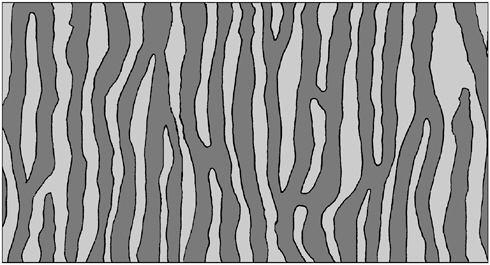
FIGURE 2-4The anatomical demonstration of ocular dominance columns in the monkey cortex. Input from the two eyes alternates, forming regular bands—the ocular dominance columns—about 0.5 mm wide.
dioactive protein is released at the synapse, where it is taken up by the LGN neurons. The LGN neurons, in turn, transport some of it to the cortex by way of the axons of the LGN neurons. This takes about a week, at which point the LGN axon terminals that received input from the injected eye are radioactive. Sections cut along the cortex at the LGN input level demonstrate the ocular dominance columns, because radioactivity, like light, exposes silver grains in photographic film. Thus, a piece of film placed on the tissue section reveals the pattern of the radioactive axonal terminals.
Above and below the LGN input layer of the cortex, the neurons receive input from both eyes, the extent of which depends on how far away the neurons are from the input layer. Thus, most cortical neurons are binocular, although one eye usually tends to dominate the neuron. Near the input layer, as noted above, there are cells that receive all of their input from one eye or the other—they are monocular. In the newborn cat or monkey, on the other hand, it was discovered by recording from the cortical neurons
that all the cells in the cortex are binocular; there are no monocular cells. That is, the cortical cells near where the LGN axons terminate, which normally receive input from just one eye, initially receive input from both eyes.
Anatomical studies in which a radioactive amino acid was injected into one eye also showed no ocular dominance columns; rather, radioactivity was spread evenly across the input layers of the cortex. What is going on? Anatomical examination of single innervating LGN axons provided the answer. The arborizations of the axons innervating the cortex at birth are not segregated into stripes but extend widely across the cortex. Only after a few weeks do the axons retract and remodel their axonal terminal fields to form the ocular dominance columns. This retraction process appears similar to that described earlier for the innervation of muscle and autonomic ganglion cell neurons and as shown in Figure 2-1.
Although the reshaping of the LGN axonal terminals in both cat and monkey occurs postnatally, it does not appear to require visual experience. Animals initially restricted in their visual experience develop perfectly normal ocular dominance columns. Although visual experience is not required for postnatal development of the columns, neuronal activity is required. If, for example, a drug is injected into an eye that prevents retinal ganglion cells from generating the electrical signals that travel down axons, ocular dominance columns in the cortex do not form. Also, in the LGN, segregation of right and left eye activity does not occur when retinal ganglion cell activity is stilled. In the absence of light stimulation of the eye, how is the electrical activity of the ganglion cells generated? Interestingly, the retinal ganglion cells are spontaneously active once they differentiate, and it is this spontaneous activity that is required to refine connections in both the LGN and primary visual cortex.
The spontaneous activity of the ganglion cells is not random, but waves of activity that pass across the retina are generated. These waves, lasting two to eight seconds occur at one- to two-minute intervals and are limited in their domain. That is, one
wave of activity does not travel over the entire retina. The waves of spontaneous activity seem important not only for segregation of input into eye-specific layers, but also for the topographic projections in the visual system. For example, the formation of the precise topographic map of the retinal ganglion cells on the tectum in cold-blooded vertebrates (shown in Figure 1-8) requires neural activity, and the guess is that the correlated activity of adjacent ganglion cell axons generated during the waves is critical for the refinement of the map from an initially coarse projection. If fish or frogs are raised under strobe lights, which synchronize activity of the ganglion cells, refinement of the topographic map does not happen. Thus, the timing differences in the generation of electrical responses among nearby cells during a wave provide information as to the relative location of the cells, and this is critical for the generation of a precise map.
To summarize, the initial wiring of the visual system requires not only intrinsic mechanisms but also neural activity. However, none of this depends on visual experience. Development of the retina, LGN, and primary visual cortex clearly depends on nature. But what about higher visual centers that are concerned with more specific aspects of visual recognition and perception—does their development require visual experience?
Although less is known about the development of higher visual centers, some evidence on this issue has been obtained by study of a visual area found in the inferior temporal part of the cortex that in humans appears to be involved with face recognition. Patients with lesions in this area, caused by a stroke, for example, fail to recognize familiar faces, including those of spouses. When the spouse speaks, an affected patient instantly recognizes who it is; hence, this is clearly a visual perceptual deficit.
When electrical recordings are made from neurons in the same area in visually inexperienced monkeys as young as six weeks of age, the neurons respond to complex images, including faces, much as they do in adult animals. Thus, even quite specialized visual areas do not appear to require visual experience to be wired
up to perform their assigned function. However, behavioral studies of monkeys employing complex visual recognition tasks indicate that this ability develops to adult levels relatively slowly, over the first year of life. Therefore, other brain areas involved in visual recognition tasks must be developing over this time and their development might be influenced by experience.
So when does visual experience play a role in the visual areas that have been studied? The answer is after the initial wiring takes place, and this has been elegantly shown by depriving young animals of various kinds of visual stimuli.
Visual Deprivation
In cats, visual experience appears to play no role in the maturation of the visual cortex up to approximately three weeks of age. Thereafter, profound changes in cortical physiology and anatomy, as well as visual performance, occur following visual deprivation. Deprivation can be of light—the animals are raised in the dark—or of form—one or both eyes are subject to lid closure, or a light-diffuser is applied to one or both eyes, so that light can reach the retina but no crisp images are formed. Somewhat different effects result from these and other types of visual perturbations, but all result in clear and persistent visual changes. In essentially all cases, visual acuity is severely reduced and if visual deprivation is restricted to one eye, there are striking changes in the binocularity of the visual system.
The bottom line is that the cortical visual circuitry is initially quite labile: It can be easily and substantially modified in the young animal by altered visual experience for a period of time. This occurs not only in cats, but also in monkeys and other animals. It holds also for humans who at birth have, for example, a cloudy lens in one eye or both eyes, or have a misaligned eye. Effective vision is lost from the affected eye or eyes—a condition known as amblyopia. The evidence is strong that the changes underlying this loss of effective vision occur mainly in the cortex; the retinas remain quite functional and normal, as do the LGN neurons, during various types of visual deprivation.
Perhaps most striking are the changes induced in the cortex when just one eye is deprived of form vision—monocular deprivation. In a typical experiment, the eyelid of one eye of a cat is shut by suturing in the first postnatal week and the eyelid is kept closed for three months or so and then opened. Recordings made from neurons in the retina, LGN, and primary visual cortex indicate that no major changes occur in the properties of the retinal and geniculate cells. However, profound changes are seen in the cortical cells, particularly with regard to the binocularity of the cells.
What is instantly clear in the deprived animal is that few cells in the cortex are binocular. The overwhelming majority of the cells recorded receive their input from the open eye and are monocular; they can be driven only by the open eye. The few cells that are driven by the closed eye or have preference for the closed eye are highly abnormal. They give weak responses, and often nonspecific responses—they typically have poor orientation selectivity and they respond sluggishly. Also, a number of the cells recorded are unresponsive to light stimuli.
That the great majority of recorded cells have input from the open eye suggests that the open eye has taken over cells that normally would have received most if not all of their input from the closed eye. In other words, the open eye’s input now occupies more territory than the input from an eye in a normal animal. What do the ocular dominance columns look like in a monocularly deprived animal?
Physiological experiments by Torsten Wiesel and David Hubel showed that the ocular dominance columns change quite dramatically in size in a monocularly deprived animal. The amount of cortex receiving input from the open eye is greatly expanded, whereas the amount of cortex receiving input from the deprived eye is severely restricted. Anatomical studies confirm these observations as shown in Figure 2-5B for a monocularly deprived monkey.
In the experiment shown here, radioactive material was injected into the open eye and a section cut along the input layers of the cortex. Not only is the amount of cortex devoted to the open eye considerably enlarged (lighter areas) as compared to the

FIGURE 2-5The alteration in ocular dominance columns induced by monocular deprivation in a young monkey.
A: The columns in a normal monkey.
B: The columns from a deprived animal. In the visually deprived monkey, the open eye input (light areas) occupies much more territory than the closed eye (dark bands).
amount devoted to the closed eye, but the columnar stripes reflecting input from the deprived eye are discontinuous. Compare this image with Figure 2-5A, which shows the ocular dominance columns in a normal monkey.
How might one eye take over cortical territory from the other? One plausible suggestion is that the axon terminals of the geniculate axons coming from the open eye do not retract as much as they do ordinarily, whereas the axon fibers coming from the closed eye retract much more. The implication here is that lateral geniculate axons compete for cortical space and synaptic connections in the young animal. As long as each eye provides the same input to the cortex, the competition is even, and both eyes end up having equal cortical representation. If the ocular input is not equivalent, the dominant eye ends up with more cortical space and presumably more cortical synapses. The notion of a competition for synaptic sites and territory was noted earlier in the discussion of cell death in the developing nervous system and appears to apply in many situations. We shall come back to this notion later.
Another possibility that might contribute to the open eye having more cortical representation than the closed eye is that its
axons have more terminals. That is, in addition to an excessive retraction of axonal processes of geniculate neurons receiving input from the closed eye, the axon terminals receiving input from the open eye sprout new processes.
What happens if you visually deprive both eyes by suturing both eyelids shut or raising animals in the dark? In dark-raised cats, cells in the cortex are mainly binocular as in a nonvisually deprived animal, but the recorded cells are typically nonselective to orientation. In lid-sutured cats, binocular deprivation leads to many unresponsive cells or cells that respond erratically. Furthermore, cells in which it is possible to map receptive fields are mainly monocular—they seem to have lost their binocular connections. Loss of form vision thus causes somewhat different changes than dark-raising, and this is seen also in the recovery from the two forms of deprivation, as we shall see.
Pattern Deprivation
In the experiments described so far, all form vision was withheld from one or both eyes for a period, and severe defects were noted in the responses of the cortical neurons. It is possible to induce more subtle deficits in the responses of cortical neurons by restricting just one or another aspect of the visual world. One obvious experiment is to raise animals under conditions in which they are exposed to bars or lines of only a single orientation. When this is done, the neurons recorded from the cortex are biased with regard to the orientations to which they respond. A normal cortex has neurons that respond to all possible orientations; in animals raised in environments where they saw only horizontal or vertical stripes, the cells respond selectively to the orientations to which they were exposed.
Other experiments have extended this idea. If animals are restricted at an early age to environments in which they see little movement, or movement in only one direction, their cortical neurons seem to be either less movement sensitive or biased to movements to which they have been exposed.
Critical Periods
An important question is whether the human cortical circuitry can be modified throughout life. This is a somewhat difficult and also contentious question because some modifications to brain circuitry do occur throughout life, as will be described in Chapter 4. For example, we continue to learn regardless of our age and this learning causes molecular and probably structural changes in our brains. However, there is no question that the kinds of drastic changes to both cortical physiology and anatomy that occur as a result of visual deprivation in the young cat, monkey, or human do not generally occur in adults. In adult cats, monkeys, and humans, various kinds of visual deprivation even of long duration—months to years—do not have dramatic effects on visual performance, on the responses of cortical neurons, or on cortical anatomy.
To induce changes like those described above, the deprivation must occur when the animal is very young. The period of great susceptibility is called the critical period or sensitive period. In cats the critical period for the primary visual cortex begins at about three weeks and extends to four months; the period of greatest susceptibility for changes in ocular dominance columns peaks at about six weeks and then subsides. In monkeys, deprivation between birth and six weeks induces the most severe effects with a peak at about one month, but deprivation between six weeks and one year also causes deficits. In humans, deprivation between six months and six years of age causes amblyopia—severe loss of visual acuity—in the deprived eye.
During the periods of high susceptibility, short periods of visual deprivation can cause very severe changes. Indeed, just a few days’ deprivation in the first two to four weeks of a monkey’s life can result in changes about as severe as those seen in animals whose eyes are kept shut for several weeks later in the critical period.
The general notion of critical periods in cortical development has been questioned, because often there is neither a sharp start nor a sharp end to such sensitive periods. Some investigators be-
lieve, rather, that cortical modifiability is a continuum, with, at most, periods of more susceptibility. However, in the visual system, the notion of critical periods seems quite clear. On the other hand, we have also come to realize that there are different critical periods for different aspects of cortical and neuronal function. For example, in cats the susceptibility of directionally selective cells to alterations in their directionality is virtually over by six weeks of age, at the time when the susceptibility for changes in ocular dominance columns is at its peak.
In addition, critical periods can be modified by environment. Dark-raising alters the critical period for ocular dominance changes in two ways. The peak time of sensitivity is delayed from the norm of six weeks to about twelve weeks, and, second, the duration of the critical period is significantly lengthened. Dark-raising appears to slow down and even reverse maturation of the cortex. Up to three weeks of age, no differences in light- and dark-raised kittens are noted; however, after that the responsiveness of the cortical cells in dark-raised animals decreases. In addition, more non-orientation-sensitive cells are encountered in the dark-raised cats.
Interestingly, brief periods of light exposure in cats reverse the effects of dark-raising. As little as six hours of light exposure appears to shorten the critical period and to stimulate the maturation of the visual cortex. How might this come about? We don’t know in detail, but if dark-raised cats are exposed to light for just a few minutes, changes in gene expression in the cortex can be measured within an hour or so. This indicates that even brief exposures to light in a dark-raised animal can induce biochemical changes in neurons of the cortex that affect their maturation.
Recovery
Changes induced in the cortex as a result of visual deprivation are difficult to reverse. For example, after monocular visual deprivation, little recovery is noted if nothing is done other than to open the closed eye, even if the eye is reopened during the critical pe-
riod. In one experiment, the eyelid of a monkey was closed for nine days during the first two weeks of life. The eyelid was then opened and nothing further was done to the animal. At four years of age, recordings from the animal’s cortex showed changes similar to those of a monkey who had one eye closed from birth to four years of age.
Substantial recovery can be induced, however, if the animal is forced to use the deprived eye, especially if this forced usage occurs during the critical period. If the deprived eye is opened and the formerly open eye closed, good recovery is observed. Ophthalmologists learned this trick long ago to treat children with amblyopia, having them wear a patch over the normal eye for periods during the day to improve the visual acuity mediated by the amblyopic eye.
On the other hand, although visual acuity in the deprived eye improves dramatically, binocular responses do not. When the responses of neurons in the cortex of cats treated like that are recorded, virtually all of the neurons turn out to be monocular, receiving input from one eye or the other, but not both. Thus, loss of binocularity in cortical neurons is not related to a loss of acuity. These two visual attributes can be quite independent of one another.
An independence of visual acuity and binocularity also results when the eyes are not aligned correctly, a condition known as strabismus. Thus eyes can turn out (wall-eyes) or turn in (cross-eyes). In wall-eyed people, vision usually alternates between the two eyes. When looking at objects to the right, they use the right eye and ignore the visual information coming from the left eye, and when looking left, they use the left eye. The visual acuity in both eyes is normal, but binocular interactions between the two eyes are lacking. In young animals who are made wall-eyed surgically, the cortical neurons are almost exclusively monocular; half respond to the left eye, the other half to the right eye, and virtually none to both eyes. In cross-eyed cats (and people) a monocular-deprivation-like deficit occurs. One eye—usually the straighter, becomes dominant and high-acuity vision is lost in the
other eye. Most of the cells are driven monocularly by the dominant eye, and very few cells are binocular or driven exclusively by the crossed eye.
Enriched Visual Environments
The visual system is a most convenient part of the brain for studying the development and maturation of brain structures. Neurons along the visual system can be readily activated by presenting visual stimuli to the eyes, and activity of the neurons is easily recorded. Visual stimuli to an animal can be altered in various ways to explore the effects of environment on visual development. Several important conclusions from these studies have already been noted; others have not been emphasized so far. For example, although the primary visual cortex is very susceptible to significant alterations in its structure and function as a result of altered visual experience, neither the retina nor the LGN shows such drastic changes. Thus, not all brain regions are equally plastic—some are more hard-wired than others, and it appears that higher brain centers are more modifiable than lower ones. This conclusion extends to different kinds of animals as well. Cold-blooded vertebrate brains appear much more hard-wired than our brains, probably reflecting the fact that cold-blooded vertebrates have much less cortex relative to other brain structures as compared to mammals, and I shall return to this notion later.
A second point is that in all the experiments described so far, the animals were visually deprived in one way or another. This resulted in loss of visual acuity, binocularity of cortical neurons, orientation selectivity, movement sensitivity, and so forth. Furthermore, I earlier emphasized the notion of overproduction and pruning of neurons that occurs during maturation of the brain—restriction of dendritic fields, rearrangement of synapses, and even cell death. All of this might be summarized by the adage “Use it or lose it” as a key feature of brain maturation. What about going the other way? Can one enhance brain circuitry by, for example, providing an animal with an enriched environment?
Again, studies on the visual cortex have led the way in this regard, although it is also fair to say that the results are not nearly as clear-cut nor as convincing as those that have come from the deprivation studies. Nevertheless, we can reach some conclusions. The pioneering studies in this regard were carried out by Mark Rosensweig and his colleagues at the University of California, Berkeley, in the 1970s, who found that various regions of the cortex were heavier and thicker in rats reared from weaning in an enriched environment as compared to animals raised in a more impoverished environment. The enriched environment consisted of housing rats in groups of 10-14 in large cages with various play objects that were changed daily. In addition, these animals were put into a 4-foot square box containing other play objects for up to an hour a day. Impoverished environments consisted of animals being housed singly or in pairs in standard laboratory rat cages with no toys.
The biggest differences Rosenzweig and his fellow scientists found were those between rats housed in the enriched environments and rats housed singly, and changes in the occipital (visual) cortex were most prominent. They noted upon examining the tissue of the occipital cortex that the neurons were larger and the glial cells more plentiful in the enriched-environment rats.
Subsequently, William Greenough and his colleagues at the University of Illinois examined the structure and density of synapses in rats raised in an enriched environment. They found a small increase in the size of synapses—~8 percent—in animals raised from 25 to 55 days old in an enriched environment. Several other studies on rats confirmed this result, but a similar study in cats failed to find a significant difference. More interesting, and certainly more dramatic, was the finding that the number of synapses per neuron in the occipital cortex increased by 20-25 percent in rats raised under enriched conditions compared to those raised in an impoverished environment. The number of synapses per cubic millimeter didn’t change much when the rats were raised in an enriched environment, but because the neurons are larger in these animals, and hence there are fewer of them per
square millimeter, the number of synapses per neuron is greater. These results were confirmed in at least three studies, two in rats and one in cats.
When the individual neurons from the occipital cortex of enriched-environment rats were examined by methods that allow an examination of the cell’s dendritic tree, the extent of the dendritic field was found to be increased by about 20 percent, a result congruent with the increase of synaptic number per neuron. The extent of the dendritic field was determined by measuring the total length of dendrite measurable in a tissue section. That is, this measure included both elongation of dendritic branches and the formation of new branches.
As noted, the studies described above were carried out mainly on rats between the ages of 25 and 55 days. When similar studies were carried out on older adult rats, most of the same results were found. The weight of the occipital cortex in the enriched-environment rats had increased, as had the number of synapses per neuron. Some question was raised as to whether the cortical dendritic fields of the older animals were as expanded as in the enriched-environment younger animals, but overall the results were surprisingly similar between young, adult, and middle-aged rats. The one effect not seen in the older rats was the small increase in synaptic size in the cortex of enriched-environment rats; that effect (if indeed real) seems limited to young animals.
The conclusions drawn from these studies is that enriched environments increase neuronal size, glial cell growth, synaptic density per neuron, and even synaptic size, but these effects occur in adult animals perhaps as readily as in young ones. Another caveat is that when animals (rats) are returned to the impoverished environment of standard laboratory cages, the enriched-environment synaptic growth regresses. Thus, the brain growth produced by enriched environments appears not to be permanent. Further, there is no window—critical period—for enhancing neural size or synaptic number in animals exposed to an enriched environment. The more general and important feature of the developing brain, then, is an initial overproduction of neurons, neu-
ronal processes, and probably synapses. These are gradually pruned during brain maturation, initially by intrinsic mechanisms but then by extrinsic, experience-based factors, and this sculpting of the brain has a time dependence: It occurs readily in the young animal, but not nearly as much in the adult.