Inclusive Virtual Public Involvement for Public Transit (2023)
Chapter: Chapter 4 - Incorporating VPI Feedback into Decision-Making

CHAPTER 4
Incorporating VPI Feedback into Decision-Making
Public involvement in decision-making occurs across a range of issues, policies, and contexts. The COVID-19 pandemic provided VPI opportunities not only about transportation issues, but also around choices about getting vaccinated, voting, participating in virtual support groups, and school via online platforms. Focus groups with VPI providers at transit agencies and community-based organizations, such as the National Hispanic Council on Aging (Washington, DC) League of Women Voters (Washington, DC), Fenway Health (Boston, MA), and Poder English Works (Chicago, IL) helped inform this discussion.
Input, Buy-In, and Community Support
The transition to VPI means transit agencies and community organizations must adapt to a new environment that requires skills and methods to invite, welcome, and engage participants and community partners.
Potential strategies:
- Meet the community you want to reach on a platform that works for them. There are many methods and platforms to connect digitally, such as texts, phone calls, Facebook groups, Google Forms, Google Meet, Facebook Messenger, WhatsApp, and Zoom. Do not forget conference calls and postal mail; these traditional channels are preferred by some groups.
- Communicate ground rules for engagement in virtual spaces and set expectations to create a sense of community, such as talking one at a time, muting microphones, and using cameras when possible.
- Use tools like surveys, focus groups, polling, and breakout groups during VPI not just to determine opinions and ask for feedback, but to learn about the skills, needs, talents, and interests of members of the public, opinion leaders, and partner organizations. These insights can inform efforts to expand digital access, disseminate transit information strategically, recruit ambassadors to show others how to use your services, identify advisory group members, etc.
- Foster deeper engagement by following up with participants after a VPI event: send an email with the meeting summary, next steps, and a link to the recorded session. The email can also solicit feedback, provide a link to receive more comments, and help communicate and reinforce how participants’ input will be used in decision-making.
- Seek out opportunities to support the VPI and engagement efforts of allied organizations by sharing relevant content and participating in outreach efforts, committees, advisory groups, etc. This type of collaboration brings visibility to the transit agency and shows relevance in a larger community context, especially for underserved or transit-dependent groups.
- Partner with allied community organizations to develop VPI efforts to reach target groups. For example, transit agencies can partner with community organizations that promote biking
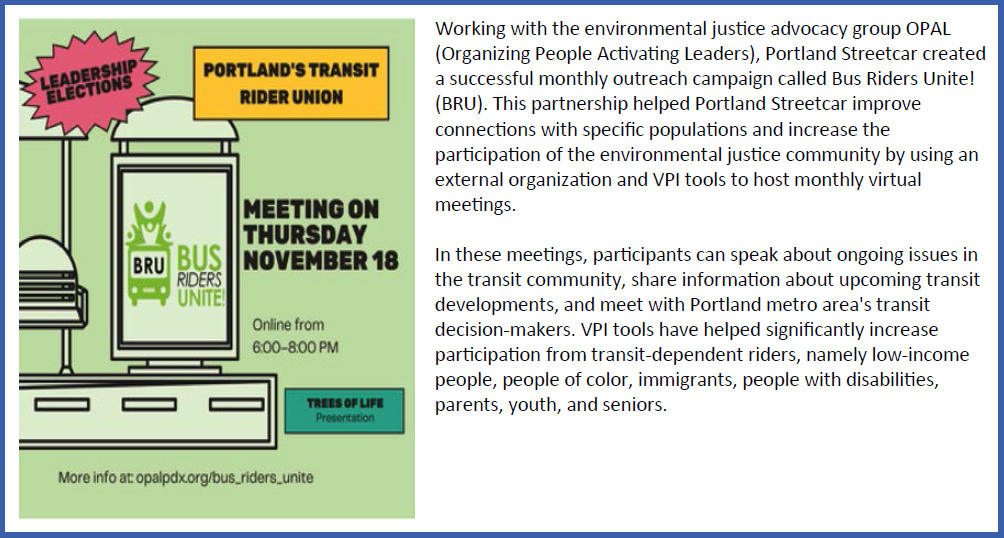
Figure 8. Portland Streetcar collaborated with OPAL on BRU program.
or environmental equity and have similar goals to transit agencies, including getting people where they need or want to go safely, reducing traffic, and protecting the environment. The shared agenda of these types of organizations can offer an alliance for effective policy-based VPI efforts, as seen in the case of Portland Streetcar (Figure 8).
Analyzing, Presenting, and Responding to VPI Comments
Public transportation agencies can implement both passive and active VPI strategies to increase public engagement and encourage participation for relevant feedback. Transit agencies of all sizes have experimented with or developed practices around many types of digital collaboration tools, including VPI platforms such as PublicInput.com, Remix, Citizen Lab, MetroQuest, and Bang the Table, and collaboration tools such as MURAL or Google Jamboard, along with project websites. A few transit agencies report using other interactive tools that could enhance public participation and feedback, including ArcGIS Story Maps and Mentimeter.
Potential strategies:
- Build a social media following to establish effective and continuous two-way communication with updated information and the ability to promptly address public concerns.
- Use ArcGIS Story Maps to provide technical presentations or studies with text, images, infographics, videos, and GIS maps as a straightforward and interactive way for the public to understand projects, and for transit agencies to request participation. One statewide agency reported that they received 1,400 comments from their Story Map on a proposed interchange upgrade on an interstate highway.
- Use visualization with renderings or 3D images both at in-person meetings and with online tools to increase audience interest in and public understanding of projects.
- Use digital collaboration tools that can closely mirror a brainstorming session with sticky notes and flipcharts to allow people to remain actively engaged.
- Make space in large meetings for quieter participants by creating opportunities for small group conversations. Consider engaging members of target communities to help facilitate these smaller conversations, including conversations in other languages.
- Consider hybrid events with both an in-person component and a virtual option, and a post-event open forum online with input via text, telephone, and email to encourage input from participants using either digital or traditional communication methods.
- As a suggested topic for further research, one transit agency requested information on how to facilitate virtual meetings on controversial projects. The topic is of interest as transit agencies seek to use VPI during virtual meetings to hear public complaints and concerns without allowing meetings to be overrun by project opponents or malicious actors.
Measures of Success: Gauging Effectiveness, Equity, and Efficiency
Few transit agencies actively measure the effectiveness of VPI. The metrics transit agencies most frequently cited were number of participants, comment relevance or quality, comment quantity, metrics available through the selected platform, and diversity of participants. Some transit agencies do evaluate their VPI effectiveness; the benefits of doing this include:
- Competitive advantage in grant seeking. One small transit agency used engagement data collected through VPI to help secure a discretionary grant to further improve its VPI capabilities.
- Increased participation with less cost. A medium-size transit agency noted that for an engagement campaign, five in-person meetings held around the state did not yield as many participants as a single virtual meeting. The agency noted considerable savings in terms of travel time, administration time, and emissions.
- More diverse participation. One large transit agency reported actively gathering demographic information from VPI participants to help better understand who was or was not engaging.
- Increased ongoing participation. Smaller transit agencies noted that groups like advisory committees and their boards of directors see increased participation with the option of virtual attendance.
Potential strategies:
- Measure campaign success and engagement. Social media interactions can be synthesized through analytics and metrics (such as Twitter Analytics, Hootsuite, Facebook Insights, or third-party data metrics), where transit agencies can measure campaign success and engagement generated.
- Seek qualitative input and data. Use status messages or conduct interactive conversations on social media platforms to receive qualitative data such as personal sentiment and to identify areas of feedback and causes of dissatisfaction.
- Consider cost/benefit and how VPI can increase the number of participants at a lower cost with less staff effort. Reinvest that staff effort to strengthen and deepen relationships with community partners, intergovernmental connections, members of advisory groups, and others.
- Secure demographic data for VPI events using registration links, polling, self-identification, or chat features to determine if participation reflects the desired representation; if not, work to expand representation. Ensure that images, language, etc., are representative of and accessible to the target audience.
- Advance equity in VPI involvement and promote efforts like the Affordable Connectivity Program (www.fcc.gov/acp), an FCC benefit program that helps ensure households can afford the broadband they need for work, school, healthcare, and more.


