Inclusive Virtual Public Involvement for Public Transit (2023)
Chapter: Chapter 5 - Research Highlights

CHAPTER 5
Research Highlights
Literature and Best Practice Review
The research team began this study by conducting a scan of the literature, industry guidelines, and peer exchange materials on VPI, particularly those that have emerged from the COVID-19 pandemic. The review illuminated the current state of VPI practice among transportation agencies and at large. The information collected from the literature is synthesized here; Appendix A presents the literature and practice scan.
Key Findings
- State of the practice. VPI grew with the development of technology, but the pandemic generated an abundance of new experiences, causing leading VPI practitioners to seek or develop their own support materials. VPI literature can be grouped into the following categories: facilitation techniques, methods and tools, inclusive and equitable practices, and best practice examples.
- Expand inclusiveness. VPI provides opportunities for transportation organizations, including public transit agencies, to reconsider the quality and effectiveness of their engagement practices with vulnerable communities, increase the size and diversity of their audiences, make engagement more accessible to some communities, and collaborate with community-based organizations for more inclusive outreach.
- The digital divide refers to limited access to online communication tools such as high-quality internet access, devices (smartphones, computers, tablets), and the capacity to comfortably navigate virtual services, and it exists in many areas throughout the country. Access varies widely based on a range of factors, including locally available internet or broadband services; the cost of those services through networks that are often private pay; the acquisition cost, subscription costs, and ongoing maintenance of devices; and having the skills to use devices effectively. Therefore, public transit and transportation agencies must fully understand their constituencies’ ability to respond to digital engagement opportunities and mitigate barriers to participation.
- Participation levels. Although virtual engagement can provide broader, faster, and less expensive outreach, it may not necessarily translate to more public participation. Lower participation rates among individuals from marginalized and underserved communities have historically been seen with ad hoc engagement. Transit agencies may find it easier to maintain participation levels with recurring community meetings, whether in person or virtual. Collaborating with established community partners and providing incentives for participation and in recruitment efforts can also encourage retention and engagement.
- Use a variety of approaches and tools. For effective virtual engagement and outreach, public transit agencies and transportation organizations can seek a variety of approaches and tools that best meet their community needs, as most tools have limitations. Some individuals may
- Use passive and active VPI strategies to effectively engage communities with varying levels of motivation to participate. Passive engagement is low-effort and does not cost much in time or development—for example, offline tools such as digital fact sheets, short informal videos, and social media campaigns. Active engagement, such as virtual live meetings and workshops, requires more time and effort.
have limited knowledge or access to communication technologies, restricting them from joining web-based meetings, while persons with disabilities or limited English proficiency may be challenged by software that does not offer closed captions, work well with screen readers, offer translation, or provide alternative communication options.
Facilitation Techniques
For virtual meetings, organizations should train or hire a manager and a team responsible for organizing and setting up the meeting, developing internal communication protocols, conducting rehearsals, troubleshooting, and sorting the feedback. Techniques for effective engagement include:
- Define meeting objectives and desired outcomes in plain language and explain how information will be used
- Design the meeting format with meeting objectives in mind
- Develop a facilitation plan
- Create and enforce participation guidelines
- Use instant messaging to coordinate with other meeting hosts
- Ensure meeting materials are available to the public
- Offer responsive technical support to participants
- Organize discussion queues (answer questions in the order they are received, establish protocols) to help facilitators manage conversations, questions, and feedback
- Follow up with participants via email to provide a meeting summary, next steps, and an opportunity to give feedback
Common and Emerging Methods and Tools
- Building an engaged social media following
- Hybrid meetings and events
- Interactive maps
- Online chat or message board
- Online meeting-in-a-box
- Prerecorded presentations, videos, and podcasts
- Short videos
- ArcGIS StoryMaps
- Surveys
- Targeted online ads
- Telephone town halls
Inclusive VPI Practices
Online engagement offers many benefits for inclusive participation. Communication barriers and transportation challenges of all kinds (public transit access, a safe and navigable path of travel, trip cost, etc.) are minimized or eliminated with online civic engagement by enabling community members to contribute anytime, anywhere, without traveling to a specific physical location at a designated day and time.
To ensure diversity, equity, and inclusion in the design and implementation of online engagement and digital content, practitioners should consider the following.
- Create space for people to feel welcome. In large meetings, use breakout sessions to enable smaller conversations, and make it optional for participants to enable their video.
- Deliver diverse content with images and language that represent the intended audience.
- Design for different learning and processing styles by incorporating images to engage visual learners, using digital collaboration tools to foster interaction, and considering the cognitive accessibility of the technology being used.
- Support education to increase digital literacy and use plain language to make complex information clear and accessible.
Research indicates (9) that some people with disabilities prefer online civic engagement because technology facilitates independence. However, ensuring equitable access for people with disabilities requires learning and action. Accommodations differ based on an individual’s disability. Practitioners should be aware of best practices for communicating with people with specific types of disabilities, but also other target groups. In the following sections are insights and tips for online engagement with people with disabilities, older adults, and other historically underrepresented communities.
People Who Are Blind, Visually Impaired, or Have Sensory Disabilities
- Ask presenters to describe and explain the pictures and images used and their relevance to the presentation.
- Encourage participants to mention their names each time they speak and include visual self-descriptions of participants and presenters, for example, “I am a white woman with gray hair wearing a red blouse.”
- Make audio recordings available after the virtual meeting.
- Make sure the speaker’s face is well-lit and can be clearly seen.
- Read any text on the screen, use text alternatives for all digital images, and describe live scenarios.
- Use Web Content Accessibility Guidelines (WCAG) compliance levels to ensure supplemental materials are accessible.
People Who Are Deaf or Hearing-Impaired
- Ask participants to spell out acronyms and speak slowly and directly in front of their camera so they are visible.
- Ask presenters to provide slide decks in advance to make available to the caption writer.
- Be aware that some sign language users cannot read captions, and not all hearing-impaired people use American Sign Language (ASL).
- Ensure videoconferencing platforms are compatible with personal assistive technologies such as personal assistive listening systems.
- Outline meeting rules such as having only one person speak at a time or raise their hand if they wish to speak.
- Use qualified ASL interpretation services when needed.
- Use live or automated closed captioning services during the meeting, paying close attention to mistakes or misspellings.
People with Intellectual or Developmental Disabilities
- Explain how to use online platforms, consider providing tip sheets in advance, and repeat information if necessary.
- Offer the option for anyone using chat boxes to have their messages read aloud to everyone during the event.
- Take breaks and leave ample time for questions.
- Use accessible plain language; avoid using jargon.
Older Adults
- Avoid stereotyping older adults and their technological capabilities. Ageist attitudes can discourage active engagement.
- Be aware that older adults face different barriers and disabilities.
- Consider the best ways to include a diverse range of older adults.
- Determine if additional support is needed to enable the use of digital tools and provide adequate training or support.
- Present written materials in large type that is easy to read.
- Use clear, open, and respectful language.
- Use phone calls as a quick and effective two-way communication tool.
Immigrants and Refugees
- Collaborate with different organizations that provide services to immigrant and refugee communities to extend reach.
- Find interpreters from the community for virtual meetings, when possible.
- Inform your audience when you publicize your virtual meeting event that interpretation services are available upon request.
- Make sure translated materials are locally and contextually accurate by asking a member of the community to test them.
- Prepare your English (original) document for translation by making sure your information is written in plain language and graphics are culturally universal.
- Translate your website, social media, surveys, presentations, videos, and other materials into the languages most used in your community.
Youth
- Avoid tokenizing young people as this can easily discourage them from active participation.
- Break down information into small segments that are easy to digest and to the point. Keep it simple.
- Leverage social platforms that are already present and regularly used by youth to disseminate information.
- Use social media platforms to facilitate participation and dialogue among young people, and to share information multidirectionally.
Low-Income Populations or Limited Broadband Access
- Allow telephone call-in options.
- Avoid digital tools that require downloads or are data-heavy.
- Consider the bandwidth of all digital platforms and materials.
- Ensure all digital engagement tools are cell phone-compatible.
- Use nondigital engagement tools as a supplement to digital tools in rural areas (e.g., phone calls, texts, postal mail, and other means of engaging people who do not have internet access).
- Use televised town halls and radio to keep people updated.
- Work with partner organizations to help low-income people access the internet.
Survey of Transit Agencies and Transportation Providers
The research team developed an online survey to capture transit agencies’ experiences and practices using VPI. The purpose of the survey was to gather feedback on relevant VPI procedures deployed during the pandemic-related restrictions on public gathering, as well as the challenges transit agencies faced in successfully reaching out to communities, including vulnerable
populations such as older adults, low-income communities, people with limited English proficiency, and people with disabilities.
The online survey consisted of 33 questions: four about general contact information, 25 multiple-choice questions, and four open-ended questions. The survey explored the level of VPI before COVID-19, platforms used by agencies, tools used during the restrictions on public gatherings, and the practices agencies will continue to implement moving forward. See Appendix B for details about the roster of participating agencies, survey questions, and responses.
The survey was open for approximately 60 days, from late April through June 2022. Participants were selected using a convenience sampling approach, leveraging contact information and suggested responders from the study team’s research efforts, professional knowledge, affiliations, and networks, along with suggestions from members of the project panel.
The survey team sought responses from public transit agencies and government entities providing transportation in 24 states, across all 10 FTA regions. A total of 69 transit agencies responded, with 49 responses providing sufficient information for analysis. Survey respondents included deputy directors of transit, transit planners and managers, community engagement supervisors, and marketing and customer service directors representing statewide, regional, local/municipal, county, and rural/tribal geographic service areas. Seven modes of public transit were represented, including bus, paratransit, multiple types of rail services, ferries, and trolleys.
- 59% of the transit agencies responding to the survey agreed or strongly agreed that VPI efforts contributed to increased engagement of underserved populations during the COVID-19 pandemic.
- 92% of respondents think it is likely or highly likely they will continue using VPI tools; with almost universal consensus, 95% of respondents said they felt the public would expect continued VPI options.
Survey Highlights
Results show little use of VPI tools before the COVID-19 pandemic began in 2020.
- 56% of respondents used few to no VPI tools before COVID-19 restrictions. Once restrictions did not allow for in-person public gatherings, agencies underwent a major shift to using VPI.
- Transit agencies had to explore alternatives to reach the public, provide information, conduct public hearings, and solicit customer feedback.
- Transit agencies relied on internal staff and consultants to plan and implement VPI strategies, with some participating in training or technical support to implement VPI tools.
- 50% of survey respondents relied solely on their staff to plan and implement VPI strategies, while almost 42% relied on a combination of external consultants and internal staff to execute VPI strategies.
- In addition to relying on staff, agencies most frequently relied on peer organizations, community partners, and consultants/contractors as resources to help them implement VPI strategies and practices.
Most transit agencies used social media platforms as VPI tools to provide general information and conduct public hearings. The most prevalent social media platforms used, in descending order, were Facebook, Twitter, Instagram, YouTube, and NextDoor.
Virtual meeting platforms such as Zoom, Webex, Microsoft Teams, and Google Meet were the other most frequently used tool. They were selected for their simplicity, accessibility, familiarity, and versatility.
- These tools allow transit agencies to have breakout sessions in smaller rooms, solicit immediate feedback via digital polls, and provide translations and closed captions for a larger population reach.
- Transit agencies also mentioned that virtual meetings were helpful for gathering feedback from nonriders, connecting with people with disabilities, and reaching people in outlying areas.
- A few transit agencies reported using more sophisticated tools that could enhance public participation and feedback, including ArcGIS StoryMaps, Mentimeter, and Google Jamboard.
Overall Perception of VPI Tools Was Positive
- Most respondents (71%) indicated that virtual tools were more convenient for the public; 59% of respondents reported increases in engagement from underserved populations during the COVID-19 pandemic using VPI tools.
- Other benefits included a decrease in the transit agencies’ personnel time dedicated to public involvement events, such as traveling and organizing events, as well as a reduction in organizational costs. Asynchronous VPI efforts allowed agencies to reach populations previously constrained by in-person meeting schedules.
- However, one respondent noted that in-person fieldwork may still be required to connect with hard-to-reach communities and populations with some level of technological barriers.
Technology Gaps and Accessibility Issues
Transit agencies recognized challenges related to technological gaps and accessibility issues in reaching underserved populations. Key external challenges included:
- Lack of computer/technology skills
- Slow internet connections
- Limited access to technology or devices
- Lack of internet access
Internal challenges included a lack of staff training, a lack of policy/guidelines on using VPI, and increased security concerns.
Transit agencies measured the success of their VPI efforts using indicators such as the number of participants, the relevance and quantity of comments received, metrics from the VPI platform itself, and the diversity of participants.
Engaging with Underserved Communities
Transit agencies acknowledged that additional efforts are needed to connect with underserved communities and deployed VPI strategies to reach target groups, including minority communities, people with disabilities, low-income communities, LEP individuals, older adults, rural communities, veterans, and others.
Transit agencies identified access to devices/equipment, technical difficulty in using platforms, and internet access as the three most significant barriers to VPI participation for these underserved groups. Language barriers and work hours were also identified as barriers, but less frequently.
Uneven access to the internet and devices/equipment as experienced by underserved groups is referred to as the digital divide. Half of the responding agencies see the digital divide as a substantial or very substantial barrier to their VPI efforts with underserved populations.
Strategies transit agencies found effective in facilitating increased access for underserved groups during the pandemic include:
- Conducting in-person outreach at public transit stations, stops, etc.
- Ensuring content is mobile-friendly
- Partnering with local community networks and civic and religious leaders
- Posting meeting recordings, transcripts, and presentation materials online
- Promoting events using social media advertising (e.g., Facebook)
- Translating information for the intended audience when appropriate
The types of organizations transit agencies found most effective for collaboration efforts designed to reach underserved populations include government agencies, advocacy groups, local and regional nonprofits, schools, senior centers, community centers, and libraries.
Survey respondents shared brief examples and comments regarding successful VPI efforts targeting underserved populations.
- A local senior center/senior housing facility holding classes to help seniors learn to use Zoom
- Holding paratransit advisory group meetings via Zoom
- Hosting a live discussion about a project in several Facebook broadcast outlets (Univision, Foundation Communities, HousingWorks, and the Central Texas Food Bank)
- “Had 60 people attend a virtual public meeting where we were expecting to only have a handful.”
- “Project page/website has been incredibly helpful . . . the page can be easily translated into our main languages.”
- “We worked with a local library to engage individuals experiencing homelessness.”
Looking Ahead
Hybrid meetings, which blend the convenience of virtual gatherings with key elements of in-person events, may become more routine, especially as agencies become more experienced with VPI practices. Respondents indicated that regardless of the platform or tool, they would like to keep providing virtual or hybrid meetings and make information and materials available on demand. This will help people who cannot physically attend continue to participate in public outreach or engagement events.
The types of assistance agencies felt they could use to support the improvement and expansion of VPI efforts include:
- Internal VPI policies
- Peer exchange workshops
- Training and technical assistance
- Updated federal guidance
- VPI practice resources and demonstrations
For agencies, VPI benefits include reduced travel costs and staff time while facilitating increased public participation. However, there are also challenges regarding effective outreach and engagement with underserved communities. The survey responses show transit agencies are learning and adapting their public involvement programs and tools to reach more diverse communities. The survey findings provide a baseline for understanding agencies’ experience using VPI since the COVID-19 pandemic and can help inform future research efforts and VPI practices.
Focus Groups with Transit Agencies
In August and September 2022, the research team conducted focus group discussions with 18 transit agencies from across the country to understand their experiences using VPI. The focus groups were organized by agency size (annual number of trips) to foster discussion of common issues. Small agencies are those with four million or fewer annual trips, medium agencies with four to 20 million annual trips, and large agencies with more than 20 million trips. See Appendix C for the discussion guide and focus group summaries.
Transit agencies that participated in the focus groups represented a broad range of regional geographies, place types (urban, suburban, and rural), and transit modes. The focus groups were facilitated on a virtual meeting platform and lasted roughly 90 minutes.
Small transit agencies
- County Connection, Central Contra Costa County, CA
- Greensboro Transit Agency, NC
- HIRTA, IA
- Norwalk Transit, CT
- Valley Regional Transit, Boise, ID
Medium transit agencies
- Champaign-Urbana Mass Transit District, IL
- Portland Streetcar, OR
- GO! Vermont
- Santa Clara Valley Transportation Authority, CA
Large transit agencies
- CT Transit, Hartford, CT
- Dallas Area Rapid Transit, TX
- Massachusetts Bay Transportation Authority, Boston, MA
- Metropolitan Atlanta Rapid Transit Authority, GA
- Metro Transit, Minneapolis, MN
- PACE Suburban Bus, Arlington Heights, IL
- San Francisco Bay Area Rapid Transit District, CA
- Utah Transit Authority, Salt Lake City, UT
- Washington Metropolitan Area Transit Authority, Washington, DC/MD/VA
Participants discussed VPI tools they used, which tools were effective and which were more challenging, successful VPI efforts, impact on planning and securing grants, reaching underserved populations, the staffing and skills needed to use VPI tools, and their future use.
Focus Group Highlights
While some transit agency staff reported using and experimenting with VPI before the COVID-19 pandemic, all transit agencies that participated reported a significant increase in the use of VPI was prompted by the pandemic, and nearly all reported an expectation of continued use of VPI as part of their public engagement approach.
Implementing VPI led to a substantial increase in public participation levels for these agencies. Some transit agencies reported that those higher participation levels via VPI have waned over time or reduced for some types of engagement, while others reported that participation via VPI is still strong and will be expected by customers in the future.
The most-cited VPI tools in use included virtual meeting platforms such as Zoom, Webex, or Teams. Other popular VPI tools included social media (Facebook, Twitter, Instagram, NextDoor). Some agencies reported using social media to promote other forms of engagement (both virtual and in-person), while some agencies used social media to directly engage with customers. YouTube and Facebook Live were used by several agencies to broadcast meetings.
Transit agencies of all sizes have experimented with or developed practices around many other types of tools, including VPI platforms such as PublicInput.com, Remix, Citizen Lab, and MetroQuest; collaboration tools such as MURAL and Jamboard; and project websites.
Technology has been a limiting factor in the expansion of some VPI techniques, particularly in the ability to conduct hybrid meetings. For some large transit agencies, their internal technology departments and technology protocols have also posed a challenge, as novel VPI tools often do not meet their requirements. However, these transit agencies are often able to use these VPI tools with consultant support. Smaller transit agencies generally reported fewer in-house restrictions on the types of tools they could use and described a willingness from staff to learn and use new VPI techniques to achieve the mission of serving their customers.
Themes Related to VPI Use, Benefits, Challenges, and Limitations
- Achieving equity and inclusion. Across transit agencies of all sizes, it was noted that VPI tools present challenges in reaching several key demographics, including older populations, LEP populations, and refugee or undocumented populations.
- Addressing language, accessibility, and privacy. Considerations included engaging LEP customers via VPI. Live interpreters, facilitation in appropriate languages, collaboration with community and advocacy groups, and paid advertisements helped reach target demographics in other languages.
- Meeting customer needs and preferences through engagement. Transit agencies of all sizes noted that providing VPI opportunities resulted in higher overall levels of engagement with customers. Also, recurring meetings such as board meetings and advisory committee meetings were reported to routinely feature higher levels of customer attendance when virtual participation was offered.
- Integrating virtual and traditional methods. Staff at transit agencies of all sizes noted a need to move to a mix of traditional and virtual methods and that VPI increases participation for some audiences while presenting barriers for others. Many of the transit agencies expressed that their customers expect virtual opportunities will be offered going forward.
- Publicizing and promoting VPI opportunities. VPI tools have allowed transit agencies to incorporate guest speakers and subject-matter experts from around the country. This has generated more interest in these sessions without the travel expense that would have previously been required for speakers’ participation.
- Addressing management considerations: staffing, training, resources, and external services. Many agencies reported initially learning how to use VPI tools on the fly, sharing knowledge and resources with other state and local transit agencies, holding internal trainings, and hiring consultants. In larger transit agencies, internal IT departments often presented a challenge in testing and implementing novel VPI tools and techniques.
- Incorporating virtual input into decision-making. As a suggested topic for further research, one transit agency requested information on how to facilitate virtual meetings for controversial projects, balancing public input with managing comments from antagonistic project opponents or malicious actors.
- Measuring success: gauging effectiveness, equity, and efficiency. Although few transit agencies actively measure the effectiveness of VPI, those that do see benefits in grant seeking, increased participation levels with significant cost savings, and understanding the demographics of participants.
Focus Groups with VPI Practitioners Serving Target Groups
To better understand successes and challenges in planning and implementing VPI with underserved communities, the research team conducted a series of three focus groups via Zoom (August 23, 2022, September 12, 2022, and September 20, 2022) with experts in VPI and public
engagement. The participants were from outside the public transportation sector: community-based organizations, nonprofits, and social service organizations. Across the three meetings, 21 organizations participated, with 23 individual attendees representing a variety of geographies and whose work and services targeted different populations. These sessions were not only instrumental in gathering information for this research, but also an opportunity to gather recommendations and strategies across agencies, fields of work, and geographies. Please see Appendix D for the focus group discussion guide and summaries of the three focus group sessions.
In addition, a supplemental interview was conducted with a representative from OATS, an organization that partners with AARP on Senior Planet, a national program to help older adults learn to use technology.
To provide a diverse range of experiences with VPI, subject-matter experts and practitioners were recruited nationwide from a range of organizations serving target groups, including:
- Community-based and nonprofit professionals
- LEP households
- Immigrant communities
- Lower-income communities
- Older adults
- People from minority groups, including Black and Hispanic
- People identifying as LGBTQIA+
- People with disabilities
- Public library patrons
- Residents of public housing
- Rural residents
- Voters
The organizations that participated are listed in Table 1; they represent local, regional, and national constituencies.
Focus Group Highlights
Participants described how rapid VPI deployment required major adjustments for their community-based and nonprofit organizations focused on underserved groups. Like transit agencies, these organizations had to train their staff and constituents to use new tools and deploy unfamiliar online/virtual methods to connect.
Some organizations turned to younger, more digitally savvy people for information and peer support to help people learn to use technology, both within their organizations and in the community. Others experimented and determined through trial and error what would work for them. Organizations deployed surveys to find out what their constituents wanted and to determine what technology skills and virtual outreach talents they already had in-house.
While VPI may help overcome geographic boundaries, mitigate transportation challenges, and potentially offer a more inclusive method of participation, it is not inherently equitable. Organizations described working to make virtual engagement more inclusive, increasing accessibility by including captions, adding audio descriptions, providing translations, and using the platforms that are more popular with the communities they serve; for example, using WhatsApp to reach immigrant and refugee households.
The digital divide impacts people differently based on age, socioeconomics, location, functional ability, access to technology, and internet availability. Many organizations described collaborative efforts to secure laptop donations, develop and disseminate training, or publicize
Table 1. Participating organizations.
| Organization | City | State |
|---|---|---|
| Age Friendly Englewood | Englewood | NJ |
| Arts for the Aging | Rockville | MD |
| Avenida Guadalupe Association | San Antonio | TX |
| Blooming Health | Bloomington | AL |
| Community Action Partnership of North Alabama | Cullman | AL |
| Cornell University | Ithaca | NY |
| DOROT | Westchester and New York | NY |
| El Sol Science and Arts Academy | Santa Ana | CA |
| Erie Neighborhood House | Chicago | IL |
| Job Path | New York | NY |
| League of Women Voters (national office) | Washington | DC |
| LGBTQIA+ Aging Project, Fenway Health | Boston | MA |
| Louisville Free Public Library | Louisville | KY |
| Metropolitan Family Service | Portland | OR |
| Metropolitan Family Service/AARP Experience Corps | Portland | OR |
| National Caucus and Center on Black Aging | Washington | DC |
| National Hispanic Council on Aging | Washington | DC |
| Older Adults Technology Services | Brooklyn | NY |
| OutstandingLife | Boston | MA |
| Poder English Works | Chicago | IL |
| Stonewall Community Development Center | New York | NY |
| Support Center Online | New York | NY |
low-cost internet access to help their clients, students, or consumers. They also described using traditional and nondigital methods to reach people, such as phone calls, billboards, flyers, and postal mail.
Looking ahead, community organizations anticipate continuing virtual strategies and offering hybrid options, as constituents want both online convenience and the satisfaction that comes from in-person communication. Participants also emphasized the importance of using existing communication and social networks to reach people. For example, using the onboard communication systems in public transportation vehicles to expose riders to targeted messaging. Participants highlighted simple actions such as a phone call, which can be very effective in reaching people; the importance of listening to what people say; and meeting them where they are.
Themes Related to VPI Use, Challenges, Effective Methods, Benefits, and Opportunities
While organizations had different experiences transitioning to virtual engagement, among community-based organizations reaching out to underserved groups, themes emerged that can provide insights for transit agencies. These themes address transitioning to VPI, challenges encountered, effective tools and methods, the benefits of shifting to virtual engagement, and next steps with VPI.
- Transitioning to virtual engagement. Organizations found that VPI tools had to make sense for the target community; Zoom and Facebook were generally popular, and specific tools
- Deploying VPI tools using popular platforms like Zoom and Facebook. Features like closed captioning, spotlighting in Zoom, self-description at introduction, translation, and options for smartphone users were identified as useful. Setting up simple registration processes and meetings without passwords made them easier to access.
- Building collaborations helped secure equipment, training, and free internet access for constituents. Traditional outreach methods like phone calls, mail, billboards, and word of mouth helped connect people to technology and recruit volunteers to assist with teaching others.
- Encountering challenges using VPI. The digital divide remains a pressing challenge, especially for older adults, people in rural areas, people in lower socioeconomic groups, and people with certain disabilities. Access to equipment/devices, reliable internet services, and facility with different platforms are also ongoing issues. These challenges affected both staff and consumers. Rapid changes in technology make it difficult for some people to stay current.
- Using tools and methods to help overcome obstacles. Community-based organizations found that staff training staff to succeed in virtual environments was critical; managing virtual spaces requires new meeting etiquette and effective use of accessibility features on a given platform (cameras on, microphones off, closed captioning enabled, spotlight on ASL interpreter, etc.). Collaborations to do outreach, secure equipment, provide tech training, access free or low-cost internet services, and recruit digitally adept volunteers of all ages provided pathways to success.
- Benefiting from the shift to virtual engagement. Organizations highlighted the equalizing effect of some platforms, in that some virtual platforms allow people to participate in a way that is empowering, creating greater representation and the opportunity to directly access and communicate with people in power. Virtual connections reduced physical barriers to participation and increased the number of caretakers and people with disabilities accessing organizations’ programs. Local support groups became available to people across the United States, as shown in the example from Fenway Health’s LGBTQIA+ Aging Project (Figure 9).
- Organizations also used traditional methods including mail, billboards, posters, phone calls, surveys, etc. to share information. Collaborations between allied organizations like food banks and other frontline services helped connect consumers with equipment, and instructional videos posted on YouTube helped people learn how to use their laptops, tablets, etc. People who could not initially connect virtually had options to learn in-person at computer labs in libraries and schools.
like WhatsApp were popular in Latino and Southeast Asian communities. Mobile-friendly platforms worked well.
Looking forward, the focus group participants expect increased virtual engagement with hybrid options that incorporate the convenience of VPI with the depth of in-person connections. Organizations anticipate increasing their facility with accessibility tools, including audio descriptions, font choices, translations, and captioning, to be more inclusive and welcoming to a wider range of consumers.
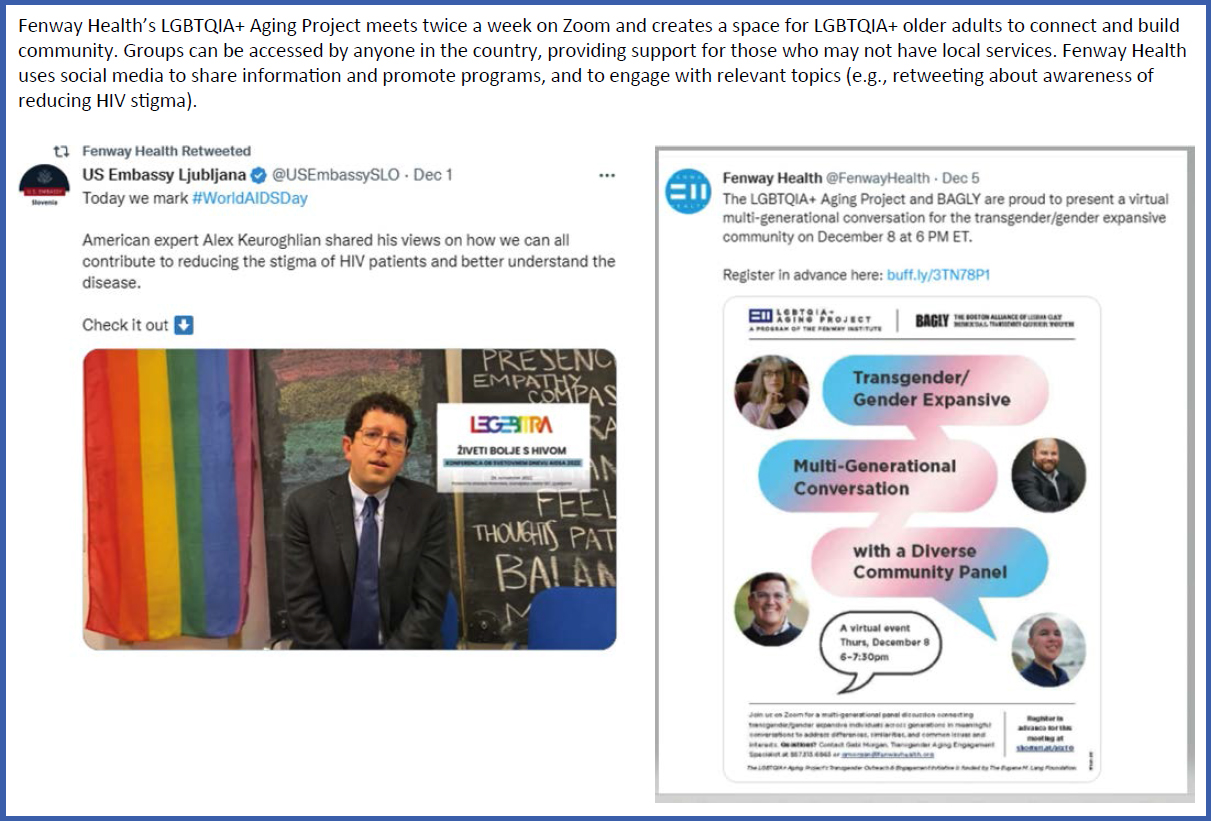
Figure 9. Fenway Health’s LGBTQIA+ Aging Project uses VPI to reach their national audience.
This page intentionally left blank.


