Oil in the Sea IV: Quick Guide for Practitioners and Researchers (2023)
Chapter: A Framework for Advancing Oil Spill Science
A Framework for Advancing Oil Spill Science
Over the past two decades, there has been unprecedented progress in oil spill science, made possible by dedicated funding over a 10-year period available after the DWH spill. Oil spill prevention and source control technologies have dramatically improved. Advances in blowout prevention, use of the response toolbox concept, and development of risk assessment tools are a few examples of more effective, efficient, and holistic response operations.
Great progress has also been made in the science of physical, chemical, and biological processes and reactions that influence the fate of oil in the marine environment. Understanding the acute and chronic effects of oil pollution on marine and estuarine ecosystems is another area of significant development, including new exposure scenarios, toxicity mechanisms of action, environmental modifiers of toxicity, new
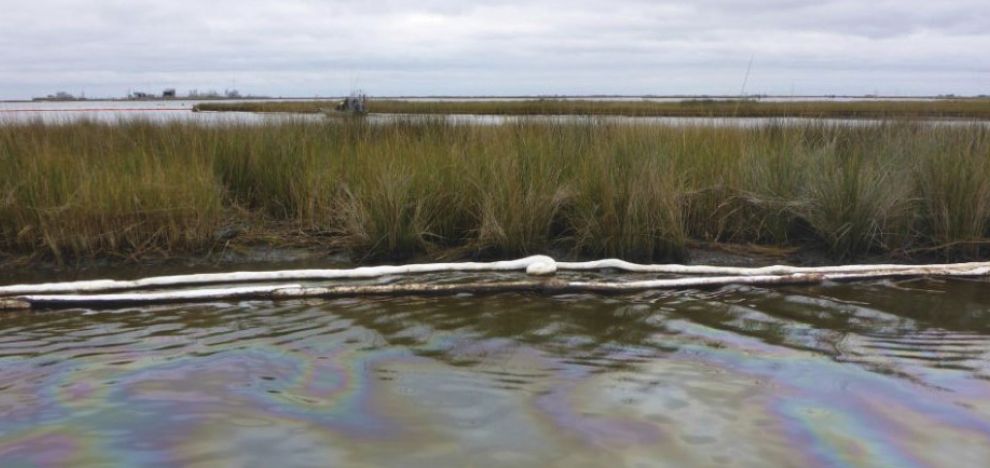
IMAGE SOURCE: National Oceanic and Atmospheric Administration.
affected habitats and species, long-term implications of oil spills, and effects of oil release on human health. To continue this progress, the report’s authoring committee identified a series of common themes for advancing oil spill science.
LONG-TERM FUNDING
Oil spill science has been hindered by a boom-and-bust funding cycle and, consequently, the inability to sustain research and scientific expertise. More sustained funding is needed to support multi-disciplinary research projects that address current knowledge gaps, address new regulatory requirements, and improve response capabilities.
An example of the type of sustained funding that is needed comes from the Gulf of Mexico Research Initiative, a 10-year program initiated after the DWH oil spill. The program resulted in an extraordinary output of both discipline-specific and multidisciplinary research by funding a mix of field, laboratory, mesocosm, and test facility science and related modeling.
HUMAN HEALTH
A healthy ecosystem includes the people working, living, and recreating along its shores and the sustainability of marine resources such as food, energy, and transportation. The government agencies involved in oil spill response should upgrade the priority and attention given to individual and community mental and behavioral effects and community socioeconomic disruptions in ICS decision-making and response processes.
OPEN-WATER EXPERIMENTS
Oil spill research generally takes place in a laboratory or test tank, which cannot simulate all the complexities and variability of field conditions. Controlled in situ field trials using real oils should be planned, permitted, and funded to incorporate multi-disciplinary research focused on important processes as well as response
techniques that do not accurately scale from in vitro or ex situ experiments to in situ conditions.
ARCTIC ECOSYSTEMS
Marine traffic in Arctic waters is increasing with seasonal decreases in ice cover, and increased offshore Arctic oil production is a possibility (see Figure 2). Field experiments in Norway, Canada, Alaska, Svalbard, and Greenland have uncovered complex processes affecting oil in Arctic environments, but utilizing this information in modeling or response requires additional work. A concerted effort to gather information about the fate of oil in Arctic marine ecosystems is needed.
NEW FUELS
New requirements for LSFOs for marine shipping came into effect in 2020, but studies on these oils are extremely limited. Government should fund research on the composition, toxicity, and behavior of new types of marine fuels (e.g., LSFO, VLSFO, biofuels) and petroleum products (e.g., diluted bitumen) so that their fate and effects can be understood and response operations can be planned and executed most effectively to reduce impacts.
BASELINE KNOWLEDGE
A lack of pre-spill data on factors including physical oceanography, critical species, and biogeochemical processes makes it difficult to compare with post-spill observations and assessment of remediation. There is a need to review how pertinent knowledge and data from numerous sources are most effectively assembled, made available, and archived. The committee also suggests establishing funding for collecting data in high-risk areas, and a process for rapid collection in the event of a spill, including in neighboring, unaffected areas which will act as a control.
INTERDISCIPLINARY RESEARCH
Enormous streams of data have been generated from advances in analytical techniques, particularly in petroleum and environmental chemistry and in ‘omics. A free, central, universally accessible and curated repository should be formed to better manage the data sets generated through advanced chemical analyses, ‘omics techniques, geoscience surveys (among others), and especially field and laboratory studies pursuant to oil spills.


