Progress and Priorities in Ocean Drilling: In Search of Earth's Past and Future (2024)
Chapter: 4 Needs for Accomplishing the Science Priorities
4
Needs for Accomplishing the Science Priorities
The history of science is replete with examples of how scientific curiosity and societal need have driven technological advancement, as well as converse examples where innovative technological advancements have spurred scientific inquiry. Throughout all fields of science—ocean sciences are no exception—the swinging pendulum between scientific discoveries and technological innovation has resulted in robust, decadal-scale (or longer) paradigm shifts, significant advancements in knowledge, and economic growth spurred by the joining hands of science and technology.
Scientific ocean drilling in the United States has been dominated by a single platform, from the very beginning of the Deep Sea Drilling Project (DSDP) (with the Glomar Challenger), through the Ocean Drilling Program (ODP), the Integrated Ocean Drilling Program (IODP-1), and the International Ocean Discovery Program (IODP-2) (for the latter three programs, the JOIDES Resolution has been the primary platform). Although significant discoveries and technological advancements have been made with the Chikyu and mission-specific platforms (MSPs), as articulated in this report, the scientific needs of the U.S. and international communities have been most ably served by a single globally ranging platform over a period of decades. Significant technological and analytical innovations have been made throughout these decades, speaking to the “swinging pendulum” model of advancement.
These observations raise the question of whether the committee’s present perspective on vital and urgent priorities is constrained by the scientific ocean drilling program’s long history of using a single platform. Alternatively, is the committee’s view of, and ability to address, these vital and urgent challenges a result of having worked with and developed a platform uniquely suited to addressing these questions?
Chapter 4 examines the science priority areas identified in Chapter 3 through the lens of those components that can be achieved with currently archived materials (e.g., sediment and rock cores, logging and borehole datasets) and other recovery methods (other existing drilling platforms). Furthermore, the chapter describes how the accomplishments of past drilling programs can best be utilized for domestic and international collaboration, and how to ensure effective use of science to develop solutions for the grand challenges that Earth faces, such as resource depletion, the changing climate, and escalating hazards.
REALITIES OF EXISTING AND EMERGING DRILLING TECHNOLOGIES
In 1859, the first crude oil well was drilled in Titusville, Pennsylvania, thereby establishing an entire new, paradigm-shifting industry. Originally driven by economic demand for oil and gas resources, technologies regarding
drilling, and to a lesser extent coring, have been evolving for more than 150 years. Although it was initially land based, the commercial industry has made continual technological and engineering forays into offshore drilling and into progressively deeper (yet nearshore) waters, as demand for cheap and plentiful energy resources has grown.
Scientific drilling is motivated by the pursuit of knowledge and has a far younger history than commercial drilling, beginning only over the past 50 years, as described earlier in this report. Like drilling for energy, scientific drilling has historically been led by the United States. Scientific drilling has benefited from engineering skills and expertise from the oil and gas industry, including the capability to drill at sea with drillships. Industry, in turn, has benefited from the scientific and technological innovations developed via scientific ocean drilling. This mutually beneficial association has opened new horizons for scientific progress. A key critical and insurmountable difference, however, is that scientific ocean drilling requires recovery of sediment and rock cores, whereas industry-based drilling rarely cores. Because of this, the technologies have necessarily diverged.
Existing and emergent technologies can be deployed in pursuit of the five Decadal Survey of Ocean Sciences (DSOS-2) priority research areas identified in Chapter 3 for future scientific ocean drilling. Identifying these technologies requires a matrix of considerations, given the variety of environments and geographies in which scientific ocean drilling is conducted. For example, scientific drilling in very shallow waters (10–100 m) can be achieved through mobile offshore drilling units, such as “jack-up rigs” or semisubmersible platforms, which are commercial industry–based technologies that can be modified for scientific drilling. Deep-water scientific drilling, however, (loosely meaning deeper than 100 m of water, but most commonly meaning many thousands of meters), requires larger ocean-capable vessels equipped with dynamic positioning (to position the vessel in a fixed location above the ocean floor) and thousands of meters of drill pipe available for immediate use on the vessel. Of high relevance to the profound societal challenges regarding climate change, scientific drilling in areas where ice may be encountered and severe weather conditions at high latitudes is routine, requiring unique technologies and expertise. While MSPs have been deployed successfully for some of these shallow-water and/or high-latitude objectives, relatively few MSPs have been deployed throughout the history of scientific drilling (Table 1.1), and only one MSP associated with scientific ocean drilling has operated in the Arctic.
For the United States, the ability to collect long and deep cores by drilling is restricted exclusively to the scientific ocean drilling program. In contrast, the Academic Research Fleet (ARF) overseen by the University-National Oceanographic Laboratory System (UNOLS) can be used to recover sediment from shallower subseafloor depths. Shorter (penetrating to shallow subseafloor depths) devices can be deployed from a range of UNOLS vessels, whereas long piston cores (20–50 m) require larger vessels with the ability to deploy heavy tools (A-frames, winches, and associated engineering requirements, including dynamic positioning). With the retirement of the JOIDES Resolution, there will be no means to piston core deeper than 50 m (at best). Furthermore, the ARF currently has no vessel in its fleet large enough to support deployment of long or giant piston corers that can recover up to 50-m cores (and has no plans to add one).
Less than 5 percent of current scientific ocean drilling objectives would be achievable with the current U.S. vessels of the ARF (which are supported by the National Science Foundation [NSF]) (Figure 4.1). Even restoration of 50-m+ giant piston core capabilities would enable only up to 10 percent of the ocean drilling science objectives. Additionally, to the committee’s knowledge, no privately funded vessel is able to meet these deep-subseafloor objectives. Therefore, at least 90 percent of scientific ocean drilling objectives will not be met if the United States is dependent only on the post-2024 ARF.
Remotely operated seabed lander–based drilling systems, a technology emerging over the past decade that potentially opens new opportunities for scientific ocean drilling, can recover up to 260 m of subseafloor sediment using a multihole operational approach in certain settings and may offer a partial solution to achieving goals of the scientific ocean drilling program. However, the capability to operate these systems would need to be developed for the U.S. ARF, as the current fleet does not have this capability, and such systems cannot host deep observatories (>100 m below seafloor) or perform significant downhole logging. Because of these limitations, whether or not lander-based drilling was available, any scientific objectives that require drilling deeper than 260 m beneath the seafloor could be achieved only using a drilling vessel. There is currently no way to sample those depths with any other configuration of current technology (including modifying existing technology or partnering with industry assets).

SOURCE: Maureen Walczak, Oregon State University; data courtesy of Maureen Walczak and Laurel Childress (Texas A&M University).
Today, neither long (50- to 60-m) giant piston coring nor lander-based drilling can be deployed from a vessel in the ARF; some combination of investment in the infrastructure and the capabilities of the vessels themselves would be required to use coring technology. Both technologies are available “off the shelf” and can be deployed from sufficiently large, general-purpose oceanographic research vessels, as well as commercial platforms such as “mud boats,” with required modifications to those vessels. However, the modifications are likely to be of the scale that would cost tens of millions of dollars and, under ideal circumstances, would recover only soft materials from roughly 50 to 250 m below the seafloor (50 m for giant piston cores or roughly 250 m for lander-based recovery), which would render many goals of the scientific priority areas unachievable. Additionally, hole diameters for at least some lander-based drilling systems can be smaller than standard holes drilled by the JOIDES Resolution, which could impact core recovery and the ability to install subseafloor observatories.
Thus, with the decommissioning of the U.S.-funded drilling vessel, most of the global ocean subseafloor will no longer be accessible using the existing U.S. ARF (Figure 4.2). In addition, deep hard-rock cores, borehole

SOURCE: Ross Parnell-Turner and Anthony Koppers.
observatories, and a host of other measurements would not be completed. In this context, it is important to recall that the JOIDES Resolution could be operated in some capacity until 2028, when its permit (Environmental Impact Statement) expires. A gap in drilling capability will impede achievement of multiple science goals (Chapter 3). It will also impact the level of expertise retained in the workforce, across career stages and disciplines, requiring decades to rebuild. To the extent that it remains a viable option operationally and financially, the JOIDES Resolution could serve as an MSP in the near term.
OPPORTUNITIES FOR USING EXISTING CORES, BOREHOLES, AND DATA
Opportunities exist for using available assets, including collected cores, data, and other samples, to continue to accomplish groundbreaking and essential scientific research. However, these opportunities will not replace the need for drilling technology to collect new cores and develop new observatories from an operating vessel.
A holistic approach to understanding the scientific priority areas outlined in Chapter 3 includes strategic use of existing archives along with targeted drilling for new records.
Existing Data, Core Archives, and Borehole Observatories
In line with current NSF policy, all data collected as part of the scientific drilling program are shared openly. Sharing of data is critical for the community to continue to thrive and learn from what has already been collected, especially if there is a time gap between when new cores are collected and/or observatories are installed or occupied. While issues arise with using existing cores, such as deterioration of quality core material, there is value in using existing cores, supporting data, and other samples for further study and analyses. In fact, given adequate funding (primarily but not exclusively from NSF), the scientific ocean drilling community can expand the use of existing materials.
Available assets and their limitations include the following:
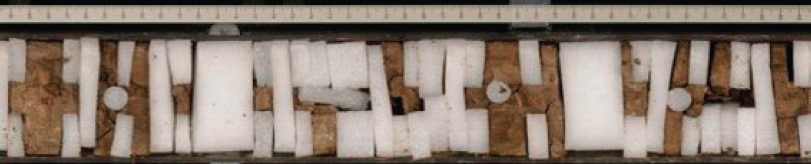
- Cores: Approximately 150 km of collected core from all drilling platforms are stored in each of three locations: Gulf Coast (United States), Bremen (Germany), and Kochi (Japan), for a total of around 450 km. Approximately one-third of the total core length is appropriate for high-priority science. Cores appropriate for high-resolution paleoceanographic studies are critical for understanding the dynamics of rapid climate transitions and feedback. However, such cores, especially those of high scientific and societal interest, are quickly depleted by use (e.g., Figure 4.3). Additionally, cores taken by the legacy programs DSDP, ODP, and earlier expeditions of IODP-1 are now dried, and some are contaminated by mold (a natural consequence of long-term storage), which makes obtaining chemical data from these older sediments challenging.
- Microbiology samples: Approximately 1,300 samples exist that are frozen for preservation for molecular analysis. However, freezing commonly limits usability in future analysis, and past experience has highlighted challenges in storage. For example, frozen samples are not suitable for determining microbial activity or rates of activity and are unsuitable for any potential cultivation work. While many biological analyses can be carried out using frozen materials, neither physiological nor direct metabolic studies can be carried out with frozen materials. Such efforts require fresh material.
- Data (measurements, imagery, and metadata): Data include collecting standardized measurements of cored material and those collected via logging the drilling holes. There are approximately 1,000,000 unique measurements per drilling expedition, and around 700 core images and 700 X-ray images per kilometer of each existing core. There will always be issues with data quality, resolution of the time record, calibration, and combining datasets. Continued support for data stewardship activities is critical to handle issues related to data quality, resolution of the time record, calibration, and combining datasets.
SOURCE: JOIDES Resolution Science Operator.
- Instrumented boreholes: Instrumented boreholes provide 10–50 times the sensitivity of bottom-mounted sensors for many critical measurements and are highly valuable assets that can be used for key studies in certain areas of oceanography beyond geological interests (e.g., geochemistry, microbiology, hydrogeology). Approximately 50 active borehole observatories exist, but few transmit data in real time, and they require revisitation to install/reinstall apparatus and/or download data. Additionally, about 90 inactive borehole observatories are ready for reentry and reinstrumentation by a vessel, if determined practical and feasible.
What Can Be Achieved With Existing Data, Core Archives, and Borehole Observatories
Legacy Asset Projects
A new approach to collaborative research has been proposed by the scientific ocean drilling community, with the first call for proposals for Legacy Asset Projects (LEAPs) issued in October 2023 by the IODP Science Support Office. LEAPs encourage exploration of archived cores and existing samples, without requiring new drilling. The objective of the proposed LEAPs program is to maximize the scientific value of legacy assets already collected from scientific ocean drilling while addressing the 2050 Science Framework (Koppers and Coggon, 2020). LEAPs could be thought of as “virtual expeditions,” and they also enable big data analytics. However, it is important to note that at the present time, no funding is dedicated to support proposed LEAPs projects.
Providing a specific funding call to analyze legacy data and cores is an opportunity for NSF to support projects that conduct multidisciplinary integration, synthesize existing data, and explore data in new ways. It has the potential to stimulate future drilling expeditions and serve as an incubator for new ideas. Funding LEAPs will encourage involvement and participation from a broad community with potential to involve minoritized and/or historically excluded identities, leading to diverse science parties and opportunities for early-career scientists. LEAPs support may also increase visibility or reenhance outcomes of existing projects and the overall scientific contribution of scientific ocean drilling. If funded, LEAPs provide a new and flexible mechanism for large, multidisciplinary, community-driven research efforts, maximizing the return on legacy assets of past scientific ocean drilling and strengthening the impacts of past funded research.
However, the science that can be done through LEAPs is not a replacement for recovering new core and sample assets in the future, given the state of the assets that exist today. LEAPs suffer several limitations, two of which are the inability of stored material to address many science questions of urgent and vital high-priority areas, as identified in Chapter 3, and that some of the most important core materials have been (appropriately) depleted by use and yet remain in high demand (thus new material is required).
CONCLUSION 4.1 While a funded LEAPs initiative can augment drilling for newly recovered material, it is not a long-term replacement of drilling capability. LEAPs provide an opportunity to maximize the use of already acquired material and data and foster discovery and innovation. An ideal scientific drilling program could include a robust LEAPs program combined with recovery of new subseafloor cores and installation of borehole observatories that address the five high-priority research areas.
Table 4.1 summarizes what can and what cannot be done using existing assets, organized by the five high-priority areas identified by this committee.
Open Data Sharing
The universe of data associated with scientific ocean drilling includes data gathered onboard the drilling platform during an expedition, data published in the scientific literature resulting from research conducted after an expedition (and sometimes decades later), as well as borehole data. Even though the data are considered broadly similar, they vary in formats because they were collected using past technology. While funding use of legacy assets is important, it is equally important that the metadata and data collected, regardless of type or source, be findable, accessible, interoperable, reproducible (FAIR), and shared in a timely manner.
TABLE 4.1 High-Priority Science Areas That Can and Cannot Be Addressed Using Existing Assets
| Priority Areas for Future Scientific Ocean Drilling in This Report (DSOS-2) and Their Available Legacy Assets | What Science Areas Can Be Addressed with Legacy Assets? | What Science Areas Cannot Be Addressed (or Are Significantly Limited) with Legacy Assets? |
|---|---|---|
| General/Cross-Areas | Community-driven, collaborative, multidisciplinary research. Big data analytics on a wide range of subseafloor standard measurements (e.g., physical properties, petrophysics/logging, paleomagnetic data). Large-scale “syntheses of science” studies (i.e., producing topical review papers) that integrate data across multiple expeditions/boreholes, addressing global or regional geographies and time intervals. Development and testing of new proxy methods (that are not dependent on ephemeral properties). Undergraduate and graduate education and training on materials and methods used in scientific ocean drilling research to help keep early-career scientists engaged with scientific ocean drilling. |
High-resolution, sample-intensive studies for cores that have already been heavily sampled (e.g., many cores include recovered records of the Paleocene–Eocene thermal maximum [PETM], a very high CO2 world, but the intervals of primary interest [see Figure 4.3] are already heavily sampled). Comprehensive studies of igneous and metamorphic rocks would not be possible because very little repository material of these rock types is available. Studies of challenging rock types, such as those in fault zones, because little repository material of such intervals is available from locations other than those along the Japan margin. Real-time monitoring of fault motion using existing borehole instruments. Microbiology studies on living microbes. Analyses that depend on ephemeral properties (e.g., pore water, organic carbon). Coordinated land–sea studies, because existing assets were not necessarily taken from locations best positioned for linking to adjacent continental records (which may, themselves, not be available yet). |
| Ground Truthing Climate Change Legacy assets available: 400–500 km of core, but intervals of high scientific and societal interest (e.g., transient climate states) are a small portion of the total core holdings, have been poorly recovered in existing cores, or already have been sampled extensively. Some geographic gaps (e.g., equatorial transects, midlatitude transects, only one drilling site in the Arctic Ocean). |
Improve understanding of regional patterns of climate change, particularly during warmer intervals, if using proxies that do not degrade after cores are taken. Coordinate with Earth system modelers to provide ground truth data on possible directions and magnitudes of system feedbacks. Develop and apply new age-dating techniques. Continue to apply multiproxy approaches across a range of temporal and spatial scales. Conduct/support research specifically designed to synthesize existing but separate proxy datasets into multiproxy datasets. |
Evaluate relationships between ice sheet extent and various aspects of the global carbon reservoirs and carbon cycle, necessary to inform climate models. Identify new climate “tipping points” that requires synchronous, high-temporal-resolution records from multiple climatically/oceanographically sensitive regions. Identify decadal- to millennial-scale regional climate variability, which document lead/lag relationships on high-resolution timescales useful for predictive models. Track climatic changes and their effects (e.g., aridity, seasonality of precipitation) from land to sea by coordinating studies in both regions, limiting research progress on societally relevant regional scales. Apply any paleoclimatic proxies that use materials subject to degradation after cores are taken (e.g., organic-based proxies). Address emerging questions regarding rates of future climate change in the mid- or high latitudes, and in ocean gateways. |
| Priority Areas for Future Scientific Ocean Drilling in This Report (DSOS-2) and Their Available Legacy Assets | What Science Areas Can Be Addressed with Legacy Assets? | What Science Areas Cannot Be Addressed (or Are Significantly Limited) with Legacy Assets? |
|---|---|---|
| Evaluating Marine Ecosystem Responses to Climate and Ocean Change Legacy assets available: 400-500 km of core, but intervals of high scientific and societal interest (e.g., responses to transient climate states, ocean acidification, biodiversity stressors and natural experiments in changing productivity/oxygenation/nutrient supply) are a small portion of the total core holdings, have been poorly recovered in existing cores, have already have been sampled extensively, or have been affected by chemical reactions during core storage which degrade the integrity of carbonate fossils and molecular fossils (biomarkers). Some geographic gaps (e.g., equatorial and midlatitude transects; only 1 drilling site in the Arctic Ocean). |
Conduct/support research specifically designed to integrate data across different paleoecology fossil groups (e.g., molecular fossils, carbonate and siliceous mineralized fossils, organic-walled marine and terrestrial fossils). Develop/expand species-level databases of Cenozoic planktic and benthic fossil occurrences useful for macroecological and macroevolutionary studies on species’ responses to climate and ocean change. Improve understanding of global and (some) regional ecosystem responses to climate and ocean changes. Examine land–sea changes in ecosystems from palynomorph fossils (e.g., terrestrial pollen and spores) transported and preserved in ocean sediment cores. |
Conduct studies of long-term ecosystem responses from marginal seas to open ocean settings where drilling cores (e.g., near- to offshore site tracks; longitudinal site tracks) do not exist, resulting in contextual gaps when evaluating ecosystem variability. Design new studies of ecosystem responses at decadal to millennial scales, which would require high-temporal-resolution records that are not available in the legacy assets. Address new questions of ecosystem responses in equatorial, some midlatitude, and high-latitude regions (especially the Arctic) because there are few records from these settings, resulting in contextual gaps when evaluating ecosystem variability. Studies involving carbonate microfossils and molecular fossils given reduced utility (chemical alterations) of older cores (those in storage longer). |
| Monitoring and Assessing Geohazards Legacy assets available: existing cores, borehole observatories, and datasets. However, intervals of high scientific interest may have limited availability, either because they are in the form of lithologies that are difficult to core and recover or because they have already been sampled extensively. Most existing observatories would not be considered state of the art, and only a handful are monitored at anything approaching real time. Geographic distribution of observatories is limited. |
Provide evidence of the magnitudes and recurrence intervals of geologic hazards in areas for which recovered materials (e.g., intervals of fault slip or transported material, and explosive eruption products) exist. Monitor existing observatories for seafloor geodesy. |
Significantly improve understanding of precursor events to geologic hazards (e.g., explosive volcanic eruptions, fast-slip vs. slow-slip earthquakes, tsunami-generating events), impacting efforts toward hazard predictions. Improve dynamic models of these hazards without additional data from in situ monitoring capabilities. Monitor seafloor geodesy (underwater Earth surface deformation and displacement). Observatories necessary for time-dependent hazard assessment do not currently exist but are urgent and relevant in places such as the Pacific Northwest (e.g., Cascadia). Achieve rapid-response capabilities in the case of large subduction-zone earthquakes and tsunamis, such as those threatening Cascadia. Extend records of submarine volcanic eruptions and landslides back in time and improve constraints on slope failure hazards by sampling in situ materials from these zones. |
| Priority Areas for Future Scientific Ocean Drilling in This Report (DSOS-2) and Their Available Legacy Assets | What Science Areas Can Be Addressed with Legacy Assets? | What Science Areas Cannot Be Addressed (or Are Significantly Limited) with Legacy Assets? |
|---|---|---|
| Exploring the Subseafloor Biosphere Legacy assets available: ~1,300 samples, stored frozen. |
Determine what microbes are present in the sampled intervals, although some biological materials are damaged by freezing. | Quantify the microbial ecosystem and identify new species. Conduct more comprehensive spatial and temporal surveys of the seafloor microbiota. Limited to materials on-hand and because this is a newly emerging field, there are large gaps in data. Assess and refine new techniques for sampling, sample storage, and analyses. Assess the chemical reactions that the microbiota were conducting, or their reaction rates (including metabolic activity). This limits the ability to better understand the role of subseafloor microbiota in important global geochemical cycles. Evaluate limits of microbial life (e.g., temperature, pressure, salinity, age). Assess the role of subseafloor microbial life in the global carbon budget, and its associated feedbacks. |
| Characterizing the Tectonic Evolution of Ocean Basins Legacy assets available: <45 km of crustal core; estimated <100 holes have been drilled that penetrate >100 m into basement. For examining ridge processes, legacy assets are dominated by materials from seven holes. Approximately 50 instrumented boreholes (i.e., Circulation Obviation Retrofit Kits [CORKS] and their successors), with only a handful monitored. |
Extend understanding of ocean crust formation at slow-spreading centers, ocean crust maturation and hydrothermal circulation, and hotspot origin and evolution. Understand the role of seafloor crustal processes as natural CO2 sinks. |
Independently assess models for fast-spreading and slow-spreading ridges when only a few of each have been adequately drilled/sampled because of drilling challenges (e.g., scientists cannot use the same data to test a model that were used to develop that model). Develop spatial and temporal large-scale records of rock alteration that could inform the impact of these processes on the past global carbon budgets. Assess the ocean’s potential for capture, removal, and burial of modern CO2 in ocean crust to help mitigate anthropogenic warming. Understand spatial and temporal variability in circulation through, and processes occurring within, the seafloor aquifer, because few observatories are monitored. |
SOURCES: Informed in part by Larry Krissek (JOIDES Resolution Facility Board Chair, personal communication), the Legacy Asset Projects (LEAPs) working group report, and LEAPs proposal guidelines (see https://www.iodp.org/call-for-leap-proposals).
In order to make data sharing a reality, the following actions would be necessary: (a) ensure that the legacy shipboard data remain accessible and comply with the FAIR principles, (b) empower researchers generating postcruise data to improve their data stewardship and management, and (c) catalog and integrate borehole data into the rest of drilling science. For example, the Extending Ocean Drilling Pursuits (eODP) Project (Sessa et al., 2023) has established a workflow for compiling, cleaning, and standardizing scientific ocean drilling records and importing them into existing open-access database systems (e.g., Paleobiology Database, Macrostrat) (Figure 4.4). At the time of publication, eODP had processed all of the lithological, chronological, and paleobiological data from one scientific ocean drilling repository; the compiled dataset contains nearly 80,000 lithological units from 1,125 drilled holes from 422 sites.
Integrating scientific ocean drilling data into existing open-access database systems is an important step toward data management and data sharing. However, additional strategies to further enable more widespread use of the data may also be needed. Partnering with big data experts (perhaps via funding through NSF’s Directorate for Technology, Innovation and Partnerships), may enable the data to be more impactful, if it is shared correctly with use-inspired intent. However, use-inspired sharing will not mitigate issues with data quality, calibrations, and integrating datasets. Specific funding opportunities are needed to support data stewardship initiatives. Paired with meaningful and robust accountability and oversight, great gains in data science could be realized by the scientific ocean drilling community.

SOURCE: Figure and caption from Sessa et al., 2023.
Furthermore, timely sharing of all newly collected data is essential and could be incentivized and valued to the same extent as publications of expedition outcomes. If funding agencies such as NSF establish data stewardship models that acknowledge use-inspired data sharing as valuable as a scientific publication, the culture would shift to one of FAIR and timely data sharing, not only in the scientific ocean drilling program, but throughout the field of ocean science.
Communicating Worth
Ocean drilling research has sparked new scientific and technical knowledge, leading to a better understanding of Earth’s past and present events and systems. The excitement generated by scientific ocean drilling has attracted students from different backgrounds and nationalities to careers in science, technology, engineering, and mathematics; provided them with research opportunities; fostered mentorship; and contributed to the ocean science workforce capacity. It has facilitated interdisciplinary training in Earth and life sciences and marine engineering and technology. Scientific ocean drilling has provided the content for science textbooks, thereby influencing multiple generations of students and future contributors to society. Education and outreach programming aboard vessels, such as the School of Rock program (IODP, n.d.h), have provided professional development opportunities for college and university faculty and K–12 teachers to learn not only what is known about the Earth and ocean system, but how it is known.
While the ocean drilling community has had a clear record of scientific success and transformative impacts on cohorts of educators, students, and early-career researchers, it has fallen short in communicating its worth in other spheres. In general, scientific ocean drilling is largely unknown in the U.S. public and policy realms. The U.S. scientific ocean drilling community is aware of these shortcomings and challenges, based on recent workshop discussions and findings (Chapter 1). While each IODP-2 expedition included outreach components, these were essentially encapsulated one-off endeavors. With such an approach, it is difficult to see how stepwise advances in public awareness of the scientific and societal value of the program can be made. Excellent science communication is an essential component to any large-scale, long-term research endeavor; programwide coordinated, strategic science communication and branding are important to the future of scientific ocean drilling.
In addition to communicating with the public and policy makers, it is also important to communicate the worth of scientific ocean drilling to scientific communities with overlapping research interests and goals. The five high-priority science areas identified in this report intersect with national science and technology priorities and recommendations (see Table 3.3 in Chapter 3). Broadening the sphere of scientific ocean drilling expedition and/or LEAPs proposal writing teams to involve, for example, biological and chemical oceanographers, and climate and ecosystem modelers may strengthen the science and its impact. Interdisciplinary networks and collaborations across scientists and engineers from multiple disciplines are required to address vital and urgent scientific ocean drilling research priorities identified in this report.
ADDITIONAL INFRASTRUCTURE NEEDS
Based on the five high-priority areas for future scientific ocean drilling (Chapter 3), the committee identified key criteria, or parameters, for successful achievement of the scientific goals associated with each area. Rather than recommend to NSF any specific path forward in terms of infrastructure, the committee aimed to identify parameters necessary for successful fulfillment of the vital and urgent scientific themes.
These parameters, listed as the column headings in Table 4.2, are not intended to be exhaustive. Instead, they define the most high-level screening parameters relevant to generating the data scientists need to address the themes, which are listed as rows in Table 4.2. This table does not capture other critically important components of scientific ocean drilling, such as workforce needs or other topics described later in this section.
CONCLUSION 4.2 While some scientific research objectives can be accomplished using existing assets, many science objectives critical to U.S. interests cannot be accomplished without new and/or continuing scientific ocean drilling assets.
TABLE 4.2 Parameters for Accomplishing Vital and Urgent Ocean Drilling Science Research Priorities
| Deep Water >3,000 m water |
Deep Penetration >30 m sediment/rock |
Continuous Records from Cores No unknown gaps in recovery |
Ephemeral Properties Porewater, Magnetics |
Borehole Observatory/Instrumentation Chemistry, Physics, Biology, Geology |
Logging Downhole tools after coring |
Ice Strengthened (not icebreaker) | |
| Ground Truthing Climate Change | R | R | R | R | NN | G/NN | R |
| Records are from all world’s ocean environments | Required for old records AND younger records with high resolution (high sed rates) | Requires multiple recoveries per location with intentional offsets | To document potential alteration of physically recovered material | Cannot replace continuous records from cores | Dependent on target of interest | ||
| Evaluating Marine Ecosystem Responses to Climate and Ocean Change | R | R | G | G | G/NN | NN | R |
| Records are from all world’s ocean environments | Required for deep-time biotic events | Required to infer timing and tempo of ecological response to environmental perturbations | Chemical fluxes upward from the seafloor to the ocean are indicators of and sustain deep life | Dependent on target of interest | |||
| Monitoring and Assessing Geohazards | R | R | R/I | R/I | R | I/R | G |
| Continental margin and trenches, deep-water records of volcanic ash, midocean ridge relationships | Deep seismogenic zones, old records of recurrence | Dependent on target of interest (yes to temporal earthquake records, eruption records), multiple recovery not required | Dependent on target of interest | Very strong requirement for time-dependent hazards assessment | Perhaps could replace continuous core recovery in certain cases | Dependent on target of interest | |
| Exploring the Subseafloor Biosphere | R | R | G/NN | R | I | NN | G/NN |
| Organic matter supply varies with depth and distance from shore | Habitability in low-energy substrates | Depth and age (only) necessary | Very strong requirement | Dependent on target of interest | Dependent on target of interest | ||
| Characterizing the Tectonic Evolution of Ocean Basins | R | R | R/I | G/NN | R | R | I/G |
| Midocean ridges and old oceanic crust are deep water | Establishing crustal boundaries and accessing crust beneath buried sediments | Depending on target of interest (see Logging) | Very strong requirement | Due to challenging recovery of hard rock |
NOTES: G = good if a byproduct of a primary driver; I = important, but not required by itself; NN = not necessary; R = required.
Workforce Needs
The need for a diverse, equitable, and inclusive workforce in ocean science and engineering has been noted in Chapter 1 and is reiterated here as an infrastructure component fundamental to the advancement and future success of scientific ocean drilling. With that underpinning, a trained workforce skilled in the planning, collection, analysis, and archiving of scientific samples and data has been and will continue to be critical to the future of ocean sciences in its entirety; ocean drilling contributes significantly to this goal.
Scientific ocean drilling is in many ways a seedbed for successive generations of ocean scientists. Currently there is generally gender equity in expedition science teams, and early-career scientists and graduate students typically comprise two-thirds of expedition science team members (see Box 2.2 in Chapter 2). Decades of attention to such demographics are yielding positive results, although more progress is needed.
The scientific ocean drilling community has played a leadership role in producing scientists who use an integrated Earth system–based framework. Many of these individuals will have careers in ocean sciences and beyond, may move to industry or government positions, and are tuned to international collaboration. Scientific ocean drilling also employs a highly skilled technological and engineering workforce. As mentioned earlier, the nature of commercial industry–led drilling is quite different from scientific drilling. Scientific drilling to obtain intact cores is extremely difficult, and the capabilities of the current workforce have been developed through generational handoffs of know-how and techniques, which cannot be gleaned from a textbook. A challenge in the post-2024 landscape of scientific ocean drilling will be retaining and/or training the technical workforce to support future drilling efforts.
Management and Staffing Infrastructure
The management and staffing structure for the current IODP-2 program is designed for multiplatform expeditions, a complex international constituency, a global reach, multigovernment funding, and other aspects of an all-encompassing program. It includes core repositories on three continents. A nimble and focused management structure is key to a sustainable and successful future U.S.-based scientific ocean drilling effort. Management and staffing requirements will depend on the nature of the U.S. program design—for example, whether the program uses a U.S. MSP or centers on an acquired (through long-term lease or build) globally ranging dedicated vessel.
For example, the current U.S.-dedicated drillship (JOIDES Resolution) model differs in important ways from a potential future U.S. MSP model. In the current dedicated drillship model, expedition scheduling employs a regional planning approach to save cost and time. Transparent regional planning by facility boards allows proponent teams to develop proposals in support of strategically timed scientific ocean drilling in a particular area of the global ocean. A disadvantage of this approach, however, may be that all expeditions are not contributing to the highest-priority science goals. Instead, they may be designed around what is geographically convenient, not what is most important. MSP operations have more geographic flexibility but are often complex to implement in terms of planning, since the planning is indeed mission specific and involves third parties, which increases complexity (and can decrease efficiency and increase risk and cost). While MSPs provide an opportunity to achieve some of the focused science objectives, fewer science objectives would likely be achieved.
At this critical juncture, it would be appropriate for NSF to undertake an assessment to determine essential aspects of the management and staffing structure, including the advisory structure, of shore-based and platform-based facilities. This section continues with a list of potential generative questions and subjects that could be considered in such an assessment. The committee suggests these questions, not to provide a specific prescription, but rather to signal the scale and scope of management infrastructure considerations.
- Platform options: What are the short- and long-term financial, scientific, operational, and leadership advantages and disadvantages of developing a U.S. MSP-type program versus acquiring a dedicated globally ranging drilling vessel? Are there existing appropriate drilling vessels available for long-term lease or is a new build necessary? What are the advantages and disadvantages of a full industry contract/lead option versus a full NSF or nonprofit partnership option? How could the ARF be enhanced to provide
- additional options, such as for seafloor coring (e.g., via giant piston coring) and drilling (e.g., via seabed lander drilling systems)?
- Platform-based measurements: Which measurements are required to be made on the platform (e.g., ephemeral, required for drilling decisions)? Fewer measurements taken means simpler operations, fewer staff, less travel, less shore-based administrative support, among other impacts. What is the absolute minimum needed for materials recovered? The answer to this fundamental question has a cascade of implications. Where then would these measurements be made? Would an existing U.S. repository be redesigned to provide such laboratory space (similar to how the laboratories associated with the Bremen Core Repository support MSP expeditions)?
- Shore-based scientific and technical support: With fewer measurements made at sea, what is the justification for shore-based, nonrepository staff? Is the current model of supporting expedition project managers (EPOs) (formerly called staff scientists) still relevant (vs. a more distributed model, for example)? Would technicians be needed to support and run a repository-based suite of laboratories; would EPOs be needed to manage LEAPs as well as future drilling expeditions? Which support operations can be contracted to a third party?
- Advisory structure: What is the minimum advisory structure needed? With so many highly ranked research proposals stored in the program, how many new ones are needed? Do the existing proposals already seek to address high-priority science identified in this report and in the 2050 Framework that would fill in critical gaps (temporally and spatially)? Rather than a continually empaneled selection committee, should proposal selection (and other advisory functions) be moved to a biennial (or less frequent) basis? What aspects of the planning process can be moved to a multiyear basis?
The answers to these questions could help trim operations and maintenance costs, which have plagued the ocean sciences community for not only scientific drilling, but other critical infrastructure as well (see Sea Change: 2015-2025 Decadal Survey of Ocean Sciences [NRC, 2015]). Identifying the minimum required program capabilities in order to advance vital and urgent scientific goals would help to facilitate a stable, successful, dynamic, and sustainable U.S. scientific ocean drilling research program.
CONCLUSION 4.3 Scientific ocean drilling is now at a critical juncture; the future of scientific ocean drilling itself and progress on globally urgent and vital research is at risk if U.S. operational leadership and participation end. Some high-priority science questions, with the potential to yield societal benefits, are best addressed and can only be addressed with ocean drilling research. Advancing that research requires consideration for new approaches to address resource, infrastructure, and capacity needs.


