The Role of Seafood Consumption in Child Growth and Development (2024)
Chapter: Appendix D: Supplemental Review of Systematic Reviews
D
Supplemental Review of Systematic Reviews
SUMMARY OF EVIDENCE
The committee was interested in exploring additional health outcomes and toxicity exposures related to fish and seafood consumption that were not included in the commissioned systematic reviews. To address these needs, the two supplemental reviews of systematic reviews were done. To identify relevant systematic reviews, two literature searches were conducted by the National Academies’ Research Center. See Appendix G1 for details on the literature search terms and search strategies. Figures D-1 and D-2 depict the PRISMA flow charts for each literature search. Summary details from the systematic reviews are provided in Table D-1 for additional health outcomes and in Table D-2 for toxicity exposures. Summary details from other reviewed literature are in Table D-3.
___________________
1Appendix G can be found online at https://nap.nationalacademies.org/catalog/27623.
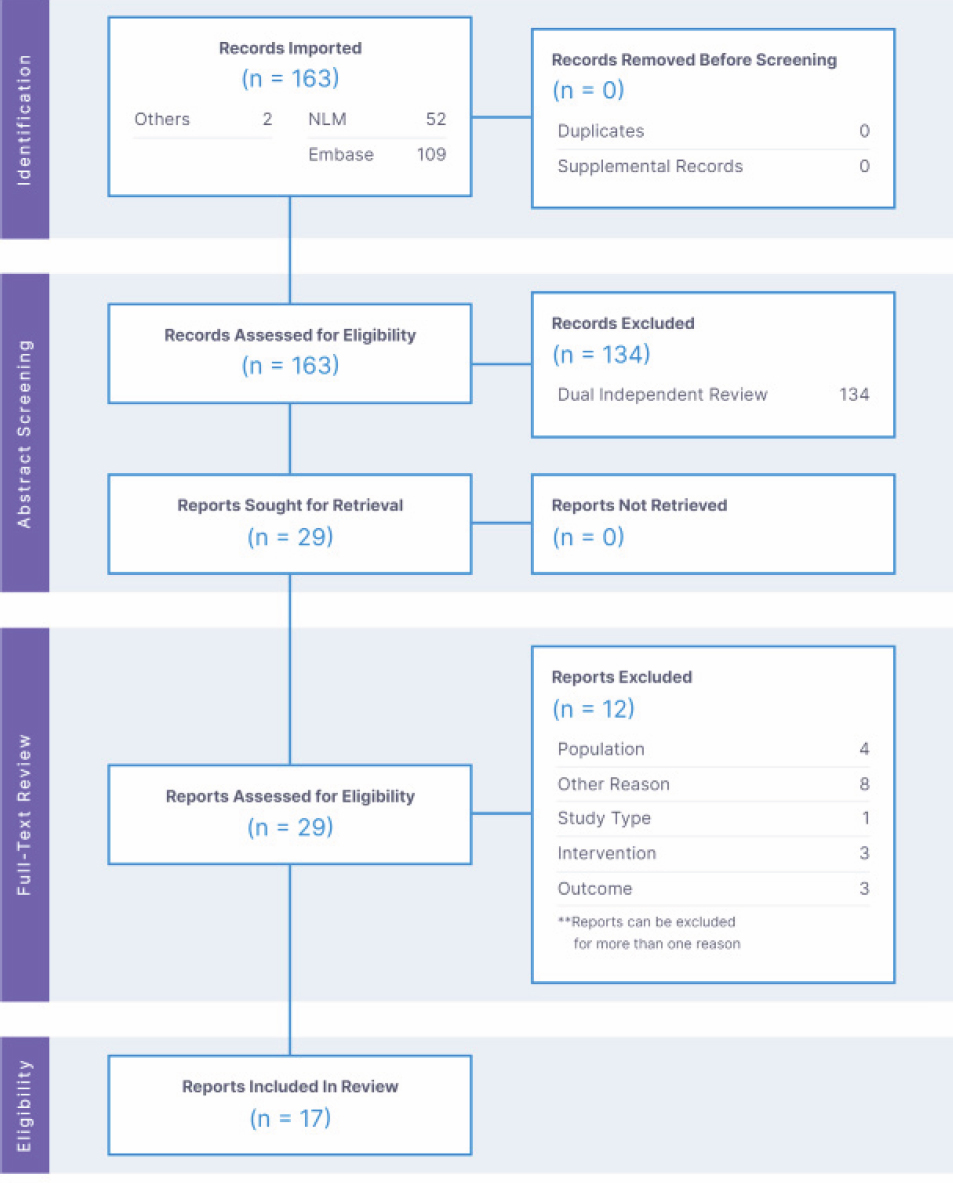
NOTE: NLM = National Library of Medicine.
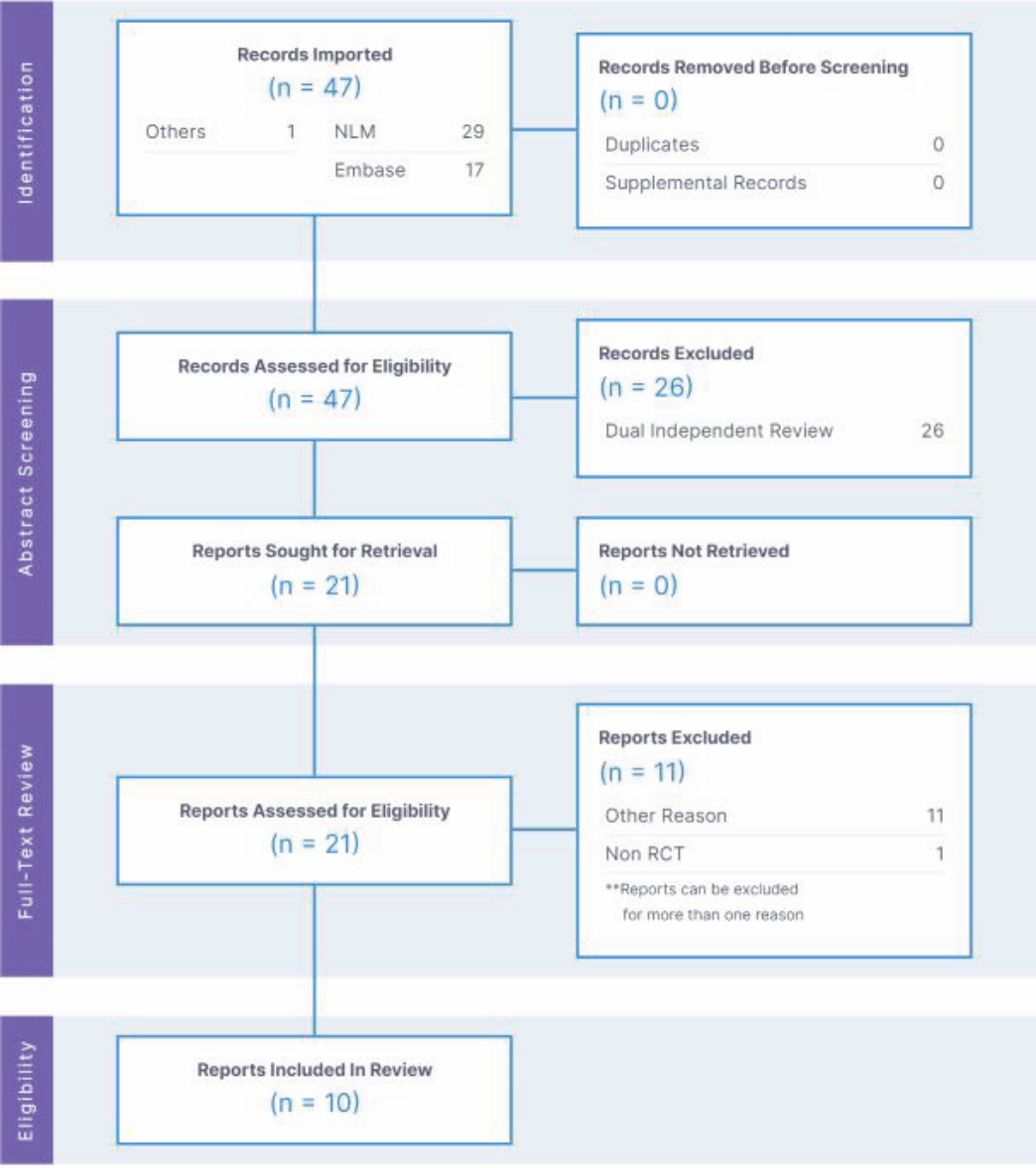
NOTE: NLM = National Library of Medicine.
TABLE D-1 Summary of Evidence from Systematic Reviews on Additional Health Outcomes Related to Fish and Seafood Consumption
| Author, Year Country | Types of Studies Included | Population Measured | Exposure/Intervention | Outcome and Results | Conclusion | AMSTAR2 Overall Quality |
|---|---|---|---|---|---|---|
| Cui and Mu, 2023 Multicountry (high-income countries) | 27 cohort studies ranging from 2000 to 2021 | Risk in early childhood (offspring) from exposure during pregnancy | Maternal fish consumption during pregnancy measured by food frequency questionnaire (FFQ) | Atopic dermatitis Based on 1 cohort study, higher maternal fatty fish consumption of around 35~69 g per week (1.17, 95% CI 1.00~1.38) is a dietary risk factor for atopic dermatitis | Higher maternal fatty fish consumption of around 35~69 g per week (1.17, 95% CI 1.00~1.38) is a potential dietary risk factor for atopic dermatitis | Partially well done/reported |
| Prattico et al., 2023 Australia, United States, Europe, Chile, Japan | Majority were retrospective observational studies (n = 26); published 2012–2022 | Children and adults | Fish as a food trigger (measurement method not reported) | Food-triggered food protein-induced enterocolitis syndrome (FPIES) Approximately 40% of the 42 studies reported that fish was a most frequently reported food trigger; in US-based studies (n = 6), cow’s milk, grain, and soy were the most commonly reported triggers; fish was a commonly reported trigger in the Mediterranean region | Internationally, cow’s milk was the most reported trigger; patterns of the most common triggers varied by country. Fish was one of the most common triggers in the Mediterranean region. | Not well done/reported |
| Lampousi et al., 2021 Europe, North America, Asia, Australia, Africa, South America | 42 cohort and 54 case–control studies | Children | Maternal fish consumption during pregnancy | Islet autoimmunity (IA) Reduced risk of IA in the offspring in relation to maternal fish intake during pregnancy (RR: 0.57, 95% CI 0.32–1.04, I2 = 0%), but no data on a potential association with type 1 diabetes | There was no association, or the evidence was of low certainty | Well done/reported |
| Lampousi et al., 2021 Europe, North America, Asia, Australia, Africa, South America | 42 cohort and 54 case–control studies | Children | Fish intake during childhood | Type 1 diabetes (T1D) No indication of a reduced risk of T1D in relation to childhood fish intake; fish intake (high vs. low/continuous) RR: 3.29, 95% CI 0.94–11.53, I2 = 0%) | There was no association, or the evidence was of low certainty | Well done/reported |
| Author, Year Country | Types of Studies Included | Population Measured | Exposure/Intervention | Outcome and Results | Conclusion | AMSTAR2 Overall Quality |
|---|---|---|---|---|---|---|
| Malmir et al., 2021 United States, Japan (Asia), Europe | 31 studies in systematic review (2 cross-sectional; 2 case–control; 27 cohort) and 24 in meta-analysis (search time frame up to February 2020) | Children 10 years and younger | FFQs to assess dietary intake (N = 22) | Risk of allergic diseases (wheeze, food allergy, asthma, eczema, allergic rhinitis, inhalant allergy, dermatitis) (see article for results) | Greater fish consumption during pregnancy was associated with a 3% reduced risk of wheeze and 25% reduced risk of food allergy in the offspring. In addition, every additional 30 gram per week of maternal fish intake was associated with a 4% decreased risk of eczema in children. | Partially well done/reported |
| Venter et al., 2020 Europe, North America, Asia, and Australia | 17 RCTs and 78 observational (case–control, cross-sectional, and cohort) studies | Pregnant women and offspring | Maternal dietary intake during pregnancy measured via FFQs, unvalidated food questionnaires, and interviews | Wheeze/asthma, allergic rhinitis/rhino conjunctivitis/hay fever, food allergy, eczema, allergic sensitization (see article for results) | Insufficient evidence to provide guidance on diet diversity (no published reports), diet patterns, diet indices, or specific foods, food groups, and macro- or micronutrients that should be consumed or avoided during pregnancy for the prevention of allergic diseases | Partially well done/reported |
| DGAC, 2020 United Kingdom Australia, United States, Portugal | 4 prospective cohort studies | Children ages 2 years and older | Dietary pattern assessed by index or score analysis or factor and cluster analysis | Risk of cardiovascular disease later in life Limited evidence that dietary patterns consumed by children and adolescents reflecting higher intakes of vegetables, fruits, whole grains, fish, low-fat dairy, legumes, and lower intake of sugar-sweetened beverages, other sweets, and processed meat, are associated with lower blood pressure and blood lipid levels, including low-density lipoprotein cholesterol, high-density lipoprotein cholesterol, and triglycerides later in life | Limited evidence | Well done/reported |
| Author, Year Country | Types of Studies Included | Population Measured | Exposure/Intervention | Outcome and Results | Conclusion | AMSTAR2 Overall Quality |
|---|---|---|---|---|---|---|
| Ferrante et al., 2019 European Atlantic coast and Mediterranean Sea | 25 studies (type not specified) | Marine species (demersal fish, pelagic fish, and mollusks) for human consumption | Estimated average daily intake to inorganic arsenic from seafood | Cancer and carcinogenic risk (see article for results) | European populations more exposed to In-As from fish and mollusks are the French, Spanish, Italian, and Greek, with particular regards to children of 3–6 years old, which should minimize the consumption of mollusks to avoid carcinogenic and noncarcinogenic risks | Not well done/reported |
| Middleton et al., 2018 Worldwide | 70 RCTs | Pregnant women and offspring | Omega-3 supplementation during pregnancy | Preterm birth < 37 weeks; early preterm birth < 34 weeks; prolonged gestation > 42 weeks; perinatal death; neonatal care admissions; low birthweight; large-for-gestational age; small-for-gestational age or intrauterine growth restriction; induction postterm; maternal serious adverse events; maternal admission to intensive care; postnatal depression; gestational length; preeclampsia; cognition; IQ; vision; neurodevelopment and growth outcomes; language and behavior; body mass index at 19 years | Only 3/70 RCTs measured omega 3 food/dietary advice only vs. placebo/or no omega 3 fatty acids | Well done/reported |
| Rahmani et al., 2018 Iran | 23 studies (original observational, epidemiological, and/or cross-sectional studies) | Children and adults | Estimated daily intake (EDI) | Noncarcinogenic and carcinogenic risk Incremental lifetime cancer risk (ILCR) of arsenic (As) was 3.21E-5 in Adults and 4.18E-5 in children | Adults and children that consume canned tuna fish in Iran are not at noncarcinogenic risk but have a carcinogenic risk due to arsenic | Not well done/reported |
| Author, Year Country | Types of Studies Included | Population Measured | Exposure/Intervention | Outcome and Results | Conclusion | AMSTAR2 Overall Quality |
|---|---|---|---|---|---|---|
| Rahmani et al., 2018 Iran | 23 studies (original observational, epidemiological, and/or cross-sectional studies) | Children and adults | Estimated daily intake (EDI) | Concentration of metals in canned tuna fish Ranking from high to low concentration of metals based on mean concentrations (µg/g wet weight) were Fe (13.17) > Zn (9.31) > Se (2.23) > Al (1.8) > Cr (1.63) > Cu (1.52) > As (0.38) > Ni (0.33) > Pb (0.24) > Cd (0.14) > Hg (0.11) > Sn (0.1) | Except for cadmium and selenium, concentrations were lower than the limits recommended by the U.S. Environmental Protection Agency, World Health Organization, Food and Agriculture Organization of the United Nations, and Iran National Standards Organization (INSO) | Not well done/reported |
| Kibret et al., 2018 Worldwide | 21 cohort and cross-sectional studies published between 2008 and 2016 | Pregnant women | Adherence to a healthy dietary pattern (intake of vegetables, fruits, legumes, whole grains, and fish) | Hypertensive disorders of pregnancy; gestational diabetes mellitus; preterm birth; low birth weight (LBW); no studies included fish for LBW Preeclamsia: Healthy dietary pattern (high intake of fruits, vegetables, whole-grain foods, fish, and poultry) had significantly lower odds of preeclampsia (OR 0.78, 95% CI 0.70, 0.86; I2 39.0%) others Gestational diabetes mellitus (GDM): other studies found that women who had higher adherence to a healthy dietary pattern had lower odds of GDM (OR = 0.78; 95% CI 0.56, 0.99), with significant heterogeneity detected between studies (I 2 = 68.6%, P = 0.013) Preterm birth (PTB): women who had good adherence to a healthy dietary pattern were shown to have reduced odds of PTB (OR = 0.75; 95% CI 0.57, 0.93), although significant heterogeneity was observed (I2 = 89.6%, P = 0.0001) | Dietary patterns with a higher intake of fruits, vegetables, legumes, whole grains, and fish are associated with a decreased likelihood of adverse pregnancy and birth outcomes (preeclampsia and GDM); however, the evidence is inconsistent | Partially well done/reported |
| Author, Year Country | Types of Studies Included | Population Measured | Exposure/Intervention | Outcome and Results | Conclusion | AMSTAR2 Overall Quality |
|---|---|---|---|---|---|---|
| Sioen et al., 2017 Europe (17 countries) | 49 studies met study inclusion criteria | Pregnant women (10 studies), lactating women (4 studies), infants 6–12 months age (3 studies), children 1–3 years (6 studies), children 4–9 years (11 studies), adolescents 10–18 years (8 studies) | Polyunsaturated fatty acids (PUFAs) source (in children and adolescents) and PUFA content in human milk as a source Did not look at specific outcome | PUFAs source (in children and adolescents): In Belgian children (age 2.5–6.5 years), fats and oils were the major contributors to intakes of LA (23.6%) and ALA (33.1%), followed by cereal products with 17.6 and 13.5%, respectively. Meat, poultry, and eggs were the main contributors to ARA intake (72.0%), and fish and seafood were the main contributors to EPA (83.5%), DPA (57.8%) and DHA (75.7%) intake. In the multicountry HELENA study (adolescents age 12.5–17.5 years), the food group “meat, fish, eggs and meat alternatives” was the largest contributor to the intake of LA (31.7%), ALA (21.5), ARA (54.2%), EPA (92.3%), DPA (94.9%) and DHA (85.8%). PUFA content in human milk: DHA levels in human milk vary considerably among women and are strongly influenced by maternal diet, such as fish and seafood intake | Fish and seafood are main contributors to EPA, DPA, and DHA for Belgian children age 2.5–6.5 years. It is unclear (within the multiple countries of the HELENA study) how much PUFAs among adolescents (age 12.5–17.5) can be attributed to fish intake compared to other sources Inconsistent evidence for PUFA content in human milk | Not well done/reported |
| Zhang et al., 2017 Multicountry | RCTs and prospective cohort studies | Women during pregnancy (1 RCT, 13 prospective cohorts) | Maternal and infant fish intake | Atopy, eczema, allergic rhinitis, wheeze, asthma, and food allergy See article for results | Maternal intake: no significant association with maternal intake of fish/seafood and any of the atopic outcomes Infant intake: There was a 39% reduction of eczema and 46% reduction of allergic rhinitis among infants who had a high intake of fish. There was no significant association of fish intake among infants and atopic outcomes of sensitization (food allergy), asthma, and wheeze | Partially well done/reported |
| Author, Year Country | Types of Studies Included | Population Measured | Exposure/Intervention | Outcome and Results | Conclusion | AMSTAR2 Overall Quality |
|---|---|---|---|---|---|---|
| Ierodiakonou et al., 2016 Worldwide | 146 intervention trials and observational studies | Infants 0–12 months postpartum | Timing of fish introduction | Reduced allergic rhinitis and allergic sensitization Reduced allergic rhinitis: 3 of the cohort studies (13,472 participants) found that early fish introduction (before age 6–9 months) was associated with reduced allergic sensitization to any allergen or food allergens. Reduced allergic sensitization: 4 of the cohort studies (12,781 participants) found fish introduction before age 6–12 months was associated with reduced allergic rhinitis at age 4 years or younger (OR, 0.59; 95% CI, 0.40–0.87; high heterogeneity [I2 = 59%]) or at age 5–14 years (OR, 0.68; 95% CI, 0.47–0.98). In a sensitivity analysis excluding studies at high or unclear risk of bias, the association between early fish introduction and reduced allergic rhinitis at age 4 years or younger was not statistically significant. | No conclusion provided | Well done/reported |
| Best et al., 2016 Various | 13 publications from 10 prospective cohort studies | Maternal intake/child outcomes | Increased prenatal n-3 LCPUFA or fish intake | Incidence of 1 or more IgE-mediated allergic disease outcome in the child (eczema, rhino-conjunctivitis, asthma/wheeze, sensitization) 8 of the studies found protective association between increased prenatal n-3 LCPUFA or fish intake and incidence of allergic disease symptoms in the child | No conclusion due to inconsistent results | Partially well done/reported |
| Author, Year Country | Types of Studies Included | Population Measured | Exposure/Intervention | Outcome and Results | Conclusion | AMSTAR2 Overall Quality |
|---|---|---|---|---|---|---|
| Netting et al., 2014 Multicountry | 43 studies (more than 40,000 children): 11 intervention studies (including 7 RCTs), 27 prospective cohort studies, 4 retrospective cohort studies and 1 case–control study | Children | Whole fish/seafood intake | Eczema, asthma, hay fever, sensitization See article for results | No consistent association between mother’s dietary intake and atopic outcomes in their children. Maternal consumption of Mediterranean dietary patterns, diets rich in fruits and vegetables, fish and vitamin D containing foods were suggestive of benefit. There were few studies that reported on the individual associations of maternal fish/seafood intake and atopic outcomes. | Partially well done/reported |
| Kremmyda et al., 2011 United States, Australia, Saudi Arabia, Taiwan, Japan, Europe | Cohort studies, case–control studies, cross-sectional studies | Children 2–16 years; pregnant women | Fish consumption during infancy or childhood | Atopic or allergic outcomes Maternal intake: positive associations between maternal fish intake during pregnancy and atopic or allergic outcomes in infants/children (protective effect varied between 25% and 95%); 1 study of maternal fish intake during lactation did not observe any significant associations Infant and child intake: inconsistent results on association between infant/child intake of seafood and atopic outcomes; 9 (of 14) studies showed a protective effect; 2 studies found a negative effect; 3 studies found no effect | No conclusion on whether fish consumption during infancy or childhood can be protective; further studies needed | Not well done/reported |
| Author, Year Country | Types of Studies Included | Population Measured | Exposure/Intervention | Outcome and Results | Conclusion | AMSTAR2 Overall Quality |
|---|---|---|---|---|---|---|
| Shams et al., 2011 Country not reported | 18 systematic reviews | Not reported | Maternal fish intake | Atopic eczema Results were unclear | Maternal intake of fish may be associated with a reduced risk of eczema in offspring, although further studies are needed | Not well done/reported |
TABLE D-2 Summary of Evidence from Systematic Reviews on Additional Toxicity Exposures Related to Fish and Seafood Consumption
| Author, Year Country | Types of Studies Included | Population Measured | Exposure/Intervention | Outcome and Results | Conclusion | AMSTAR2 Overall Quality |
|---|---|---|---|---|---|---|
| Raissy et al., 2022 Persian Gulf countries | 30 studies | Children and adults | Concentration of potentially toxic elements in fish from the Persian Gulf (Hg, Pb, As, Cd) | Noncarcinogenic and carcinogenic risks Cancer risk factor of Cd was above 10-4, which is the unsafe limit for Iranian and global consumers | Persian Gulf fish was safe for human consumption concerning Cd (THQ value < 1). In addition, except for Hg in global children consumers, the THQ for other elements was within the safe range (< 1). The total THQ for all consumers was > 1, except for Iranian and global adult consumers. The ELCR for Cd was more than Pb. Findings conservatively indicated that the risk of cancer caused by Pb exposure was within the USEPA safe limit. In the case of Cd, the ELCR for all consumers was higher than the range advised by USEPA. | Not well done/reported |
| Fakhri et al., 2021 Global | 42 articles | Children and adults | Concentration of potentially harmful elements (PHEs) in fillet trout | Carcinogenic risks Adult consumers in China are at the threshold carcinogenic risk, and adult consumers in the other countries investigated are at the acceptable level for carcinogenic risk | Adult consumers in all countries studied were in the acceptable range of noncarcinogenic risk; however, children in Turkey were not in the acceptable range of noncarcinogenic risk. The carcinogenic risk of inorganic As revealed that adult consumers in China were in the threshold carcinogenic risk. | Not well done/reported |
| Author, Year Country | Types of Studies Included | Population Measured | Exposure/Intervention | Outcome and Results | Conclusion | AMSTAR2 Overall Quality |
|---|---|---|---|---|---|---|
| Fakhri et al., 2021 Global | 42 articles | Children and adults | Concentration of PHEs in fillet trout | Noncarcinogenic risks Adult consumers in all the countries are at the acceptable range of noncarcinogenic risk; children in Turkey were at the not acceptable level for noncarcinogenic risk | Adult consumers in all countries studied were in the acceptable range of noncarcinogenic risk; however, children in Turkey were not in the acceptable range of noncarcinogenic risk. The carcinogenic risk of inorganic As revealed that adult consumers in China were in the threshold carcinogenic risk. | Not well done/reported |
| Kato et al., 2020 Global | 64 articles | Shellfish | Bioaccumulation of arsenic in shellfish | No health outcomes reported | None | Partially well done/reported |
| Ferrante et al., 2019 Europe | 7 articles | Fresh fish and mollusks caught in European waters; European populations of all ages | Arsenic in fresh fish and mollusks caught in the Mediterranean sea and the European coast of the Atlantic Ocean | Cancer risk THQ values above the level of risk for high frequency consumers of mollusks (7 meals per week) among adults and children (THQ: 1.056 and 2.320, respectively) from the Mediterranean area, and for medium-frequency consumers (4 meals per week) among children (THQ: 1.332) of the Mediterranean area. Based on In-As concentrations reviewed along European coasts, only children with a high frequency consumption of mollusks have a THQ above the level of risk (1.1) | No conclusion made on carcinogenic or noncarcinogenic risks | Not well done/reported |
| Author, Year Country | Types of Studies Included | Population Measured | Exposure/Intervention | Outcome and Results | Conclusion | AMSTAR2 Overall Quality |
|---|---|---|---|---|---|---|
| Rahmani et al., 2018 Iran | 23 observational, epidemiological, or cross-sectional studies | Children and adults | Concentration of 11 metals in canned tuna and estimated consumption per capita | Estimate of noncarcinogenic risk, total target hazard quotient, and estimate of carcinogenic risk | Concentration of Cd and Se were higher than the standard limits; risk assessment showed that the noncarcinogenic risk from Cd and Se in canned tuna in Iran does not represent a threat to adult and children consumers (THQ < 1). The carcinogenic risk assessment showed that adults and children are at threshold cancer risk due to the As content in canned tuna fish in Iran | Not well done/reported |
| Fakhri et al., 2018 Persian Gulf countries | 9 articles (14 studies) cross-sectional studies | Persian Gulf shrimp | Arsenic and lead levels in shrimp | Cancer risk Overall arsenic levels in shrimp was significantly higher than WHO/FAO guidelines | Consumers are at considerable cancer risk due to arsenic from consumption of Persian Gulf shrimp | Partially well done/reported |
| Vilcins et al., 2018 Country not reported | 69 observational and 2 experimental studies (2 observational studies on seafood) | Infants 0–2 y | Mercury in seafood | Stunting Neither study reported a statistically significant relationship between stunting and mercury, although one did show a nonsignificant trend between mercury level and reduced height for age Z-score | Inconclusive evidence | Not well done/reported |
NOTE: FFQ = food frequency questionnaire; RCT = randomized control trial.
TABLE D-3 Summary of Evidence from Other Reviewed Literature on Additional Toxicity Exposures Related to Fish and Seafood Consumption
| Author, Year Country | Types of Studies Included | Population Measured | Exposure/Intervention | Outcome and Results | Conclusion |
|---|---|---|---|---|---|
| Amerizadeh et al., 2023 Azerbaijan, Russian Federation, Iran, Kazakhstan, and Turkmenistan (bordering countries of Caspian Sea) | 14 studies with 30 different sets of results | Muscles of commercial fish | Commercial fish exposure to PTEs, including lead, chromium, arsenic, cadmium, and mercury | None | None |
| Chiocchetti et al., 2017 Africa, Europe and Asia | Research studies | Seafood products | Total and inorganic arsenic, cadmium, total mercury, methlymercury, lead, in seafood products | Adverse outcomes from toxicity of exposure elements | n/a |
| Collado-López et al., 2022 Global | 152 studies including cross-sectional and longitudinal | Fish and shellfish | Heavy metal content of fish and shellfish | None | None |
REFERENCES
Amerizadeh, A., M. Gholizadeh, and R. Karimi. 2023. Meta-analysis and health risk assessment of toxic heavy metals in muscles of commercial fishes in Caspian Sea. Environmental Monitoring and Assessment 195(4):457.
Best, K. P., M. Gold, D. Kennedy, J. Martin, and M. Makrides. 2016. Omega-3 long-chain PUFA intake during pregnancy and allergic disease outcomes in the offspring: A systematic review and meta-analysis of observational studies and randomized controlled trials. American Journal of Clinical Nutrition 103(1):128-143.
Chiocchetti, G., C. Jadan-Piedra, D. Velez, and V. Devesa. 2017. Metal(loid) contamination in seafood products. Critical Reviews in Food Science and Nutrition 57(17):3715-3728.
Collado-Lopez, S., L. Betanzos-Robledo, M. M. Tellez-Rojo, H. Lamadrid-Figueroa, M. Reyes, C. Rios, and A. Cantoral. 2022. Heavy metals in unprocessed or minimally processed foods consumed by humans worldwide: A scoping review. International Journal of Environmental Research and Public Health 19(14).
Cui, H., and Z. Mu. 2023. Prenatal maternal risk factors contributing to atopic dermatitis: A systematic review and meta-analysis of cohort studies. Annals of Dermatology 35(1):11-22.
DGAC (Dietary Guidelines Advisory Committee). 2020. USDA nutrition evidence systematic reviews. In Dietary patterns and risk of cardiovascular disease: A systematic review, Alexandria, VA: USDA Nutrition Evidence Systematic Review.
Fakhri, Y., A. Mohseni-Bandpei, G. Oliveri Conti, M. Ferrante, A. Cristaldi, A. K. Jeihooni, M. Karimi Dehkordi, A. Alinejad, H. Rasoulzadeh, S. M. Mohseni, M. Sarkhosh, H. Keramati, B. Moradi, N. Amanidaz, and Z. Baninameh. 2018. Systematic review and health risk assessment of arsenic and lead in the fished shrimps from the Persian Gulf. Food and Chemical Toxicology 113:278-286.
Fakhri, Y., A. Nematollahi, Z. Abdi-Moghadam, H. Daraei, S. M. Ghasemi, and V. N. Thai. 2021. Concentration of potentially harmful elements (PHES) in trout fillet (rainbow and brown) fish: A global systematic review and meta-analysis and health risk assessment. Biological Trace Element Research 199(8):3089-3101.
Ferrante, M., S. Napoli, A. Grasso, P. Zuccarello, A. Cristaldi, and C. Copat. 2019. Systematic review of arsenic in fresh seafood from the Mediterranean Sea and European Atlantic coasts: A health risk assessment. Food and Chemical Toxicology 126:322-331.
Ierodiakonou, D., V. Garcia-Larsen, A. Logan, A. Groome, S. Cunha, J. Chivinge, Z. Robinson, N. Geoghegan, K. Jarrold, T. Reeves, N. Tagiyeva-Milne, U. Nurmatov, M. Trivella, J. Leonardi-Bee, and R. J. Boyle. 2016. Timing of allergenic food introduction to the infant diet and risk of allergic or autoimmune disease: A systematic review and meta-analysis. JAMA 316(11):1181-1192.
Kato, L. S., R. G. Ferrari, J. V. M. Leite, and C. A. Conte-Junior. 2020. Arsenic in shellfish: A systematic review of its dynamics and potential health risks. Marine Pollution Bulletin 161(Pt A):111693.
Kibret, K. T., C. Chojenta, E. Gresham, T. K. Tegegne, and D. Loxton. 2018. Maternal dietary patterns and risk of adverse pregnancy (hypertensive disorders of pregnancy and gestational diabetes mellitus) and birth (preterm birth and low birth weight) outcomes: A systematic review and meta-analysis. Public Health Nutrition 22(3):1-15.
Kremmyda, L. S., M. Vlachava, P. S. Noakes, N. D. Diaper, E. A. Miles, and P. C. Calder. 2011. Atopy risk in infants and children in relation to early exposure to fish, oily fish, or long-chain omega-3 fatty acids: A systematic review. Clinical Reviews in Allergy & Immunology 41(1):36-66.
Lampousi, A. M., S. Carlsson, and J. E. Lofvenborg. 2021. Dietary factors and risk of islet autoimmunity and type 1 diabetes: A systematic review and meta-analysis. EBioMedicine 72:103633.
Malmir, H., B. Larijani, and A. Esmaillzadeh. 2022. Fish consumption during pregnancy and risk of allergic diseases in the offspring: A systematic review and meta-analysis. Critical Reviews in Food Science and Nutrition 62(27):7449-7459.
Middleton, P., J. C. Gomersall, J. F. Gould, E. Shepherd, S. F. Olsen, and M. Makrides. 2018. Omega-3 fatty acid addition during pregnancy. Cochrane Database of Systematic Reviews 11(11):CD003402.
Netting, M. J., P. F. Middleton, and M. Makrides. 2014. Does maternal diet during pregnancy and lactation affect outcomes in offspring? A systematic review of food-based approaches. Nutrition 30(11-12):1225-1241.
Prattico, C., P. Mule, and M. Ben-Shoshan. 2023. A systematic review of food protein-induced enterocolitis syndrome. International Archives of Allergy and Immunology 184(6):567-575.
Rahmani, J., Y. Fakhri, A. Shahsavani, Z. Bahmani, M. A. Urbina, S. Chirumbolo, H. Keramati, B. Moradi, A. Bay, and G. Bjorklund. 2018. A systematic review and meta-analysis of metal concentrations in canned tuna fish in Iran and human health risk assessment. Food and Chemical Toxicology 118:753-765.
Raissy, M., M. Ansari, R. S. Chaleshtori, V. Mahdavi, Z. Hadian, J. M. Lorenzo, G. Oliveri Conti, E. Huseyn, and A. Mousavi Khaneghah. 2022. A systematic review of the concentration of potentially toxic elements in fish from the Persian Gulf: A health risk assessment study. Food and Chemical Toxicology 163:112968.
Shams, K., D. J. Grindlay, and H. C. Williams. 2011. What’s new in atopic eczema? An analysis of systematic reviews published in 2009-2010. Clinical and Experimental Dermatology 36(6):573-577; quiz 577-578.
Sioen, I., L. van Lieshout, A. Eilander, M. Fleith, S. Lohner, A. Szommer, C. Petisca, S. Eussen, S. Forsyth, P. C. Calder, C. Campoy, and R. P. Mensink. 2017. Systematic review on n-3 and n-6 polyunsaturated fatty acid intake in European countries in light of the current recommendations - focus on specific population groups. Annals of Nutrition & Metabolism 70(1):39-50.
Venter, C., C. Agostoni, S. H. Arshad, M. Ben-Abdallah, G. Du Toit, D. M. Fleischer, M. Greenhawt, D. H. Glueck, M. Groetch, N. Lunjani, K. Maslin, A. Maiorella, R. Meyer, M. Antonella, M. J. Netting, B. Ibeabughichi Nwaru, D. J. Palmer, M. P. Palumbo, G. Roberts, C. Roduit, P. Smith, E. Untersmayr, L. A. Vanderlinden, and L. O’Mahony. 2020. Dietary factors during pregnancy and atopic outcomes in childhood: A systematic review from the European Academy of Allergy and Clinical Immunology. Pediatric Allergy and Immunology 31(8):889-912.
Vilcins, D., P. D. Sly, and P. Jagals. 2018. Environmental risk factors associated with child stunting: A systematic review of the literature. Annals of Global Health 84(4):551-562.
Zhang, G. Q., B. Liu, J. Li, C. Q. Luo, Q. Zhang, J. L. Chen, A. Sinha, and Z. Y. Li. 2017. Fish intake during pregnancy or infancy and allergic outcomes in children: A systematic review and meta-analysis. Pediatric Allergy and Immunology 28(2):152-161.
This page intentionally left blank.


