The Business Case for Knowledge Management: A Guide (2026)
Chapter: 5 Four Research Objectives

CHAPTER 5
Four Research Objectives
5.1 KM Assessment and Measurement Methods
This section helps guide state DOTs in developing KM assessment and measurement methods relevant to their business practices.
What are the key questions one should ask (or that this section will answer)?
This section will help you answer the following six questions:
- What approaches and frameworks are used to evaluate KM effectiveness?
- What are examples of KM assessment and measurement methods?
- What data collection methods are most appropriate?
- What are the challenges in developing assessment and measurement methods?
- What are best practices for developing KM measurement methods?
- What specific performance metrics or outcomes need to be measured?
- What is the level of accuracy and reliability required? How precise do the measurements need to be, and are the tools robust enough to deliver reliable data consistently?
- How will success be measured?
Is this topic relevant to any DOT?
You may or may not want to spend time thinking about developing KM assessment and measurement methods. Several strategic activities (such as setting clear goals and developing
a KM strategy, ensuring the function is built-to-last by securing executive buy-in and creating policies on how knowledge will be captured, stored, shared, and maintained) need to be completed before thinking about tactical efforts [e.g., selecting appropriate tools and technology (i.e., measurement metrics) to operationalize the strategic activities].
Please revisit your responses to the self-assessment questionnaire you completed in Chapter 2, KM Self-Assessment. You are probably ready to address the issue of assessment and measurement methods in your state DOT if you responded:
- “Strongly agree” to Q8, Q14, and Q15 since the groundwork is laid; it just needs to be codified;
- “Strongly agree” or “Agree” to Q6 and advocacy efforts are institutionalized, well-coordinated; or
- “Strongly agree” or “Agree” to Q2 and Q14, as these are good indicators that the function is firmly established and ready to move from strategic to more tactical activities.
On the other hand, if the following indicators are not in place, then the DOT is likely not ready to adopt and effectively utilize assessment and measurement methods. Indicators of readiness include:
- Strong leadership support and commitment.
- Defined goals and alignment with strategic objectives.
- Adequate infrastructure, tools, and processes in place.
- An organizational culture that values feedback and improvement.
- Engagement and buy-in from employees and stakeholders.
- Availability of resources (time, budget, personnel).
- Willingness to act on the results of assessments.
What does the published literature suggest?
The development of KM assessment and measurement methods for state DOTs involves unique challenges due to the complexity and diversity of their business practices and the unique operational environment of public sector agencies. Research and practical insights from recent literature suggest that developing robust KM assessment methods for DOTs should focus on aligning KM initiatives with organizational objectives, enhancing operational efficiency, and promoting continuous learning and knowledge sharing. Below is a detailed summary of key considerations and methods relevant to KM assessment within state DOTs.
Strategic Alignment of KM with DOT Objectives
Effective KM assessment in DOTs should start with the alignment of KM practices with the organizationʼs strategic goals. DOTs are complex organizations responsible for managing extensive transportation infrastructure, ensuring safety, and maintaining operational efficiency. To measure KM effectively, it is essential to ensure that KM initiatives directly contribute to these objectives. Alignment would include identifying how KM supports operational improvements, decision-making processes, and overall organizational efficiency.
For instance, several NCHRP reports and projects [i.e., NCHRP Report 813, NCHRP Projects 23-21 and 20-44(45)] emphasize the need for KM programs to be directly tied to the DOTʼs mission and strategic initiatives, such as enhancing safety, reducing costs, and improving project delivery times. State DOTs need metrics that can track these improvements and demonstrate how KM contributes to these goals. For DOTs, aligning KM assessment with KPIs related to project delivery timelines, maintenance efficiency, and public safety outcomes ensures that KM is contributing to the core mission.
Use of the KM Maturity Assessment
Another approach to assessing KM in DOTs is the KM Maturity Assessment. This tool helps organizations evaluate their readiness to develop and implement sustainable KM practices.
The assessment examines five critical elements: leadership support, organizational culture, KM strategy, processes, and technology. For DOTs, this type of maturity assessment helps identify areas for improvement in capturing, transferring, and applying knowledge across different divisions such as maintenance, planning, and construction. By periodically conducting KM maturity assessments, DOTs can track their progress in enhancing knowledge-sharing practices, ensuring that KAs are effectively leveraged to meet operational goals. For further information, see Section 2.3 (KM Self-Assessment).
Measurement of CoPs
CoPs play a vital role in DOTs, where expertise and tacit knowledge are often dispersed across different regions and departments. Measuring CoPs involves tracking participation rates, engagement levels, and the quality of knowledge exchange within these communities. For DOTs, where field staff and engineers often work in silos, assessing the effectiveness of CoPs can be a powerful way to gauge how well knowledge is being shared across the organization. Metrics such as the number of active contributors, frequency of knowledge sharing, and the impact of shared practices on operational improvements are crucial for evaluating the effectiveness of CoPs in DOT environments.
Tracking Lessons Learned
One of the essential KM practices for DOTs is capturing and applying lessons learned from past projects. Effective measurement involves not only documenting lessons but also tracking how those lessons are applied in future projects. According to the literature, the process should include identifying key lessons, summarizing findings, and monitoring the implementation of recommendations. Metrics such as the percentage of projects that applied lessons learned, lessons learned captured per project, improvements in project outcomes, and time or cost savings attributed to those lessons are important indicators of KM success.
For DOTs, where projects range from highway maintenance to large-scale infrastructure development, having a formalized process for capturing and applying lessons learned can lead to significant improvements in project management and reduce the repetition of mistakes. Additionally, lessons learned metrics can help DOTs improve safety protocols and compliance with regulatory standards by integrating past experiences into future operations.
Knowledge Continuity Metrics
Knowledge continuity is critical in DOTs, where there is a high risk of losing institutional knowledge due to staff retirements or turnover. The literature stresses the importance of measuring the preservation (knowledge harvesting) and transfer of mission-critical knowledge (knowledge transfer), particularly from senior engineers and managers nearing retirement. Key metrics include the percentage of knowledge successfully transferred to successor employees, the cost savings associated with retaining critical knowledge, and the impact of knowledge continuity on operational efficiency.
In DOTs, knowledge continuity can be measured through the effectiveness of succession planning and the extent to which retiring employeesʼ expertise is documented and made accessible to the next generation of staff. This helps ensure that valuable knowledge about state-specific transportation challenges, regulations, and project management approaches is not lost, thereby maintaining operational continuity and efficiency.
Need for Broad Range of Metrics
State DOTs typically use both quantitative and qualitative metrics to assess KM effectiveness. Quantitative metrics (which address the “what,” “where,” “when,” “how,” and “who”) may include
the number of documents stored, the frequency of knowledge sharing among departments, or the number of employees engaged in KM activities. Qualitative metrics (address the “why”), on the other hand, could focus on the perceived usefulness of knowledge repositories, the effectiveness of knowledge transfer between retiring employees and new hires, and employee satisfaction with KM tools. As a general rule of thumb, if you aim to understand the underlying factors influencing outcomes and gain a deeper understanding of experiences, qualitative metrics may be the way to go. However, if you need clear and objective benchmarks for comparison and decision-making, quantitative metrics may provide the necessary data.
Balanced Scorecard Approach for Public Sector KM
The balanced scorecard (BSC) approach has been adapted for use in public sector organizations, including DOTs, to assess the effectiveness of KM. For DOTs, this could involve linking KM initiatives to measurable outcomes such as the improvement of project delivery timelines, cost management, and public satisfaction with transportation services.
By using the BSC framework, DOTs can assess how well KM practices support strategic goals such as improving infrastructure reliability, enhancing public safety, and achieving regulatory compliance. This method also allows for continuous monitoring and adjustment of KM initiatives based on their performance against established goals.
For more information on balanced scorecards and their use and applicability, visit www.balancedscorecard.org.
Best Practices for Developing KM Measurement Methods
- Stakeholder engagement. Engaging a wide range of stakeholders is essential for developing KM measurement methods that reflect the needs of the entire organization. This includes conducting interviews with KM professionals, gathering feedback from employees at different levels, and ensuring leadership buy-in. Stakeholder input helps tailor KM assessments to the specific challenges and goals of the state DOT.
- Continuous improvement and adaptation. Effective KM assessments are not static; they require continuous improvement and adaptation. As KM practices evolve and new technologies emerge, state DOTs should regularly update their KM measurement methods to ensure they remain relevant. This includes integrating new metrics for emerging technologies, such as AI, and refining existing metrics based on user feedback and organizational changes.
Conclusion
The development of KM assessment and measurement methods for state DOTs requires a comprehensive approach that integrates both quantitative and qualitative metrics and should focus on aligning KM initiatives with the organizationʼs strategic objectives, utilizing maturity assessments, tracking CoPs, lessons learned, and knowledge continuity, and employing frameworks such as the BSC. By adopting these practices, DOTs can ensure that their KM programs effectively contribute to improved project outcomes, enhanced operational efficiency, and long-term knowledge retention.
What can be learned from benchmarking interviews with the state DOTsʼ KM leads?
Here are the relevant findings and observations from interviews conducted with the KM leads from 27 state DOTs and the District of Columbia between December 2023 and February 2024.
Finding 1: Most DOTs had no performance metrics to measure their KM function or capabilities. In most cases, there were no plans to develop metrics in the next year or two.
Finding 2: With respect to the KM Capability Maturity Model, the research team found that most of the DOTs were at the lowest level of the model. This assessment is based on the following observations:
- Most DOTs had no formal KM strategy.
- Most DOTs had no KM road map for 2023 or 2024.
- Most DOTs had no dedicated KM staff.
- Most staff with KM responsibilities spent 90 percent or more of their time working on other, non-KM work; only 10 percent or less of their work time was spent on KM activities. The average amount of time a DOT KM lead spends on KM is only 2–4 hours per week.
- Most DOTs had no job titles with “KM” in them. KM work was performed by individuals who held other positions.
- Most DOTs had no annual funding allocation or no line-item budget for KM activities.
Finding 3: Most state DOTsʼ KM efforts are small, new, and developing. Most KM programs are less than 5 years old.
Finding 4: All DOTs perform some KM activities. However, in many cases, the activities typically classified as KM are not consolidated and performed in a single unit or function that is titled “KM.” They are dispersed throughout the DOTs.
Finding 5: The KM activities undertaken at the state DOTs vary widely from state to state. A list of some of the KM activities that were being actively performed includes:
- After-action debriefings.
- Best practices collection.
- Business process flow maps.
- Central knowledge repository/knowledge library/library.
- CoPs.
- Cross-training.
- Intranet.
- Job books/desk manuals.
- Job shadowing.
- Knowledge transfer workshops (techniques and tools).
- Lessons learned collection.
- Lunch and learns.
- Masterclasses.
- Mentoring.
- SOPs.
- Training plans.
- Wiki (typically an internal intranet page).
Finding 6: There is no uniformity or consistency across the state DOTs with respect to their KM activities. The research team found no single KM activity routinely performed by the majority of state DOTs.
Finding 7: All the DOTs performed some KM activities in other business functions. A few examples of general KM activities performed by other functions and departments include document and file security policies; document and file retention policies; KM systems specification, evaluation, and selection (e.g., enterprise content management system, digital asset management system, and enterprise search); metadata management; taxonomy/ontology development and management; auto-classification; business process documentation; and knowledge capture.
Finding 8: Some of the business processes and activities typically considered a part of KM were not performed in some of the DOTs.
Finding 9: Several states have implemented a KM project or program that could be considered a KM-leading practice in state DOTs. For example, one state had an outstanding knowledge portal, another had a robust process for creating “position books,” a third had expertise profiles, one state had an extensive SOP program, and another had a large set of active CoPs.
Finding 10: Most DOTs have not sought funding for KM staffing and projects. The research team believes this is a result of a lack of clearly defined projects with economic/operational justification.
Finding 11: No DOT had a robust approach to developing business cases for KM investments. Most DOTs admitted that they had not developed formal business cases for capital funding requests for KM. None had attempted to quantify the value of KM in terms of its impact on enterprise DOT metrics, such as shortening a construction projectʼs cycle time, reducing costs, or increasing labor productivity by applying captured knowledge to improve operational decision-making.
How can this be applied to a specific DOT?
After determining your KM assessment and measurement method, please see Section 1.5.2, KM Performance Metrics, for a list of representative KM metrics and a framework for selecting the optimal KM metrics for your DOT.
What is the value to the DOT of addressing this issue or solving this problem?
Measuring your DOTʼs KM performance is essential to its long-term success. By assessing your operations, you can make informed decisions, find ways to improve, and establish accountability in the workplace. Measurement and assessment methods are vital for several reasons:
- Performance monitoring and improvement. These tools help DOTs track and measure performance, allowing them to identify areas of strength and weakness. This helps improve productivity and effectiveness.
- Informed decision-making. Measurement and assessment provide data-driven insights. This allows leadership to make informed decisions based on actual performance metrics rather than assumptions or anecdotal evidence.
- Accountability. By setting measurable goals and using assessment tools, the DOT can hold individuals and teams accountable for their performance. It ensures that everyone is working toward the same objectives.
- Strategic alignment. These tools help ensure that the DOTʼs activities align with its strategic goals and objectives. They facilitate the evaluation of various departmentsʼ or initiativesʼ contribution to the broader organizational mission.
- Resource allocation. Proper assessment helps optimize the allocation of resources, whether human, financial, or technological, by identifying which areas provide the best ROI.
- Compliance and risk management. Many industries require adherence to standards and regulations. Measurement tools help ensure compliance and reduce the risk of legal or financial penalties.
- Continuous improvement. Regular assessment fosters a culture of continuous improvement. This involves making small incremental changes that add up to significant results based on deliberate observation of current processes. It allows the DOT to systematically evaluate its processes and outcomes to innovate and stay competitive.
- Employee development and engagement. Assessment tools can also help with tracking employee performance, identifying skill gaps, and providing feedback. This contributes to employee development, satisfaction, and retention.
What are some recent examples?
The National Center for Applied Transit Technology undertook an effort to evaluate its activities and determine an approach/framework to address assessment and measurement and create relevant performance measures. The metrics were linked specifically to their goals and activities. A three-step approach was followed.
- Phase 1: Current state assessment. This focused on gaining a comprehensive understanding of the organizationʼs activities, current capabilities, practices, and processes, and developing a “baseline” assessment. Information was collected through a document review and key stakeholder interviews from across the organization. This determined what to assess and the approach needed to be taken (strategic framework).
- Phase 2: Performance measurement. This focused on creating robust performance measures, building the appropriate evaluation tools, collecting and analyzing results, and course correcting as required. A list of performance metrics (strategic, operational and administrative) and recommendations for improvement were the key deliverables.
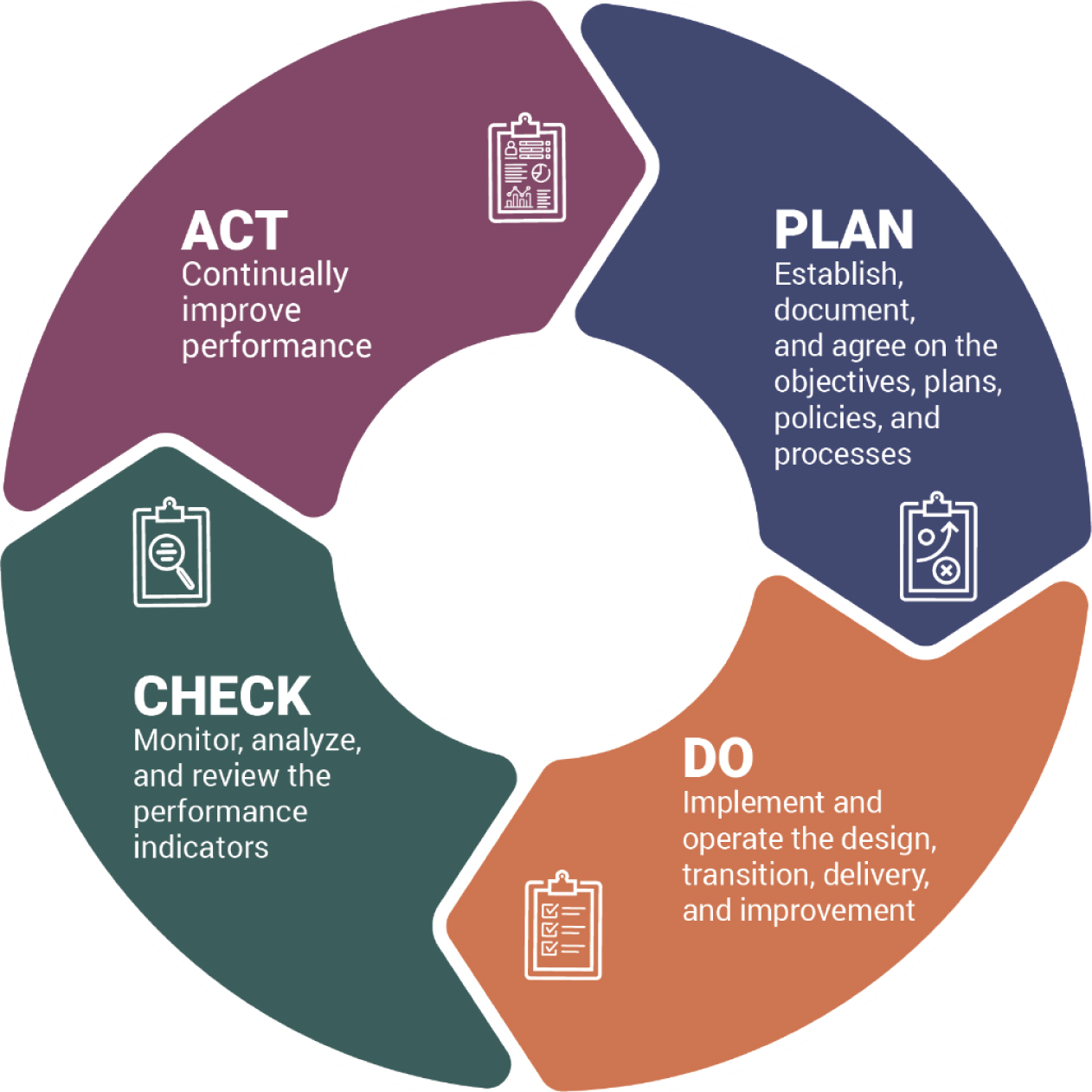
- Phase 3: Continuous improvement. This phase focused on ensuring that the current process of creating, collecting, and evaluating performance measures was optimized from a communication, visualization, and impact standpoint. This introduced the widely used Plan-Do-Check-Act (PDCA) cycle, which is designed to systematically improve processes and solve problems. It provides a structured framework for iterative problem-solving and quality management, as shown in Figure 7.
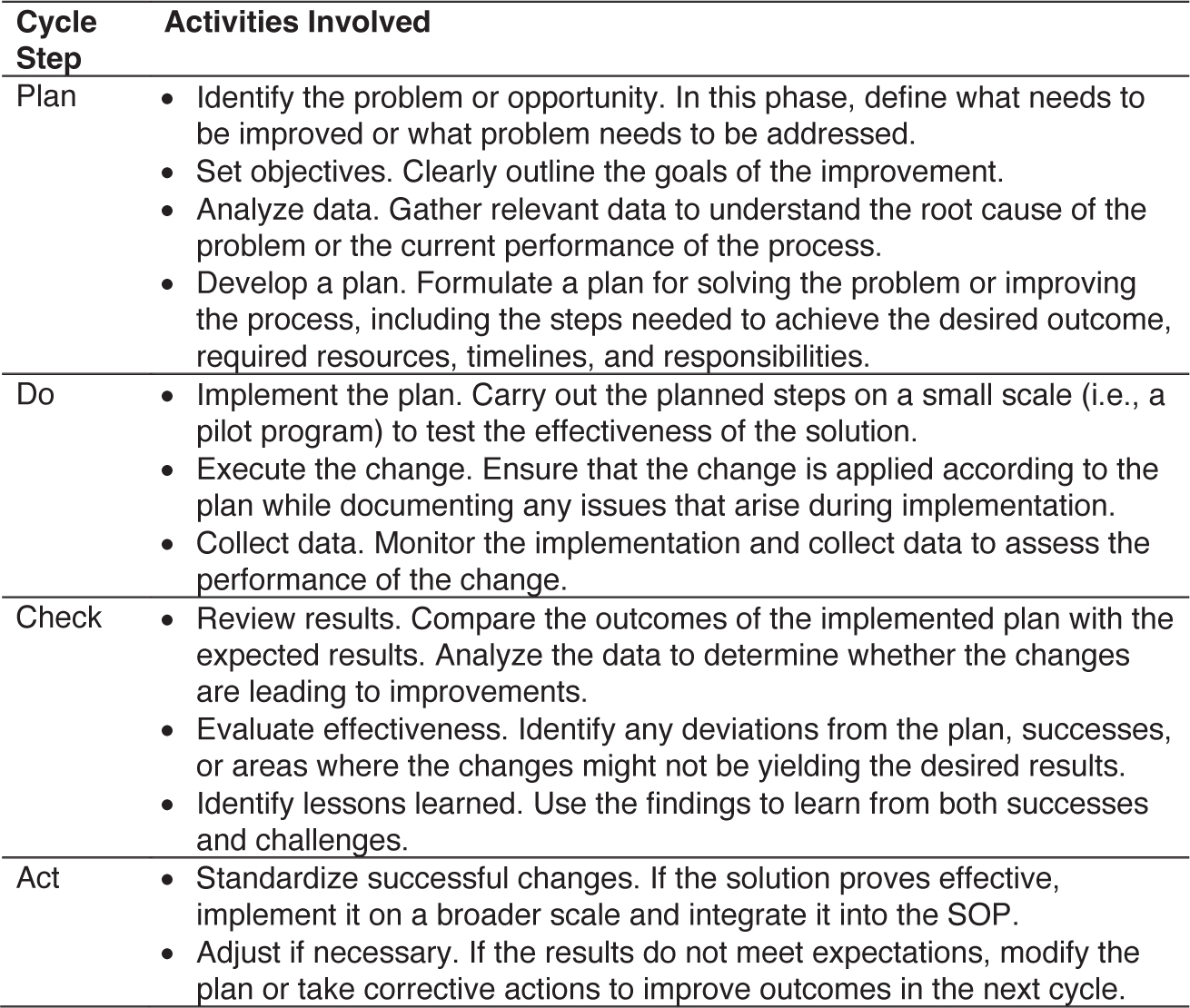
More information about the activities in the four PDCA steps is presented in Table 25.
Repeat the PDCA cycle to continue refining the process and improving performance.
Long Description.
The PDCA Cycle is divided into four segments: Plan, Do, Check, and Act. PLAN: Establish, document, and agree on the objectives, plans, policies, and processes. DO: Implement and operate the design, transition, delivery, and improvement. CHECK: Monitor, analyze, and review the performance indicators. ACT: Continually improve performance.
Long Description.
The column headings are as follows: Cycle Step; Activities Involved. The data given in the table are as follows: Row 1, Plan: Identify the Problem or Opportunity. In this phase, define what needs to be improved or what problem needs to be addressed; Set Objectives. Clearly outline the goals of the improvement; Analyze Data. Gather relevant data to understand the root cause of the problem or the current performance of the process; Develop a Plan. Formulate a plan for solving the problem or improving the process, including the steps needed to achieve the desired outcome, required resources, timelines, and responsibilities. Row 2, Do: Implement the Plan. Carry out the planned steps on a small scale (i.e., a pilot program) to test the effectiveness of the solution; Execute the Change. Ensure that the change is applied according to the plan while documenting any issues that arise during implementation; Collect Data. Monitor the implementation and collect data to assess the performance of the change. Row 3, Check: Review Results. Compare the outcomes of the implemented plan with the expected results. Analyze the data to determine whether the changes are leading to improvements; Evaluate Effectiveness. Identify any deviations from the plan, successes, or areas where the changes might not be yielding the desired results; Identify Lessons Learned. Use the findings to learn from both successes and challenges. Row 4, Act: Standardize Successful Changes. If the solution proves effective, implement it on a broader scale and integrate it into the SOP; Adjust If Necessary. If the results do not meet expectations, modify the plan or take corrective actions to improve outcomes in the next cycle.
What are some next steps to take?
Building an assessment and measurement capability within an organization involves several strategic steps that require thoughtful planning, execution, and continuous improvement. The process typically begins with clearly defining the purpose of the capability and aligning it with the organizationʼs broader goals and objectives. This step ensures that assessment and measurement are not just about gathering data but are purposefully designed to drive meaningful outcomes, such as improving performance, enhancing decision-making, or optimizing processes. Leadership buy-in is critical at this stage; without strong sponsorship from the top, it will be difficult to secure the necessary resources or gain organizational commitment. It is important that leaders not only champion the initiative but also help communicate its importance throughout the organization.
Once the purpose is established, the organization must then develop a framework for assessment and measurement. This involves defining key metrics, benchmarks, and standards that are relevant to the organizationʼs objectives. A robust framework should include clearly defined performance indicators, data collection processes, and methodologies for analysis. Selecting the right tools and technologies is a vital component of this phase, as the DOT will need platforms that can efficiently gather, store, and analyze data. These tools should be user-friendly and capable of scaling as the organization grows, ensuring that the capability can evolve alongside the organizationʼs needs.
After the framework is in place, the organization must focus on building internal capacity. This requires investing in training and development to ensure that staff members have the necessary skills to carry out assessments, interpret data, and translate insights into actionable
recommendations. Establishing a dedicated team or task force to manage the capability is also crucial, as this team will be responsible for maintaining the integrity of the process, ensuring the consistent application of methodologies, and fostering a culture of continuous improvement. The team should work closely with other departments to integrate assessment and measurement into regular workflows, making it a natural part of how the organization operates.
Finally, it is essential to establish a system for monitoring and refining the assessment and measurement capability over time. Continuous evaluation allows the organization to identify what is working and what needs adjustment, ensuring that the capability remains effective and relevant. This iterative process of review and refinement helps sustain the capability in the long term, enabling the organization to adapt to new challenges and opportunities as they arise. Additionally, embedding a culture that values data-driven decision-making and accountability will ensure that the assessment and measurement capability becomes an integral part of the organizationʼs DNA, contributing to its ongoing success.
Is there anything else to know?
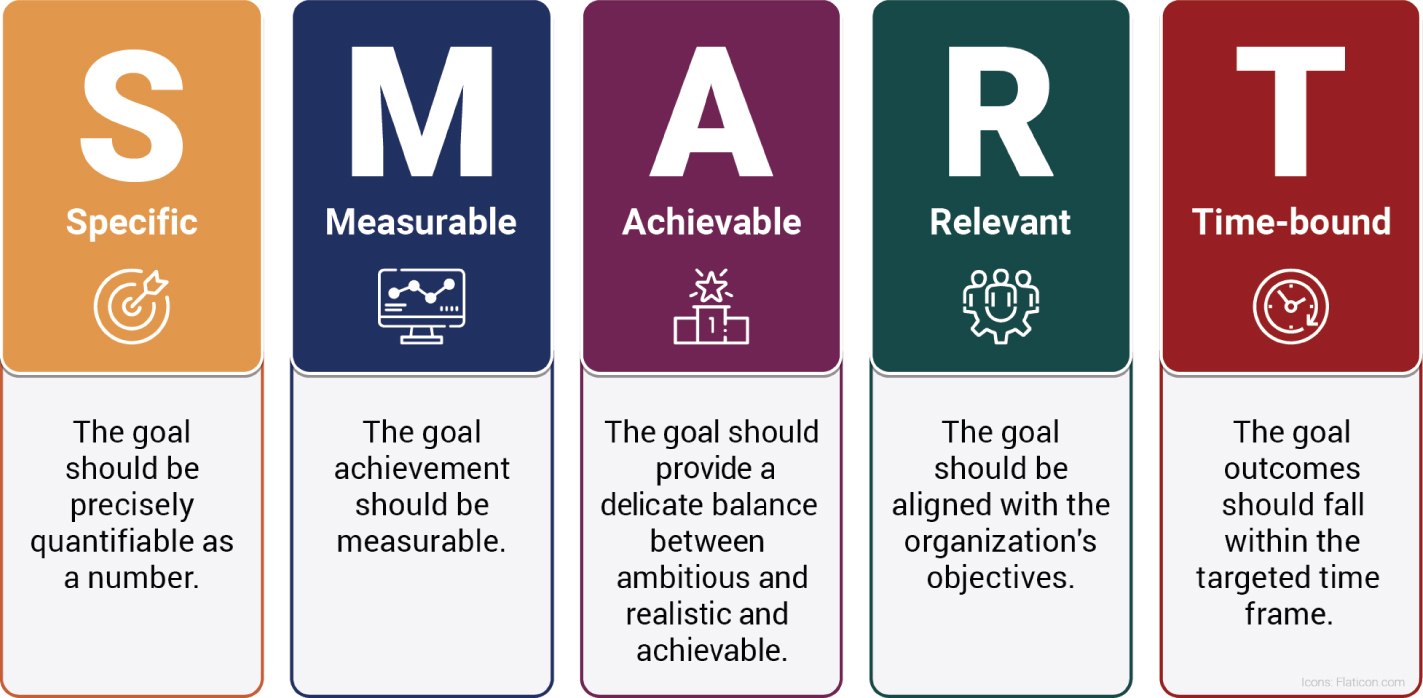
For new KM functions, determining the appropriate method for measurement and assessment is critical. With this in place, the next step is to determine the goals you seek and define them using the Specific, Measurable, Achievable, Relevant, and Timely (SMART) goals model. The five features of SMART goals are:
- Specific. The goal should be clear and precise, avoiding any ambiguity. It answers the “what,” “why,” and “how” questions related to the objective. Example: “Make public transit more attractive by reducing commute times.”
- Measurable. The goal should include criteria that allow for tracking progress and measuring success. It answers “how much” or “how many.” Example: “Reduced average customer transit time by 15 percent.”
- Achievable. The goal should be realistic and attainable, considering available resources, constraints, and conditions. It ensures that the goal can be accomplished. Example: “Train customer service staff to reduce response times in 2025 Q4.”
- Relevant. The goal should matter to the organization and align with broader strategic objectives. It answers whether the goal is worthwhile and aligns with the organizationʼs mission. Example: “Improving customer satisfaction will increase loyalty and retention and reduce commutersʼ dependence on the automobile.”
- Time-bound. The goal should have a clear deadline or time frame for completion, providing a sense of urgency and prioritization. Example: “Increase customer satisfaction scores by 15 percent within 6 months.”
The SMART goals model is illustrated in Figure 8.
Incorporating the SMART goals model into measurement and assessment practices ensures that the organizationʼs efforts are aligned with clear, measurable, and realistic targets that drive performance and growth. It provides:
- Clarity and focus. The SMART model ensures that goals are well-defined and easy to understand, which eliminates confusion and keeps the organization focused on what matters.
- Performance tracking. SMART goals include measurable outcomes, which make it easier to assess progress and determine whether objectives are being met. This supports ongoing evaluation.
- Accountability. SMART goals provide clear criteria for success, making it easier to hold individuals and teams accountable for delivering results within the agreed timeframe.
- Motivation and alignment. Achievable and relevant goals help ensure that employees are motivated to reach them, as the goals are realistic and connected to the organizationʼs broader mission.
Long Description.
The SMART Goals Model consists of five components, namely Specific, Measurable, Achievable, Relevant, and Time-bound. Component 1, Specific: The goal should be precisely quantifiable as a number. Component 2, Measurable: The goal achievement should be measurable. Component 3, Achievable: The goal should provide a delicate balance between ambitious, and realistic and achievable. Component 4, Relevant: The goal should be aligned with the organization’s objectives. Component 5, Time-bound: The goal outcomes should fall within the targeted time frame.
- Efficiency. By setting time-bound objectives, SMART goals encourage teams to prioritize tasks and make efficient use of resources to meet deadlines.
- Continuous improvement. The model encourages regular review and adjustment of goals, fostering a culture of continuous improvement within the organization.
There are several challenges associated with implementing assessment and measurement tools in more mature KM functions. One of the primary difficulties is the selection of appropriate tools that align with the organizationʼs goals and follow the SMART goals model. It is often challenging to find tools that are both comprehensive and tailored enough to capture the necessary data accurately. Too often, an organization defaults to what is easy to capture, but the tool does not provide relevant insights to drive business decisions or operational efficiency.
Another challenge is resistance to change from employees or teams who may be unfamiliar with the tools or skeptical of their usefulness. This resistance can hinder adoption and make it difficult to gather reliable data. This can lead to challenges related to data quality and interpretation. Poor data collection methods or improper use of tools can lead to inaccurate or incomplete data, making it difficult to derive meaningful insights.
Finally, organizations may also face difficulties in ensuring consistency and standardization in tool use across different departments or teams, leading to fragmented or unreliable outcomes. Closely related to this is the challenge of a lack of training and support for users of the tools, which can lead to incorrect usage and, ultimately, ineffective assessments. All these challenges need to be addressed carefully to ensure that measurement and assessment tools deliver real value to the organization.
5.2 KM Connections to Other Organizational Practices
This section helps guide state DOTs in thinking about how to improve the agency leadershipʼs understanding of KM connections to other organizational practices.
What are the key questions one should ask (or that this section will answer)?
This chapter will help you answer the following six questions:
- What are the KM connections to other organizational practices?
- How well does KM align with organizational practices?
- What is the value of KM connections to other organizational practices?
- How can I demonstrate the importance of the connections to agency leadership?
- How well does KM integrate with organizational practices?
- What challenges/roadblocks might I face in establishing and demonstrating connections to organizational practices?
Is this topic relevant to a specific DOT?
You may or may not want to spend time thinking about how to improve the agency leadershipʼs understanding of KM connections to other organizational practices. KM functions in early stages of development tend to focus on building up the core capabilities: collecting, curating, storing, and disseminating information. The next focus would be on optimizing these capabilities (e.g., improving usability and findability, establishing robust taxonomies, and building robust delivery vehicles). When this is accomplished, the function can then look outward and focus on demonstrating to leadership KM connections to other organizational practices.
Please revisit your responses to the KM Self-Assessment in Chapter 2. You are probably ready to address the issue of KMʼs connections to other organizational practices if you responded:
- “Strongly agree” or “Agree” to Q2, and the business need can be tied to specific processes or practices; or
- “Strongly agree” to Q6 if the KM advocates sit outside the formal KM function; or
- “Strongly agree” or “Agree” to Q7, because this indicates that leadership is already attuned to the value of KM.
It is important to remember that this effort involves two distinct parts: (1) establishing the importance of KM connections to organizational practices, and (2) demonstrating this value to leadership. The first step involves identifying the links to the right practices, as this will validate the effort. Key issues to consider include:
- How is knowledge used in critical processes/procedures/frameworks?
- What critical knowledge is required to support decision-making in key organizational processes (e.g., operations, planning, HR, risk management)?
- How does our agency currently capture, store, and share knowledge, and how do these processes align with our strategic goals?
- How does knowledge flow across the organization, and what are the gaps or inefficiencies?
- How does knowledge sharing align with existing workflows?
What does the published literature reveal?
KM can significantly enhance organizational practices within state DOTs by facilitating better decision-making, improving resilience and agility, and addressing workforce evolution challenges. Effective KM helps in capturing and disseminating critical knowledge across the organization, which is vital due to changing demographics, regulatory shifts, and technology advancements. Strategies such as workforce planning, succession planning, and creating learning organizations are essential components of KM that help in maintaining an informed and efficient workforce capable of responding to dynamic changes and public expectations.
KM is pivotal for state DOTs, enhancing efficiency and innovation through systematic management of organizational knowledge. There are several key areas where KM can support organizational practices within the DOT:
Decision-making support. KM systems help DOTs harness institutional knowledge, which improves decision-making processes. By capturing and making findable and usable past experiences and historical data, DOTs can make more informed decisions, reducing risks and costs associated with trial-and-error approaches, and improve overall project outcomes.
Enhanced collaboration. KM facilitates better collaboration within and between departments by providing platforms for knowledge sharing and communications. Tools such as CoPs enable the sharing of best practices and lessons learned, fostering a collaborative culture that spans traditional organizational boundaries. This also includes intranets, discussion forums, group chats, web/video conferencing, and project tracking. Enhanced collaboration leads to more innovative solutions and a more cohesive work environment.
Innovation and continuous improvement. Effective KM practices encourage innovation by making it easier to access and build on existing knowledge. This is particularly valuable in adapting to new technologies and practices that can enhance operational efficiency (i.e., improving transportation systems and services). KM helps streamline operations by standardizing procedures and ensuring that all employees have access to the same information. This reduces redundancy and ensures consistency across the organization. For example, a centralized KM system can provide guidelines and protocols for routine maintenance tasks, which can be accessed by all field workers, leading to more efficient and uniform operations.
Regulatory compliance and risk management. State DOTs face numerous regulatory requirements. KM helps ensure that employees have easy access to current regulations and compliance procedures by providing access to up-to-date information on legal requirements and industry standards, thereby reducing legal risks and ensuring that projects comply with applicable standards.
Supporting performance measurement and improvement. KM systems provide tools for measuring and analyzing performance metrics. This allows DOTs to track progress, identify areas for improvement, and implement changes to enhance performance. Continuous performance improvement is essential for maintaining high standards of service and efficiency.
Workforce development. KM systems support workforce development by ensuring that valuable knowledge and skills are transferred to new and existing employees. This is crucial for maintaining operational continuity in the face of workforce changes such as retirements and new hires. One of the significant challenges faced by DOTs is the loss of institutional knowledge due to employee turnover. KM systems help capture and retain this knowledge by documenting processes, procedures, and expert insights. This ensures that valuable knowledge is not lost when employees retire or leave the organization.
Resource optimization. By centralizing knowledge and making it easily accessible, KM systems help DOTs optimize the use of resources, reducing redundancy and ensuring that information is leveraged across multiple projects and departments. By systematically managing knowledge, DOTs can reduce duplication of effort, avoid repeating past mistakes, and leverage best practices across various projects and teams.
Supporting training and development. KM systems can be used to support employee training and development by providing access to a repository of training materials, manuals, and other educational resources. This helps with upskilling employees and ensuring that they are well-versed in the latest practices and technologies.
Supporting strategic planning and policy development. KM systems provide valuable data and insights that can inform strategic planning and policy development. By analyzing trends and patterns in the data, DOTs can develop more effective policies and long-term plans that address current and future transportation needs.
Enhancing customer service. By providing employees with easy access to information, KM systems can improve customer service. Employees can quickly find answers to customer inquiries, provide accurate information, and resolve issues more efficiently. This leads to higher customer satisfaction and better public perception of the DOT.
It is essential to note that integrating advanced technologies, such as AI and machine learning, with KM practices can further enhance the capability of DOTs to process and utilize large datasets for predictive analytics and more dynamic decision-making processes.
What can be learned from benchmarking interviews with the state DOTsʼ KM leads?
Here are the relevant findings and observations from interviews conducted with the KM leads from 27 state DOTs and the District of Columbia between December 2023 and February 2024.
Finding 12: The KM capabilities of state DOTs are closely tied to the KM groupʼs position within the organization. For example, the interviewees reported the following:
- KM groups positioned within HR tend to focus on organizational practices such as human capital planning, succession planning, recruiting, job shadowing, and exit interviews.
- KM groups positioned within workforce development or organizational development tend to focus on organizational practices geared toward the development and training of newly hired staff, leadership training, career development, external courses, and knowledge-sharing programs.
- KM groups positioned within corporate libraries tend to focus on ensuring that the library has the content resources to meet the needs of the DOT staff and tracking employee expertise and interests.
- KM groups positioned within IT tend to focus on records management, adherence to the Public Information Act (PIA), updating the intranet site, creating and maintaining SOPs, and preparing lists of acronyms, buzzwords, and jargon.
- KM groups positioned in other business functions, such as research and engineering, tend to focus on knowledge capture, retention, and sharing; CoPs; and leveraging technologies such as SharePoint and WordPress for knowledge portals.
Finding 13: The research team did not find a noticeable number of organizational practices incorporated into the KM function from outside its organizational reporting relationship (See Finding 12). None of the interviewees mentioned applying standard business approaches and methodologies to support or enrich their KM programs, such as competitive benchmarking, Six Sigma, design thinking, Agile methodology, and value chain analysis.
How should one think about this topic for their DOT?
The first step is to identify key practices and processes in the DOT that KM practices would provide high value in (and visibility for your function). Logically, this would be in areas that rely heavily on the ability to capture, store, share, and apply knowledge effectively to ensure efficient operations, safety, and compliance (e.g., tracking and management of infrastructure assets such as bridges, roads, and signage). KM is most critical in areas where information continuity, collaboration, and innovation are key. By implementing effective KM systems, state DOTs can improve decision-making, operational efficiency, compliance, and overall service to the public.
Once you have established a list of key practices and processes, the next step is to inventory the KAs across the DOT that will be most useful. These can be divided by the type of knowledge, such as tacit (expertise, skills, and experiences held by employees, which may not be documented and is typically shared through mentoring, collaboration, or informal communication) or explicit (documented information, such as reports, procedures, guidelines, project files, and databases, which are usually easier to inventory).
They can then be organized for better understanding and management. Categories might include technical knowledge (e.g., infrastructure design standards, engineering methodologies, or safety protocols), operational knowledge (maintenance schedules, traffic management procedures, or emergency response plans), policy and regulatory knowledge (environmental regulations, transportation policy documents, or permitting processes), and project knowledge (historical data, project management templates, or lessons learned from past projects).
After documenting and cataloging the KAs (in a central register or database), you can begin to apply KM systems and tools to support DOT practices and processes. Some ways this could be done include:
- Enhancing collaboration. You can leverage KM platforms to facilitate collaboration between planning teams, external agencies, and stakeholders. This ensures that knowledge from various experts is integrated into transportation policies and project prioritization.
- Standardizing processes. By using KM systems to document and standardize project management practices, DOTs can ensure consistency and efficiency in project execution. Lessons learned from past projects are captured and made accessible to project managers to avoid repeating mistakes and improve outcomes.
- Promoting innovation. KM platforms can connect employees with SMEs, researchers, and external partners who are working on cutting-edge transportation technologies, such as smart transportation systems, electric vehicles, and autonomous vehicles. By sharing knowledge, DOTs can more effectively pilot new technologies and scale innovations across the organization.
- Improving decision-making. KM systems can centralize access to transportation data, such as traffic trends, population forecasts, and infrastructure needs. Planners can use these insights to make informed decisions when developing long-range transportation plans, improving the accuracy and impact of these plans.
- Promoting knowledge retention. This involves developing formal programs for knowledge transfer between experienced employees and newer staff. KM systems can facilitate this by organizing mentorship programs, documenting expertise, and creating easy-to-access knowledge repositories. Use KM to document and share tacit knowledge held by long-tenured employees. This can be achieved through interviews, knowledge-sharing sessions, or digital storytelling platforms where employees can record their experiences and insights.
- Minimizing risk. A robust KM system can centralize all compliance-related knowledge, including legal requirements, environmental regulations, and safety standards. This ensures that project teams have access to the latest information for remaining compliant with federal and state regulations. Also, data from past incidents or audits can be captured and analyzed to inform risk management strategies. Knowledge of previous risk factors can help improve safety protocols and reduce the likelihood of future problems.
- Improving data collection. KM systems can store and organize transportation data, such as traffic patterns, accident reports, or maintenance schedules. Analyzing this data through KM tools allows DOTs to identify trends, optimize resource allocation, and enhance service delivery. By integrating KM with decision support tools, DOTs can provide real-time access to actionable insights for project managers and leadership, allowing for data-driven decisions that improve outcomes and reduce costs.
What is the value to the DOT of addressing this issue or solving this problem?
KM supports DOT processes and practices by ensuring that valuable information is captured, stored, shared, and applied effectively across the organization. KM specifically benefits various DOT operations in the following ways:
Improved decision-making and strategic planning. KM systems enable DOTs to collect and organize vast amounts of data from various sources, such as traffic reports, infrastructure
condition assessments, and public feedback. This data is then made accessible to planners and decision-makers, helping them make informed choices regarding transportation projects, policies, and long-term planning. Access to historical data and lessons learned from past projects can significantly improve the quality and efficiency of future planning efforts.
Enhanced collaboration and knowledge sharing. DOTs often involve multiple departments, agencies, and external stakeholders working together on transportation projects. KM facilitates cross-departmental collaboration by providing a centralized repository for information, documentation, and best practices. This promotes the seamless exchange of knowledge between teams, such as engineering, environmental planning, and project management, ensuring that everyone is working with the same information.
Retention of institutional knowledge. As DOTs face employee turnover and retirements, there is a risk of losing critical institutional knowledge. KM systems support knowledge retention by capturing the expertise and experience of seasoned employees and making it available to new hires. This ensures that valuable insights related to regulations, engineering practices, and problem-solving techniques remain within the organization and can be transferred to future generations of staff.
Support for project management and execution. KM helps DOTs improve project management by providing access to standardized procedures, guidelines, and lessons learned from previous projects. Project teams can use KM tools to track project progress, share updates, and ensure adherence to best practices. This reduces the likelihood of errors and inefficiencies, resulting in smoother project execution, timely delivery, and cost control.
Operational efficiency and maintenance. DOTs manage extensive transportation networks that require regular maintenance and monitoring. KM systems enable maintenance teams to access detailed records of past maintenance activities, current infrastructure conditions, and technical specifications. This information helps teams prioritize repairs, allocate resources efficiently, and ensure that maintenance activities are aligned with safety and operational standards.
Training and development. KM systems support ongoing training and development initiatives by offering employees access to up-to-date training materials, manuals, and guidelines. This is particularly important for workforce development in areas such as new technologies, safety regulations, and emerging transportation trends. KM ensures that training programs are consistent across the organization and easily accessible to all employees.
Compliance and risk management. KM helps DOTs stay compliant with regulatory requirements by centralizing information on laws, policies, and standards. This allows DOT staff to stay informed about the latest compliance mandates, ensuring that all projects and practices meet legal and environmental regulations. Additionally, KM systems help manage risks by storing data related to safety incidents, audits, and inspections, which can be analyzed to improve safety protocols and reduce future risks.
Fostering innovation and continuous improvement. KM systems allow DOTs to foster a culture of innovation by promoting the sharing of ideas, pilot project results, and emerging technologies across the organization. This knowledge sharing can lead to the development of new approaches to transportation challenges, such as smart transportation systems, sustainable infrastructure, or autonomous vehicle integration. By encouraging continuous improvement, KM helps DOTs stay at the forefront of innovation.
Crisis and emergency management. In times of natural disasters or transportation-related emergencies, KM systems provide critical support by offering immediate access to emergency response plans, historical incident data, and best practices for crisis management. This enables DOTs to coordinate response efforts effectively and ensure that all stakeholders have the information they need to address the situation efficiently.
Public engagement and transparency. KM supports DOTs in engaging with the public by organizing and making accessible the vast amounts of information collected from public meetings, feedback forms, and surveys. This allows DOTs to track community concerns, respond to inquiries, and incorporate public input into transportation planning and policy development. Additionally, knowledge sharing enhances transparency, allowing DOTs to communicate their efforts and achievements effectively with the public.
In summary, KM provides the backbone for efficient operations, continuous learning, and informed decision-making within state DOTs. By supporting collaboration, innovation, and the preservation of institutional knowledge, KM plays a crucial role in enhancing the effectiveness of DOT processes and practices.
What are some recent examples?
A state DOT undertook a project on improving the management and findability of transportation engineering content. The DOTʼs objective was to enable search and navigation across engineering manuals that contained specific engineering content on hydrology, erosion, roadway design, management of highway runoff, environmental concerns, cost estimation, roadside policy, highway maintenance, and utilities accommodation. A stormwater ontology was developed that helped the team prove that an ontology could classify and document relationships among concepts while also being used to drive auto-classification of engineering content.
The approach to developing the ontology consisted of the following seven steps:
- Perform content analysis using two techniques: text mining and cluster analysis.
- Analyze the results of the content.
- Interview SMEs to confirm the understanding of terms and synonyms, gather feedback on the term set resulting from the text mining and cluster analysis, and add/correct/remove terms.
- Select terms to be used in the ontology to describe the content and relationships among terms.
- Manually develop the ontology.
- Ingest the ontology into the auto-classification system.
- Classify the transportation engineering content based on the ontology.
The project resulted in a robust stormwater ontology that was used to classify and relate content in a corpus of engineering manuals. Users found the tags and the relationships beneficial to their work, specifically when searching for relevant information.
While this is a very technical application of KM tools used to address a pressing need and would generally only be executed by a well-established, sophisticated KM group, activities in support of process and procedures could be much simpler. For example, in the case above, the effort involved KM assisting with organizing information so that it was easier to find and use. A similar task might be accomplished by simply using existing technology (such as SharePoint) and enriching the content through SEO strategies (keyword search optimization), content enhancement techniques (meta tags and schema mark-ups), and user experience improvements (designing a clear, intuitive navigation structure).
What are some next steps to take?
After identifying KM connections to organizational processes and procedures and establishing the value proposition for these connections, the effort now turns to demonstrating this
value to leadership. Demonstrating the value of KM connections to organizational practices at a DOT requires a strategic and results-driven approach. Leadership must see how KM directly contributes to achieving the agencyʼs mission, improving efficiency, and mitigating risks. One of the most effective ways to illustrate this value is by linking KM to key organizational goals such as workforce development, operational resilience, and data-driven decision-making. For example, demonstrating how KM can capture institutional knowledge from retiring employees and streamline onboarding for new hires can show its role in preserving critical expertise and reducing the loss of institutional memory.
Additionally, showing how KM enhances collaboration across departments can be compelling. Many DOTs operate in siloed structures, and KM initiatives that improve knowledge-sharing across planning, engineering, maintenance, and administrative functions can increase efficiency and reduce redundancies. Highlighting specific case studies or success stories—such as how a KM practice improved response time in an emergency situation or reduced costly rework in project planning—can make KMʼs impact tangible. Leadership is also more likely to support KM if it is presented as a tool for risk management, helping to ensure that lessons learned from past projects, safety incidents, and regulatory changes are retained and applied proactively.
Using measurable outcomes can be key to gaining leadership buy-in. Metrics such as time saved in knowledge retrieval, reduction in duplicated work, increased employee productivity, and improvements in decision-making quality can quantify KMʼs ROI. Connecting KM to performance dashboards, strategic planning efforts, and technology investments—such as digital transformation and AI tools—can also reinforce its role as a driver of modernization and efficiency. By continuously aligning KM with leadership priorities and presenting it as an enabler of the agencyʼs long-term success, DOT leadership will be more likely to recognize and support its value as an integral part of organizational effectiveness.
Leadership often responds well to small, successful KM initiatives that show clear, immediate value. Instead of proposing large-scale KM implementation, a DOT can start with a targeted pilot program that addresses a pressing challenge—such as improving knowledge retention in a specific department, streamlining document access for project teams, or enhancing information sharing for emergency response teams. By selecting a high-impact use case and tracking the improvements, leadership can see tangible benefits before committing to a full-scale KM strategy. Highlighting a “quick win” success story, such as reducing information retrieval time by 30 percent or improving collaboration between field staff and central offices, can serve as a compelling demonstration of KMʼs value.
Finally, it is important to remember that connections to organizational processes and procedures require constant care because knowledge is dynamic and deeply intertwined with how an organization functions. These connections need to be constantly monitored to adapt to technological change, support continuous improvement and innovation, ensure accessibility and usability in the face of ever-increasing amounts of data, and guard against tools/processes/procedures becoming outdated and ineffective.
Is there anything else to note?
Using KM to support policies and practices can present several challenges. One of the primary difficulties is ensuring that knowledge is properly captured and retained, particularly when it involves tacit knowledge, such as the expertise of long-serving employees, which may not be easily documented. Without structured processes for gathering, storing, and disseminating the knowledge, critical insights can be lost due to retirements or staff turnover.
Another challenge is knowledge accessibility. Even when knowledge is documented, it may be siloed in different departments or systems, making it difficult for employees to locate and utilize the information when needed. Ensuring that the KM system is user-friendly, well-integrated,
and searchable across the organization is crucial, but often difficult to achieve. It is also important to note that knowledge needs to be accessible per the Americans with Disabilities Act (ADA) and related federal guidelines that ensure information is accessible to individuals with disabilities.
Additionally, there can be resistance to sharing knowledge, as some employees may view their knowledge as a source of personal value or feel overburdened by the process of documenting and sharing it. The key message to convey is that an employee enhances their position by sharing knowledge, not by hoarding it.
There is also the challenge of keeping knowledge up-to-date. Policies, regulations, and best practices often have a defined shelf life and can evolve, and ensuring that the KM system reflects the most current information requires ongoing maintenance.
Finally, aligning KM with organizational culture can be a challenge, especially if the organization does not inherently value collaboration and knowledge-sharing. Successfully overcoming these challenges requires strong leadership support, clear communication, and a culture that encourages continuous learning and openness.
5.3 Organizational Placement of the KM Function
This section helps guide state DOTs in thinking about where to position the KM group or function within the organization.
What are the key questions one should ask (or that this section will answer)?
This section will help you address the following six questions:
- Where in the organization should the KM function be placed to best align with the DOTʼs overall strategy and objectives?
- Where in the organization should the KM function be placed to have the greatest access to the DOTʼs KAs?
- Where in the organization should the KM function be placed to have the greatest access to senior leadership and decision-makers?
- Where in the organization should the KM function be placed to secure the appropriate resources, such as funding, talent, and technology?
- Where in the organization should the KM function be placed to achieve cross-departmental collaboration around knowledge capture and reuse?
- What are the potential benefits and risks of placing this function in different parts of the organization?
Is this topic relevant to a specific DOT?
You may or may not want to spend time thinking about the optimal organizational placement of your KM function within your DOT. It could be vitally important to think about organizational realignment if you are beginning to set up your KM function and can position it anywhere in the organization, or if you are several years into your KM activities and find that organizational or cultural barriers, executive sponsorship, or funding issues are inhibiting your impact or growth.
Please revisit your answers to the KM self-assessment questionnaire you completed in Chapter 2. Your KM function is probably well placed, and you do not need to spend a great deal of time on this topic in your DOT if you responded:
- “Strongly agree” to Q1, Q7, or Q8;
- “Strongly agree” or “Agree” to Q6 and advocacy efforts are institutionalized and well-coordinated; or
- “Strongly agree” to Q10 and the messages conveyed by advocates and early adopters are well-received.
Examining organizational design issues for KM functions does make sense when:
- You have been tasked by one or more of your executives to create a new KM function. A proposal for setting up a new KM function usually includes recommendations on the organizational placement of the function, staffing levels, and job descriptions.
- If the primary business issues you are trying to address with KM are cross-functional, and the current KM function is located within a single department.
- You are experiencing roadblocks delivering value from your KM activities. These roadblocks could include a lack of executive awareness, sponsorship, and support; limited resources and funding; a lack of visibility on KM outcomes; or business pushback against participating in KM initiatives.
What does the published literature say?
The placement of the KM function within an organization is often crucial for its long-term success. When an organization recognizes that its knowledge is a strategic asset, it should establish a dedicated KM function or unit to drive its KM initiatives.
The published literature provides guidance on where the KM function should sit and why its strategic positioning matters.
Strategic Alignment and Organizational Goals
One of the primary considerations for placing KM functions is their alignment with the organizationʼs strategic goals. KM should support the broader objectives of the organization, such as innovation, efficiency, and competitive advantage. By aligning KM with strategic priorities, organizations can ensure that knowledge resources are effectively utilized to drive desired outcomes. This alignment often means placing KM functions in departments closely linked to strategic planning or corporate strategy offices to ensure coherence and impact across the organization.
Access to Resources and Influence
The effectiveness of KM functions heavily depends on their access to resources and their influence within the organization. KM needs sufficient budget, technology, and skilled personnel to manage and disseminate knowledge effectively. Placing KM in a central or highly influential department can facilitate better access to these resources. Moreover, having a KM function near top management can ensure that KM initiatives receive the necessary support and visibility.
Integration with Core Business Processes
KM functions should be integrated with core business processes to enhance their relevance and effectiveness. This integration ensures that KM activities are not isolated but are part of the daily workflows and decision-making processes. For example, integrating KM with Project Management or Research and Development departments can lead to better innovation outcomes as these areas are knowledge-intensive and can significantly benefit from robust KM practices.
Facilitating Collaboration and Knowledge Sharing
Another critical factor is the facilitation of collaboration and knowledge sharing across the organization. KM functions should be placed in a way that promotes cross-departmental communication and breaks down silos. This often means situating KM within or alongside departments that already
have extensive interaction with various parts of the organization, such as IT, HR, or corporate communications. By doing so, KM can leverage existing networks and communication channels to promote a culture of knowledge sharing.
Organizational Culture and Change Management
The success of KM initiatives is also influenced by the organizationʼs culture and its readiness for change. Placing KM in departments that are open to innovation and change can significantly enhance the adoption and impact of KM practices. Organizations need to foster a culture that values knowledge sharing and continuous learning, and the KM function can play a pivotal role in this cultural transformation by being placed in influential departments that can drive change.
Case Studies and Practical Examples
Case studies reveal a wide divergence over the placement of the KM function within organizations. Many experts recommend positioning a centralized KM function at a higher level, reporting directly to top management or the CEO. This elevates the strategic importance of KM and enables better alignment with overall business objectives and cross-functional coordination. Other organizations place it under the HR department, as KM is closely tied to employee learning and development. Others position it within the IT department, given the technological aspects of KM systems and tools.
Centralized vs. Decentralized Approach
One key consideration is whether to have a centralized or decentralized KM structure. A centralized approach has a single corporate KM unit that oversees and coordinates all KM activities across the organization. A centralized KM unit ensures consistency, avoids duplication of efforts, and provides clear leadership and accountability. However, it may lack the flexibility to address the specific needs of different business units.
A decentralized approach distributes KM responsibilities across various departments or business units, allowing for more customized and context-specific KM practices. However, this can lead to fragmentation, a lack of standardization, and difficulty sharing knowledge across the organization.
Many organizations adopt a hybrid model, with a central KM unit providing overall governance, standards, and support. Individual business units typically have their own KM teams or roles tailored to their specific requirements.
What can be learned from the benchmarking interviews with the state DOTsʼ KM leads?
Here are the relevant findings and observations from interviews conducted with the KM leads from 27 state DOTs and the District of Columbia between December 2023 and February 2024.
Finding 14: The majority of KM leads at state DOTs sit in HR or workforce development/organizational development functions.
Finding 15: There is no consensus among the state DOT KM interviewees on where KM programs should be placed in an organization. Some think that it should be centralized. Others believe that the KM function should be decentralized. The majority, however, think that a “hub-and-spoke” model is best. The “hub-and-spoke” model refers to an organizational model in which a centralized KM function for coordination and KM staff is positioned in the business units for KM projects and support roles.
Finding 16: The KM function seems to be better appreciated and understood internally when it is organizationally positioned closer to “knowledge-intensive” divisions and business units. For example, the KM lead at the Illinois DOT said, “Due to the placement of the [KM function/library] in the Bureau of Research, my work is better understood than when the library was
housed in the Business Services Office. The Bureau of Research is connected to Engineering and is supervised by an engineer.”
How should one think about this topic for their DOT?
For new and emerging KM functions, starting with a fully formed hybrid organizational model is difficult due to a lack of credibility, staffing, and budget. Therefore, when introducing a new business function into an existing organizational structure, it is crucial to approach the process strategically. This section will provide two frameworks to help new KM leaders navigate this endeavor:
- The Three-Wheel Framework of Customer-Centricity, and
- The alignment approach framework.
The Three-Wheel Framework of Customer-Centricity
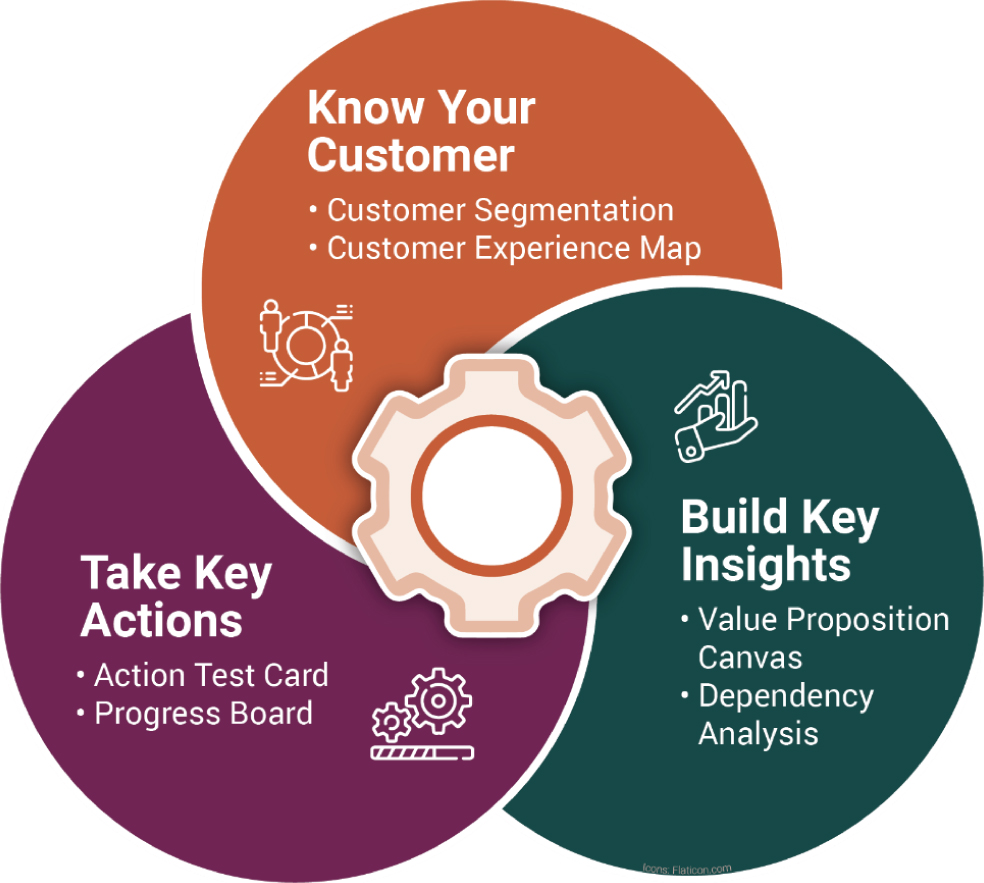
For a new KM function, understanding your customersʼ needs is vital to finding a home. The Three-Wheel Framework of Customer-Centricity is one approach to ensure the new KM function enhances customer-centricity, i.e., putting the customer at the forefront of everything the new KM function will do. This means taking the time to understand your customers and thinking about the impact it could have on them before making decisions. Figure 9 displays aspects of the three-wheel framework.
For KM functions in state DOTs, your customers are generally your work colleagues. Your customers may also include people who work in other governmental entities and the public. The Three-Wheel Framework of Customer-Centricity focuses on fellow workers responsible for the knowledge-intensive business processes and activities performed in your DOT. The framework consists of three interconnected phases:
- Know your customer. Understand customer needs, behaviors, and expectations related to the new function.
- Build key insights. Analyze customer data and feedback to gain insights that inform you about the design and implementation of the new function.
- Take key actions. Based on customer insights, take actions to integrate the new function to improve customer experience.
Long Description.
The three components in the Venn diagram of the Three Wheel Framework of Customer Centricity are as follows: Know Your Customer, Build Key Insights, and Take Key Actions. Know Your Customer: Customer Segmentation; Customer Experience Map. Build Key Insights: Value Proposition Canvas; Dependency Analysis. Take Key Actions: Action Test Card; Progress Board.
There are many useful tools to help with each of these phases. For the “Know Your Customer” phase, customer personas, customer segmentation, and customer experience mapping are three analyses that help you to identify and define your customers.
The Alignment Approach Framework
The alignment approach is a framework that helps integrate a new business function by aligning it with the organizationʼs overall strategy, culture, and existing business processes. This approach consists of three key elements.
- Strategic alignment. Ensure that the new business function aligns with the organizationʼs mission, vision, and strategic objectives. This alignment will help prioritize resources and ensure that the new function contributes to the organizationʼs overall success.
- Cultural alignment. Assess the organizational culture and identify potential barriers or enablers to the successful adoption of the new business function. Proactively address any cultural misalignments to facilitate a smooth transition.
- Operational alignment. Evaluate the existing business processes, systems, and structures within the organization. Identify areas where the new business function can be seamlessly integrated or where modifications may be required to accommodate its unique requirements.
For KM functions in state DOTs, the alignment might be as simple as finding the best sponsor. A sponsor could be a senior executive who believes in the value of KM and has the time and personal capital to support a fledgling initiative. Or it might be difficult to secure strategic or cultural alignment because the management team may be focused on more pressing priorities, and investing time in KM and nurturing its growth may be considered too big a hurdle.
What is the value to the DOT of addressing this issue or solving this problem?
Organizational design is not an exact science, and KM functions can thrive in numerous organizational configurations. However, KM programs can also be stifled because they were not given an environment to nurture and grow. The wrong placement of the KM function in the organization was a contributing factor to its poor performance.
Early in the KM life cycle, the KM resources are usually positioned in the division or department that has a KM need. With limited resources, the KM resources are focused on one or two efforts. This is desirable because it gives the new KM unit an opportunity to achieve a few early wins.
The organizational positioning of your KM unit becomes more important as the KM functionʼs roles and responsibilities expand. As the KM program becomes more established, other departments often request KM guidance and support. When the requests for help consume more time and energy than the available resources, it becomes critical to address the enterpriseʼs KM needs more broadly. This includes the placement of the KM function within the organizational structure, as well as the overall KM charter, policies, processes, practices, and funding.
Optimally positioning the KM function within an organization can create business value in several ways.
- Strategic alignment. Proper placement ensures the function aligns with the organizationʼs overall strategy and objectives. This alignment helps the organization achieve its desired goals more efficiently and effectively.
- Resource allocation. Proper placement ensures that the function can access the necessary resources, such as budget, personnel, and technology. It also ensures efficient resource management and prioritization.
- Communication and coordination. Functions placed appropriately within the organizational structure facilitate better communication and coordination with other departments. This helps reduce silos and enhance collaboration across the organization.
- Accountability and control. Clearly defining a functionʼs position within the organization helps establish accountability and control mechanisms. This ensures that the function operates within the established policies and procedures and meets its performance targets.
- Decision-making efficiency. Proper placement can streamline decision-making processes by ensuring that the function is close to the relevant decision-makers. This reduces delays and improves the speed and quality of decisions.
- Organizational culture. The correct placement of the KM function can positively influence the organizational culture. For instance, integrating the KM function with BI can foster a culture of data-driven decision-making.
- Adaptability and flexibility. Functions placed appropriately can adapt more quickly to changes in the external environment, such as market shifts or technological advancements.
- Employee morale and development. Placement affects the career development opportunities and morale of employees within the function. Properly placed functions can offer clearer career paths and better professional growth opportunities.
What are some recent examples?
As part of the research conducted for this project, Iknow interviewed the KM leads from 27 state DOTs and the District of Columbia. The research team found that there was no consensus among the state DOT KM interviewees on how KM programs should be handled in an organization. Some think that the KM function should be centralized. The core argument for centralization was that the higher the KM function sits in the organization, the more leadership support it will get and the more serious the effort will be perceived. Others felt that KM should be decentralized, with KM-trained staff or teams embedded throughout the organization. The belief was that KM should be “employee-driven” and that “no single office should own KM.”
The interviews also found that within state DOTs, the location of the KM lead or function in the organization drove the types of work done by the KM function. For example, the interviewees reported the following:
- KM groups positioned within HR tend to focus on organizational practices such as human capital planning, succession planning, recruiting, job shadowing, and exit interviews.
- KM groups positioned within workforce development or organizational development tend to focus on organizational practices geared toward developing and training newly hired staff, leadership training, career development, external courses, and knowledge-sharing programs.
- KM groups positioned within corporate libraries tend to focus on ensuring that the library has the content resources to meet the needs of the DOT staff and tracking employee expertise and interests.
- KM groups positioned within IT tend to focus on records management, adherence to the PIA, updating the intranet site, creating and maintaining SOPs, and preparing lists of acronyms, buzzwords, and jargon.
- KM groups positioned in other business functions, such as the Research and Engineers Office, tend to focus on knowledge capture, retention, and sharing, CoPs, and leveraging technologies such as SharePoint and WordPress for knowledge portals.
For new and emerging KM programs in state DOTs, the research team believes that placing the KM function in an organization is not as important as defining a clear mission, purpose, and business case. As demonstrated through these interviews, KM groups within DOTs addressed important business problems throughout a variety of departments.
The optimal organizational design for more mature KM programs generally follows the hybrid model, with a centralized component responsible for KM strategy, policies, and funding, and multiple KM groups located in information and knowledge-rich operating units. For example, Iknow has worked with many large pharmaceutical companies. Their operating divisions each have their own KM teams, which work on completely different business problems. The research team has found similar hybrid models for KM in global oil and gas companies.
What are some next steps to take?
This section provides step-by-step instructions to help KM leaders effectively integrate a new or emerging KM business function into their organizational structure. The following steps can help effectively navigate this endeavor:
- Conduct a gap analysis. Assess the organizationʼs current state and identify any gaps or areas that need to be addressed to effectively accommodate the new KM function.
- Identify KM needs. Determine what information, knowledge, and expertise are essential to the organizationʼs success and how they are currently being managed or shared. This includes identifying what knowledge is missing, at risk, or not easily accessible.
- Define the purpose and scope of the KM function. Clearly articulate the purpose and scope of the new KM function. Understand its objectives, responsibilities, and the value it brings to the organization.
- Identify key stakeholders. Engage with key stakeholders across the organization, including leadership, SMEs, and representatives from relevant departments. Seek their input, address their concerns, and ensure their buy-in throughout the process.
- Develop a road map. Create a detailed road map that outlines the steps, timelines, and resources required for the successful integration of the new business function. This road map should follow the alignment approach framework.
The specifics of your DOT will determine the next steps.
Once you get buy-in from senior management, make sure you then complete the following steps to cement KM into the organizational structure:
- Define and establish governance and accountability. Define clear governance structures, roles, and responsibilities for the new KM function. Establish accountability measures to ensure effective oversight and decision-making.
- Develop policies and procedures. Formulate policies and procedures that govern the operations of the new KM function. Ensure they align with existing organizational policies and comply with relevant regulations and industry standards.
- Allocate resources. Identify and allocate the necessary resources, including human resources, budget, technology, and infrastructure, to support the successful implementation and ongoing operations of the new KM function.
- Implement change management. Develop and execute a comprehensive change management plan to facilitate the smooth transition and adoption of the new KM function. Address potential resistance, provide training and support, and foster a culture of continuous improvement.
- Monitor and adjust. Continuously monitor the integration process and the performance of the new KM function. Based on feedback and real-world experiences, be prepared to make adjustments and improvements as needed.
- Celebrate successes and learn from challenges. Recognize and celebrate milestones and successes. Identify and learn from the challenges encountered and use these insights to refine and improve future efforts.
By following these step-by-step instructions, KM leaders can effectively launch and integrate a new KM business function into their organizational structure, ensuring alignment with strategic objectives, cultural fit, and operational efficiency.
Is there anything else to note?
KM Roles and Responsibilities
Typical roles within a KM function include a chief knowledge officer or KM director, who provides KM leadership and strategic direction. KM managers, analysts, and specialists are responsible for various KM processes, such as knowledge capture, organization, sharing, and application. Some organizations also have dedicated roles, such as community managers, to facilitate knowledge sharing within specific domains or CoPs.
In new or recently established KM programs, getting budget approval for new staff might be considered nearly impossible. Please see Chapter 3 for information on building a business case for KM. A solid business case will provide economic justification to support the funding of KM programs.
Approaches for KM Staffing
No matter where KM is positioned in the organization, flexible HR policies, such as job rotation, can help recruit DOT staff to serve in KM roles and on KM project teams. Job rotation is the practice of regularly transitioning employees between different jobs to ensure they gain exposure to various departments of the company while learning and improving their skill sets. Job rotation and secondments are ways to encourage employees to “try out” KM roles on a temporary or interim basis.
5.4 Fostering Internal Partnerships
This section helps guide state DOTs in fostering internal partnerships that support knowledge retention, sharing, and development.
What are the key questions one should ask (or that this section will answer)?
This chapter will help you address the following questions:
- Which internal DOT departments and functions should be targets for developing or strengthening internal partnerships? Why?
- How do you prioritize and select departments for internal partnerships?
- What types of knowledge should be shared?
- If the knowledge is primarily tacit knowledge, then how should it be captured and retained?
- How do you foster and grow internal partnerships?
- How does knowledge sharing and reuse fit into an overall KM strategy?
Is this topic relevant to any DOT?
Creating internal partnerships for knowledge retention and sharing can be considered a “quick win” for most state DOTs. This is because the research teamʼs stakeholder interviews revealed that most DOTs operate as organizational silos. Knowledge created through normal business activities is mostly stored in the function that created it and is seldom proactively shared with others.
Please revisit your responses to the KM Self-Assessment in Chapter 2. You are probably ready to address the issue of KMʼs role in supporting DOT processes and practices if you responded:
- “Strongly agree” or “Agree” to Q1 or Q6, as this demonstrates the reach of the KM effort across departments/groups;
- “Strongly agree” to Q2 if KM success factors depend on support from other departments/groups; or
- “Strongly agree” or “Agree” to Q15 if the CSFs and performance metrics depend on external support (i.e., outside of the KM groupʼs control).
KM is often referred to as an organizational effort and, therefore, will require buy-in (i.e., partnerships) with other stakeholders. Determining at what stage this outreach is necessary will ultimately determine the relevance of this topic.
What does the published literature say?
Working relationships between business functions typically develop through both formal and informal channels. Formally, these relationships are established through organizational structure, documented processes, and standardized procedures that define how different functions and departments should interact and collaborate. However, the most effective working relationships often emerge through regular interactions, shared projects, and mutual dependencies in achieving organizational goals.
The strength of internal relationships varies significantly based on several factors. Proximity plays a crucial role, with business functions that frequently interact or share physical space resulting in stronger bonds. The necessity for collaboration also impacts relationship strength, i.e., functions that depend on othersʼ outputs to complete their tasks typically form closer ties. Additionally, organizational culture and leadership approach influence these relationships, with companies that promote cross-functional teams and open communication generally fostering stronger interdepartmental connections. Some relationships, such as those between Finance and Operations, or HR and all other departments, become stronger naturally due to their fundamental role in supporting business operations.
What can be learned from the benchmarking interviews with the state DOTsʼ KM leads?
The following was learned from interviews conducted with KM leads from 27 state DOTs and the District of Columbia between December 2023 and February 2024.
Finding 17: An overwhelming percentage of state DOT KM programs do not have internal partnerships that support key KM activities such as retention, sharing, and development. Those that did have partnerships were solely relationship-based, not activity/operations-based. That is, the relationships existed because the individual had a long-standing relationship with someone in another department and leveraged that relationship to drive the KM effort. The lack of partnerships was simply due to the newness of the KM functions the research team observed. There had not been a requirement yet for inter-group processes and procedures.
How can this topic be applied to a specific DOT?
To understand the importance of internal partnerships, it is crucial to first identify the core business processes of state DOTs and their outputs. These processes form the foundation of the agencyʼs operations and are prime targets for KM initiatives.
As a starting point, consider the following 10 core business processes:
- Transportation planning,
- Project development and design,
- Construction management,
- Maintenance and operations,
- Traffic management and safety,
- Environmental compliance and sustainability,
- Asset management,
- Public transportation and multimodal systems,
- Emergency management and response, and
- IT and data management.
Each business process has a set of inputs and outputs and is controlled by the agencyʼs policies and procedures. Here is a list of some of the key outputs from the core business processes listed previously:
- Long-term transportation plans;
- Project designs and specifications;
- Completed construction projects;
- Maintained roads, bridges, and other infrastructure;
- Traffic management systems and safety programs;
- Environmental impact assessments and mitigation plans;
- Asset inventory and condition reports;
- Public transit services and multimodal integration plans;
- Emergency response protocols and disaster recovery plans; and
- IT systems and data analytics reports.
While some of these outputs are physical in nature (e.g., a completed construction project or an implemented traffic management system), many are KAs (e.g., project designs and specifications, environmental impact assessments, and mitigation plans).
The KAs created by business processes are only valuable when they are shared with other DOT departments and functions that use these assets as inputs into their own business processes. Effective processes rely on the smooth flow of information between various departments and organizational units within the DOT. Table 26 gives several examples of cross-functional knowledge flows.
Prioritizing Departments for Partnerships
When prioritizing departments for internal partnerships, consider the following eight factors:
- Cross-functional dependencies. Focus on departments that frequently interact and depend on each otherʼs expertise. As shown in Table 26, focus on a department or functionʼs outputs that are used by others.
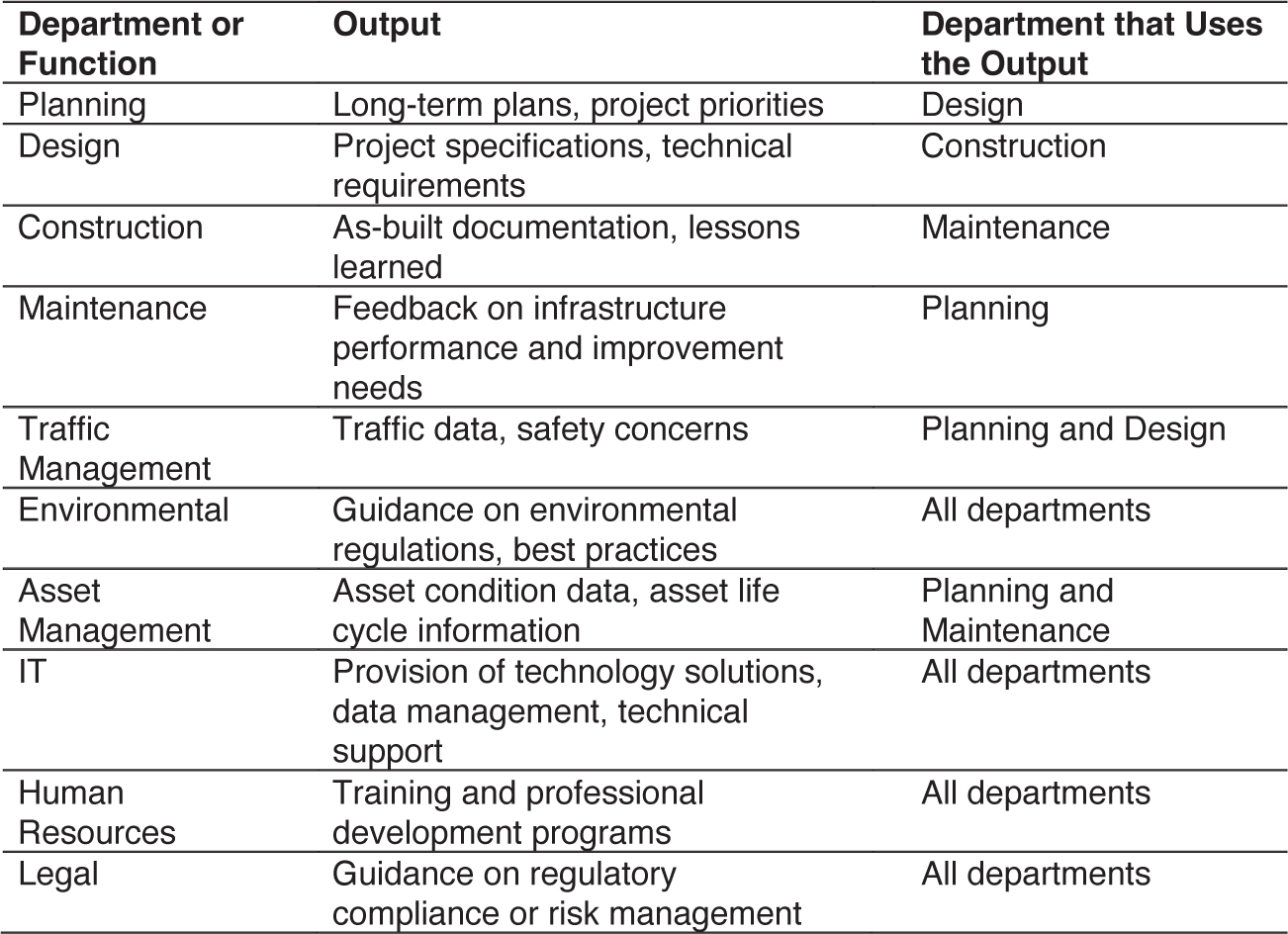
Long Description.
The column headers of the table are Department or function; Output; Department that Uses the Output. The data given in the table row-wise are as follows: Row 1, Planning: Long-term plans; project priorities; Design. Row 2, Design: Project specifications; technical requirements; Construction. Row 3, Construction: As-built documentation; lessons learned; Maintenance. Row 4, Maintenance: Feedback on infrastructure performance and improvement needs; Planning. Row 5, Traffic Management: Traffic data; safety concerns; Planning and Design. Row 6, Environmental: Guidance on environmental regulations; best practices; All departments. Row 7, Asset Management: Asset condition data; asset lifecycle information; Planning and Maintenance. Row 8, IT: Provision of technology solutions; data management; technical support; All departments. Row 9, Human Resources: Training and professional development programs; All departments. Row 10, Legal: Guidance on regulatory compliance or risk management; All departments.
- Critical knowledge areas. Identify departments that possess critical knowledge essential to the DOTʼs core functions.
- Strategic importance. Align partnerships with the agencyʼs strategic goals and initiatives.
- Retirement risk. Prioritize departments with a high percentage of employees nearing retirement age.
- Knowledge loss impact. Assess the potential impact of knowledge loss on the departmentʼs operations and the agency as a whole.
- Willingness to collaborate. Prioritize departments that demonstrate a strong interest in fostering internal partnerships.
- Resource availability. Evaluate the departmentʼs capacity to engage in partnership activities and knowledge-sharing initiatives.
- Technological readiness. Consider the departmentʼs readiness to adopt and utilize KM tools and systems.
Because every DOT is different, prioritizing and selecting the internal departments for partnerships will vary between agencies.
What is the value to the DOT of addressing this issue or solving this problem?
The business value of addressing poor internal relationships can be demonstrated through both direct and indirect impacts on organizational performance. From a financial perspective, poor internal relationships lead to increased operational costs through duplicated efforts, delayed decisions, missed deadlines, and resource wastage. When departments fail to communicate effectively or actively resist collaboration, simple processes become complex, requiring additional time and resources to complete.
Poor internal relationships also significantly affect employee engagement, productivity, and retention. A toxic internal environment increases stress levels, reduces job satisfaction, and can lead to higher turnover rates, resulting in increased recruitment and training costs. Conversely, addressing these issues can lead to improved innovation through better knowledge sharing, faster problem-solving through collaborative approaches, and enhanced customer service as internal processes become more streamlined. When employees work well together across functions, they are more likely to share insights, support each other during peak periods, and contribute to a positive workplace culture that attracts and retains talent.
Furthermore, strong internal relationships enhance organizational agility and resilience. When departments work cohesively, the organization can respond more quickly to market changes, competitive pressures, and customer needs. This agility becomes a significant competitive advantage in todayʼs fast-paced business environment.
What are some recent examples?
Microsoftʼs transformation under Satya Nadella provides a clear example of how improving internal partnerships has yielded significant business benefits. After becoming CEO in 2014, Nadella worked to break down the companyʼs notorious internal competition and siloed culture. A specific example was the collaboration between the Azure cloud computing team and the Office productivity suite team. Historically, these groups operated independently and sometimes competed for resources. By fostering collaboration between these teams, Microsoft was able to rapidly develop and deploy Microsoft Teams, which became crucial during the global shift to remote work in 2020. The strengthened partnership between these divisions enabled faster development cycles, better integration of cloud services with office tools, and ultimately led to significant market share gains in both cloud services and workplace collaboration tools. The success of this internal partnership was reflected in Microsoftʼs business results, with Teams growing from 20 million users in 2019 to over 280 million monthly active users by 2023,
demonstrating how improved internal collaboration can directly impact business performance and market position.
What are some next steps to take?
To cultivate successful internal partnerships that support knowledge retention and sharing, DOTs can implement the following strategies:
- Prioritize the departments for internal partnerships. Using the eight criteria outlined above, identify and select partnerships that are most suited to your agencyʼs needs.
- Standardize knowledge capture and documentation processes. Implement standardized processes for capturing and documenting critical knowledge, including:
- Best practices and lessons learned from projects.
- SOPs and work instructions.
- Expert interviews and knowledge elicitation sessions.
- AARs following major projects or incidents.
- Conduct regular knowledge audits. Perform periodic knowledge audits to identify critical knowledge areas, assess the current state of knowledge retention, and prioritize areas for improvement.
- Establish internal partnership agreements. Develop formal partnership agreements between departments that outline shared goals, responsibilities, and expectations for knowledge sharing and collaboration.
Several other strategies can be used to support informal and indirect knowledge sharing. They include:
- Establish a KMO. Create a dedicated KMO or team responsible for coordinating knowledge-sharing initiatives across the agency. This office can:
- Develop and implement a comprehensive KM strategy.
- Identify knowledge gaps and critical areas for retention.
- Facilitate cross-departmental collaboration and knowledge transfer.
- Measure and report on the effectiveness of KM initiatives.
- Develop a culture of continuous learning. Foster a culture that values continuous learning and knowledge sharing by:
- Recognizing and rewarding employees who actively share their expertise.
- Incorporating knowledge sharing into performance evaluations.
- Providing time and resources for employees to engage in learning activities.
- Encouraging participation in professional development opportunities and industry conferences.
- Create cross-functional teams and CoPs. Establish cross-functional teams and CoPs that bring together employees from different departments to work on shared projects or address common challenges. This approach promotes knowledge sharing and breaks down silos between departments.
- Implement job rotation and cross-training programs. Encourage job rotation and cross-training opportunities to expose employees to different aspects of the DOTʼs operations and broaden their knowledge base.
- Implement mentoring and succession planning programs. Develop formal mentoring programs that pair experienced employees with less experienced staff to facilitate knowledge transfer. Additionally, implement succession planning to identify and prepare future leaders, ensuring continuity of critical knowledge and skills.
- Measure and communicate success. Regularly assess the effectiveness of internal partnerships and knowledge-sharing initiatives. Communicate success stories and lessons learned to maintain momentum and demonstrate the value of these efforts to leadership and staff.
- Leverage technology for knowledge sharing. Invest in KM systems and collaboration tools that facilitate easy access to information and expertise across the agency. Consider implementing:
- ECM systems.
- Internal wikis and knowledge bases.
- Social collaboration platforms.
- Video conferencing and virtual meeting tools.
Is there anything else to note?
During the stakeholder interviews, the KM interviewees listed several actual and potential business partnerships with other DOT functions. Table 27 captures their responses. The table entries are not ranked.
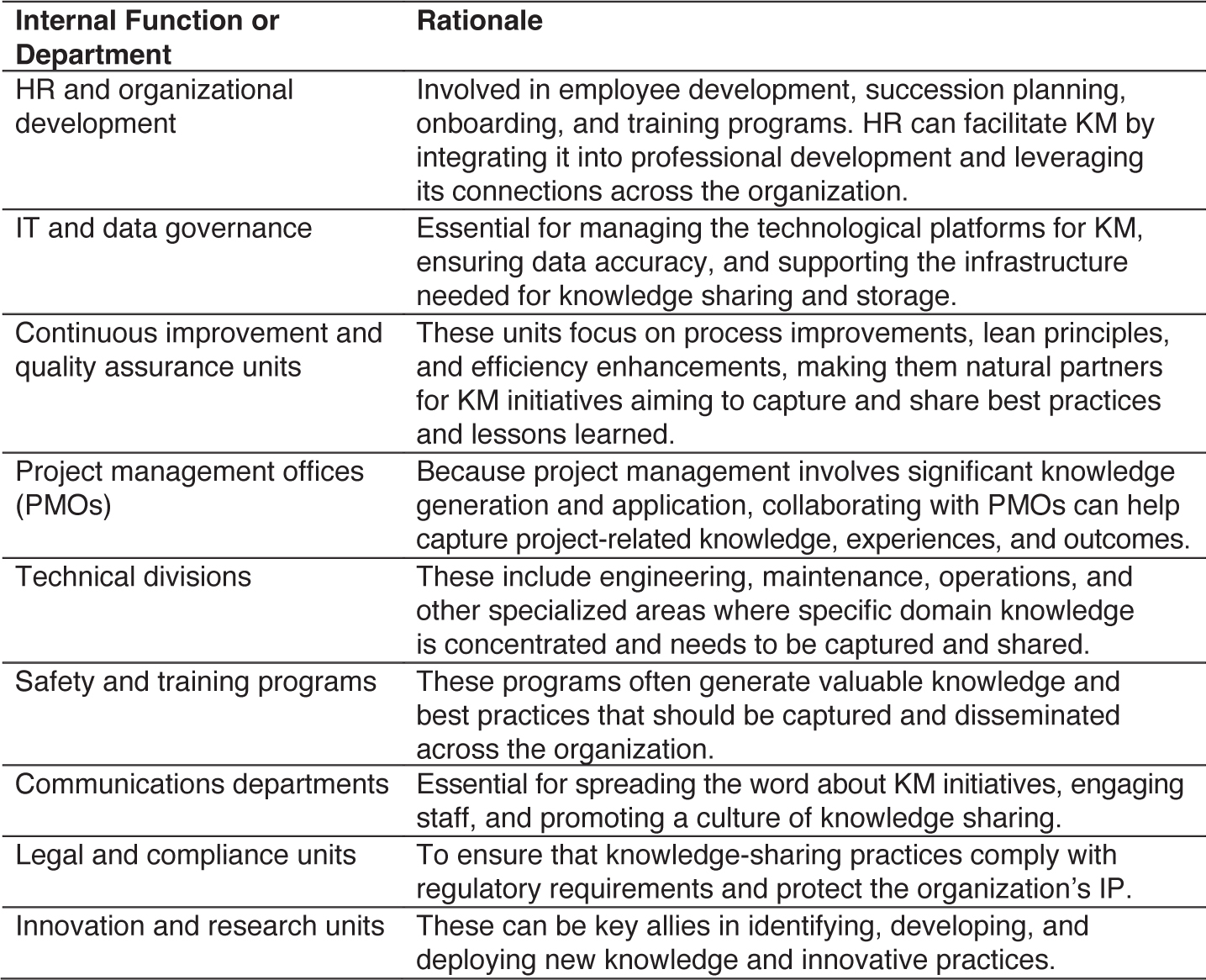
Long Description.
The column headers of the table are Internal Function or Department and Rationale. The data given in the table row-wise are as follows: Row 1: HR and Organizational Development; Involved in employee development, succession planning, onboarding, and training programs. HR can facilitate KM by integrating it into professional development and leveraging its connections across the organization. Row 2: IT and Data Governance; Essential for managing the technological platforms for KM, ensuring data accuracy, and supporting the infrastructure needed for knowledge sharing and storage. Row 3: Continuous Improvement and Quality Assurance Units; These units focus on process improvements, lean principles, and efficiency enhancements, making them natural partners for KM initiatives aiming to capture and share best practices and lessons learned. Row 4: Project Management Offices (PMOs); Because project management involves significant knowledge generation and application, collaborating with PMOs can help capture project-related knowledge, experiences, and outcomes. Row 5: Technical Divisions; These include Engineering, Maintenance, Operations, and other specialized areas where specific domain knowledge is concentrated and needs to be captured and shared. Row 6: Safety and Training Programs; These programs often generate valuable knowledge and best practices that should be captured and disseminated across the organization. Row 7: Communications Departments; Essential for spreading the word about KM initiatives, engaging staff, and promoting a culture of knowledge sharing. Row 8: Legal and Compliance Units; To ensure that knowledge-sharing practices comply with regulatory requirements and protect the organization's IP. Row 9: Innovation and Research Units; These can be key allies in identifying, developing, and deploying new knowledge and innovative practices.


